What this is about
Baby and toddler shoes are sized by the length of the foot, and every shoe maker numbers its sizes a little differently. Measure your child's foot standing up, move the toe mark to that length, and the sheet shows the typical US, UK and EU size. Then check that size against the chart of the shoe you order.
How to measure your child's foot at home
Print the measuring sheet at 100% (Actual size), not Fit to page. Lay it on the floor against a wall and fold the strip under the dashed heel line up against the wall. Stand your child on it barefoot with both heels against the wall and weight on both feet, then hold a pencil upright and mark the tip of the longest toe on each foot.
Measure with your child standing, never sitting on your lap, because under body weight a toddler's foot gets longer and spreads at the toes. Left and right feet often differ a little, so fit the shoe to the longer one.
A toddler who will not stand still only has to stand for a moment, because the wall keeps the heels on the line. Two adults make it easy: one holds a toy at eye level, the other marks the toe. No printer? Tape any sheet of paper to the floor against the wall, mark the toe, and measure from the wall to the mark with a tape measure.
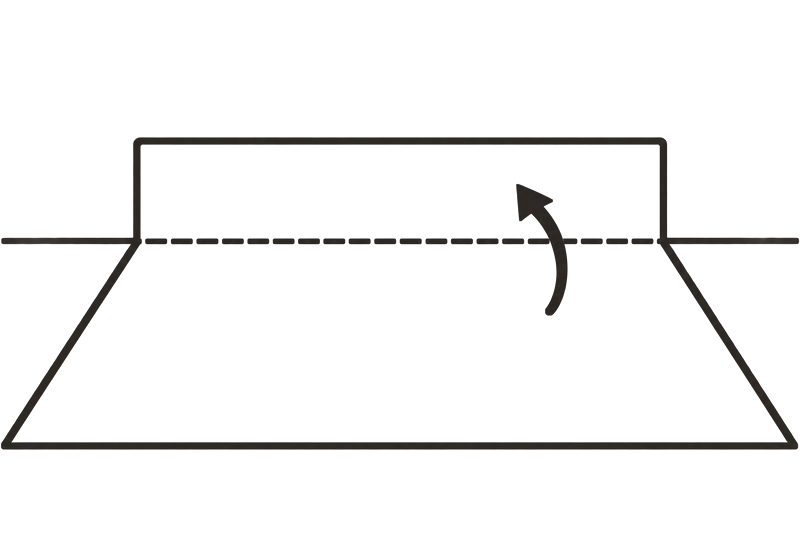 Lay the sheet on the floor and fold the bottom strip up against a wall.
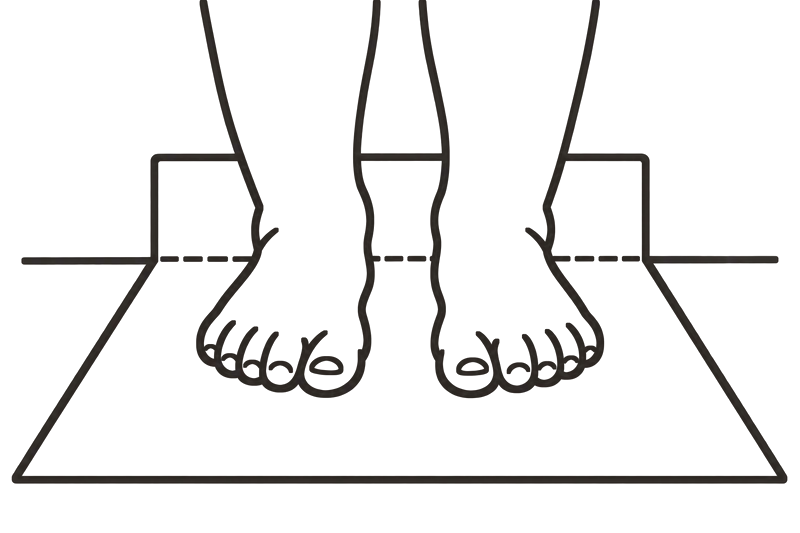 Stand your child on it barefoot, heels to the wall.
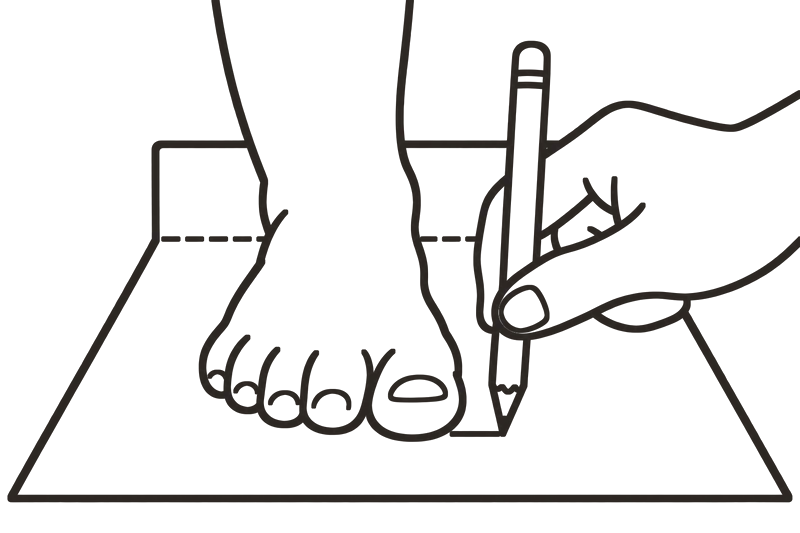 Mark the tip of the longest toe on each foot.
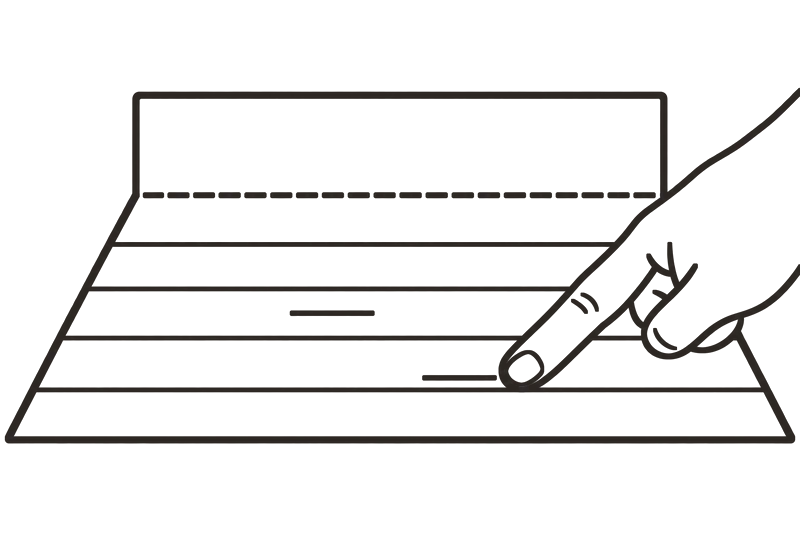 The stripe with the longer foot's mark shows the size.
Five checks when the new shoes arrive
A size chart gets you close. These five checks, done with your child standing in both fastened shoes, tell you whether this pair really fits.
Measure standing up
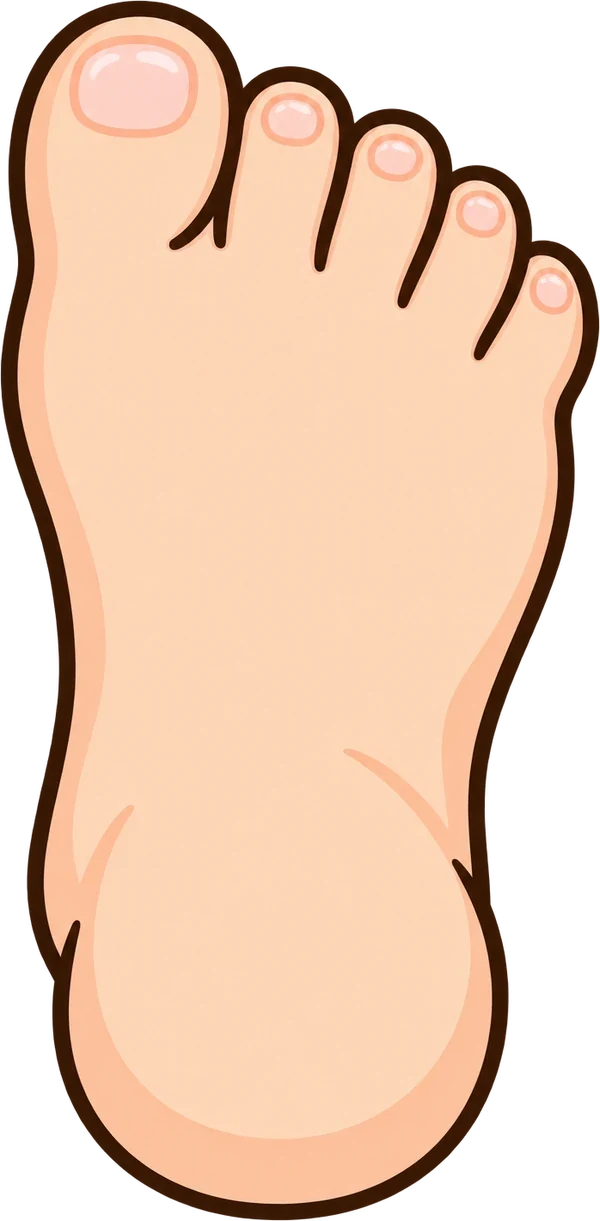
Stand your baby barefoot on paper. Mark the back of the heel and the tip of the longest toe on both feet, and compare the larger foot with the shoe maker's chart.
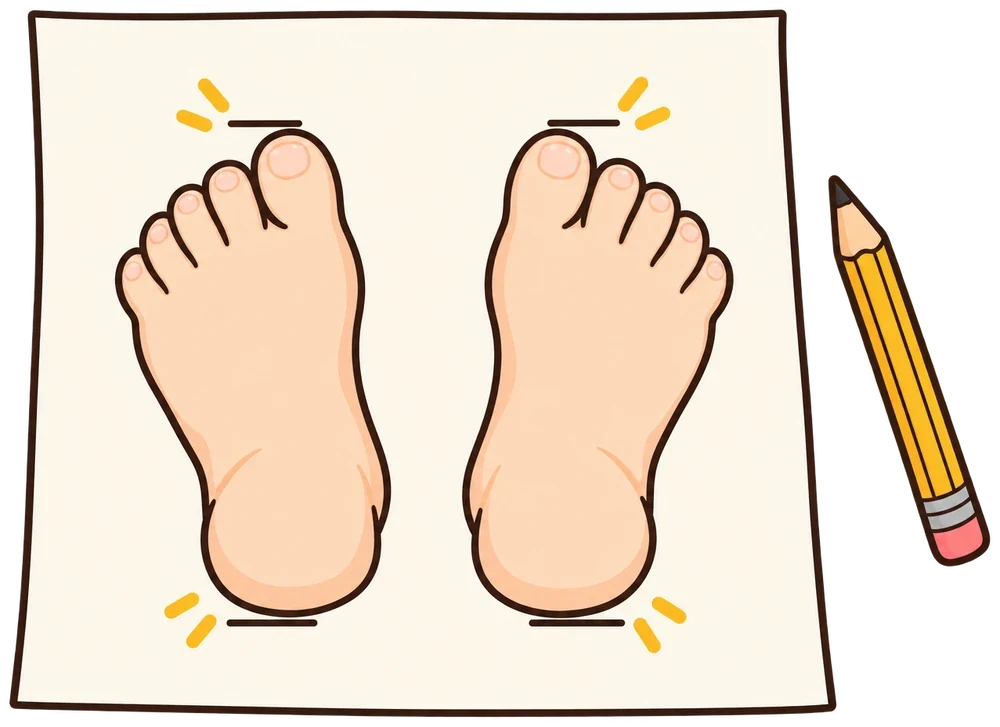
Leave room at the toes
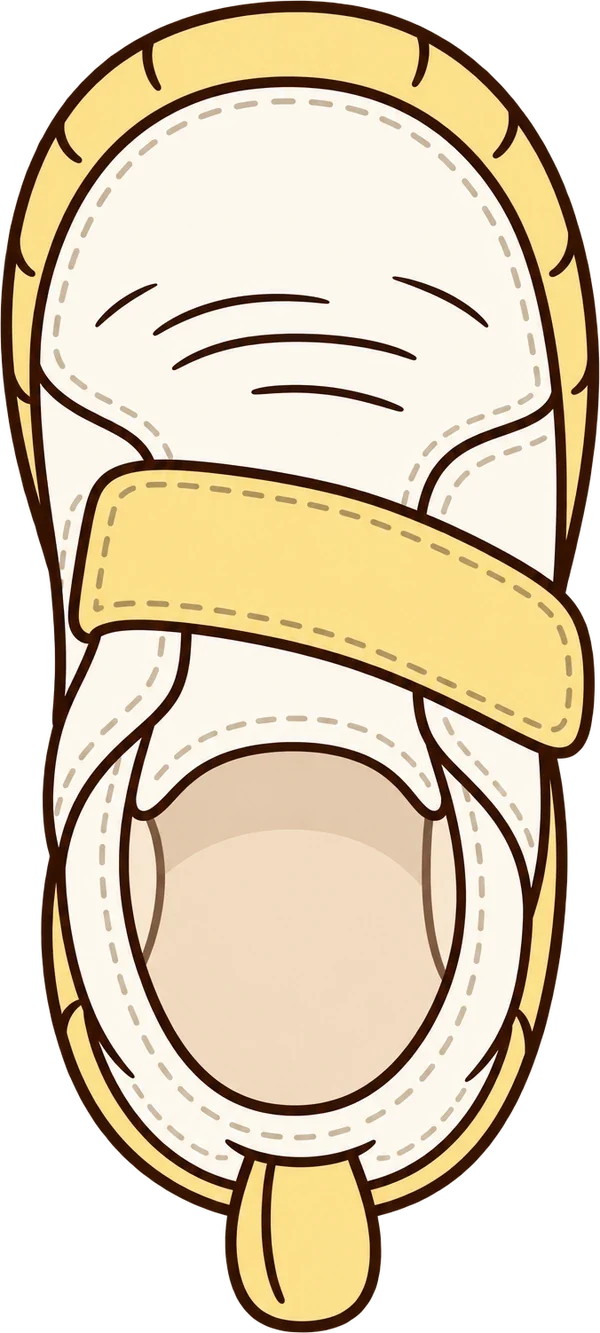
With both shoes on and fastened, your baby stands evenly while you press your thumb across the front of the shoe.
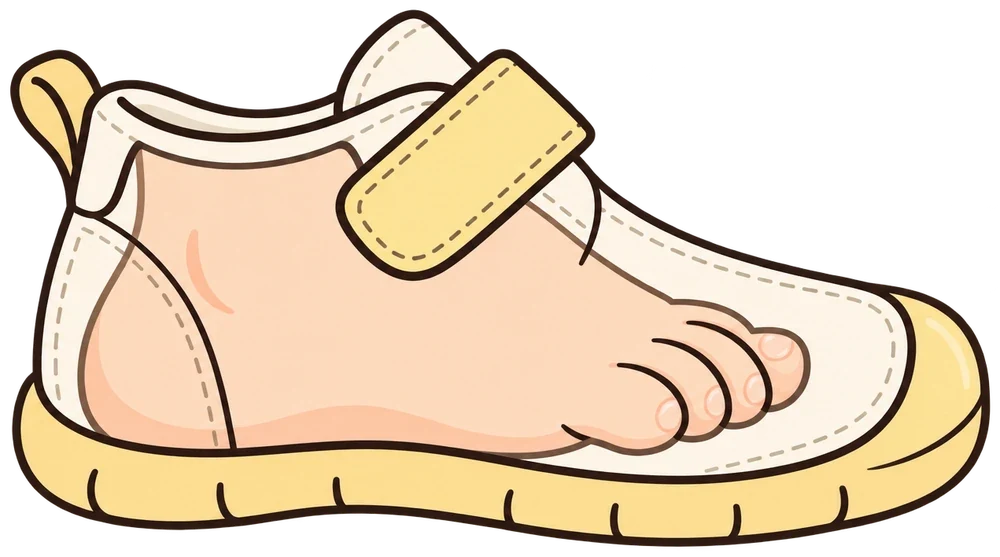
6–10 mm(0.25–0.4 in) 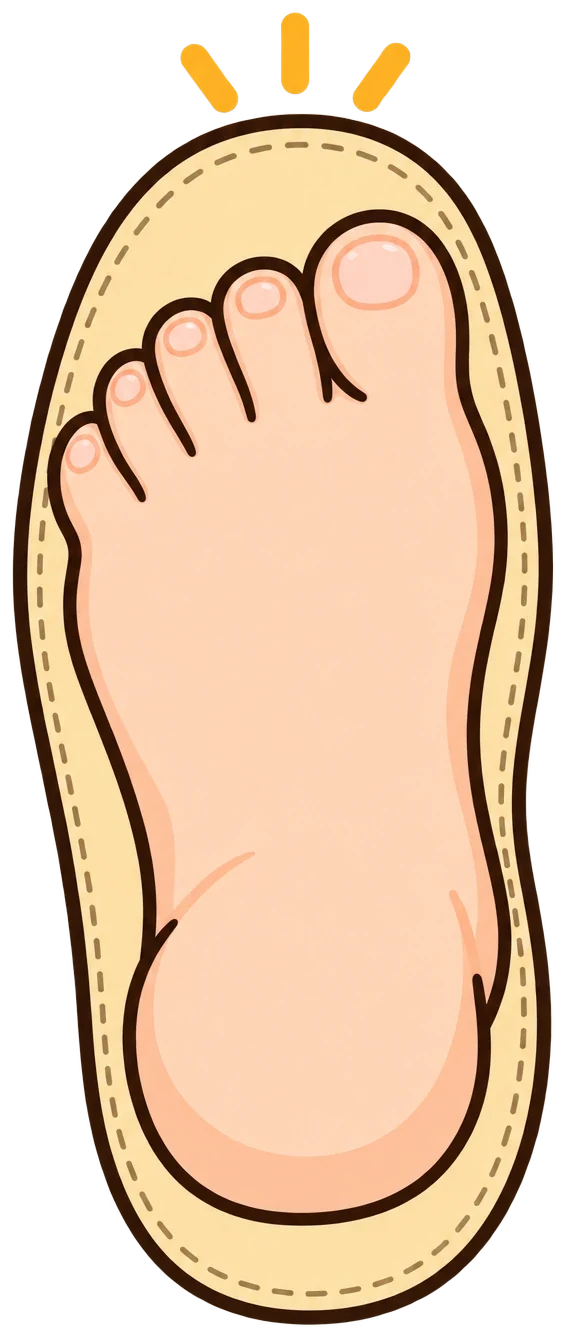
Wiggly baby? Take the insole out and stand your baby on it barefoot, so you can see the gap.
Width: a slight ripple
Press your thumb across the ball of the foot.
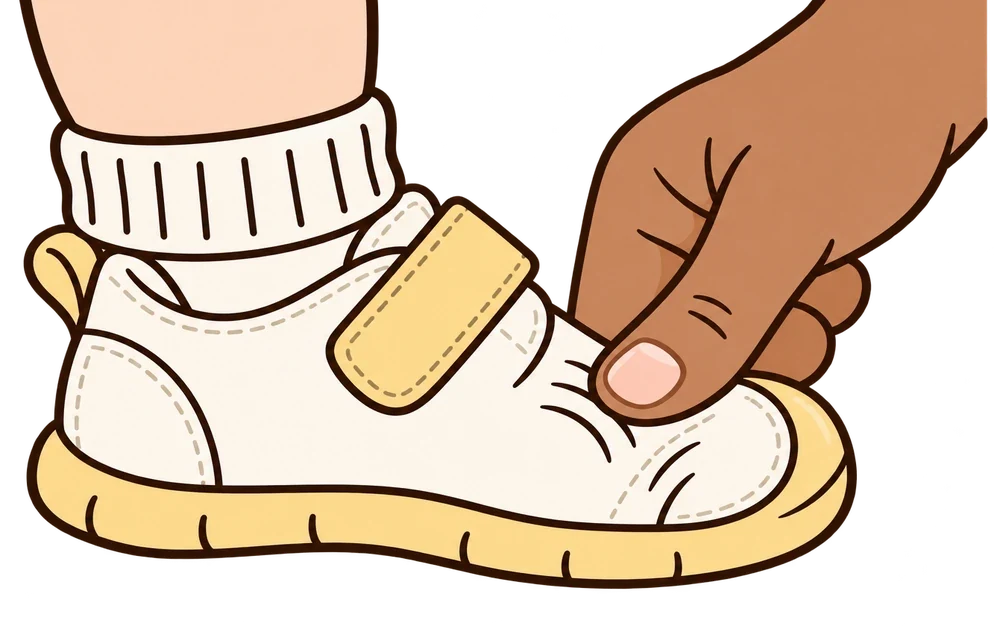
- It ripples slightly
- It bulges or creases deeply
Heel stays in on tiptoe
Watch the back of the shoe as your baby rises onto tiptoe.
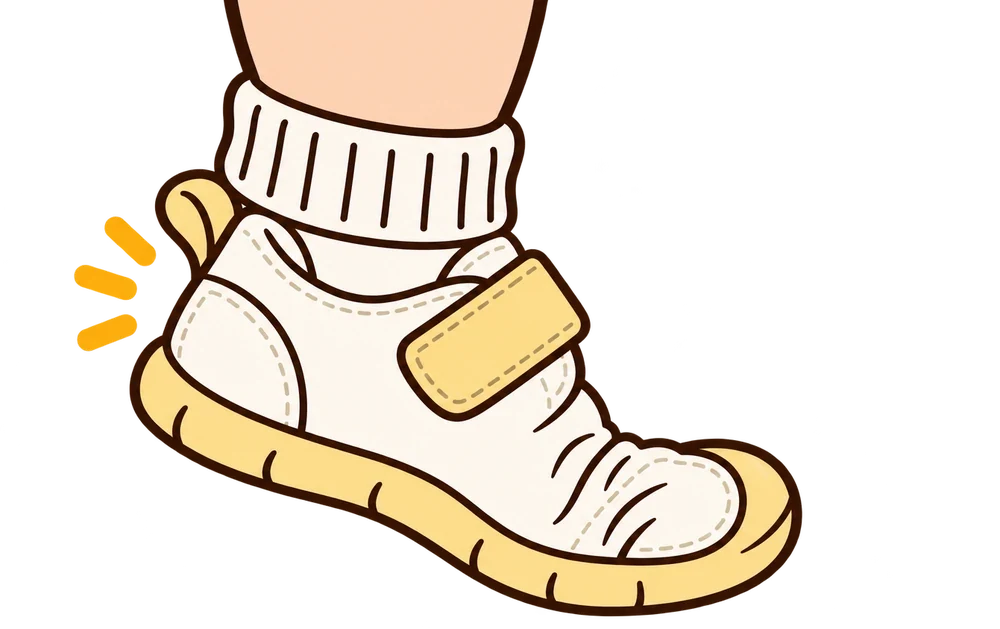
- The heel stays in the cup
- The heel slips out: too big
No marks after a walk
Take the socks off after a short walk and look at the little toe, the top of the foot and the ankle bone.
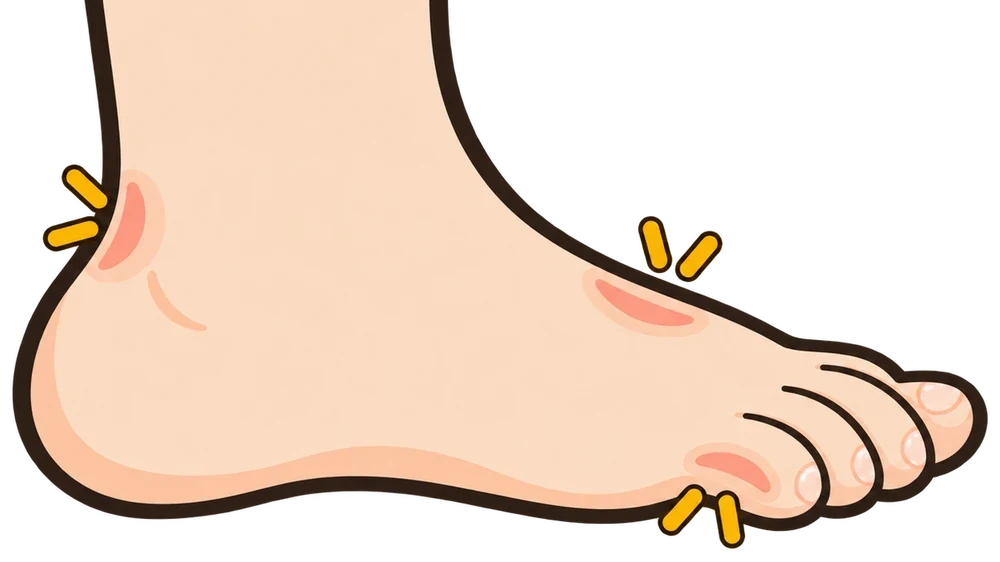
- Pink rubbing marks
Toddler shoe sizes by age
Feet grow fastest in the first years, so age is only a rough guide. Two toddlers of the same age can be two sizes apart, which is why shoes bought by age so often do not fit. Use the ages below to know what to expect, then measure.
Typical shoe sizes by age
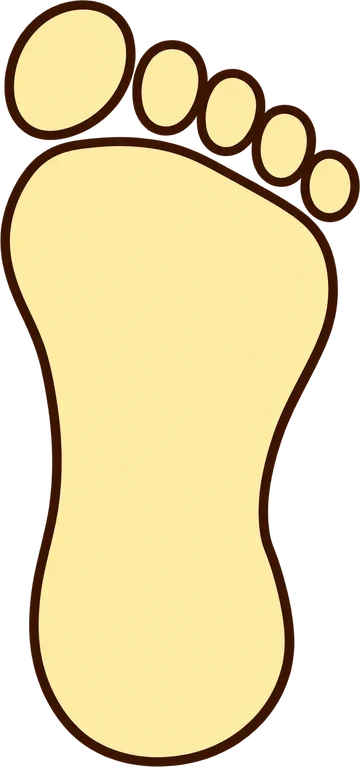 9 monthsFoot length11.2 cm (4.4 in)US3.5UK3EU19
- 12 monthsFoot length12.0 cm (4.7 in)US4.5UK4EU20
- 18 monthsFoot length13.0 cm (5.1 in)US5.5UK5EU21
- 2 yearsFoot length14.0 cm (5.5 in)US7UK6.5EU23
- 3 yearsFoot length15.6 cm (6.1 in)US8.5UK8.5EU25
Typical foot lengths from shoe makers' charts, and the typical sizes for them. Measure your own child: feet of the same age differ.
US, UK and EU sizes
US toddler sizes are often written with a C, for child: a 5C is a US size 5. Children's sizes count up to 13 and then start again at 1 for older children, so a size 1 is bigger than a size 13.
UK sizes count the same way but run about half a size lower than US sizes for the same foot. European sizes step up by two-thirds of a centimeter of shoe length each, so their numbers are much higher. A foot of about 14 cm is typically a US 7, a UK 6.5 and an EU 23.
Makers differ by up to a whole size for the same foot, because each builds its own amount of growing room into its chart. That is why the sheet says typical, and why the chart of the shoe you order has the last word. Some charts give the insole length instead of the foot length. Then pick the size whose insole is 6–10 mm (0.25–0.4 in) longer than the foot.
How often to measure again
First shoes usually last only two to three months, so check the fit about once a month. Keep the printed sheet: the same heel line and ruler make the next measurement quick. Write the date beside each toe mark, and the sheet becomes a record of how your child's feet grow.
Wide or chubby feet
Many babies have chubby feet with a high instep. Never buy a longer size to make room, because extra length in front of the toes makes a new walker trip. Look for wide fittings instead, marked W or XW on American shoes (N means narrow) and G or H on British ones, and for straps that open all the way down to the toes.
Questions parents ask
What size are 9 to 12 month baby shoes?
At 9 months a foot is often about 11.2 cm (4.4 in), typically a US 3.5, a UK 3 and an EU 19. By 12 months it is about 12 cm, a US 4.5. Most babies this age need shoes only once they walk outside.
What size shoe does a 1 year old wear?
Most 1-year-olds have feet about 12 cm (4.7 in) long, which is typically a US 4.5, a UK 4 and an EU 20. Measure to be sure: at this age two children can be a size or two apart.
What size shoe does a 2 year old wear?
A 2-year-old's foot is often about 14 cm (5.5 in) long, typically a US 7, a UK 6.5 and an EU 23. Toddlers grow in bursts, so measure again before every new pair.
How many shoe sizes does a toddler go through in a year?
Often two or three in the second year: a foot of about 12 cm at 1 year is often about 14 cm at 2, typically from a US 4.5 to a US 7, or from an EU 20 to an EU 23. In the third year it slows to about one and a half US sizes.
Should I buy shoes a size bigger so they last longer?
No. The right size already leaves 6–10 mm (0.25–0.4 in) of room in front of the toes. A bigger shoe slips at the heel and catches on the floor, and a new walker trips over it.
What does 2C mean on baby shoes?
The C stands for child. A 2C is a US size 2, made for a foot of about 9.9 cm (3.9 in), usually a baby of around 3 to 6 months who is not walking yet.
Is shoe size 13 the same as size 1?
No. Children's sizes count up to 13, then start again at 1 for older children. A size 1 is the next size up from 13.5, not a baby size.
Does my baby need shoes before walking?
No. Indoors, bare feet or socks with grip dots let the foot feel the floor. Shoes start once your child walks outside on rough ground.