What this is about
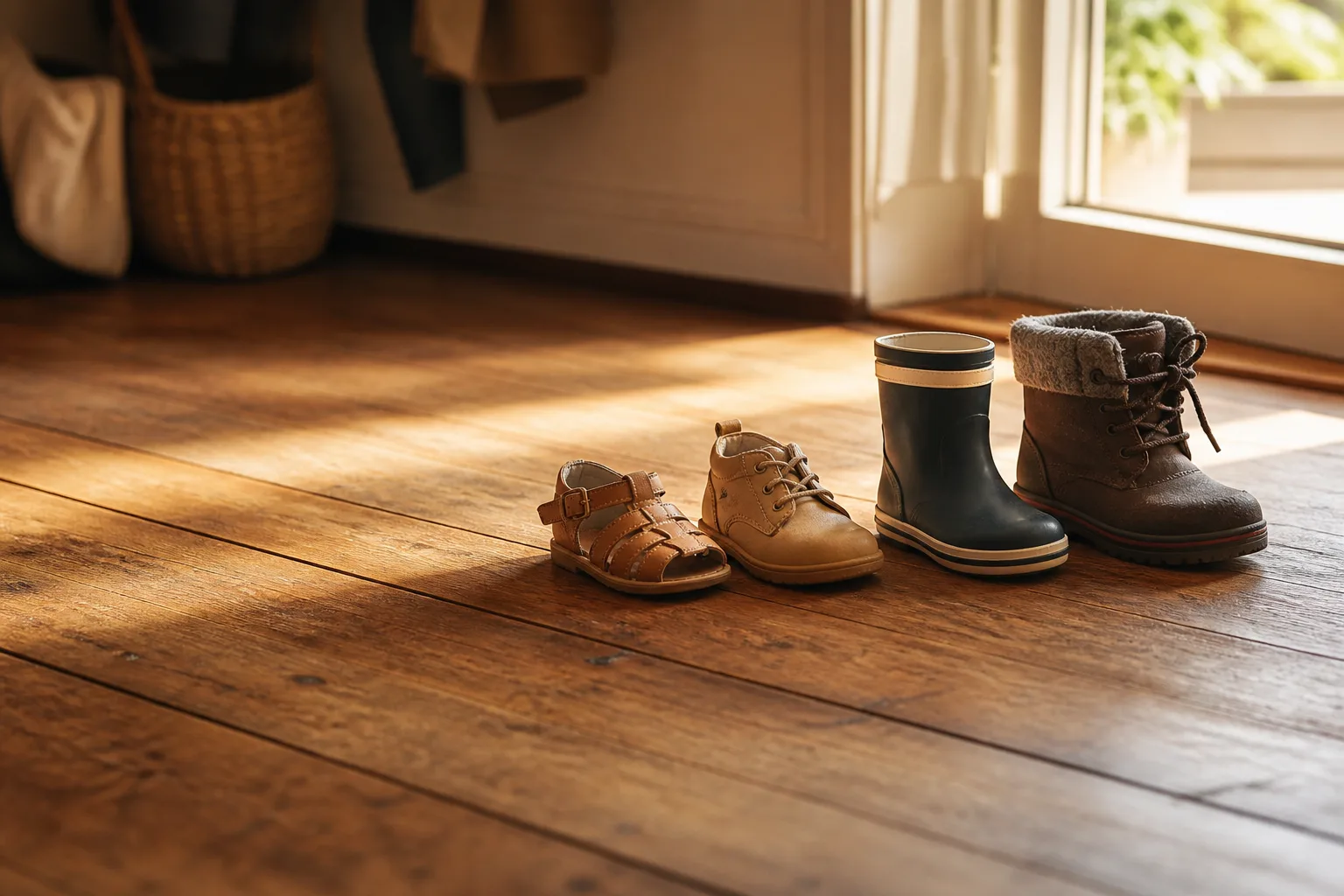
The first shoe decision usually hits on a normal outing. Your baby pulls up on a park bench, wants out of the stroller, and suddenly you are looking at the rough sidewalk. Indoors, bare feet are best. Outside, the ground is cold, wet, sharp, or hot, and tiny soles need a barrier. Shoes at this stage are not for teaching your baby how to walk. They are just protective gear for the ground underfoot.
Indoor steps do not need shoes
It is easy to think a wobbly cruising baby needs high-top leather shoes to hold their ankles straight. Pediatric advice says the opposite. Babies balance by spreading their toes and feeling the floor beneath them. Stiff soles get in the way of those sensory signals. At home, bare feet or socks with silicone grips give little feet the freedom to grip and build muscle naturally.
Crib shoes and soft pre-walkers look adorable on a shelf, but they are fashion, not gear. The same goes for outings where your baby stays strapped in the stroller or carrier. In a stroller, rigid baby shoes mostly serve one purpose: getting kicked off and lost on the street. Stick with soft socks or booties until your baby actually stands on outdoor ground.
Outside, start with the ground
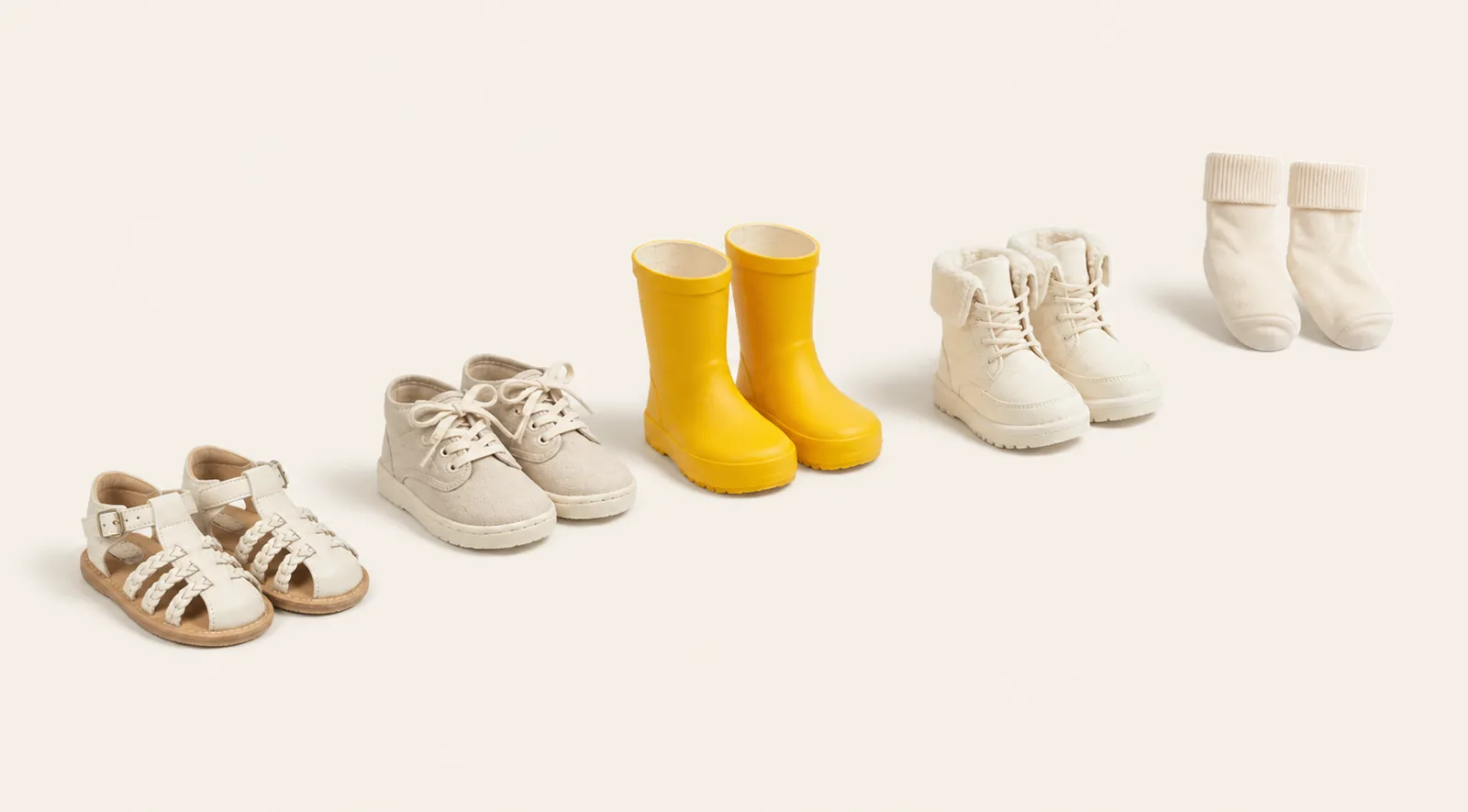
Outside, the temperature narrows the choice, but the surface settles it. A hot summer sidewalk, sharp gravel, or wood chips at the playground will punish tender feet. In warm weather, sandals work well, but look for closed toes or solid straps to stop wood chips and pebbles from wedging under the foot.
When the air cools down, remember the sock trap. Squeezing thick winter socks into a snug first shoe presses the toes together and cuts off blood flow. That actually makes small feet colder, not warmer. If you switch to thicker wool socks for cold ground, make sure the shoe or boot still has room to breathe.
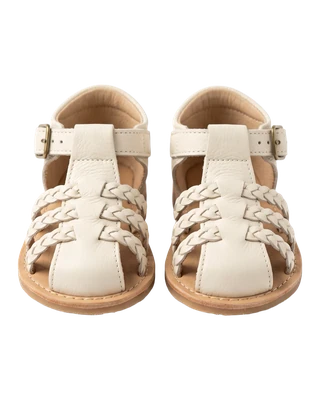
24° and warmer
Sandals for warm, dry ground. Choose a flexible sole and a secure strap that keeps the heel in place.
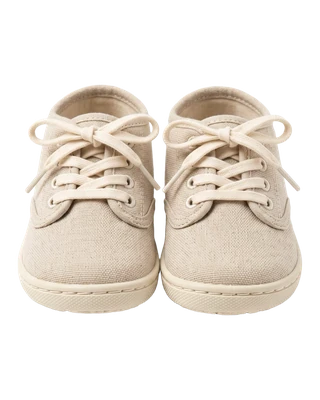
8–23°
Flexible, closed-toe first shoes for dry paths, sidewalks, and playgrounds. Keep the day's socks underneath.
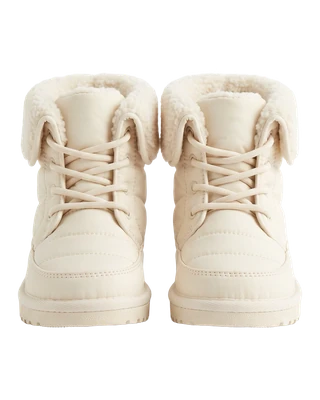
Below 8°
Warm boots for cold ground. Fit them over thick socks and check that the sole still bends.
Rain means keeping the sock dry
Toddlers do not dodge puddles. They head straight for them. A standard leather first shoe soaks through after ten seconds in wet grass, leaving your baby with soggy socks and cold toes. In milder wet weather, swap to rain boots. In winter cold, stay with water-resistant winter boots.
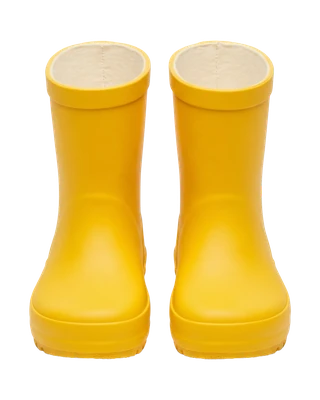
8° and warmer in rain
Rain boots replace sandals or first shoes. Below 8°, keep winter boots on instead.
Watch the weight of the boots you buy. Traditional tall rubber wellies are often stiff and heavy. On a child who only learned to walk recently, heavy boots feel like weights on their ankles, leading to tripping and frustration. Look for lightweight puddle boots or waterproof booties with thin, bendable soles so your baby can still take normal steps.
Wet boots come off at the door. Strip damp socks immediately, and leave the boots open to air dry before the next outing. If you are out and about, keep a small wet bag in the stroller basket so muddy boots do not ruin the clean diaper bag.
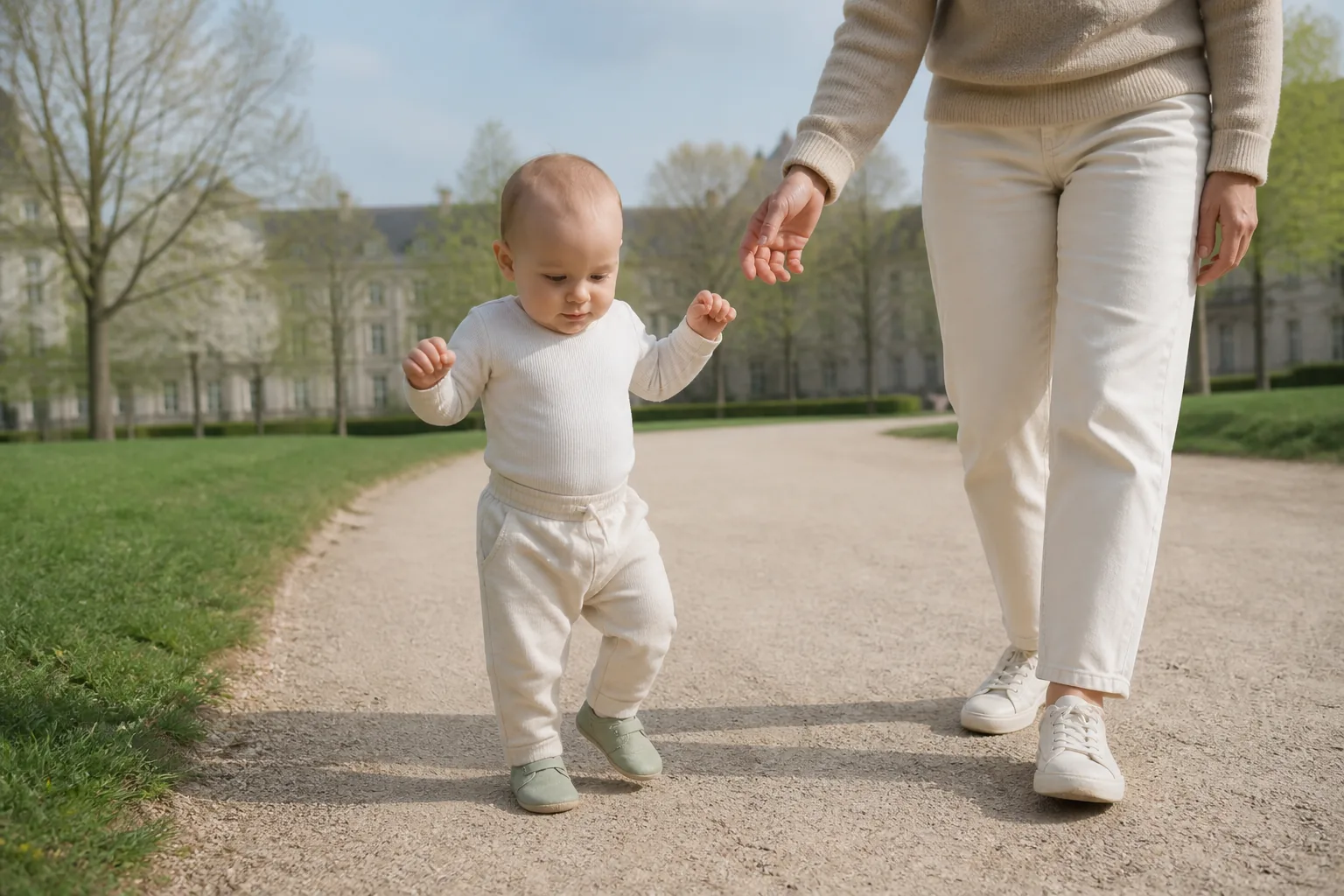
Check the fit while your baby stands and walks
Buying first shoes is usually an exercise in patience. Babies often curl their toes into tight fists the second a shoe touches their foot. Relax the foot by stroking the sole, open the fastening wide, and slip the heel in flat. Try shoes on while your baby is standing, using the socks they will wear outside.
Feel for the longest toe while your baby bears weight. You want about a thumb's width of space between that toe and the front tip of the shoe. That leaves room for toes to splay and grow. Check the heel too. If the heel slips out when your baby takes three steps, the shoe is too loose, even if the length seems right.
Always do the bend test before you buy. Grab the shoe and fold the toe back toward the heel with your fingers. It should flex easily at the ball of the foot. If you have to muscle the sole to bend it, your baby cannot bend it either. Stiff fashion sneakers force early walkers into an awkward, flat-footed stomp.
Watch for red marks when you take the shoes off. Light redness that fades in minutes is normal, but deep red indentations mean the shoe is pinching width or height across the instep. It is best to skip worn hand-me-down shoes for early walkers. Shoes mold to the unique stride and foot shape of the first child, which can throw off a new walker's balance.
Baby feet grow at an astonishing speed. Check the fit every four weeks. A shoe that felt roomy in September can start pinching toes before Halloween.