What this is about
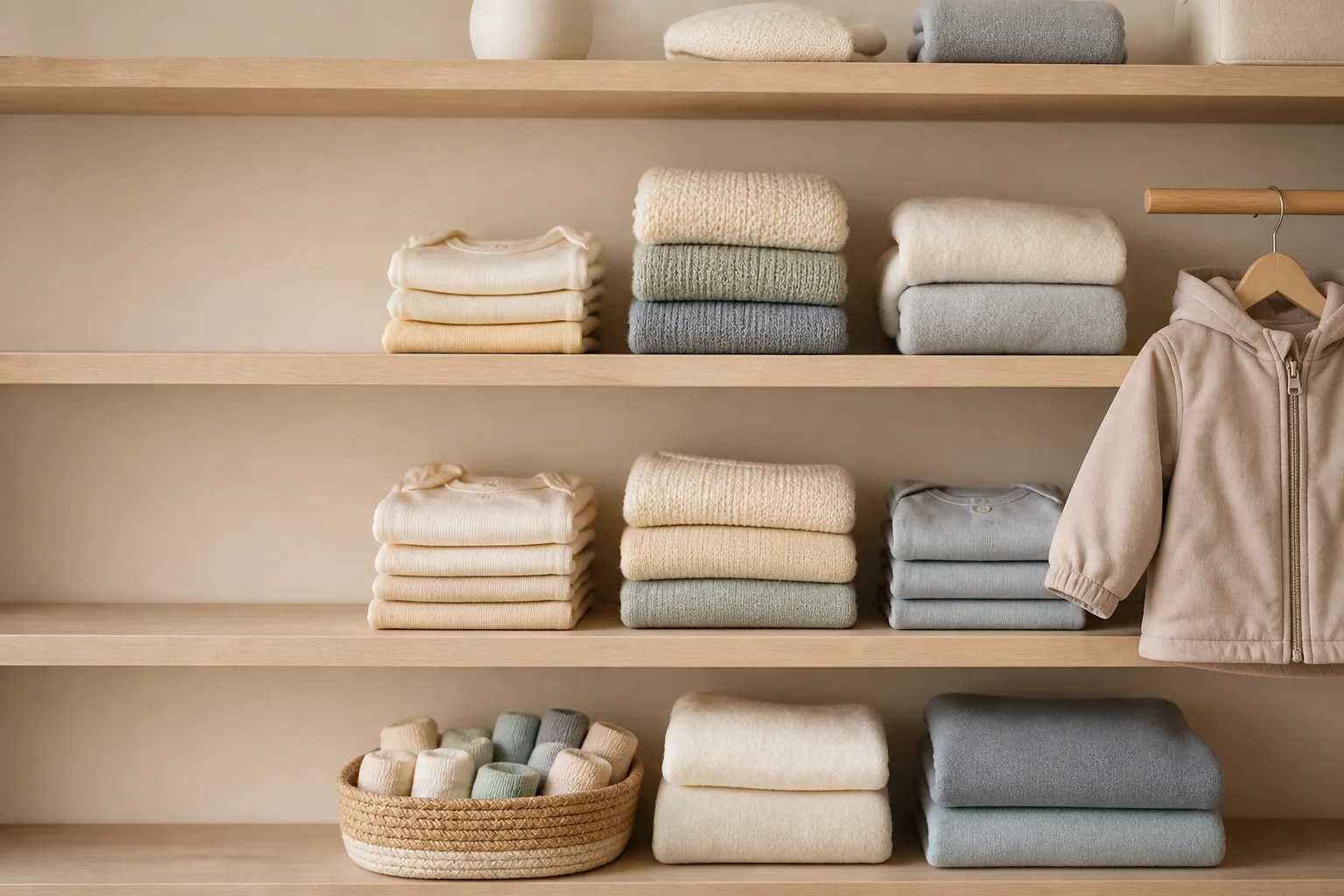
Baby clothes look charming on the hanger, but real life moves faster than matching outfits. A morning spit-up or diaper leak usually ruins only the layer touching the skin. If that layer is part of an elaborate three-piece set, the whole outfit goes in the wash. A practical wardrobe is a rotation of simple, washable base clothes paired with a few warm layers that come off easily.
Buy more near the skin
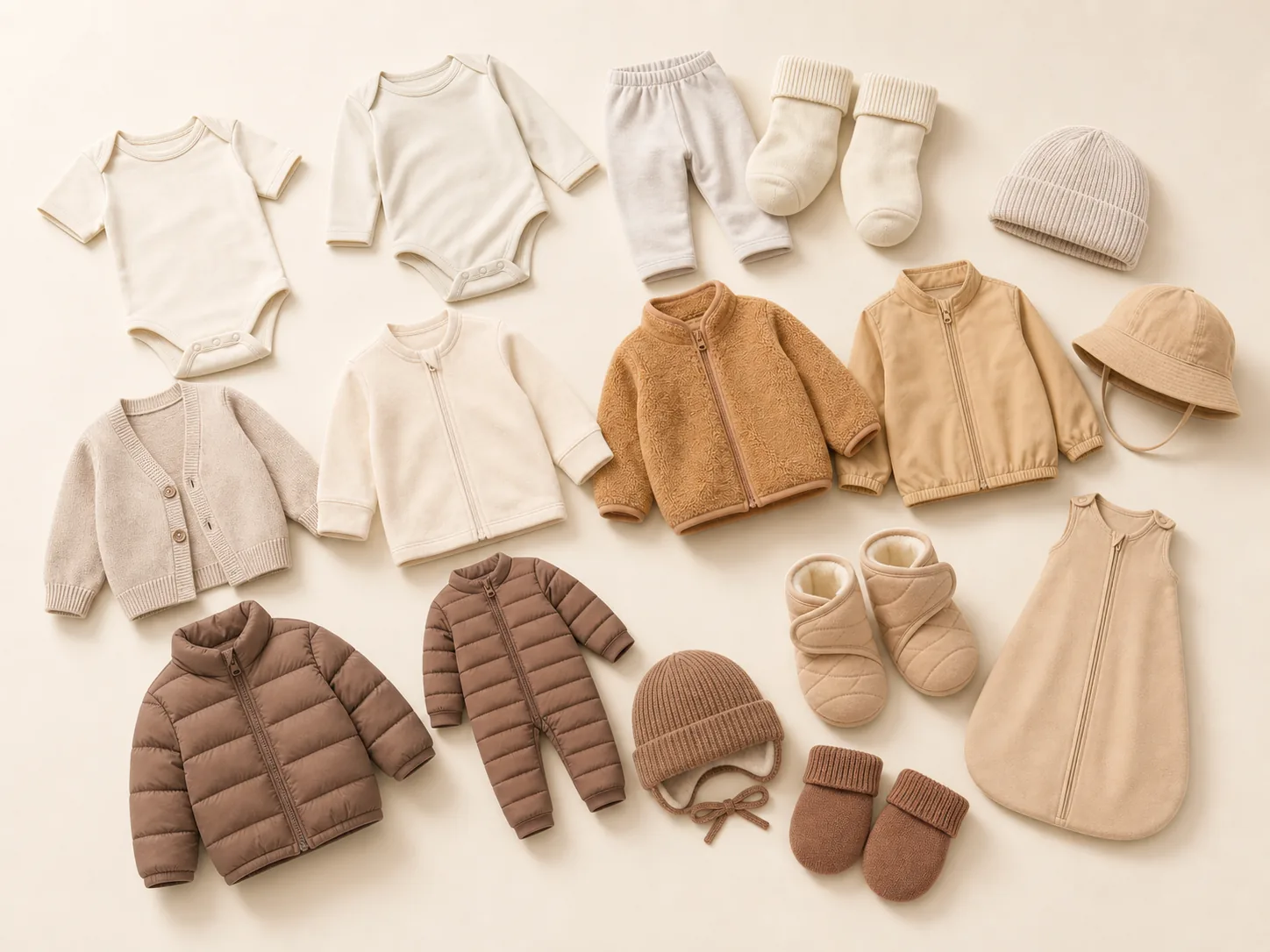
Short-sleeve and long-sleeve bodysuits form the everyday base, paired with soft pants and socks. When you want one simple garment, a footed sleepsuit can replace both. These are the pieces worth duplicating. They catch the milk, spit-up and diaper leaks, so they go through the wash almost every day.
Look for envelope necks with overlapping fabric at the shoulders. When a diaper leaks, you can roll the bodysuit down over the torso and legs instead of pulling it over your baby's head. Two-way zippers on sleepsuits make middle-of-the-night changes far simpler than twelve tiny metal snaps. Make sure ankle and wrist cuffs stretch easily without leaving deep red marks on soft skin.
Make every warm layer work more than once
Keep the outerwear equally simple. A light jacket handles cool breezes and everyday errands. For wet days, a waterproof stroller rain cover usually works better than a stiff baby raincoat. When real cold arrives, choose between a warm padded jacket or an insulated pram suit. Most families do not need both.
One hat cannot cover the year
Hats protect against opposite conditions, so one style cannot cover every season. A wide-brim sun hat shields delicate skin when the UV index reaches 3 or higher. A light knit hat takes the chill off a breezy morning, while a warm hat with ear flaps handles cold winter walks. Always remove hats once you step indoors, get into the car or put your baby down to sleep. Babies release excess heat through their heads, so hats belong only outside.
Cold-weather accessories take very little drawer space. One pair of soft mittens and insulated booties keep hands and feet warm in the stroller, with normal socks worn underneath. Hard-soled shoes serve no purpose until your baby starts walking outside. In a stroller or carrier, shoes mostly just get kicked off.
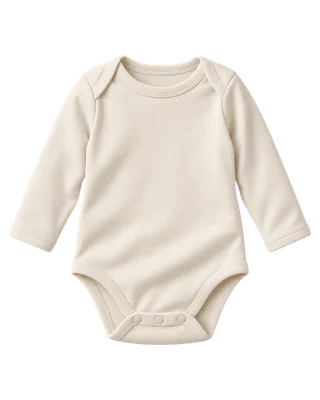
Base
Stock enough bodysuits, soft pants and socks to handle frequent changes and laundry days.
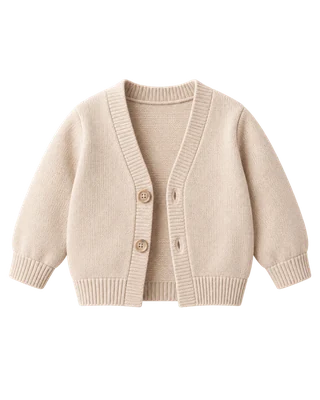
Middle
Choose front-opening cardigans or fleeces that slip on and off easily as surroundings warm up.
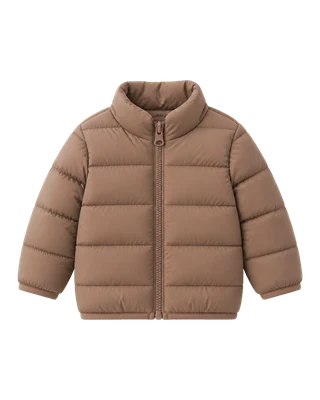
Outer
A light jacket covers everyday cool weather. Add one warm jacket or pram suit for freezing days.
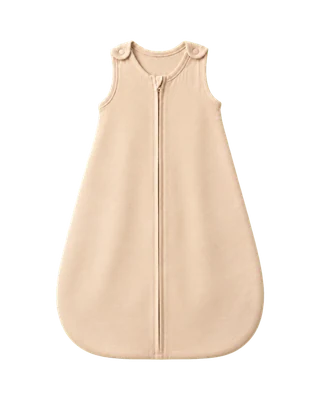
Sleep
Dress for room temperature rather than the street, using a sleep bag sized to fit the chest and neck.
Use counts as a starting point, not a target
- Five or six cotton bodysuits, mixed between short and long sleeves.
- Four or five pairs of soft pants with gentle waistbands.
- Four to six pairs of socks that stay on without pinching.
- Two front-opening cardigans or fleeces for adjustable warmth.
- One light jacket for everyday cool weather.
- One warm jacket or pram suit before cold weather begins.
- One sun hat, one light knit hat and one warm winter hat.
- One pair of mittens and one pair of warm booties.
- Two sleep bags in the warmth your nursery needs.
Your laundry routine decides the real count. If you run a wash every morning, five bodysuits can carry you through the week. If laundry happens once or twice a week, you will need eight to ten to avoid washing clothes in the sink at midnight. Do not buy extra pieces to fill a drawer. Add only to the pile that actually runs out.
Buy for the weather coming next
Babies grow rapidly in the first year, often jumping clothing sizes every couple of months. Buying cold-weather coats six months ahead is a gamble that rarely pays off. Buy for the temperature outside today and the season arriving in the next three or four weeks.
Sizing up to get longer wear also has a safety limit. Extra fabric bunched around the chin or neck can shift over the face, and oversized feet in footed pajamas twist around kicking legs. If a garment bunches near the mouth or hides the hands, put it aside until your baby fills it out.
Second-hand works best for simple clothes
Because babies outgrow newborn and small sizes in weeks, second-hand clothes are often barely worn. Pre-loved bodysuits, cardigans, fleeces and jackets are practical and save money. Run your hands over seams and fasteners, wash everything in gentle detergent, and set aside items with stretched-out necklines that slip off the shoulders.
Specialized gear deserves extra caution. Check maker manuals for second-hand sleep bags, stroller covers and footmuffs. Make sure all original clips, straps and fastenings are present and working before taking them outside.
Gear should replace something, not duplicate it
Stroller accessories can replace heavy clothing layers on cold outings. A windproof stroller footmuff wraps around the lower body and stays attached to the frame, often making a bulky snowsuit unnecessary. On mild or breezy days, a tucked-in stroller blanket does the same job. You rarely need both at once.
In a car seat, heavy outerwear is a safety hazard. Puffy jackets and thick pram suits compress under the harness in a sudden stop, leaving the straps loose. Buckle your baby in everyday indoor clothes so the harness sits snug against the chest, then drape a blanket over the straps for warmth.
At home, let the bedroom thermometer guide sleep clothing rather than the outdoor forecast. A sleep bag replaces loose blankets in the crib. Follow the maker weight and room temperature charts so your baby stays comfortably warm all night.
Questions parents ask
Do I need to buy everything before the baby arrives?
No. Have enough base clothes, two warm layers and one weather piece for the first two weeks. Wait to buy larger sizes and seasonal outerwear until you see how fast your baby grows.
How do I know when I need more base clothes?
Keep one clean spare set in the diaper bag and one in the drawer. If you find yourself washing single onesies between laundry days, add three or four bodysuits to the rotation.
Should I buy a stroller footmuff or a stroller blanket?
A footmuff stays attached to the stroller and blocks wind, which makes winter walks easier. A blanket is more flexible for mild days and easy to wash. Most families start with a blanket and add a footmuff only for sustained cold weather.