What this is about
Diapers are sized by weight, not age. Every pack prints the weights its size fits, and the sizes overlap, so a baby near the top of one size often fits the next one too. Move the slider to your baby's weight to see each size that fits.
US and UK sizes are numbered differently
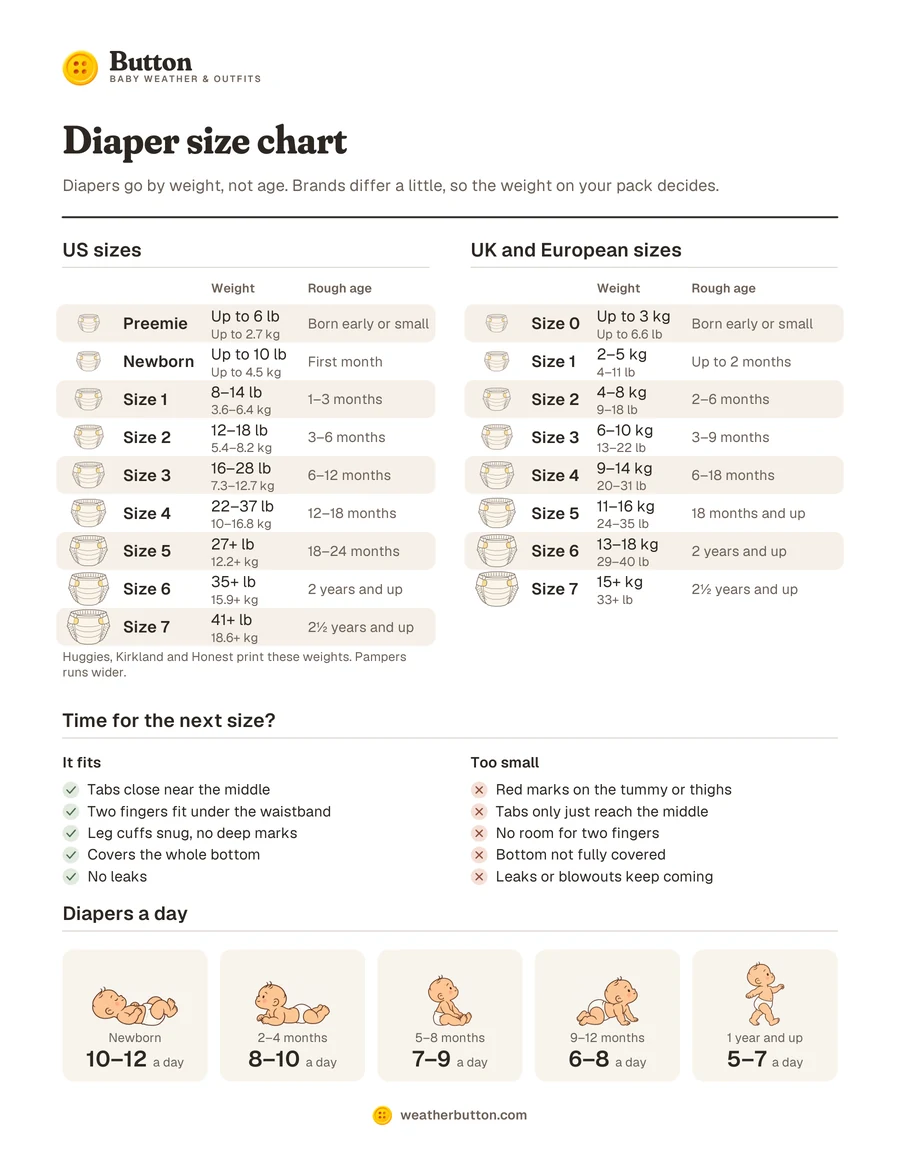
US packs start with preemie and newborn, then count up from size 1 at 3.6 kg (8 lb). UK and European packs start at size 0 for babies under 3 kg (6.6 lb), and their size 1 already fits from 2 kg (4 lb). So the same number can mean a different baby: a Huggies size 3 fits 7.3–12.7 kg (16–28 lb), while a European size 3 fits 6–10 kg (13–22 lb).
The US chart above is the one Huggies packs print. Other brands print their own weights, so whatever a chart says, the weight on your pack decides.
Newborn or size 1?
In US packs, the newborn size fits babies up to 4.5 kg (10 lb), and size 1 starts at 3.6 kg (8 lb). Many babies outgrow the newborn size within the first month, and a big baby can skip it and start in size 1.
In the UK and Europe, size 0 is made for small and early babies under 3 kg (6.6 lb), and most babies born at term start in size 1, which fits from 2 to 5 kg (4 to 11 lb). Even smaller preemie sizes exist for babies born very early.
Before the birth, buy one small pack of the first size and one of the next. A newborn needs a fresh diaper 10 to 12 times a day at first, so a small pack lasts only a few days.
When to size up
Weight is the starting point, and the fit decides. Check your baby's diaper for these signs:
It fits
The right size sits like this.
- Good: Tabs close near the middle
- Good: Two fingers fit under the waistband
- Good: Leg cuffs snug, no deep marks
- Good: Covers the whole bottom
- Good: No leaks
Too small
Time to try the next size.
- Not good: Red marks on the tummy or thighs
- Not good: Tabs only just reach the middle
- Not good: No room for two fingers
- Not good: Bottom not fully covered
- Not good: Leaks or blowouts keep coming
Sizing up too early causes leaks too, because a diaper that is too big gaps at the legs, Pampers notes. A long, slim baby can stay in the smaller size at the top of its range. In the first months, check the fit every couple of weeks.
How long babies stay in each size
As a rough guide in US sizes: newborn for the first weeks, size 1 to about 3 months, size 2 to about 6 months, size 3 to about a year, size 4 to about 18 months, then size 5 and up into the toddler years. Sizes 3 and 4 cover the widest weights, so many babies spend the longest in them.
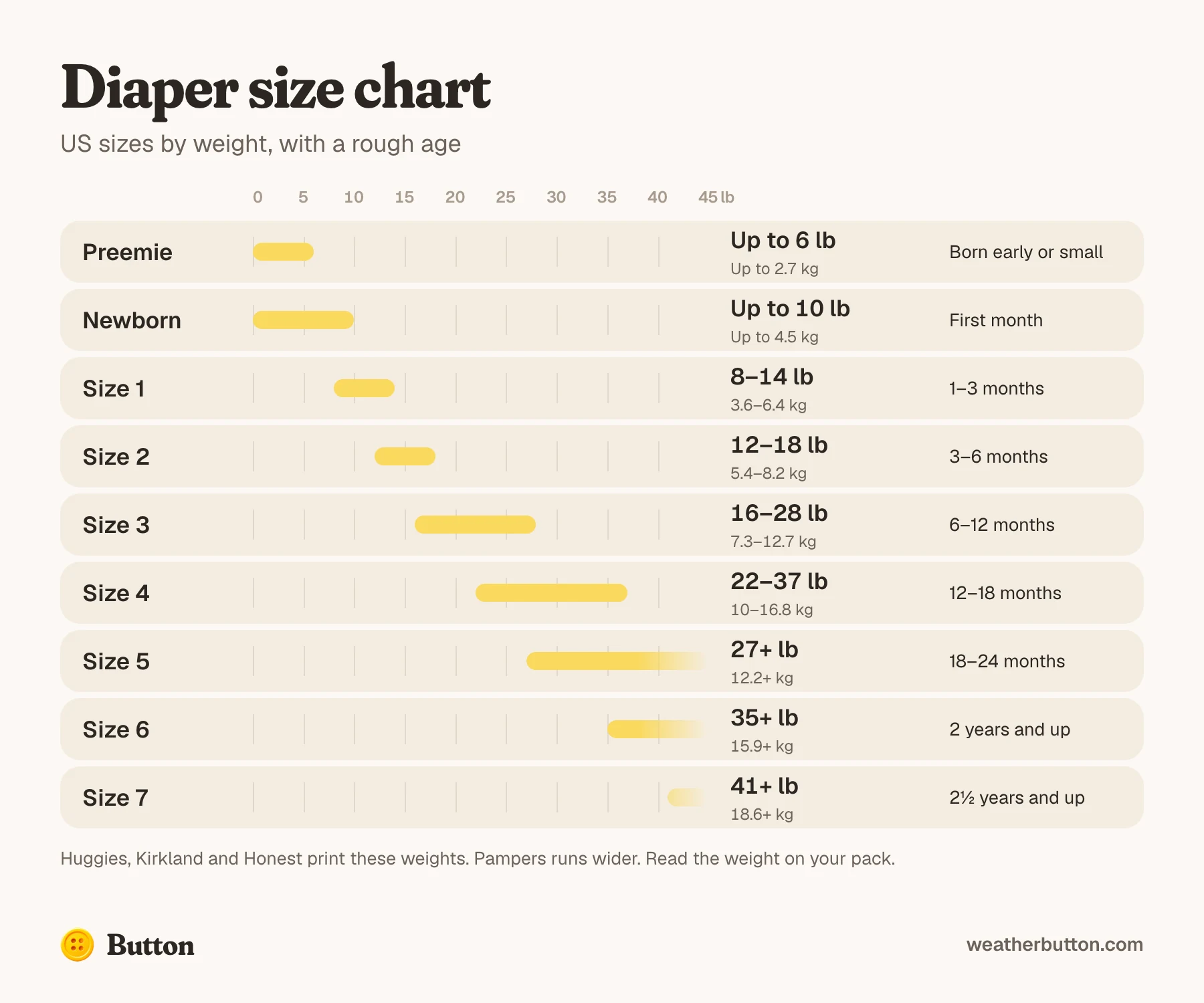
Age is only a hint. Two babies of the same age can be two sizes apart, so go by the weight on the pack and the fit.
Between two sizes
When both sizes fit, the smaller one sits snugger at the legs and the waist, which helps against leaks in the day. The larger one holds more, which helps at night, as long as it still closes snugly at the legs. An overnight diaper, which holds more in the same size, is the other way to stop morning leaks.
Tape diapers, diaper pants and cloth diapers
Most babies start in tape diapers, which open flat and come in every size from preemie on. Once your baby rolls away or stands up at changes, often around 6 to 9 months, diaper pants make the change quicker. Cloth diapers are the washable choice, and many come in one size that grows with your baby, so the size chart matters less for them.
Tape diapers
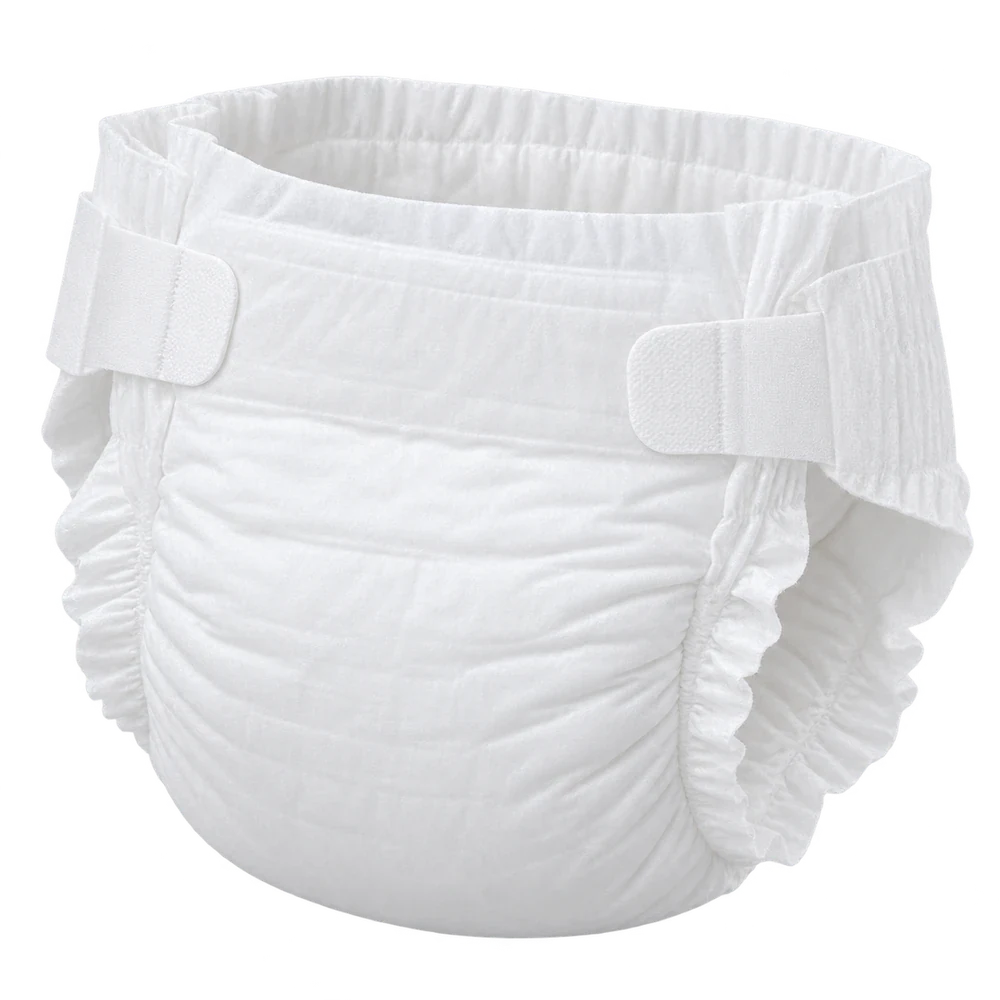
The usual diaper from birth. The back goes under your baby's bottom, the front comes up between the legs, and the tabs close it at the front.
- Good: Every size, from preemie on
- Good: Fit set at every change
- Not good: Hard with a baby who rolls away
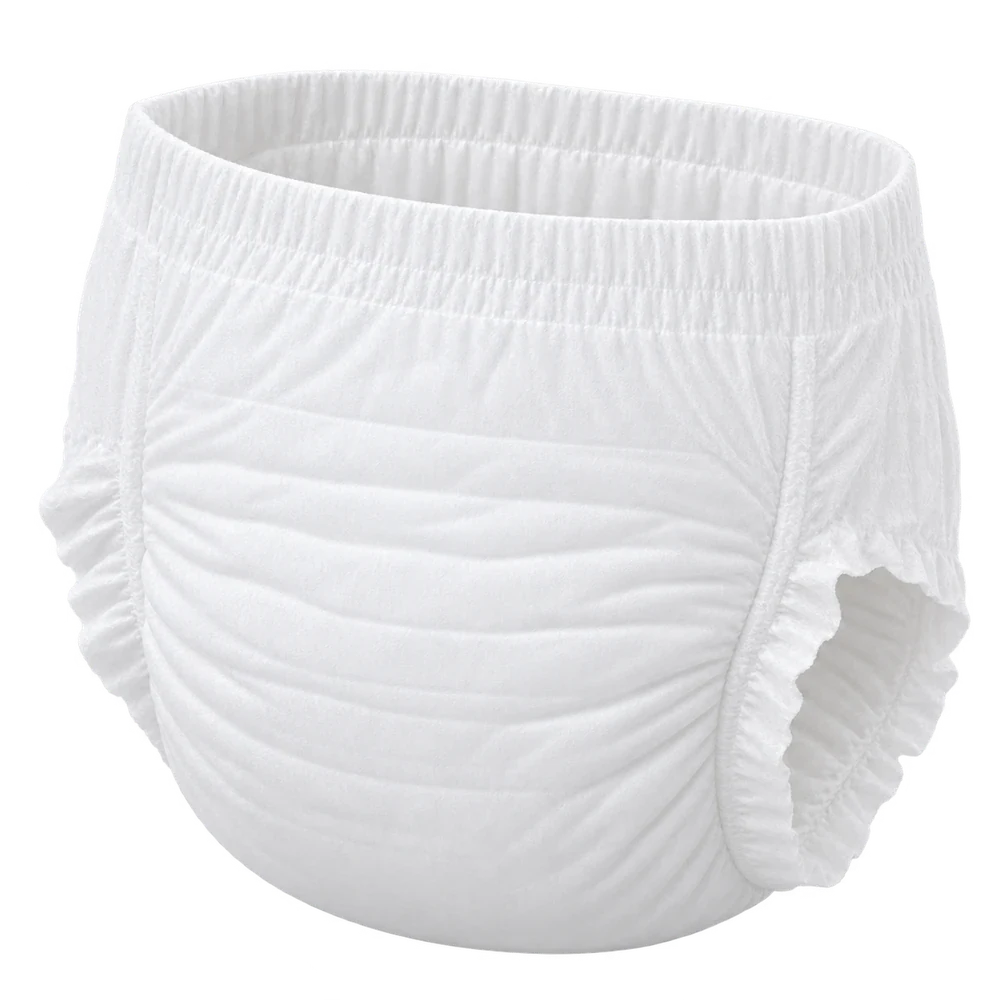
Diaper pants
Pulled on like underwear, with a stretchy waistband instead of tabs, and torn open at the sides to take off.
- Good: Quick on a baby who rolls or stands
- Good: Holds as much as a tape diaper
- Not good: Most start at size 3 or 4
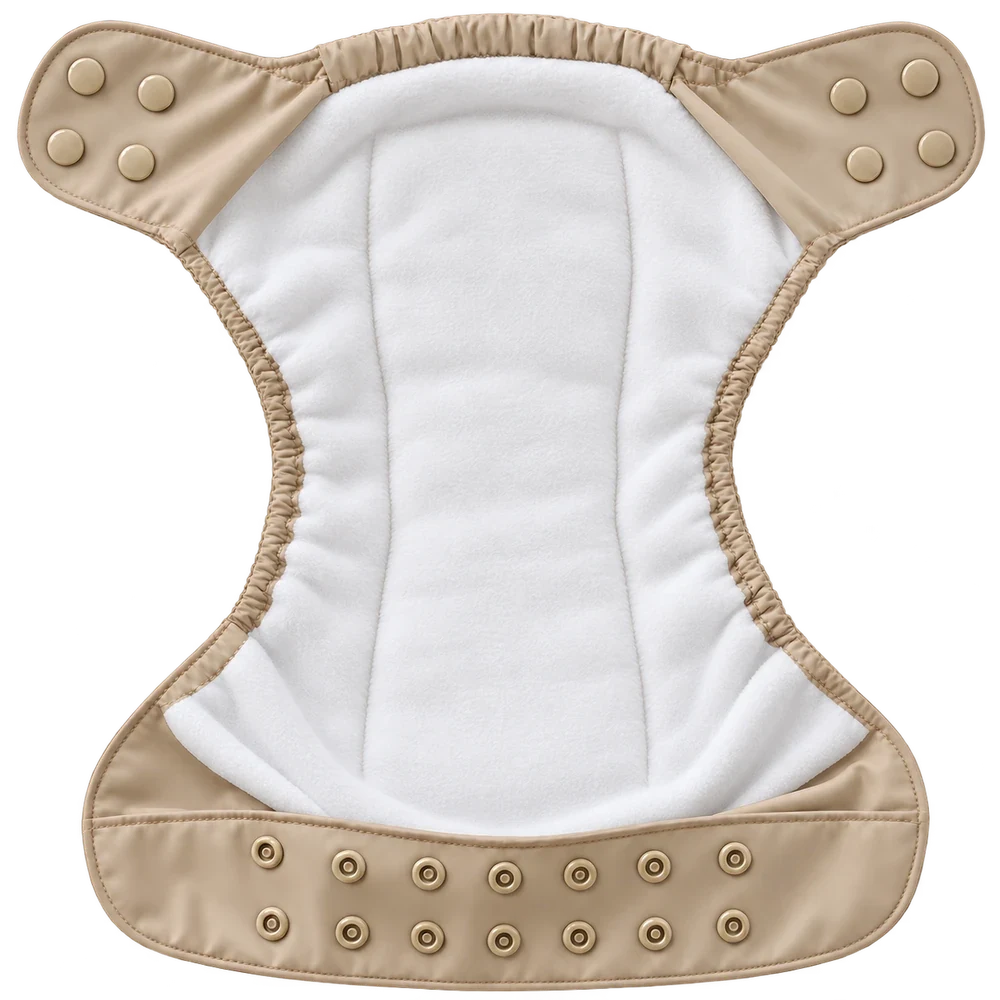
Cloth diapers
Washed and used again. Many adjust with rows of snaps from about 3.6 to 16 kg (8 to 35 lb), and some brands make a newborn size for a small baby.
- Good: One size grows with your baby
- Good: Washed, not thrown away
- Not good: Bulkier, so clothes need more room
How many diapers a day
A newborn needs a fresh diaper 10 to 12 times a day at first. The number drops as your baby grows: about 6 to 8 a day by the first birthday, and 5 to 7 for a toddler, fewer once potty training starts. Every baby is different, so take these numbers as a rough guide.
Diapers a day, by age
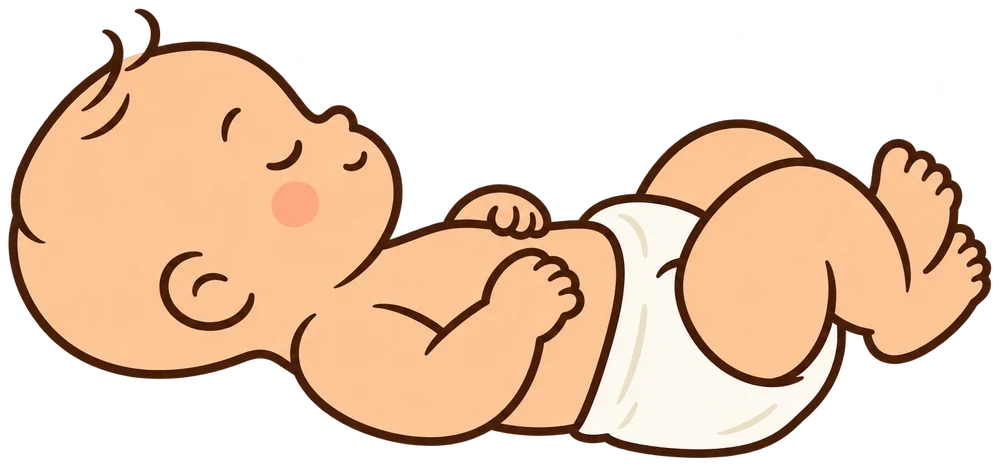 Newborn10–12a dayabout 70–84 a week
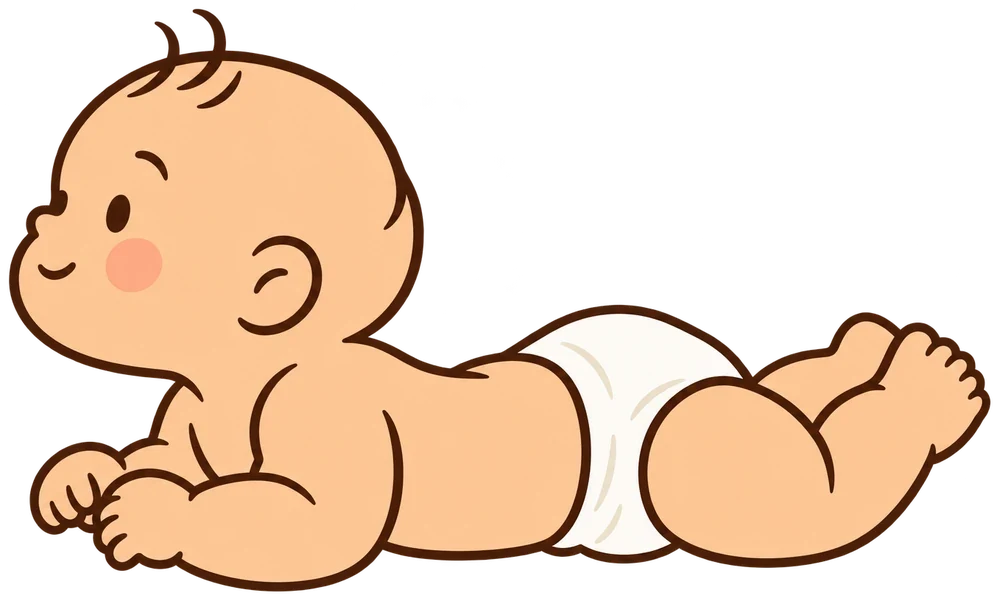 2–4 months8–10a dayabout 56–70 a week
 5–8 months7–9a dayabout 49–63 a week
 9–12 months6–8a dayabout 42–56 a week
 1 year and up5–7a dayabout 35–49 a week
2,600–3,300diapers in the first yearWorked out from the numbers above, so it is an estimate.
Pampers, Huggies and other brands
Each brand sets its own weights for a size. Pampers runs the widest in the US: its size 2 fits babies from 10 to 22 lb, where a Huggies size 2 fits 12 to 18 lb. Coterie and Hello Bello run smaller, so a baby moves up a size sooner in those brands.
Weight by size
| Size | Pampers | HuggiesSame as Kirkland and Honest | Coterie | Hello Bello |
|---|---|---|---|---|
| Preemie | Up to 6 lbUp to 2.7 kg | Up to 6 lbUp to 2.7 kg | Not made | Not made |
| Newborn | Up to 10 lbUp to 4.5 kg | Up to 10 lbUp to 4.5 kg | Up to 10 lbUp to 4.5 kg | Up to 10 lbUp to 4.5 kg |
| Size 1 | 8–14 lb3.6–6.4 kg | 8–14 lb3.6–6.4 kg | 8–12 lb3.6–5.4 kg | 8–12 lb3.6–5.4 kg |
| Size 2 | 10–22 lb4.5–10 kg | 12–18 lb5.4–8.2 kg | 10–16 lb4.5–7.3 kg | 10–16 lb4.5–7.3 kg |
| Size 3 | 13–26 lb5.9–11.8 kg | 16–28 lb7.3–12.7 kg | 14–24 lb6.4–10.9 kg | 14–24 lb6.4–10.9 kg |
| Size 4 | 15–34 lb6.8–15.4 kg | 22–37 lb10–16.8 kg | 20–32 lb9.1–14.5 kg | 22–37 lb10–16.8 kg |
| Size 5 | 20–37 lb9.1–16.8 kg | 27+ lb12.2+ kg | 27+ lb12.2+ kg | 27+ lb12.2+ kg |
| Size 6 | 23–44 lb10.4–20 kg | 35+ lb15.9+ kg | 35+ lb15.9+ kg | 35+ lb15.9+ kg |
| Size 7 | 26–50 lb11.8–22.7 kg | 41+ lb18.6+ kg | 41+ lb18.6+ kg | 41+ lb18.6+ kg |
| Size 8 | 30+ lb13.6+ kg | 46+ lb20.9+ kg | Not made | 46+ lb20.9+ kg |
Before you buy a big box
Babies come in different shapes, and so do diapers, so one that never leaks on one baby can leak every day on another. Buy one small pack each of two or three brands first. Keep the one that fits with no leaks and no red marks, then buy that one in bigger boxes. Start each new size with a small pack again.
Questions parents ask
What size diaper does a newborn wear?
Most babies born at term wear the newborn size in US packs, which fits up to 4.5 kg (10 lb), or size 1 in UK and European packs, from 2 to 5 kg (4 to 11 lb). A baby born small may need size 0 or a preemie size, and a big baby can start one size up.
Can a 10 pound baby wear size 2 diapers?
In Pampers, yes: its size 2 starts at 10 lb (4.5 kg). In Huggies, Kirkland and Honest packs, size 2 starts at 12 lb (5.4 kg), so a 10 lb baby wears newborn at the top of its range or size 1, which runs from 8 to 14 lb. Check the weight printed on your pack.
How long do babies wear size 1 diapers?
Size 1 fits 8 to 14 lb (3.6 to 6.4 kg) in US packs, and many babies wear it until about 3 months. In UK and European packs, size 1 stops at 5 kg (11 lb), so babies usually move to size 2 sooner.
When should I switch to size 2?
When your baby's weight reaches the start of size 2 on your pack, 12 lb (5.4 kg) in US packs or 4 kg (9 lb) in UK and European packs, and the size 1 diaper shows the signs above: red marks, tabs that only just meet, or leaks.
Should I size up diapers at night?
It can help. A bigger diaper holds more for the long night, as long as it still fits snugly at the legs. An overnight diaper, which holds more in the same size, is the other fix.
Are diaper sizes the same in every brand?
No. Each brand prints its own weights, and US and European packs number their sizes differently. A Huggies size 3 starts at 7.3 kg (16 lb), a Pampers US size 3 at 5.9 kg (13 lb), and a European size 3 at 6 kg (13 lb). Go by the weight on the pack, not the number.
Should I buy size 0 or size 1 nappies?
For most babies born at term, size 1. Size 0 is for babies under 3 kg (6.6 lb), often born early or small. If your baby is expected to be small, one pack of size 0 is enough to start with.
How many diapers does a newborn need?
About 10 to 12 a day at first, so 70 to 84 a week. Because many babies outgrow the newborn size within weeks, buy only a pack or two of it and have the next size ready.