What this is about
Newborns look fragile, so the natural instinct is almost always to overdress them. A bodysuit, sleeper, cardigan, hat, and blanket all feel protective at the front door. Packed together, they turn into an oven. The classic advice to add one more layer is only a starting nudge. What matters is knowing what counts as that layer, and checking the one spot that tells you the truth.
One more layer means one light piece
Newborns lose heat faster than adults and have very little insulating fat. That is why midwives and doctors recommend one light layer more than you would wear comfortably in the same spot.
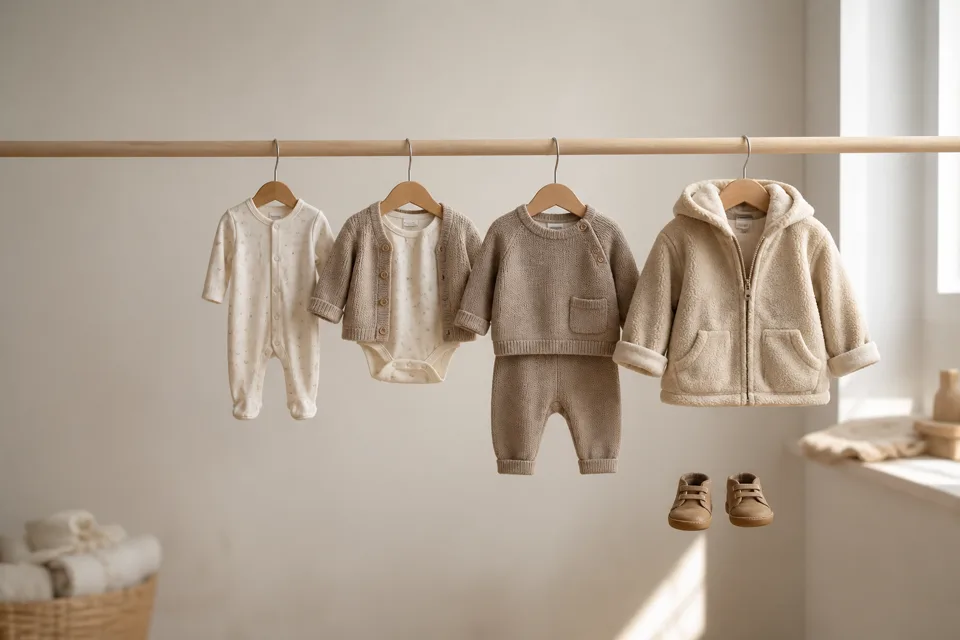
Light is the key word. If you are comfortable in a T-shirt, your baby wears a bodysuit and a light long-sleeve cotton top. If you are in a sweater, they wear a bodysuit, trousers, and a cardigan. A fleece pram suit, a padded blanket, and a wool hat are not one extra layer. That is three heavy pieces doing the same job at once.
Keep that extra light piece handy during the first 3 months. After 3 months, their temperature regulation catches up and you can start with the same layers an adult wears. Treat this as a rough guide, not a switch that flips on a specific day. How your baby feels in the room matters much more than the calendar.
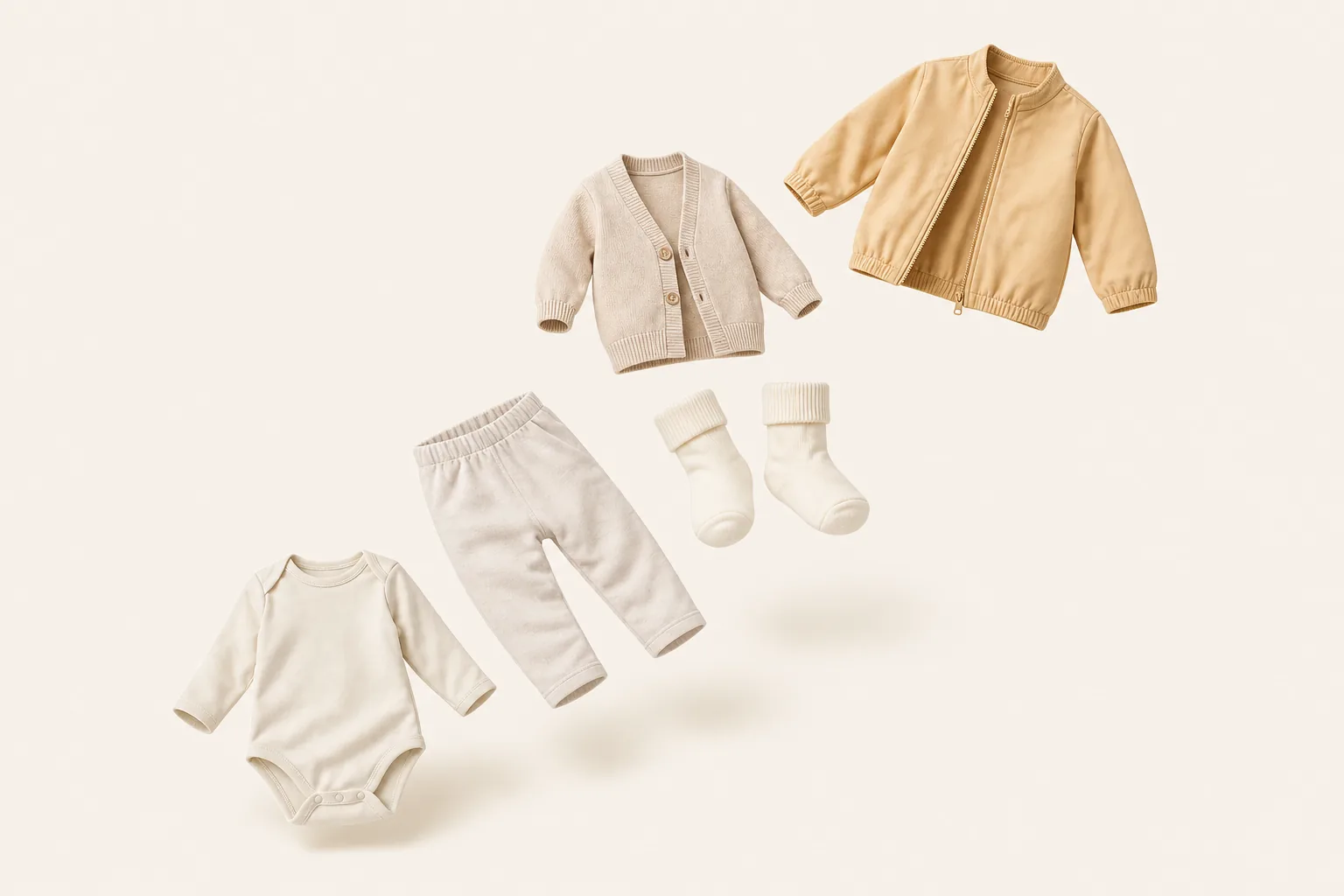
If those first weeks fall in cold weather, the winter newborn checklist turns the same idea into a small, practical wardrobe.
Cold hands can fool you
Every new parent touches cold little fingers and immediately reaches for a blanket. But newborn hands and feet almost always feel cool. Their circulatory system is brand new and keeps blood centered around vital organs. Cold hands do not mean a cold baby.
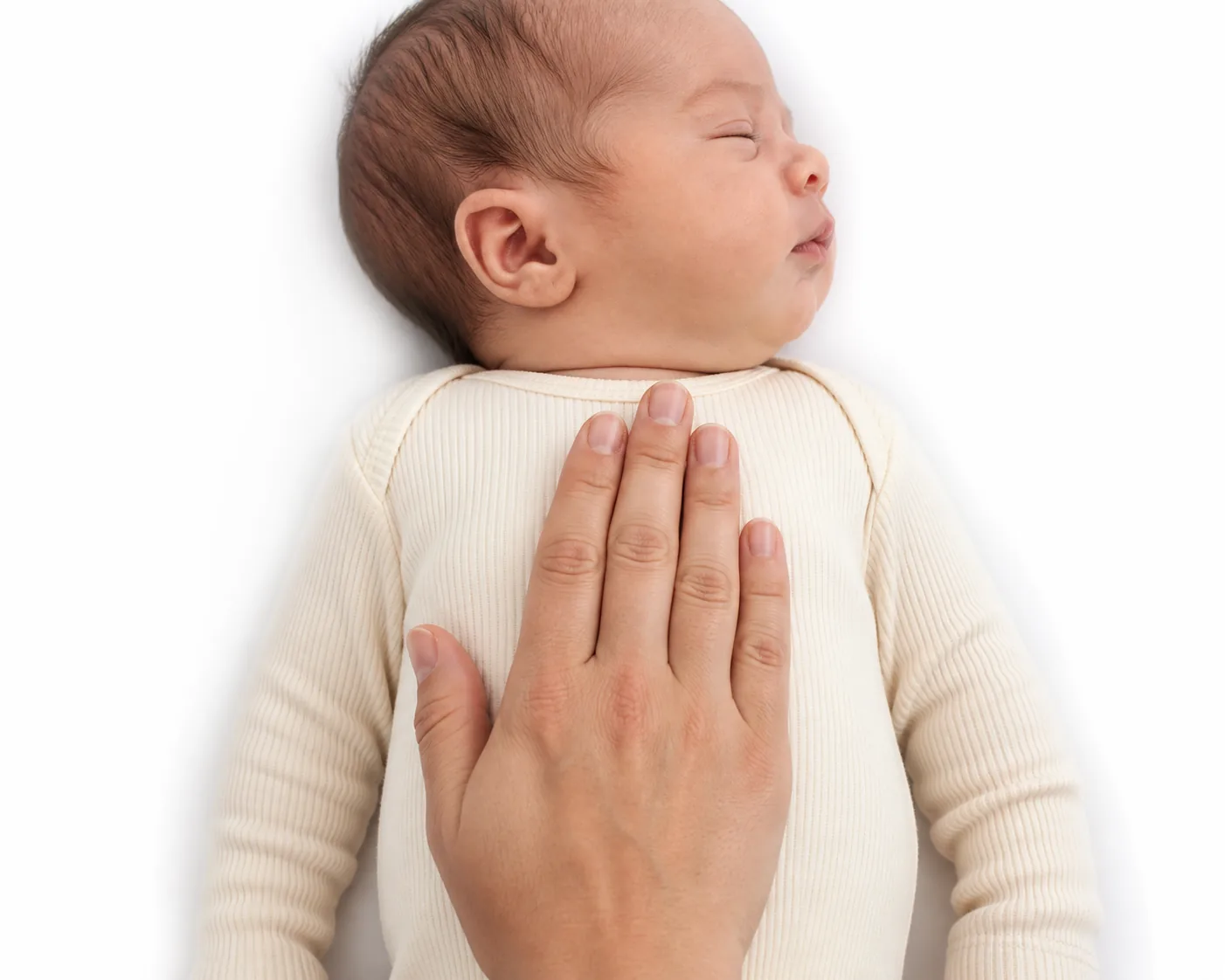
To know what is really happening, slide two fingers down the back of their neck or onto their upper chest. Warm and dry skin means the outfit is spot on. If the skin feels damp, sweaty, or hot to the touch, they are overheating. Strip off a layer immediately. If the torso feels cool, add a light layer.
Keep in mind that your surroundings change faster than the weather outside. Moving from a windy sidewalk into a heated hallway or a car can turn a perfect outfit into a sauna in minutes. Whenever you step inside, check the neck again.
A carrier can be warmer than it looks
A baby carrier changes the math completely. Strapped against your chest, your baby is pressed against a 37°C radiator. The carrier fabric itself wraps between one and three layers of thick material around their body. In a carrier, you count as a layer.
Dress your baby in indoor layers for the carrier, not heavy outerwear. If you put them in a winter coat and zip your own jacket over both of you, they will overheat fast. Keep their face clear, with their chin off their chest and nose free of fabric. Check their neck after ten minutes of walking.
Take thick layers off for the car seat
It is freezing outside, the car is cold, and the temptation to strap your baby into the seat in a puffy winter coat is huge. Resist it. Thick coats and quilted pram suits compress instantly under the force of a sudden stop. The harness might feel tight over the fluff, but in a crash, that padding flattens to nothing and leaves dangerous slack.
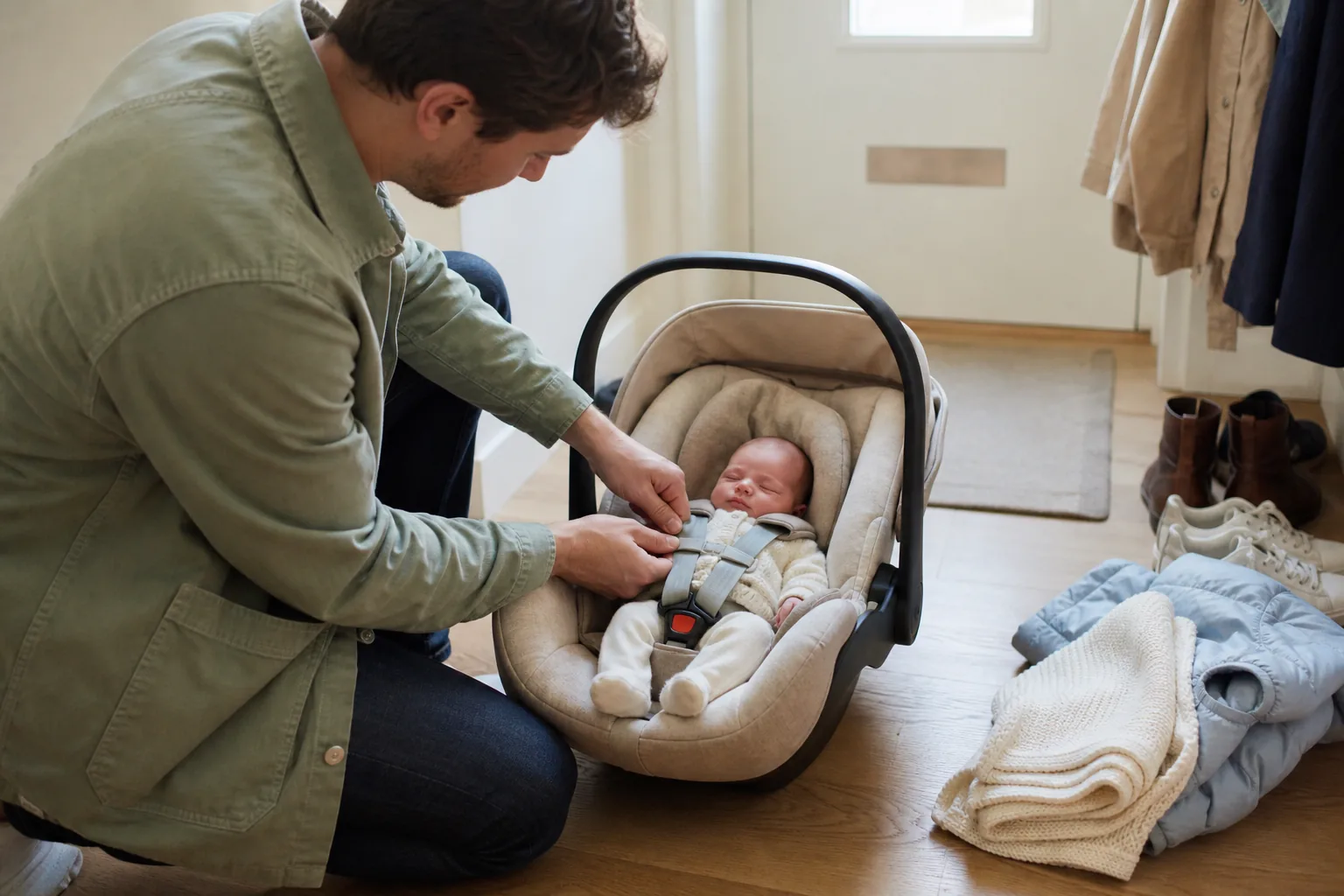
Under the harness, clothes must stay thin and fitted. Bodysuit, leggings, thin socks, and a light cardigan are fine. Pull the straps snug until you cannot pinch any loose webbing at the collarbone. Then lay a blanket over the buckled harness to keep them warm.
Keeping warmth on top of the straps makes driving much easier. As the car heater kicks in, you can pull the blanket away without unbuckling the seat. Never loosen the harness while the car is moving.
Hot weather changes the starting outfit
In hot weather, the "one more layer" rule disappears. Overheating is a real danger for newborns because they cannot sweat properly or shed heat easily. Between 24° and 27°, a single light cotton layer like a long-sleeve bodysuit and thin trousers is plenty. From 28°, strip down to a single loose, short-sleeve romper or just a diaper in the shade.
Babies under 6 months have delicate skin and should stay completely out of direct sunlight. Use loose, breathable fabrics to shade their arms and legs, plus a wide-brimmed sun hat. Never drape a blanket or muslin cloth over the stroller opening to block the sun. Even a thin muslin creates a greenhouse trap that spikes the temperature inside within minutes. Keep the opening clear and seek natural shade.
For deeper summer guidance, read how to dress for the heat. Never add layers in the heat just because an infant is young.
Hats leave when you come inside
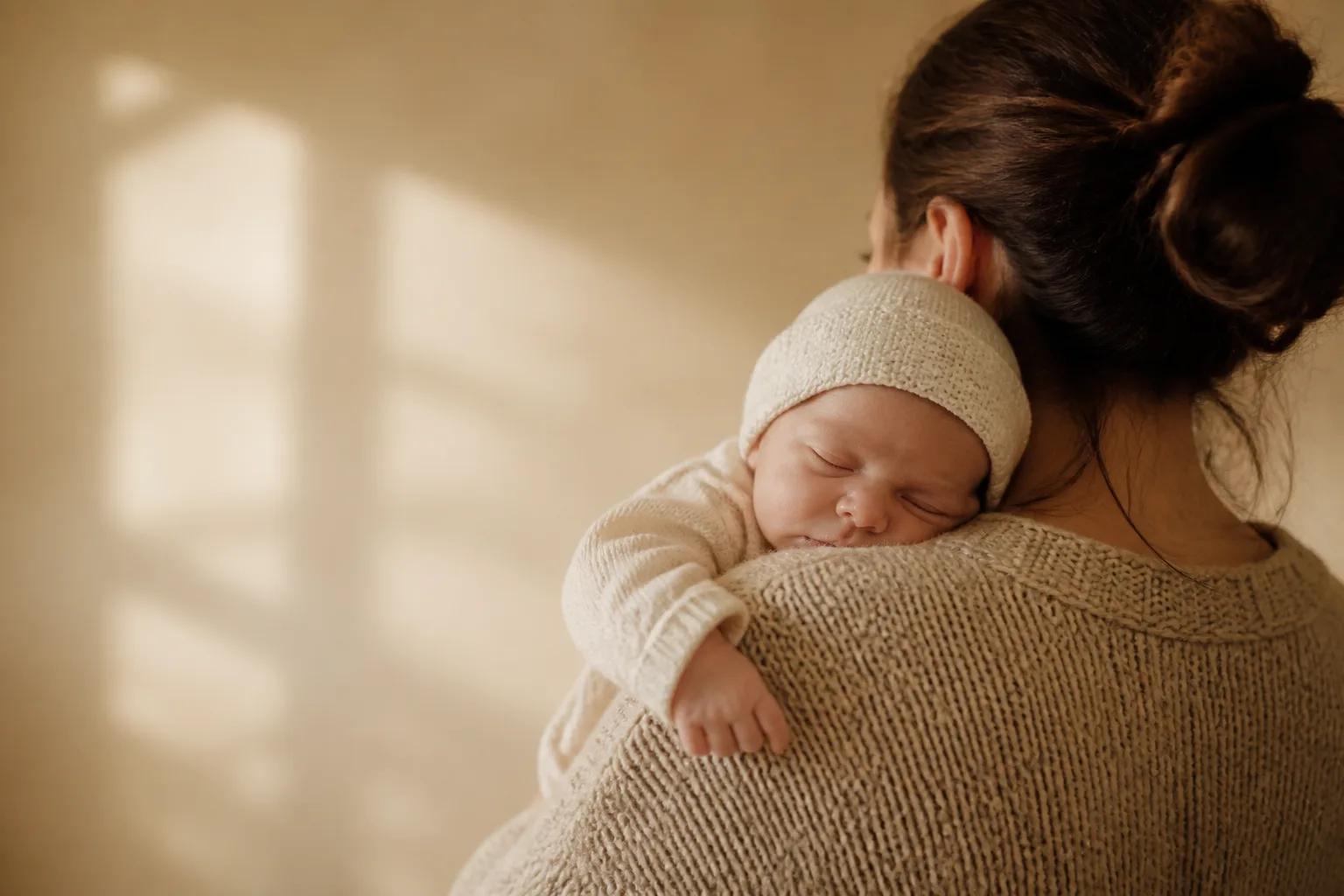
Hospitals put little knit beanies on babies the second they are born. Wet newborns fresh from the womb lose heat fast, so that first hat makes total sense. But once you are home, babies do not need to live in hats.
Babies release excess heat mainly through their head and face. Leaving a hat on indoors, inside a warm car, or during sleep traps heat and can quickly cause overheating. Outside, a warm knit hat protects against wind and cold, and a brimmed sun hat shades from the sun. The moment you step through your front door, take the hat off.
Sleep follows the room
The outdoor forecast stops at the bedroom door. At night, what your baby wears depends entirely on the temperature of the room where they sleep, not how cold it feels on the street. Always take off outdoor jackets, pram suits, and hats before putting a baby down in their crib or bassinet.
A well-fitted baby sleep bag is the safest way to keep warmth consistent without loose bedding. Check the manufacturer's room chart to match the bag thickness to your nursery temperature. Never put a blanket over a sleep bag. Their head must stay bare, with no hoods or hats in bed.
Babies born early need personal advice
Premature and low-birth-weight babies have less body fat and immature temperature regulation. They lose heat much faster than full-term babies and need extra care to stay warm. The general advice here is for healthy, full-term infants. If your baby arrived early or spent time in the neonatal unit, follow the personalized clothing plan given by your medical team.
Questions parents ask
Does a blanket count as a layer?
Yes. A blanket is a full layer of warmth, even if it is easy to peel back. In a stroller or car seat, tuck it over the harness rather than under it. In a crib, avoid loose blankets entirely and use a fitted sleep bag instead.
What if my newborn falls asleep in the stroller?
Let your baby nap in a carrycot approved for sleep, keeping the face visible and airflow clear. If your baby falls asleep in a stroller seat, move your baby to a crib or bassinet as soon as you can. As soon as you get home, take off the outdoor hat and unfasten warm outer layers. For a nap in the crib, dress your baby for the indoor room.
Get urgent medical help
- Your baby is difficult to wake.
- Your baby is not feeding.
- Your baby has trouble breathing.
- The skin looks blue, gray, pale or blotchy.
- The cry is weak, high-pitched or continuous.
If your newborn seems seriously unwell, get urgent medical help.