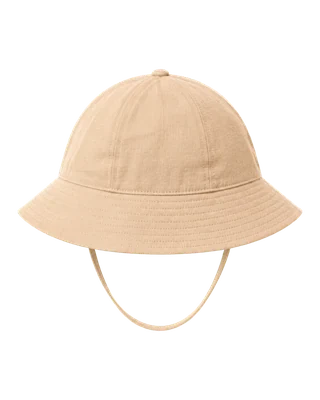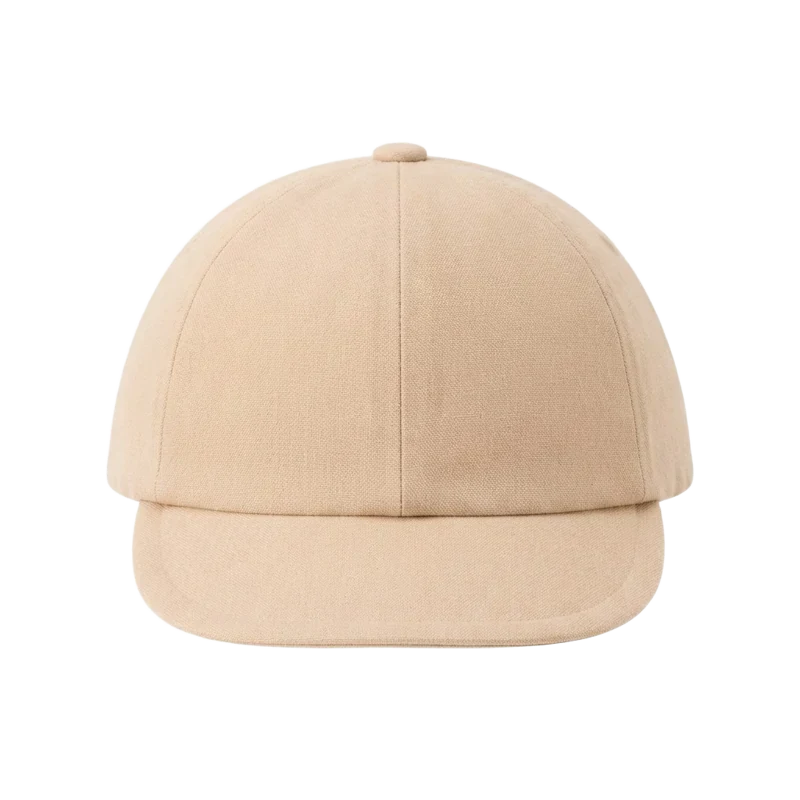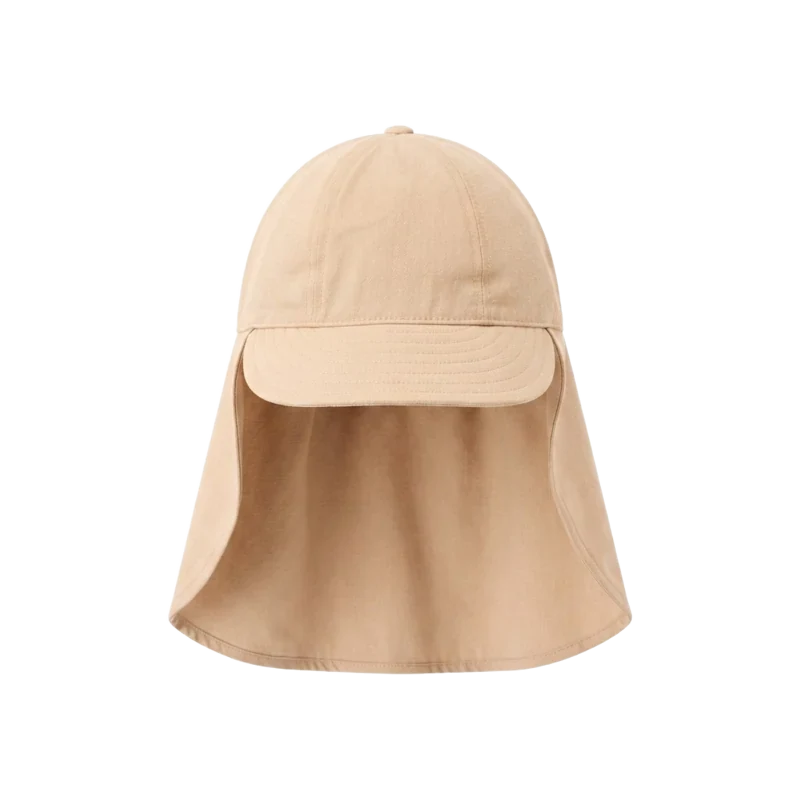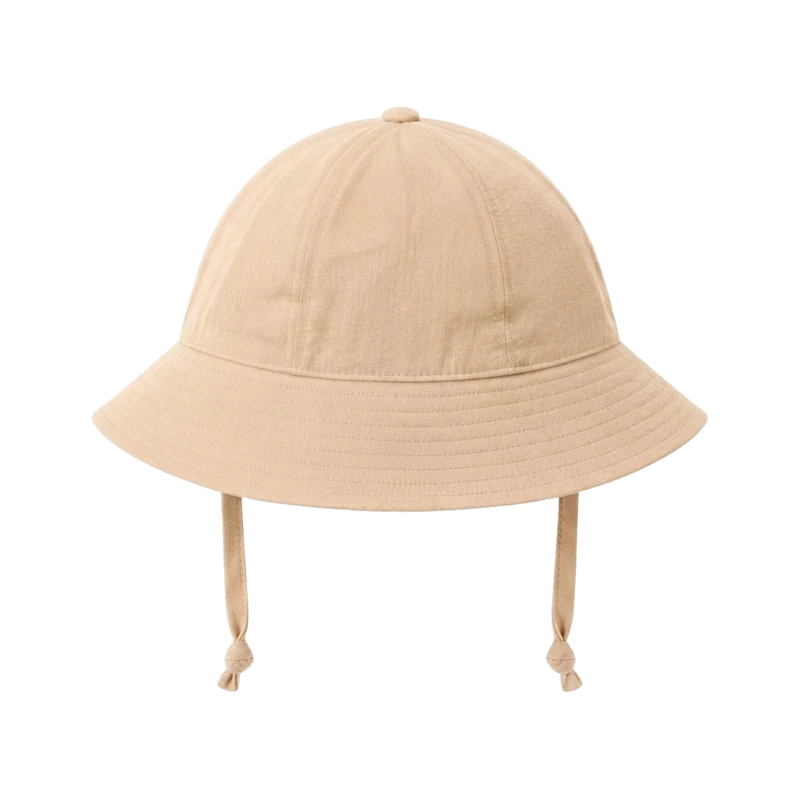
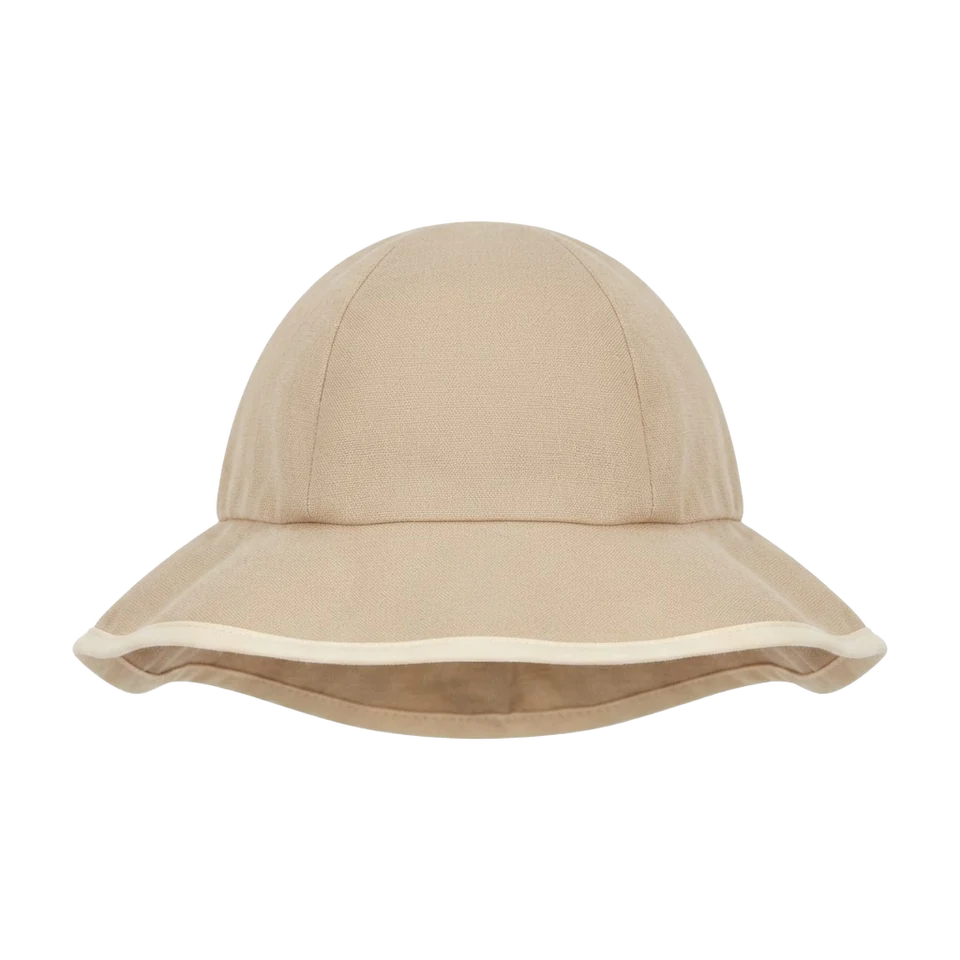
A floppy sun hat is the soft one among sun hats: a wide brim of light fabric with nothing stiff inside. It shades your baby's face, ears and neck, and it doesn't mind being sat on.
The soft brim is the reason to pick one. When your baby leans back in the stroller or rests on your chest in a carrier, the brim folds instead of pushing the hat down over the eyes.
Wear it whenever the UV index reaches 3, like any sun hat. Soft brims have one weakness: they droop. A floppy brim can fall into the eyes or lift in a breeze, so a toddler who runs is often better off with a firmer one.
- For ages0–3years
- You'll need1–2sun hats
- Wear it fromUV 3
Floppy or firm brim?
Both shade well when the brim is wide enough. They differ in one thing: a soft brim gives way, and a firm one holds its shape.
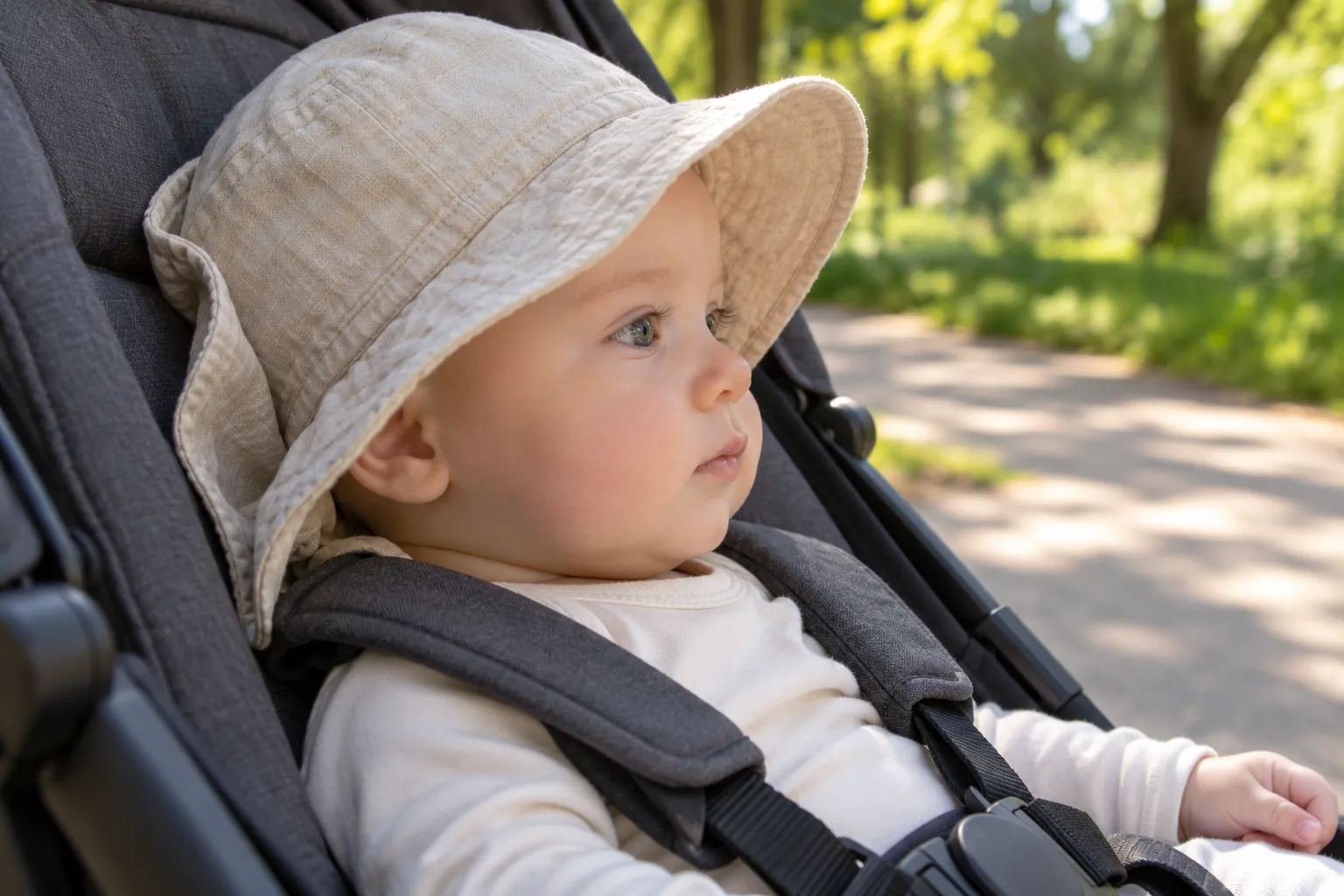
Floppy brim
The brim is just soft fabric, so it gives way wherever it meets something. That suits a baby who is carried or rides leaning back.
- Good: Folds flat against a seat or chest
- Good: Squashes into a bag
- Not good: Can droop into the eyes

Firm brim
A stiff layer inside, or rows of stitching across the whole brim, hold it straight out whatever your baby is doing. That suits a baby who sits up, crawls and walks.
- Good: Keeps the view clear
- Good: Stays level when your baby runs
- Not good: Bumps a seat back or your chest
Types of floppy sun hat
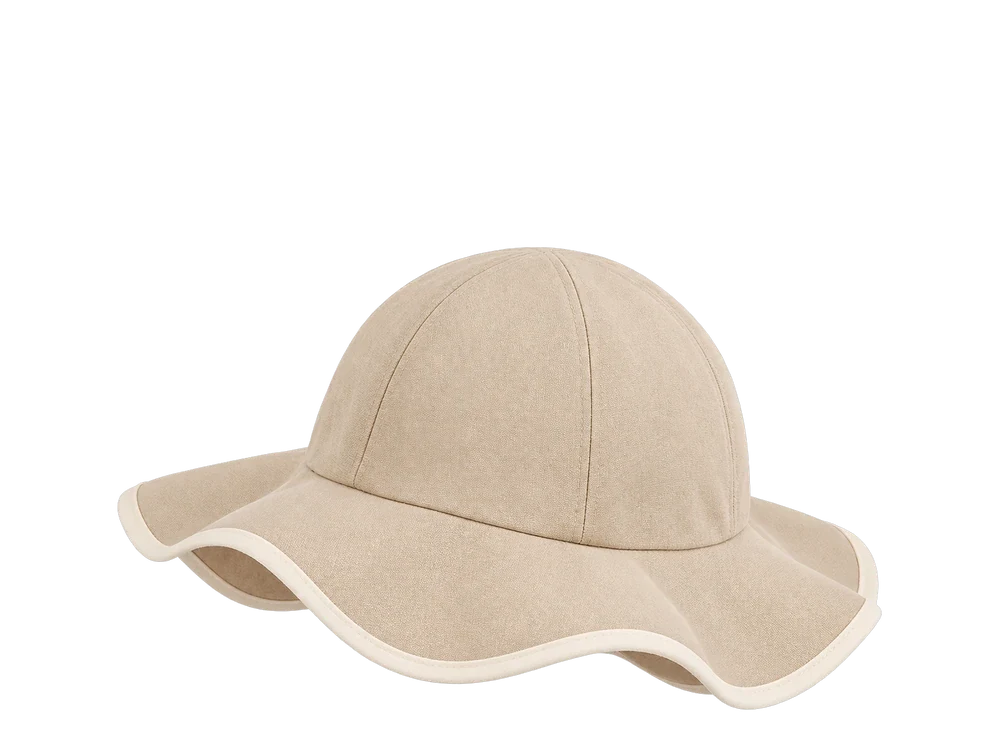
Brim all round
A soft brim the same width all the way round, shading the face, ears and neck evenly. It folds wherever it meets your chest, so it suits a baby in a carrier.
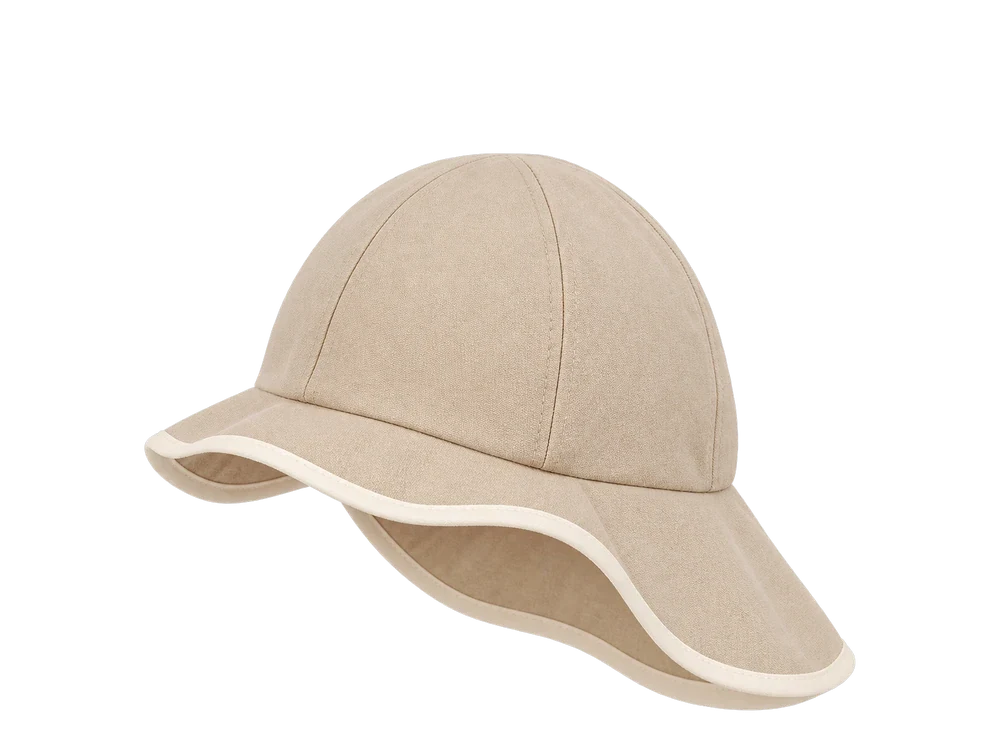
Longer at the back
A short brim at the front and a long one behind. The short front stays up and the long back shades the neck, though the face gets a little less shade. A good pick if a brim the same width all round keeps falling forward.
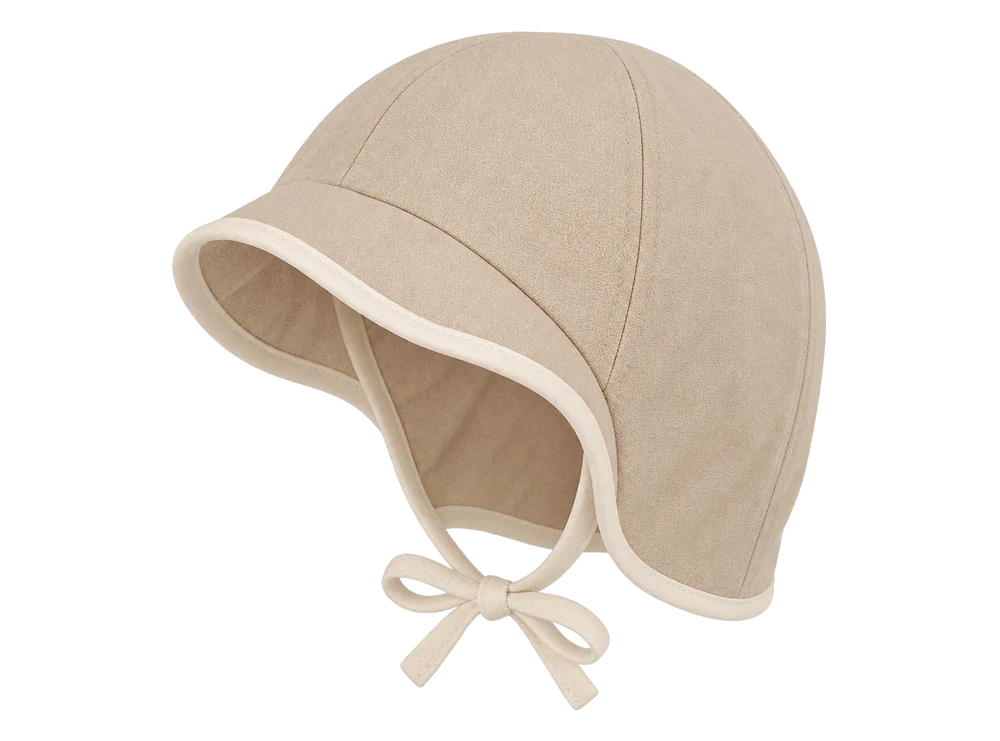
Sun bonnet
A soft brim around the face only, a back that comes down over the neck, and short ties under the chin. Nothing sticks out behind the head, so it suits a small baby who lies back.
How to choose a floppy sun hat
1. A front that stays up
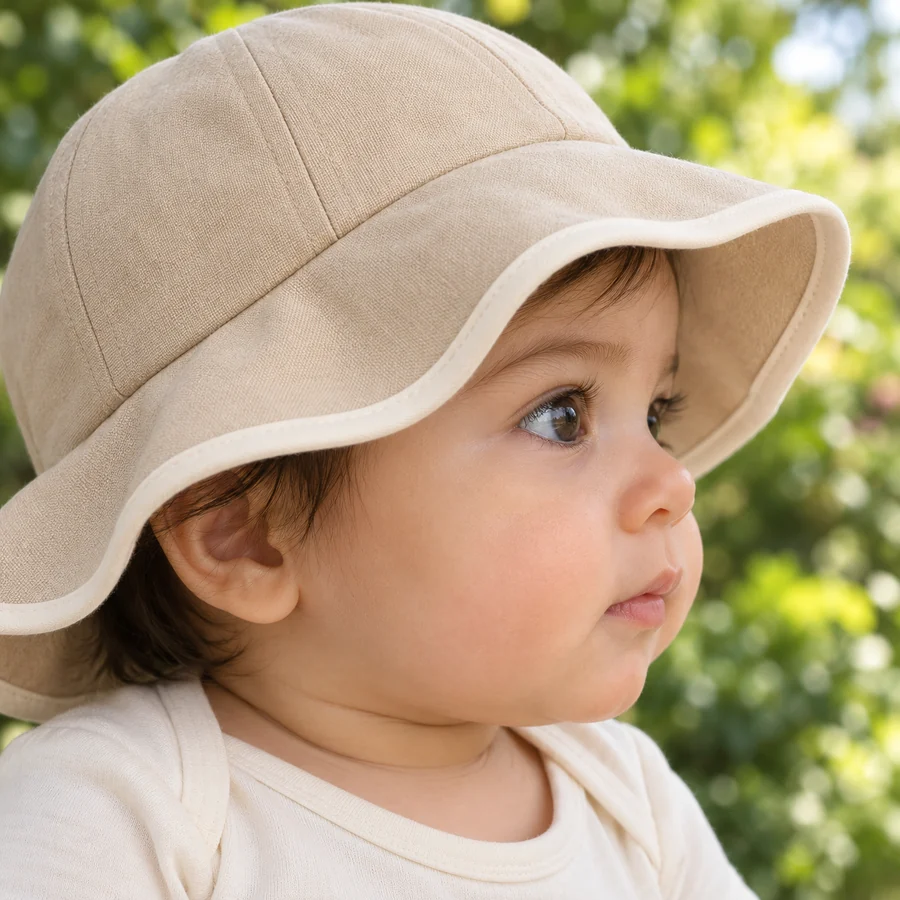
A few rows of stitching near the edge stop the front from drooping, while the brim still folds. On your baby, the front edge should sit just above the eyebrows, because a brim in the eyes gets pulled off.
- Good: Rows of stitching near the edge
- Good: A cord at the back to tighten
- Not good: Front edge past the eyebrows
2. Shade on the ears and neck
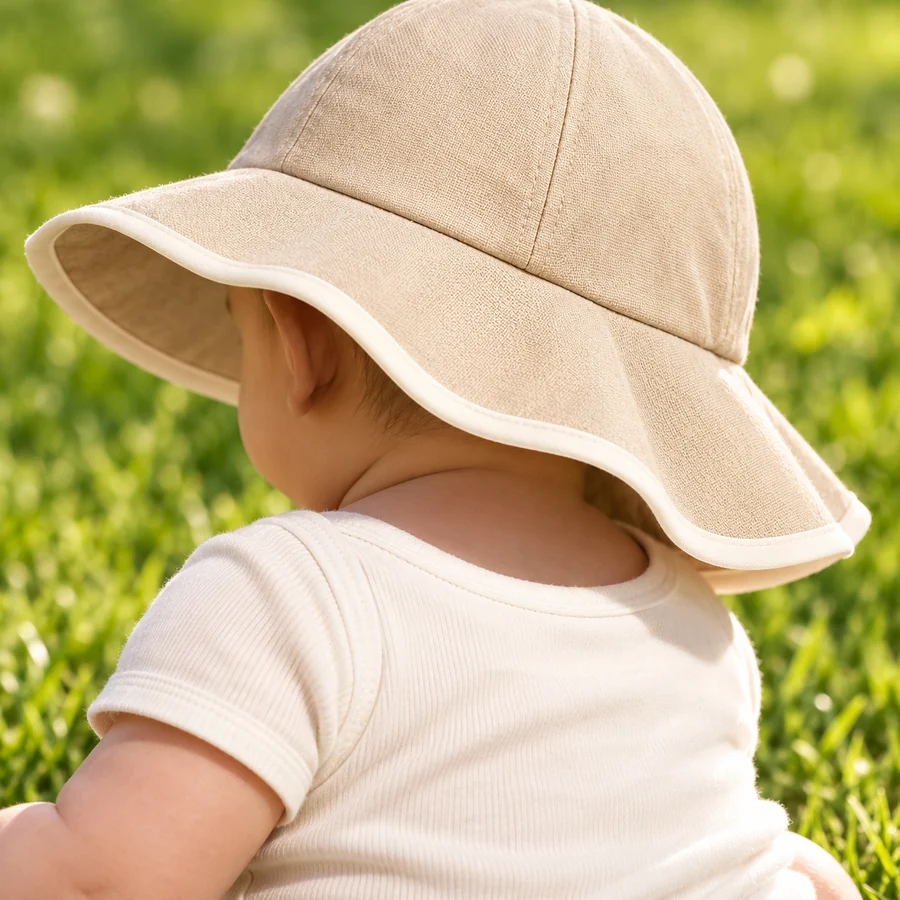
Look for a brim of about 7.5 cm (3 in) all round. A hat with a short front, or a sun bonnet, covers the neck with a long back instead. Whatever the shape, check on your baby in the sun that the ears and the back of the neck are in shade.
- Good: About 7.5 cm (3 in) of brim
- Good: Ears and neck in the shade
- Not good: Ears left in the sun
3. A close weave
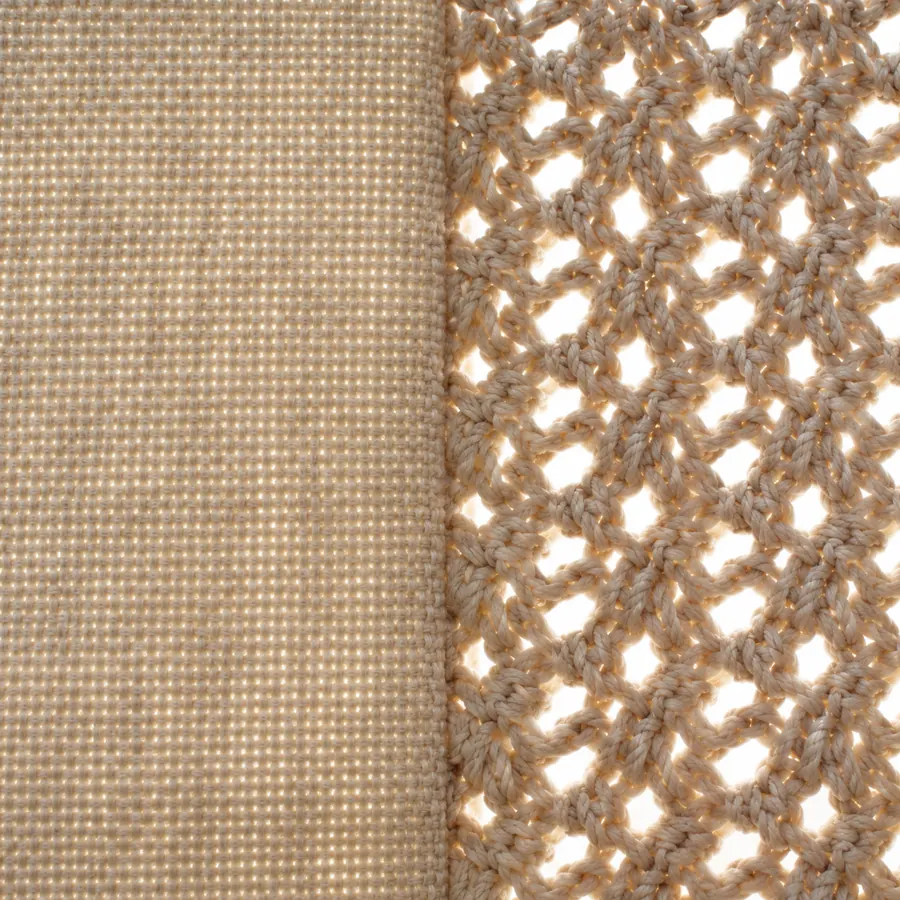
Cotton and UPF fabric both work when the weave is close. Hold the hat up to a window: the less light comes through, the better. A UPF 50+ label means a lab measured the fabric, and only 2% of the sun's UV gets through.
- Good: Little light through the brim
- Good: UPF 50+ on the label
- Not good: Holes in crochet or straw
Questions parents ask
What's the difference between a floppy hat and a bucket hat?
A bucket hat has a shorter brim that angles down from a deep crown (the part that covers the head). A floppy hat's brim is wider and soft, so it shades more of the neck but can droop.
How do I stop a floppy sun hat falling over my baby's eyes?
Tighten the cord or band at the back so the hat sits higher, and turn the front of the brim up. If the brim has gone limp, soften it with steam and press it flat with your hands on a table. If it still droops, a hat that is longer at the back, or one with a firmer brim, suits your baby better.
Is a floppy sun hat good for a newborn?
Yes, a soft brim suits a newborn, who rides lying back or on your chest. Under 6 months, babies stay out of direct sun, so shade comes first and the hat is for the moments you can't avoid. When your baby falls asleep, take the hat off (untie a sun bonnet first) and let the stroller canopy give the shade.
Will a floppy hat stay on in the wind?
Not on its own, because a breeze lifts a soft brim. Pick one with a chin strap whose clip comes apart if it catches, and use it on windy days.
What size floppy sun hat does my baby need?
Buy by head size, not age. Wrap a soft tape just above the eyebrows and ears, and between two sizes, take the bigger one.