What this is about
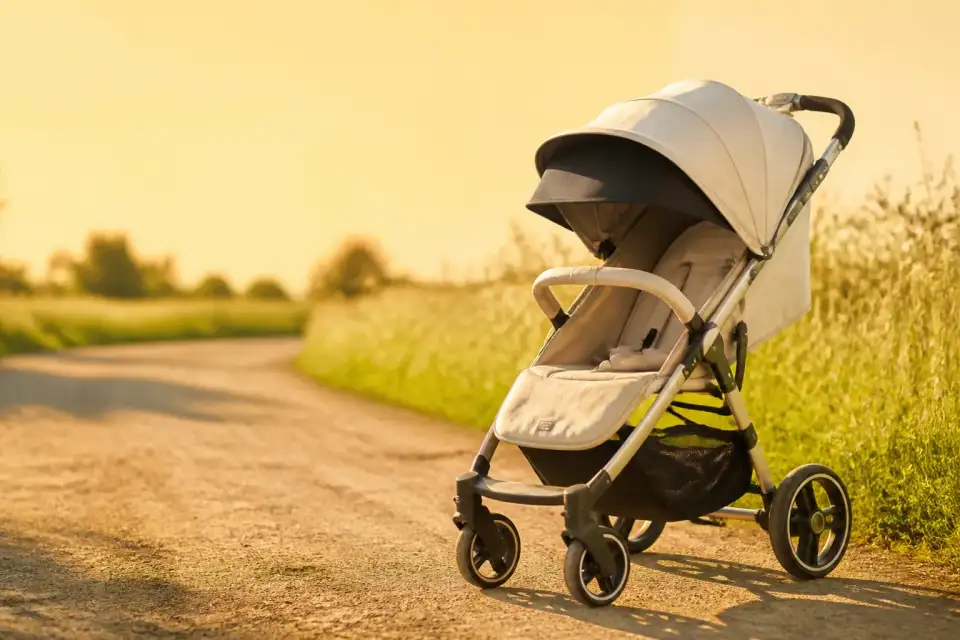
A baby falls asleep in the stroller just as you reach the café. You unzip the jacket, fold back the blanket and sit down, but the hat stays on because taking it off might wake them. It is an easy habit to keep. Outside, a hat is weather gear for shade or biting air. The moment you step through a heated doorway, that same hat turns into an indoor heat trap.
The three hats are not interchangeable
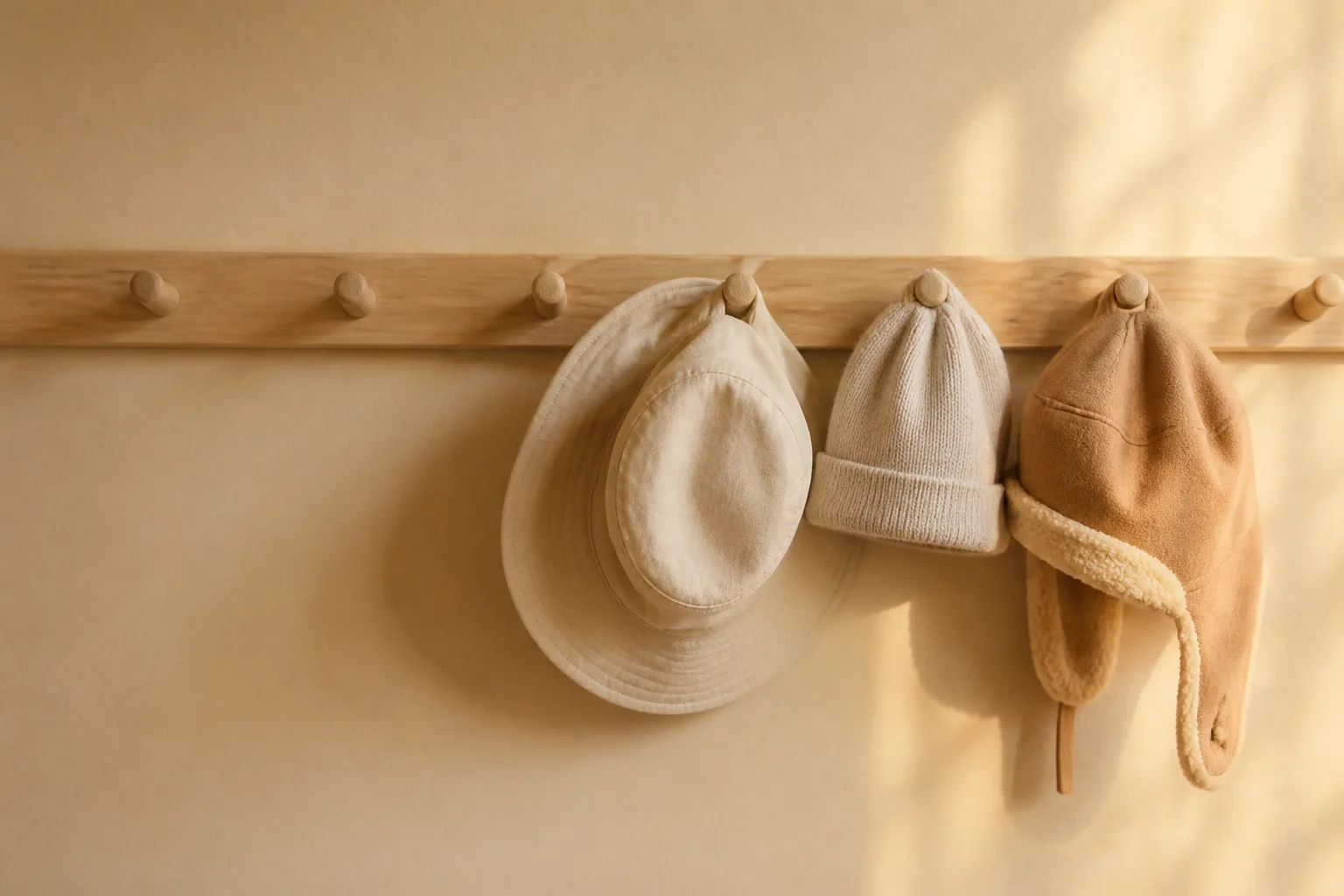
A sun hat, a light knit hat and a lined warm hat each solve one physical problem. A sun hat casts shade. A knit hat cuts the chill for a baby sitting still. A lined warm hat shields bare ears from freezing wind. Putting on a hat simply because you are going outside usually leads to a sweaty head or cold ears.
A hat also cannot rescue an outfit that is too thin through the body. Parents often pull a heavy hat down tight when a baby feels cool, but warmth starts at the core. If the chest or back of the neck feels cool, add a clothing layer to the body instead.
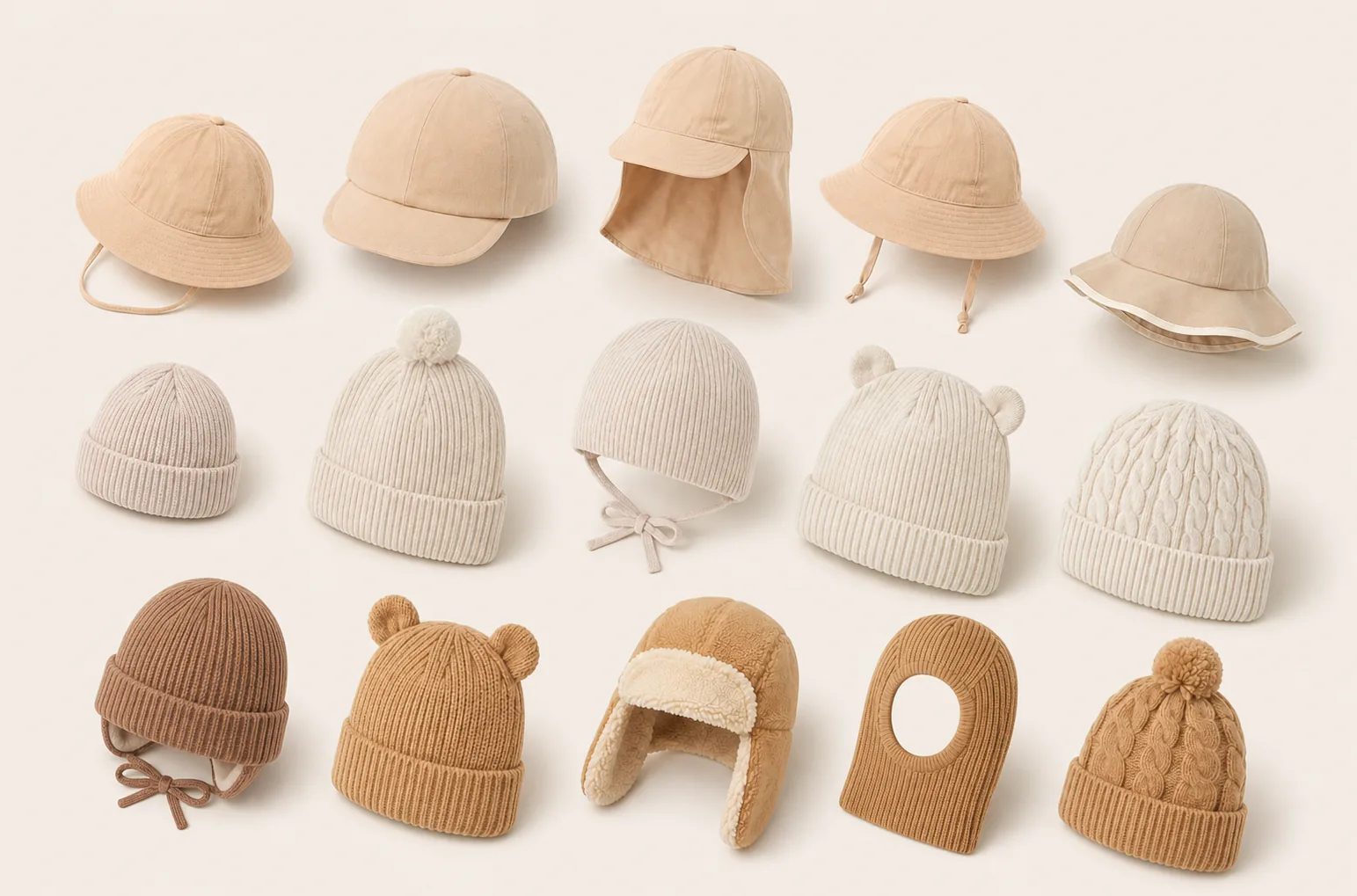
The sun hat makes shade, not warmth
A bright spring morning with a 14° breeze is where hats get confusing. Cotton sun hats block ultraviolet light, but thin cotton does nothing against cold wind. On cool, bright days, a stroller sunshade paired with a light knit hat often works better than forcing a sun hat into the wind.
When the sun is strong, protection starts at UV 3. Look for a wide brim that shades the face, ears and neck without flopping into your baby's eyes. A bucket hat or a legionnaire flap covers the vulnerable back of the neck. If the brim collapses forward, your baby cannot see and will pull it off within seconds.
Under 6 months, sunscreen is not recommended, so physical shade does the heavy lifting. A hat protects the scalp and face, but it cannot make direct midday sun safe on its own. Keep the stroller in deep shade, pull the canopy forward, and use lightweight clothing over bare arms and legs.
The knit hat is for a chilly stroller
A baby in a stroller is the coldest person on the walk. You are moving and pushing, so you stay warm. Your baby is sitting completely still in the moving air. A baby's head is large relative to their body, and fine hair offers almost no insulation.
Below 12° feels-like, pack a light knit hat for the stroller. A simple ribbed cotton or fine knit covers the crown and cups the top of the ears without overheating. Keep it lightweight. A heavy winter hat in 11° weather turns into a soggy head within twenty minutes.
The warm hat covers the ears in cold air
Below 8° feels-like, cold air and wind change the requirement. Knitted wool lets gusting wind blow straight through the loops, and freezing wind on small ears hurts. This is when your baby needs a lined warm hat.
Look for a hat with a wind-resistant shell or fleece lining, and flaps that stay securely over the ears. Check that the front edge stays comfortably clear of the nose and mouth. Your baby should be able to turn their head from side to side without the hat twisting across their eyes.
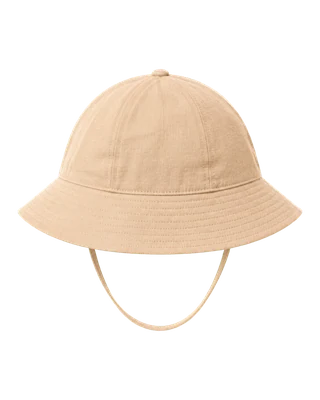
Shade
At UV 3, use a sun hat that shades the face, ears and neck. Keep the brim clear of the eyes.
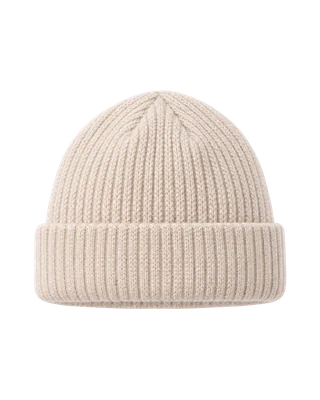
Light warmth
Below 12° feels-like, add a knit hat for stroller time.
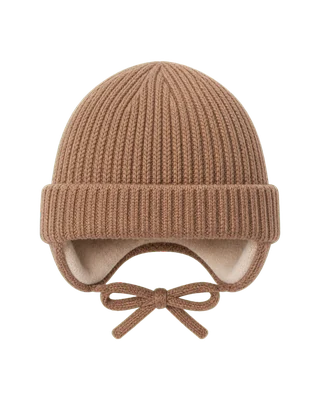
Cold ears
Below 8° feels-like, use a warm hat that covers the ears.
Indoors and sleep need a bare head
Most parents leave hats on indoors because of the maternity ward. Delivery rooms put a little knit hat on a newborn to help them adjust during their first day. Once you are home in a normal room, that job is done. Babies release excess heat through their head and face. Covering their head indoors traps body heat that needs to escape.
The hardest moment is the doorway. Your baby finally fell asleep on the walk, and taking off their hat risks waking them. Take it off anyway. A sleeping baby in a warm hallway, shop or café overheats quickly. Gently ease the hat off, unfasten any chin strap, and let their head cool. The same strict rule applies in the car. A car interior warms up rapidly, and a warm hat combined with a car seat creates an immediate sweat trap.
For nighttime sleep and cot naps, the rule has no exceptions. A baby's head stays completely bare. No hats, no hoods, and no headbands.
A good fit stays clear of the eyes
A baby hat that fits on the changing mat can fail the moment your baby looks around. If the crown is too loose, the hat twists sideways in the stroller, burying an ear and blinding one eye. If it is too tight, it leaves red indentations across the forehead.
Pay attention to fastenings. Soft velcro tabs or gentle elastic under the chin keep a sun hat on without creating a hazard. Avoid hats with long decorative ties or strings that can catch or knot tightly under a double chin.
A hood only works while it stays in place
Pram suits and winter jackets usually come with built-in hoods. They look warm on the hanger, but in a stroller they rarely stay put. When your baby turns to watch something, their head turns inside the hood. The hood stays facing forward, pressing into their cheek while leaving the opposite ear bare to the wind.
A warm hat hugs the head and turns with your baby. In cold weather, rely on a good hat and leave the hood folded down behind them. Putting a puffy hood up over a thick winter hat also creates a bulky wad of fabric behind the neck, forcing the chin down toward the chest.
Questions parents ask
Does my baby need a hat in the carrier?
Use a sun hat for strong UV or a warm hat for cold outdoor air. Your chest provides significant heat, so your baby rarely needs heavy head layers in a carrier. Take the hat off the moment you walk indoors.
What if my baby constantly pulls the hat off?
Check for scratchy inner tags, tight elastic, or a brim that blocks their vision. If they still refuse it in sunny weather, pull the stroller canopy fully forward instead of turning the walk into a battle.
What if the head feels sweaty?
Take the hat off immediately and feel the bare skin on the back of the neck. If the neck is damp, the entire outfit is too warm, so take off one body layer. If the neck is warm and dry, the hat was simply trapping heat.