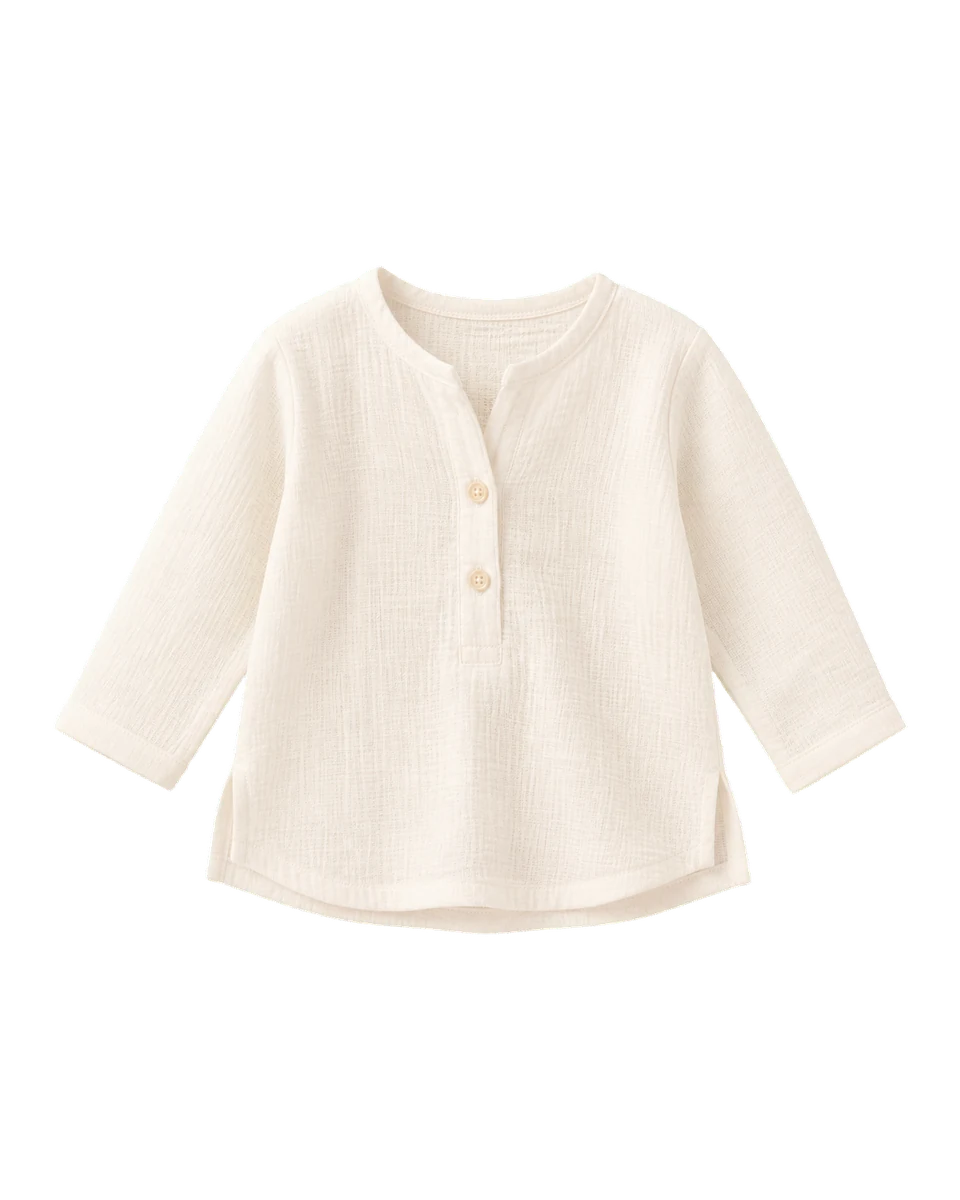
A sun cover shirt is a light top with long sleeves that keeps the sun off your baby's arms, shoulders and back. Most are cut looser than an everyday long-sleeve T-shirt, so your baby stays cool, and woven close, so less sun gets through. For the pool, the snug, stretchy kind is called a rash guard.
Your baby wears it outdoors whenever the UV index is 3 or more, as part of a sunny-day outfit: on walks, in the carrier, at the park, the beach or the pool. Below 3, indoors or in the shade, it can stay in the bag.
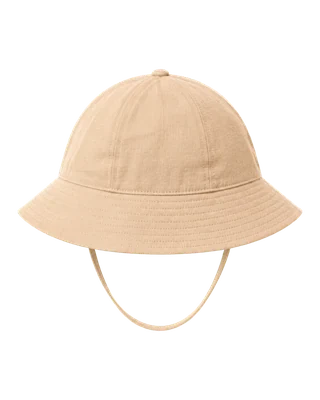
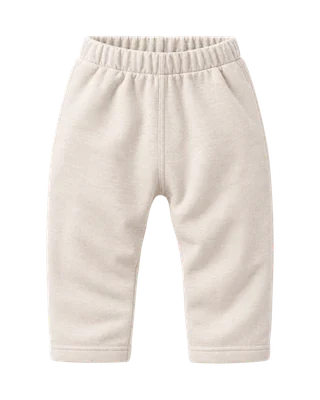
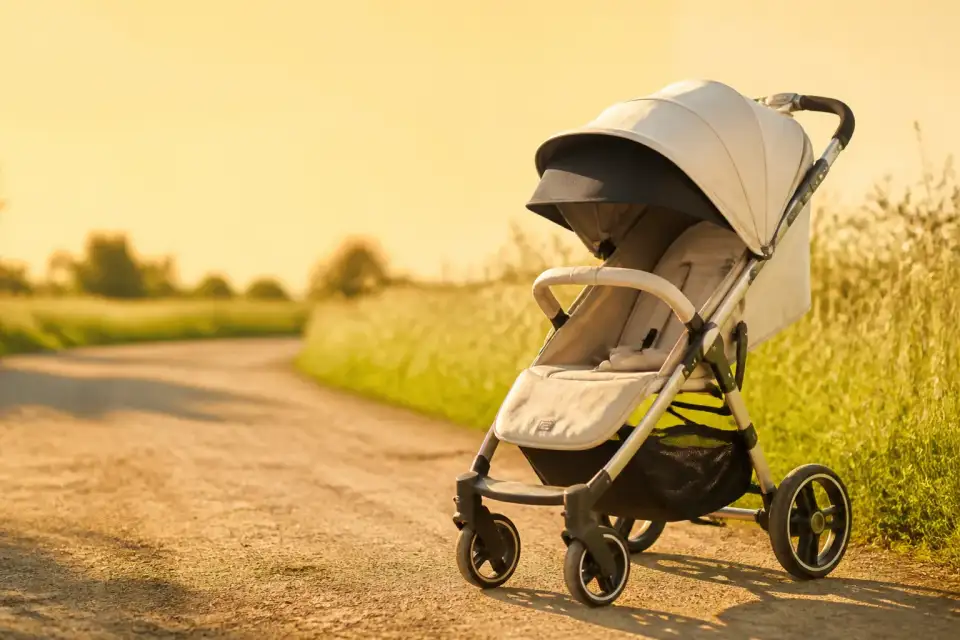
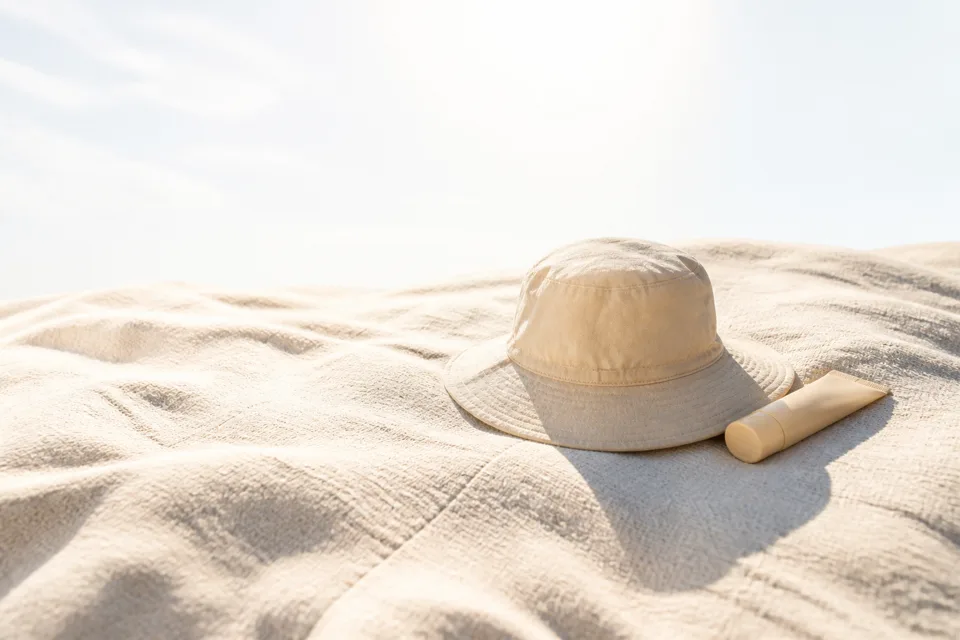
Under 6 months, keep your baby out of direct sun. Shade comes first, then a wide-brim sun hat, a sun shirt and light baby pants, before sunscreen.
- For ages0–3years
- You'll need1–2per size
- Wear it fromUV 3
What UPF means, and how fabric blocks the sun
UPF (ultraviolet protection factor) tells you how much of the sun's UV gets through a fabric to the skin. A UPF 50 shirt lets 2 in 100 of the sun's rays through, so it blocks 98% of both kinds of UV (UVA and UVB). UPF 30 to 49 is very good, and UPF 50+ is excellent.
UPF is not SPF. UPF is measured on the fabric in a lab, against UVA and UVB. SPF is the number on sunscreen: it is tested on skin, by how much longer the skin takes to redden, and mainly against UVB.
Not every shirt blocks much. A plain white cotton T-shirt is only about UPF 7 when dry, and about UPF 3 when wet, because water makes cotton more see-through.
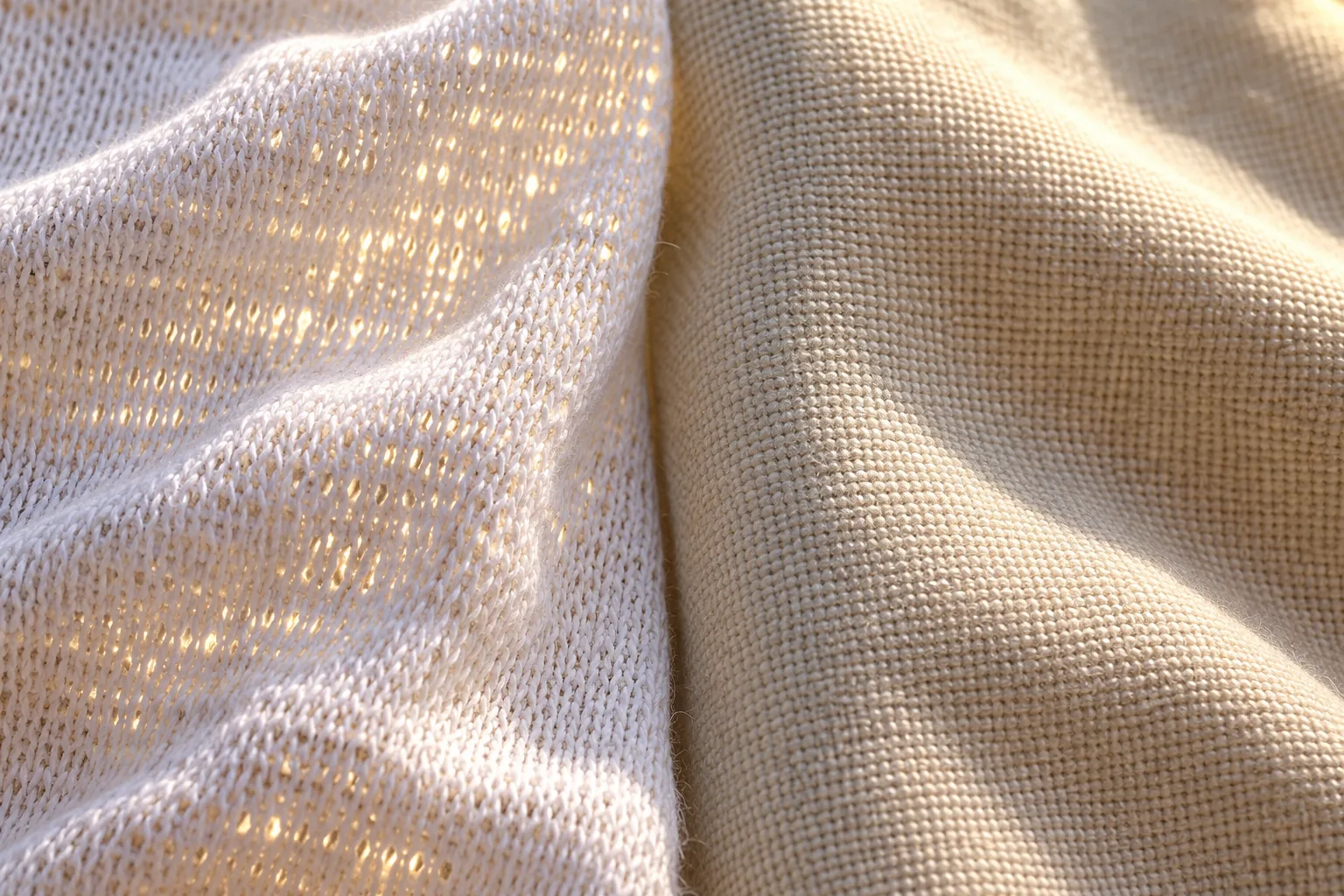
The weave matters most: the closer it is, the less sun gets through, in cotton or in synthetic fabric. A loose fit helps too, because fabric stretched over the shoulders opens up. Color and fiber add a little, so a thin, bleached white cotton shirt is the weakest choice. The protection should come from the fabric itself, not from a finish that washes out.
How much sun gets through
Gets through to the skinBlocked by the fabric
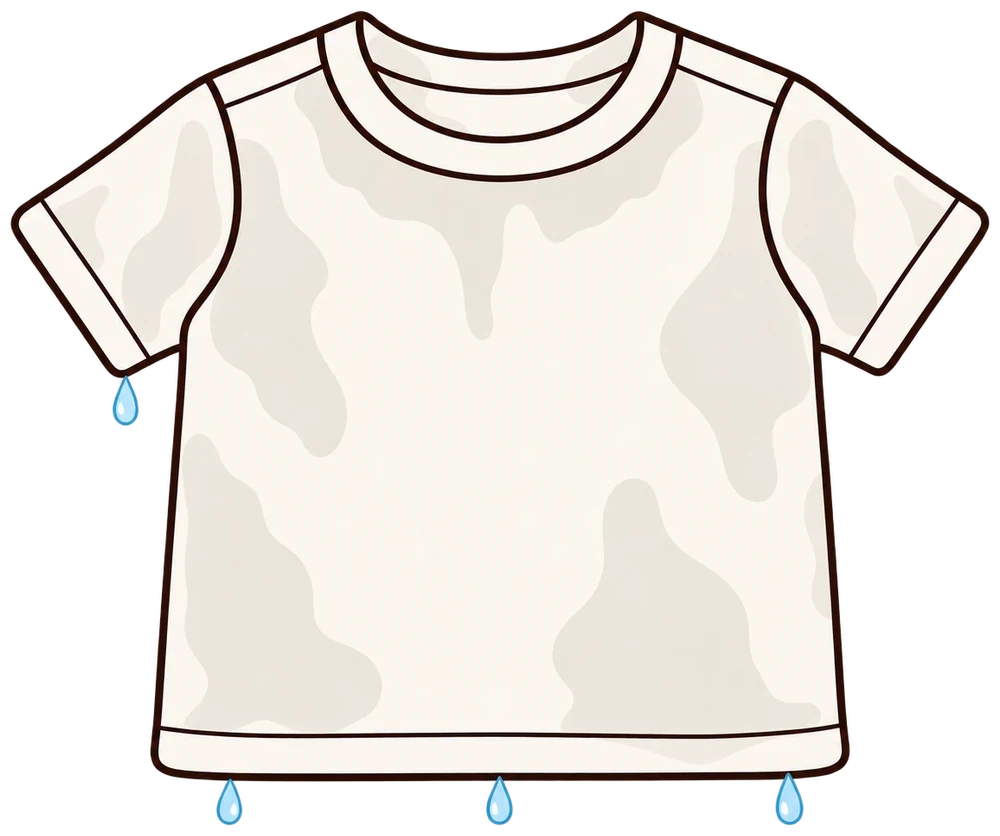
White T-shirt, wet
about UPF 3
About 33 in 100 rays get through
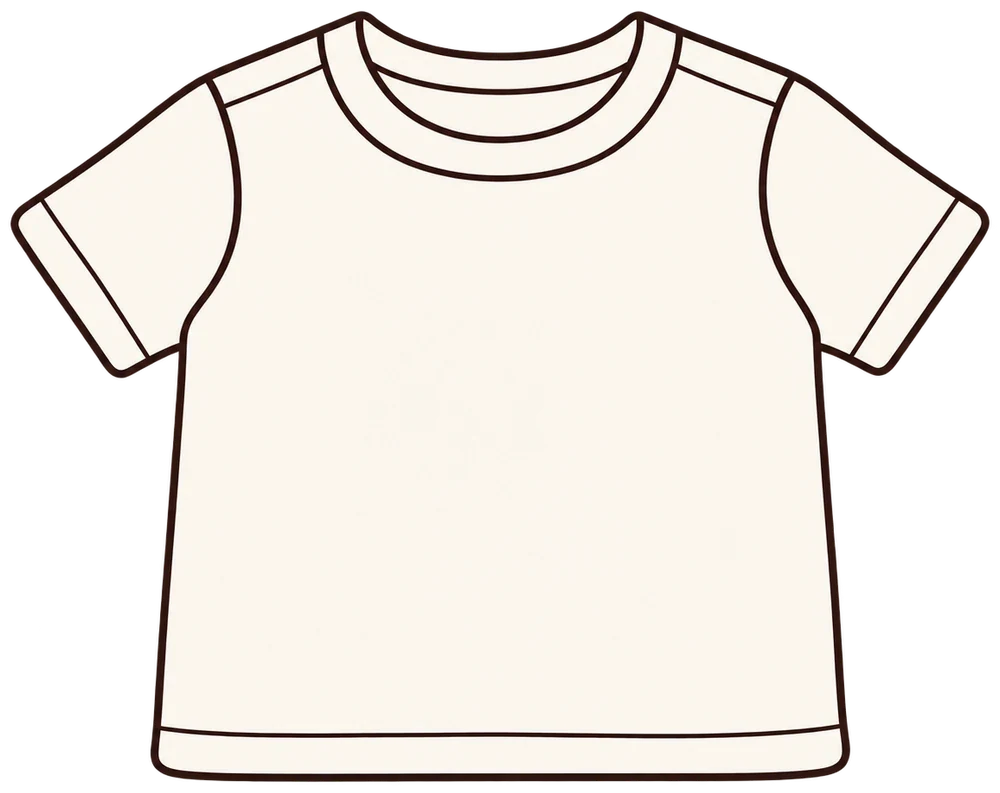
White T-shirt, dry
about UPF 7
About 14 in 100 rays get through
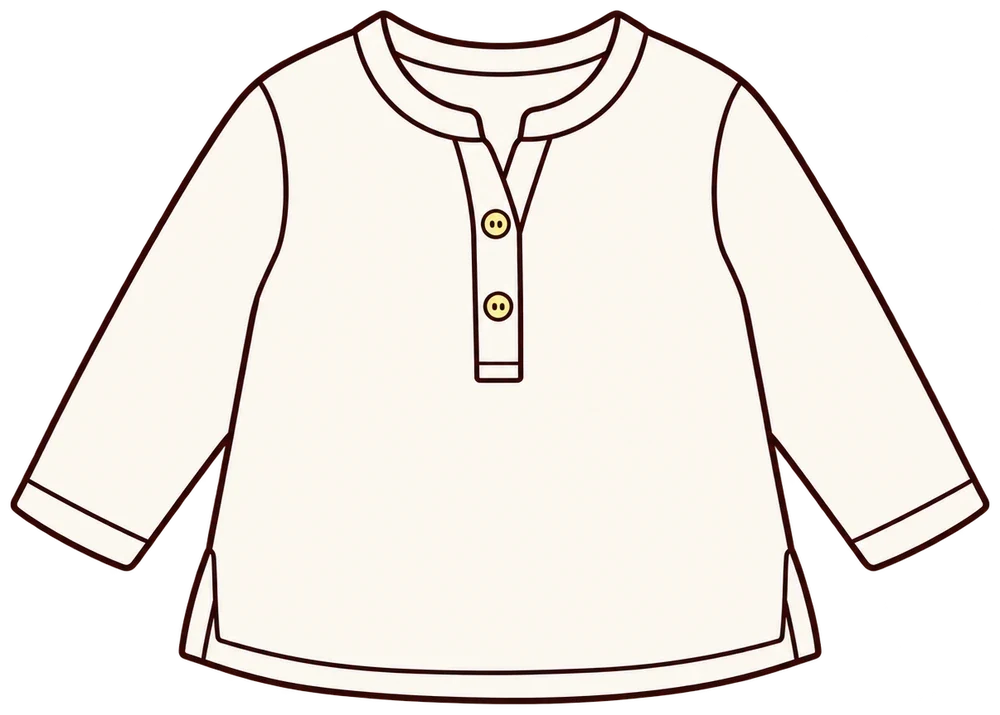
Sun shirt
UPF 30
About 3 in 100 rays get through
Sun shirt
UPF 50
2 in 100 rays get through
Types of baby sun shirts
A sun shirt is for dry land, and a rash guard is for the water.
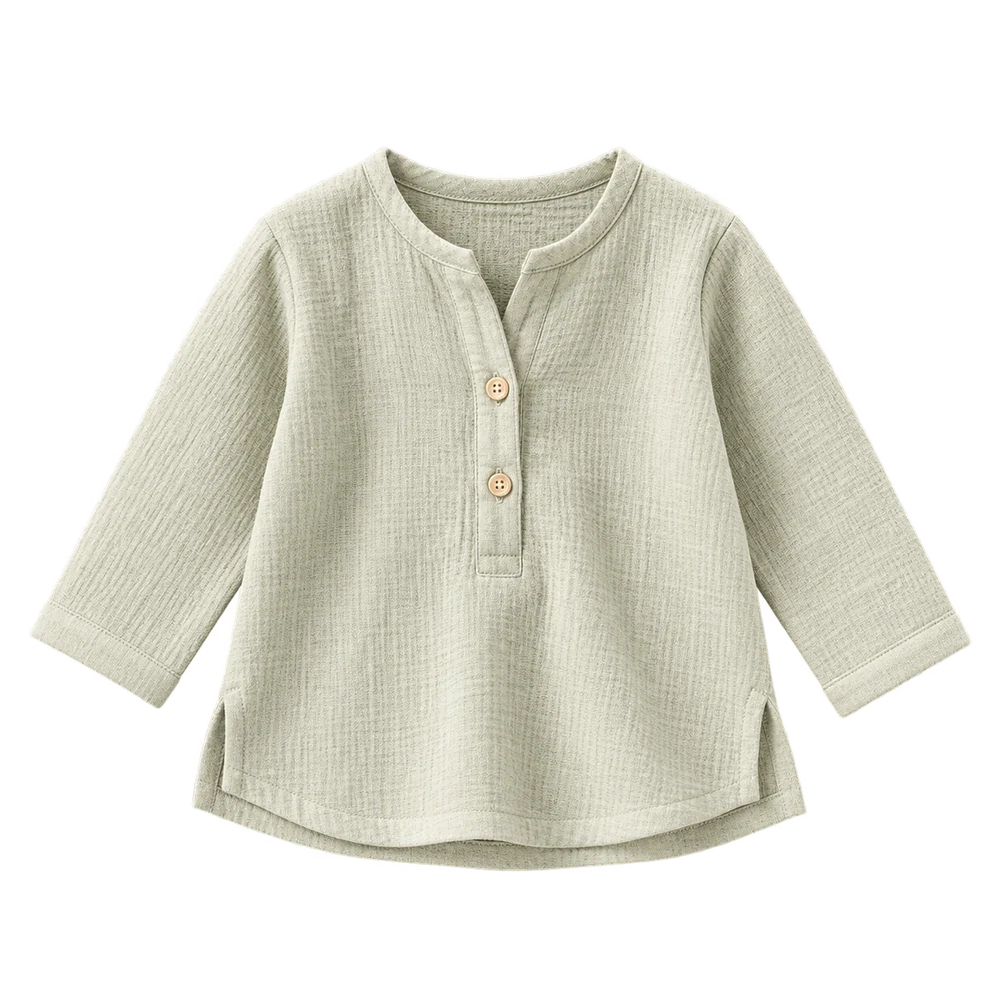
Loose woven sun shirt
Roomy, with long sleeves to the wrist and buttons at the neck, in light cotton, linen, bamboo viscose or an airy UPF fabric. For dry heat: walks, the park and the carrier, where the air moving under the shirt keeps your baby cool.
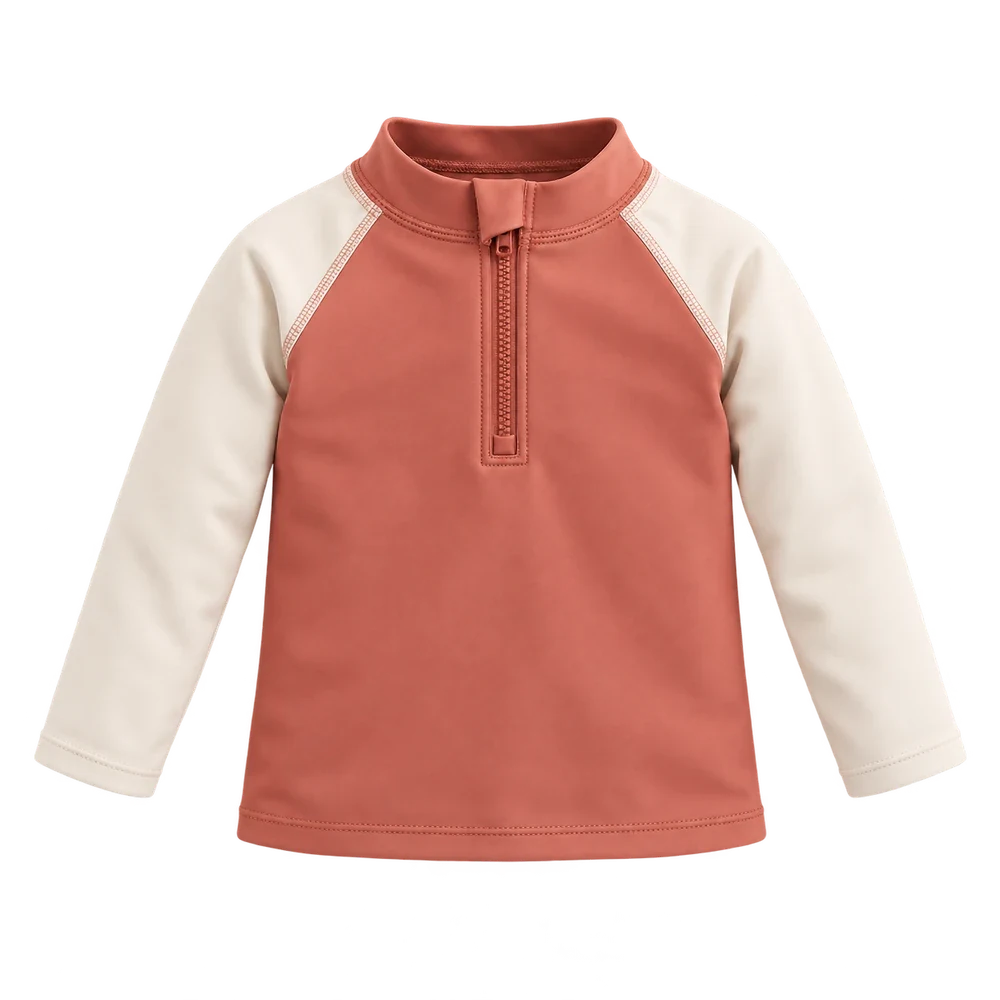
Swim rash guard
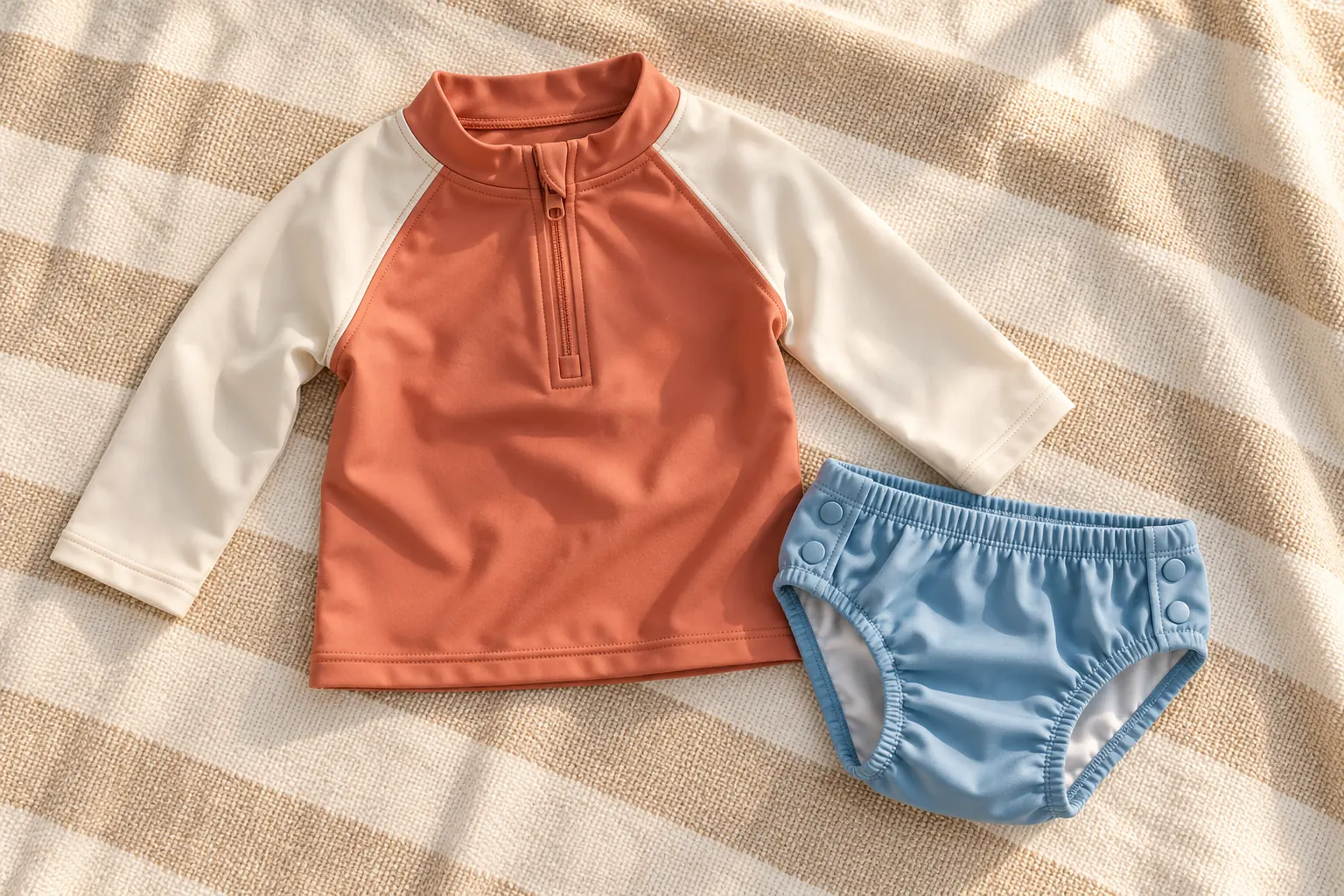
A snug, stretchy UPF 50+ top of nylon or polyester with elastane (spandex). Made for the pool, the splash pad and the beach: it stays close in the water and dries fast, but it is sweaty on a dry walk.
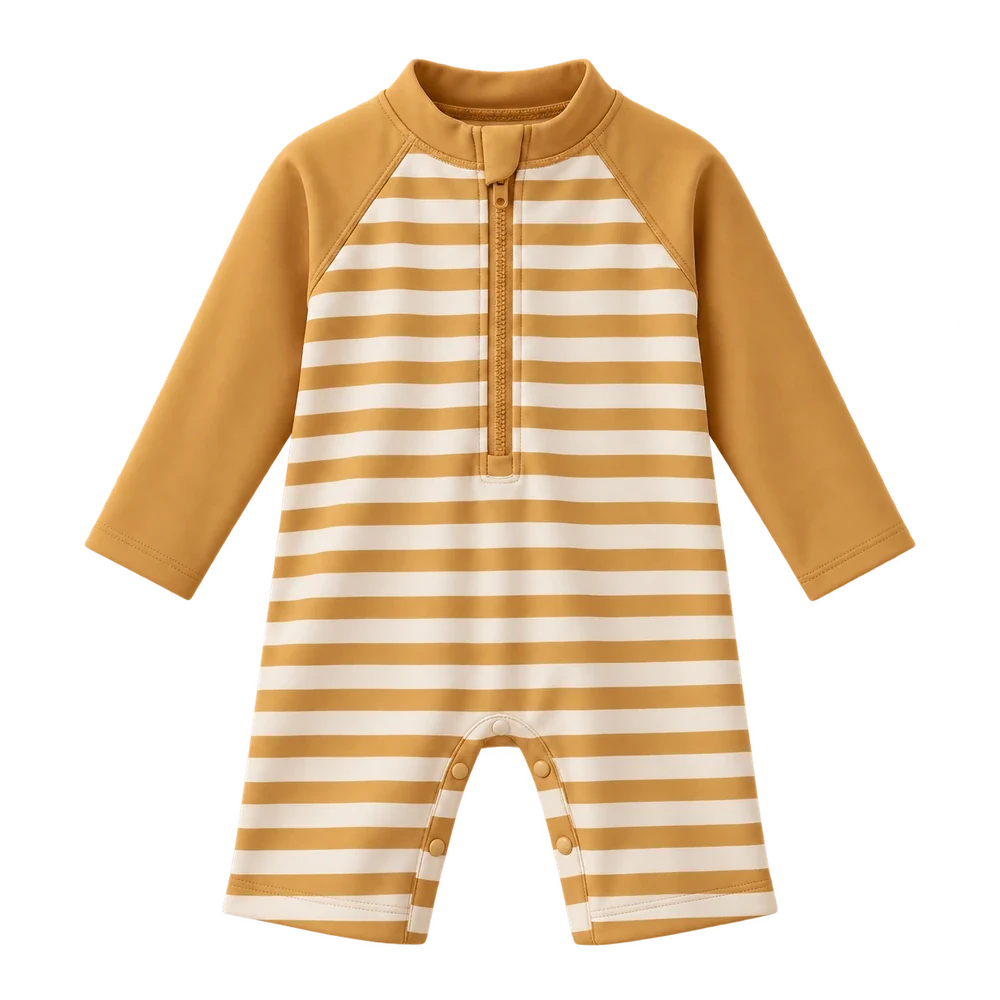
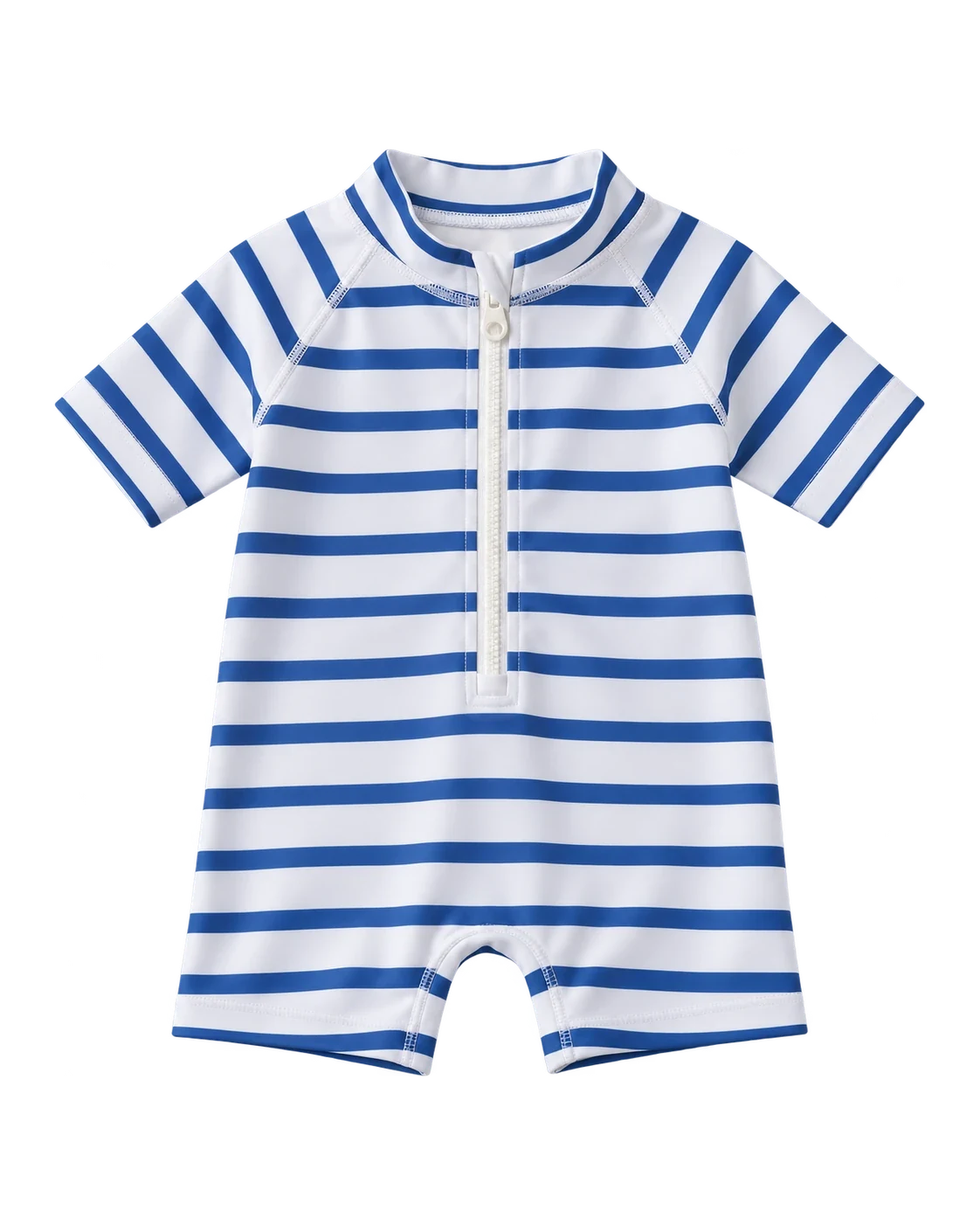
One-piece UV sunsuit
A one-piece swimsuit with long sleeves and short or full legs, so nothing rides up in the water. A front zipper and snaps underneath make diaper changes easy.
How to choose a sun shirt
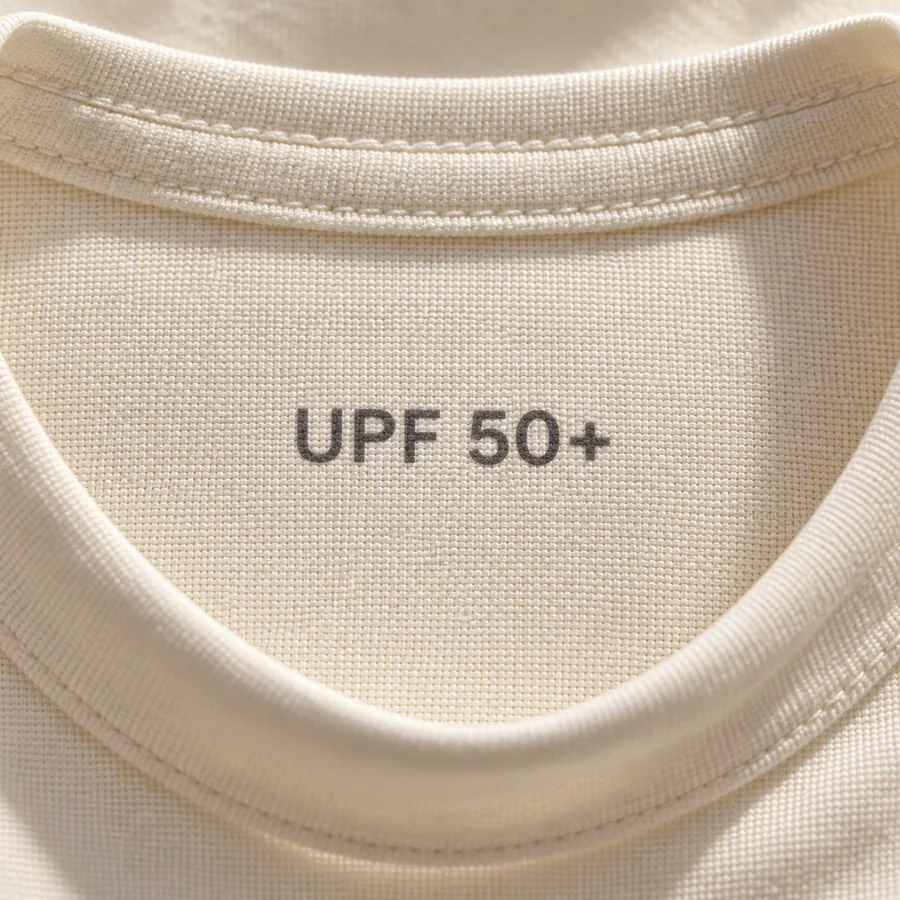
1. UPF 50+ built into the fabric
For strong sun, a label that says UPF 50+ is the simple check. A shirt without one can still be good, if little light comes through it.
- Good: UPF 50+ on the tag
- Good: Lamp barely shines through
- Not good: See-through to a bright lamp
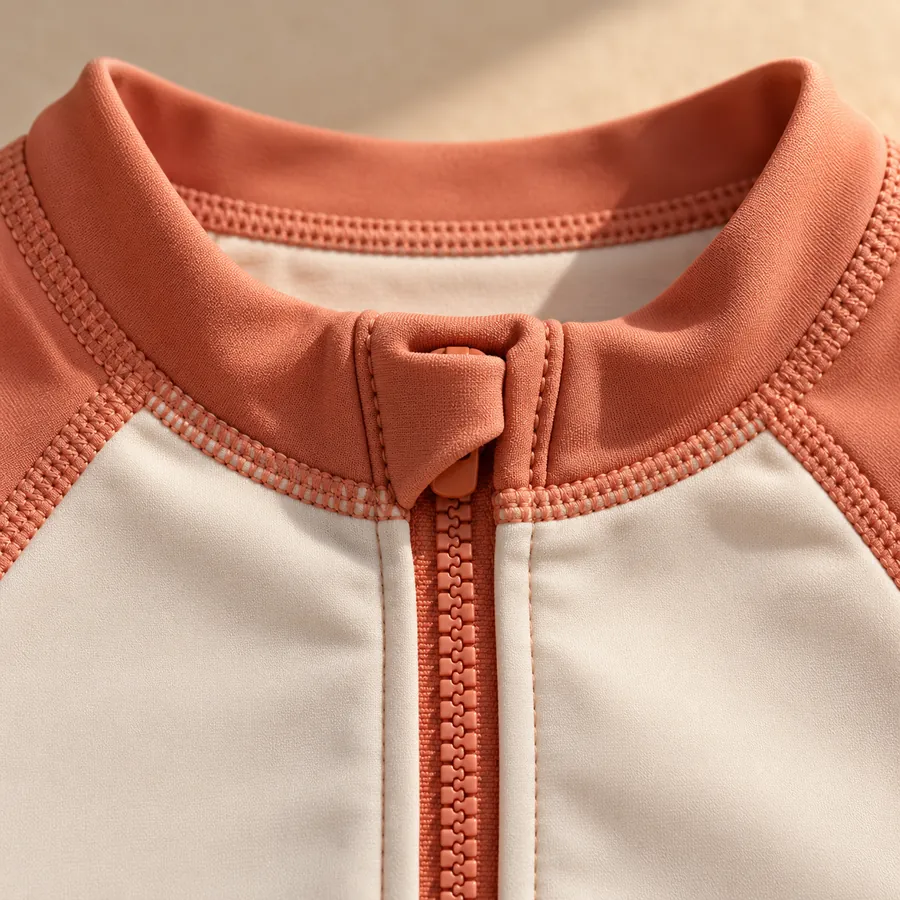
2. A wide neck opening or front zipper
Wet fabric clings, so a tight neck is a struggle over a wet head. On a rash guard, a soft fold over the top of the zipper (a zipper garage) stops it pinching the chin.
- Good: Neck buttons open wide
- Good: Zipper garage at the top
- Not good: Narrow neck to tug off wet
3. Flat inside seams that do not rub
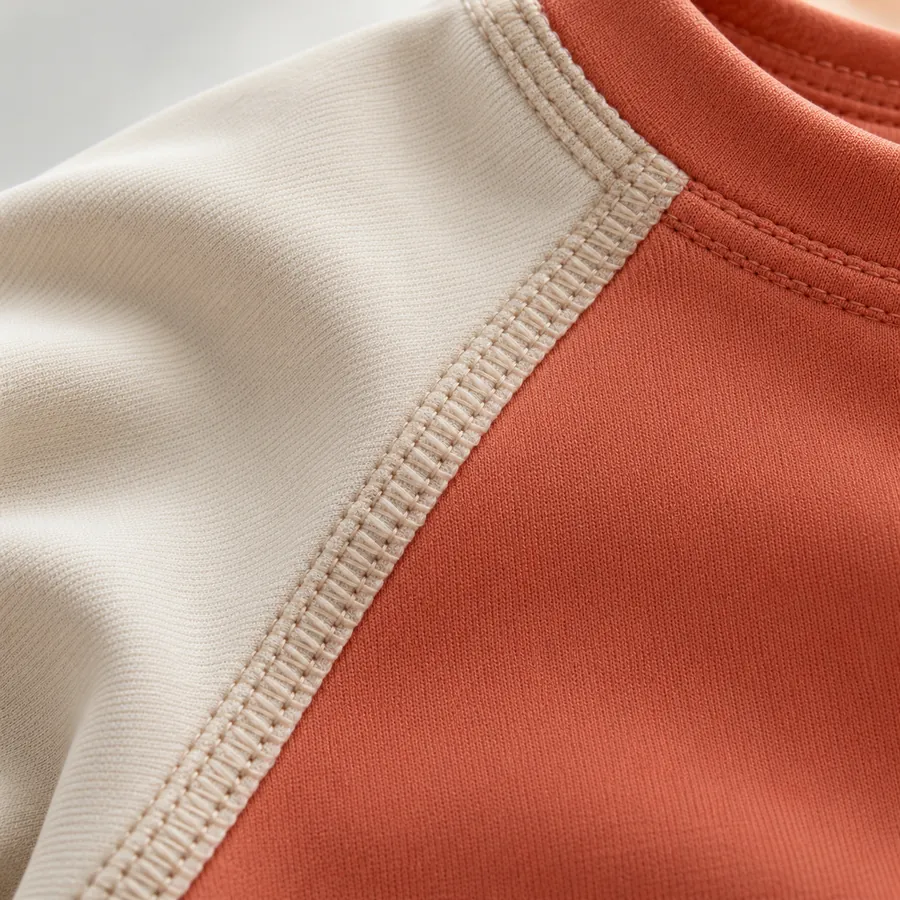
Carrier straps and wet sand press on the shoulders, so a raised seam there rubs. Run a finger along the inside. On swimwear, flat seams are called flatlock.
- Good: Seam lies flat inside
- Good: Flatlock seams on swimwear
- Not good: Raised ridge at the shoulder
4. Light on walks, bright in the water
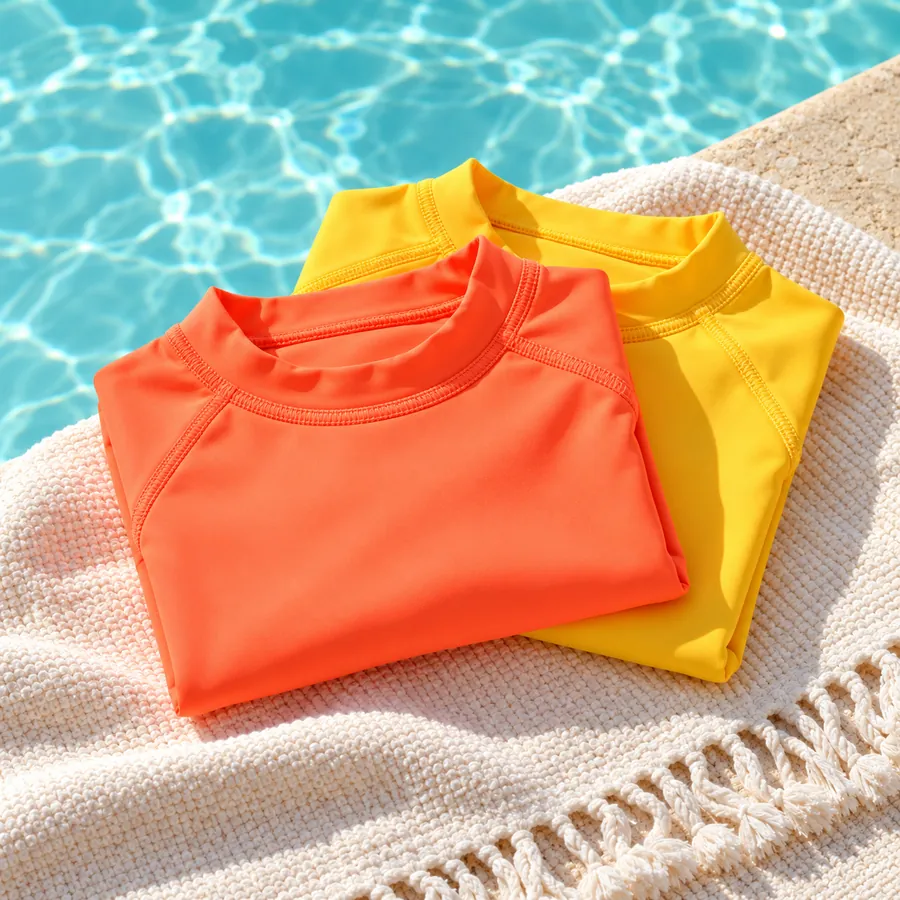
Darker and brighter colors block more sun, but feel warmer. On a hot walk, a light color is fine if the weave is close or the label says UPF 50+. In the water, pick a bright color you can spot.
- Good: Oatmeal or sage on walks
- Good: Coral or yellow in the water
- Not good: Pale blue or white in water
How to use it on dry land and in the pool
On a dry, sunny walk, the loose sun shirt is the only layer on top. On a hot day, from 24°C (75°F) up, skip the bodysuit underneath.
In the pool or the sea, the rash guard or sunsuit goes over a swim diaper, worn on its own against the skin.
Take a wet swim shirt off as soon as your baby is out of the water. Wet nylon cools the skin, which feels good in hot sun but soon chills a baby in a breeze. Dry your baby in the shade, and change into dry cotton clothes.
Questions parents ask
Do I need to put sunscreen under a UPF 50+ sun shirt?
No. Skin under a UPF 50+ shirt does not need sunscreen. From 6 months, put broad-spectrum sunscreen (against UVA and UVB) only on the skin clothes leave bare: the face, the neck, the backs of the hands, the lower legs and feet. Under 6 months, keep to shade and clothes, and ask your pediatrician before you use sunscreen.
Does my baby need a UPF shirt, or is a regular top enough?
A regular long-sleeve top helps if the weave is close: hold it up to a window, and the less light shows through, the better. A thin white T-shirt lets through far more sun than a sun shirt. For long hours in strong sun, a UPF 50+ label takes the guessing out.
Should I buy a baby sun shirt or rash guard a size up?
A loose cotton or linen sun shirt, yes: the extra room lets the air in on a hot walk, and you can roll the cuffs once. A rash guard or sunsuit, no. Buy your baby's current size, because a baggy swim shirt fills with water, drags on the arms and can ride up over the face.
Are dark or bright sun shirts hotter to wear than white ones?
A little, in dry sun: dark fabric takes up more of the sun's heat. It also blocks more UV. In the water, the fabric stays cool anyway, so pick a bright color: you can spot your child.
Does a sun cover shirt work well in a baby carrier?
Yes, a loose cotton, linen or bamboo shirt, not a rash guard. In a carrier, your body already warms your baby's middle, while the arms and neck are out in the sun. One airy sun shirt shades the arms and shoulders without trapping sweat between the two of you.
How should I wash UPF sun shirts and rash guards so they last?
Rinse a swim shirt in cool fresh water right after the pool or the sea. Chlorine, salt and sunscreen wear out the stretch over time. Wash it cold, and dry it in the shade rather than in a hot dryer.