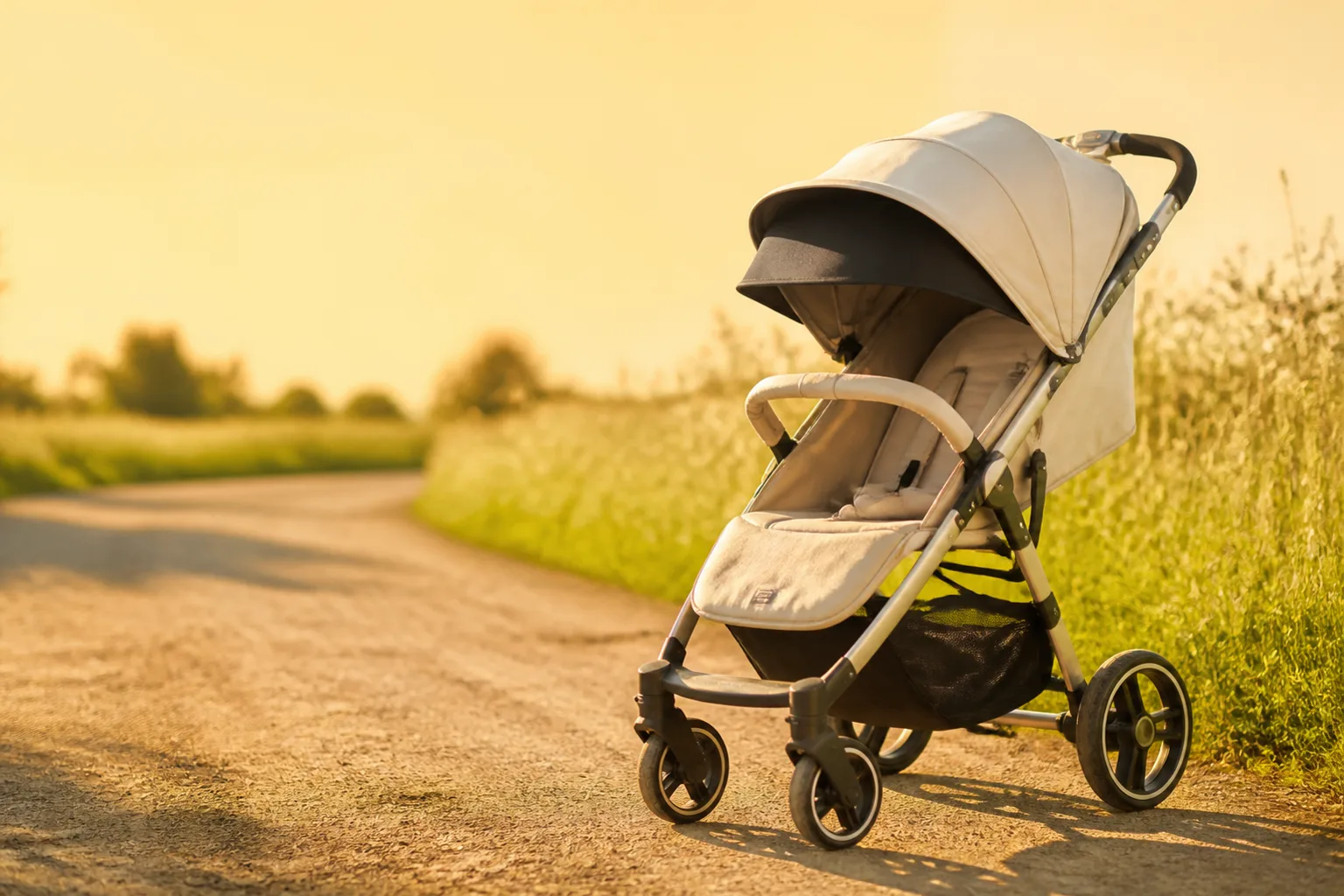
What this is about
Bright morning sun is deceptive. You open the front door to glaring light, but the breeze feels brisk, maybe 17°C. The temptation is to dress for how it looks and strip down to bare legs, or panic about sunburn and bundle your baby into thick layers. Neither works. Sun protection is about shielding delicate skin from light, not dressing for heat. If the morning is crisp, your baby still needs their knit cardigan. You just add a sun hat on top.
Start with the forecast, not the blue sky
A cloudless blue sky tells you nothing about whether skin will burn. Spring mornings can pack intense ultraviolet rays under a pale sky, while a humid overcast afternoon might barely register. Check the hourly UV forecast before heading out. UV 3 is the tripwire: anything below that is relaxed, but the minute the forecast touches 3, sun gear needs to be ready.
Keep the weather outfit underneath
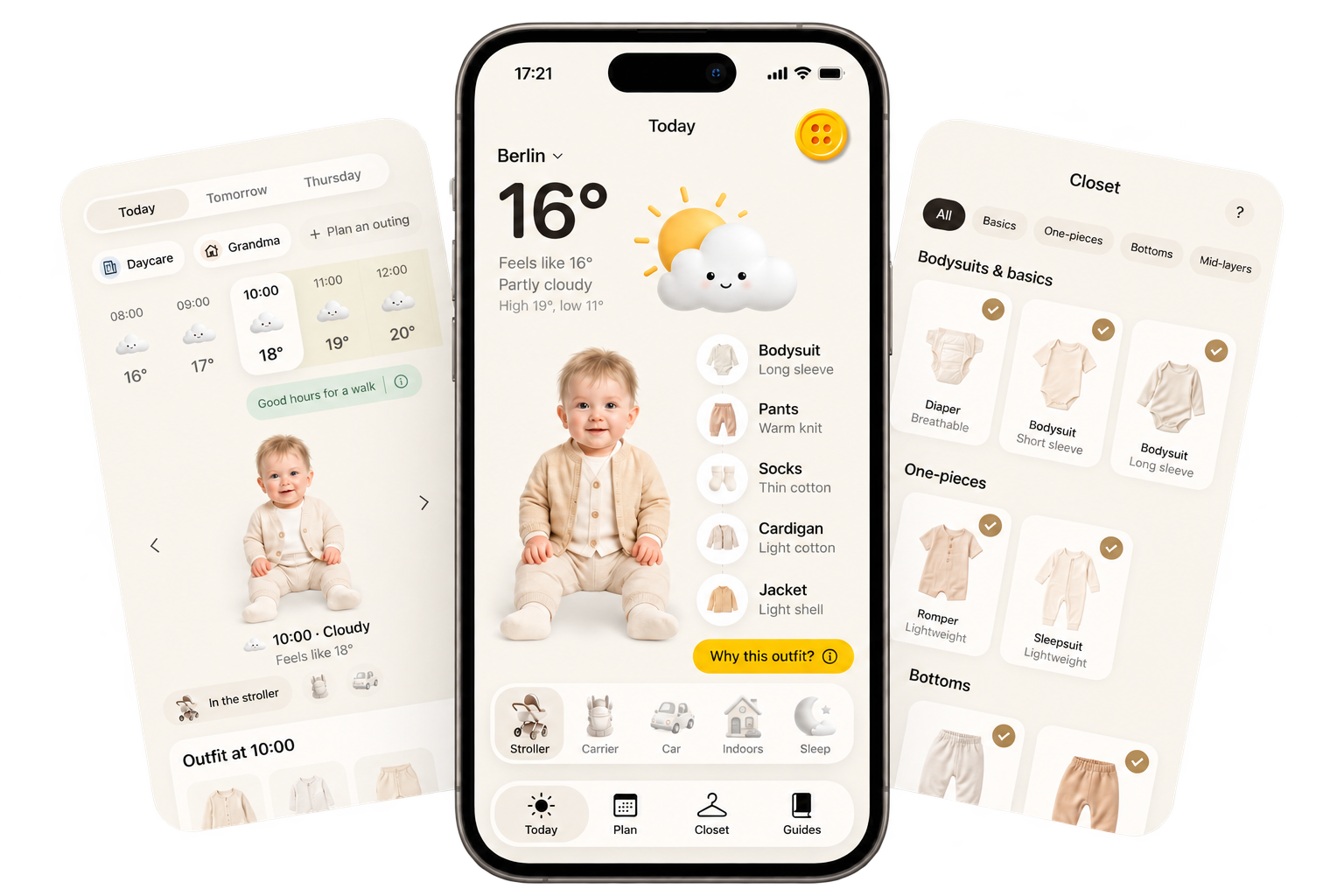
Always build the base outfit for how the air actually feels. If it is 18°C, they need a long-sleeve cotton layer and light trousers for warmth. If it is 27°C, a single thin romper does the job. When you need to shield bare arms or legs from the sun, do not reach for thicker clothes. Use airy cotton or linen that covers the skin without trapping heat like an oven. More sun never means more insulation.
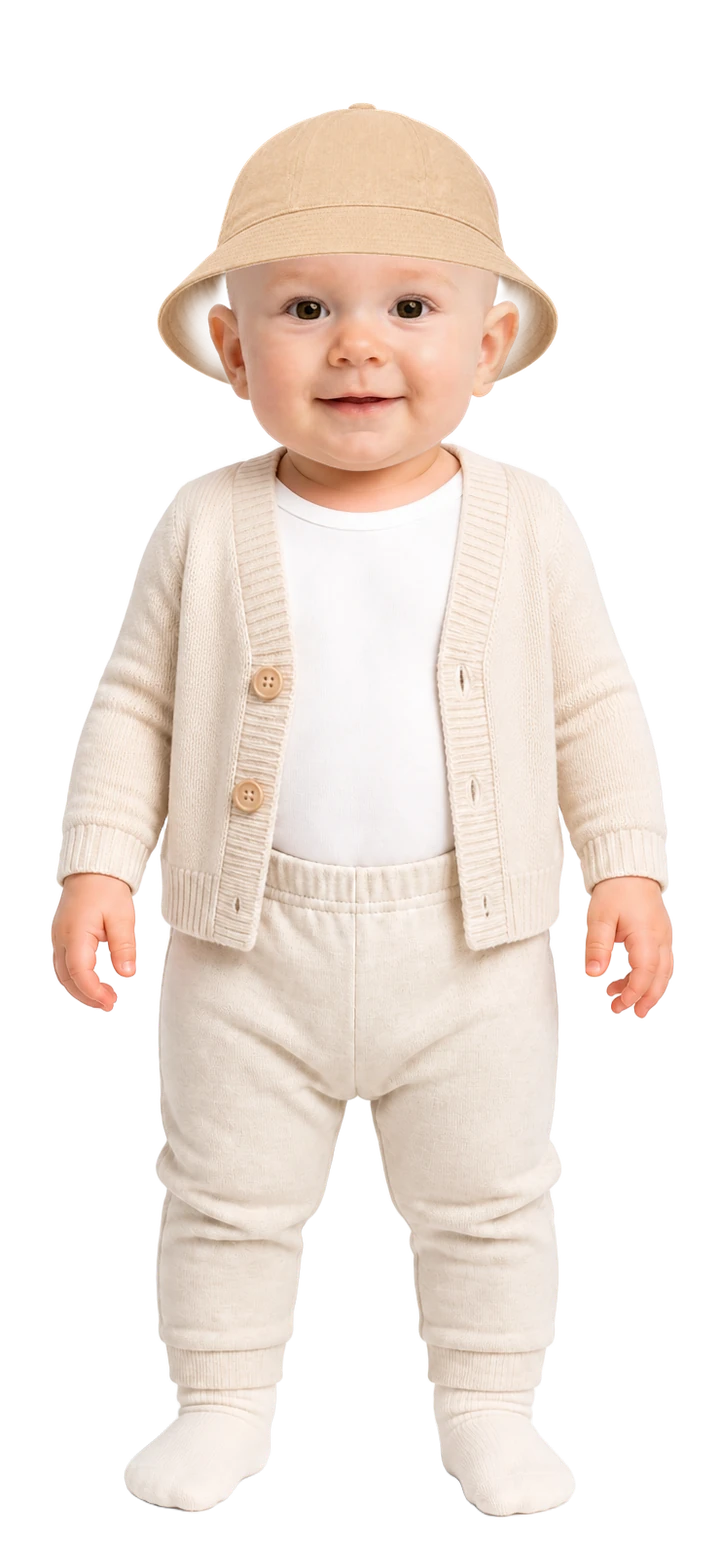
Mild and bright
A light cardigan handles the cool air, while the wide-brim hat blocks the high sun.
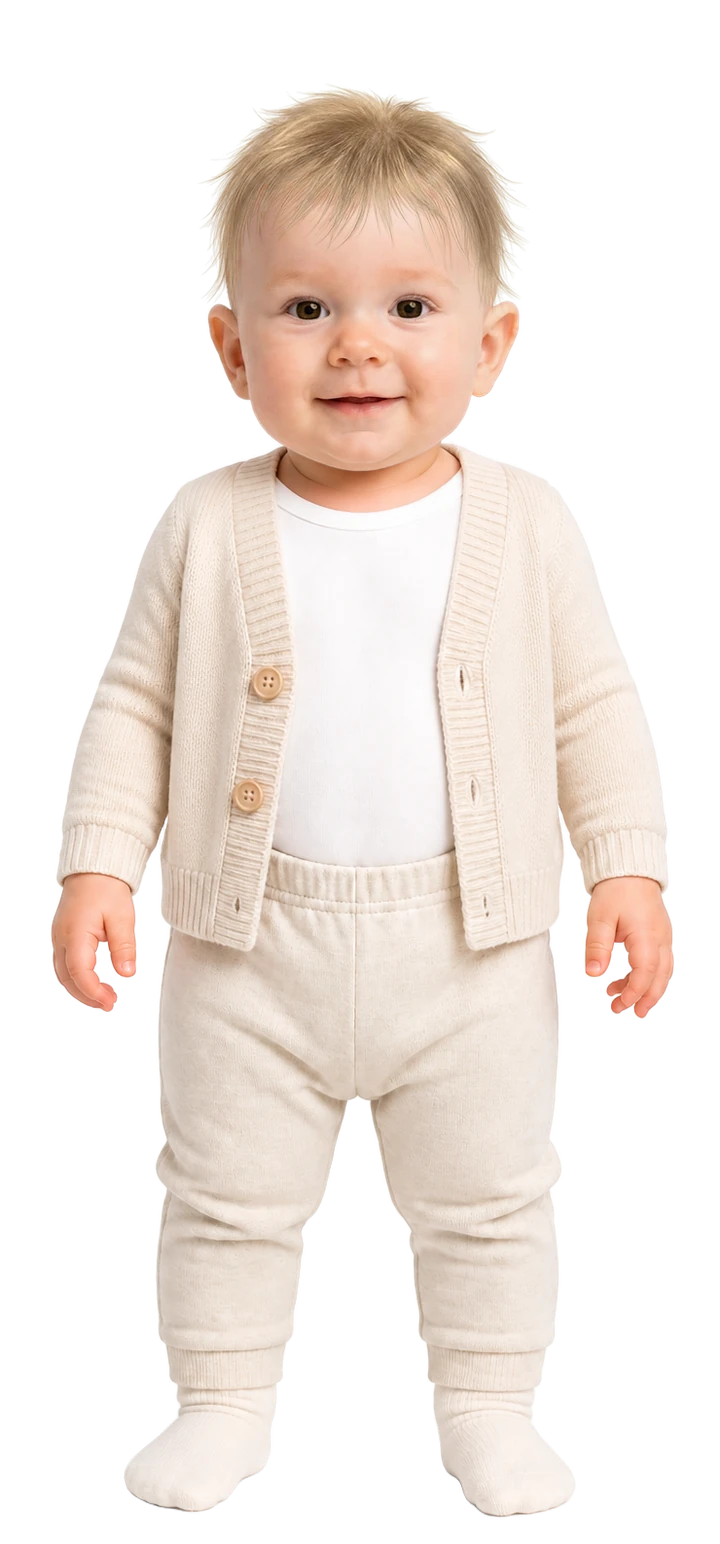
Mild without strong sun
Below UV 3, the air clothes stay the same, but the sun hat can go in the bag while the canopy keeps your baby shaded.
Shade does the largest share
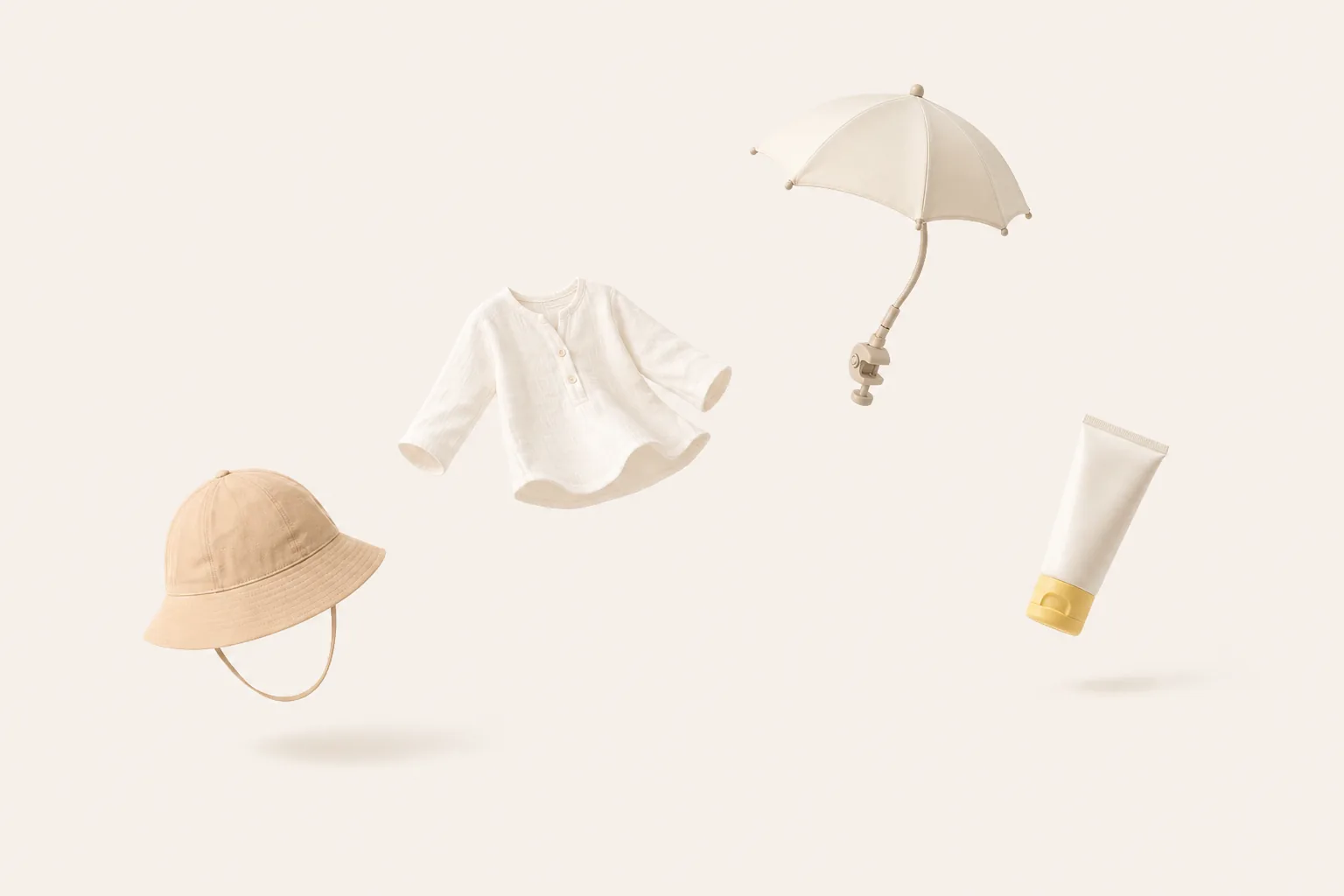
Shade is the best sun layer because it does not touch your baby's skin or trap body heat. A stroller canopy, a leafy park tree, or a clip-on shade handles most of the exposure without turning the seat into a sauna. Clothes and sunscreen only need to cover whatever sticks out into the light.
That usually means the head, ears and neck. A proper baby sun hat needs a generous floppy brim or a long neck flap down the back. Baseball caps look cute, but they leave vulnerable ears and neck folds completely bare. Choose soft cotton with an under-chin tie or an elastic toggle at the back. Babies treat hats as optional accessories to be hurled onto the pavement; a secure tie saves you from hunting for it every two blocks.
Long sleeves and trousers in the sun can creep up in warmth faster than you expect. Check in regularly by sliding two fingers down the back of their neck or chest. If the skin is warm and dry, the balance is right. If it feels sticky or damp, the outfit is holding too much heat, and you need to strip off a layer or move into deeper shade.
Shade has to travel with the stroller
Shade is never stationary. You head out with the sun behind you and the canopy doing its job. Then you turn a corner, and suddenly direct sunlight is beaming straight under the hood into your baby's squinting eyes. A fixed canopy rarely covers every angle of a real walk.
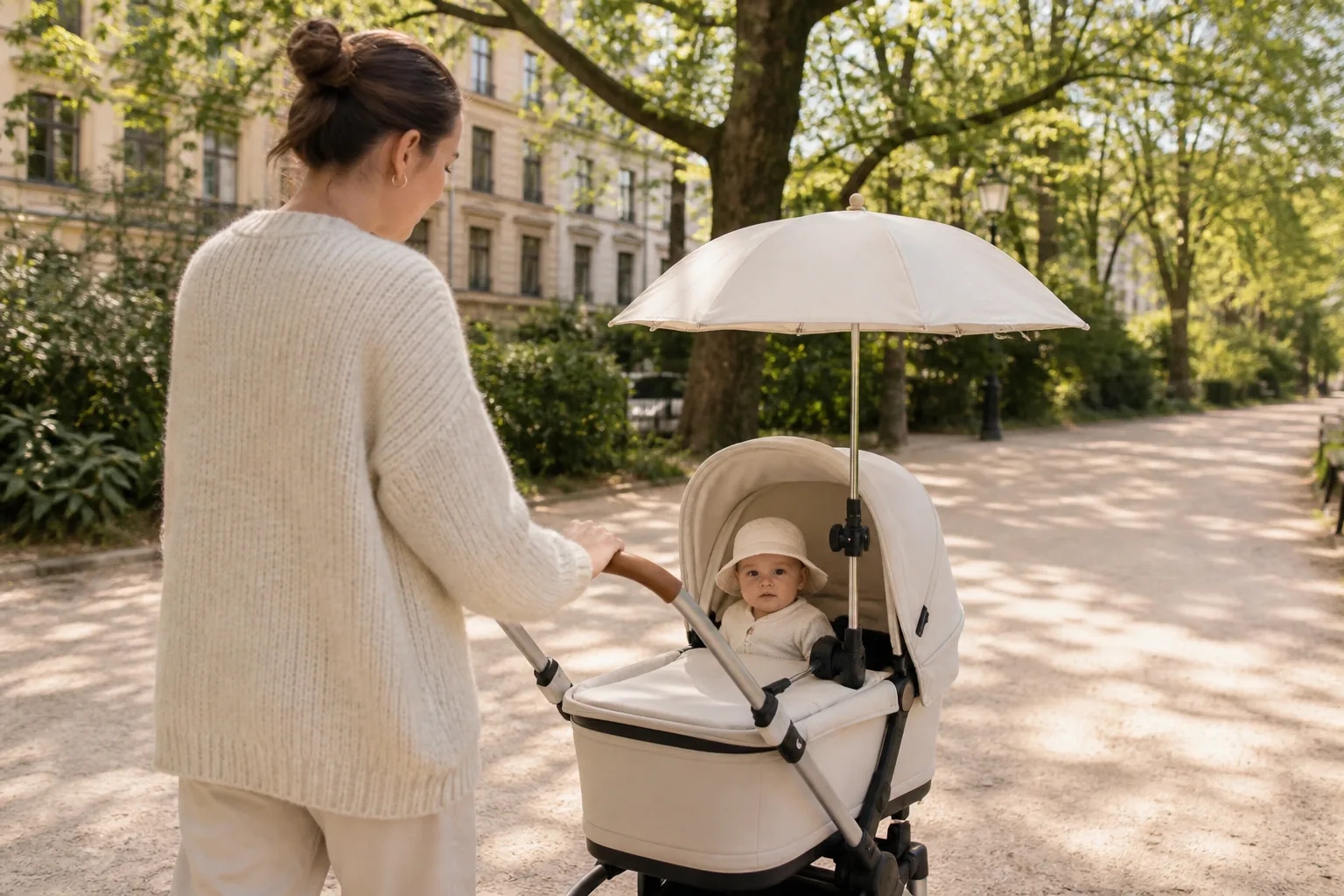
Take a second to step around and look at the stroller from the front. From behind the handlebar, you cannot see the strip of blinding light cutting across their legs or face. Adjust your canopy extension or angle your parasol as you change directions.
When sunlight glares into the seat, the common reflex is to throw a light muslin or blanket over the front opening. Never do this. Even a thin cotton cloth traps heat rapidly, turning the stroller into a stifling greenhouse with almost no air circulation. Use a clip-on visor, angle a parasol, or simply reverse the handlebar if your stroller allows it.
Before 6 months, shade and clothes come first
Babies under 6 months are more prone to sunscreen side effects, such as a rash. Rely on shade, breathable long clothes, and a wide-brim hat. If direct sun is unavoidable and shade is impossible, ask your pediatrician before applying sunscreen.
From 6 months, sunscreen enters the routine as the final line of defense for whatever skin remains uncovered. For sensitive skin, choose a mineral sunscreen with zinc oxide or titanium dioxide. These filters protect mainly by absorbing UV rays.
Put sunscreen on 15 to 20 minutes before stepping outside. Mineral creams take a moment to settle, and trying to rub white paste onto squirming legs on a park bench is messy. Cover the tops of feet, the back of the neck, and the cheeks. Skip the palms and fingers entirely: babies spend half the day with their hands in their mouths or rubbing their eyes. Reapply every two hours, or right away after splashing in water.
Brightness is a poor UV meter
You cannot feel ultraviolet radiation. A stiff coastal breeze or cool mountain air might keep the thermometer at 19°C, but high UV will still burn unprotected skin in twenty minutes. Light reflecting off pale concrete, sand, or water increases the dose even under an awning. Never assume a cool breeze or overcast sky means the sun is sleeping.
Change the sun protection with the setting
Sun protection changes the second you step off the pavement. Car windows block some UV, but infrared heat passes right through. A rear-facing baby strapped into synthetic foam can overheat fast with the afternoon sun baking through the side window. Fit a pull-down window shade to block the glare.
The moment you walk into a cafe, shop, or home, take the sun hat off immediately. Babies vent a large portion of their excess body heat through their heads. Leaving a sun hat on indoors traps that warmth and makes them sweaty. If the indoor air conditioning feels chilly, put their light cardigan back on, not their hat.
Questions parents ask
Does my baby need sunglasses?
A wide-brim hat shades the eyes effectively for daily walks. Baby sunglasses with UV400 lenses provide great protection, but many infants refuse to keep them on. If your baby tolerates them with a soft strap, use them; if not, trust the hat brim.
What if the sky is cloudy?
Check the forecast UV number regardless of clouds. High-altitude UV penetrates thin cloud easily. If the reading is 3 or higher, keep the hat and light coverage on.
Can the sun hat come off under the stroller canopy?
If your baby is sitting in deep, reliable canopy shade with no direct or reflected glare hitting the seat, you can take the hat off to let their head stay cool. Put it back on before lifting them out or turning into the sun.
If your baby gets sunburned
- Move into the shade or indoors immediately.
- Soothe the skin with a clean cloth soaked in cool water.
- Offer frequent breast or formula feeds to keep them hydrated.
Contact your pediatrician for any sunburn on a baby under one year. Seek urgent medical attention if you see blistering, severe redness, fever, or extreme fussiness.