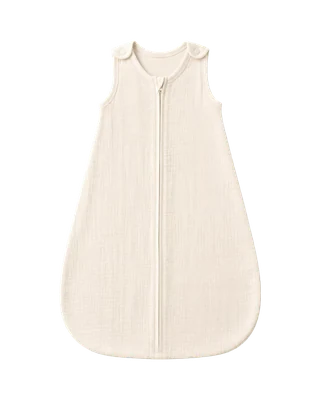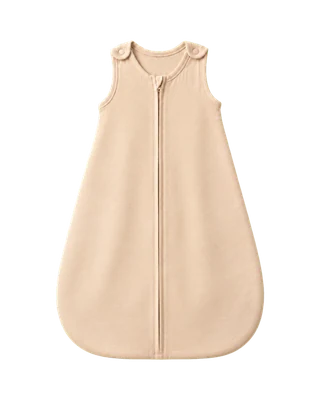
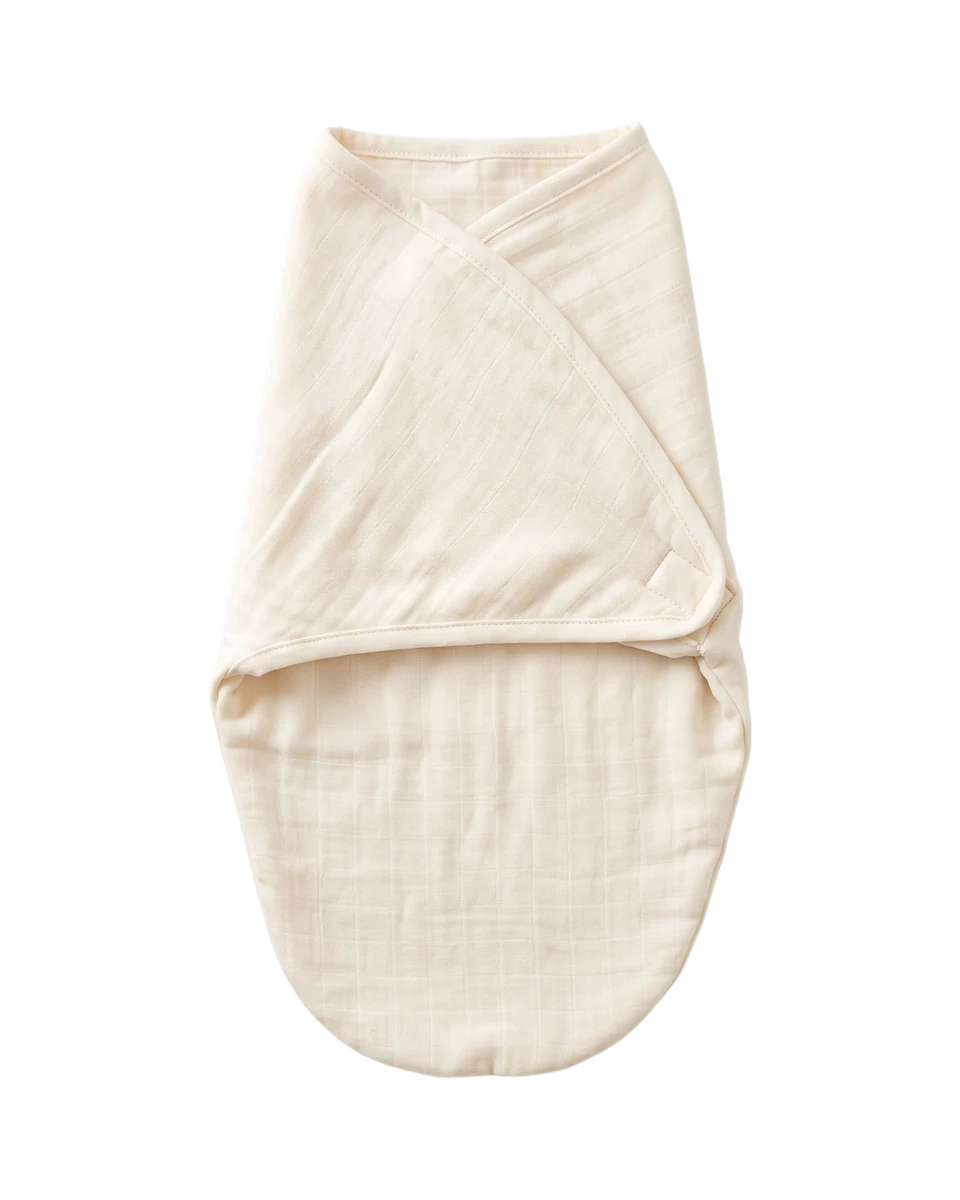
A swaddle wraps a newborn snugly for sleep, from the shoulders down, with the arms inside. It can be a plain muslin blanket that you fold around your baby, or a shaped swaddle that closes with wings or a zip.
A newborn's arms fling out at a sudden noise or movement: the startle reflex. A swaddle holds them in, so the jerk is less likely to wake your baby. Some babies settle faster and sleep longer wrapped.
It is only for young babies. Swaddling stops when your baby first tries to roll, which can happen as early as 2 months.
You do not have to swaddle. It does not lower the risk of SIDS (sudden infant death syndrome). A sleep bag in a newborn size, with the arms free, works from the first night.
- UntilRolling
- You'll need3
- Wear itAll year
Swaddle or sleep bag?
Both replace a loose blanket in the crib. Use one or the other, never a swaddle inside a sleep bag. In the US, a sleep bag is often called a sleep sack.
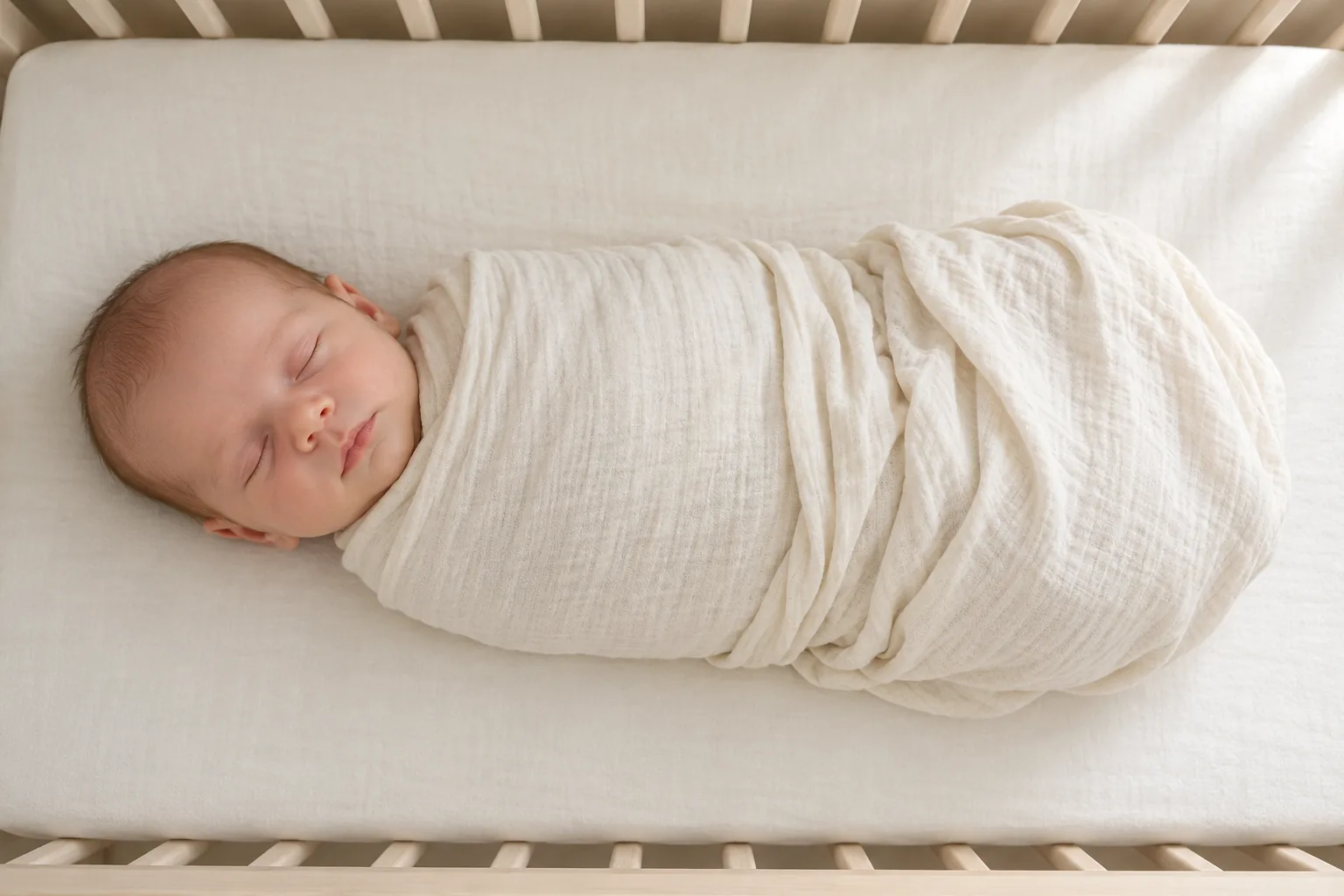
Swaddle
A thin wrap that holds the arms close, by the sides or up by the face. Your baby wears it only to sleep.
- Good: Holds the arms still
- Good: Helps a newborn settle
- Not good: Stops when rolling starts
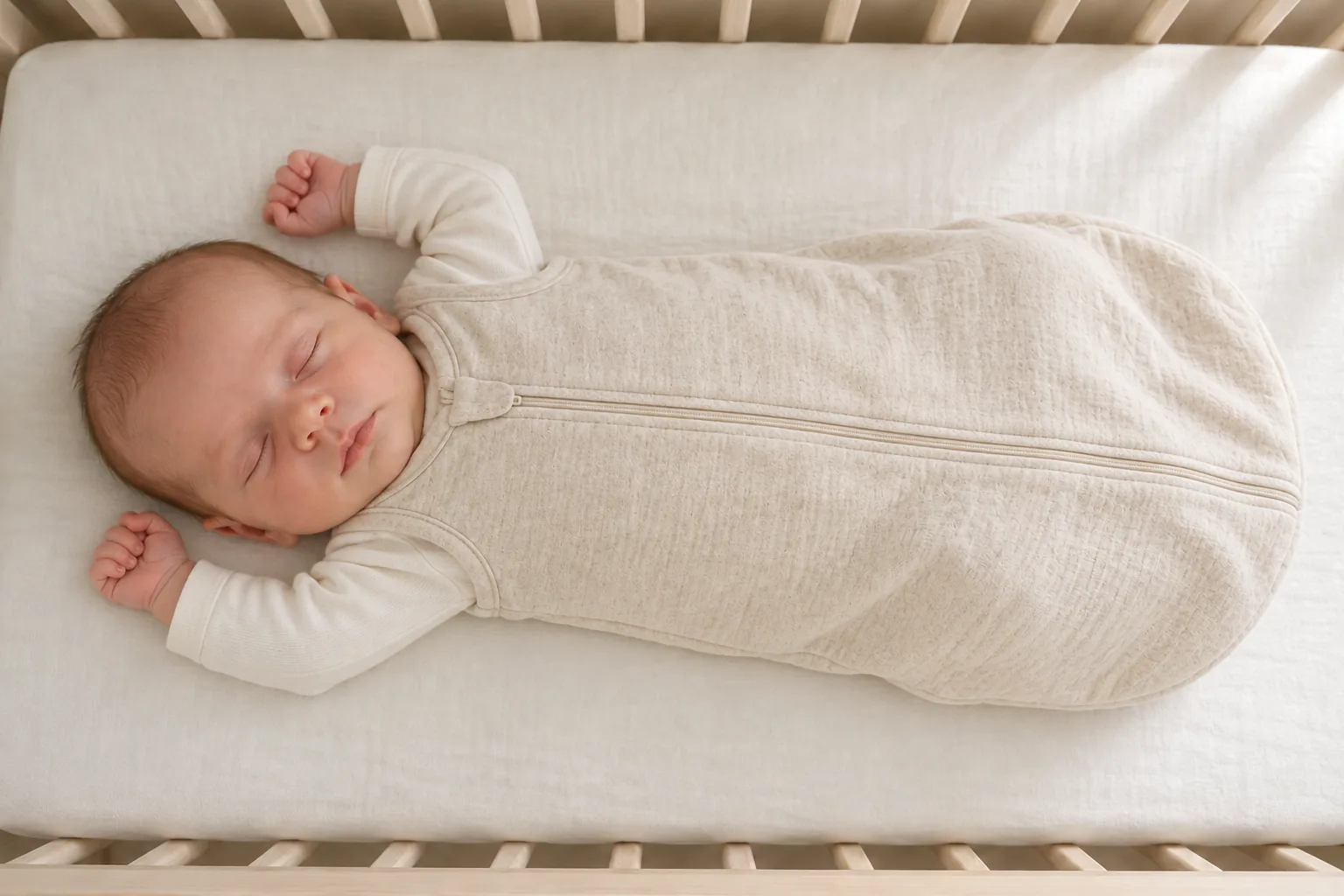
Sleep bag
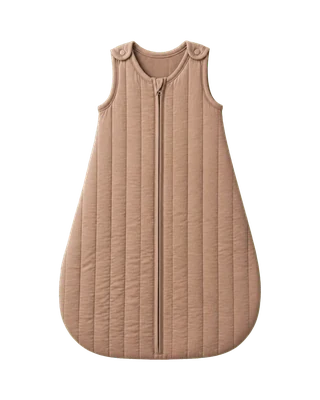
A wearable blanket with armholes, zipped over sleep clothes. The arms stay free, so a baby who rolls can push up. You go up a size as your baby grows.
- Good: Arms free from day one
- Good: Lasts into the toddler years
- Not good: No help with startles
Types of swaddle
All four hold the arms in. They differ in how you close them, and in where the hands go.
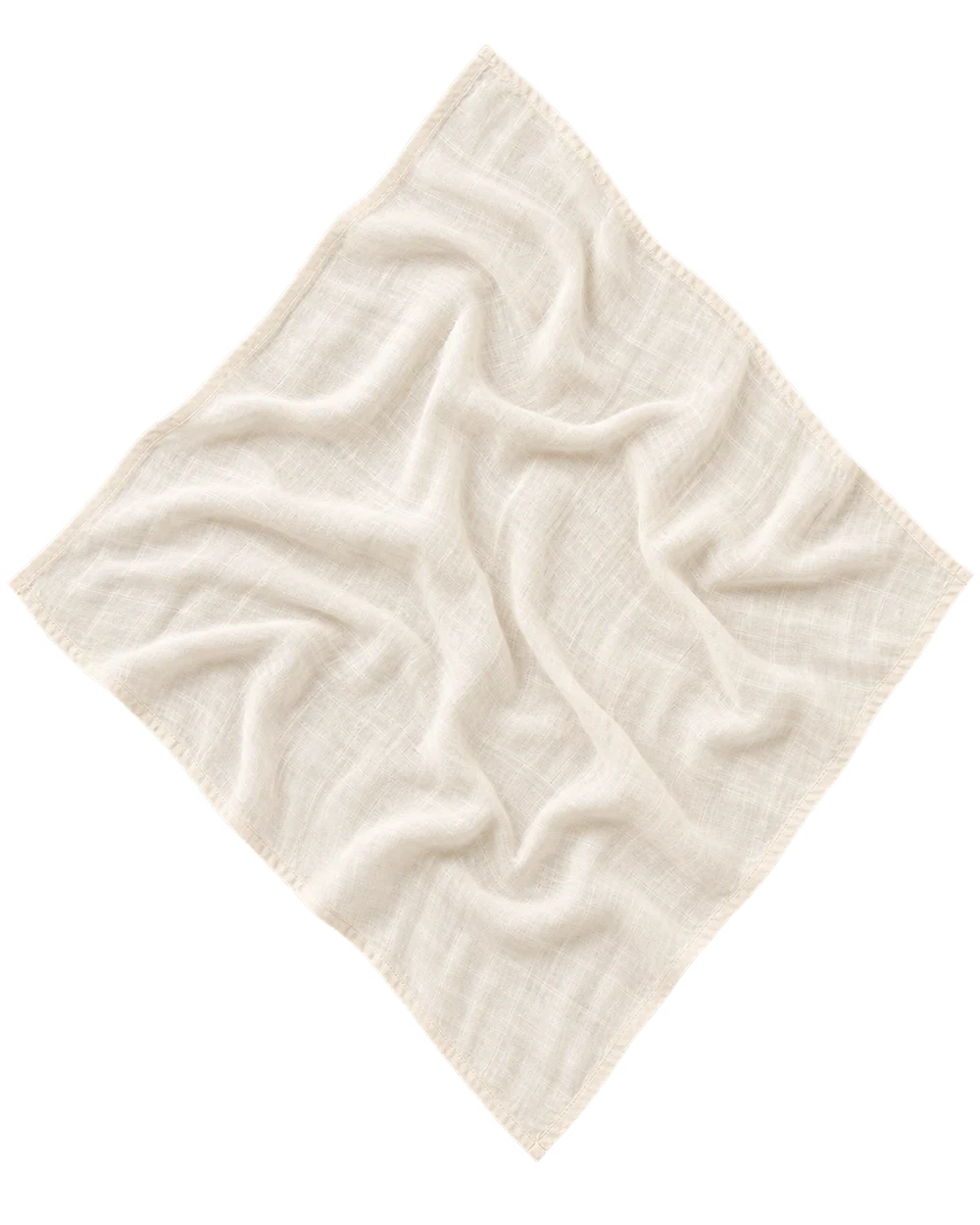
Muslin blanket
A big square of thin cotton, about 120 cm (47 in) across, that you fold around your baby yourself. It costs little and works as a burp cloth too. It takes practice, and a loose wrap can come undone.
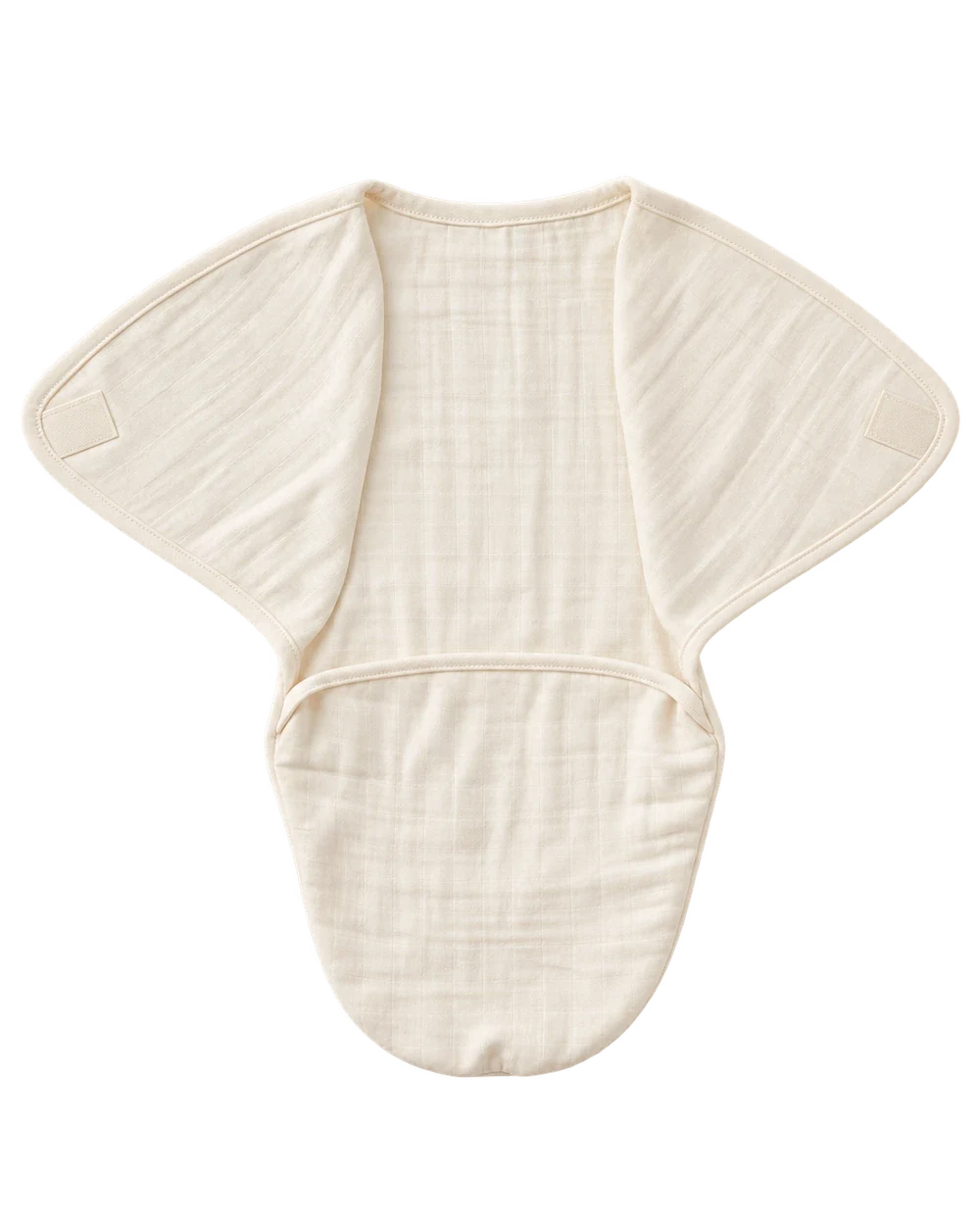
Wrap with wings
A shaped pouch for the legs, with two wings that cross over the arms and close with hook-and-loop strips (Velcro). It is quick to get right when you are half asleep. The strips are loud to open.
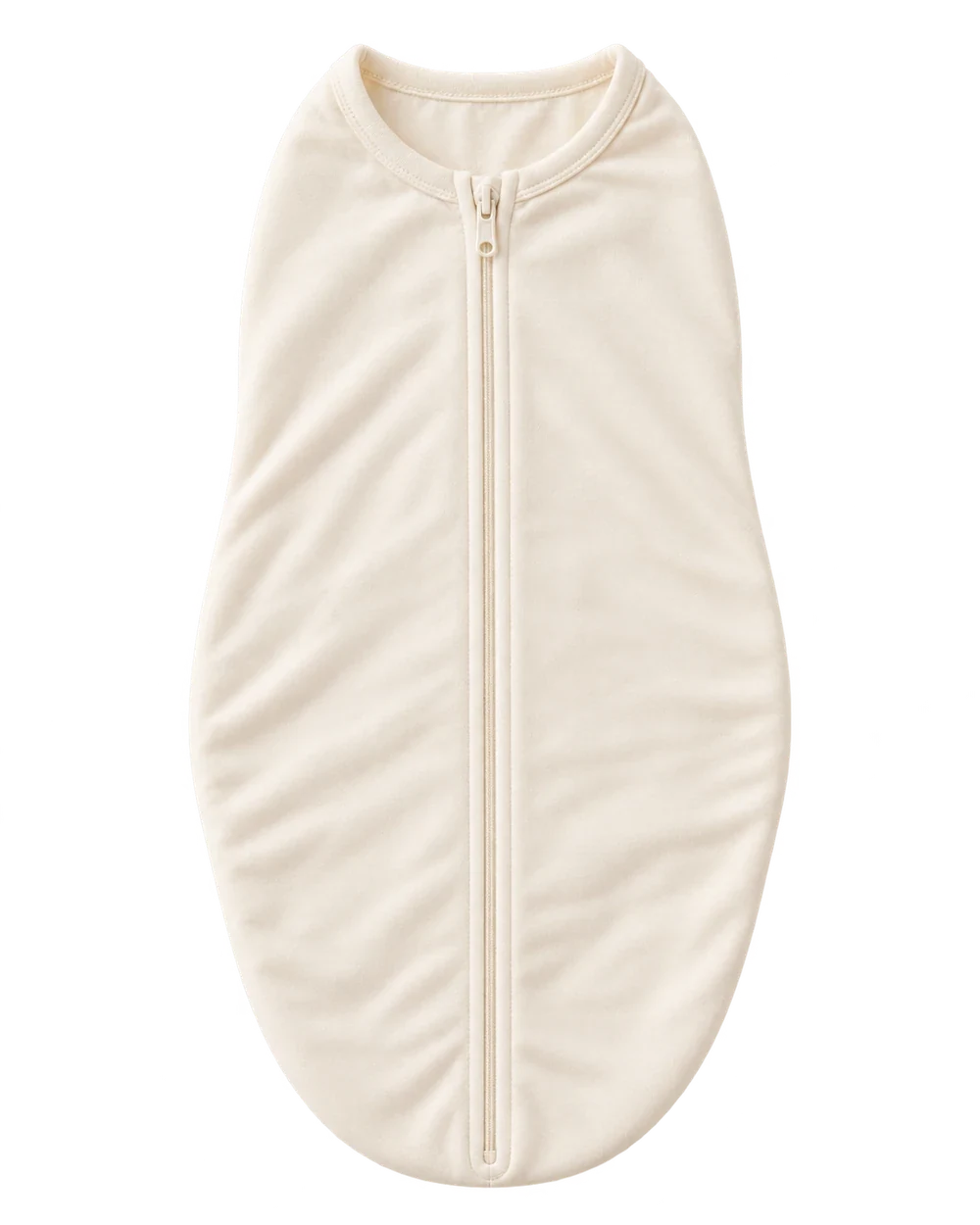
Zip-up pod
A stretchy cotton sack that zips up the front, with the arms inside. There is nothing to fold, so it suits anyone who finds a blanket hard to wrap in the dark.
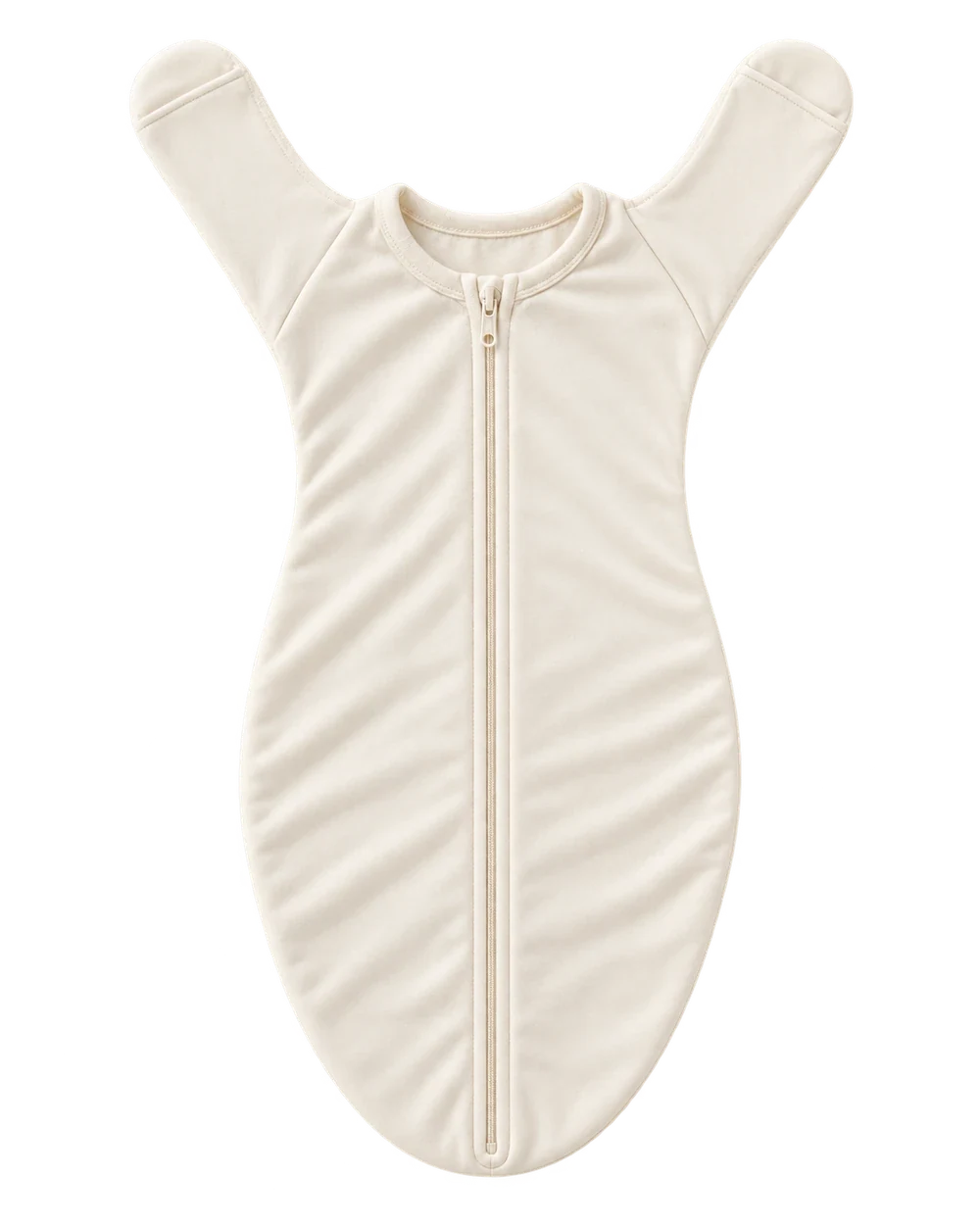
Arms-up swaddle
A zip-up sack with sleeves that hold the hands up by the face. It suits a baby who fights having the arms down, or likes to suck on a hand.
How to choose a swaddle

1. Thin and light
One thin layer of cotton muslin or light jersey (stretchy T-shirt cotton) is enough. Don't swaddle in a thick blanket, because your baby could overheat.
- Good: Thin muslin or light jersey
- Not good: Fleece or quilted fabric
- Not good: Weighted pads or beads
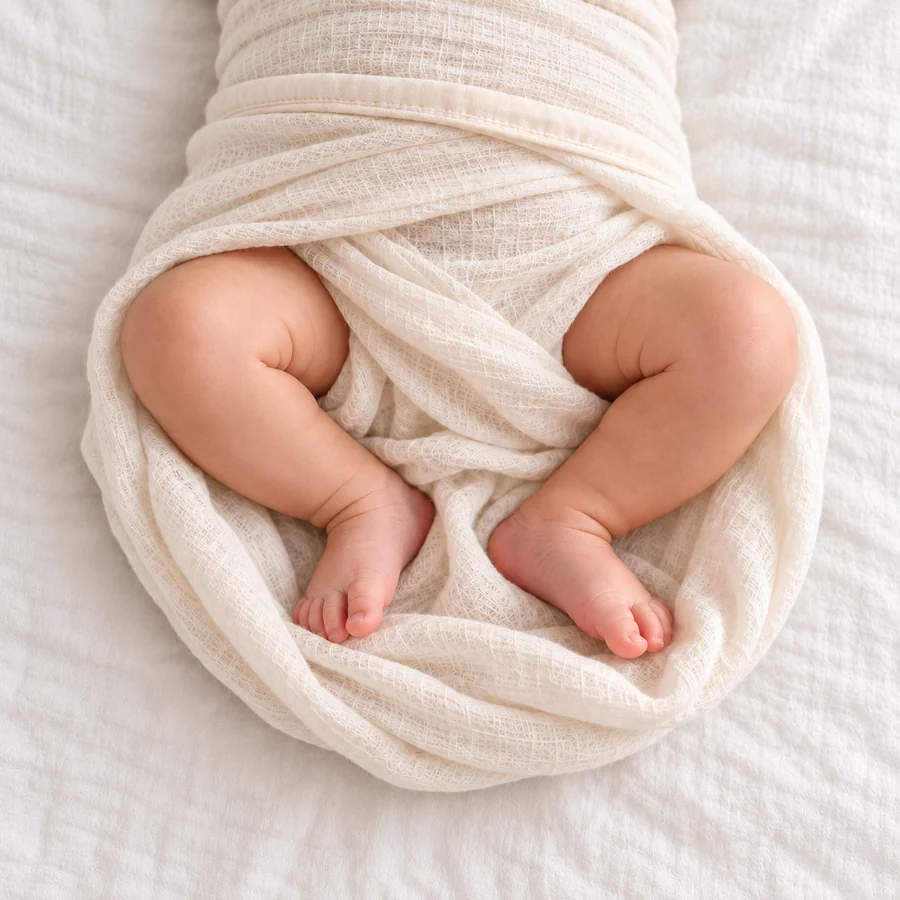
2. Room for the legs
The legs need to bend up and out at the hips, as they did in the womb. Legs wrapped straight and tight can harm the hip joints (hip dysplasia), so a shaped swaddle should be a loose sack below the waist.
- Good: Loose sack for the legs
- Good: Knees bend up and out
- Not good: Tight around the thighs
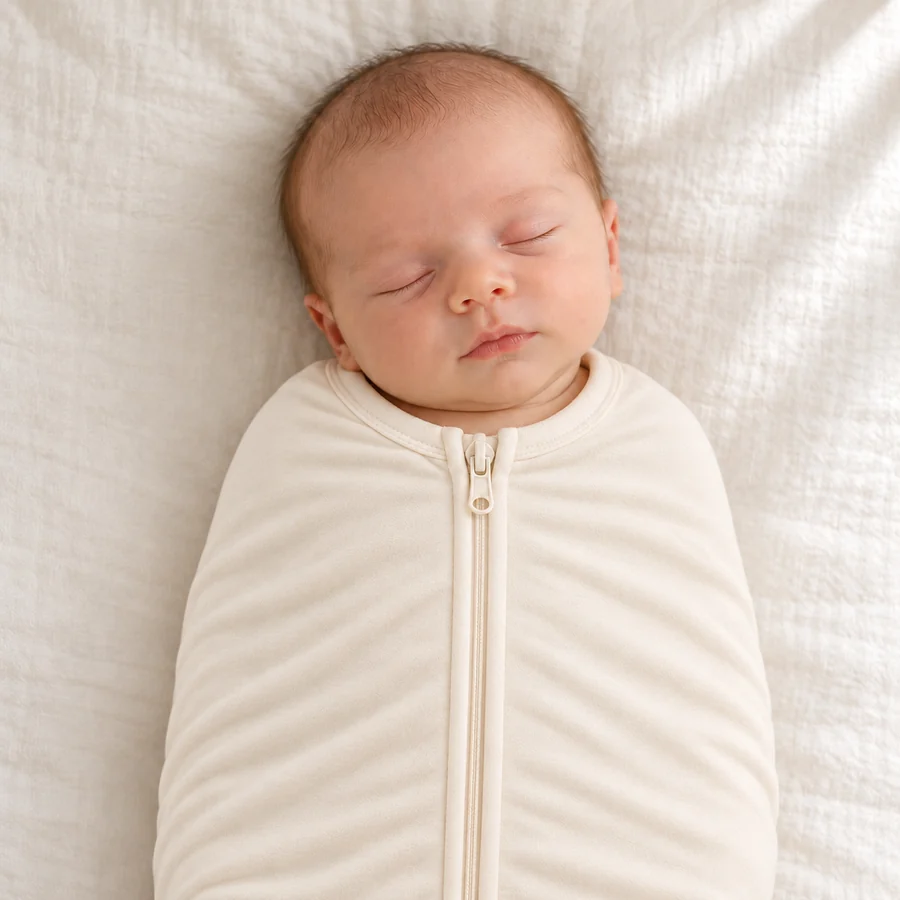
3. A size that fits now
Shaped swaddles often come in sizes by weight, so check the maker's chart. One that is too big lets your baby wriggle out, and loose fabric can end up over the face. A blanket needs corners long enough to tuck under.
- Good: Fits your baby's weight now
- Good: Neckline at the shoulders
- Not good: Roomy, to grow into
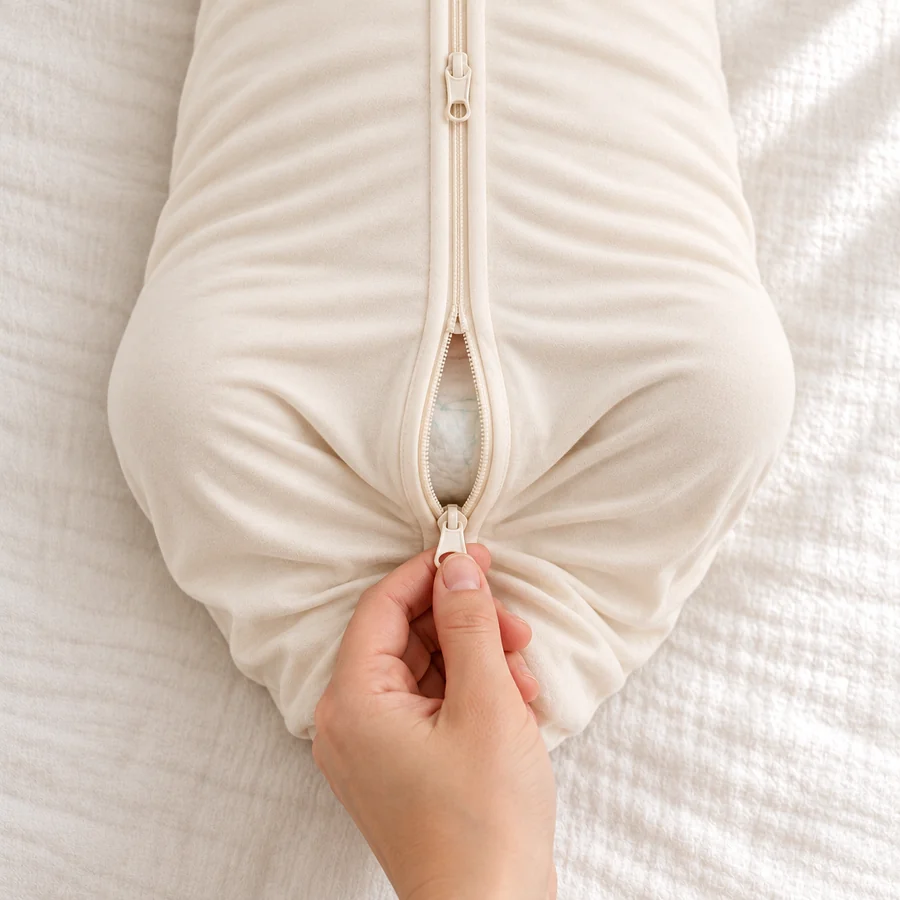
4. Easy night changes
Night feeds come with diaper changes. A two-way zip opens from the feet, so you can change the diaper with the arms still wrapped.
- Good: Two-way zip from the feet
- Good: Quiet to open
- Not good: Unwrap the arms to change
How to swaddle with a blanket
Use a thin muslin blanket on a flat surface. The wrap should be snug at the chest and loose at the hips.
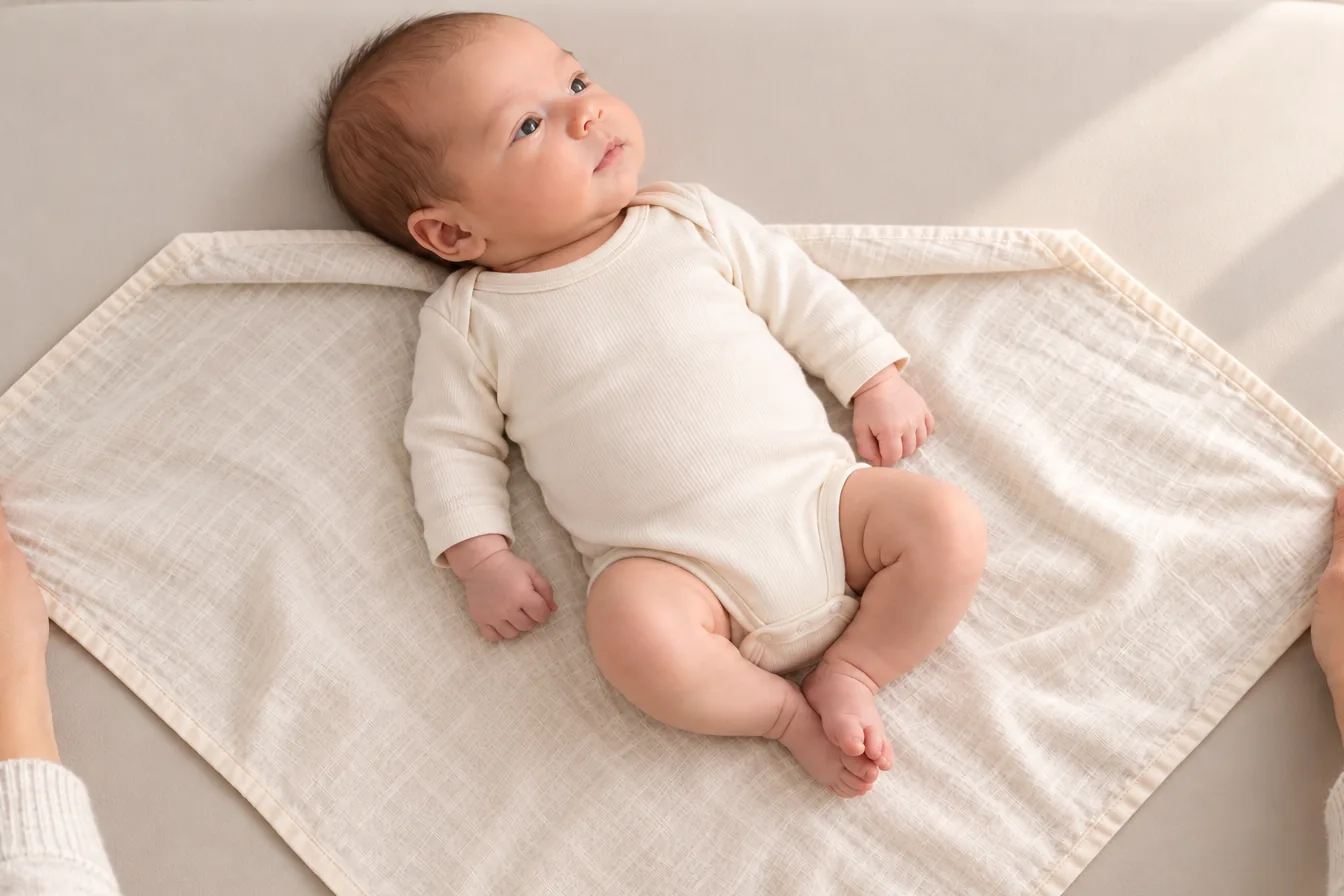
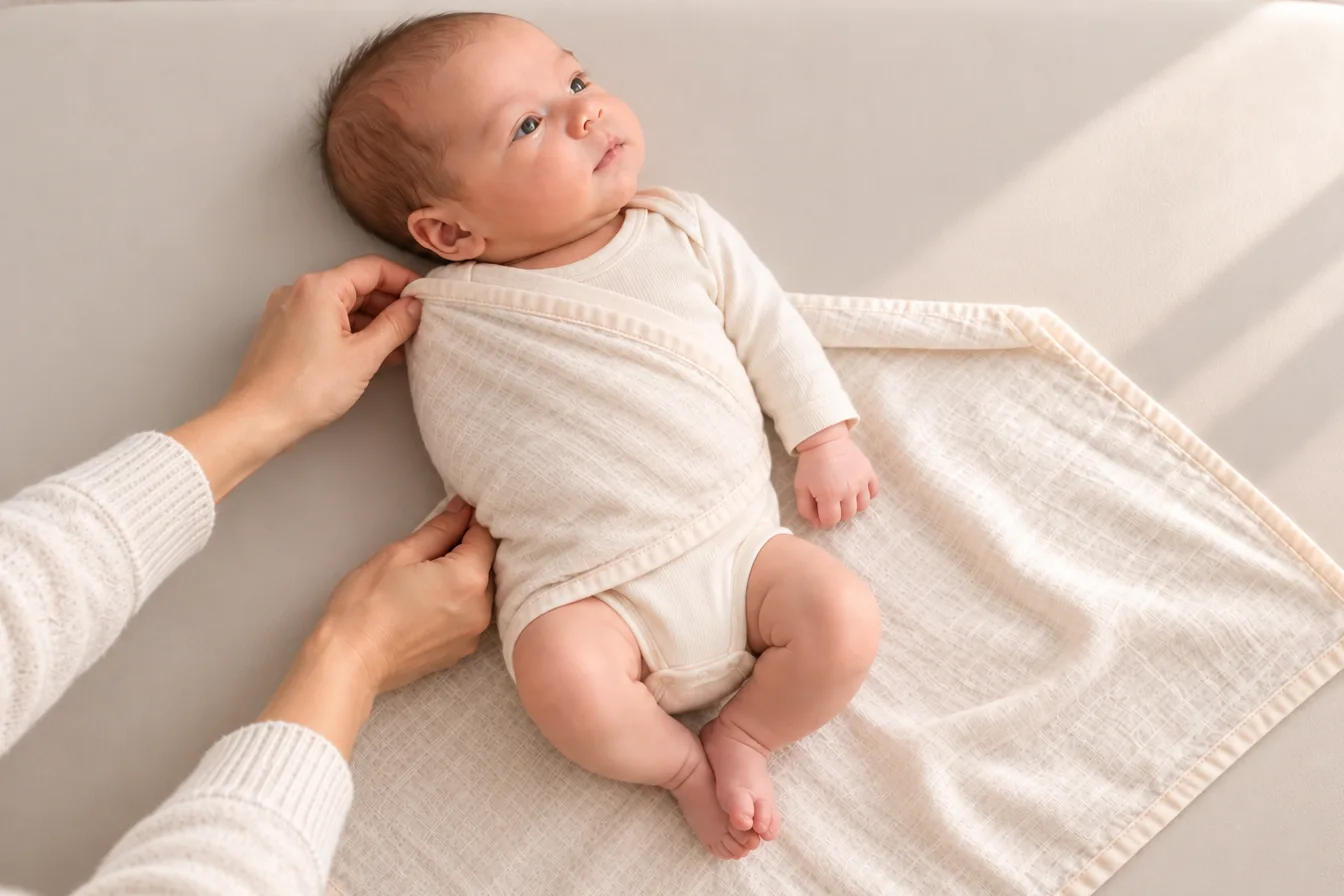
1. Fold and lay
Lay the blanket flat as a diamond and fold the top corner down. Place your baby on the back with the shoulders on the fold, so the head stays clear of the cloth.
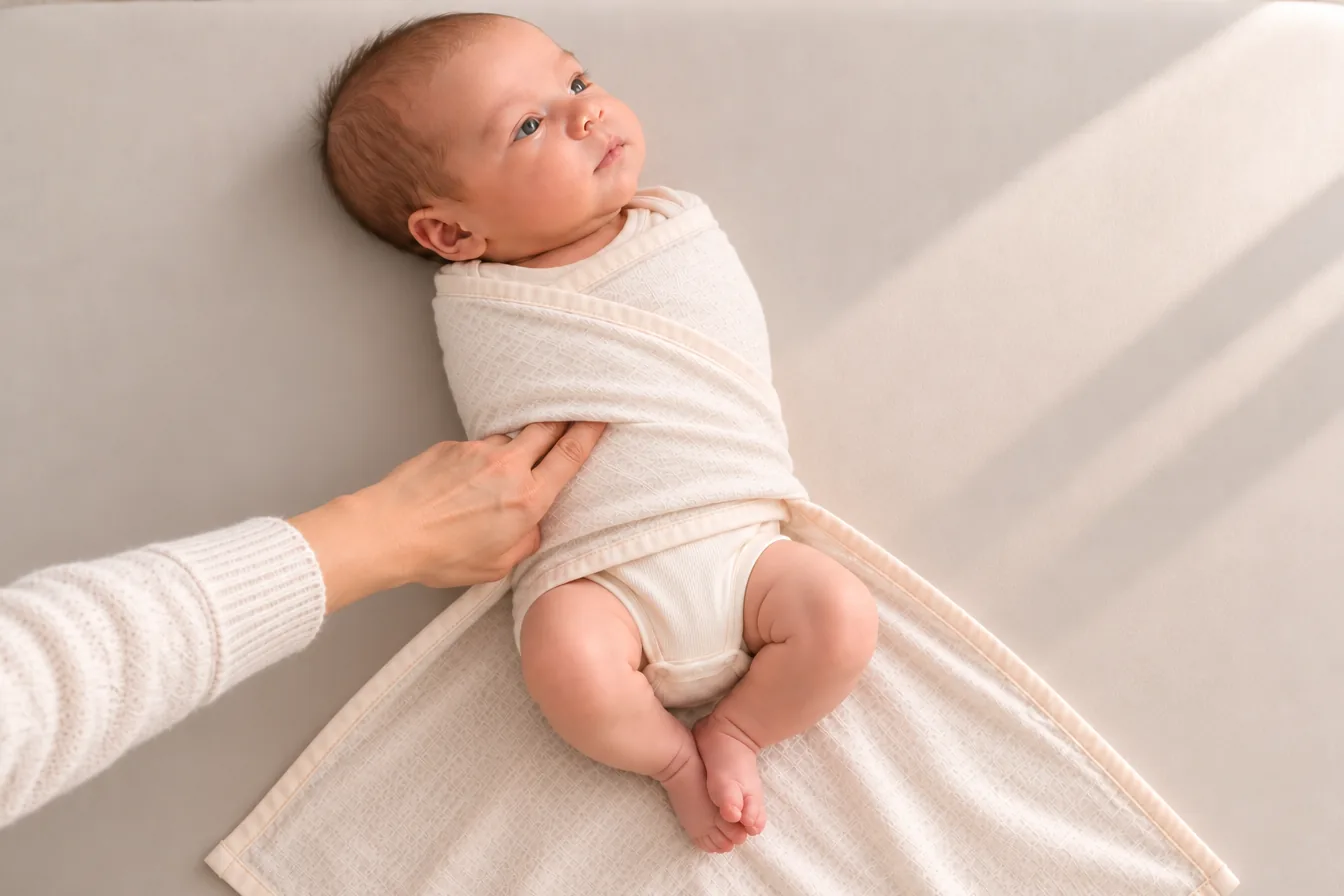
2. Wrap one side
Hold one arm straight down at your baby's side. Bring the corner on that side across the chest and tuck it under your baby's back.
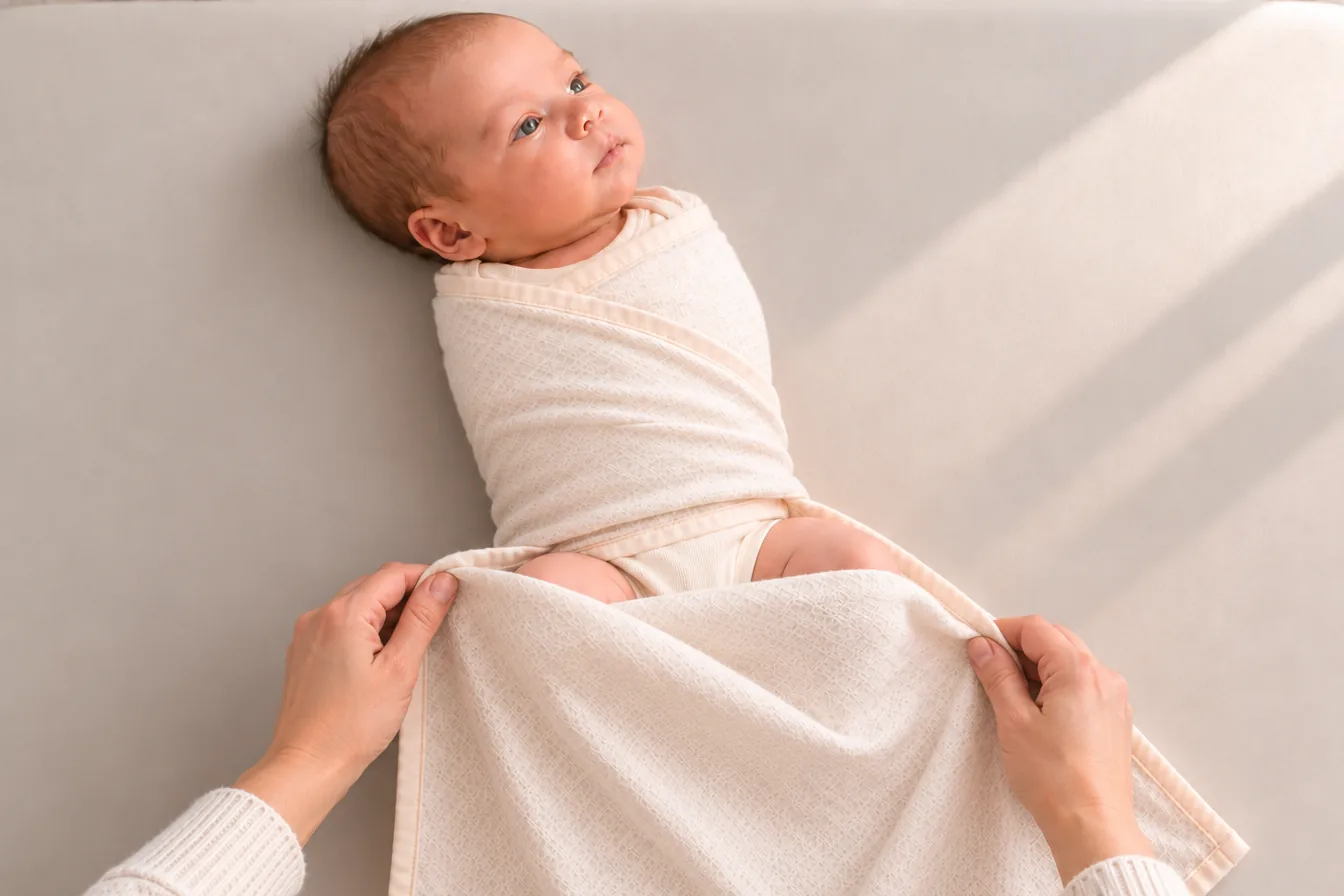
3. Wrap the other side
Lay the other arm down. Bring the last side corner over it and across the chest, and tuck it under your baby. Two or three fingers should slide under the cloth at the chest.
4. Leave the legs loose
Fold the bottom up loosely over the legs and tuck it under one side. Leave room for the knees to bend up and out.
How tight should a swaddle be?
Check two places each time you wrap: the chest and the hips. The wrap should be secure enough not to come undone, and looser around the hips, so the legs can move.
Not good: Too tight at the legs
The cloth is pulled tight from the waist to the feet, so the legs lie straight and pressed together. Wrapped like that, the hips have no room to bend, which may raise the risk of hip problems (hip dysplasia).
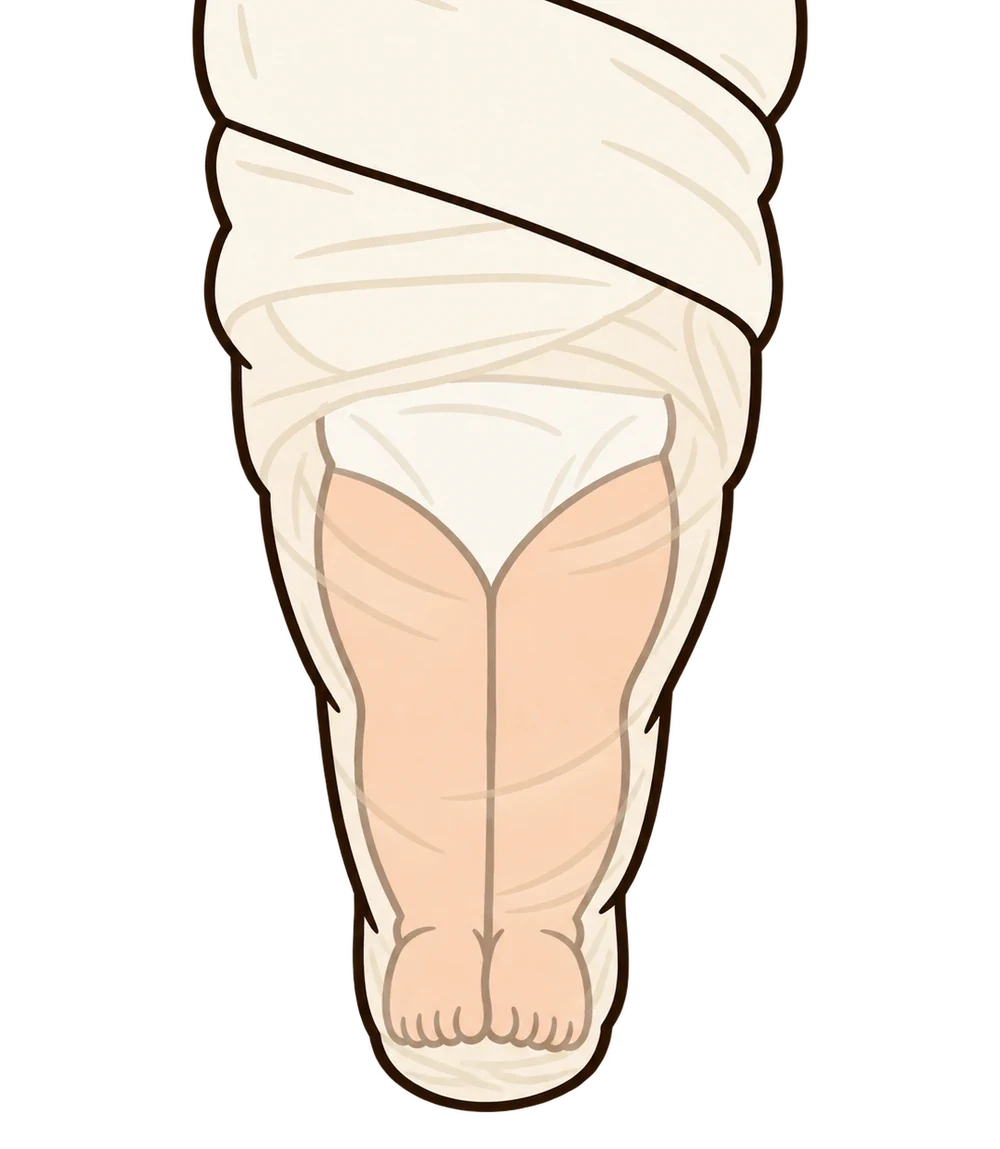 No room to bend at the hips
Good: Room for the hips
The cloth is snug across the chest and loose from the waist down. The legs bend up and out at the hips, like a frog's, with room to move.
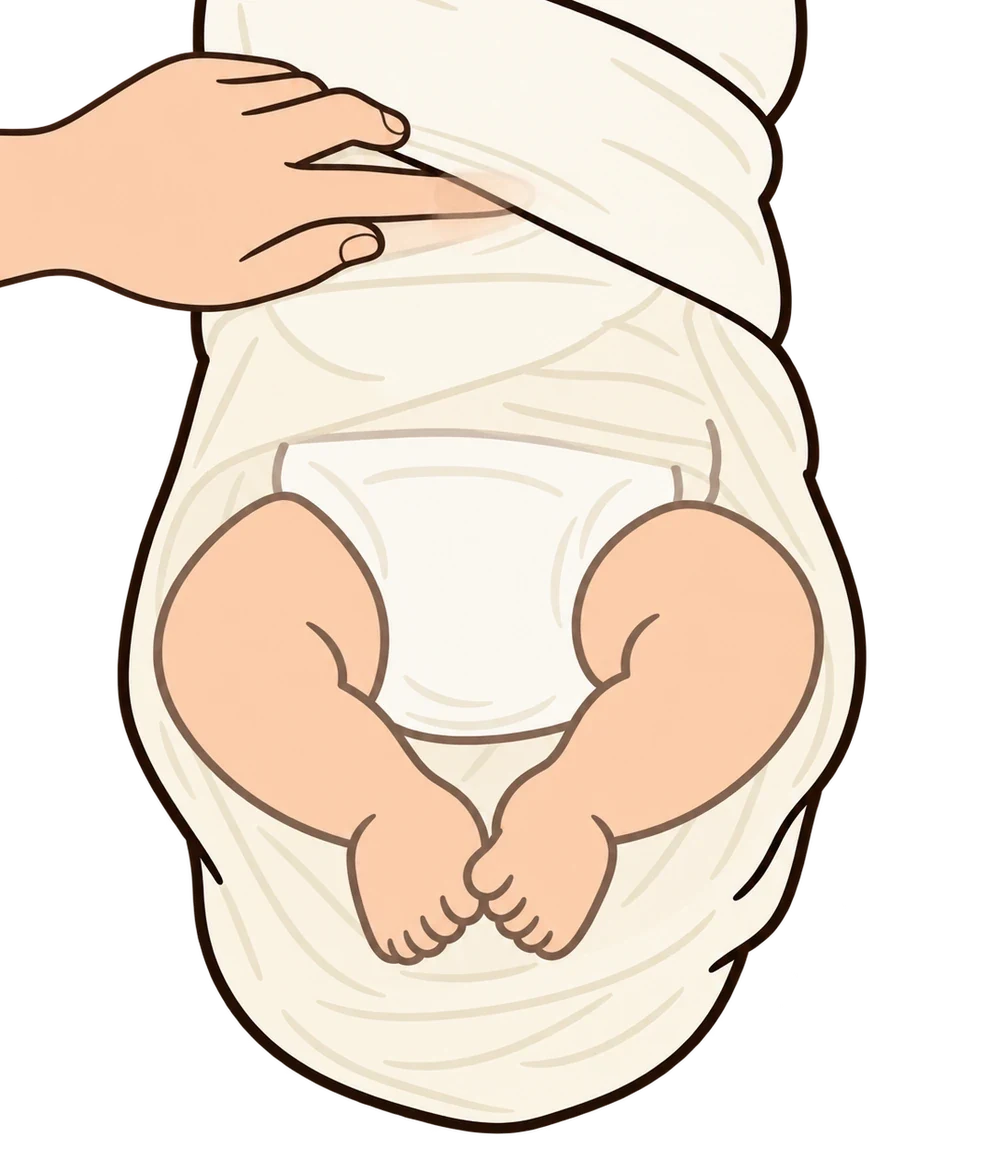 2–3 fingersslide under the cloth at the chestKnees bend up and out
A shaped swaddle needs the same room. Its sack below the waist stays loose, never pulled tight around the thighs.
Sleeping safely in a swaddle
Always lay a swaddled baby on the back, for every sleep. Use a crib or bassinet with a firm, flat mattress and a fitted sheet, and nothing else in it. Keep the cloth below the shoulders and the head bare.
Never swaddle in an adult bed, where a wrapped baby cannot move away from a duvet or a pillow. Leave the swaddle off when your baby has a fever, too, so the body can cool down.
Questions parents ask
When should I stop swaddling?
At the first sign that your baby is trying to roll, such as rocking onto one shoulder. That can happen as early as 2 months. When to stop swaddling shows the signs and the move to a sleep bag.
What is a transition swaddle?
A swaddle whose wings or sleeves come off, so you can free one arm, then both. Doing it over a week or two, before rolling starts, gets your baby used to sleeping with free hands. Once your baby tries to roll, switch to a sleep bag that does not press on the arms, chest or body.
Can I swaddle with arms out?
Yes, before rolling starts. There is no evidence that arms in or out changes the risk of SIDS. A wrapped chest is still a swaddle, though, so it stops at the first try to roll too.
My baby breaks out of the swaddle. What do I do?
Take it off and wrap again from the start, snug at the chest so the cloth cannot work loose. Never add a second wrap or a clip to hold it. If your baby keeps breaking out, try a shaped swaddle or stop swaddling, because a wrap that comes undone is loose cloth in the crib.
Why does my baby hate being swaddled?
Some babies settle better with the hands free, or up by the face. Try an arms-up swaddle, or skip swaddling and use a sleep bag. The startle reflex is strongest in the first month and starts to fade after about 2 months.
Are swaddles a risk for SIDS?
They can be, mostly when a swaddled baby sleeps on the side or front, and more so as babies get older. So lay your baby on the back every time, and stop at the first try to roll.
Can a baby overheat in a swaddle?
Yes, because a wrapped baby cannot kick off a layer. Use a thin swaddle, dress lightly underneath and never lay a blanket on top. If the chest or the back of the neck feels hot or sweaty, take a layer off.
What should a baby wear under a swaddle?
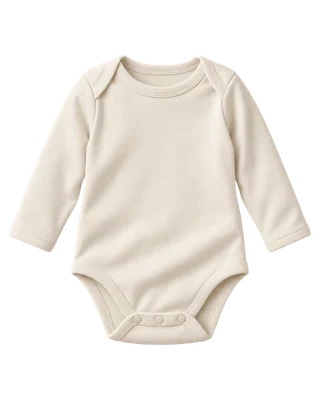
Dress for the room, and count the swaddle as the top layer: a sleepsuit at 19°C (66°F) and below, a long-sleeve bodysuit at 20–21°C (68–70°F), a short-sleeve bodysuit at 22–23°C (72–73°F) and a diaper alone at 24–27°C (75–81°F). At 28°C (82°F) and warmer, skip the swaddle. How to dress a baby for sleep shows it as a chart.
Are weighted swaddles safe?
No. Skip weighted swaddles, sleep sacks and blankets, because the weight can press on a baby's chest and lungs.
Why do lactation consultants not like swaddling?
A swaddle can hide early hunger signs, such as hands going to the mouth. A swaddled newborn may then feed less often, and fewer feeds can mean less milk. If you breastfeed, leave the hands free in the first days, until feeding is going well.
How many swaddles do I need?
Three is a good start: one on your baby, one in the wash and one spare for a night leak.