
What this is about
In the first few weeks, a swaddle feels like a miracle. It calms the startle reflex, recreates the snugness of the womb, and gives everyone a chance to sleep. But swaddling is a temporary bridge, not a permanent bedtime habit. The moment your baby begins wriggling with purpose, freedom of movement matters far more than sleep convenience.
Do not wait for a complete roll
Parents often wait for a dramatic, full turn onto the stomach before retiring the swaddle. That is the single most common mistake. A real first attempt looks much smaller: rocking onto one shoulder, arching sideways, or kicking legs over to build momentum. Do not wait for your baby to land face down. Stop swaddling the night that first effort appears.
Those first rolling signs can arrive as early as 2 months. Rolling while swaddled is dangerous because a baby with pinned arms cannot push up from the mattress or turn their head to clear the airway. Movement decides when swaddling ends, not a date on the calendar. Even if no rolling has happened by 4 months, swaddling stops then as motor skills catch up.
Before rolling starts
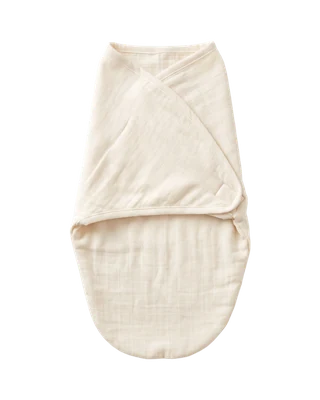
One thin swaddle goes over the fitted layer for the room. Put your baby down on the back.
At the first attempt
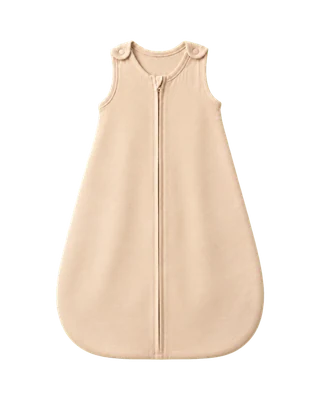
Swaddling ends for every sleep. Both arms stay free in an ordinary sleep bag.
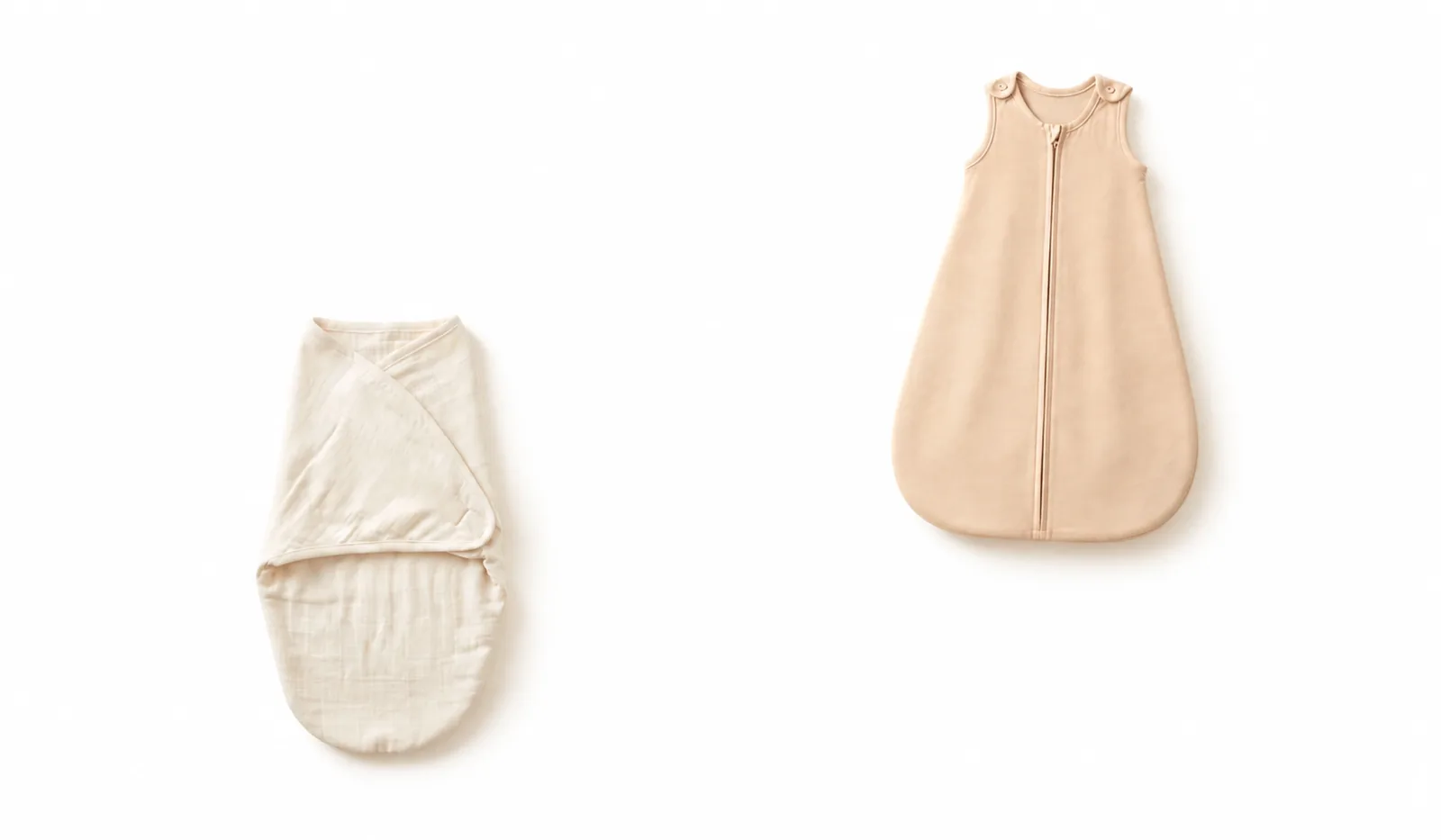
When you stop swaddling, switch to an ordinary arms-free sleep bag or fitted sleepwear. Watch out for transition wraps that free the hands while keeping a tight band around the chest. Chest compression still restricts breathing and ribcage expansion if your baby rolls onto their stomach. An ordinary sleep bag hangs loosely from the shoulders and leaves the entire torso unconstrained.
Secure at the chest, loose at the hips
A safe swaddle requires two opposite fits at once. Across the torso, the wrap must stay firm enough that fabric cannot loosen and creep over the mouth or nose. At the same time, you need enough room to slip two flat fingers comfortably between fabric and chest so your baby's ribs can expand. If a swaddle works loose in the night, take it off and re-wrap it from scratch. Never add a second wrap or clip to pin the fabric down.
From the hips down, the wrap must be loose and roomy. Straightening a baby's legs and wrapping them like a stiff pencil forces the hip joints out of alignment and risks hip dysplasia. Newborn legs need space to bend up and spread naturally in a frog-leg posture. Tight legs do not make a swaddle more secure.
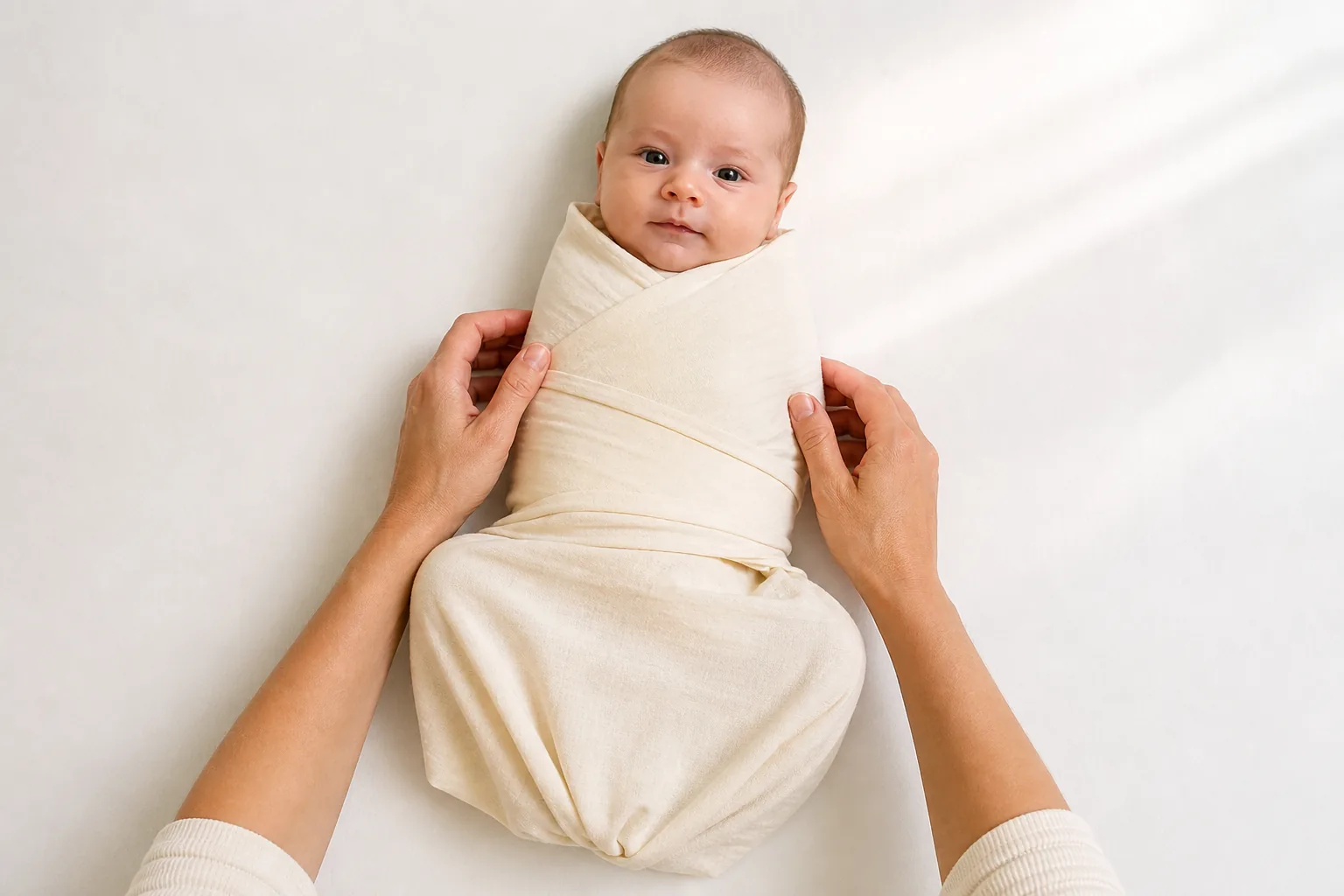
Count the swaddle as a layer
The classic dressing mistake is putting a baby into a complete bedtime outfit and then wrapping a swaddle around them like a package ribbon. A swaddle is not an accessory. It is a light blanket that happens to wrap around the body. Treat it as the top covering, and dress your baby only for what the room thermometer calls for underneath.
28° and warmer
diaper
No swaddle.
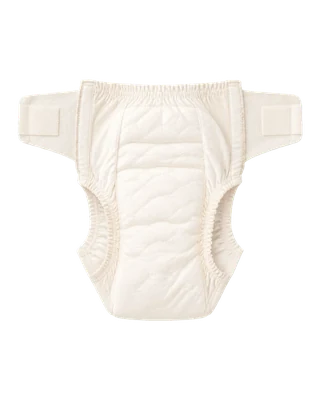
24–27°
diaper, swaddle
22–23°
short-sleeve bodysuit, swaddle
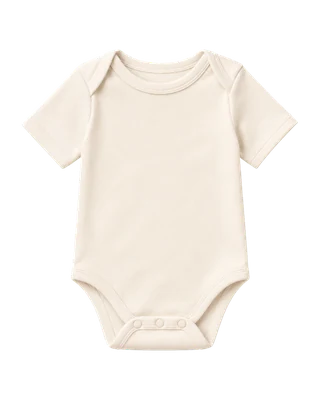
20–21°
long-sleeve bodysuit, swaddle
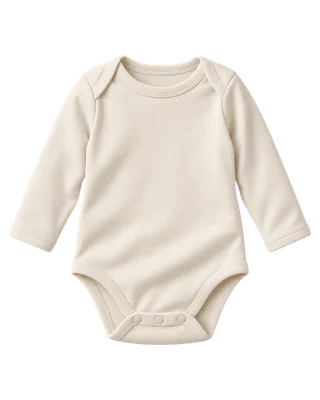
18–19°
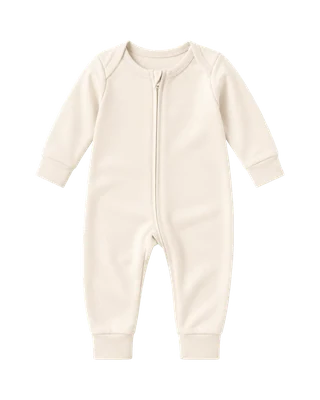
sleepsuit, swaddle
17° and colder
sleepsuit, swaddle
Choose a lightweight, breathable swaddle made of single-layer cotton or bamboo muslin. Avoid plush, fleece or quilted wraps indoors, which trap heat rapidly. In a warm room between 24° and 27°, a diaper beneath one thin swaddle is plenty. Once the room hits 28°, skip the swaddle entirely and let your baby sleep in just a diaper.
Check warmth at the chest or neck
A swaddled baby cannot kick off a blanket or move their arms to cool down, which makes overheating a real risk. Use the temperature ladder for your starting clothes, then feel bare skin at your baby's upper chest or the back of the neck about twenty minutes after putting them down. Warm and dry skin means the clothes are right. Damp skin or a sweaty neck means one layer needs to come off.
Never judge your baby's temperature by hands or feet. Newborn circulation is still maturing, so fingers and toes almost always feel cool to the touch. Panicked parents often feel chilly fingers at 2:00 AM and pile on extra layers, accidentally overheating the baby. Cold hands are completely normal; a sweaty neck is not.
Leave it off in a shared bed or during illness
Two situations bring swaddling to an immediate halt, even if your baby is only a few weeks old and nowhere near rolling. Never swaddle in an adult bed. Adult mattresses are soft, duvets and pillows shift, and an adult's body heat quickly overheats a swaddled newborn who cannot move away. Read the [full current bed-sharing guidance](https://www.lullabytrust.org.uk/baby-safety/safer-sleep-information/co-sleeping/) before considering a shared sleep surface. A baby with a fever or infection must never be swaddled either, because the wrap traps heat when the body needs to cool down.
Weighted swaddles and weighted sleep sacks are never safe. Pediatric sleep organizations warn that extra weight across a baby's chest makes breathing harder, restricts ribcage movement, and lowers blood oxygen levels. Keep the crib completely clear: just a firm, flat mattress, a fitted sheet, and your baby on their back.
Surviving the transition to free arms
Letting go of the swaddle can feel daunting. When both arms are suddenly free, the startle reflex often twitches, hands fly outward, and your baby might wake up startled. Expect two or three restless nights while your baby gets used to having free hands in the crib. Resist the urge to wrap them back up out of sleep desperation.
Free arms bring a huge upside: your baby can now reach their mouth and suck on their fingers or fists to self-soothe. Keep the rest of bedtime calm and familiar, with the same sleep space and soothing routine. Never use rolled towels, wedges, or sleep positioners to replace the snugness of the swaddle. Those products create dangerous suffocation traps. Once rolling starts, flat on the back with arms free is the only safe way forward.
Questions parents ask
Can I keep swaddling until 4 months?
Stop at the very first sign of trying to roll, even if your baby is only 2 months old. If no rolling signs appear, stop swaddling at 4 months regardless, because rolling can happen suddenly without warning.
Does arms-out swaddling count as arms-free?
No. If fabric still wraps tightly around the chest or torso, it is still a swaddle. Compression around the chest restricts ribcage expansion when rolling. Switch to a standard sleep bag that hangs loose around the body.
My baby is rocking onto their side. Does that count as rolling?
Yes. Rocking onto a shoulder or rolling onto the side is often the very first stage of rolling. Do not wait for a complete turn onto the stomach. Stop swaddling from that first side roll.
When to stop swaddling
- Put your baby on the back for every sleep.
- Keep the chest snug with room to breathe, and leave hips loose to bend.
- Stop swaddling at the very first sign of rolling onto the side or stomach.
- Never use a weighted swaddle, sleep positioner, or loose blankets.
Keep the mouth, nose, and head uncovered. If the wrap works loose in the night, unwrap it and secure it again from scratch.