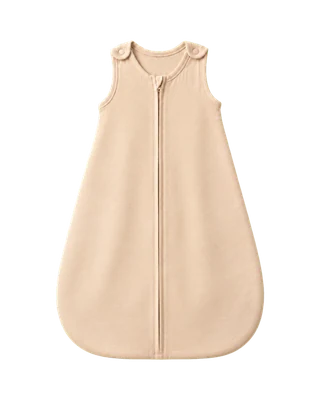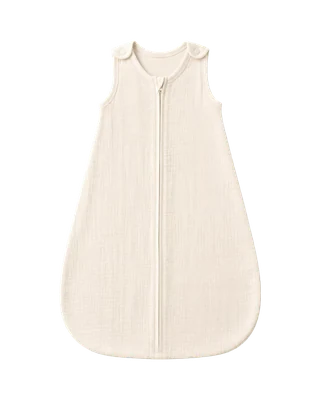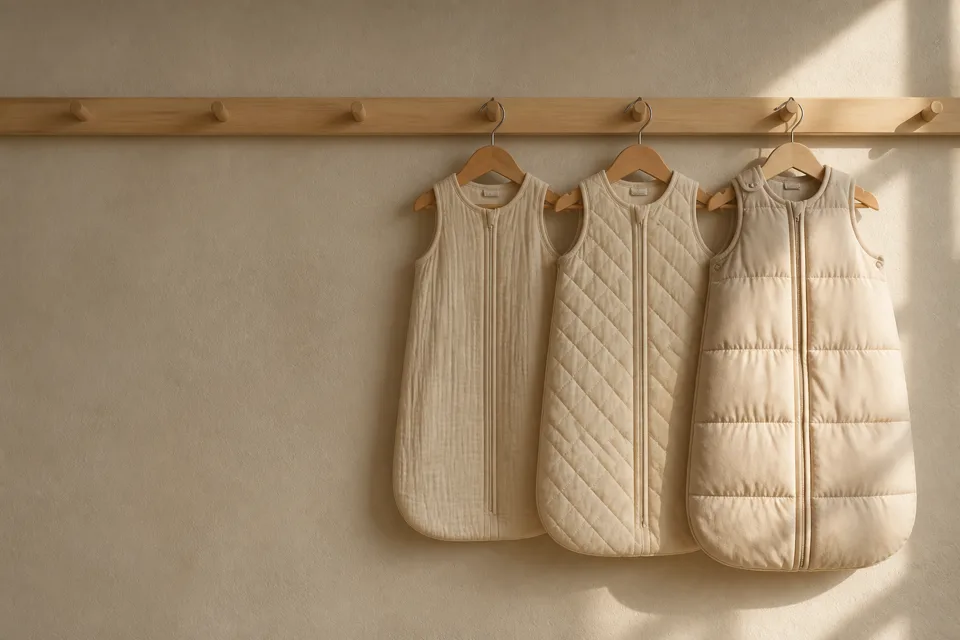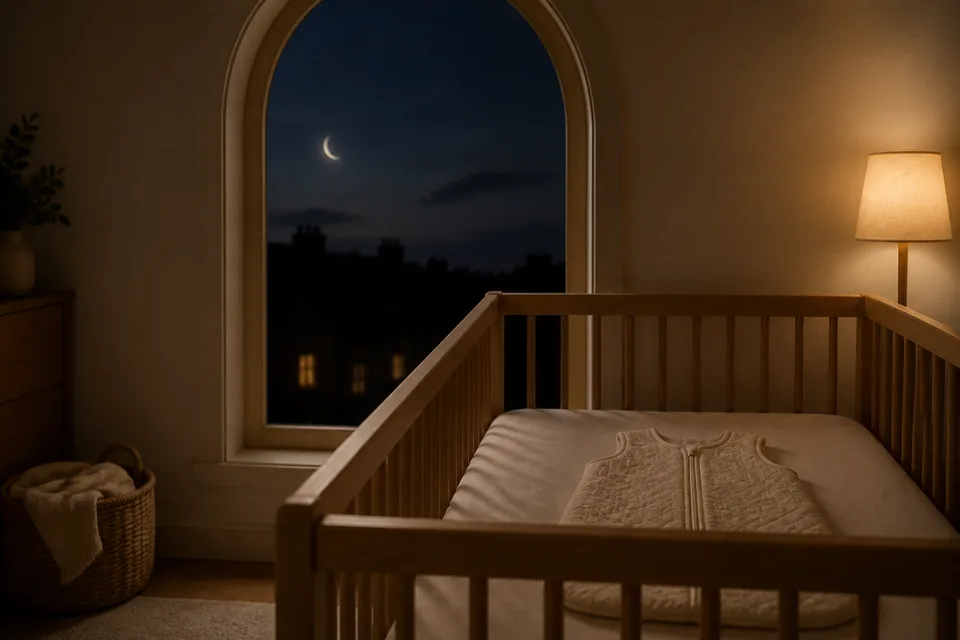
A sleep bag is a wearable blanket with neck and arm openings that fastens over bedtime clothes. It replaces loose blankets in the crib, so there's no blanket to kick off in the night or pull over your baby's face.
TOG is a warmth rating for bedding. A 2.5 TOG bag is made for cooler rooms, 19°C (66°F) and colder.
- For ages0–3years
- You'll need2–3per size
- For a room at16–19°C61–66°F
Do you need one?
You'll use one from fall to spring if your baby's room stays at 19°C (66°F) or colder at night, and all year in a room that stays that cool.
You can skip it in rooms above 20°C (68°F), where a lighter bag is safer. If you prefer not to use a bag, the sleep outfits for every room show what to wear instead.
Which TOG bag to choose for tonight
Your room tonight
18°C (64°F)
Move the thermometer to your room's temperature.

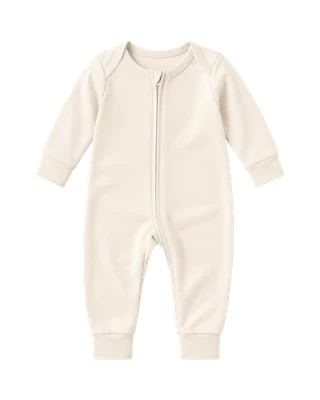
Long-sleeve bodysuit, 2.5 TOG Warm sleep bag
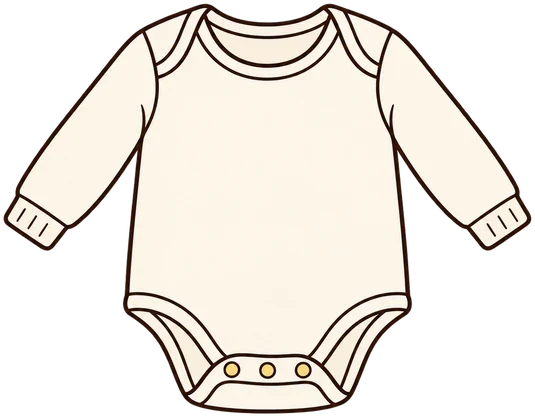 Long-sleeve bodysuit
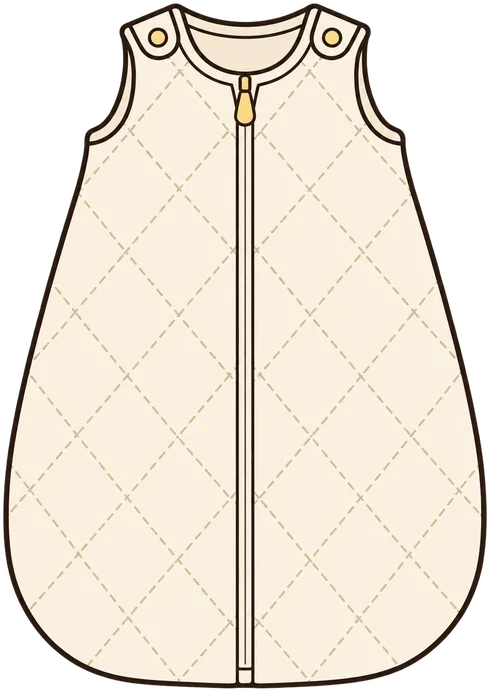 2.5 TOGWarm sleep bag
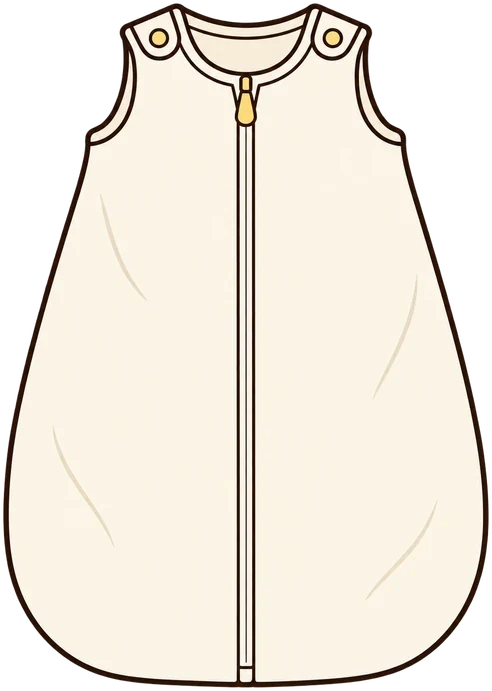
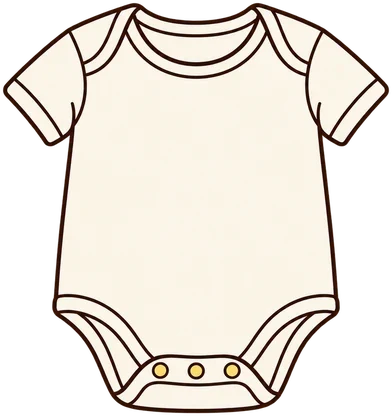
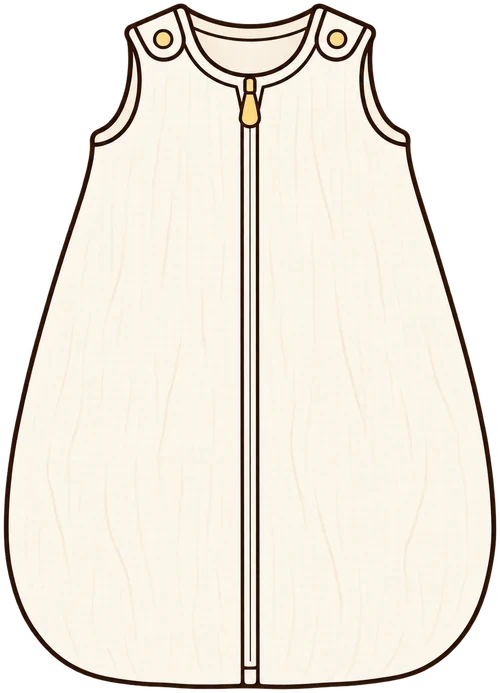
Makers' charts differ, so follow your bag's label.
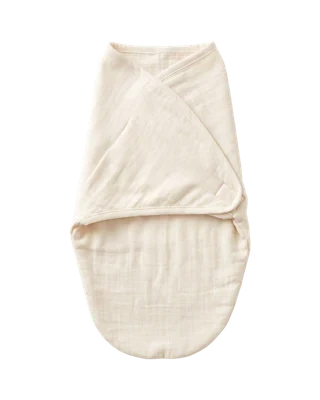
Sleep bag or swaddle?
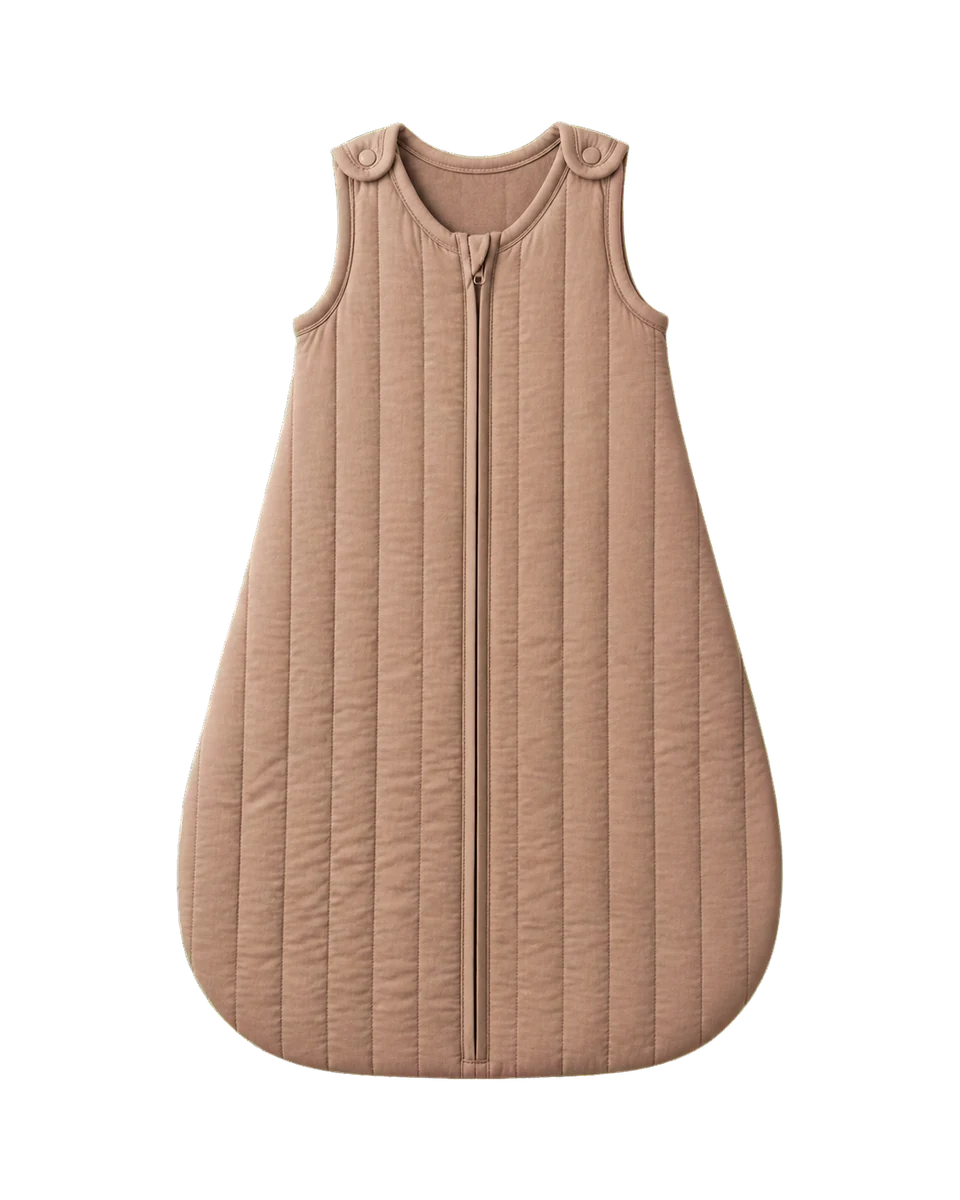
Sleep bag
Leaves the arms free, so your baby can push up and roll. It comes in sizes from newborn to toddler, and it's the safe choice once your baby starts trying to roll.
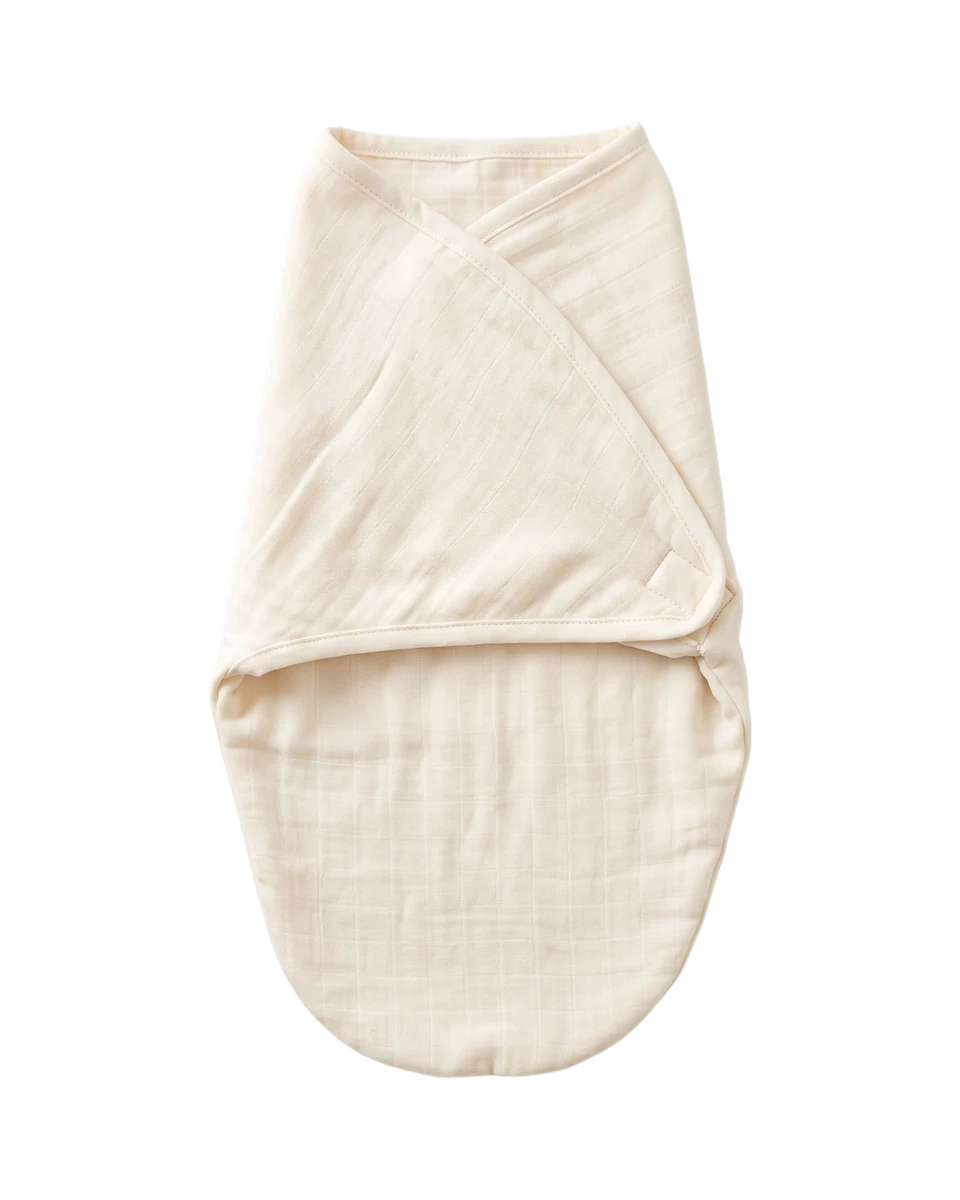
Swaddle
Wraps the arms snugly across the chest to calm the newborn startle reflex (sudden jerking of the arms). Stop swaddling at the first signs of trying to roll, which can start as early as 2 months.
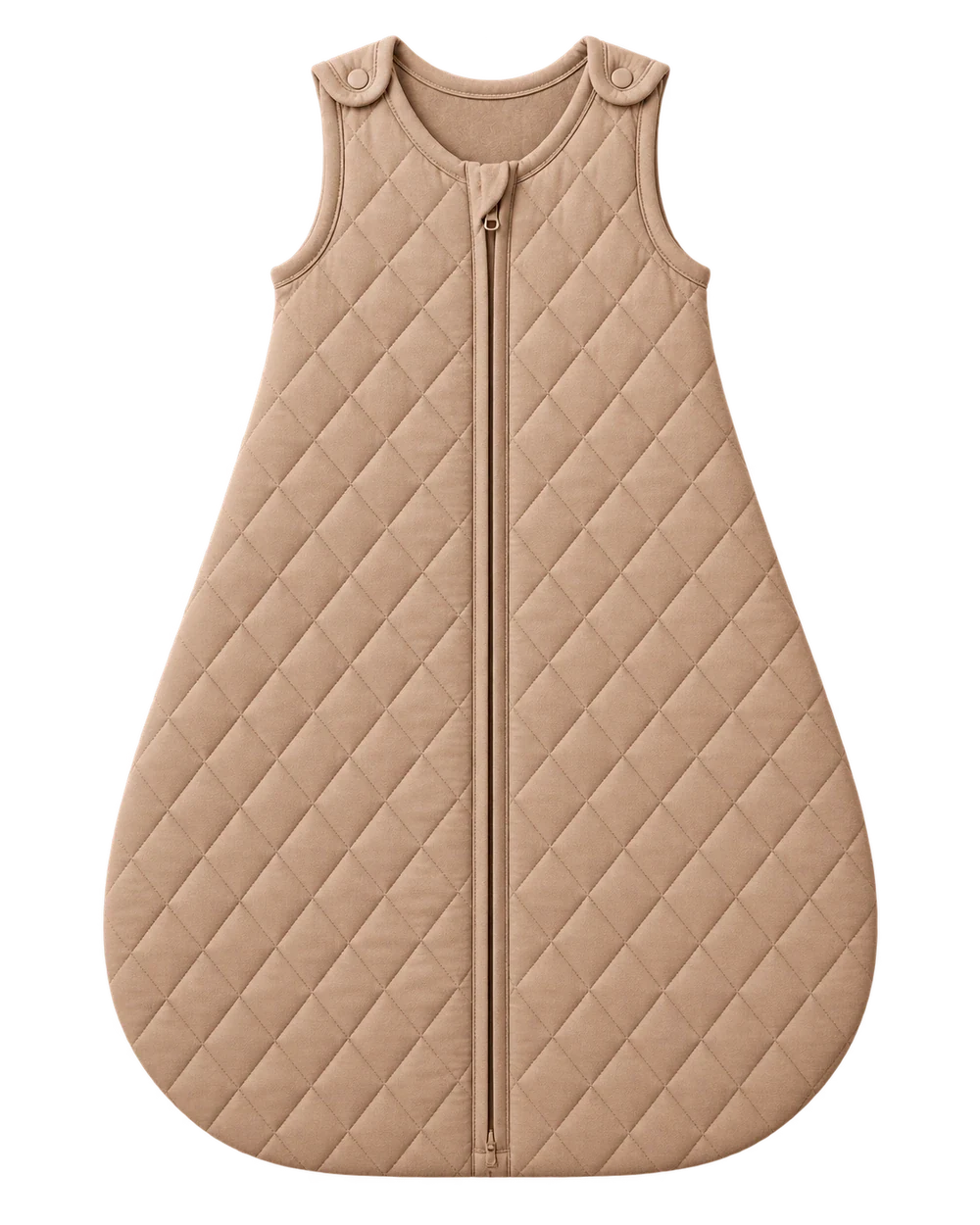
Parts of a sleep bag
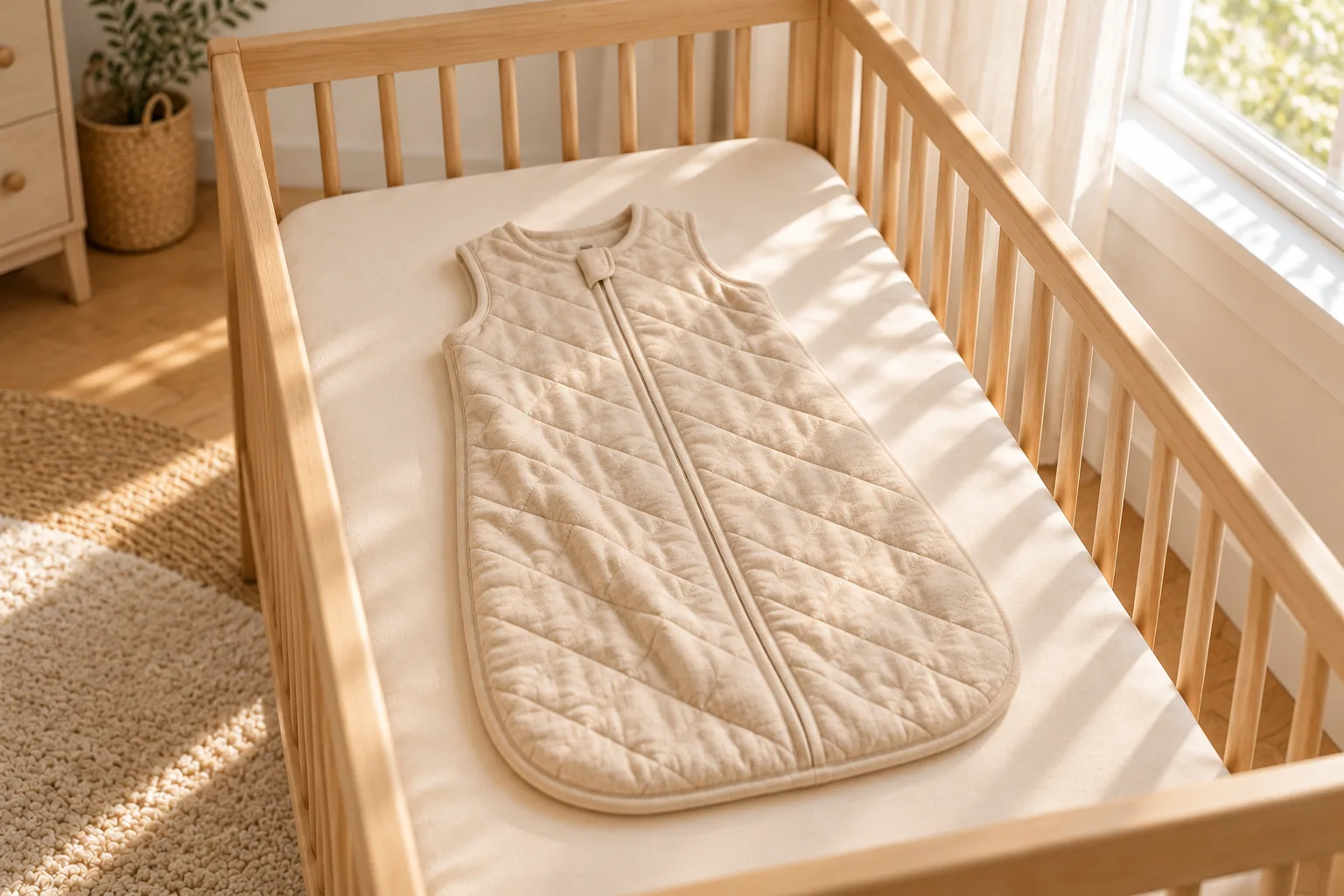
Fitted round neckline
Sits just below the chin. A soft fabric tab keeps the zipper pull off the neck.
Armholes
They fit close around the shoulders and leave the arms free.
Two-way front zipper
Runs down the center and opens from the bottom upward. You can change diapers in the middle of the night without uncovering your baby's chest.
Bell-shaped bottom
Leaves generous space around the hips and legs. Your baby can kick and sleep in a natural frog-legged position for healthy hip development.
How to choose a warm sleep bag
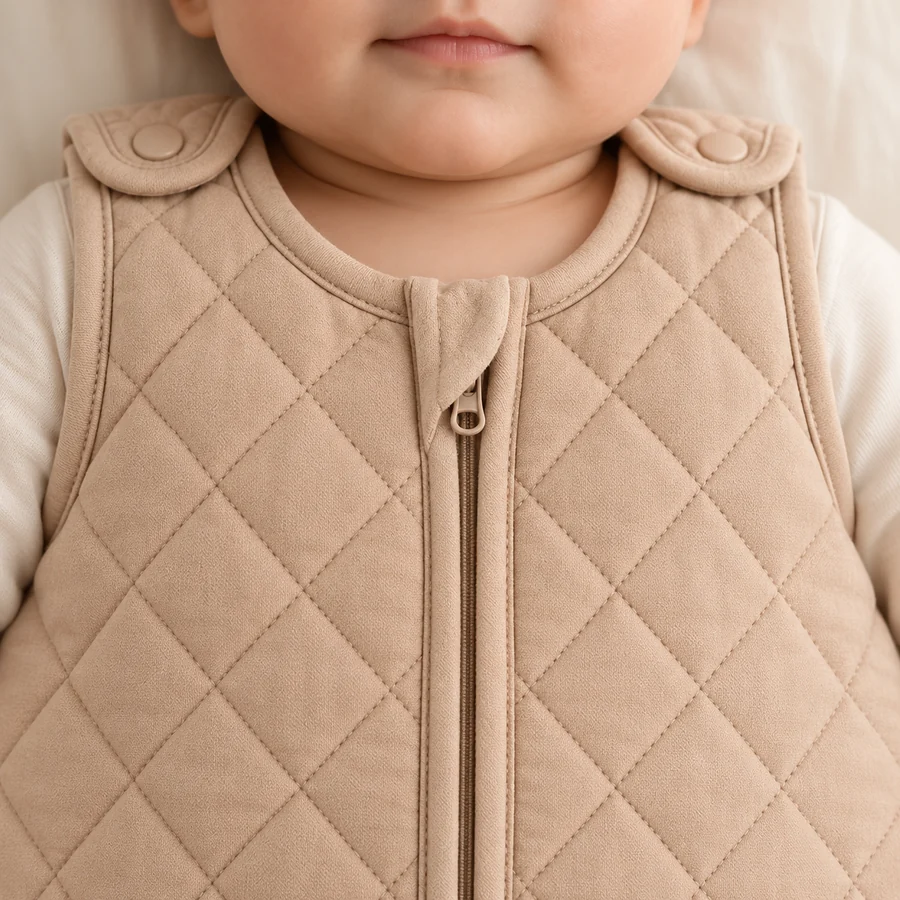
1. Buy by weight, not age
Check the maker's weight chart, not the months on the label, and buy the size your baby fits now.
- Good: Sized by your baby's weight
- Good: Neck and armholes fit now
- Not good: A bigger size to grow into
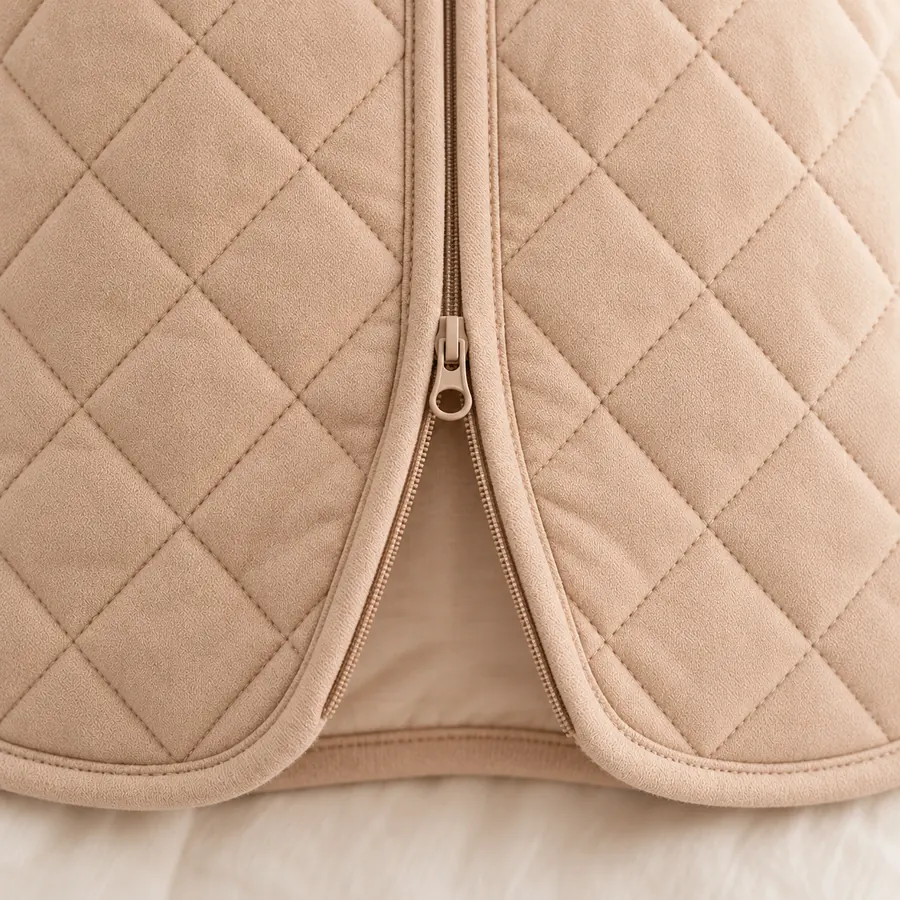
2. Check which way the zipper opens
Look for a two-way zipper that opens from the bottom. If it unzips only from the top, your baby's whole chest is uncovered at every diaper change, even in the middle of a cold night.
- Good: Zipper opens from the feet up
- Good: Fabric tab at the top of the zipper
- Not good: Zipper opens at the chin only
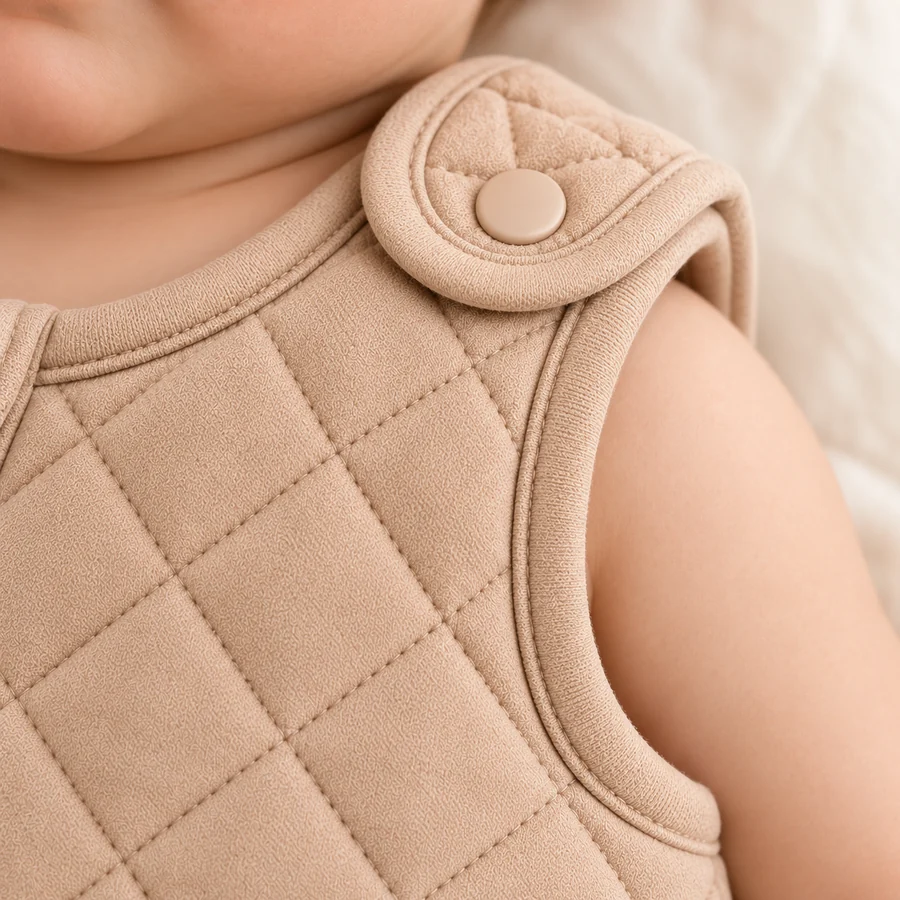
3. Sleeveless, or sleeves for a cold room
Sleeveless is the usual kind, and it goes over any sleepwear. In a cold room, sleeves keep the arms warm, so the layer underneath can be lighter. Either way, skip a hood, so the head stays uncovered.
- Good: Fitted armholes or sleeves
- Not good: A hood
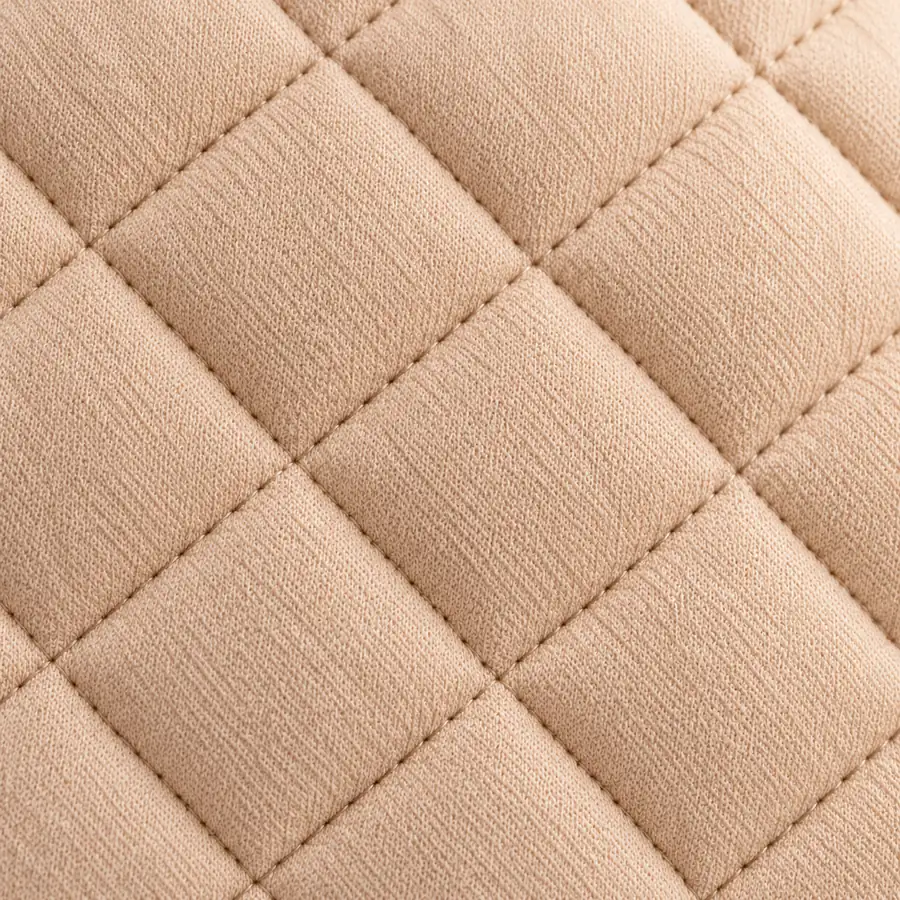
4. The TOG for your room
Pick the TOG for your room. The number covers the whole bag, so you don't have to judge the warmth by the fabric. Cotton is the usual choice. Some merino wool bags give a room temperature range instead of a TOG.
- Good: TOG on the label suits your room
- Good: Machine wash, normal cycle
- Not good: No TOG or room temperature on the label
Can a baby slip down inside a sleep bag?
Not in one that fits. It all comes down to the neck and the armholes.
Good: The size that fits now
It rests on the shoulders and fits close at the neck and the armholes, so your baby can't wriggle down inside.
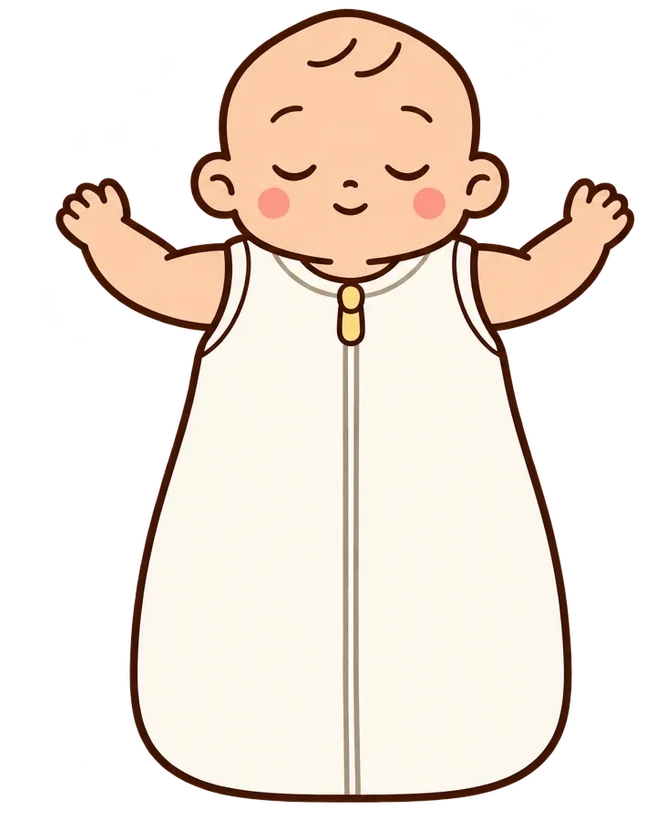 Neckline just below the chin
Not good: A size to grow into
It's wide at the neck and the armholes. As your baby wriggles down inside, the neckline rides up over the chin and toward the mouth.
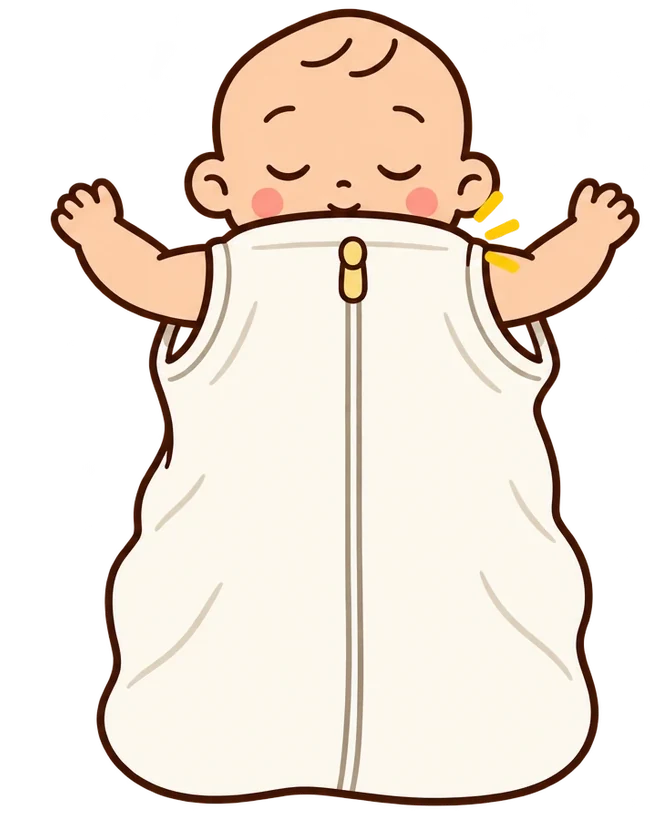 Neckline over the chin
Move up a size only once your baby's weight reaches the next size on the chart.
How to use it
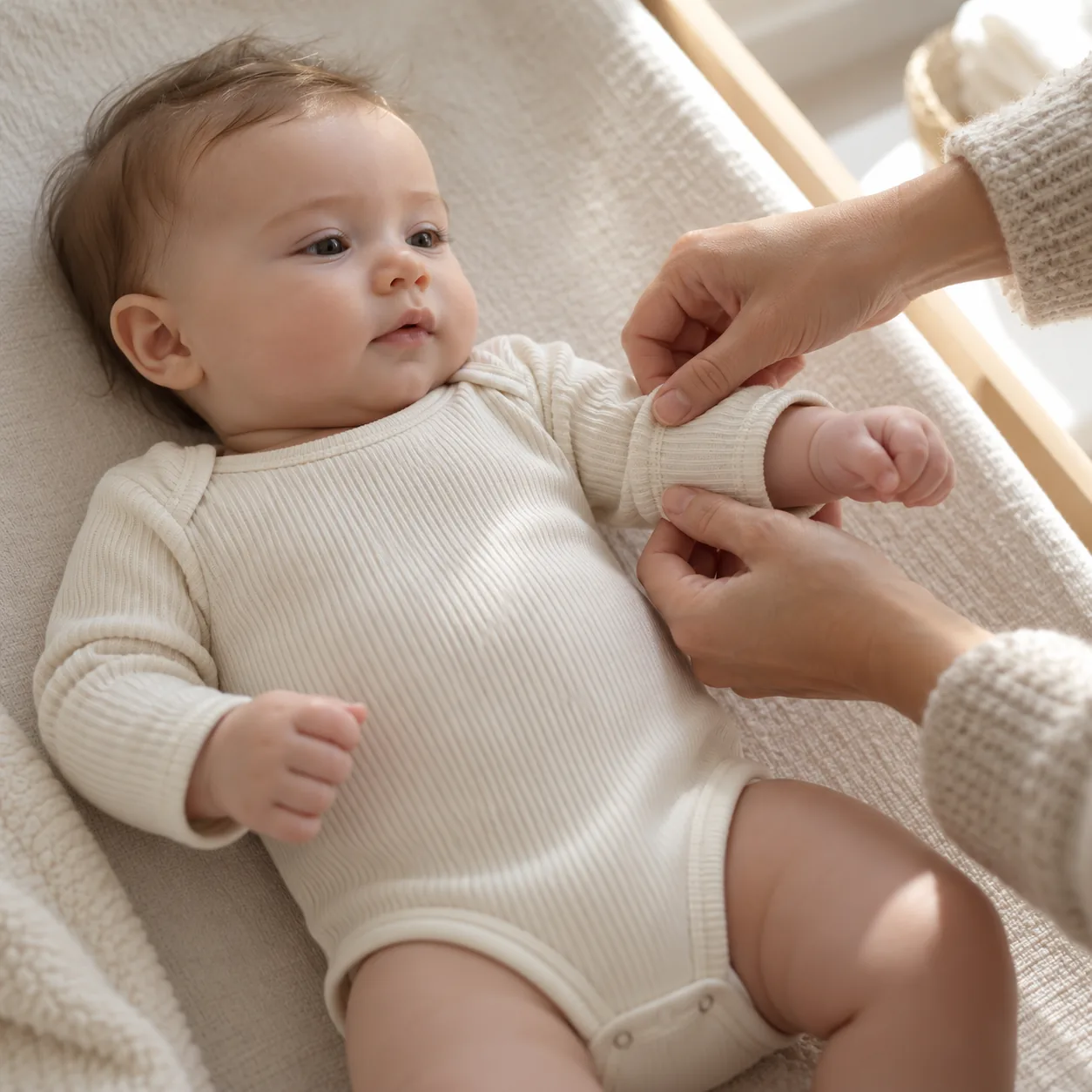
1. Dress for the room
Check your room thermometer before dressing. In an 18–19°C (64–66°F) room, a long-sleeve bodysuit goes underneath. In a cooler 16–17°C (61–63°F) room, use a bodysuit under a sleepsuit.
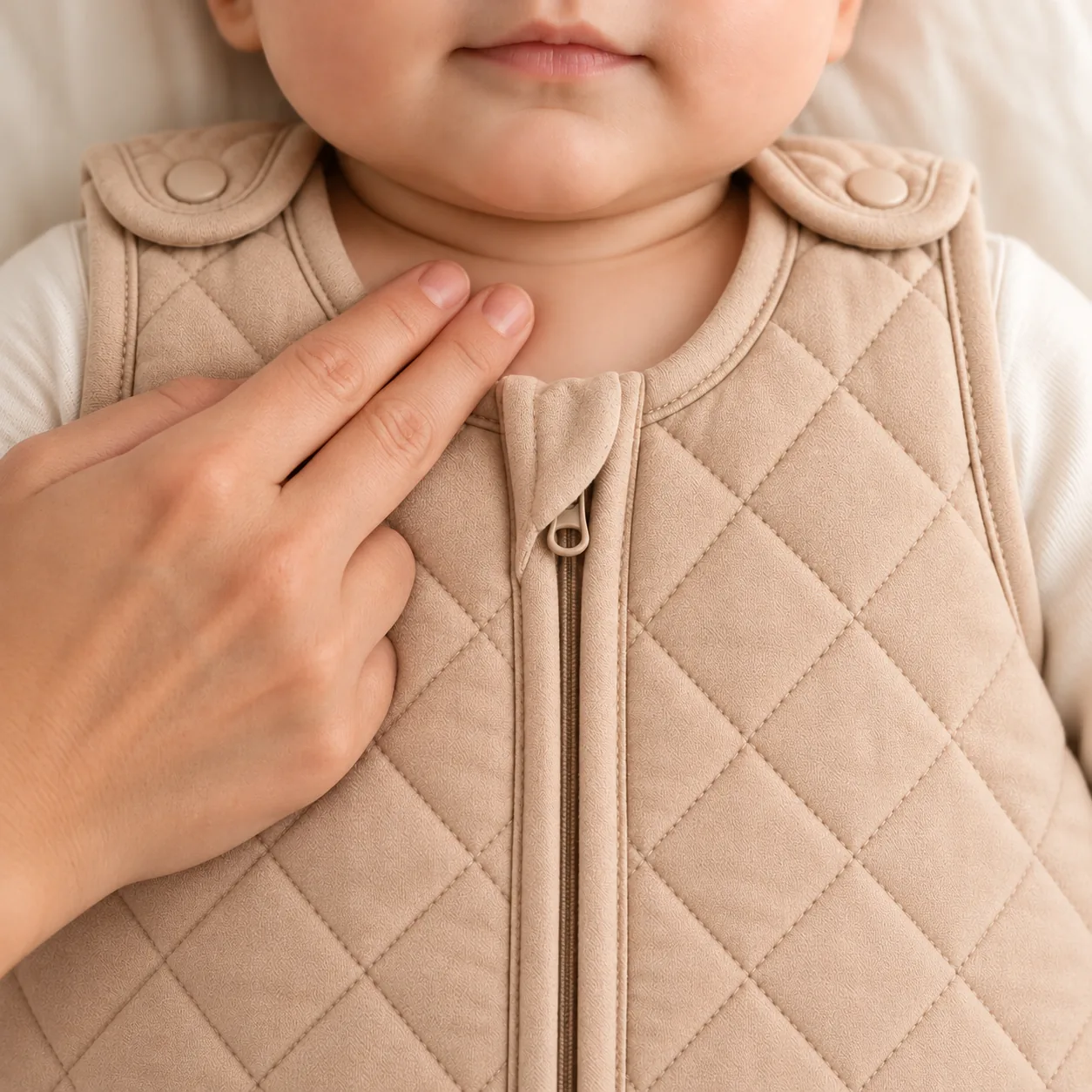
2. Check the neckline
Lay your baby inside and zip up. Slip two fingers between the neckline and your baby's chest to confirm the fit is snug but comfortable.
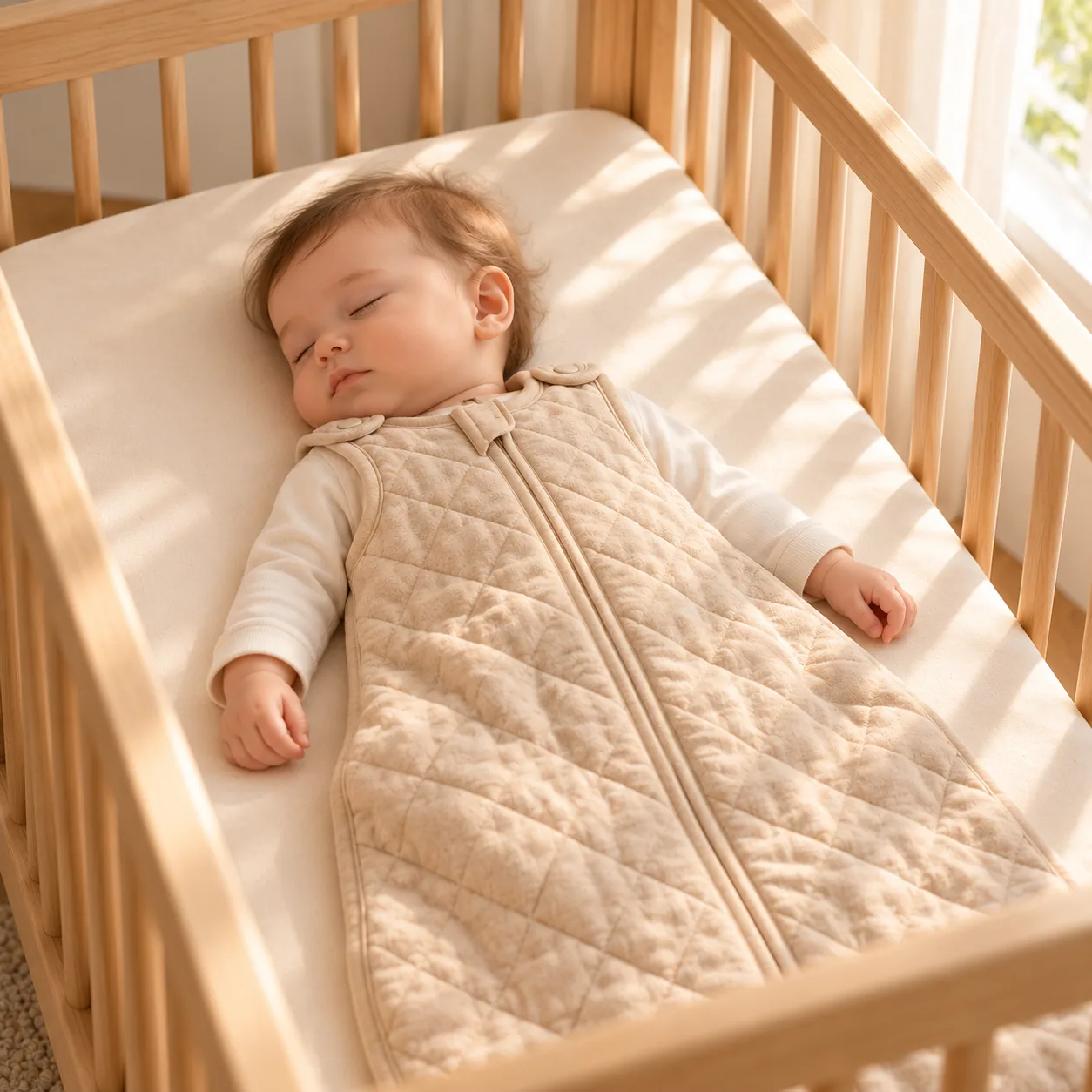
3. Keep the crib clear
Place your baby on the back in an empty crib. Keep blankets, quilts, pillows, bumpers, and stuffed toys out of the sleep space.
Questions parents ask
Why use a sleep sack instead of a blanket?
Loose blankets in a crib can cover your baby's face or get kicked off during the night. A sleep bag stays in place, keeping your baby evenly warm while leaving the sleep space completely clear.
Are weighted sleep sacks safe?
No. Skip weighted sleep sacks, weighted swaddles, and weighted blankets. Extra weight on a baby's chest can make breathing harder.
What temperature is a 2.5 TOG sleep sack for?
What should a baby wear under a 2.5 TOG sleep sack?
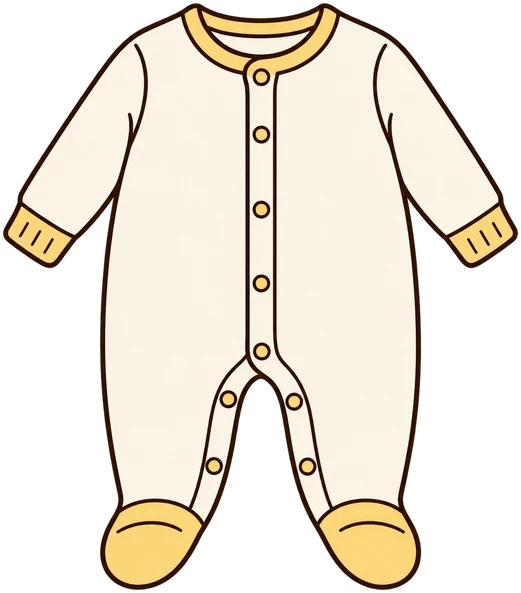
In an 18–19°C (64–66°F) room, a long-sleeve bodysuit is usually enough. If the bedroom drops to 16–17°C (61–63°F), add a footed sleepsuit over it. The sleep guide has outfits for every room temperature.
Are sleep sacks with sleeves safe?
Yes. Fitted armholes or sleeves are safe, as long as the arms can move freely and the bag has no hood.
What if my baby rolls onto the tummy in a sleep sack?
Lay your baby down on the back every time. If your baby rolls onto the tummy but can't roll back yet, turn your baby onto the back again. Once your baby rolls both ways, you no longer need to. A sleep bag leaves the arms free for pushing up and rolling back.
Are wool or fleece sleep sacks safe?
Yes. What matters is the same for every bag: a fitted neck and armholes, no hood, and warmth that suits the room. If you can choose, pick a light natural fabric, such as cotton or bamboo.
Can a newborn sleep in a 2.5 TOG sleep sack?
Yes, once your baby reaches the minimum weight on the bag's size chart.
Can you use a sleep sack in a car seat?
No. Nothing padded goes between your baby and the harness, so a sleep bag never goes in the car seat: bulky layers under the straps leave them loose.
When should a baby stop using a sleep sack?
Most families stop when their child moves to a bed with a blanket, often at 2 or 3. For a toddler who walks, a sleep bag with legs is easier until then.
How many sleep sacks do I need?
Two or three in your baby's current size: one to wear, one in the wash, and a third as a spare for nighttime diaper leaks.
How do I know if my baby is too warm?
Feel the back of your baby's neck or chest with your fingers. The skin should feel comfortably warm and dry. If the skin feels hot or sweaty, take off a layer underneath or switch to a lighter bag. Hands and feet normally feel cooler.