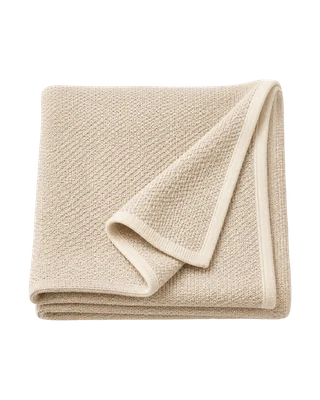
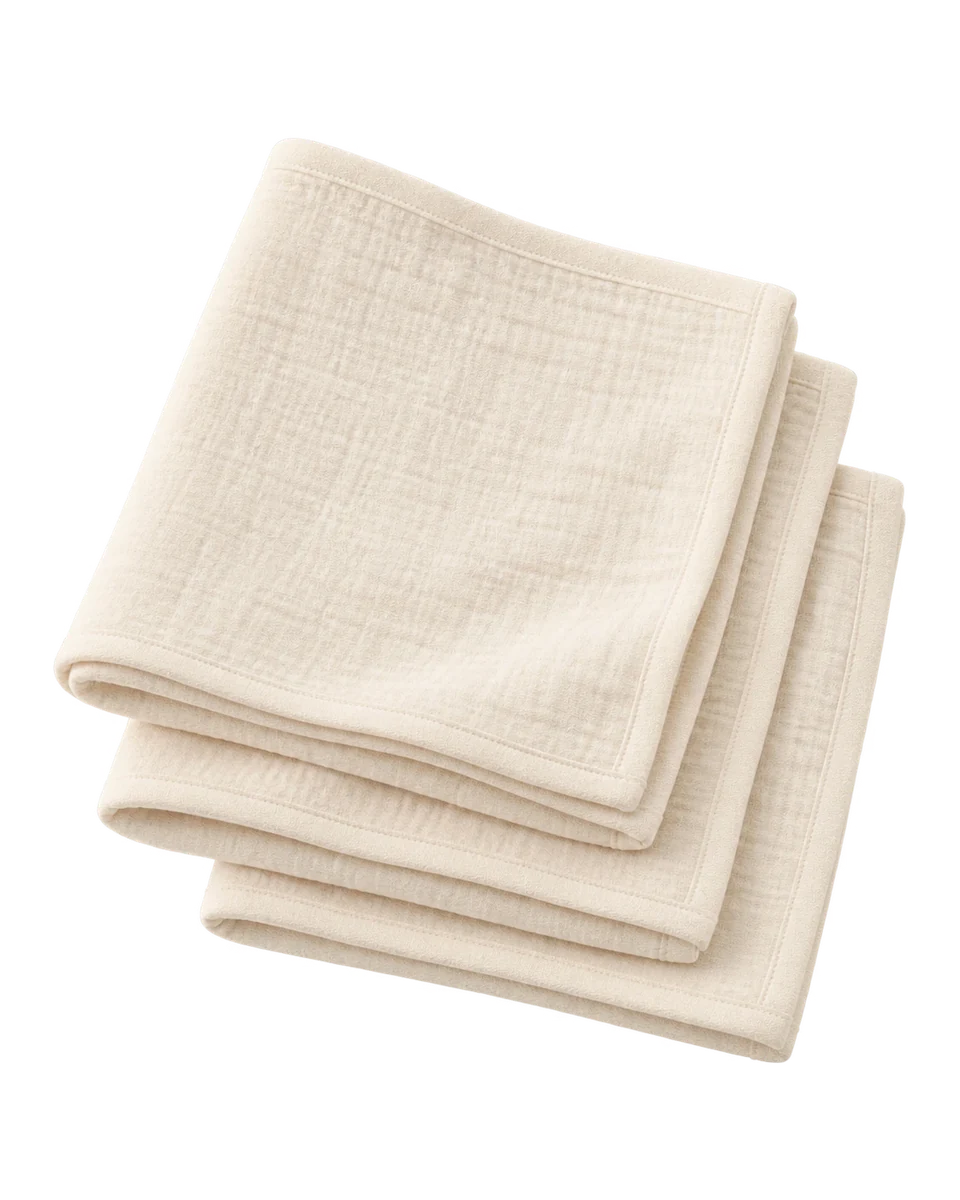
Muslin is cotton woven loosely, so it's thin, soft and quick to dry, and it comes in two sizes. The small square is the one that lives on your shoulder, in the diaper bag and by the changing mat. It's the most common kind of burp cloth, and British parents simply call it a muslin. The big one is sold as a muslin blanket or muslin swaddle, a cloth to wrap a newborn in.
Most babies bring up a little milk after feeds, most of all around 4 months, and a muslin catches it before it reaches your clothes or the sofa.
- For ages0–12months
- You'll need8–12
- Use itAll year
Muslin square or muslin blanket?
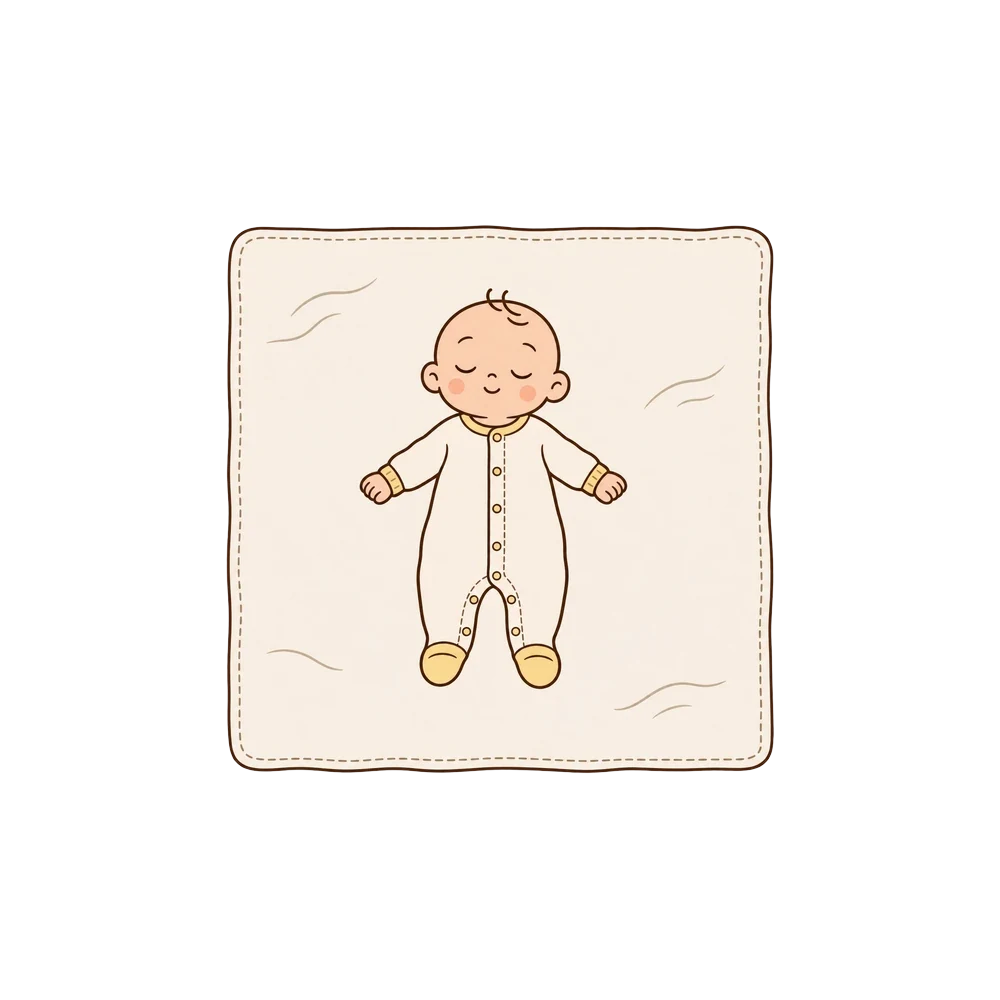
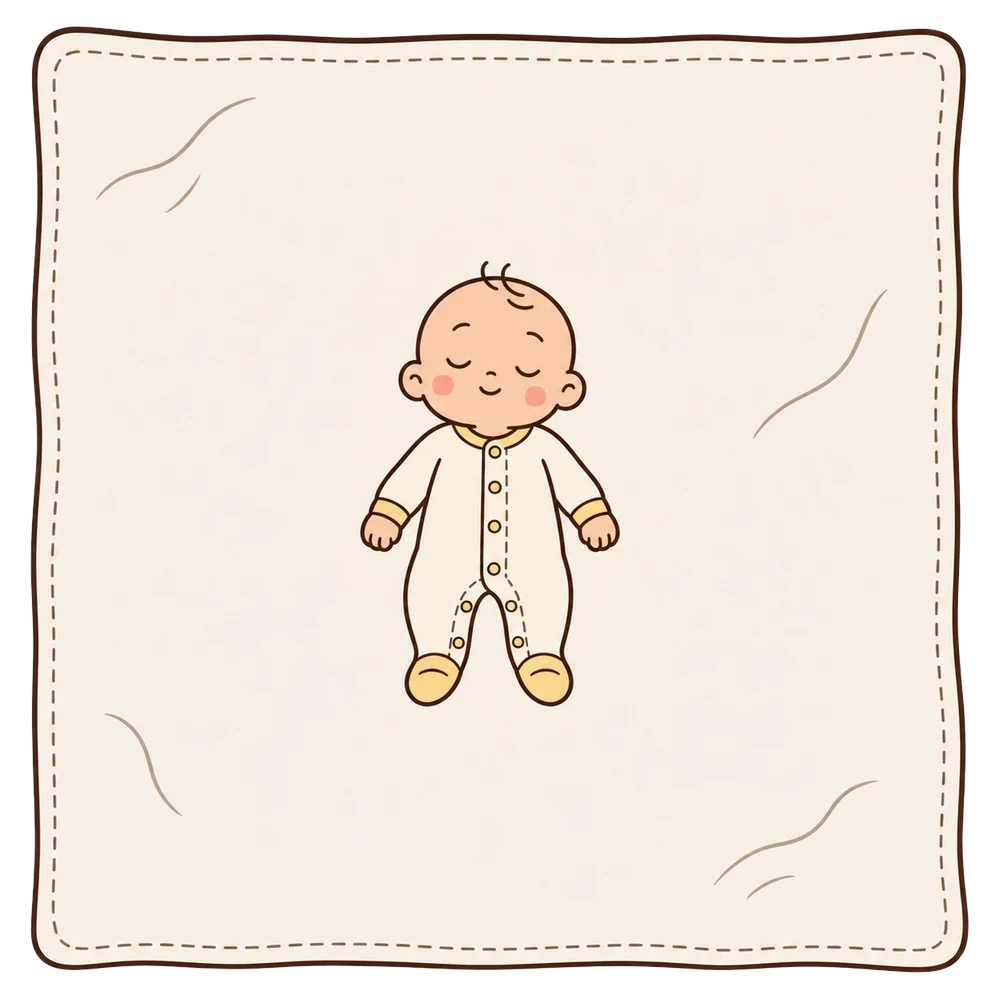
Both are the same cloth, and most families use both. The small square, usually about 70 cm (28 in) across, goes over your shoulder, under a chin and into the bag. The big one, about 120 cm (47 in), is large enough to wrap a newborn, to drape over your shoulder while you breastfeed, or to spread out as a clean spot on the floor.
The same newborn on each size
Muslin square
Muslin blanket
What a muslin is for

On your shoulder
Lay it over your shoulder before you burp your baby, so it covers the shoulder and the top of your back, where the milk lands.

Under the chin
Tuck one under your baby's chin for a bottle or a breastfeed. It catches the dribble, and the milk that comes back up as the feed ends.
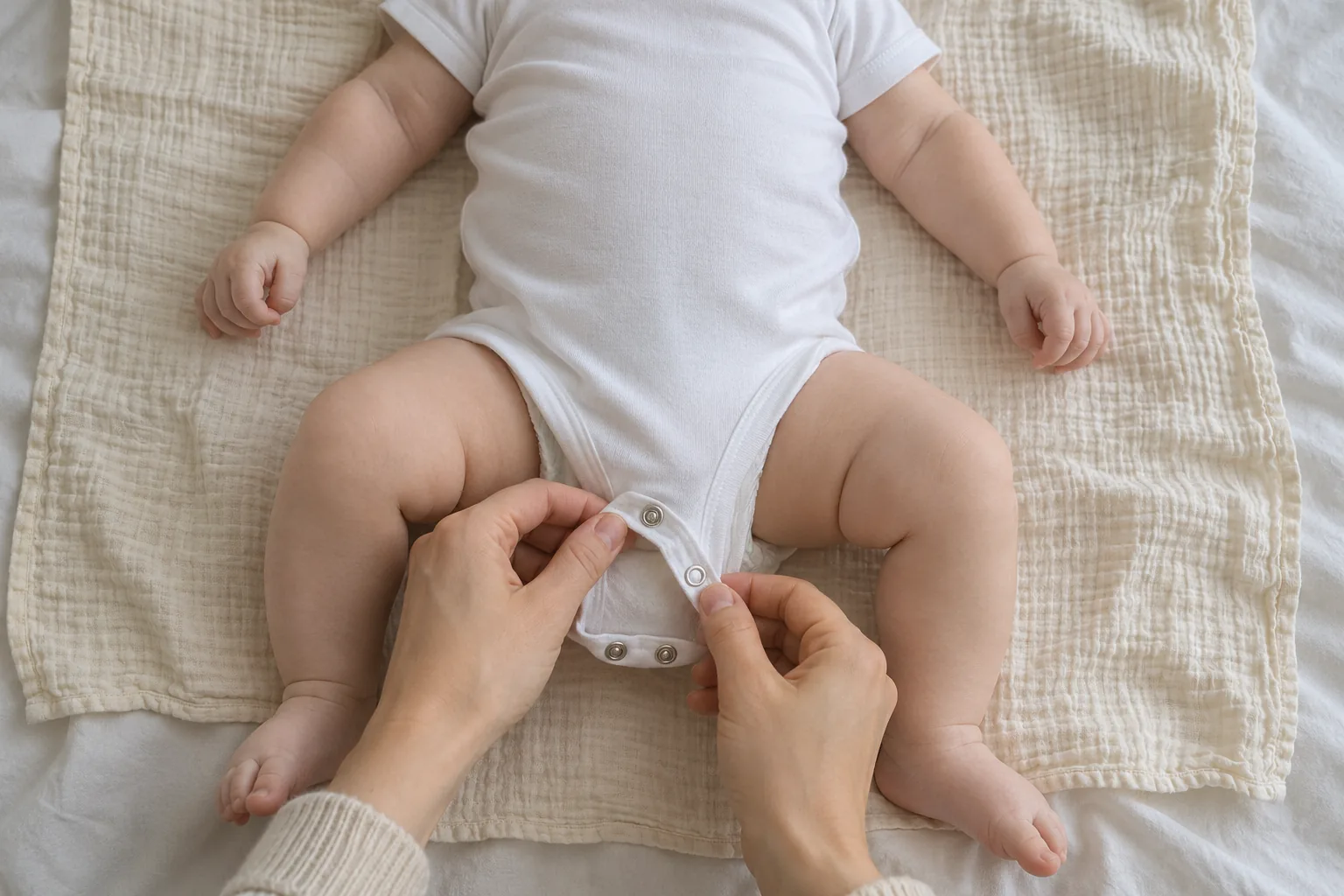
Under your baby
Spread one out for a diaper change away from home, or for a while without a diaper, so the bed or the rug underneath stays clean.
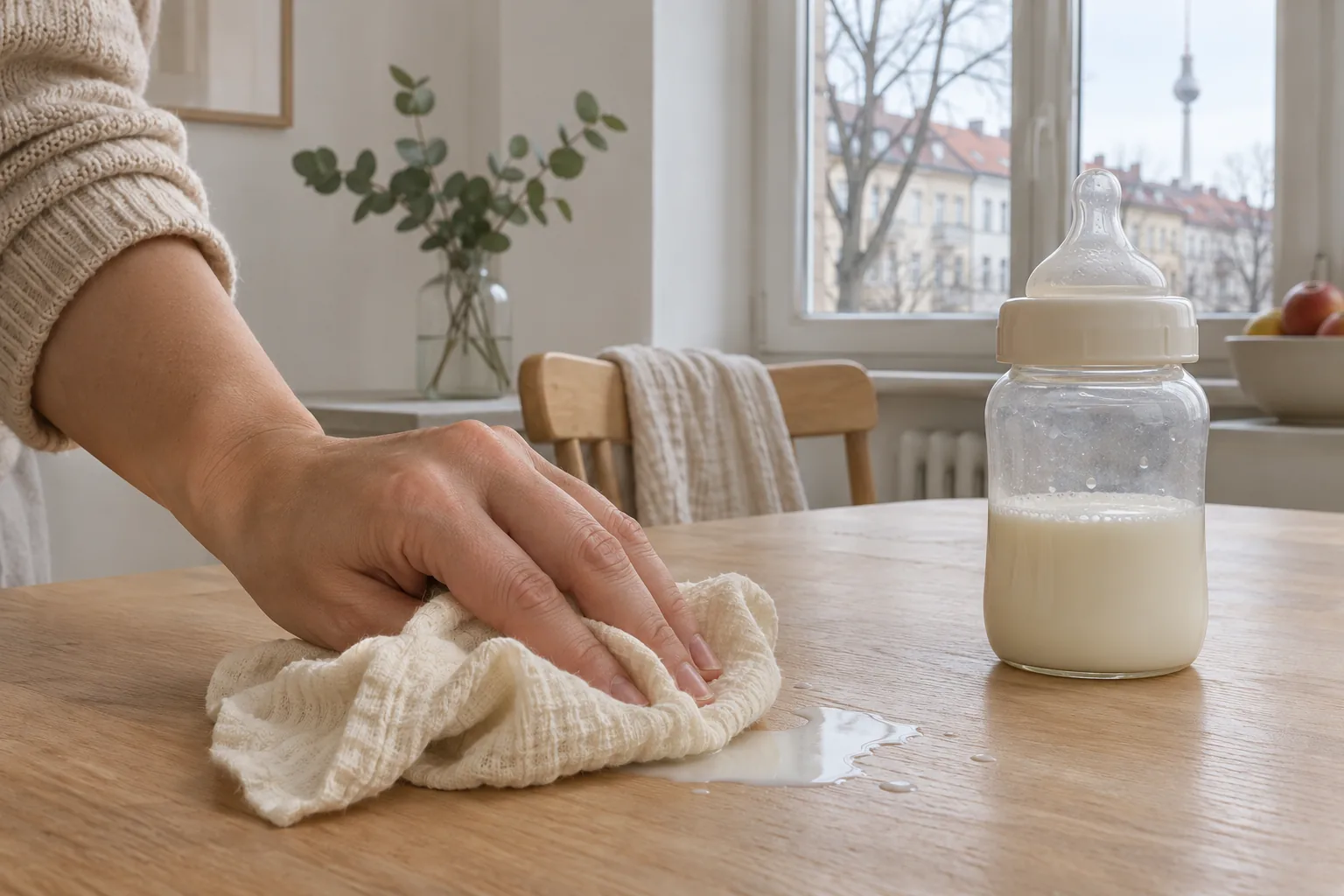
Mopping up
Wipe up spilled milk, dribble and a runny nose with it, dry or damp. It goes in the wash with everything else.
How many muslins do you need?
The honest answer is, you can't have too many muslins. Start with 8 to 12 small ones and two or three big ones. That covers a day or two between washes for a baby who spits up now and then. Some babies hardly spit up, and a few muslins are plenty. A baby with reflux, where milk comes up after most feeds, can soak several before lunch, so buy more once you know your baby rather than before.
Types of burp cloth
For most families, a pack of muslin squares does every job. If your baby brings up a lot, add a few thicker cloths for burping, because they hold more before the milk soaks through to your top.
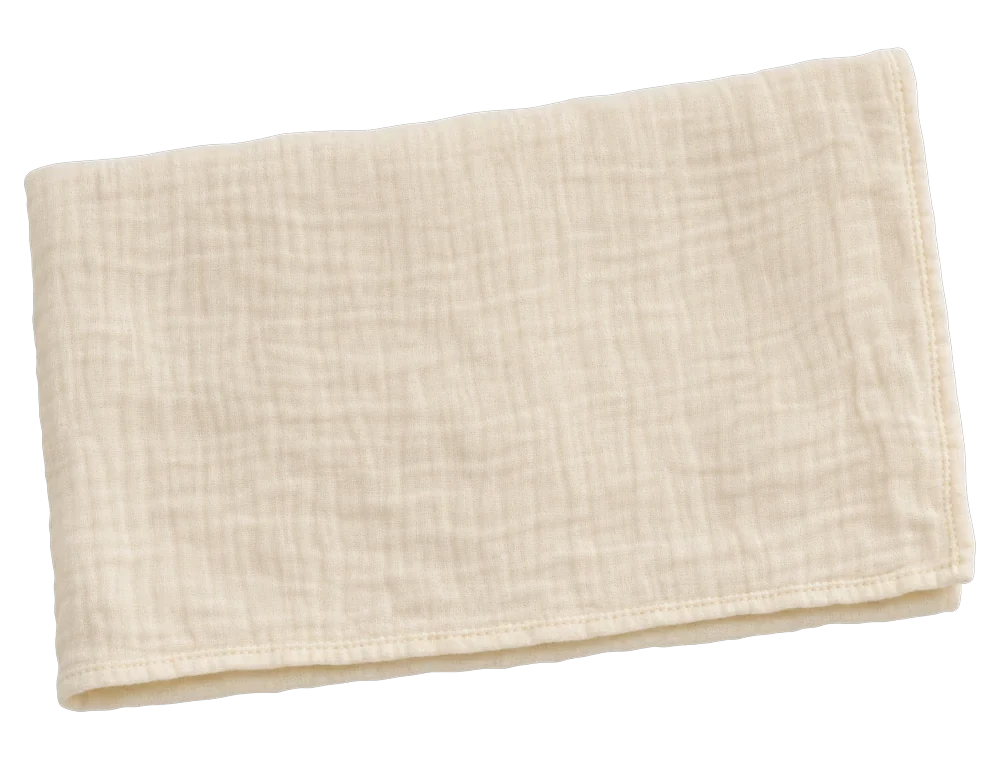
Muslin square
One or two layers of muslin. It covers a whole shoulder and folds small enough for a pocket.
- Good: Dries fast
- Good: Doubles as a changing mat
- Not good: Soaks through in a big spit-up
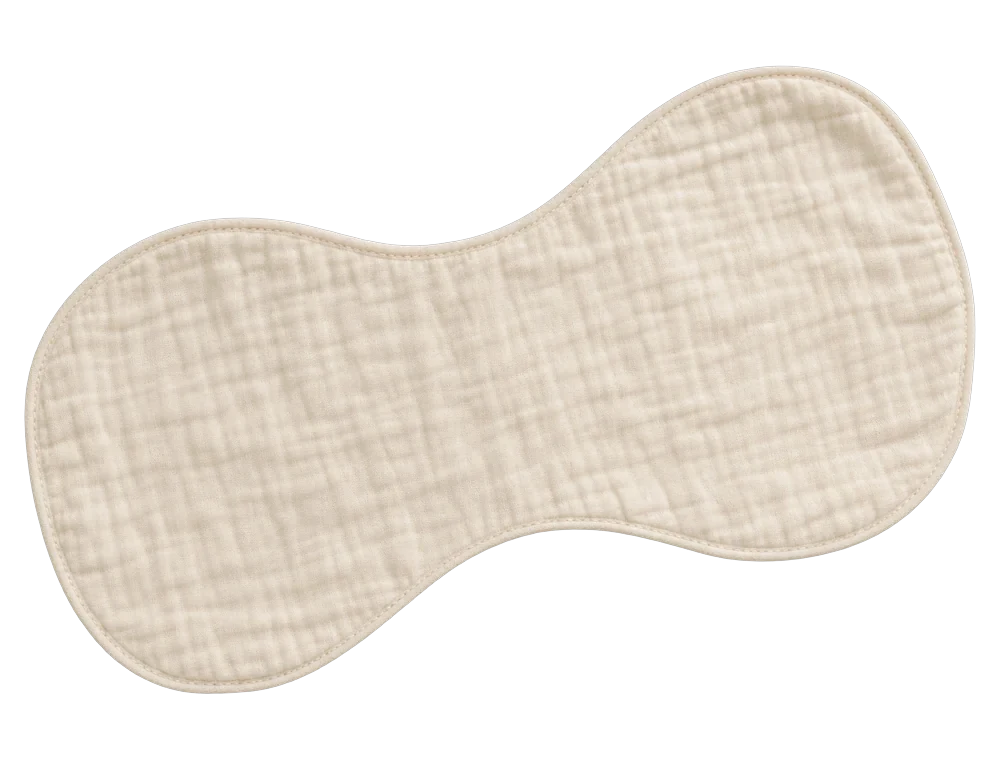
Shaped burp cloth
A strip of several muslin layers, about 50 cm (20 in) long, often narrower in the middle so it curves over your shoulder.
- Good: Stays on your shoulder
- Good: Several layers thick
- Not good: Too small to lay a baby on
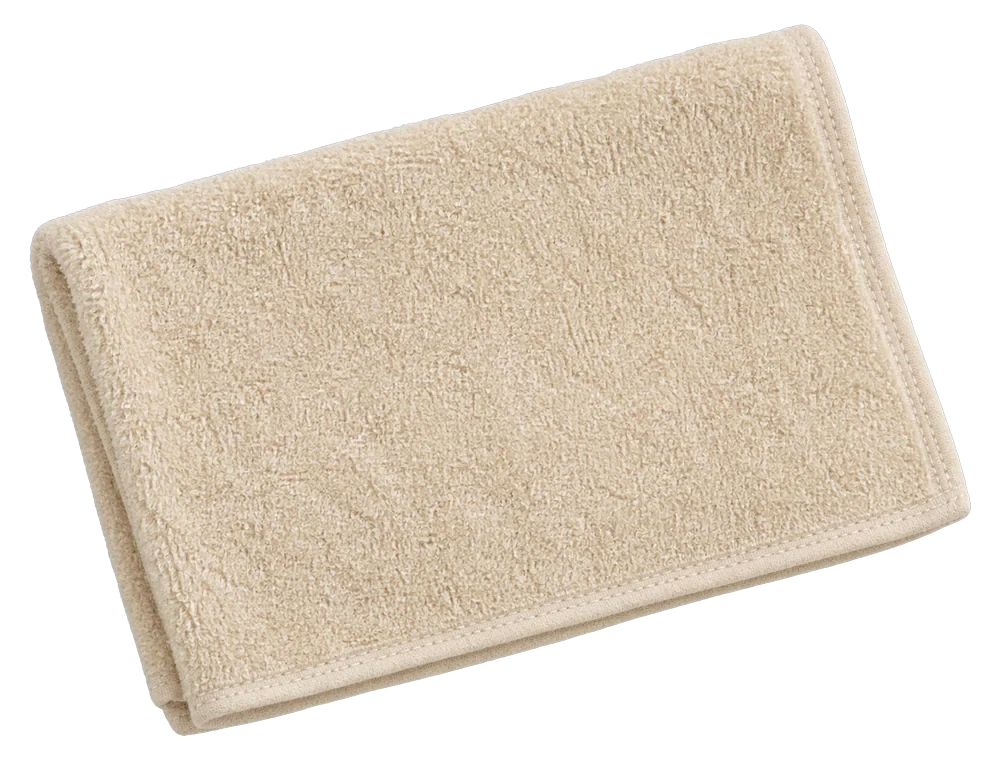
Terry or flannel
Towel cotton with small loops on the surface (terry), or flannel, a cotton brushed soft. Both are thicker than muslin.
- Good: Holds the most milk
- Not good: Slow to dry
- Not good: Bulky in the diaper bag
How to choose a muslin
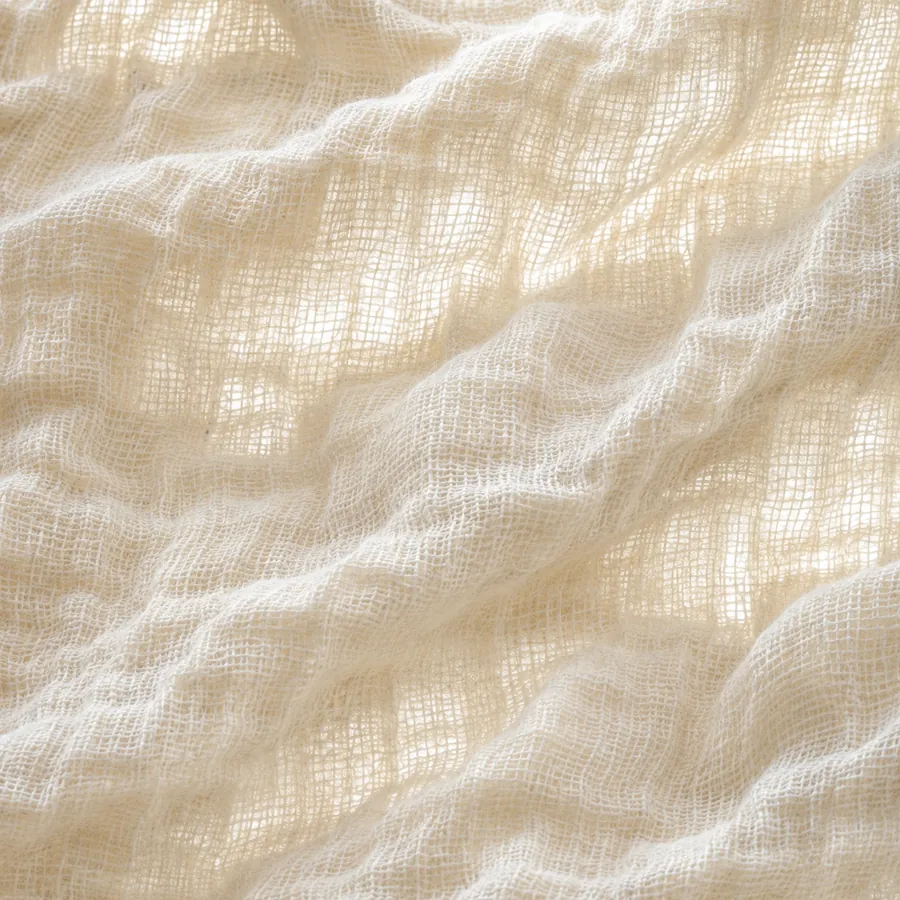
Most muslins are 100% cotton, woven so loosely you can see light through them. US labels often say gauze instead, or double gauze for two layers stitched together, which holds more milk. For burping and changes, a square of about 70 cm (28 in) is the size that covers a shoulder.
Pre-washed packs are soft from the start. Others soften in the first wash and come out crinkled, which is how muslin stays.
Where a muslin doesn't go
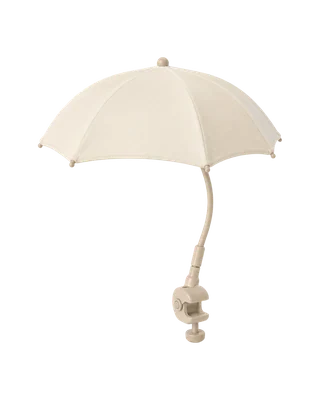
Never over the front of the stroller or an infant car seat, even when the sun is in your baby's eyes. The cloth still lets the sun in, but it stops the breeze, so the seat gets hotter than with no cover at all (covering a stroller with a blanket). Pull the canopy forward or clip on a sunshade instead.
Never loose in the crib in the first year, where it could end up over your baby's face. Wrapped snugly as a swaddle, a big muslin is not loose, until your baby first tries to roll and the swaddling stops. For when a blanket can join the bed, see baby blankets.
Questions parents ask
Do you really need burp cloths?
Not special ones. Any soft cotton cloth catches spit-up: a washcloth, a cloth diaper or a small towel. A washcloth covers less of your shoulder, though, so some milk still lands on your top.
Do you use muslins instead of bibs?
In the first months, often yes. A muslin under the chin at feeds does a bib's job, and you can slip it away without waking a baby who falls asleep feeding. Once drool and solid food start, a bib stays in place better.
When do you stop needing burp cloths?
When the spit-up stops, usually between 9 and 12 months. The muslins stay useful long after that, at meals and as a light towel.
Can my baby sleep with a muslin?
Not loose in the crib in the first year: keep it for cuddles while your baby is awake. After the first birthday, a small muslin is a common thing to cuddle in bed, because soft things pose little risk to a healthy toddler.
What is the difference between a muslin blanket and a swaddle?
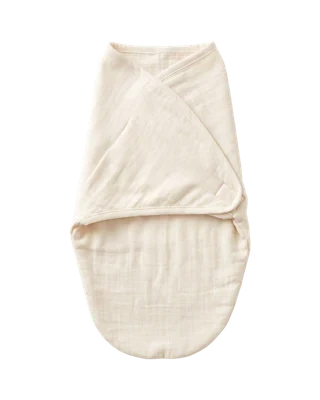
A muslin blanket is one kind of swaddle, the kind you fold yourself. Other swaddles close with fabric flaps (wings) or a zip, which is easier to get right in the night: types of swaddle.
What is the difference between a muslin blanket and a receiving blanket?
A receiving blanket is smaller, about 75 cm (30 in) across, and usually made of flannel, a cotton brushed soft, so it is a little warmer. Both suit cuddles and feeds: types of baby blanket.
Is a muslin blanket good for summer?
Yes, though it doesn't cool your baby: it is simply the thinnest layer there is, so it suits a lap or the legs of a baby who is awake on a hot day. For sleep on a hot night, a summer sleep bag (a thin, wearable blanket) or a bodysuit alone does the job.
Do you wash muslins before using them?
Yes, once, unless the pack says pre-washed. They get softer with every wash after that, and there is no need to iron them.
Can you put muslin in the dryer?
Yes, on low heat. High heat shrinks cotton, and muslin dries fast on a line or a rack anyway.
Can I use hand-me-down muslins?
Yes. Wash them once before use. Muslin lasts for years and only gets softer, so a bag of used ones is as useful as a new pack.