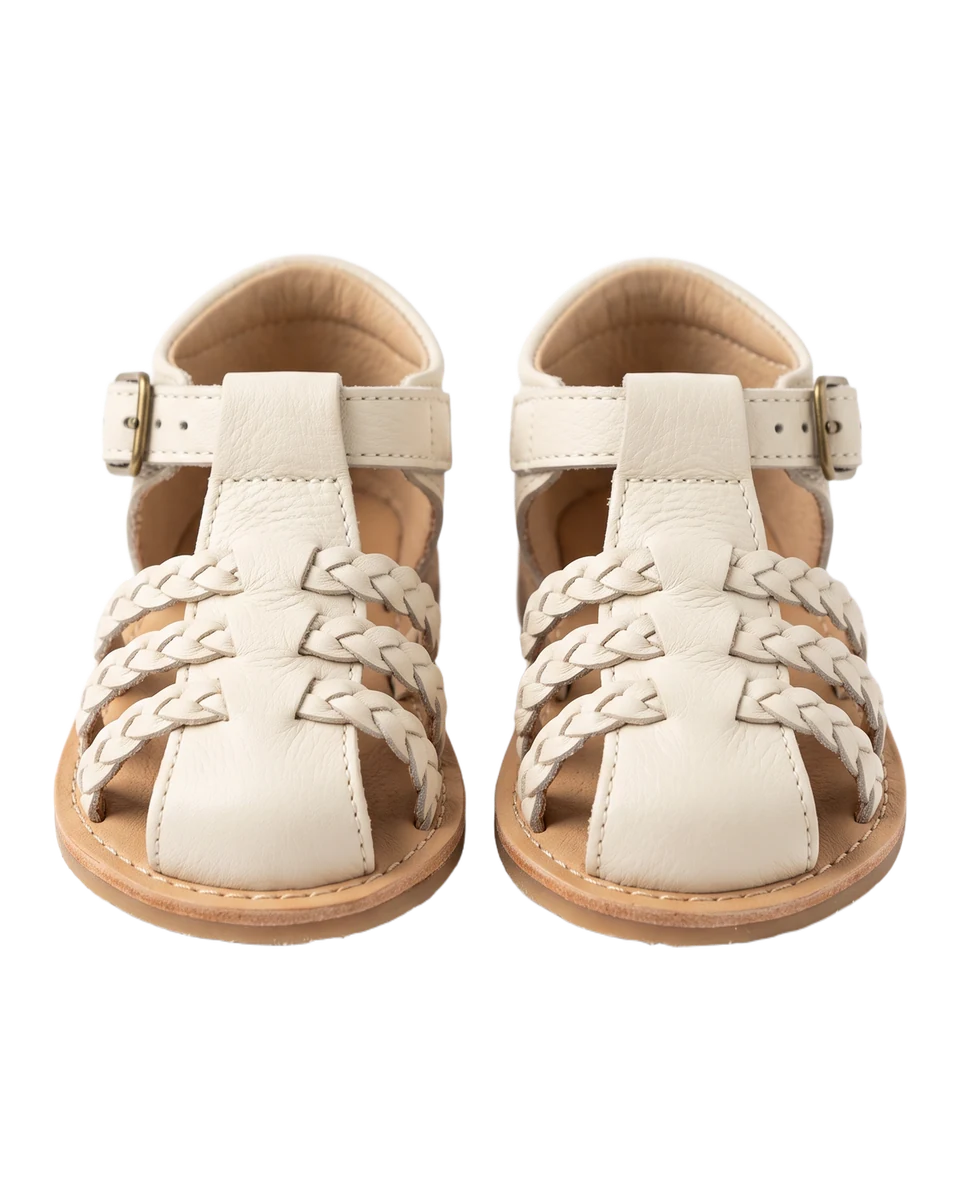
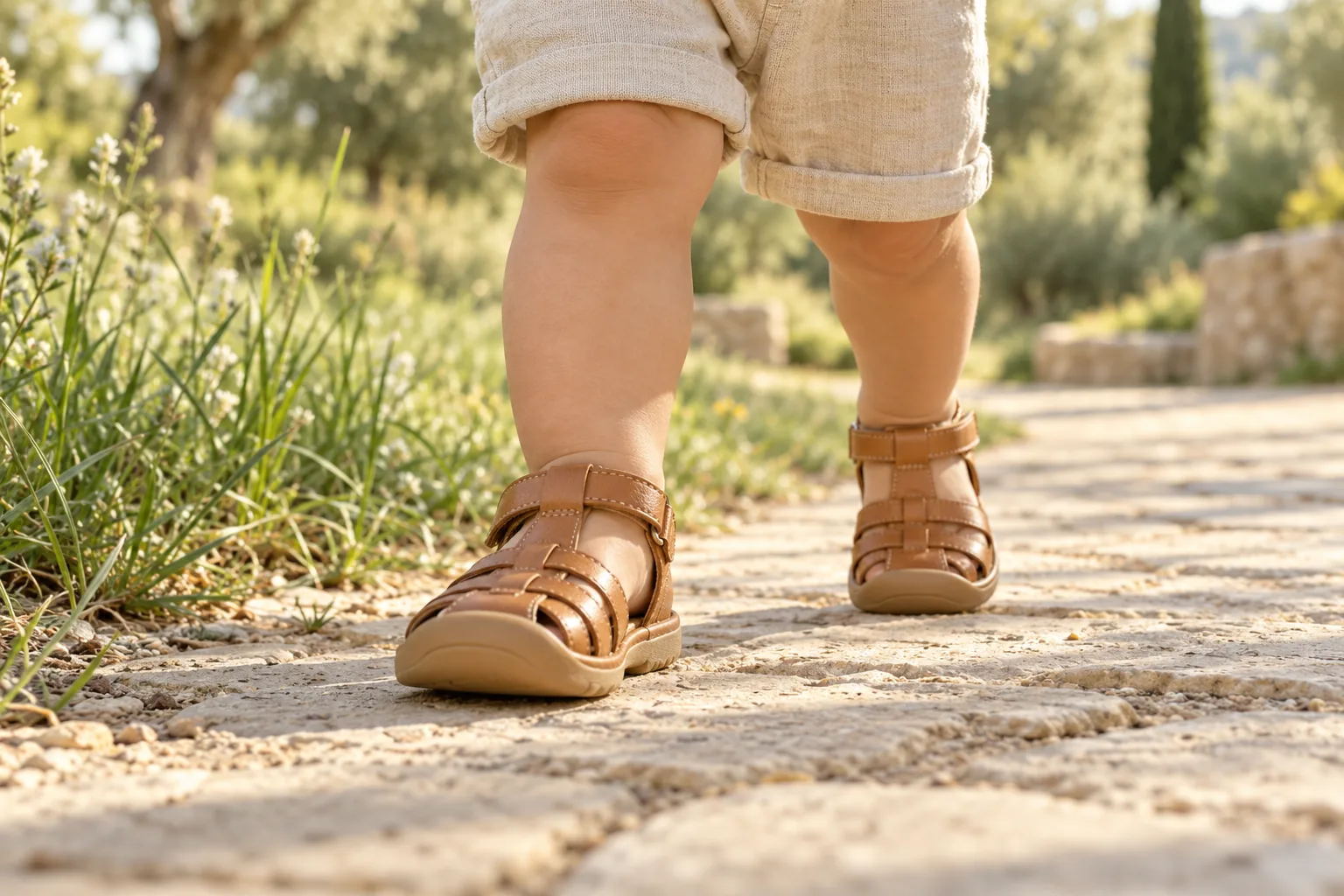
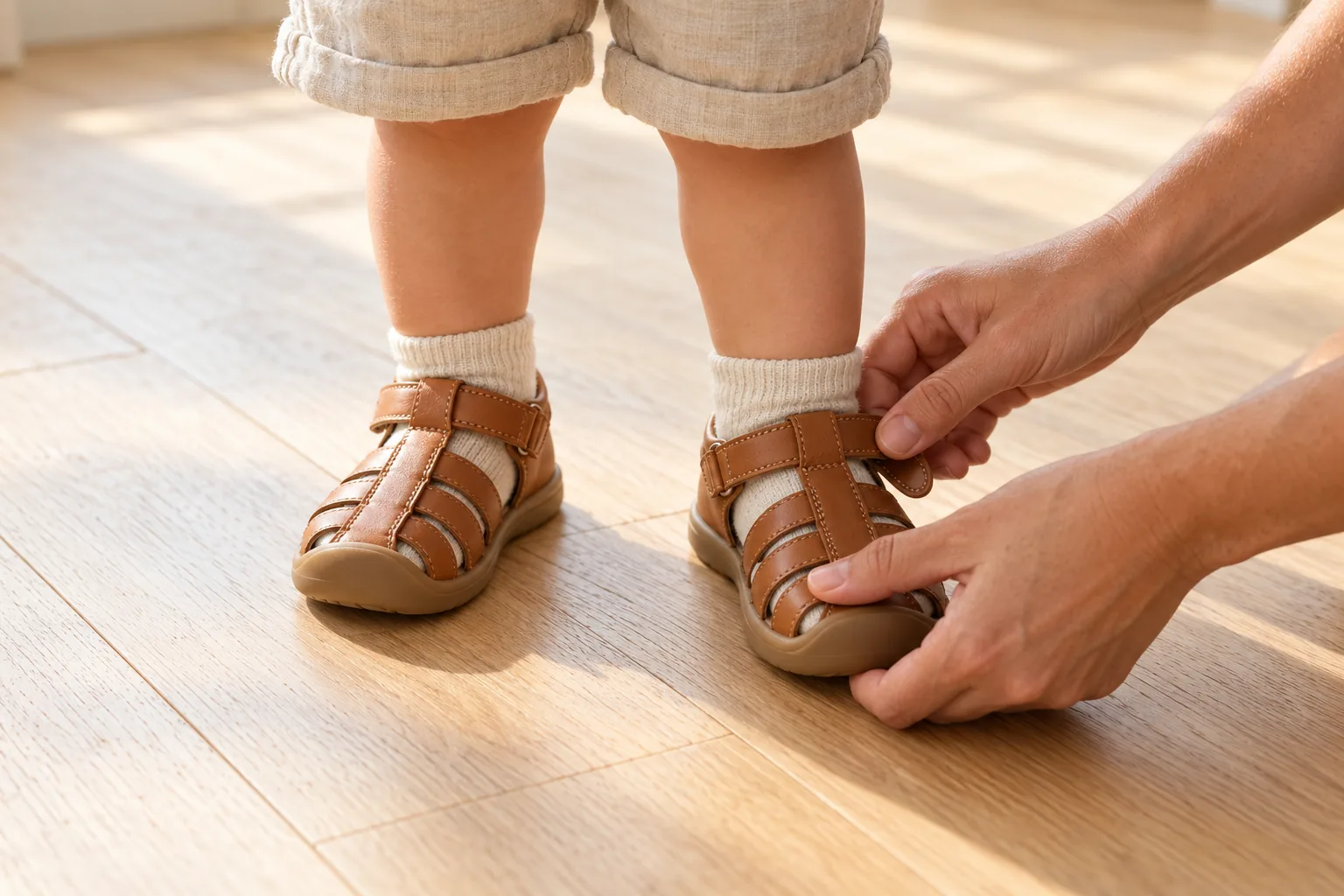
Baby sandals are summer walking shoes. They are open at the sides for air and closed over the toes, with a non-skid rubber sole and a strap behind the heel that holds them on. The most dependable shape is the fisherman sandal: woven straps cross the top of the foot, and a center strip covers the toes.
A baby who does not walk yet does not need sandals. Bare feet in the shade, or thin baby socks, are cooler and lighter in the stroller or the carrier. Once your toddler walks steadily outdoors, closed-toe sandals suit warm days from 24°C (75°F) and up, near home or on a holiday somewhere warm. They let sweat dry and still protect the toes.
- FromFirst steps
- You'll need1pair per size
- Wear them from24°C75°F
When sandals work best, and when closed shoes win
Even in hot weather, the ground decides. Open sandals keep feet cool on clean sidewalks, park grass and boardwalks, and quick-dry water sandals drain right away at splash pads and beaches. On a playground covered in bark mulch, pea gravel or deep sand, closed first shoes keep the grit from pouring in under the heel.
Types of baby sandals
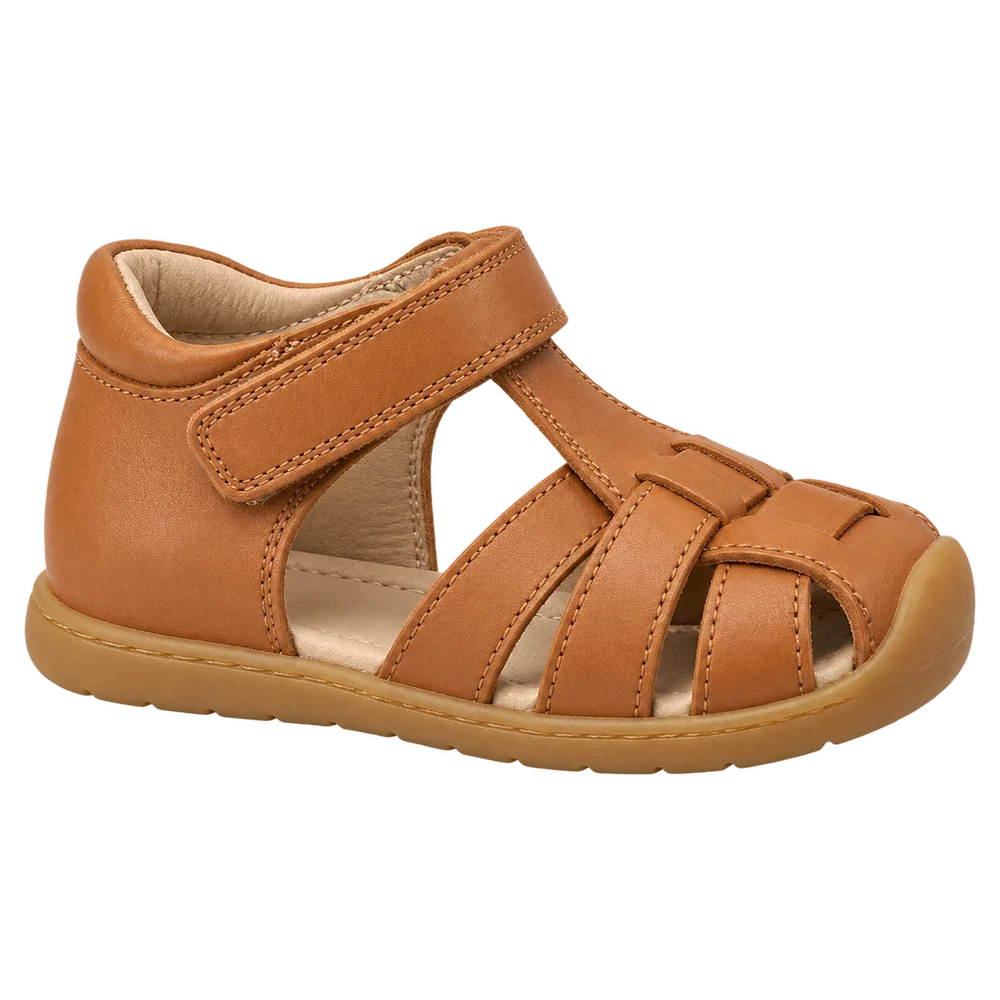
Closed-toe fisherman sandal
Breathable leather or canvas straps with a shaped heel cup and a flexible rubber sole. The everyday choice for dry parks, sidewalks, and daycare play.
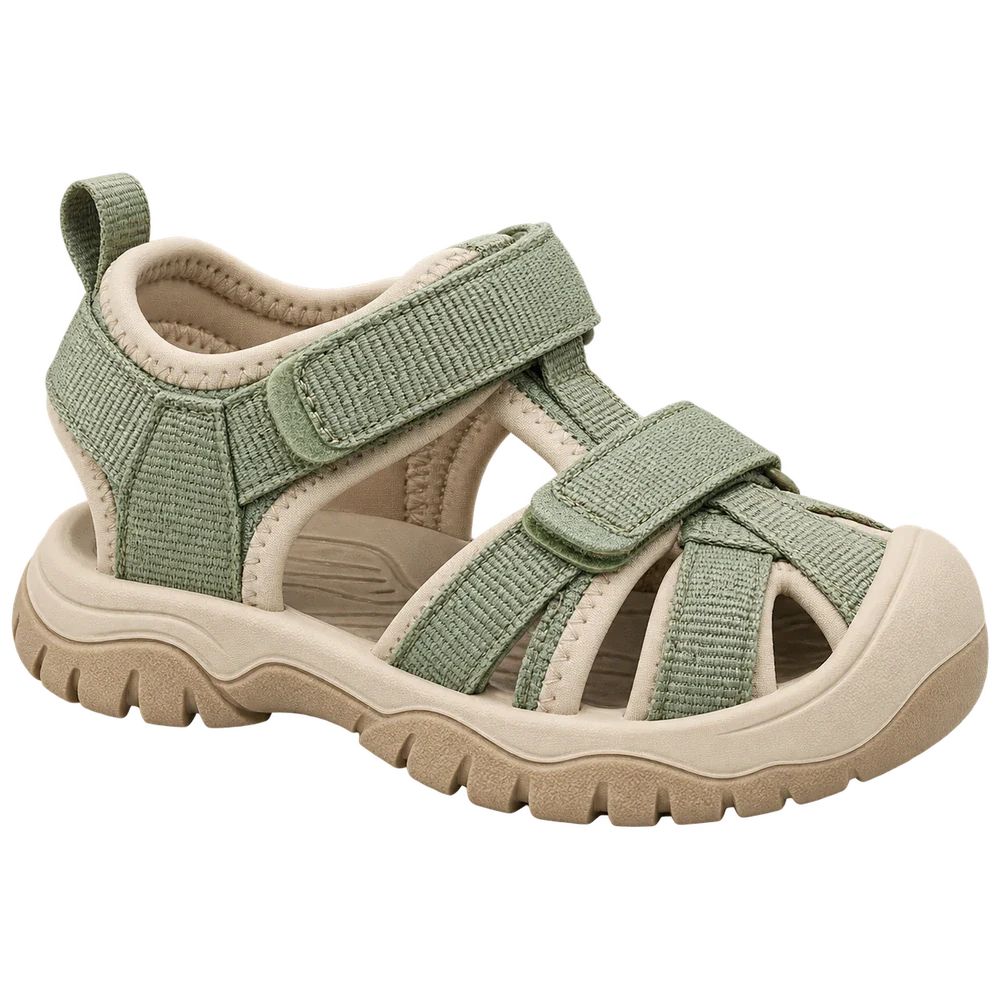
Quick-dry water sandal
Washable nylon webbing, a soft neoprene lining (a quick-drying foam fabric), and a molded rubber toe guard over a grooved sole. Made for splash pads, rocky beaches, and wet grass where leather would stiffen.
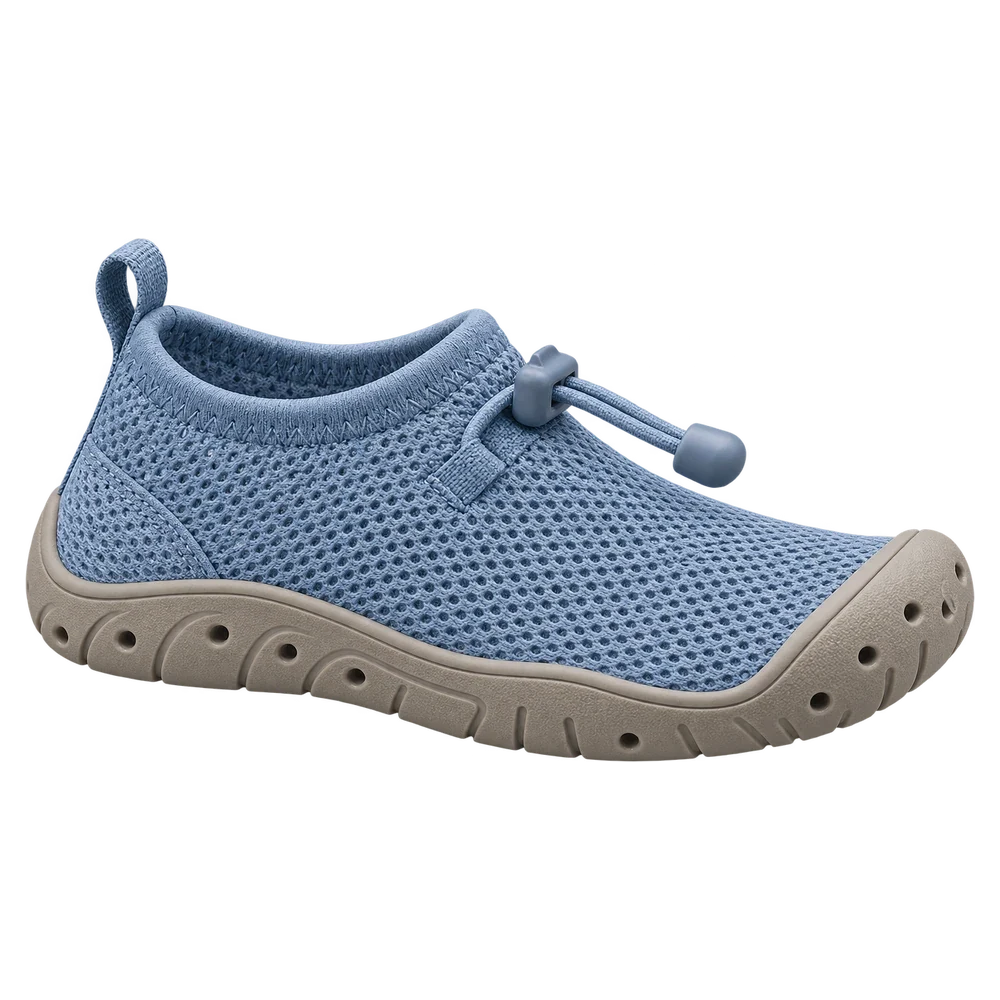
Water shoe
Stretchy mesh on a thin rubber sole, pulled on like a sock, and quick to dry. It guards the feet on pool decks and stony beaches. Not for long walks, though: with no strap, nothing holds the heel in place.
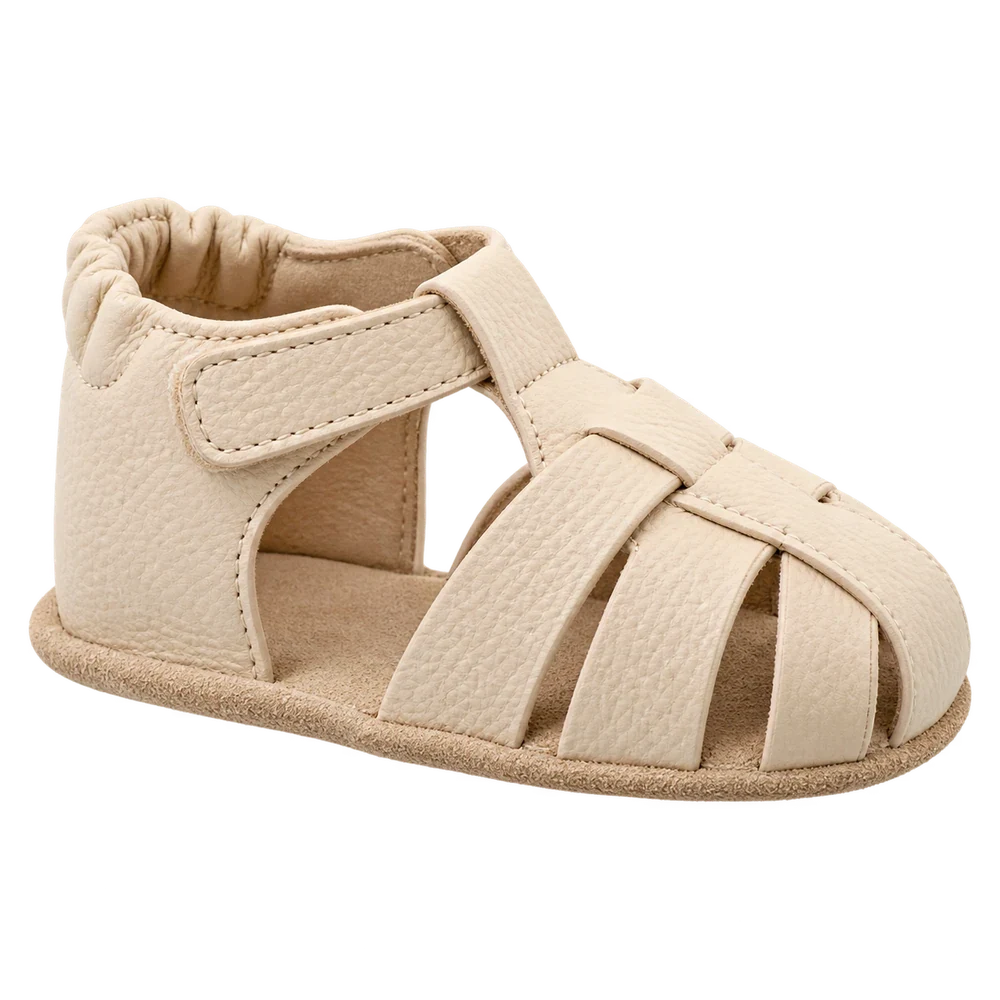
Soft-sole crib sandal
Soft leather or cotton with no firm shape, a thin suede sole and almost no weight. It is not for walking: it only keeps the sun off the feet of a baby in the stroller or the carrier, and thin socks do that too.
Closed-toe or open-toe sandals?
The front edge of the sandal matters more for a young walker than for an older child.
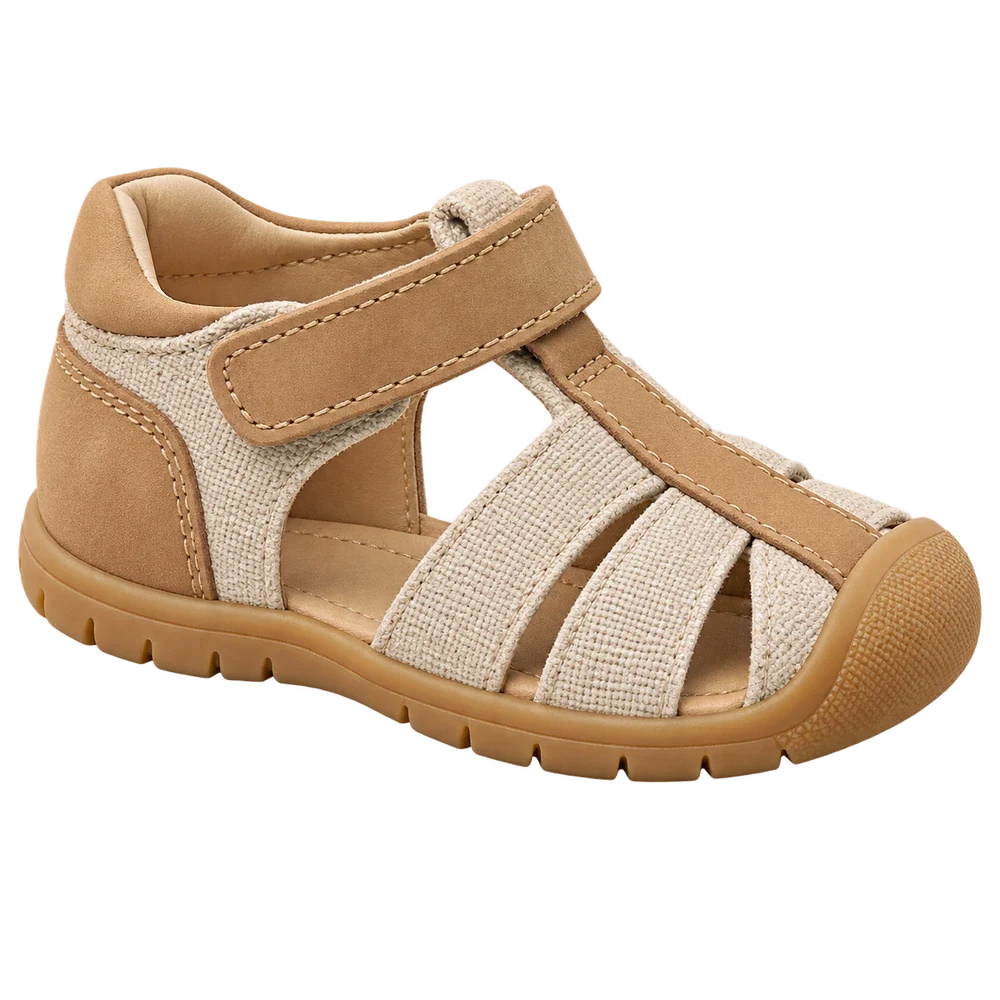
Closed-toe sandal
A raised rubber bumper at the toes and a center strap toward the ankle protect soft toenails and stop the front of the sole folding under. Outdoor walkers need closed-toe, flexible shoes with non-skid soles.
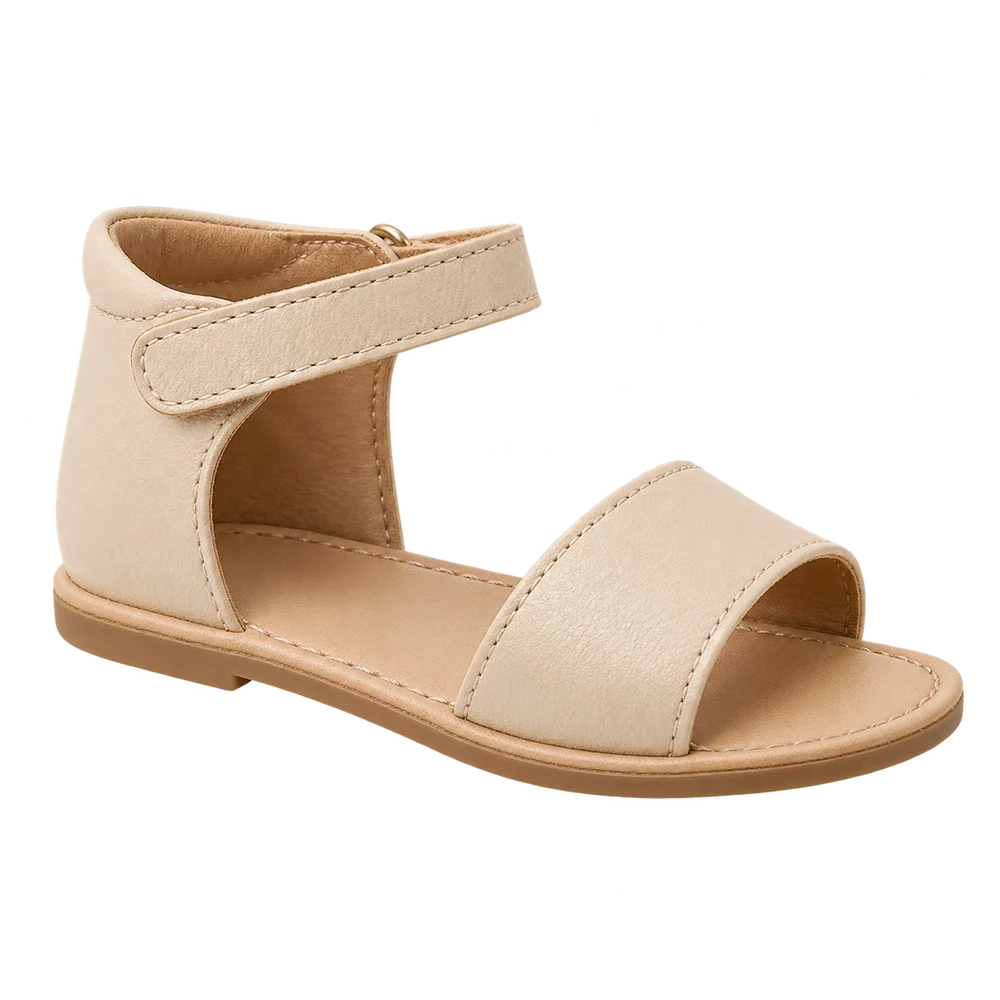
Open-toe sandal
Early walkers barely lift their feet and stumble often. The bare front edge of the sole catches on grass, rugs or cracks in the sidewalk. It folds under the foot, and the toes scrape the ground.
Why flip-flops and loose clogs cause trips
Backless flip-flops and slides leave the heel loose. Children's shoes need a secure fastening, so the foot does not slide forward and the heel does not slip up and down. Without a back strap, a toddler has to bunch and claw the toes downward on every step just to keep a flip-flop on the foot, which shortens the stride and causes trips.
Flip-flop:The toes hold it on
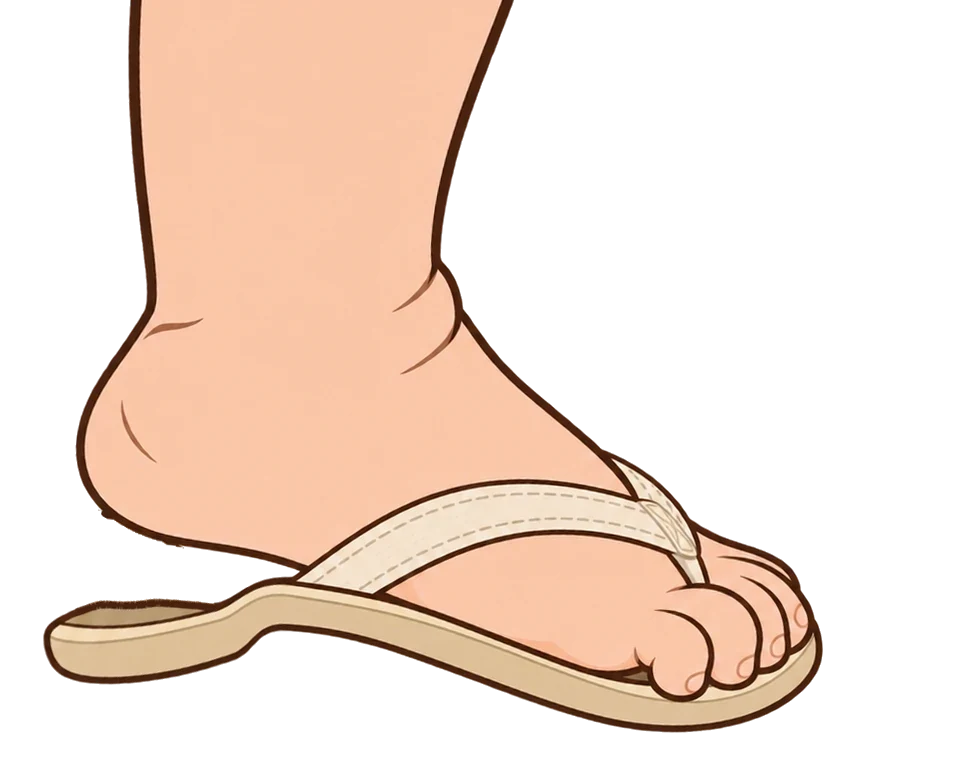
- Not good: Nothing holds the heel
- Not good: Toes grip to keep it on
- Not good: Front tip can catch the ground
Closed-toe sandal:The strap holds it on
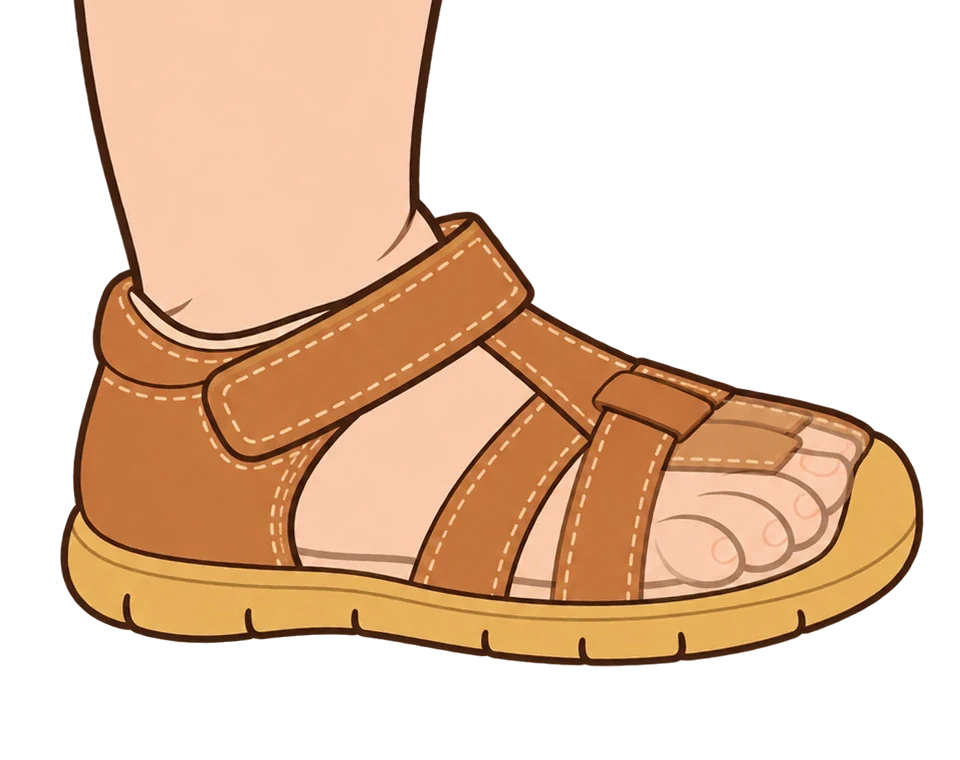
- Good: Strap holds the heel
- Good: Toes lie relaxed
- Good: Toe bumper clears the ground
Even school-age children hold the big toe down in flip-flops, just to keep them on.
One-piece slip-on foam clogs and rigid plastic jelly shoes also pivot loosely around a narrow toddler heel. Choose natural, breathable materials such as leather, cotton, or canvas where you can, because non-breathable plastic traps sweat and rubs wet skin raw. Keep slip-on clogs for brief poolside steps, and put strapped sandals on whenever your toddler is walking.
How to choose a walking sandal
A sandal has less material to hold the foot than a sneaker, so four details do that work.
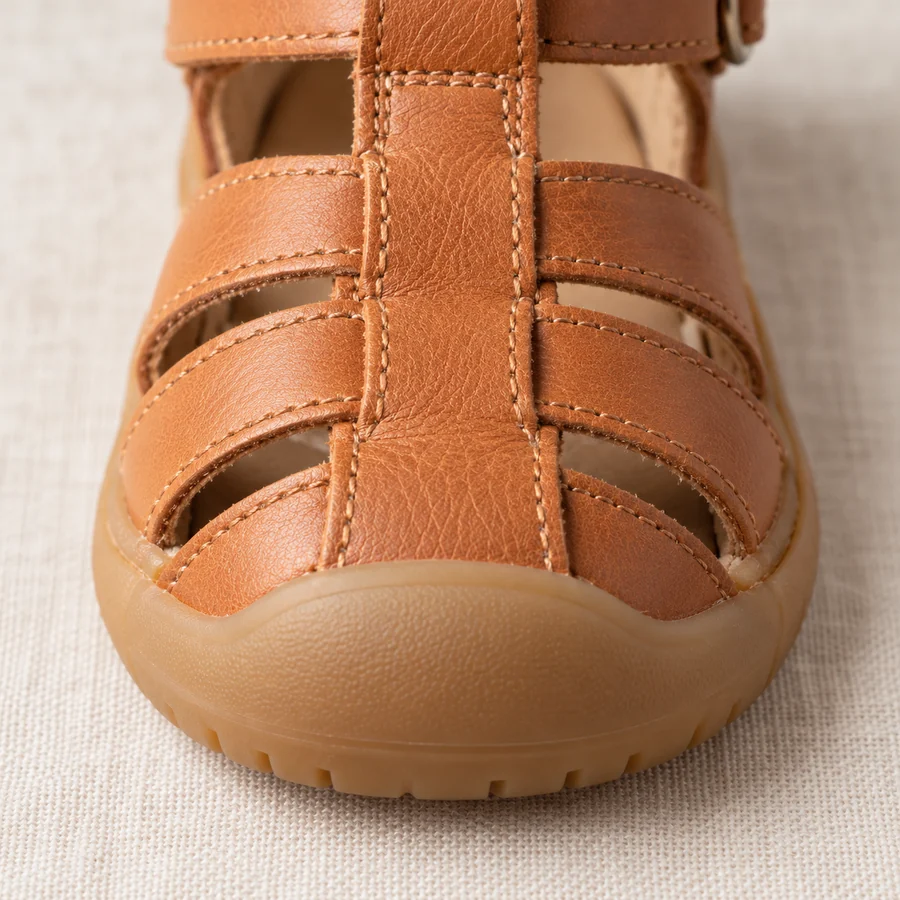
1. Closed toe bumper
A raised lip of rubber or leather at the front of the sole and a strap over the toes protect the toenails when a toddler kicks a curb or steps on a toy.
- Good: Raised lip at the toe tips
- Good: Strap runs over the toes
- Not good: Open front, toes uncovered
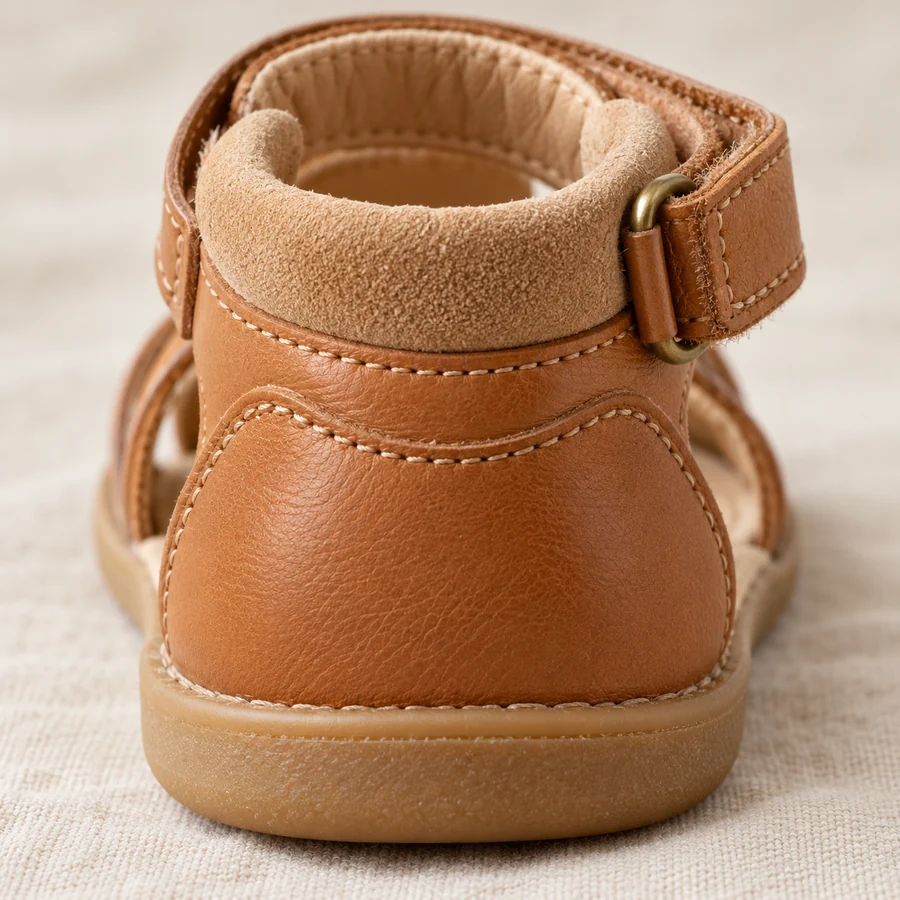
2. Heel cup and back strap
A firm heel cup (the shaped back of the sandal), or a padded strap behind the heel that fastens at the ankle, keeps the heel in place, so the foot does not slide off sideways.
- Good: Back wall holds its shape
- Good: Strap closes at the ankle
- Not good: No strap behind the heel
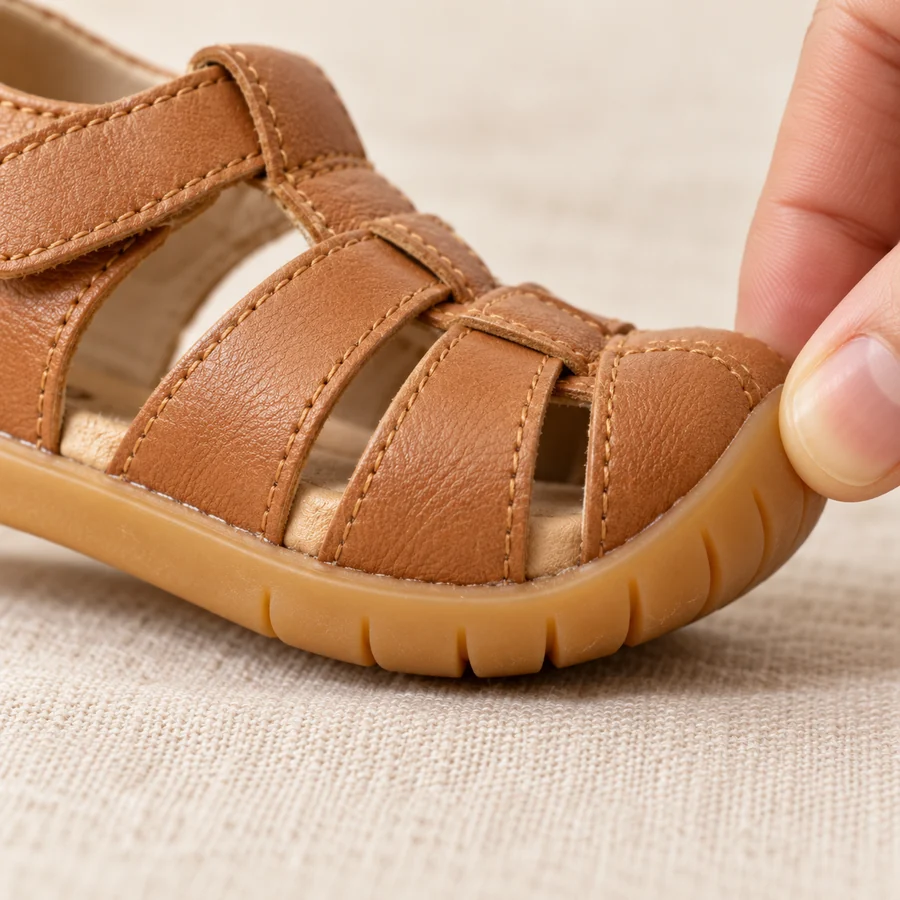
3. Forefoot flex, steady middle
Press the front third of the sole up with one finger: it should bend easily at the ball of the foot, where the toes push off. Then twist the two ends. The middle should stay firm, not wring like a dishcloth.
- Good: Front bends under one finger
- Good: Middle stays firm in a twist
- Not good: Twists easily in the middle
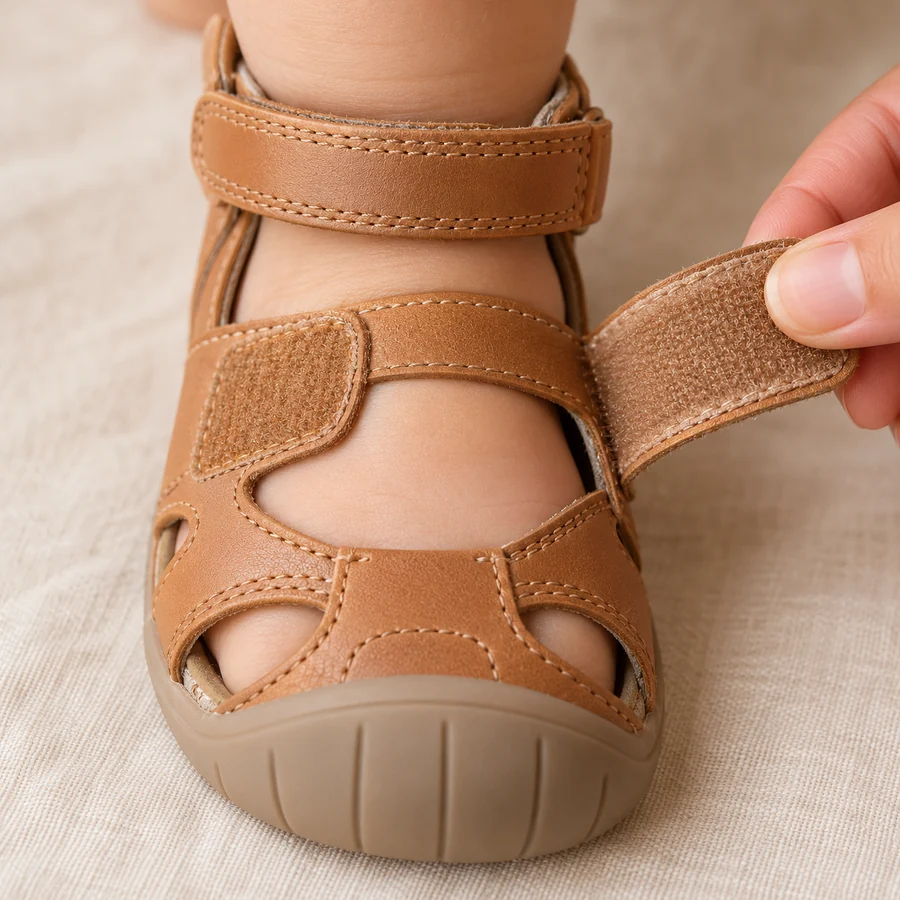
4. Straps that open wide and adjust
Hook-and-loop straps at the ankle and over the top of the foot open wide for a plump toddler foot, and tighten as the foot slims.
- Good: Opens wide for a plump foot
- Good: Room left to tighten more
- Not good: Straps sewn in place
Fitting sandals, socks, and sandpit care
Measure both feet first. Then check the fit with your toddler standing on both feet: 6–10 mm (0.25–0.4 in, about the width of a pencil) between the longest toe and the inside of the front rim. The little toe should sit behind the side straps, not poke out through a gap. On tiptoe, the heel should stay in the back cup.
Bare, sweaty skin rubbing against stiff new straps is the main cause of summer sandal blisters. Thin baby socks on the first three or four walks protect the ankle bones and the top of the foot while the new straps soften. After sandpit or beach play, take the sandals off, shake out trapped grit, and dry between the toes so wet grains do not grind against the skin. Rinse water sandals in tap water, and dry wet leather sandals in the shade, because heat makes wet leather stiff.
Questions parents ask
Are sandals good for new walkers?
A brand-new walker taking early, unsteady steps outdoors is usually steadier in enclosed first shoes, which hold the whole foot uniformly. Once your toddler walks confidently outdoors and the weather reaches 24°C (75°F) or warmer, a closed-toe fisherman sandal with a heel cup and flexible rubber sole works well.
Are open-toe sandals or flip-flops safe for toddlers?
Not for walks. An open toe catches on grass and cracks in the sidewalk, and in a flip-flop the toes have to grip at every step to keep it on. Choose a closed toe and a strap behind the heel or at the ankle.
Are foam clogs good summer shoes for a toddler?
For a quick step into the backyard, yes. For walks, no: the roomy fit lets the foot slide around, the wide sole catches when a toddler runs, and wet or sandy foam rubs the skin on top of the foot.
What is the difference between water sandals and water shoes?
Water sandals are walking sandals made to get wet: strapped, closed at the toes and quick to dry, so they go straight from a splash pad to a park path. Pull-on mesh water shoes fit like thin socks with a rubber bottom. They are for pool decks and stony beaches, not long walks.
Can my toddler wear sandals to daycare?
Check your daycare's footwear policy first. Most centers ban open-toe sandals, flip-flops, and backless clogs, and allow sandals only if they have both a closed toe bumper and a fixed heel strap. If the playground uses woodchips or pea gravel, enclosed first shoes keep grit out much better.