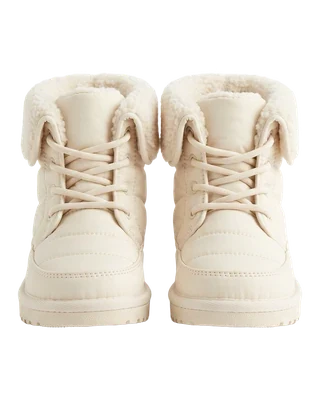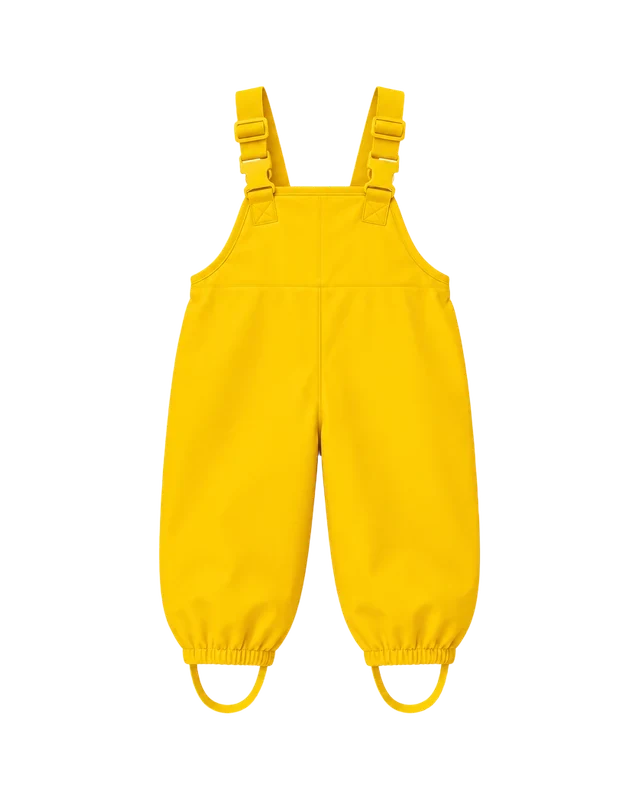
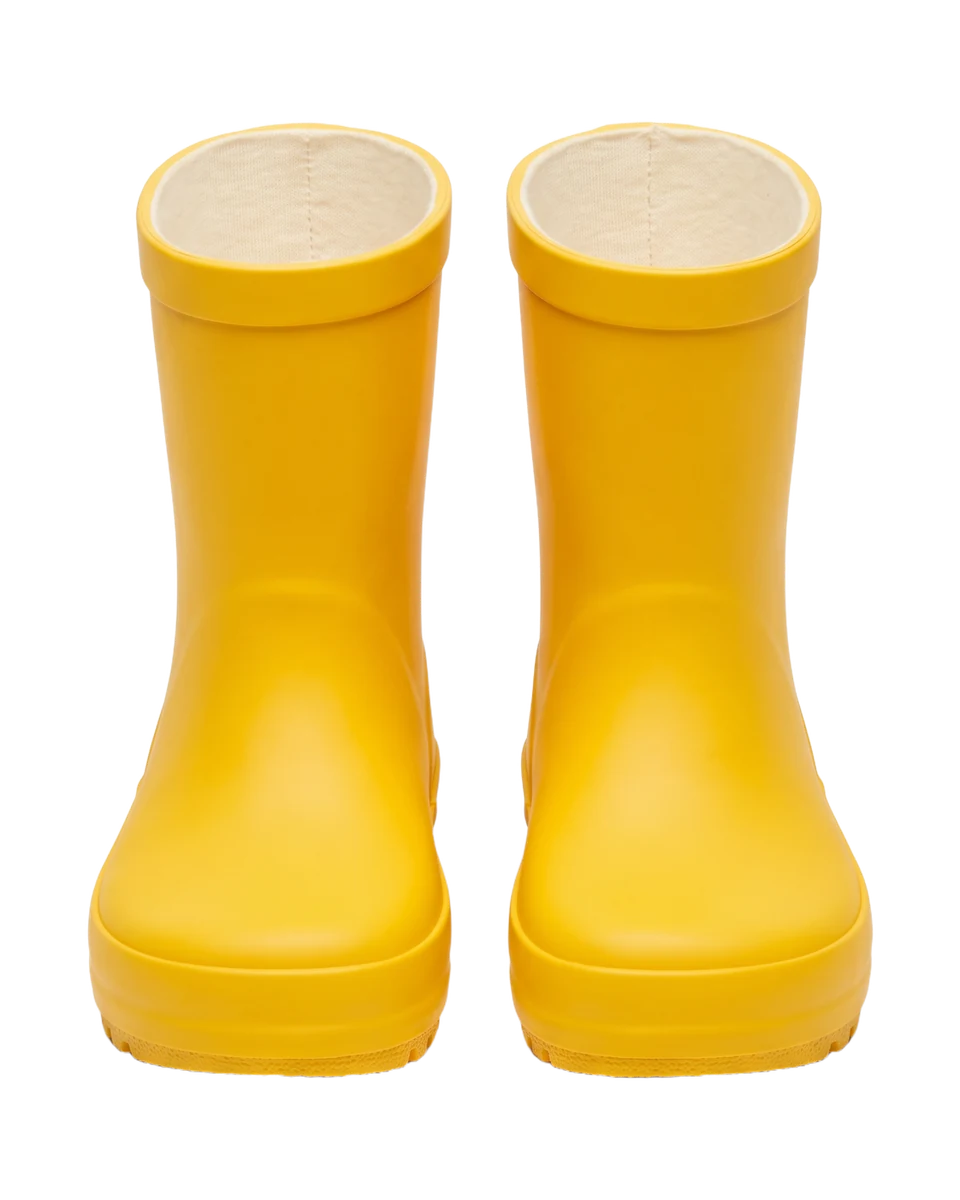
Rain boots are pull-on boots made of rubber or a light foam, so water cannot soak through. They take the place of everyday shoes on wet days. A toddler can walk through puddles, wet grass and mud and come home in dry socks.
They are for babies who walk outside. A baby who rides in the stroller or the carrier does not need them: warm socks or booties keep those feet warm.
Rubber does not keep the feet warm, so rain boots suit wet days from 8°C (46°F) and up. Below that, switch to lined winter boots.
- FromFirst steps
- You'll need1pair per size
- Wear them inRain
Types of rain boots
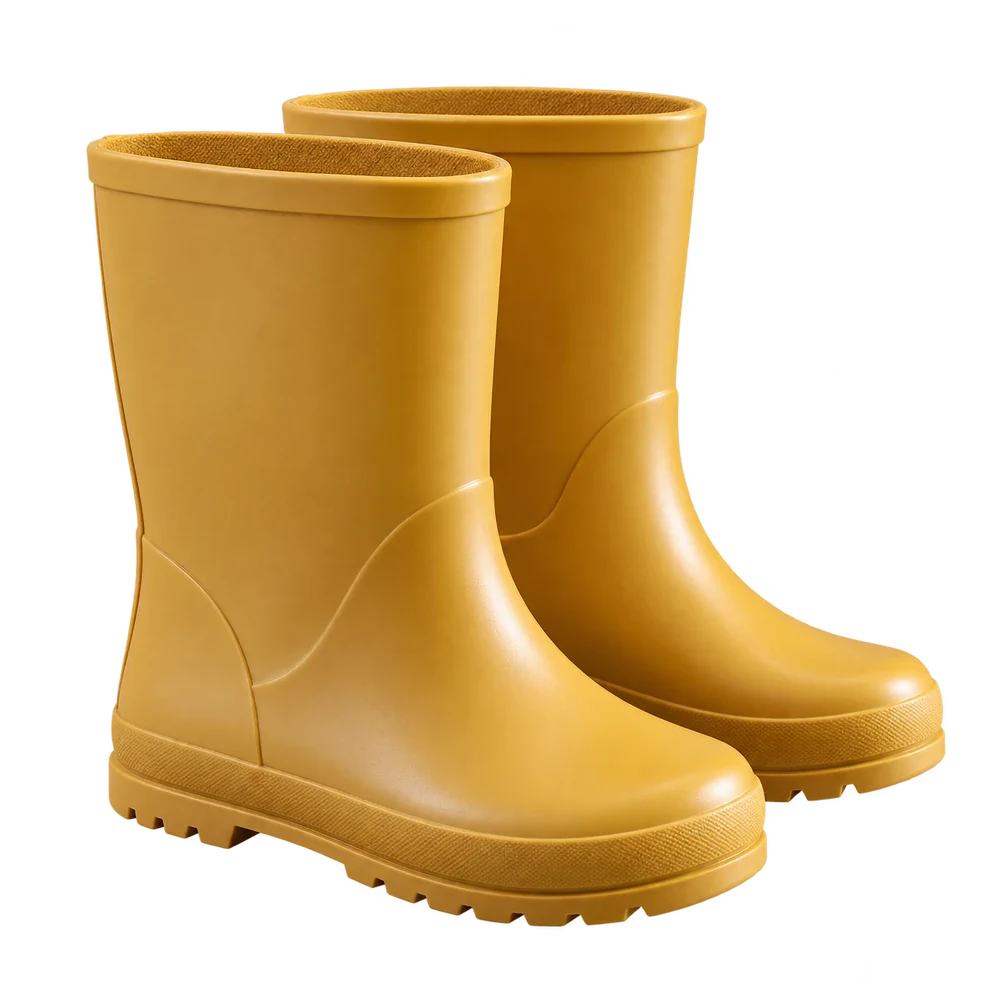
Rubber boots
Natural rubber bends easily and lasts. Cheaper boots look the same but are PVC, a plastic that turns brittle and cracks sooner. The label names the material.
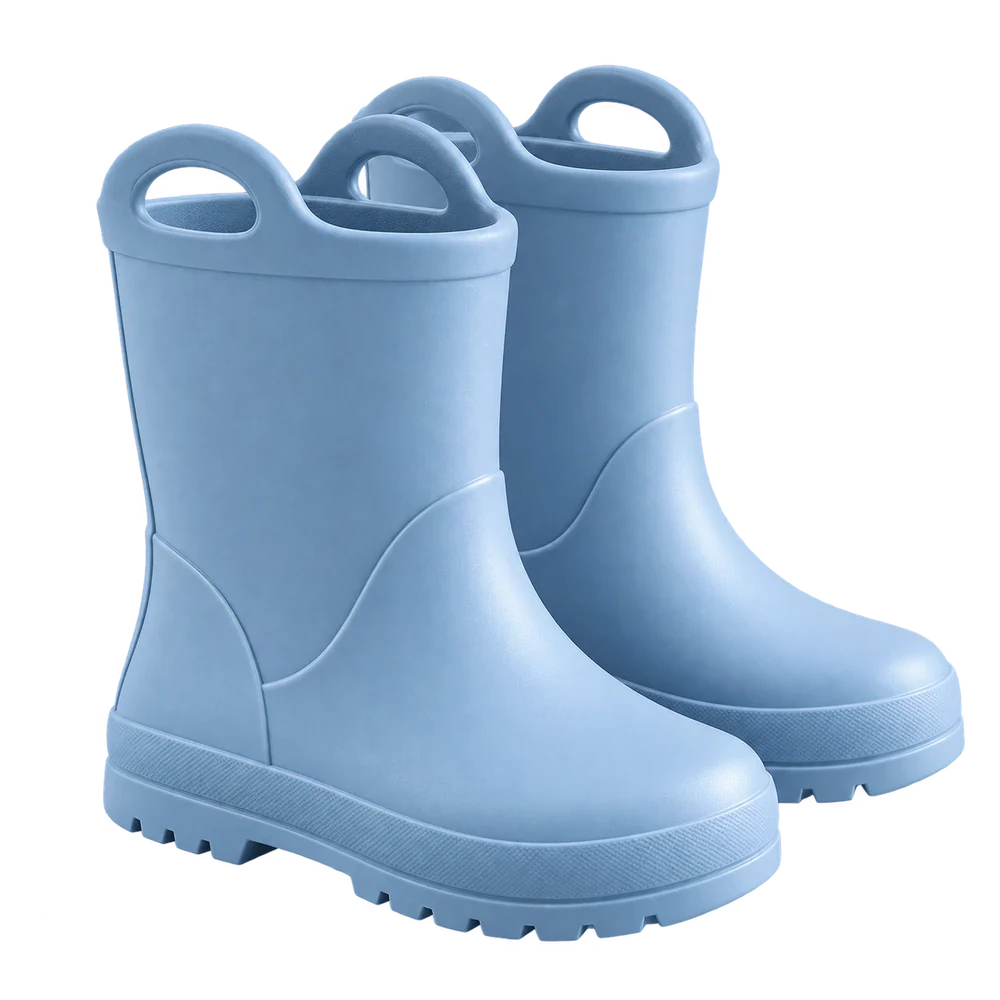
Foam boots
Molded in one piece from soft, light foam. The lightest of the four, so they are easy for small legs to lift.
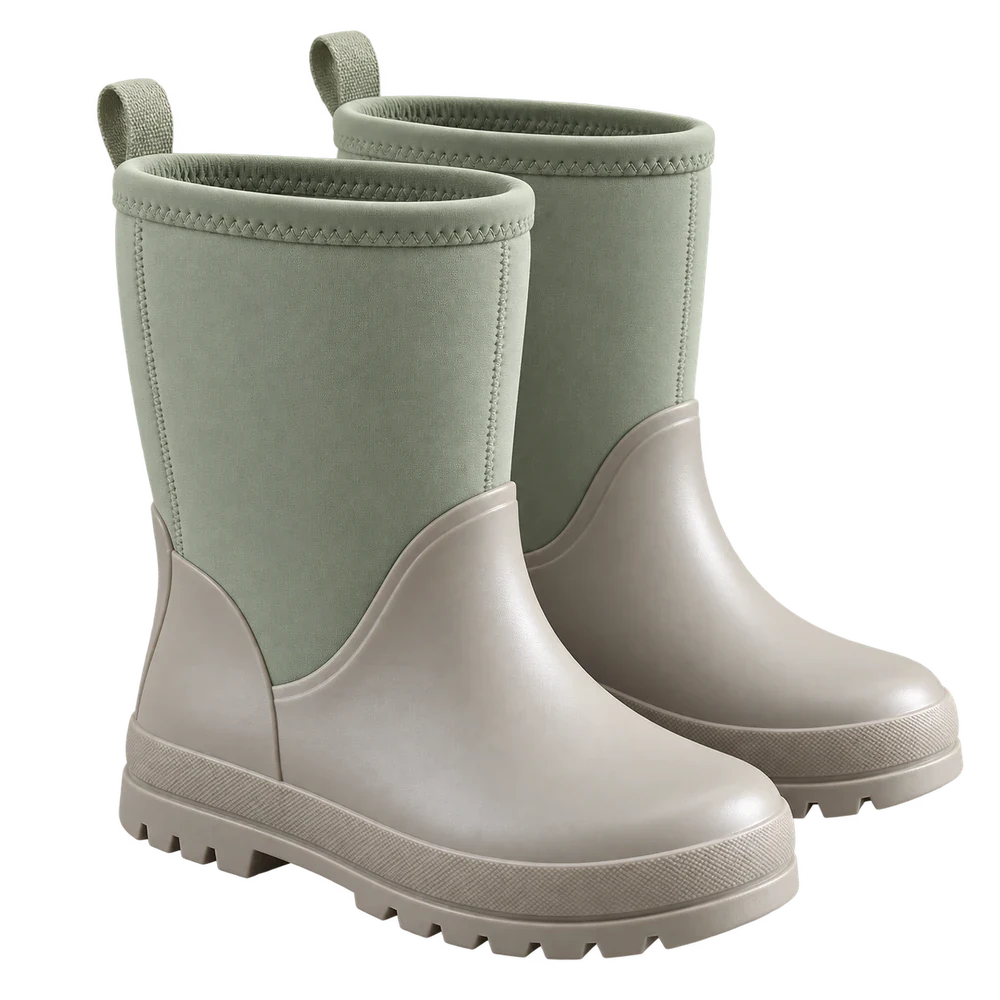
Neoprene boots
A rubber foot with a soft leg of neoprene, the stretchy foam rubber of wetsuits. They are warmer than plain rubber, so they suit cool, wet days. Thick, insulated ones count as winter boots.
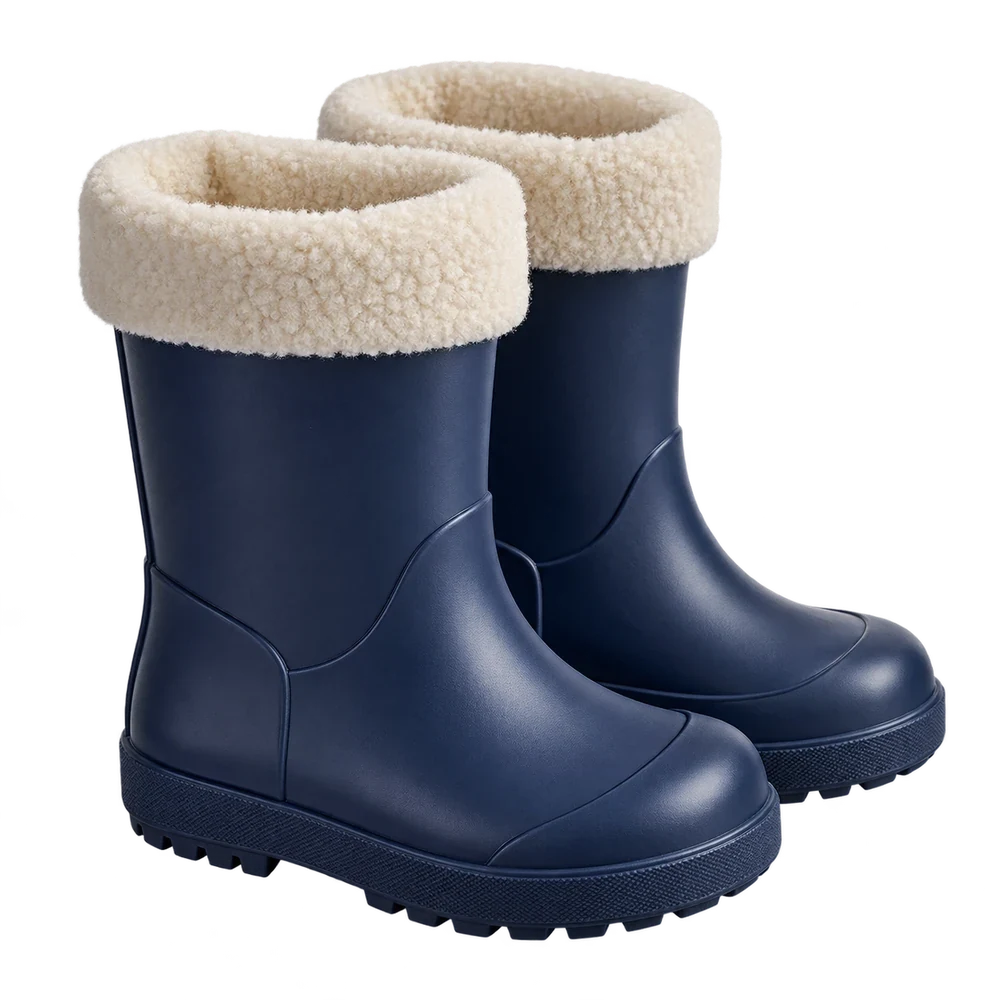
Lined rain boots
Rubber boots with a soft fleece or felt lining. They are warmer than plain rubber, for cold, wet days just above 8°C (46°F). Colder than that, winter boots take over. If water comes in over the top, the lining is slow to dry.
Ankle boots or calf-high?
Both keep the feet dry on a wet path. The height decides how easily a small walker moves, and how deep a puddle they keep out.
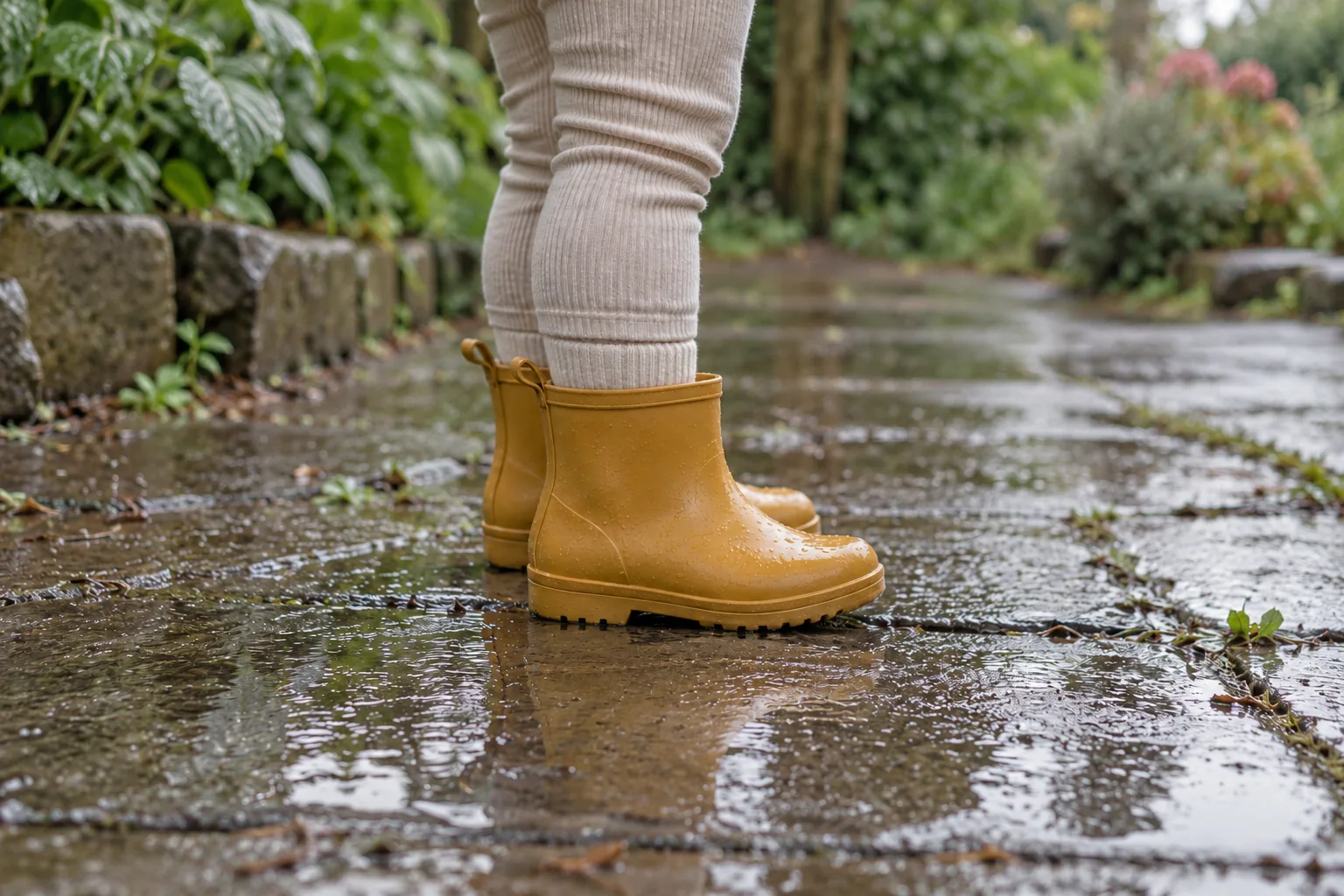
Ankle boots
They stop just above the ankle bone, so the ankle bends freely and the boots weigh little. A good pick for a new walker.
- Good: Easy to walk and climb in
- Good: Light on small legs
- Not good: Deep puddles come in over the top
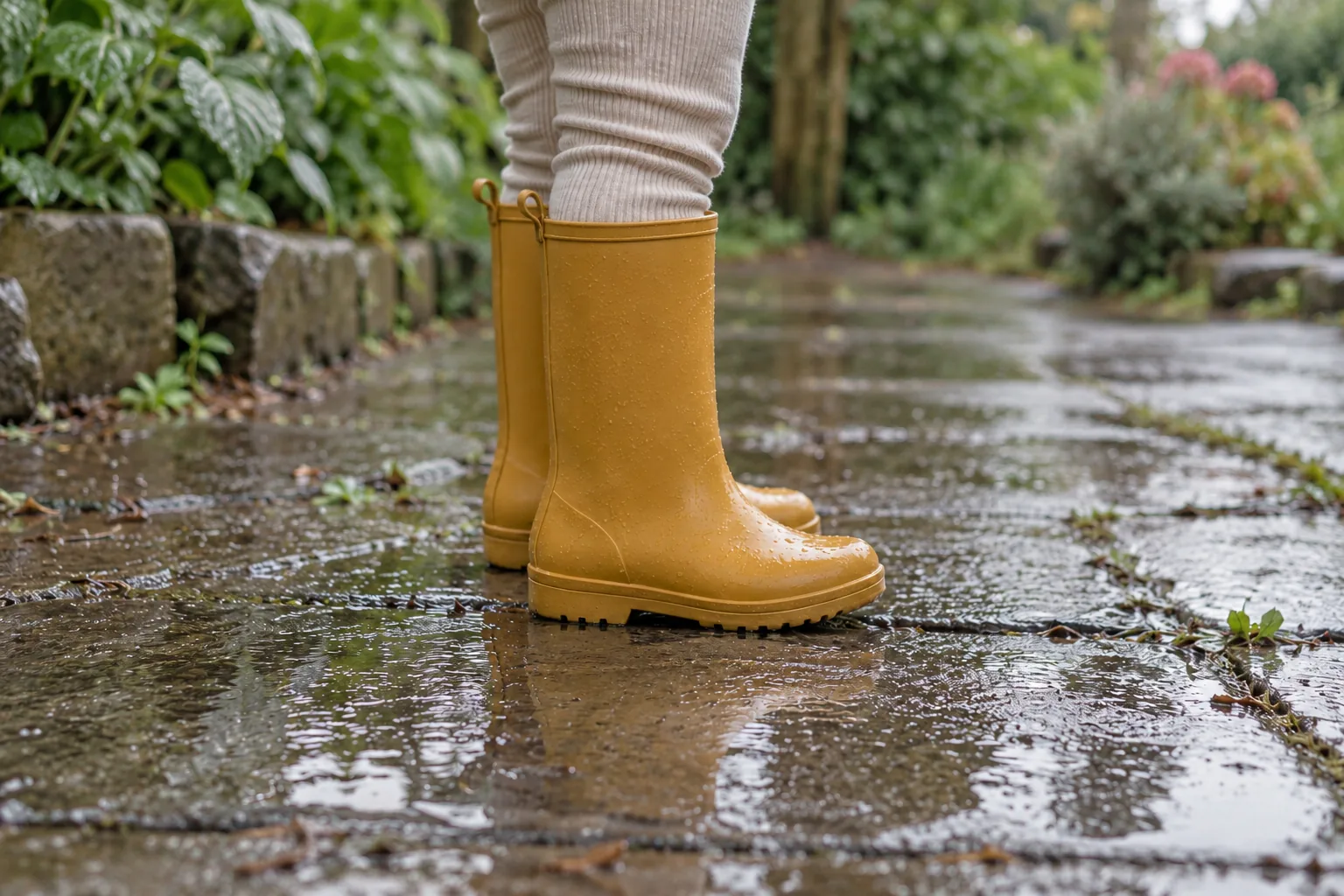
Calf-high boots
The classic rain boot, up to the middle of the calf. A good pick once your toddler walks steadily and heads for every puddle.
- Good: Deep puddles stay outside
- Not good: Heavier on small legs
- Not good: Harder to walk and climb in
How to choose rain boots
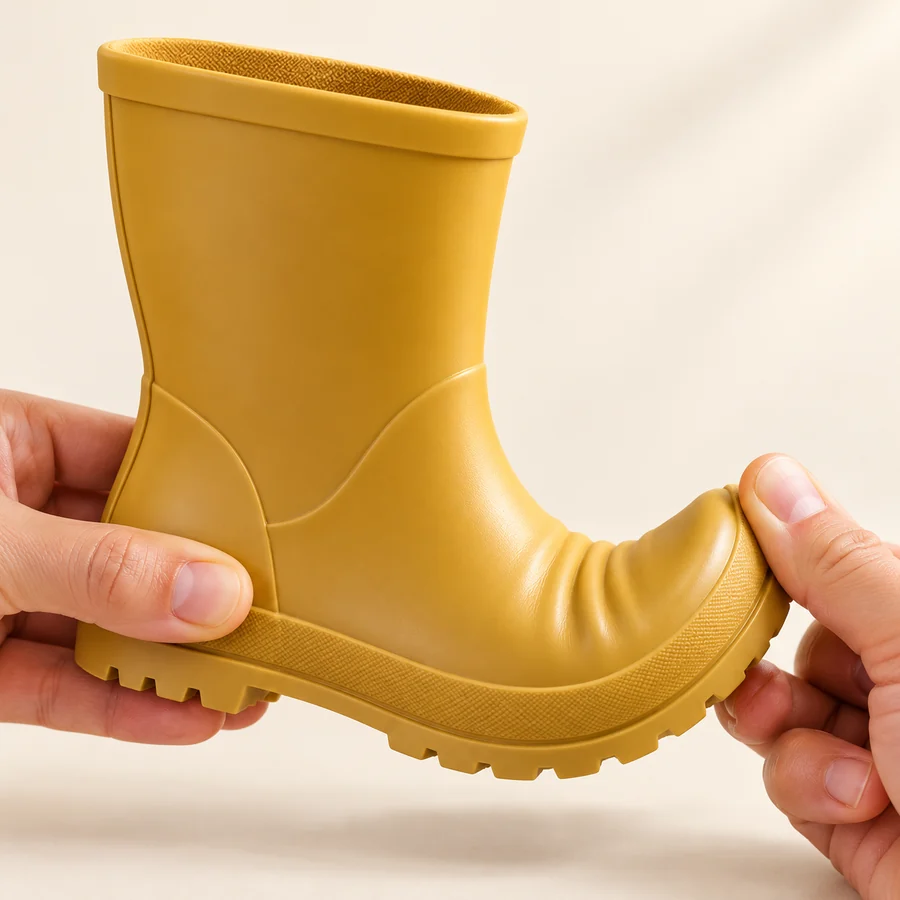
1. Light, with a sole that bends
A new walker lifts the boot with every step, and a stiff, heavy boot trips small feet. Push the toe up in your hand: the sole should bend where the toes bend.
- Good: Sole bends at the toes
- Good: Light in your hand
- Not good: Stiff sole that stays flat
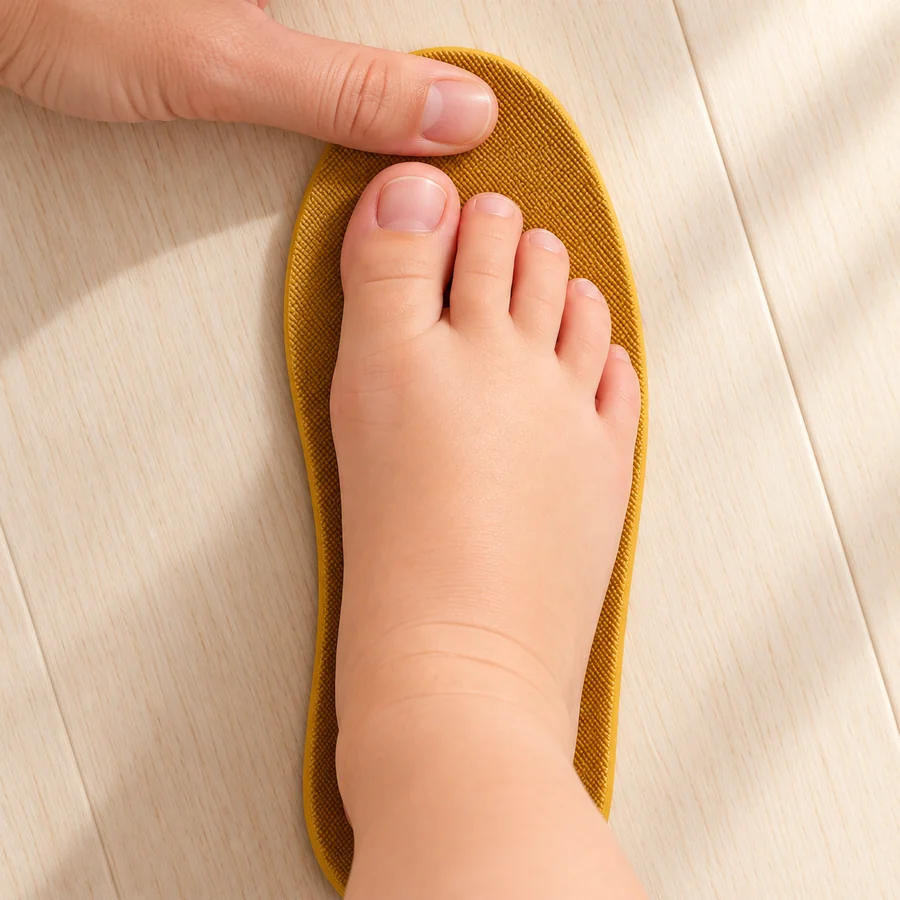
2. Room for the toes
Take the insole out and stand your toddler on it barefoot: about a thumb's width should show past the longest toe. Then try the boots on with the socks that go in them, and watch a few steps.
- Good: Thumb's width past the toes
- Good: Fits with the socks on
- Not good: Heel lifts out when walking
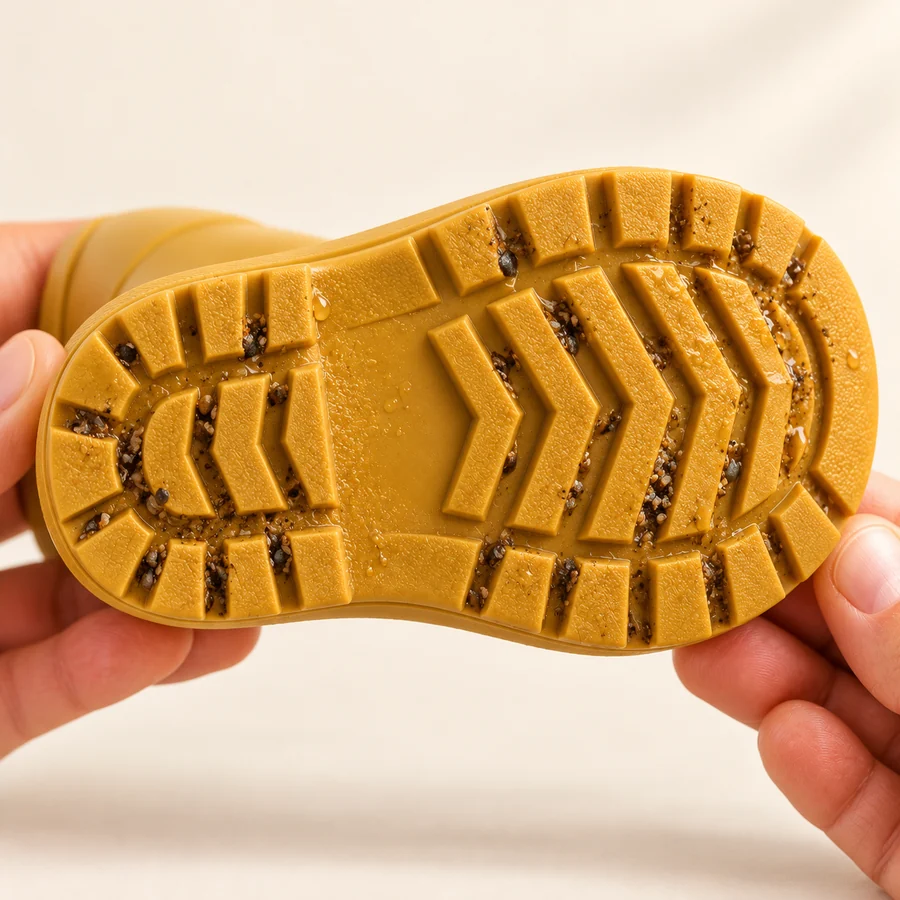
3. A sole that grips
Wet paths, leaves and mud are slippery. Turn the boot over and look at the tread (the grooves on the sole): deep grooves grip, a flat sole slides.
- Good: Deep grooves you can feel
- Good: Grooves not worn down
- Not good: Flat, smooth sole
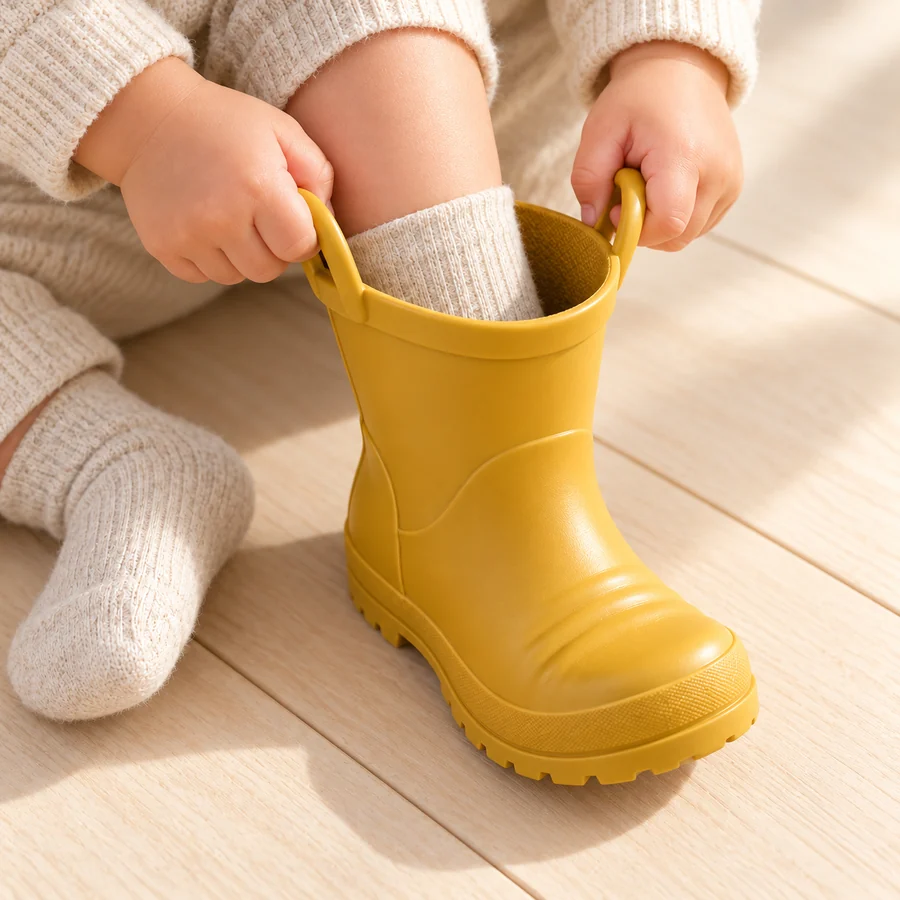
4. Handles and a wide top
Pull handles give small hands something to hold. A wide top lets the heel slide down, so boots go on without a fight.
- Good: Handles big enough to grip
- Good: Top opens wide for the heel
- Not good: Narrow, tight top
How to wear them
Socks should reach above the top of the boot, so the rim rubs on knit and not on skin. In tall boots, that means knee socks or cotton tights. Thin socks suit a mild day, and warm socks a cool one.
Rain pants go over the boots, never tucked in. Tucked in, the rain runs down the pants and straight into the boots. The rainy day guide has the rest of the outfit.
Where the rain goes
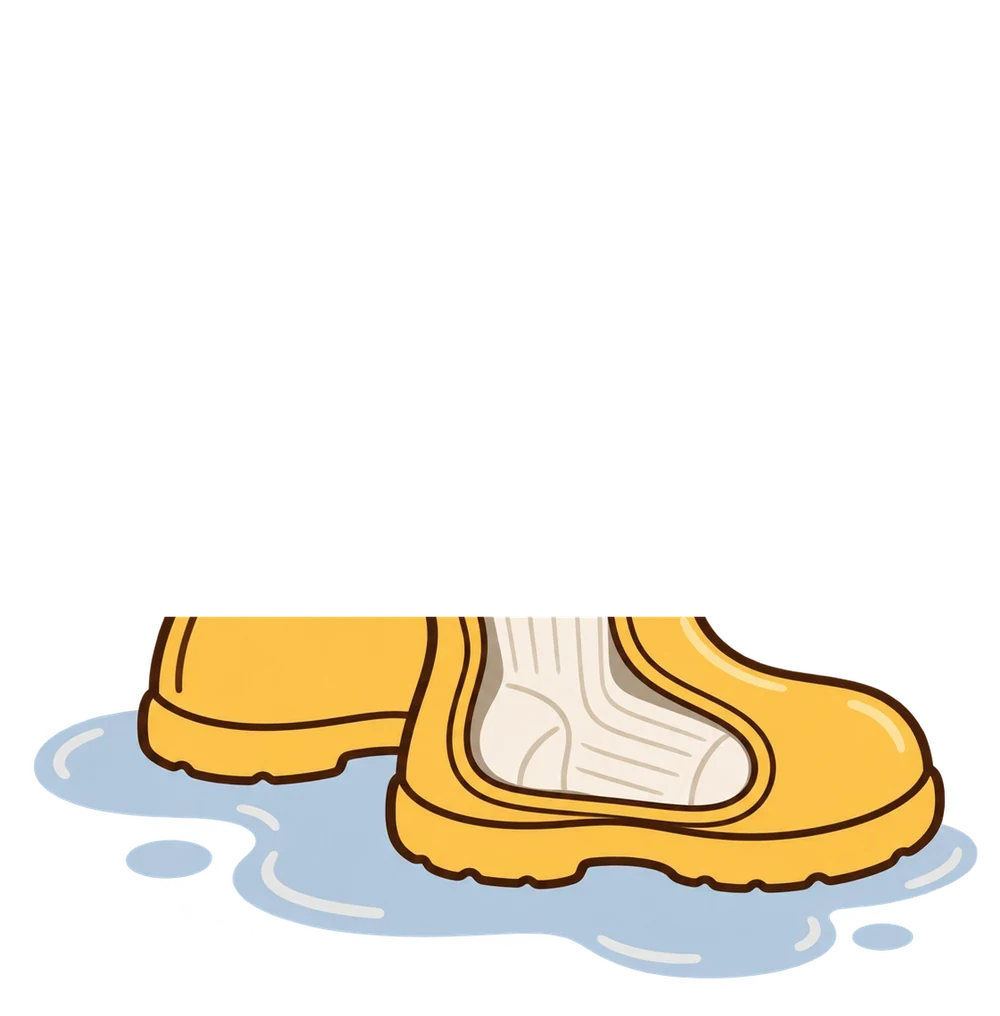
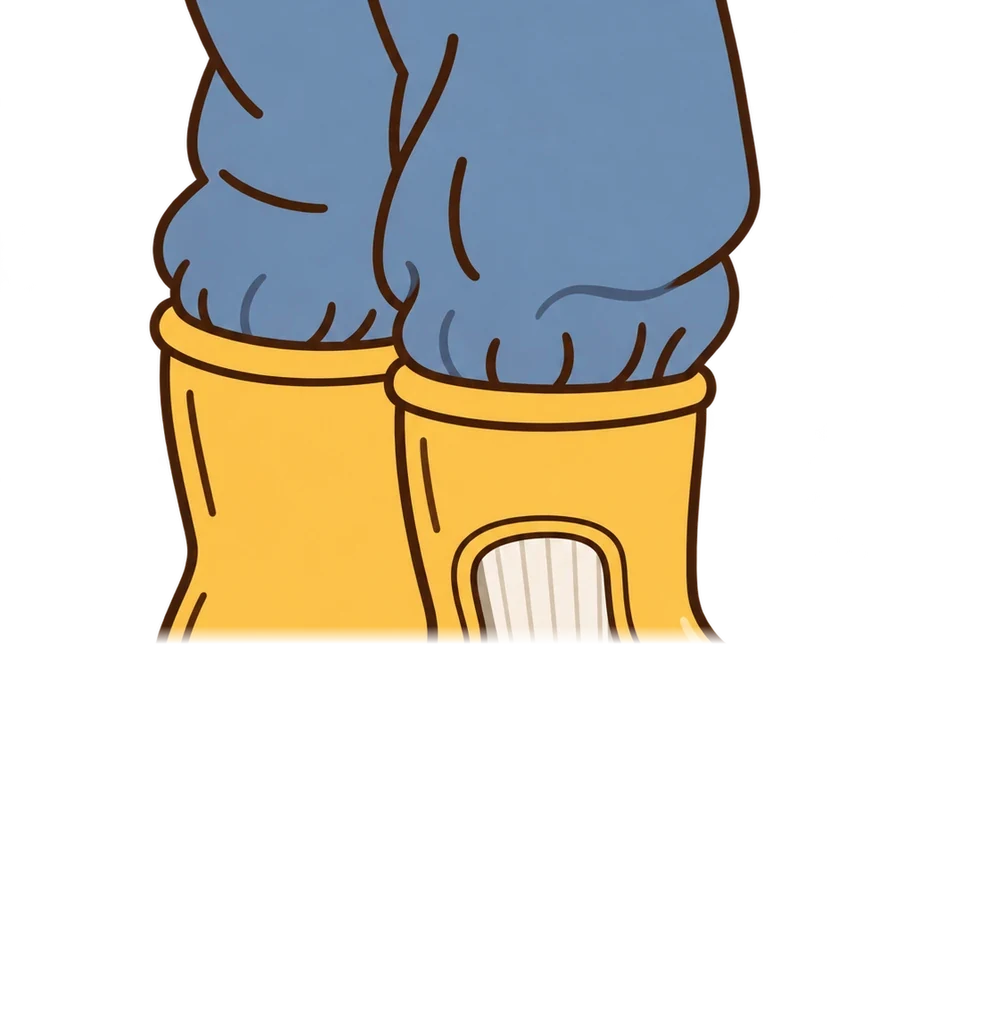
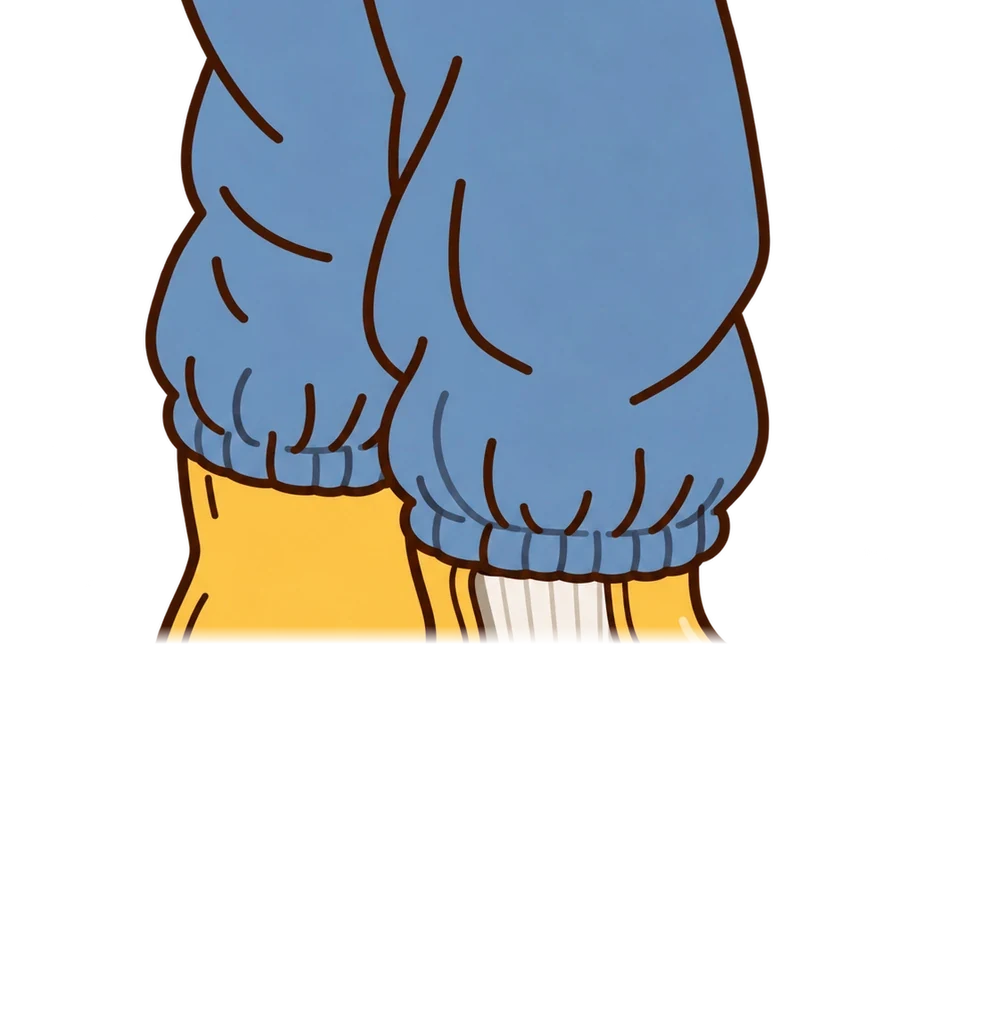
Don't tuck the pants in
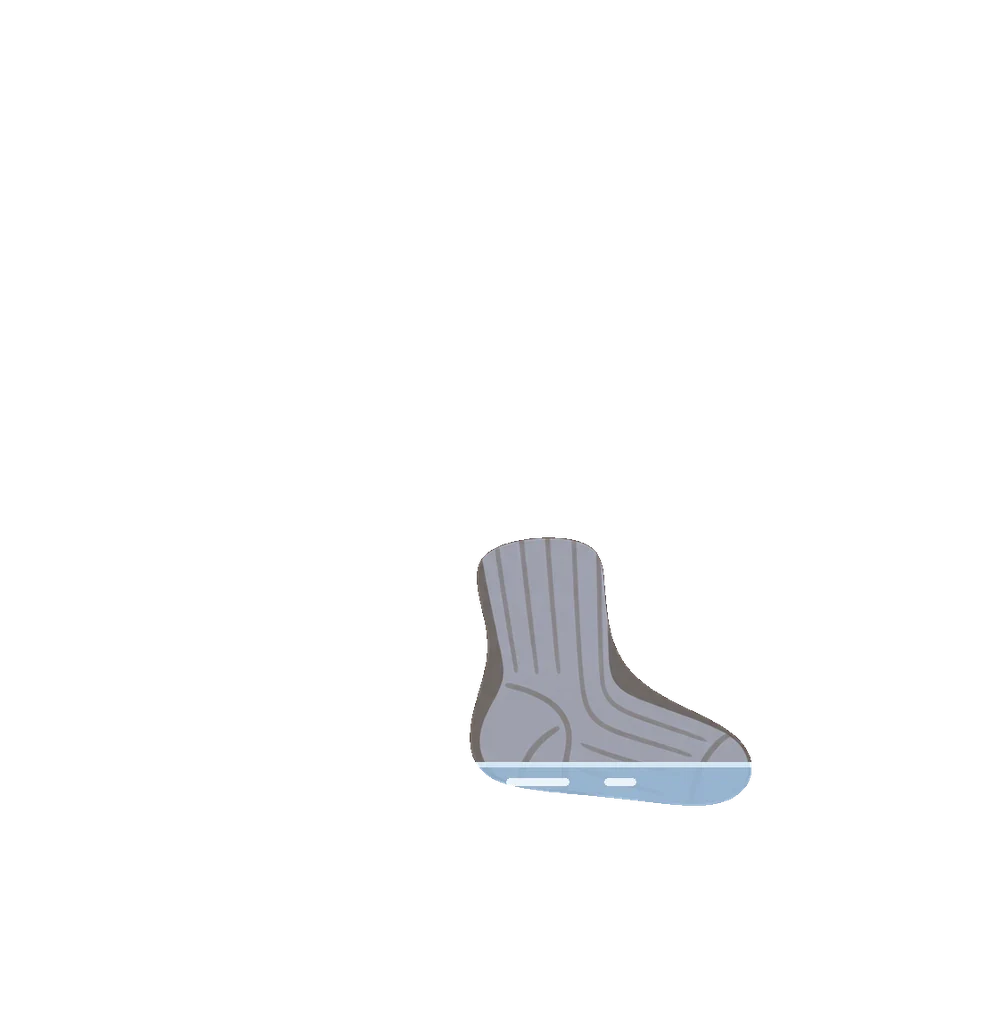
Tucking keeps the pants out of the mud. But the rain runs down them and pours into the boot. Rubber holds the water in, and the socks soak it up.
- Not good: Rain runs into the boot
- Not good: Socks come home wet
Always pull the pants over the boots
The cuff hangs over the top of the boot. The rain runs off its edge, down the outside of the boot and into the puddle. The socks stay dry.
- Good: Cuff covers the boot top
- Good: Socks stay dry
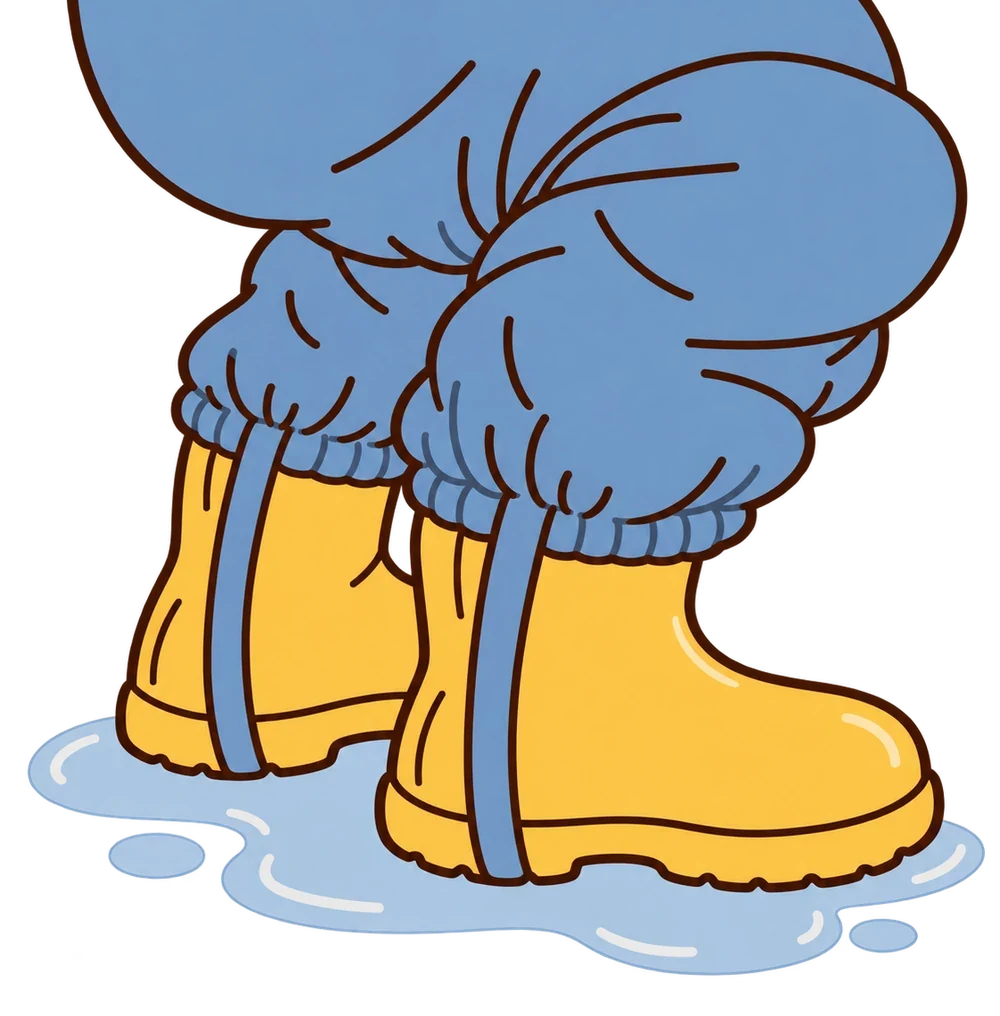
Choose rain pants with stirrups
Squatting pulls the pants up the shins, so a cuff can slide off the top of the boot. A strap under each boot (a stirrup) holds it down.
- Good: A stirrup under each boot
- Not good: Cuffs ride up off the boots
Questions parents ask
Do you wear socks with rain boots?
Yes, every time. Bare feet sweat in rubber and slide around inside the boot, and that rubs blisters.
Should rain boots be a size bigger?
Not a whole size. Start from your toddler's shoe size and go half a size up at most. A boot that is too big slips at the heel and trips a small walker. Brands run differently, so trust the insole check over the label.
Which rain boots suit a new walker?
Light, ankle-high boots with a sole that bends at the toes, such as foam boots. Tall, stiff rubber boots are the hardest to walk in.
Do toddlers need rain boots?
Yes, once your toddler walks outside on wet days, because water soaks through fabric and leather shoes. For a short walk on a damp sidewalk, first shoes are fine.
Can toddlers wear rain boots all day?
Not as everyday shoes. A pull-on boot does not hold the heel the way a shoe with a strap does, and feet get sweaty in rubber. They are fine for a wet morning outside. At daycare, send shoes for indoors.
How do I put rain boots on a toddler?
Sit your toddler down, hold the boot by its handles and pull it up while your toddler pushes the foot down. A steadier walker can stand and hold your shoulders instead.
Are rain boots waterproof?
Yes. Rubber, foam and neoprene all keep water out, and water only gets in over the top. Once a boot cracks or leaks, replace the pair.
How do I dry the inside of rain boots?
Rinse the mud off with water, and a little mild soap if needed. Take the insoles out and stuff the boots loosely with newspaper. Let them dry at room temperature, away from radiators and direct sun, because heat cracks rubber.