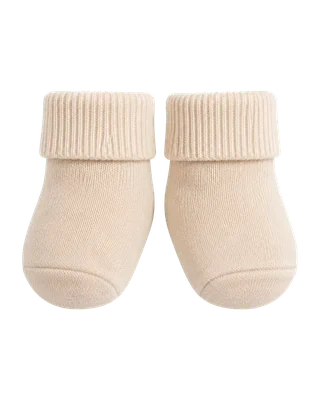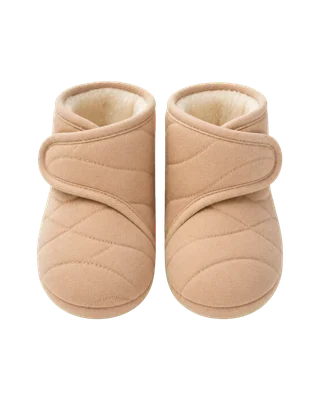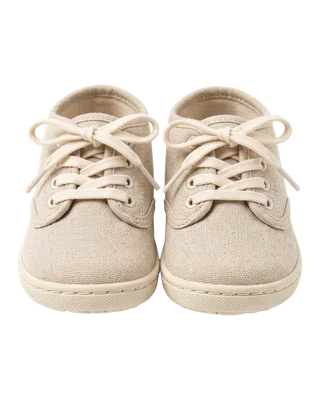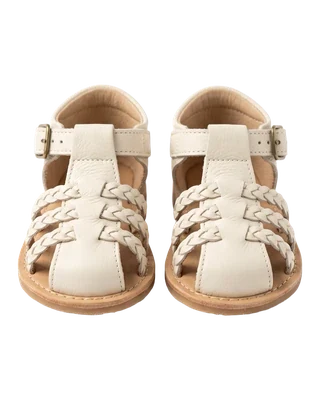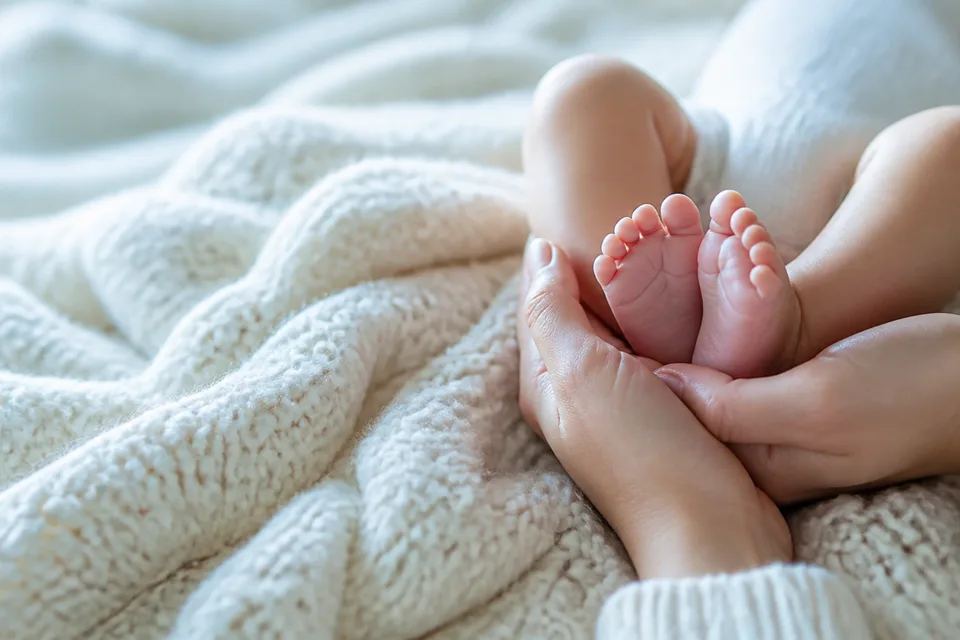
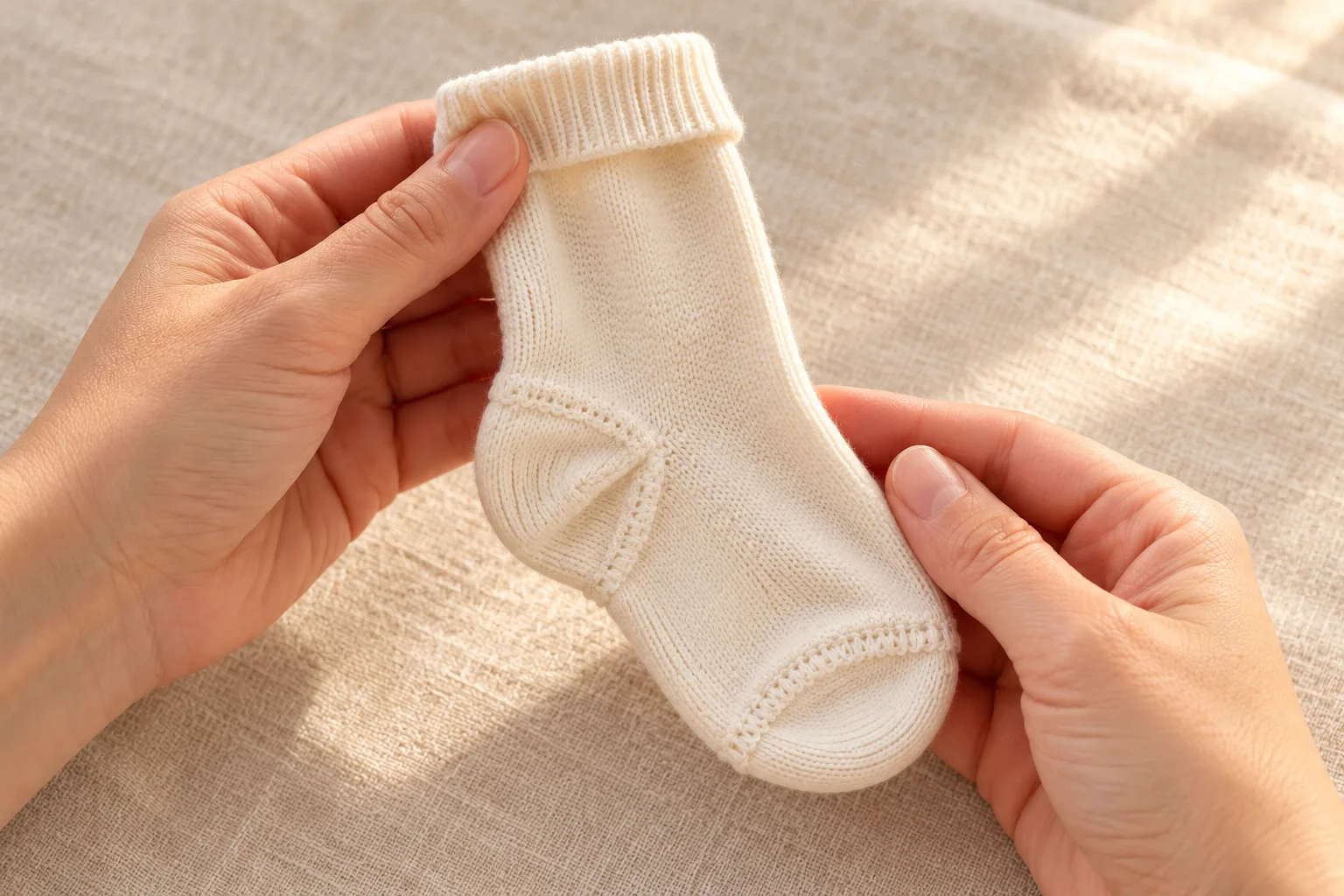
Thin baby socks are soft, fine-knit cotton or bamboo socks that cover your baby's feet without adding winter bulk. They go under light pants, light cotton leggings or a romper, and slip smoothly inside first shoes and sandals without crowding the toes.
In the first weeks, a footed sleepsuit already covers the feet, so you only need separate socks with footless outfits. They also help when long feet outgrow the built-in feet of a sleepsuit before the body does.
- For ages0–3years
- You'll need4–6pairs per size
- Wear them at12–23°C54–73°F
When babies wear them
Indoors, thin socks go on in a cool room. Cool feet alone are not the reason: cool hands and feet are normal for a baby and do not mean your baby is cold. To judge warmth, feel the chest or the back of the neck instead.
Outdoors in a stroller or carrier, thin cotton socks are the everyday foot layer at 12–23°C (54–73°F). They block a breeze and keep direct sun off bare feet. From 24°C (75°F) and up, feet can stay bare in the shade. Below 12°C (54°F), switch to warm baby socks with baby booties over them.
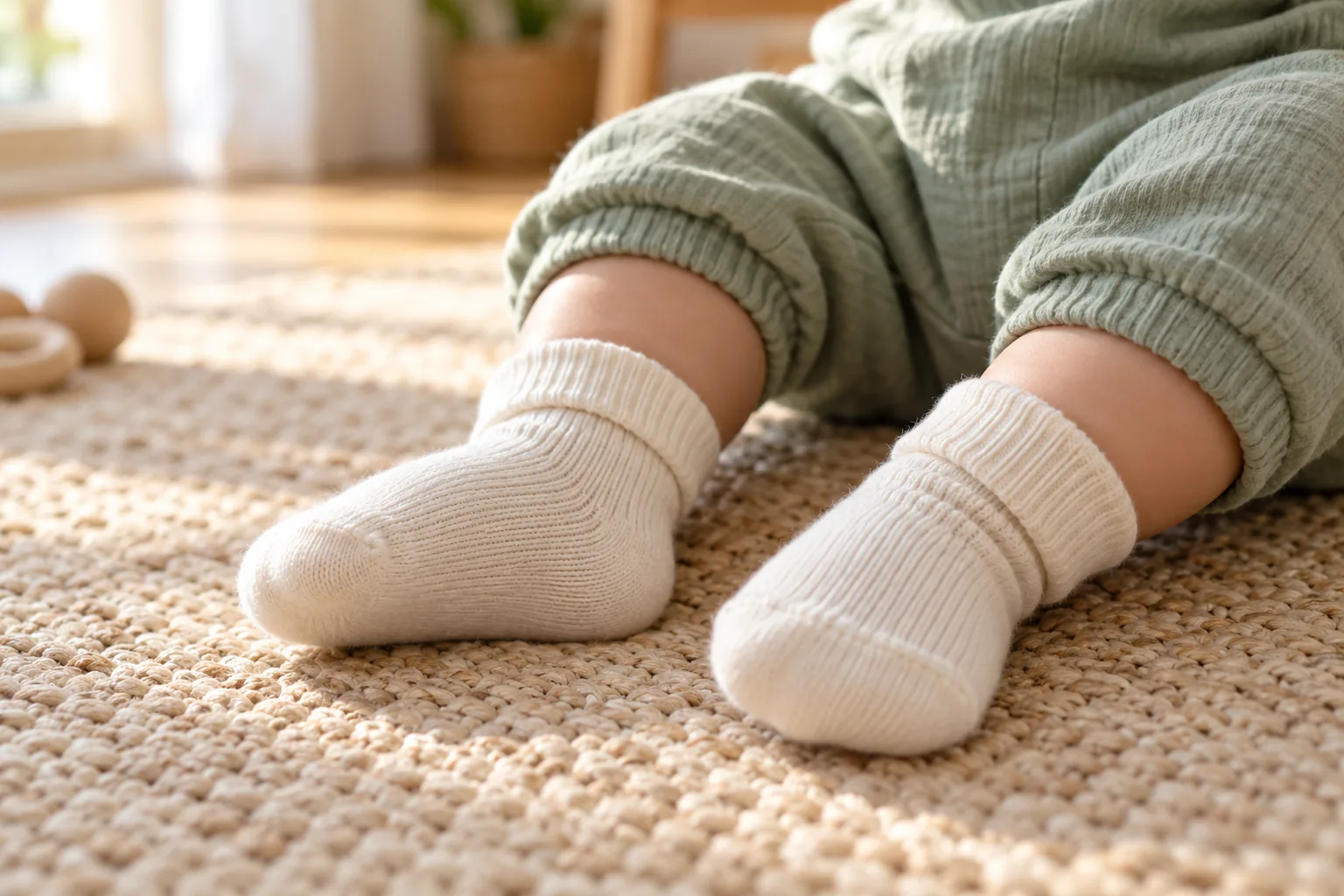
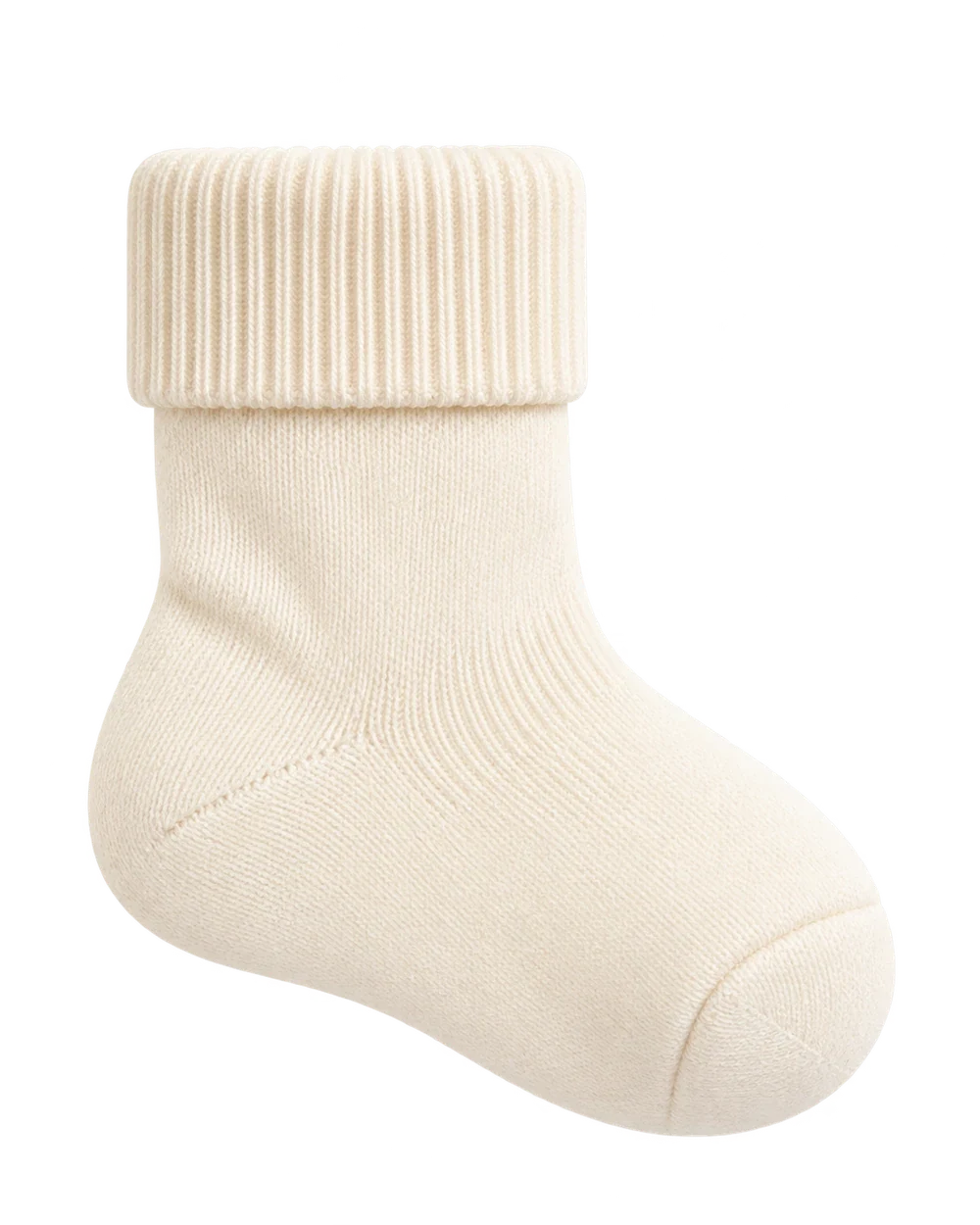
Why baby socks fall off, and what keeps them on
A newborn's heel is narrow and rounded, without the back ledge an adult heel has. When your baby kicks or rubs one foot against the other, a short tube sock slides right off. Around four to six months, babies also start pulling socks off by hand. A little stretch in the yarn (2 to 5 percent elastane on the label) and four details help a sock stay put.
Wide ribbed cuff
A wide band of rib holds gently all around the leg. A single tight elastic at the top digs in and leaves red marks on round calves.
Crew length
The sock reaches up the calf, not just to the ankle bone. Low ankle socks come off with the first few kicks.
Deep heel pocket
A deep, shaped heel holds the round baby heel, so the sock does not twist or slide down under the arch when your baby kicks.
Flat toe seam
A flat seam across the toes does not rub inside booties and shoes, or catch on little toenails.
Types of thin baby socks
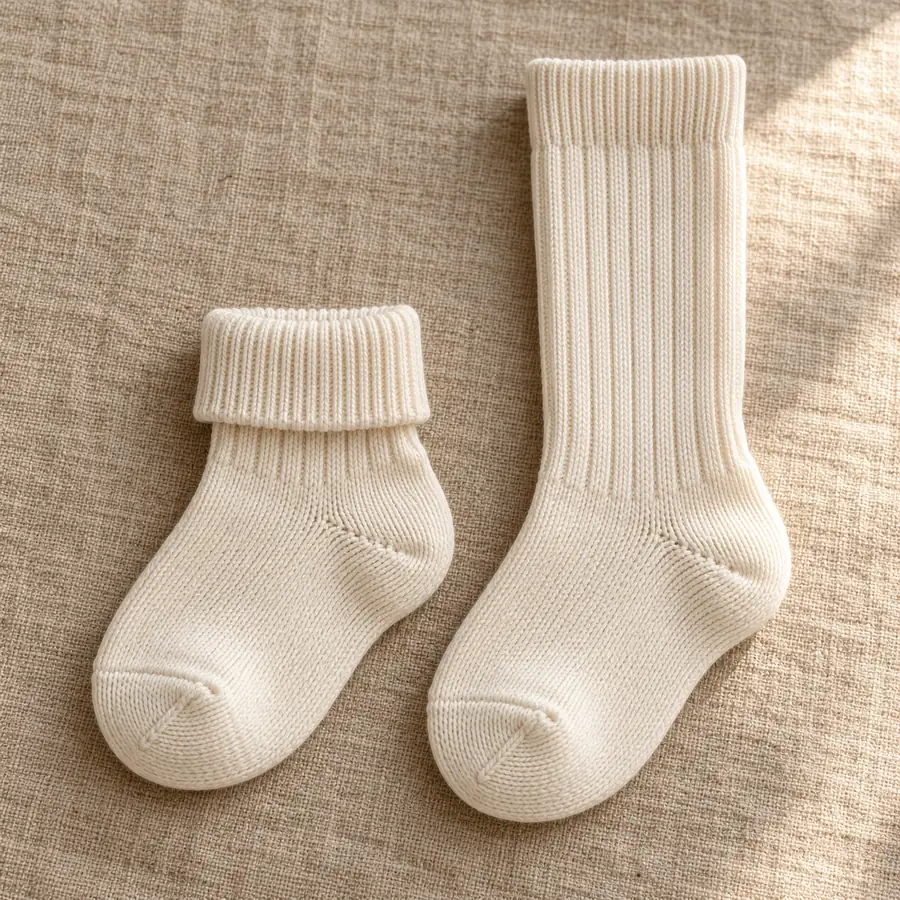
Fold-over crew sock
The everyday choice from birth onward. Wear the cuff folded at the calf, or unfold it up to the knee under pants so kicking does not leave bare shins.
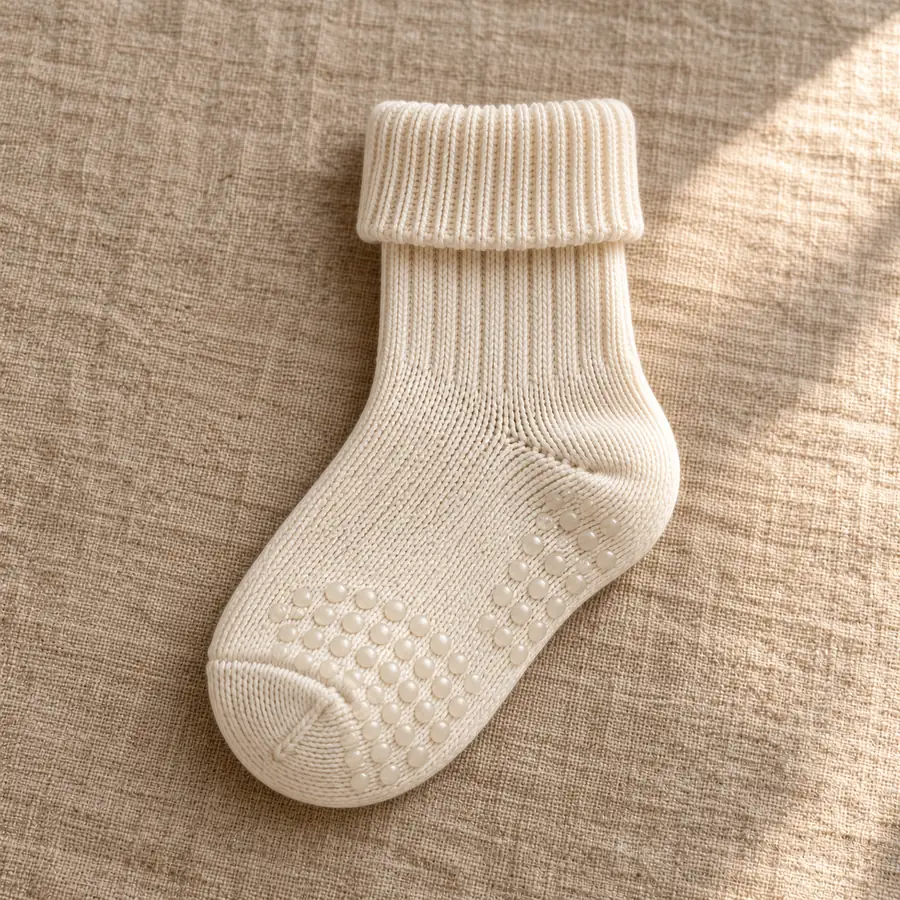
Grip-sole sock
Small silicone dots under the heel and ball of the foot stop slipping on wood or tile floors. Use them once your baby pulls to stand and walks along the furniture, on floors too cold for bare feet.
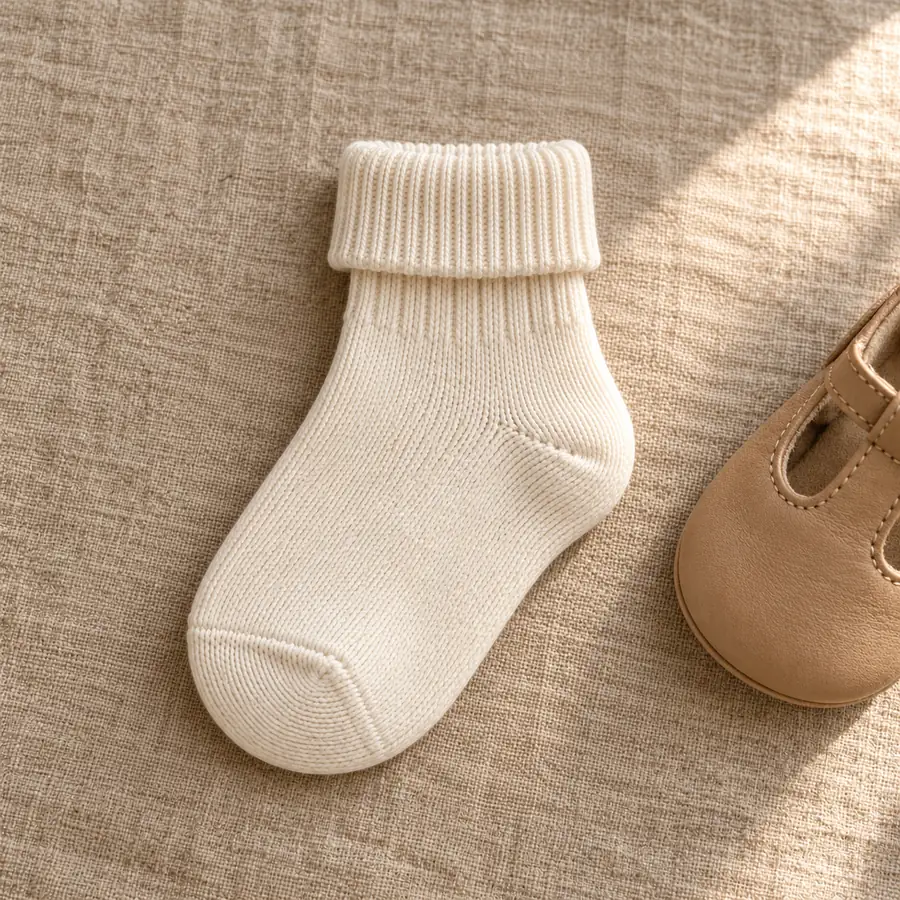
Smooth-sole shoe sock
A fine-knit sole without grip dots. Once your toddler wears shoes outdoors, a smooth sole slides into the shoe without catching on the lining or bunching at the toes.
Thin socks or warm socks?
Both cover the feet. The weather decides which one.
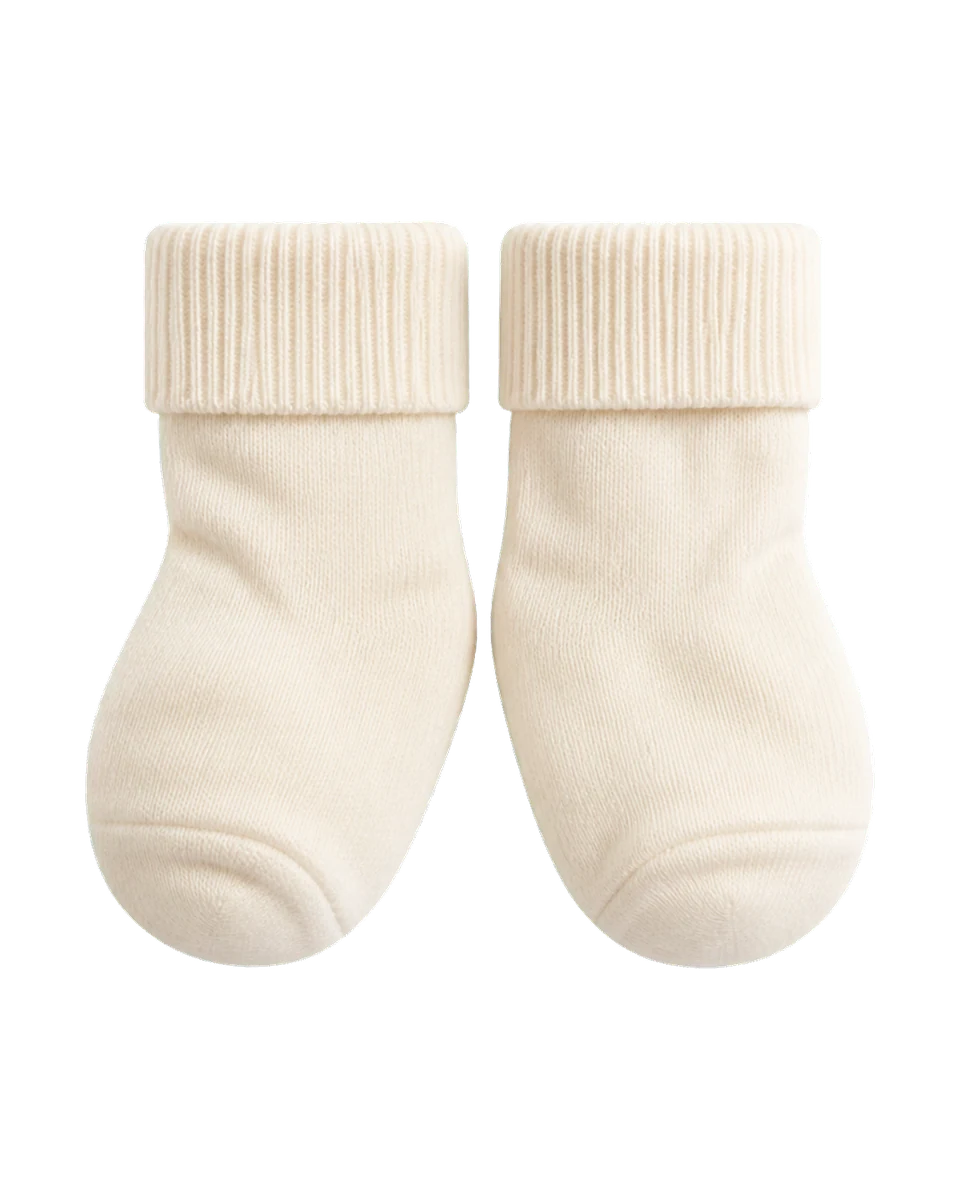
Thin baby socks
A fine knit of cotton or bamboo. For indoors, for stroller walks at 12–23°C (54–73°F), and inside shoes, where a thick sock would crowd the toes.
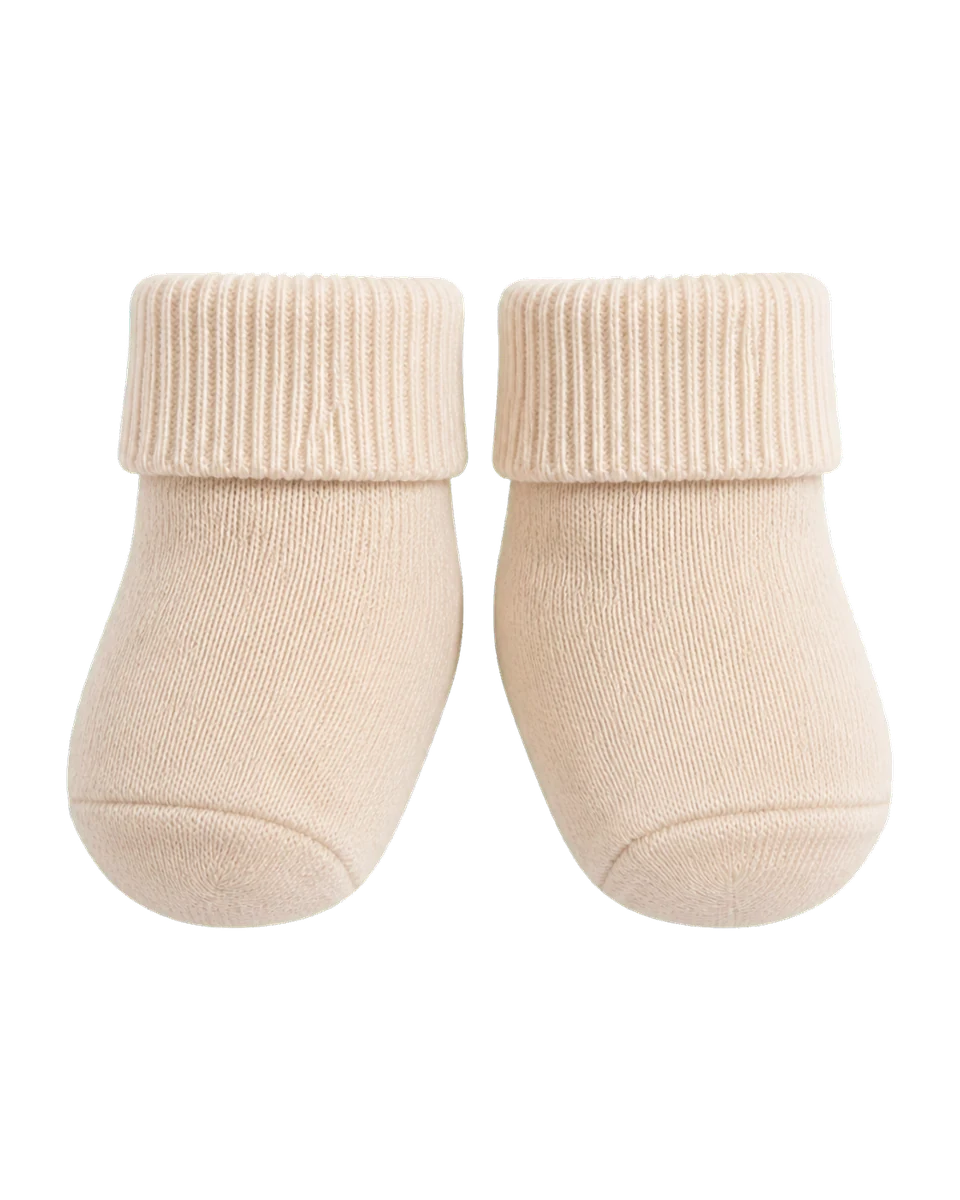
Warm baby socks
Merino wool, or thick cotton with soft loops inside, that holds warm air around the toes. For outdoors below 12°C (54°F), inside rain boots, and under baby booties or a pram suit.
How baby sock sizes work
Most baby socks are sold by age: Newborn, 0–3 months, 3–6 months, 6–12 months and 12–24 months. Some labels also list the foot length each size fits, and that is the better guide.
Newborn
First weeks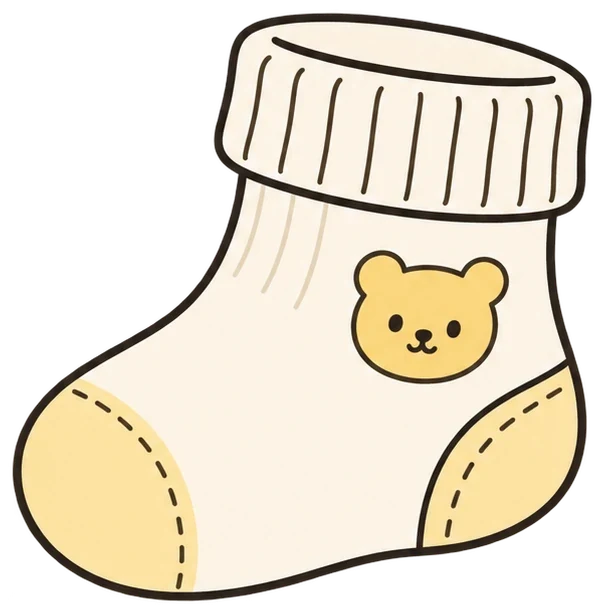
6.5–8cm
2.5–3.1 in · EU 13–14
Made for the first weeks, so it stays on a small foot.
0–3 months
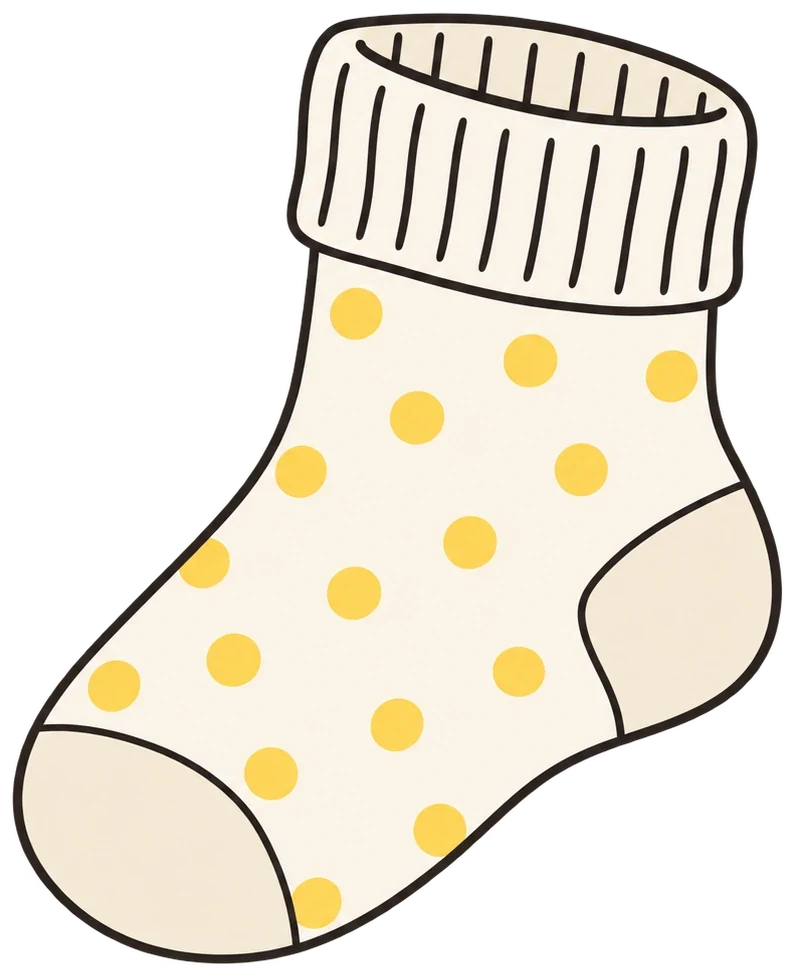
8–9.5cm
3.1–3.7 in
Cut to stretch up to three months, so it often slides off a newborn.
3–6 months
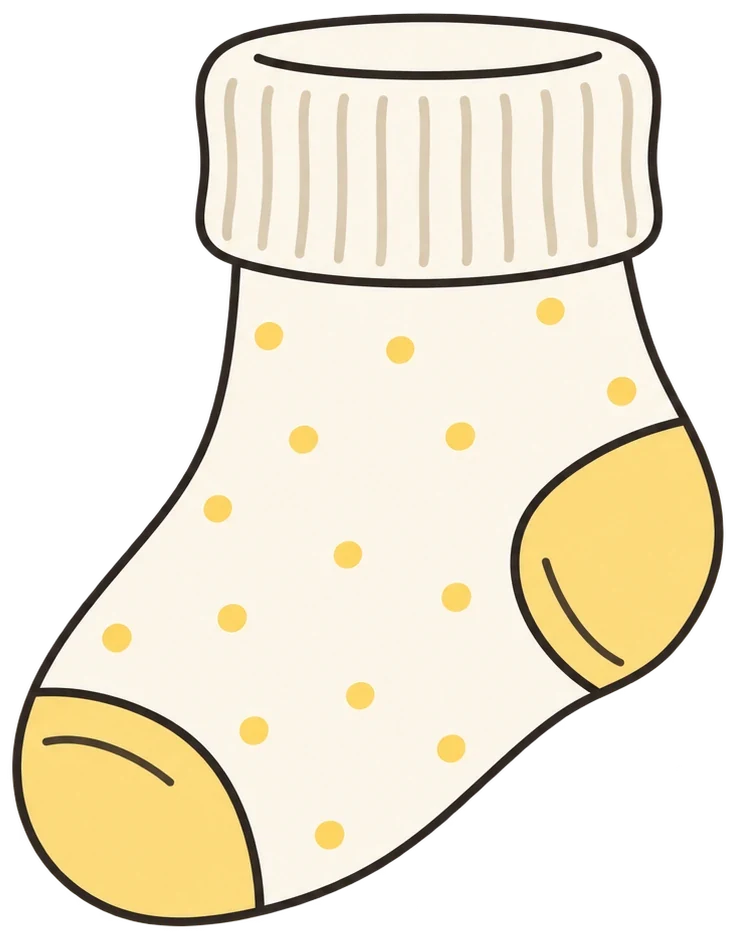
9.5–10.5cm
3.7–4.1 in
Measure the foot before you size up.
6–12 months
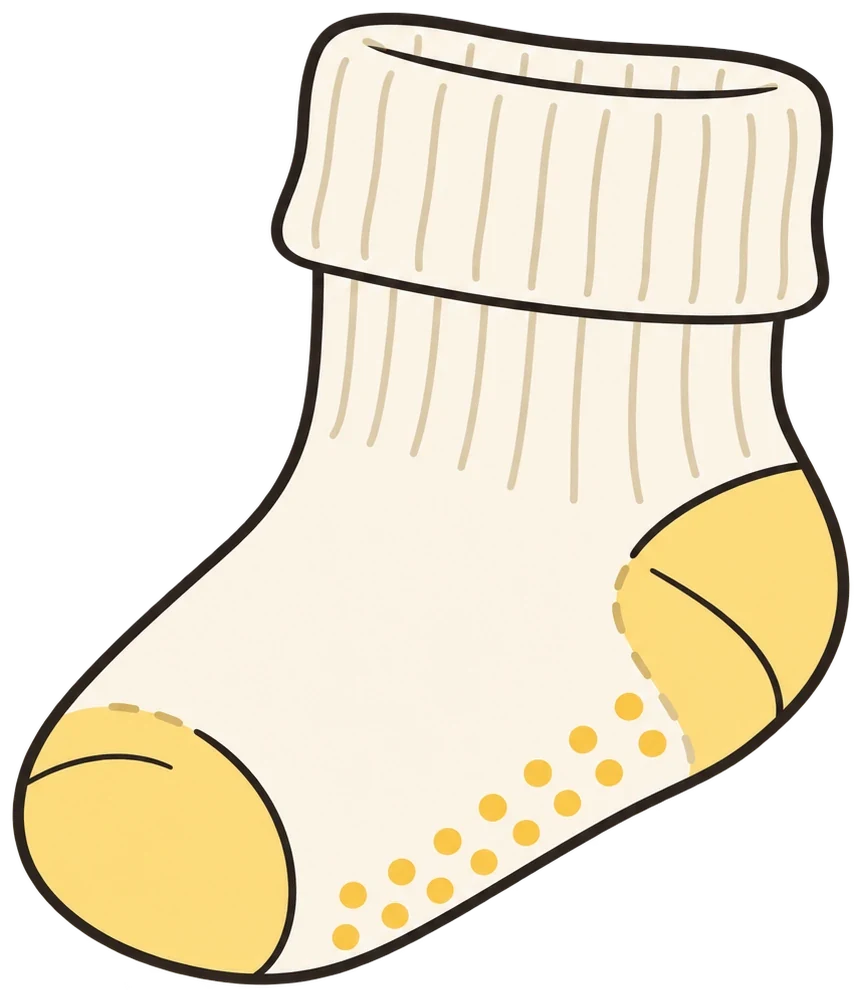
10.5–12cm
4.1–4.7 in
This is when many babies move into grip socks.
Cotton socks shrink a little after their first wash.
Measure heel to toe
When a label lists foot length, measure from the back of the heel to the longest toe.
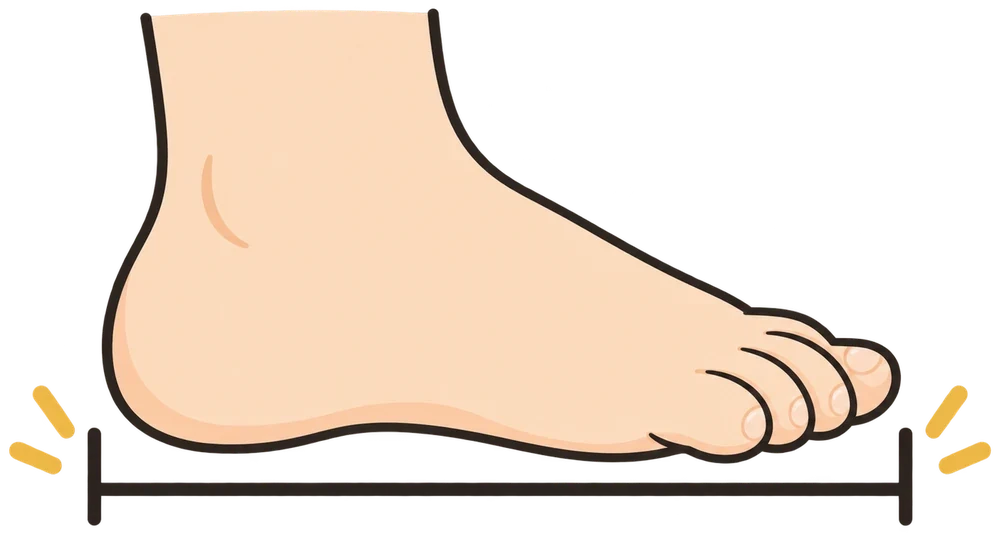
Foot length Check the fit on the foot, not just the label
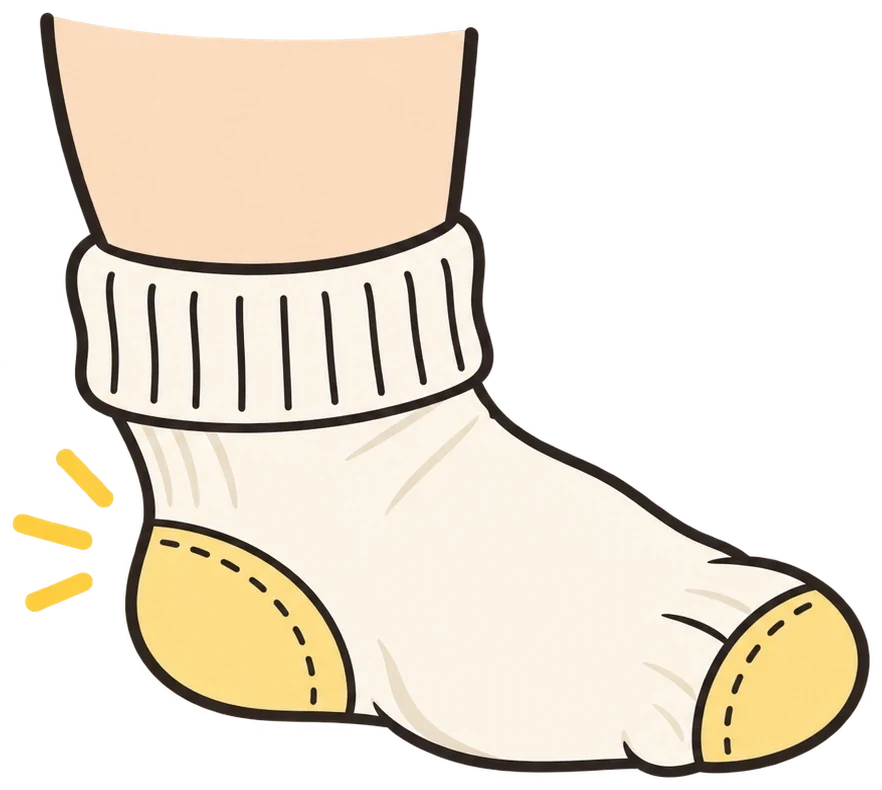
Too small
The heel pocket sits under the arch, or the fabric pulls the toes together.
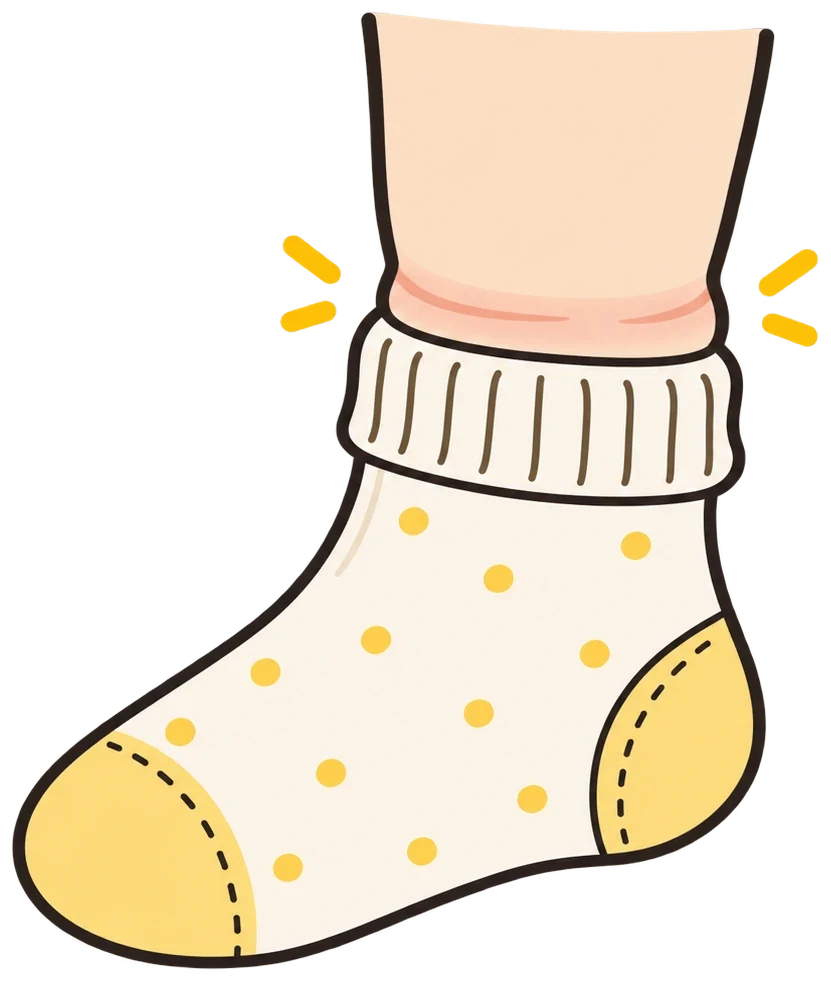
Too tight at the cuff
It leaves deep red rings that do not fade within a few minutes of taking the sock off.
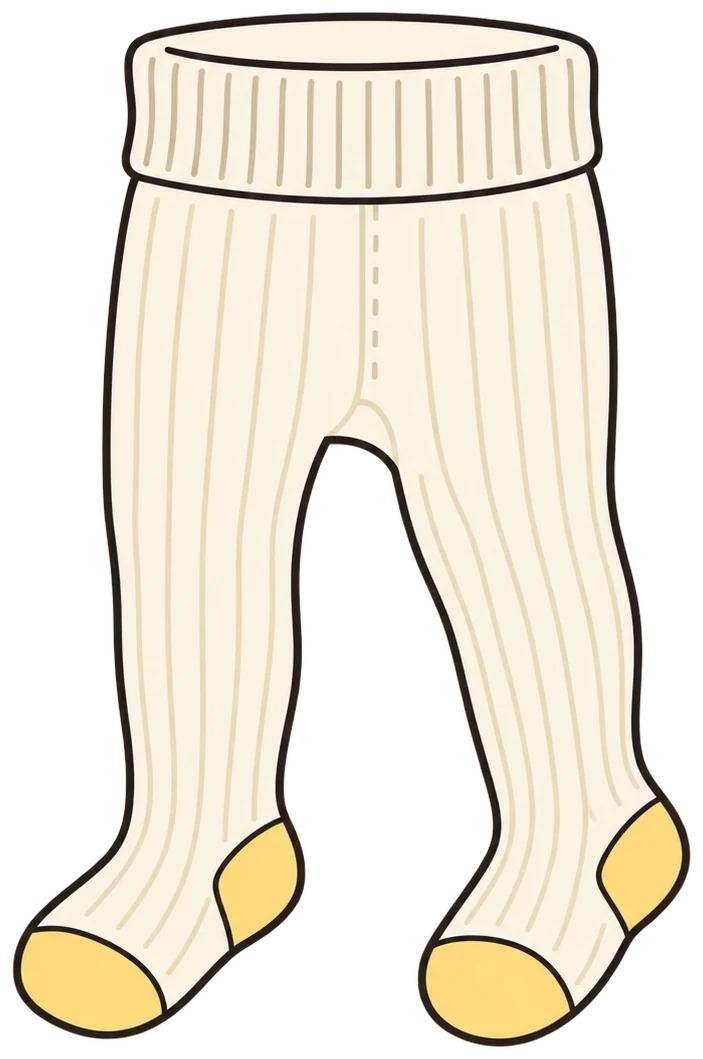
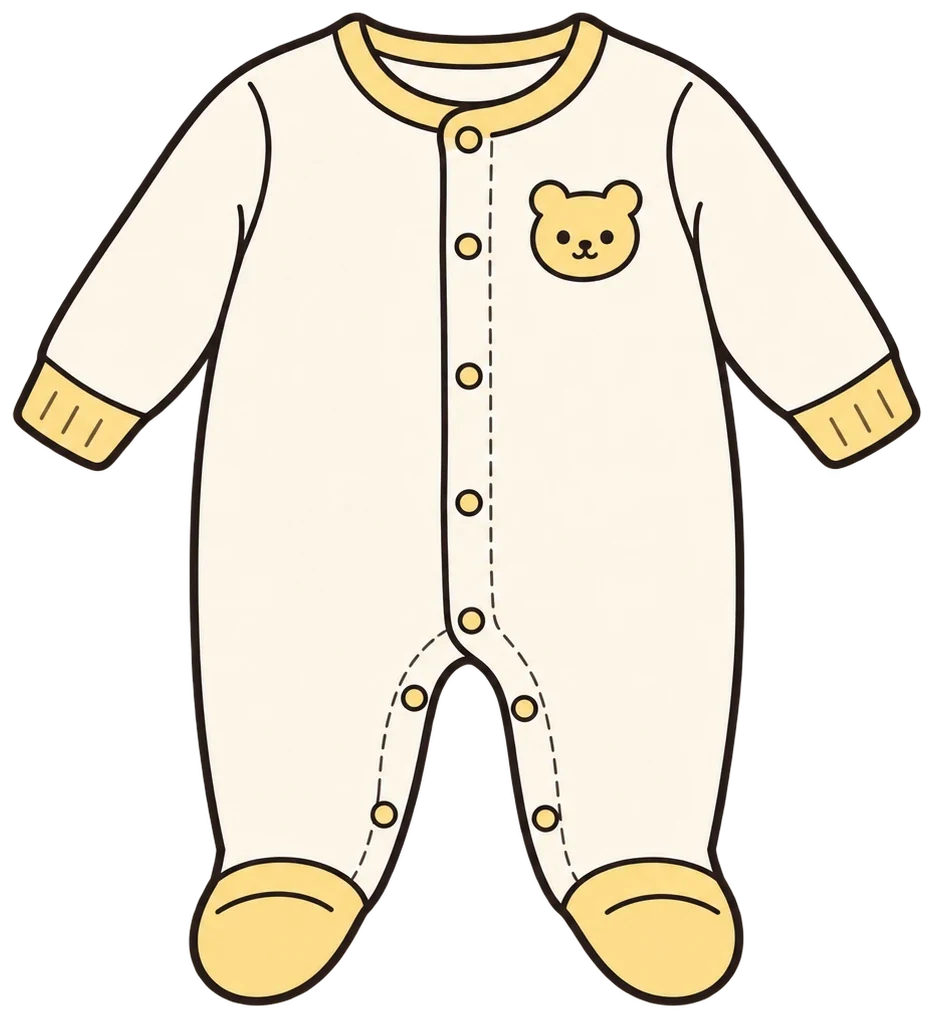
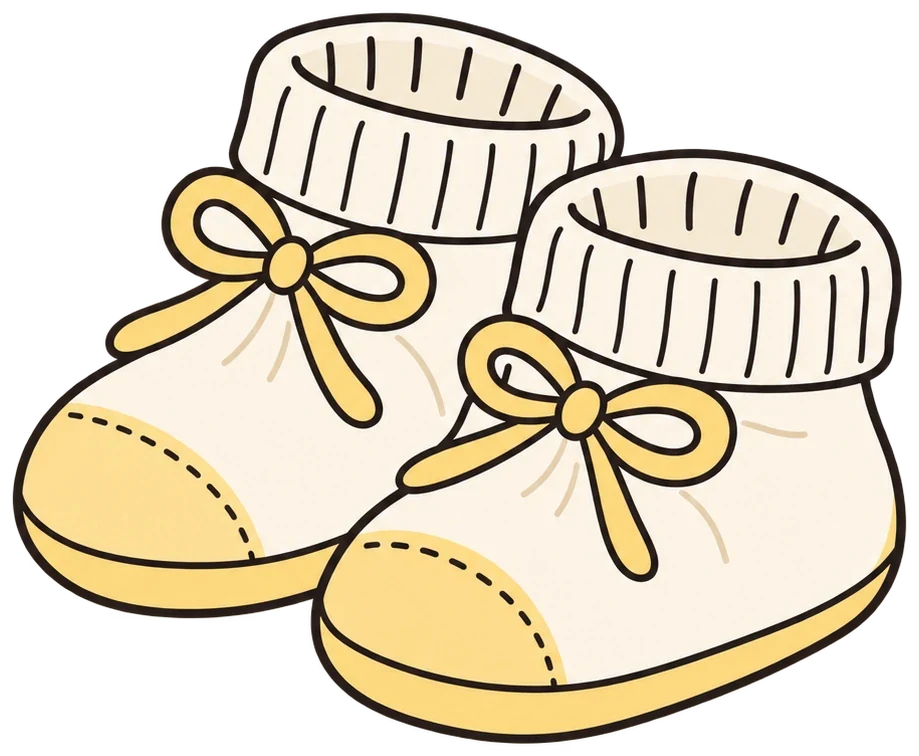
If every sock gets kicked off
In the early months, try one of these.
Hair tourniquets: loose hairs, threads and the inside-out check
Whenever you wash or put on baby socks, cotton tights, a footed sleepsuit or baby mittens, turn them inside out first and check the toes. A single loose hair or long seam thread inside the sock can catch on a toe. As your baby kicks, the strand winds tightly around the toe. Doctors call this a hair tourniquet.
Toe hair tourniquets happen most often in the first six months, peaking around four months. That timing matches the months after birth when parents shed extra hair that collects in laundry and blankets. Wet hair stretches and shrinks back as it dries, pulling the loop tight enough to slow blood flow.
Before dressing your baby, pull out any stray hairs trapped inside the knit and snip loose thread ends without cutting the seam itself. If your baby cries suddenly and cannot be settled, take off socks or footed clothes right away. Check every toe and finger in good light for redness, a swollen tip, pale or dark skin, or a tight groove that looks like a deep skin crease.
If a hair sits loosely on unbroken skin with no swelling, unwind it gently with your fingers. If the toe is swollen, red or discolored, the skin is broken, or the strand is sunk into a crease, go to your doctor, urgent care or an emergency room right away. A doctor or nurse can remove it safely.
Questions parents ask
Do newborns need socks?
Not in a footed sleepsuit, and not in warm weather from 24°C (75°F) and up. With footless outfits, thin socks suit a cool room or a mild walk.
Should my baby wear socks to sleep?
Usually no, if your baby is already in a footed sleepsuit or a sleep bag matched to the room. In a cooler room, thin socks are fine under a footless romper or inside the bag, with a gentle cuff and no loose hairs inside. If the chest or neck feels cool, a warmer layer or bag helps more than socks.
Should I put socks on a baby with a fever?
No. Extra layers trap body heat, so keep your baby in one light layer, even if the hands and feet feel cool. If they feel much colder than usual, call your emergency number rather than reaching for socks.
Can I put baby socks on my newborn's hands as scratch mittens?
Yes, in a pinch. Long ribbed crew socks often stay on a newborn's forearms better than loose pouch baby mittens. Always turn the sock inside out first to clear stray hairs and loose threads, and leave hands bare during supervised awake time so your baby can touch and explore. Fold-over cuffs on a long-sleeve bodysuit or sleepsuit are an easier built-in option.
Are bare feet or socks better indoors when my baby starts standing?
Bare feet are best whenever the floor is warm enough, because bare soles feel the ground and the toes spread for balance. When wood or tile floors are chilly, grip socks stop the slipping. Smooth socks slide.
How many pairs of thin socks does a baby need?
Four to six pairs in the current size: enough for every day and a spare pair in the diaper bag. If your newborn lives in footed sleepsuits, two or three pairs are plenty until footless pants and rompers come in. The baby clothes checklist counts the rest.
How do I wash tiny baby socks without losing half of them?
Turn each sock inside out as you take it off so the wash water can flush lint and stray hairs out of the toes. Drop every pair straight into a small zippered mesh laundry bag, wash on a cool or warm gentle cycle, and air-dry or tumble low so the cuffs keep their stretch.