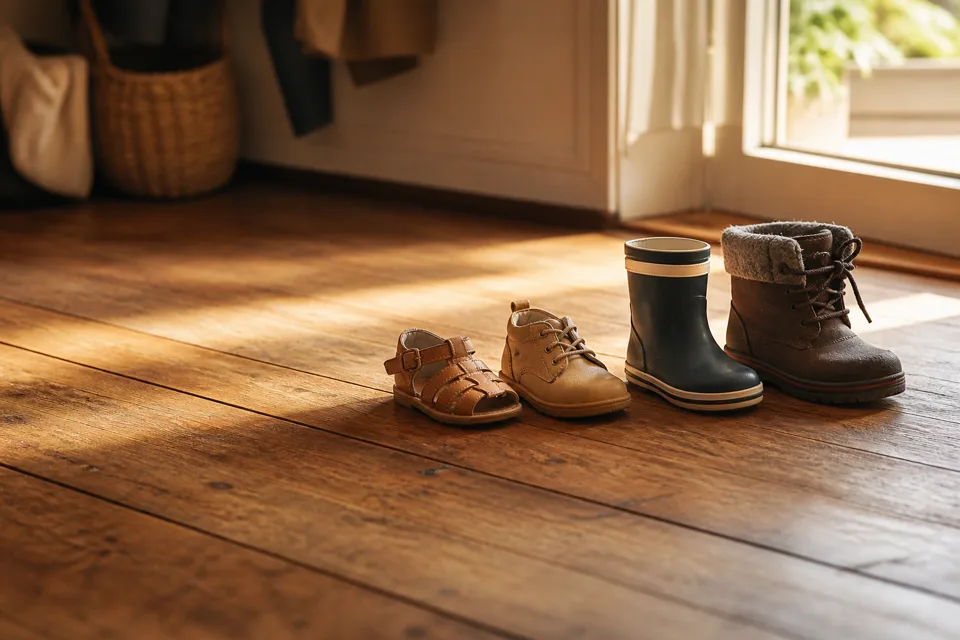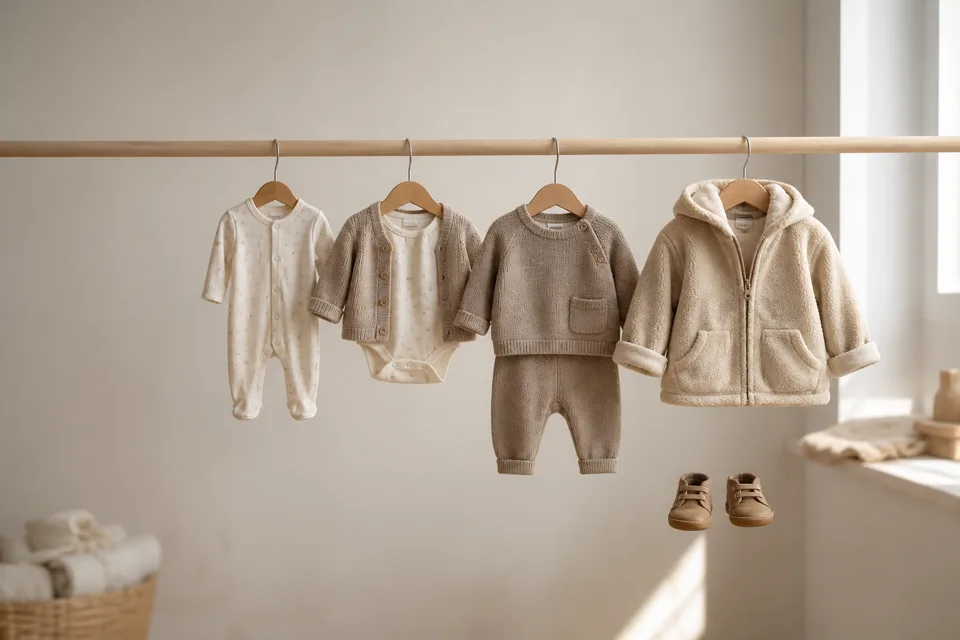
First shoes are lightweight, flexible outdoor shoes with a grippy rubber sole and a strap or laces across the top of the foot. They replace soft baby booties once your baby moves from riding in the stroller to walking outside on sidewalks and playground paths.
Indoors, bare feet or thin baby socks with grip dots are still all a new walker needs. Shoes put on early do not help a baby walk sooner. The soft cartilage in a baby's foot grows best when the toes can spread and feel the floor.
- FromFirst steps
- You'll need1pair per size
- Wear them at8–23°C46–73°F
When babies wear them
Buy a pair with a full rubber sole once your baby walks outdoors, steadily and alone. While your baby still cruises along furniture and takes only a few steps at the park holding your hand, soft booties or leather pre-walkers are enough outside. They keep the feet warm without weighing them down.
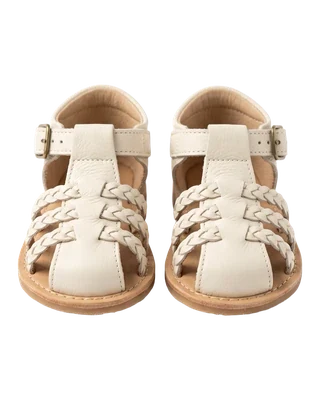
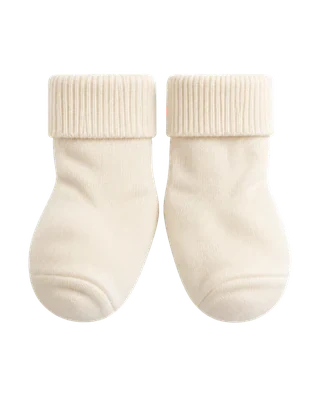
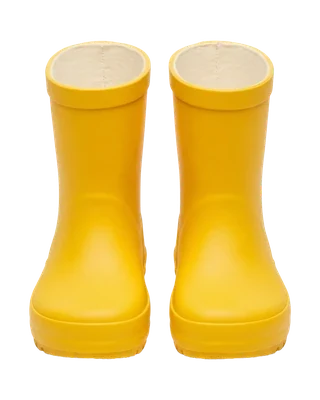
Once outdoor walking starts, first shoes with smooth thin baby socks cover dry walks at 8–23°C (46–73°F). The shoe then changes with the weather: closed-toe baby sandals from 24°C (75°F) and up, baby rain boots on wet days from 8°C (46°F), and insulated baby winter boots with warm baby socks below 8°C (46°F).
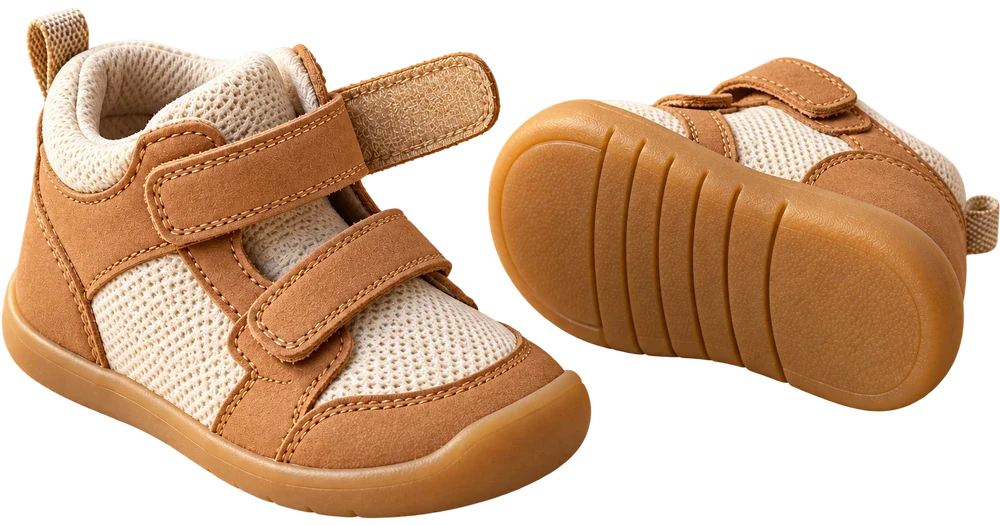
What to look for in a first walking shoe
A toddler's foot is wide at the toes and narrow at the heel. A good first shoe protects the sole and holds the heel steady, without stiffening the ankle or squeezing the soft toe bones together.
Wide, deep toe box
The toe box (the front pocket of the shoe where the toes sit) should follow the fan shape of a barefoot toddler, with 6–10 mm (0.25–0.4 in) of growing room ahead of the longest toe.
Wide-opening instep straps
Hook-and-loop straps, laces or buckles open wide, so a plump foot slides in. Fastened across the instep (the curved top of the foot), they stop the foot sliding forward into the toe bumper.
Firm heel cup and pull loop
The heel cup (the shaped back wall of the shoe) holds the heel upright, with no stiff, high collar around the ankle. A small loop at the back gives your fingers something to pull on.
Forefoot flex grooves
Deep grooves across the front of the sole let it bend under one finger, at the ball of the foot, where the toes push off. The middle of the shoe stays firm and does not twist.
Broad, flat heel base
Look for a broad, cushioned rubber heel no more than 1.5 cm (0.6 in) high, or a sole that's flat from heel to toe. A slight upward curve at the tip helps stop the toe catching and tripping your toddler.
Types you will see in shops
Four kinds, from the first wobbly steps to wet autumn walks.
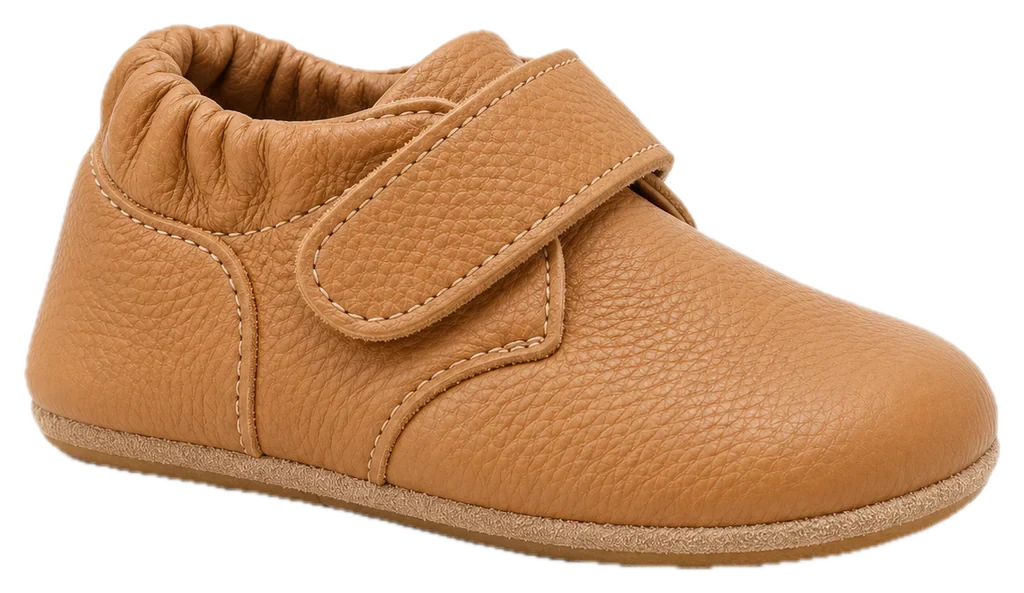
Soft-sole cruiser (pre-walker)
A soft leather shoe with a thin suede sole, or a sole in two rubber pads, that rolls up in your hand. It suits babies who still ride in the stroller most of the walk and take a few wobbly steps on dry grass, smooth paths, or daycare floors.
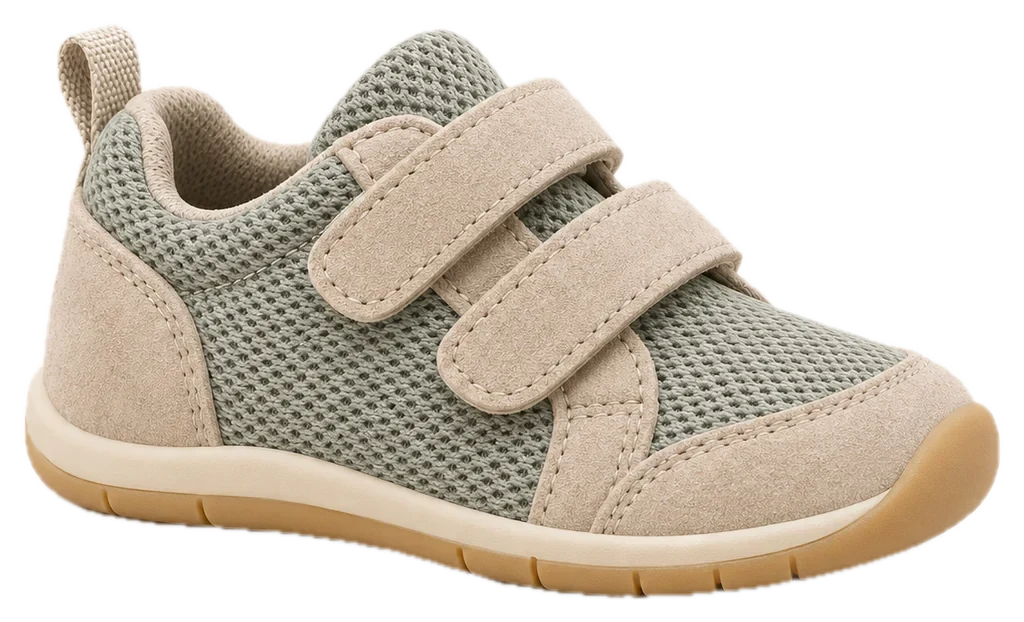
Flexible everyday walker
Mesh, canvas or soft leather on a thin, one-piece rubber sole, with a small bumper at the tip for scuffs. In US shops, these are toddler sneakers. The everyday shoe for dry walks at 8–23°C (46–73°F).
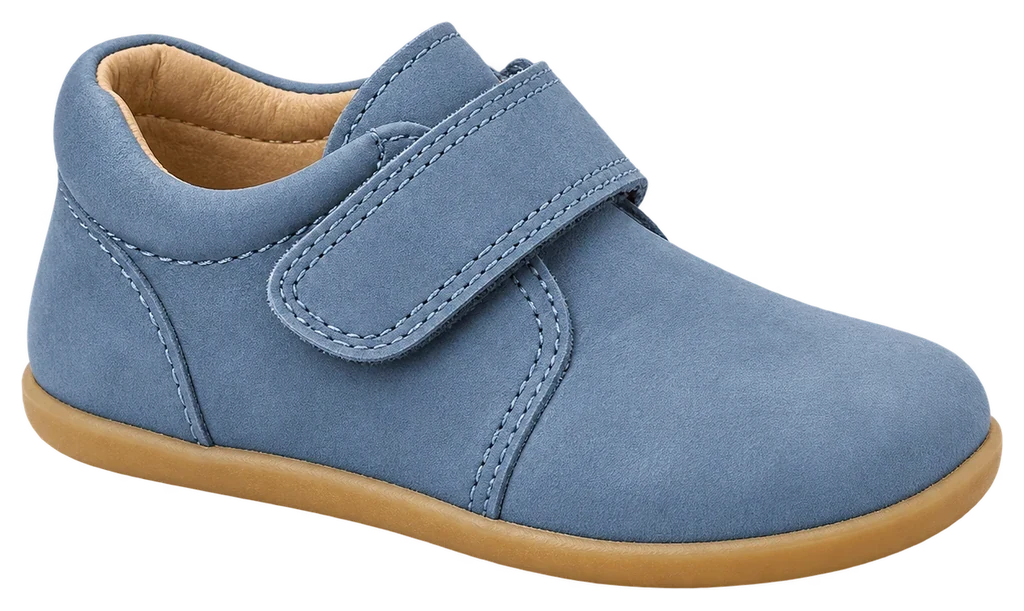
Barefoot shoe
A thin sole, flat from heel to toe, and a very wide front shaped like a spread foot. It works as well as any first shoe if it passes the same checks: room at the toes, a sole that bends at the front, and a heel that stays in on tiptoe.
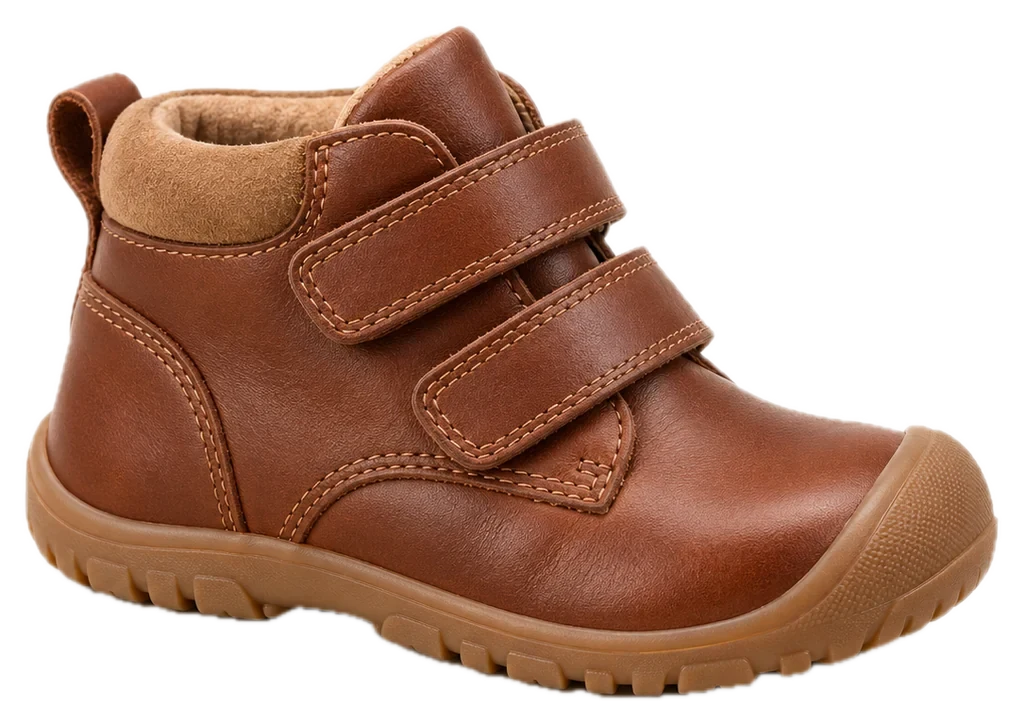
Ankle-cut leather walker
Soft, wipe-clean leather up to the ankle bone, with a deeper rubber tread. The tongue is stitched to the sides, so water and grit stay out on damp autumn grass and cool sidewalks.
Soft booties or first shoes?
Both cover the feet outside, but walking on rough ground is the line where one replaces the other.
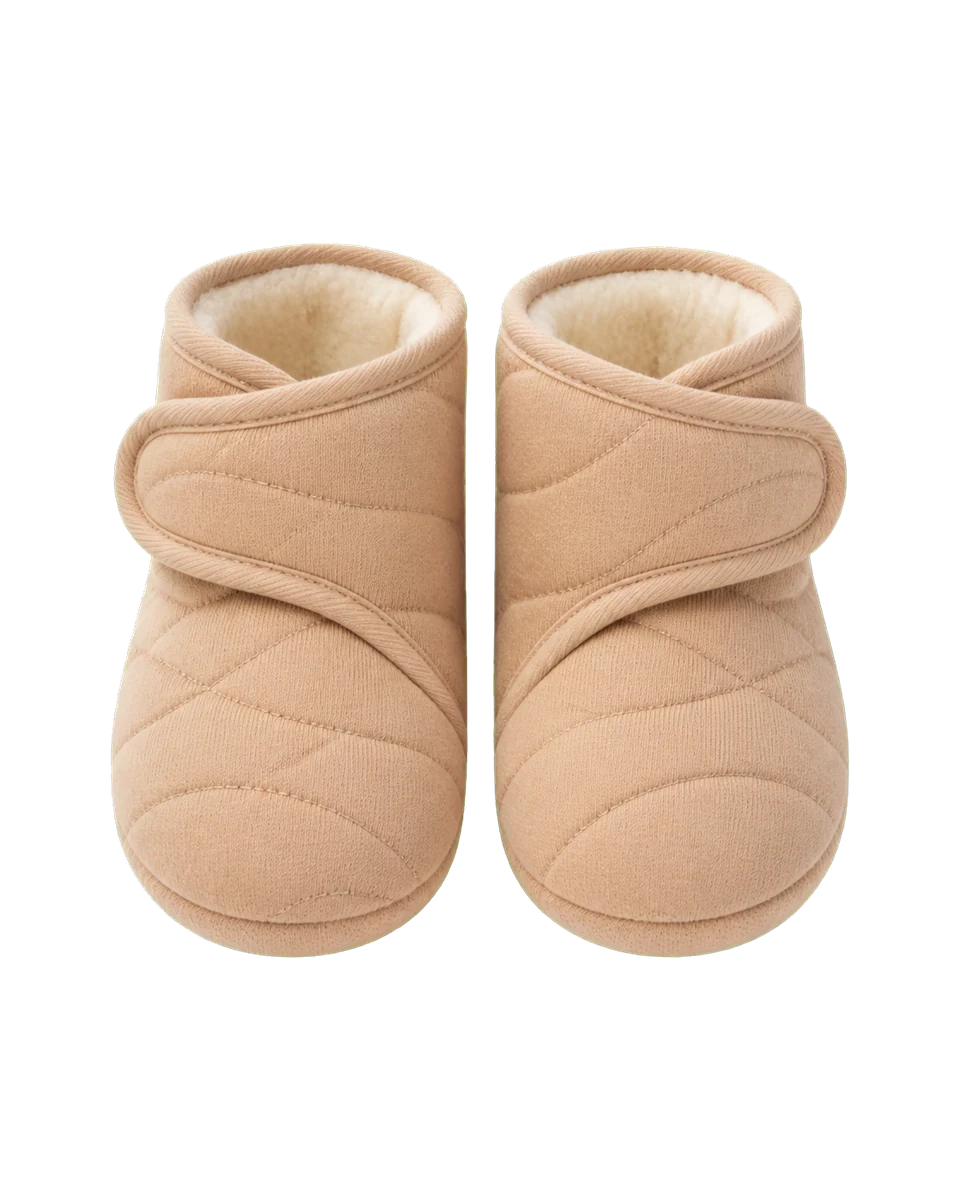
Baby booties
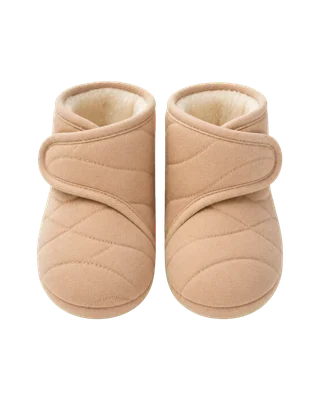
Cloth, fleece or thin suede underneath, with no hard sole. For a baby who does not walk yet: warm in the stroller, the carrier or the car, with nothing stiff pressing on the soft foot.
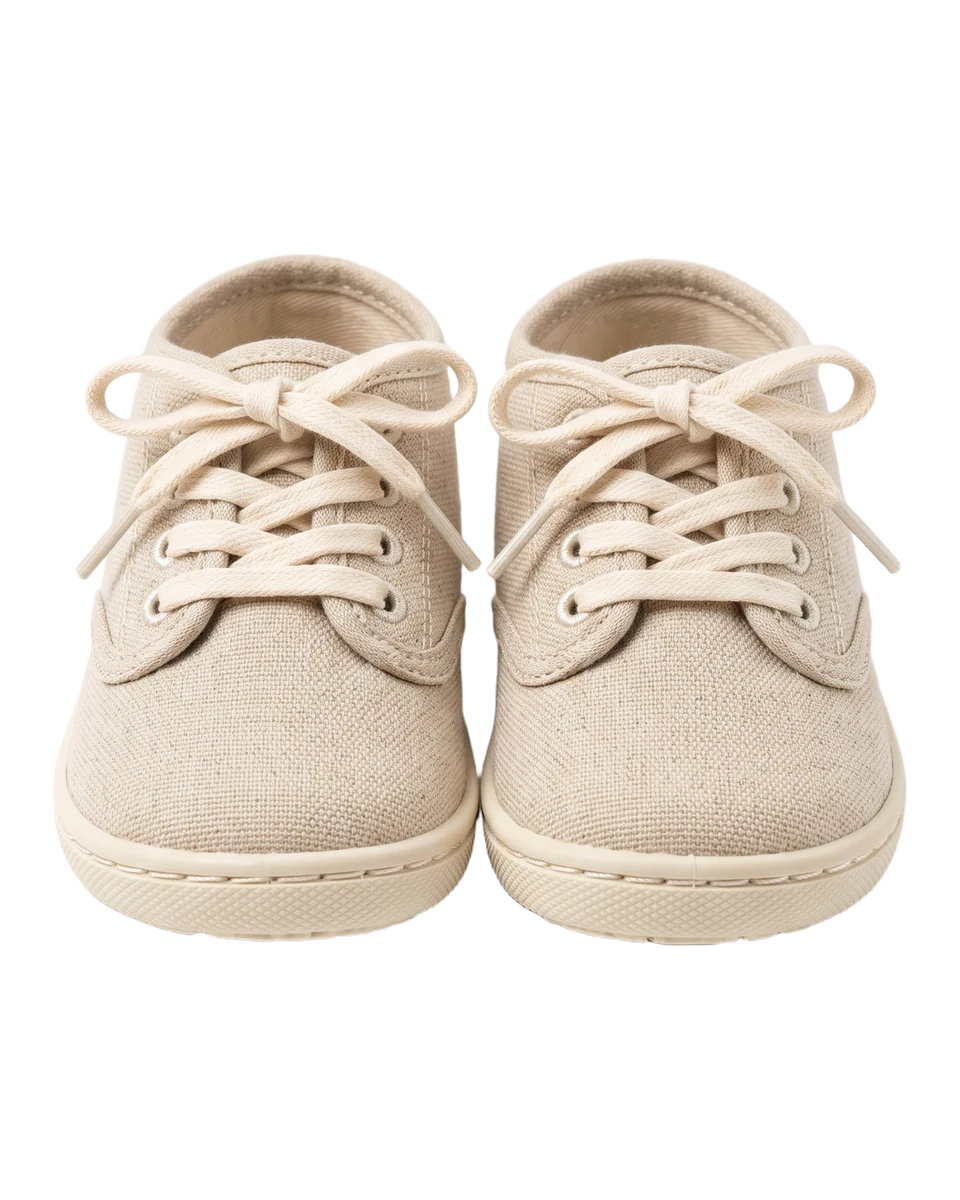
First shoes
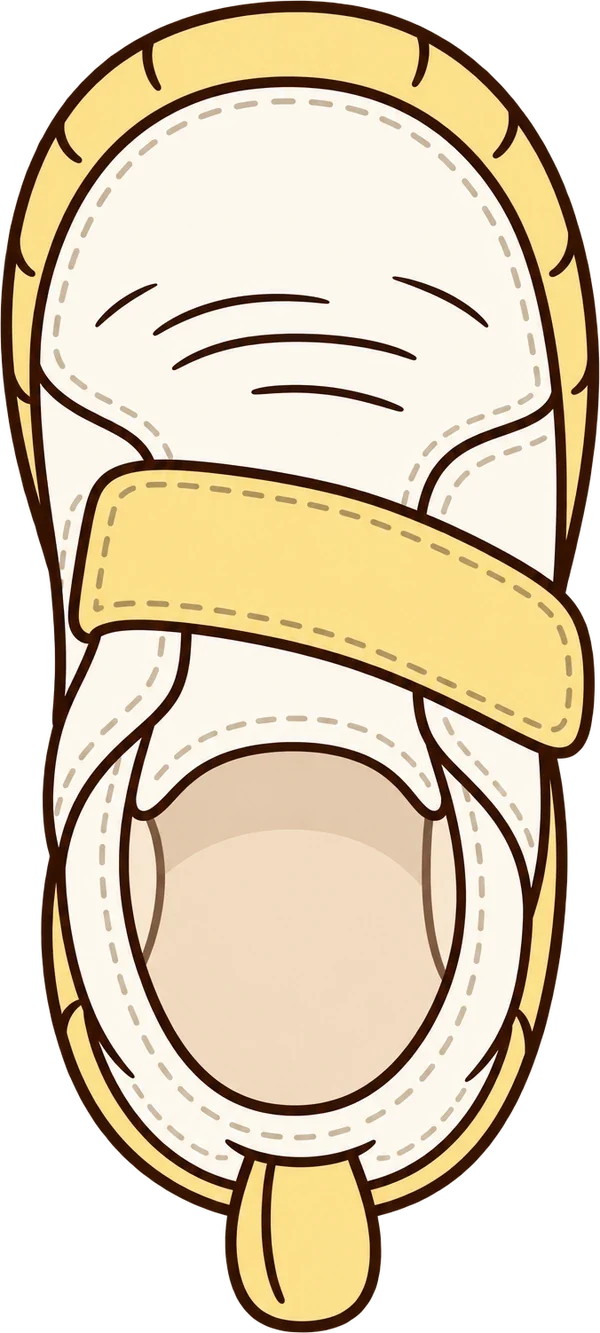
A flat, non-skid rubber sole, a shaped heel cup and a strap over the instep. For a baby who walks outside alone, on sidewalks and park paths.
How to measure feet and check fit standing up
Measure with your baby standing, never sitting on your lap. The moment a toddler stands, the soft fat pad under the foot spreads, and the foot gets longer and fans out at the toes, so a foot measured sitting down comes out too short. At home, stand your baby barefoot on a sheet of paper, mark the back of the heel and the tip of the longest toe, and compare that length with the shoe maker's size chart. Do both feet, for length and width, because left and right are often slightly different, and buy for the bigger one.
Once both shoes are on and fastened, have your baby stand evenly on a flat floor and press your thumb across the front of the toe box. Leave at least 6 mm, and ideally 10 mm (0.25–0.4 in), between the longest toe and the inside front edge. If your baby wiggles during thumb checks, pull out the shoe's removable insole and stand your baby on it barefoot in daylight to see the toe gap directly.
Check the width and heel next. The material across the ball of the foot should ripple slightly when pressed with a thumb, without bulging outward or creasing deeply. Watch the back of the shoe as your baby rises onto tiptoe: if the heel slips out of the cup, the shoe is too big. After a short walk, take the socks off and check that the skin is free of pink rubbing marks around the little toe, top of the foot, and ankle bone.
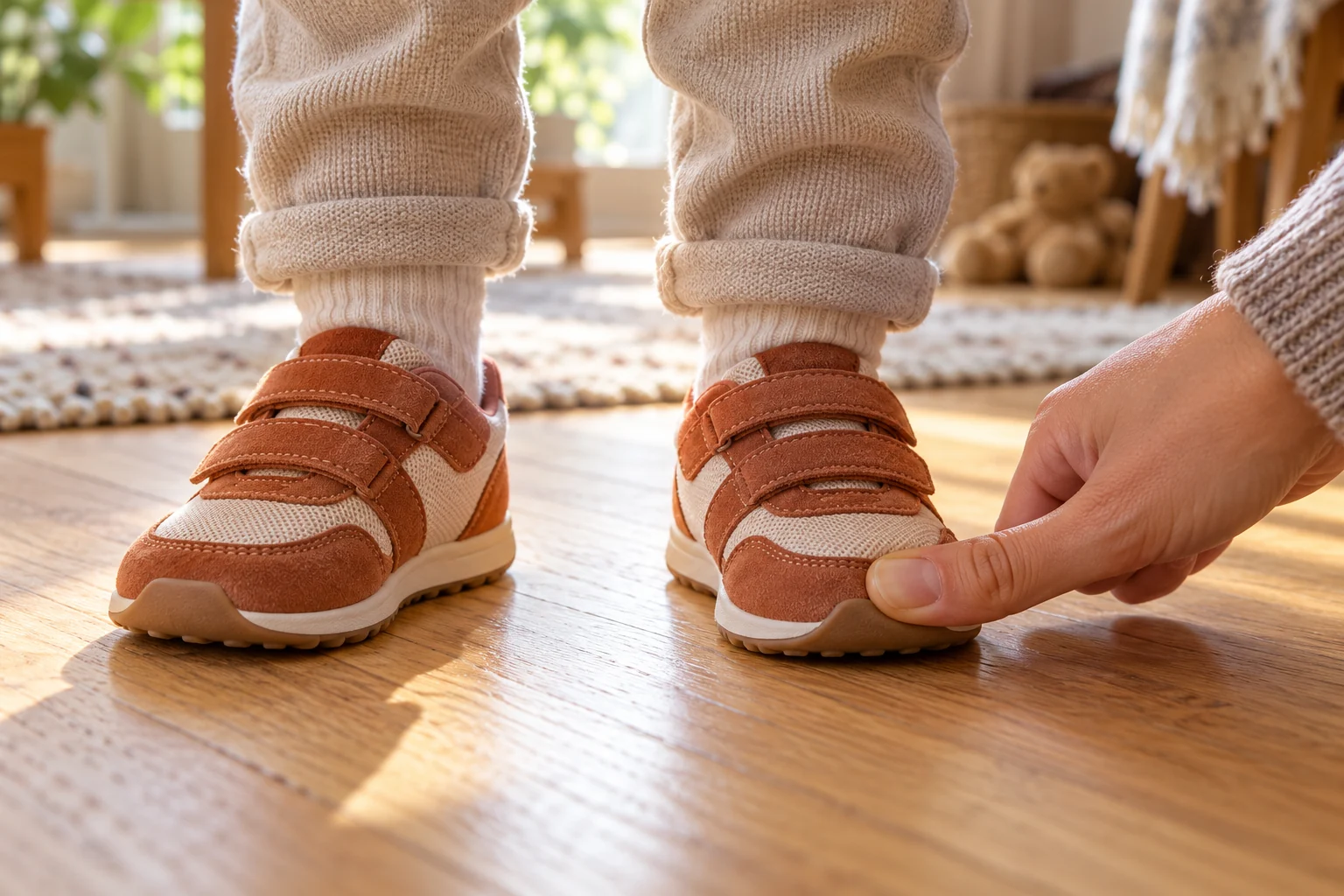
Measure standing up
Stand your baby barefoot on paper. Mark the back of the heel and the tip of the longest toe on both feet, and compare the larger foot with the shoe maker's chart.
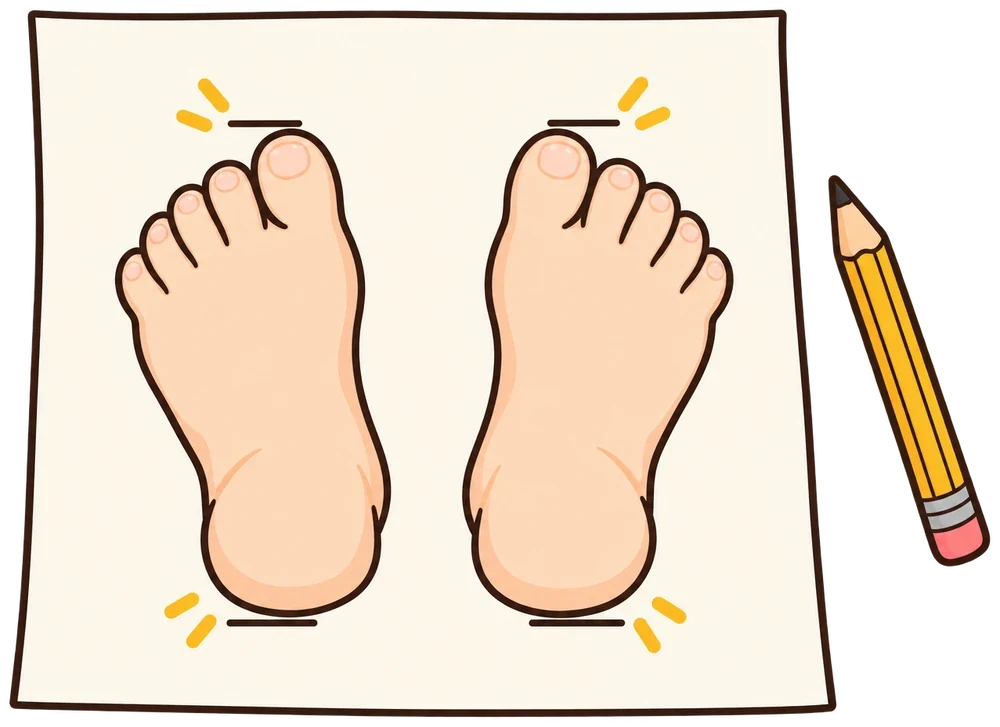
Leave room at the toes
With both shoes on and fastened, your baby stands evenly while you press your thumb across the front of the shoe.
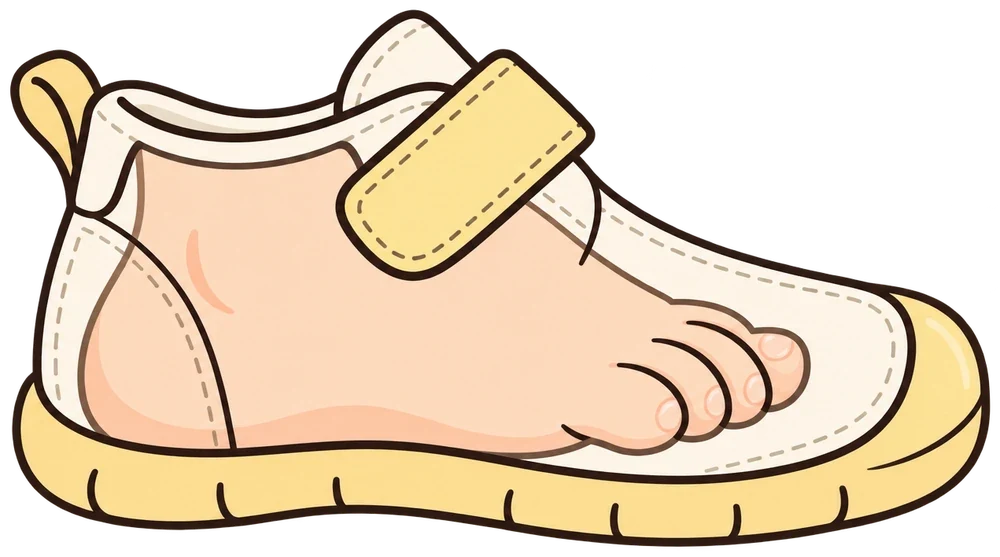
6–10 mm(0.25–0.4 in) 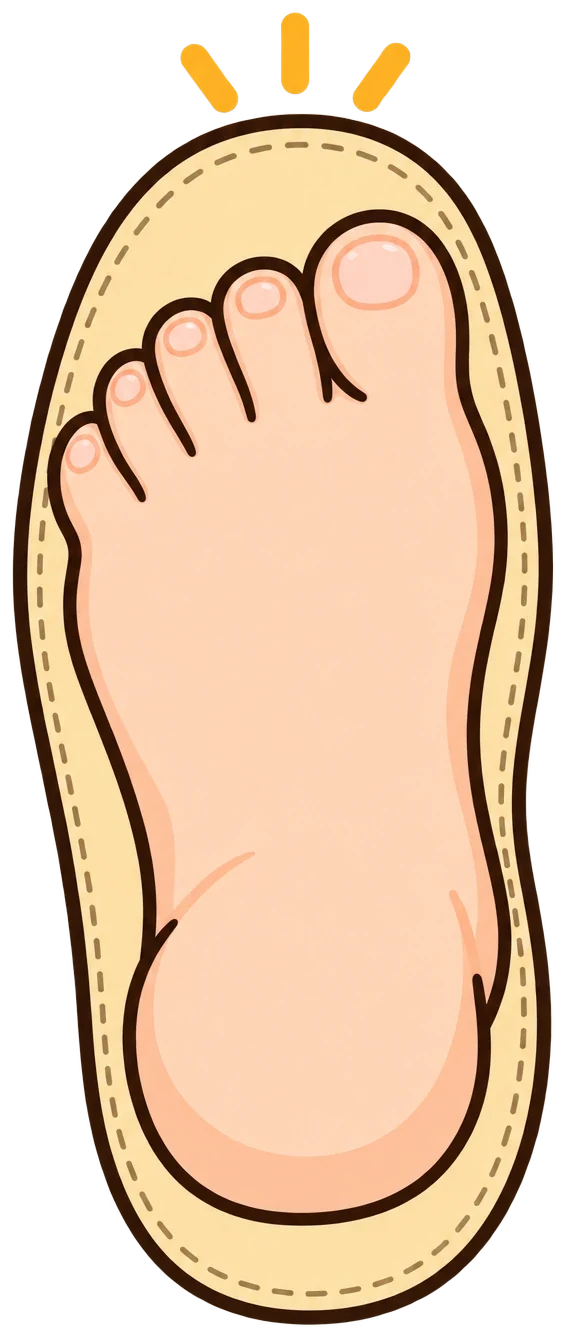
Wiggly baby? Take the insole out and stand your baby on it barefoot, so you can see the gap.
Width: a slight ripple
Press your thumb across the ball of the foot.
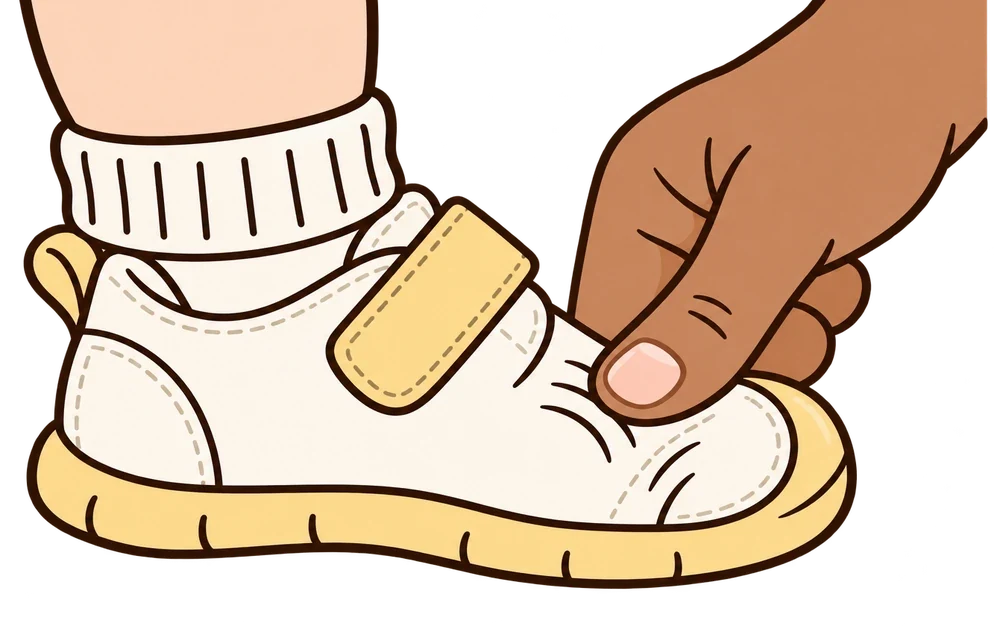
- It ripples slightly
- It bulges or creases deeply
Heel stays in on tiptoe
Watch the back of the shoe as your baby rises onto tiptoe.
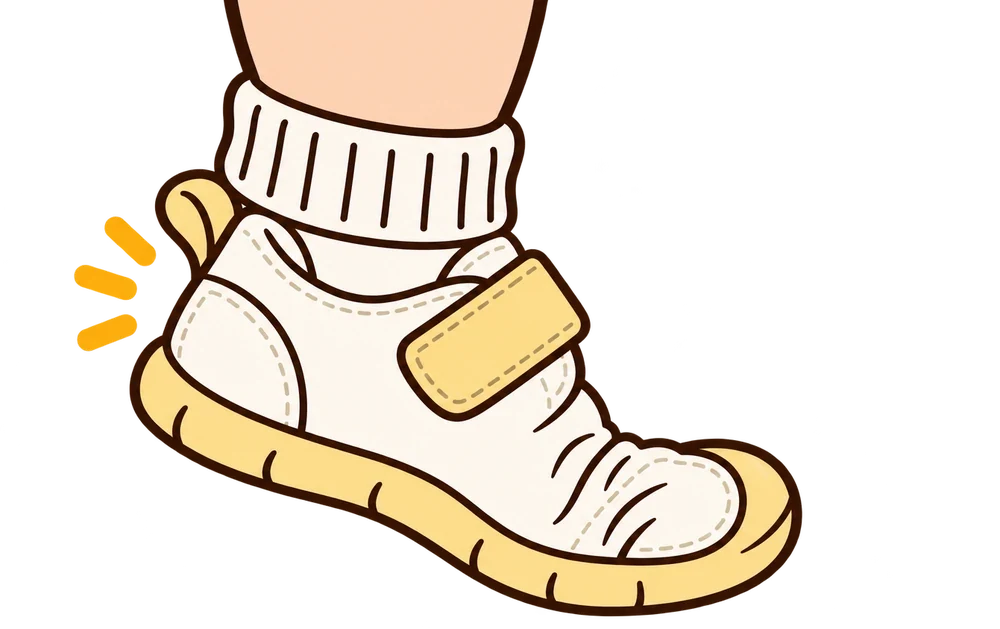
- The heel stays in the cup
- The heel slips out: too big
No marks after a walk
Take the socks off after a short walk and look at the little toe, the top of the foot and the ankle bone.
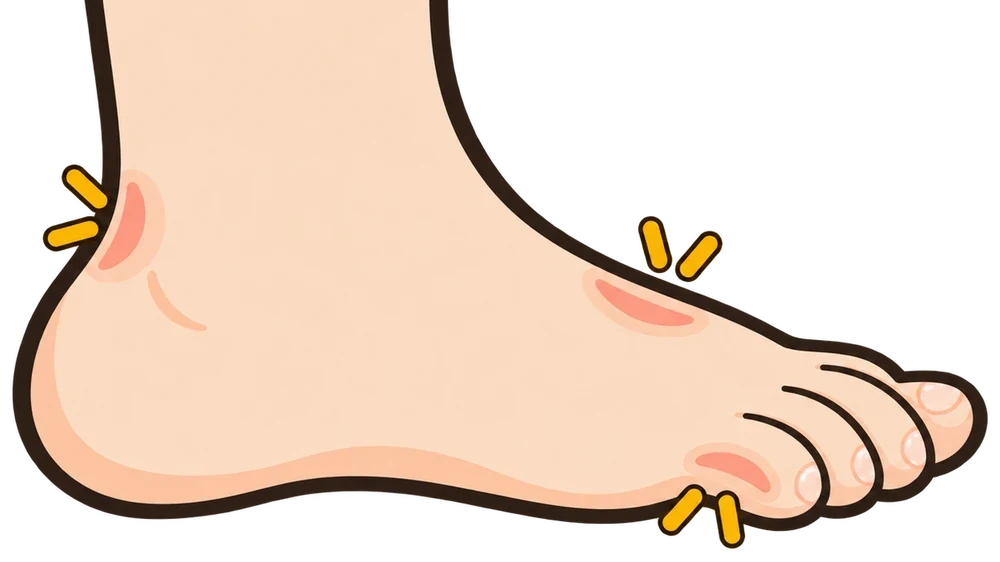
- Pink rubbing marks
Measuring at home for shoes bought online
Shoes ordered online come without a shop's foot gauge, so the measuring happens at home. Print the measuring sheet below at true size. Lay it on the floor and fold its bottom strip up against a wall. The wall keeps both heels on the line, so a toddler who will not stand still only has to stand for a moment while you mark the longest toe.
The ruler shows the length, and the stripe with the toe mark shows the typical size. Brands can differ by up to one size for the same foot, so check the size chart of the pair you order.
Sizes by age, and what US, UK and EU sizes mean, are in the baby and toddler shoe size chart.
Find the size by foot length
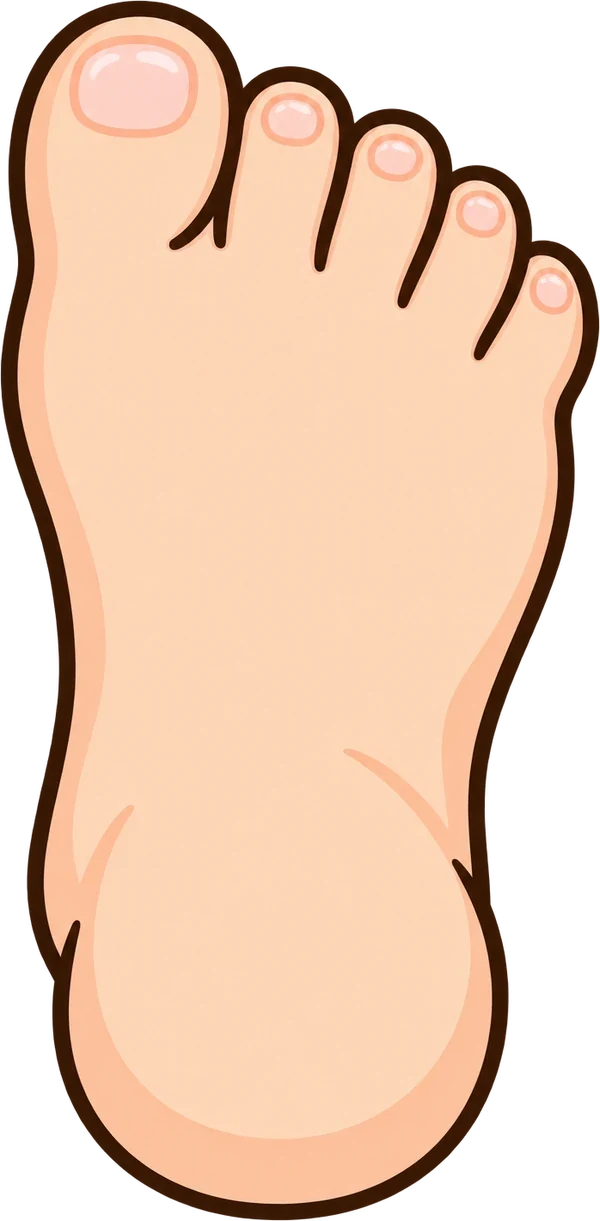
12.5 cm (4.9 in)
Typical shoe size
- US5
- UK4.5
- EU21
Typical sizes from shoe makers' own charts. Makers differ by up to a size, so check the size chart of the shoe you order.
Print the measuring sheet
A true-size page to measure on at home, with the typical sizes printed across it as stripes. Pick the sheet with the sizes you shop in.
Care, monthly checks, and hand-me-downs
Under age five, feet grow in fast bursts. A first pair usually lasts only two to three months, so check the fit about once a month, with the standing thumb check or the insole. Do not rely on asking: toddlers rarely say a shoe pinches, and most just curl the toes under when asked. A sudden refusal of a pair that was fine two weeks ago is often the first sign that the foot has grown.
Toddler feet also sweat a lot. Choose breathable leather, cotton or canvas shoes, with cotton socks. Wipe mud off with a damp cloth, stuff wet shoes with paper, and let them dry at room temperature, away from radiators.
Skip second-hand shoes that are worn down at the heel or shaped to another child's foot, because an uneven sole tips a new walker off balance.
Questions parents ask
When should a baby start wearing real walking shoes?
Once your baby walks outdoors without help. Then a flexible, closed-toe first shoe protects the skin on sidewalks, playgrounds and store floors. Indoors, bare feet or grip socks stay best, because the foot feels the floor. For a cold floor or a daycare that asks for indoor shoes, use soft slippers.
Why do a baby's toes curl under when putting shoes on?
It is a reflex: the toes curl down when something touches the sole, or when your baby balances on a new surface. Undo the straps completely and pull the tongue all the way forward. Bend your baby's knee at a right angle to relax the calf, and use the pull loop at the back to slide the heel into the cup. Once your baby stands with weight on both feet, the toes flatten out.
My baby has very chubby feet and a high instep. Should I buy a size up?
No. A longer shoe puts extra rubber in front of the toes, and a new walker trips on it. Look for a wide fitting instead, marked W or XW on the box (N is narrow). Double hook-and-loop straps, or laces that open right down to the toes, help a high instep slide in.
Does a new walker need ankle support or arch support for flat feet?
No, unless your pediatrician or a foot specialist prescribes it. Healthy toddlers do not need wedges, arch inserts, or stiff high backs, which can make walking harder. Almost all babies look flat-footed because a fat pad fills the inner arch until around age two, and a visible arch usually forms on its own by age six.
Why does a new walker step high or stare at the floor in first shoes?
Even the lightest rubber sole changes how the floor feels and adds a few millimeters around the foot. For the first few days, many babies lift the knees high like a marching band, look down at the shoes, or drop down to crawl. So keep the first wears short, and let them get longer as the shoes soften and your baby gets used to them.
What is the difference between barefoot toddler shoes and regular first walkers?
Either can work, if it passes the same checks: a sole that bends at the front, room at the toes, and a heel that stays in on tiptoe. Both use a flexible rubber sole and a wide front for the toes. Minimalist barefoot shoes use a completely flat zero-drop sole (where heel and toes sit at the exact same height), an extra-wide toe box shaped like a splayed foot, and a softer heel cup. Traditional first walkers often include a slight heel cushion under 1.5 cm (0.6 in) and a firmer heel cup to cradle the back of the foot.
Are slip-on shoes, clogs, or jelly shoes safe for a new walker?
No. Slip-ons, ballet flats, rubber clogs, soft sheepskin boots, and plastic jelly shoes don't suit new walkers. Without a strap holding the top of the foot back, the toes have to claw to keep the shoe from falling off, and non-breathable plastic makes feet sweaty and rubs the skin.