What this is about
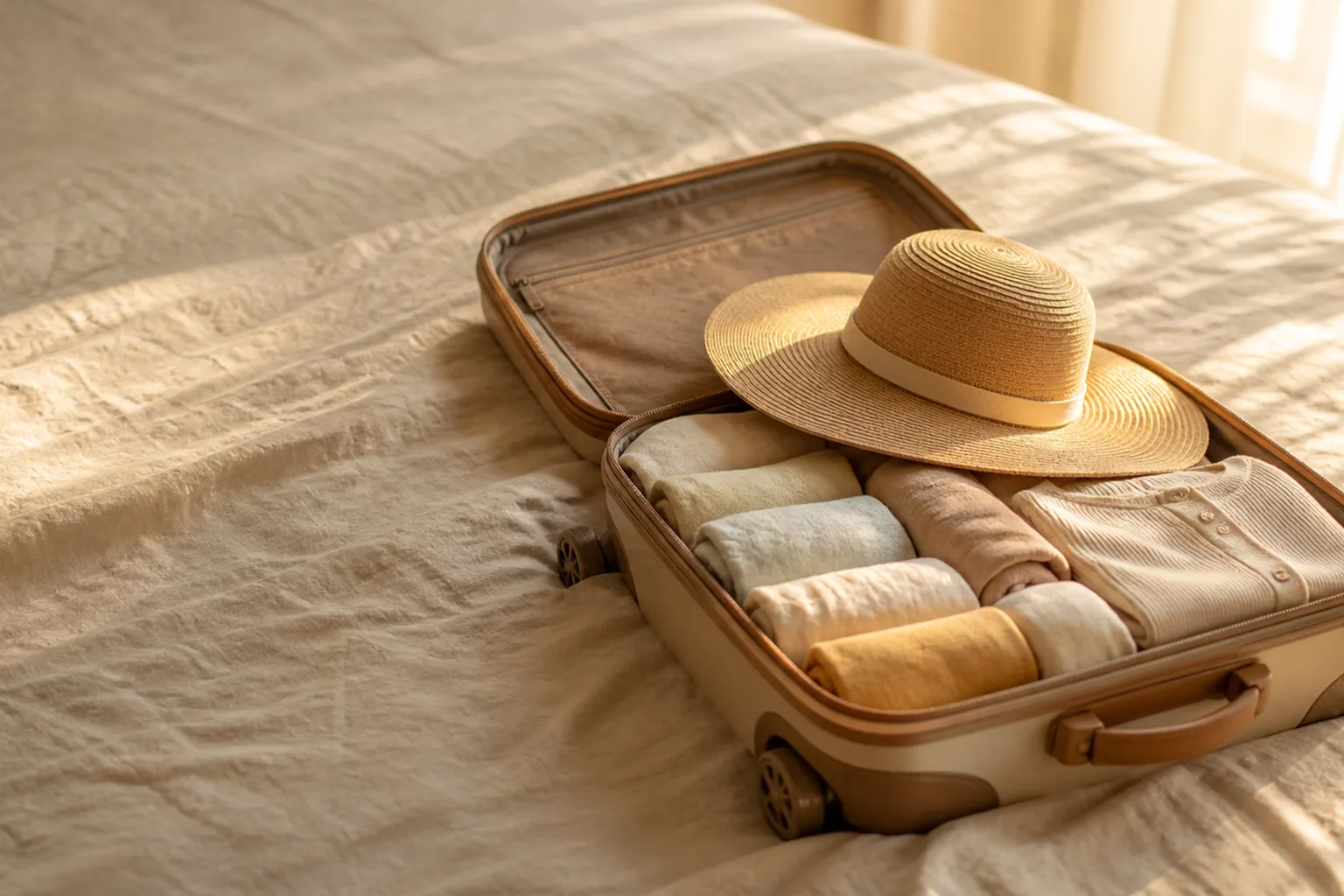
A warm destination does not mean every part of the trip feels warm. The cardigan that keeps a baby cozy in an air-conditioned cabin will be too much by the baggage carousel, while the hotel bedroom at night might be colder than the beach.
So most of the suitcase is light summer clothes, with a warmer layer or two for the plane and the night. The flight takes a little planning of its own: a feed for the ears at takeoff and landing, and spare clothes within reach.
One travel day, three temperatures
On the day you fly, your baby can go from a plane cabin to a hot street to an air-conditioned bedroom within a few hours, and each one calls for a different outfit.
One travel day, three temperatures
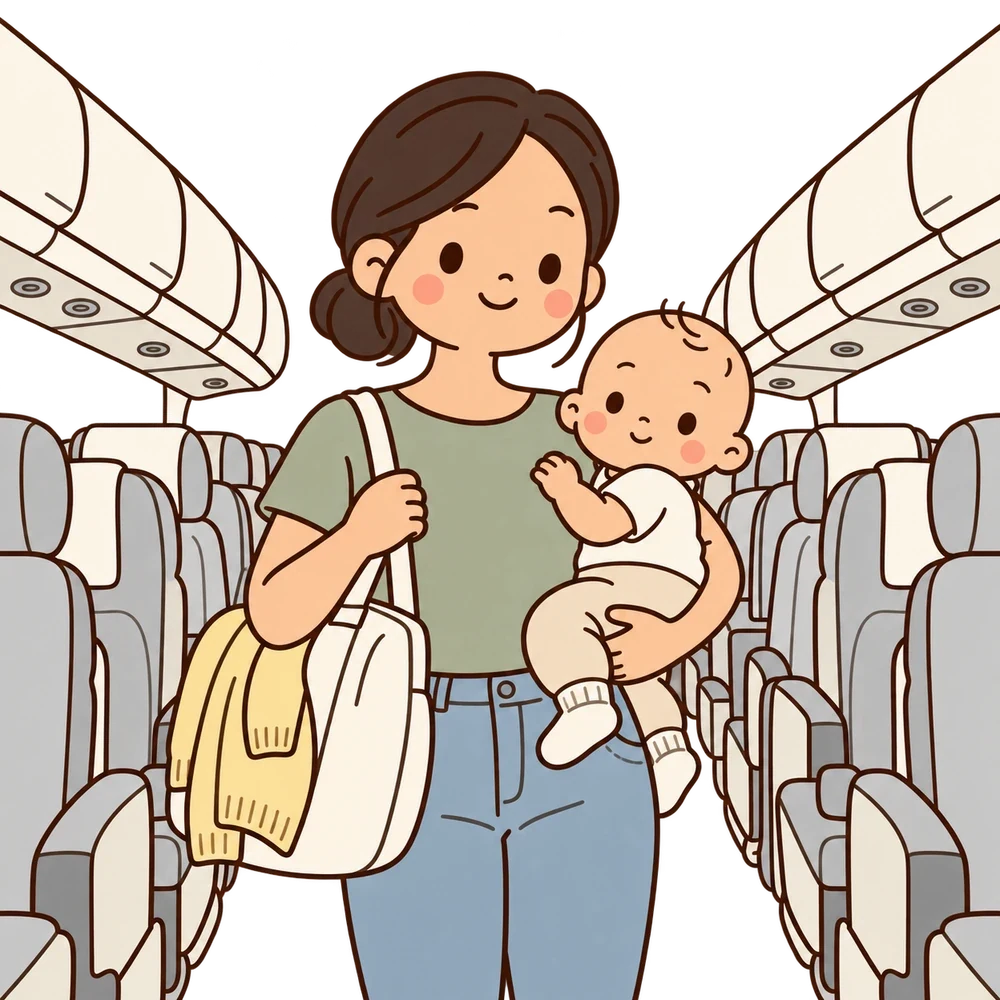
On the plane: light, with a layer in reach
20–30°C 68–86°Fwarm while it boards, cooler in the air
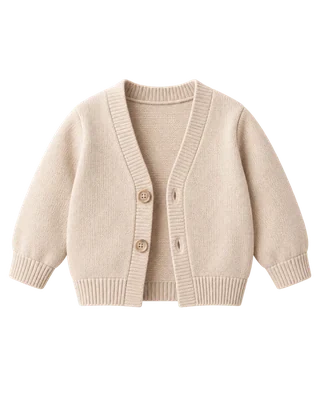
Dress for the warm part of the flight, and keep the cardigan where you can grab it without standing up.
- Short-sleeve bodysuit
- Light pants and thin socks
- Cardigan in the bag
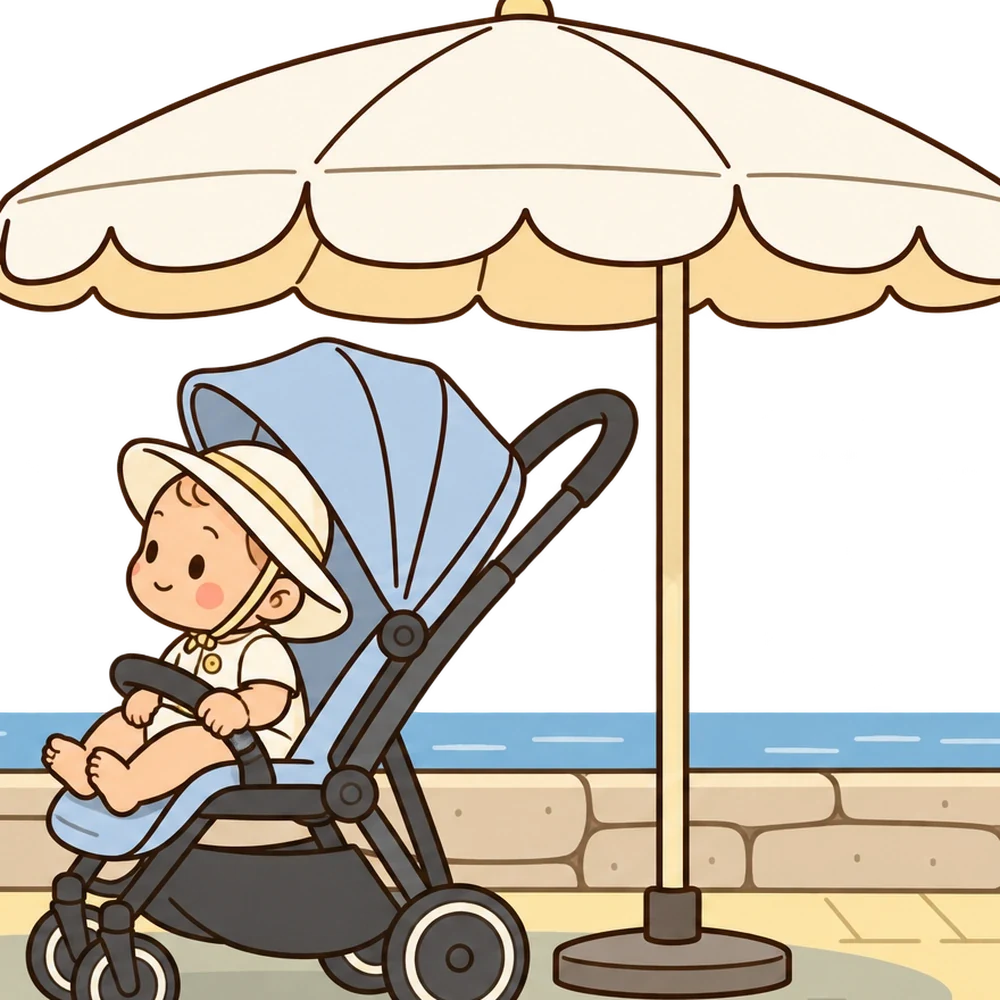
Outside in the heat: one thin layer
28°C 82°Fand warmer
Pants, socks and the cardigan go back in the bag, and the sun hat comes out. Shade does the rest.
- Short-sleeve romper
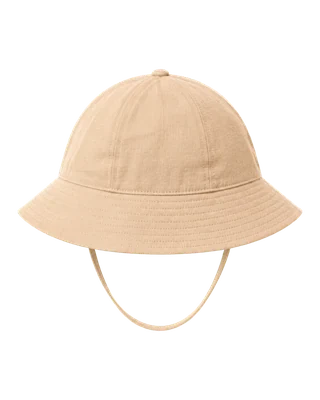
- Sun hat with a brim
- Shade wherever you stop
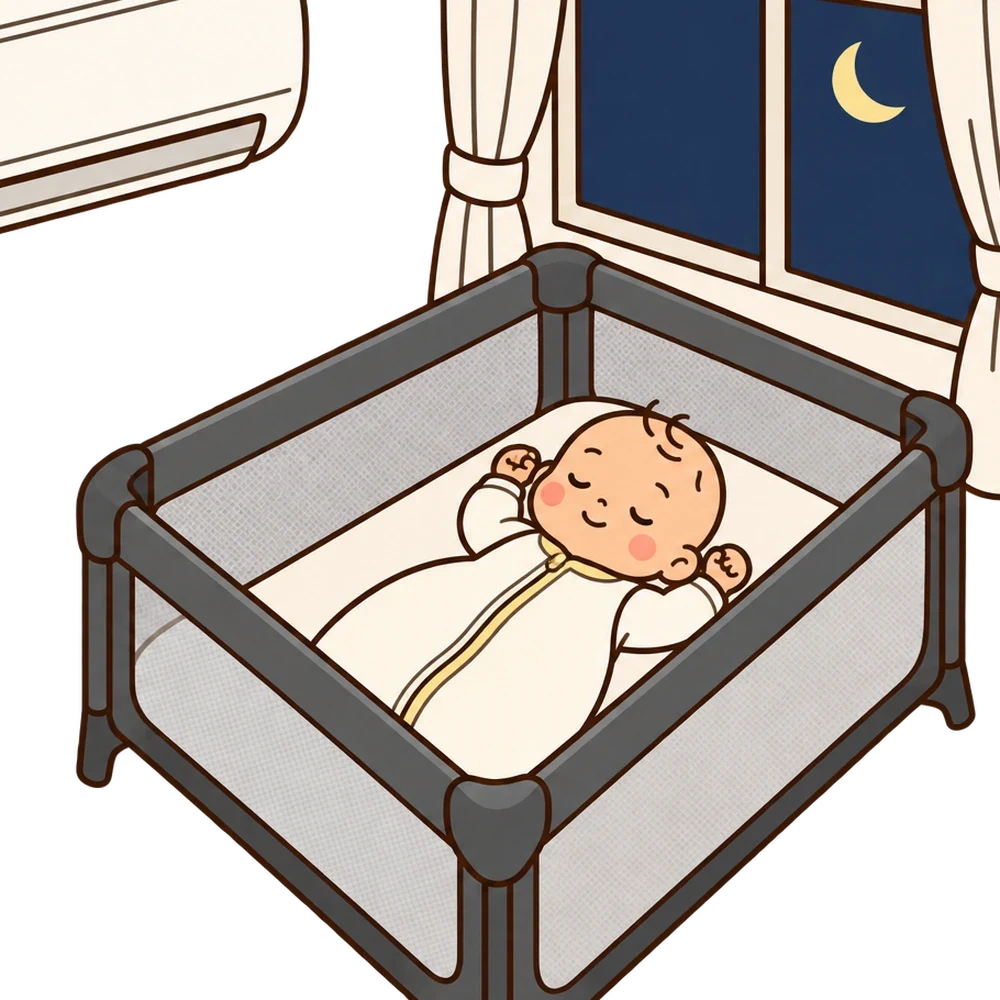
At night: dressed for the air conditioning
20°C 68°Fwith the AC on
With the AC on, the night outfit is often the same one your baby sleeps in at home.
- Long-sleeve bodysuit
- Medium-weight sleep bag
What should a baby wear on the plane?
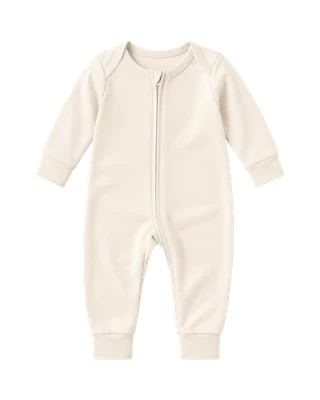
The cabin is often warm and stuffy while the plane boards and waits on the runway, then cooler later in the flight, when the vent above your seat blows on you both. Pick clothes that open easily, because a diaper change on a plane happens in a lavatory the size of a closet, on a fold-down table if there is one. Snaps down the front or a zip beat buttons at the back. On a night flight, a sleepsuit with feet replaces pants and socks, and a two-way zip opens from the bottom for a change.
From boarding to landing
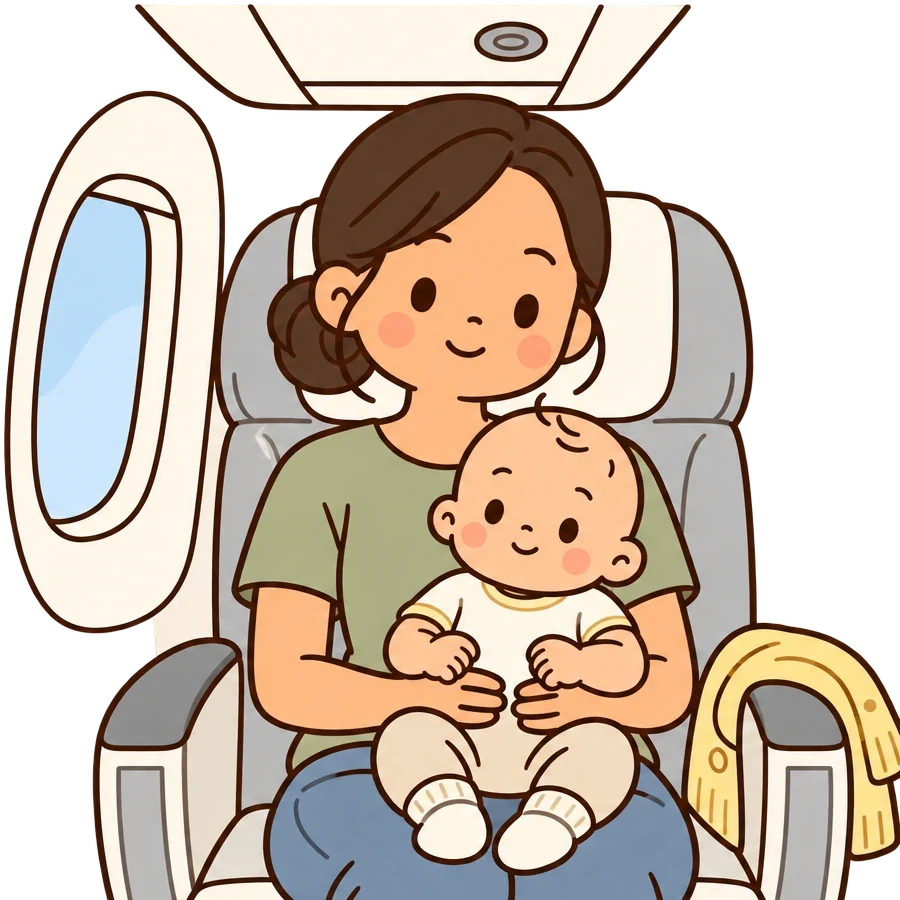
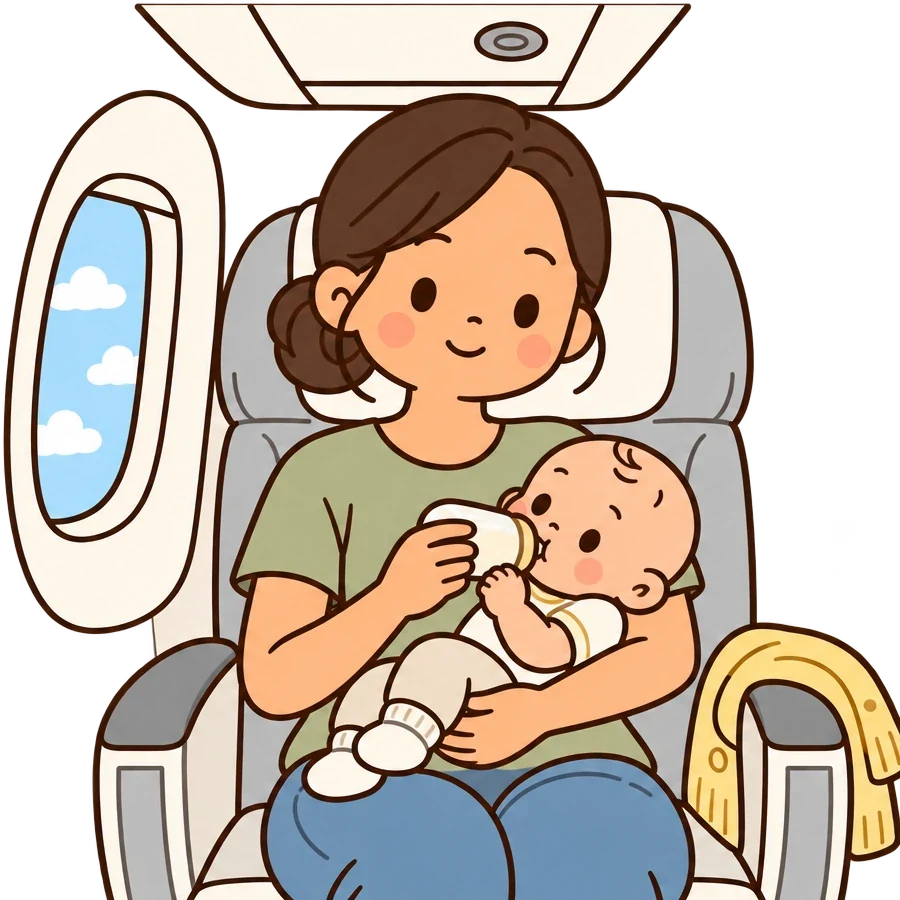
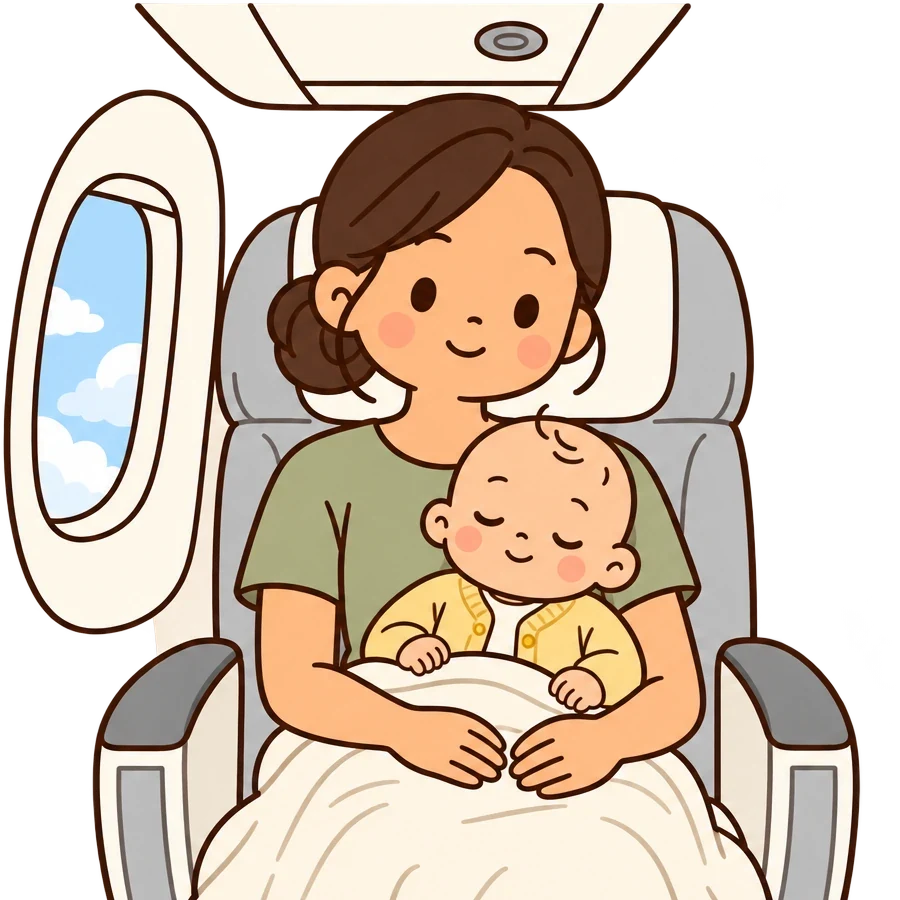
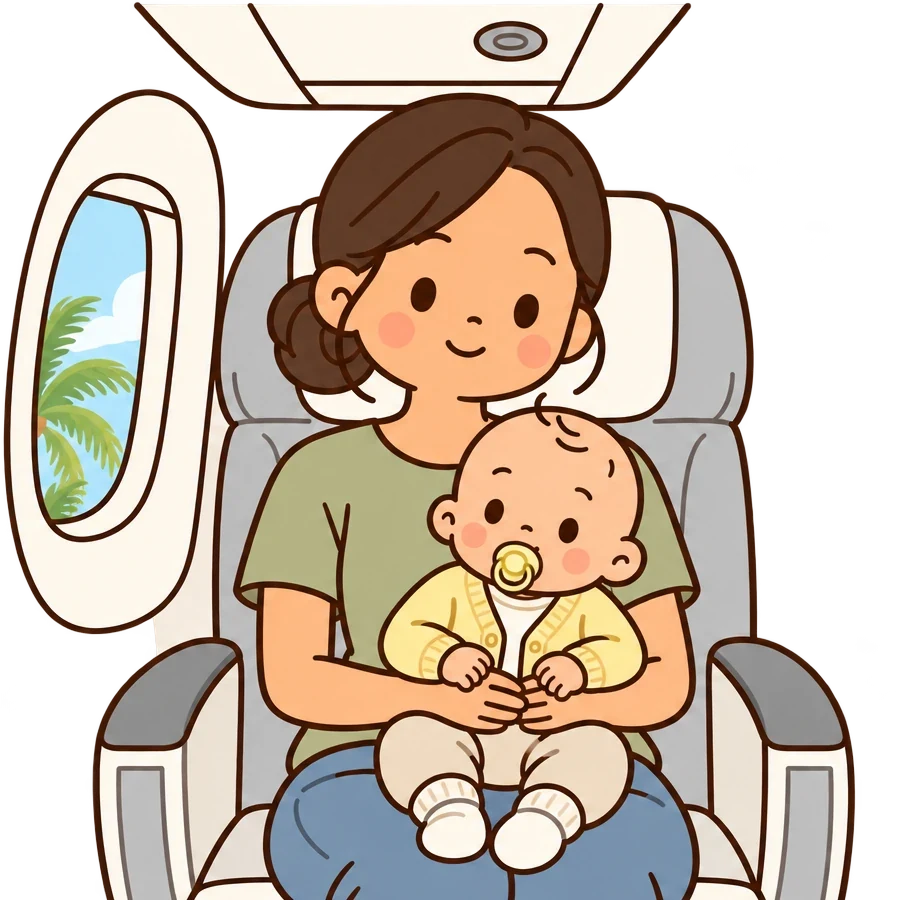
Boarding: dressed for a warm cabin
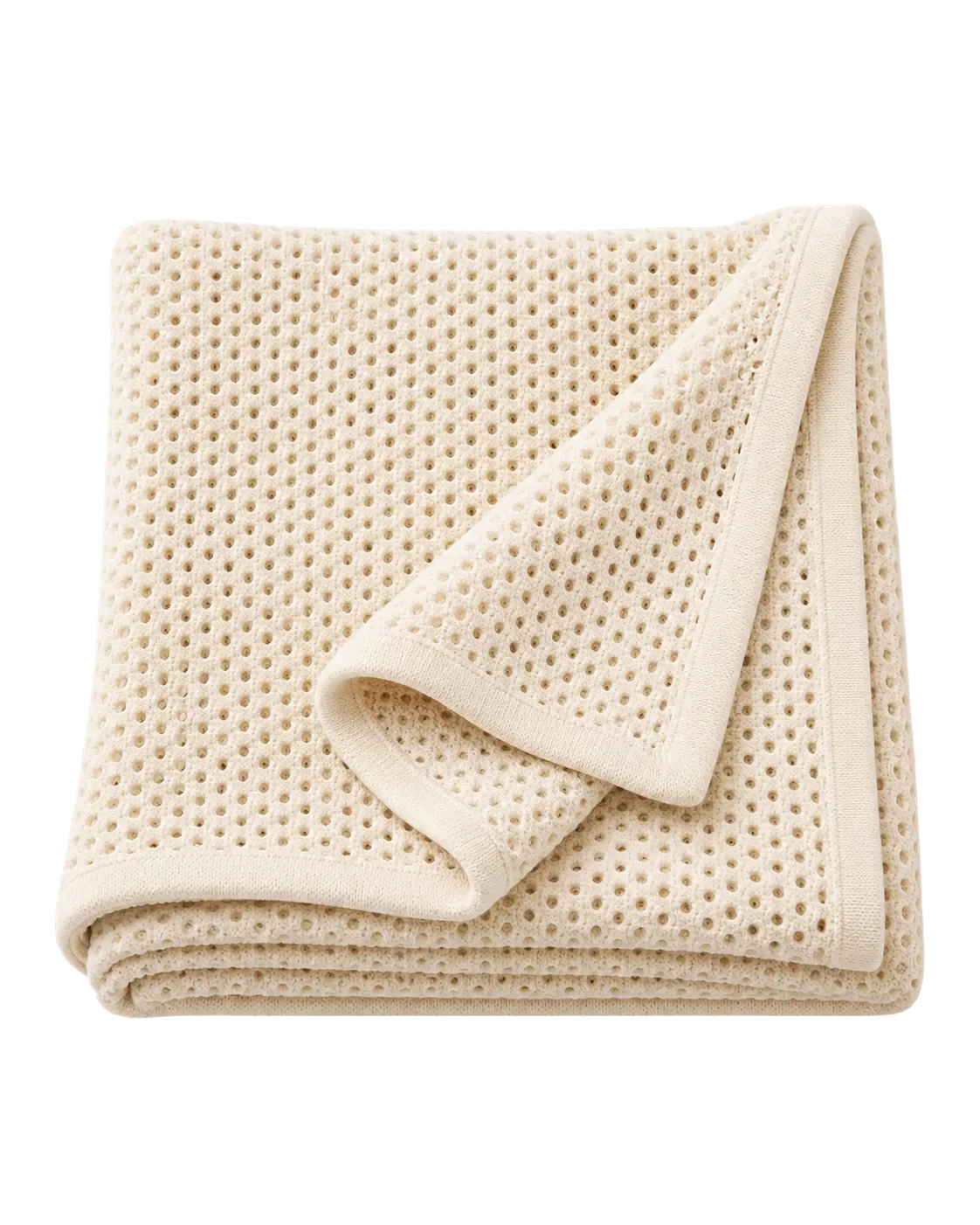
The plane is often at its warmest now, while it fills up and waits on the runway. Change the diaper just before you board, and keep the cardigan and a light blanket where you can reach them from your seat.
- Short-sleeve bodysuit, light pants, socks
- A fresh diaper
- Cardigan and blanket in reach
Takeoff: a feed for the ears
As the plane climbs, the air pressure changes faster than a baby's ears can even out, and swallowing opens them. Offer the breast, a bottle or a pacifier as the plane speeds down the runway.
- Breast, bottle or pacifier
- A bottle-fed baby sits up
- On your lap or in a car seat, not the carrier
In the air: a blanket when it cools
Later in the flight the cabin cools and the vent blows on you both. The cardigan goes on, and a light blanket goes over the legs on your lap. In an airline bassinet, leave the blanket out and dress warmer instead.
- Cardigan on
- Blanket up to the waist
- The face always clear
Landing: feed again on the way down
Coming down is harder on the ears than going up, and many babies cry in the last minutes. Start a feed or offer the pacifier as soon as the descent begins, and wake a sleeping baby for it, because a sleeping baby swallows less.
- A feed from the start of the descent
- A sleeping baby woken for it
Keep the travel layers and a change of clothes or two at the top of your carry-on bag, beside the diapers. Checked luggage can be delayed, and baggage halls take time. Pack a spare shirt for yourself in that same bag, too. When a baby spits up or leaks during descent, it usually ends up on your shoulder.
Pack more milk and food than the flight needs, because delays and runway waits happen. Breast milk, formula, baby food and the water to mix formula may go through security in more than the usual 100 ml (3.4 oz), so tell the officer at the start of screening, and check the rules of the airport you fly home from, because they differ between countries. If your baby drinks one particular formula, bring enough for the whole trip, since shops abroad may not sell it.
On a winter-sun trip, the flight home lands in the cold. The warm layers for the walk to the car belong in the carry-on, because the checked bag comes off the belt after you need them. In the car seat, a puffy coat doesn't go under the harness: buckle your baby in thin layers and lay the coat over the straps.
Keeping your baby cool in a hot country
After months of bundling up a winter baby, dressing this lightly can feel wrong, but it's right. Around 32°C (90°F) feels-like, clothes cannot solve the heat on their own. Young babies do not sweat efficiently, so do what locals do: go out in the morning and the evening, and stay indoors or rest in deep shade during the hottest midday hours.
At the beach and the pool
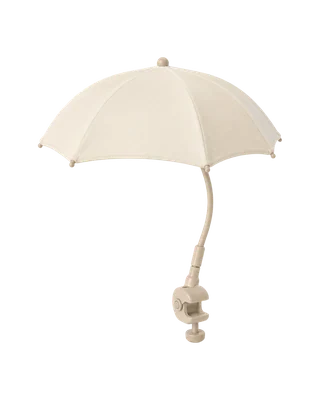
At the beach, set up in the shade first: a big umbrella or a beach tent, and a clip-on stroller sunshade or a parasol for naps. Water, white sand and poolside tiles reflect sunlight into the shade, so the sun hat stays on even under the umbrella. Choose one with a wide brim, ideally with a soft neck flap and a strap under the chin, so it stays on in a sea breeze and when small hands pull.
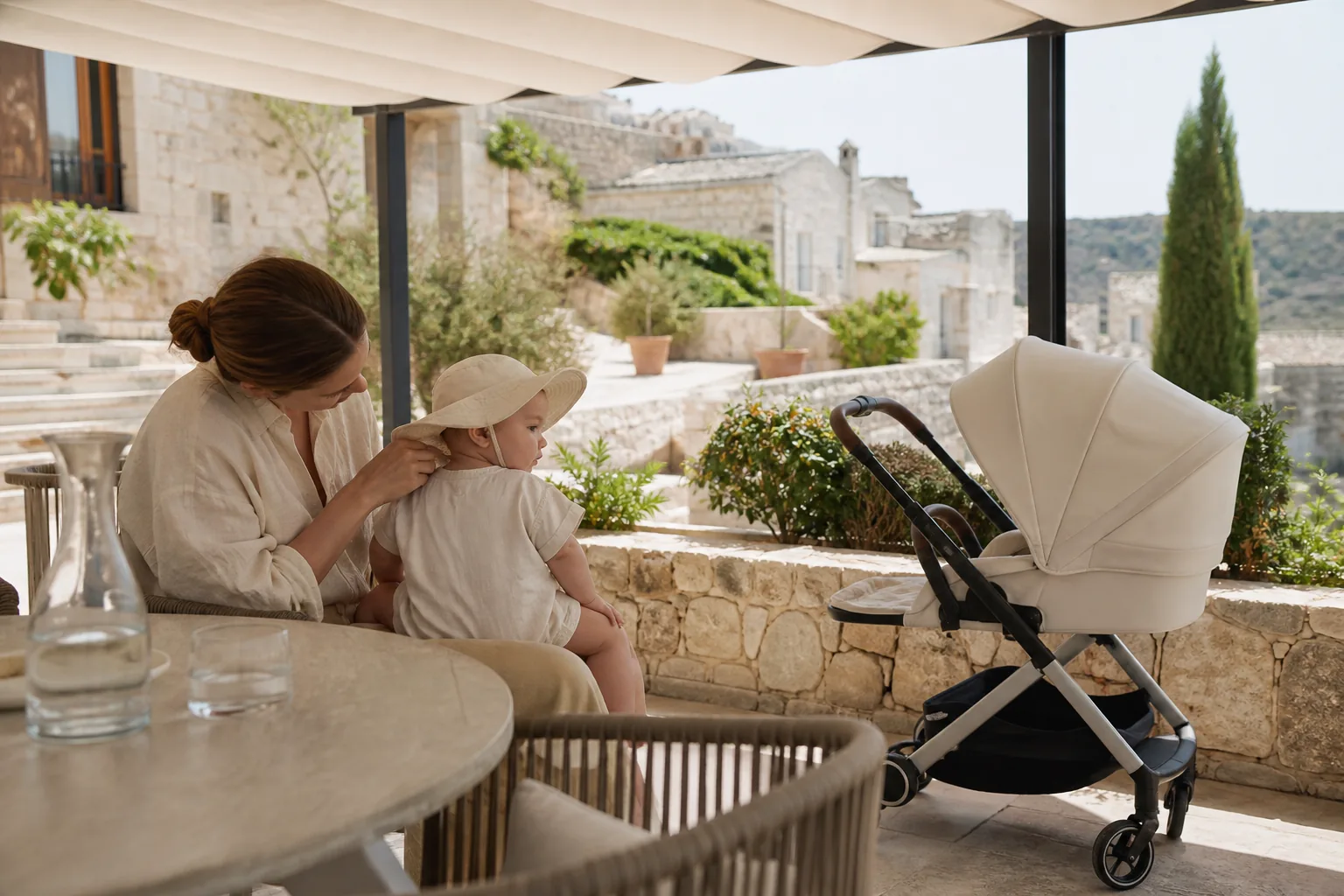
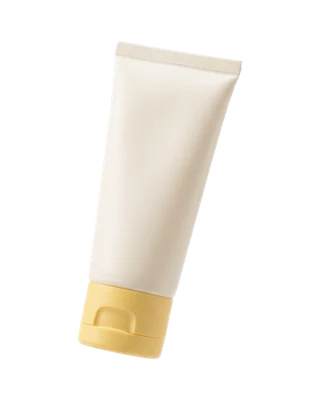
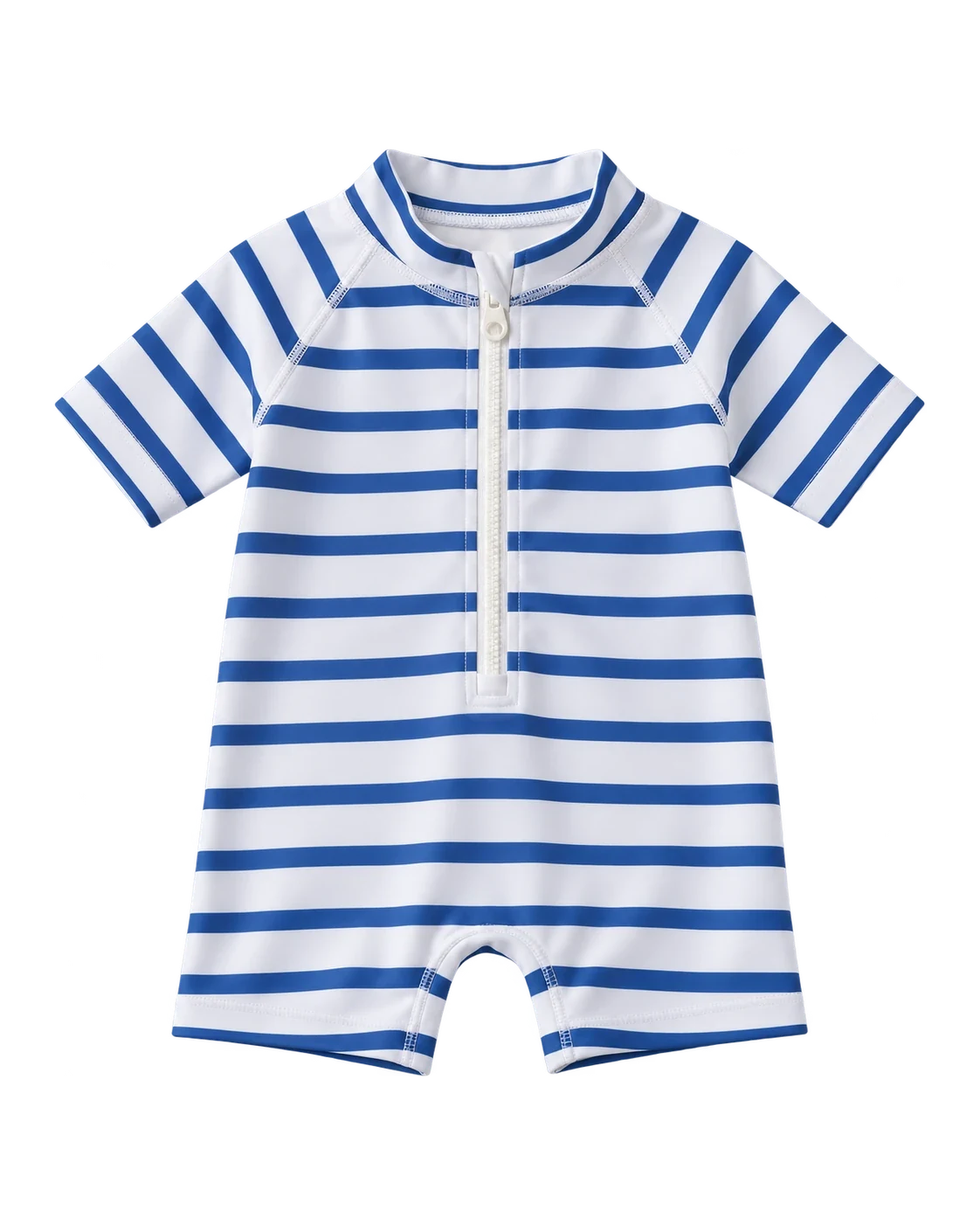
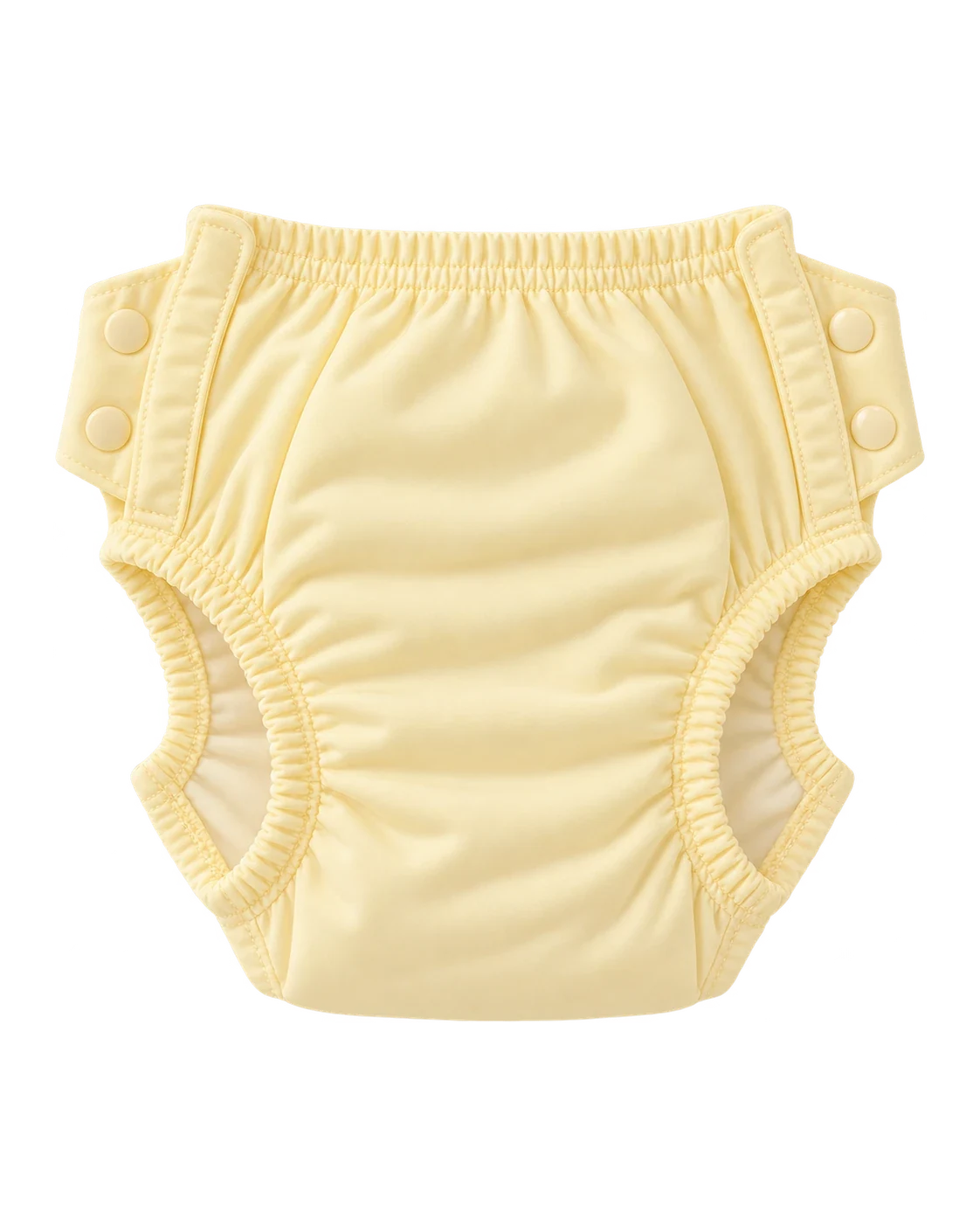
For the water, a long-sleeve sun cover shirt or sunsuit goes over a swim diaper, and a toddler who walks gets water sandals for the sand and the pool deck. From 6 months, sunscreen goes on the skin that clothes and shade leave bare.
A pool that feels lovely and cool to you after the heat chills a baby fast. Most babies can go in from about 6 months. Keep the swim short, half an hour at most, and lift your baby out at the first shiver, chattering teeth or bluish lips, into a dry towel in the shade.
Measure the hotel room before bedtime
The daytime beach forecast tells you nothing about the bedroom. Air conditioning away from home is unpredictable: some hotel units chill the room down to 20°C (68°F) overnight, while an older rental without it stays warm all night. Packing only the thinnest summer sleep bag because the destination is hot is how babies end up waking cold in the middle of the night. Take a small room thermometer, or a baby monitor that shows the temperature, and read it beside the crib rather than trusting the number on the AC remote.
Sleep bags carry a warmth number on the label, the TOG. A 1.0 TOG bag is often the most practical travel choice for an air-conditioned room between 20°C (68°F) and 24°C (75°F). Pair it with a short-sleeve or long-sleeve bodysuit depending on how cool the room actually settles. If the room stays naturally warm at 24–27°C (75–81°F), switch to a 0.5 TOG bag. If you don't know the room, pack both, because sleep bags this thin weigh little.
Check where the crib stands before bedtime, and move it out of the stream from a wall unit or a ceiling fan. Many hotels provide a crib, but not always one that follows safe sleep advice, so ask ahead what you will get, and take out any pillow, quilt or bumper it arrives with. A travel crib mattress feels thin and hard under your hand. Leave it as it is, because a blanket folded underneath makes it soft and warm, and babies sleep safest on a firm, flat mattress.
How much to pack
The most common packing mistake is multiplying the days of the trip by a stack of fancy outfits. In the heat, babies live in simple, breathable rompers. Between fruit snacks, sunscreen, sand and diaper leaks, expect to go through two or three changes a day, so count to your next wash, not to the end of the trip. Clothes this thin dry overnight on a warm balcony, and a small bottle of travel detergent turns the hotel sink into a laundry.
Baby vacation packing list
For a trip somewhere warm, by plane.
How long is the trip?
How often can you wash?
Where are you staying?
How old is your baby?
For the day
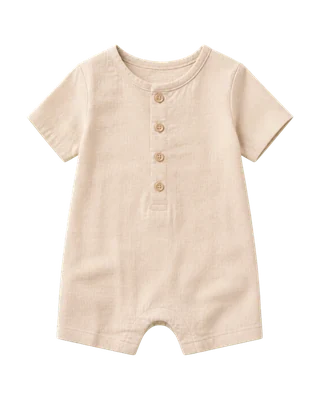
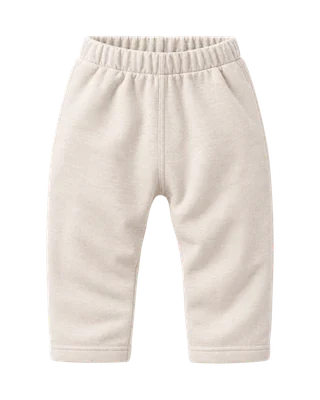
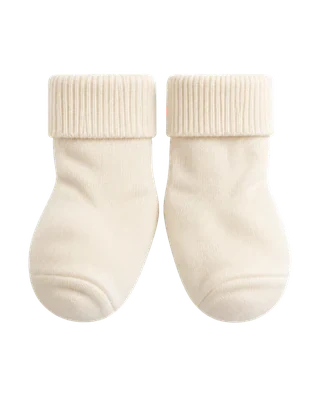
For the flight
For hot days
from 28°C (82°F)
At the beach and the pool
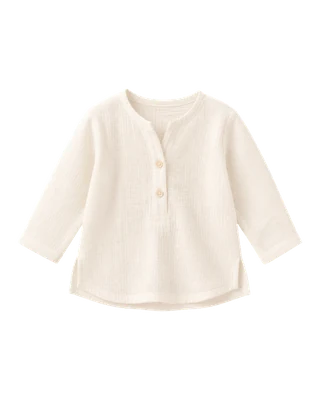
For the night
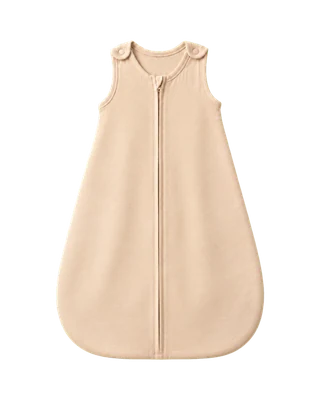
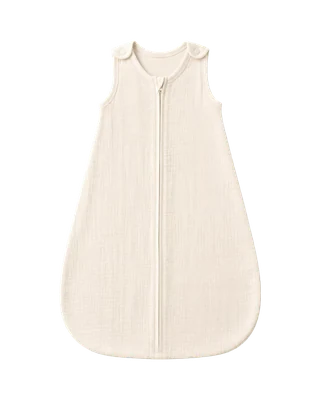
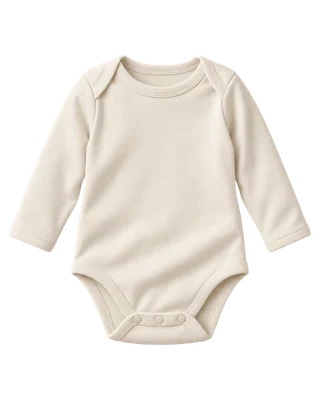
Print this list
Also: a small room thermometer, travel detergent, a wet bag for damp swimwear, and one clean outfit sealed away for the flight home.
Questions parents ask
Can I take a young baby to the beach?
Yes, in the shade. Babies under 6 months have delicate skin and stay out of direct sun altogether: under a parasol or a beach tent, in airy, loose long sleeves and pants of lightweight cotton or muslin, with a sun hat.
Do I need a sleep bag in a hot country?
Yes, unless the bedroom stays at 28°C (82°F) or warmer. With the air conditioning on, it rarely does, so the bag goes on as it does at home. In a room that warm, a diaper alone is enough.
My baby cried all the way down. Will the ears be OK?
Usually, yes. If the ears don't pop on the way down, they can ache for a few hours after landing, and another feed or a pacifier helps them even out. If the pain goes on for more than several hours, call your doctor.
Can my baby fly with a cold or an ear infection?
With an ear infection in the two weeks before the flight, ask your doctor first, because ears blocked by an infection or a cold hurt more when the pressure changes. With a runny nose, the feeds at takeoff and landing matter even more.
Can I wear my baby in a carrier through the airport?
Yes, and many parents find it the easiest way through. In the US you can walk through the metal detector with your baby in the carrier, though you may be screened a little more. In a warm terminal, your body counts as a layer, so the cardigan can stay in the bag.
Does my baby need water in the heat?
Not before 6 months. Breast milk or formula is all your baby needs to drink, offered more often, because in the heat many babies want shorter, more frequent feeds. From 6 months, offer sips of water with meals and a little more between them on hot days.
What water do I use for formula abroad?
Where you wouldn't drink the tap water, boil the water for formula, bottled water included, because it isn't always clean either. Ready-to-feed liquid formula is sterile and needs no water at all, which makes it handy for the first days.
Can I drape a thin muslin over the stroller for shade?
No. Even a light muslin blocks the air and heats up the stroller. Use the canopy, a clip-on sunshade or a parasol, and keep the opening clear.
How do I protect my baby from mosquitoes?
Dress your baby in light clothes that cover the arms and legs, and put mosquito netting over the stroller and the carrier. Where the room has no AC or window screens, the crib goes under a net at night too. Some insect repellents are not for young children at all, so ask your pediatrician which one suits your baby's age.