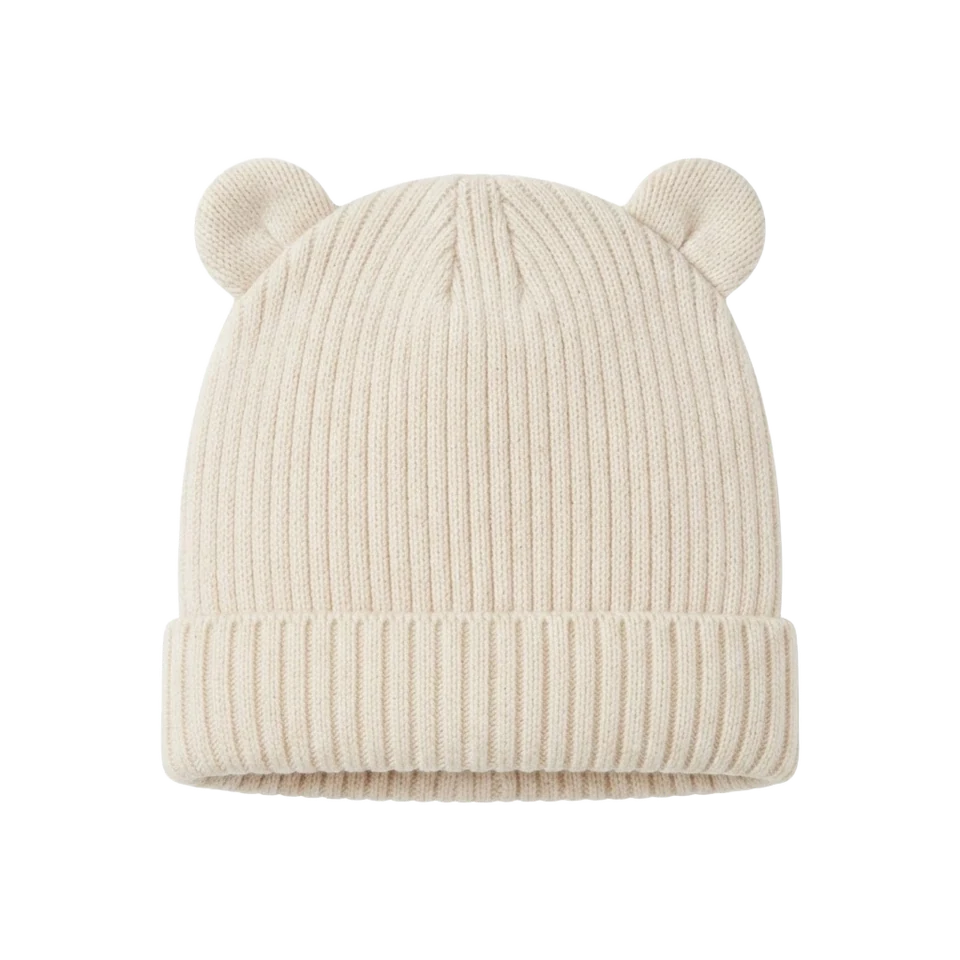
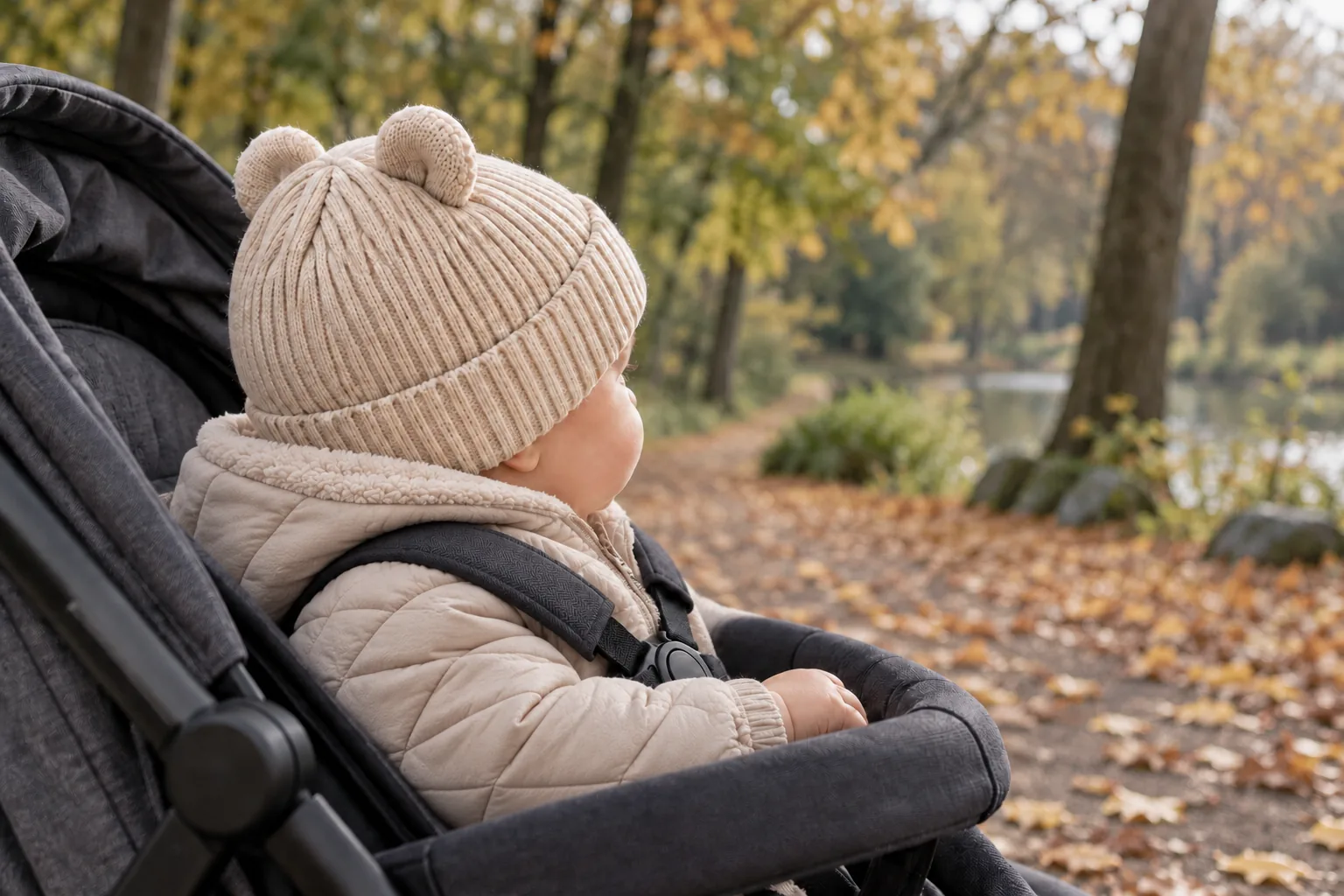
Nobody needs bear ears, least of all the baby wearing them. The hat underneath is an ordinary light knit hat, and it does all the work.
The ears are for everyone else. A small bear in a stroller makes people smile on a gray morning, and if you love bears, that is reason enough.
- For ages0–3years
- You'll need1–2light hats
- Wear it at8–15°C46–59°F
When babies wear one
It's a hat for chilly walks, the days when it feels like 8–11°C (46–52°F) outside. Any warmer and a baby over 3 months can go without, so the bear stays home. Babies under 3 months need one sooner, at 12–15°C (54–59°F), and a warm hat below 12°C (54°F).
Put it on last, just before you leave. Take it off the moment you're back inside, even if your baby has dozed off: indoors, a hat holds in heat your baby needs to lose. On the walk, feel the back of the neck to check for warmth. The head is no guide, since it always feels warm under a hat.
Types of bear-ear hat
Bears turn up on most kinds of baby hat, from thin cotton caps to lined winter hats.
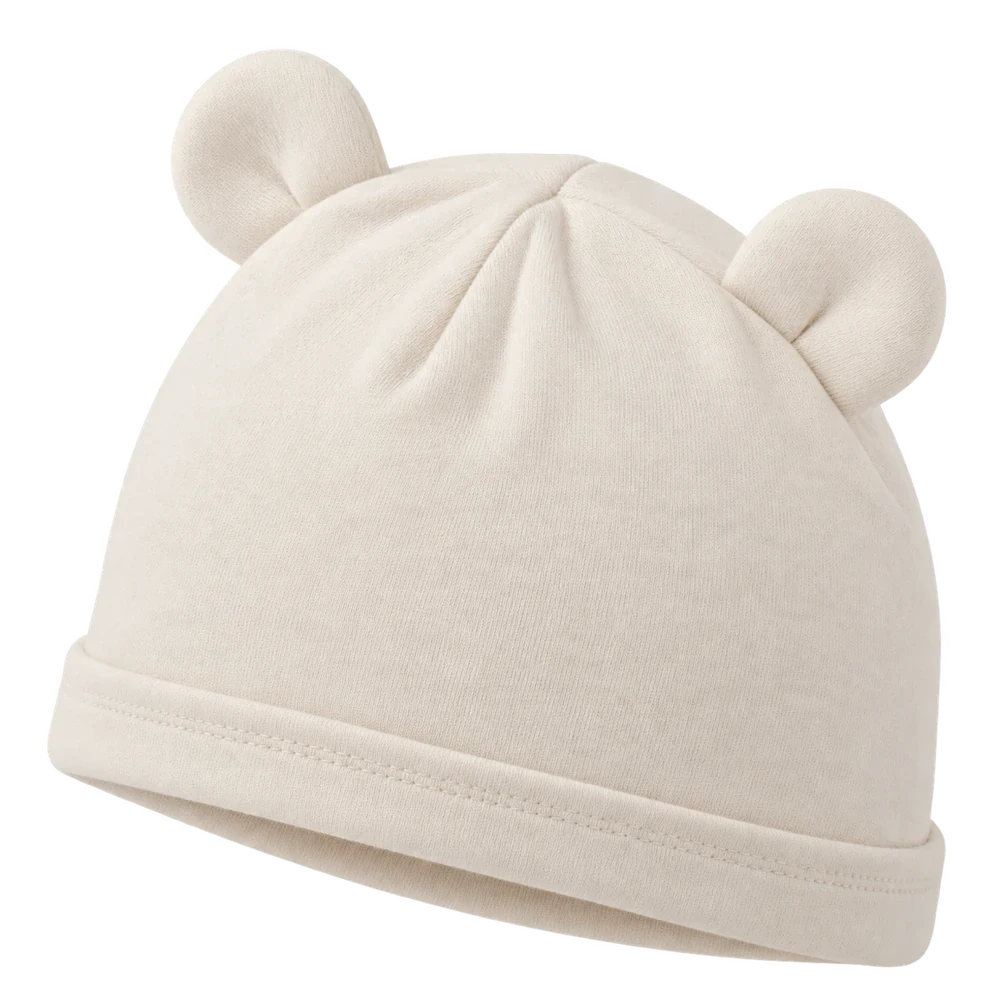
Newborn cap
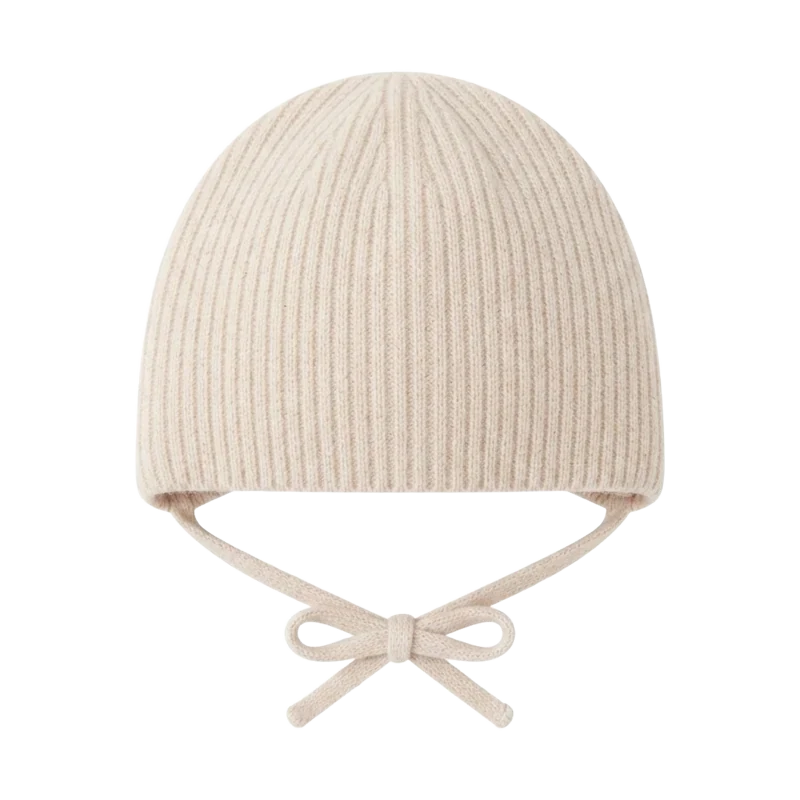
The smallest bear: thin, stretchy cotton, like a T-shirt, with two soft fabric ears. It's made for the first weeks, and it's the thinnest of the three.
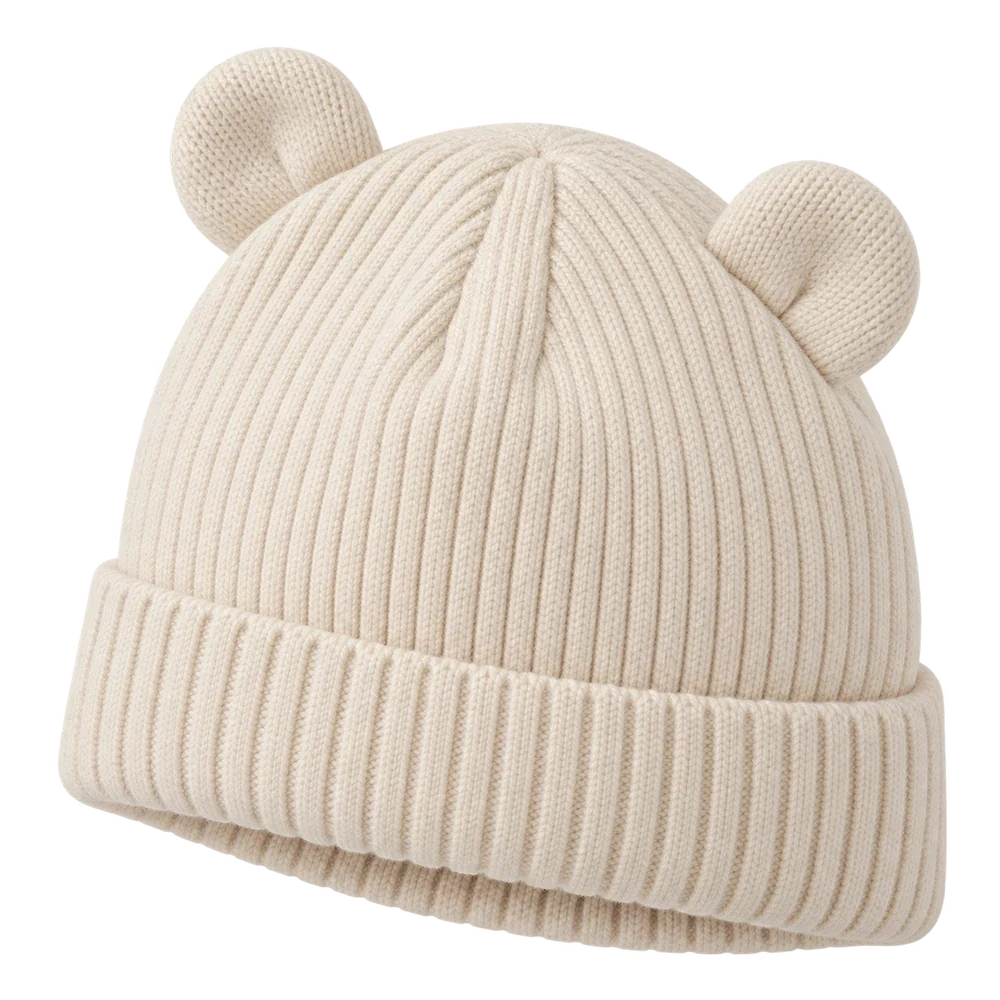
Knit beanie
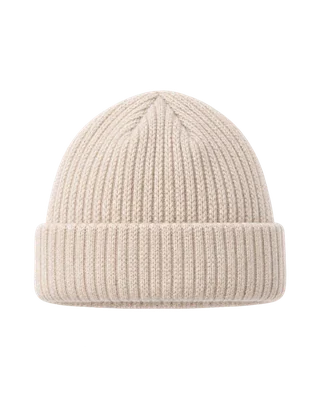
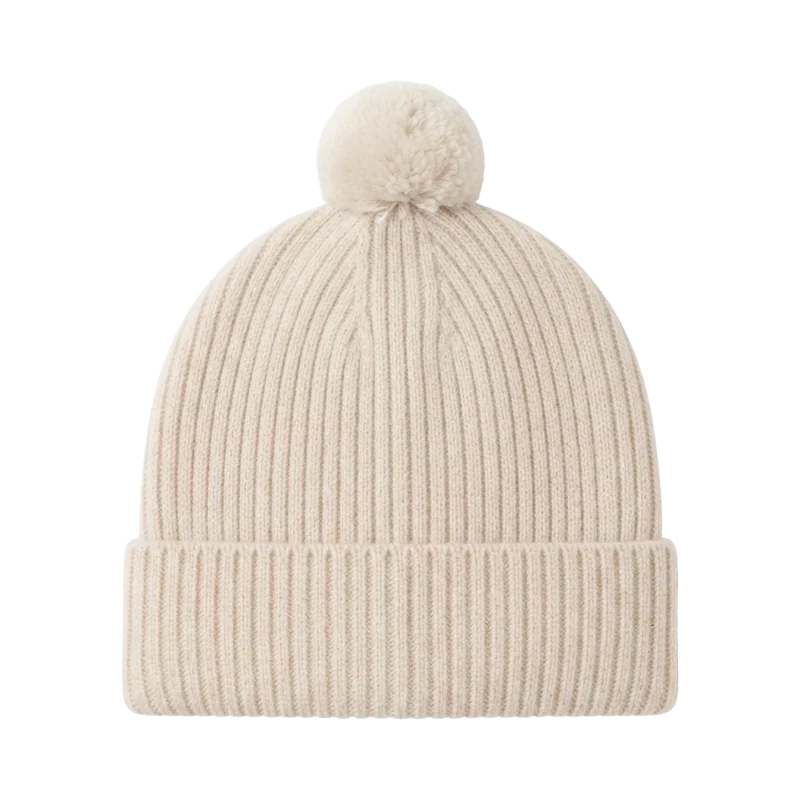
The classic: rib knit (fine raised lines that let it stretch), a folded cuff and two knitted ears. Warmer than the newborn cap, and right for most chilly walks.
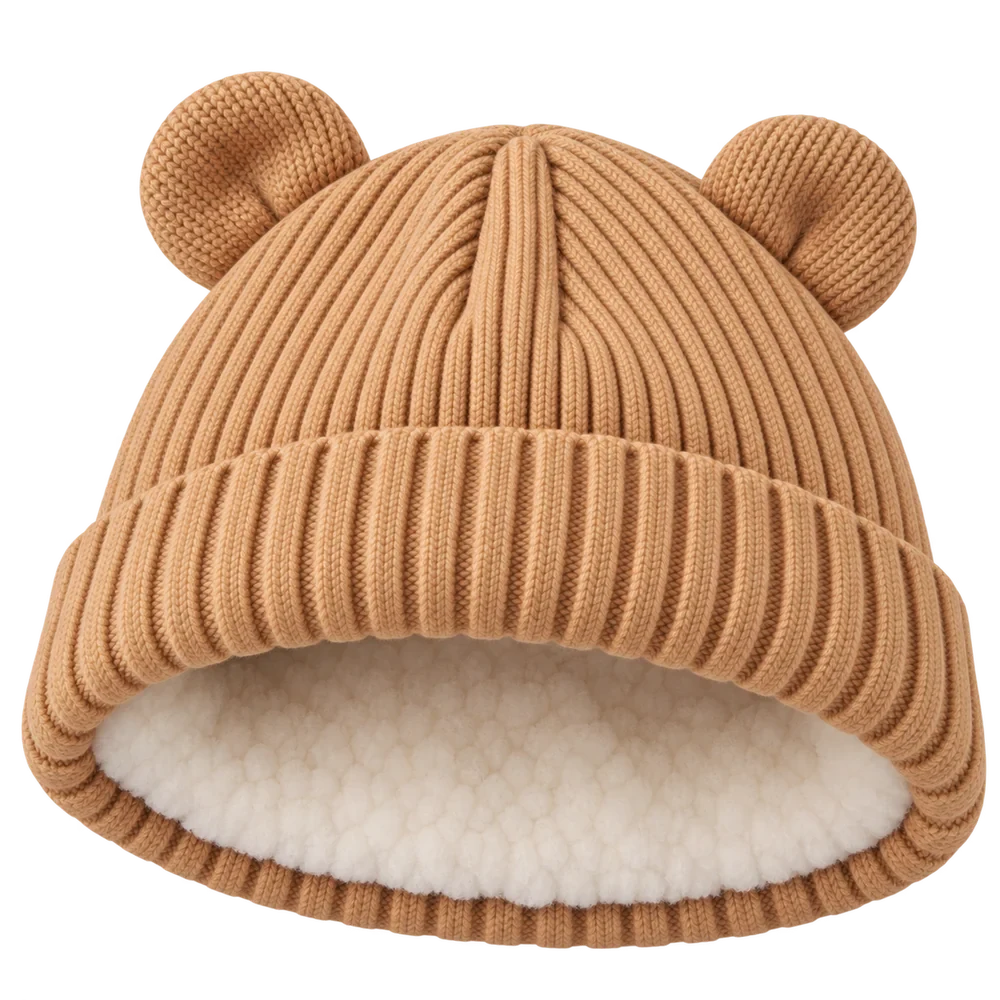
Lined winter hat
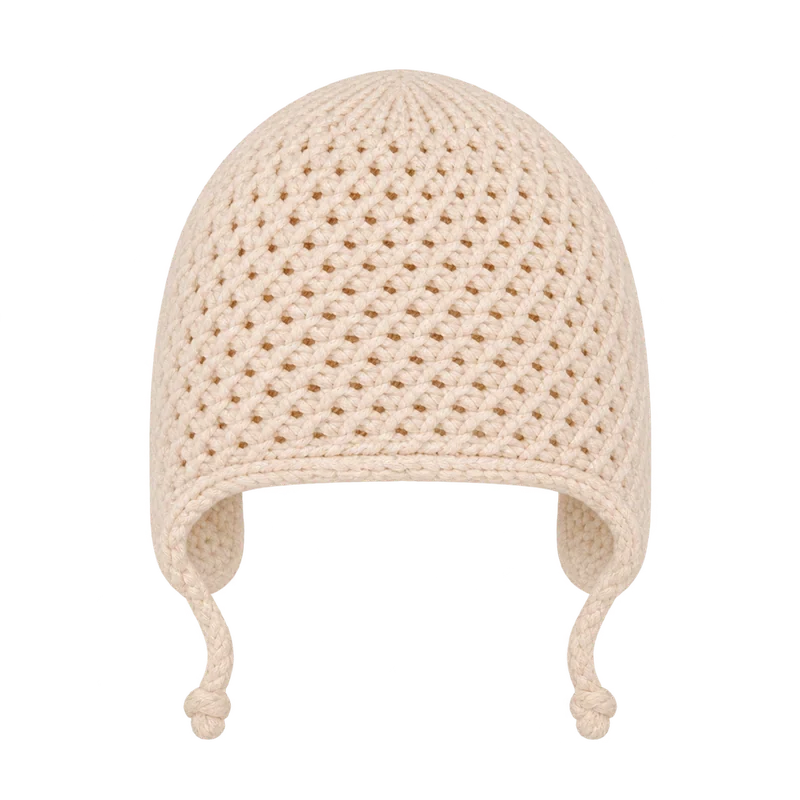
The winter bear: a thicker knit outside and soft fleece inside, for cold days.
How to choose a bear-ear hat
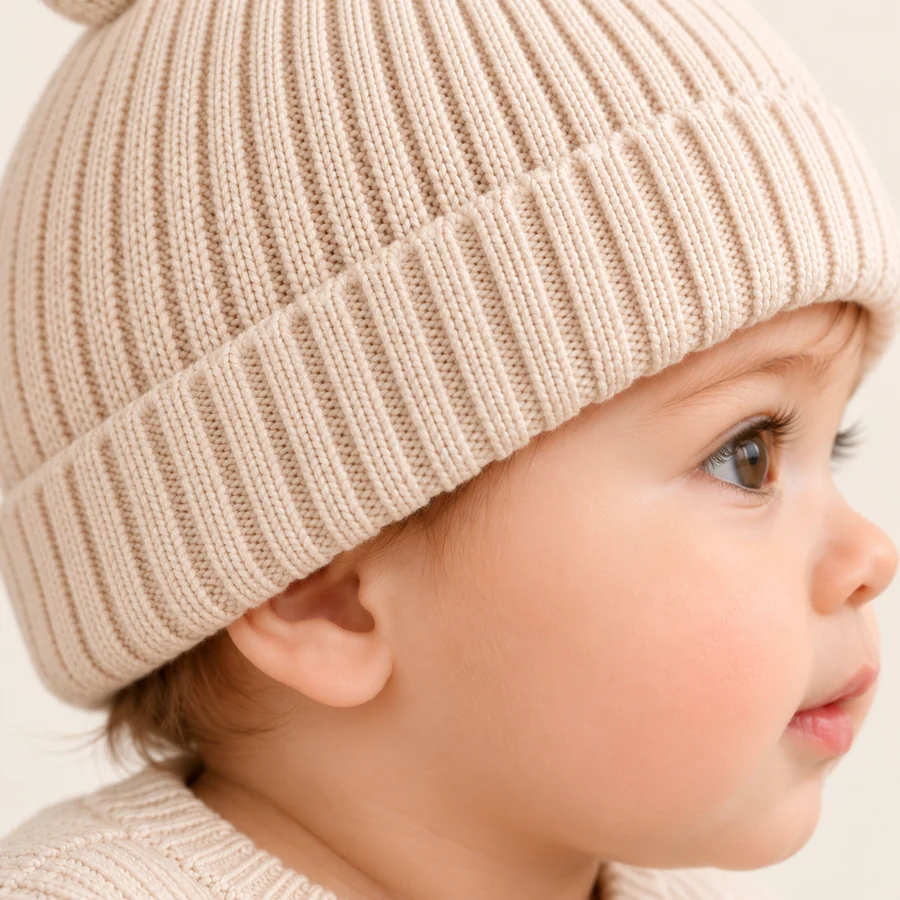
1. It fits like a good knit hat
Ignore the bear ears for a moment and look at the hat. It should cover the tops of your baby's real ears and stay above the eyebrows. Age labels are only a rough guide, because heads of the same age differ. Buy by head size: how to measure a head.
- Good: Cuff over the tops of the ears
- Good: Stays in place when your baby turns
- Not good: Rides up and leaves the ears bare
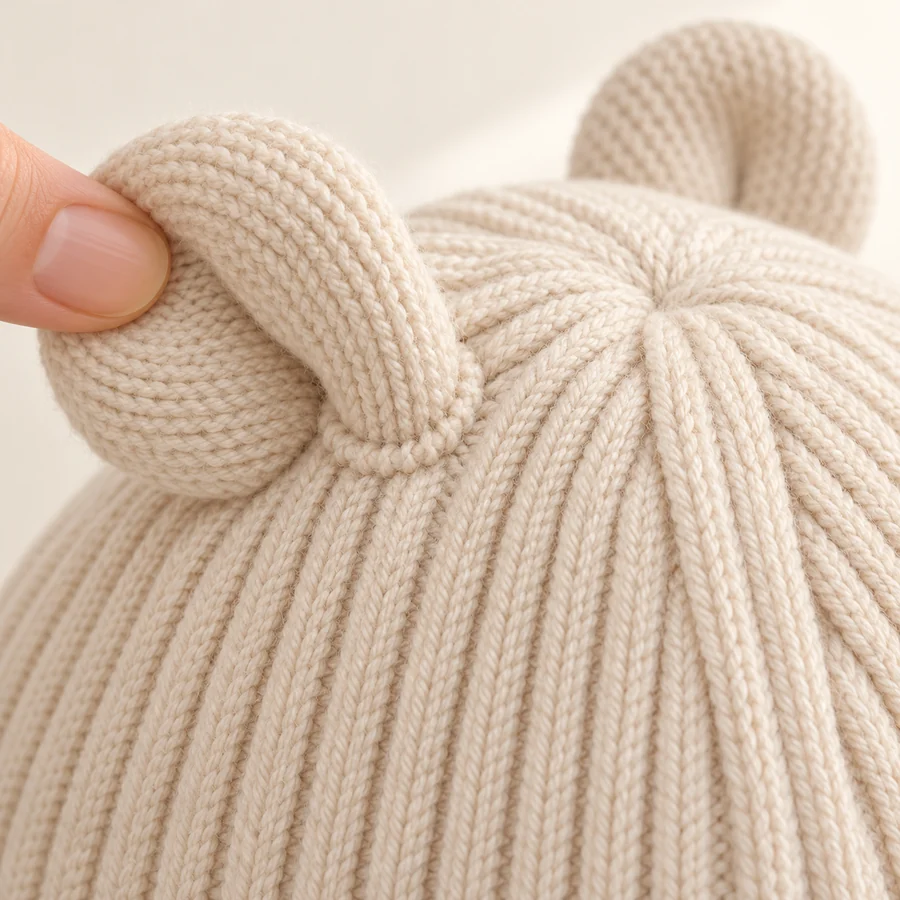
2. Ears stitched on all around
Babies love to grab a bear by the ears and chew on them, so the ears have to hold. Look for stitches all the way around the base of each ear, and give each one a firm tug.
- Good: Stitches all around the base
- Good: Holds firm after a tug
- Not good: Glued on, or loose at one edge
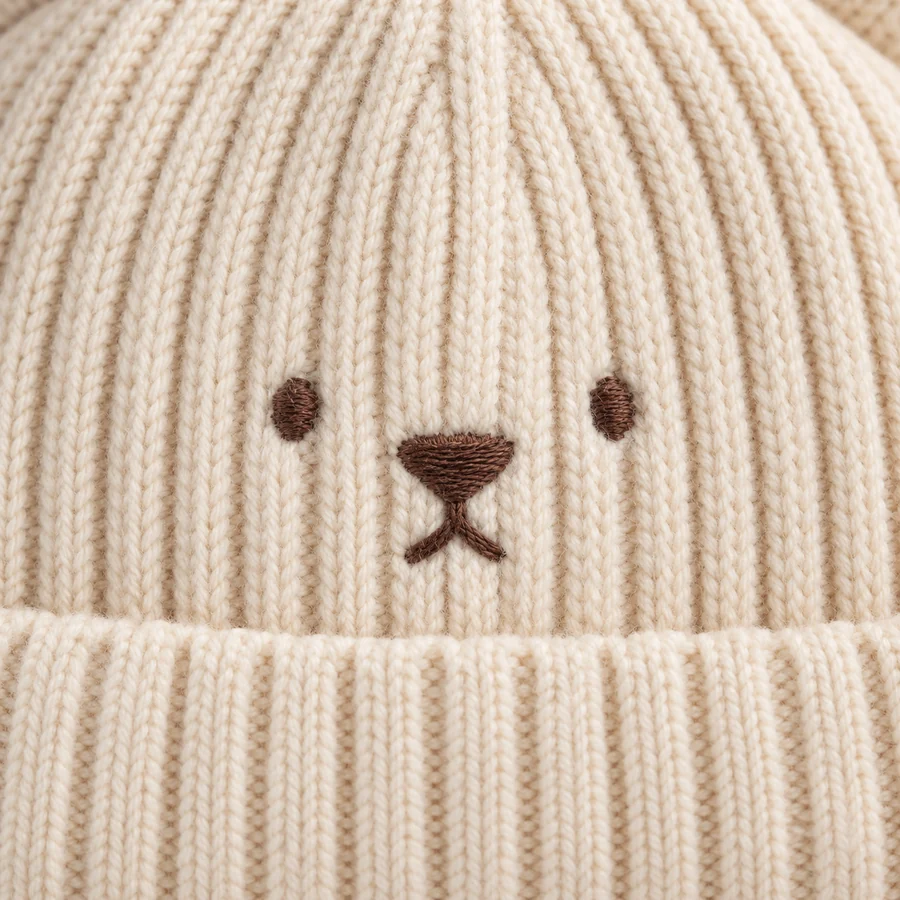
3. Nothing to pull off
A bear needs no bows, buttons, beads or plastic eyes, the kind of small parts that can come off and end up in a mouth. A face sewn in thread is fine: it lies flat in the knit.
- Good: Plain ears, nothing added
- Good: Face sewn in thread, if any
- Not good: Bows, buttons or plastic eyes
Questions parents ask
Can my newborn wear a bear-ear hat?
Yes, outdoors, in a newborn size. Babies under 3 months need a hat a little sooner, at 12–15°C (54–59°F). The newborn cap and the knit beanie both do the job. Below 12°C (54°F), they need a warm hat.
Is a bear-ear hat warm enough for winter?
No, the light one isn't. It's one thin layer of knit, and wind goes straight through it. Below 8°C (46°F), or below 12°C (54°F) for babies under 3 months, switch to a lined hat that covers the whole ear, such as the warm bear-ear hat: same ears, plus a lining.
Will the ears come off in the wash?
They shouldn't if they're stitched on all around. Wash the hat as its label says, then give each ear a tug. If one has come loose, sew it back on all the way around, or cut it off: an earless bear is still a perfectly good hat.
Is a handmade bear hat safe?
Yes, if it passes the same checks as a store-bought one: ears stitched on all around, nothing small sewn on, and only short ties, because long ones can catch. Knitters usually make the ears separately and sew them on by hand, so thank the knitter, then give each ear a tug.