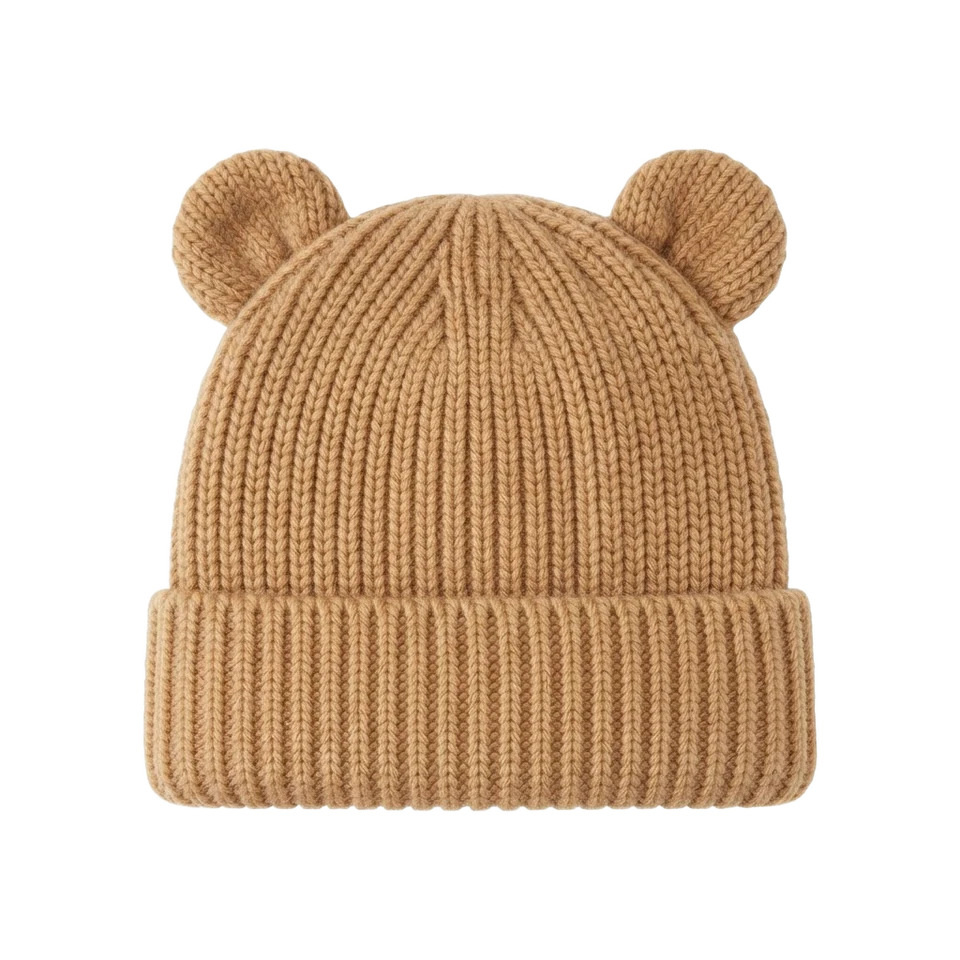
Real bears sleep through the winter. This one is made to go out in it.
What keeps your baby warm is the warm winter hat underneath: a soft lining inside, and sides deep enough to cover your baby's own ears. The bear ears are mostly for the photos.
- For ages0–3years
- You'll need1–2warm hats
- Wear it below8°C46°F
Light or warm bear-ear hat?
On the shelf the two bears can look like twins. Turn up the edge and look inside. Each temperature below is the feels-like temperature, which takes the wind into account.
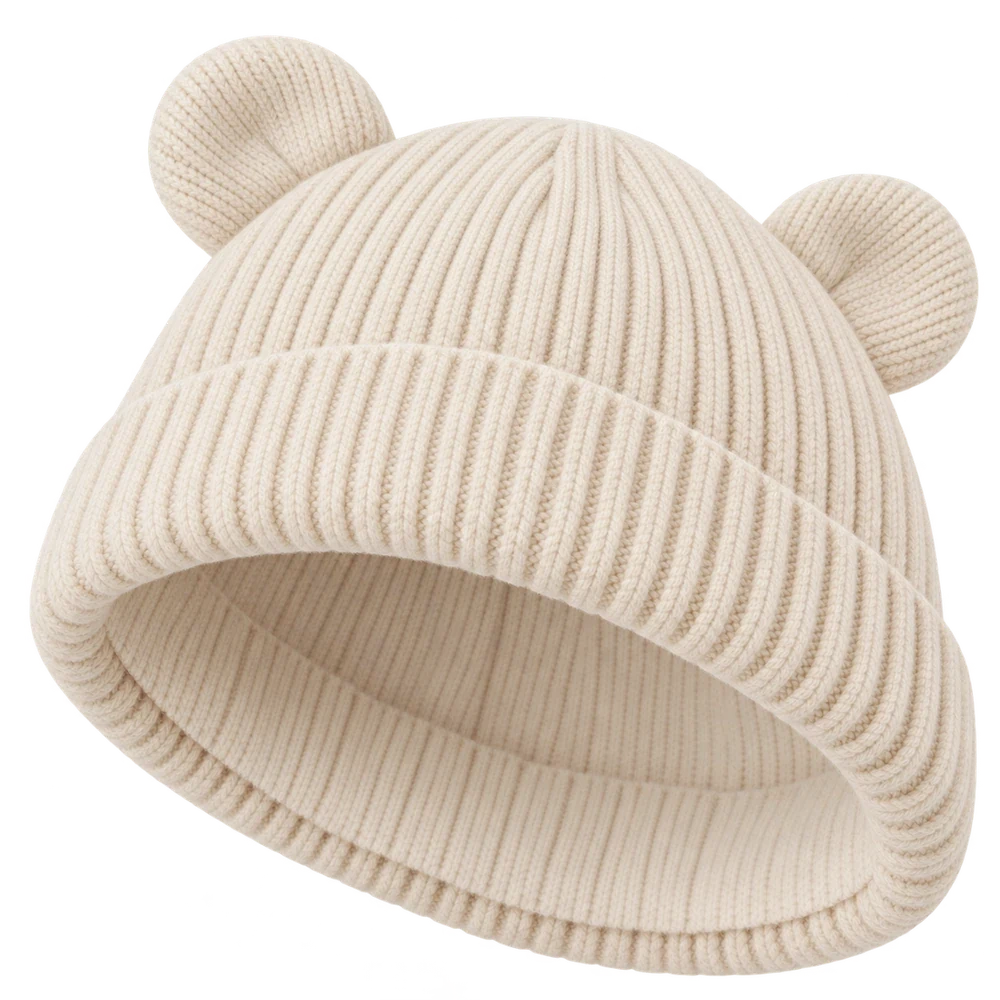
Light bear-ear hat
One layer of thin knit, with no lining. For chilly walks from 8°C (46°F) to 11°C (52°F), once your baby is 3 months old.
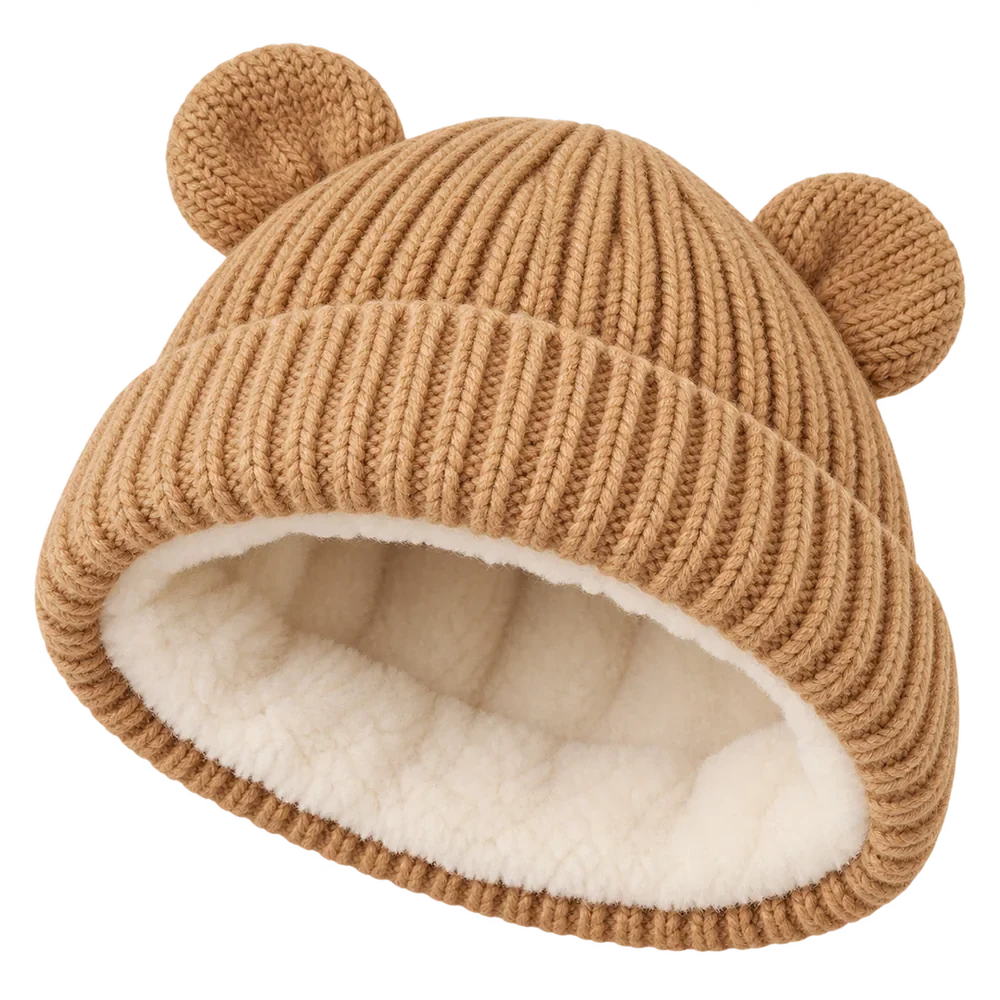
Warm bear-ear hat
A soft lining under the knit or fleece. For walks below 8°C (46°F), or below 12°C (54°F) for a baby under 3 months.
Types of warm bear-ear hat
Warm bear hats come in three shapes, and the shape decides how well the hat stays on.
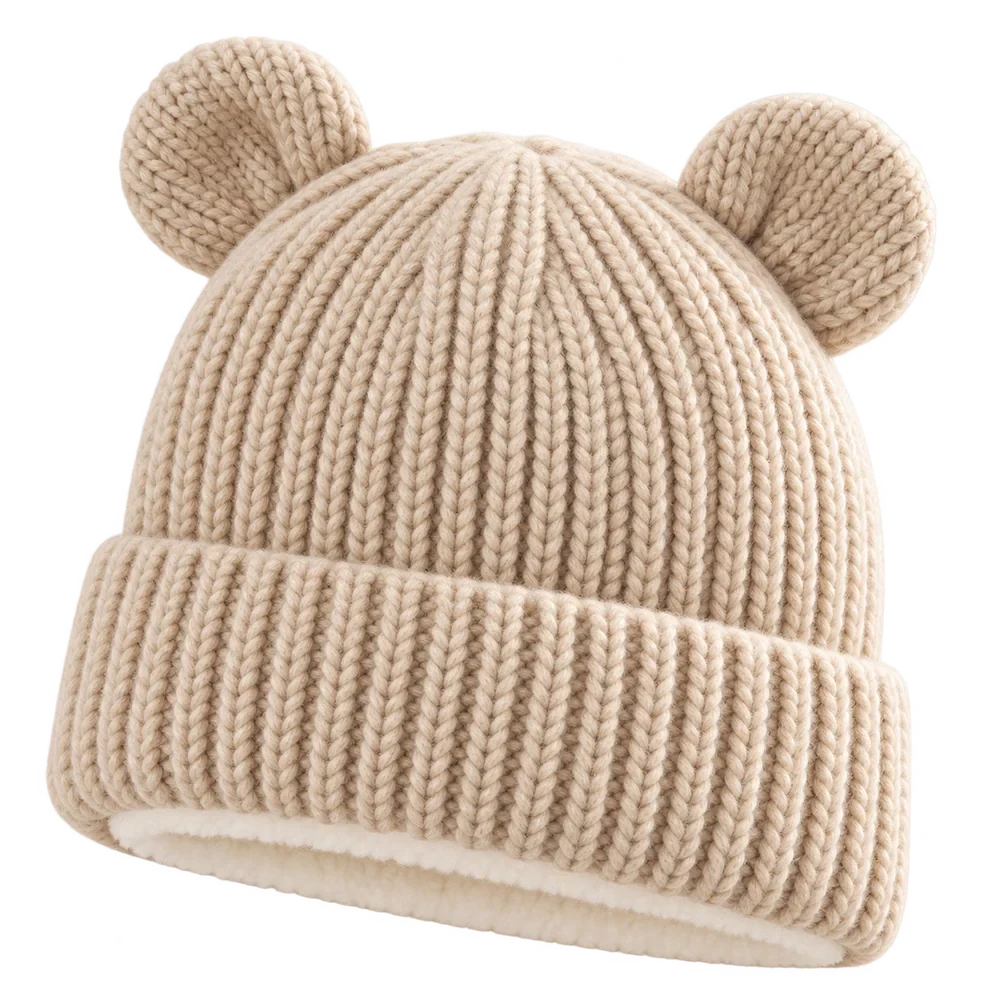
Lined beanie
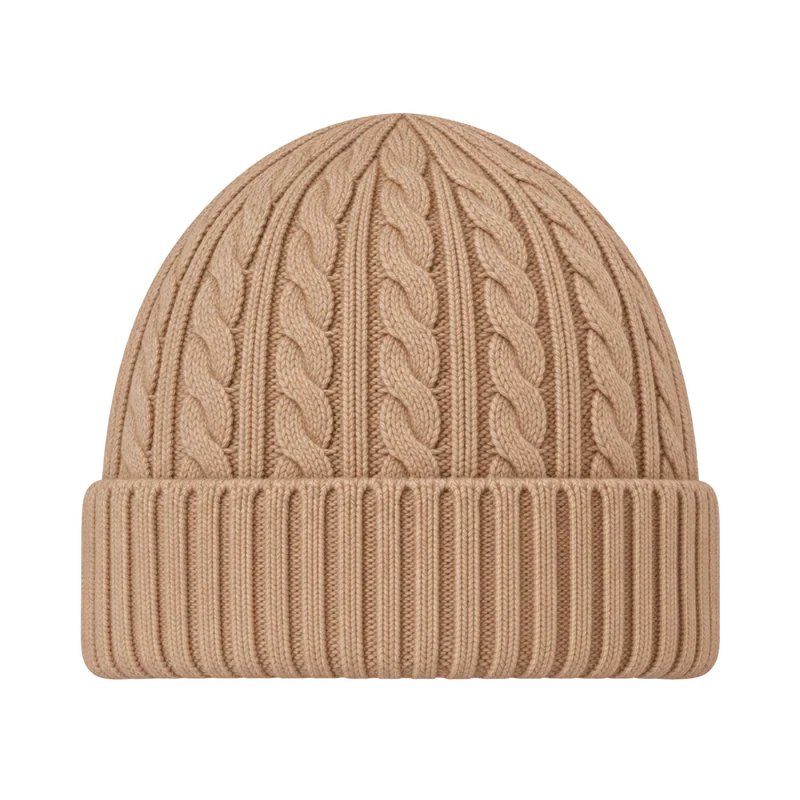
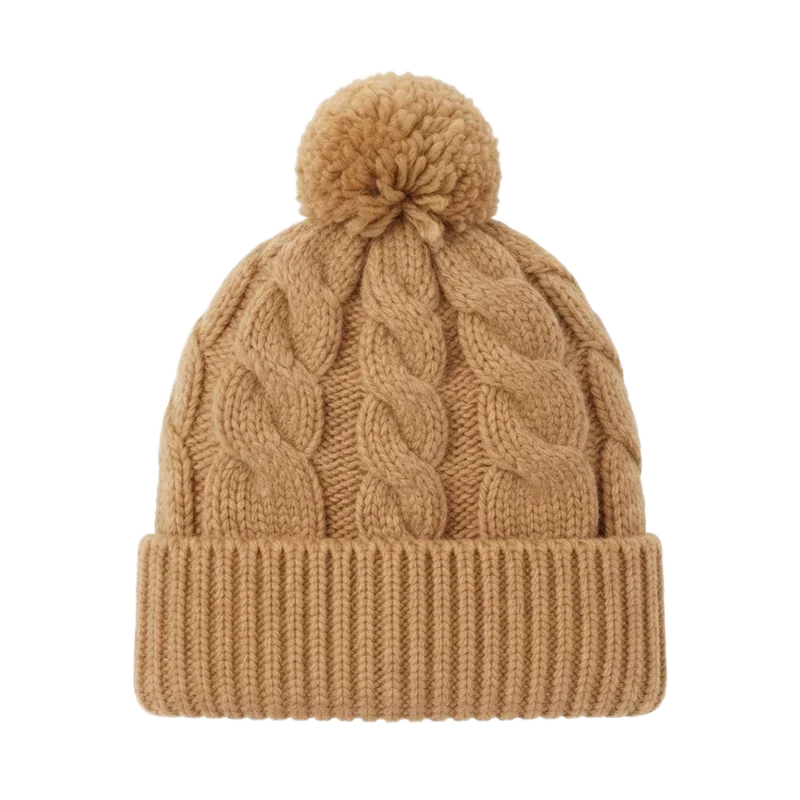
A chunky knit with a fleece lining and a deep cuff folded over the ears. It goes on in a second, but nothing holds it there, so it suits a baby who leaves hats alone.
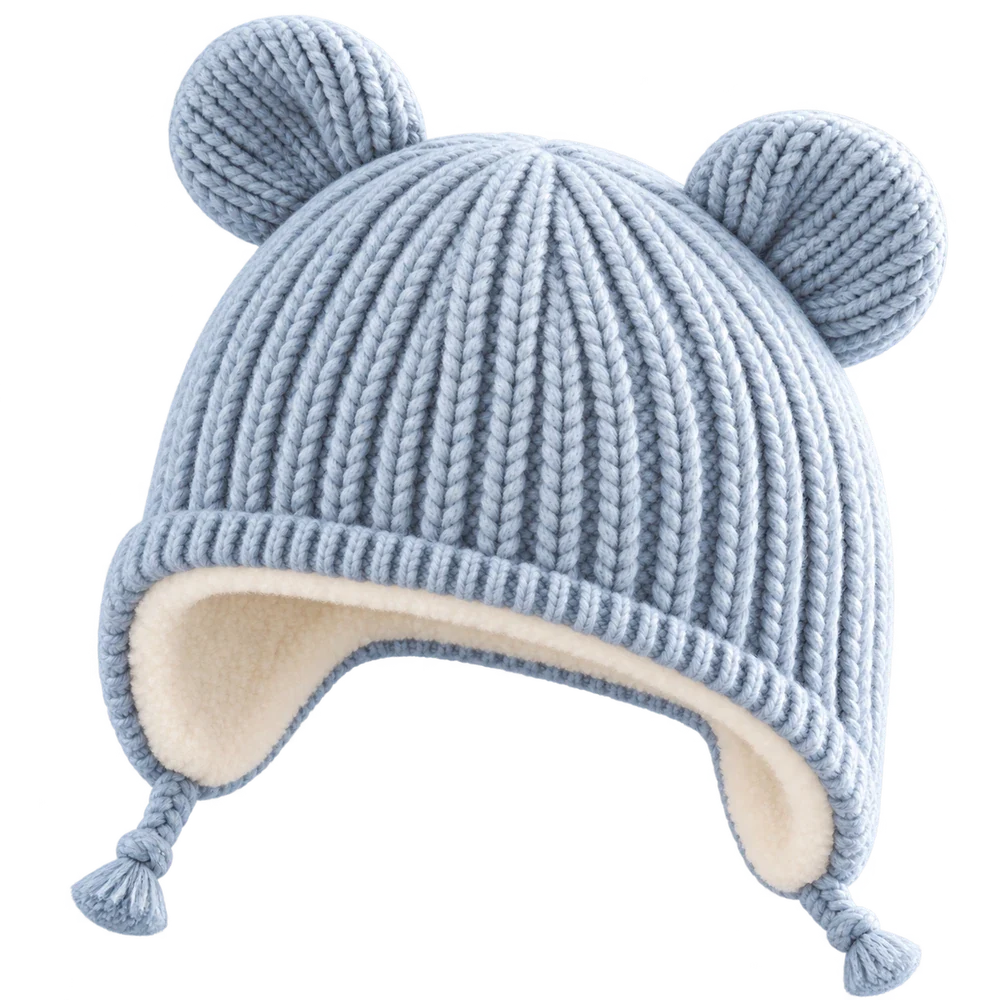
Earflap hat
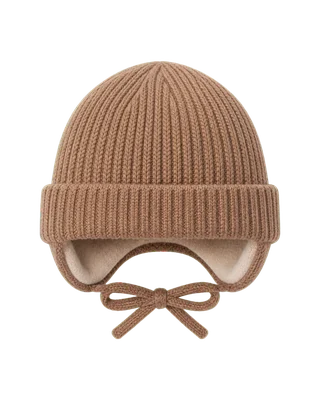
Two fleece-lined flaps hang over the ears, with ties under the chin. Wherever your baby looks, the flaps go too, and the ties keep the hat on in the wind, so it suits windy days.
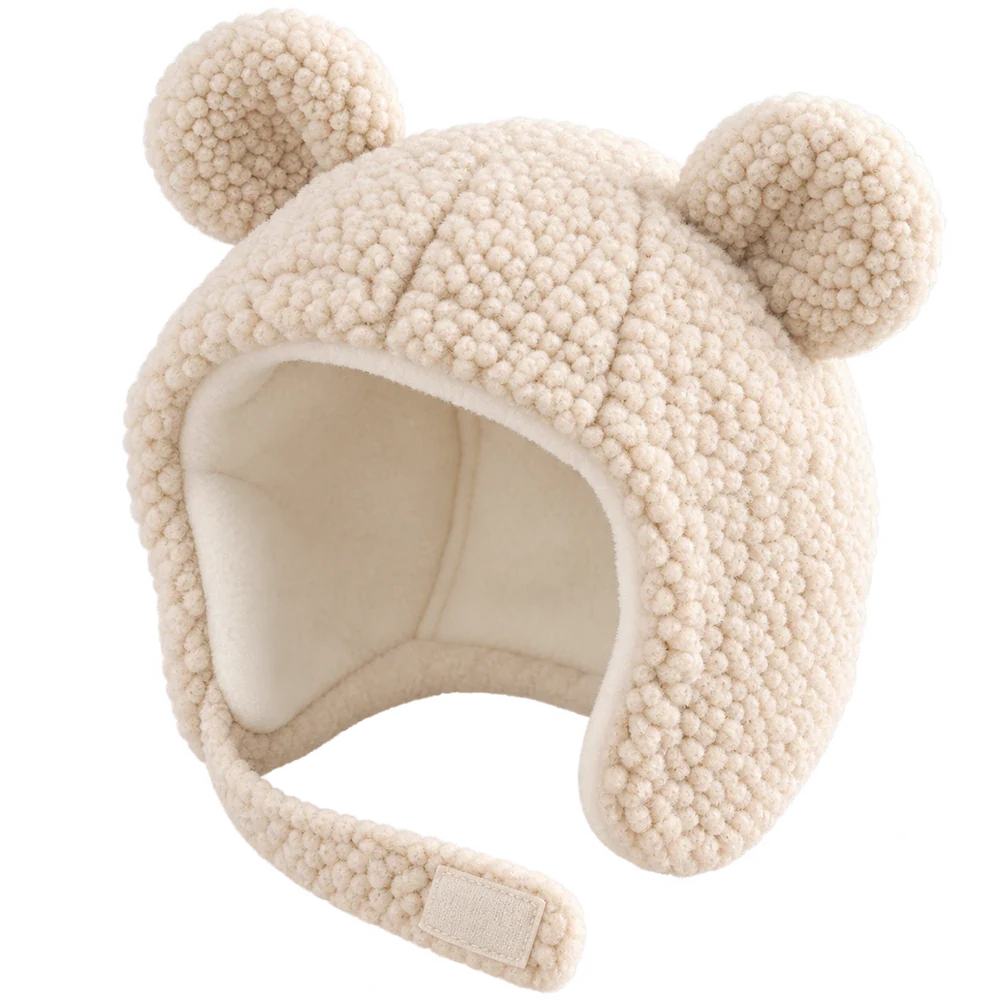
Fleece bonnet
The furriest bear: thick, curly teddy fleece (shops often call it sherpa), shaped like a bonnet that wraps the ears, cheeks and back of the head, with a strap under the chin. It covers the most, so it suits the coldest days and a baby who keeps pulling hats off.
How to choose a warm bear-ear hat
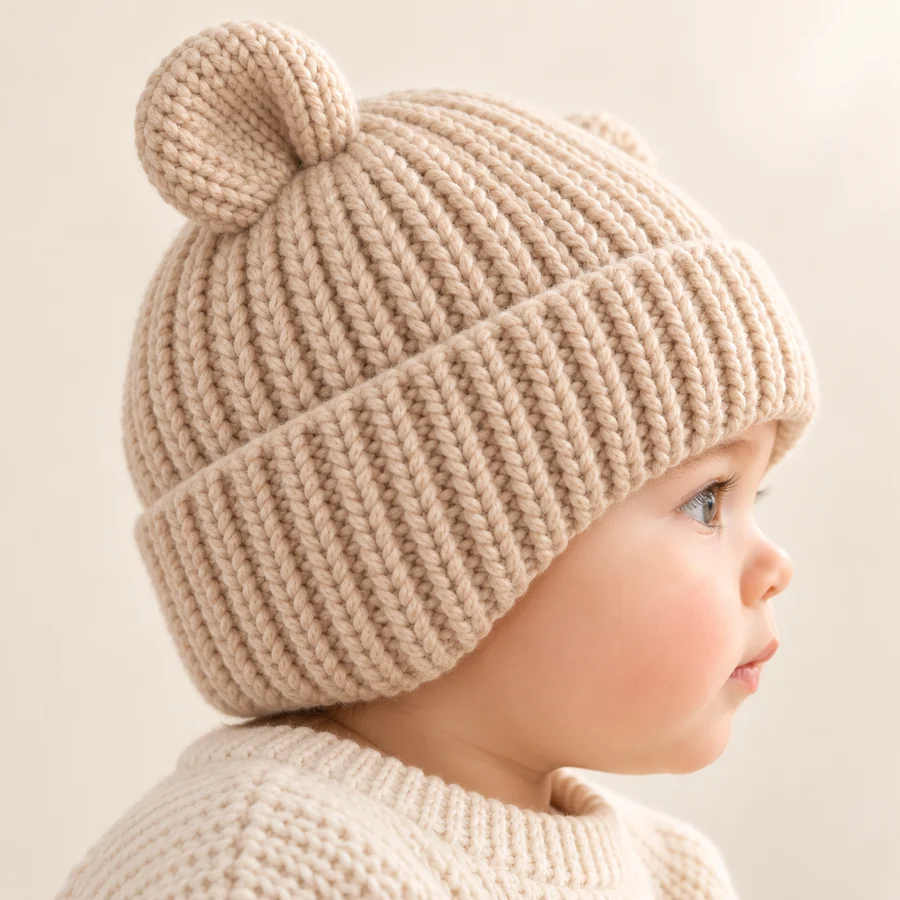
1. It covers your baby's ears
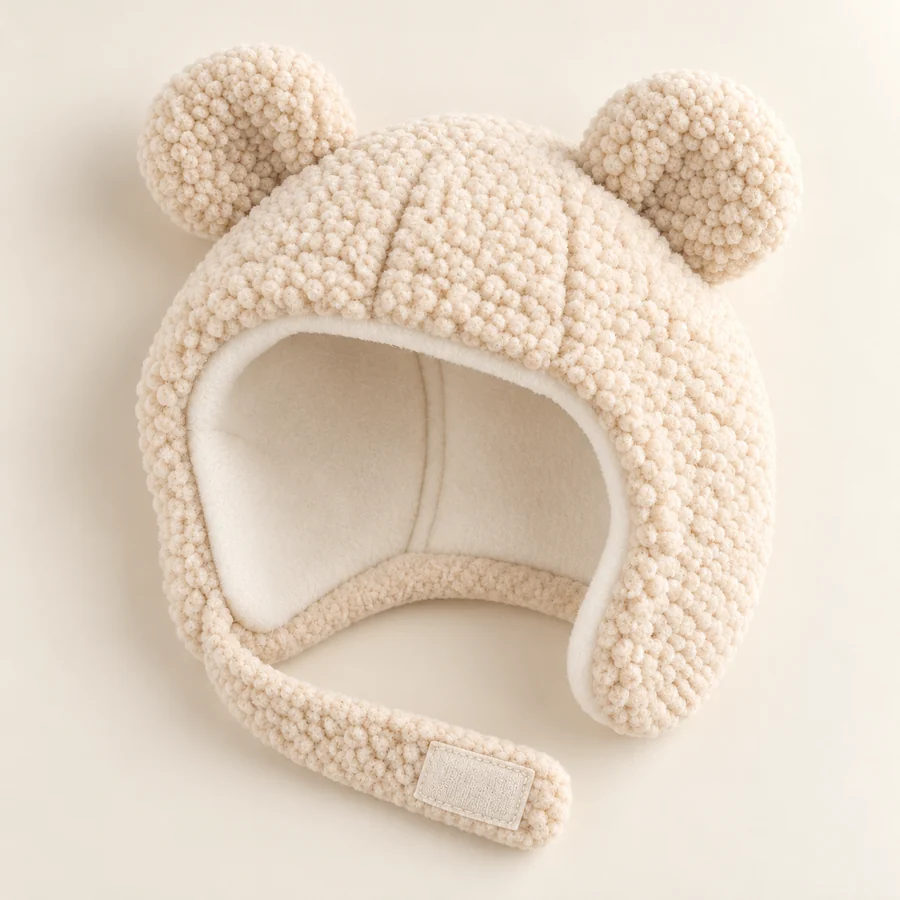
The bear's ears never feel the cold. Your baby's do, so the cuff, sides or flaps should cover them down to the earlobes, with the front edge just above the eyebrows.
- Good: Earlobes tucked under
- Good: Stays put when your baby turns
- Not good: Rides up off the ears
2. Ties or a strap that open easily
Short ties, or a strap with hook-and-loop tape (Velcro), a snap or a magnet, open with one pull. Do them up without pulling tight. Skip a strap sewn to the hat at both ends: it can't come undone if it catches on play equipment.
- Good: Opens with one pull
- Good: Short ties, no long cords
- Not good: Strap sewn on at both ends
3. Ears sewn on all round
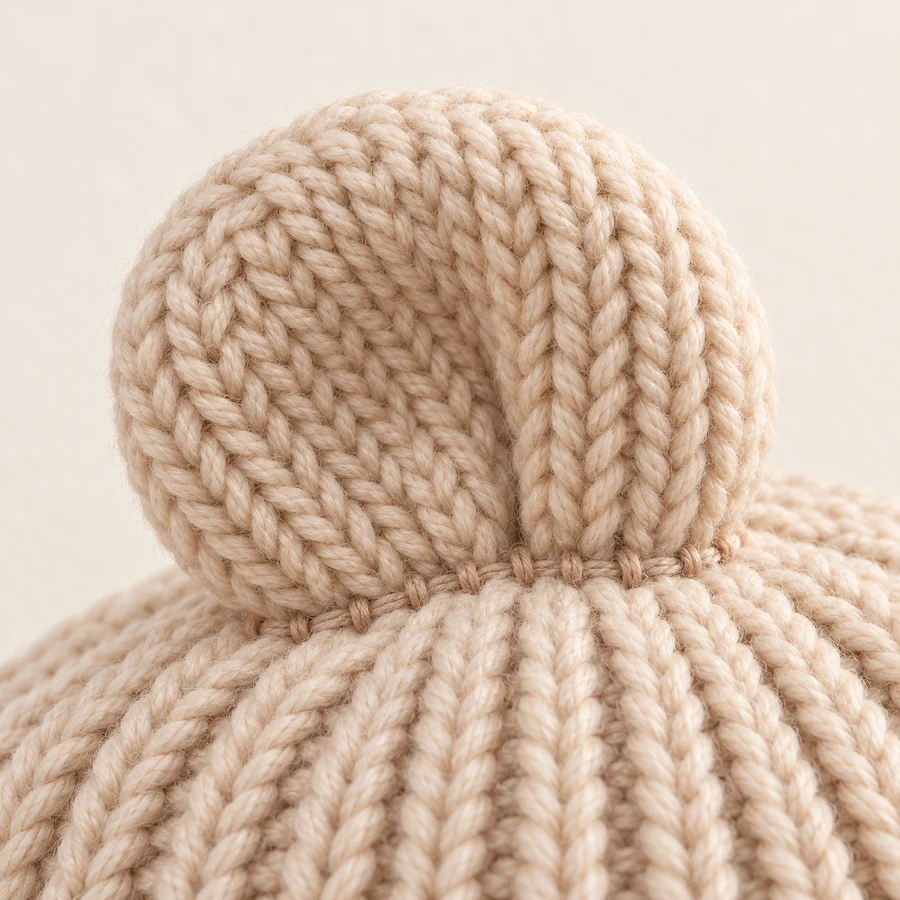
Anything small on a hat can end up in a baby's mouth. Tug each ear in the shop: it should be sewn on all the way round and stay put. Skip plastic eyes or noses.
- Good: Seam all round each ear
- Good: Thread face, no plastic parts
- Not good: Ear loose at one edge
Questions parents ask
Do bear hats run small?
Some do and some run big, even with the same age on the label. Measure around your baby's head and check it against the brand's size chart: how to measure a head.
Can a bear hat make my baby too hot?
It can, even outside. Feel the back of your baby's neck, and if it's sweaty, take a layer off. Indoors or in the car, take the hat off at once, even if your baby wakes.
Can my baby sleep in a bear hat?
Not in a crib or bed: indoors, a hat can make a sleeping baby too hot. On a cold walk, a nap in the stroller is different. Leave the hat on until you're back inside.
What are winter hats with ear flaps called?
Earflap hats, whether or not a bear sits on top. A knitted one with braids is also sold as a chullo, and a deep one lined with fleece or fur is a trapper hat.