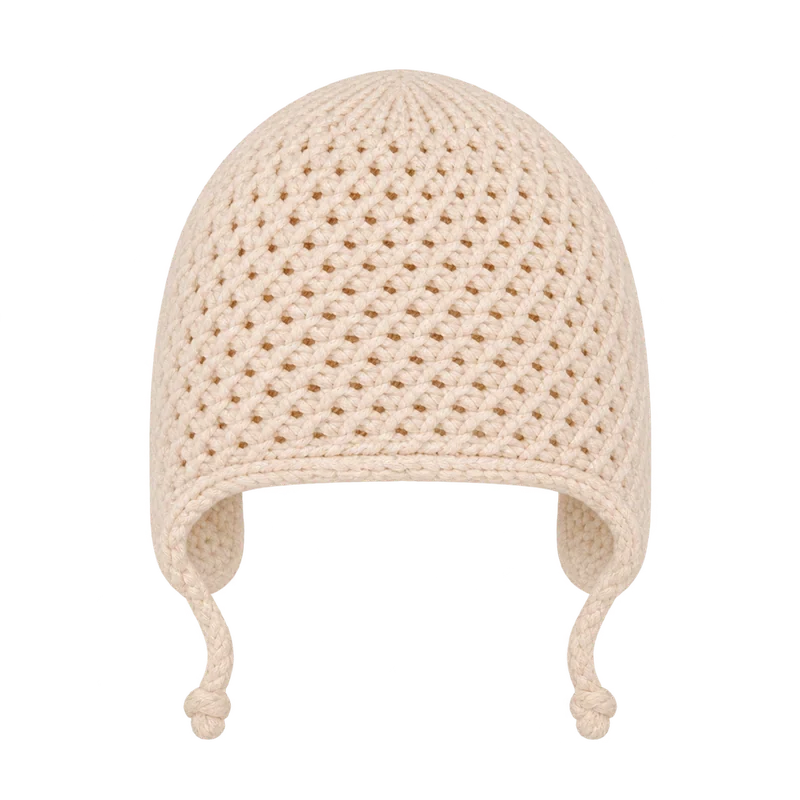
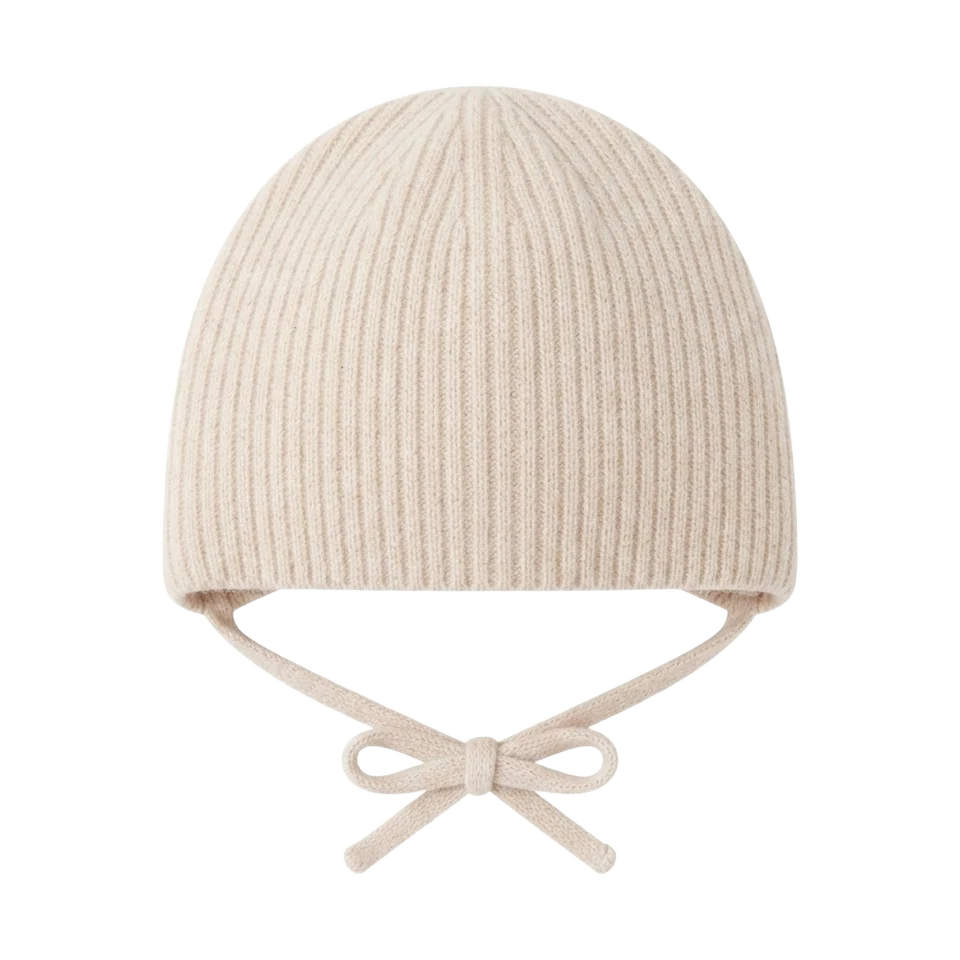
A bonnet is a soft baby hat that covers the back of the head and the ears, and ties under the chin. It leaves the whole face open, a bit like a small hood. A light bonnet is thin knitted cotton or fine wool, with no lining.
It is for the same chilly walks as a light knit hat: when it feels like 8–11°C (46–52°F) outside, or 12–15°C (54–59°F) for a baby under 3 months.
Its ties keep it in place when your baby turns the head in the stroller or the carrier, so it does not slide down over the eyes. If a beanie already stays on your baby, you do not need a bonnet.
- For ages0–12months
- You'll need1–2light hats
- Wear it at8–15°C46–59°F
Bonnet or beanie?
Both are light knit hats for the same chilly days. The difference is how they stay on.
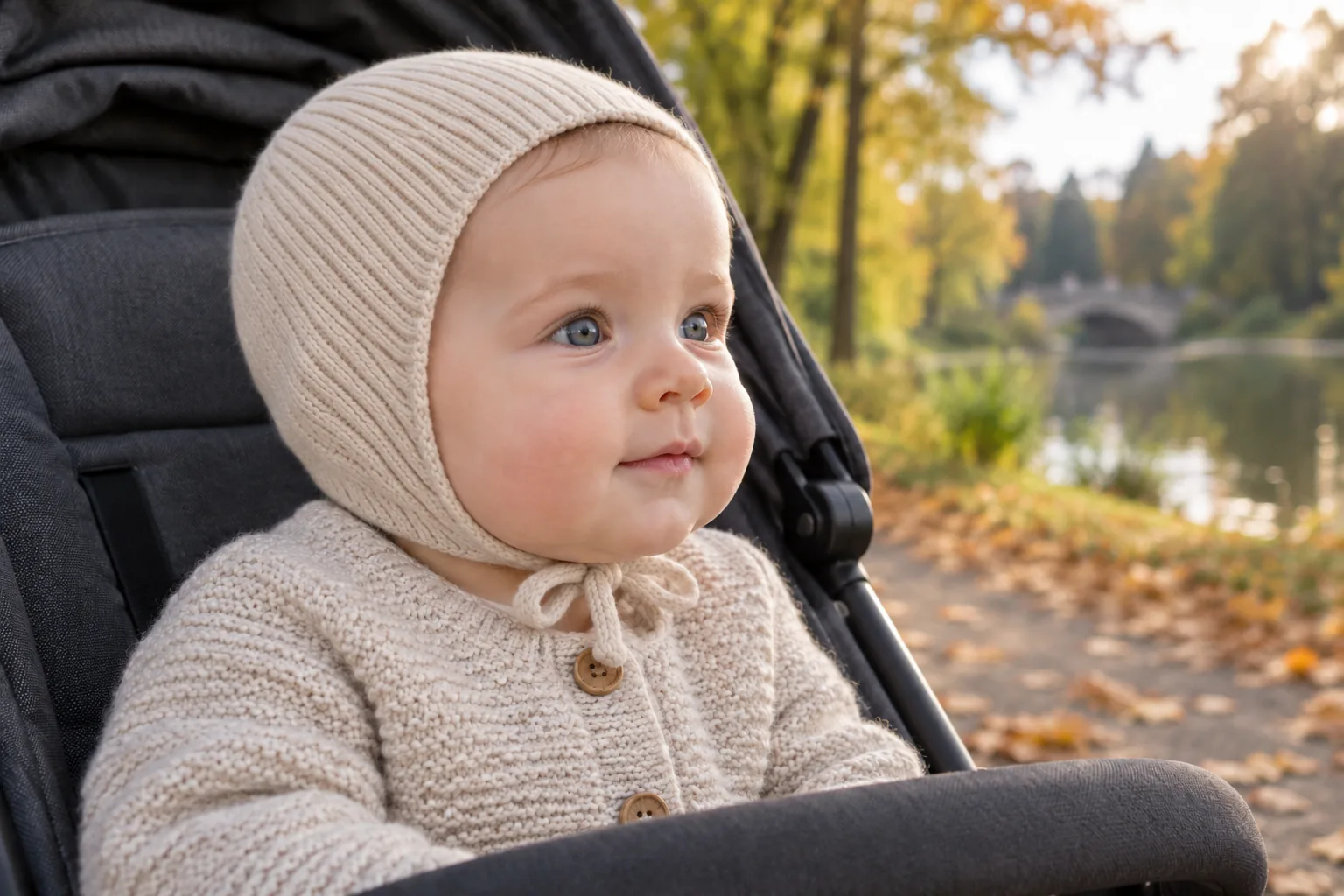
Bonnet
It does not ride up or come off with one tug, because it is tied. The downside is the bow: one more thing to do at the door, and ties that have to stay short.
- Good: Stays on through tugs and turns
- Good: Covers the whole ear
- Not good: A bow to tie for every walk
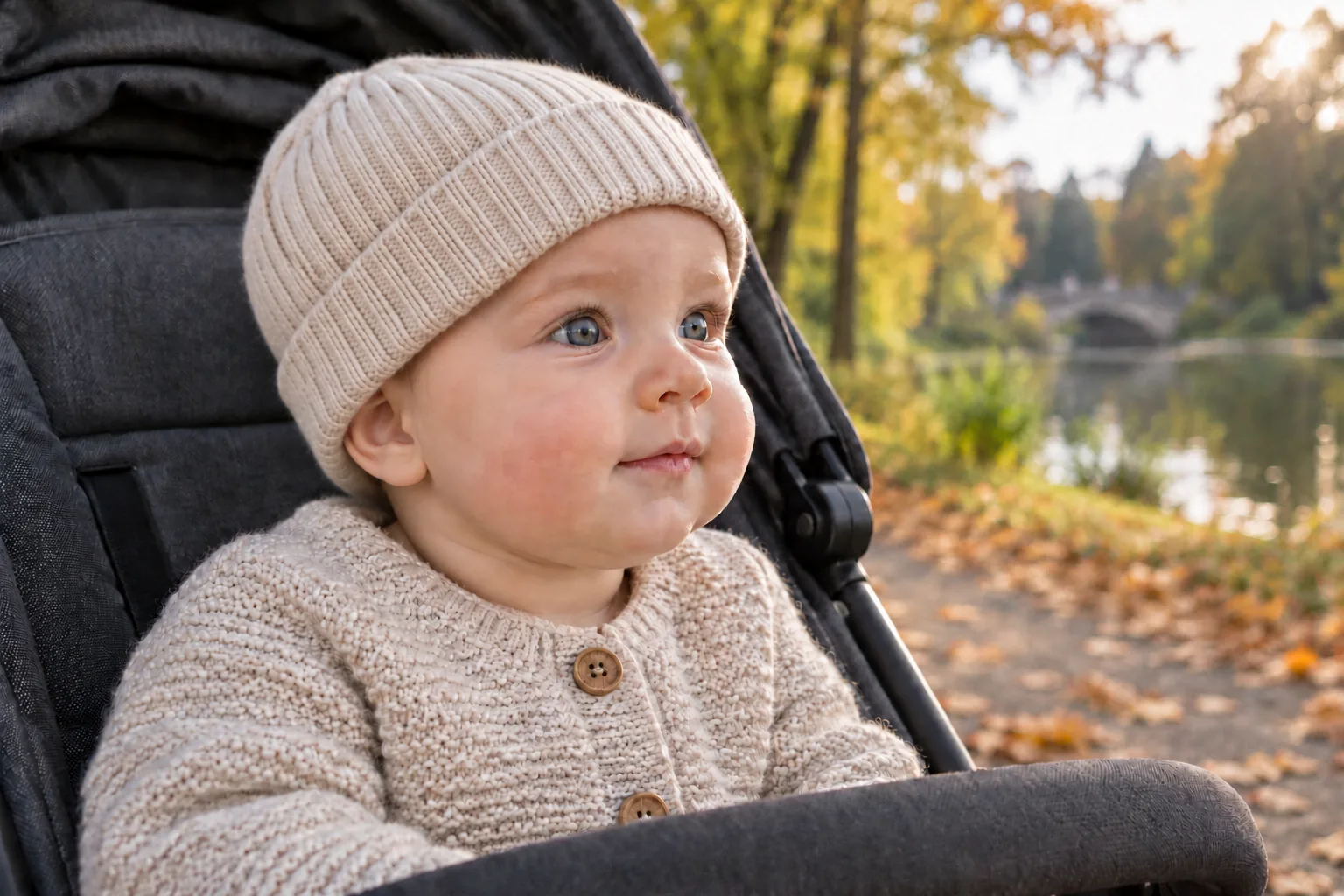
Beanie
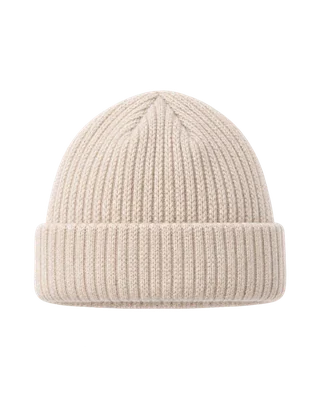
It pulls on in a second, with nothing tied near the neck. Nothing holds it on either, so it can ride up off the ears or slip over the eyes.
- Good: On and off in a second
- Good: Nothing near the neck
- Not good: Rides up or comes off
Types of bonnet
Shops use the word for four kinds of hat. The first two are light knit bonnets, for chilly days.
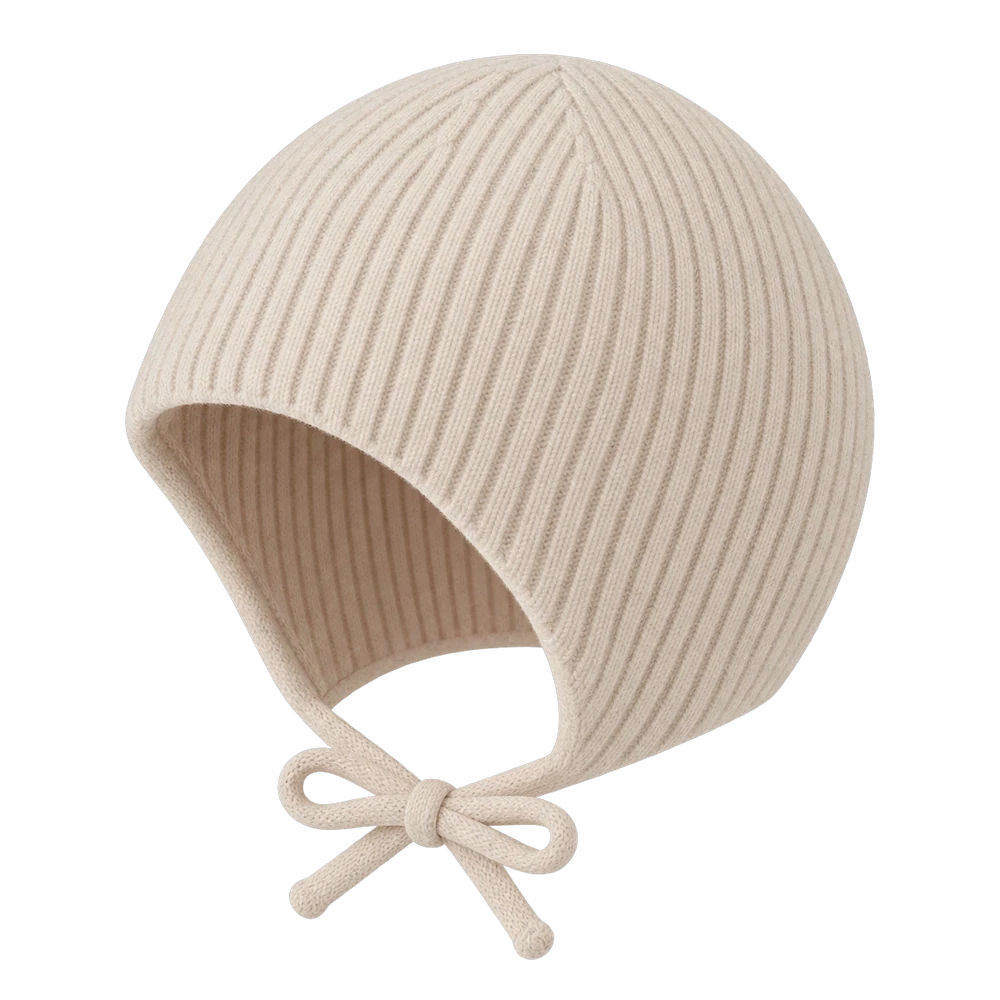
Ribbed knit bonnet
The everyday light bonnet, in cotton or merino (a soft, fine wool). Its rib knit, with fine raised lines, stretches over the head and springs back, so it hugs without pressing.
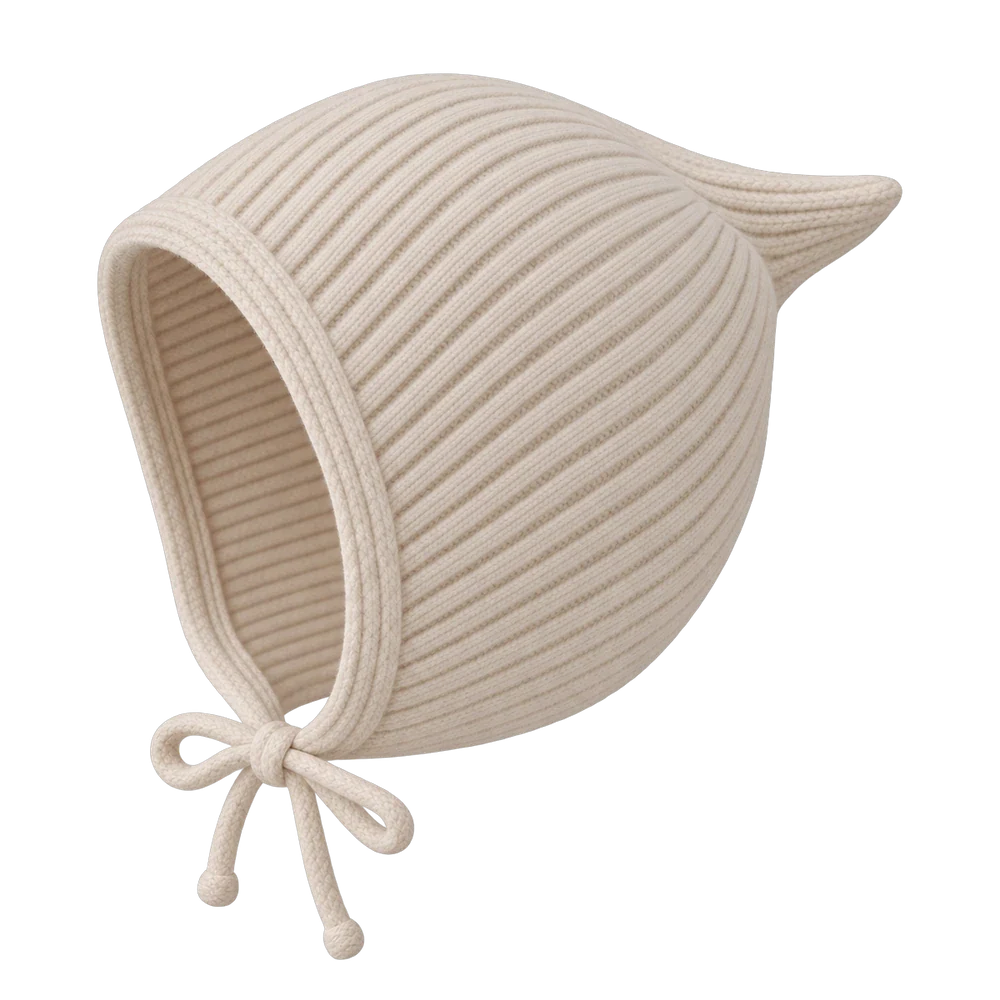
Pixie bonnet
A light bonnet with a soft point at the back of the head. It fits and ties like the ribbed one, so the choice is only the look.
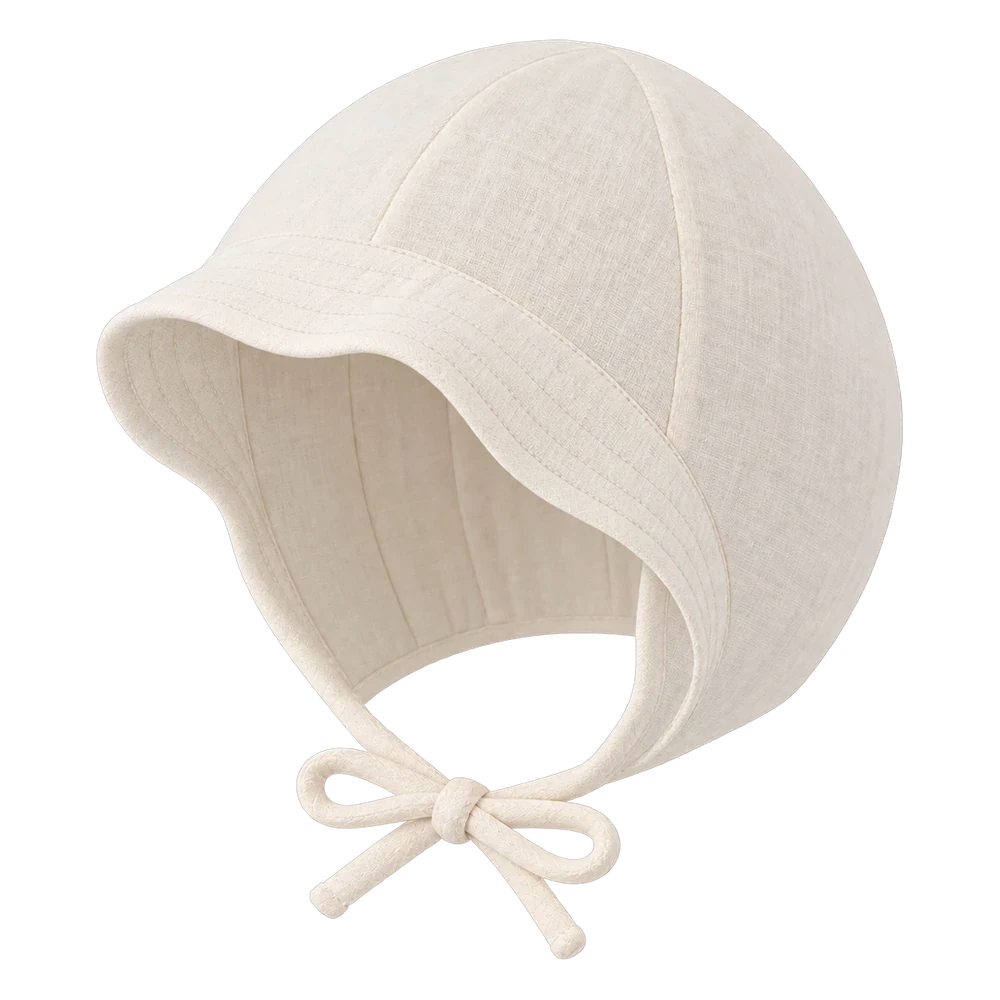
Sun bonnet
Thin woven cotton with a soft brim around the face, for sunny days. It is a sun hat, not a knit hat.
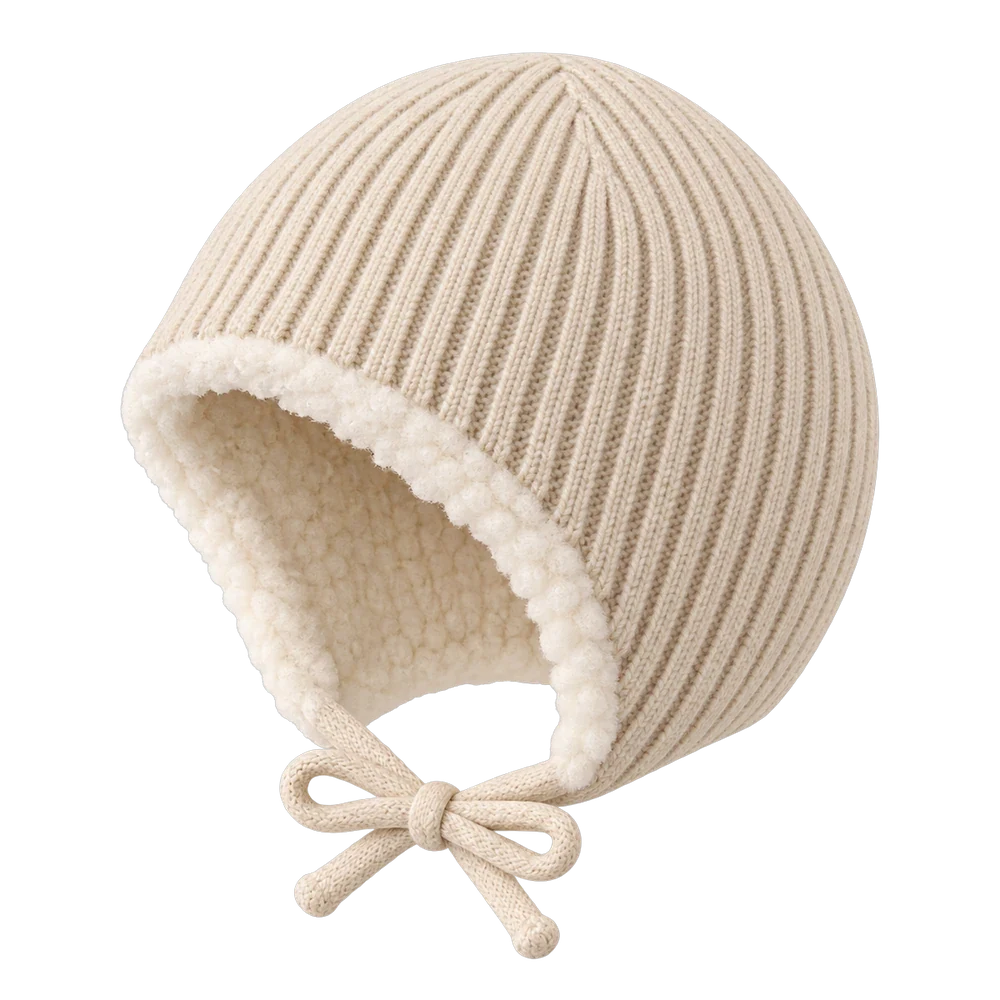
Lined bonnet
A knit bonnet with fleece or sherpa (thick, fluffy fleece) inside. It is a warm hat, for days that feel colder than 8°C (46°F), or colder than 12°C (54°F) for a baby under 3 months.
How to choose a bonnet
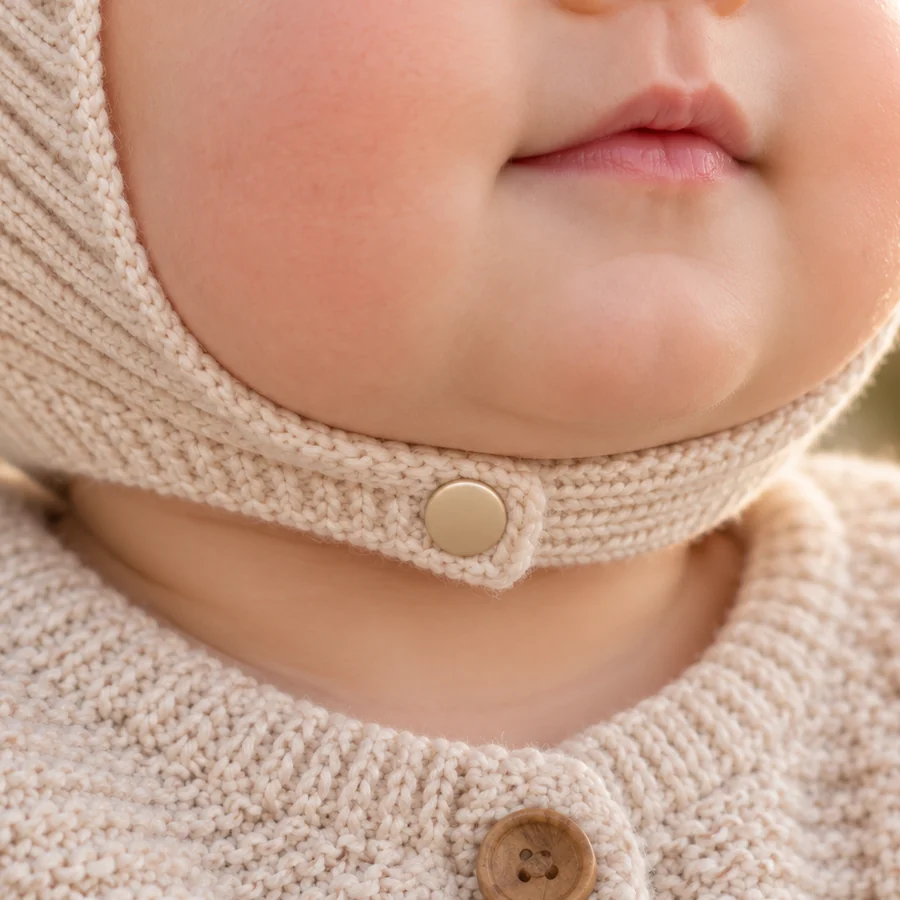
1. A snap, or short ties
A snap (a press stud, or popper) under the chin leaves nothing loose. If the bonnet ties, the ties should be just long enough for a bow, because long ends can catch around the neck or end up in the mouth.
- Good: Snap under the chin
- Good: Short ends once the bow is tied
- Not good: Long ties that dangle

2. Soft knit by the face
A bonnet lies against the cheeks and the ears, so it should feel soft right at the face edge. Cotton rib is the easy choice next to the skin. Wool on bare skin can make sensitive skin red, as the fabrics guide explains.
- Good: Smooth against your own cheek
- Good: Cotton rib with a little stretch
- Not good: Prickly yarn at the face edge
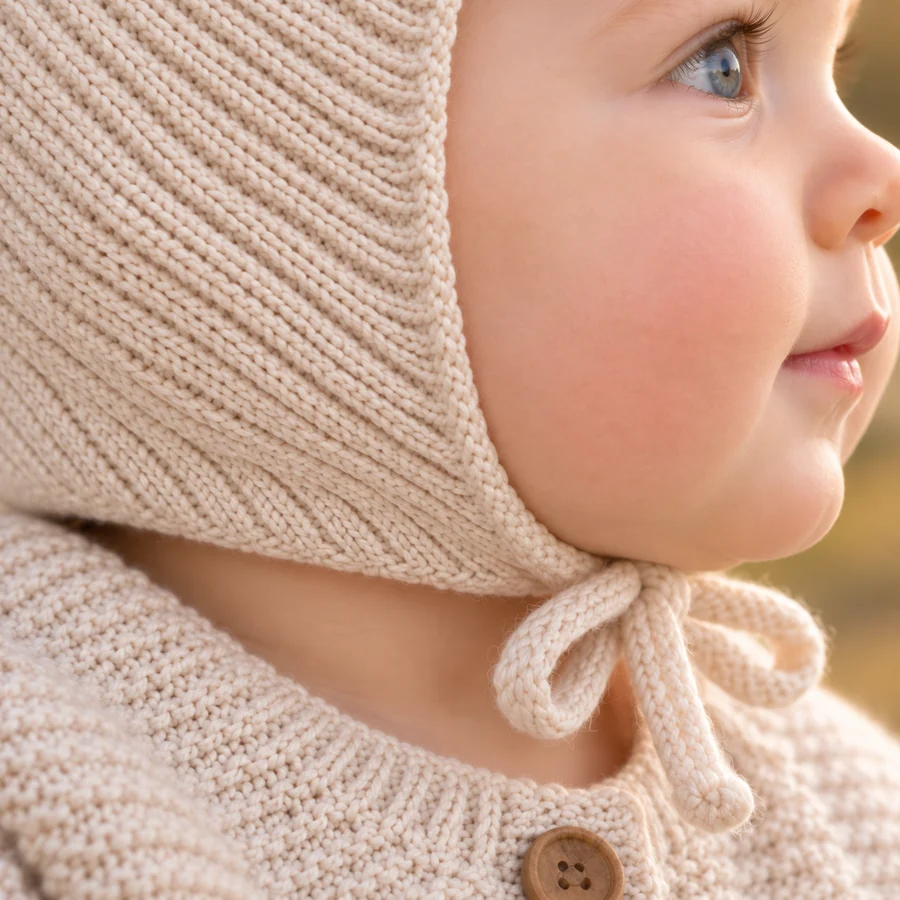
3. The right size
Bonnet sizes go by age, and makers measure them in different ways, so the surest check is trying it on your baby, or measuring the head against the brand's chart.
- Good: Both ears fully inside
- Good: Ties meet easily under the chin
- Not good: Sits behind the ears
How to put on and tie a bonnet
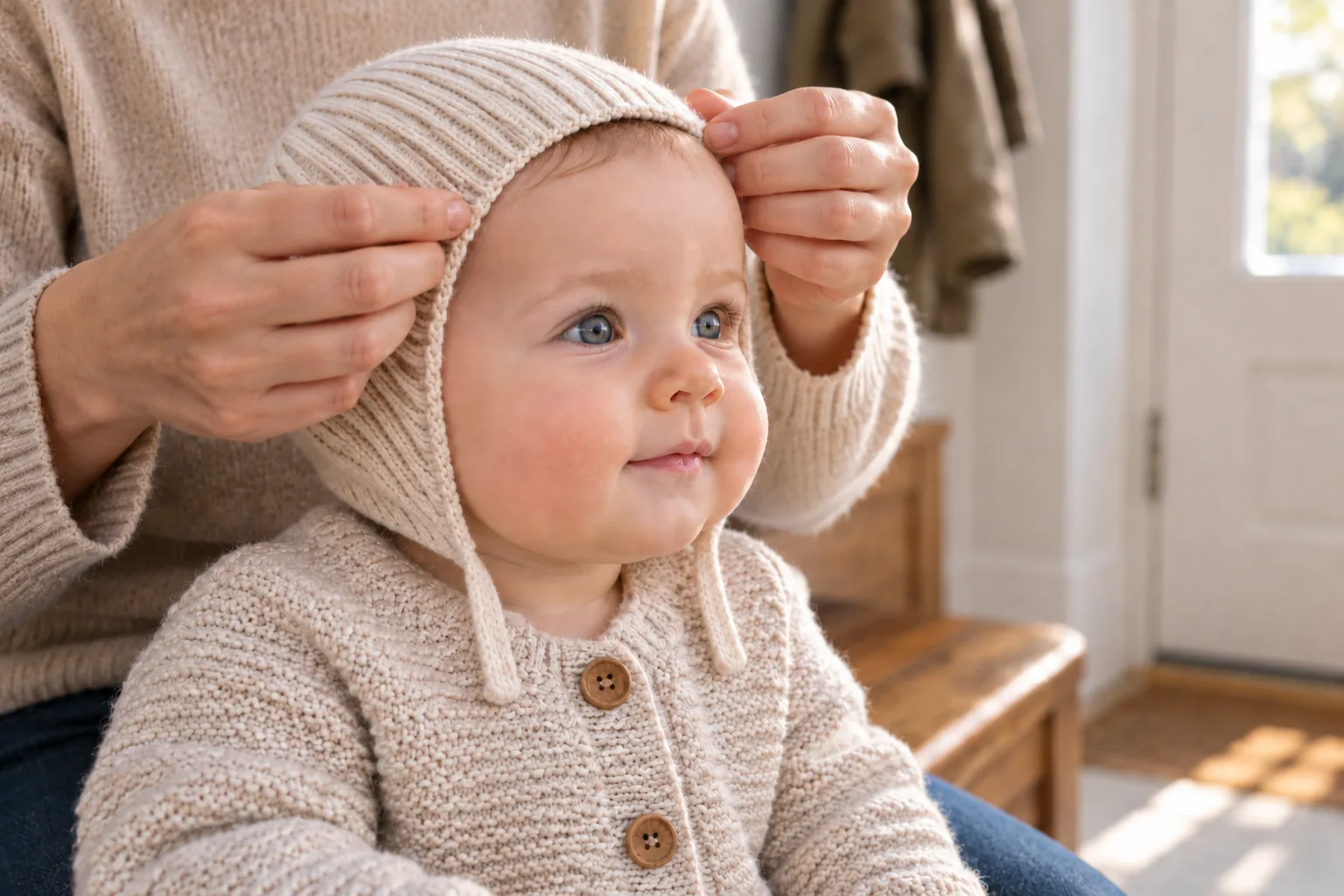
1. Front edge on the hairline
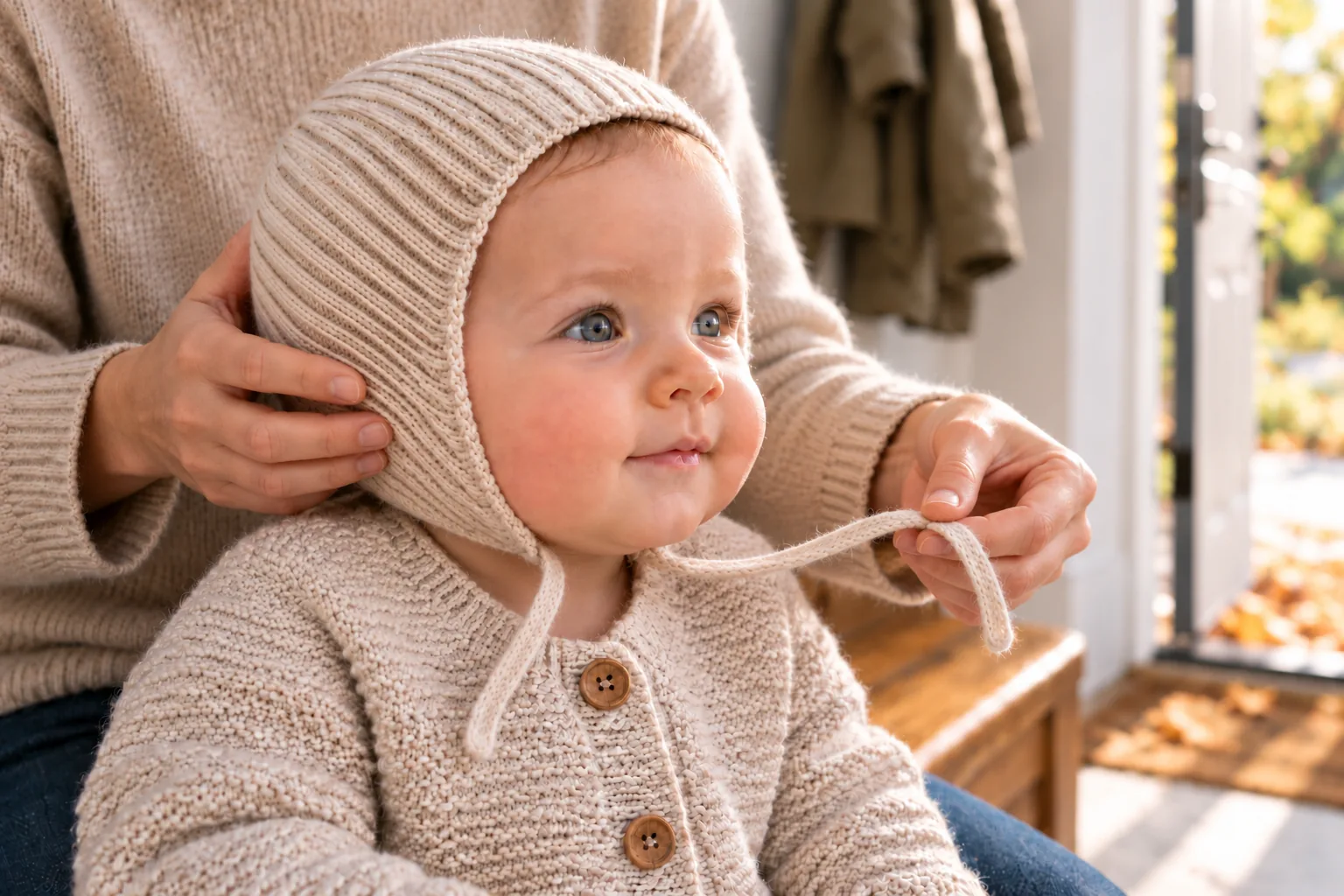
Set the front edge on the forehead, at the hairline, so it stays clear of the eyes. Then ease the sides down over the ears.
2. A bow under the chin
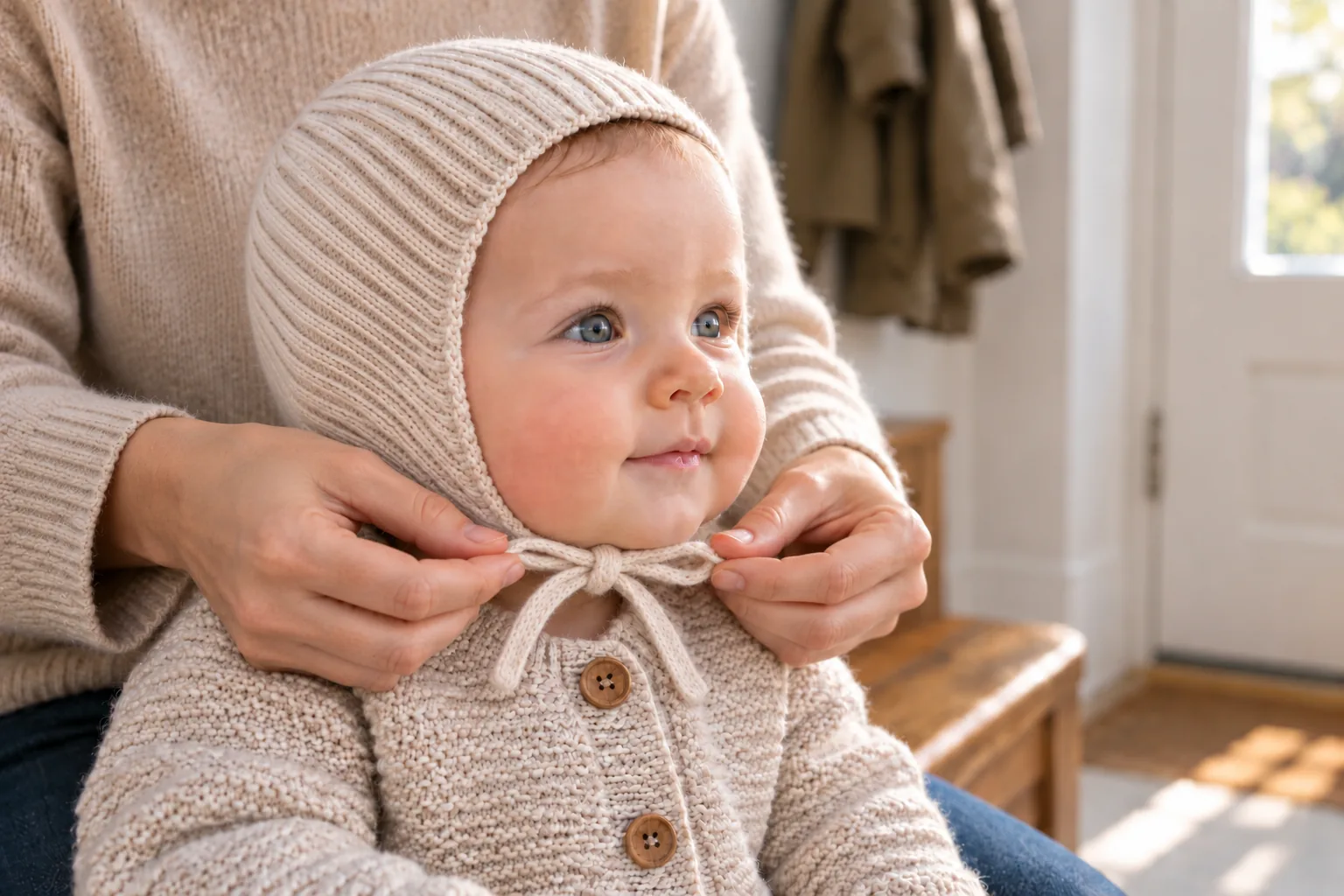
Tie a small bow under the chin, not a knot, so one pull opens it when the bonnet has to come off fast.
3. Untie it indoors
As soon as you come indoors or get into the car, pull one end of the bow and lift the bonnet off, even if it wakes your baby. Do this with every hat, because a baby sheds heat through the head and a covered head soon gets too warm.
Questions parents ask
Are baby bonnets safe?
Yes, for walks, with you there. The ties are the part to watch, because a string can catch around a baby's neck. A bonnet that closes with a snap avoids that.
Can my baby sleep in a bonnet?
Not in a crib or bed. Babies sleep with a bare head, because a hat can make them too hot. The ties are one more reason, since nothing tied at the neck belongs in a crib. If your baby dozes off on a walk, take the bonnet off as soon as you are back inside.
Can my baby wear a satin bonnet for sleep?
No. A satin or silk hair bonnet (a smooth cap some families use to protect curly hair at night) is still a hat, and babies sleep with nothing on the head.
Do bonnets go over or behind the ears?
Over. The sides are made to cover the ears, which keeps them warm and holds the bonnet in place.
Are bonnets supposed to be tight?
Snug, not tight: your baby should be able to open the mouth wide and turn the head without the ties pulling. A red mark on the chin or neck means the bow is too tight. If the bonnet keeps sliding back, it is too big, and the bow slips down toward the throat.
How long do babies wear bonnets?
As long as one fits and stays on. Bonnets come in sizes from newborn to about 12 months, and some knitted ones go up to 2 years.
Should I always put a bonnet on my newborn?
No, only for walks on chilly days. Indoors, a newborn's head stays bare, like any baby's.
Can baby boys wear bonnets?
Yes. A bonnet is a shape of hat, not a girls' hat, and a plain knit one suits any baby.