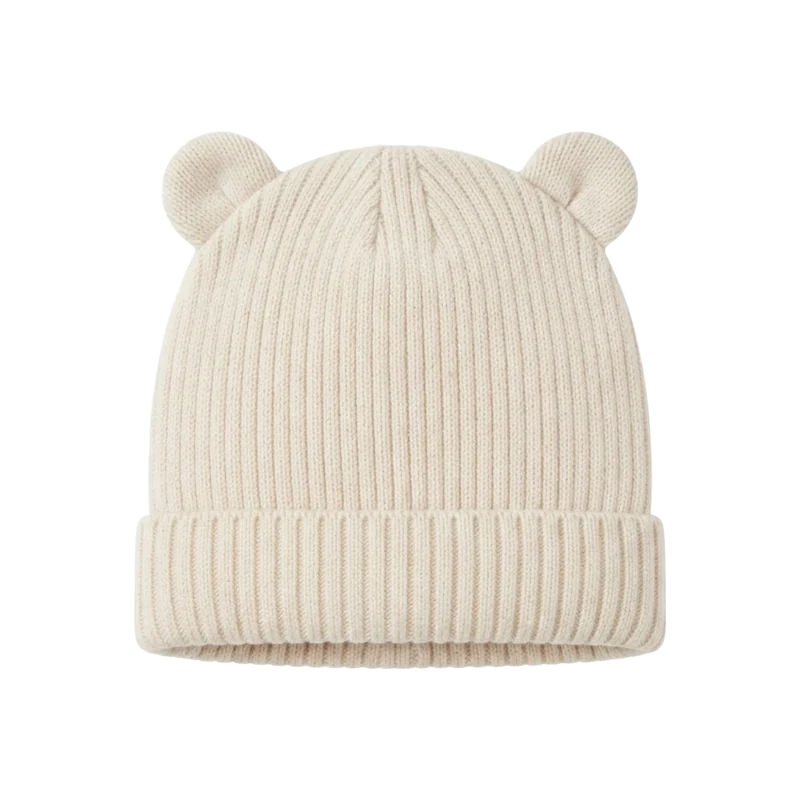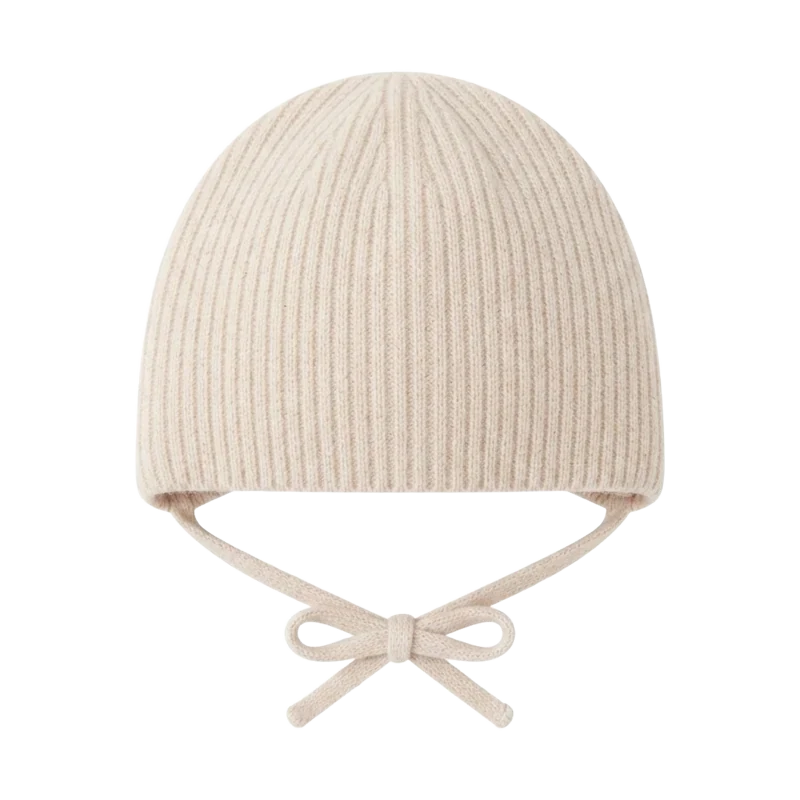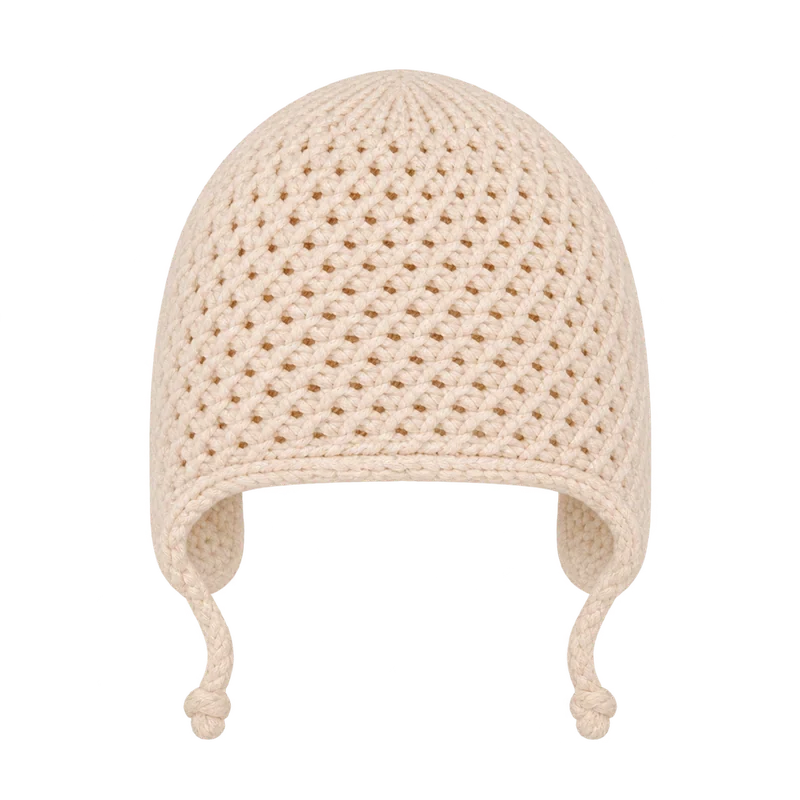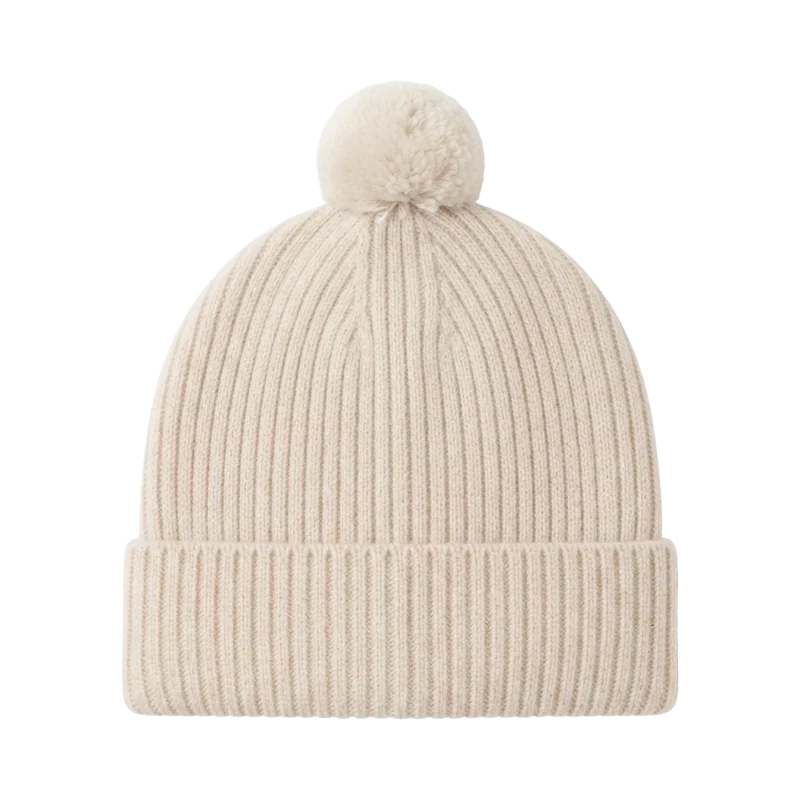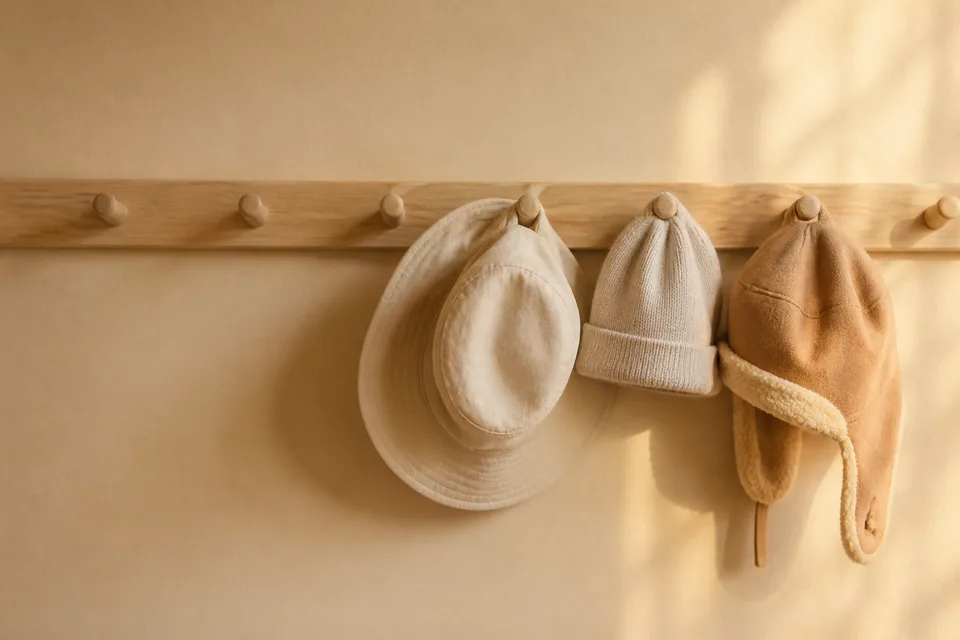
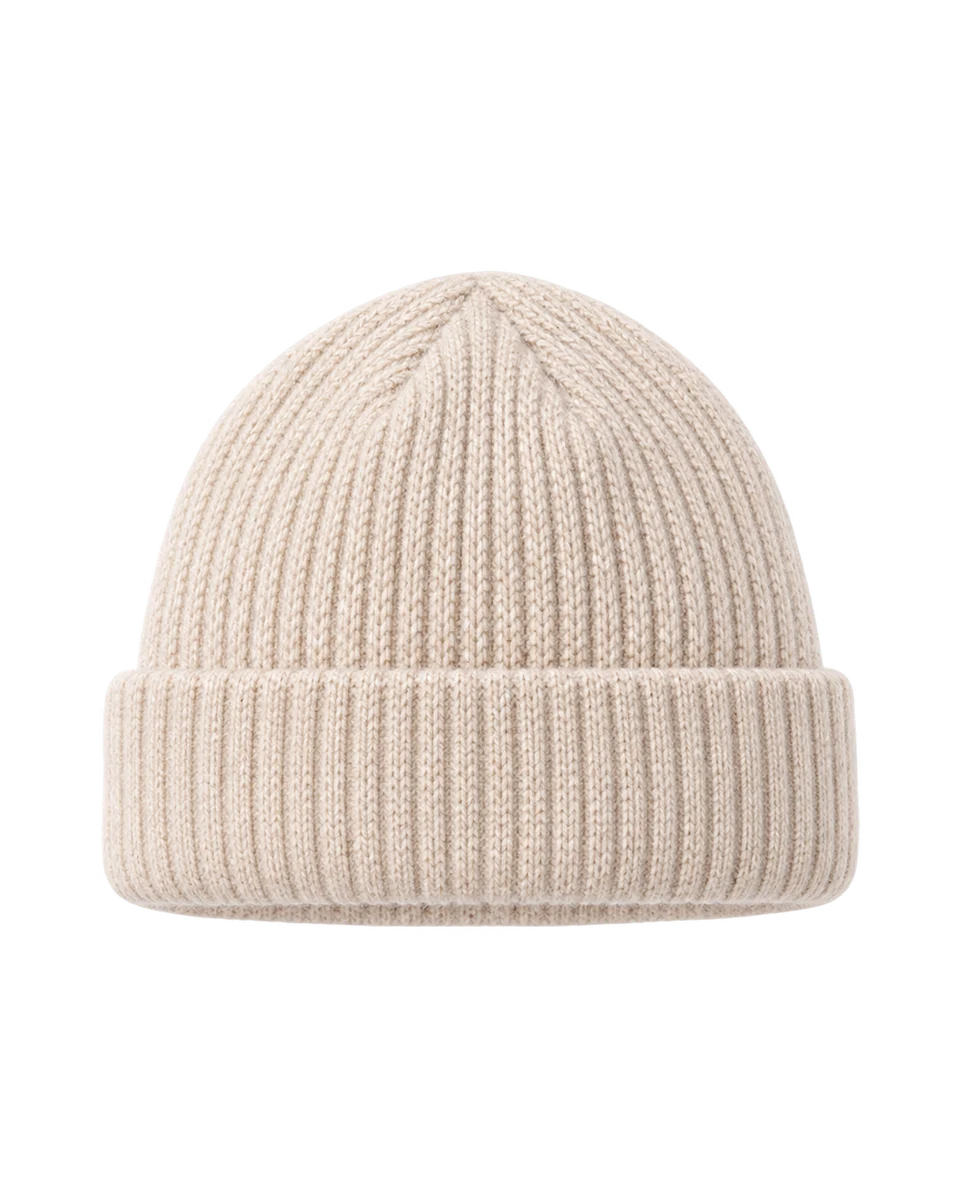
A light knit hat is a thin, stretchy hat knitted from soft cotton or fine wool. It hugs the head and comes down over the tops of the ears, with no lining inside. Shops usually call it a beanie.
It is for walks on chilly days, when a thick winter hat would be too much. Your baby sits still in the stroller while you keep moving, and feels the cold sooner than you do.
Babies wear one from the first weeks to the toddler years.
- For ages0–3years
- You'll need1–2light hats
- Wear it at8–15°C46–59°F
When babies wear one
On a walk, put it on when it feels like 8–11°C (46–52°F) outside. That is the feels-like temperature, which counts the wind and the damp. Most weather apps show it.
Below 8°C (46°F), change to a warm winter hat: it is thicker and lined, and wind blows through a thin knit. From 12°C (54°F) up, your baby's head can stay bare.
Babies under 3 months need a little more warmth, so the hats start sooner: a knit hat at 12–15°C (54–59°F), a warm hat below 12°C (54°F), and a bare head from 16°C (61°F).
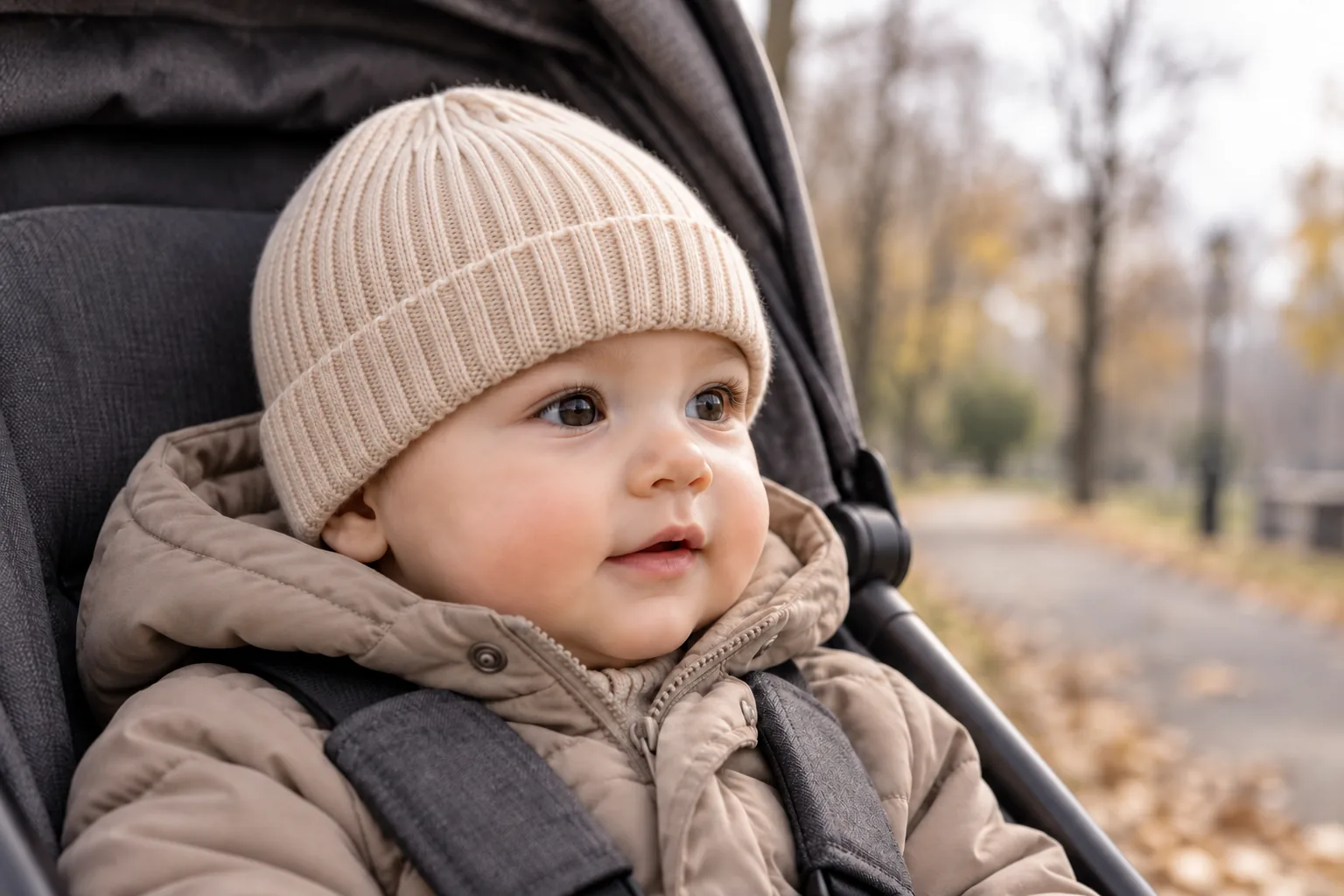
Types of knit hat
Most light knit hats come in one of these four shapes. A pom-pom hat or a bear-ear hat is a beanie with a trim on top.
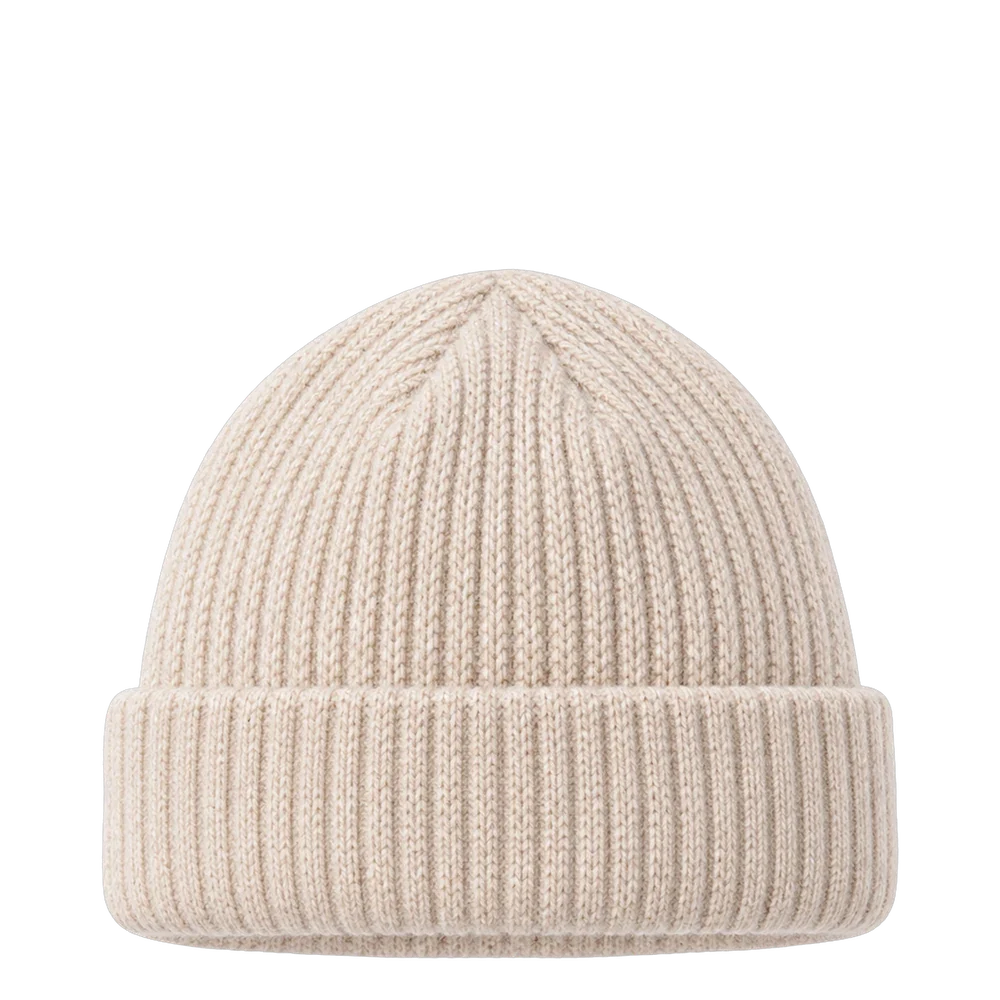
Beanie
The everyday kind, for any age: fine rib knit with a cuff folded back. The cuff gives a double layer over the ears. Unfold it a little as the head grows.
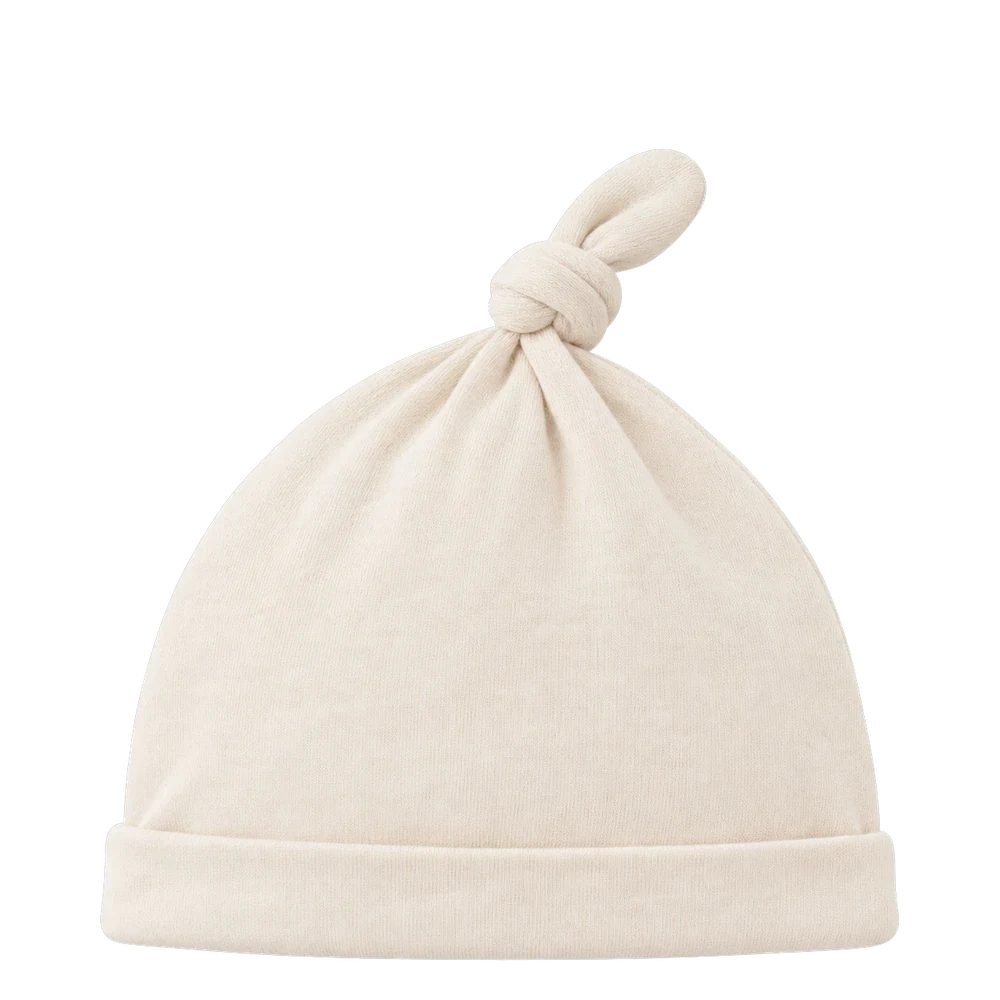
Newborn hat
The thin cotton jersey cap of the first days after birth. For a chilly walk, a beanie is warmer.
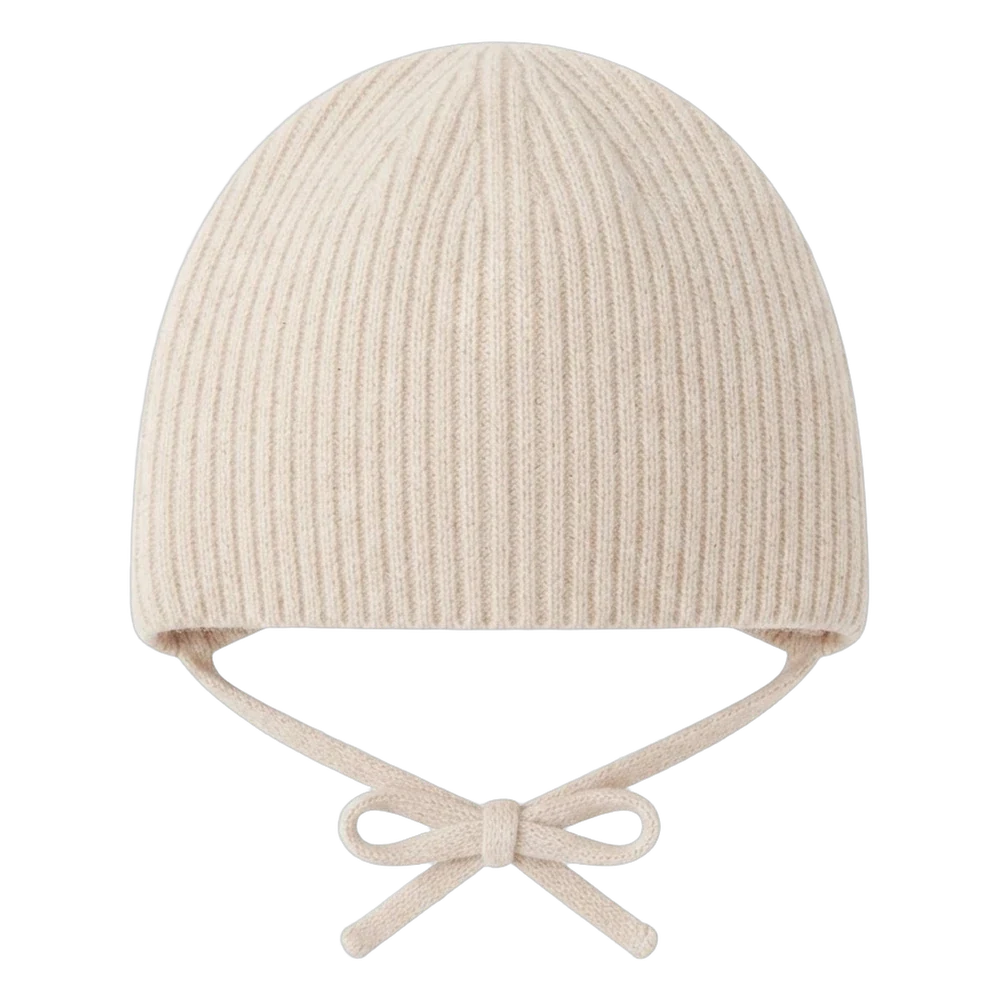
Bonnet
It frames the face and ties under the chin, so it stays on and covers the back of the head. It suits a baby who pulls hats off. The ties take a moment to do up.
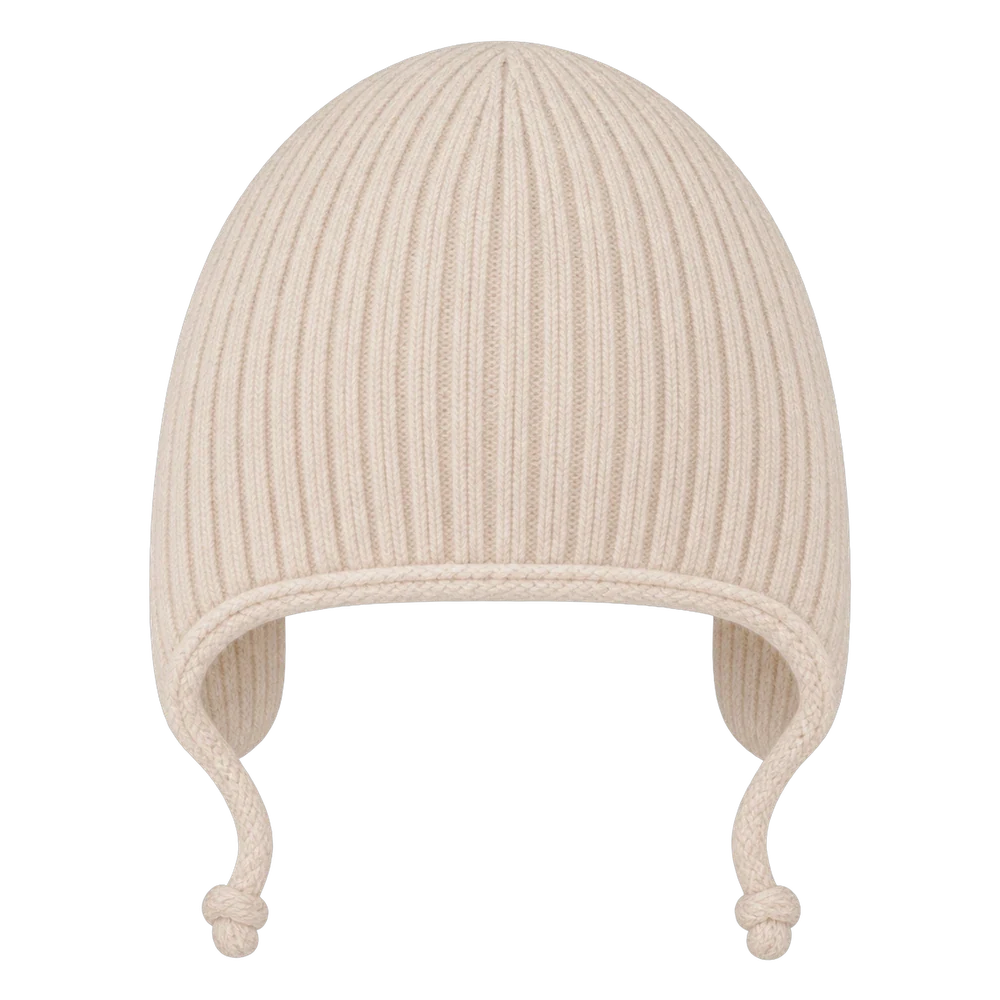
Earflap hat
Flaps come down over the ears, usually with braided ties. It suits windy days, because the flaps keep the ears covered where a beanie would ride up.
How to choose a knit hat
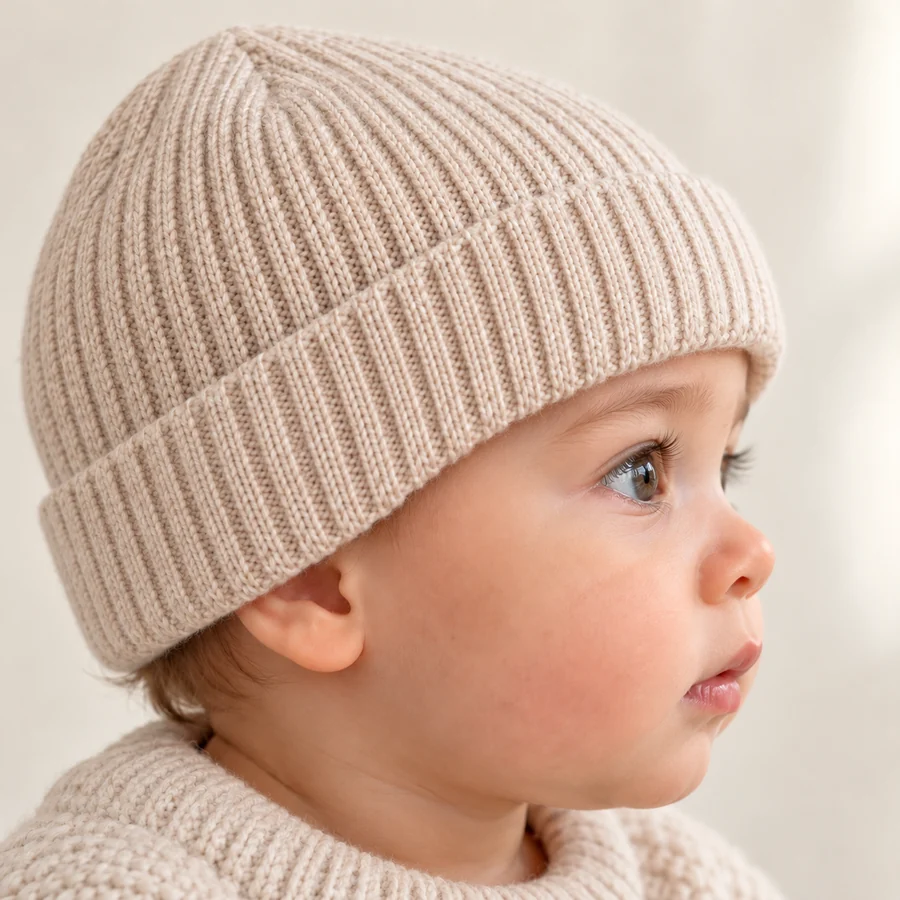
1. It fits the head, not the age
Age labels are rough, and sizes differ a lot between brands. Go by your baby's head and the brand's chart: how to measure a head. The hat should hug the head without pressing.
- Good: Edge above the eyebrows
- Good: Covers the tops of the ears
- Not good: Red mark on the forehead
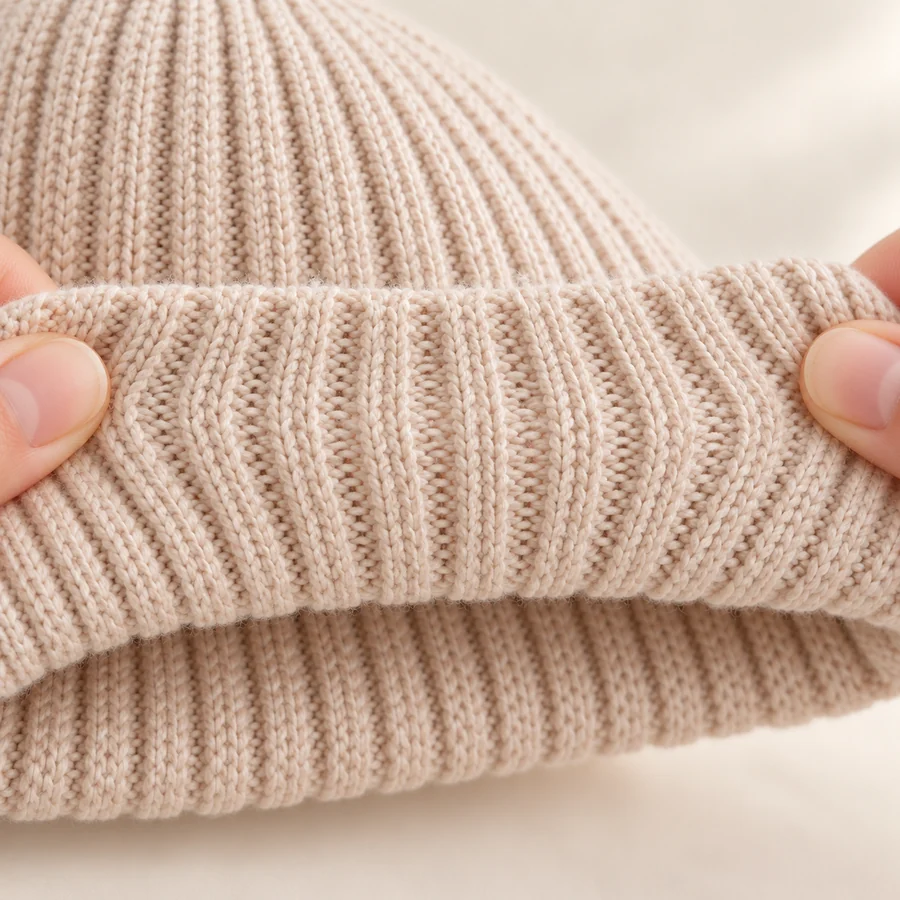
2. Rib knit that springs back
Rib knit has fine raised lines running up the hat. It stretches over the head and pulls back in, so the hat stays put without a tight band.
- Good: Fine ribs all the way round
- Good: Springs back after a stretch
- Not good: Stays wide after a stretch
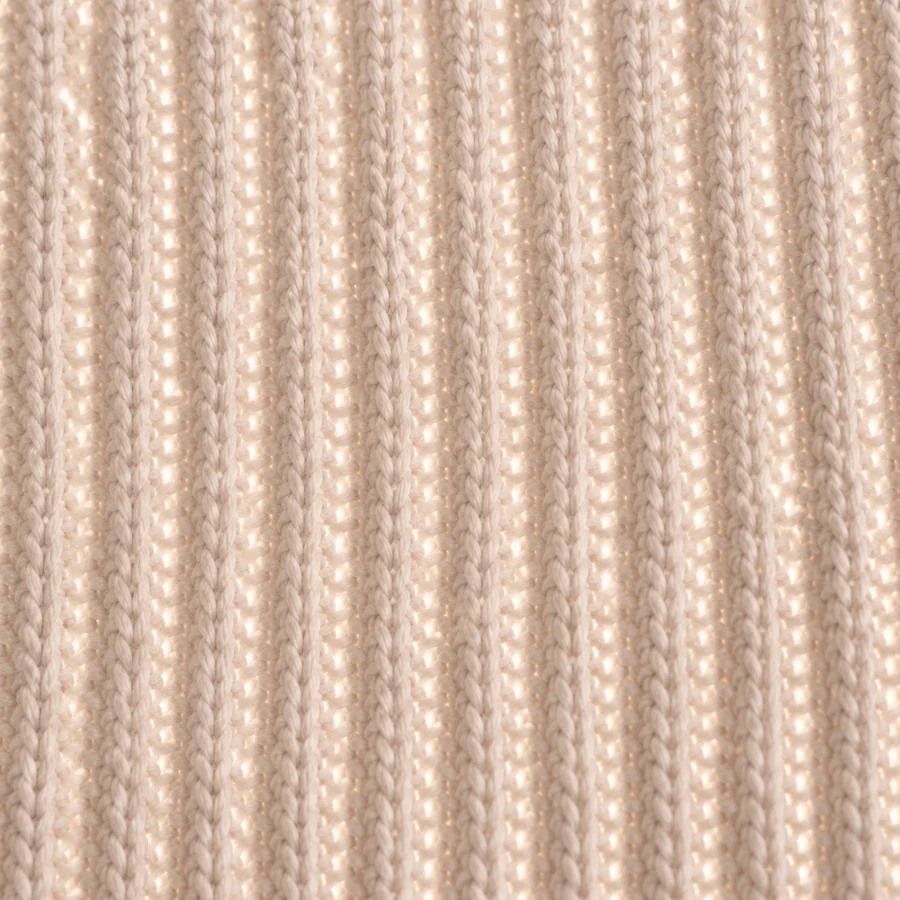
3. Thin, soft yarn
Cotton or fine merino wool, in one thin layer. Cotton washes easily. Merino is a little warmer and still soft, but it needs a cool, gentle wash or it can shrink. A lined hat is a winter hat, too warm for a chilly day.
- Good: Label says cotton or merino
- Good: Light shows through the knit
- Not good: Hairy yarn that prickles
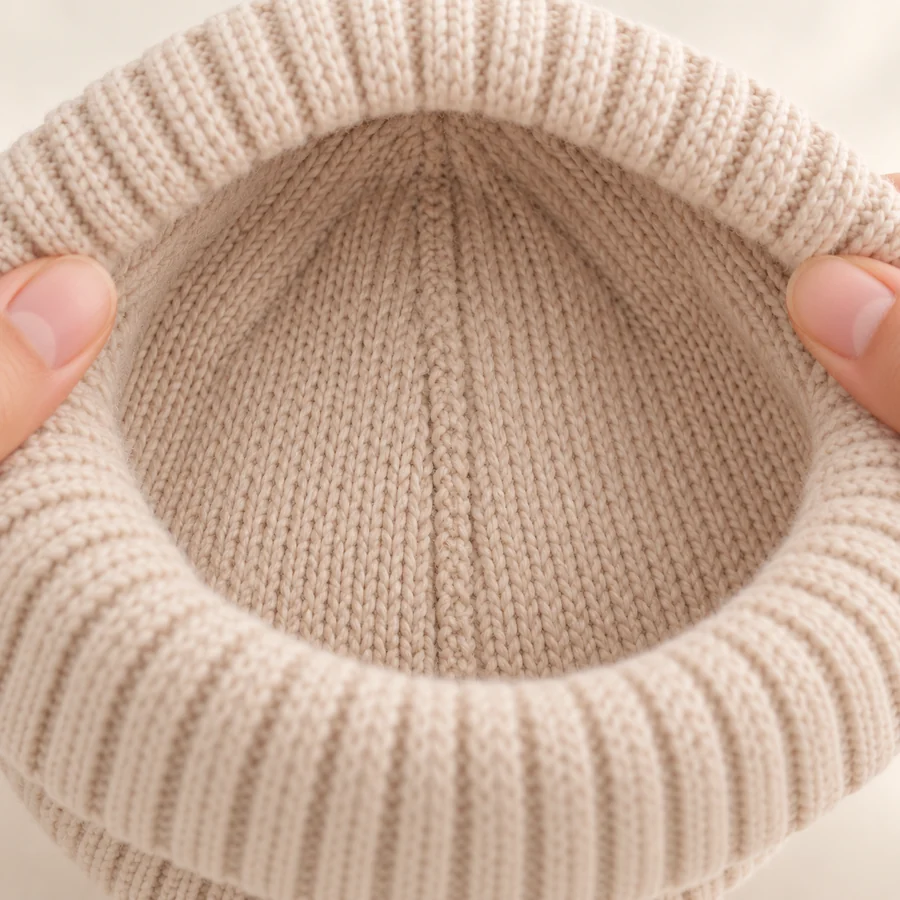
4. Smooth inside
Look inside before you buy. A stiff tag or a thick seam rubs on the head, and babies pull off a hat that bothers them.
- Good: Flat, soft seams
- Good: Printed label, no tag
- Not good: Stiff tag inside the cuff
How to use it
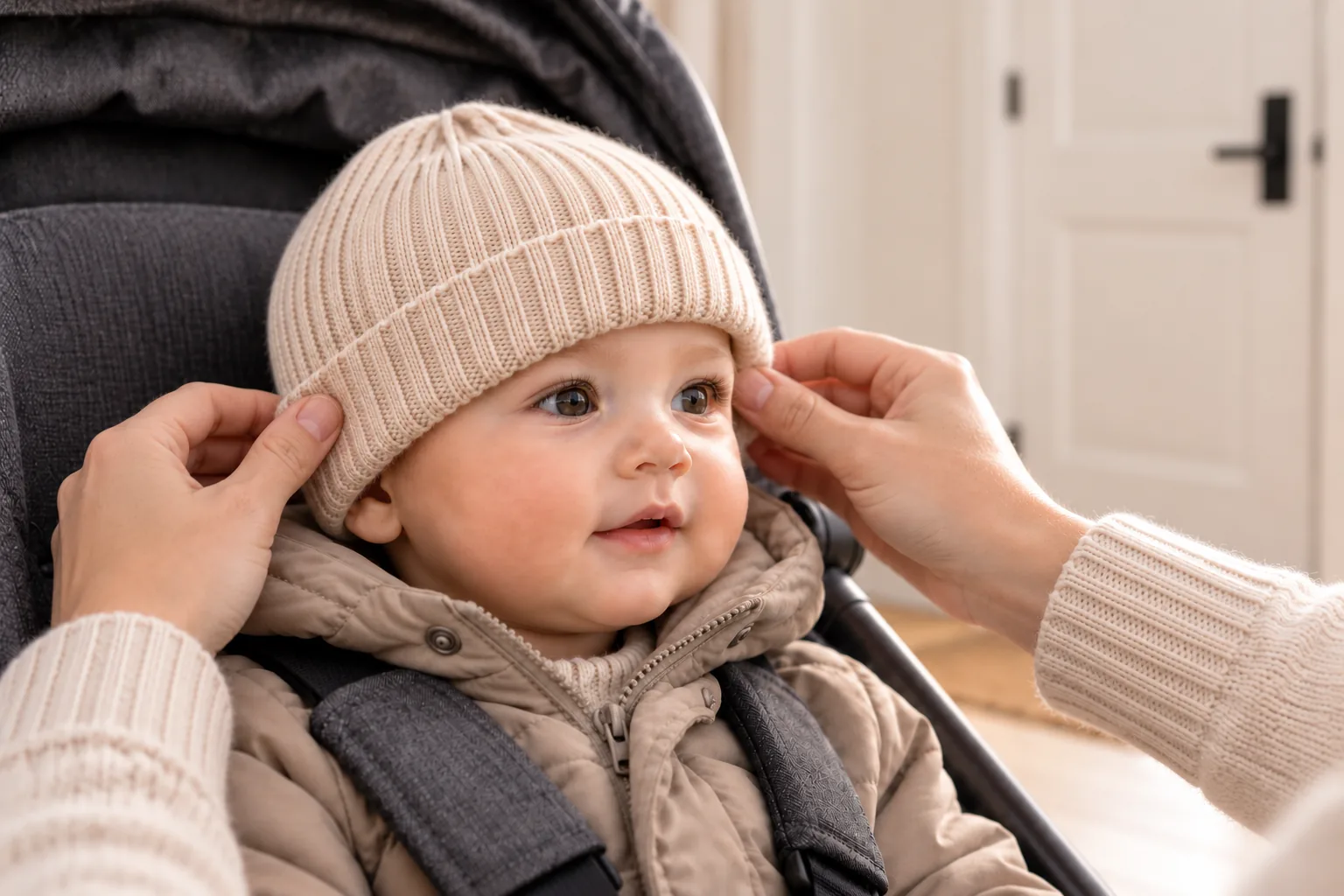
1. Put it on last
Dress your baby first and add the hat just before you go out, so the head does not get warm indoors. Pull it down evenly over both ears. If it slides over the eyes, fold the cuff deeper or try a smaller size.
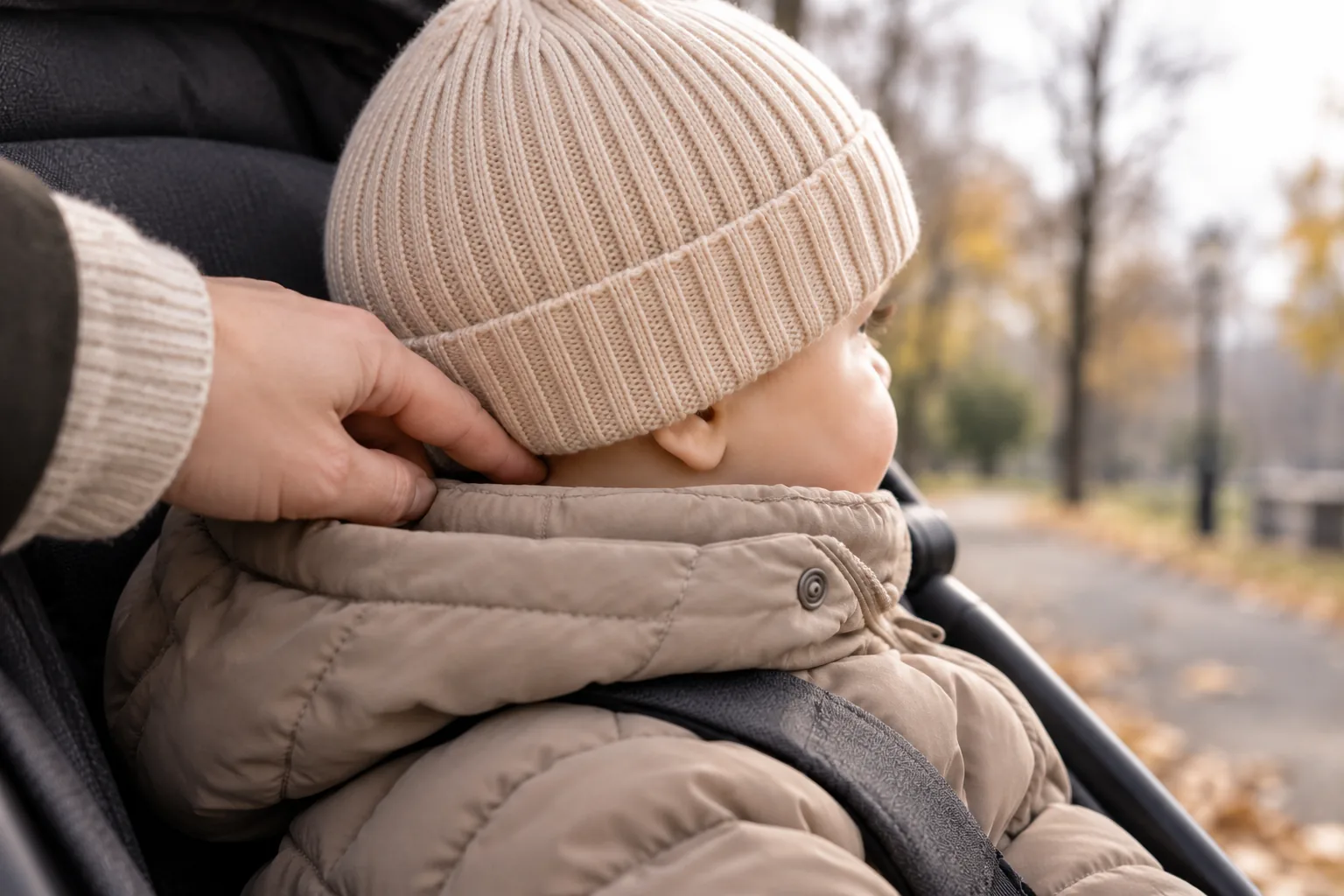
2. Check the neck
A head under a hat always feels warm, so feel the back of the neck instead, under the collar. A damp neck means one layer too many. A sweaty head with a dry neck means only the hat can come off.
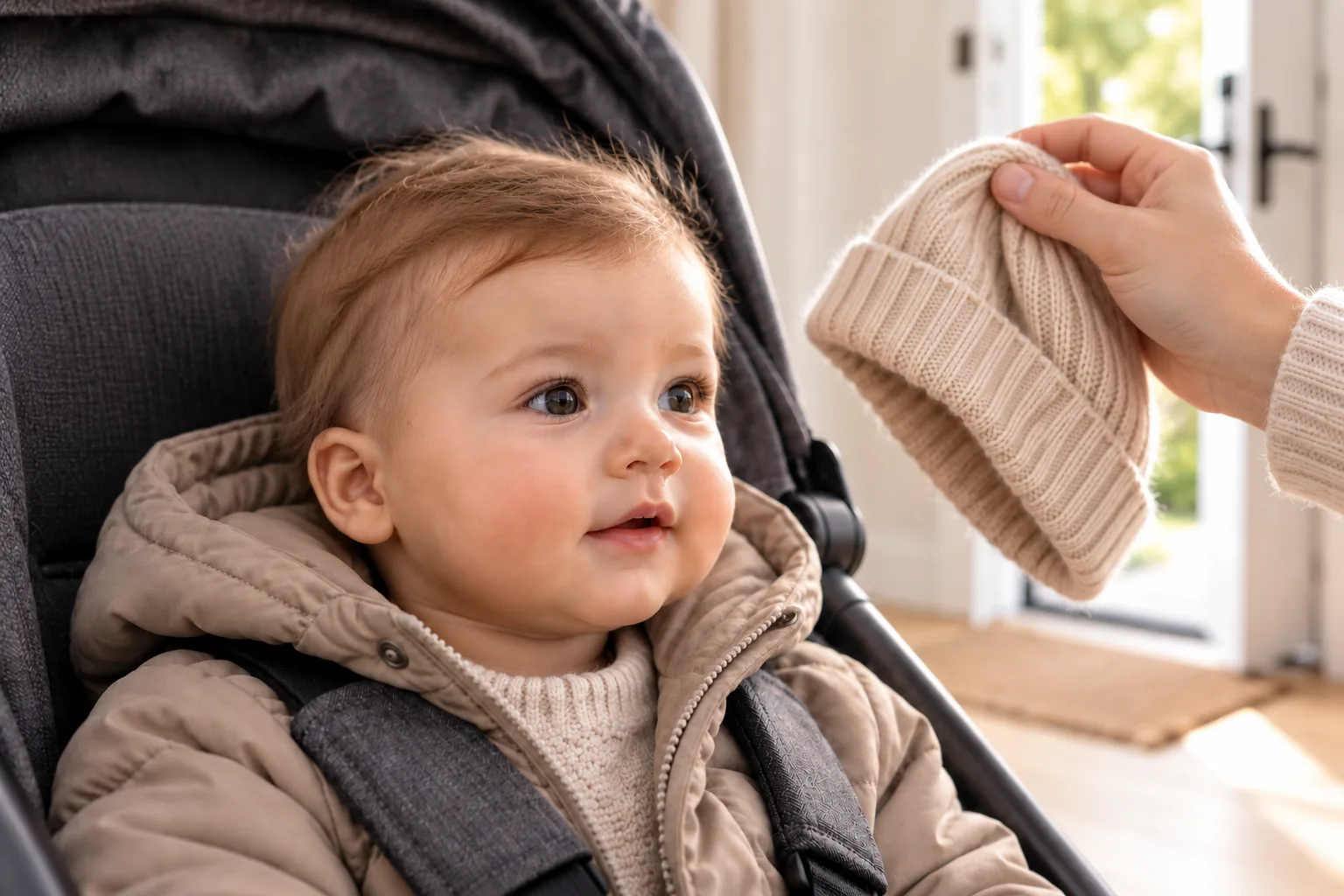
3. Off at the door
Take it off as soon as you come indoors, even if it wakes your baby. Babies cool down through the head and face, so a hat indoors traps heat.
Questions parents ask
Can my baby sleep in a knit hat?
No. In a crib or bed, the head stays bare. A hat can make your baby too hot, which can raise the risk of SIDS (sudden infant death syndrome), and it can slip over the face.
What size hat does a newborn need?
Before the birth, have a newborn size and a 0–3 months size ready, because you cannot measure yet. A newborn's head is about 34 cm (13.5 in) round and grows about 6 cm (2.5 in) in the first 3 months, so the newborn size is soon outgrown. After that, buy by head size.
How do I keep a hat on my baby?
If the fit is right and your baby still pulls the hat off, try a bonnet or an earflap hat. Both tie under the chin. Keep the ties short, so they cannot catch, and put the hat on outside, where there is plenty to look at.
Can my baby wear a hat in the car seat?
Not in a warm car. Take it off as soon as the car warms up, even if your baby is asleep. A covered head soon gets too hot.