
What this is about
A carefully chosen outfit can stop feeling right once the car warms, the wind picks up or the stroller moves into the sun. The clothes cannot tell you that the situation has changed. Bare skin at the upper chest or back of the neck can.
Hands are the wrong place to judge
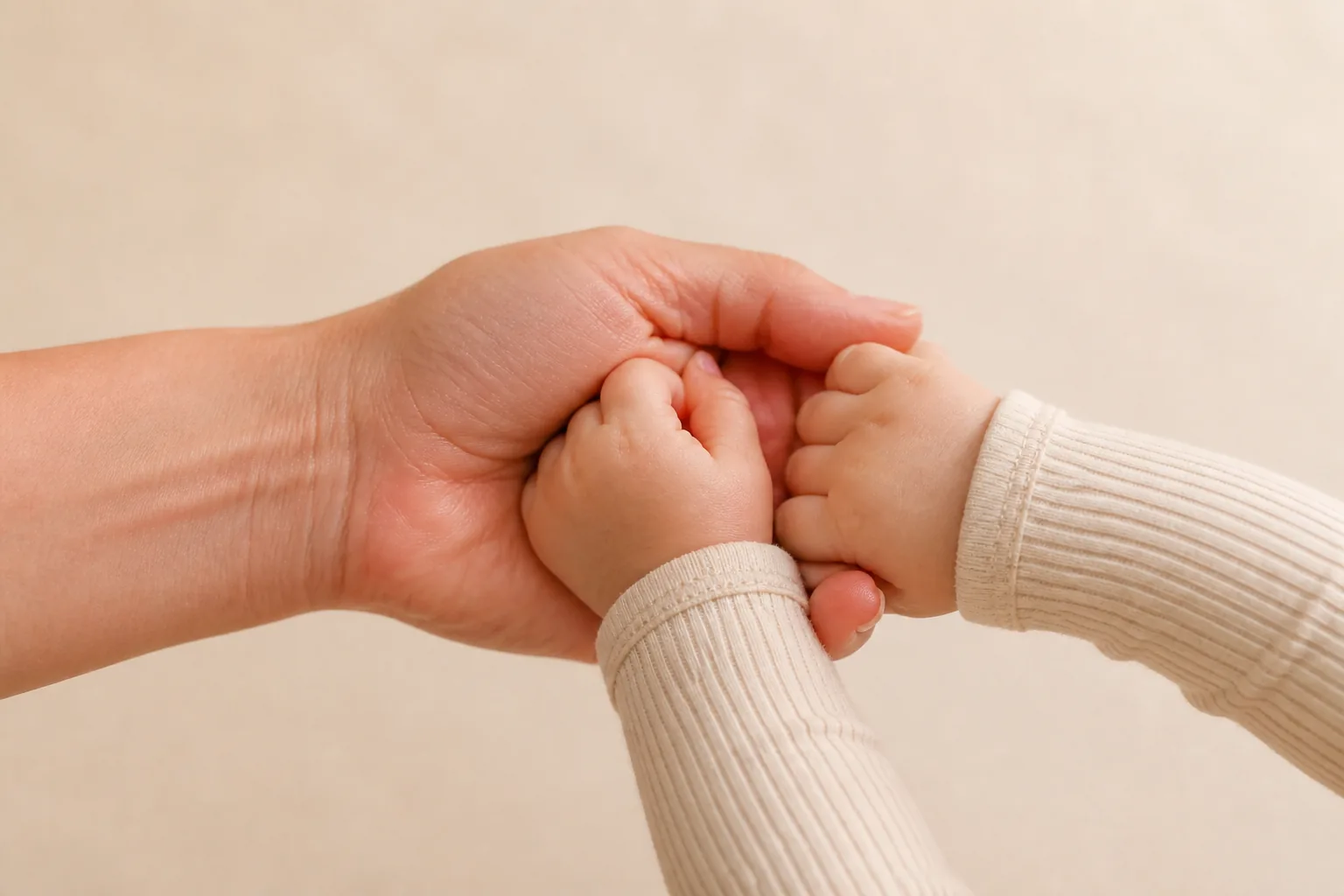
Hands and feet often feel cooler than the body. If you respond to cold toes by adding clothes, a baby whose torso was already comfortable can end up wearing too much.
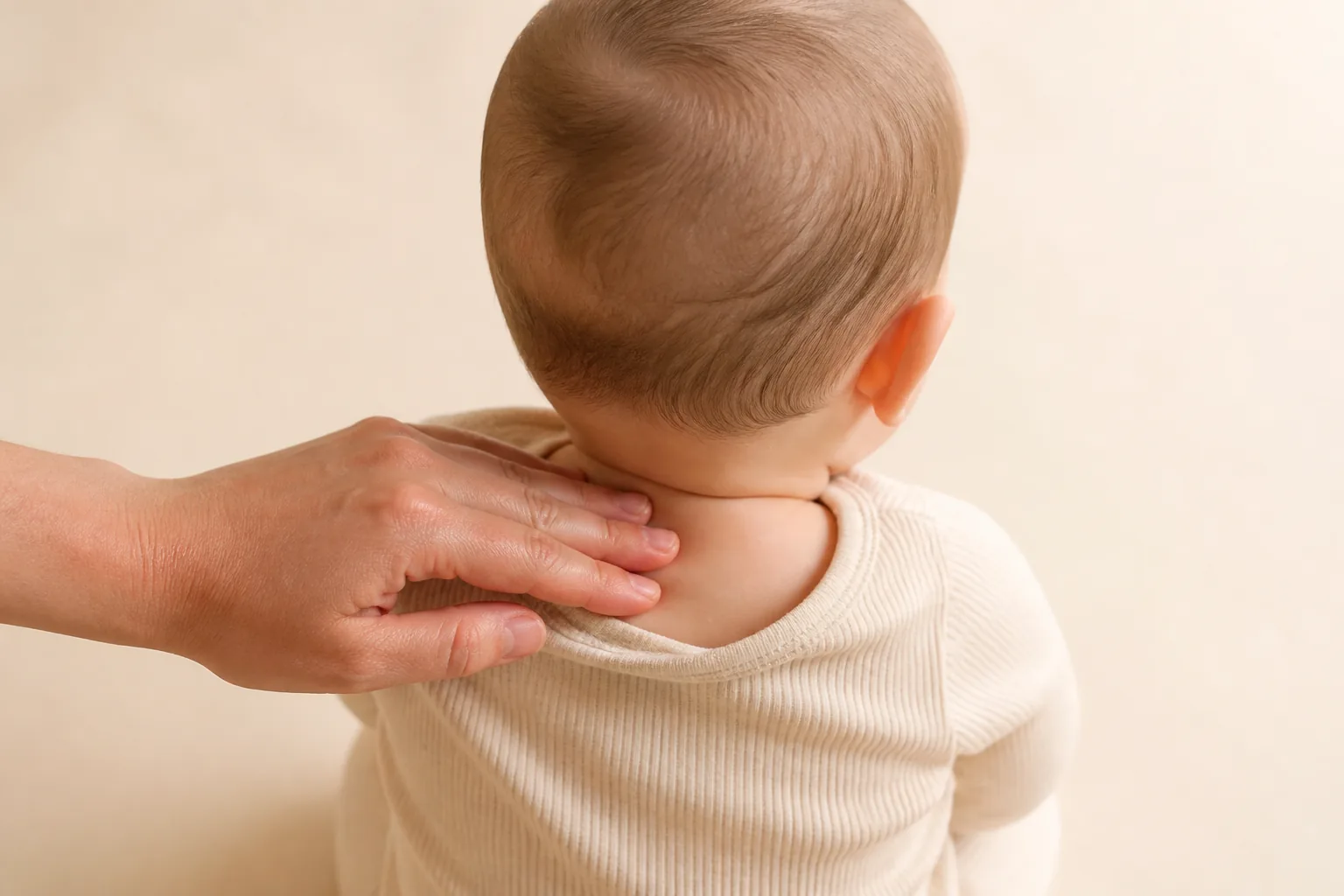
The upper chest or back of the neck gives the more useful answer. When that skin feels warm and dry, leave the outfit alone. Cool fingers do not overrule a comfortable torso.
 Yes
YesThe back of the neck
Bare skin inside the collar lets you judge both warmth and moisture.
 No
NoThe hands and feet
Cool fingers and toes can still belong to a baby whose torso feels comfortable.
Reach bare skin, not warm fabric
The check only needs two or three fingers. Slide them inside the collar and rest them where the neck meets the shoulders. If that spot is hard to reach, use the upper chest instead.
Make sure your fingers reach skin rather than the bodysuit, jacket or sleep bag. There is no need to undress your baby. Pause long enough to notice two things: whether the skin feels warm or cool, and whether it feels dry or damp.

Open the collar
Move the neckline only far enough for your fingers to reach bare skin.

Use flat fingers
Rest two or three fingers flat at the base of the neck, just below the hair.
Feel for two things
First notice whether the skin is warm or cool. Then notice whether it is dry or damp.
Warm is not the same as overheated
Warm does not mean too warm. A comfortable neck may feel warmer than your hand, and that is fine when the skin is also dry. There is nothing to adjust.
Hot, damp or clammy skin points the other way. Your baby may be too warm, so remove one layer of clothing or bedding. Let that small change take effect before checking again.
A cool chest calls for one light layer more. At bedtime, that could mean adding clothing under the sleep bag or moving to a warmer bag recommended by the maker's room chart.
Adjust one thing at a time. Fold back the stroller blanket, open the jacket or remove the cardigan, then check again. If several pieces change together, you cannot tell which adjustment was enough.
Doorways and warm cars are useful reminders
A sensible outfit can become too warm without anyone getting the clothes wrong. The car heats up. A carrier adds your body heat. Sun moves across a stroller that began in shade. An outdoor hat is easy to leave on after coming inside.
These transitions make useful reminders to check. Feel the neck after going outside, coming indoors, entering warm transport or adding a cover. If the skin is still warm and dry, stop adjusting.
The doorway is the simplest reminder of all. Take off hats and extra outdoor clothes indoors or in warm transport, even if doing so wakes your baby.
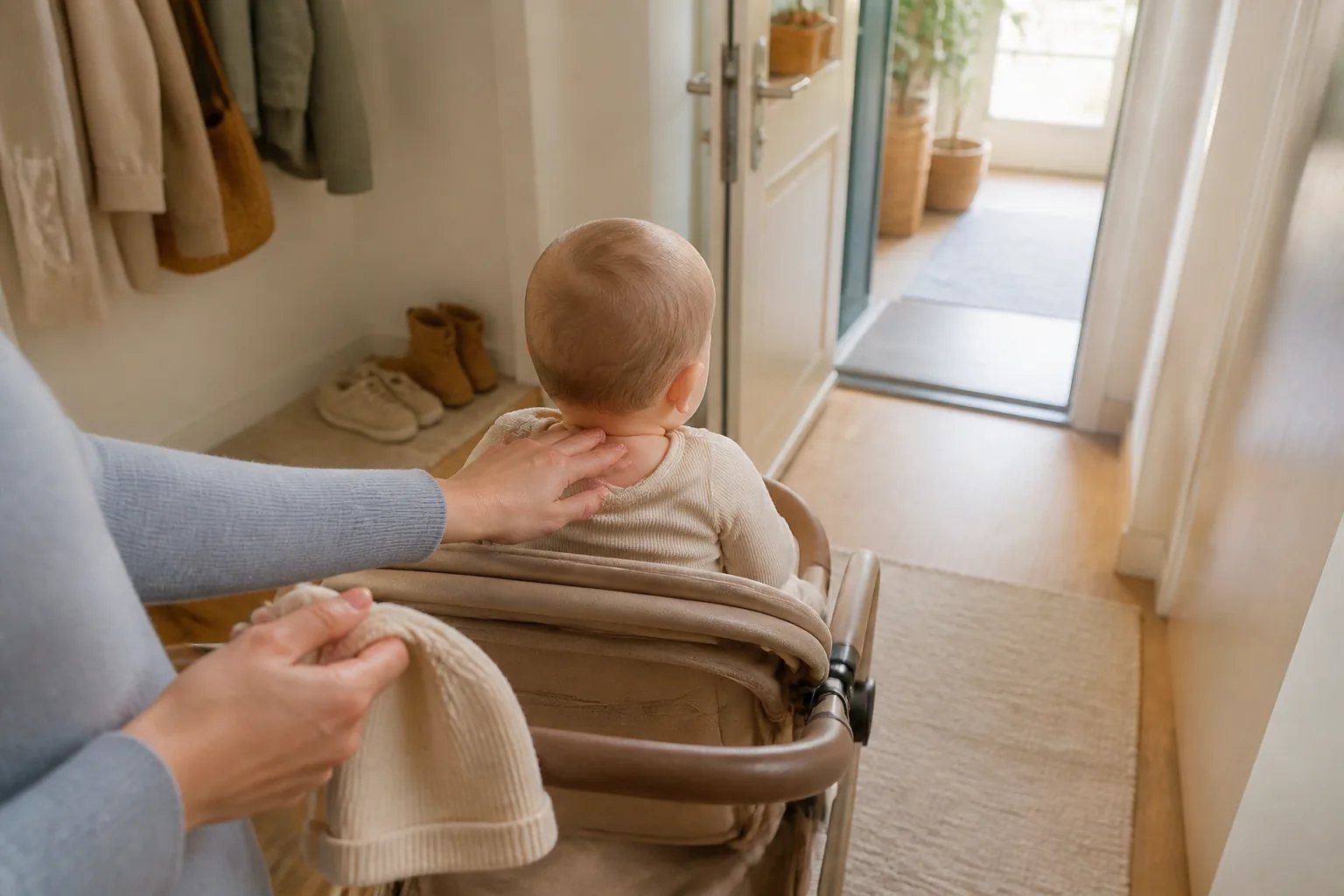
The car warms around the harness
Inside a car seat, the harness sets the limits. Clothing underneath it stays thin and fitted. Place any blanket over the fastened straps so it can come off as the cabin warms. Never loosen the harness to cool your baby.
Reach the neck without moving the straps. Damp skin means removing the blanket and cooling the cabin. If a clothing layer beneath the harness needs to change, stop somewhere safe first.
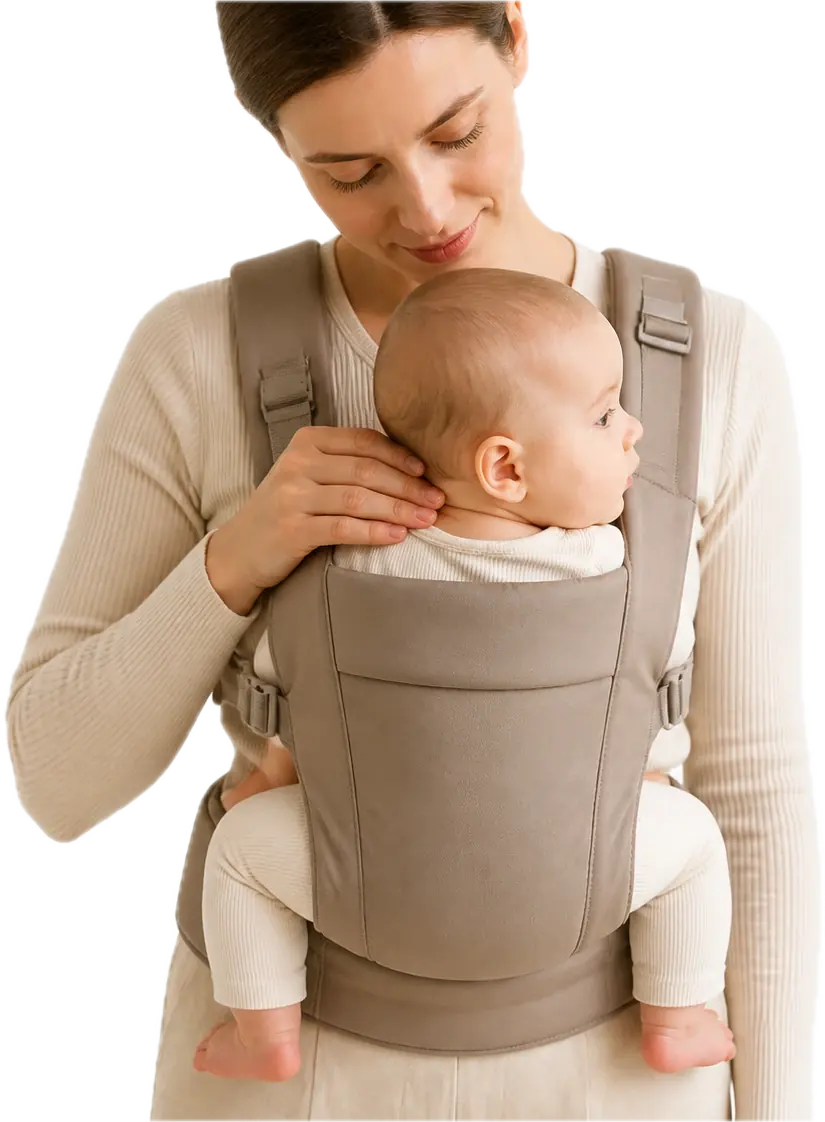
Your body changes the carrier check
A carrier changes the check because your body and the carrier fabric both surround your baby's torso. At 28° and warmer, use one lightweight romper and no carrier cover.
The clothes may look light while the torso is still getting extra warmth from you. Keep the face visible and the airway clear as you reach behind the collar.
At bedtime, the chest is easy to reach
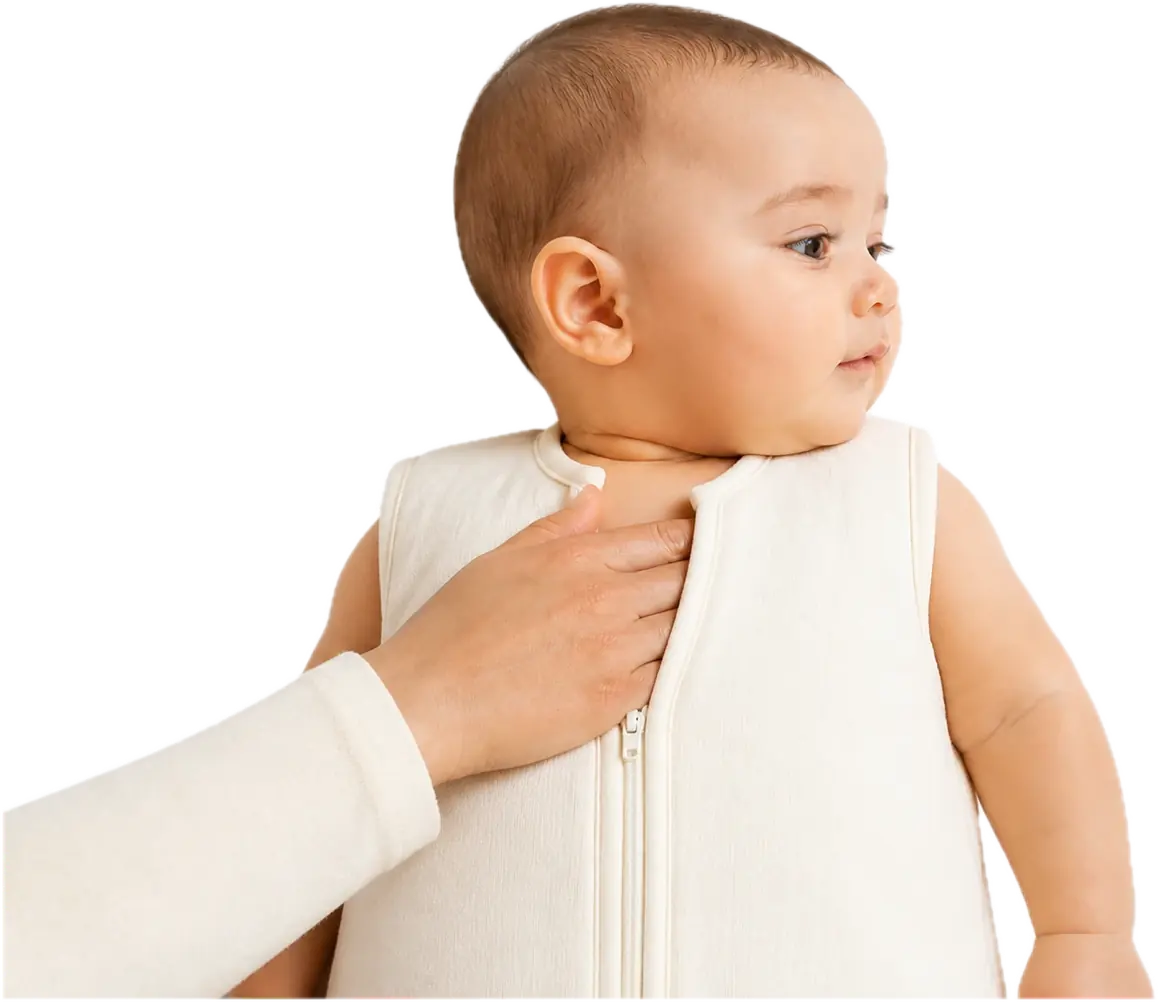
For sleep, begin with the room temperature and the sleep bag maker's guide. Then slip your fingers through the neckline to feel the upper chest or neck. The bag itself can feel warm while the skin underneath is comfortable.
A hot or sweaty chest means removing clothing or choosing a lighter bag. A cool chest means adding clothing or using the warmer bag recommended for the room. Do not put a blanket over a sleep bag.
Clothes cannot explain every change
Flushed cheeks, damp hair or fussing may be the reason you reach for the collar. None of them tells you what to change on its own. Feel the torso before adding or removing a layer.
The clothing check has a limit. A suspected fever needs a thermometer rather than another outfit adjustment. If your baby seems unwell, use the signs below to decide when to get medical help.
Questions parents ask
What if my baby's head is sweaty in the carrier?
Feel the neck. If that skin is hot or damp too, remove one layer. At 28° and warmer, use one lightweight romper and no carrier cover. Keep the face visible and the airway clear.
What if the hands are cold but the neck is warm?
Leave the outfit alone if the chest or neck is warm and dry. Cool hands and feet can be normal. The torso is the better place to judge overall warmth.
When should I check during sleep?
Start with the room temperature and the sleep bag maker's guide. Feel the chest or neck if the room or sleep clothes change, or if your baby seems hot. Remove hats and extra outdoor clothing indoors, even if that wakes your baby.
Can I check through a sleep bag?
Reach inside the neckline and touch bare skin at the chest or neck. The outside of the bag only tells you how the fabric feels. Follow the bag maker's room chart as the starting point.
When this is not about clothes
- Get an urgent GP appointment or contact NHS 111 if you are worried about your baby or think your baby may be ill.
- Call 999 if your baby stops breathing or is struggling to breathe.
- Call 999 if your baby will not wake up.
- Call 999 if your baby is stiff, shaking or jerking.
- Call 999 if your baby's lips, tongue, face or skin suddenly turn pale, blue or gray.
- Call 999 if your baby is limp, floppy or not responding normally.
Use urgent or emergency help for these signs. A clothing check does not replace medical care.