A short-sleeve romper is a top and shorts in one piece, worn over the diaper. There is no waistband on the tummy, and no shirt to ride up when you carry your baby.
It is the easy choice for warm days, at home and out. You can also do without: a short-sleeve bodysuit with shorts does the same job.
In the UK and Australia, parents often call it a playsuit.
- For ages0–24months
- You'll need3–5per size
- Wear it from24°C75°F
Romper or bodysuit (onesie)?
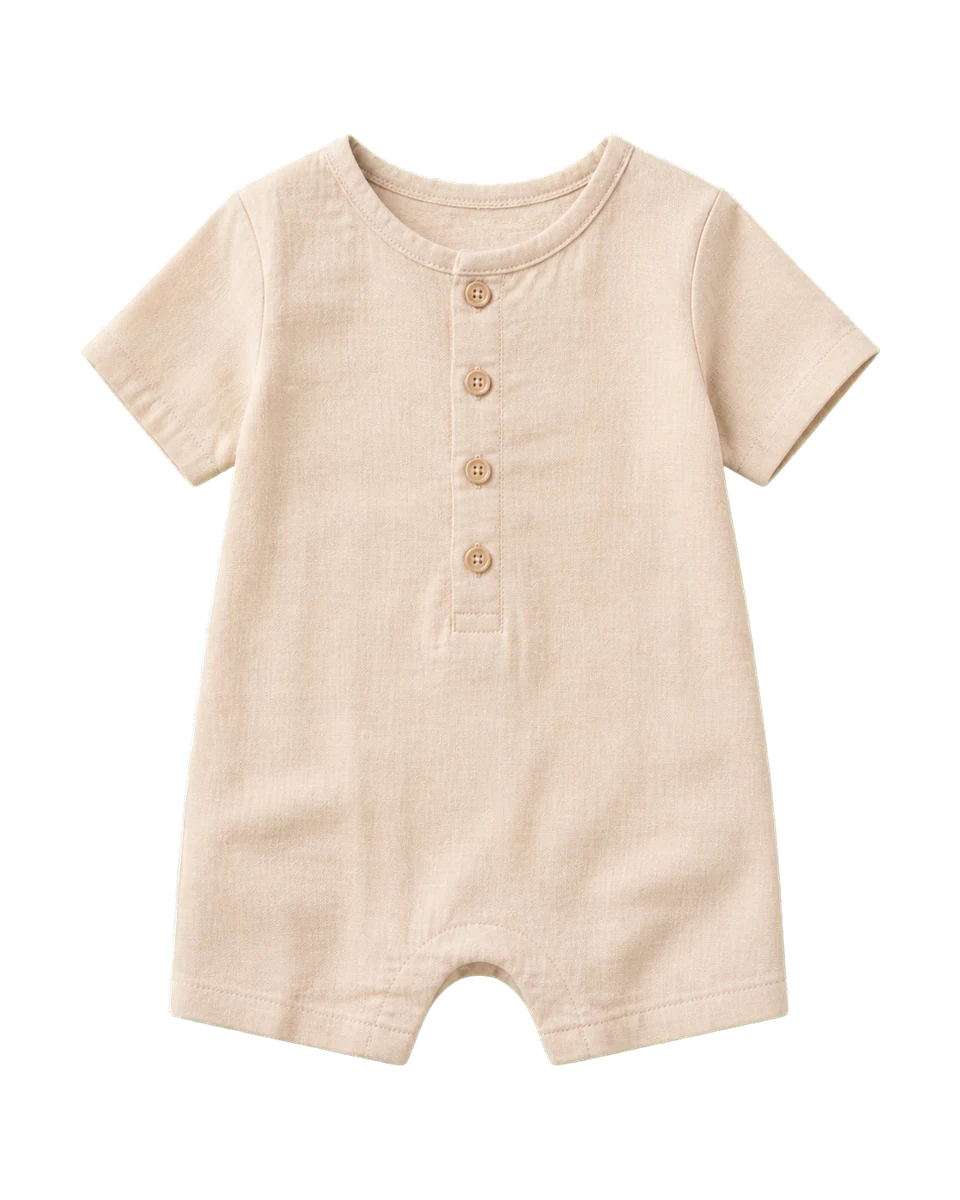
Short-sleeve romper
A whole outfit for the day. The shorts cover the diaper and the tops of the legs, so nothing else goes on in warm weather.
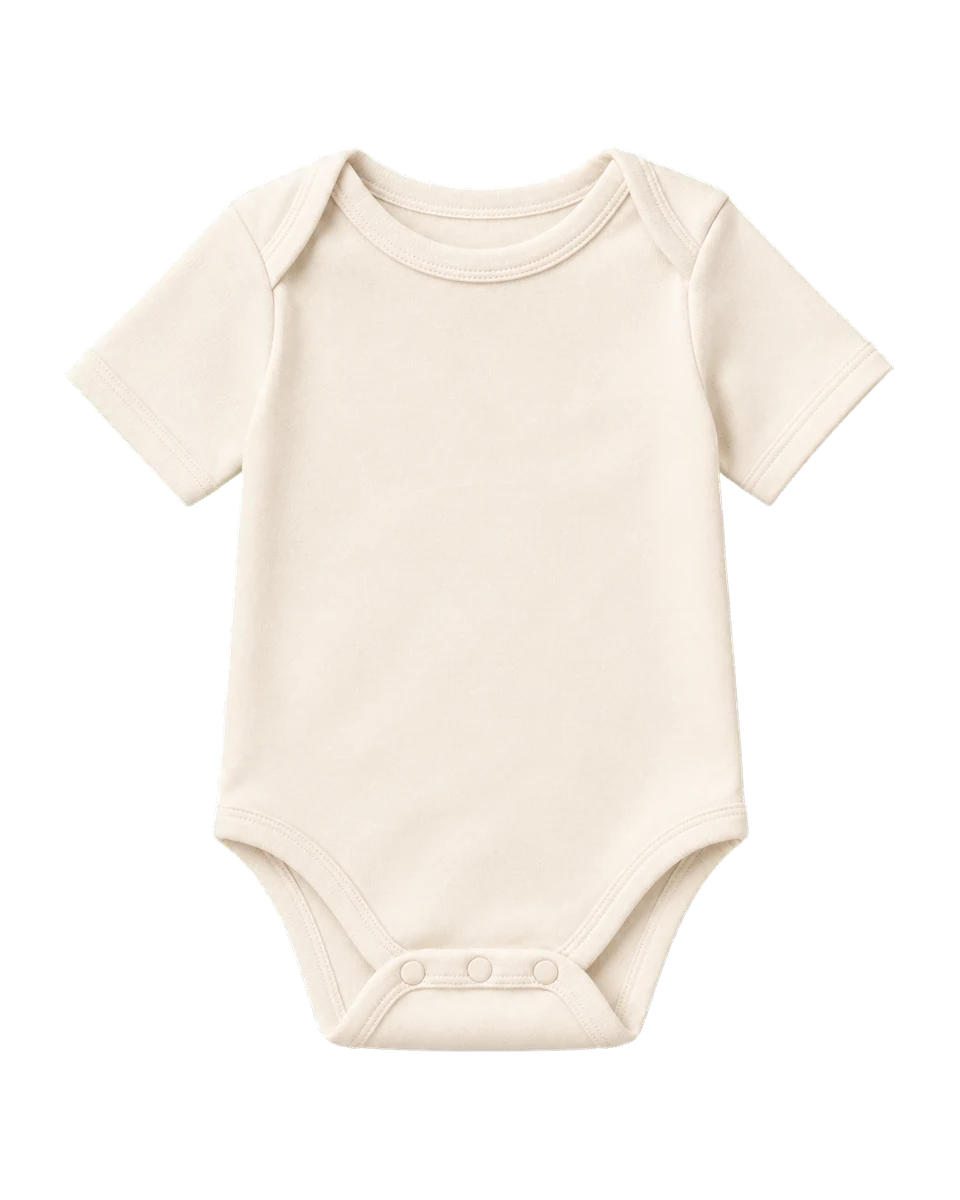
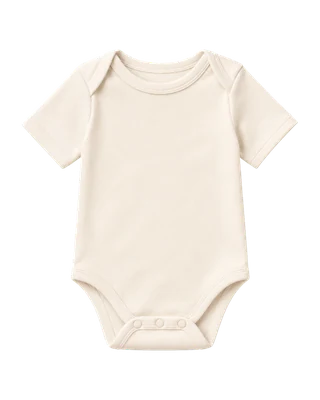
Short-sleeve bodysuit
A base layer. It snaps between the legs and leaves them bare, so pants or other layers usually go over it.
Types of romper
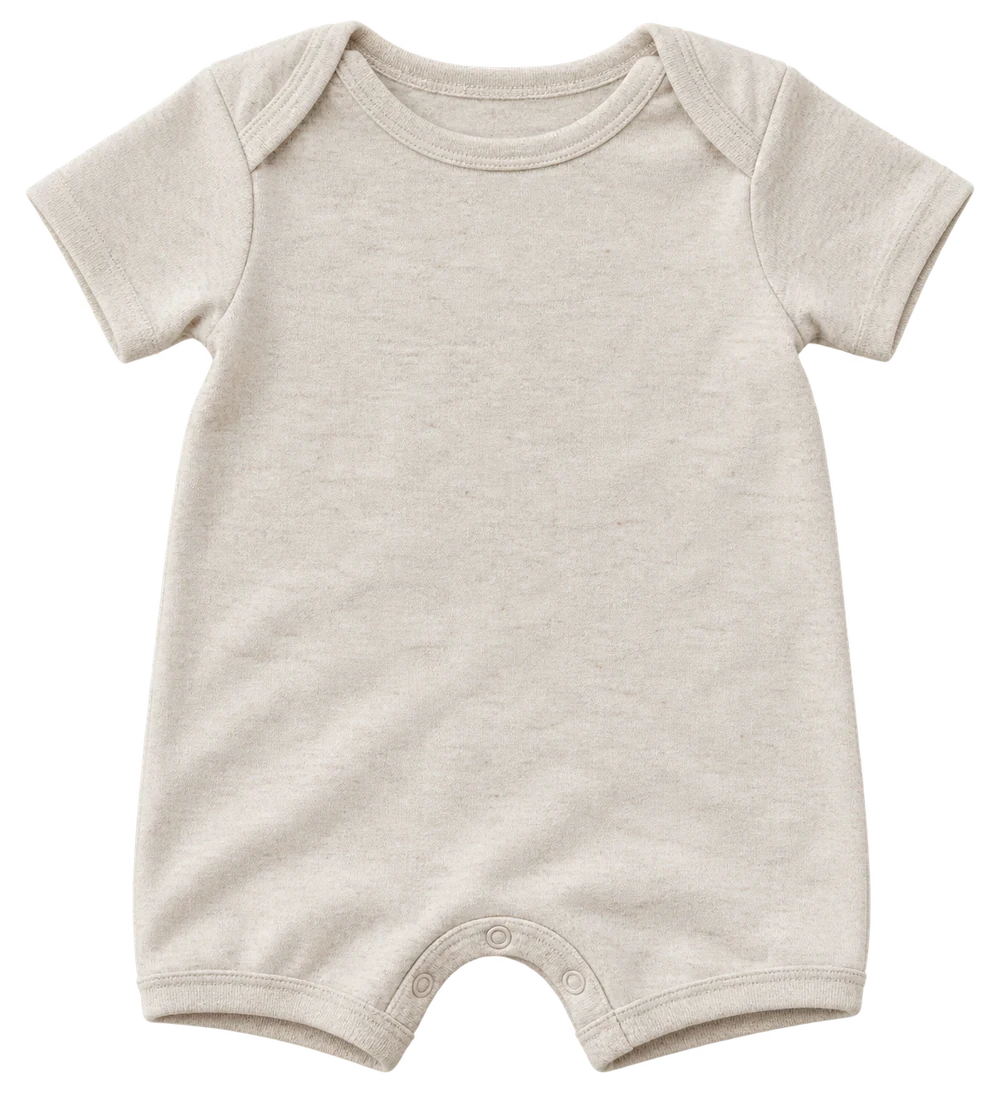
Classic jersey romper
Stretchy cotton jersey with straight short legs, and an envelope neck (shoulders that overlap and stretch wide) or snaps at the chest. The everyday one: it moves with a crawling baby and washes well.
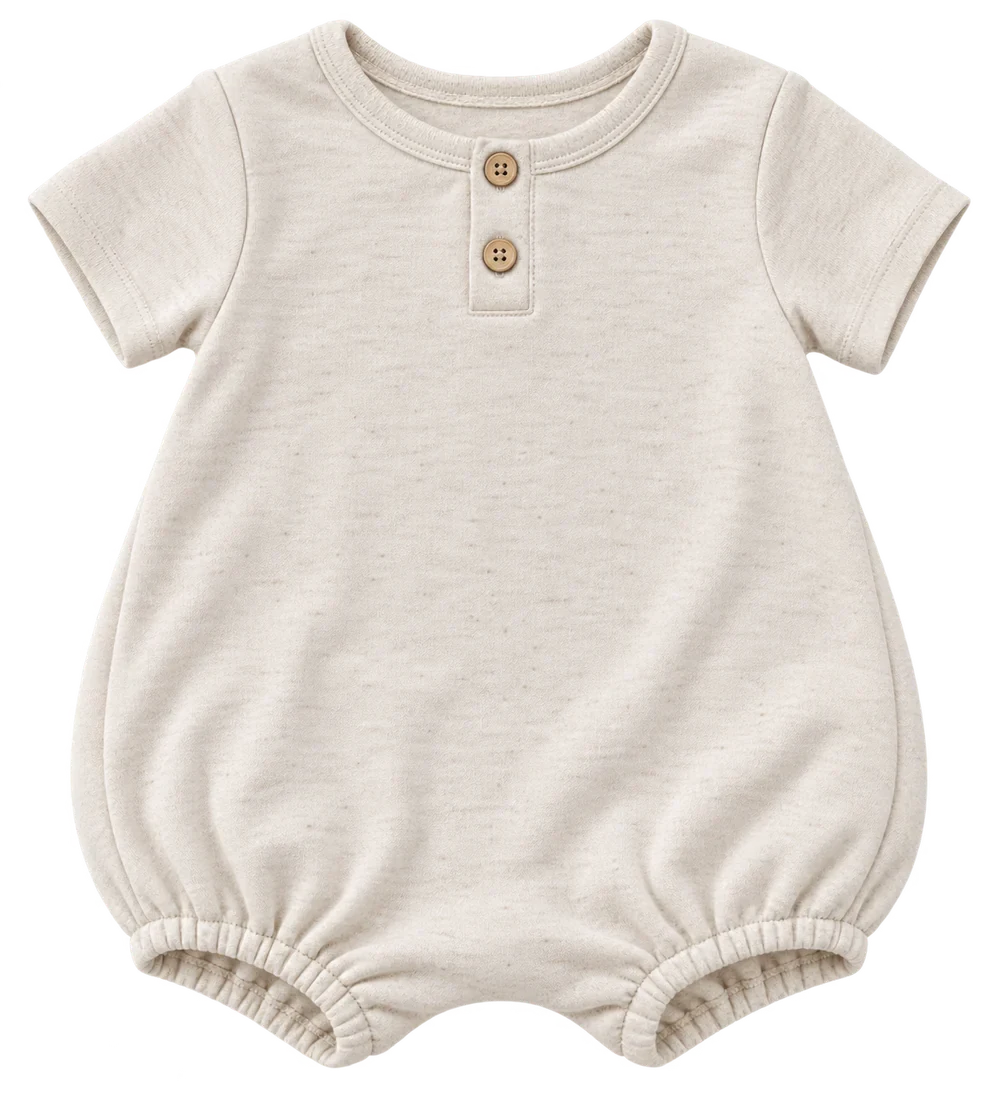
Bubble romper
A puffed-out body, gathered with soft elastic at the thighs. The balloon shape leaves room for a bulky diaper and for sitting.
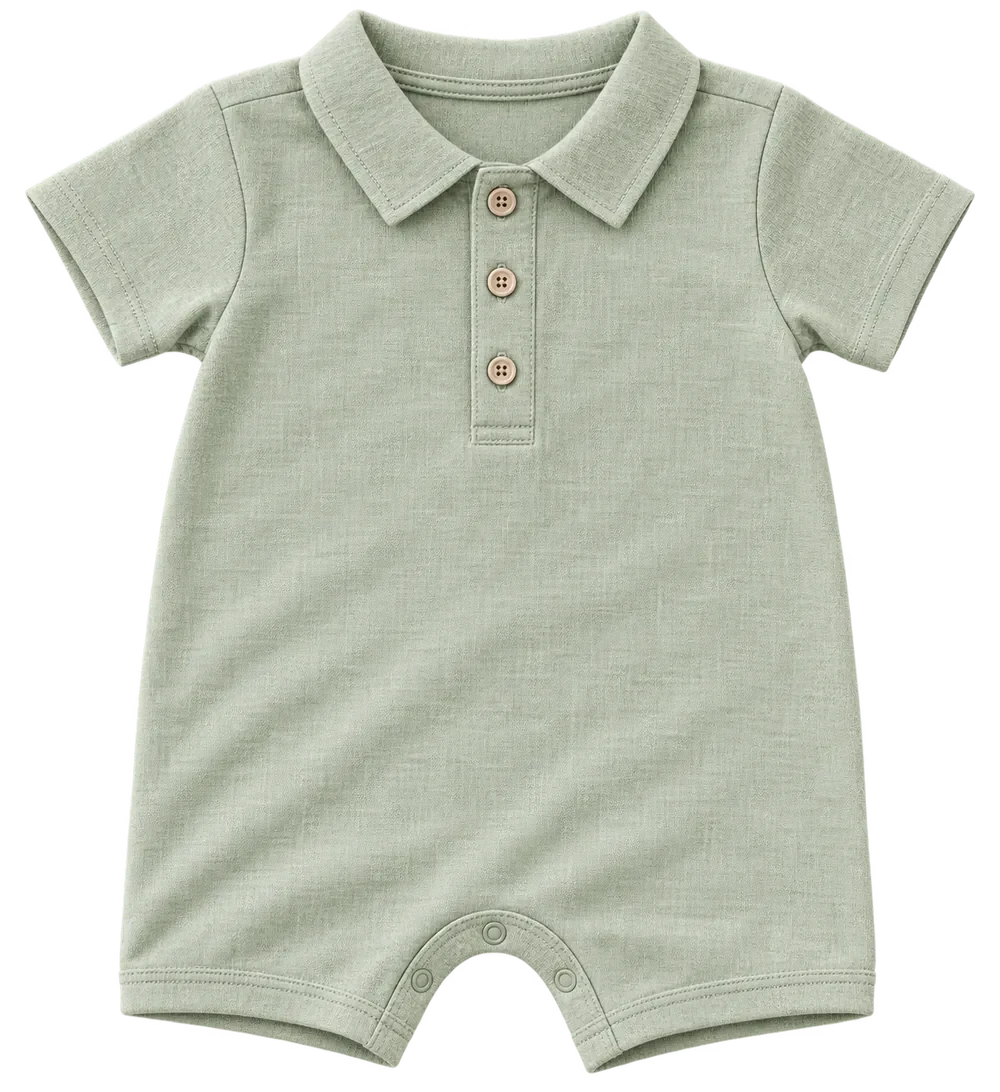
Collared or woven romper
Cotton, linen or crinkled cotton that does not stretch, with a small collar and buttons down the front. The dressy one, for summer visits and photos.
How to choose a romper
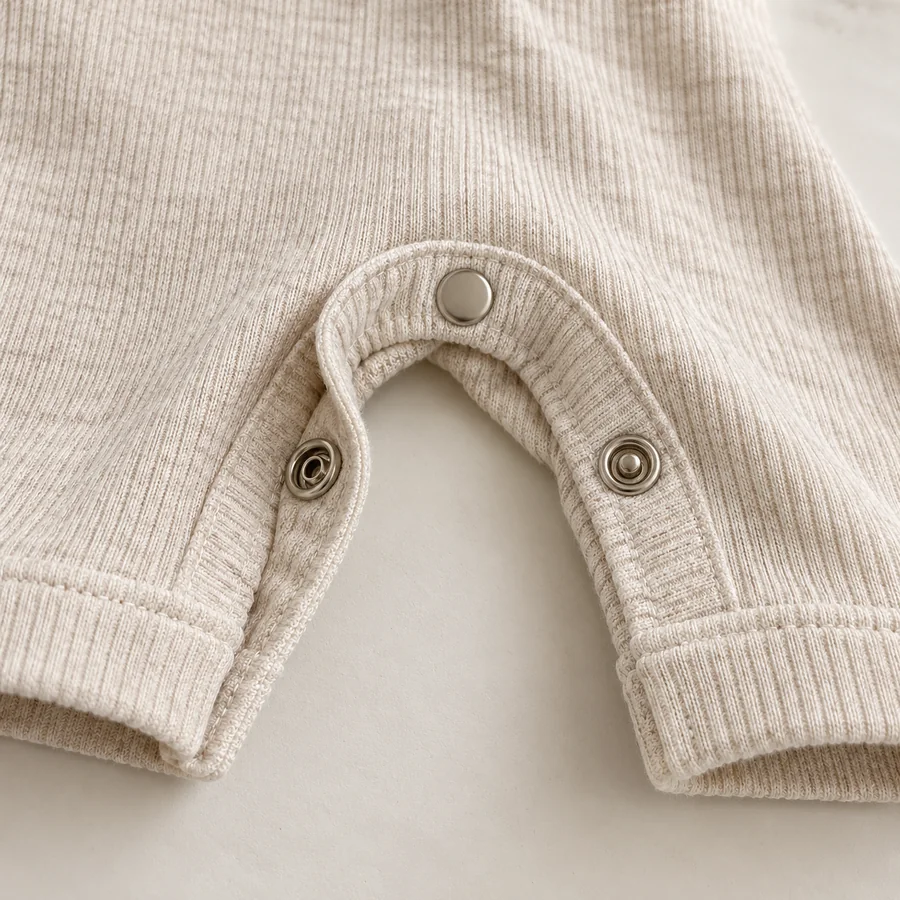
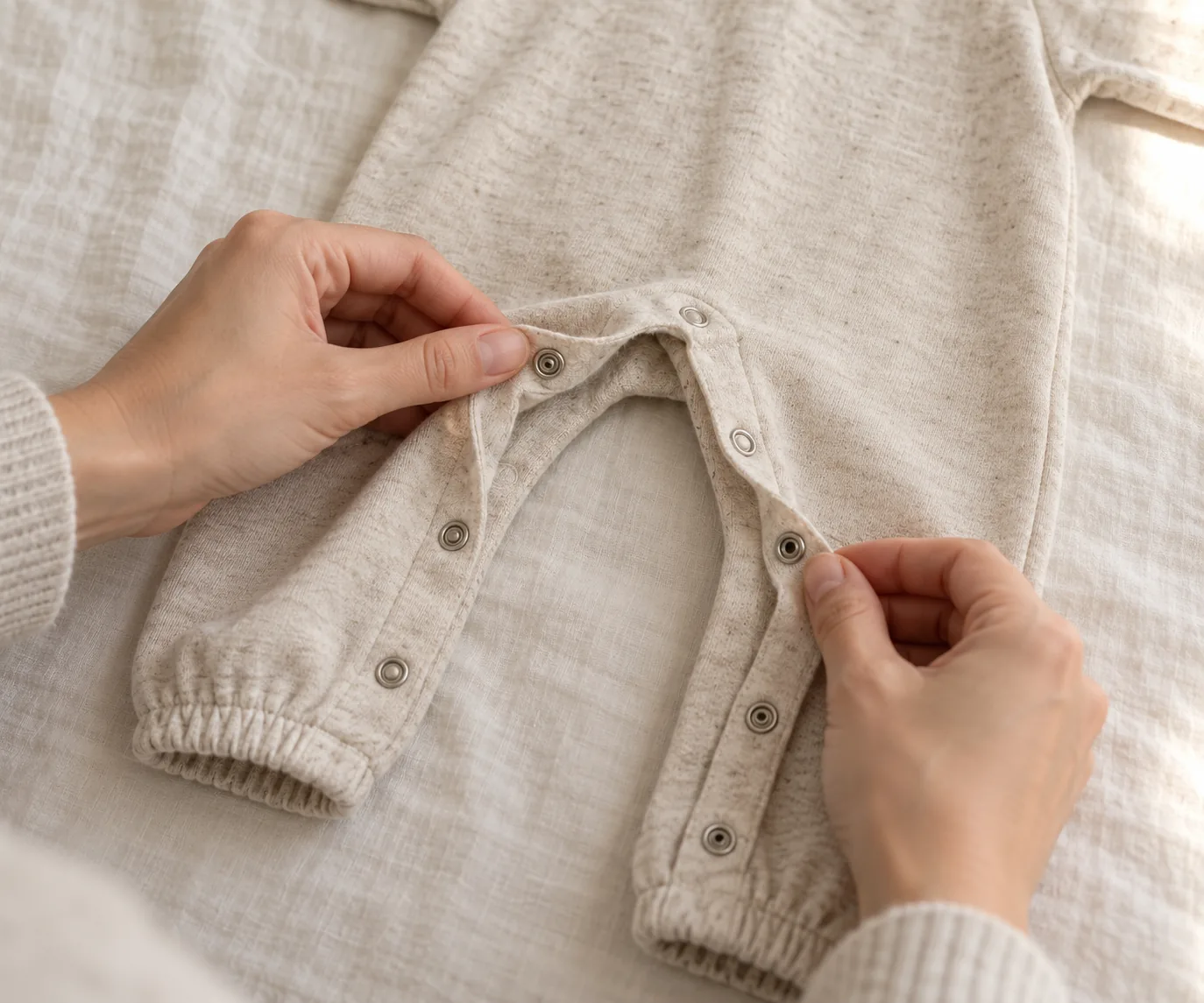
1. Snaps between the legs
You change a diaper many times a day. Without snaps between the legs, the whole romper comes off every time.
- Good: Snaps along the inner legs
- Good: Arms stay in for a change
- Not good: Closed seam at the crotch
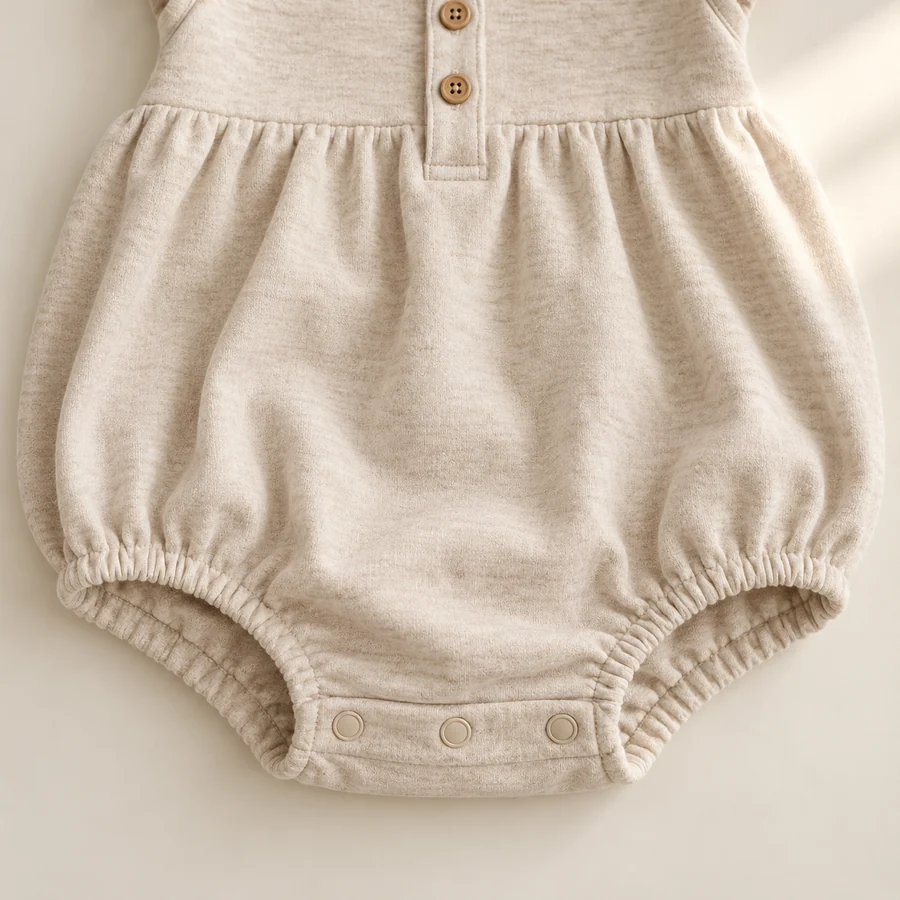
2. Room through the torso
If the romper is too short from the shoulders to the crotch, it pulls on the diaper and the shoulders each time your baby sits or pulls the knees up. Babies of one age differ a lot in length, so go by the height and weight on the label.
- Good: Fits by height, not age
- Good: Snaps close without a tug
- Not good: Snaps pop open when sitting
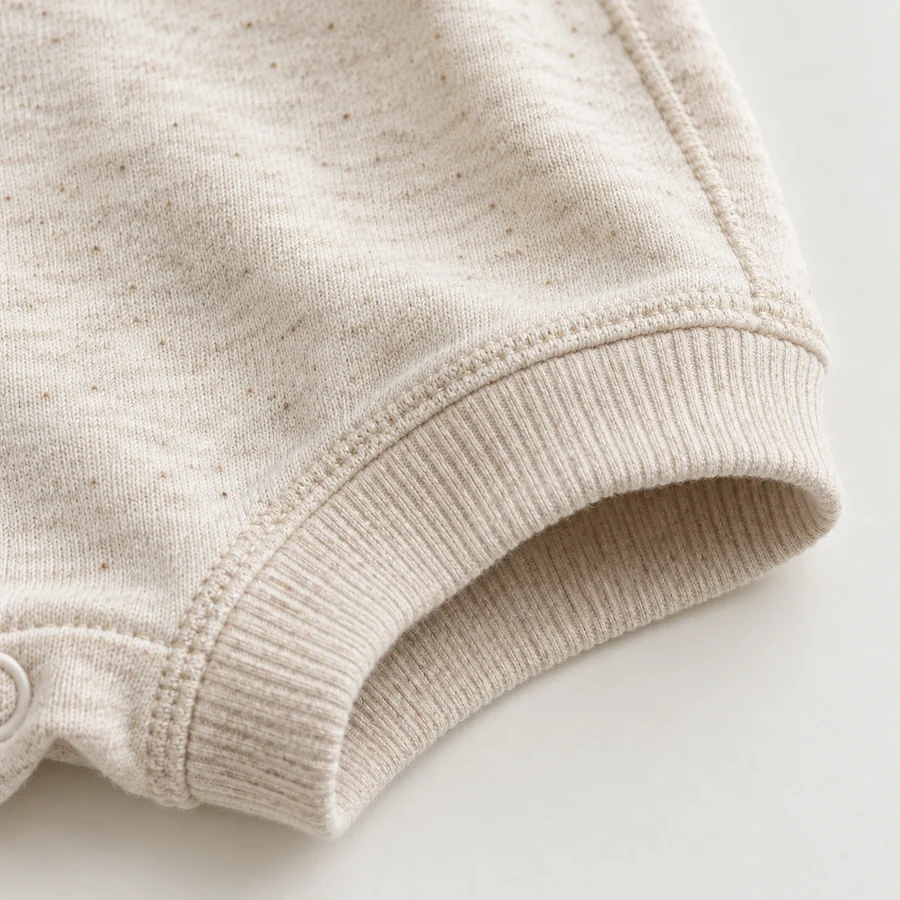
3. Soft leg openings
Tight elastic at the leg digs into round thighs and leaves red marks.
- Good: Ribbed cuff or flat hem
- Good: Lies flat on the thigh
- Not good: Stiff elastic round the leg
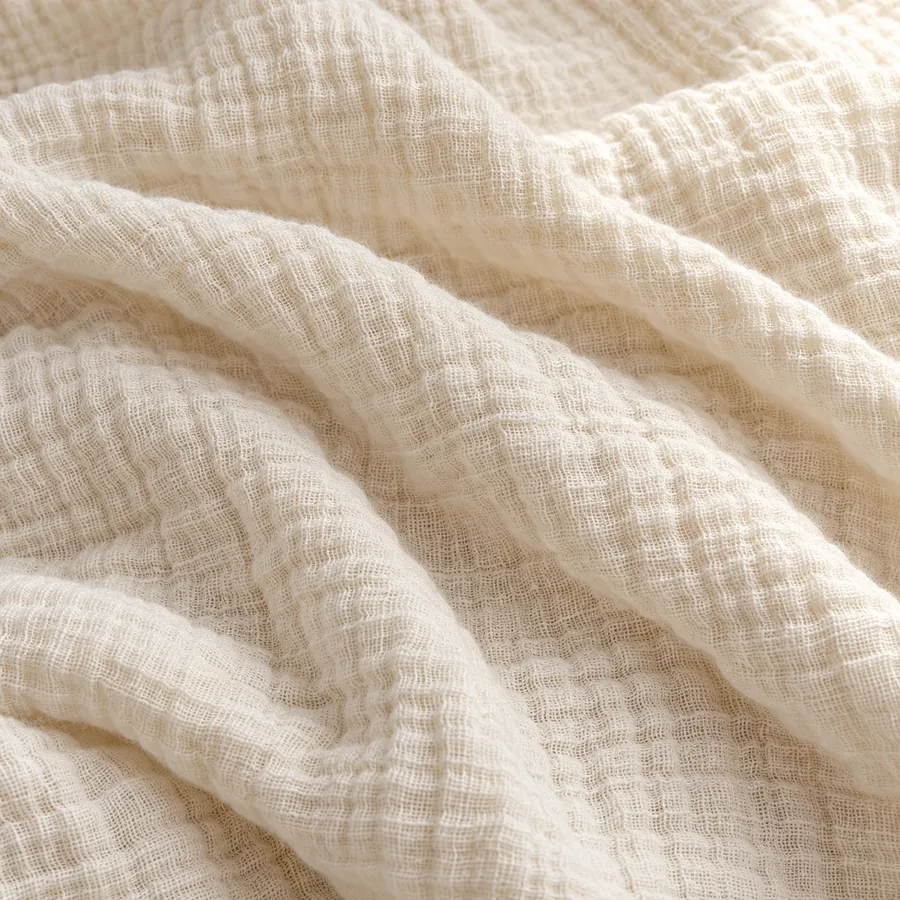
4. Light cotton or linen
Loose cotton or linen feels coolest on a hot day. If heat rash appears, loose cotton keeps the skin cool.
- Good: 100% cotton or linen
- Good: Sits loose on the skin
- Not good: Thick or clingy fabric
Putting it on and diaper changes
With an envelope neck, stretch the shoulders wide, slide the romper over your baby's head and guide the arms through the sleeves. Then close the snaps between the legs. If it buttons down the front, open it, put the legs in first, then guide the arms through the sleeves.
For a diaper change, undo only the leg snaps and fold the bottom up out of the way. The top stays on.
Questions parents ask
Do babies wear anything under a romper?
Usually just a diaper. In strong air conditioning, or when the wind picks up, a thin short-sleeve bodysuit can go underneath.
Can a baby sleep in a romper?
Yes, for warm summer naps and hot nights. In a warm room above 24°C (75°F), a light cotton romper is comfortable alone or under a light summer sleep bag. Pick one with no hood, drawstrings or loose ties, which can cover the face or catch during sleep. The sleep guide has outfits for every room temperature.
What is a shortall, and how is it different?
In the US, a shortall is shorts with bib straps, like small overalls, and a T-shirt or bodysuit goes under it. A romper has its own top and sleeves, so nothing goes under it on a warm day.
Is a romper good for crawling?
Yes. Unlike a dress that catches under the knees, or pants that slide down, a romper stays in place as your baby moves. Bare knees and feet grip a smooth floor better than fabric does.
Can babies wear rompers in winter?
When do babies stop wearing rompers?
Most babies wear them up to 18–24 months. Once potty training begins, tops and bottoms are quicker, because undoing snaps slows down trips to the toilet.