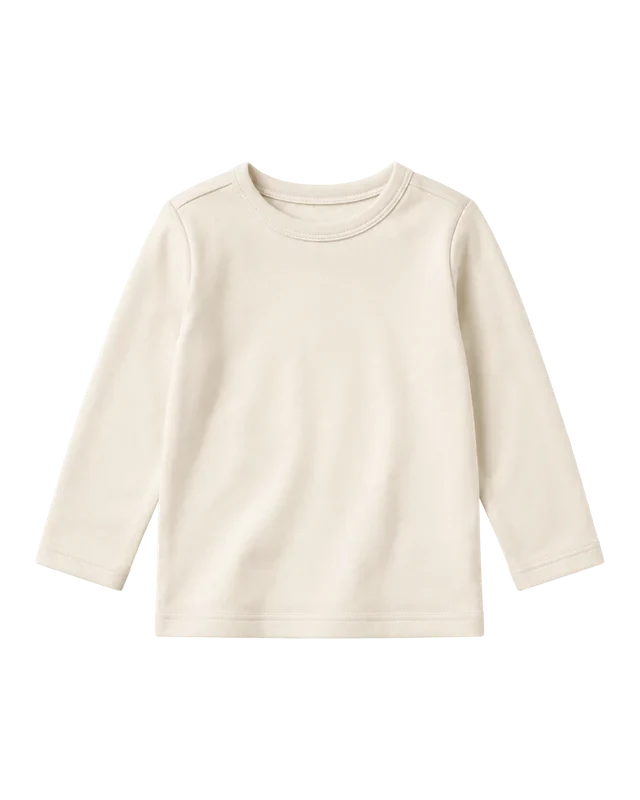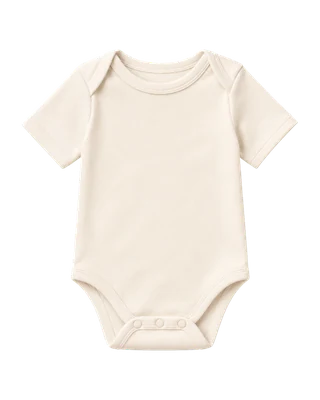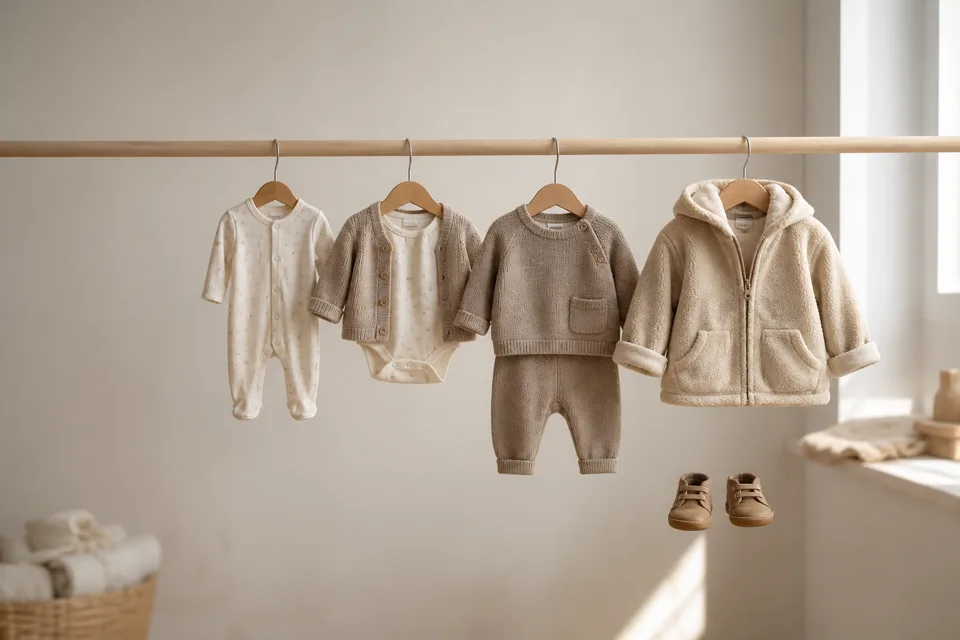
Most toddlers switch from bodysuits (onesies) to T-shirts between 12 and 24 months. Once your child walks, a T-shirt stops riding up the way it does on a crawling baby. Once potty training starts, there are no snaps to undo at every toilet trip.
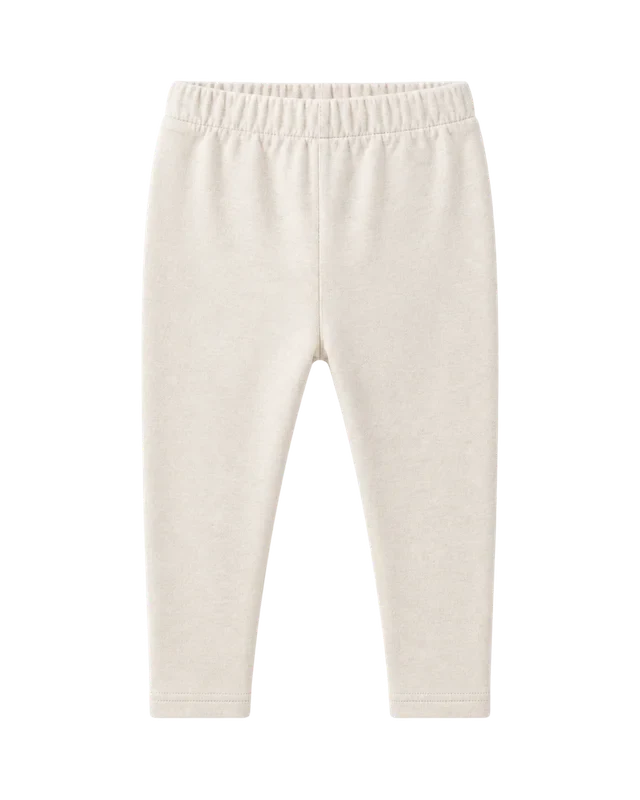
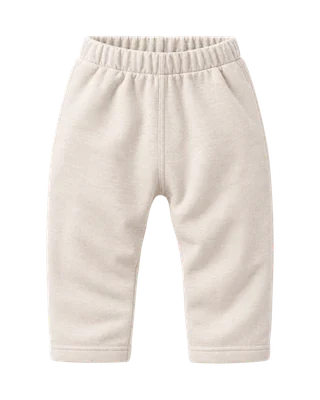
A T-shirt is a separate top that ends at the hips. It goes with light cotton leggings, shorts or baby pants.
- For ages12+months
- You'll need3–5per size
- Wear it from20°C68°F
T-shirt or bodysuit?
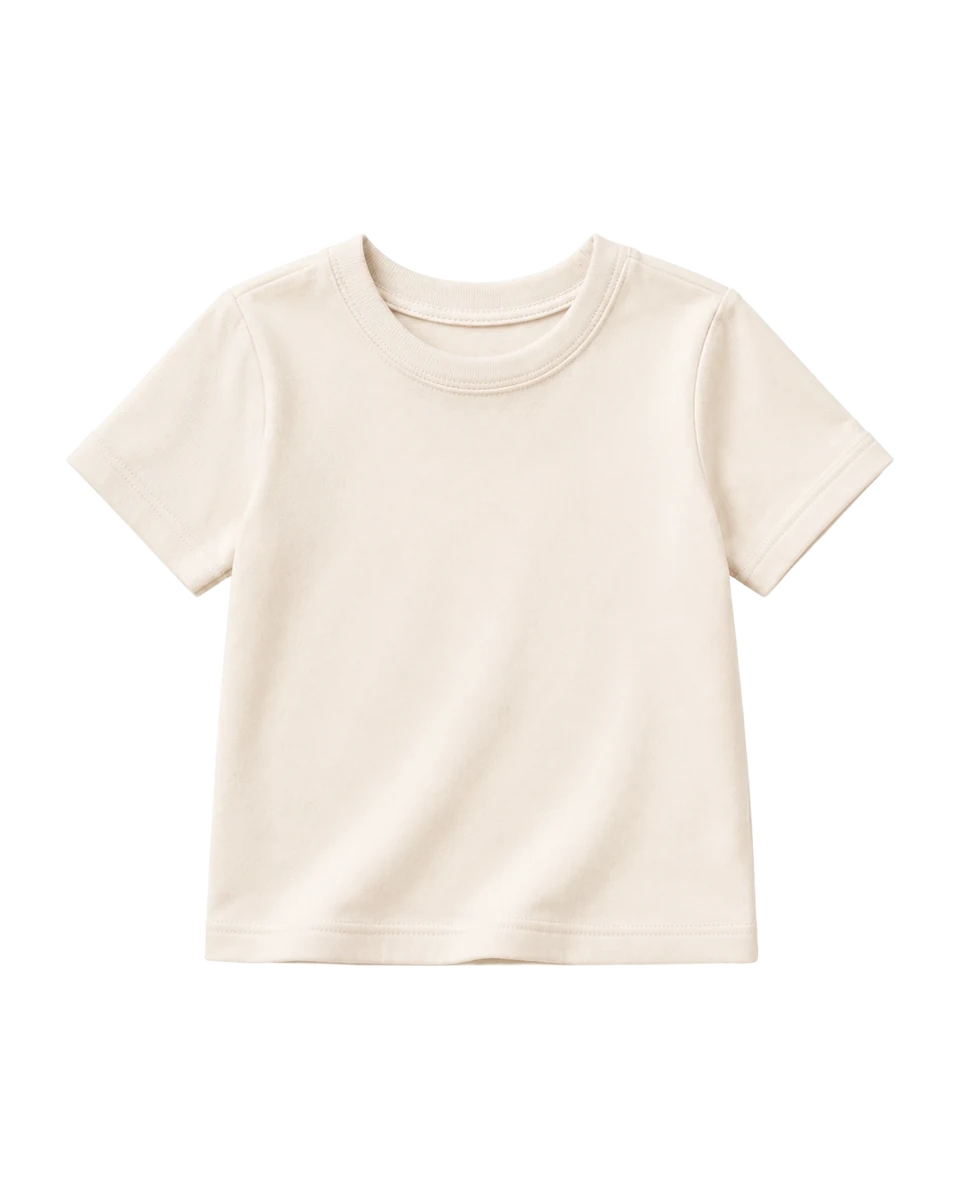
Short-sleeve T-shirt
Best once your toddler walks, and most of all once potty training starts.
- Good: No snaps to undo at the potty
- Good: Lifts for a quick diaper check
- Not good: Rides up when your baby crawls
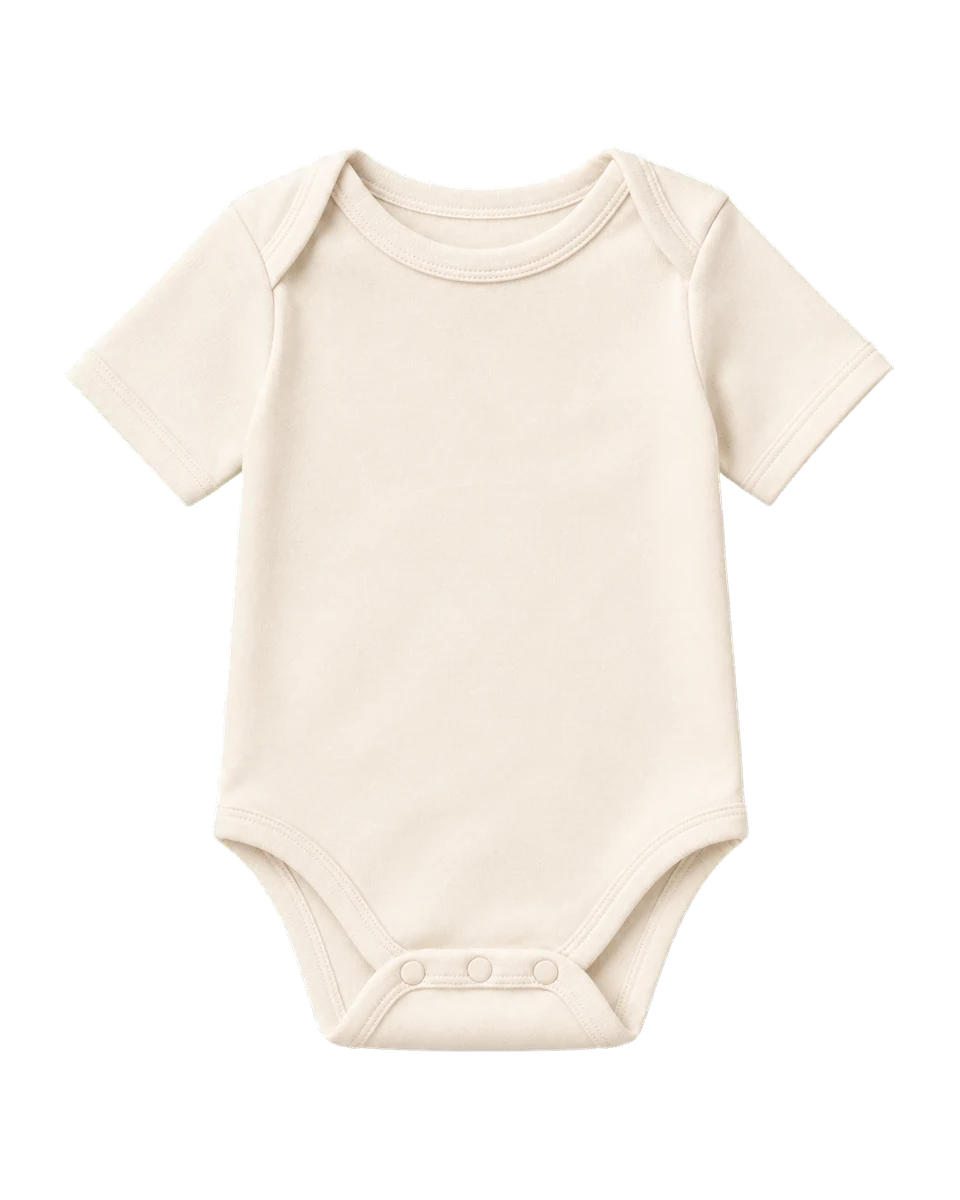
Short-sleeve bodysuit
Best while your baby crawls and wears diapers all day.
- Good: Stays tucked in while crawling
- Good: Holds the diaper in place
- Not good: Snaps to undo at every potty trip
Necklines for easy dressing
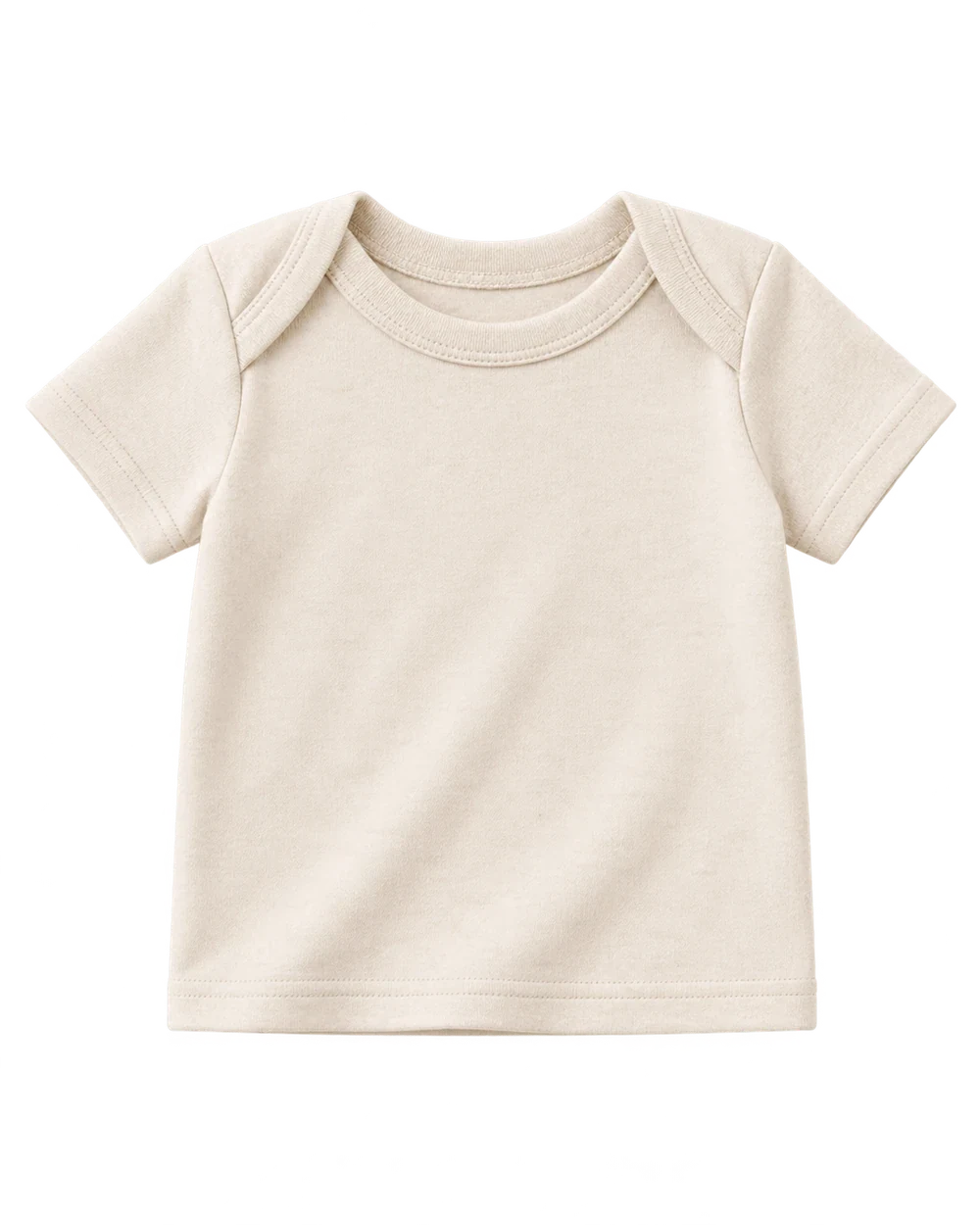
Envelope neck
The shoulders overlap, so the neck stretches wide over the head and springs back after.
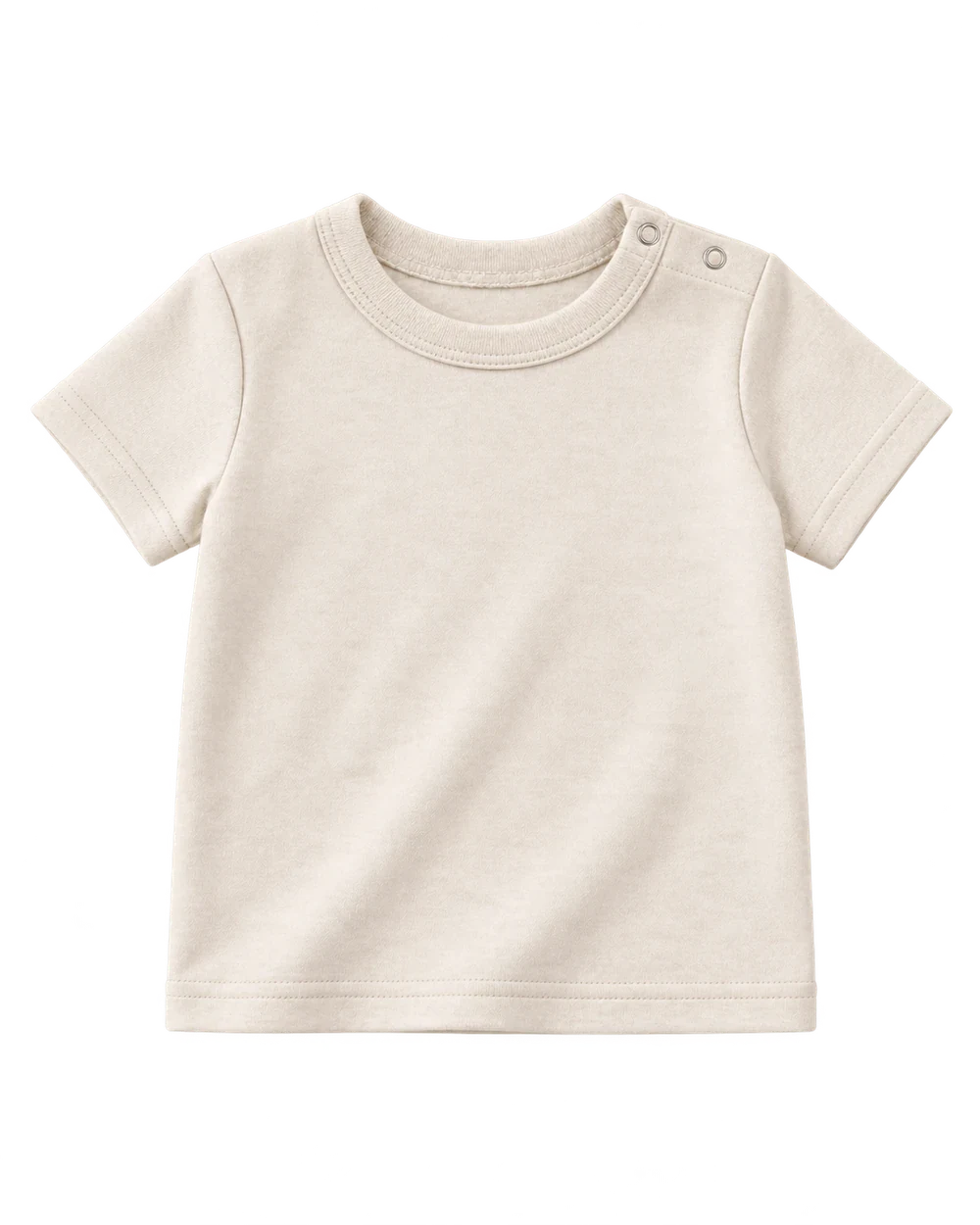
Shoulder snaps
Two or three small snaps along one shoulder open the neck wide. Closed, the shirt looks like an ordinary crewneck.
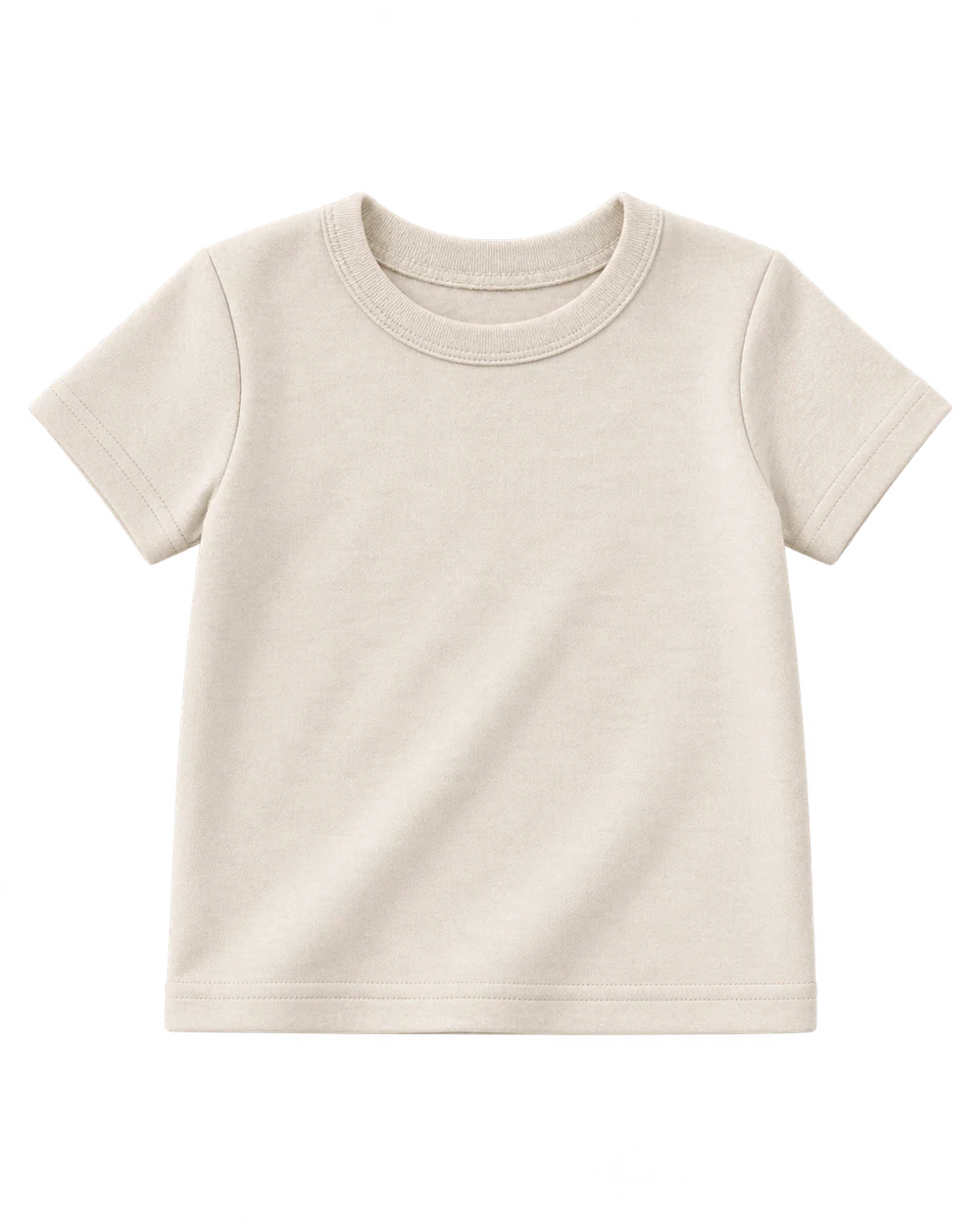
Stretchy crewneck
A plain ribbed collar that stretches. It works once your child is older, from toddler size 2T, when the neck is longer and the head is not so big for the body.
How to choose a T-shirt
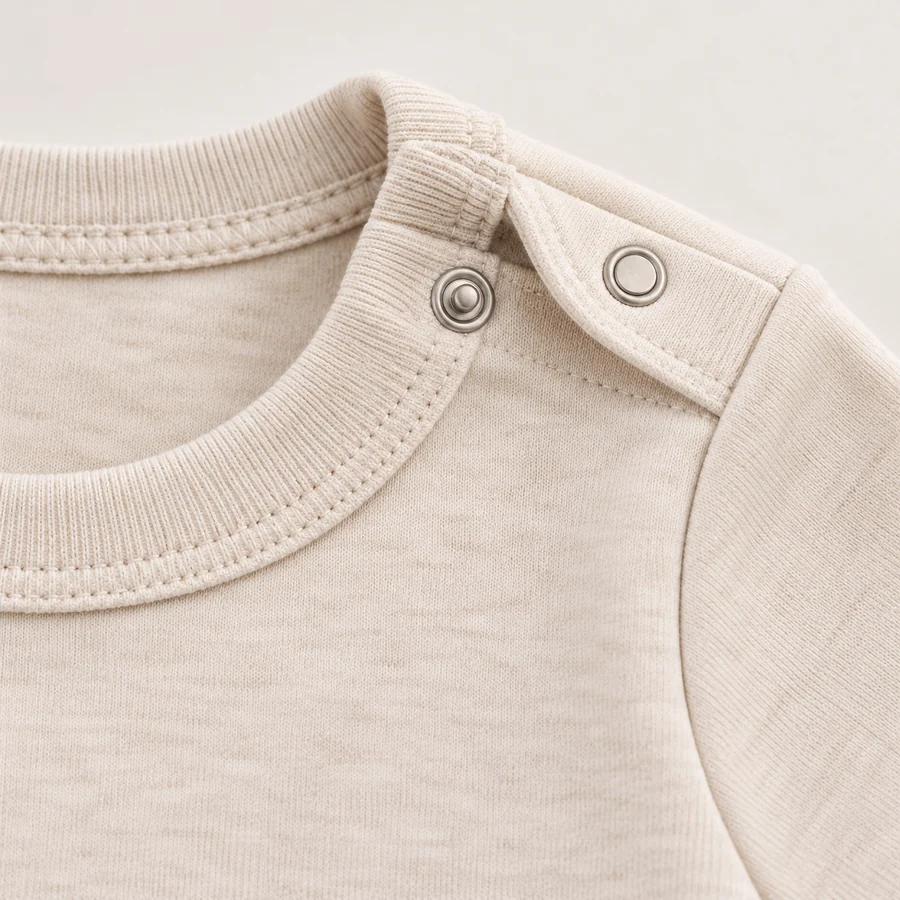
1. A neck that opens wide
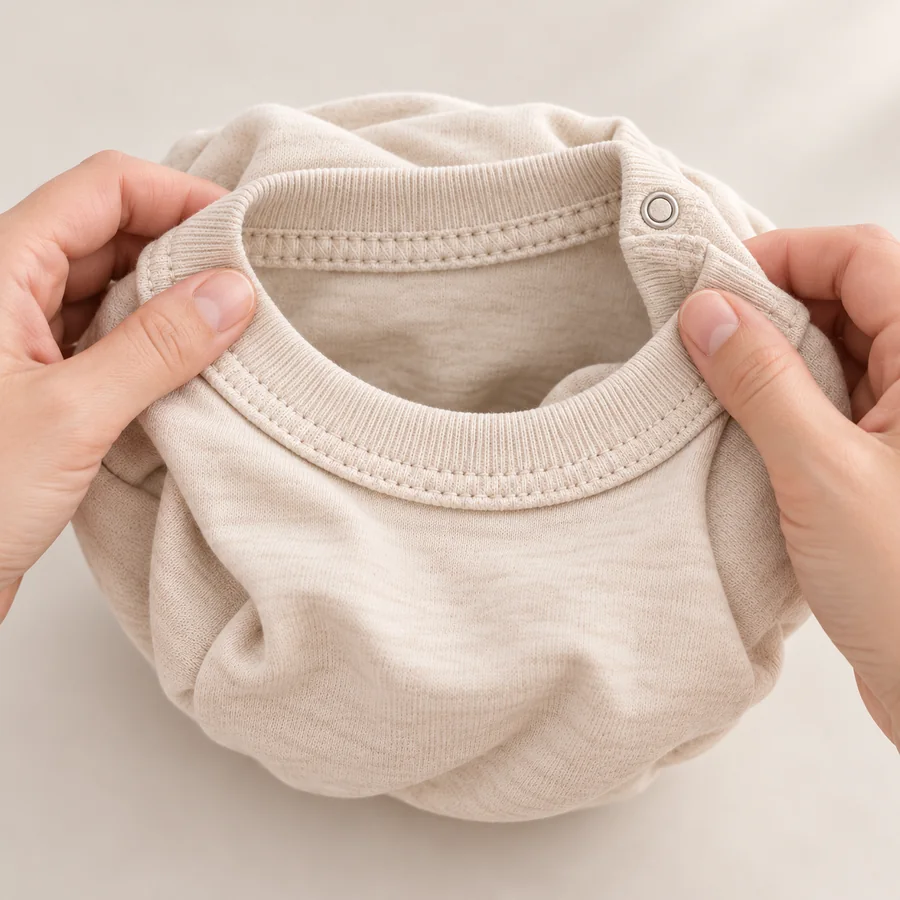
Under two, a baby's head is big and the neck is short, so a stiff collar catches on the nose and ears. In the shop, stretch the neck with both hands, or open its snaps.
- Good: Opens wide with a gentle pull
- Good: Springs back after a stretch
- Not good: Stiff collar that barely stretches
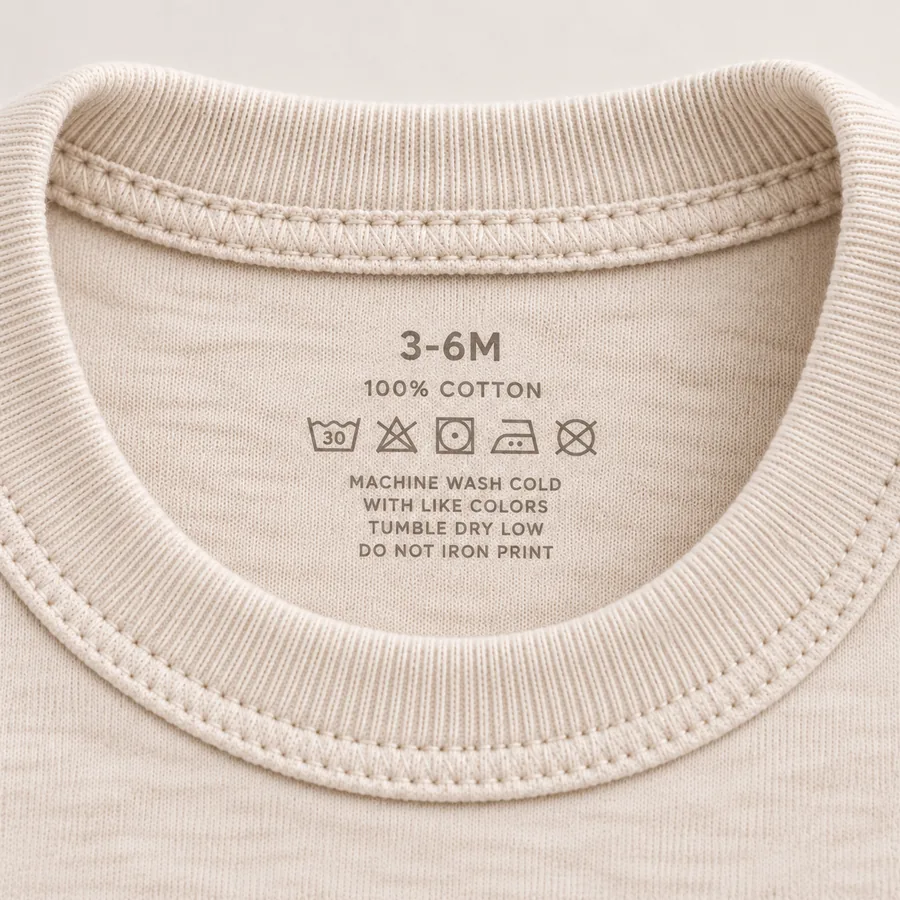
2. Tagless neck labels
A sewn-in tag scratches the back of the neck, so look for the size and care details printed inside.
- Good: Size and care printed inside
- Good: Smooth seams inside the collar
- Not good: Stiff tag sewn into the neck
3. Extra torso length
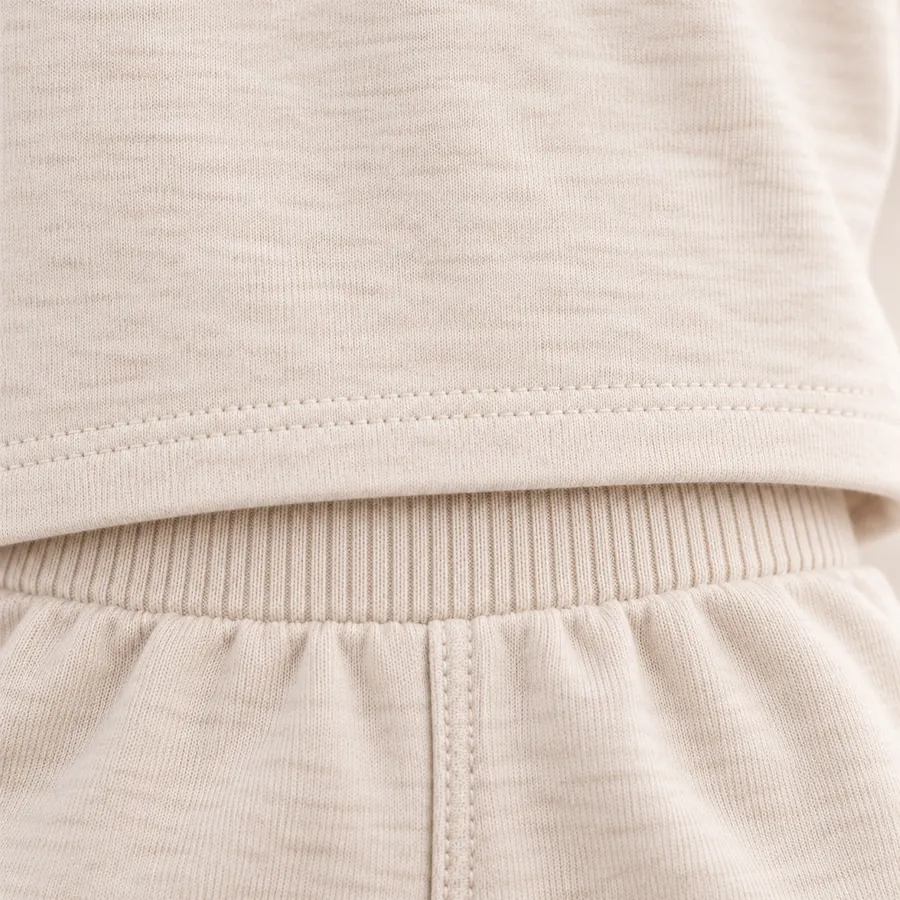
A longer body stays over the waistband when your toddler bends, reaches and climbs. A short, boxy cut pulls out of the pants all the time.
- Good: Hem well past the waistband
- Good: Still covers the waistband, arms up
- Not good: Belly shows when arms go up
How to put it on
A T-shirt goes on over the head, the same way as a bodysuit: open any shoulder snaps, gather it into a ring, stretch the neck wide, and start at the back of the head, so the fabric reaches the face last.
For the sleeves, hold each one open at the cuff and guide the hand through, or let a toddler push it through alone. Then pull the hem down over the waistband.
Questions parents ask
Why do baby T-shirts ride up?
Crawling pushes a loose hem up, and so does lifting your baby under the arms. While your baby still crawls, tuck the T-shirt into high-waist pants or layer it over a light bodysuit.
What is the difference between size 24 months and 2T?
The T stands for toddler. Size 24 months is cut wider through the hips and bottom, to fit over a bulky diaper on a baby who still crawls or toddles. Size 2T is cut longer and leaner, for a taller, walking toddler who may be starting to use the toilet.
Do 2-year-olds still wear bodysuits?
Yes, many do, until potty training. A bodysuit keeps the tummy covered on cold days and keeps little hands out of a full diaper.
Can a baby sleep in a T-shirt?
Yes, in one that fits close, with pajama pants or inside a sleep bag. Skip a big, loose T-shirt: in the US, pajamas for children over 9 months must fit snugly or resist flames, because loose cotton catches fire easily. Under 12 months, a bodysuit is easier, because it stays tucked in.
Do newborns need T-shirts?
No. A newborn wears bodysuits. For the first weeks, some parents like side-snap wrap shirts, which open flat, so nothing goes over the head.