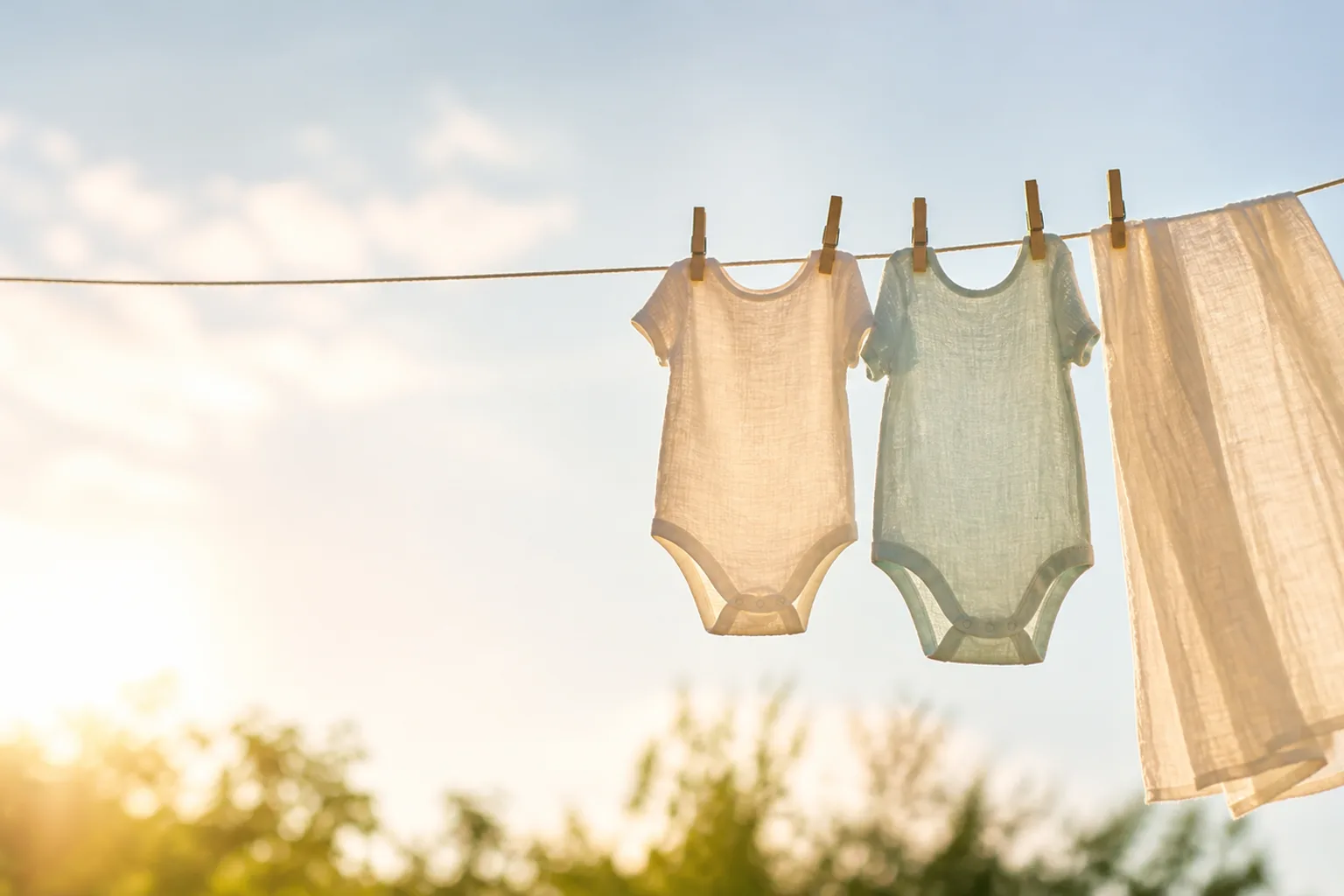
What this is about
A drawer full of matching summer baby outfits looks charming before the birth. In the middle of a July heatwave, ninety percent of it stays in the drawer. Tiny denim shorts, stiff collars, and thick dungarees are uncomfortable in the heat and maddening during a diaper blowout. A summer newborn needs far fewer clothes than baby registries suggest, but those pieces need to be soft, breathable, and ready to go through the wash every day.
One more layer should still feel light
Midwives and well-meaning relatives often repeat the old rule: dress your baby in one more layer than you wear. In chilly weather, that makes sense. In summer, following it blindly can overheat a newborn who cannot yet sweat effectively. Overheating is a real safety concern. When you are comfortable in a T-shirt, your baby does not need an extra sweater or a blanket tucked around their shoulders.
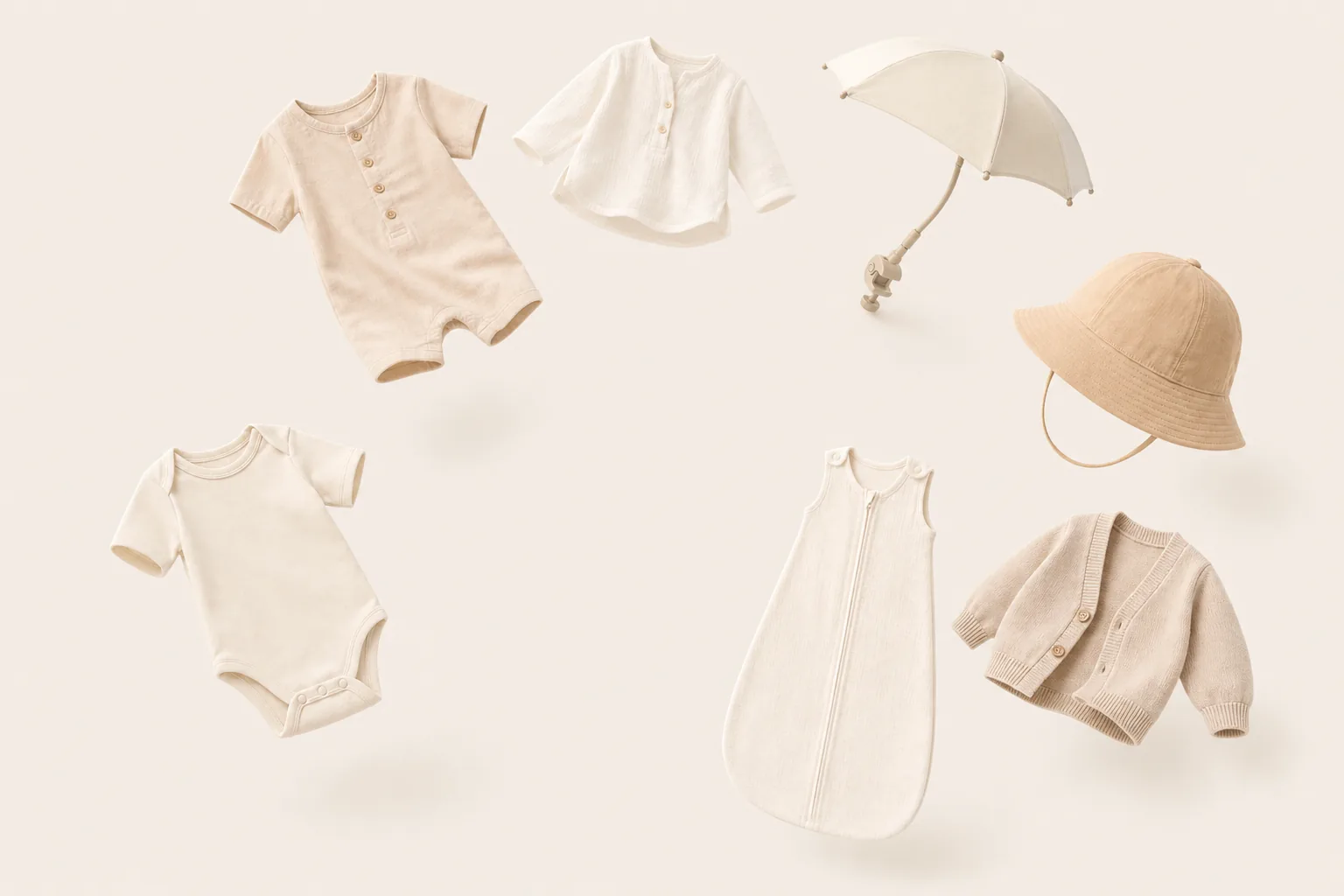
Stick to breathable, lightweight cotton or bamboo. Practical design matters just as much as fabric: look for envelope necklines that slide down over the shoulders instead of pulling a soiled top over their face. Kimono-style wrap bodysuits that snap down the front are even better, sparing you from pulling anything over a floppy newborn head.
Thin clothes get soaked quickly from spit-up, sweat, and diaper leaks. A clean spare bodysuit packed in your bag is far more useful on a summer outing than a second warm layer.
Two temperatures change the daytime outfit
Daytime summer dressing splits into two clear phases for a baby under 3 months. Between 24° and 27° feels-like, newborn skin is thin and burns easily, so light coverage helps. A breathable long-sleeve bodysuit, thin cotton pants, and light socks protect against sun and drafts without trapping heat. Once the temperature reaches 28°, strip away the extra coverage. Bare legs and arms are completely safe. One loose romper or short-sleeve bodysuit is all they need.
Sun protection is a separate decision. Babies under 6 months should stay out of direct sunlight. When the UV index reaches 3 or higher, add a wide-brim sun hat and seek open shade. Light clothing protects from indirect glare, but extra fabric is never permission to sit in direct sun.
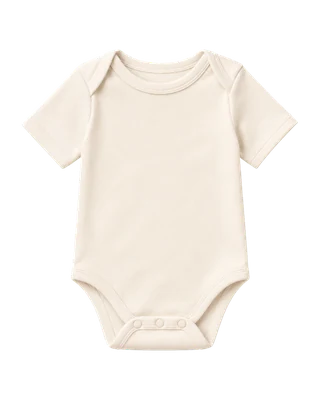
24–27°
For a baby in the first 3 months, use a long-sleeve bodysuit, thin cotton pants, and light socks. From 3 months, short sleeves and bare legs work well.
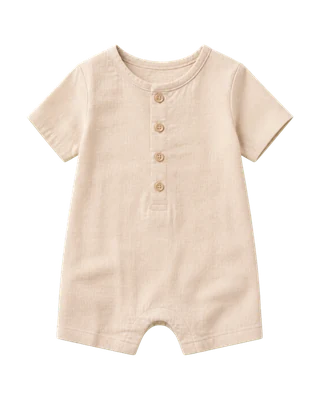
28° and warmer
A single loose, lightweight romper or short-sleeve bodysuit is the entire outfit. Bare legs, bare feet, no extra layers.
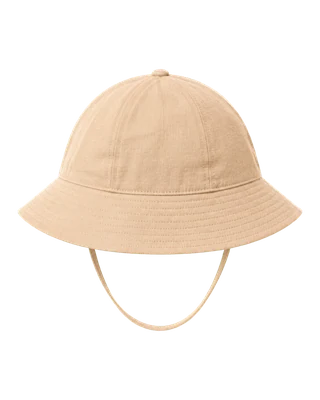
UV 3 and above
Rely on deep shade, light cotton coverage, and a wide-brim sun hat. Keep the stroller opening completely clear.
The stroller needs shade, not a blanket
When sun hits the stroller, the natural instinct is to drape a light muslin cloth or blanket over the front. Never do this. Even a thin muslin draped across the opening stops air from circulating and turns the stroller into an oven. University of Sydney researchers found that dry muslin and flannel covers made prams hotter.
For a baby under 6 months, use an extendable stroller canopy, a clip-on parasol, or an open UV shade instead. These block direct sun while leaving the front wide open for breezes to move through. Remember to adjust the shade as your path turns: the angle of the sun shifts every time you turn a corner.
Keep one cooler-hour layer within reach
Summer days bring sudden temperature swings when you move between the street and indoors. Stepping from a 30° sidewalk into an air-conditioned grocery store or clinic can chill a lightly dressed baby quickly. Keep one thin cotton cardigan in your diaper bag. It goes on when you meet artificial chill or an evening breeze, and comes right off when you step back into the heat.
Warm nights at 24–27°
At bedtime, forget the weather forecast outside. What matters is the actual temperature in the bedroom where your baby sleeps. Upstairs bedrooms trap daytime heat and stay warm long after sunset. Check a simple room thermometer before dressing your baby for the night.
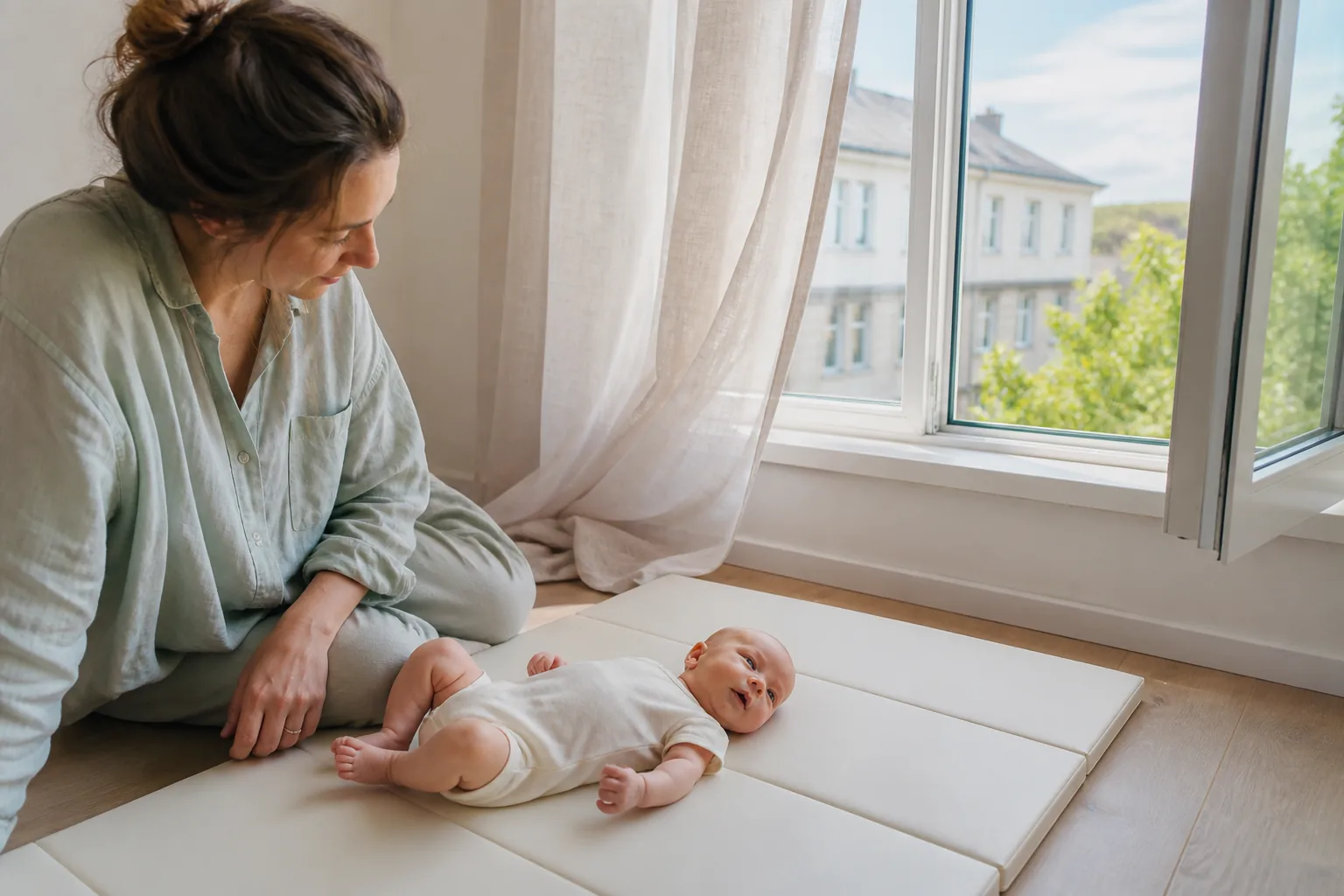
Between 24° and 27°, dress your newborn in a short-sleeve cotton bodysuit under a light 0.5 TOG sleep bag. 0.5 TOG describes the bag's warmth, not its fabric. If you need to match bags to cooler rooms, our sleep bag TOG guide maps the full ladder.
When bedroom temperatures rise to 28° or higher, skip the sleep bag entirely. Put your baby down in just a diaper. It can feel unnatural to put a newborn to sleep with bare legs, but keeping them cool is what keeps them safe. Never use a hat indoors or in bed.
An electric fan helps circulate air on muggy nights. Place it across the room to move the air gently, but never point the airflow straight at the crib.
At the hottest point, change the outing
Once temperatures reach around 32° feels-like, you cannot dress your way out of the heat. A baby in a featherweight romper or diaper has no more layers to shed. At this point, the solution is not clothing; it is adjusting your schedule. Shift walks to early morning before the heat settles in. In the afternoon, stay in deep shade or head to a cool room indoors. Offer breast milk or formula feeds more frequently, as newborns need extra fluids in the heat. Before 6 months, offer regular milk rather than water, unless your doctor advises otherwise.
What to buy for the first hot weeks
- 5 to 7 short-sleeve cotton bodysuits with envelope necklines.
- 3 to 4 lightweight long-sleeve cotton bodysuits for sun coverage and mild days.
- 2 to 3 loose, thin cotton pants or rompers.
- 1 lightweight cotton cardigan for air-conditioned rooms.
- 1 soft wide-brim sun hat with a safety breakaway strap.
- 1 or 2 lightweight 0.5 TOG sleep bags for warm bedroom nights.
- 2 pairs of thin cotton socks for cooler mornings.
- A clean spare bodysuit, pants, and socks kept ready in your outing bag.
Resist the urge to buy autumn or winter clothes while nesting for a summer baby. Newborns grow at unpredictable speeds. Clothes bought six months ahead frequently turn out to be the wrong size when the weather finally turns. Buy what fits right now for the warm weeks ahead.
Questions parents ask
What if the morning starts cool?
Put on the light cardigan and thin socks for the early walk, then take them off the moment the sun warms up. Check the back of their neck rather than leaving the cardigan on out of habit.
What if shade is impossible?
For a baby under 6 months, prioritize physical shade with a stroller parasol or canopy. If you are caught in unavoidable sun, keep exposure as brief as possible and ask your pediatrician before applying sunscreen to very young infants. From 6 months, use baby sunscreen on exposed skin.
Is a second 0.5 TOG sleep bag worth buying?
Yes, if your bedroom stays above 24° regularly. Spit-up and diaper leaks happen overnight, and having a clean spare ready saves you from running the dryer at 3 AM.