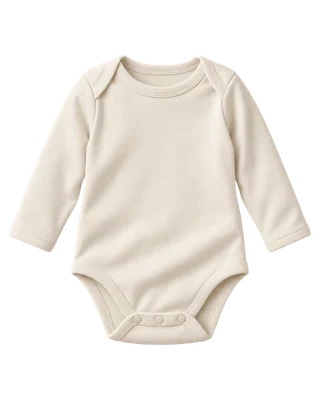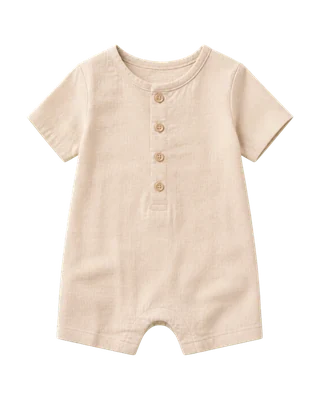
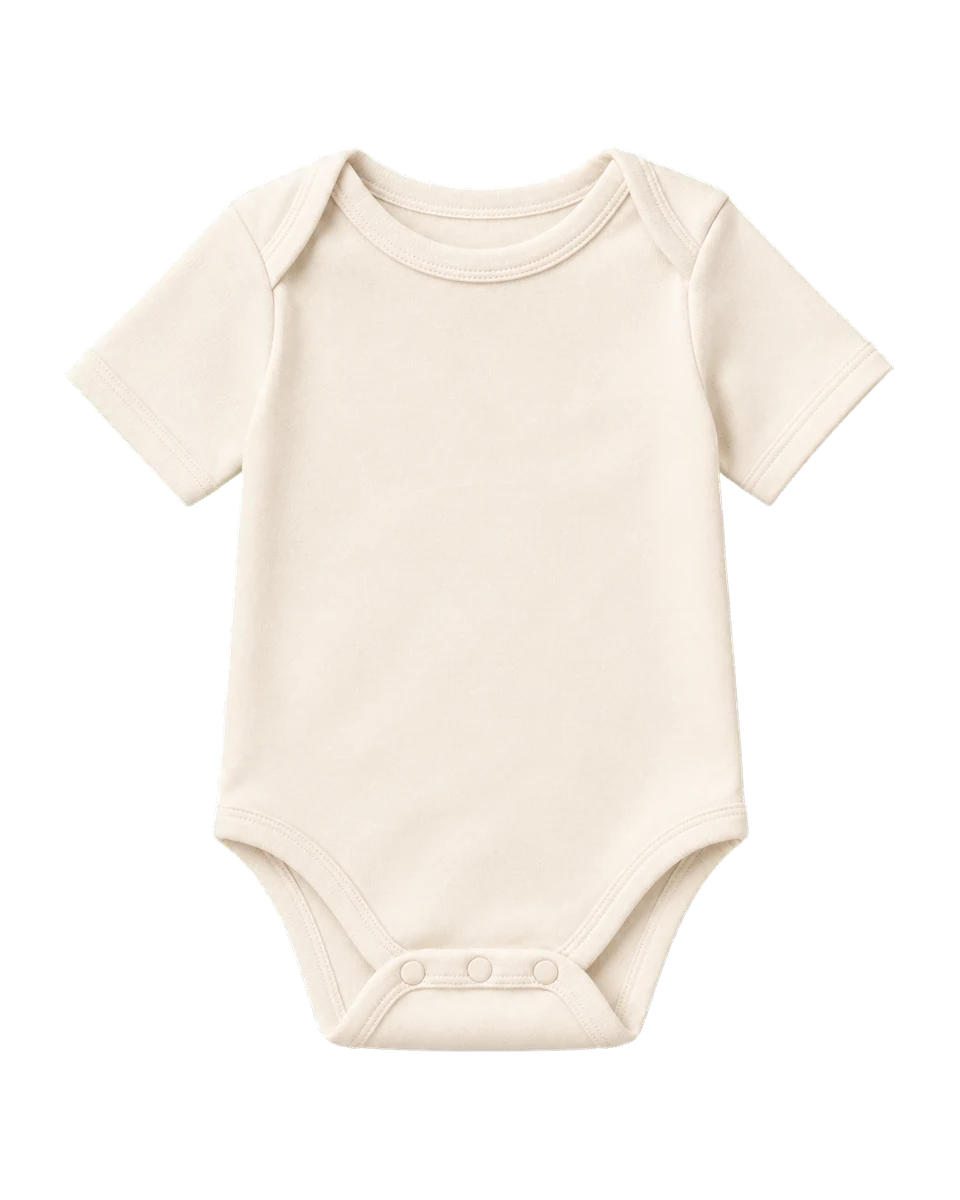
A short-sleeve bodysuit is a close-fitting top, usually cotton, that fastens under the diaper with snaps. It is the first layer against your baby's skin. The snaps keep the belly and back covered and the diaper in place. They also stop the top from bunching up under the arms when you pick up or carry your baby.
In the US, parents call it a onesie, and in the UK a vest. Shops across Europe sell it simply as a body.
- For ages0–24months
- You'll need4–7per size
- Wear itAll year
When babies wear one
Almost every day, from birth. In warm weather it can be the whole outfit, with bare legs, or go with light pants and a sun hat.
In cool or cold weather, it goes under everything: sleepsuits, cardigans, pants and winter jackets.
During a heat wave, you can skip the bodysuit at home, because a diaper alone keeps your baby cooler. Parents also skip it once potty training begins, because unfastening snaps at every toilet trip slows toddlers down.
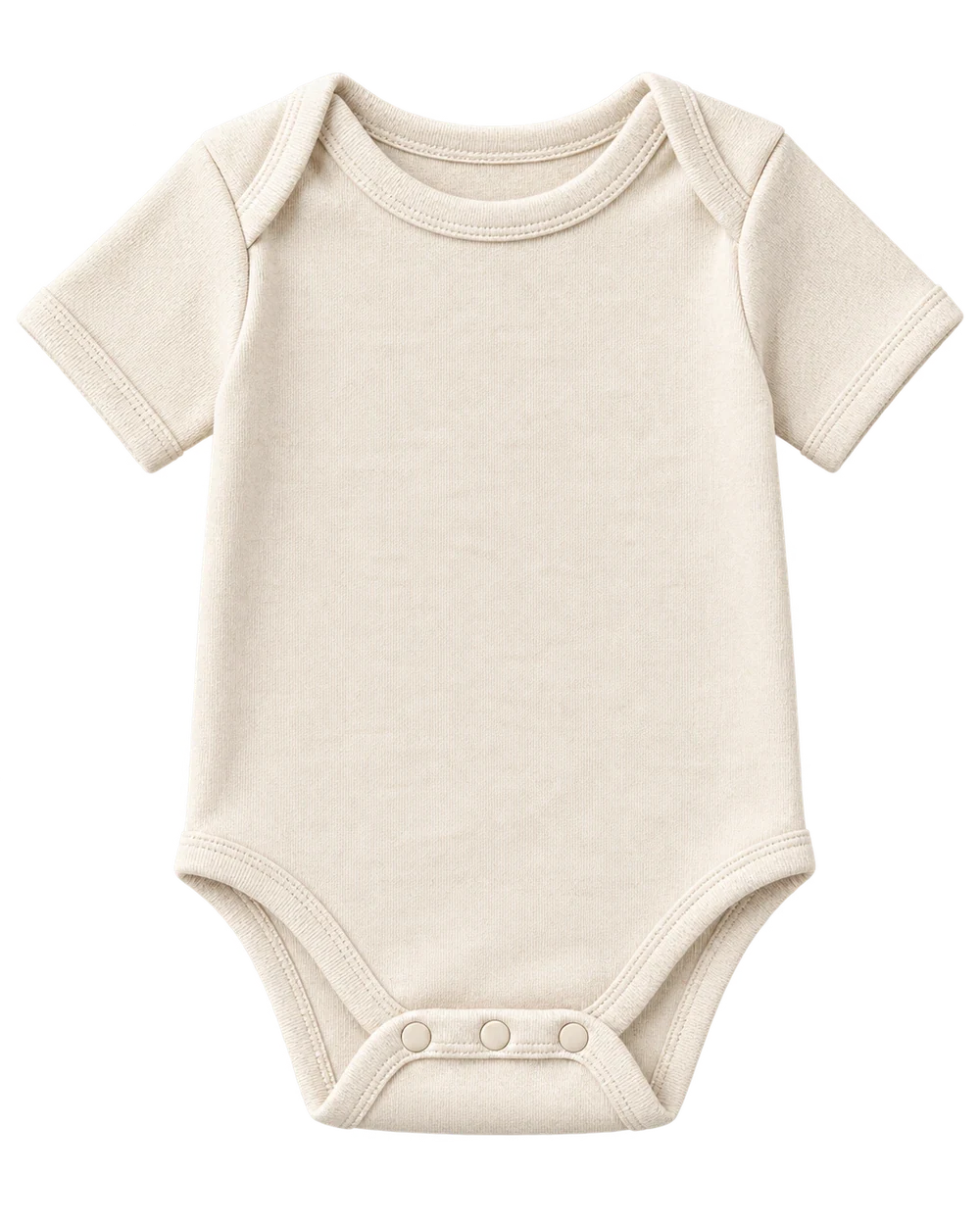
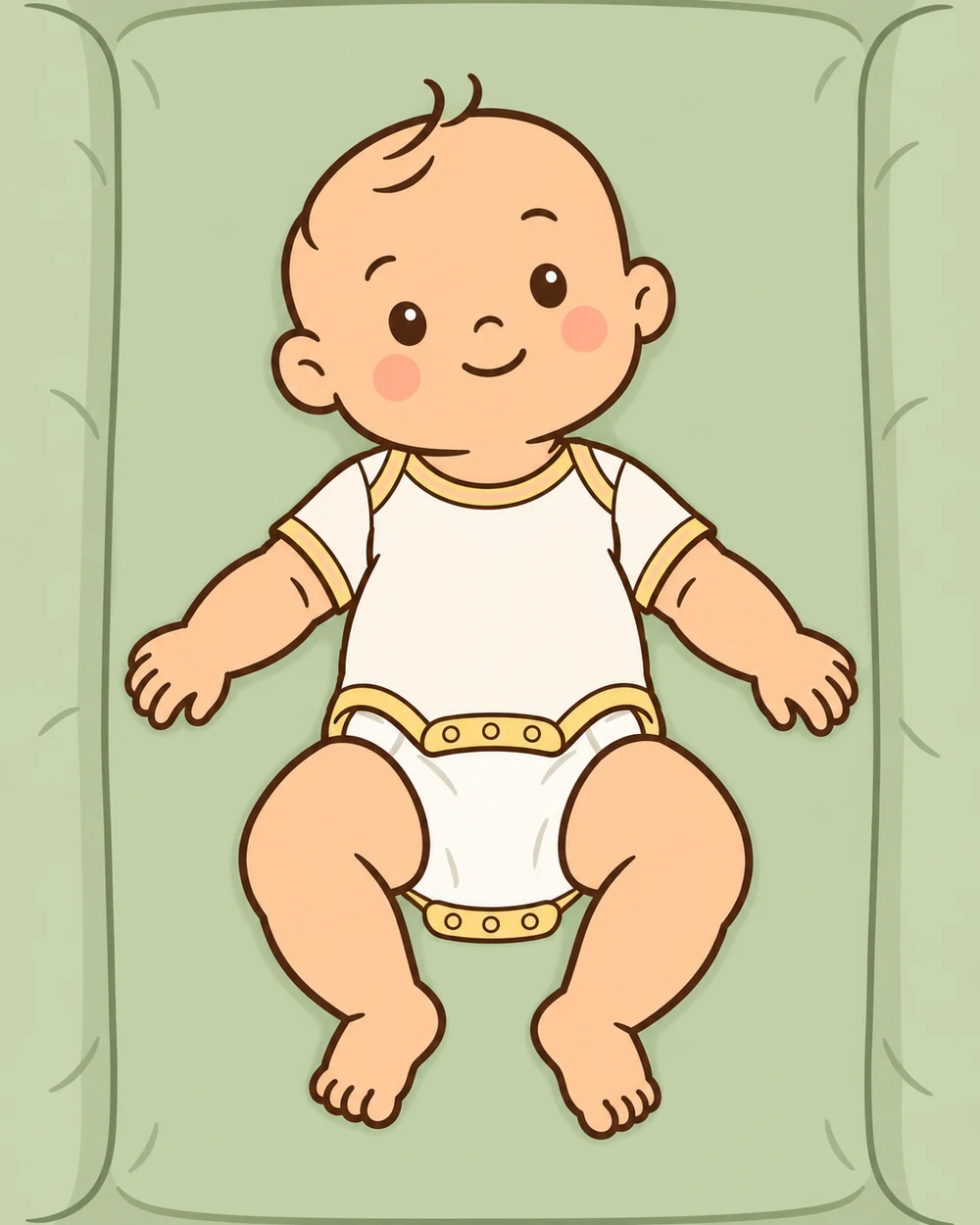
How a bodysuit is built
Envelope shoulders
The fabric overlaps at each shoulder, so the neck opens wide when you stretch it.
Short sleeves
They cover the shoulders and leave the forearms free.
Bottom snaps
Three snaps between the legs. Open them to change a diaper, and the rest stays on.
Leg binding
A soft, stretchy edge around each leg opening.
How baby sizes work
Baby clothes sizing confuses almost every new parent. In the US and UK, labels use months, and 0–3 months and 3 months are usually the same size. The 3 is an upper limit: a size marked 3 months fits a baby up to 3 months, or about 5.5 kg (12 lb). If your baby is long or growing quickly, move up a size early.
In much of Europe, sizes use your baby's length in centimeters: 50 for a newborn, 56 up to 56 cm, 62 up to 62 cm, and so on. Measuring your baby from head to heel gives a much more reliable fit than guessing by the calendar. To plan ahead, what to buy for the first year shows the size your baby will likely wear in each month, and the season it meets.
Brands vary widely. Parents often find that Gerber runs small and slim, Carter's sits in the middle, and Burt's Bees and Primary run longer and leaner. Check the brand's own weight and length chart rather than relying on the age label.
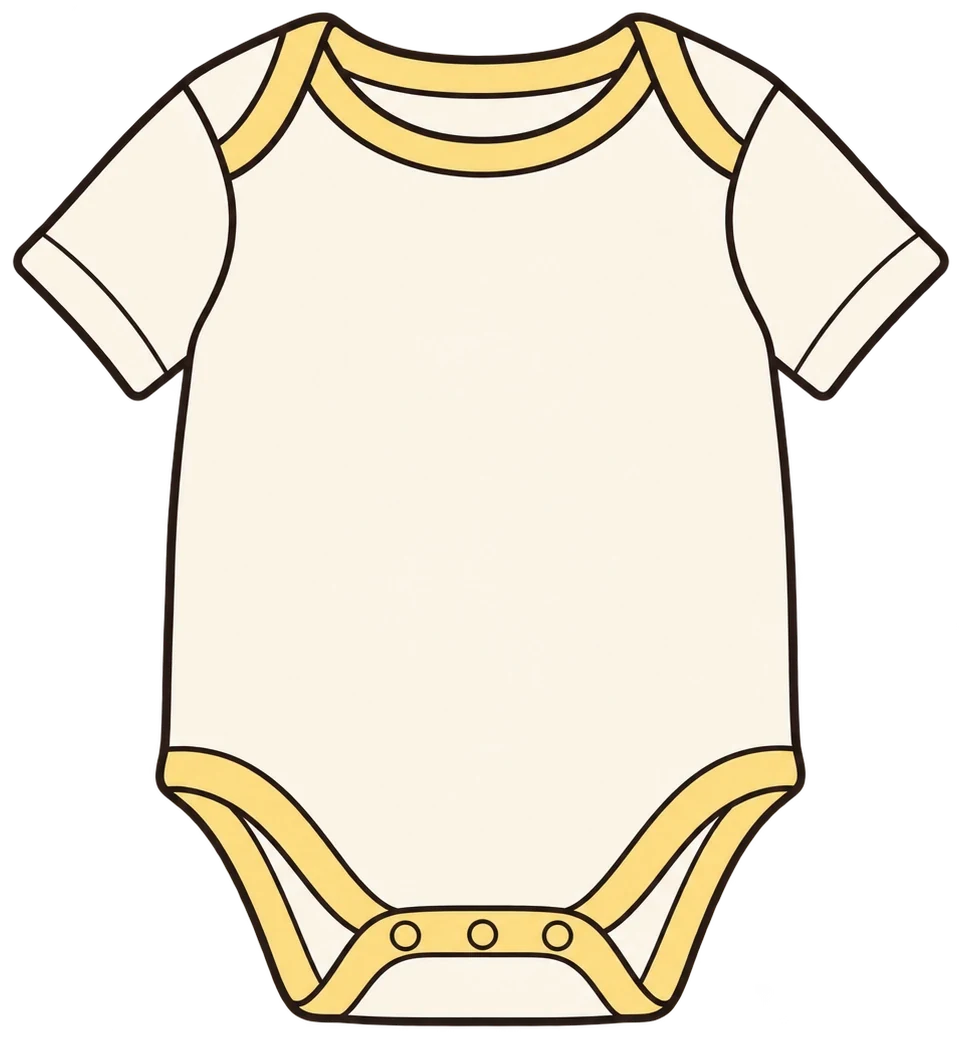
If a bodysuit gets too short in the body while the chest still fits, a bodysuit extender (a small cotton tab with snaps) adds 5–10 cm (2–4 in) of length, which is also helpful with bulky cloth diapers. Snaps come in different sizes, so choose an extender that matches your bodysuits. Around age two, 24-month sizes usually keep extra room for a diaper, while 2T (T for toddler) is cut leaner, for a walking toddler.
European sizeUS sizes on Carter's chart
 50Up to 50 cm (19.7 in)Newborn
- 56Up to 56 cm (22 in)0–1 month
- 62Up to 62 cm (24.4 in)1–3 months
- 68Up to 68 cm (26.8 in)3–6 months
- 74Up to 74 cm (29.1 in)6–9 months
- 80Up to 80 cm (31.5 in)9–12 months
- 86Up to 86 cm (33.9 in)12–18 months
- 92Up to 92 cm (36.2 in)18–24 months
- NB
- 3M
- 6M
- 9M
- 12M
- 18M
- 24M
Same label, different fit
Check each brand's weight and length chart.
Gerber
Runs small and slim
Carter's
The middle, standard fit
Burt's Bees, Primary
Run longer and leaner
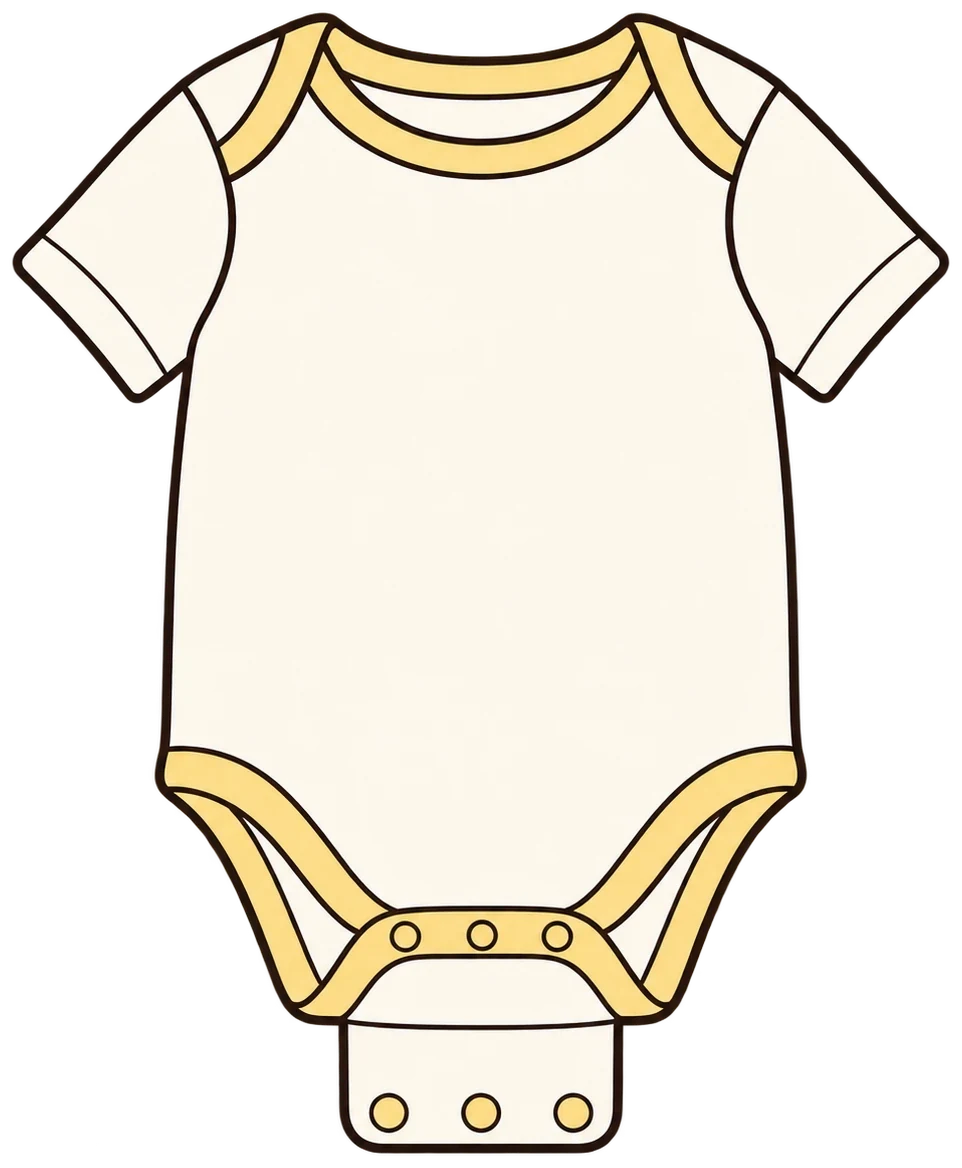
Bodysuit extender
+5–10 cm(2–4 in)
A small cotton tab with snaps. It adds length when the bodysuit gets too short but still fits at the chest, and room for bulky cloth diapers.
Types of bodysuit
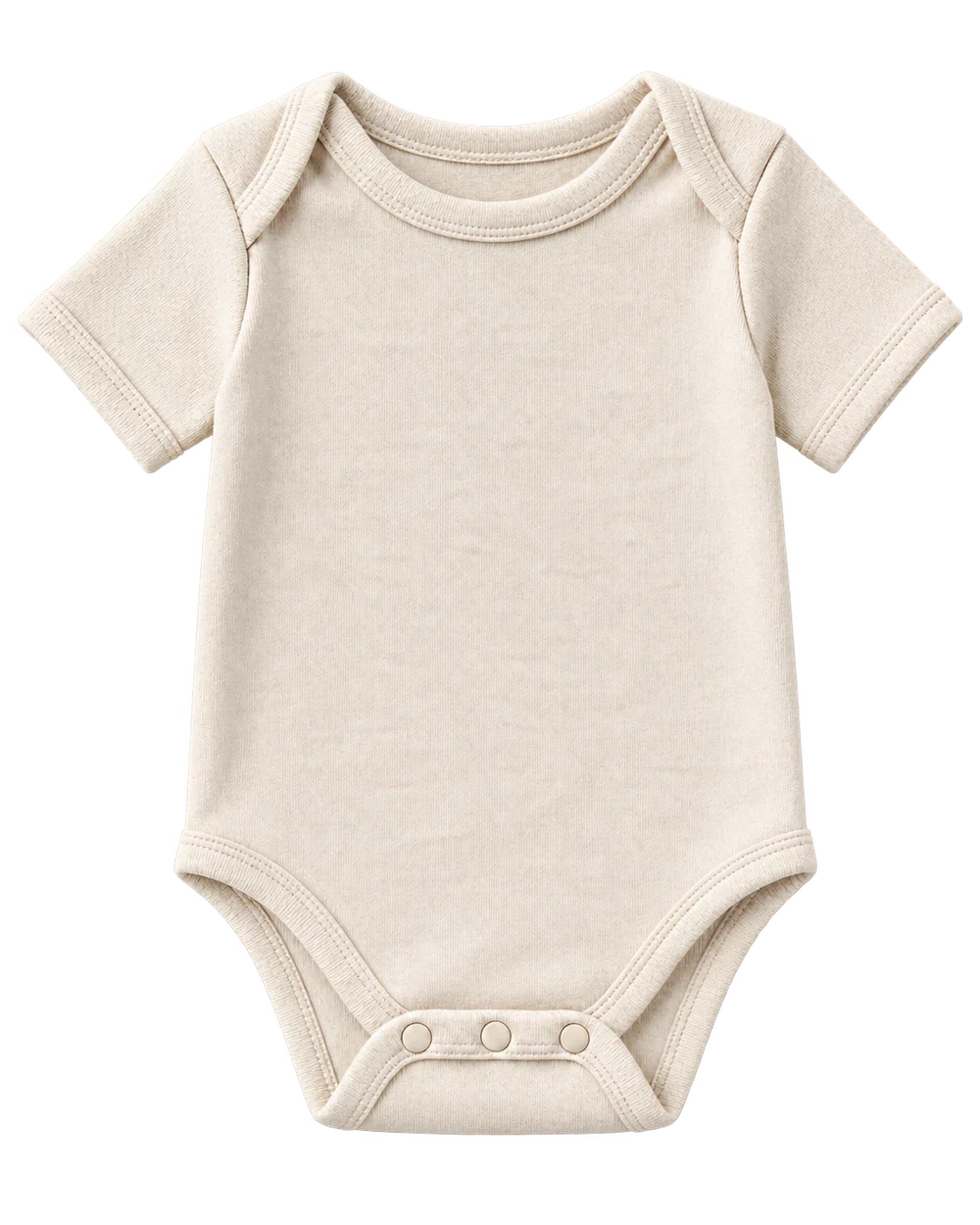
Envelope neck
The everyday choice for most families, from birth to the toddler years. It goes on over the head, which some newborns dislike in the first weeks.
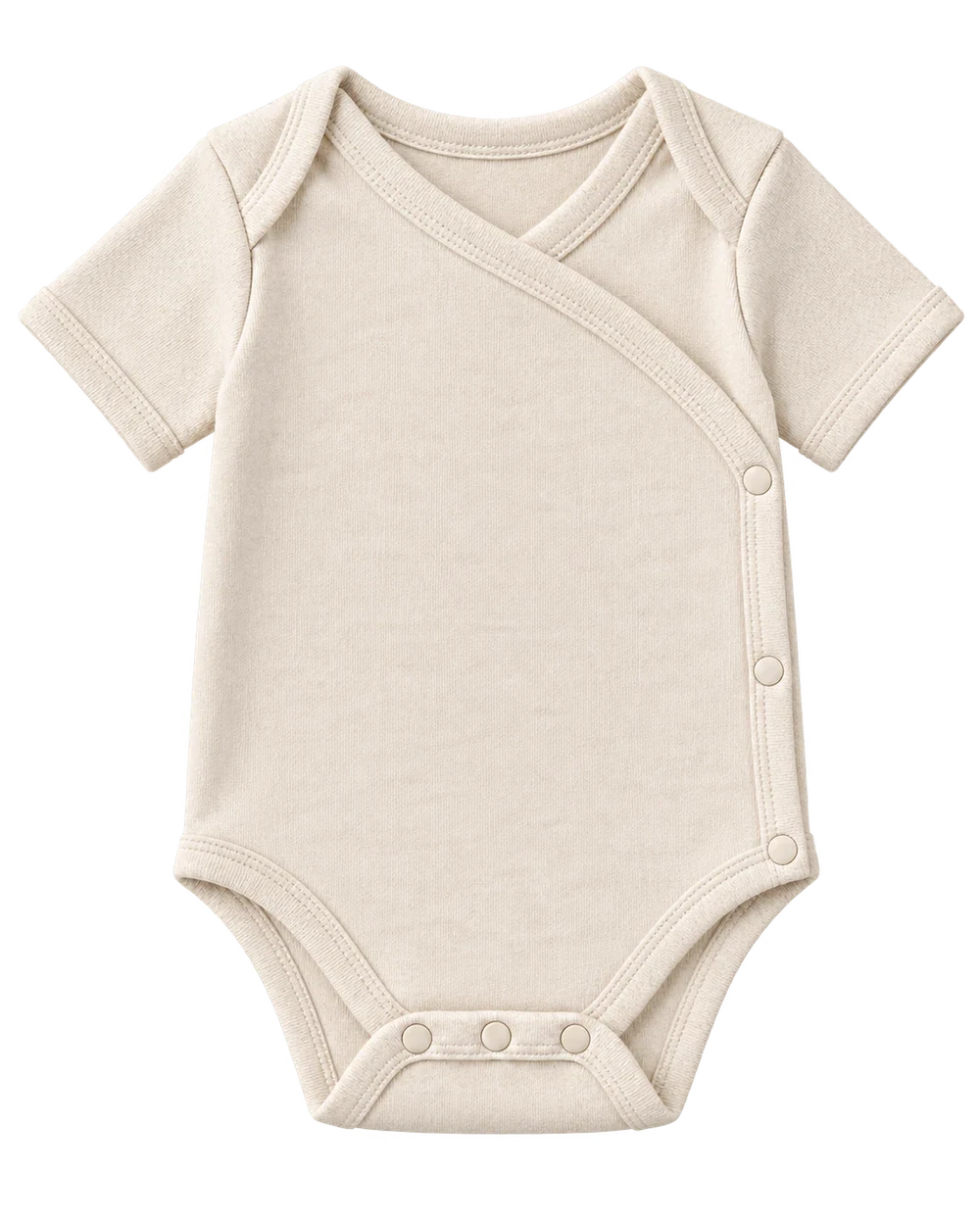
Side-snap wrap
Opens flat and fastens across the front with snaps. You dress your baby without pulling fabric over the face, which many parents find easier in the first weeks.
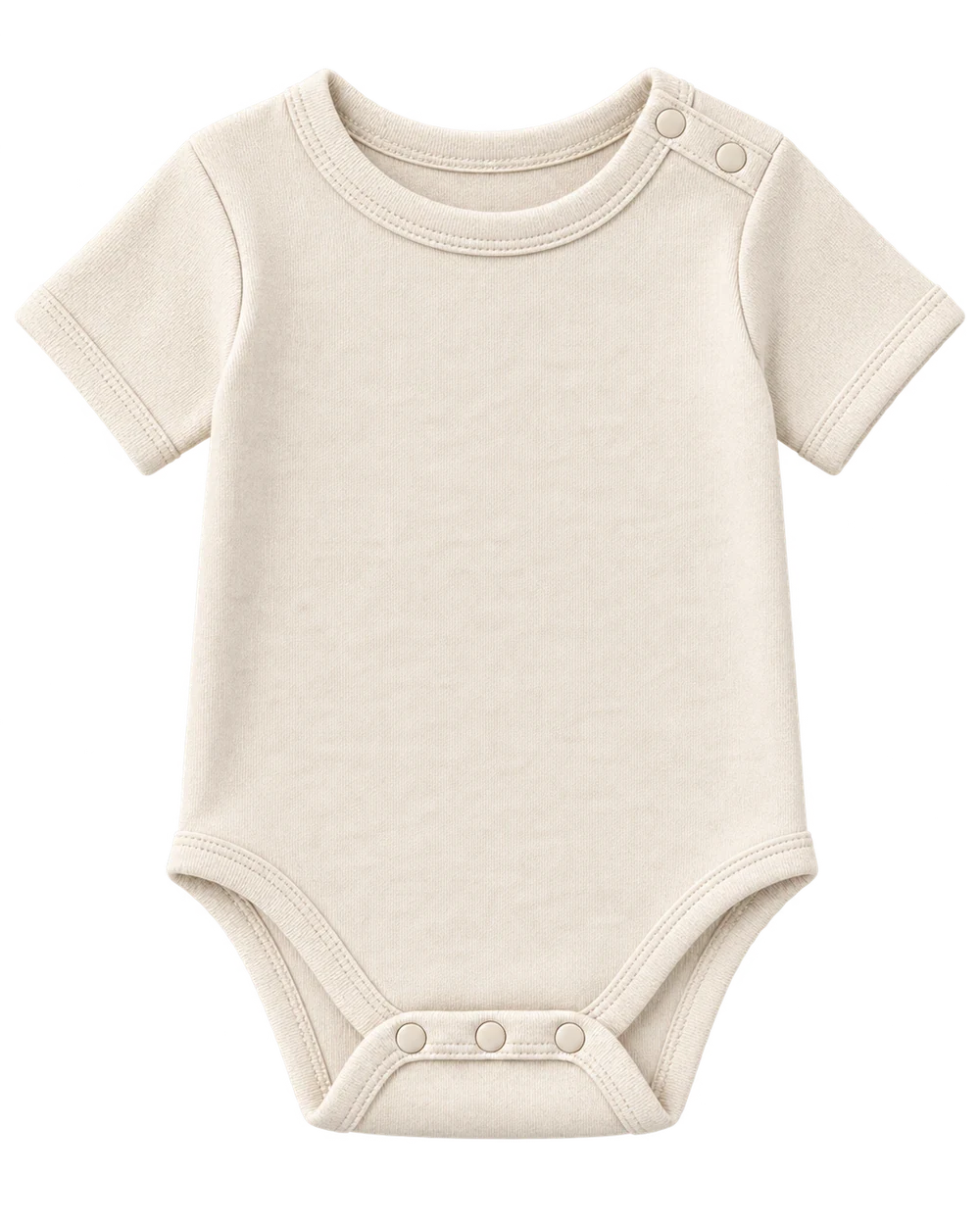
Snap shoulder
One or two flat snaps sit on one shoulder. Open them and the neck goes easily over the head. Closed, it sits close at the neck.
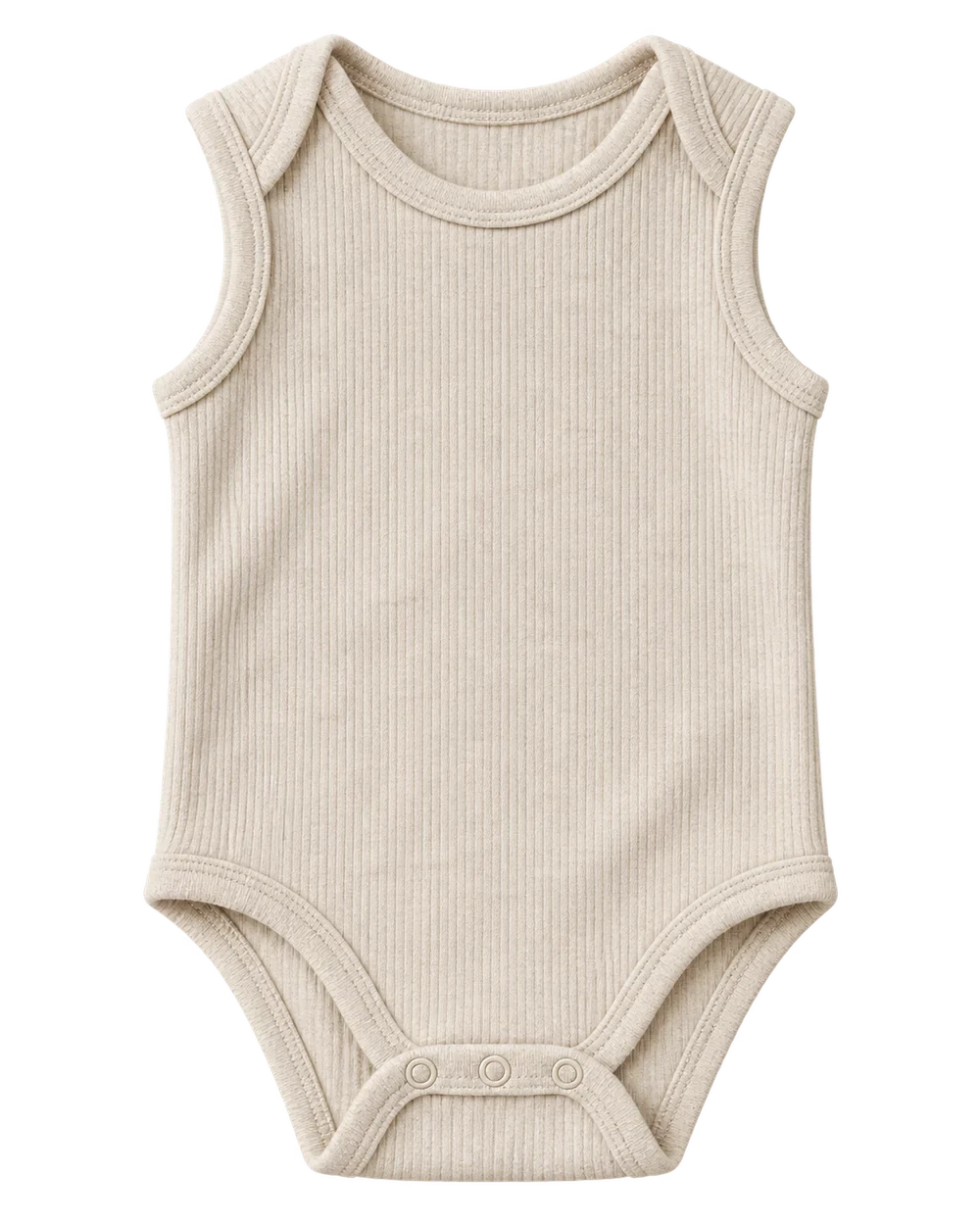
Sleeveless
No sleeves at all, so the arms and shoulders stay bare. The coolest kind, for hot days at home and in the shade. Out in the sun, short sleeves are the better pick, because they keep the sun off the shoulders.
How to choose a bodysuit
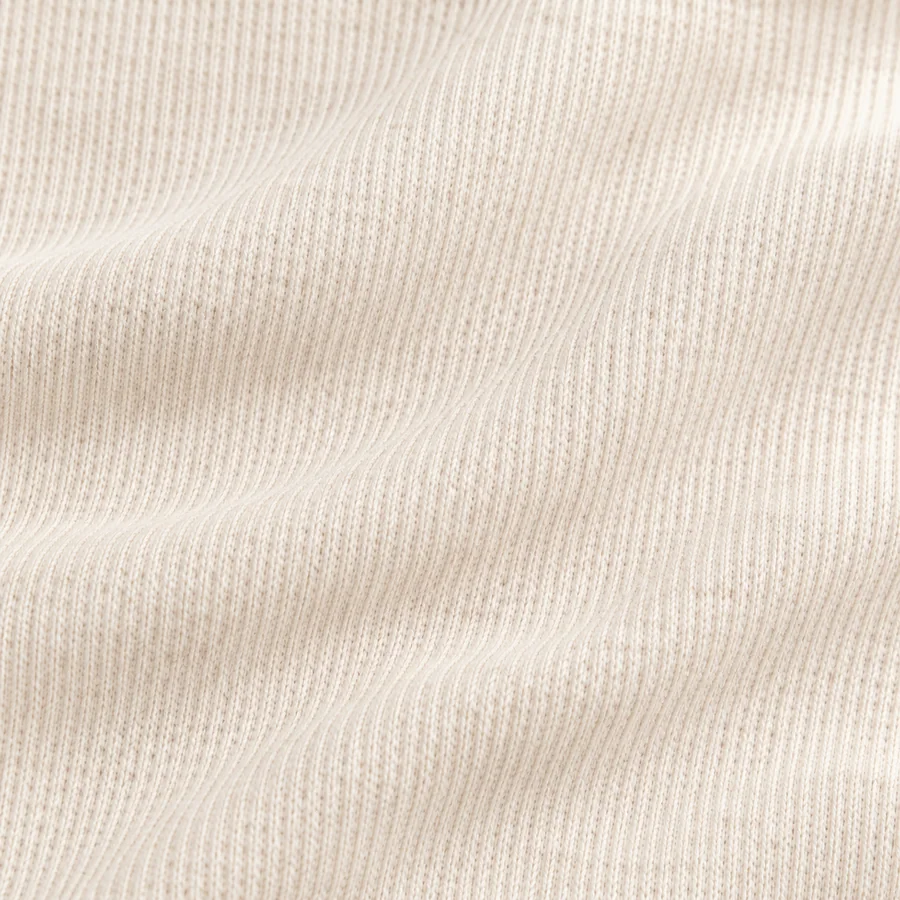
1. Stretchy ribbed cotton
100% ribbed cotton stretches as your baby moves, then springs back into shape.
- Good: Ribs you can see and feel
- Good: Neck springs back after a stretch
- Not good: Thin knit that stays baggy
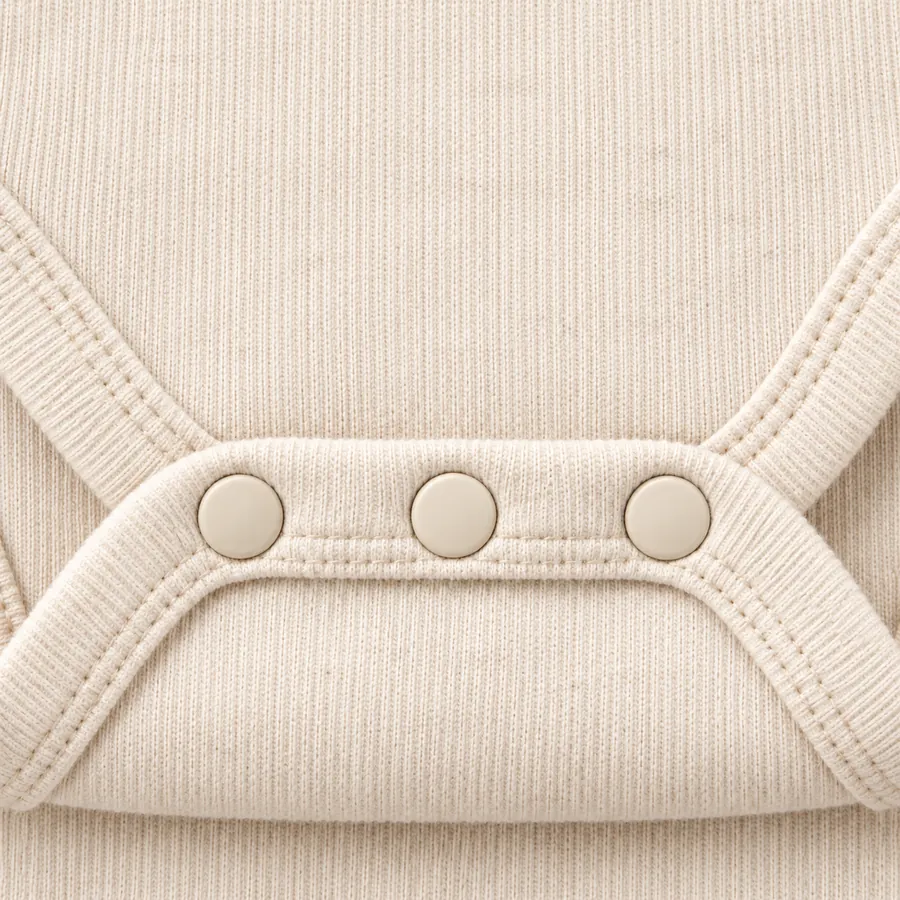
2. Flat, firm snaps
Nickel in a metal snap can irritate the skin, so pick nickel-free snaps that click firmly shut. Snaps that lie flat don't dig into your baby's body.
- Good: Nickel-free snaps
- Good: Each snap lies flat on its band
- Not good: Snaps that open with a light tug
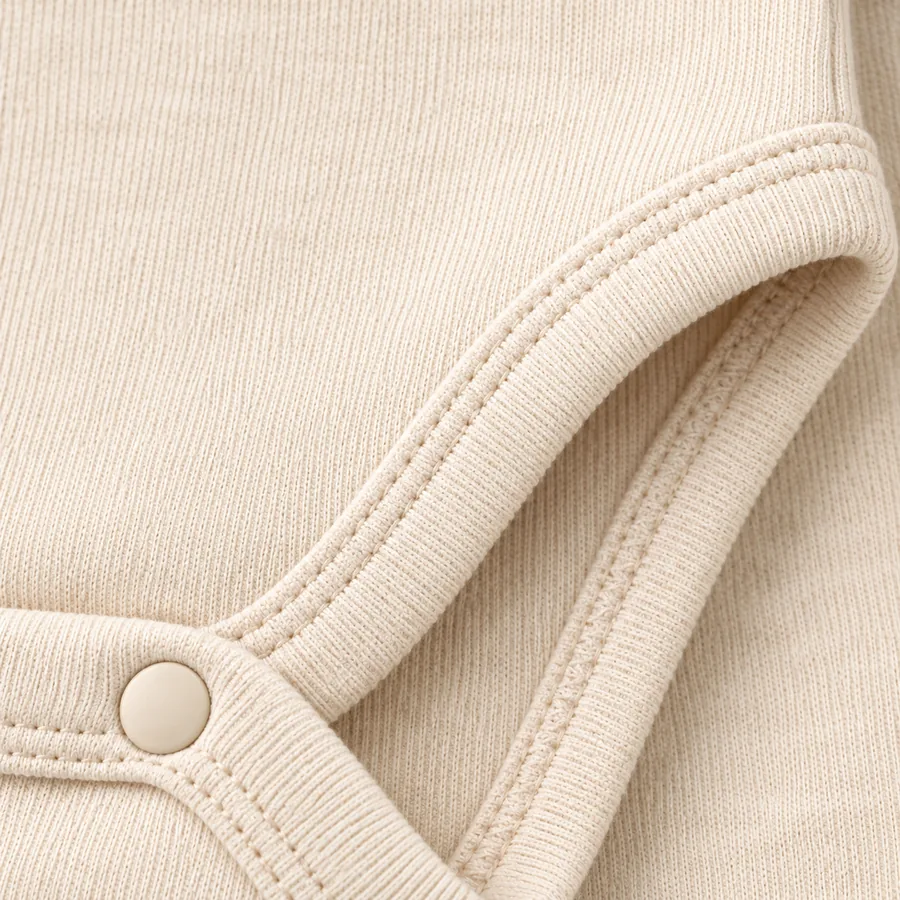
3. Soft leg openings
Tight elastic at the legs leaves red marks on the thighs. Soft, stretchy binding sits in the leg crease without pressing.
- Good: Fabric binding around the legs
- Good: Stretches easily over the thigh
- Not good: Tight elastic around the leg
How to put it on
Many newborns dislike fabric passing over their faces. To put a bodysuit on smoothly, bunch it up in your hands like a doughnut. Stretch the envelope neck opening wide with both hands, slide it over the back of the head first, and gently guide it over the forehead.
For the arms, reach your fingers through the sleeve from the cuff end. Gently take your baby's hand and draw it through, so the little fingers don't catch on the way.
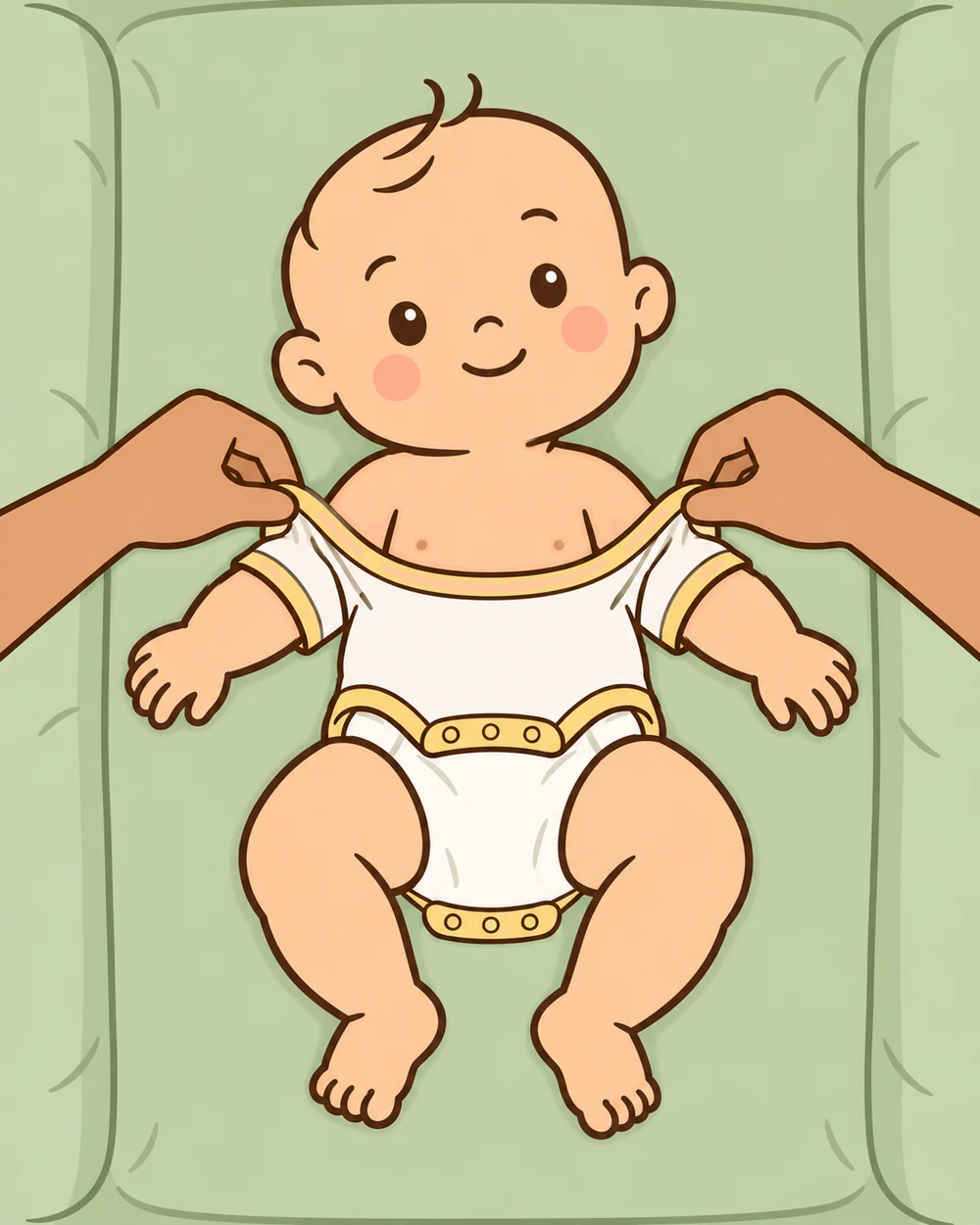
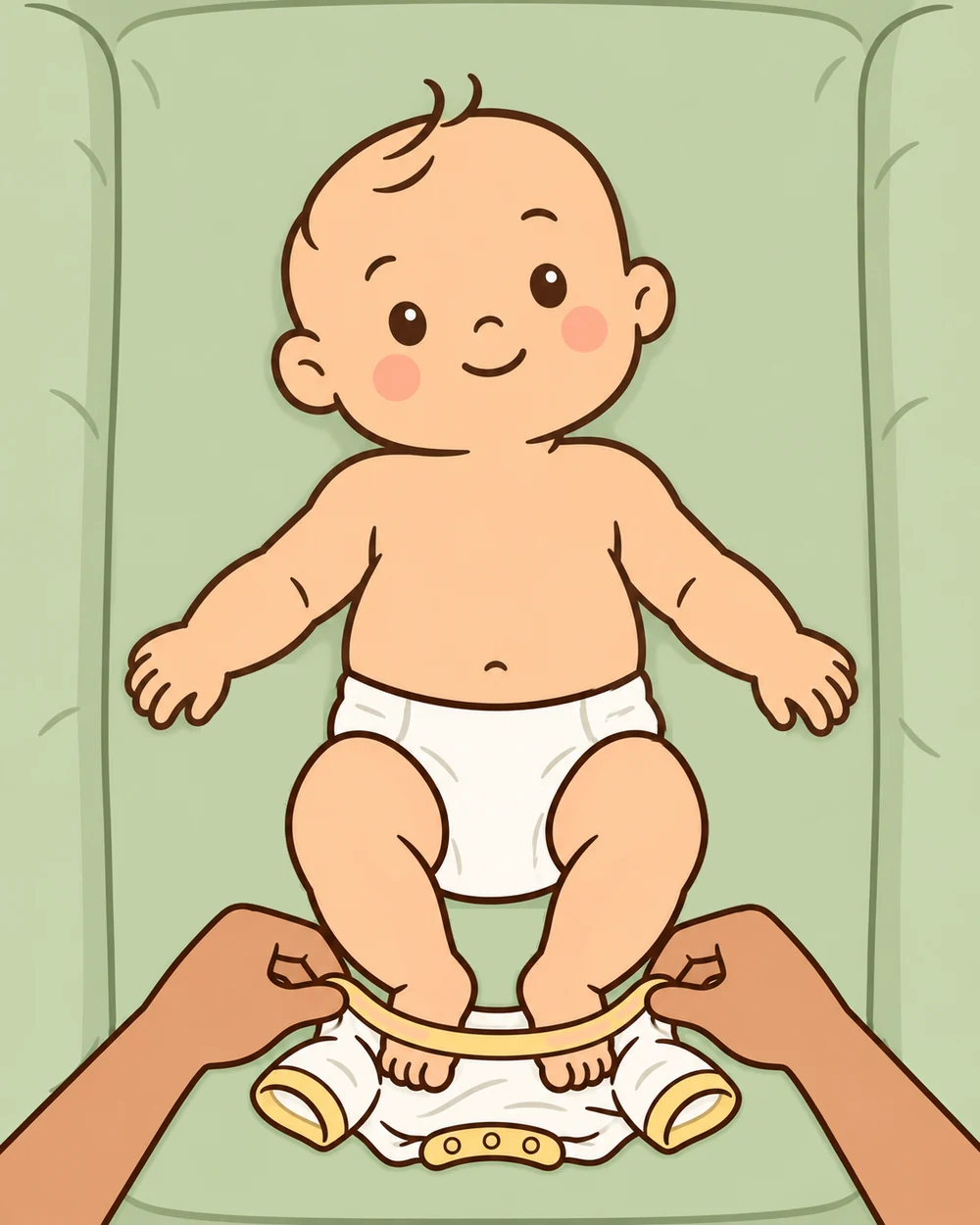
When a diaper blowout happens, never pull the messy bodysuit up over your baby's head. Unsnap the bottom, stretch the envelope shoulders apart, and slide the entire bodysuit down over the shoulders, tummy, and legs. Mess stays far away from your baby's face and hair.
After a blowout, take it off downward
This is what the overlapping shoulders are for.
After a blowout, take it off downward
Questions parents ask
Do babies wear short-sleeve bodysuits in winter?
Yes, as the first layer under everything else. The short sleeves add no bulk under sweaters, sleepsuits and coats, and the warmth comes from what goes on top.
Why do bodysuits have shoulder flaps?
So the neck stretches wide and slips over a big baby head without pulling. They also let a dirty bodysuit come off downward after a diaper leak, so nothing messy goes over the head.
How should a baby bodysuit fit?
Snug on the body, without straining. The bottom snaps close easily over the diaper without pulling the neck down, and the leg openings leave no red marks on the thighs. When the snaps strain, move up a size.
Can a newborn wear 0–3 months?
Yes, though it is loose on most newborns at first. On Carter's chart, the newborn size fits up to 4 kg (9 lb) and 55 cm (21.5 in), and 0–3 months fits from there. A baby born heavier or longer than that fits it from day one, and a smaller one grows into it.
Do you put anything under a bodysuit?
No. A bodysuit goes directly over the diaper against bare skin. A top underneath would only bunch up, so any extra layer goes on top.
How many bodysuits does a newborn need?
Four to seven in each size, short and long sleeves together, depending on how often you wash. Newborn diaper leaks and spit-up happen often, so a few clean spares keep you from running laundry twice a day.
When do babies switch from bodysuits to T-shirts?
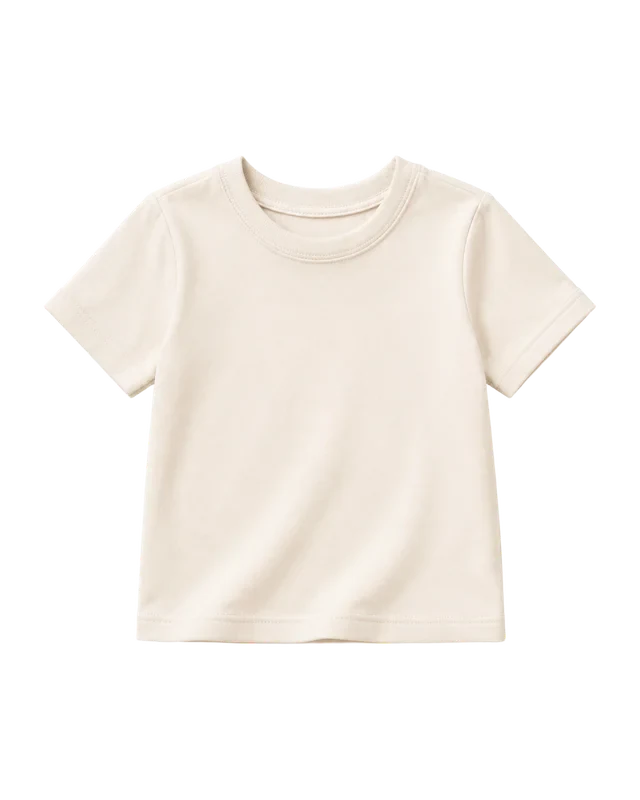
Usually between 12 and 24 months. Until then a bodysuit stays tucked into pants and keeps the diaper in place. Once walking and potty training start, separate T-shirts are easier.
What is the difference between a bodysuit and a sleepsuit?
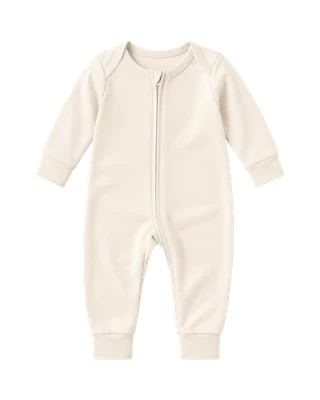
A bodysuit has no legs and snaps under the diaper. It is worn alone in warm weather, or under other clothes. A sleepsuit (a sleeper in the US) covers the legs, often the feet too, and your baby can wear it day and night. Some US parents call a zip-up sleeper a onesie as well, so check the picture when you shop.
Can my baby sleep in just a short-sleeve bodysuit?
In a warm room, yes. From 24°C (75°F), a short-sleeve bodysuit inside a light summer sleep bag is a common sleep outfit. From 28°C (82°F), skip the bag: a bodysuit alone or just a diaper is plenty. In a cooler room, dress for the room temperature.