What this is about
TOG comes from duvet ratings. It measures thermal insulation, which makes it feel like an all-in-one answer on the box. In a nursery, it is really the coarse dial. It handles the general temperature of your home, while the bodysuit or sleepsuit underneath is the fine dial that dials in comfort for tonight.
That distinction matters because bedtime is not a fixed climate. A 2.5 TOG bag in an 18° room keeps a baby comfortably warm with a long-sleeve bodysuit, but pair that same bag with a fleece sleepsuit and the outfit quickly becomes too warm. You are dressing a complete outfit, not buying a standalone blanket.
What TOG means
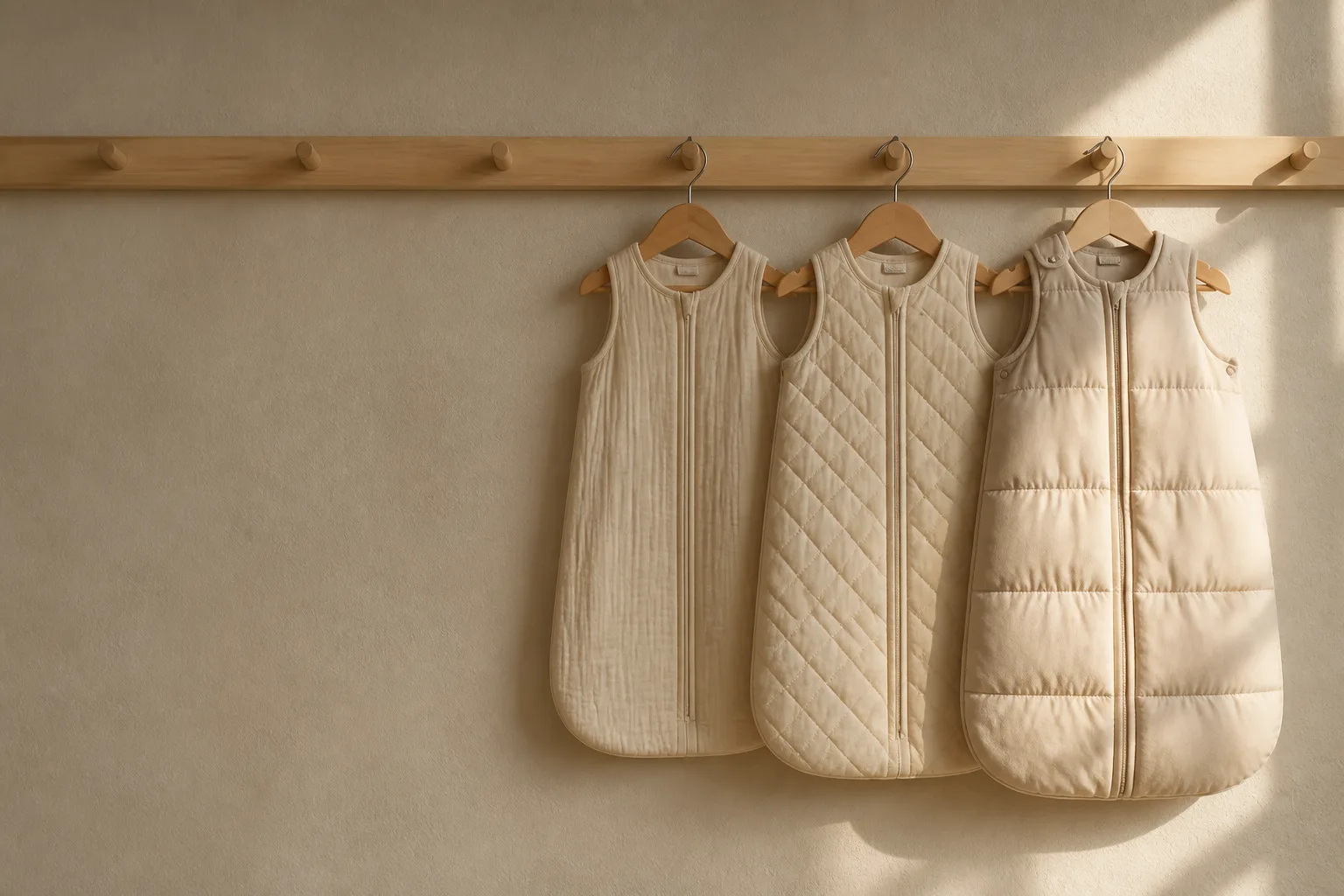
Most baby sleep bags come in three main weights. Think of 2.5 TOG as the autumn-to-spring workhorse for typical UK and European bedrooms (16–20°). A 1.0 TOG bag handles warmer weather or modern well-insulated flats (20–24°). A 0.5 TOG bag is a lightweight summer option, reserved for hot nights and holiday travel (24–27°).
These ratings have natural overlaps at 20° and 24°. When the nursery thermometer hovers right on a boundary line, you do not need to guess or buy a new bag. You adjust the under-layer instead. If the room is 20° and cools down overnight, a 2.5 TOG bag with a short-sleeve bodysuit is a reliable choice. If the room is 20° and tends to stay warm, a 1.0 TOG bag with a long-sleeve bodysuit balances the warmth.
Most health bodies suggest keeping a sleeping room around 16–20° when possible. Ignore the season printed on the cardboard box. Check a reliable thermometer near the cot, and keep in mind whether the room stays steady or drops a couple of degrees before sunrise.
You cannot judge TOG by sight
A puffy sleep bag is not necessarily a warmer one. Polyester batting can puff up thick and airy at 1.0 TOG, while a dense quilted organic cotton bag at 2.5 TOG can feel noticeably slimmer in your hands. Weight and bulk fool human fingers.
If a hand-me-down bag has no label, ask the maker to identify it. Until you know its warmth rating, use a bag with a known rating for naps and nighttime.
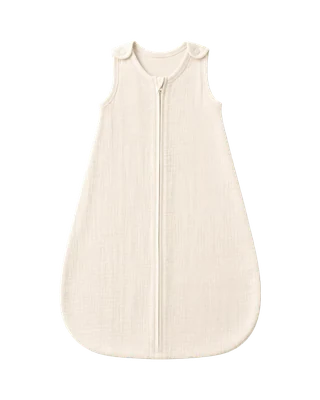
0.5 TOG
Lightweight bag for warm rooms and summer heatwaves (24–27°).
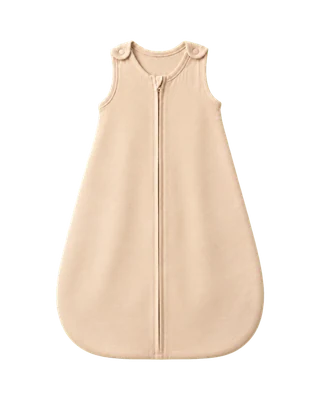
1.0 TOG
Mid-weight bag for mild rooms, late spring, and early autumn (20–24°).
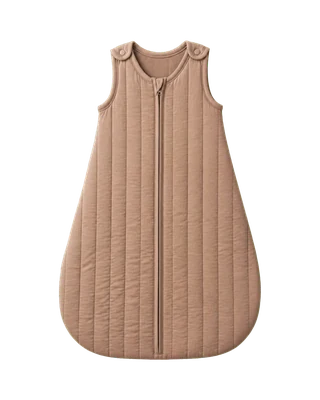
2.5 TOG
The standard cooler-room workhorse across autumn, winter, and spring (16–20°).
What each room calls for
Start with the nursery thermometer. The warmth rail shows the sleep bag weight for the room. The clothes underneath complete the outfit.




Notice how the under-layer shifts as temperatures change. In warm rooms, a short-sleeve bodysuit keeps bare arms cool while the lightweight bag covers the chest and legs. In cold rooms, a footed sleepsuit seals in warmth right to the toes. If your baby's sleep bag came with its own brand chart, follow its specific layer pairings. Use the outfits here as starting points.
If you own only one bag
Most parents do not have a boutique rack of sleep bags on standby. When a diaper leaks at 2:00 AM, you often have to work with whatever clean bag is left in the drawer. Under-layers give you some room to adapt, but only within reason.
- If you only have a 2.5 TOG bag in a warm room (22–23°): strip down to just a diaper inside the bag. At 24° and warmer, put the heavy bag away entirely; no under-layer can make heavy padding safe in genuine heat.
- If you only have a 1.0 TOG bag in a cooler room (18–19°): use a long-sleeve bodysuit under a footed sleepsuit to supply the missing warmth. At 17° and colder, a 1.0 TOG bag runs out of road and you need a warmer bag.
- If you only have a 0.5 TOG bag in a mild room (20–21°): a footed sleepsuit bridges the gap. At 19° and colder, swap the bag. Light muslin cannot keep a cold room out, no matter how many layers you pile underneath.
Never try to compensate for a thin bag in a cold room by adding cardigans, outdoor fleece, or hats indoors. If the temperature is beyond the bag's safe range, it is time to switch bags.
No sleep bag tonight? Dress by the room
28° and warmer
diaper
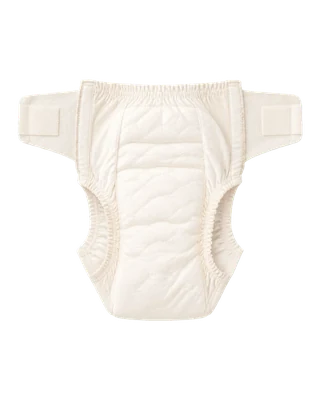
24–27°
short-sleeve bodysuit
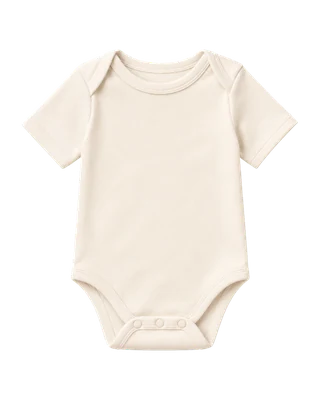
22–23°
sleepsuit
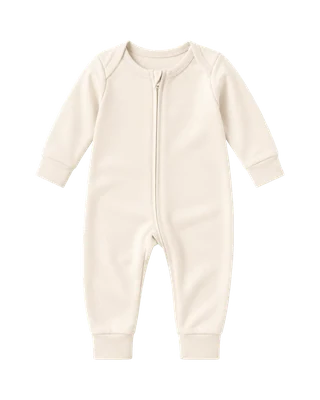
20–21°
long-sleeve bodysuit, sleepsuit
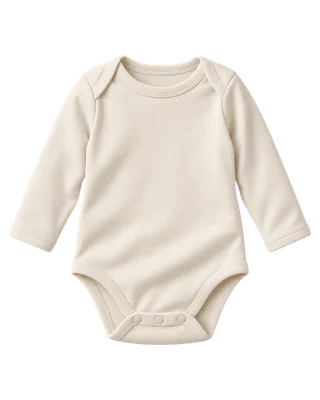
18–19°
long-sleeve bodysuit, quilted sleepsuit
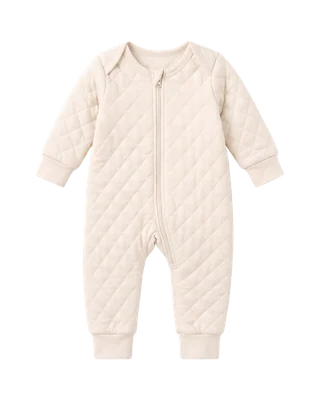
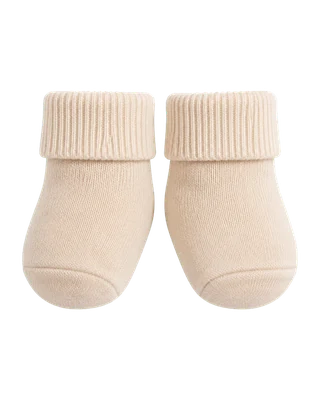
17° and colder
long-sleeve bodysuit, warm socks, quilted sleepsuit
The right TOG still needs the right fit
A sleep bag can have the exact right TOG and still be unsafe if it does not fit the shoulders. The critical safety test is the neck opening: when zipped up, the neckline must sit comfortably below the chin so your baby cannot slip downward inside the bag.
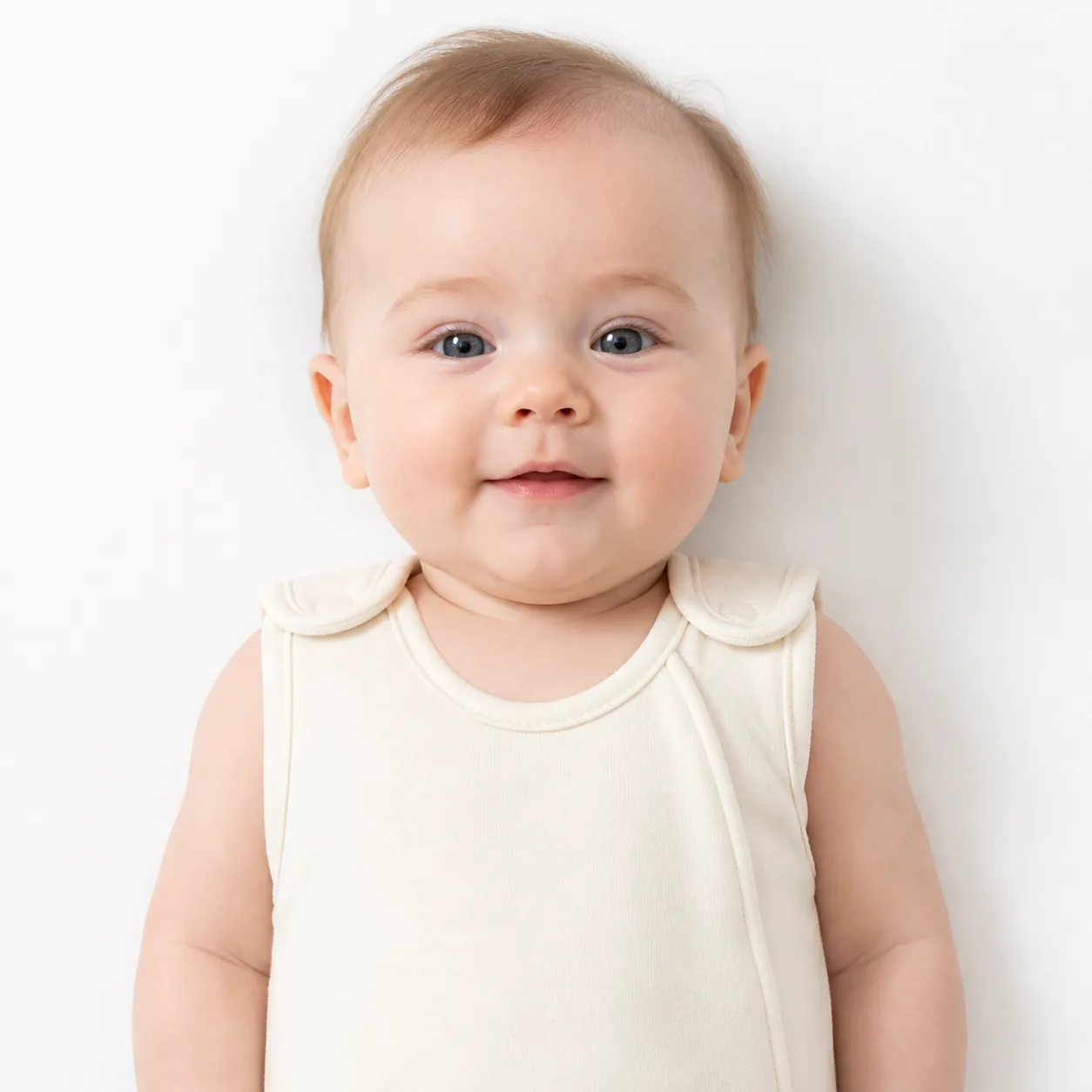
Sleep bags come with or without sleeves. Choose one without a hood so your baby's head stays uncovered. Keep the armholes snug enough to stay in place without pinching, and make sure all zips and shoulder poppers are fully closed.
Once your baby is settled on their back in the cot, glance at the neckline one final time. If the neck opening can easily slide up over the chin or mouth, the bag is too large for tonight. Save it for a few weeks down the road.
Do not double the bag
TOG numbers do not add up like simple arithmetic. Layering two 1.0 TOG sleep bags does not make 2.0 TOG. The air trapped between the two bags creates unpredictable insulation that can overheat a baby quickly.
Stick to one well-fitted bag. Never use weighted sleep bags or weighted swaddles, which restrict breathing and are flagged as unsafe by major pediatric safety bodies. Duvets, quilts, and loose blankets also stay out of the sleep space.
Check the full bedtime outfit on your baby
Charts and room thermometers give you a dependable starting plan. Your baby's skin tells you how that plan is actually working. Slide two fingers onto their chest or the back of their neck once they have settled.
Warm and dry skin means the outfit is spot on. Sweaty, clammy, or hot skin means your baby is holding too much heat: unfasten the bag or take off one under-layer. If the chest feels cool to the touch, add a long-sleeve layer or move to a warmer bag.
Do not judge temperature by tiny hands or feet. Infant circulation naturally prioritizes vital organs first, which leaves fingers and toes feeling chilly even when the core is perfectly warm. Reaching for an extra blanket because baby's hands feel cool is how nurseries accidentally overheat.
If your baby joins you in bed
When your baby joins you in bed during the night, the sleep bag counts as their own complete bedding. Fold your adult duvet down to your own waist and keep adult pillows well away from your baby's face. Make sure your baby's arms are out, and never swaddle in an adult bed.
Because sharing a mattress with an adult adds body warmth, check their neck or chest after they settle. If the room is already warm, a lighter under-layer helps keep them from overheating beside you.
Use this chart only for sleep indoors
These TOG ratings and under-layer pairings apply strictly to an indoor cot or bassinet in still air. They do not translate directly to travel.
Outside, wind and moving air change how insulation works, which is why stroller naps follow our stroller clothing guide. In a car, bulky padding under a harness prevents the straps from pulling tight in a collision. Keep sleep bags for the cot, and use a dedicated car seat blanket tucked over the tightened harness for travel.
Questions parents ask
Can I use 1.0 TOG at 24°?
Yes. The NHS ranges overlap at 24°. In a 24° room, pair 1.0 TOG with only a diaper, or switch to 0.5 TOG with a short-sleeve bodysuit.
Can I add clothes to make 0.5 TOG work in a cold room?
Only across a small drop in room temperature. In this reference, 0.5 TOG is not enough at 19° and colder, even with a footed sleepsuit. Change to a warmer bag instead.
Can I use two sleep bags together?
No. Air trapped between two bags makes their combined warmth unpredictable and risks overheating. Use one well-fitted bag with the right under-layer for the room.
Bedtime check
- Check the neck fit: your baby's head cannot slip down inside the opening.
- Pick the bag for the room temperature, and adjust warmth using the under-layer.
- Keep the cot clear: no duvets, loose blankets, or cot bumpers.
Check the back of the neck or chest. If your baby feels clammy or cool, adjust one layer and check again.