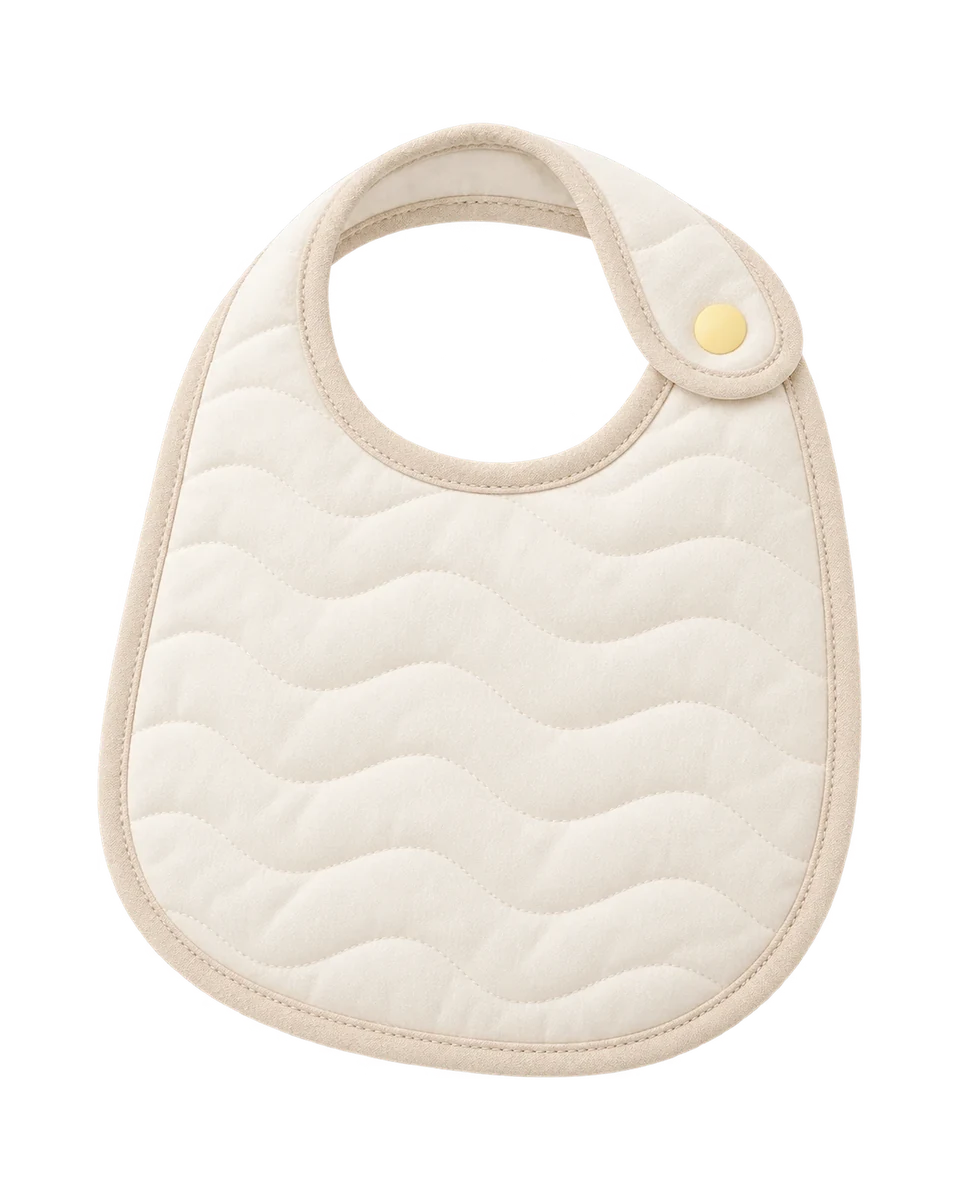
A drool bib soaks up dribble through the day. A feeding bib, of cloth or silicone, catches food at meals. When one is wet or messy, you change the bib instead of the whole outfit.
In the first weeks you need few bibs, if any. Most babies need drool bibs a few months in, and feeding bibs once solid food starts.
- For ages0–24months
- You'll need3–8
- Wear itAll year
When babies wear one
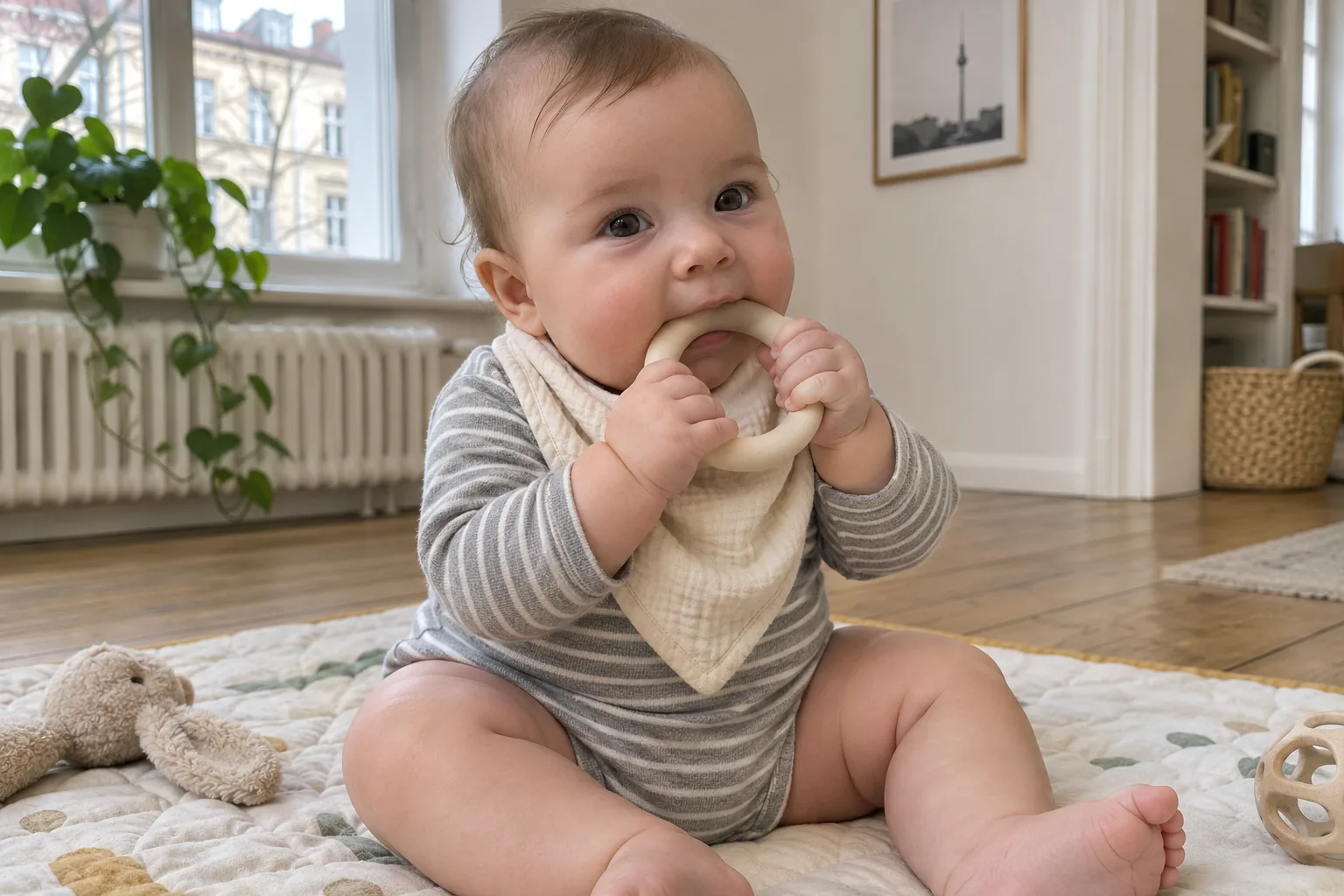
Drool starts at about 2 to 3 months, when the glands that make saliva get going before your baby can swallow it all. A soft drool bib goes on in the morning and comes off whenever it's wet.
Solid food usually starts at around 6 months, and most babies start teething at about the same age. From then on, a drool bib by day and a bigger bib at meals is the usual pair.
Types of bib
A bandana bib covers the drool. For meals, pick one of the other three by how messy they get.
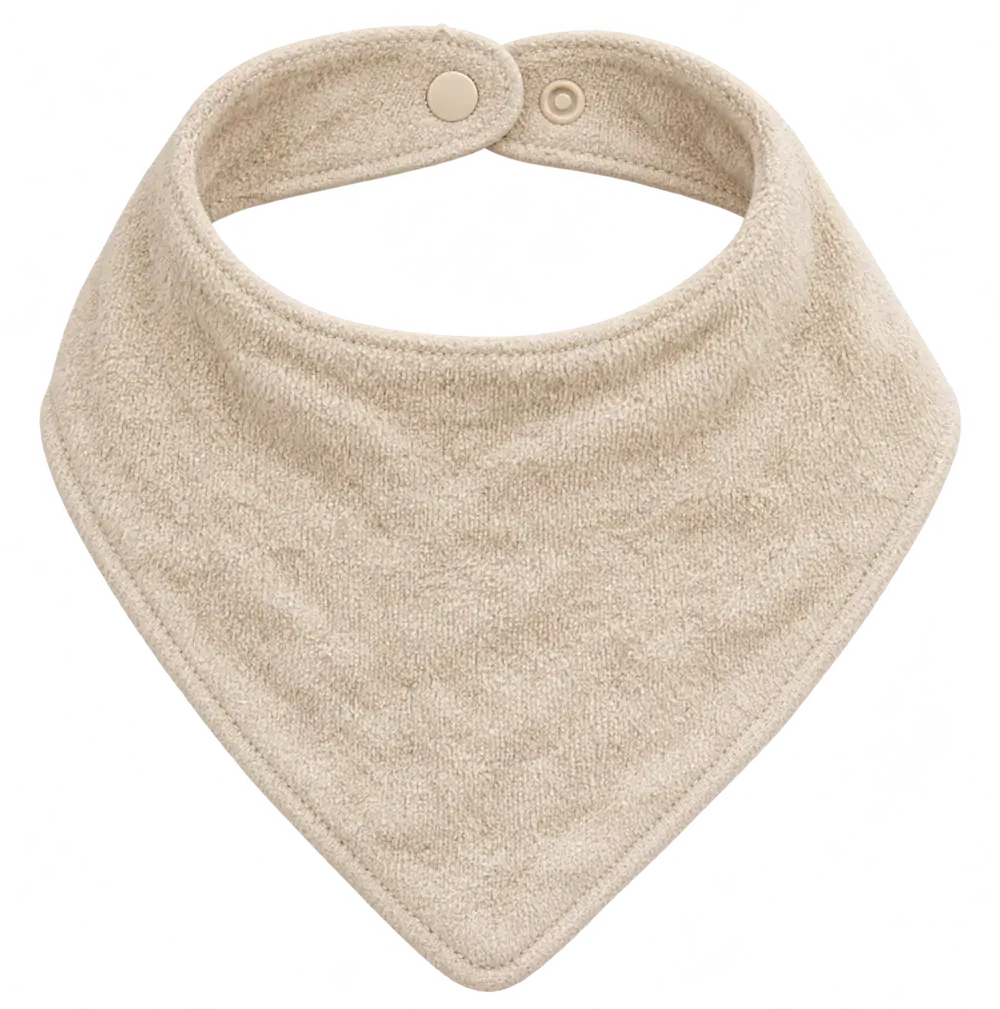
Bandana bib
A soft triangle of cotton or bamboo terry (the looped fabric of towels) that sits close under the chin. It's the one for teething days, from morning to evening.
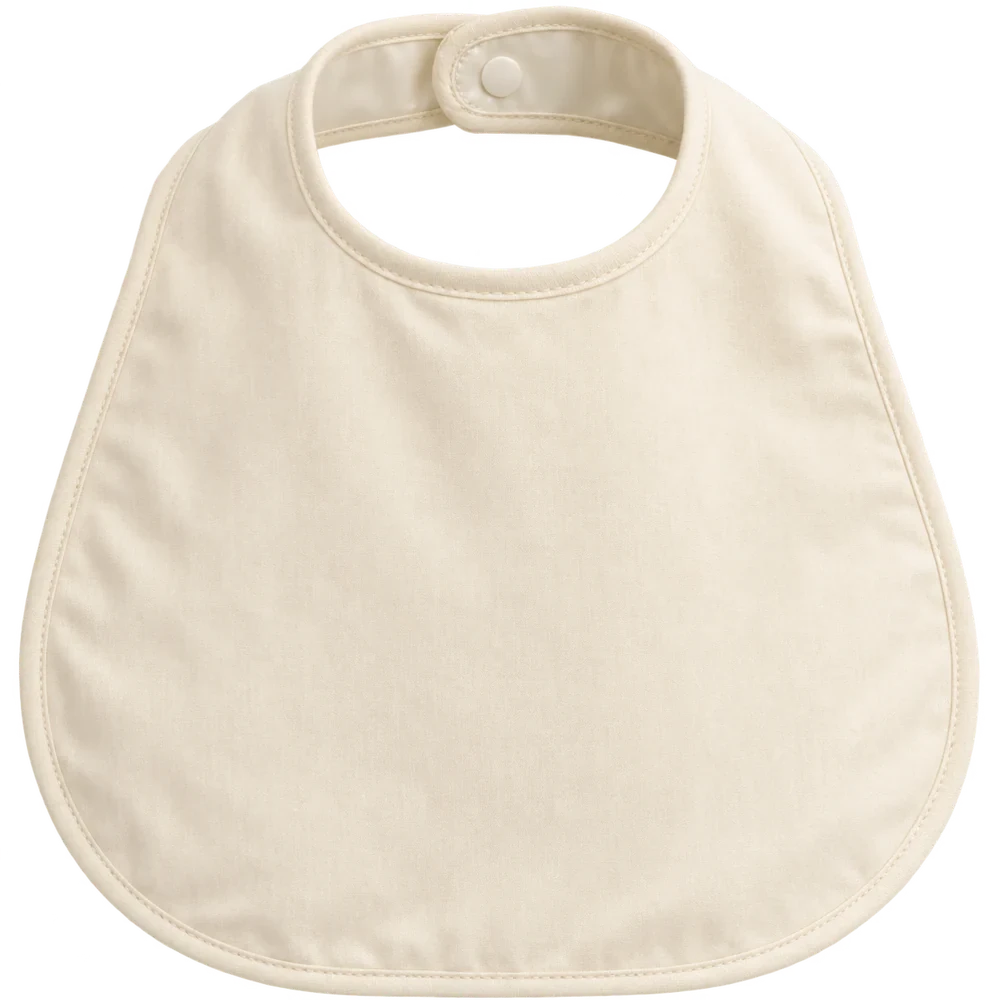
Cloth feeding bib
Big and round, covering the chest down to the lap, with a wipe-clean back. Good for purees and the first meals, and it goes in the wash with the clothes.
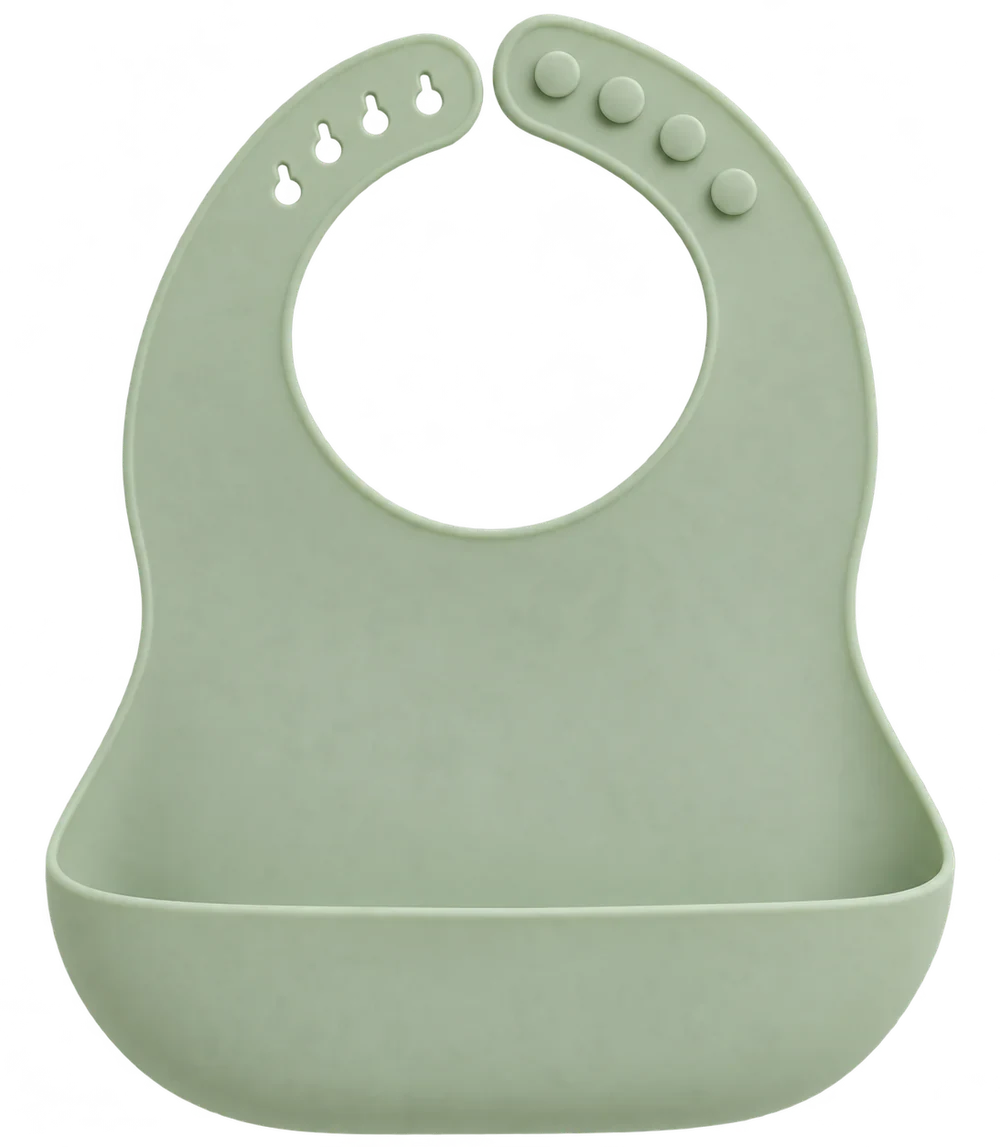
Silicone pocket bib
Soft, waterproof silicone with a deep scoop at the bottom for whatever falls. Good for everyday meals at the high chair, because it rinses clean under the tap.
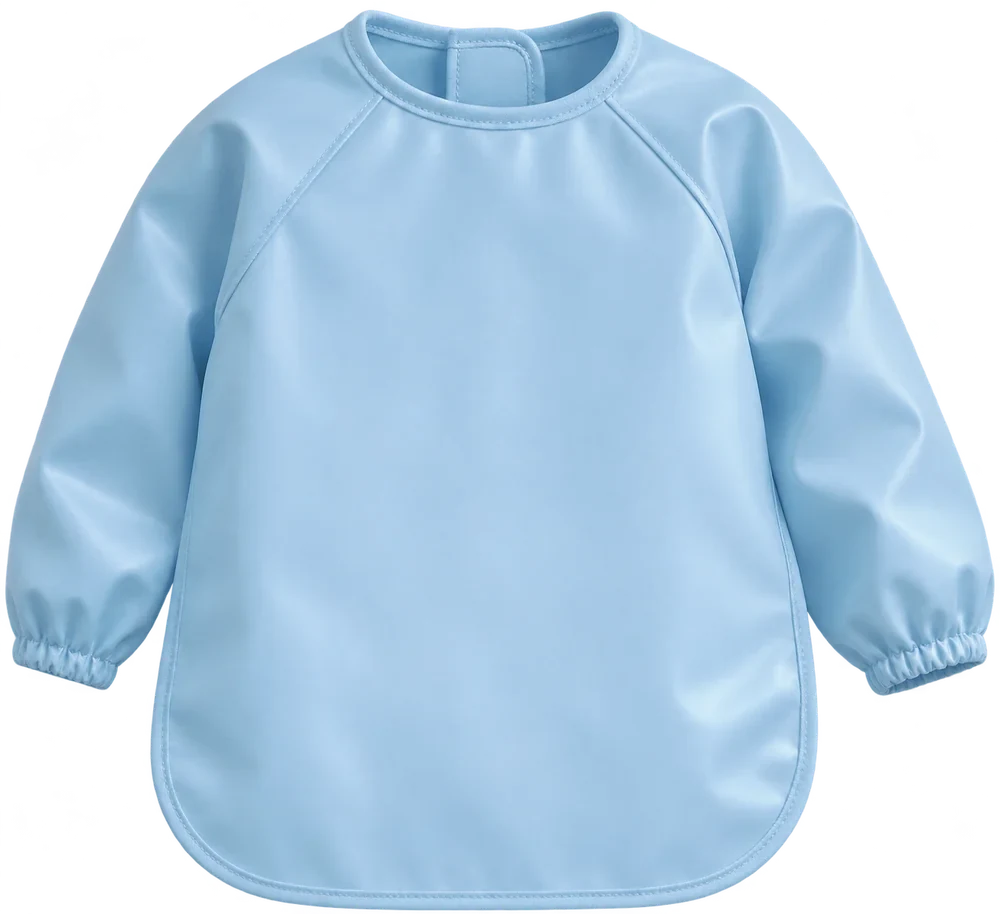
Smock bib
A wipe-clean apron with long sleeves and elastic cuffs that covers the arms and the lap. For the messiest meals, once your baby eats with fingers and a spoon.
Why some bibs soak through
A bib soaks through when nothing behind its front fabric stops the drool.
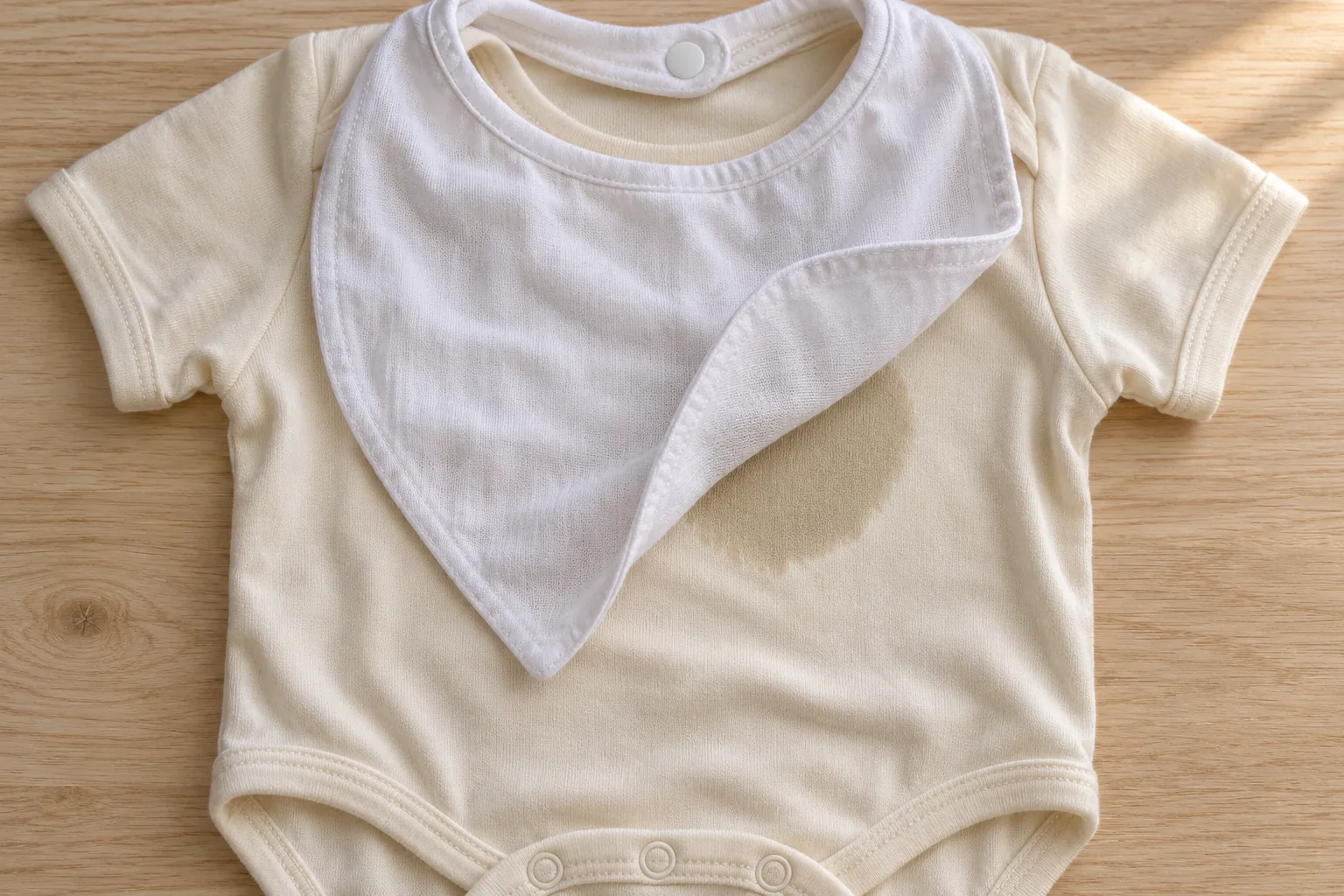
Thin cotton bib
One layer of cotton, often sold in big packs. It's fine for a little drool, but in a heavy teething week it soaks through fast, and the bodysuit under it gets wet too.
- Good: Costs little, dries fast
- Not good: Drool reaches the bodysuit
- Not good: Needs swapping often
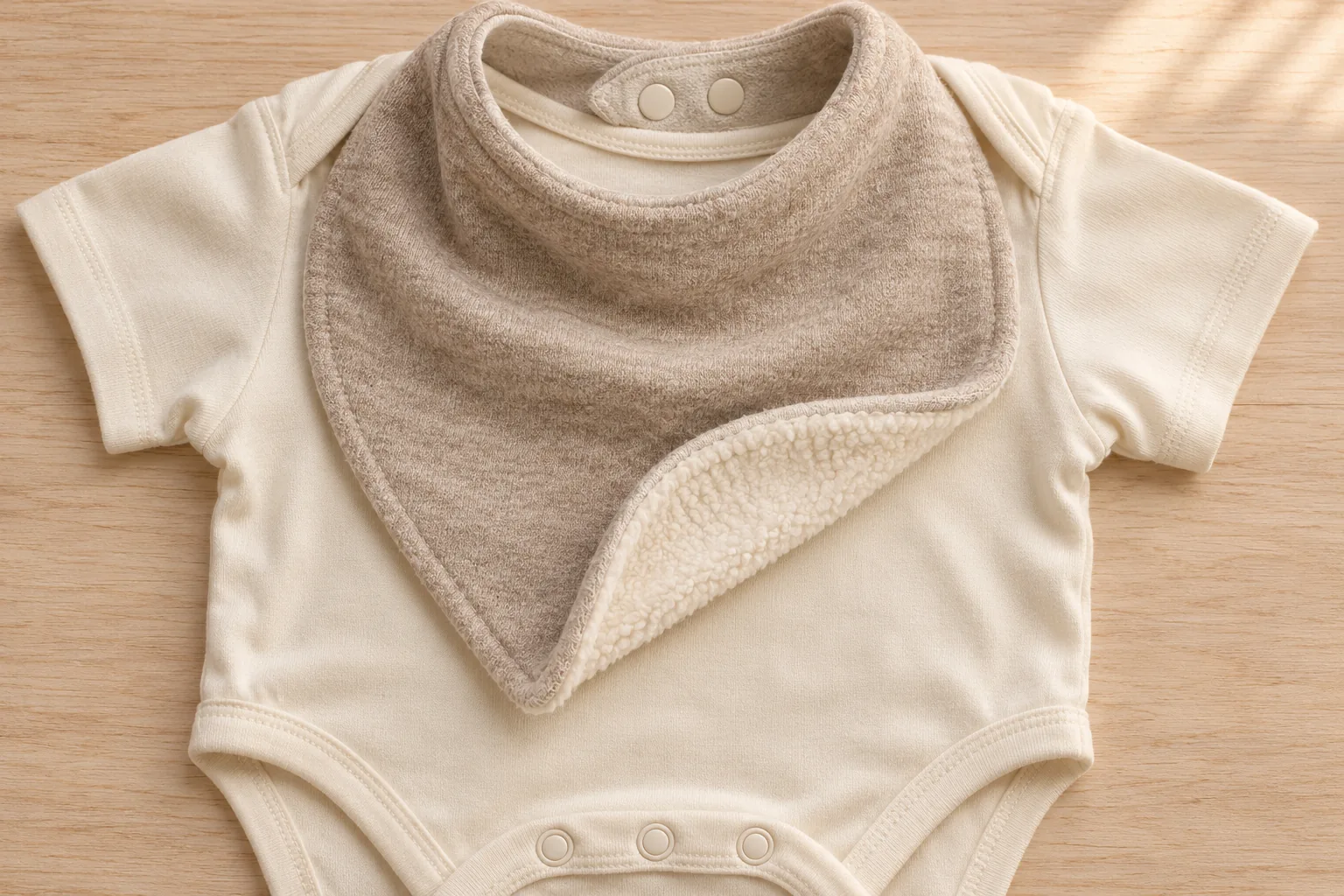
Layered bib
Soft terry in front, an absorbent layer inside and a fleece or waterproof backing. It takes much longer to soak through, so the bodysuit and the chest stay dry for longer.
- Good: Bodysuit stays dry longer
- Good: Fewer swaps a day
- Not good: Costs more, dries slower
How to choose a bib
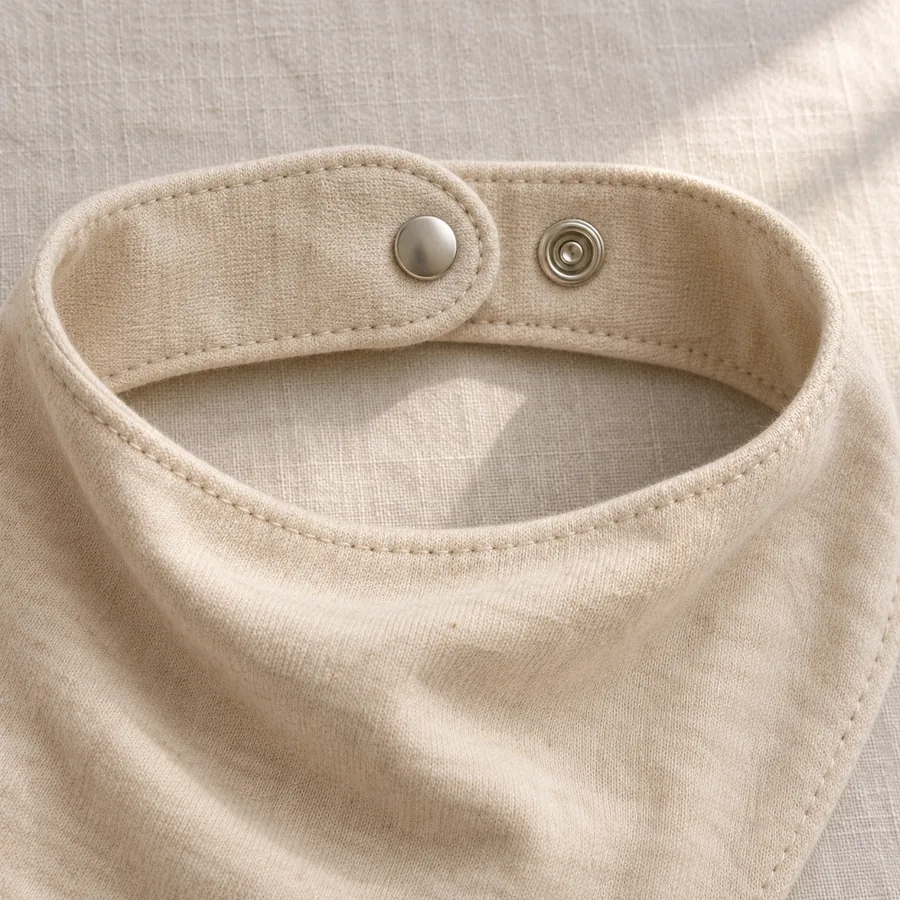
1. A snap or hook-and-loop, not ties
Both close in a second, while a tie needs a knot at the back of a wriggling neck. Two snap positions let the bib grow with your baby. Give a snap a tug in the shop: it should sit firmly in the fabric, because a snap that comes off is small enough to choke on.
- Good: Two snap positions
- Good: Snap sits firm in the fabric
- Not good: Ties at the back of the neck
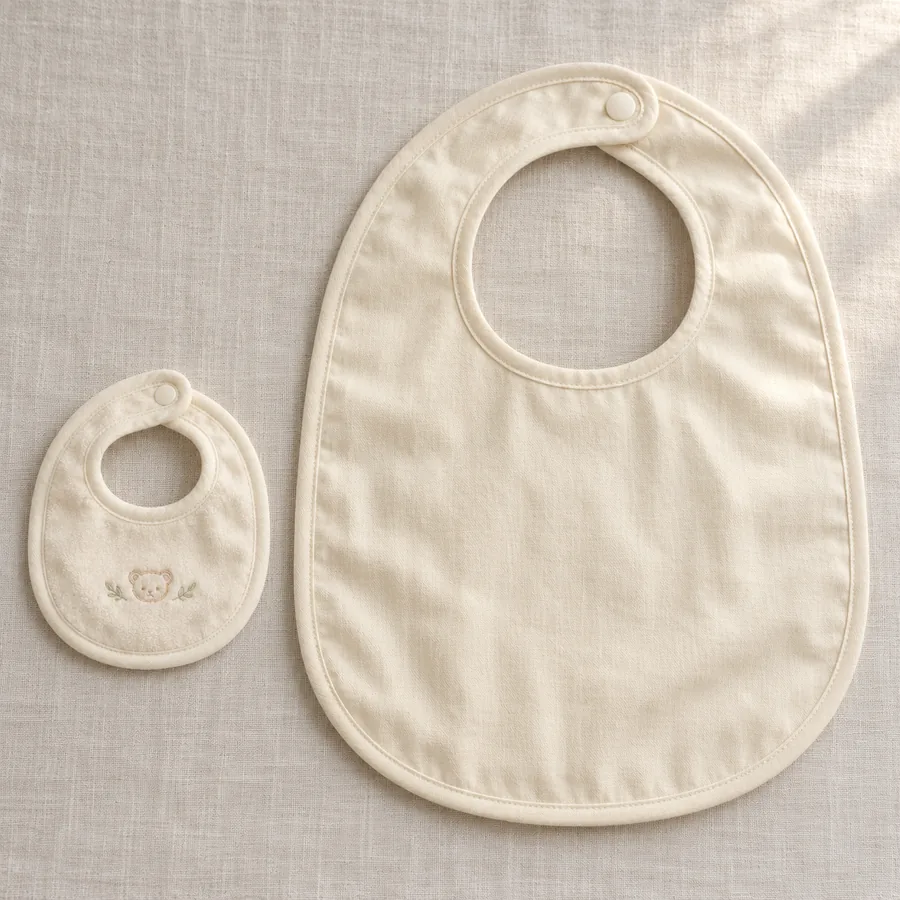
2. Big enough for the job
The tiny bibs in newborn gift sets catch a dribble of milk, and a drool bib can stay small and close under the chin. A bib for meals only catches what lands on it, so it should reach the lap.
- Good: Close and small for drool
- Good: Chest to lap for meals
- Not good: Tiny gift-set bib at the high chair
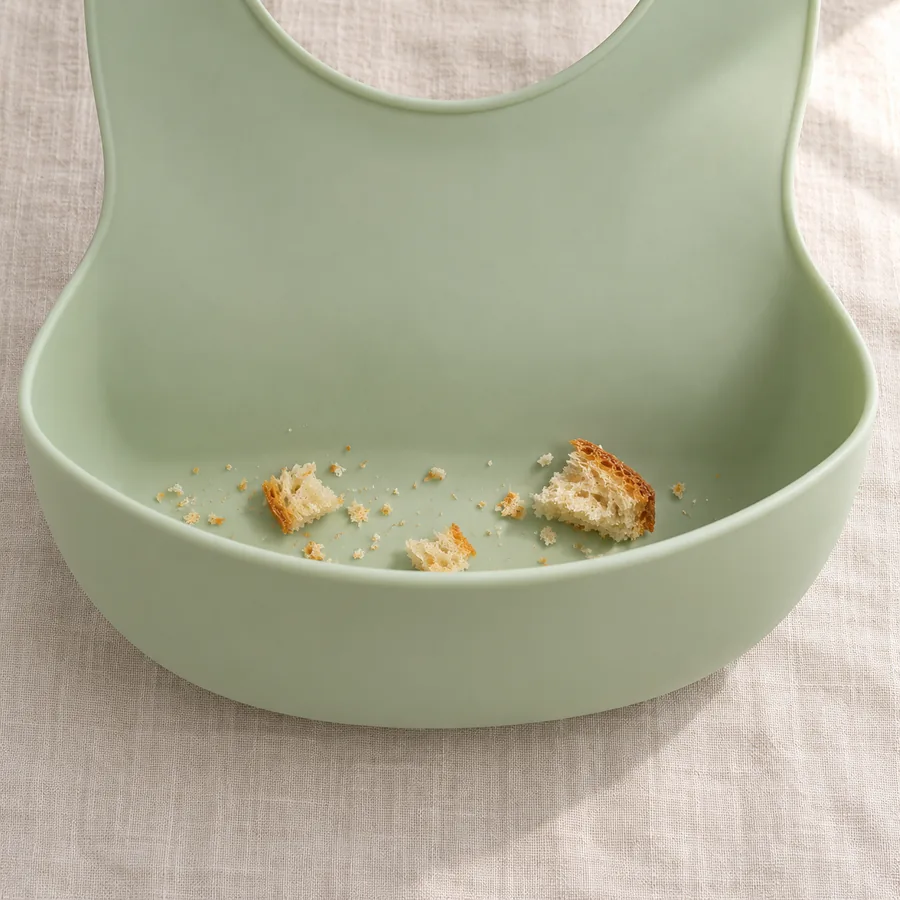
3. For meals, a pocket that stays open
A pocket that holds its shape catches what falls before it reaches the lap. One that folds flat lets it all slide past.
- Good: Pocket stands open on its own
- Good: Neck strap with several holes
- Not good: Pocket folds flat
Keep the chin dry
Saliva left on the skin all day causes drool rash: red, rough patches around the mouth, on the chin and in the neck folds. Change a wet bib, and pat the chin dry with a soft cloth instead of rubbing it.
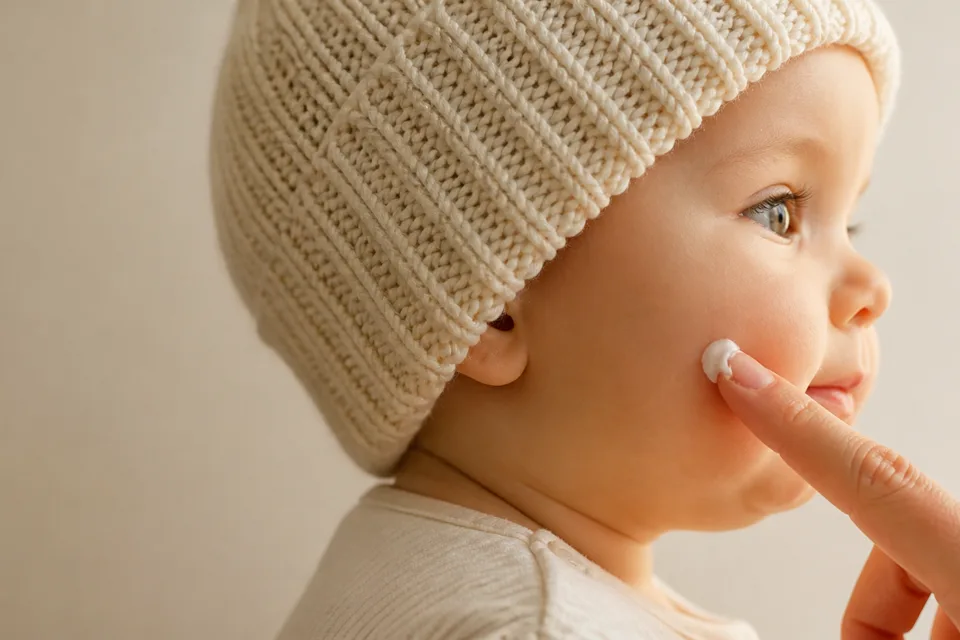
Before a cold walk, put on a dry bib, because a damp one turns cold against the chin in the wind. The skin guide covers drool rash and windburn, and wind cream helps a chapped chin.
Questions parents ask
Can my baby sleep in a bib?
No. Take every bib off before naps and at night, so nothing around the neck can get in the way of breathing.
Is it safe for a newborn to wear a bib?
Yes, while your baby is awake. The tiny bibs in newborn sets are for milk dribbles on the chin.
Does a 1 year old still need a bib?
Usually, at meals. Drool eases after about 18 months, and the drool bibs go with it, while a feeding bib stays as long as meals are messy.
Do breastfed babies need bibs?
Not for spit-up. That lands on your shoulder after a feed, where a burp cloth, often a muslin, does the job. Bibs come in with the drool, and later with solid food.
How many bibs do I need?
Three to eight, depending on how much your baby drools and how often you wash. A wipe-clean meal bib is rinsed after eating and ready for the next meal, so you need few of those.
How do you wash baby bibs?
Cloth bibs go in with your baby's clothes, in a mild, fragrance-free detergent and without fabric softener or stain removers, which can irritate the skin. Silicone bibs get warm, soapy water, or the dishwasher if the label allows it.