What this is about
Daycare playrooms are warm microclimates. Between crawling babies, closed doors, and standard heating, the room easily sits at 21° all winter. If you dress for the freezing sidewalk at 7:30 AM, your baby is sweating on the carpet ten minutes after drop-off. Treat the commute as temporary packaging. Wrap your baby in a warm stroller footmuff, car blanket, or outer bunting for the trip, then strip it off at the door. Underneath, your baby is already dressed for the floor.
Start with the indoor room, then layer for the trip
Daycare is where nice clothes go to meet acrylic paint, bolognese sauce, and wet sand. Stiff denim overalls with ten metal snaps look adorable at breakfast. By the third diaper change on a busy mat, educators will curse them. Staff change dozens of diapers every morning. Stretchy cotton pants with an elastic waist pull down in one second and slide right back up. Save buttons, stiff collars, and delicate knits for the weekend.
Indoor clothes are also nap clothes. Daycares do not change babies into pajamas after lunch. When naptime comes, educators slide them straight into a sleep bag over whatever they are wearing. A thick hoodie, stiff back buttons, or a chunky drawstring waistband leaves your baby lying on a hard lump for two hours. Flat, breathable cotton keeps the cot comfortable.
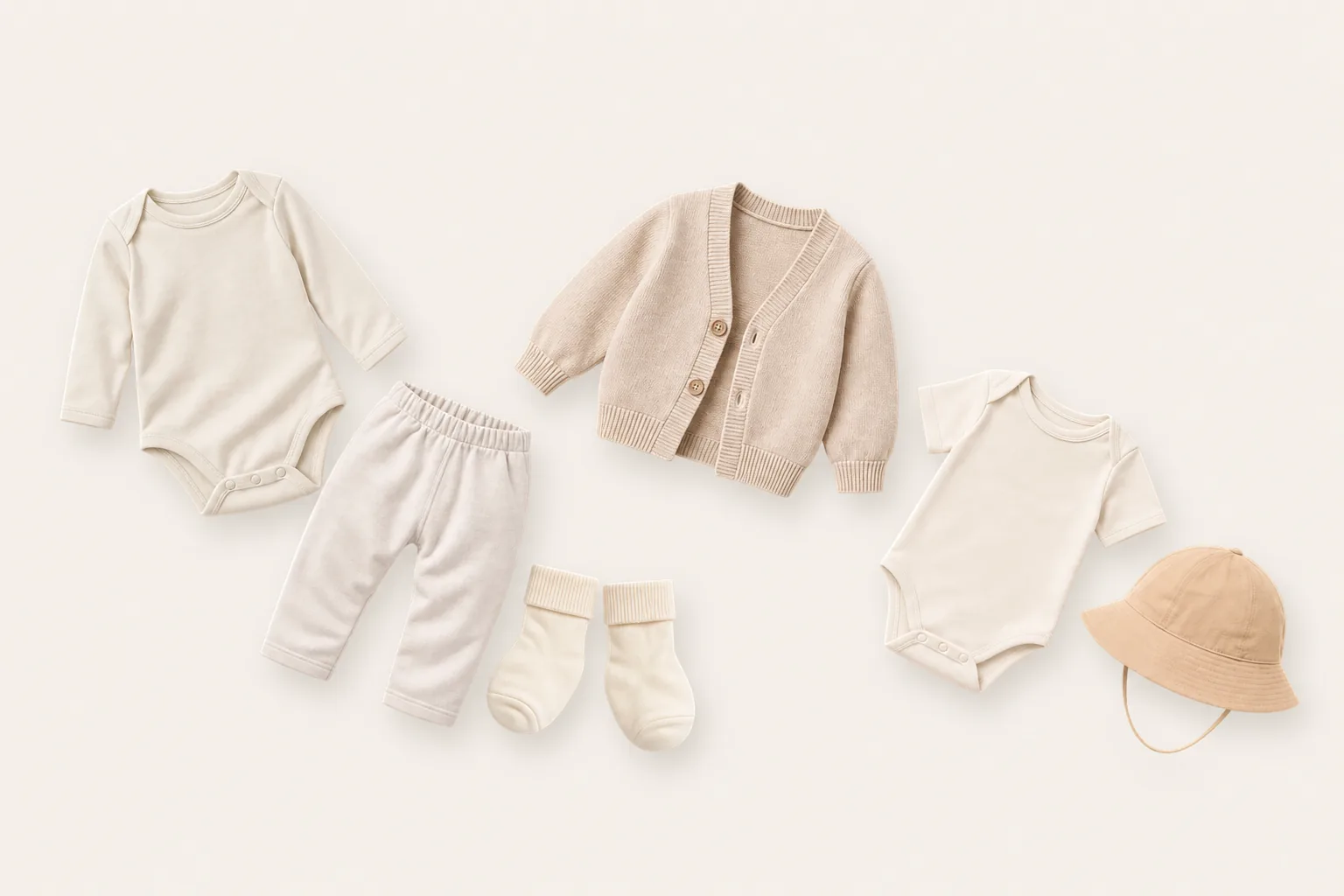
On smooth vinyl and wood floors, tiny feet need traction. Grippy socks or soft-sole leather moccasins keep feet warm and stop slipping. If your baby is not walking yet, skip hard shoes completely. Thick soles only get kicked off under the cribs.
If you drive to daycare, remember that puffy coats never belong in a car seat. Bulky winter padding compresses under force during an impact, leaving dangerous slack in the harness. Keep your baby in their thin indoor clothes under the straps, pull the harness snug, and tuck a warm blanket over the buckled seat for the drive.
Leave outdoor layers on the hook, not in the bag
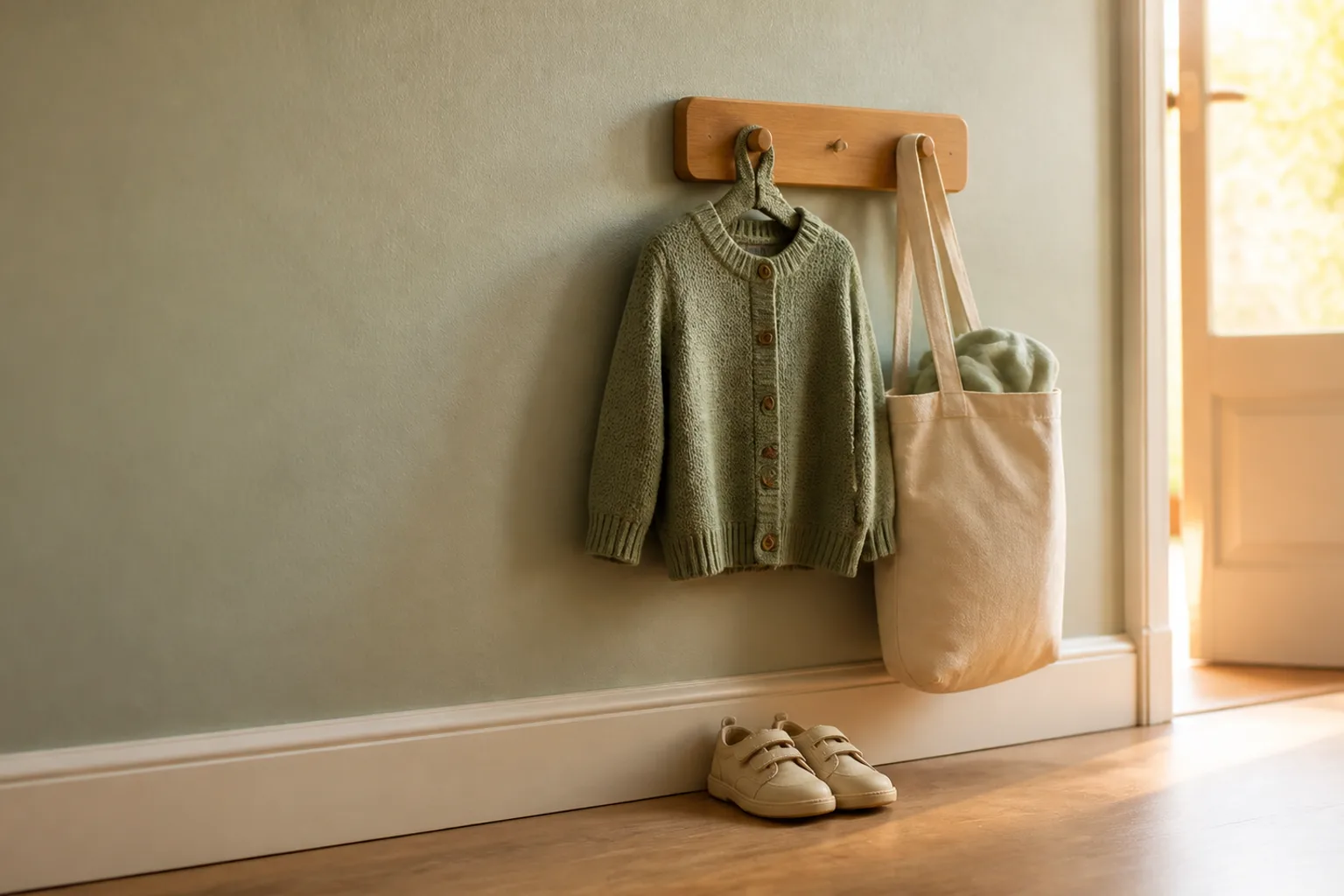
Outdoor play happens mid-morning or right after lunch. By then, the weather is rarely what it was at breakfast. A frosty 9° morning can turn into 18° and bright sunshine on the playground. When three educators are getting ten toddlers out the door, nobody has time to dig through backpacks. If an extra layer is not hanging on the low peg, it does not exist.
Hang a fleece jacket or warm cardigan on the peg for cool air, alongside unlined rain pants or a puddle suit for wet grass and damp sandboxes. When the UV index hits 3, keep a wide-brim sun hat hanging right beside the coat. If you leave a stroller in the daycare shed, tuck the rain cover into the basket before you head to work. Afternoon storms at pickup will not catch you off guard.
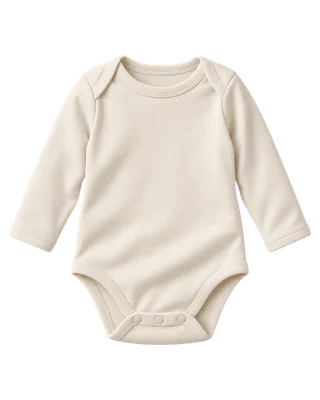
On the baby
A soft, flat cotton base outfit, plus whatever blanket or wrap you need for the morning commute.
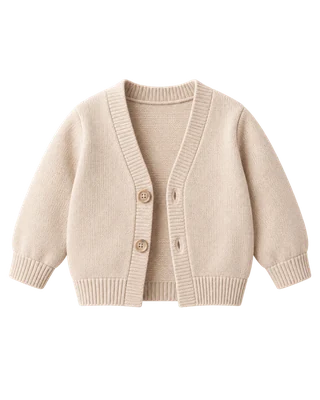
On the hook
The fleece, mud pants, sun hat, or puddle boots waiting for outdoor yard time.
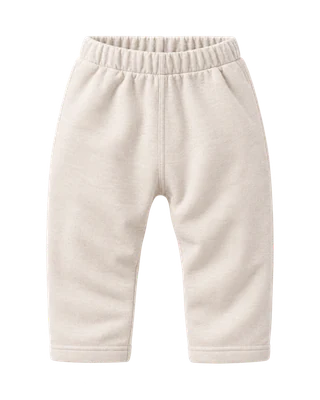
In the spare pouch
One complete clean indoor change, kept sealed in a pouch for spills and blowouts.
The spare pouch is for spills, not weather
The spare pouch is not a backup for a cold snap. It is disaster insurance for tipped bowls of soup, messy water tables, and leaking diapers. Pack an exact duplicate of the indoor outfit: one bodysuit, one pair of stretchy pants, and socks. Keep them sealed in a zipped pouch so they stay dry and clean at the bottom of the cubby.
The classic trap with spare clothes is time. You pack a cute 3-month set in September, forget it exists, and when a blowout happens in January, your 7-month-old cannot squeeze into the legs. That is how babies end up in daycare loaner sweatpants with the center's name scrawled across the seat in black permanent marker. Tie updates to your routine: whenever you move up a diaper size, refresh the clothes in the spare pouch. And when a soiled set comes home in a plastic bag, pack the replacement that same evening.
Why daycare clothes need labels
Every nursery cloakroom looks the same: rows of low hooks holding dozens of matching navy jackets, beige cardigans, and yellow boots. When a dozen children tumble back inside from the garden, coats come off in seconds and land in a heap on the bench. Without a name on the neck tag, that favorite fleece joins the lost-and-found bin by lunchtime.

You do not need to label individual socks, but label anything that leaves your child's body: jackets, cardigans, sun hats, rain bibs, and both shoes. Stick-on laundry labels or thirty seconds with a permanent marker save you from buying three replacements of the exact same sun hat. Writing your family name on the outside of the bag does nothing once the clothes are out on the floor.
Questions parents ask
What shoes does my baby need for daycare?
If your baby is crawling, stick to grippy socks or soft leather moccasins for the floor. If your baby is walking, they need two pairs: comfortable indoor slippers or grip socks for the room, and sturdy outdoor shoes with wide velcro straps that educators can fasten in seconds.
How many spare outfits should I keep at daycare?
One complete spare outfit is enough for most babies. If your baby is teething heavily, starting solid foods, or prone to frequent leaks, keep two. The critical habit is restocking the pouch the same night a dirty set comes home.
Should my baby wear a hat during daycare naps?
Never. Hats and hoods must come off indoors and during sleep. Babies regulate their temperature by releasing excess heat through their head and face. Covering their head in a warm cot risks dangerous overheating.