What this is about
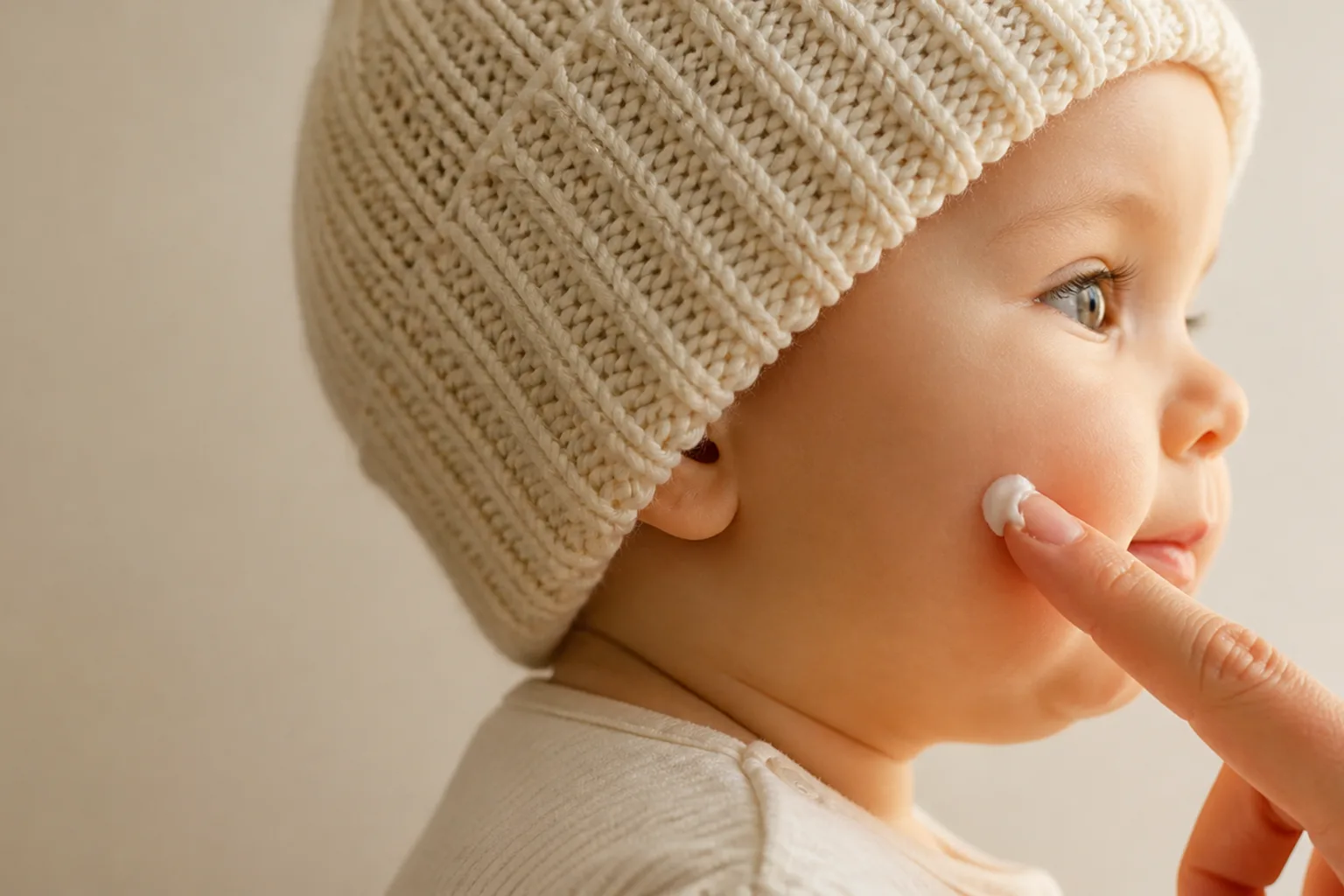
Unzipping a stroller after a winter walk and finding glowing red cheeks can give any parent a jolt. Most of the time, that rosy color is just healthy blood flow rushing back into cool skin. But cold air strips moisture fast. When brisk wind meets teething drool or a stiff jacket collar, cheeks can turn chapped and raw by bedtime. Protecting baby skin comes down to knowing which element you are facing before stepping outside.
Cold wind strips moisture fast
A study in Pediatric Dermatology found that babies' outermost skin layer was about 30% thinner than adults'. It loses hydration quickly in brisk or sub-zero air, especially when a gusty wind cuts across the stroller.
The simplest defense is a thin layer of a greasy, water-free barrier balm or plain petroleum jelly smoothed over the cheeks right before heading out. The greasy layer slows moisture loss from the skin.
A barrier balm only protects the small patch of cheek it touches. A snug knit hat covering the forehead and ears, plus a windproof outer layer, handles the rest of the cold.
Watch what rubs against the skin
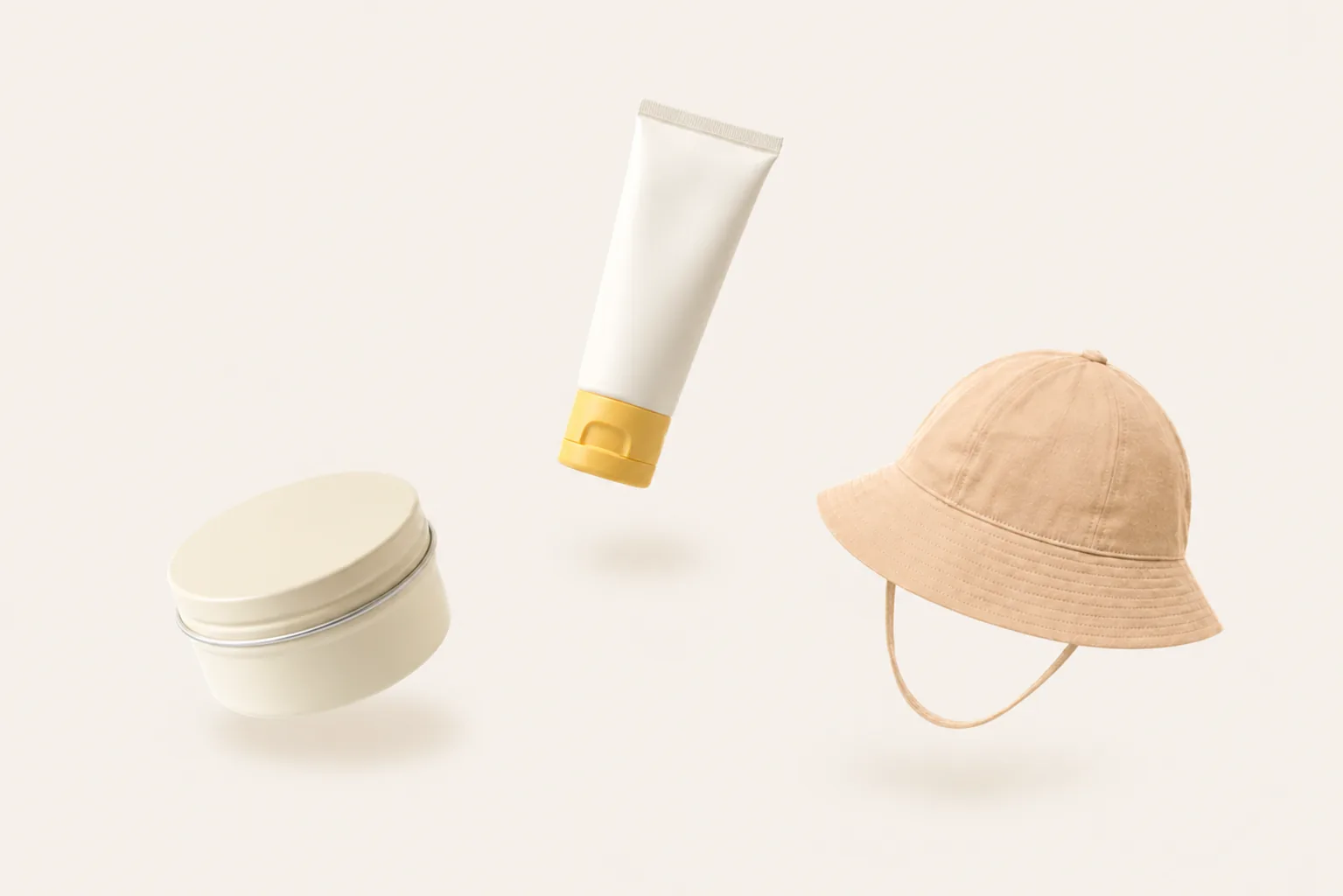
Cold wind rarely acts alone. A lot of winter cheek redness is actually drool rash. When teething saliva soaks a cotton bib or collar, that damp cloth turns ice-cold against the chin in the wind. Combine wet fabric with a jacket zipper rubbing the jawline, and you get sore, inflamed patches within a few blocks.
Swap damp bibs and collars as soon as they get wet. If a stiff zipper or rough wool collar touches the chin, tuck a soft cotton layer between the fabric and the skin.
Overheating indoors can also mislead you. When you step into a warm shop, bus or café, unzip the outdoor suit right away. Trapped sweat and body heat will turn flushed cheeks bright scarlet in minutes.
Use sun protection from UV 3
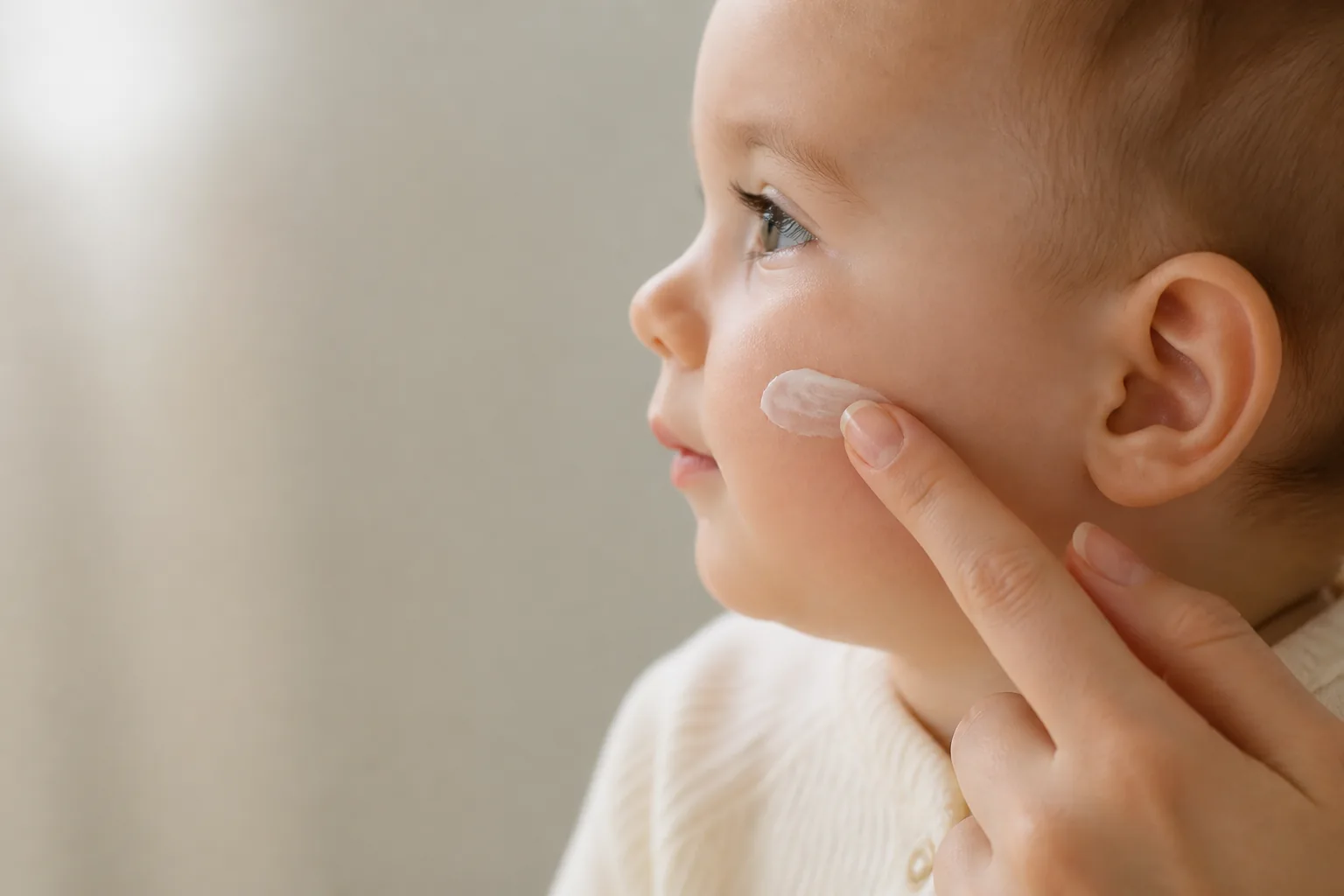
Sun protection is not about slathering babies in lotion from head to toe. It is about keeping direct ultraviolet light off their skin whenever the UV index reaches 3 or higher.
The stroller canopy, a clip-on sunshade, and lightweight clothing with long sleeves do almost all the work. Keep the stroller opening clear and airy. Never drape a blanket or muslin across the front for shade, because trapped heat can rise to dangerous levels fast.
Before 6 months, babies should stay out of direct sun. Sunscreen may irritate young babies' skin. Babies also overheat more easily. If open shade is impossible, check with your pediatrician about applying a dab of mineral sunscreen to small exposed areas like the face and hands.
From 6 months, sunscreen acts as a dependable backup. Use it on the bare patches that clothes and shade leave exposed, like the nose, cheeks and backs of the hands. The hat and shade still remain your first line of defense.
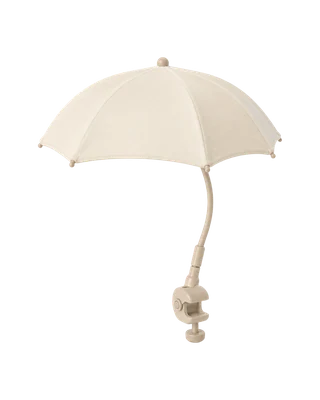
Open shade
A canopy, fitted parasol or open shade keeps direct sun away while letting fresh air circulate freely.
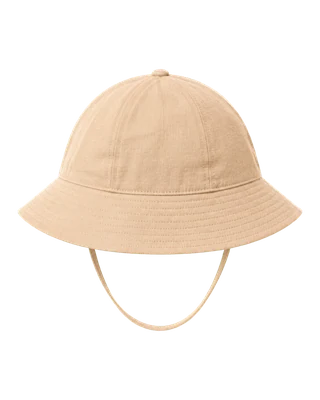
Brimmed hat
A soft brim shades the face, ears and back of the neck without slipping down over the eyes.
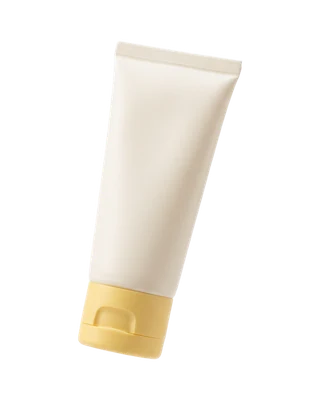
From 6 months
Smooth sunscreen over bare skin left exposed by clothes and shade, following the product label.
When red cheeks are not the weather
Rosy cheeks from a cold walk usually settle as your baby warms up indoors. Chapped cheeks stay rough, dry or sore.
If the red patches linger, or if the skin looks dry, scaly and rough day after day, look beyond the weather. Eczema often flares during cold months because dry indoor heating saps moisture from the air. Eczema also tends to appear in predictable spots: the cheeks, but also inside elbow creases, behind knees, and across the chest.
If your baby already has an emollient or eczema plan from a doctor, stick with it. Do not swap prescribed medical treatment for an over-the-counter weather balm, which can contain fragrances or botanical oils that aggravate sensitive skin.

Knowing when to stop experimenting
It is tempting to keep testing new jars when cheeks look irritated, but piling on products usually makes inflamed skin worse. If any balm makes the skin look redder or causes your baby to fuss, rinse it off with warm water and stop using it.
Set aside the weather balms and speak to a doctor or health visitor if the skin is cracked, blistered, weeping fluid, or showing crusty yellow patches. Those are signs of infection or a severe flare, not simple winter windburn.
Questions parents ask
Does wind cream replace a warm hat?
No. A barrier balm only shields the exposed cheeks it touches. A warm hat and windproof outer layers protect the head, ears and neck.
Can I use sunscreen before six months?
Keep babies under six months out of direct sun with shade, wide hats, and covering clothes. If shade is genuinely impossible, check with your pediatrician before applying a small amount to exposed skin.
What is the difference between cold cream and eczema cream?
Plain petroleum jelly is both a greasy barrier and an emollient (a moisturizer). It can help winter dryness and eczema. Keep using any eczema treatment your doctor prescribed.
When to ask for medical advice
- The skin is broken, bleeding, or intensely tender.
- Blisters, crusting, or weeping clear or yellow fluid appear.
- Redness spreads or fails to fade after warming up indoors.
- A new product causes sudden swelling, hives, or distress.
Flushed cheeks from a walk settle once your baby warms up inside. If the skin is raw, blistered, weeping, or persistently irritated, seek advice from a doctor or health visitor rather than trying another store-bought weather cream.