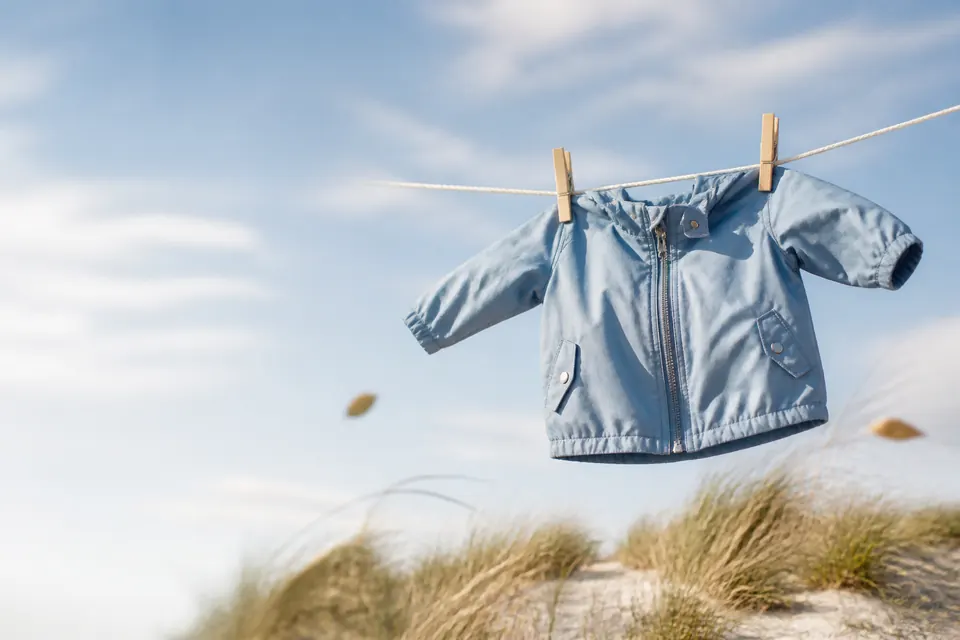
A carrier cover is a light, windproof panel that clips over the front of a baby carrier, on the outside. Your baby wears thin layers inside the carrier, and the cover keeps wind and drizzle off. The face stays out in the open.
It is worth having if you carry your baby often on cool, windy or drizzly days, around 8–11°C (46–52°F). Below 8°C (46°F), switch to a warm carrier cover, which has a lining. From 12°C (54°F) up, you can usually leave it at home.
Plenty of parents never buy one. A roomy coat zipped around you both does the same job, as long as the collar stays clear of your baby's face (the carrier dressing guide shows how to check).
In the US, an "infant carrier" can also mean the infant car seat. This page is about the carrier you wear on your body. For a car seat, see the light car blanket.
- For ages0–24months
- You'll need1
- Use it at8–11°C46–52°F
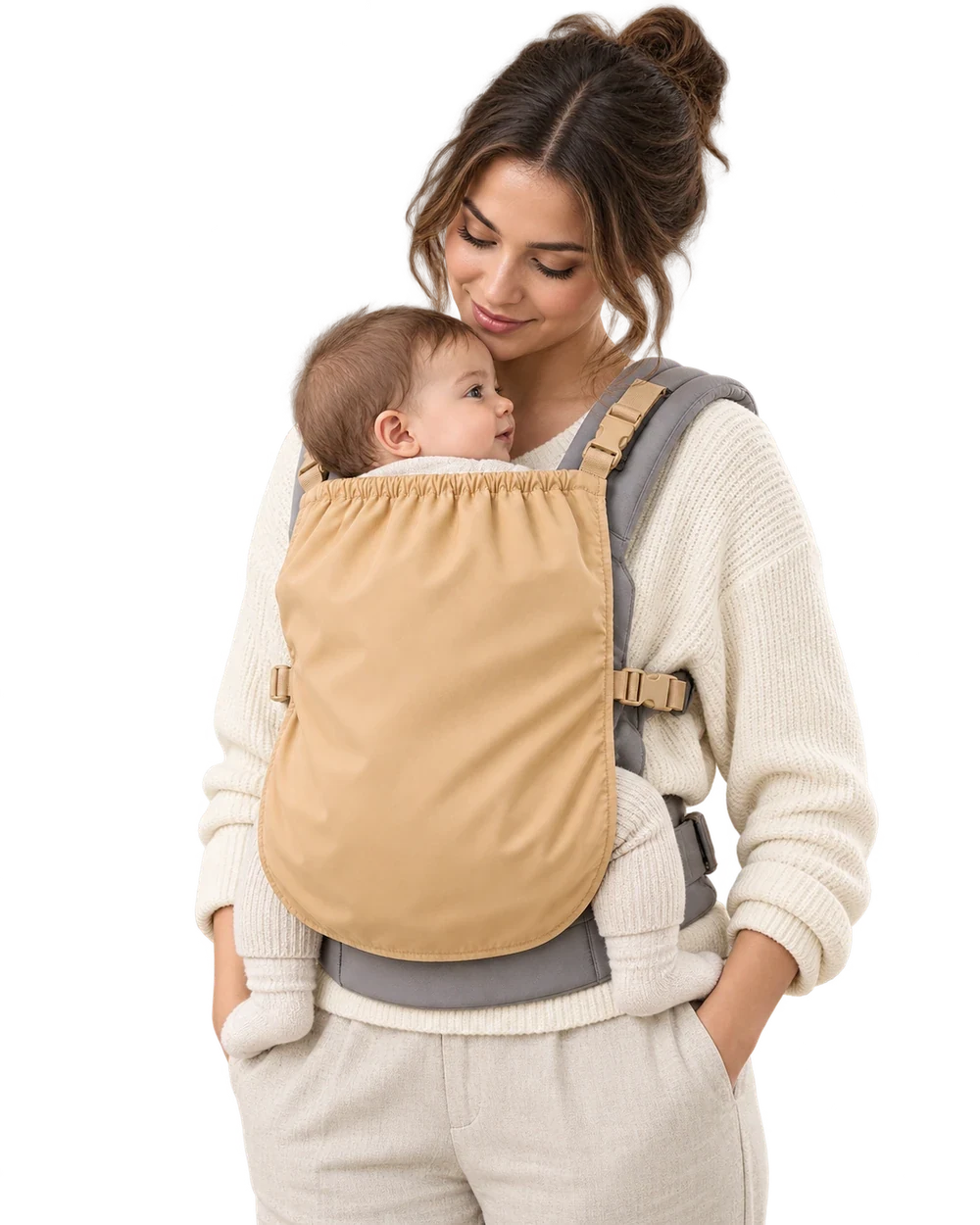
How it sits on the carrier
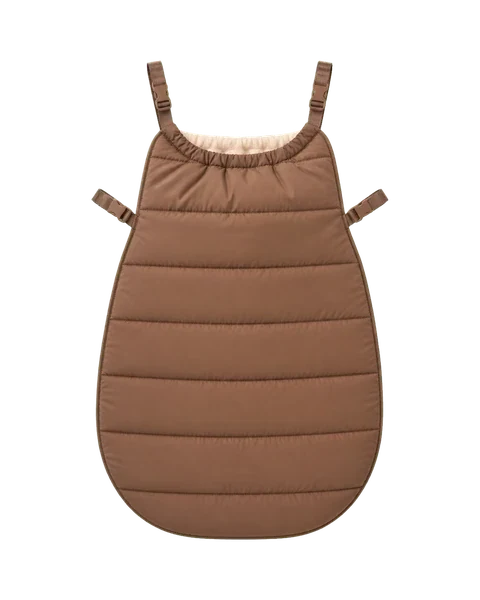
It hangs from the carrier's shoulder straps and closes at the sides, over your baby's back.
Top straps
Clip or snap around the carrier's shoulder straps, so the cover moves with the carrier.
Neck edge
A soft elastic edge across your baby's shoulders. The whole face stays above it.
Side straps
Run around to your back or the carrier's waist belt, so the wind cannot lift the cover.
Front panel
Windproof, water-resistant fabric over your baby's back and legs. It keeps off wind and drizzle, not a downpour.
Cover, babywearing jacket or coat extender
Three ways to keep the weather off a baby in a carrier. A cover goes on the carrier. The other two close a coat around you both.
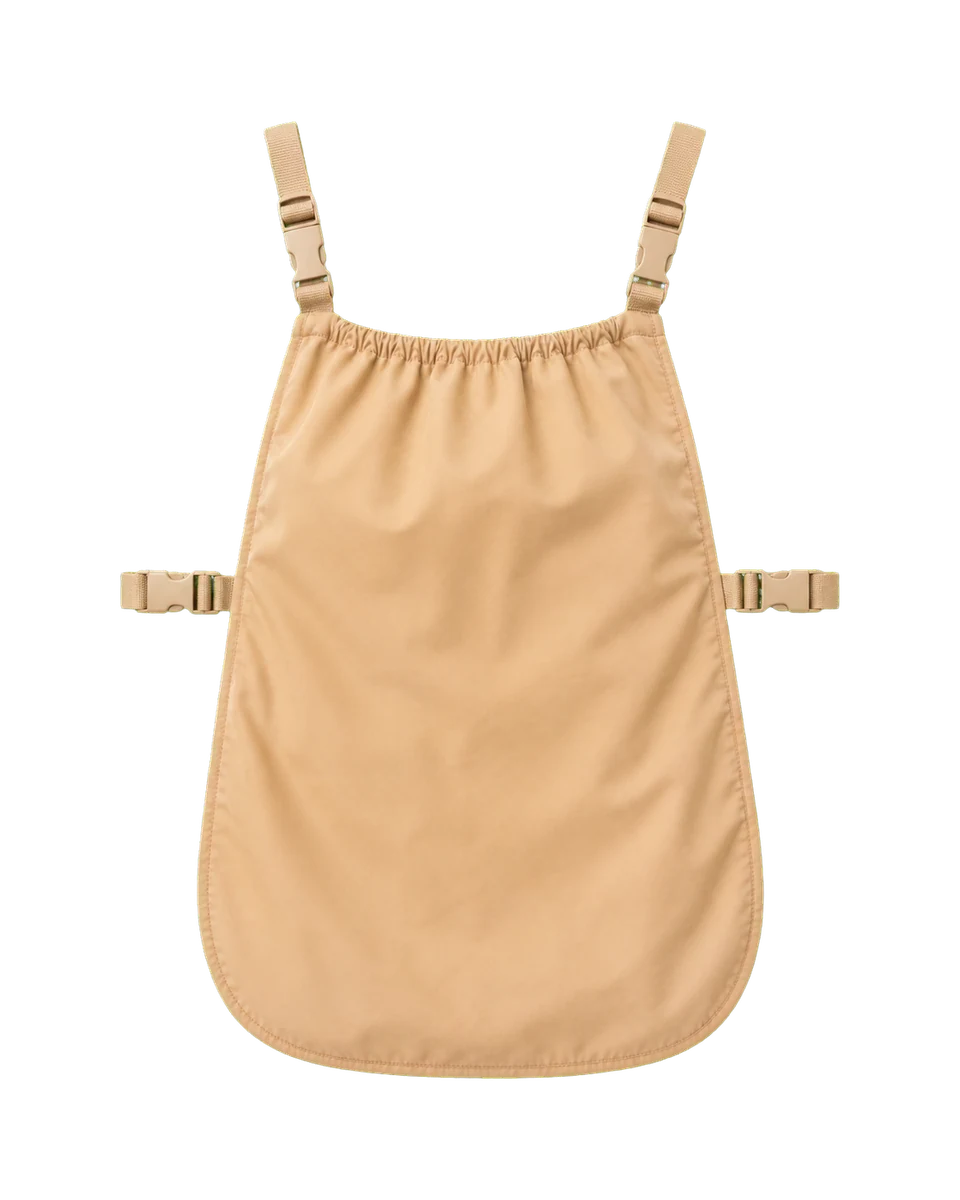
Carrier cover
Straps onto the carrier and goes over any coat, on your front or your back. Your own coat stays open around it. Best if two of you share the carrier, or you only carry now and then.
- Good: Fits whoever wears the carrier
- Good: Works with any coat
- Not good: Your coat stays unzipped
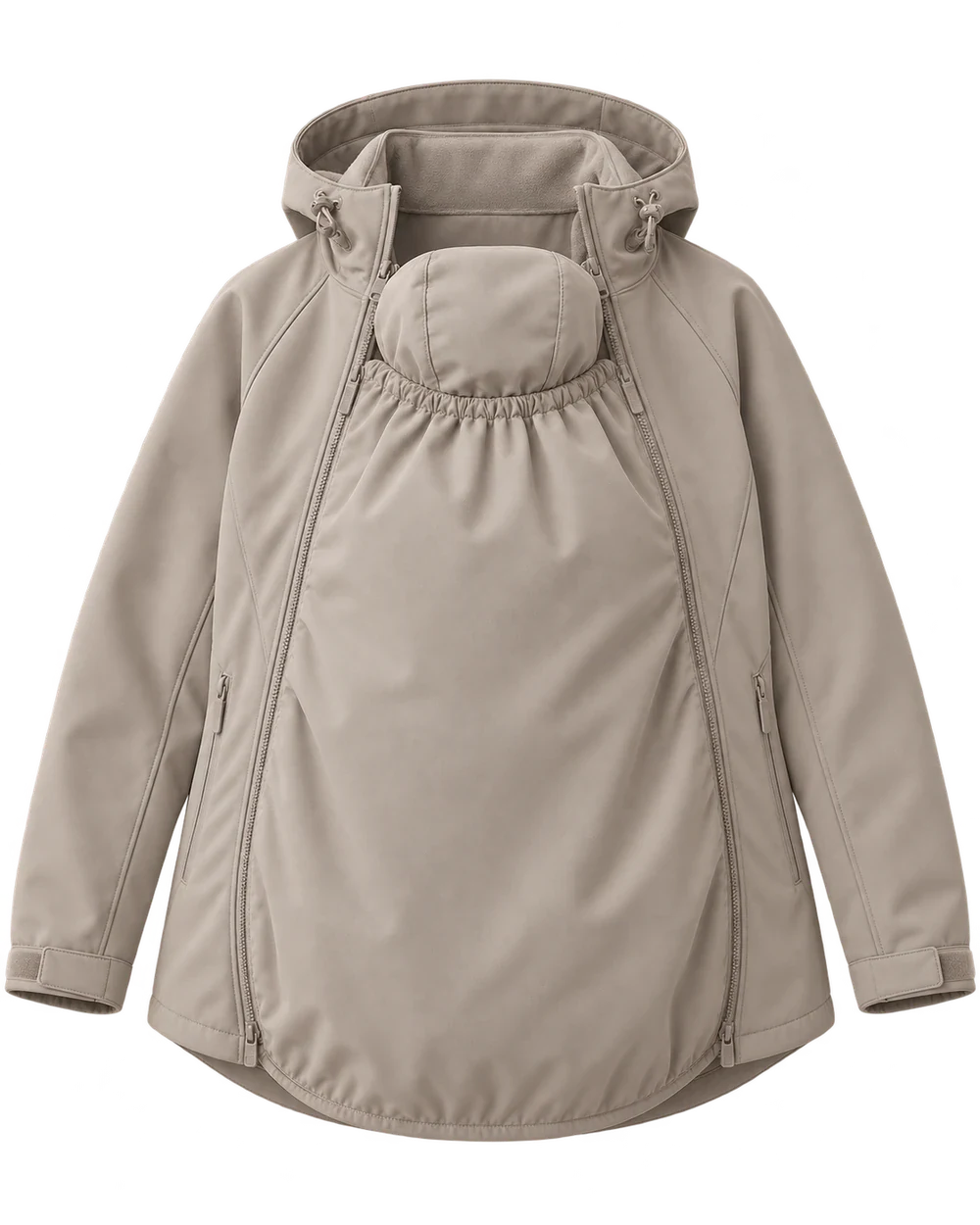
Babywearing jacket
A parent's coat with a zip-in baby panel that closes over the carrier, so one coat wraps you both. Many also come with a pregnancy panel and become a normal coat later. Best if one of you carries most days through a cold winter.
- Good: Zips shut around you both
- Not good: Sized for one adult
- Not good: Costs the most of the three
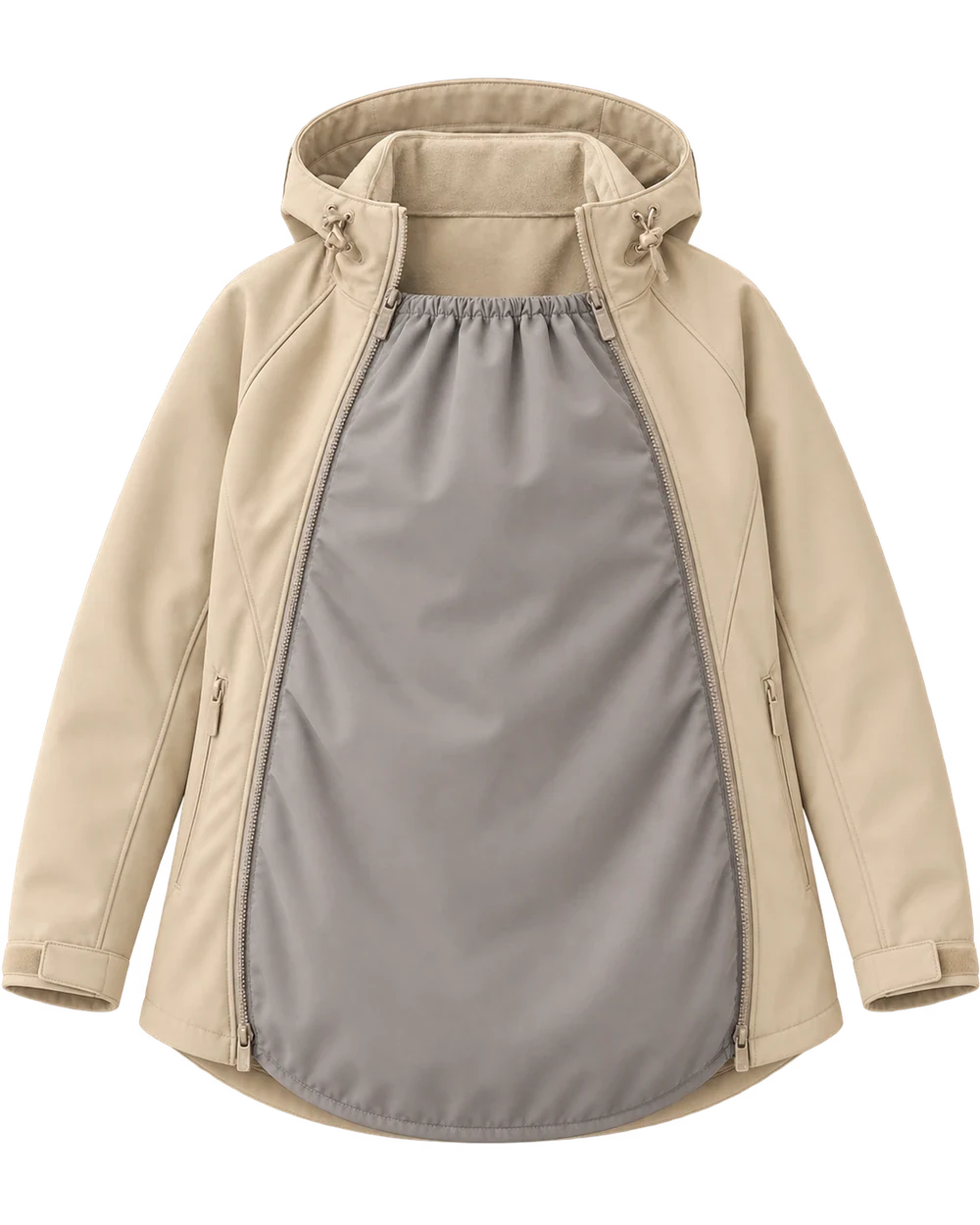
Coat extender
A loose panel, also sold as a jacket extender or insert, that zips into the coat you already own. Many fit a bump in pregnancy too. The zip has to match your coat's, or you need an adapter. Best if you want to keep your own coat.
- Good: Your own coat zips shut
- Good: Fits a bump in pregnancy too
- Not good: Zip must match your coat's
How to choose a carrier cover
Check these three before you buy.
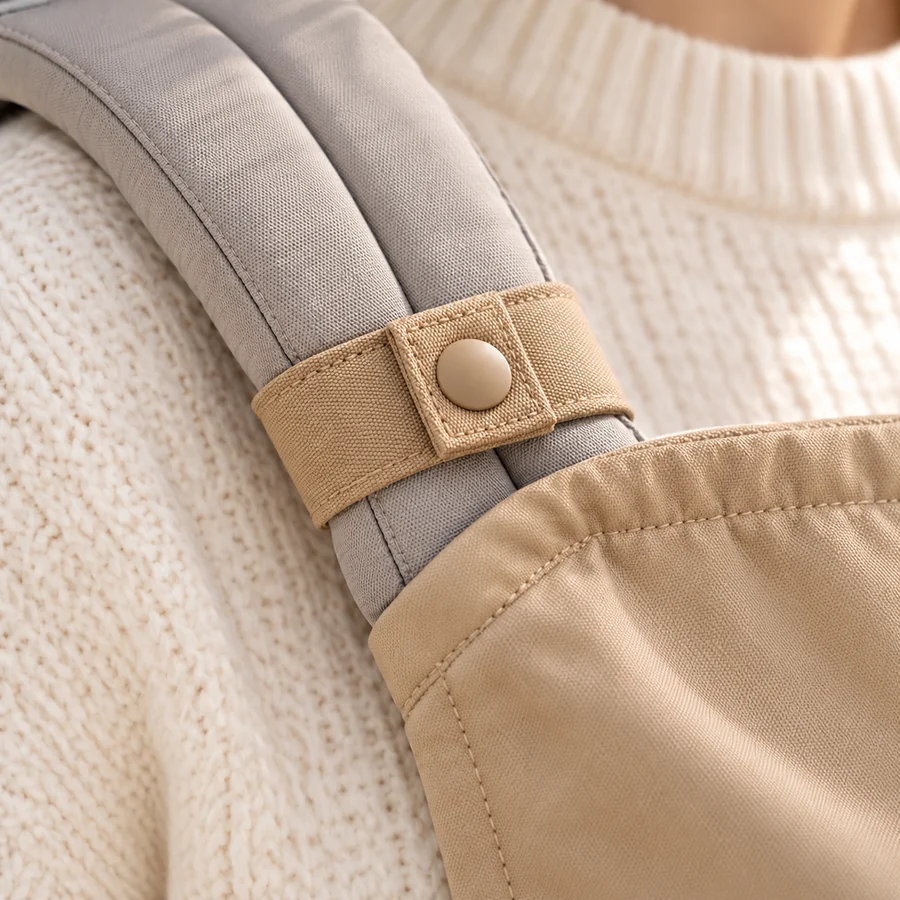
1. It fastens to your carrier
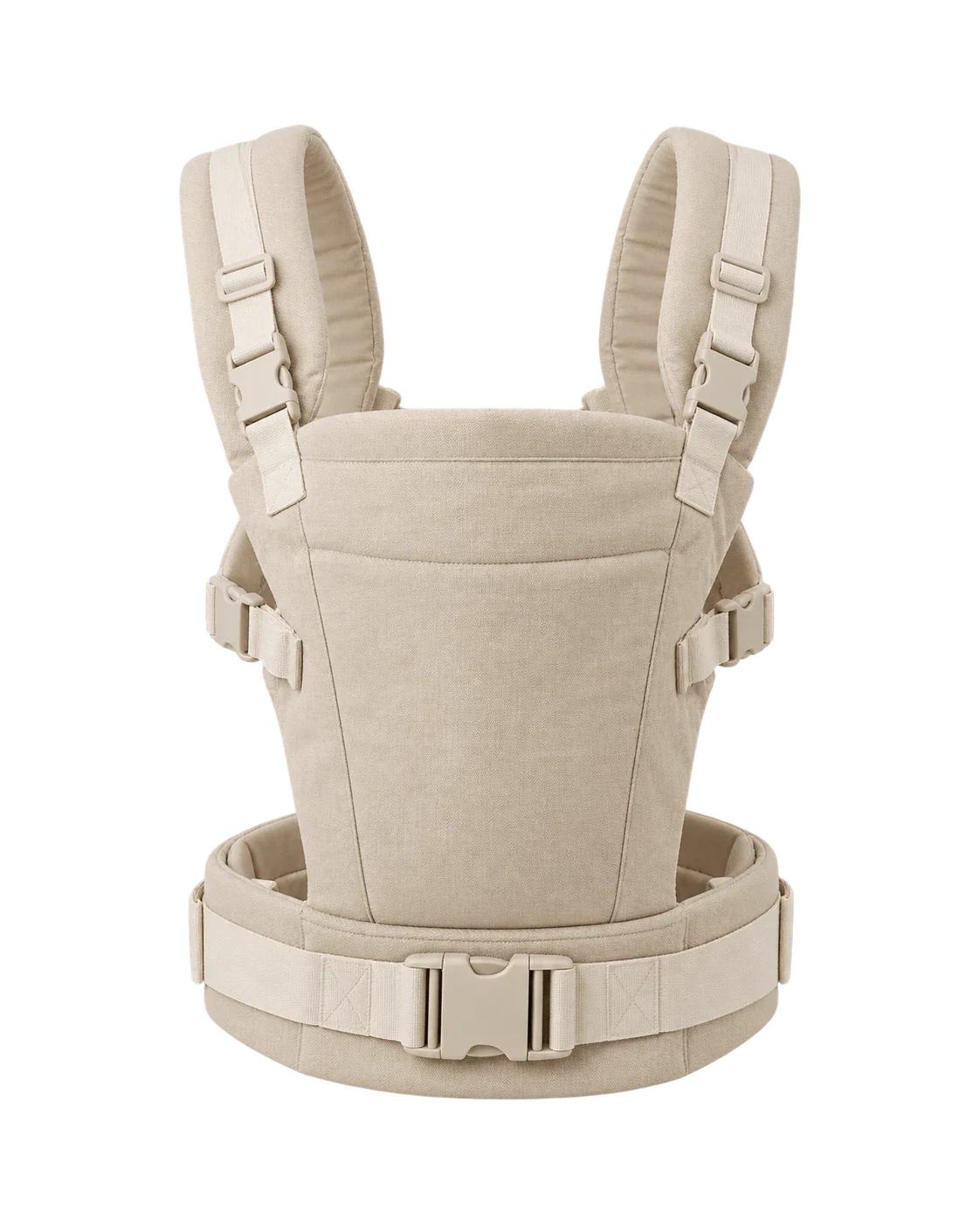
Many covers clip to the shoulder straps of a buckle carrier (the padded kind with a waist belt). A wrap (a long cloth tied around you both) or a ring sling (cloth threaded through two rings at your shoulder) needs a cover with ties or loops, because a cover that cannot fasten flaps up in the wind.
- Good: Fastens at shoulders and waist
- Good: Ties or loops for a wrap
- Not good: Sides with nothing to fasten
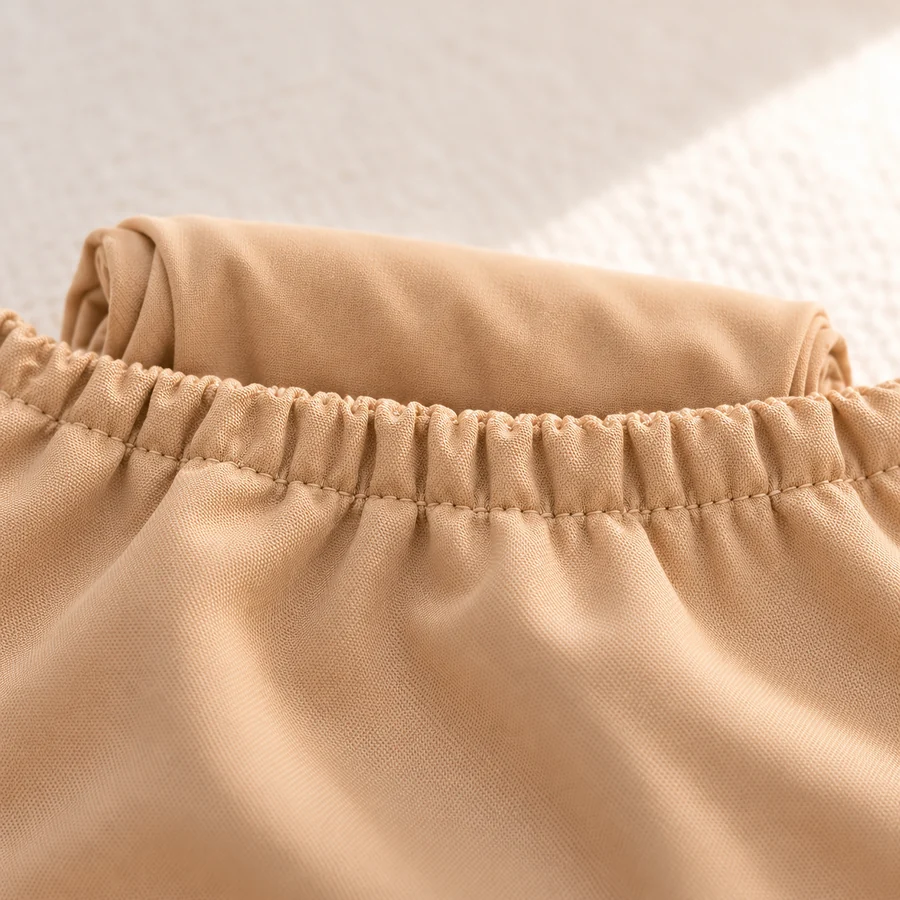
2. The neck edge stays low
Look for a soft elastic edge that sits at your baby's shoulders, and a hood that folds right back. You should always be able to see your baby's face, with the nose and mouth clear.
- Good: Soft elastic at the top
- Good: Hood that tucks away
- Not good: High, stiff collar

3. A light shell, not padding
Pick a light shell (a thin windproof, water-resistant outer fabric) that lets air through. Your body already warms your baby, so a shell stops the wind without overheating. Padded covers are for days below 8°C (46°F).
- Good: Windproof on the label
- Good: Rain beads up and rolls off
- Not good: Padded or quilted all over
How to put it on
Try it once at home before the first cold walk.
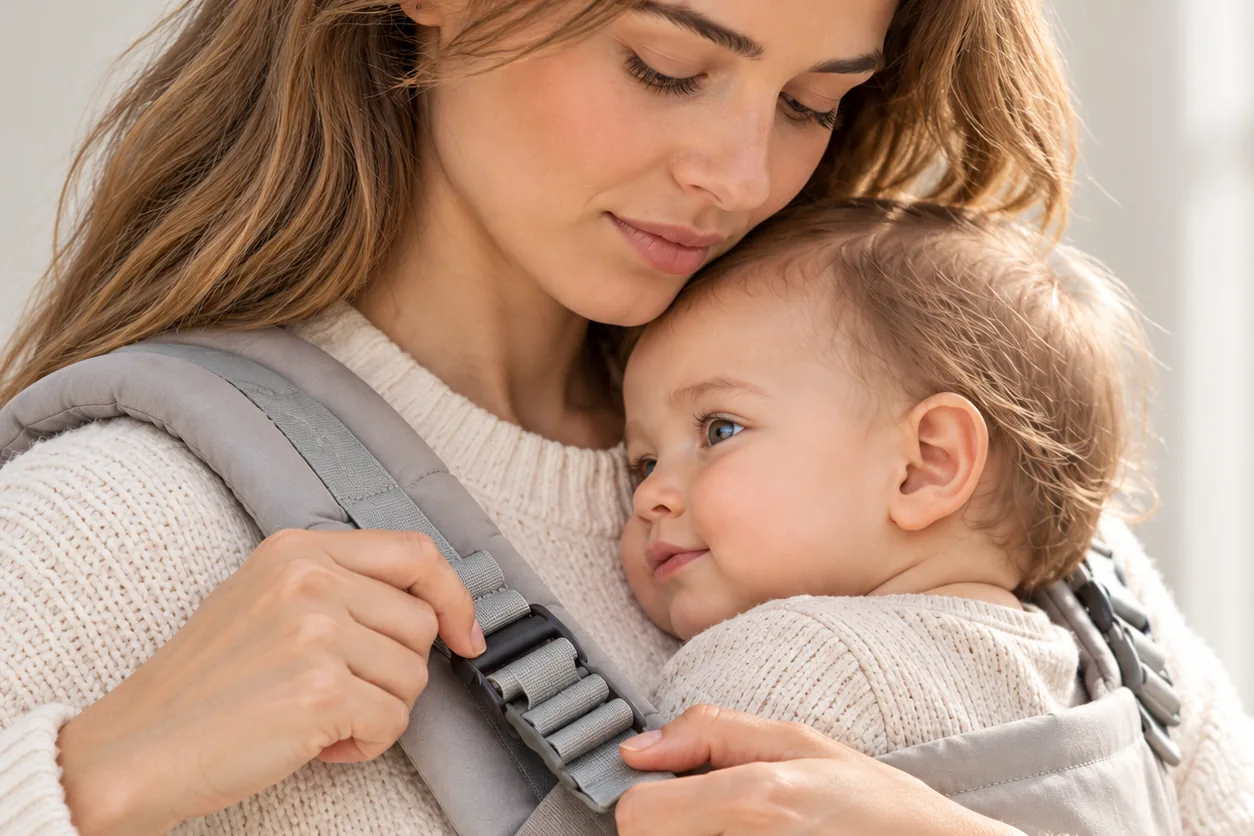
1. Carrier first
Put your baby in the carrier in thin layers, and tighten it as usual. The cover goes on top and never replaces the carrier's own straps.
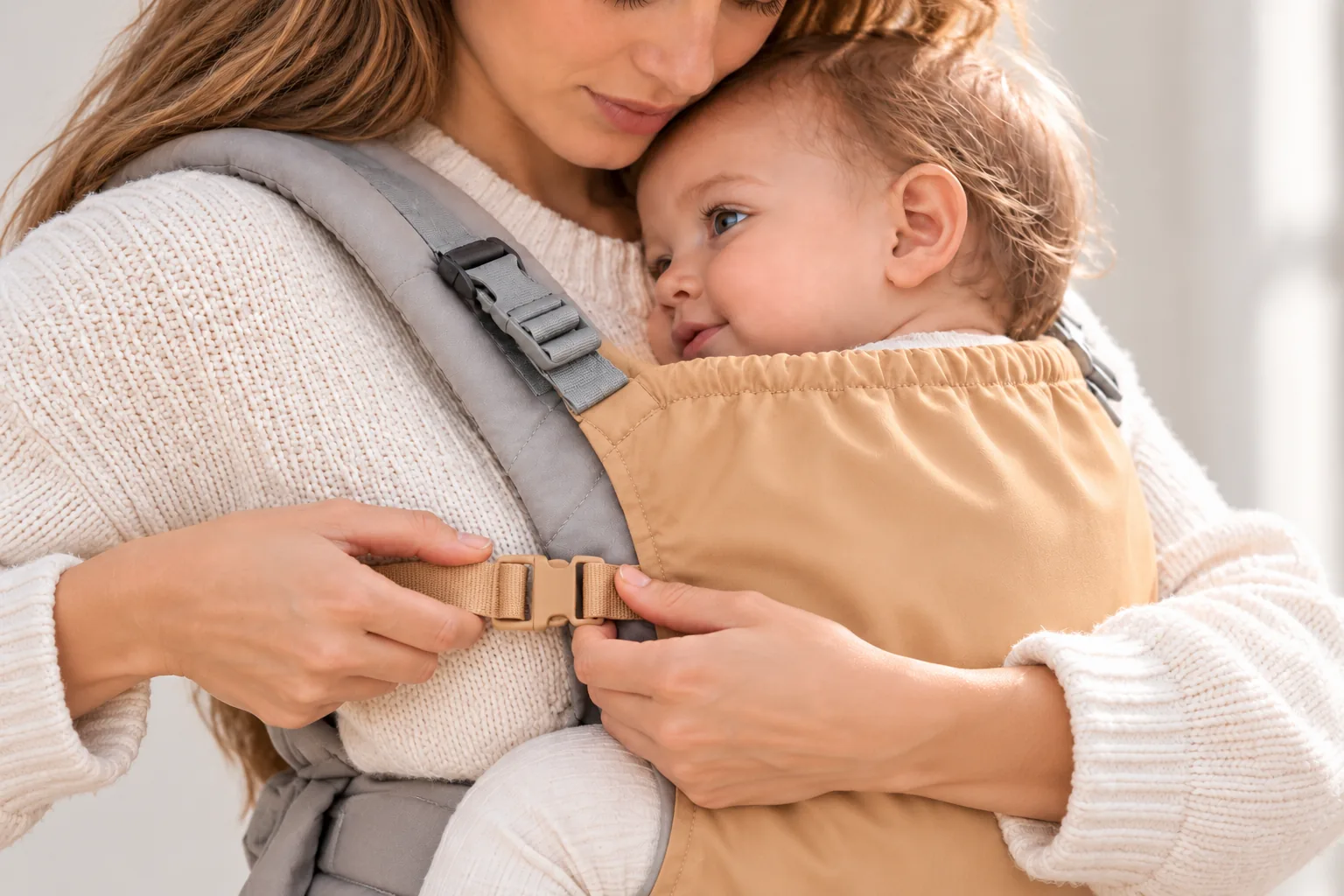
2. Fasten the cover
Lay the cover over your baby's back. Clip the top straps to the carrier's shoulder straps, then close the side straps.
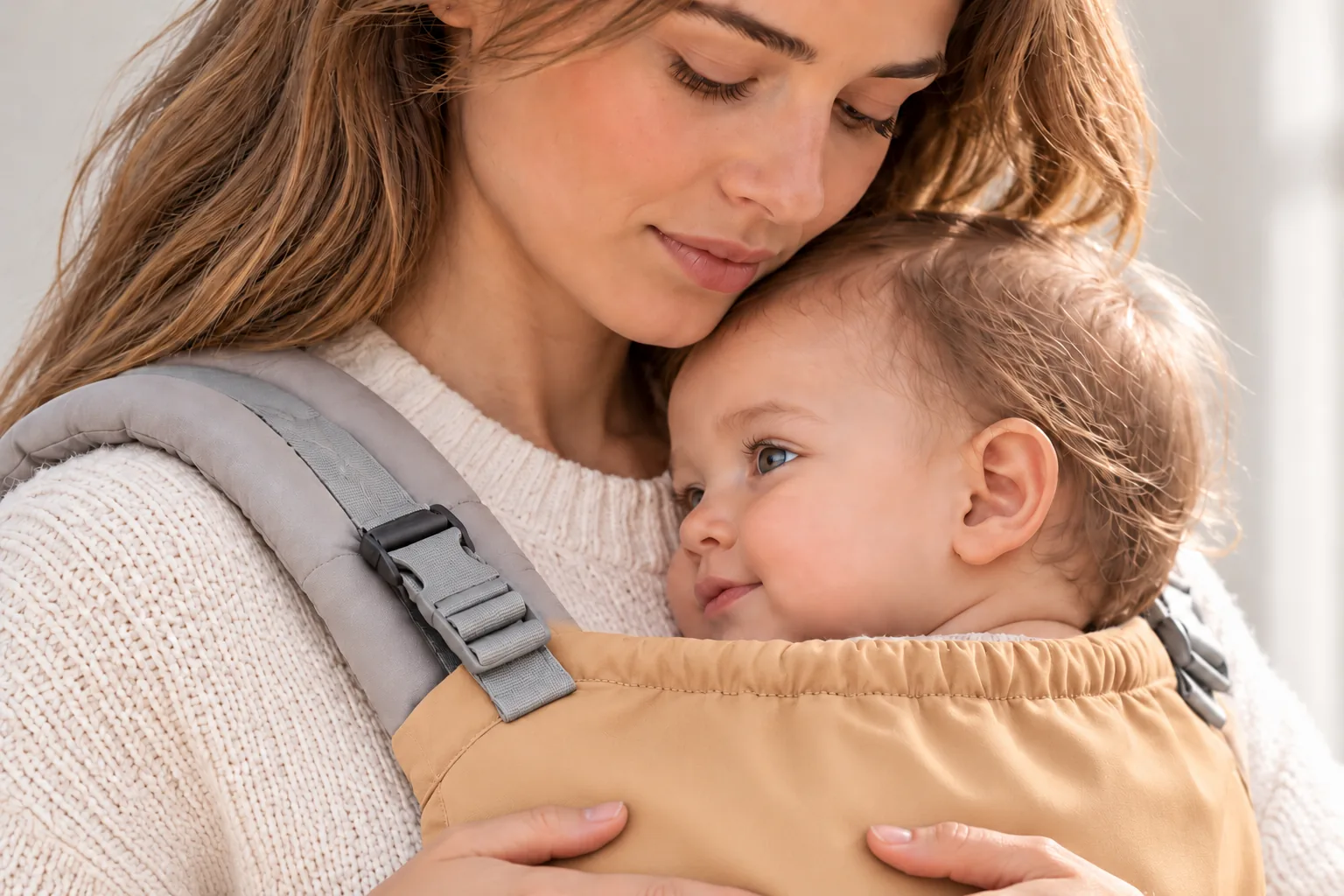
3. Check the face
Glance down. Your baby's whole face should be in view above the neck edge, close enough to kiss, with the chin off the chest.
On the walk
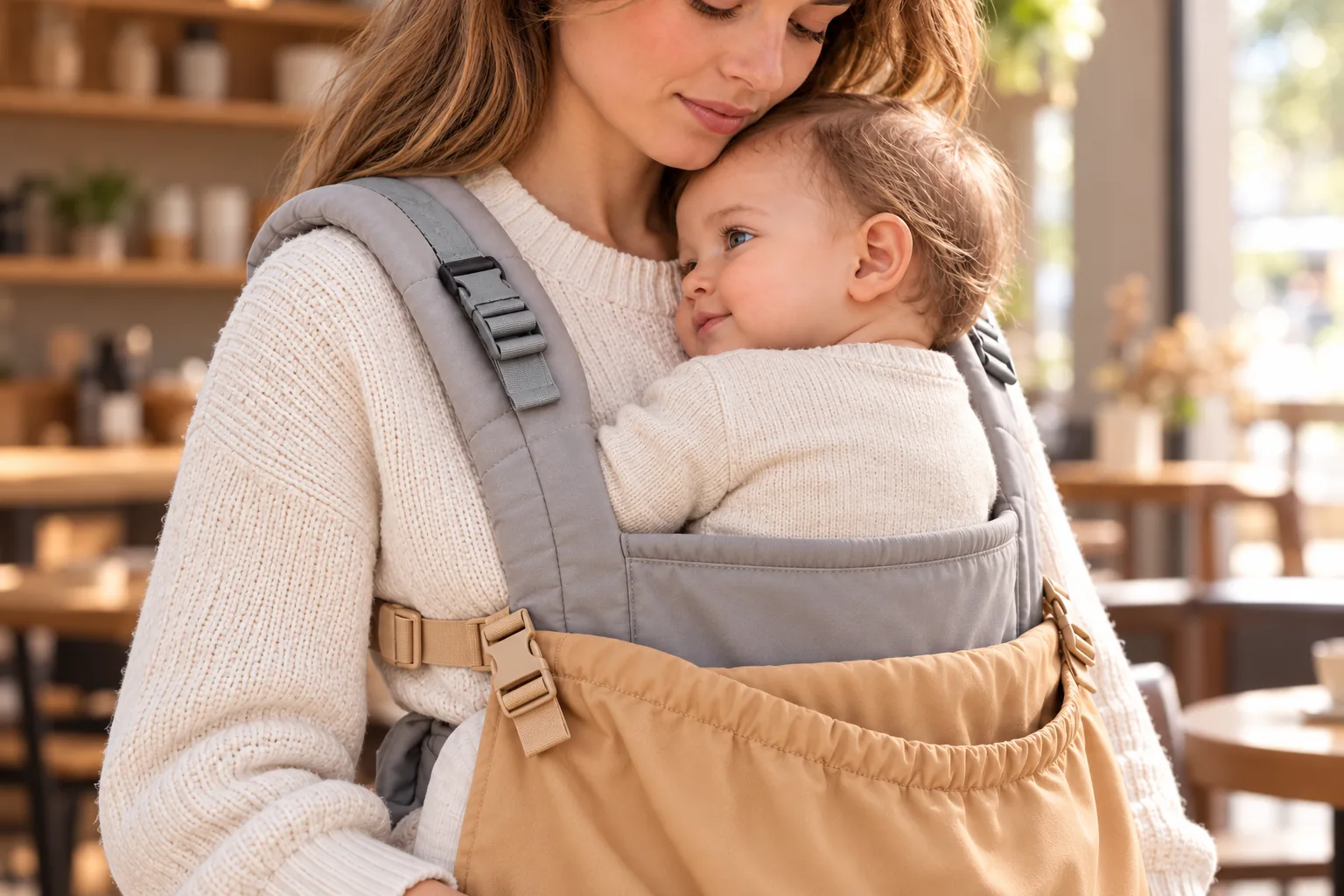
Going into a shop, café or bus? Unclip the top straps, fold the cover down to your waist and take your baby's hat off. The thin layers underneath can stay on.
Check warmth at the back of the neck, not the feet. Warm and dry is right. Hot or damp means the cover comes off (how to check).
Bent knees pull pant legs up, so ankles can poke out under the cover. Warm socks or booties close that gap.
Questions parents ask
Do I need a babywearing coat, or will my own coat do?
Your own coat often does. A coat a size or two bigger, or a partner's coat, zipped around you both works well. A babywearing coat is worth the money if you carry daily through a cold winter, or want one coat for pregnancy and after.
Are baby carrier covers safe?
Yes, when the face stays out. The cover goes around your baby's body, never over the head, and its top edge sits below the face. Check on your baby often, and take the cover off if your baby feels hot.
What does my baby wear under a carrier cover?
At 8–11°C (46–52°F): a long-sleeve bodysuit, warm pants, warm socks, a thin fleece, booties and a warm hat. Your body does the rest, so nothing padded goes inside. The carrier dressing guide has the outfit for every temperature.
Can my baby wear a snowsuit or jacket in the carrier?
No. A padded pram suit or jacket stops the carrier fitting tight, and overheats your baby against your body. Put any extra layers outside the carrier, so the straps stay snug.
Does the carrier go over my coat or under it?
Either works, because the cover fastens to the carrier, not to your coat. Under the carrier, wear only a thin jacket, since a puffy coat stops the straps sitting tight. A bigger coat goes over the carrier, worn open.
Can both parents use the same carrier cover?
Yes. It fastens to the carrier, not to a coat, so it fits whoever is wearing the carrier. A babywearing jacket only fits the adult it was bought for.
Will a carrier cover work with a wrap or ring sling?
Only if it is made for one, with ties or loops instead of clips. If yours has none, close a roomy coat around you both instead.
Is a light carrier cover warm enough for winter?
Not below about 8°C (46°F). A light cover stops wind and drizzle, and a warm carrier cover adds a fleece or padded lining for colder days.
How do I keep my baby dry in the carrier when it rains?
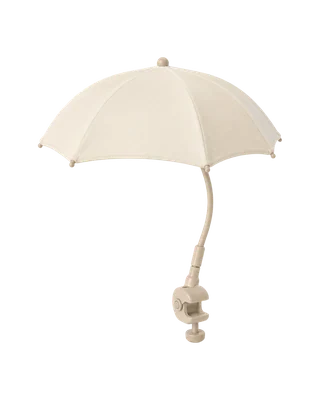
A light cover handles drizzle. In steady rain, add a big umbrella or a poncho over you both, open at the face. Never drape a blanket over the carrier: it blocks the air and hides your baby's face.
Can I use a carrier cover for a back carry?
Many covers fasten to the carrier on your back as well as your front, and some babywearing jackets have a back panel too. Check the description before you buy if back carries are part of your plan.