What this is about
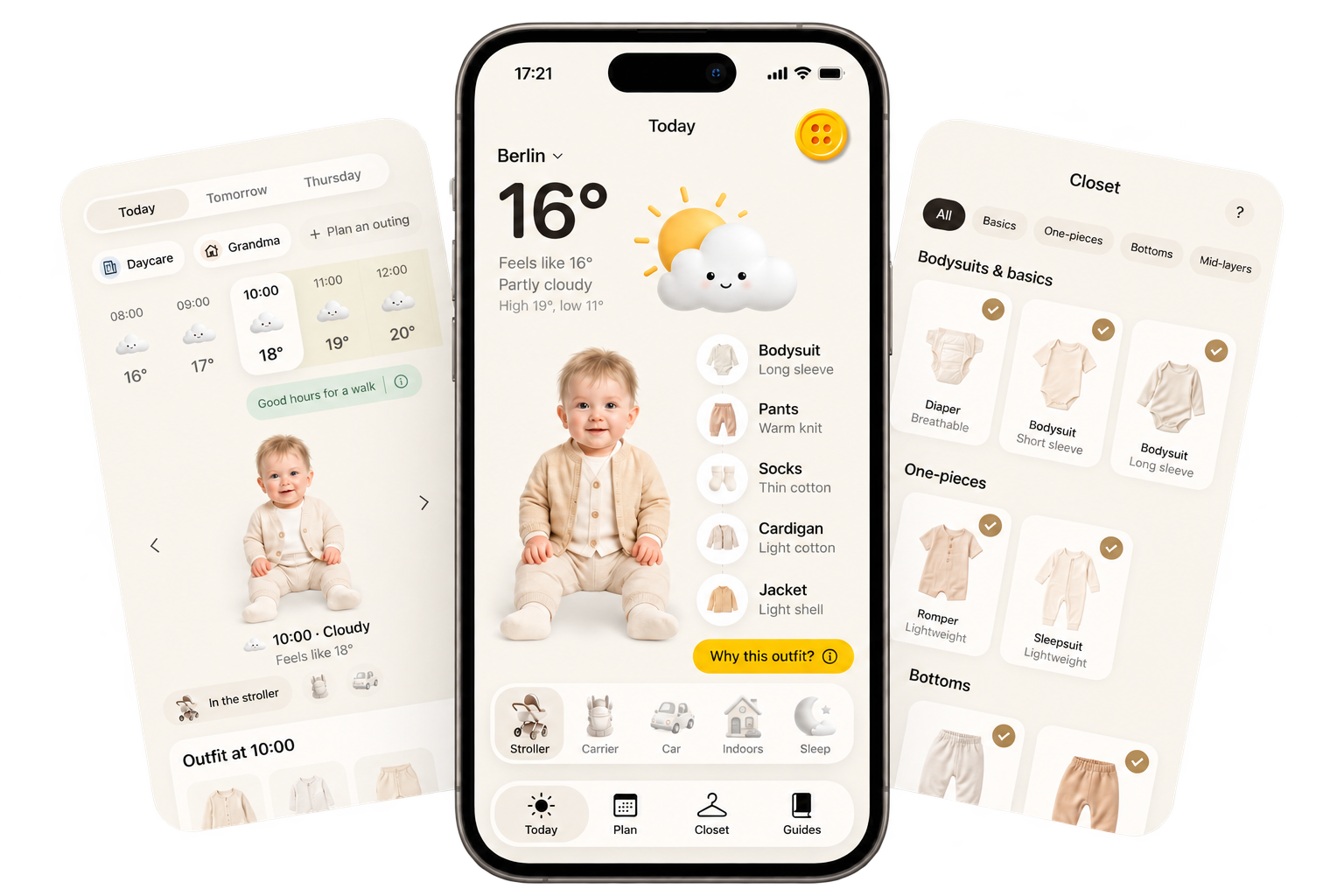
You open the front door, the wind whips past your legs, and you immediately second-guess the outfit you just put on your baby. The quick instinct is to reach for another sweater or a heavier fleece. But knitwear and fleece have tiny gaps that moving air slices right through. Keep the warm layers you picked for the feels-like temperature, then add a smooth outer layer that blocks the breeze.
Do not count the wind twice
When you look out the window and see branches bending, it is tempting to subtract a few extra degrees in your head. But your weather app has already done that math. The feels-like number already accounts for the wind chill. If you dress your baby for a freezing day when it is simply a blustery 11°, they will overheat the moment you turn behind a building or step into a shop.
Around 25 km/h, the air feels noticeably gusty and the stroller can start catching the wind like a sail. By 40 km/h, you will find yourself leaning your weight into the handlebar. At that point, no extra sweater will make the walk pleasant. Pick a sheltered route close to home, or turn back and save the outing for calmer air.
Make the outside fabric do the work
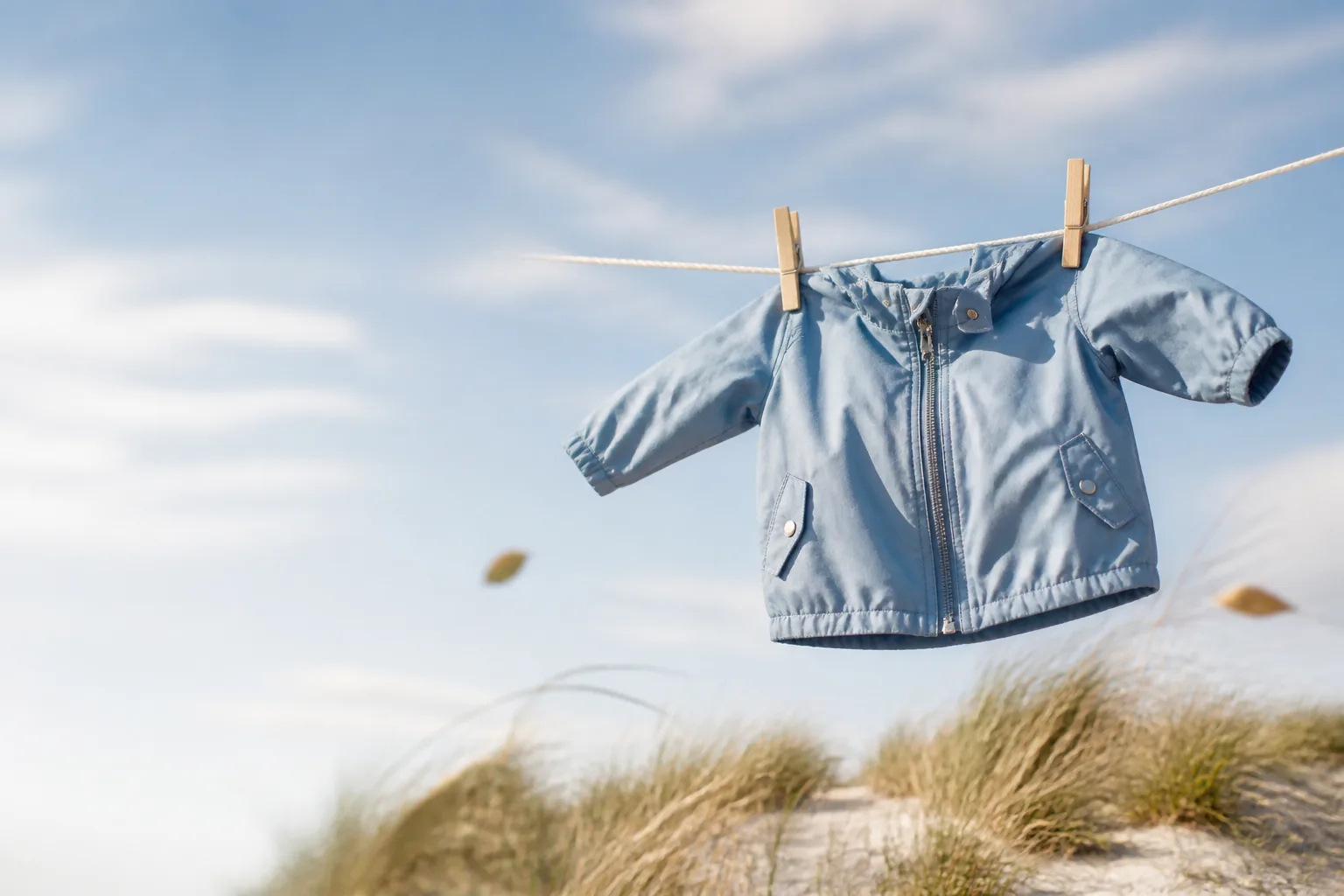
A thick knit cardigan and a windbreaker can both feel warm when you pick them up, but they do completely different jobs. Cardigans and fleece trap warm air right next to the skin. But because their weave is open, moving air blows right through them. A smooth outer layer sits on top to block the breeze and keep that trapped warmth from escaping.
Windproof does not mean buying high-tech mountaineering gear. A simple nylon jacket, a smooth pram suit, or the zipped apron of your stroller footmuff will do the job. The main trick is checking where wind can sneak in. Watch for gaping necklines, loose wrists, and pants that ride up over socks when your baby kicks.
Blocking the wind never means sealing your baby inside an airtight cocoon. Keep their face completely open and clear. Never wrap a loose scarf around their neck, never drape a blanket over the stroller opening, and never zip a weather cover over their head.
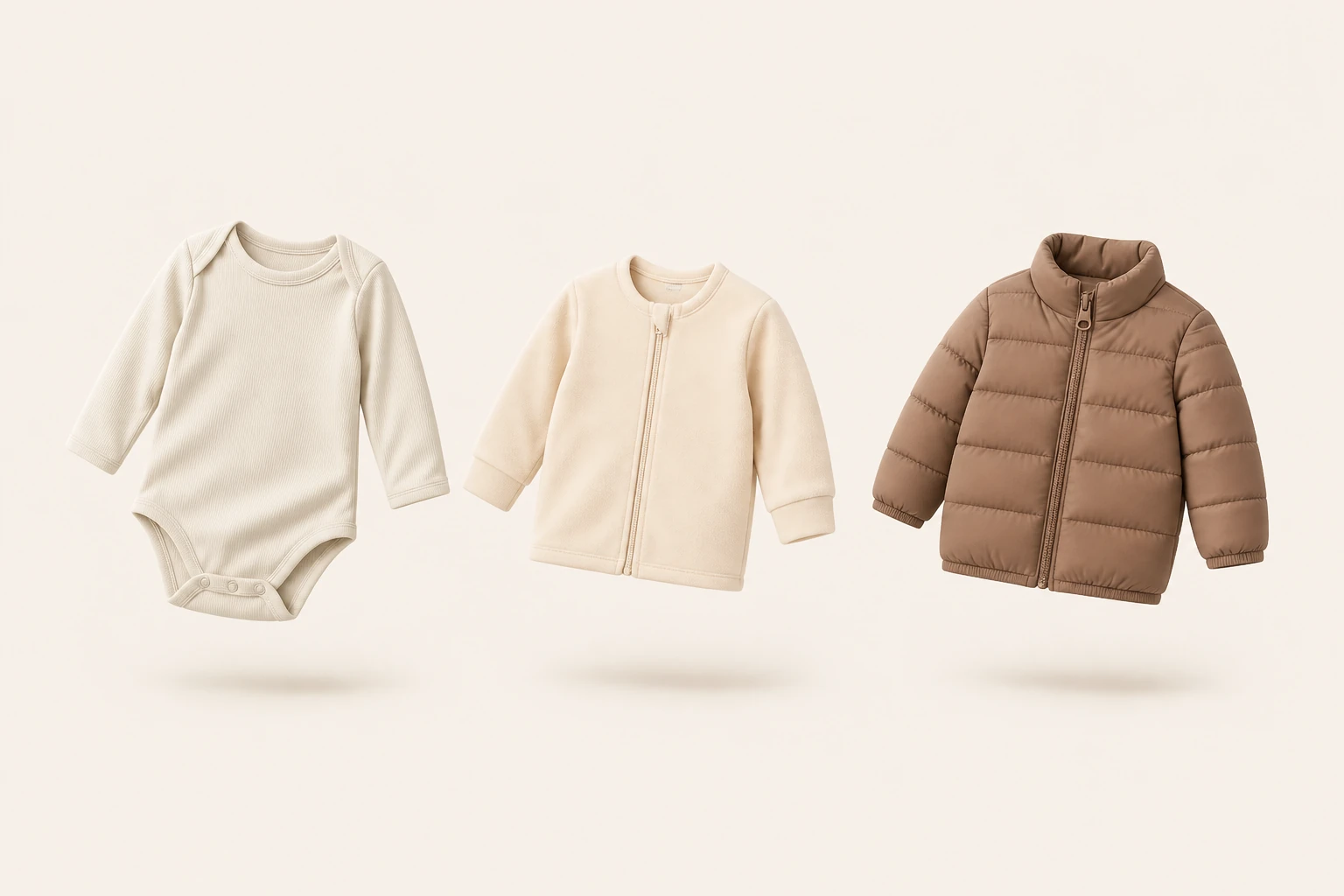 Yes
YesWindproof outside
The base and fleece hold warmth close to the body. A zipped smooth jacket stops moving air from stripping that heat away.
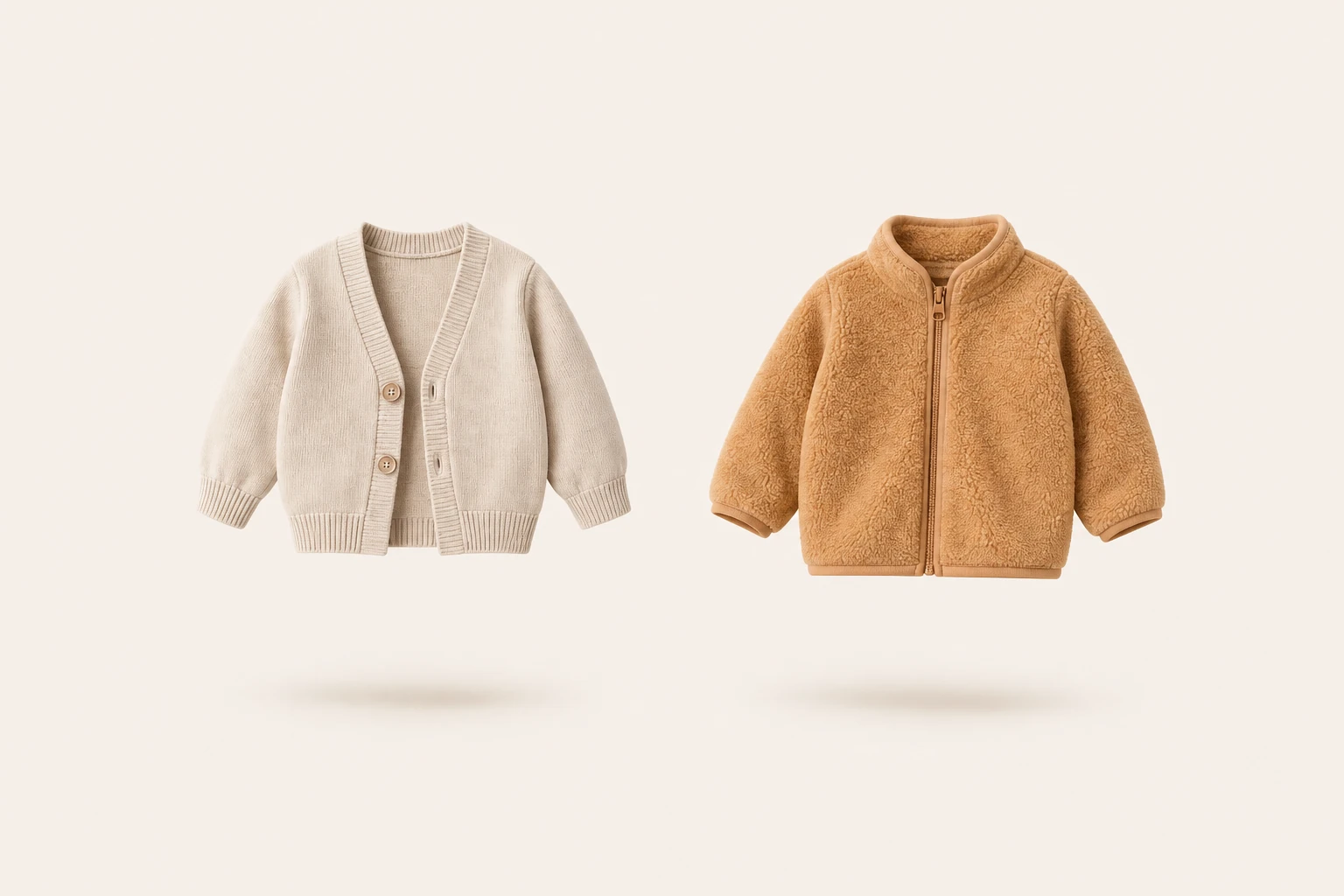 No
NoMore soft warmth
Two cardigans add bulk, but their loose knit lets the gust blow straight through to the skin.
A useful hat stays above the eyes
A cute beanie might look great by the mirror, but the first sharp gust usually pulls it off or twists it sideways. Loose beanies also have a habit of sliding down over a baby's eyes. Your baby suddenly cannot see, starts fussing, and you end up stopping at every corner to yank the brim back up.
Loose knit hats also let cold wind whistle right through the stitches to the ears. On truly blustery days, a hat with soft under-chin ties, a snug bonnet shape, or a thin balaclava works much better because it stays put. If you flip up a jacket hood for extra protection, make sure it does not push the hat forward over their brow. Once you get indoors or into a warm car, take the hat and hood off straight away.
Change the stroller's position before the outfit
A sudden blast of wind in the face can startle a baby. Cold moving air triggers a natural gasp reflex, making them blink, squint, and cry. It is easy to think they are freezing, but they are often just upset by the draft on their cheeks. Before you reach for another layer, change the stroller's angle.
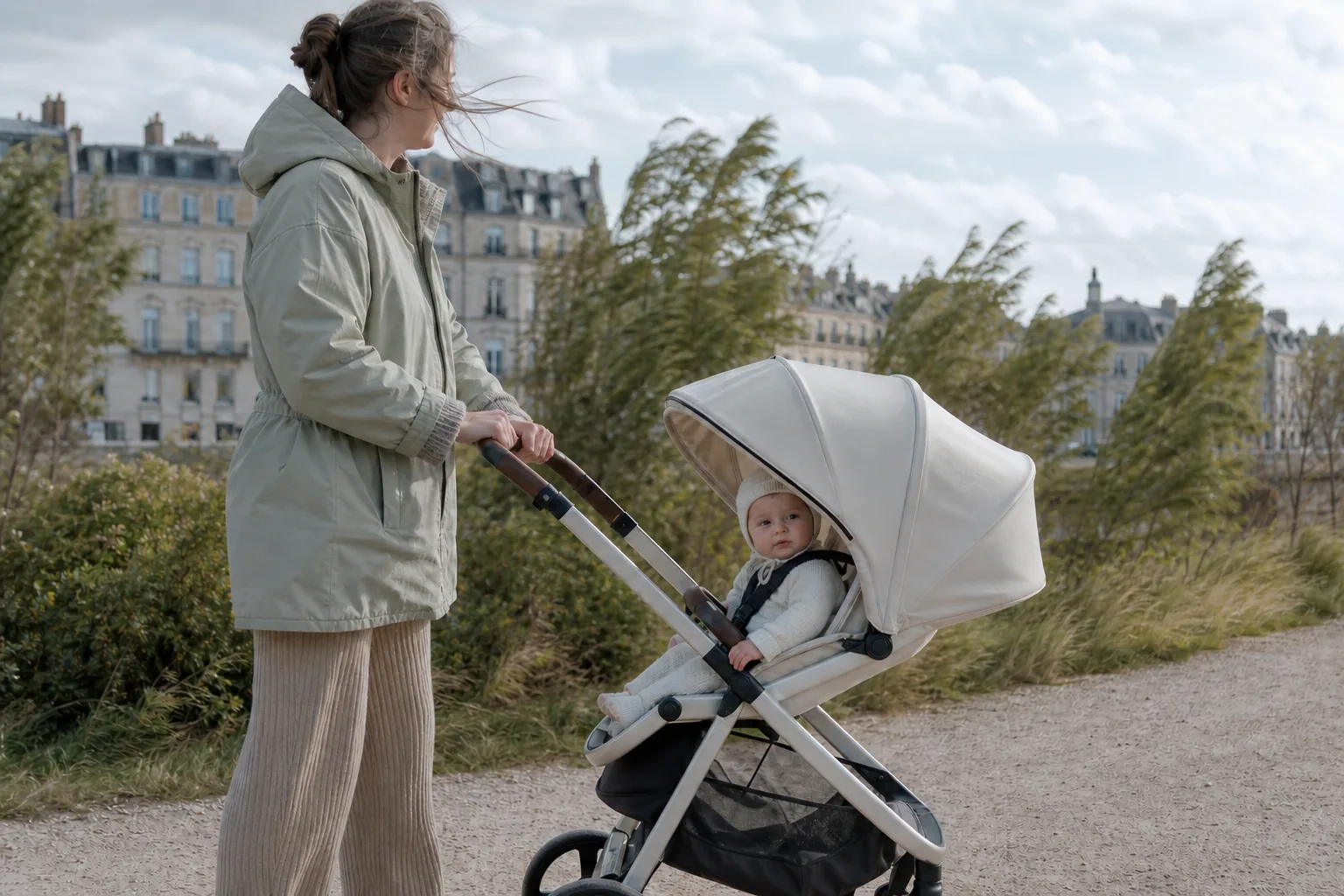
Drop the stroller canopy so the outer fabric takes the brunt of the gust. If your stroller seat reverses, turn your baby to face you so the back of the seat blocks head-on wind. A footmuff with a wind-resistant apron acts like a built-in shield for their legs, so you do not need heavy snow pants underneath. If your route takes you behind tall buildings or into sheltered streets, feel the back of your baby's neck. Without the wind, the same outfit will feel warmer. If their skin feels hot or clammy, unzip the jacket or loosen the footmuff.
Protect exposed cheeks in cold wind
Cheeks are usually the one spot left out in the open. When cold wind whips across delicate skin, cheeks can turn chapped and raw within minutes. Below 0° feels-like, or on days with bitter dry wind, a thin layer of barrier balm or plain ointment before stepping outside gives their skin an extra shield against the draft.
Keep any balm away from their eyes and mouth. A flush of red cheeks right after a brisk walk is completely normal and usually settles once you are warm inside. But if your baby has dry patches, peeling skin, or eczema, stick to the emollient recommended by your pediatrician or pharmacist.
In a carrier, you are part of the outer layer
A baby carrier changes the physics of a windy day. Your chest acts as a giant windbreak for their front, and your body heat warms them up quickly. That means your baby needs fewer layers on their chest and stomach than they would in a stroller.
The vulnerable spots in a carrier are the parts sticking out into the breeze. Pants easily ride up in the sling, leaving bare ankles exposed to cold drafts. Pull long socks up over their pants or use soft booties that cannot kick off. Keep a snug hat tied over their ears, and check that the back of their neck stays protected.
If you add a cold-weather cover, fasten it over the outside of the carrier. Never dress your baby in a thick, puffy pram suit inside a carrier, and never zip your own coat or scarf over their head. Their nose and mouth must stay clearly visible at all times.
Questions parents ask
What if it is windy and sunny?
Sunny wind can trick you because the sun feels warm on your face while the breeze chills your hands. Dress for the feels-like temperature, keep the windproof shell on, and pull down the stroller canopy for shade. From UV 3, add sun coverage like a sun hat or canopy shade, but do not strip off the wind layer.
What if it is windy and raining?
Rain and wind together steal body heat much faster than wind alone. Put the stroller rain cover on to seal out both water and gusts. Keep the clothing underneath matched to the feels-like reading. Once you are under dry shelter or indoors, take the rain cover off so fresh air circulates freely.