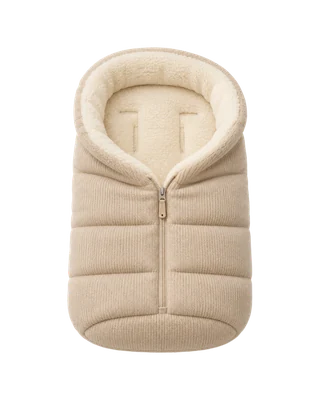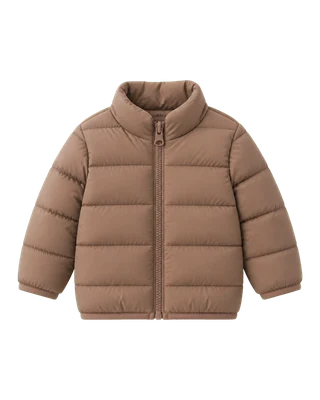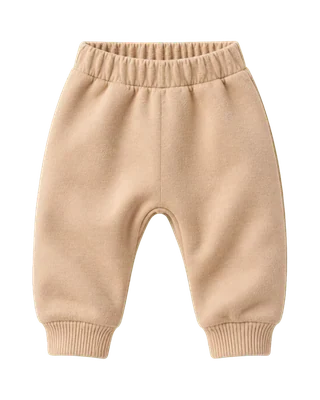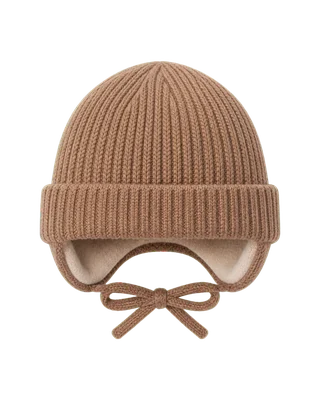
An insulated pram suit is a padded one-piece winter suit with long sleeves, full legs and a hood. It zips on over indoor clothes below 4°C (39°F), and takes the place of a warm jacket. In the UK it is called a pram suit. In the US and Canada, shops call the same thing a snowsuit or a bunting suit.
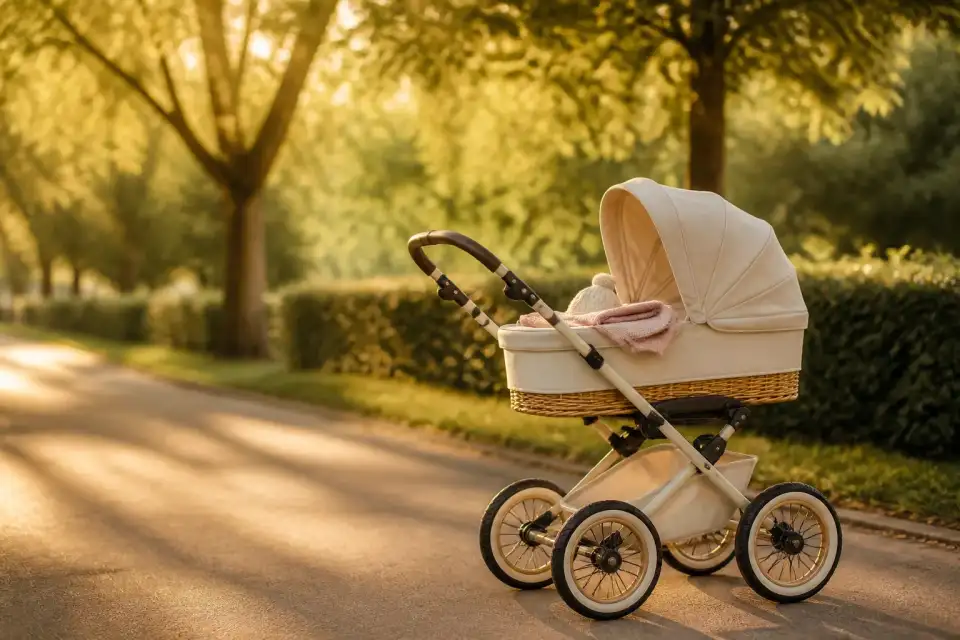
Below 4°C (39°F), your baby needs one wherever no winter footmuff is doing the job: in a stroller bassinet (carrycot) or an open stroller seat, lifted out into your arms, or sitting and crawling in the snow. If your baby rides zipped into a winter stroller footmuff, skip the suit. The footmuff does the same job, and the two together are usually too warm.
- For ages0–3years
- You'll need1per winter
- Wear it below4°C39°F
Pram suit or stroller footmuff?
The difference is where the warmth stays.
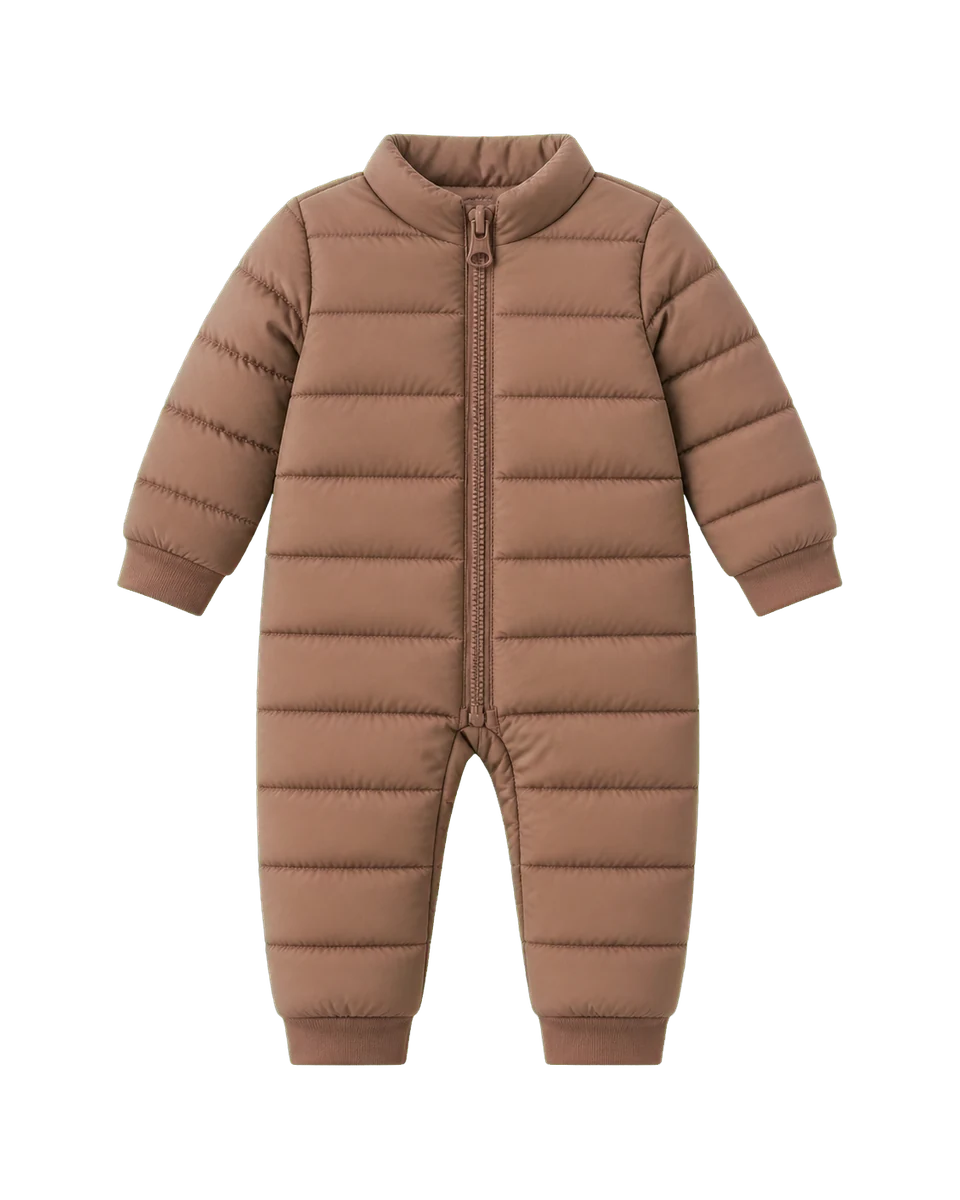
Insulated pram suit
Your baby wears the warmth, so it comes along out of the stroller: onto a park bench, into the snow, into your arms.
- Good: Warm on a bench or in your arms
- Not good: Slower to put on and take off
- Not good: Too warm indoors until unzipped
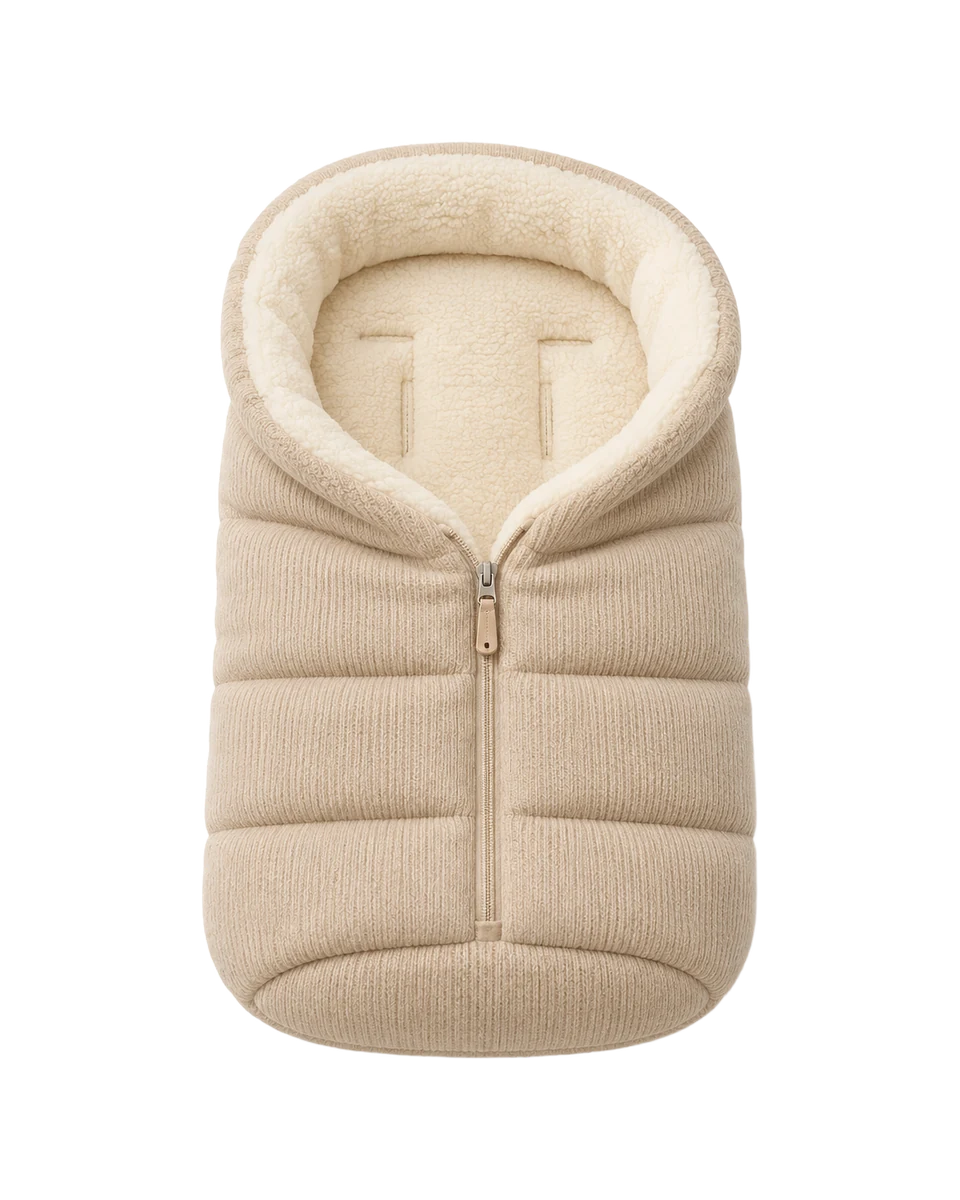
Stroller footmuff
It stays strapped in the stroller seat and covers the legs, so only a warm jacket goes on top. Best if your baby rides most of the walk and you pop into warm shops and cafés.
- Good: Unzips in seconds in a shop
- Good: Normal pants underneath
- Not good: Warmth stays in the stroller
Three kinds of one-piece suits
Shops mix the names pram suit, bunting suit and snowsuit. What tells the three apart is the fabric.
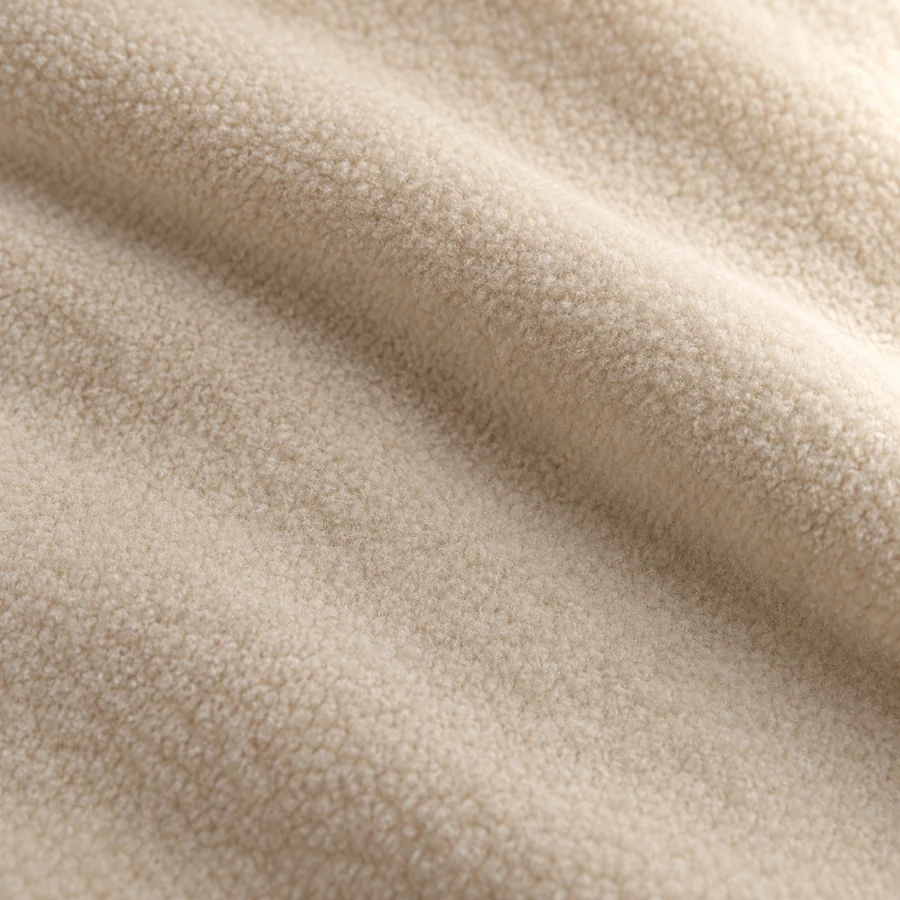
Fleece, sherpa or boiled-wool bunting
No padding, for cool, dry walks at 4–11°C (39–52°F) or under a stroller blanket. It is brushed fleece, fluffy sherpa that looks like a teddy bear, or boiled merino wool (wool felted so tightly that it stops the wind). It breathes well in mild cold, but does not keep out heavy rain or wet snow.
Quilted stroller pram suit
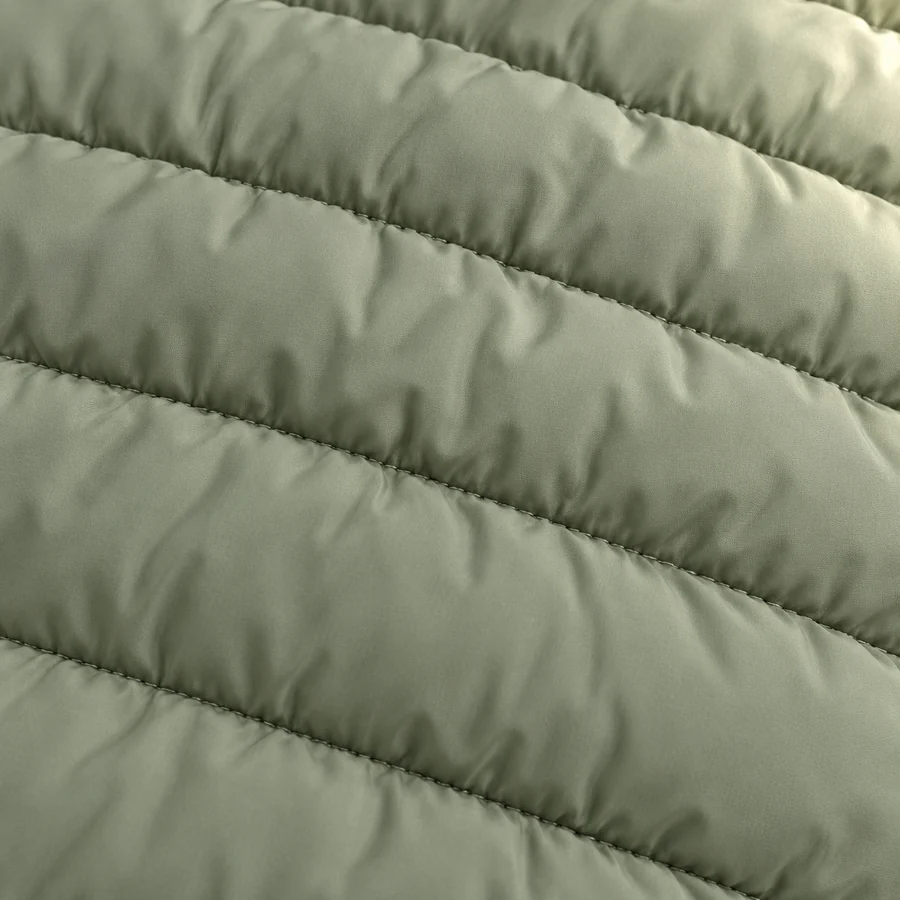
Padded, for babies who do not walk yet, in a bassinet or a stroller below 4°C (39°F). Synthetic or down filling sits under a soft, water-repellent shell, with fold-over cuffs for the hands and feet.

Waterproof snowsuit
For crawlers and walkers who sit and play in wet snow and slush, in winter boots. The outer fabric keeps out wind and water, the seams are taped so melted snow cannot leak through, and the knees and seat are reinforced.
One-piece snowsuit or two-piece jacket and snow pants?
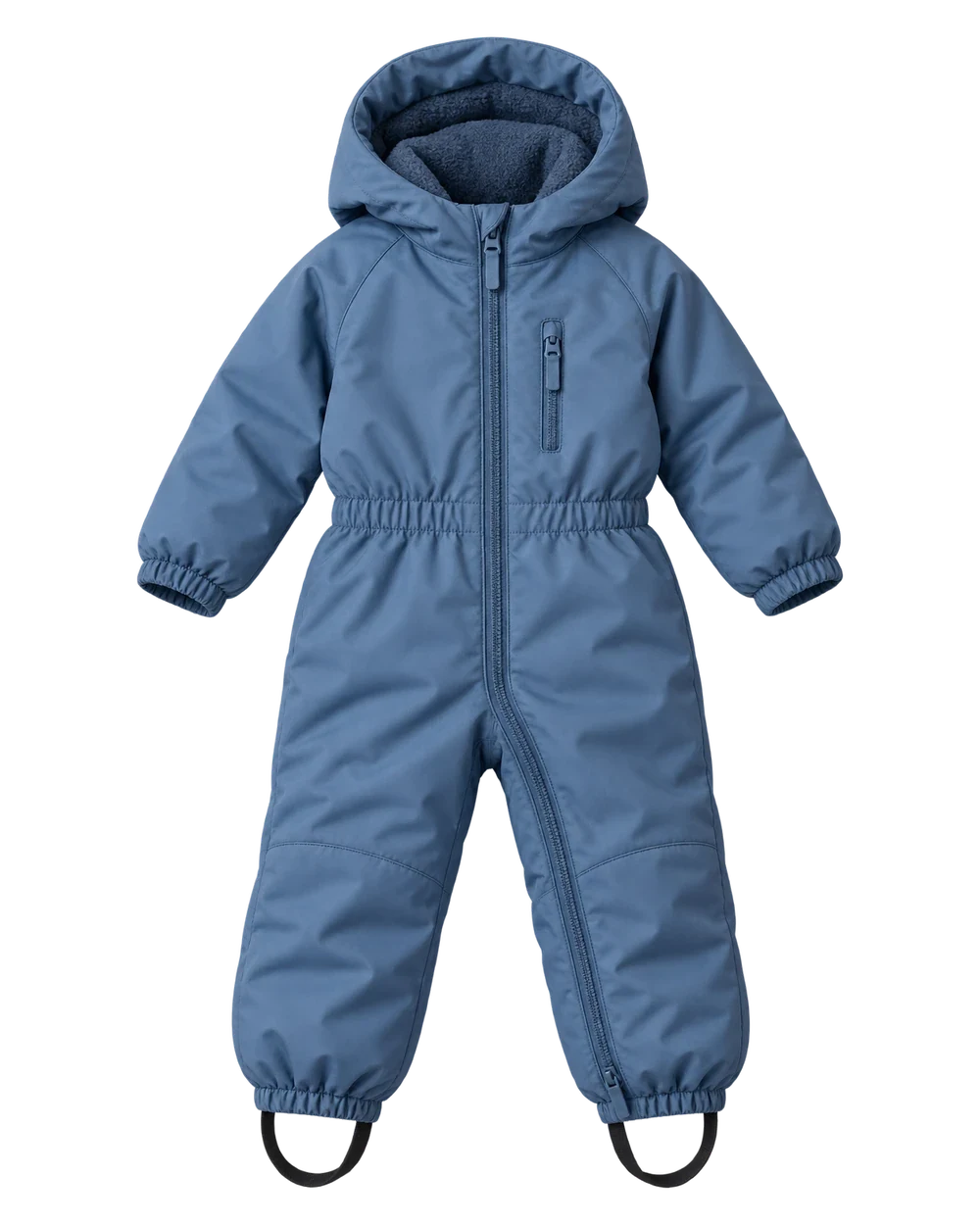
One-piece snowsuit
One shell from collar to ankle. Best for a baby who rolls and sits in the snow, or is lifted under the arms a lot.
- Good: No gap at the waist for snow
- Good: One zipper and it's all on
- Not good: Unzip it all for a diaper change
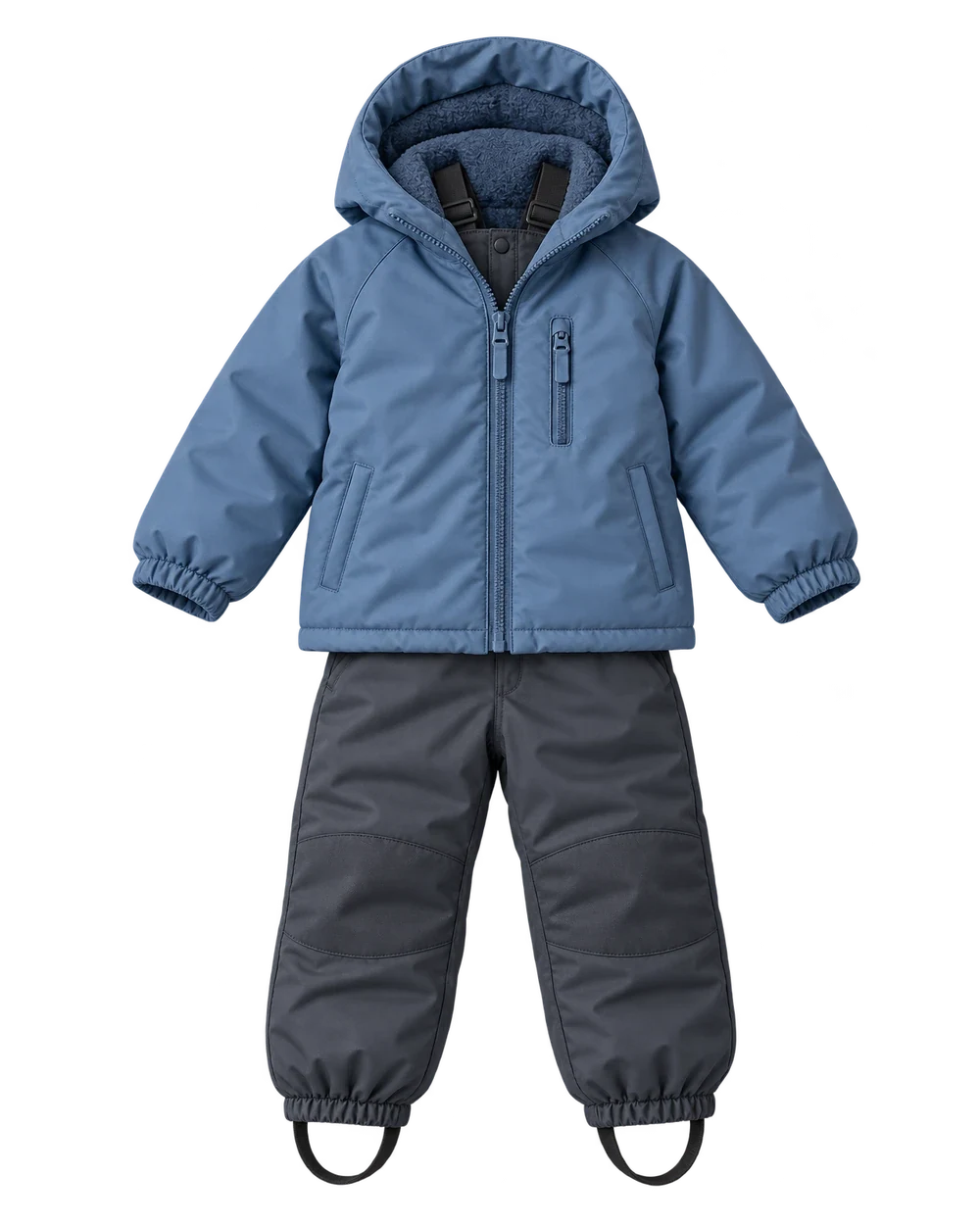
Two-piece jacket and snow pants
A separate warm jacket, and warm baby pants or chest-high snow bibs. Best for a toddler at daycare or in potty training. When one piece is outgrown, you buy only that one in the next size.
- Good: Just the coat off indoors
- Good: Just the pants down for a diaper
- Not good: Jacket can ride up off the pants
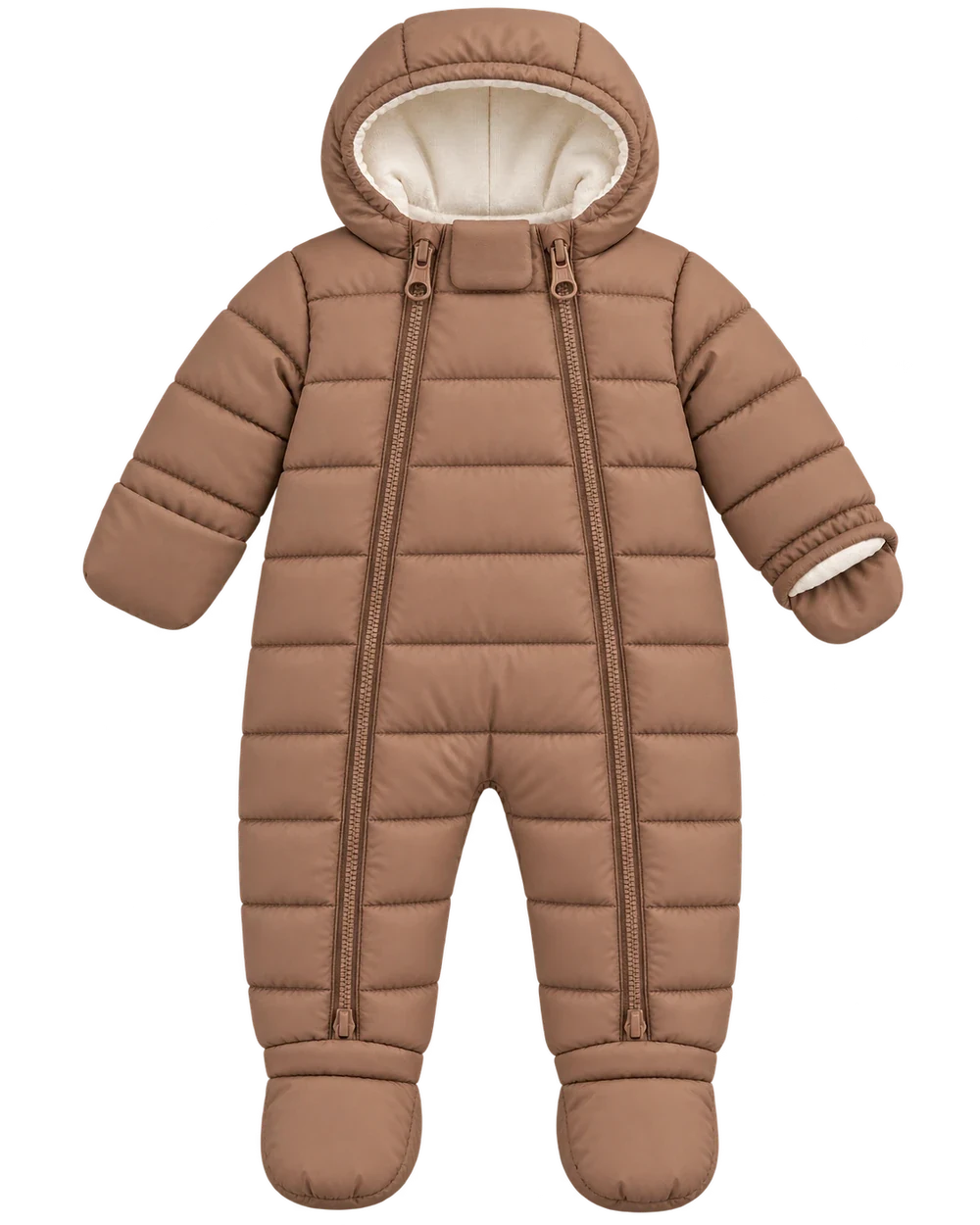
How to choose a pram suit
Four details decide how easily a pram suit goes on a wriggly baby, and whether the cuffs work with or without boots.
Shallow hood and chin guard
A deep or thick hood bunches behind a lying baby's head and tips forward over the eyes. Look for a shallow hood that lies flat, and a fabric fold at the top of the collar that covers the zip, so the metal never pinches the chin.
Ankle-length or double zipper
One or two zips that open from the neck down to the knee or the ankle, like the long zips on a sleepsuit. You lay your baby on the open suit instead of threading kicking legs into stiff tubes.
Fold-over mitten cuffs
Flaps on the sleeves flip over the hands and keep the cold out, with no separate mittens to pull off and lose. They fold back when your baby wants free fingers.
Fold-over foot cuffs
For a baby who does not walk yet, they flip over the feet, and warm socks alone are enough underneath, with no booties. Sewn-in feet are soon outgrown, while cuffs simply flip open once your baby grows taller or wears winter boots. On a waterproof snowsuit for a walker, look for elastic ankles with straps that hook under the boot sole.
How to use it
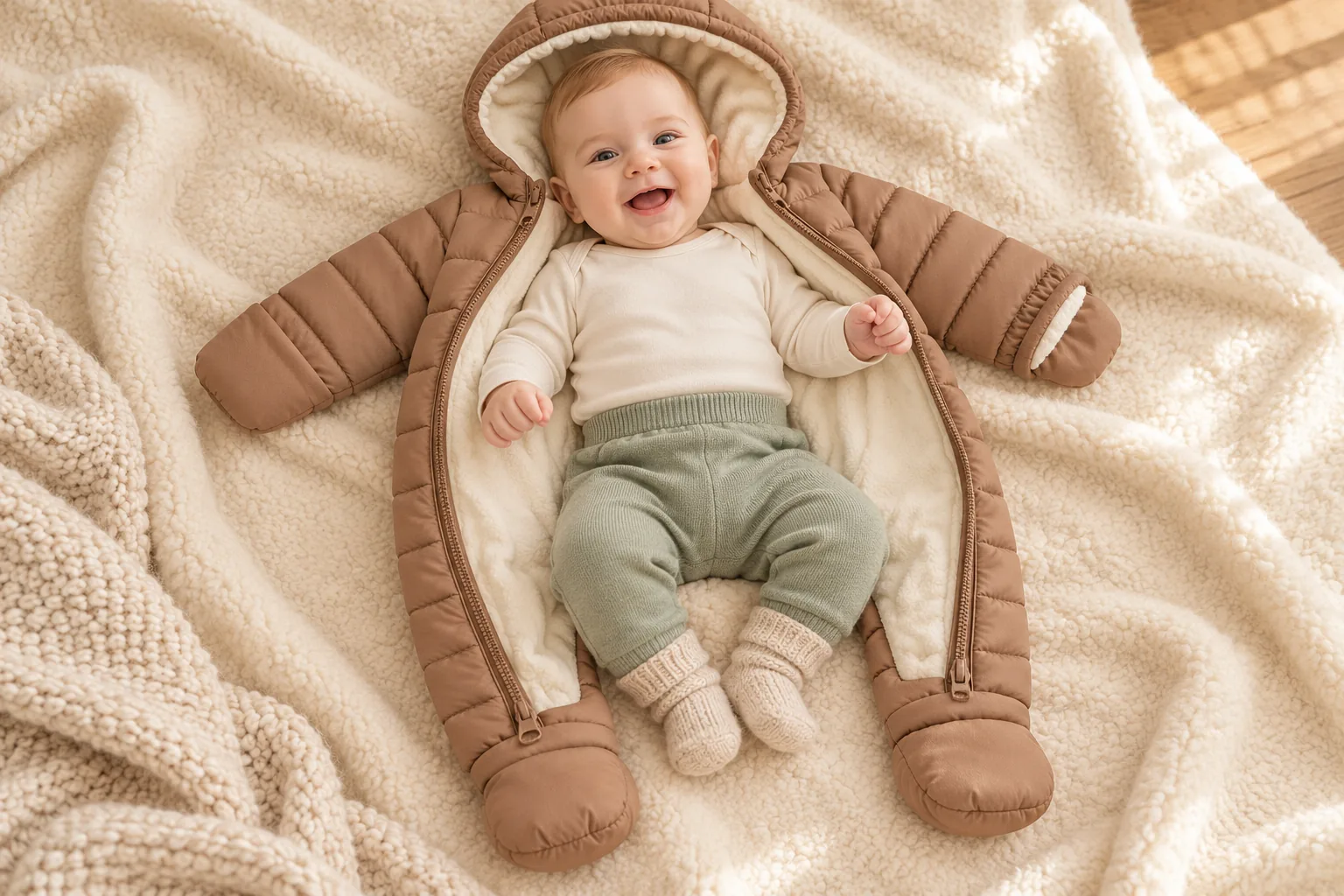
1. Put your own coat on first
Put on your own coat, scarf and shoes before your baby goes into the suit, so your baby does not wait in a warm hallway. Lay the open suit flat, set your baby on it in thin indoor clothes with no hooded top, slide the arms in, then zip up the legs.
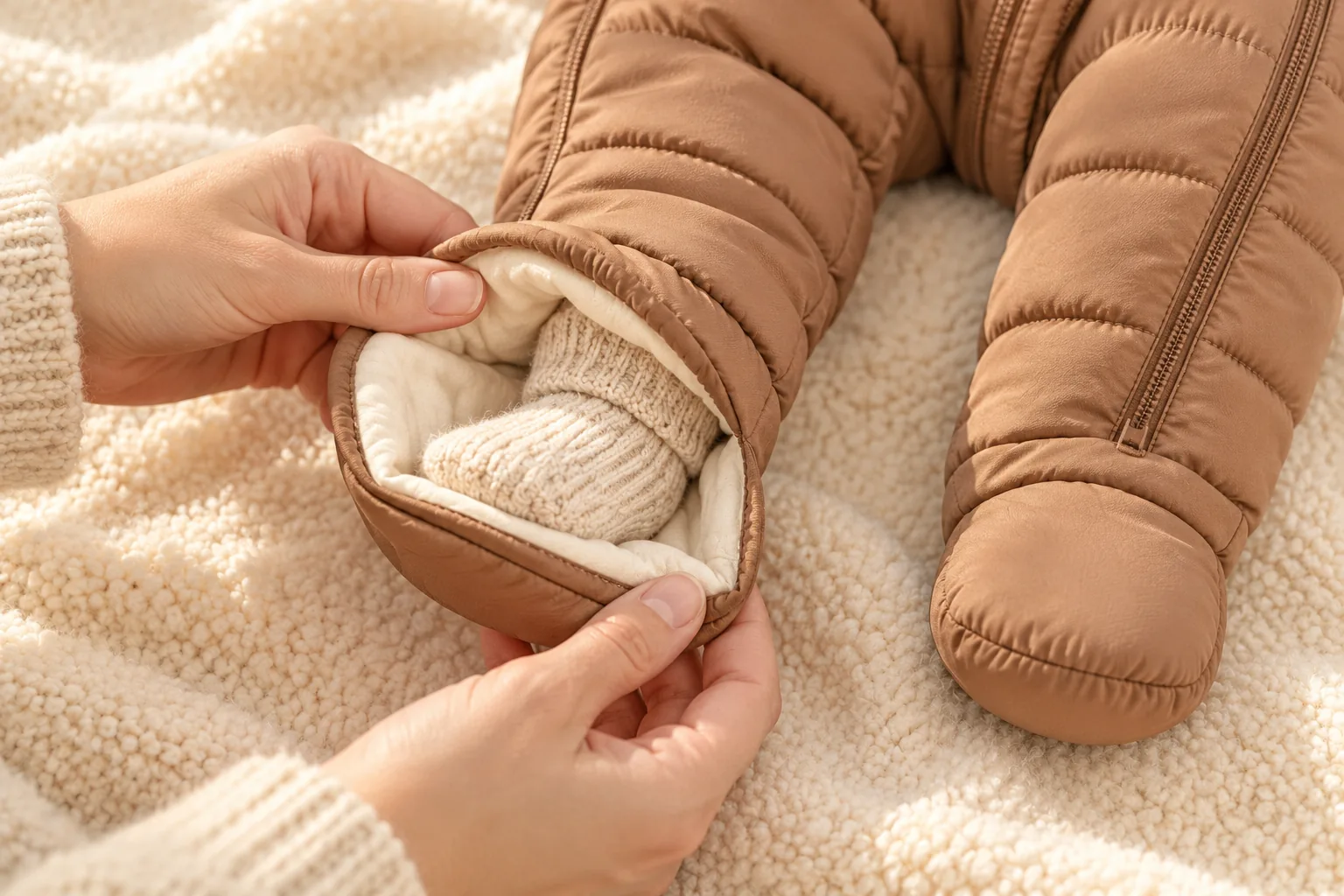
2. Check the cuffs and the room to sit
Before you fold the cuffs over, look inside for loose threads or hairs, which can wrap tight around a toe, and check that the toes can wiggle. When your baby sits, the crotch should still have a handful of slack over the diaper, so closed foot cuffs do not pull on the toes.
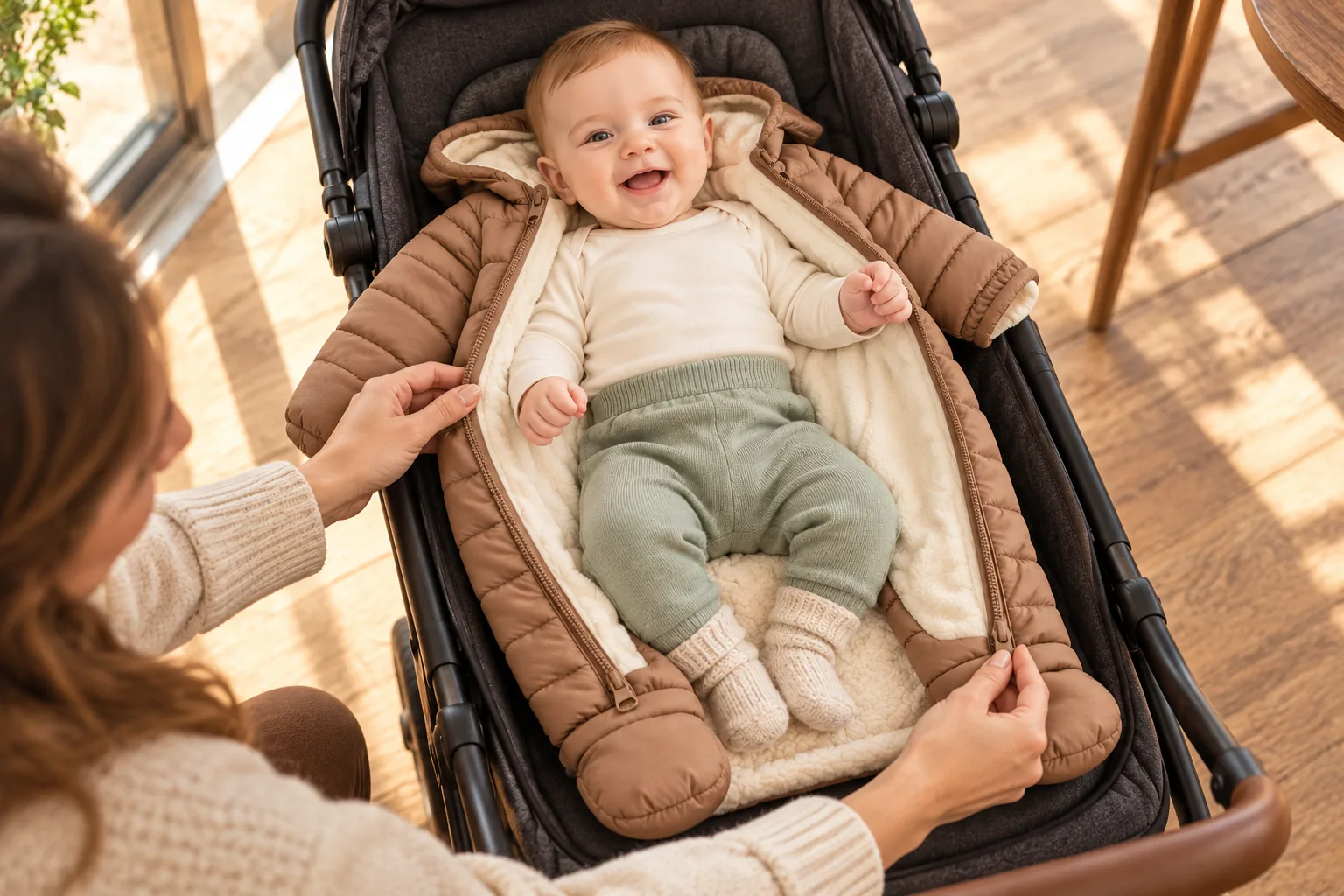
3. Open it in shops, take it off indoors
Take off hats, hoods and outdoor clothes as soon as you come indoors or into a warm car, bus or café, because overheating raises the risk of sudden infant death syndrome (SIDS). For a quick stop in a shop, push the hood back and unzip both zips down to the legs.
Questions parents ask
Can my baby wear a snowsuit or pram suit in a car seat?
No, not a padded pram suit or a puffy snowsuit. In a crash the padding flattens and leaves the harness loose, so a child can slip out. A thin fleece bunting with no padding is fine if the straps still pass the pinch test: you cannot pinch a fold of strap at the collarbone. Or buckle your baby in indoor clothes and lay a blanket or a coat over the buckled straps.
What should a baby wear under a snowsuit or pram suit?
A long-sleeve bodysuit, warm baby pants, warm socks and a warm fleece, the same on any day below 4°C (39°F), as in dressing a baby for winter and first snow and below zero. Feel the back of the neck or the chest: warm and dry is right, and hot or damp means a layer comes off.
What is the difference between a bunting suit, a pram suit, and a bunting bag?
A bunting suit and a pram suit are both clothing your baby wears. US and Canadian shops often say bunting suit for a softer fleece, boiled-wool or newborn suit with fold-over cuffs, and snowsuit for a thicker, water-resistant or waterproof one. A bunting bag is not clothing at all: it is a stroller footmuff that stays strapped in the stroller seat.
Do newborns or 6-month-olds actually need a snowsuit?
In the stroller with no winter footmuff, yes: below 4°C (39°F) at any age, and under 3 months already below 8°C (46°F), because a newborn's outfits run a step warmer. It also helps when you lift your baby out into the cold. With a winter footmuff, a warm jacket takes its place, and for the trip from the house to the car, thin layers and a hat are easier to adjust.
Can a baby wear a pram suit or snowsuit in a baby carrier?
Better not, in a sling or a carrier. The thick padding traps too much heat against your chest, stops the carrier holding your baby's hips and legs snugly, and closed feet pull on the toes. Dress your baby in thin indoor layers, and put your own coat or a warm carrier cover over you both, as in dressing a baby for a carrier.
Can my baby keep sleeping in a pram suit after a walk?
No. Take the suit and the hat off as soon as you come indoors, even if it wakes your baby, because a padded suit in a warm room quickly makes a baby too hot. Open the long zips wide and slide the arms out gently as you lift your baby into the crib or bassinet.
What size snowsuit or pram suit should I buy, and will one last all winter?
Your baby's current size, or one size up at most if your baby is between sizes at the start of winter. Newborns often need two sizes in a long winter, while from 6 months one suit with fold-over cuffs usually lasts the season. A one-piece suit is outgrown by the body length (shoulder to crotch) before the sleeves. Two sizes up is too big: the chin sinks into the collar, and early walkers trip. What to buy for the first year gives the size and the winter months for your baby's birth month.
How do you wash a pram suit or snowsuit?
Wipe mud and road salt off the shell with a damp sponge between washes, so the water-repellent finish lasts longer. When it needs a full wash, close the zips and the Velcro, turn it inside out, and use a gentle cycle with liquid detergent. Skip bleach and fabric softener, which clog water-repellent fabric and flatten the padding. A down-filled suit is washed and dried like a down jacket, with tennis balls in the dryer.