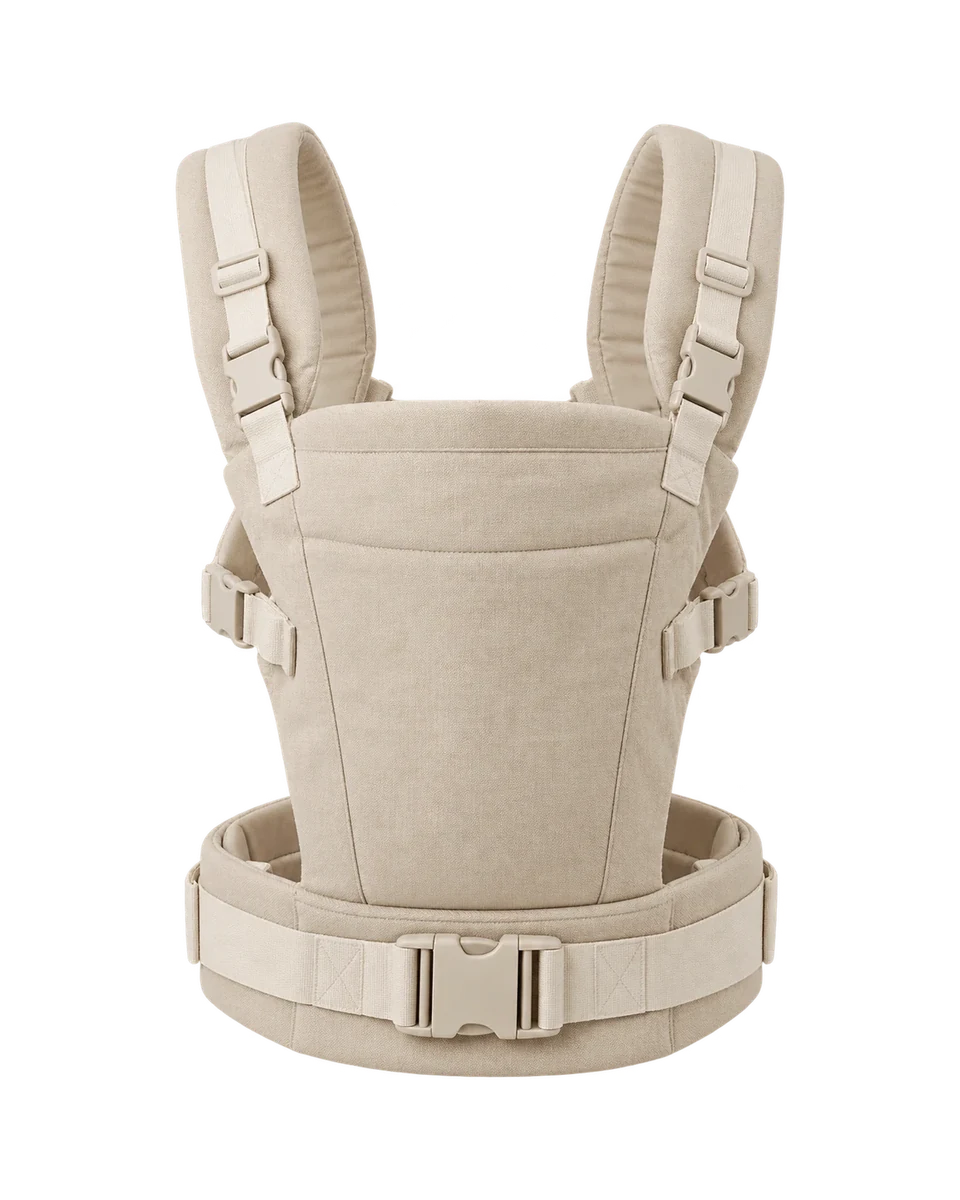
A carrier holds your baby upright against your chest, tummy to tummy, with the knees bent up and spread around your body. An older baby can ride on your hip or your back. In the UK, any carrier is often just called a sling.
Not every family needs one, because a stroller does most walks. A carrier helps where a stroller gets stuck: stairs, buses, busy sidewalks and forest paths. It also helps with a baby who only settles when held, and when an older child needs your other hand. Some babies who cry in the stroller fall quiet in a carrier.
- For ages0–3years
- You'll need1
- Use itAll year
Types of baby carrier
Wraps and slings are cloth you tie or thread through rings. Buckle carriers have a padded panel (the part that holds your baby's back), a waist belt and straps that click shut. For a newborn, start with a stretchy wrap if you'll carry a lot in the first months, or a buckle carrier made to fit from birth if you want one carrier you can both use for years.

Stretchy wrap
One long piece of soft T-shirt fabric (jersey) that you tie on first, then slip your baby into. It stretches, so it's at its best in the first months, while your baby is light.
- Good: Holds a newborn snug and close
- Good: Soft, with no buckles
- Not good: Front carries only
- Not good: Three layers run warm in summer
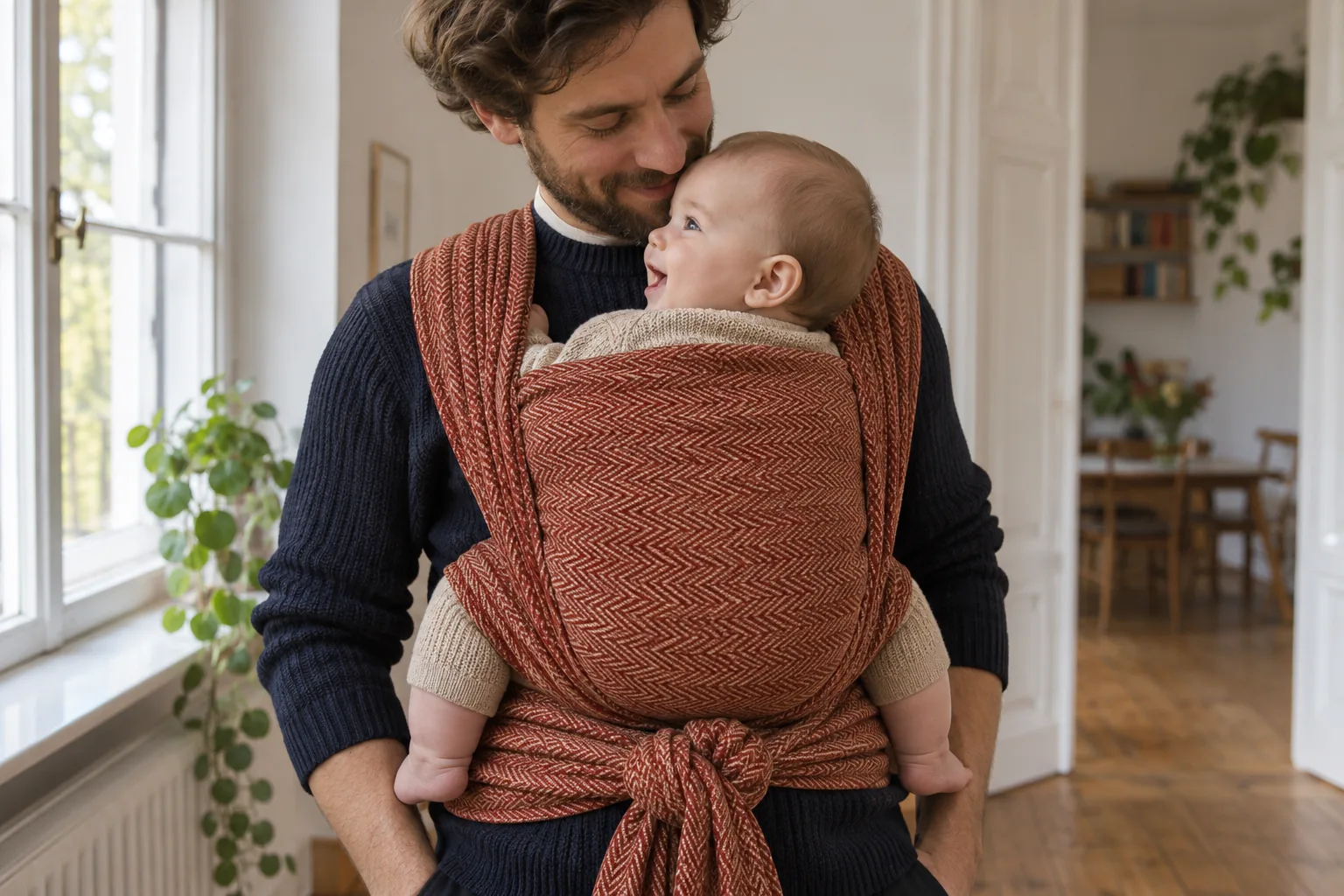
Woven wrap
A longer, firm cloth that you tie around you and your baby every time. It comes in lengths to suit your size, and lasts from birth to the toddler years.
- Good: Front, hip and back carries
- Good: Weight spread over your back
- Not good: Takes practice to tie well

Ring sling
A cloth over one shoulder, threaded through two rings and tightened by pulling its loose end. It holds a newborn upright on your chest and, later, a baby on your hip.
- Good: On and off in seconds
- Good: Folds small into a bag
- Not good: All the weight on one shoulder
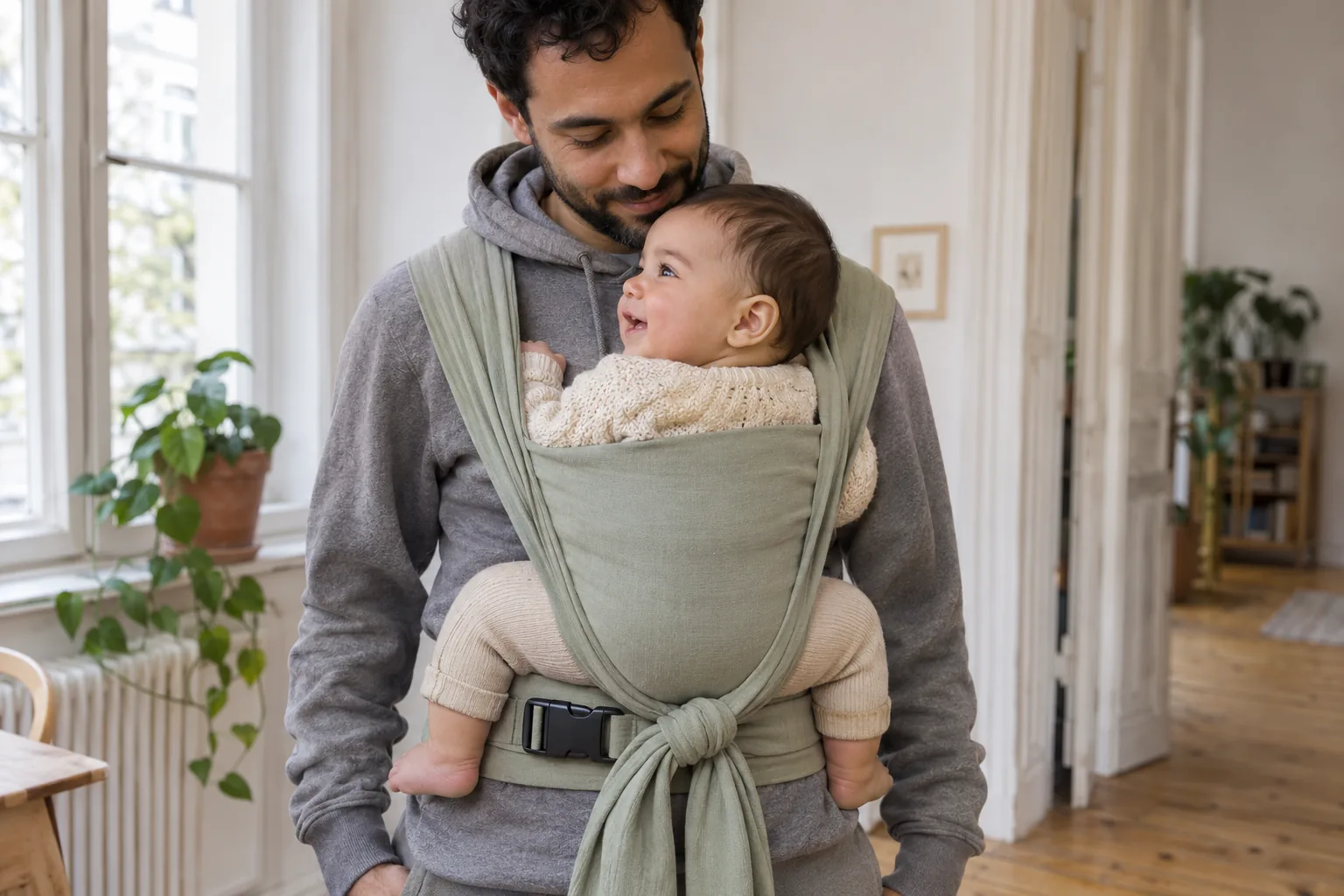
Half buckle
A soft panel with a buckled waist belt and long shoulder straps that you tie. A mei tai is the same with ties at the waist too.
- Good: Ties fit tall and short parents
- Good: Softer than a buckle carrier
- Not good: Straps take a minute to tie
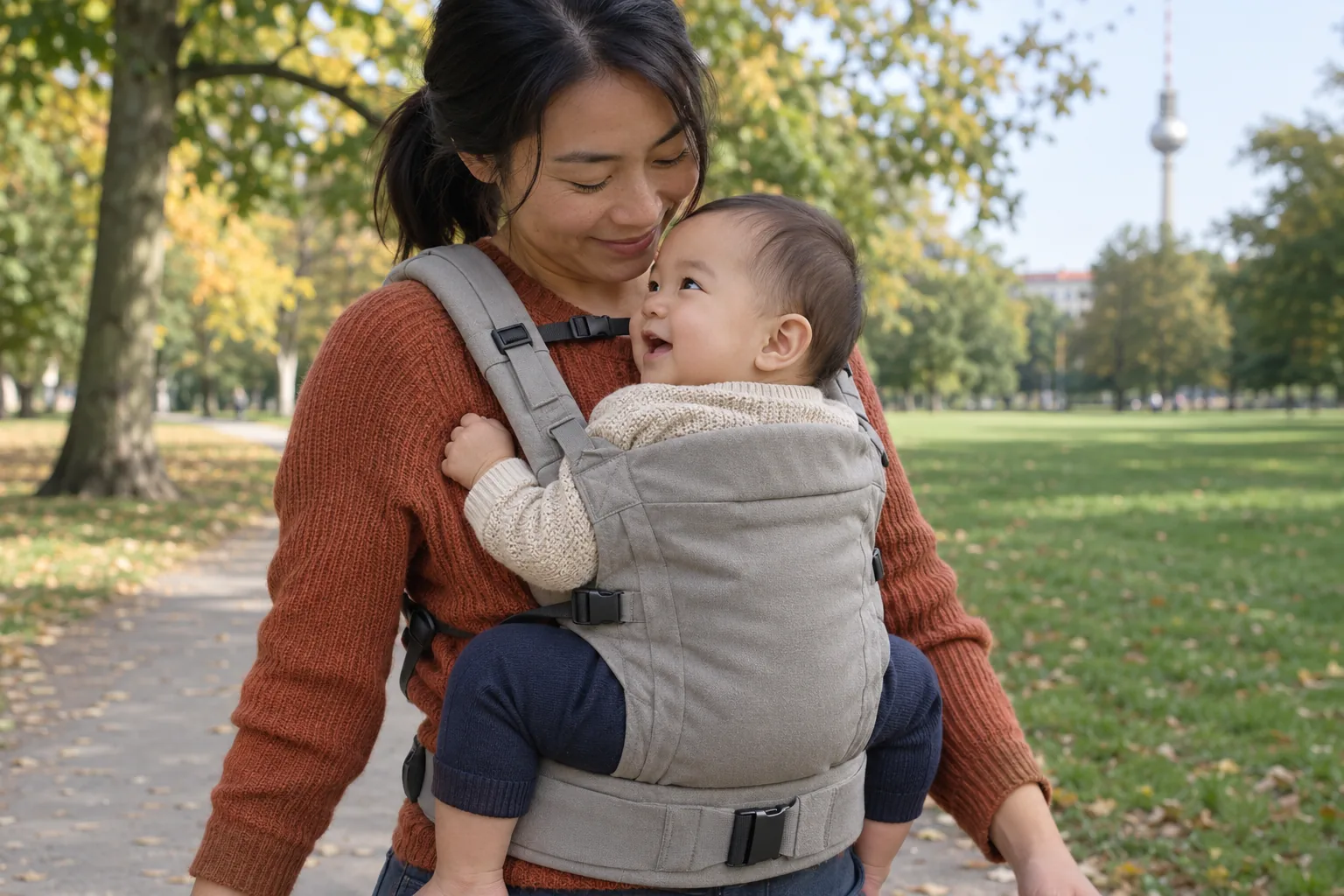
Buckle carrier
A padded panel with a waist belt and shoulder straps that click shut. US shops also call it a soft structured carrier, or just a soft carrier.
- Good: Quickest to put on
- Good: Easy to share between parents
- Not good: Bulky to carry in a bag
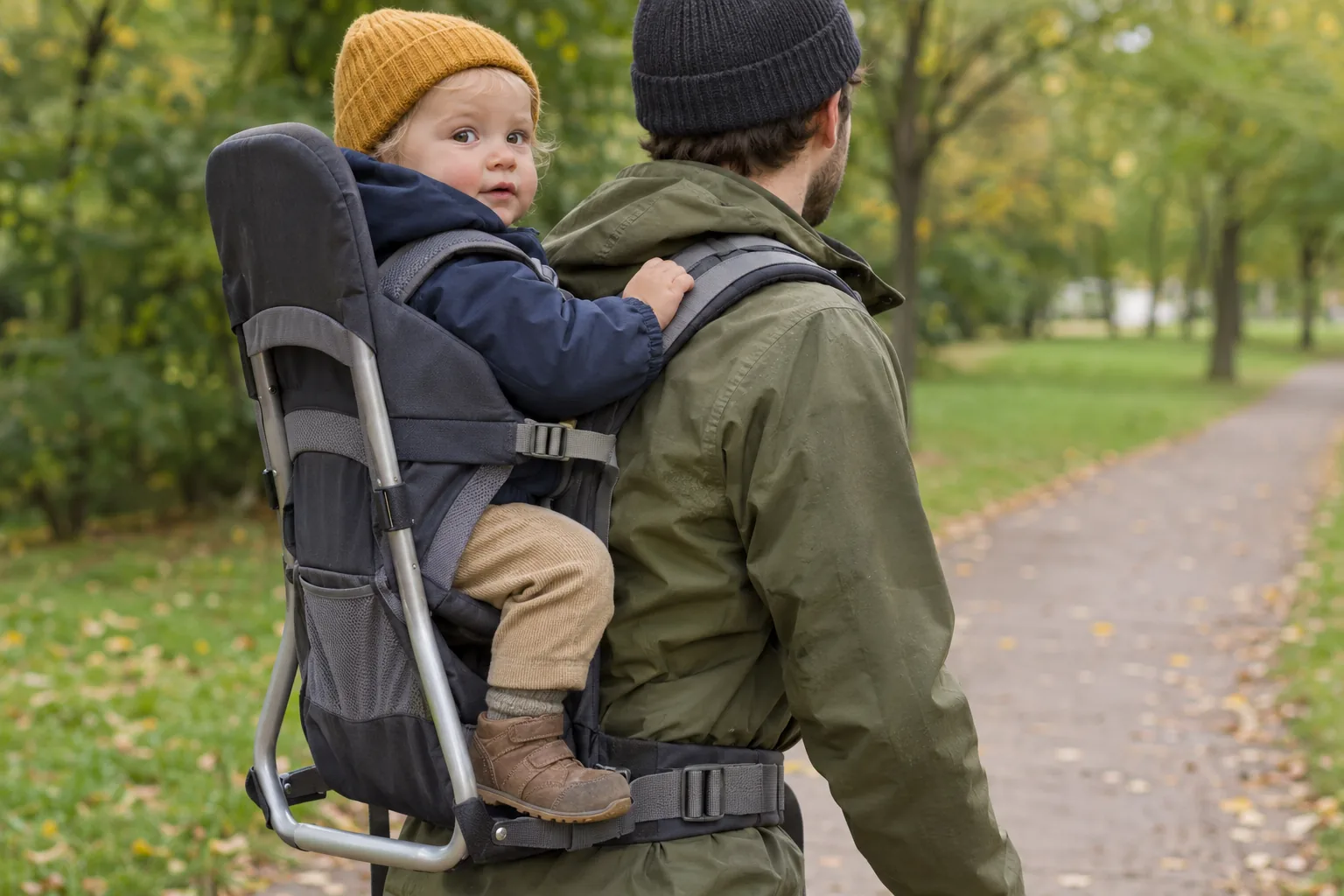
Framed backpack
A hiking pack with a light metal frame and a seat for a child who sits up well, made for long walks and trails.
- Good: Stands up while you lift your child in
- Good: Weight on a padded hip belt
- Not good: Too big for everyday errands
When can a baby face out in a carrier?
Every baby starts facing you, upright on your chest, because a young baby can't hold the head up yet and needs your body to rest it on.
Facing out comes at about 5 months, once your baby holds the head steady, and only in a carrier made for it. Keep it to short spells, and turn your baby back to face you for a nap, because facing out there's nothing to rest the head on.
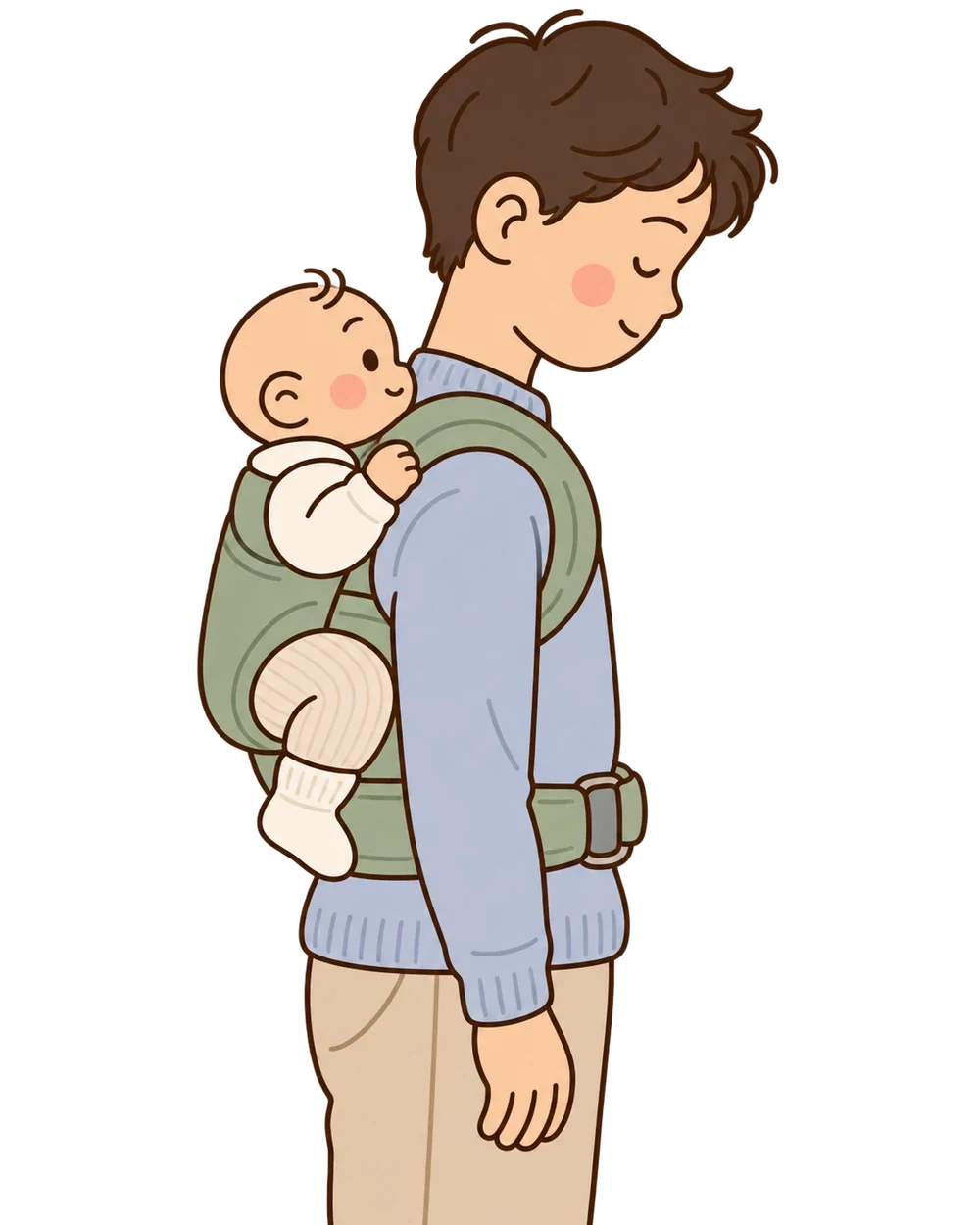
Hip and back carries start at about 6 months, once your baby sits up well: the hip in a ring sling, the back in a buckle carrier or a woven wrap. A stretchy wrap stays a front carrier. A framed hiking backpack needs a baby who sits without help and weighs at least 16 lb (7 kg). Each carrier's instructions give its own ages and weights, so check yours.
Carries by age
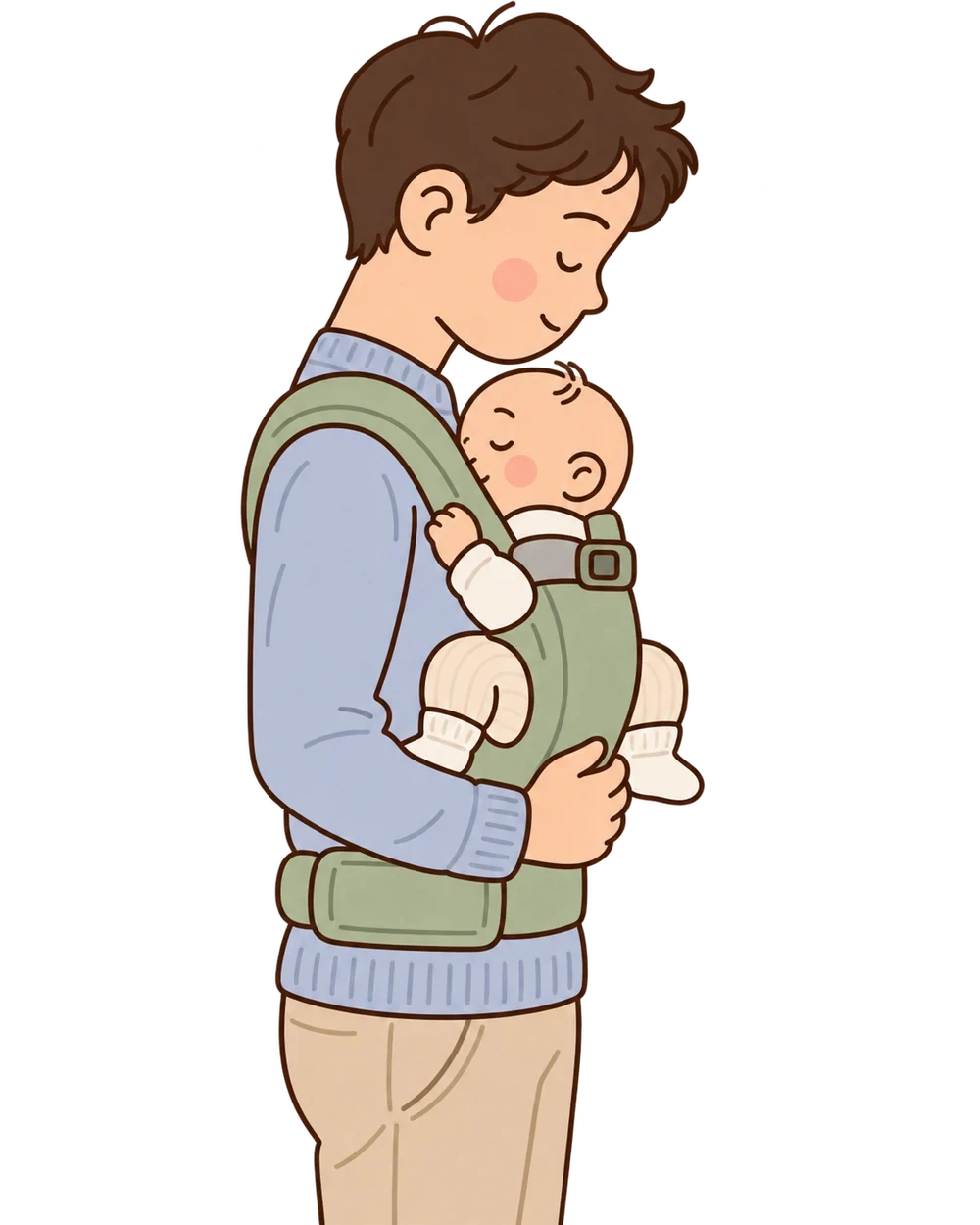
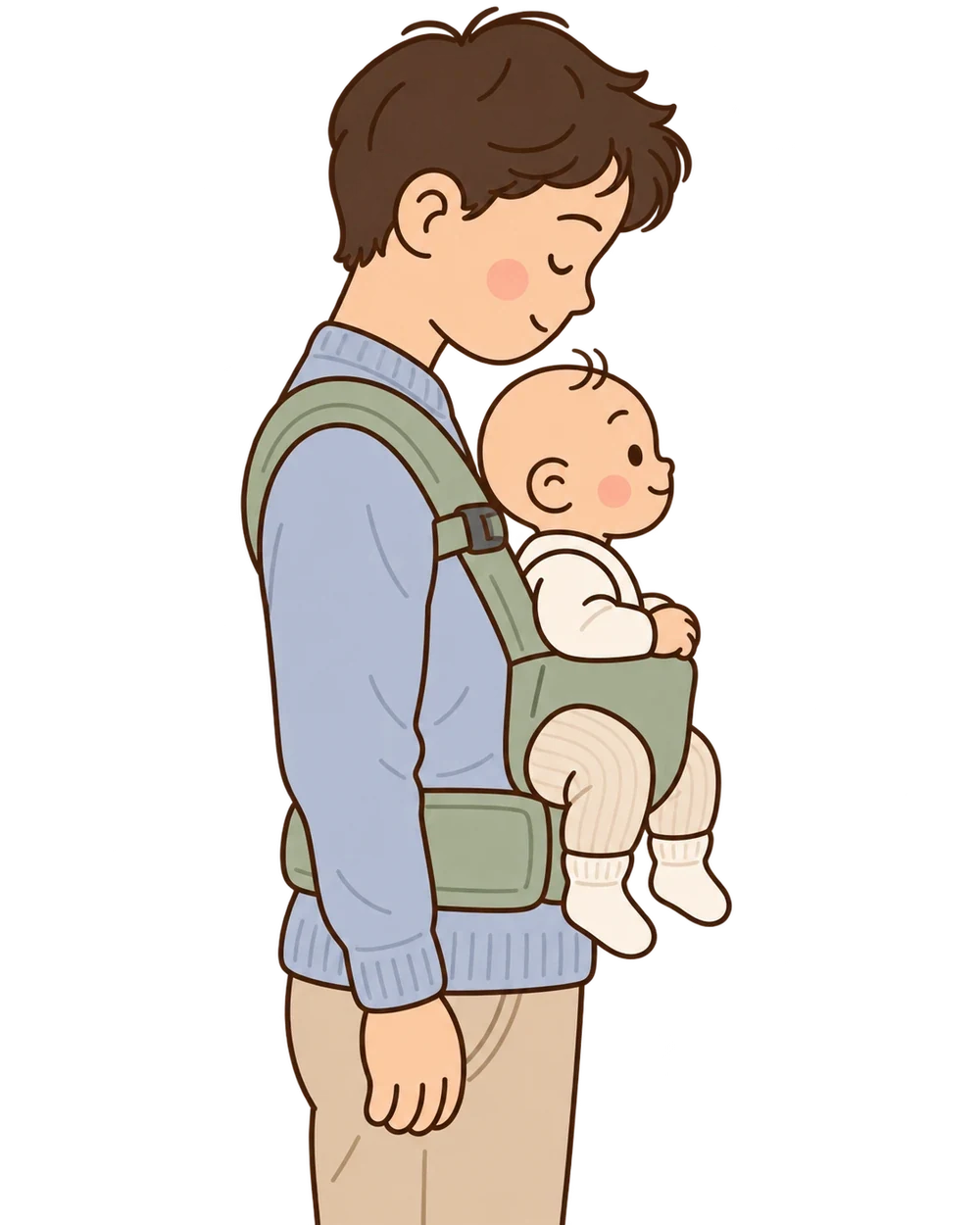
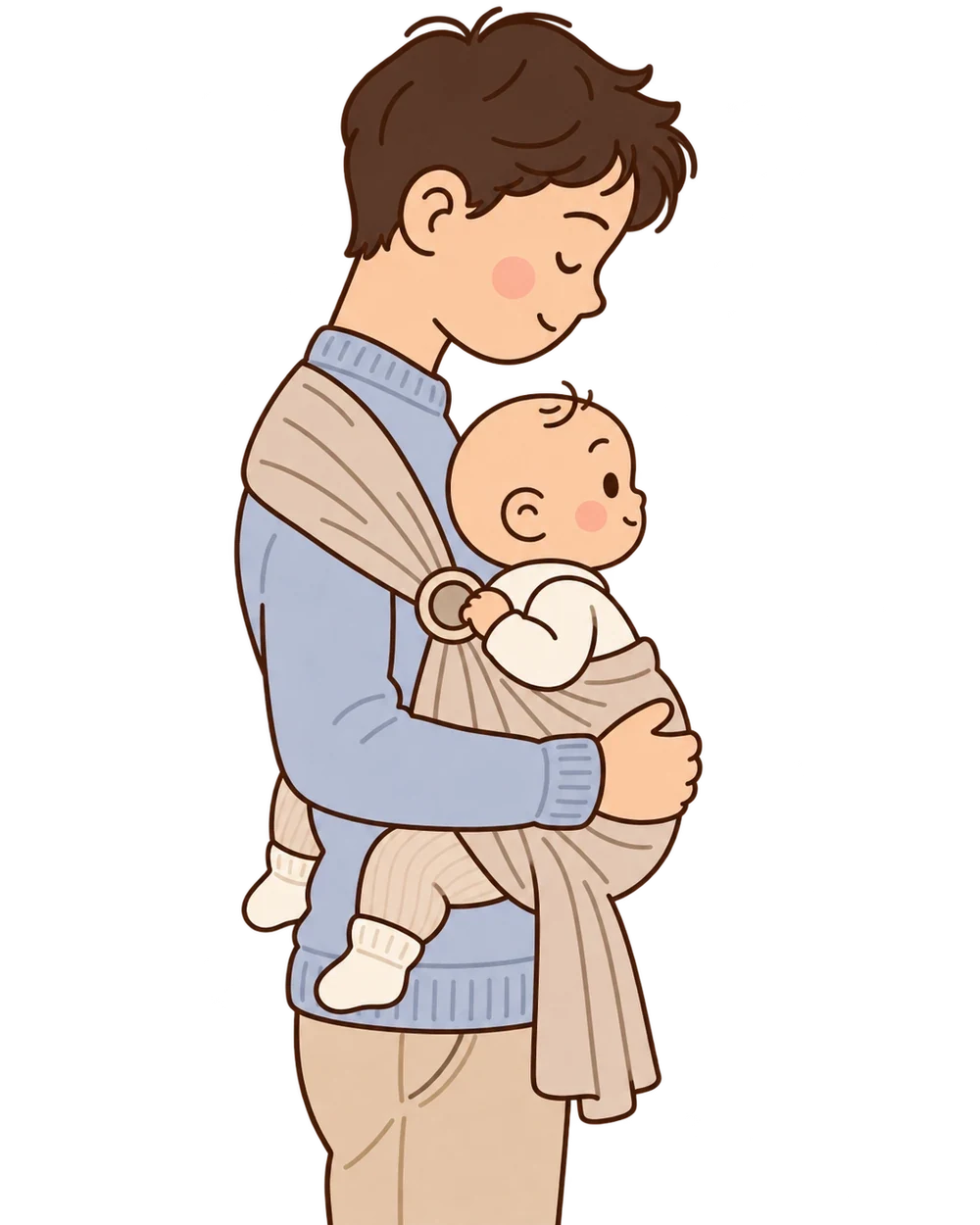
Upright on your chest
From birth
Tummy to tummy, high enough to kiss the top of the head.
Out, for short spells
5 monthswith a steady head
Your baby's back against your chest, looking out at the street. Turn your baby in for a nap.
Riding on your hip
6 monthssitting up well
Astride your hip, best in a ring sling. Your baby sees what you see and can turn in to you when it gets busy.
Riding on your back
6 monthssitting up well
Looking over your shoulder from a buckle carrier or a woven wrap. Easier on your body once your baby is heavy.
How to put on a baby carrier
A buckle carrier with a waist belt usually goes on like this, though each model differs a little, so follow its own instructions. A wrap or a ring sling takes practice: learn it from the maker's own video or at a sling library (a group that lends carriers and shows you how), and tie it at home before the first walk.
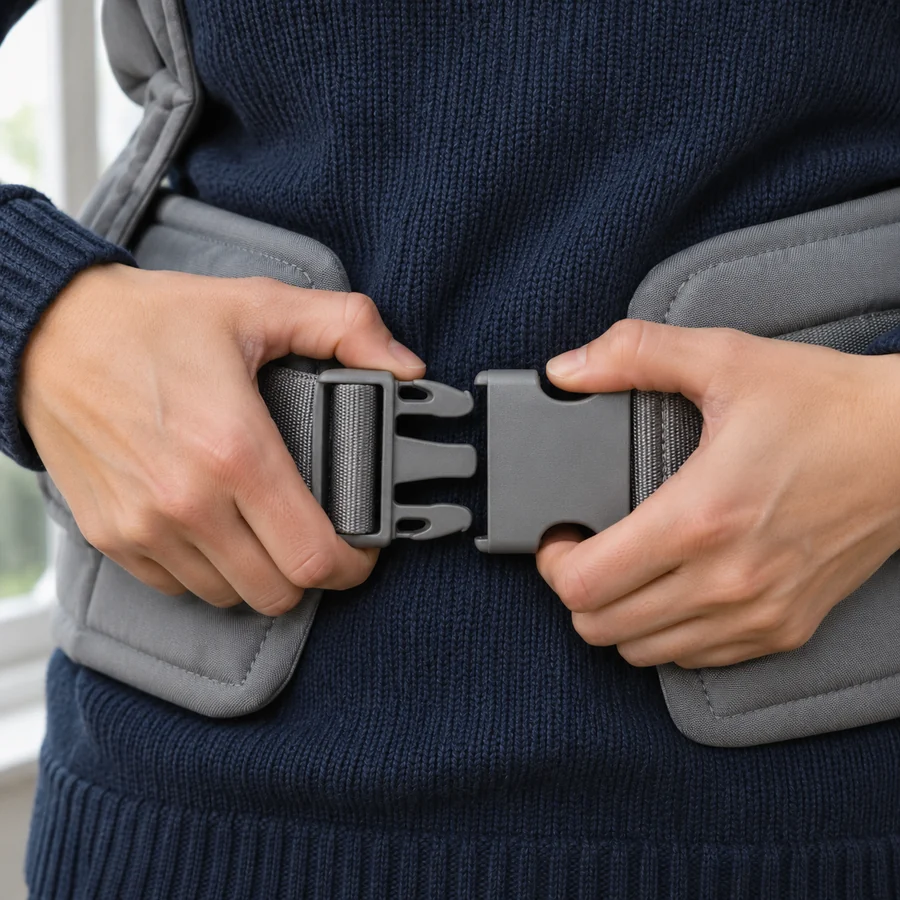
1. Belt at your waist
Buckle the waist belt snug at your waist, with the panel hanging down in front.
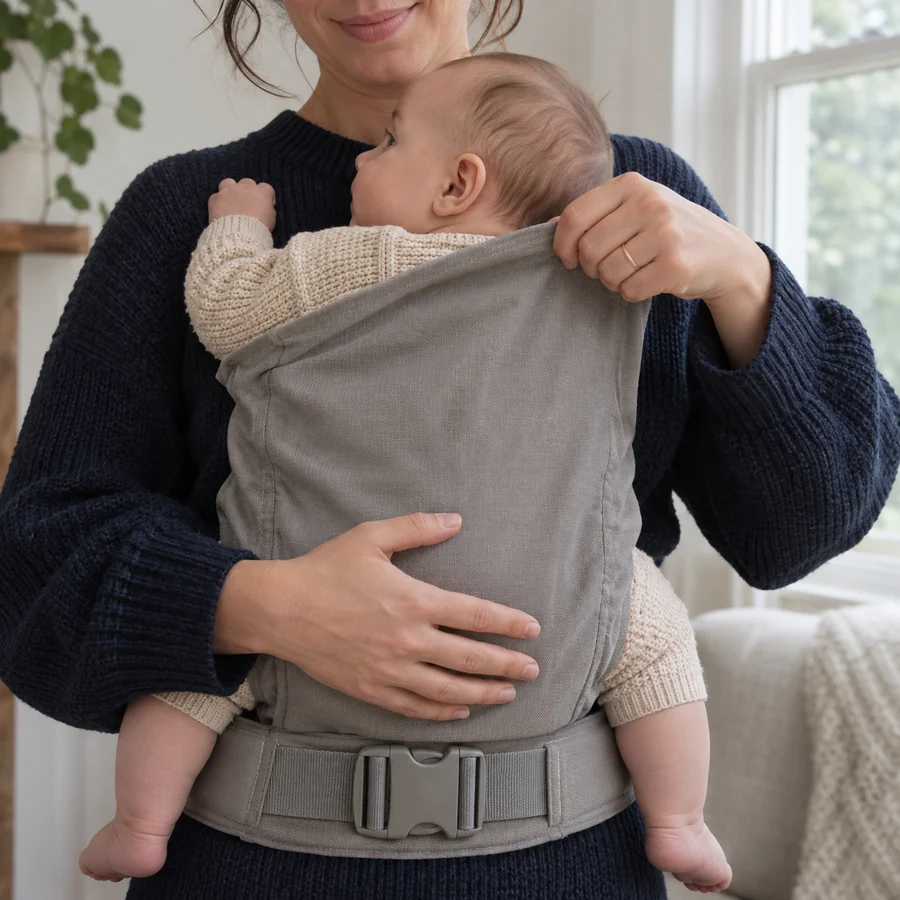
2. Baby on your chest
Hold your baby high against you, legs either side of the panel, and pull the panel up over your baby's back.
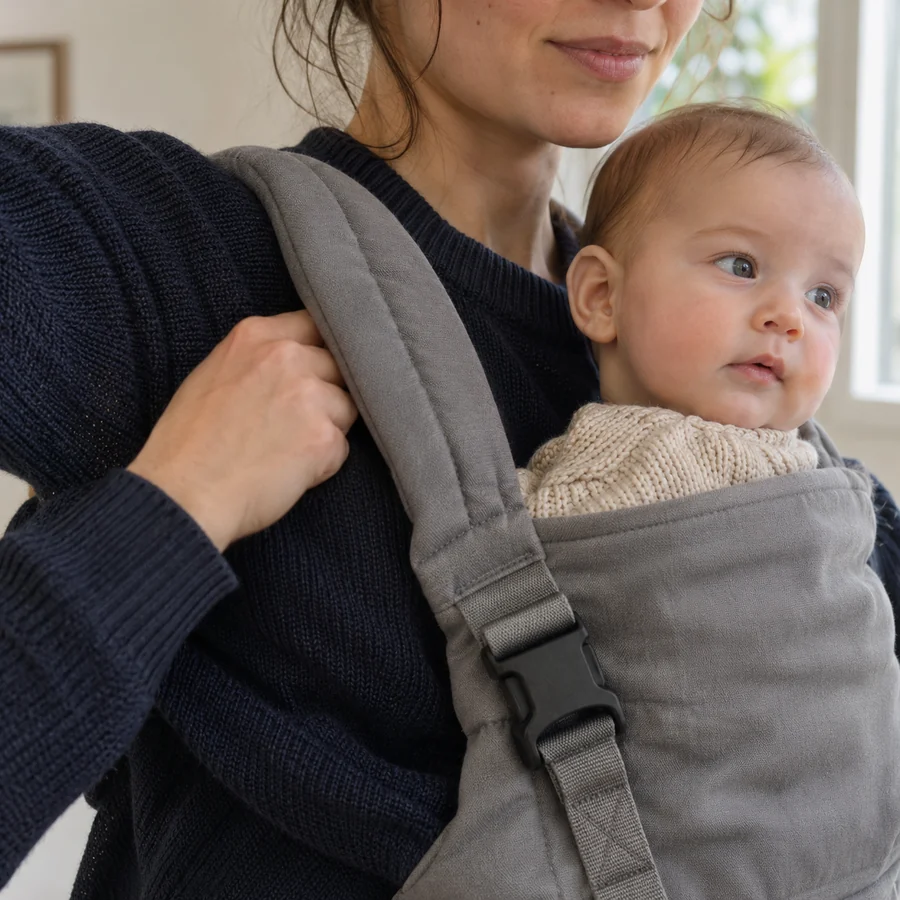
3. Straps on
Slip your arms through the shoulder straps, then clip the strap that joins them, behind your back or across your chest.
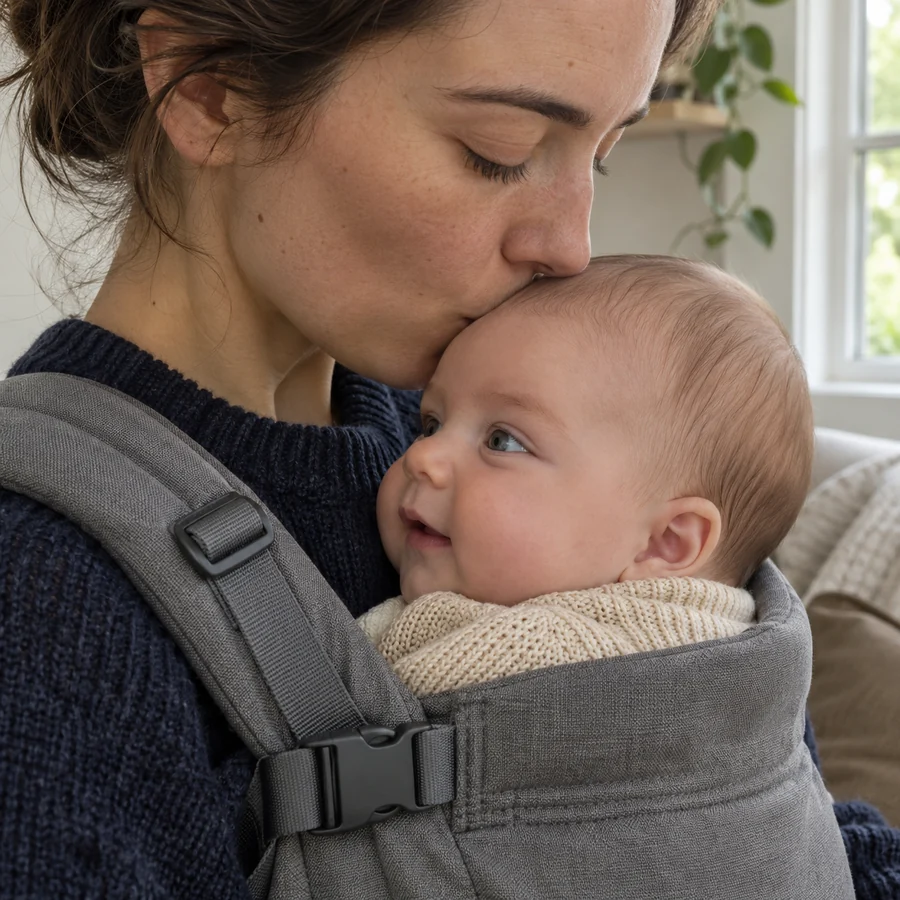
4. Tighten until you can kiss
Pull the strap ends until your baby sits high and snug, close enough to kiss on the top of the head.
How to wear a baby carrier safely
Check the same things every time. Your baby sits high enough to kiss on the top of the head, and the whole face is in view when you glance down. A finger fits between the chin and the chest, and the back is straight and upright against you, not curled.
These checks matter most in the first 4 months. A young baby can't lift a head that has slumped forward, and a chin pressed onto the chest can block the airway, so glance down often as you walk.
If your baby was born early or small, or has a breathing problem or another health condition, ask your doctor before using a carrier. With your baby in the carrier, don't run, cycle, cook or drink anything hot, and bend at the knees, not the waist, to pick something up.
Not good: Low and loose
The straps are slack, so your baby slumps down toward your waist and the chin drops onto the chest.
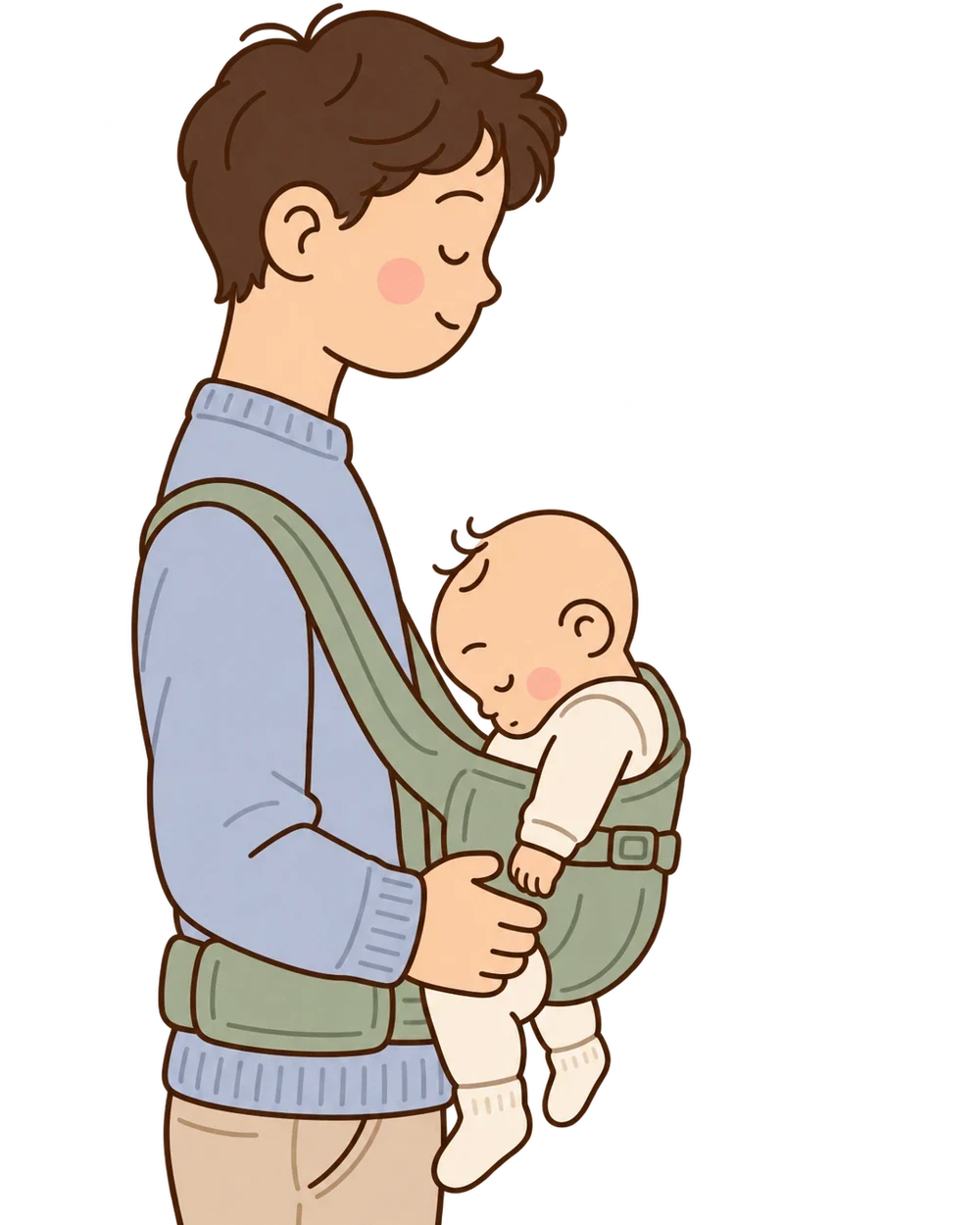 Too far down to kissChin on the chestLegs hang straight down
Good: High and snug
The carrier hugs your baby close and upright, the face turned to the side and in view when you glance down.
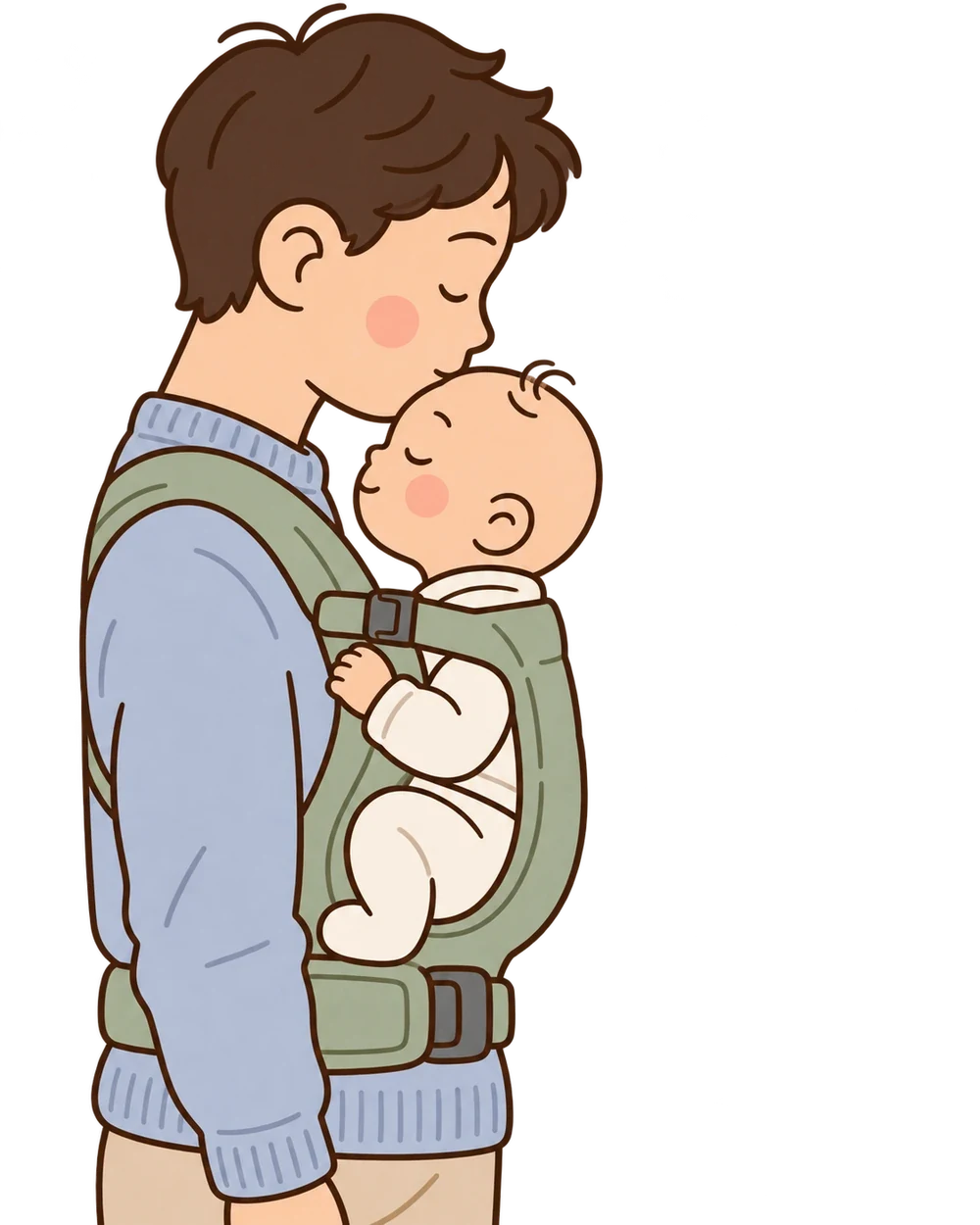 Close enough to kiss1 fingerfits under the chinKnees above the bottom
Is a baby carrier bad for the hips?
Not when it holds the legs the right way. In the first months a baby's hip joints are soft, and they do best spread around your body, with the thighs held all the way to the knees and the knees a little higher than the bottom. People call it the M position, after the shape of the legs. A wrap usually holds it well, and in a ring sling or a buckle carrier the seat should reach from one knee to the other.
For long carries in the first months, skip a narrow front pack, the kind where your baby hangs from a strip of fabric at the crotch with the legs dangling straight down. A short trip in one is unlikely to affect healthy hips, and after about 6 months the hips are much less at risk.
Not good: A narrow seat
Only a strip of fabric at the crotch holds your baby, and the legs hang straight down from it.
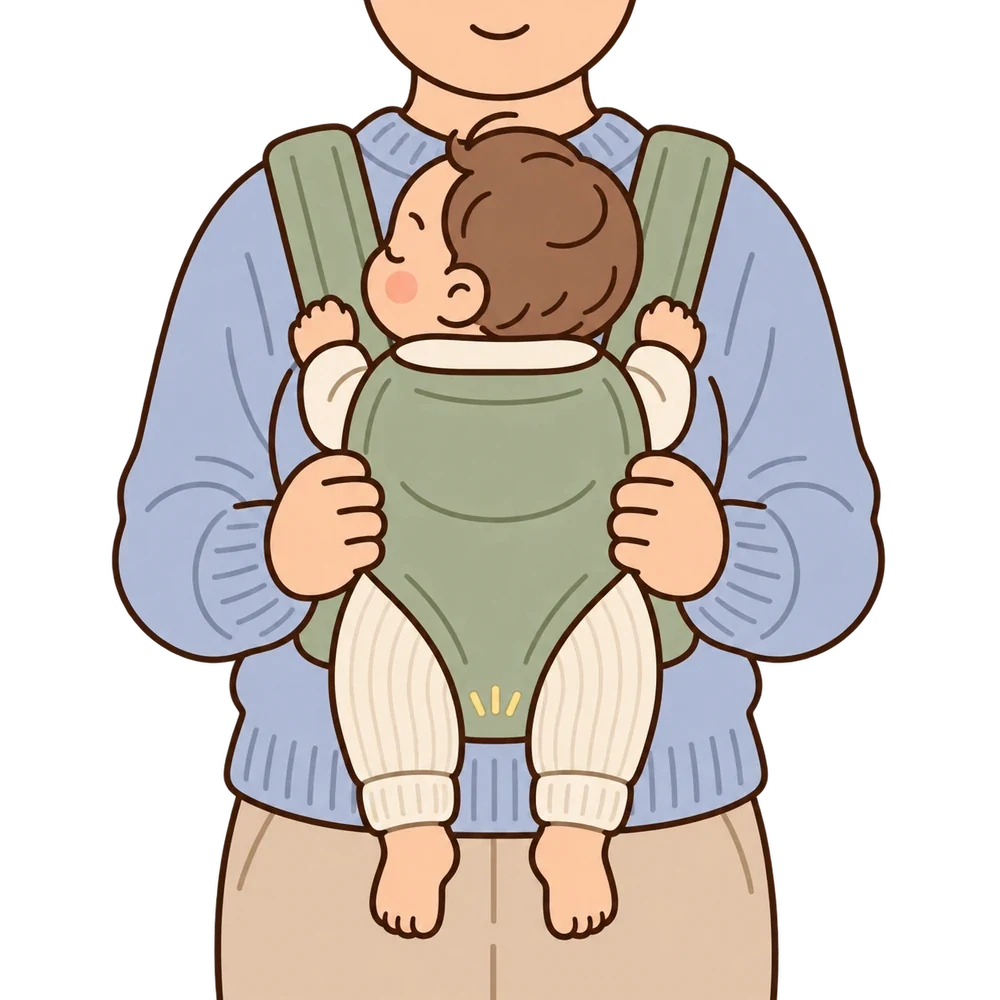 A strip at the crotchLegs hang straight down
Good: Seat from knee to knee
The seat holds the thighs all the way to the back of the knees, so the legs spread and the knees sit higher than the bottom.
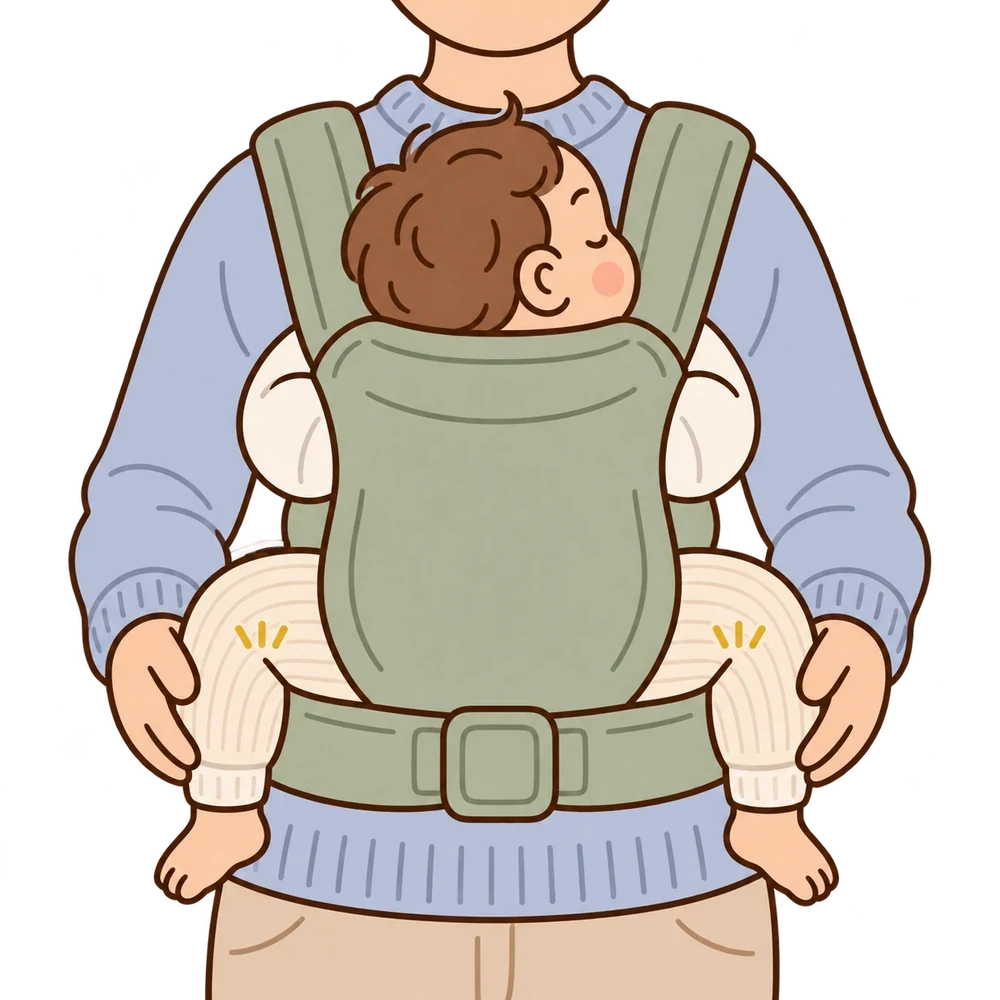 Seat ends at the back of the knee
How to choose a baby carrier
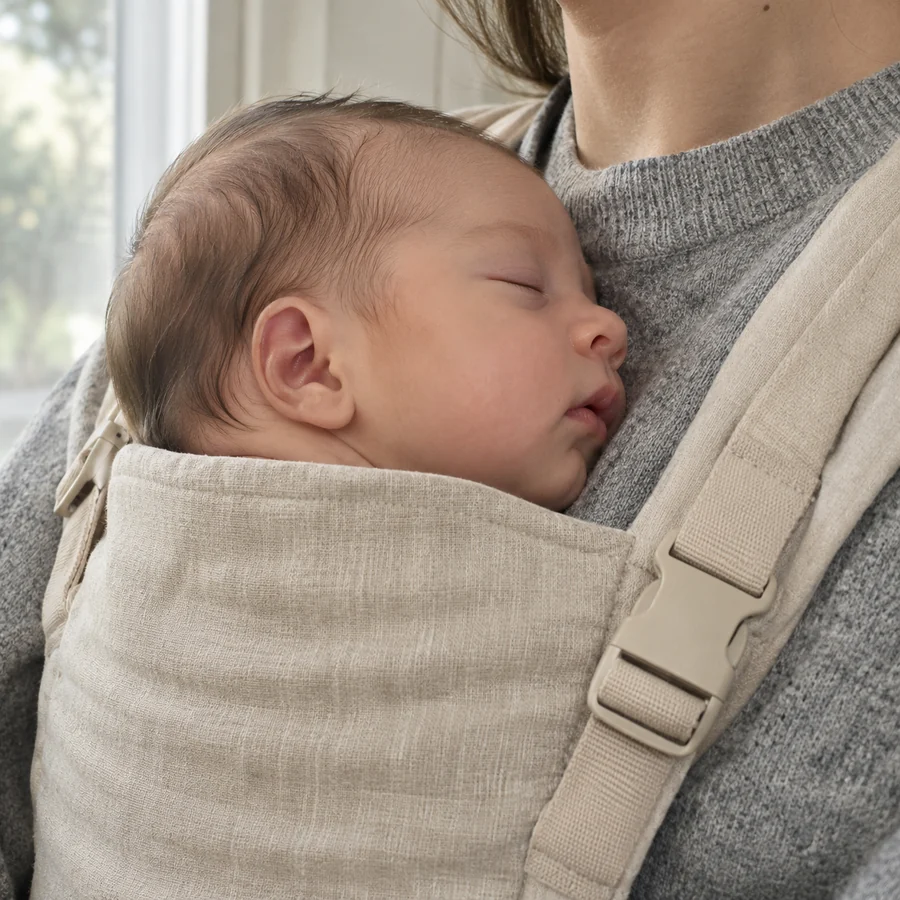
1. It fits your baby now
A newborn needs a carrier made to fit a newborn: a seat that narrows, or an insert (a cushion that lifts a small baby), and a panel up to the back of the neck. "From birth" on the box often means from 7 lb (3.2 kg), so a smaller baby waits a few weeks.
- Good: Your baby's weight on the label
- Good: Seat narrows for a small baby
- Not good: Fabric gapes around a newborn
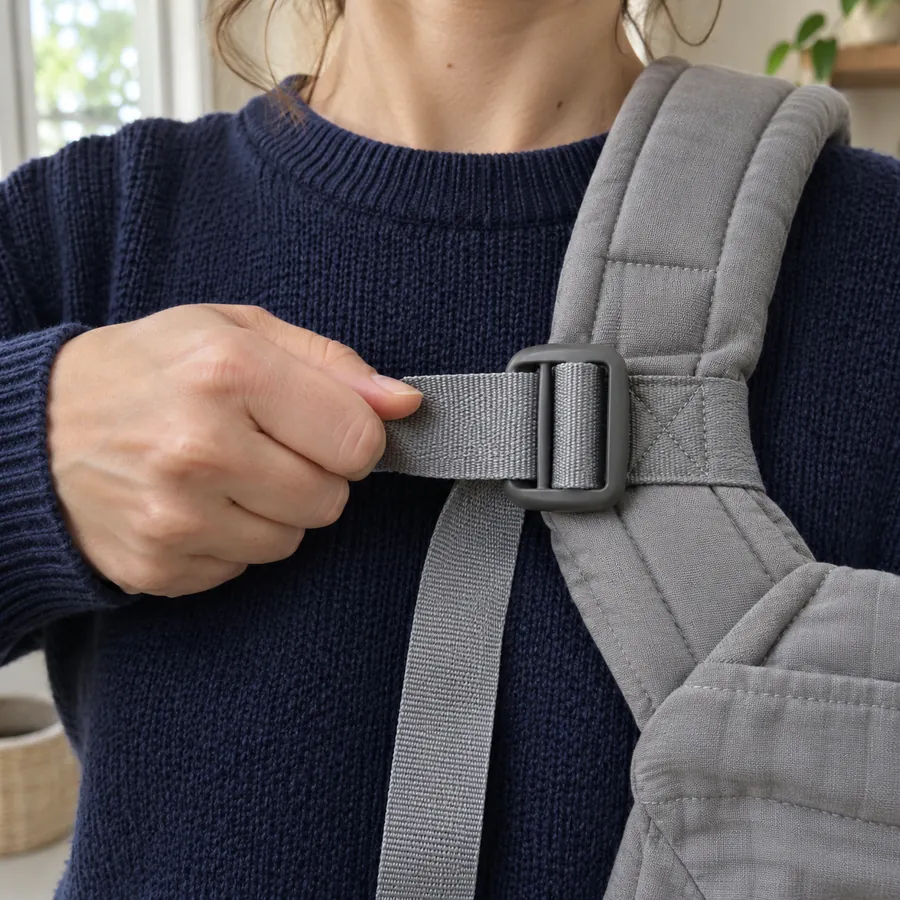
2. It fits whoever wears it
A carrier sits differently on a tall and a short parent, so try it on with your baby before you buy, together if you'll share it. A sling library or a babywearing consultant lends several to try.
- Good: Belt closes snug at your waist
- Good: Strap left over when it's tight
- Not good: Strap already as tight as it goes

3. Fabric for your season
Your body keeps your baby warm, and a stretchy wrap adds three layers of jersey around the back. For summer, a mesh panel or thin linen lets the air through.
- Good: Mesh panel or linen for summer
- Not good: Thick padding on a hot day
Questions parents ask
Is a baby carrier safe for a newborn?
Yes, in a carrier made to fit a newborn that lists your baby's weight on its label, worn with the checks above.
At what age can a baby go in a ring sling?
From birth, upright on your chest with the fabric pulled up to the back of the neck, once your baby weighs what the label asks, often 7 or 8 lb (3.2 or 3.6 kg). The hip carry comes later, once your baby sits up well.
Is a ring sling better than a wrap?
For short carries, yes: it goes on in seconds and your baby comes out just as fast. For long walks a wrap is easier on your body, because it spreads the weight over both shoulders instead of one.
Do I need more than one carrier?
One is enough if it fits a newborn and grows with your baby. A second one helps when the first doesn't: a soft wrap for the newborn weeks before a buckle carrier, or one carrier each when your bodies are very different.
How long can my baby stay in the carrier?
There's no fixed limit, as long as you're both comfortable. Take your baby out for feeds, and let your baby stretch out on the floor or in the stroller in between.
Can my baby sleep in the carrier?
Yes, and many babies do. A sleeping baby's head drops forward, so keep the chin off the chest and the face in view. Once you're home, move your baby to the crib, and don't doze off yourself with your baby in the carrier.
Can I feed my baby in the carrier?
It's safest to take your baby out to feed, most of all in the first 4 months, because a baby who feeds low in the carrier can end up with the face pressed against you. If you do feed in it, stay still with the face in view, and lift your baby back up high as soon as the feed ends.
Should I use a carrier or a stroller?
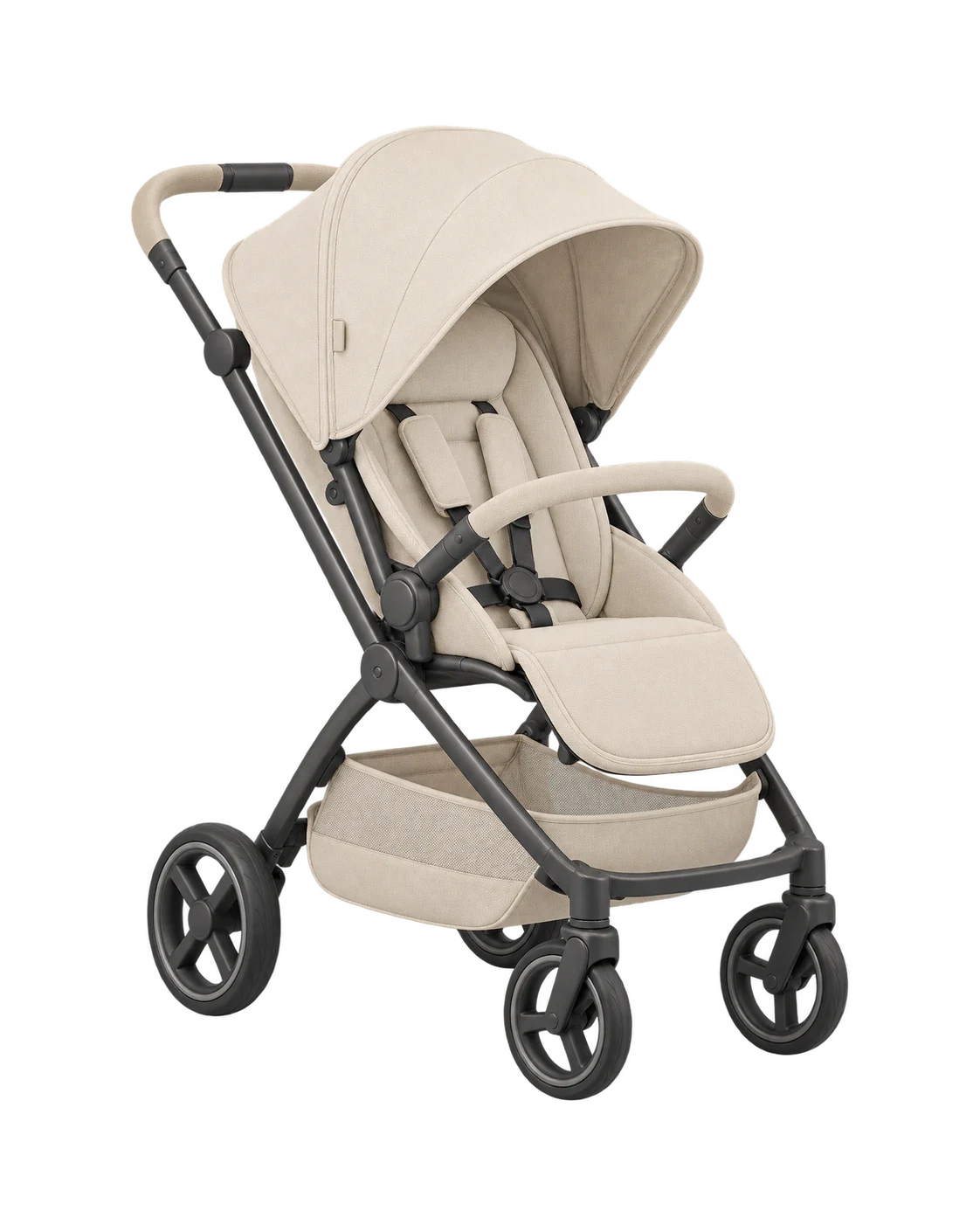
It depends on the day. A stroller carries the bags and lets your baby lie flat to sleep, so it suits a long walk on smooth paths. On a long day out, the carrier rides in the stroller basket for when your baby wants to be held.
Why does my back hurt in the carrier?
A carrier should spread your baby's weight over your shoulders, hips and back, and one that hangs low or loose can't. Tighten it until your baby is high enough to kiss, and close the waist belt firmly at your waist. If it still hurts, a sling library or a babywearing consultant can check the fit.
Why does my baby cry in the carrier?
Check the fit first: your baby sits high and snug, isn't too warm with your body heat added, and has room for the toes, because snug footed pajamas pull tight when the knees bend up. Then try again when your baby is fed and calm.
Can I buy a second-hand carrier?
Yes. Check the seams, straps and buckles for wear, and on a ring sling that the rings are solid and the fabric can't slip through them. If the instructions are missing, download them from the maker's website.
Do I need to wash a new carrier?
A new woven wrap is washed once before you first use it, which also softens it. A buckle carrier doesn't need a wash first.
Can I still carry my toddler?
Yes. Many buckle carriers and wraps go up to about 3 years, and toddler-size carriers have a wider, taller panel. A hip seat, a waist belt with a small shelf to sit on, suits a toddler who wants up and down.
What should my baby wear in a carrier?
Less than for the stroller, because your body keeps your baby warm. The outfit for each kind of weather is in dressing a baby for the carrier.