
What this is about
It's a chilly morning, the carrier is on, and you're wondering whether your baby needs a jacket in there. It feels wrong to go out without one when you're wearing a coat yourself.
In a carrier, though, your baby doesn't need one. Your body keeps your baby's chest and tummy warm, and the carrier adds its own layer of fabric. What gets cold are the parts that stick out: the legs, the feet and the head. So the extra warmth goes on those parts and over the outside of the carrier.
Baby in the carrier: how warm to dress?
Go by the feels-like temperature. On a windy morning, 10°C (50°F) can feel like 7°C (45°F), and your baby's legs and head are out in that wind.
28°C and warmer82°F
24–27°C75–81°F
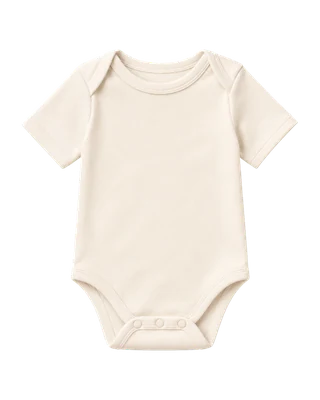
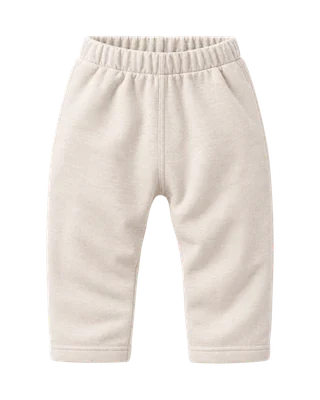
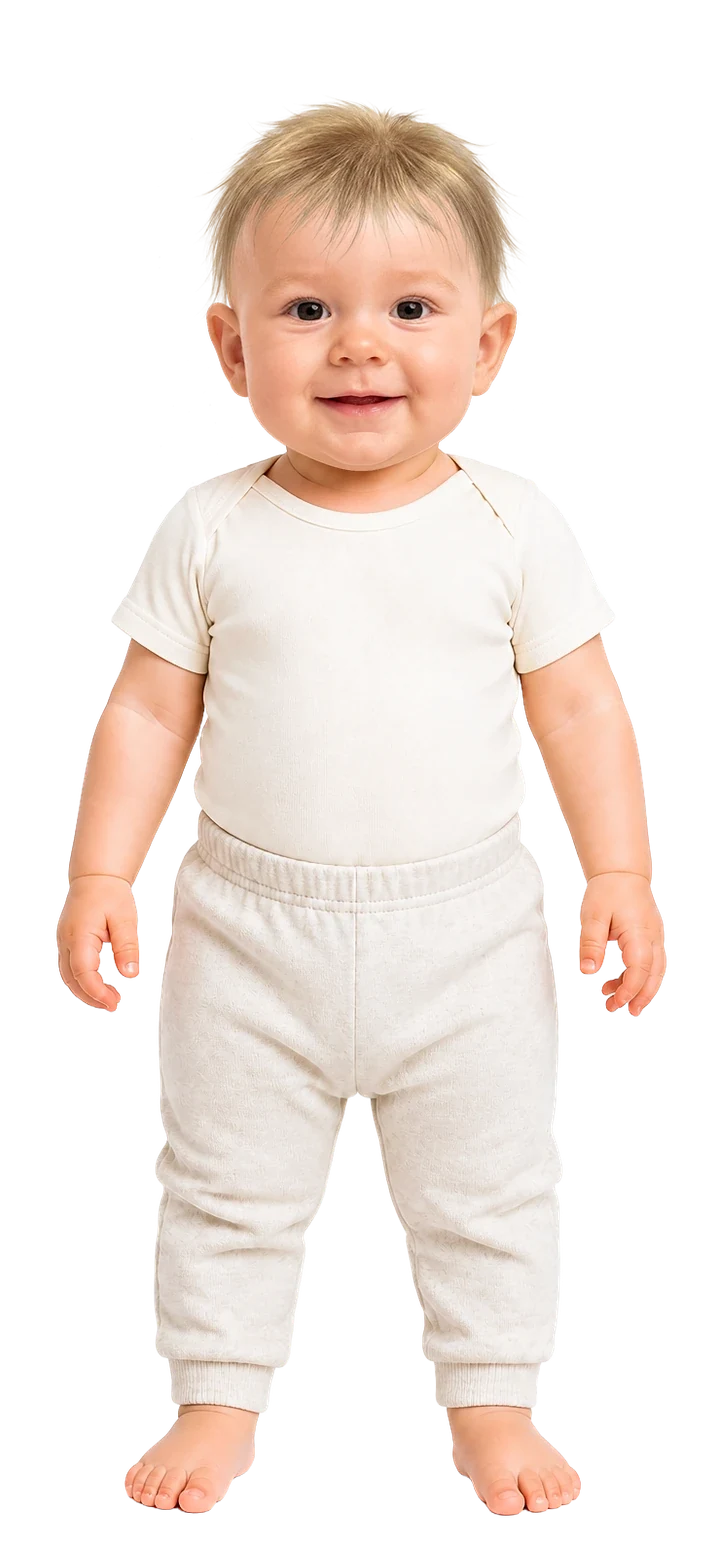
20–23°C68–73°F
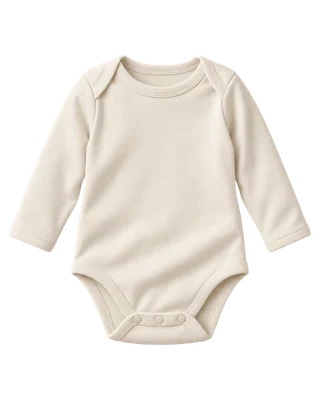
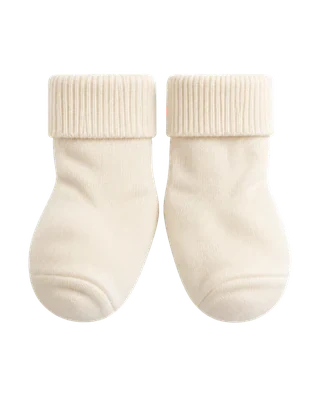
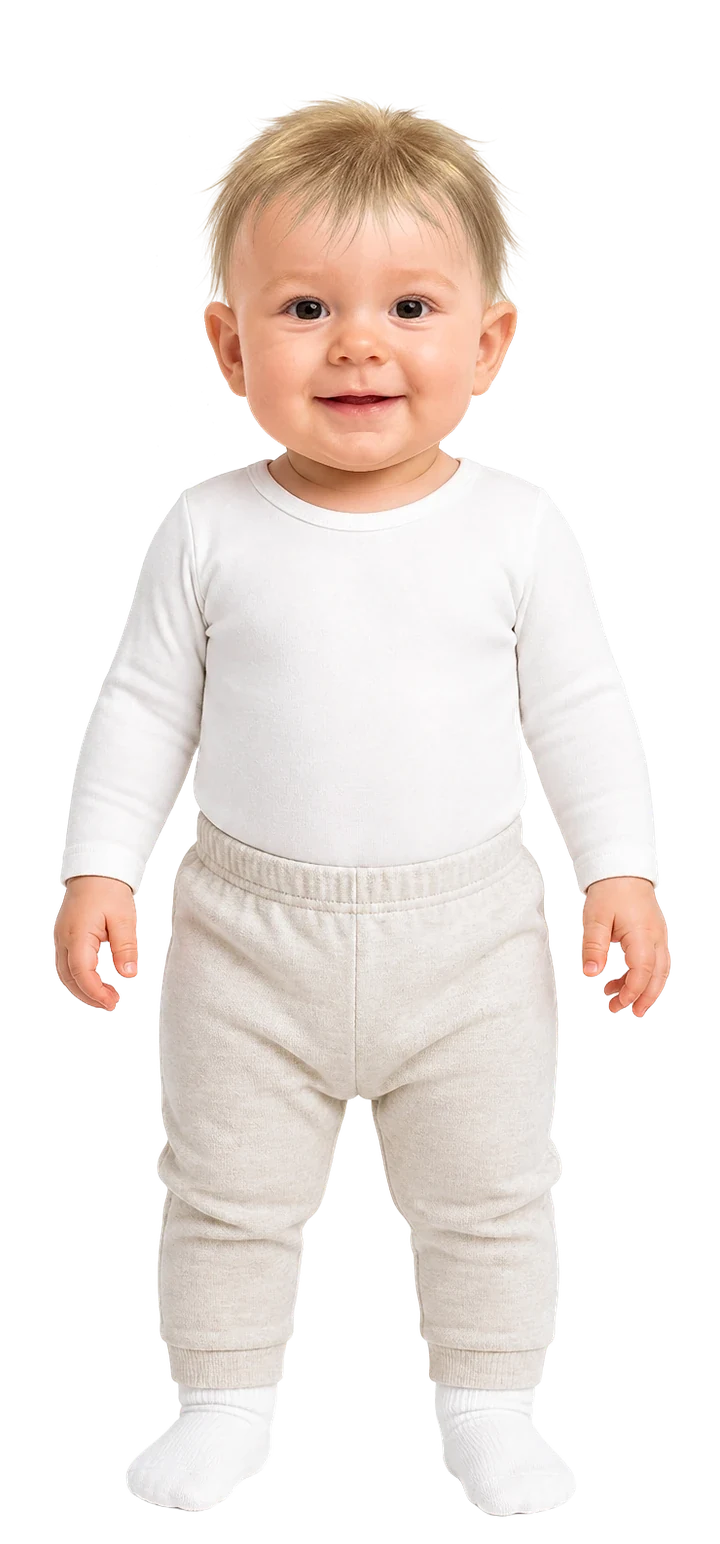
16–19°C61–66°F
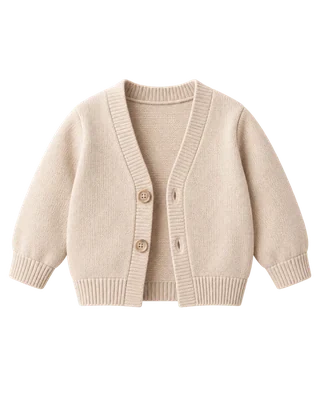
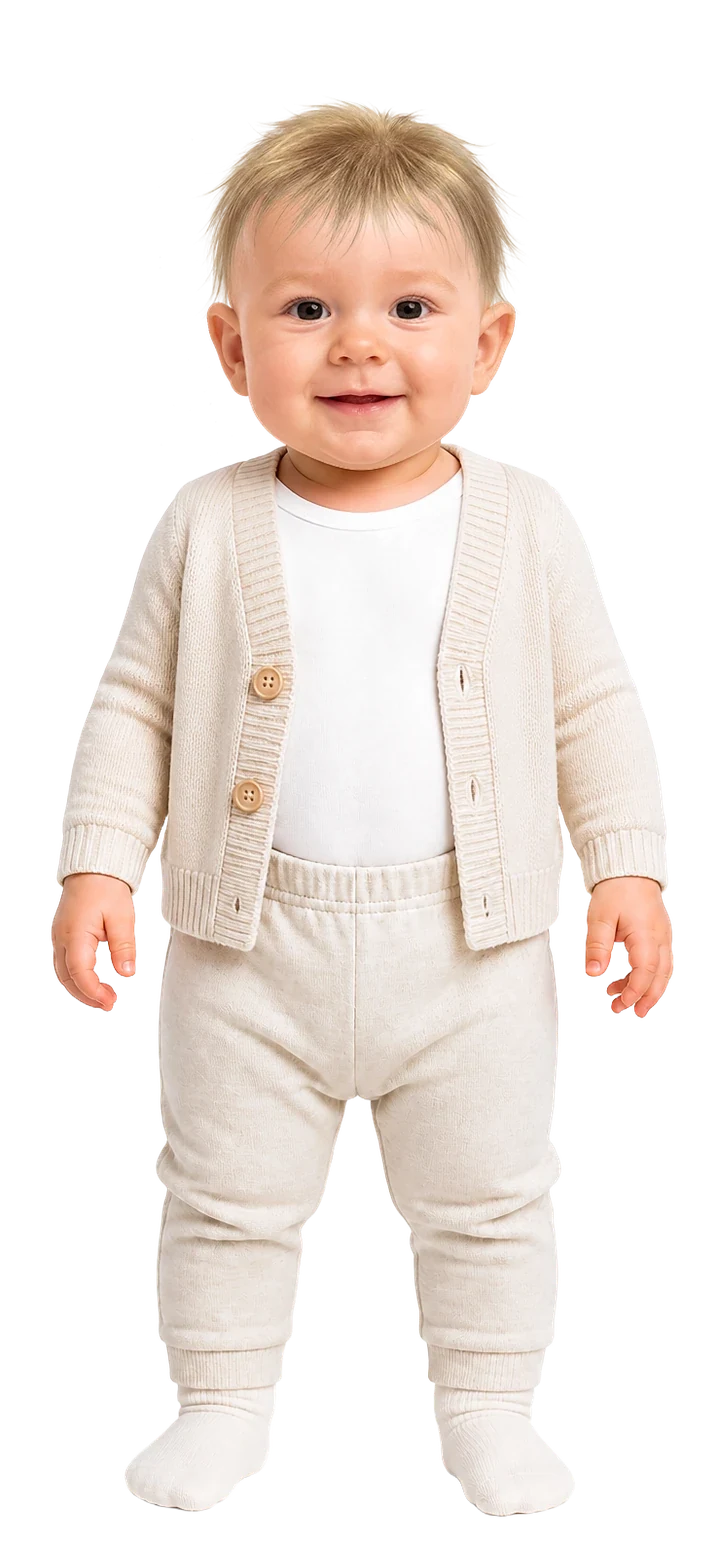
12–15°C54–59°F
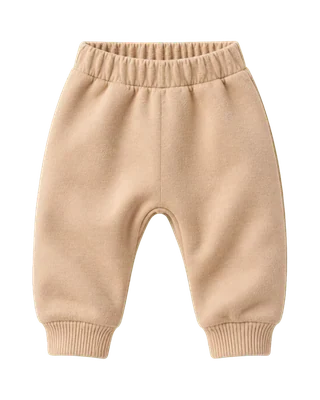
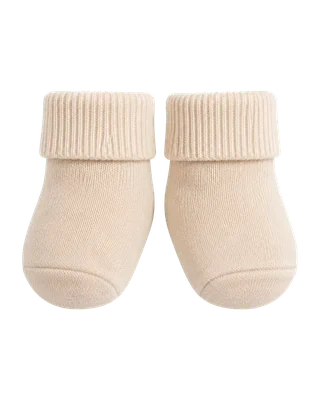
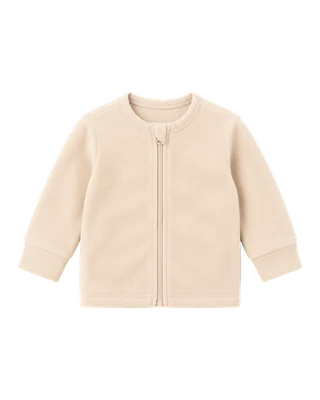
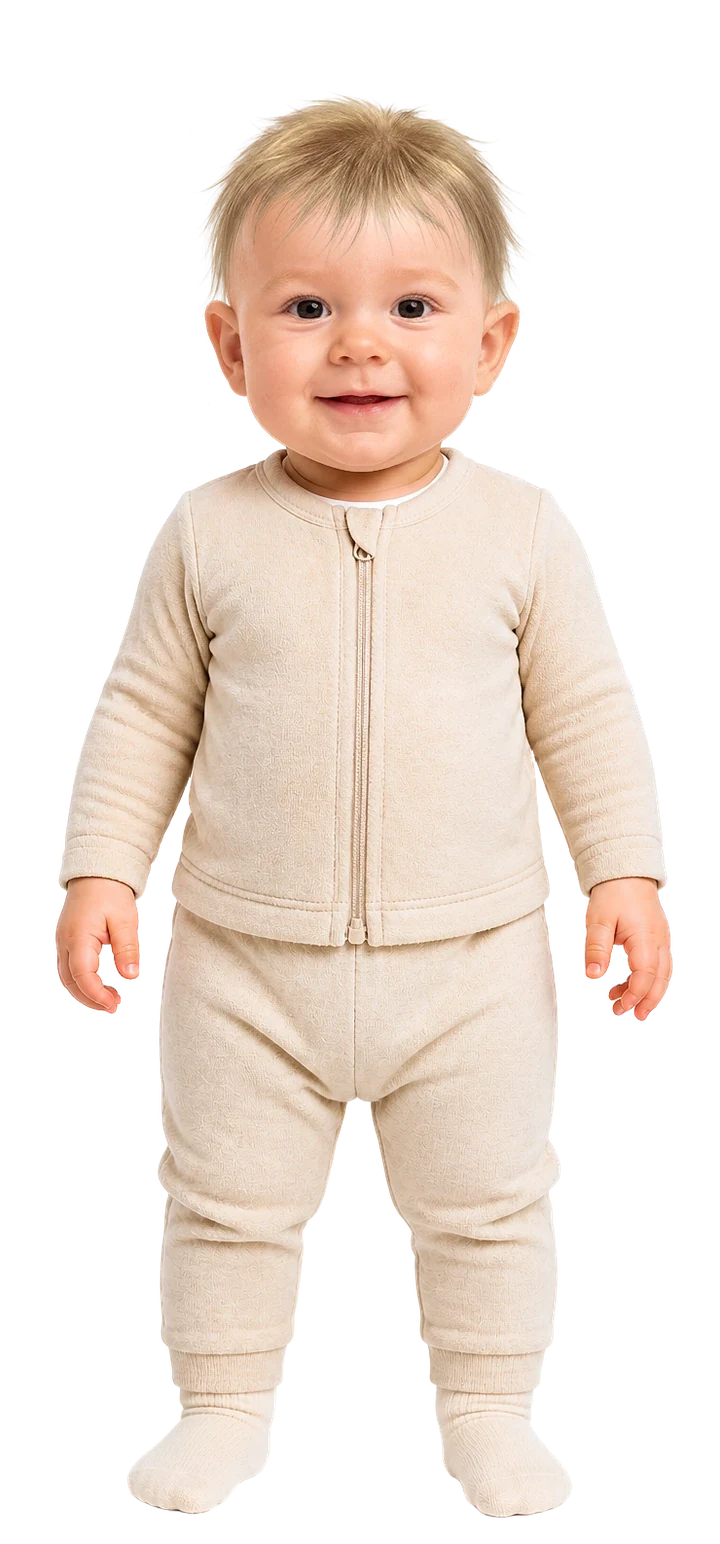
How to wear the carrier right
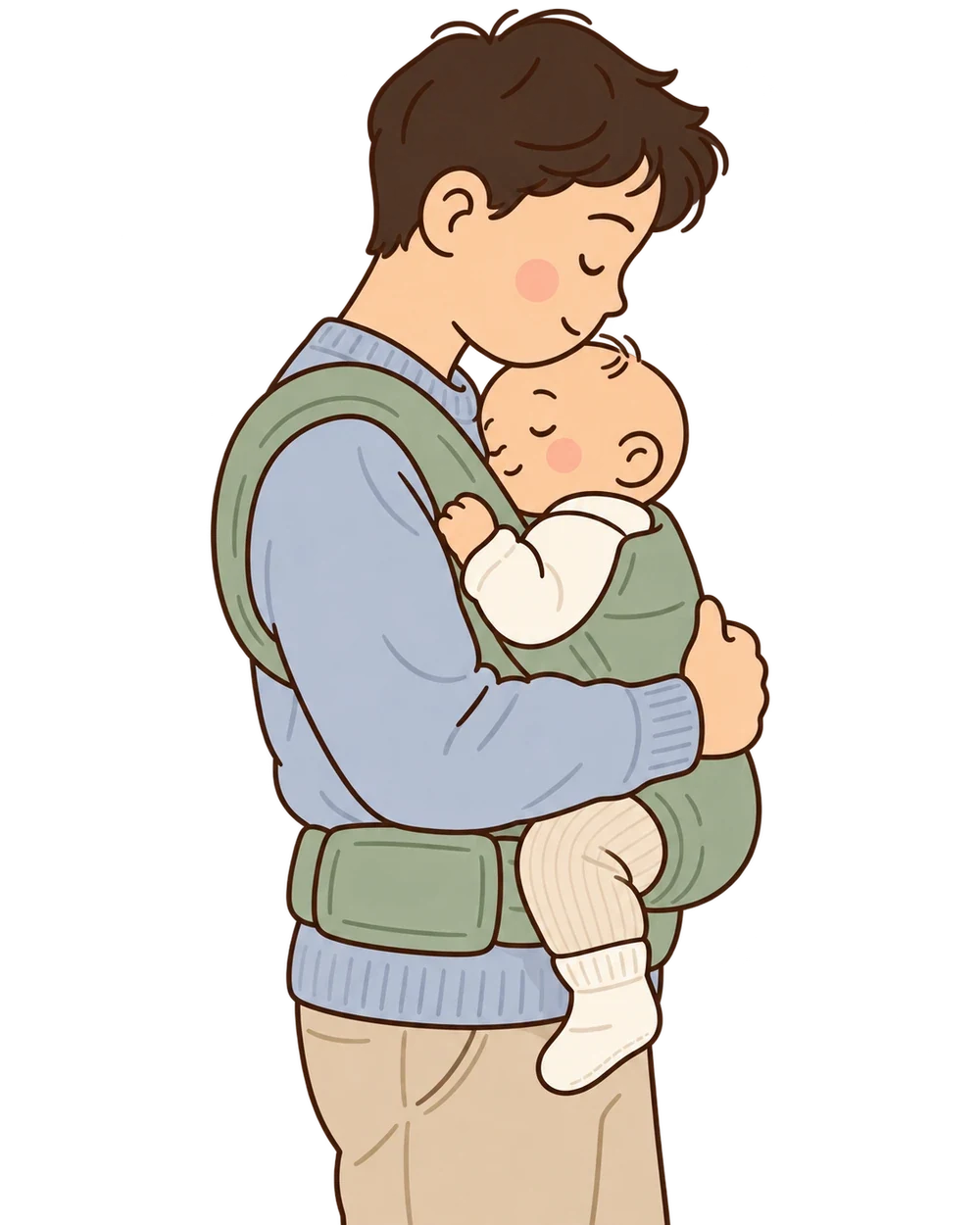

Your body's warmth
12–15°C 54–59°F
No jacket
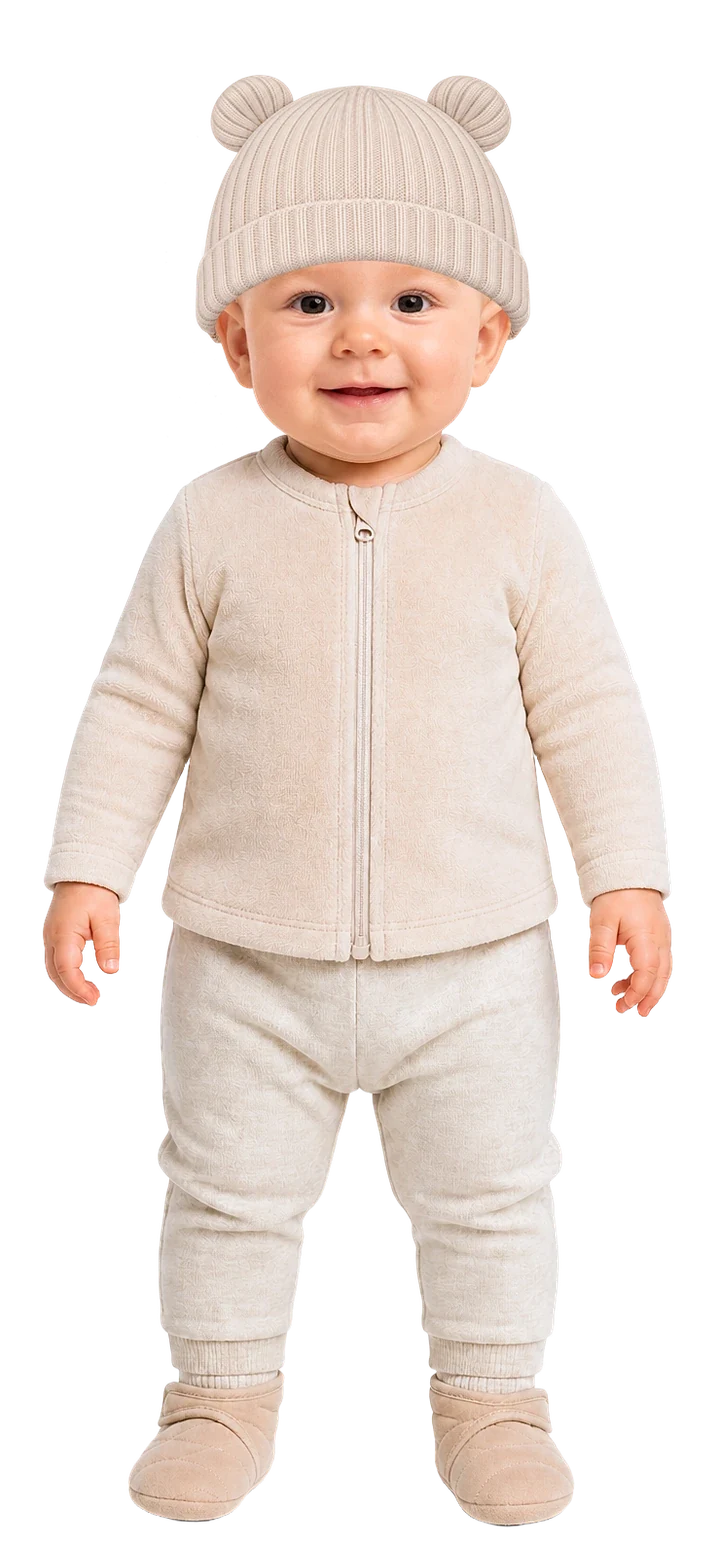
A thin fleece over the bodysuit, and no hat yet.
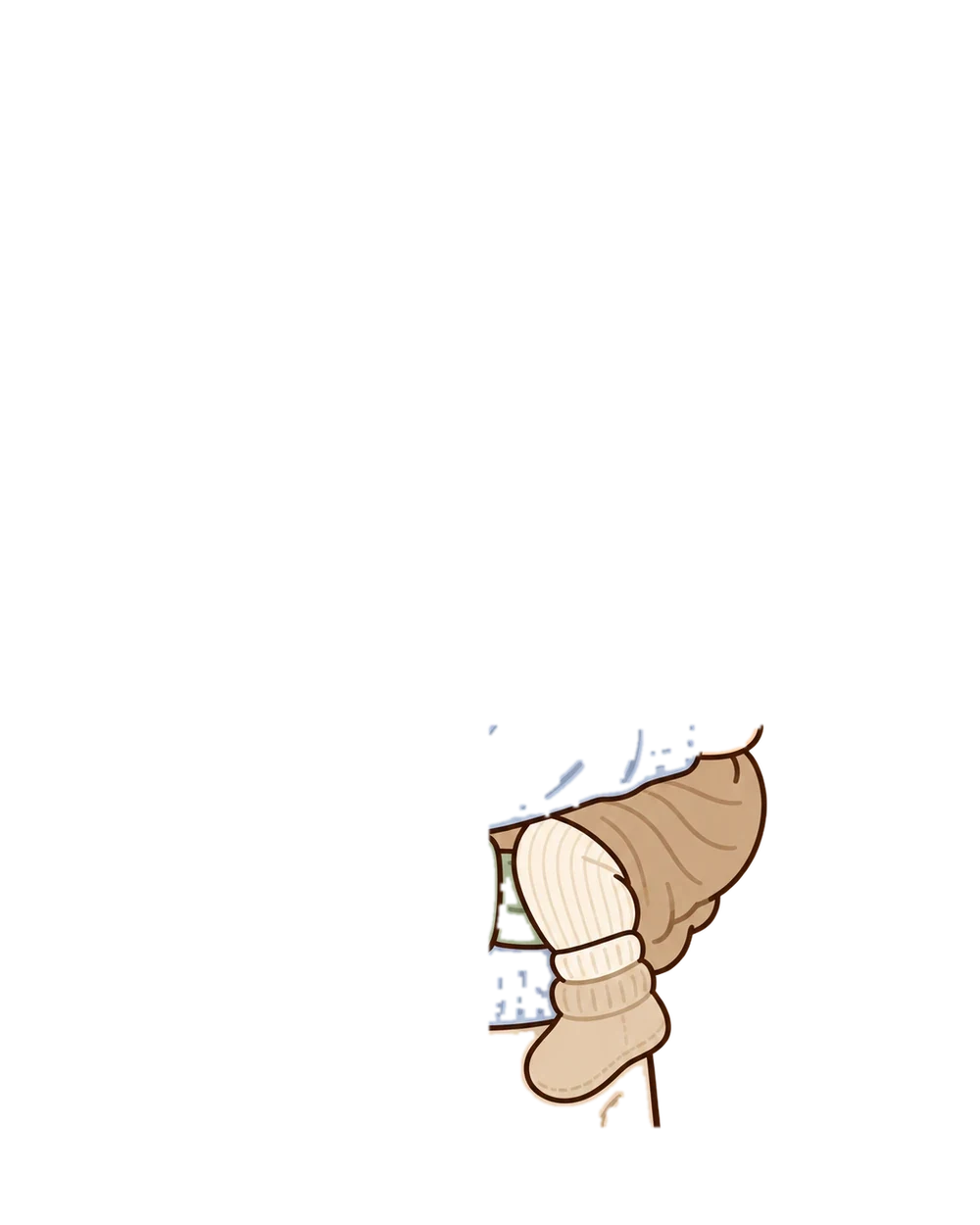
8–11°C 46–52°F
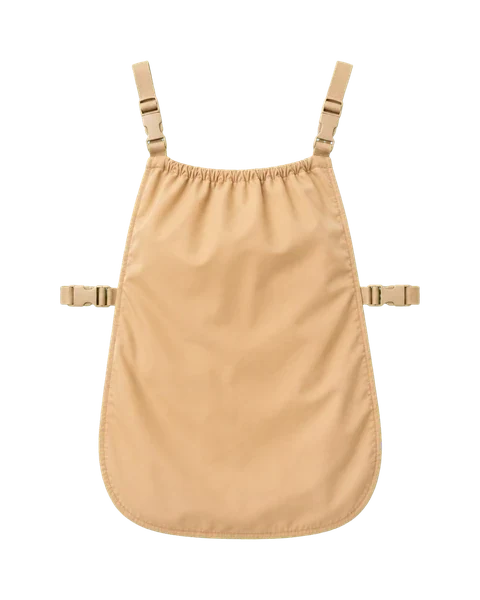
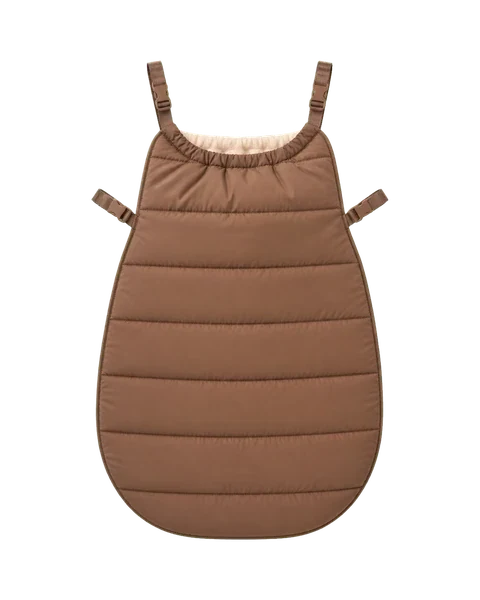
A cover over the carrier
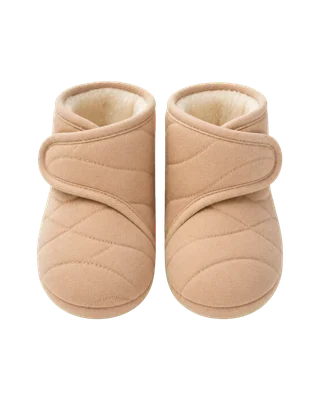
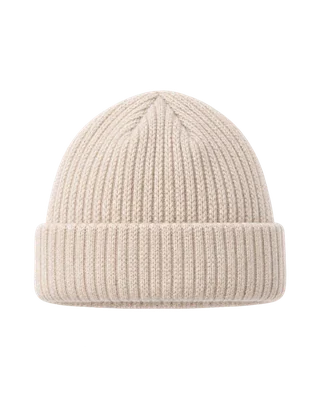
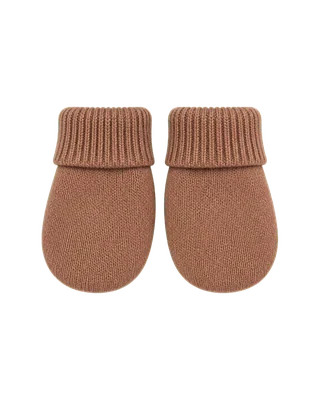
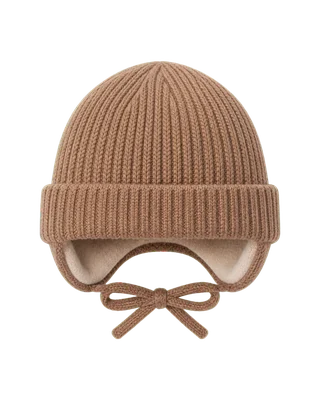
The cover clips onto the outside of the carrier, and booties and a knit hat go on.
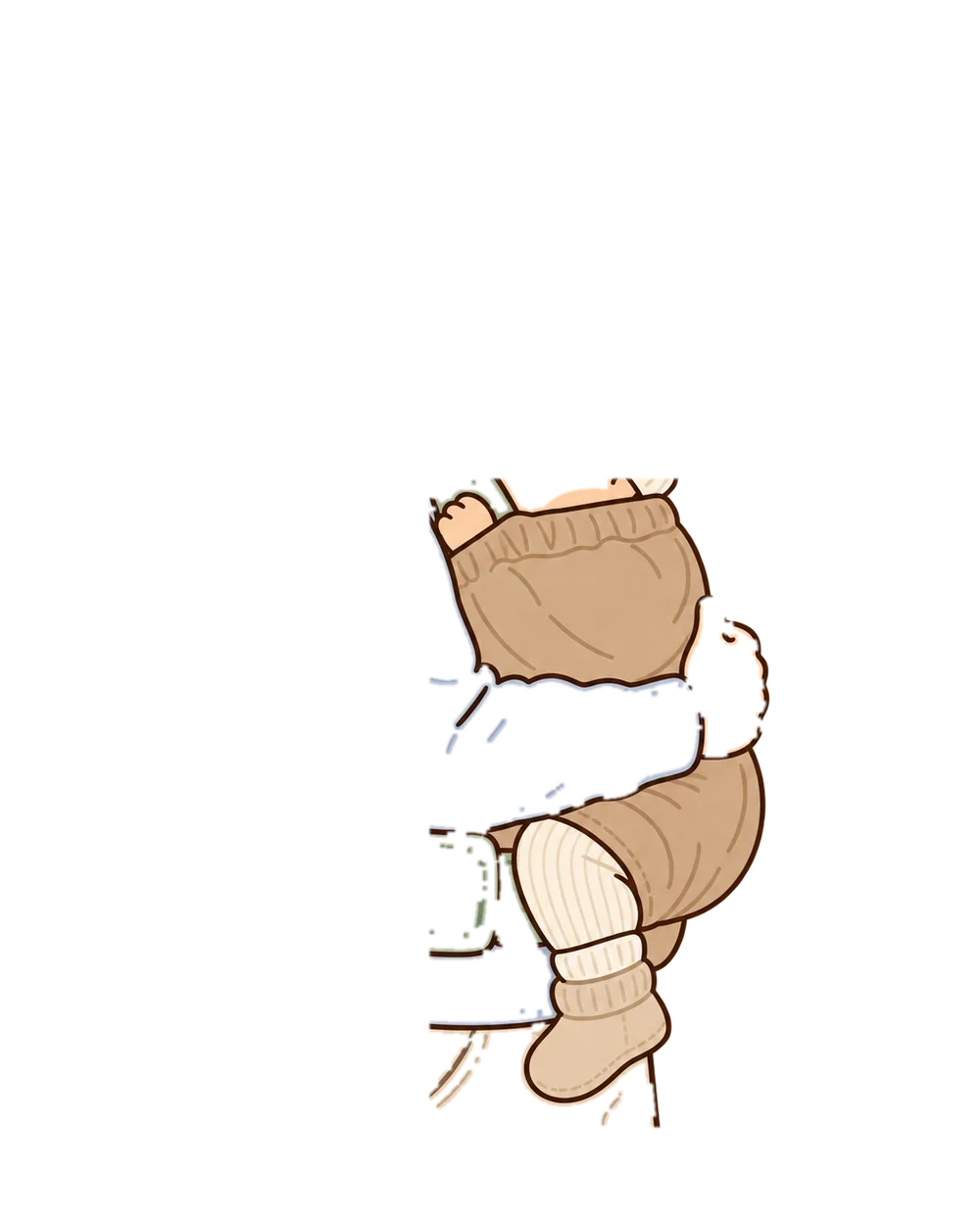
Cover down, hat off
As soon as you walk into a shop, café or bus, open the cover and take the hat off, even if it wakes your baby. Nothing under the straps needs to change.
Winter: a babywearing coat or a carrier cover
Once it gets really cold, most parents who carry end up with one of two things. A babywearing coat, or an extender (a panel that zips into the coat you already own), closes around you both, so you stay warm too. A carrier cover clips onto the carrier instead. It works with any coat you own, and anyone who carries your baby can use it.
A light cover keeps off wind and drizzle but adds little warmth. For the coldest days, a lined or padded warm carrier cover reaches down over the legs and feet. Pick one that folds down without taking your baby out, because you'll do it at every shop door.
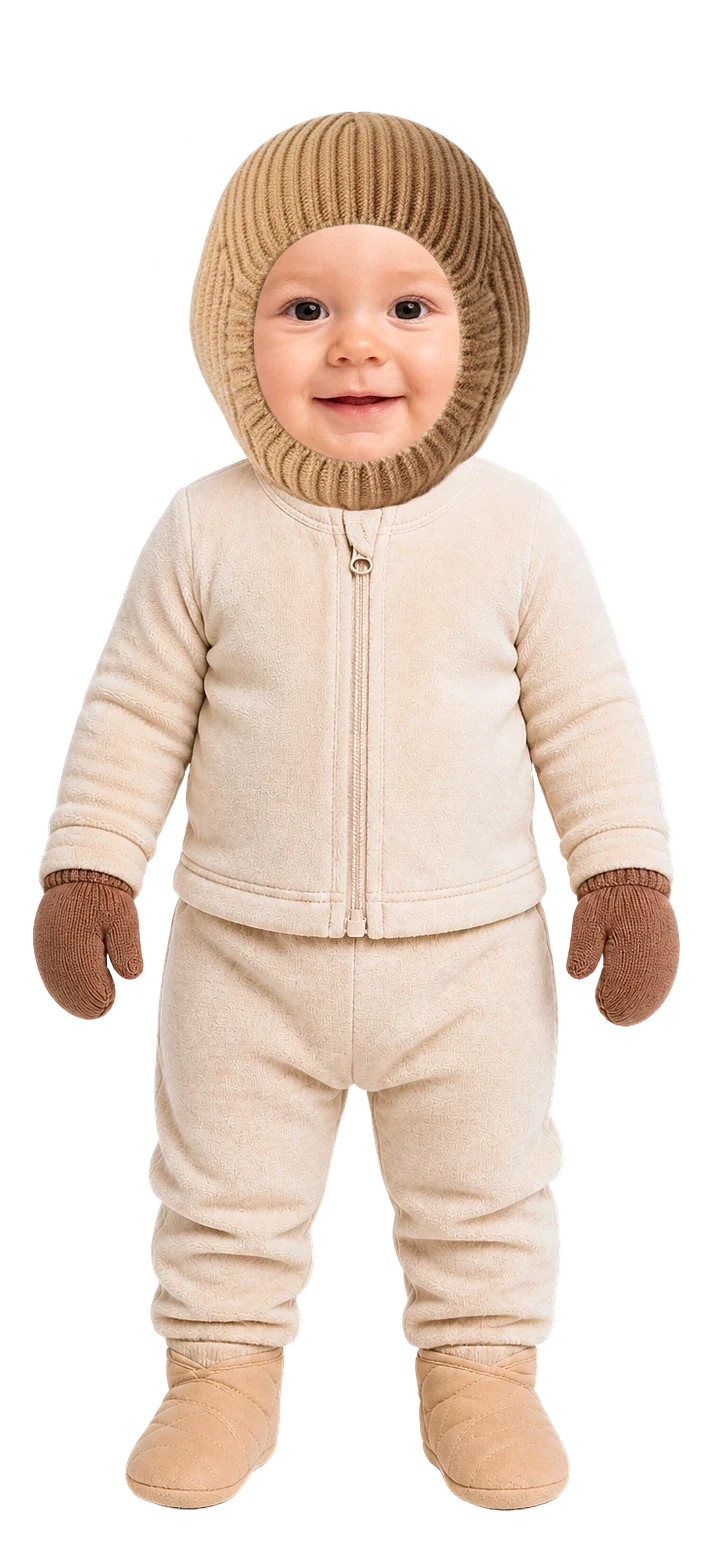
Under a coat or a cover, your baby wears what the table shows: a thin fleece over the bodysuit, warm pants and socks, booties and a hat. With a coat, zip it to just under your baby's chin, so the whole face stays out in the air. Check it once in a hallway mirror. From above you only see the top of your baby's head, but from the side you can see whether the collar sits against a cheek or the nose.
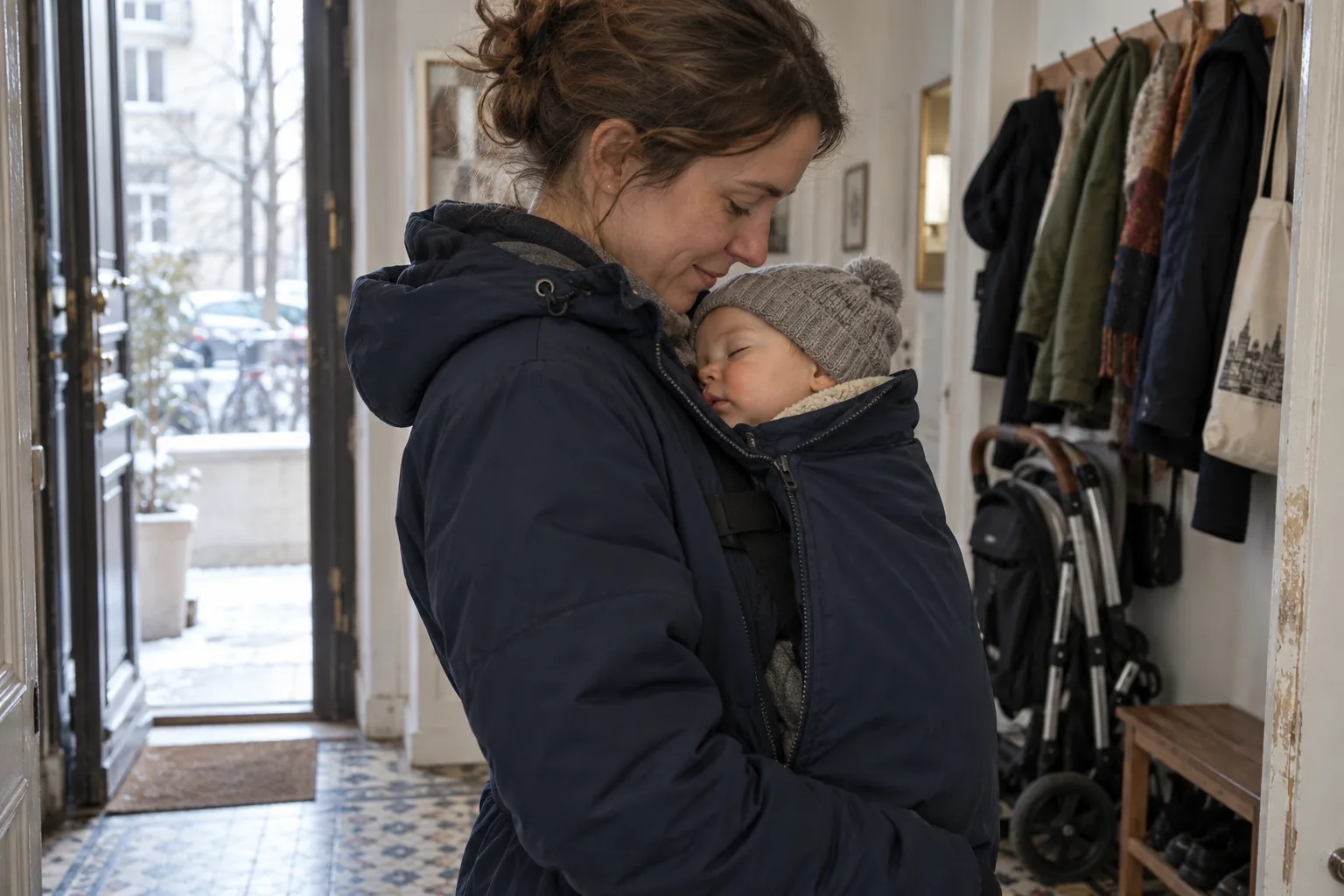
Whatever you choose, glance down often as you walk. A young baby can't lift the head yet, so a collar against the face or a chin pressed to the chest can block the airway.
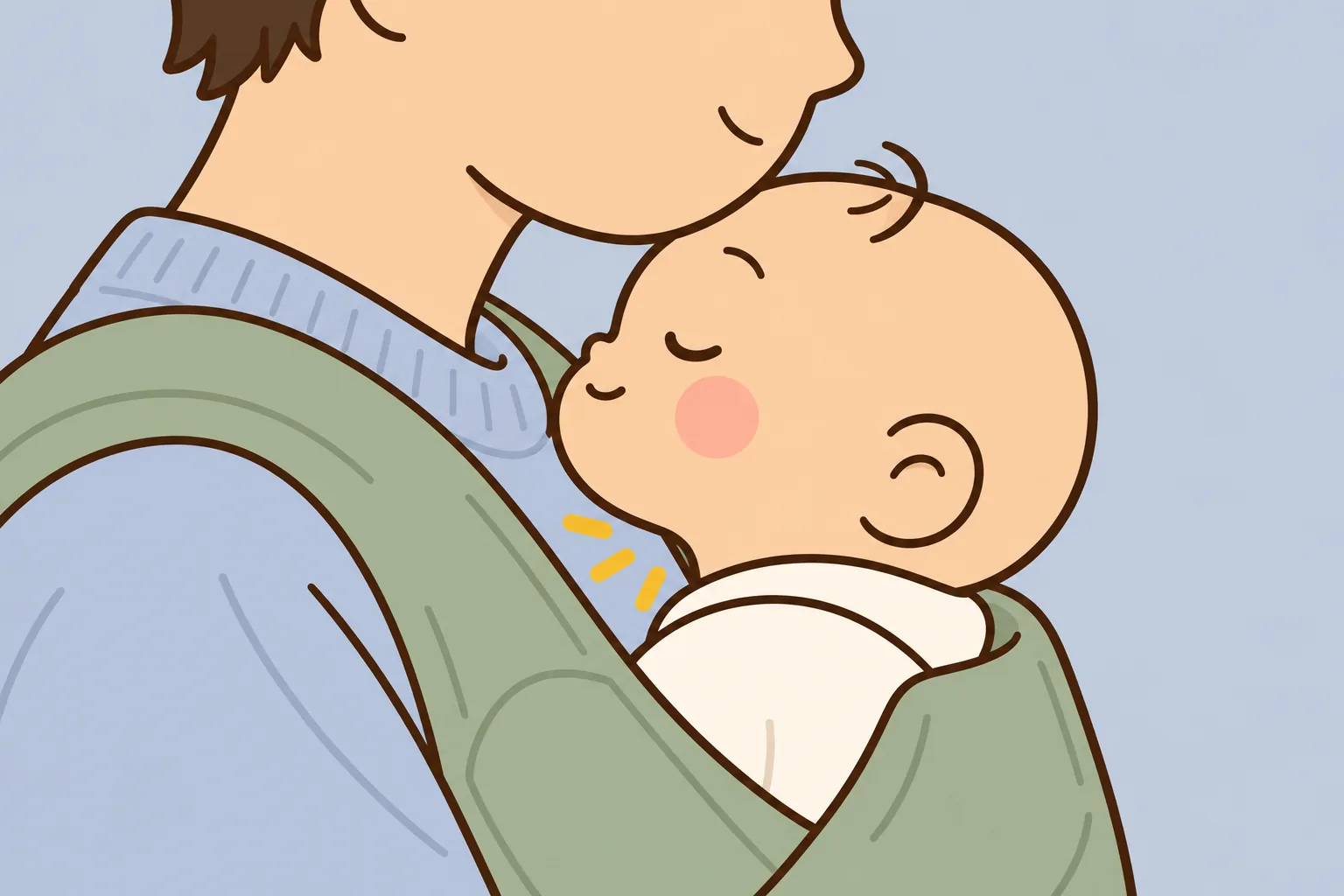
Good: Face in view
Close enough to kiss on the head, with a finger's width of space under the chin.
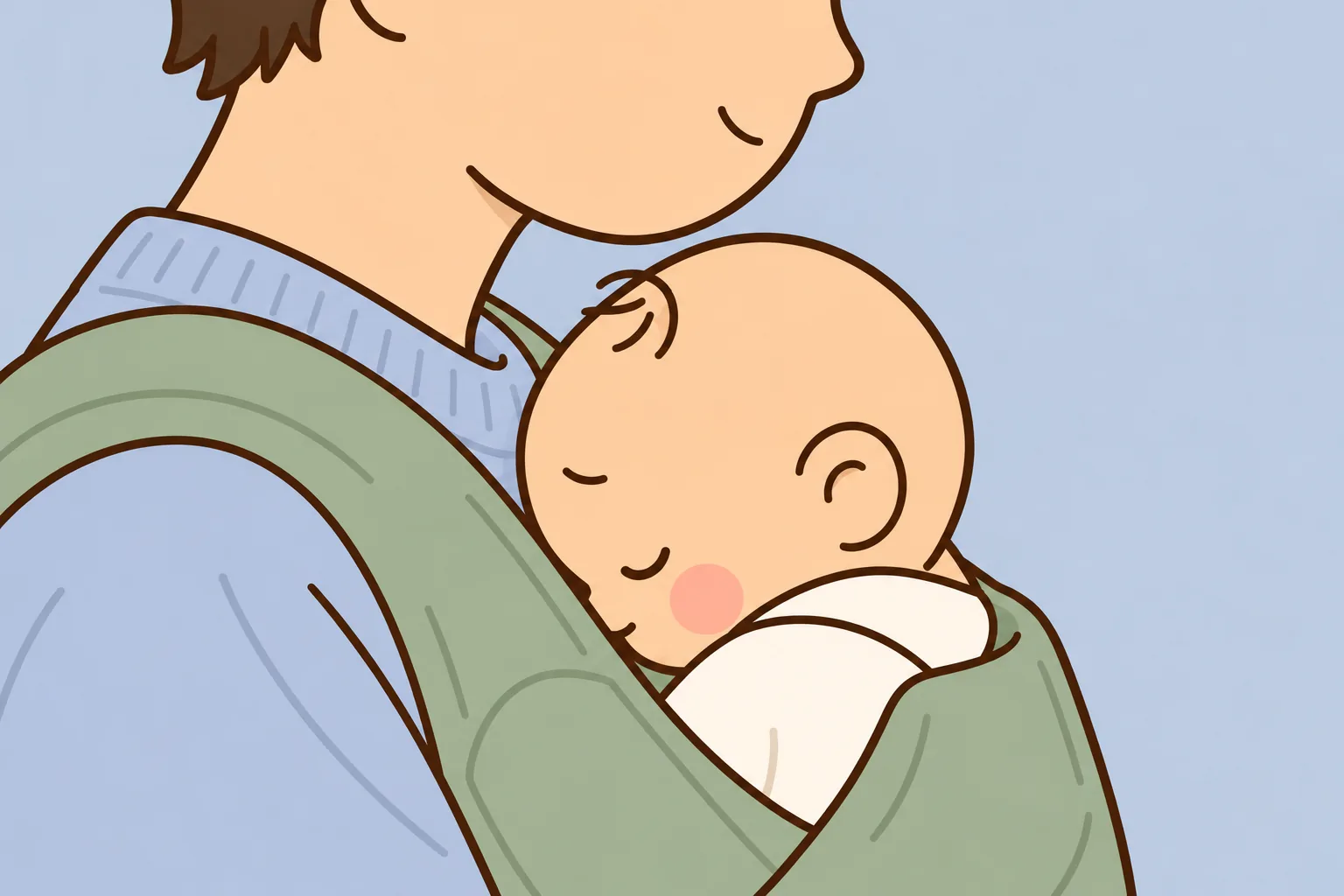
Not good: Chin on the chest
A loose carrier lets a baby slump like this. Tighten it until your baby sits high on your chest.
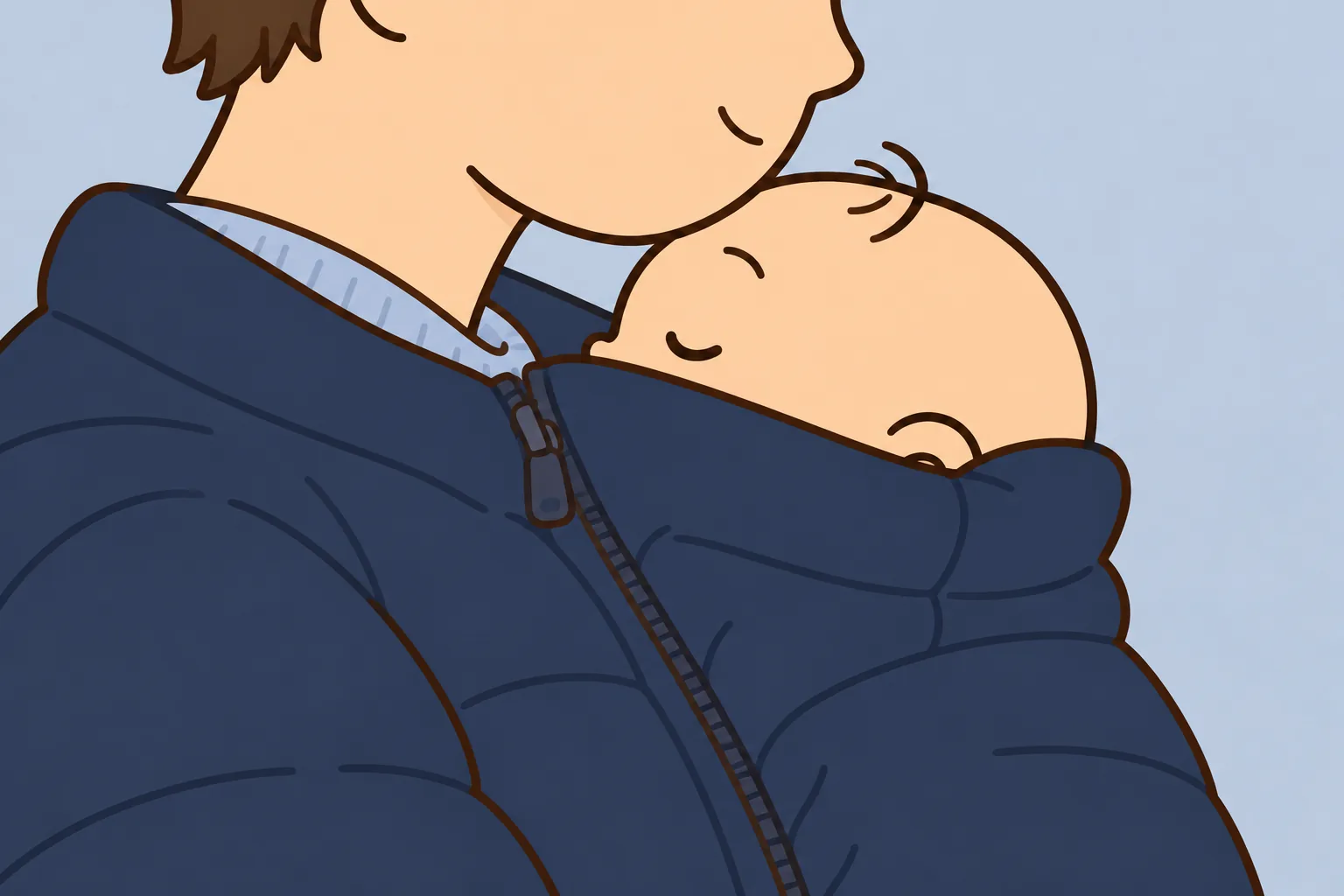
Not good: Face under the coat
A collar over the nose and mouth blocks the air. Keep it below the chin.
When a cold gust hits, it's tempting to pull your coat or a hood up over your baby's head. Turn your back to the wind instead, or step into a doorway until it passes. Red cheeks after a windy walk are usually harmless, and a barrier balm helps.
Cold ankles: bent knees pull the pants up
Pants that neatly reach the ankle on the changing pad hitch up the moment your baby settles into the carrier. The knees sit up at hip height, and that pulls the cuffs halfway up the calf. Once your baby is in, pull tall socks up over the cuffs, and add booties on cold days. Leg warmers over the pants work too.
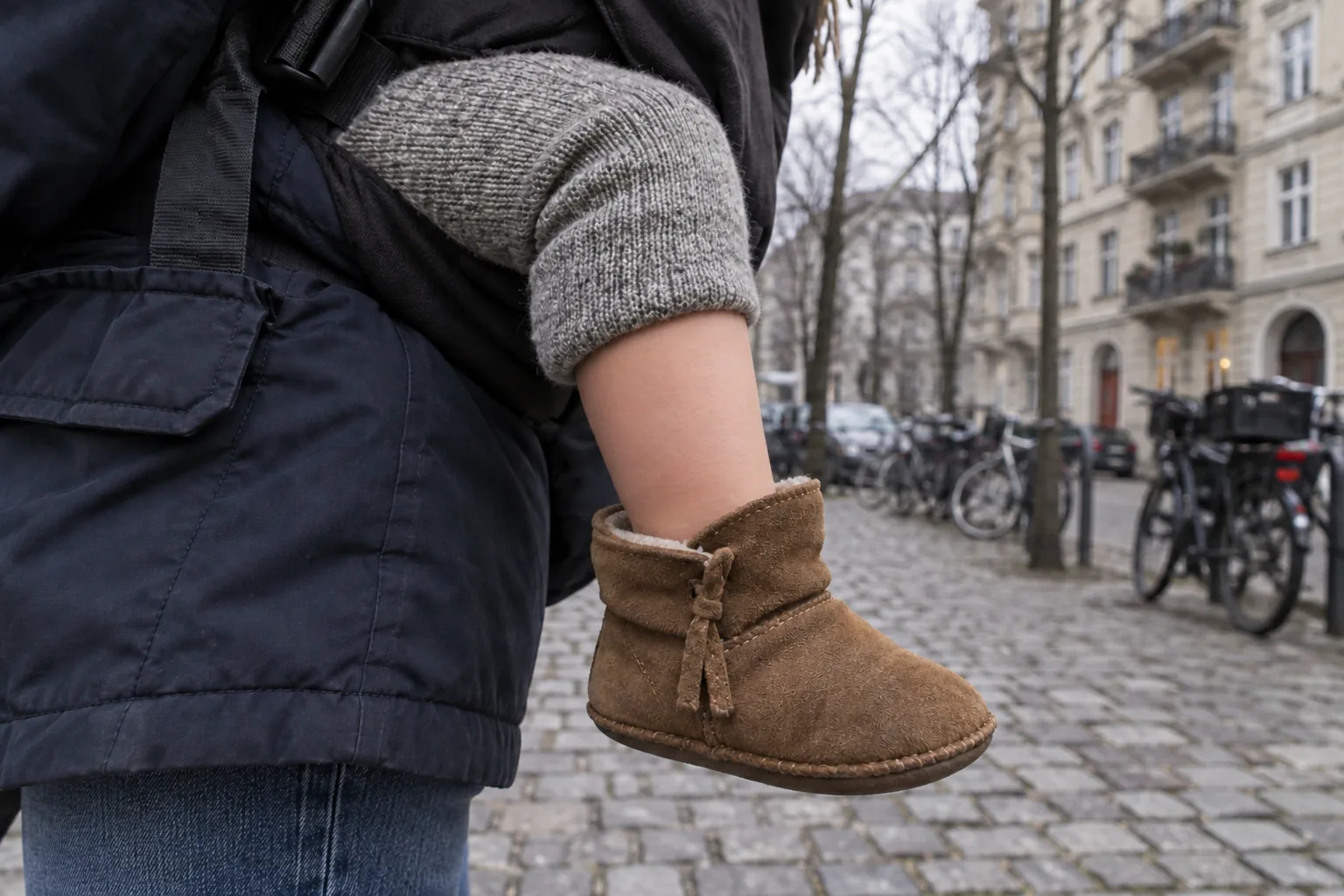
Not good: Bare skin above the bootie
This gap only shows once your baby sits in the carrier.
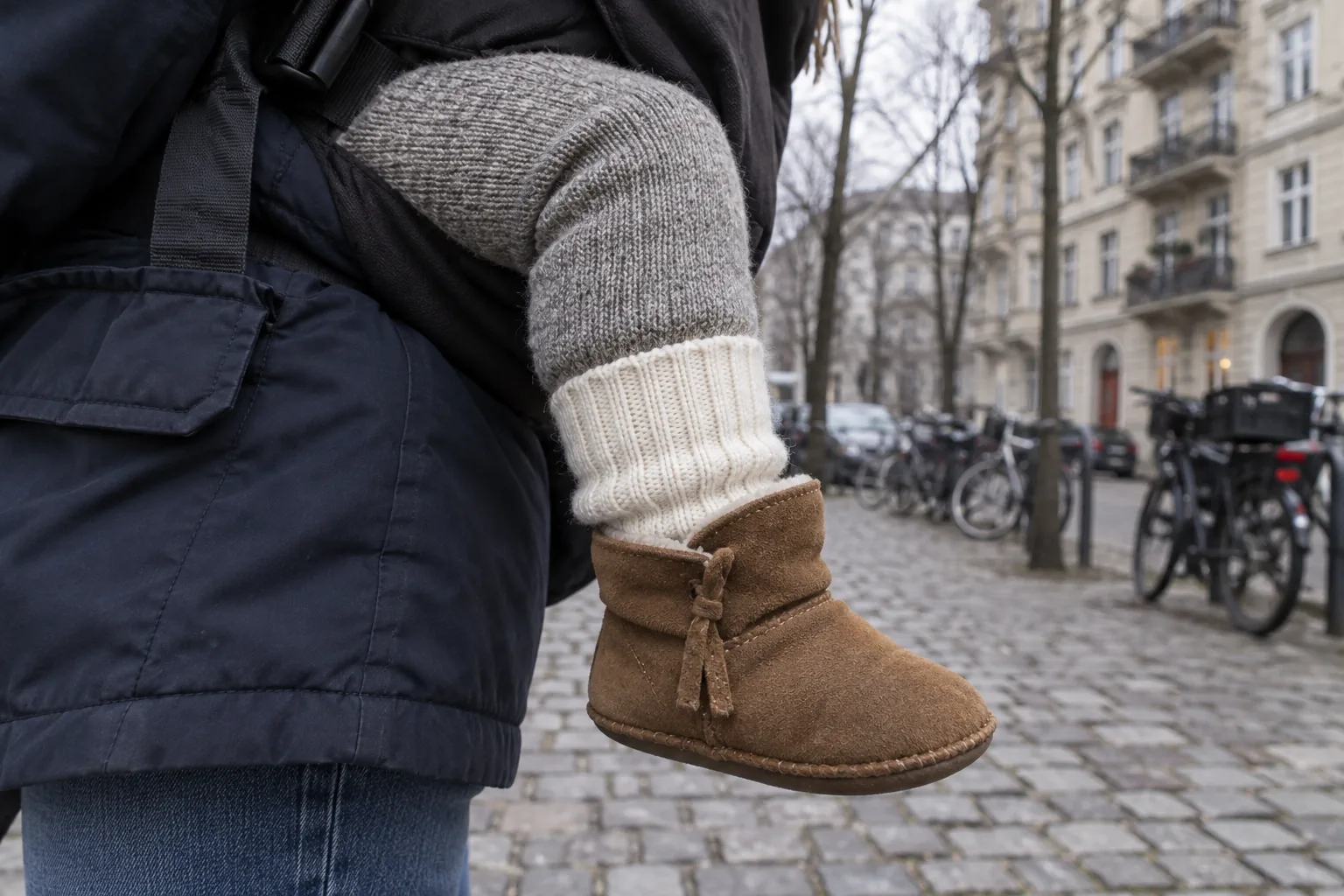
Good: Socks over the cuffs
Nothing shows between the bootie and the knee.
Summer: one thin layer and shade
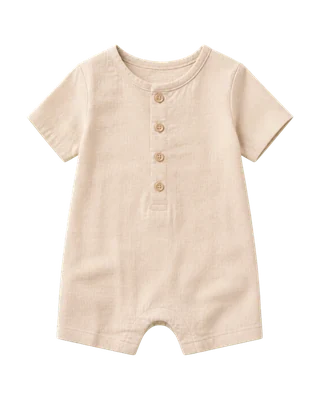
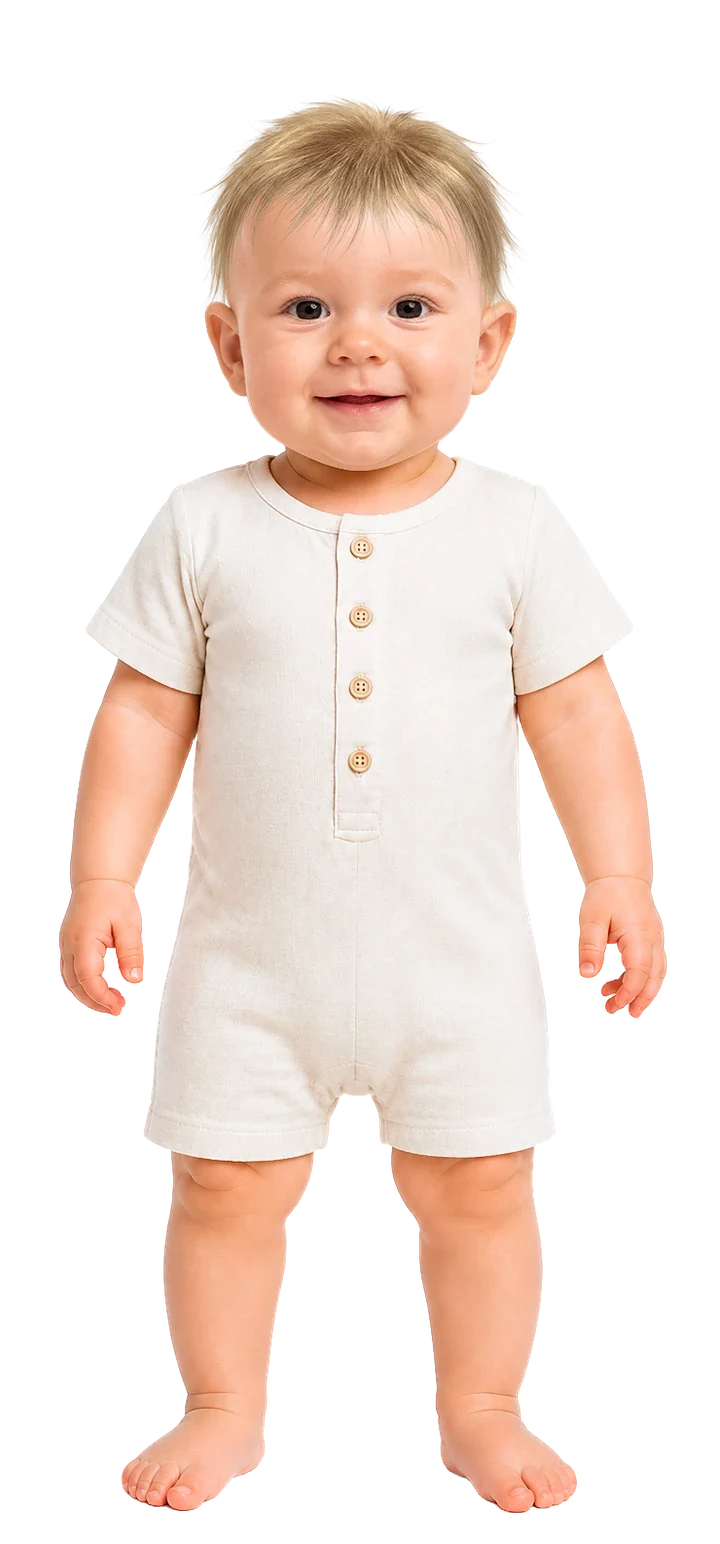
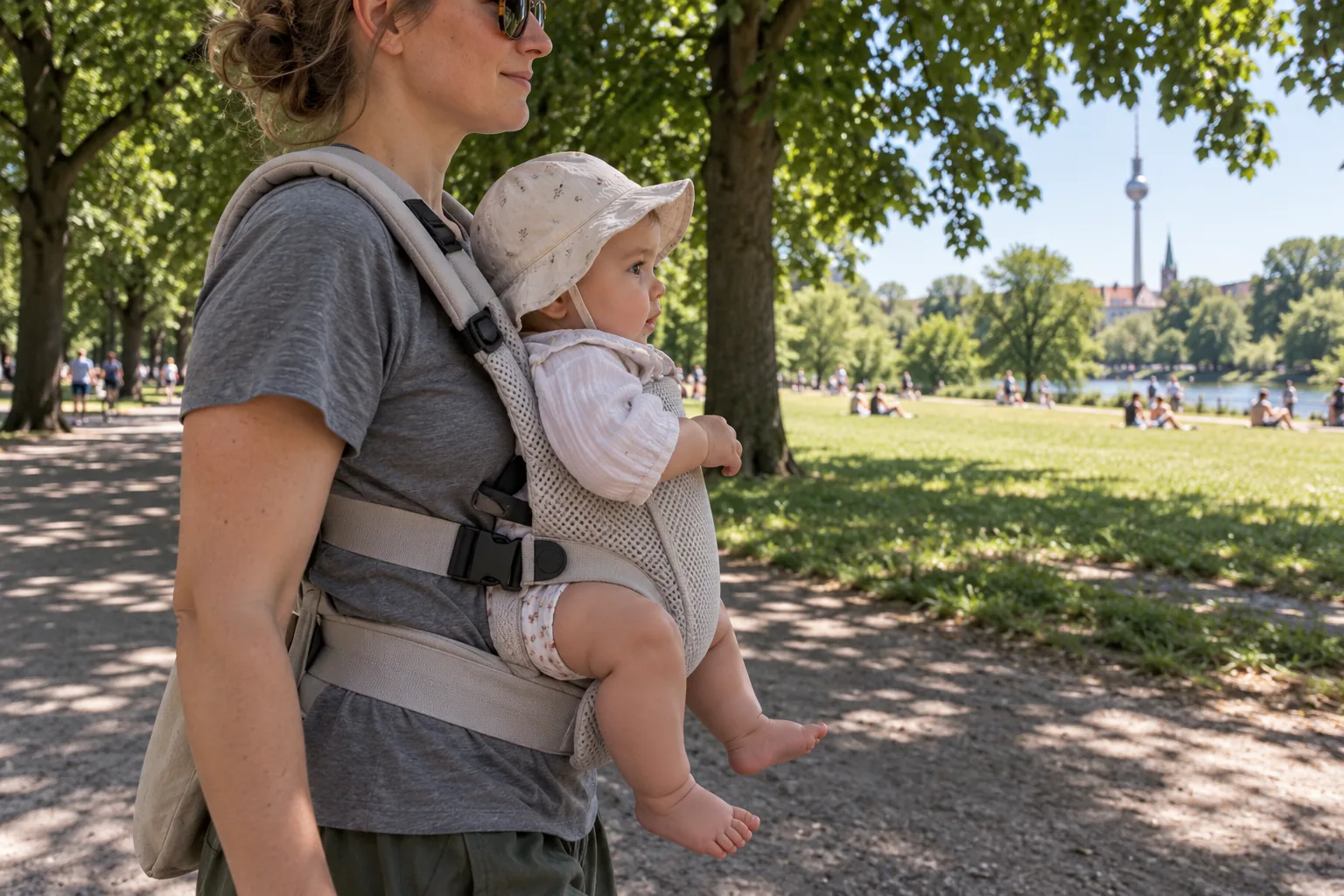
On a hot day you both sweat where your bodies touch. One short-sleeve cotton romper is plenty, and it's better than skin on skin, because cotton between you helps against heat rash. In a heat wave, go out early or late and keep walks short.
The arms, legs and head stick out of the carrier, right in the sun. Walk on the shady side of the street, put a sun hat on your baby, and in strong sun add a thin long-sleeve sun shirt over the romper for the arms.
When the sun is on your baby, the first reflex is to drape a muslin over the top of the carrier. Leave it off, because the cloth traps the heat underneath and covers the face.
Questions parents ask
Can my baby wear a snowsuit or a jacket in the carrier?
Better not. All that padding keeps the carrier from sitting snug, and in a loose carrier a baby slumps down. If your baby is already dressed for the stroller, take the snowsuit or jacket off before the carrier goes on, and keep the hat and booties.
How cold is too cold for babywearing?
There's no fixed number. On freezing days, put on the warm cover, mittens and a warm hat, stay close to home, and turn back when the wind picks up or your baby fusses.
What should a newborn wear in a carrier in winter?
A little more than an older baby, because newborns lose heat faster. On a cool morning, the hat, the booties and the cover go on a little sooner than they would later on.
Can my baby overheat in a carrier?
Yes, most often in a warm shop or on a bus. Now and then, slip two fingers behind your baby's collar and feel the back of the neck. Warm and dry is right. If it's hot or damp, open the cover and take the hat off. On a hot day, find shade and take your baby out of the carrier for a few minutes.
Does the kind of carrier change what my baby wears?
A little. A stretchy wrap, the long soft cloth many parents tie on in the first months, crosses your baby's back in three layers of fabric, so it's the warmest. If your baby comes out of a wrap with a damp neck, leave the fleece off next time. In summer, a linen ring sling or a buckle carrier with a mesh panel is the coolest. Most covers clip onto buckles, so for a wrap or a sling, look for one with ties.
Can my baby wear footie pajamas in a carrier?
Yes, if the feet have room. With the knees bent up, snug footie pajamas pull tight and can curl the toes. Feel for space at the end of the feet. If there's none, go a size up, or use footless pajamas with socks.
How do I keep my baby warm on my back?
Back carries are for older babies, from the age your carrier's instructions give. On your back, the carrier sits over your coat, so less of your warmth reaches your baby, and a warm carrier cover made for back carries makes up for it. You can't see your baby's face there, so check it in a mirror or a shop window as you pass.
How do I keep my baby dry in the carrier?
Drizzle runs off a water-resistant carrier cover. For steady rain, add a big umbrella. Underneath, dress for the temperature, as on a dry day.