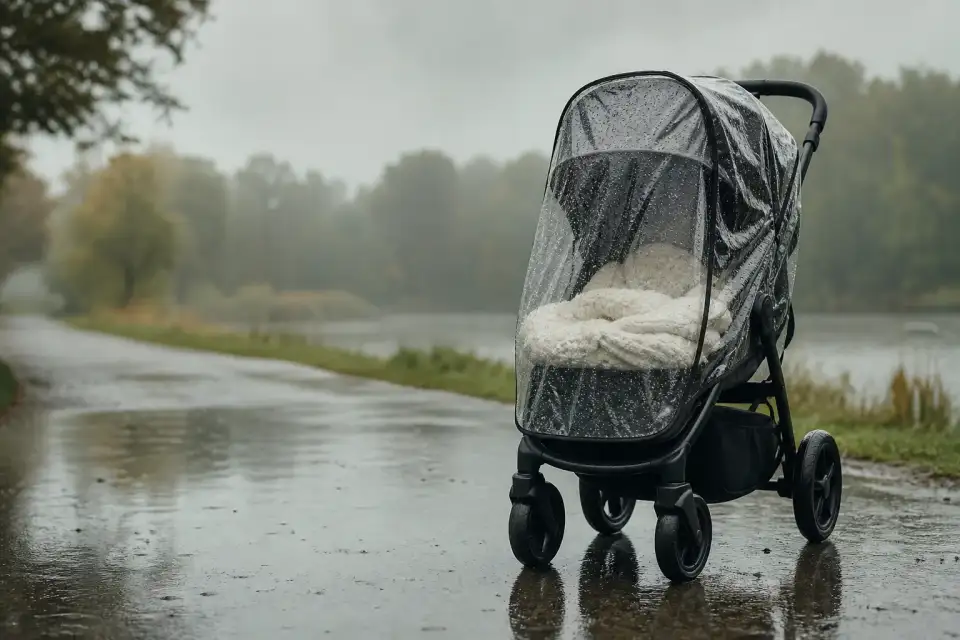
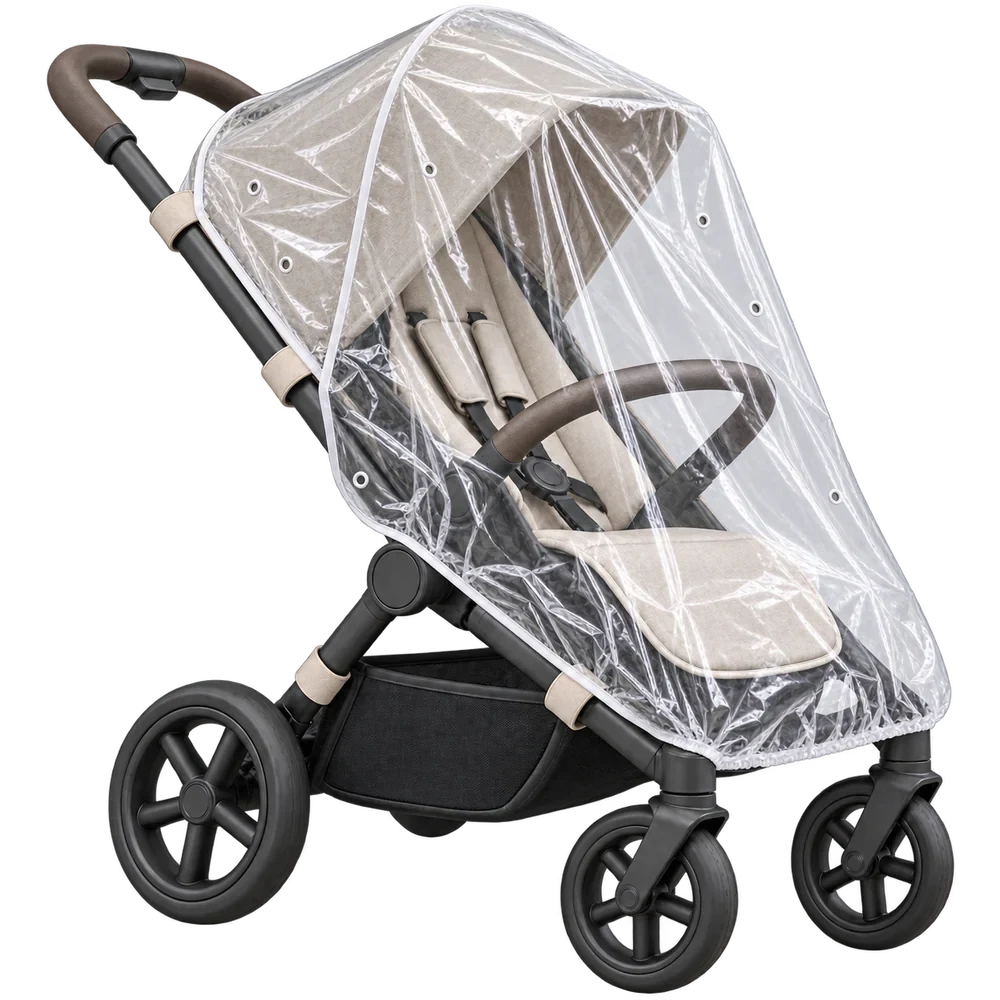
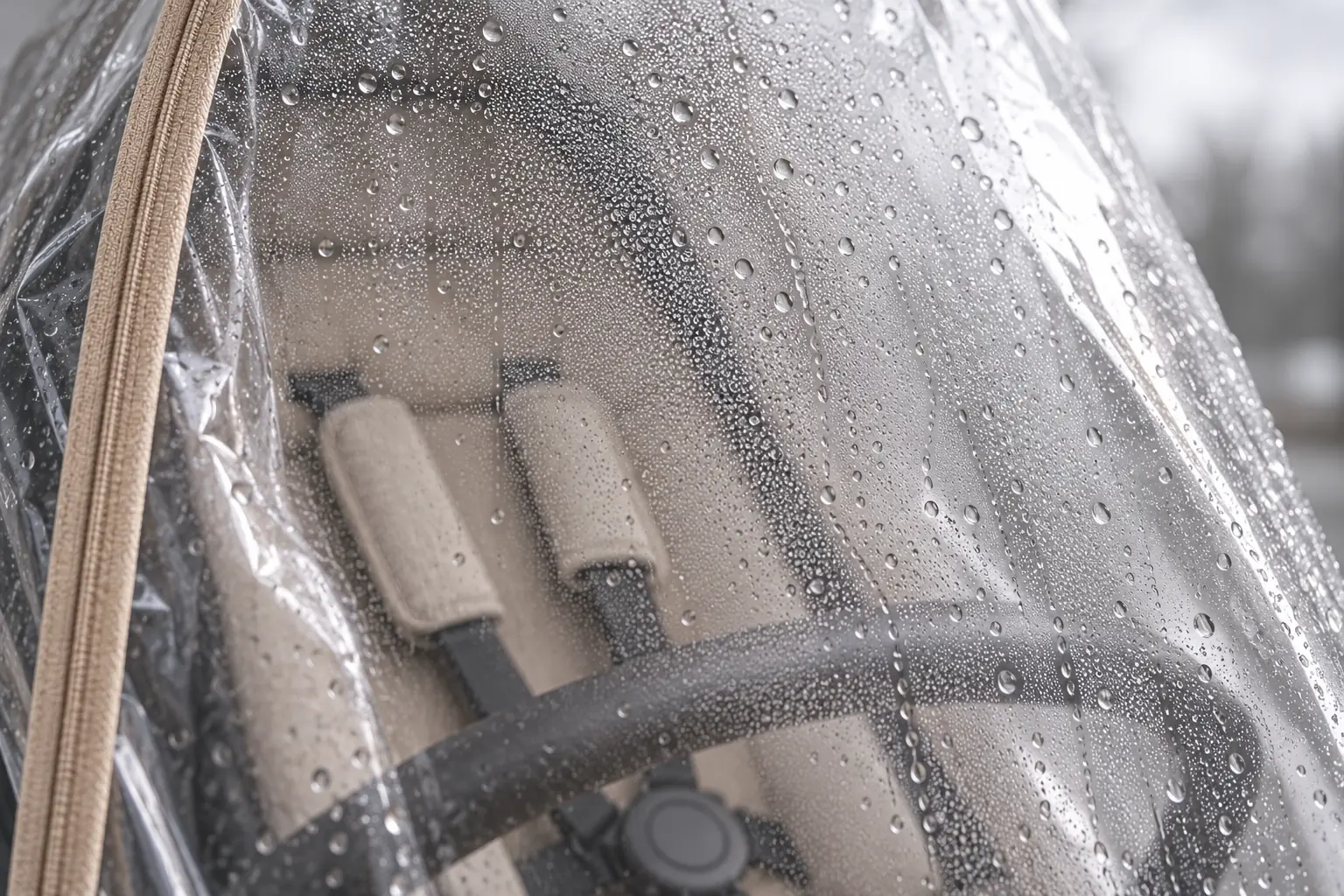
A rain cover is a clear plastic shell that goes over the whole stroller, from the top of the canopy (the stroller's hood) to below your baby's feet. It fastens to the frame, has small vents to let air in, and most have a front window that opens.
You will use one if you walk in all weather, take buses and trains, or live where it often rains: your baby stays dry, and you keep going. If you mostly drive, or wait for the rain to pass, you may never take it out. The canopy alone keeps off a few drops.
- For ages0–4years
- You'll need1
- Use it inRain
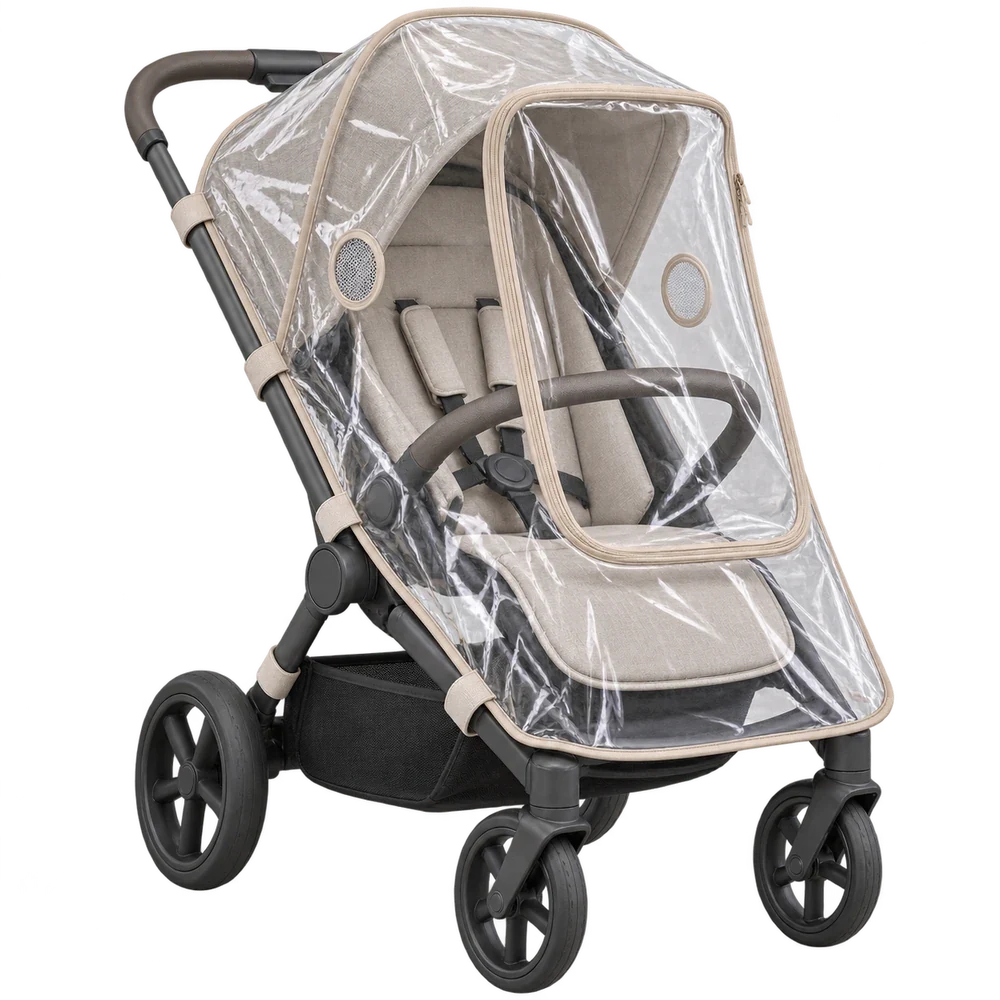
Parts of a rain cover
Most covers are shaped for a stroller seat, like this one.
Top
Goes over the canopy, which holds the plastic away from your baby's face.
Vents
Mesh holes or flaps on the sides that let fresh air in.
Front window
Zips or rolls open, so you can let in air or pass in a toy without taking the cover off.
Straps
Velcro tabs, straps or an elastic edge hold the cover to the frame, so the wind cannot lift it.
Types of rain cover
If your baby rides in something other than the seat, buy the cover made for it.
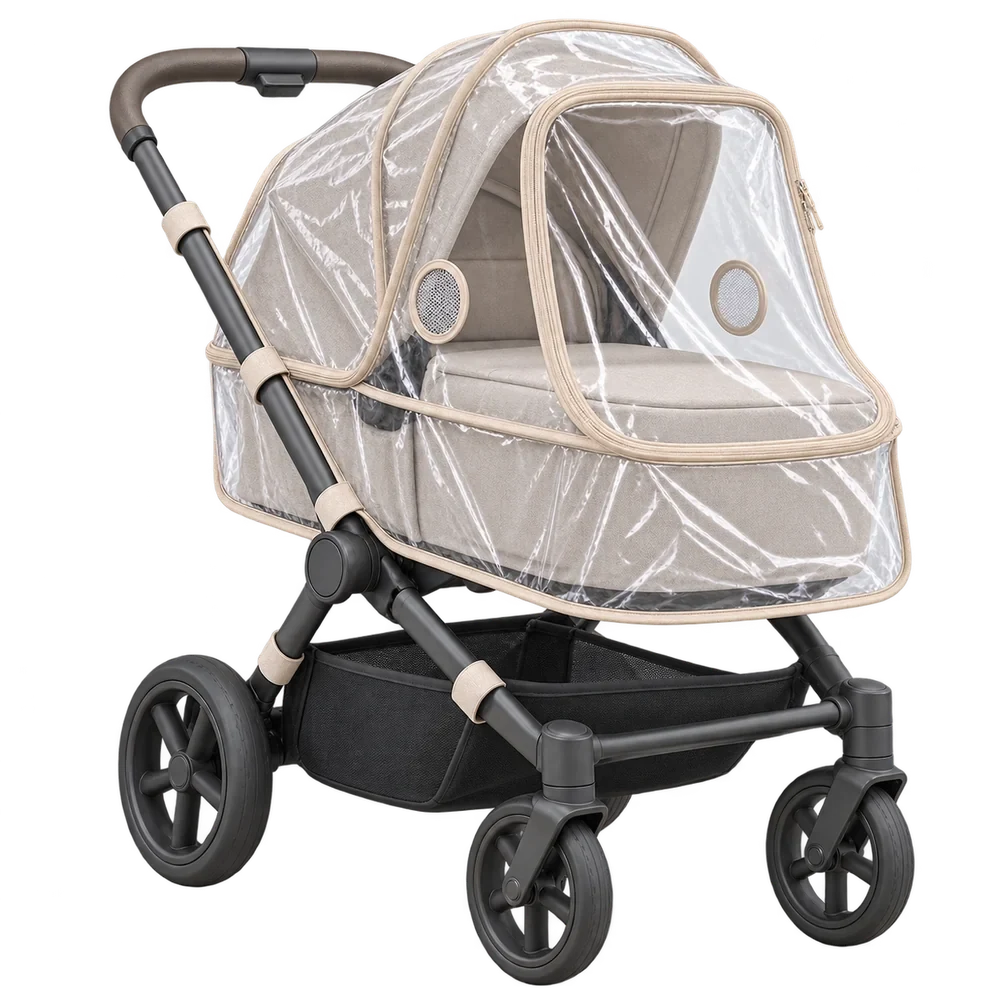
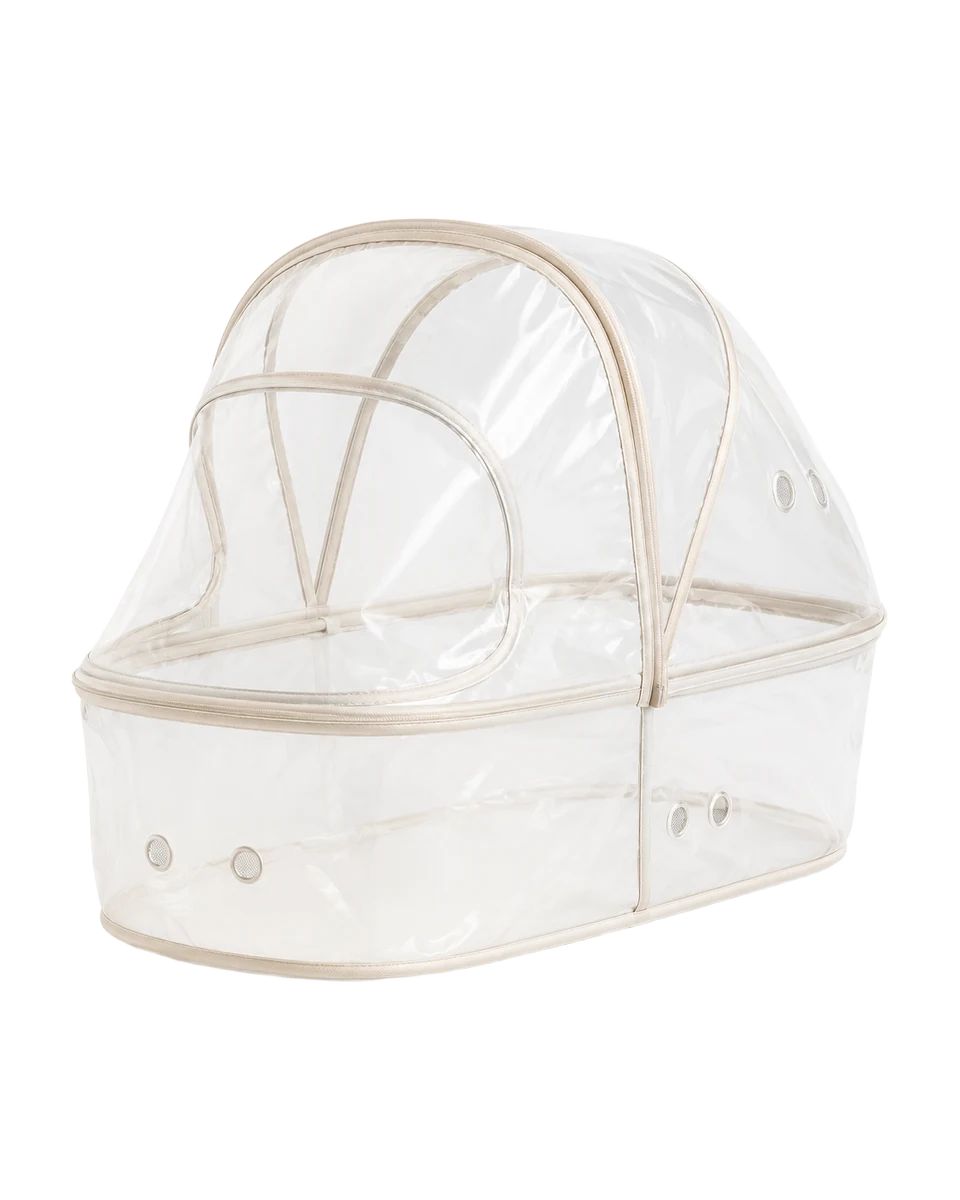
For the carrycot
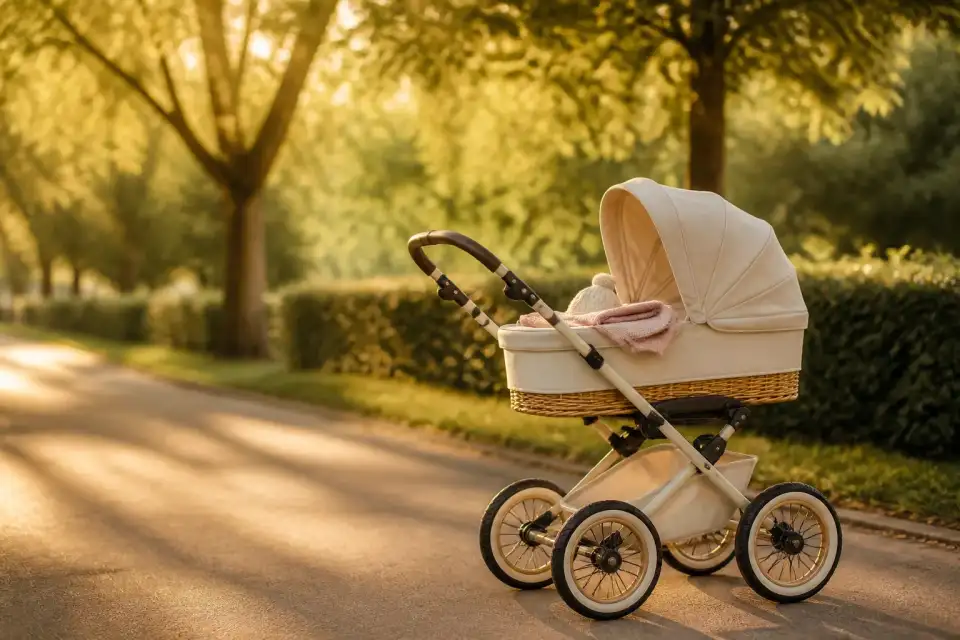
Lower and longer, for a baby lying flat in the carrycot (the bassinet that clicks onto the stroller). Some seat covers fit the carrycot too, so check before buying a second.
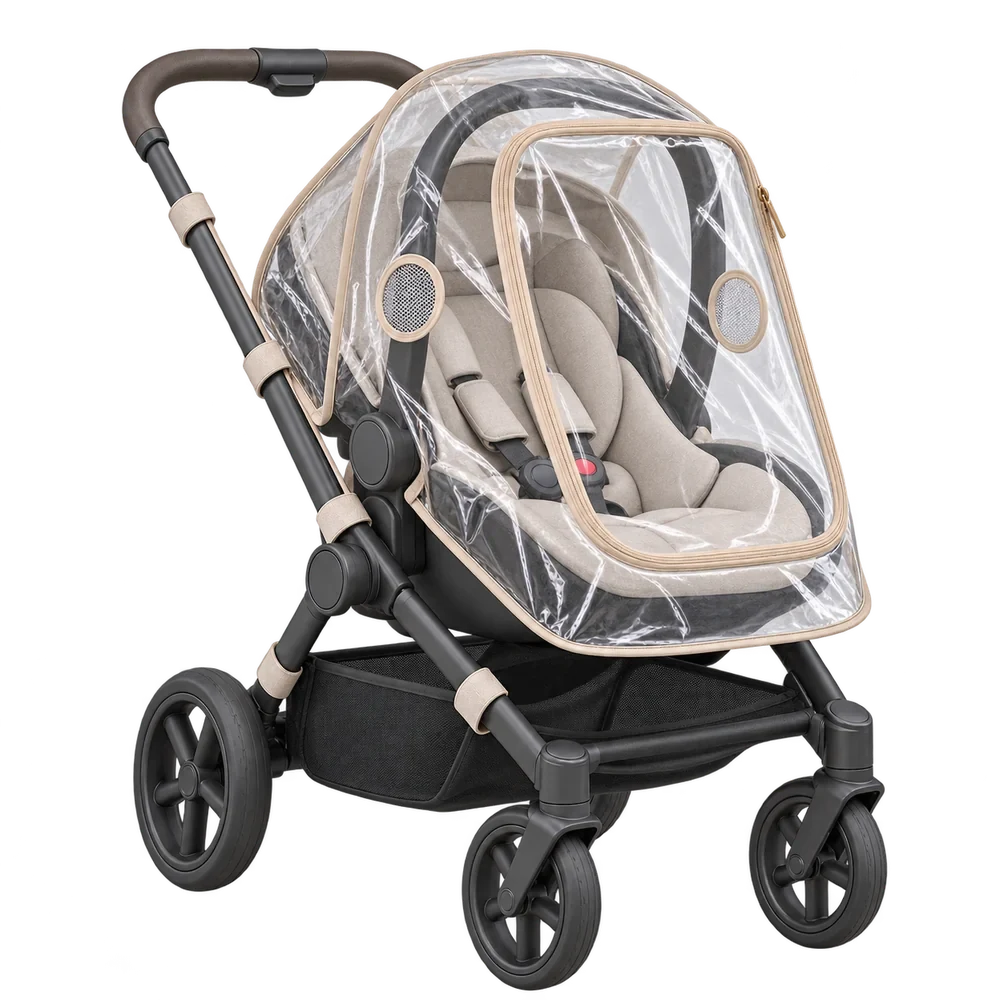
For an infant car seat
A small cover that goes over the car seat and its handle, for when the seat rides on the stroller frame.
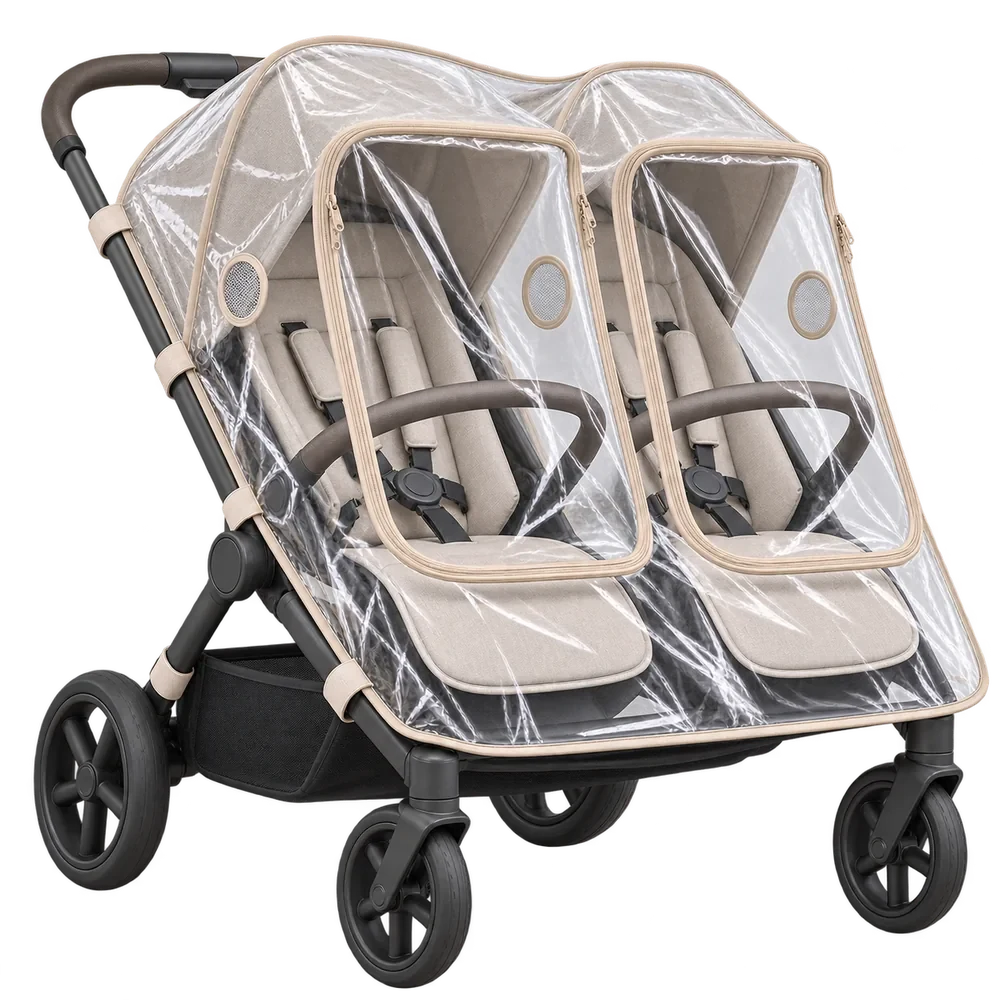
For a double stroller
Side-by-side strollers and tandems (one seat behind the other) are different shapes, so buy the cover for yours.
Made for your stroller, or universal?
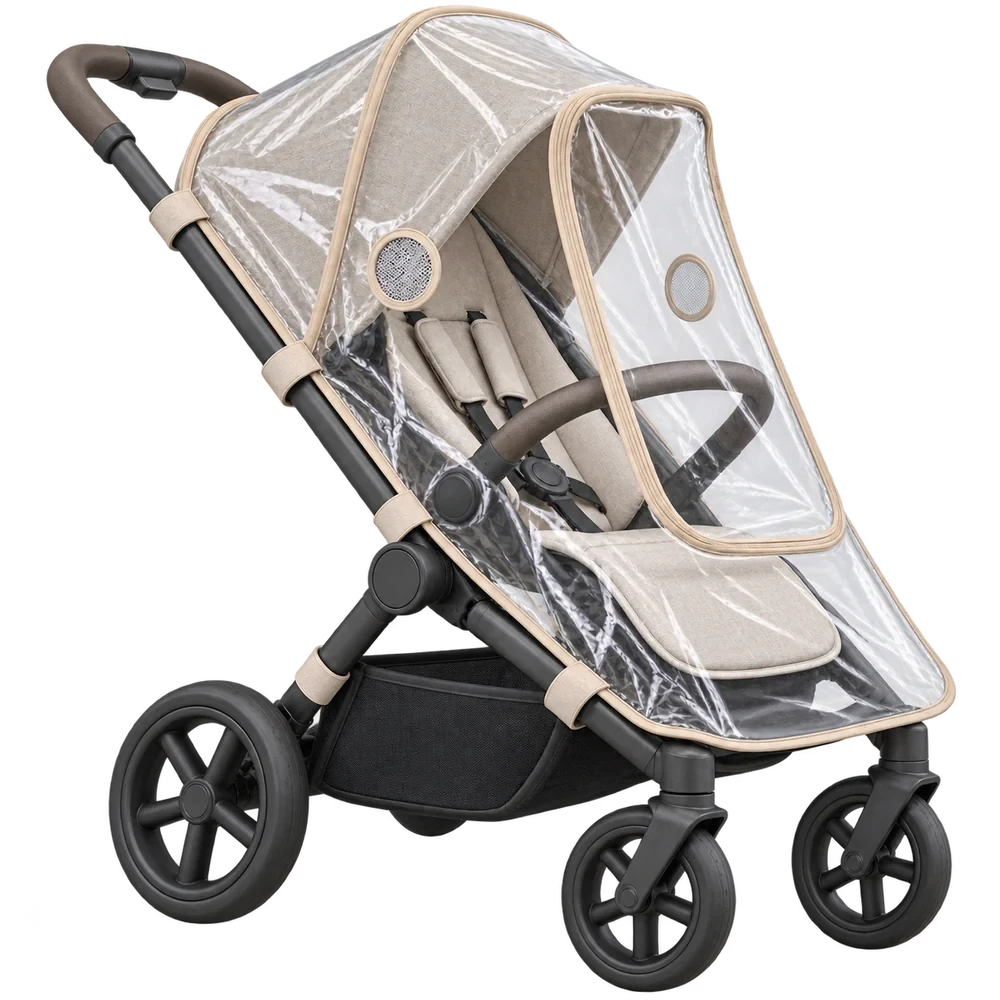
Made for your stroller
Follows its shape closely, with the vents and window in the right places. It costs more, and many strollers come with one in the box, though it is worth checking that the one in the box has side vents and a window.
- Good: Often in the stroller box
- Good: Vents and window line up
- Not good: Costs more to replace
- Not good: Fits only that stroller
Universal
Costs less and fits many strollers, so it is the answer when your stroller's maker does not sell one. Check its size list against your stroller, and keep the receipt until you have tried it on yours. A loose one flaps in the wind, and a tight one pulls off.
- Good: Costs little
- Good: Moves to a second stroller
- Not good: Can flap or pull off
- Not good: Vents may sit wrong
How to choose a stroller rain cover
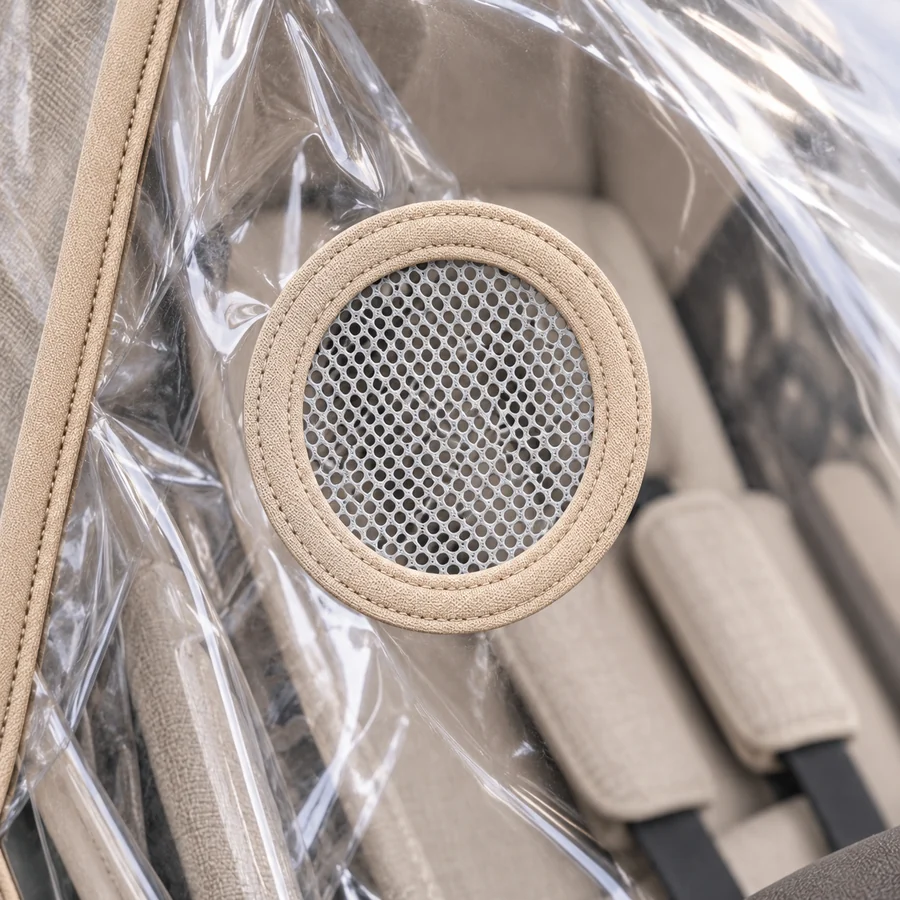
1. Vents on both sides
Air can then flow through the cover instead of sitting still. Check a blanket or footmuff (a warm stroller bag) will not cover them.
- Good: Mesh panels or air holes
- Good: Sit high, clear of blankets
- Not good: Solid plastic with no vents
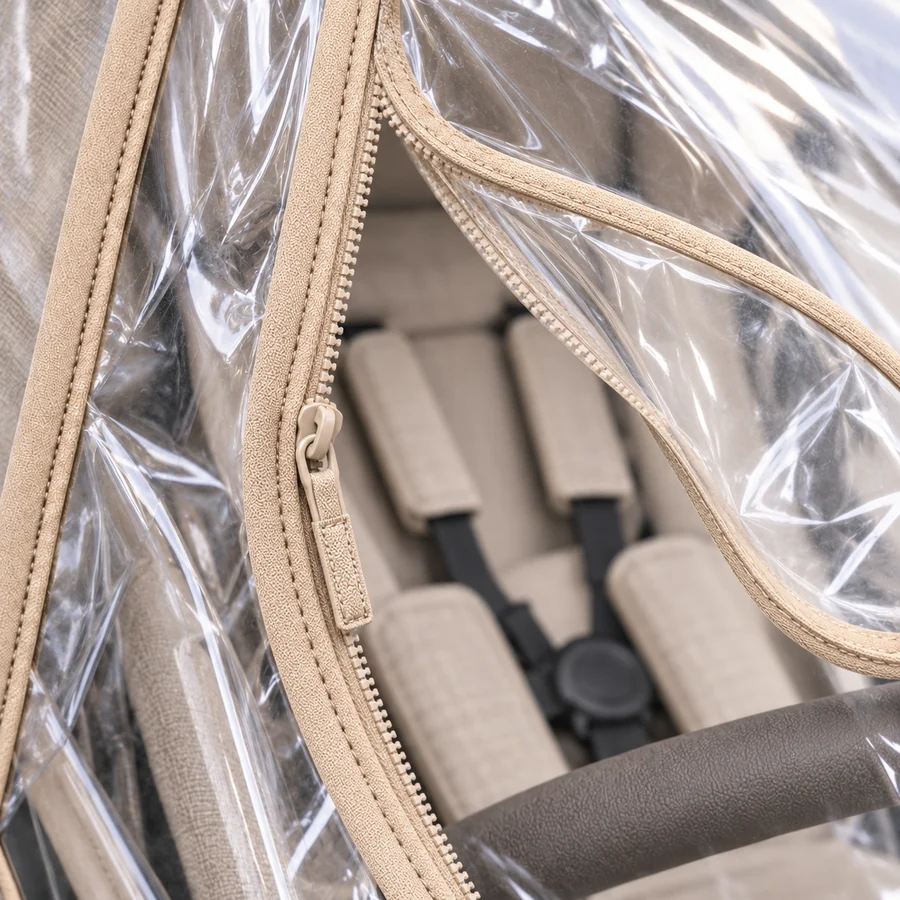
2. A window that opens
A wide zip or roll-up flap lets you reach inside and air the cover out without unfastening the sides. Some basic covers are one closed sheet.
- Good: Front zip or roll-up flap
- Good: Opens wide to reach inside
- Not good: One closed sheet of plastic
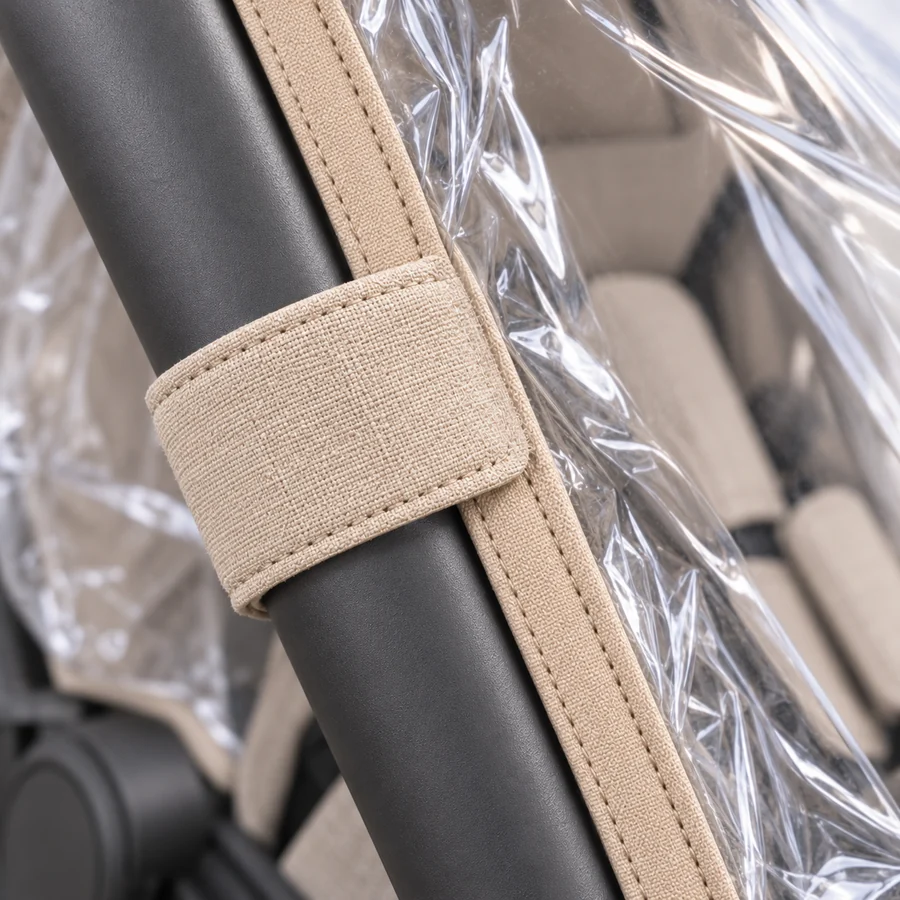
3. It fastens all round
Straps at the frame stop the wind lifting it, and stop a toddler pulling it up from below.
- Good: Straps or tabs at the frame
- Good: Snug around the footrest
- Not good: Loose bottom edge that lifts
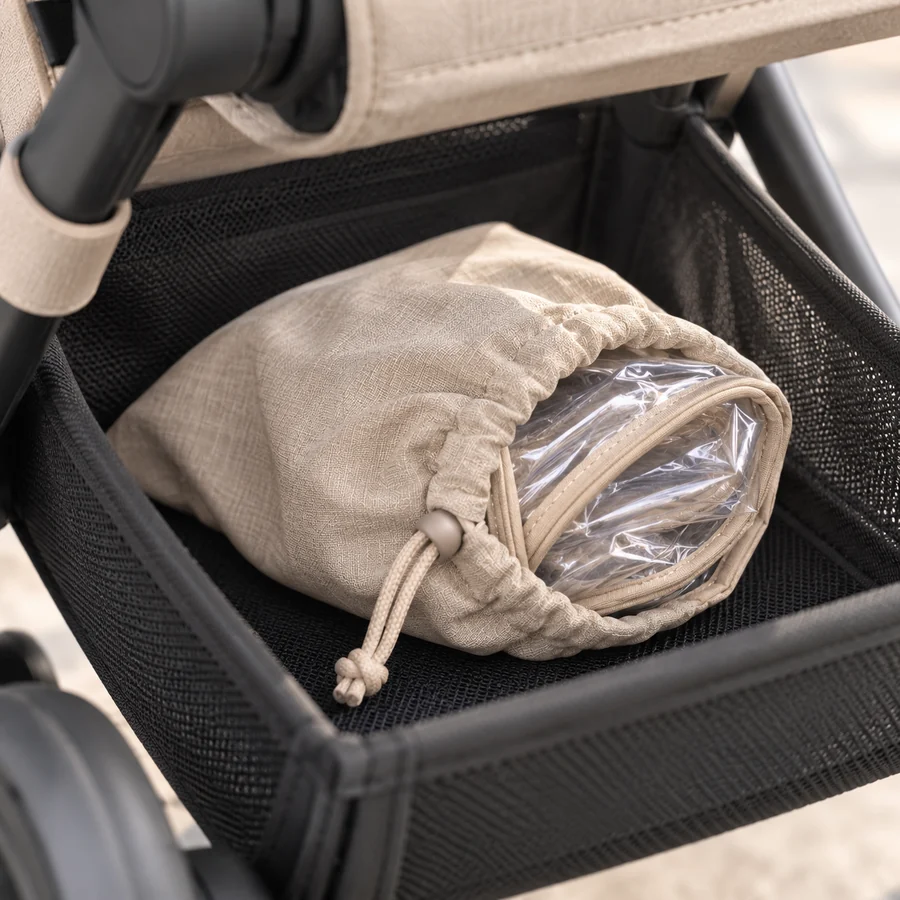
4. It folds small
It goes on every walk that might turn wet, so it has to fit in the basket. A pouch keeps it in one piece.
- Good: Soft plastic that folds easily
- Good: Comes with its own pouch
- Not good: Stiff shell that fills the basket
How to use it
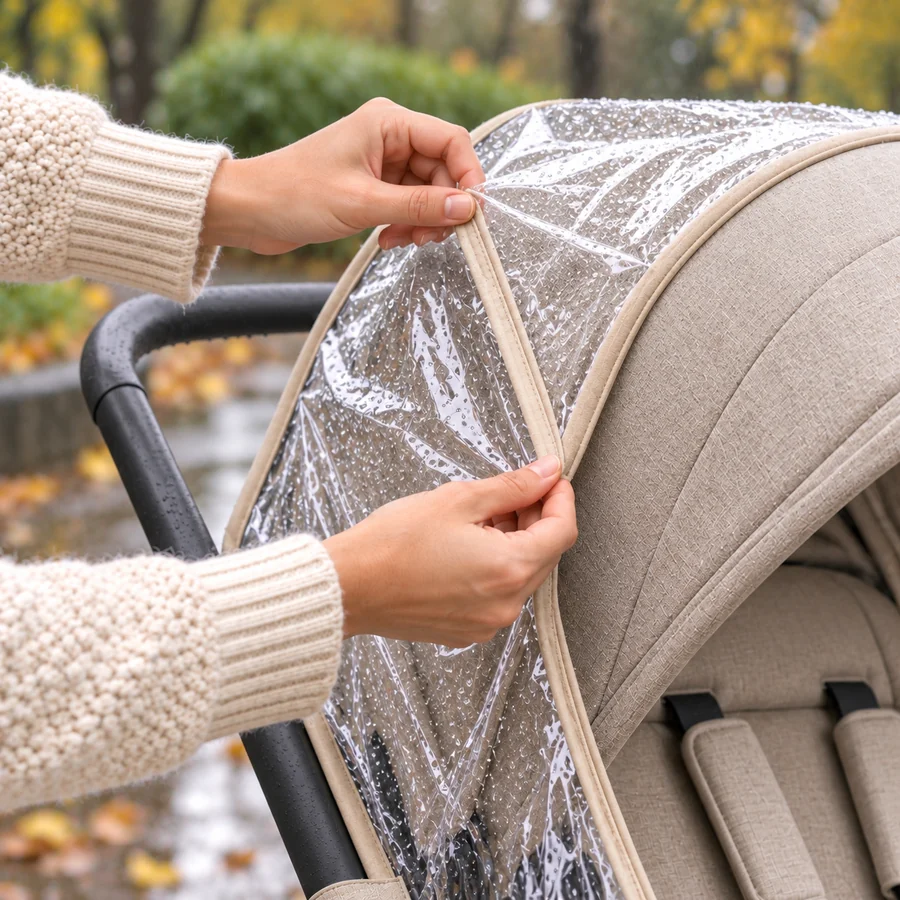
1. Canopy up, then the cover
Pull the canopy out, then draw the cover over it and down the front. Try it once at home on a dry day, so it goes on fast when the rain starts.
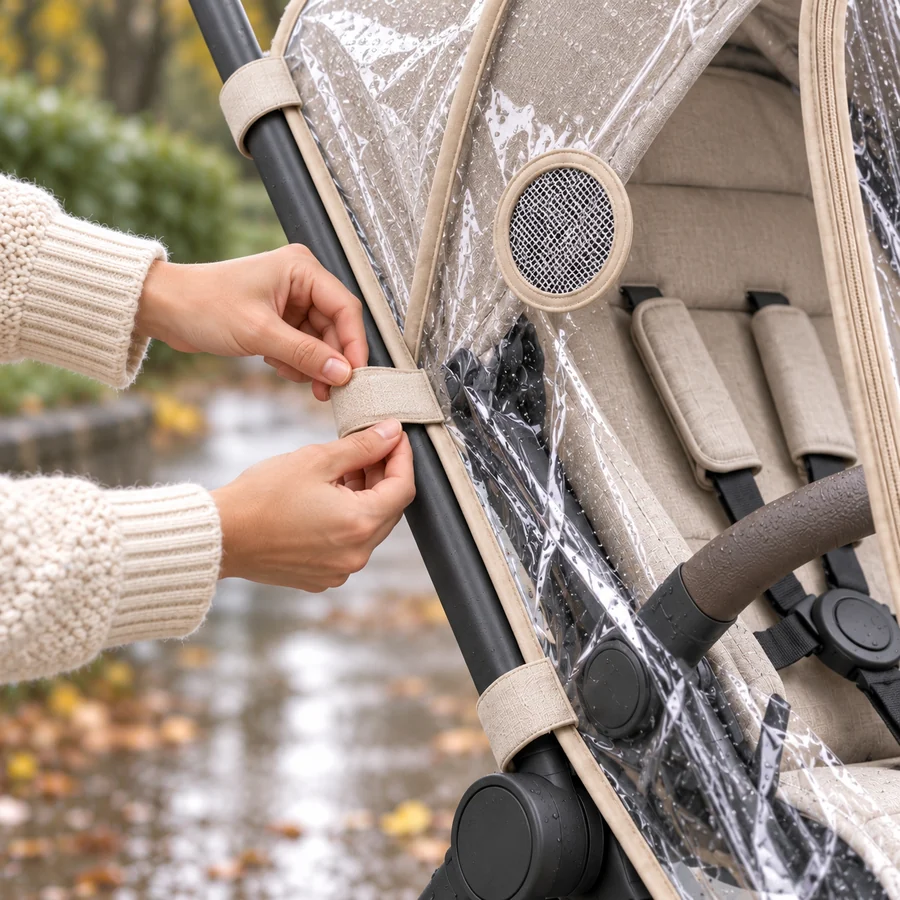
2. Fasten it, check the vents
Do up every strap so it cannot flap. Check the vents are open, and that the plastic does not touch your baby's face.
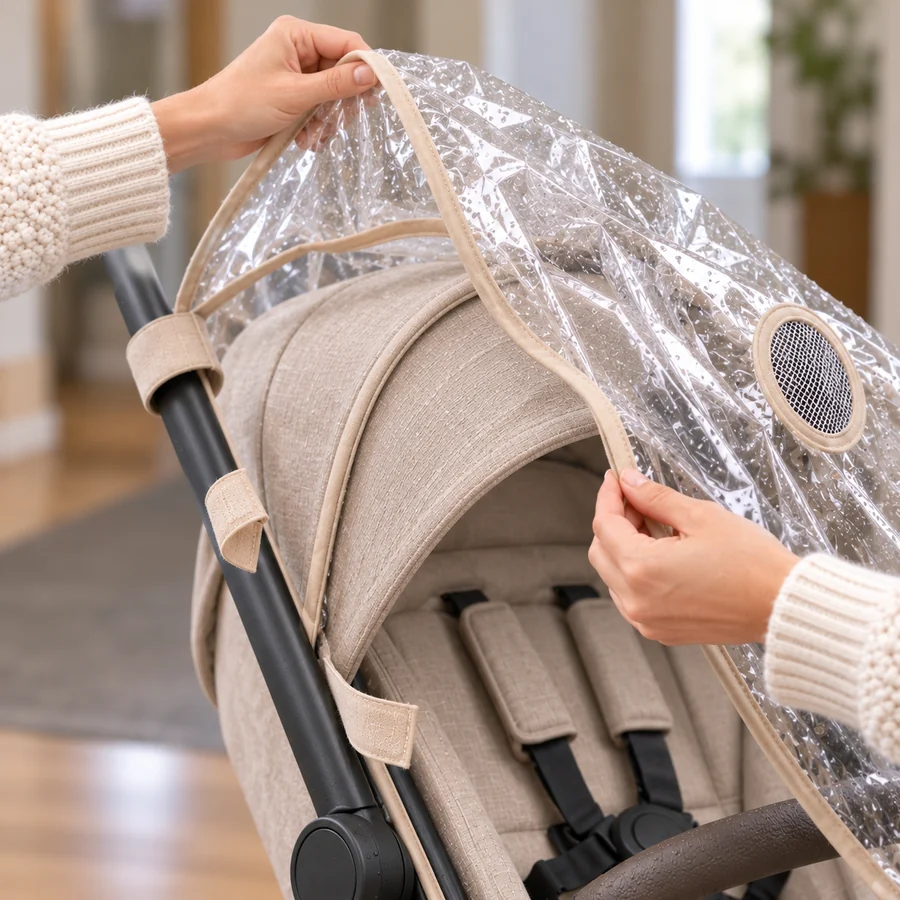
3. Take it off when the rain stops
Take it off indoors too: in a shop, on a bus, at home. Under plastic, heat and damp build up fast. Take it off before you fold the stroller, so the frame does not crease or tear it.
When it steams up
Mist on the inside is your baby's warm breath meeting cold plastic. It means the air under the cover is getting damp, so let more in: open the window a little and check the vents are clear.
If your baby's neck feels warm or sweaty, take off a layer too. Wipe the inside with a soft cloth once you are home.
Questions parents ask
Can a baby breathe under a rain cover, and is it safe?
Yes, under a cover made for strollers, because air comes in through its vents. Air has to keep flowing, so keep every vent open and feel the back of your baby's neck now and then.
Can my baby nap under the rain cover?
Yes, on a walk in the rain, as long as you keep checking. Once the rain stops or you go indoors, lift the cover off, even if your baby is asleep.
Can I leave the rain cover on in the car?
No. Take it off before the car seat goes into the car. Makers say a rain cover is not for closed spaces, because it gets hot inside fast.
What should my baby wear under a rain cover?
The clothes the temperature calls for, with no extra layer for the rain. The guide to rainy-day walks has the full outfit.
Can I use a rain cover as a sun shade?
No. Sunlight comes through clear plastic, and the heat stays in. For sun, use the canopy or a stroller sunshade.
Can I use it on a cold, windy day?
Check its instructions first, because some makers say to use it only while it rains. On a dry, windy day, pull the canopy forward and dress your baby a little warmer.
Can drivers see the stroller in the rain after dark?
Less well, because rain and darkness together make walkers hard to see. On dark, rainy afternoons, clip reflectors low on both sides of the stroller frame.
Can I use a plastic bag or a poncho instead?
No. A loose sheet has no vents, and the wind can push it against your baby's face. If rain catches you without a cover, wait in a doorway with the canopy up.
My toddler hates the rain cover. What can I do?
Open the front window so your toddler can see out, and fasten every strap so it cannot be pulled up. If nothing helps, a raincoat with the canopy pulled forward keeps your toddler dry instead.
How do I clean a rain cover, and can it go in the washing machine?
No, it does not go in the washing machine. Wipe it with a sponge and soapy water, then let it dry open before you fold it, because a cover folded wet gets marks and a smell. Keep it out of direct sun and a hot car.