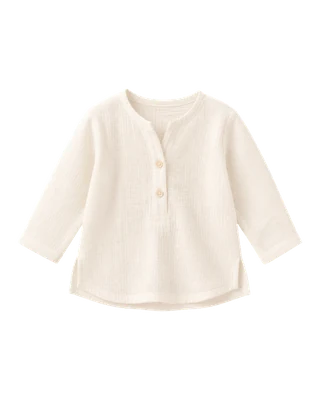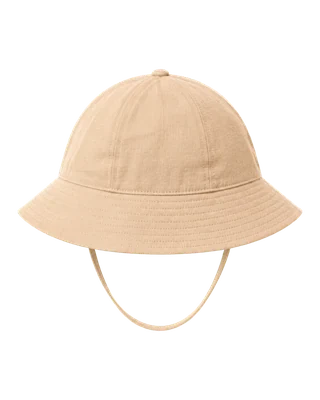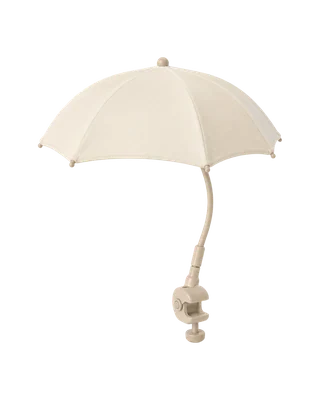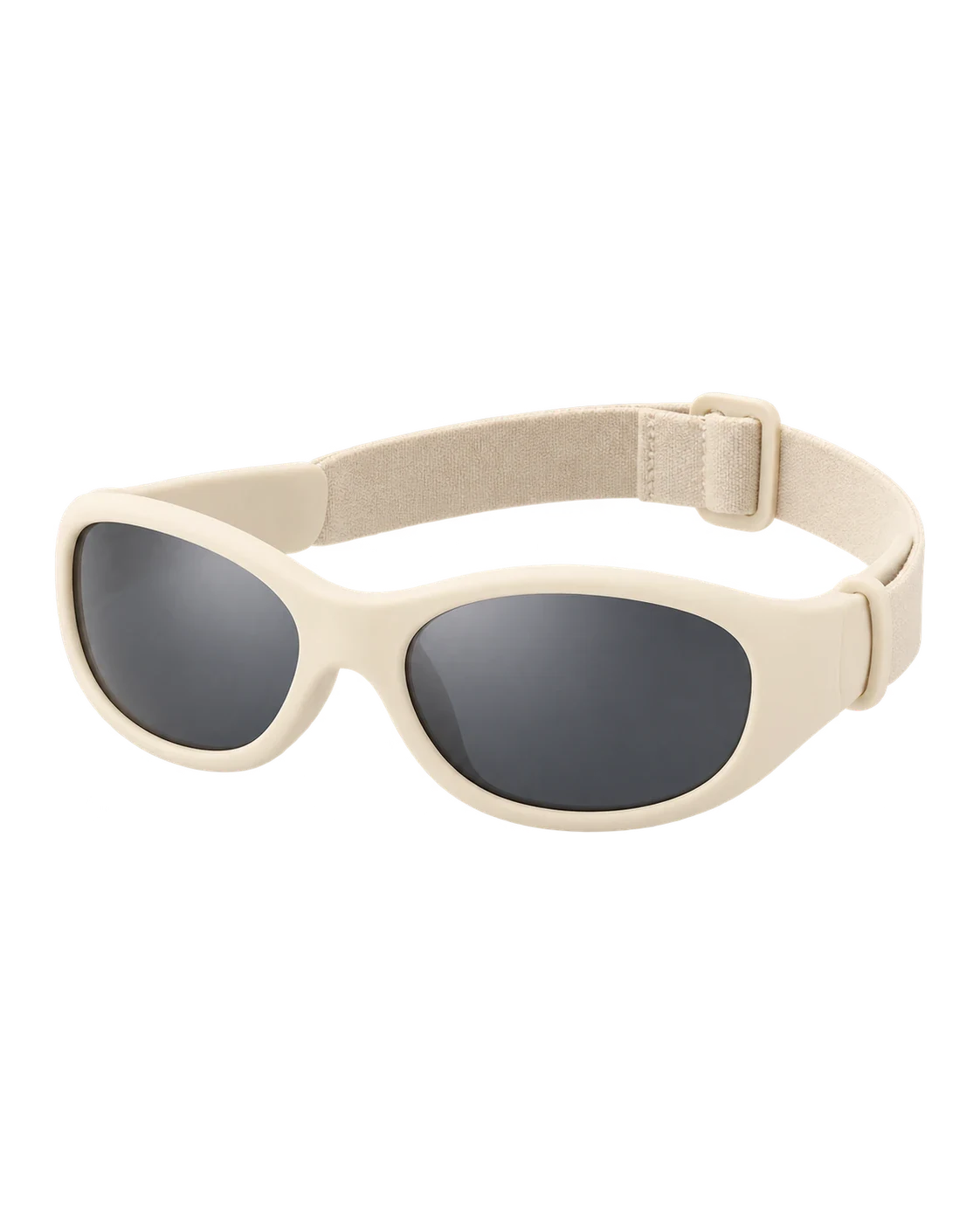
Sunscreen filters the sun's UV rays, the invisible part of sunlight that burns skin. For a baby it is the last layer of protection: shade, a sun hat and light clothes over the arms and legs come first. Sunscreen covers what they leave bare, usually the face, ears, backs of the hands and feet.
Use it from 6 months, whenever the UV index (the forecast's number for sun strength) is 3 or more, even on a cool or cloudy day. Skip it on covered skin, or when the UV index stays below 3.
- For ages6+months
- Reapply every2hours
- Use it fromUV 3
When can babies wear sunscreen?
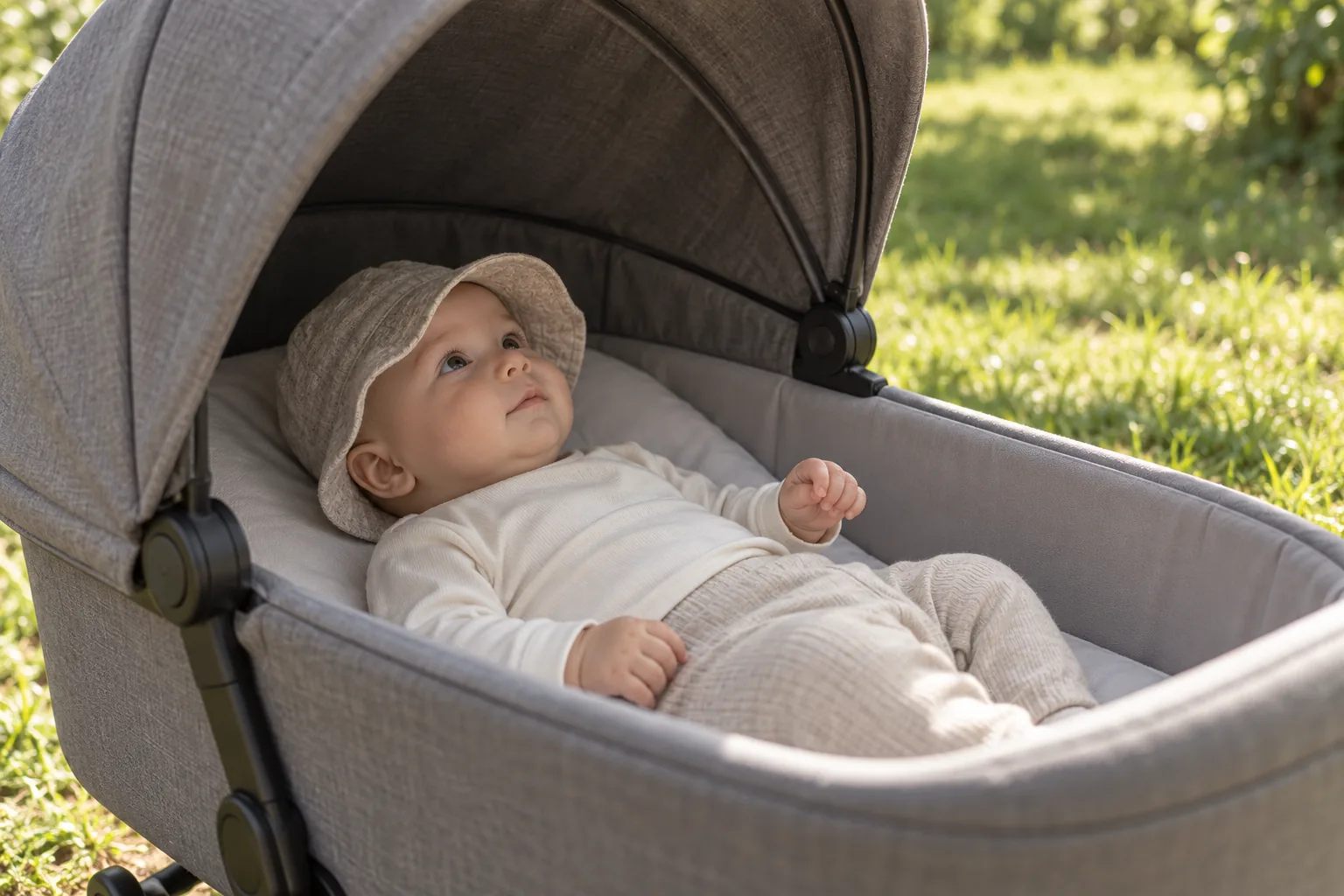
From 6 months. Before that, keep your baby out of direct sun. Use shade, light long sleeves and long pants, and a brimmed sun hat.
Sunscreen this young is a last resort, for when there is really no shade, and then only a little on small areas such as the face.
So if you know a day will bring sun you cannot avoid, ask your pediatrician beforehand. Then keep to a dab of mineral sunscreen on the face and the backs of the hands.
Mineral or chemical sunscreen?
Mineral is the better pick for babies. To tell which kind a sunscreen is, look for zinc oxide or titanium dioxide in the ingredients list.
Mineral
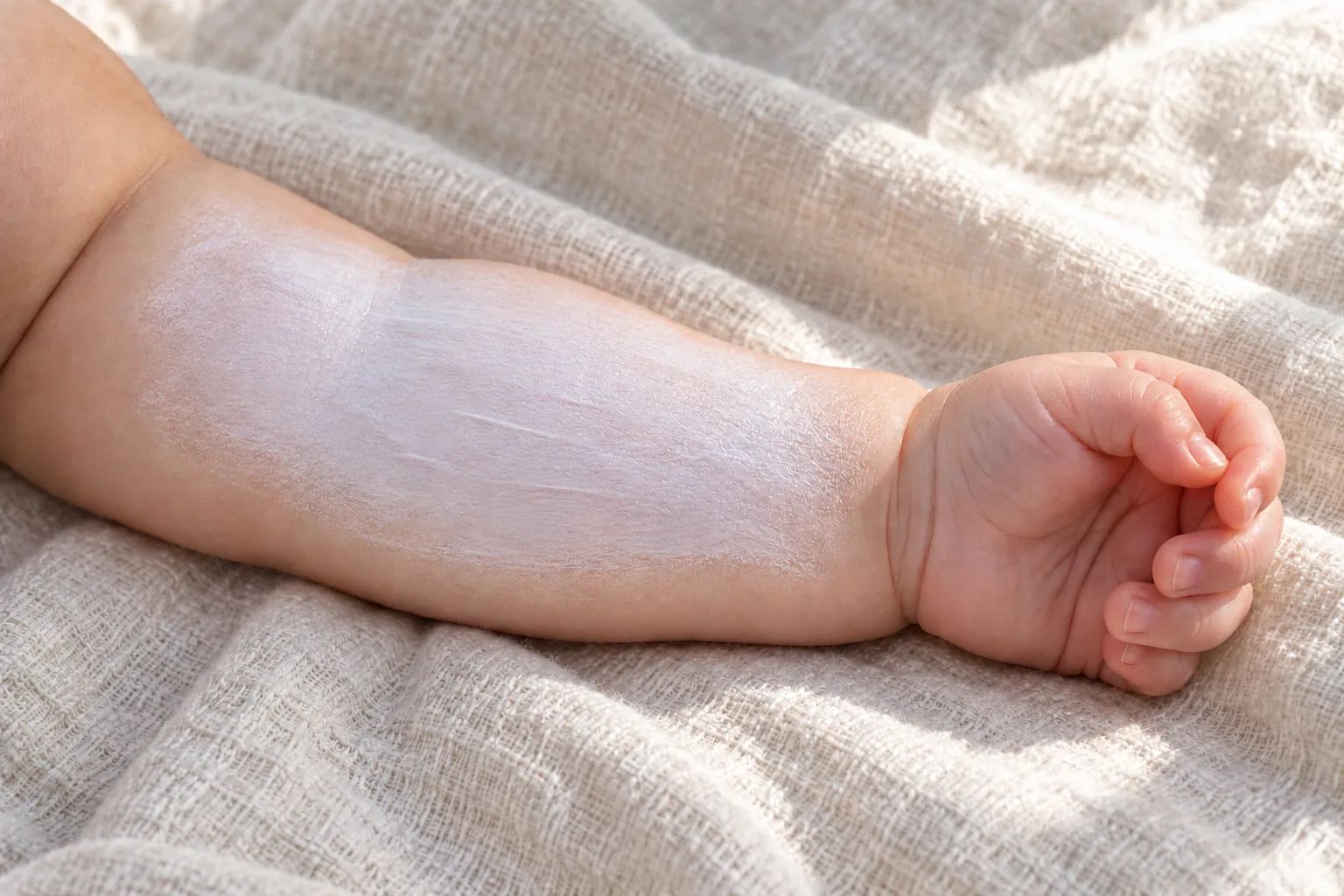
Its only UV filters (the ingredients that block the sun's rays) are zinc oxide, titanium dioxide or both. It is the kind least likely to cause a rash, which is why it suits babies. The cream is thick, and some of it stays visible on the skin.
- Good: Rarely irritates skin
- Not good: Can leave a white sheen
- Not good: Slower to rub in
Chemical
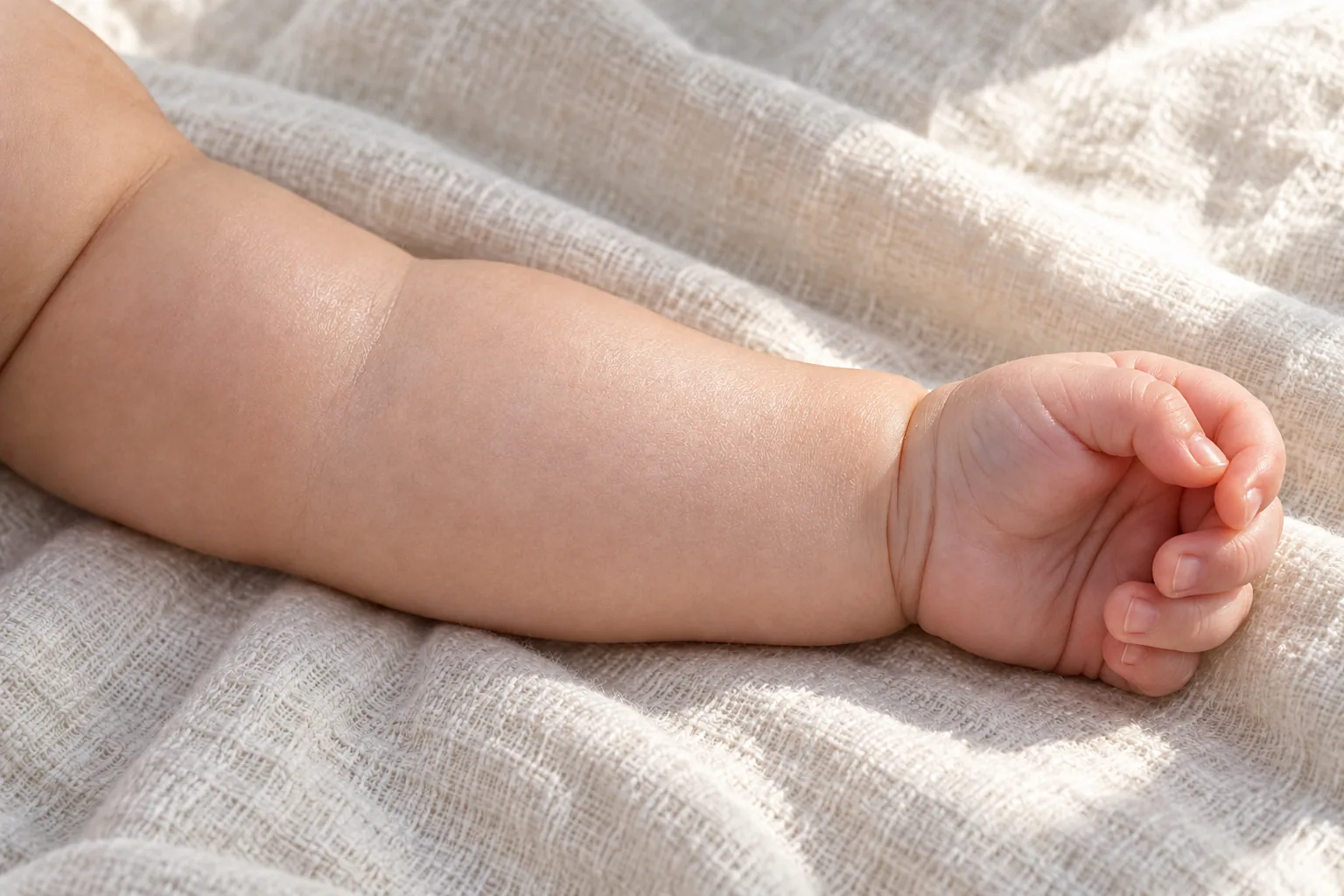
It uses other filters, such as avobenzone or octocrylene. It goes on thin and leaves nothing to see, but it stings or irritates sensitive skin more often.
- Good: Rubs in clear
- Good: Quick to spread
- Not good: More likely to irritate skin
Cream, stick or spray
Cream or lotion
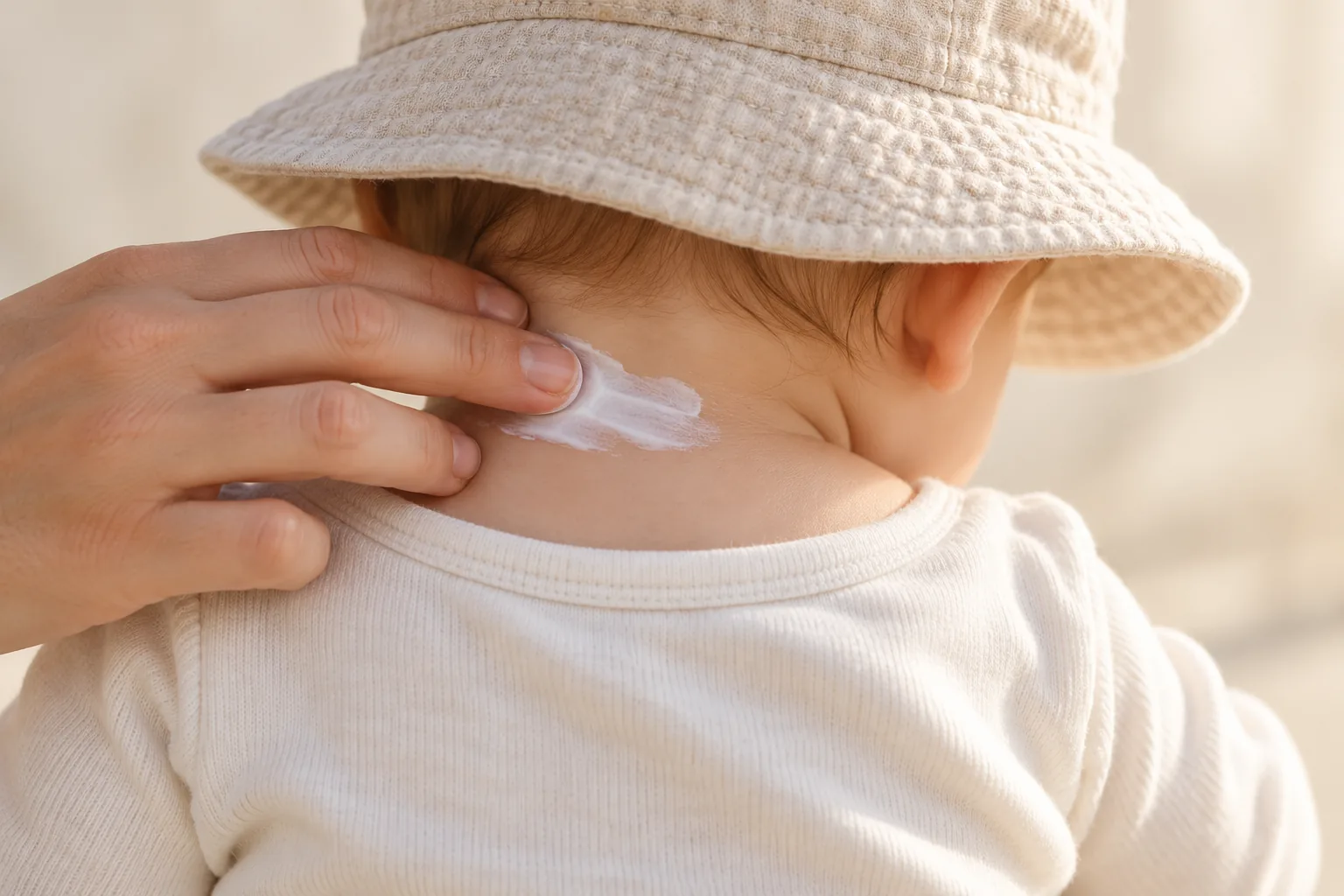
In a tube or a pump. The one for the neck, and for arms and legs on a beach or pool day. You can see how much you use, and it spreads evenly.
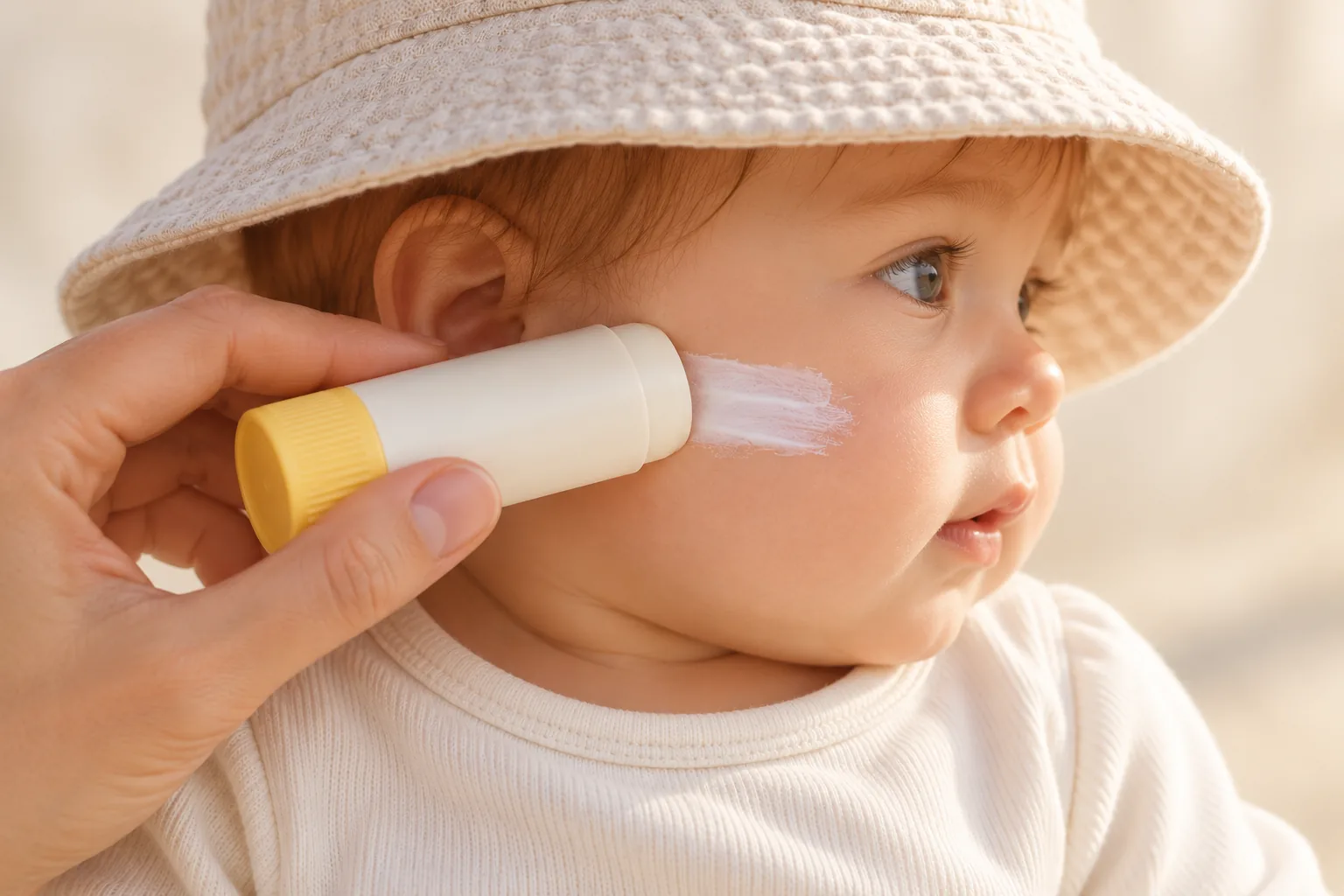
Stick
Like a big lip balm. It goes on just where you put it, so it is the easiest way to do the face. Too slow for arms and legs.
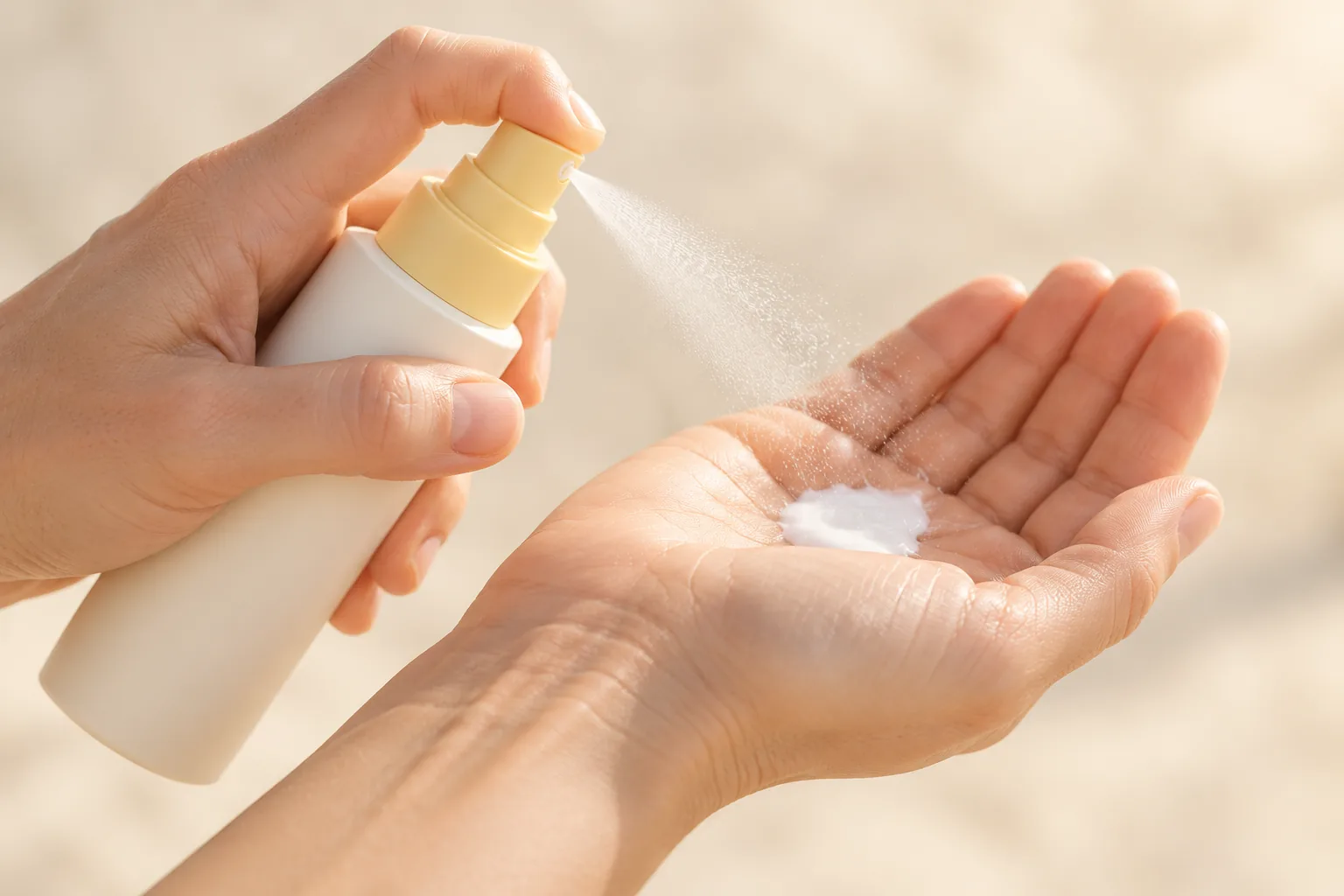
Spray
Aerosols are pushed out by a gas (a propellant) that is not recommended for babies, and it is hard to tell if you used enough. If you use a spray, spray it into your hand, never at the face, and rub it on. That makes it no quicker than cream.
How to choose baby sunscreen
1. Broad spectrum
SPF (sun protection factor) only rates protection from sunburn, which comes from UVB rays. Broad spectrum means it filters UVA rays too, and only a broad spectrum sunscreen lowers the risk of skin cancer as well. UK and European labels show a UVA mark instead.
- Good: Broad Spectrum on the label
- Good: UVA in a circle, or 4 or 5 UVA stars
- Not good: No Broad Spectrum or UVA mark
2. SPF 30 or higher
Use at least SPF 30, which filters about 97% of the burning rays. Above 50, there is no good evidence yet that it adds anything.
- Good: SPF 30, 50 or 50+
- Not good: Below SPF 30
- Not good: Paying extra for SPF 70 or 100
3. No added fragrance
Fragrance does nothing for sun protection, and some fragrance ingredients can cause skin reactions. On the ingredients list it shows as fragrance or parfum. Unscented is not the same as fragrance-free: it can still hold a little fragrance to mask other smells.
- Good: Fragrance-free on the label
- Good: No fragrance or parfum listed
- Not good: Unscented, yet fragrance listed
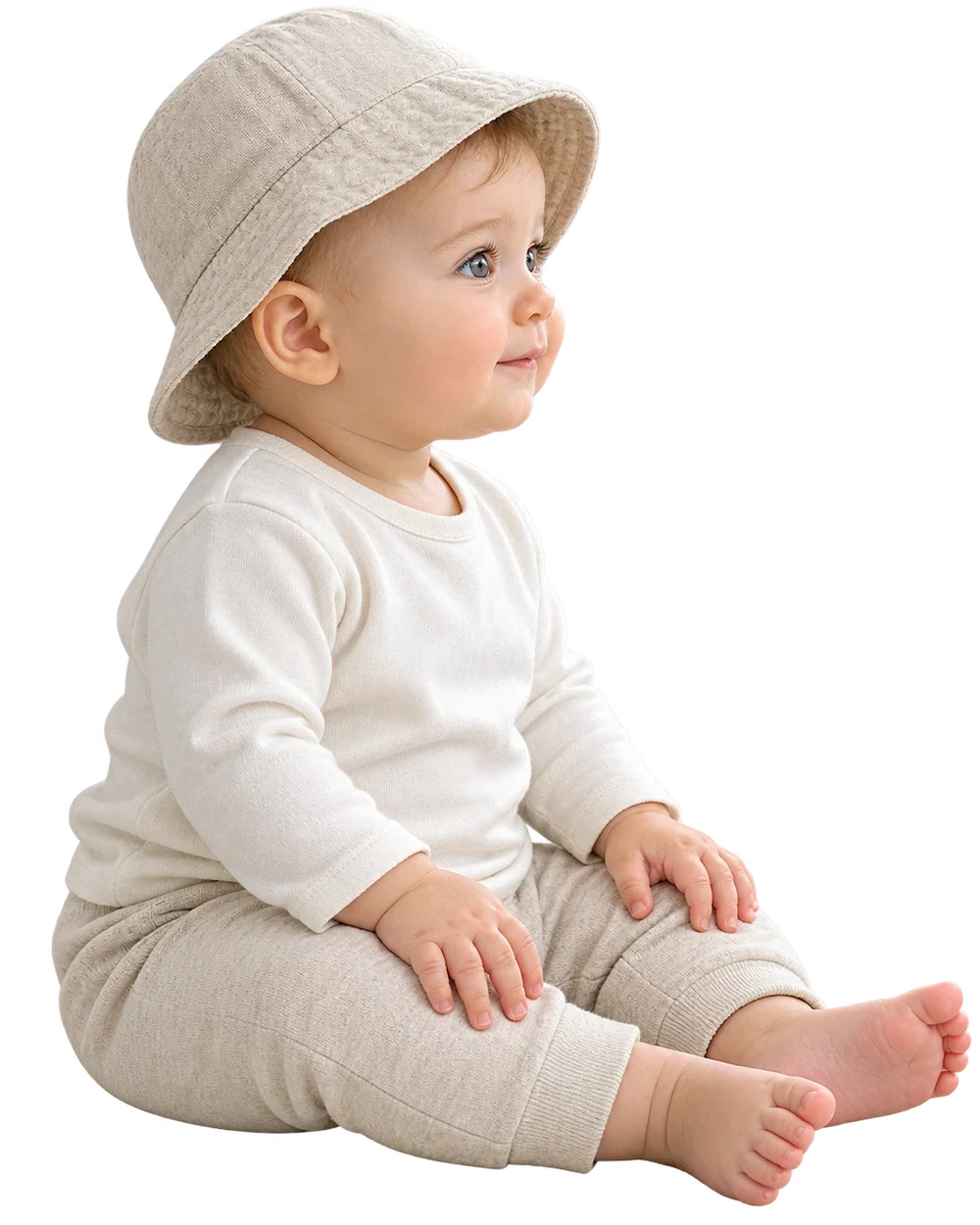
Where to put it
Put it on at home, 15 to 30 minutes before you go out, so it can soak in. Use plenty: most people put on too little.
Nose and cheeks
Sensitive spots that burn easily.
Ears
Rub it over the tops as well.
Back of the neck
Unless the hat has a neck flap.
Backs of the hands
Not the palms, which go in the mouth.
Tops of the feet
When your baby is barefoot or in sandals.
Questions parents ask
I already put sunscreen on my baby under 6 months. Is that bad?
It is not an emergency. Wash it off at bath time, and call your pediatrician if a rash appears. Next time, try shade first.
Why can't babies under 6 months wear sunscreen?
They can if there's truly no shade, but this young, shade simply does the job better. A young baby's skin is thinner and reacts more easily, so a rash from sunscreen is more likely, and a baby this small also overheats easily, which shade helps with and sunscreen doesn't.
How do I put sunscreen on my baby's face?
With a stick, glided over the nose, cheeks and chin, keeping clear of the eyes. If any gets in the eyes, wipe the eyes and the hands with a clean, damp cloth.
How often should you reapply sunscreen on a baby?
Every 2 hours, and straight away after swimming, sweating or a towel dry. A higher SPF does not make it last longer. That's also why a sunscreen with bug spray mixed in doesn't suit a child: insect repellent goes on separately, on top, and far less often.
Do I need a baby sunscreen, or will a kids' or adult one do?
Any of them will do from 6 months, if it is mineral, broad spectrum, SPF 30 or higher and fragrance-free. Baby and kids' versions protect the same way, and they are less likely to contain additives that might irritate the skin. They suit adults too, so one tube can do the whole family.
What ingredients should I avoid in sunscreen?
Skip oxybenzone where you can, because of concerns about mild hormonal effects, though any sunscreen is better than none. The two mineral filters, zinc oxide and titanium dioxide, have the most safety data behind them. Most other filters still need more study, though none has been ruled unsafe.
Does my baby need sunscreen in the shade?
Yes, from 6 months, on bare skin when the UV index is 3 or more. Shade cuts out a lot of sun, but UV still bounces off water, sand, snow and concrete.
What sunscreen is best for a baby with eczema or sensitive skin?
A mineral one with no fragrance, which dermatologists recommend for sensitive skin. Test it first on a small patch of the inner forearm for several days in a row, and change products if the skin turns red.
Is sunscreen waterproof?
No. Every sunscreen washes off in the end. For the pool or the beach, choose one labeled water resistant: it keeps working for 40 or 80 minutes in the water (the label says which), then it needs to go on again.
What should I do if my baby gets sunburned?
Get into the shade and lay a cool, damp cloth on the skin. Any sunburn on a baby under 1 year is worth a call to your pediatrician. The sunny day guide lists the signs that need care straight away.
Does a baby with dark skin need sunscreen?
Yes, from 6 months, the same as any baby. Babies with darker skin tones can still get sunburned.
Do I need to wash sunscreen off my baby?
Wash it off at bath time, with water and your usual mild baby wash. Water-resistant sunscreen is made to stay on in water, so a rinse alone leaves some behind.