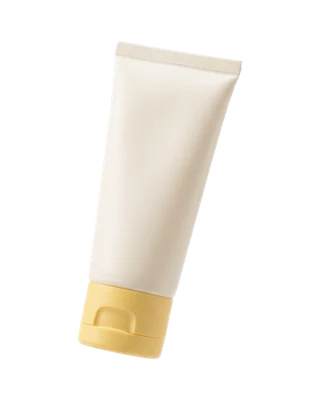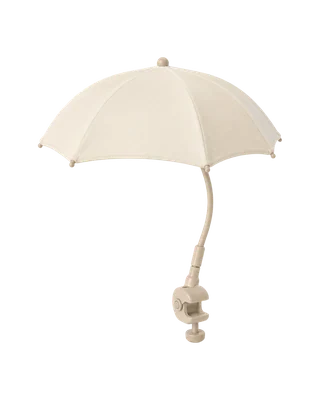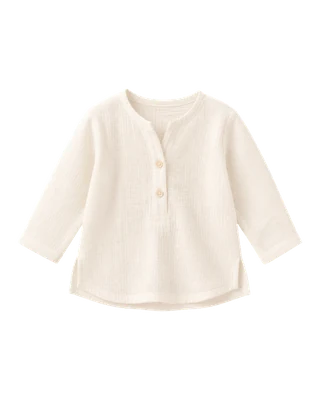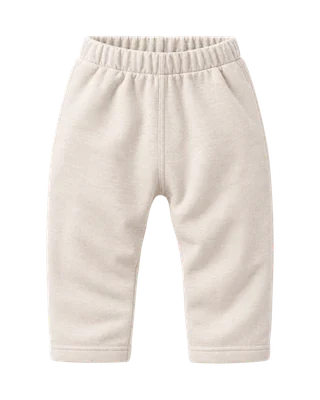
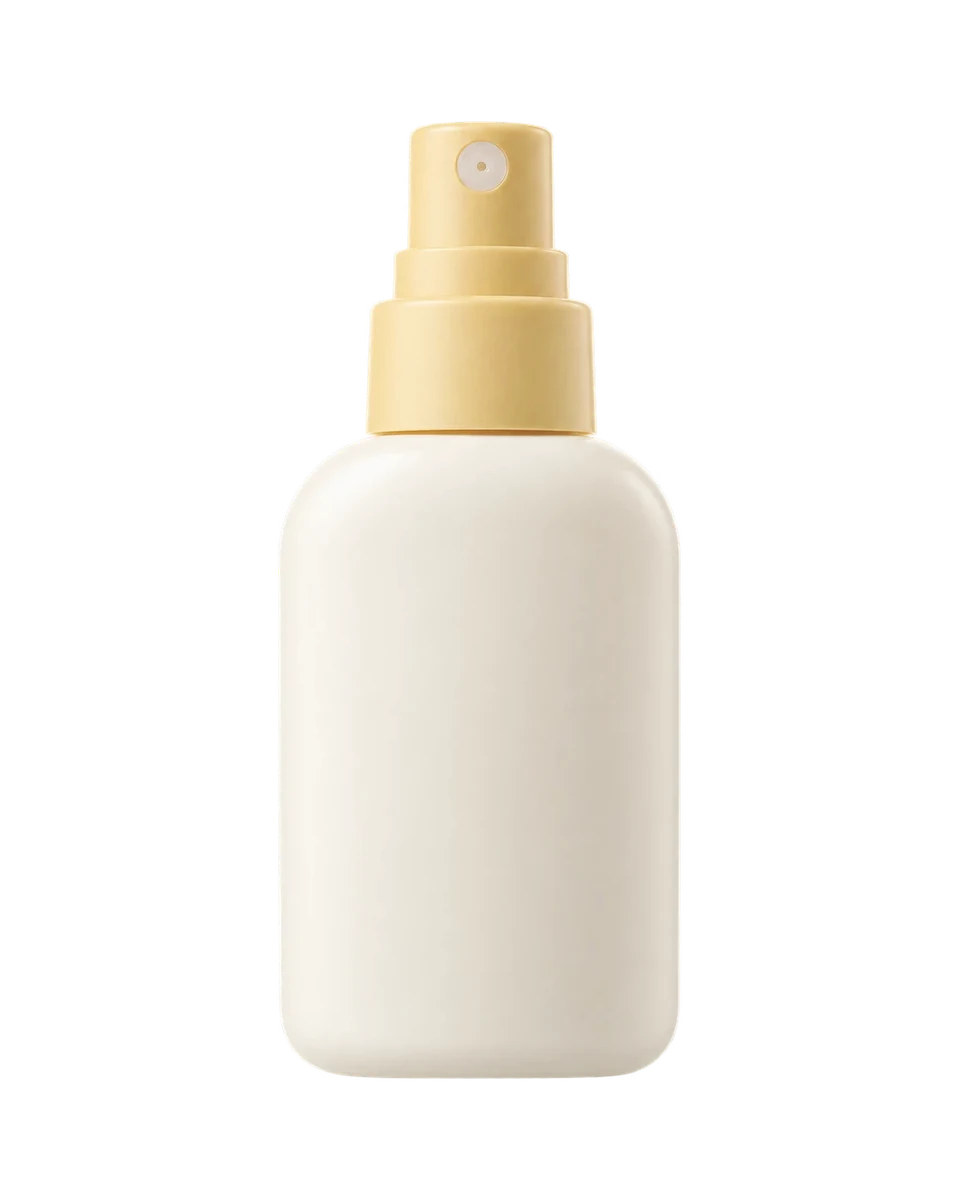
Insect repellent keeps mosquitoes and ticks from finding your child for a few hours. It doesn't kill them. It makes your child hard to find, so far fewer of them bite, and that matters most where they carry illness: ticks can pass on Lyme disease, and in some warm countries mosquitoes carry malaria or dengue.
Most days you won't need it. Pack it for evenings by a lake or a river, walks through long grass and woods, and holidays somewhere warm where mosquitoes carry disease. For a walk in town, leave it at home.
- For ages2+months
- You'll need1
- Use itIn summer
When can babies wear bug spray?
Not in the first 2 months. Until then, a net over the stroller and long, light clothes keep the bites off (more on that below).
After that, there's no single answer, and that's normal. There's little research on repellents in babies, so each country's experts draw a careful line in a different place, and they allow more where mosquitoes carry disease. The US and the UK start at 2 months, Canada and France wait until 6, and the age also depends on the ingredient. These are recommendations, not laws: follow the advice where you live and the age on the bottle you buy.
Youngest age for each repellent, by country
| DEET | Picaridinicaridin | IR3535 | Lemon eucalyptusOLE, PMD | |
|---|---|---|---|---|
| US | 2months10 to 30% | 2months | 2months | 3years |
| UK | 2months | On the label | On the label | On the label |
| Canada | 6monthsup to 10%, once a day until 2 | 6monthsup to 20% | On the label | 3years |
| France | 2years | 1year | 6monthsa low strength first | Not approved |
| Germany | On the label | On the label | On the label | On the label |
"On the label" means there's no national age, so the one printed on the bottle counts. In Germany, even two icaridin sprays of the same strength can say 1 year on one bottle and 2 on the other. Living somewhere else? Go by the bottle, and ask at the pharmacy which ones suit a baby.
Protecting a baby from mosquitoes without repellent
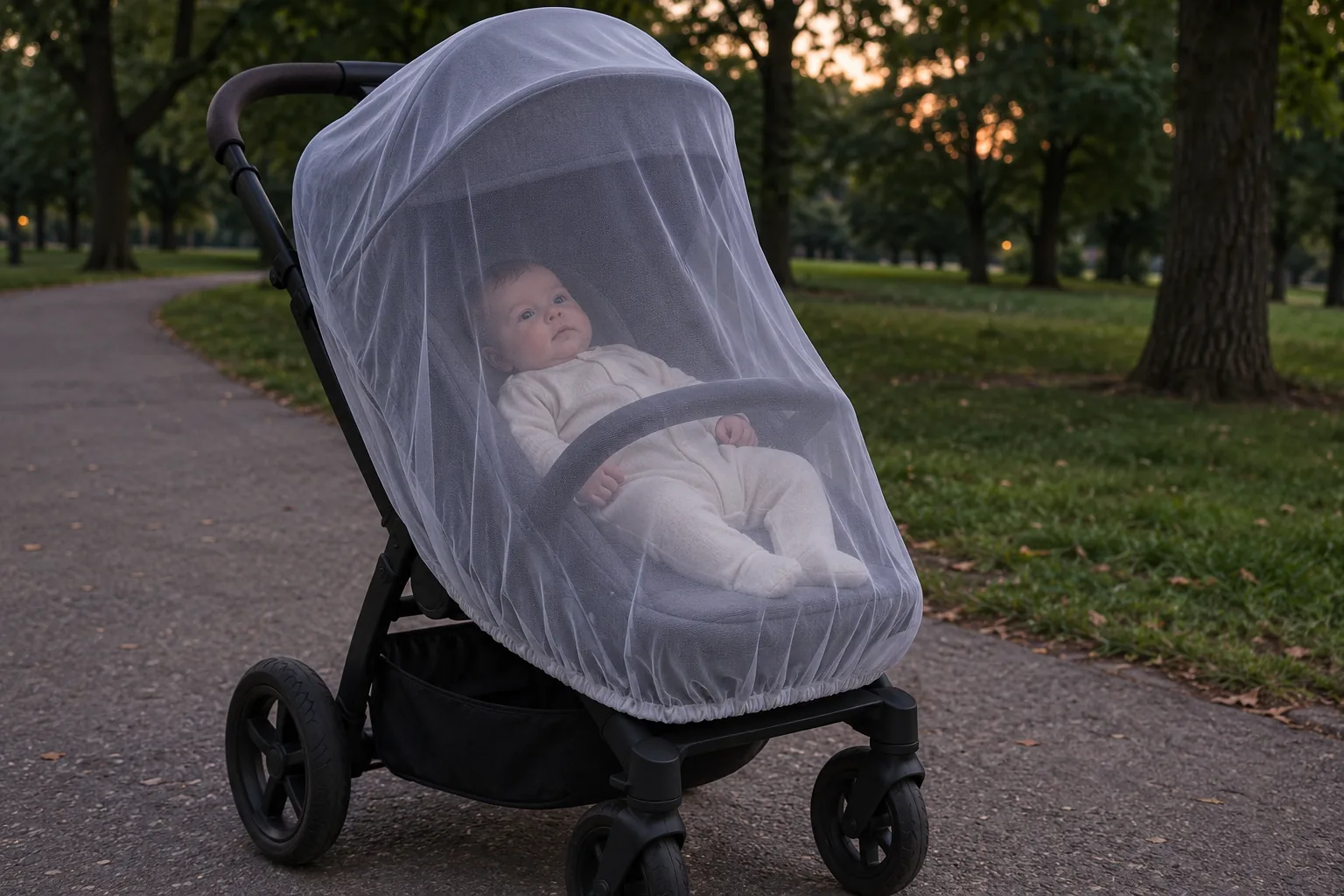
Before the first repellent, and alongside it later, a net and clothes do most of the work. A fine net over the whole stroller or carrier, pulled taut and tucked under all round, leaves no gap for a mosquito. Keep it clear of your baby's face and hands, so it can't be grabbed and sucked, and in the heat keep your baby in sight, because a full cover lets less air through, just as a sunshade does.
Where mosquitoes get indoors at night, a net over the crib or travel cot does the same job. By day, dress your baby in loose, light long sleeves and long pants with socks, and skip scented creams, which may draw insects in. Many mosquitoes bite most in the evening, so move a walk by water to earlier in the day.
Types of insect repellent
Every repellent tested to work for hours has one of these four in it. You'll find the name in the small print on the back, under active ingredient, with its strength in percent. Each has an outing it suits best.
 Woods and tropical trips
DEET
The oldest and the strongest, in use for more than 50 years. It's the one to pack for woods full of ticks and for trips where mosquitoes carry disease. It feels a little oily, and it can mark plastic and synthetic fabric, so keep it off sunglasses and the stroller.
- Good: Strongest protection
- Good: Longest track record
- Not good: Oily feel
- Not good: Can mark plastic
 Evenings outside
Picaridin
Called icaridin in Europe. It has hardly any smell and leaves plastic alone, and a 20% lotion lasts through a long evening outdoors. Against ticks it's a little weaker than DEET.
- Good: Hardly any smell
- Good: Leaves plastic alone
- Not good: A little weaker on ticks
 Short outings
IR3535
Mild, with very little smell, and a gentle first choice for a baby from 6 months. It wears off sooner against some mosquitoes, so it suits a walk in the park better than a long evening.
- Good: Mild, very little smell
- Not good: Wears off sooner
 Plant-based
Oil of lemon eucalyptus
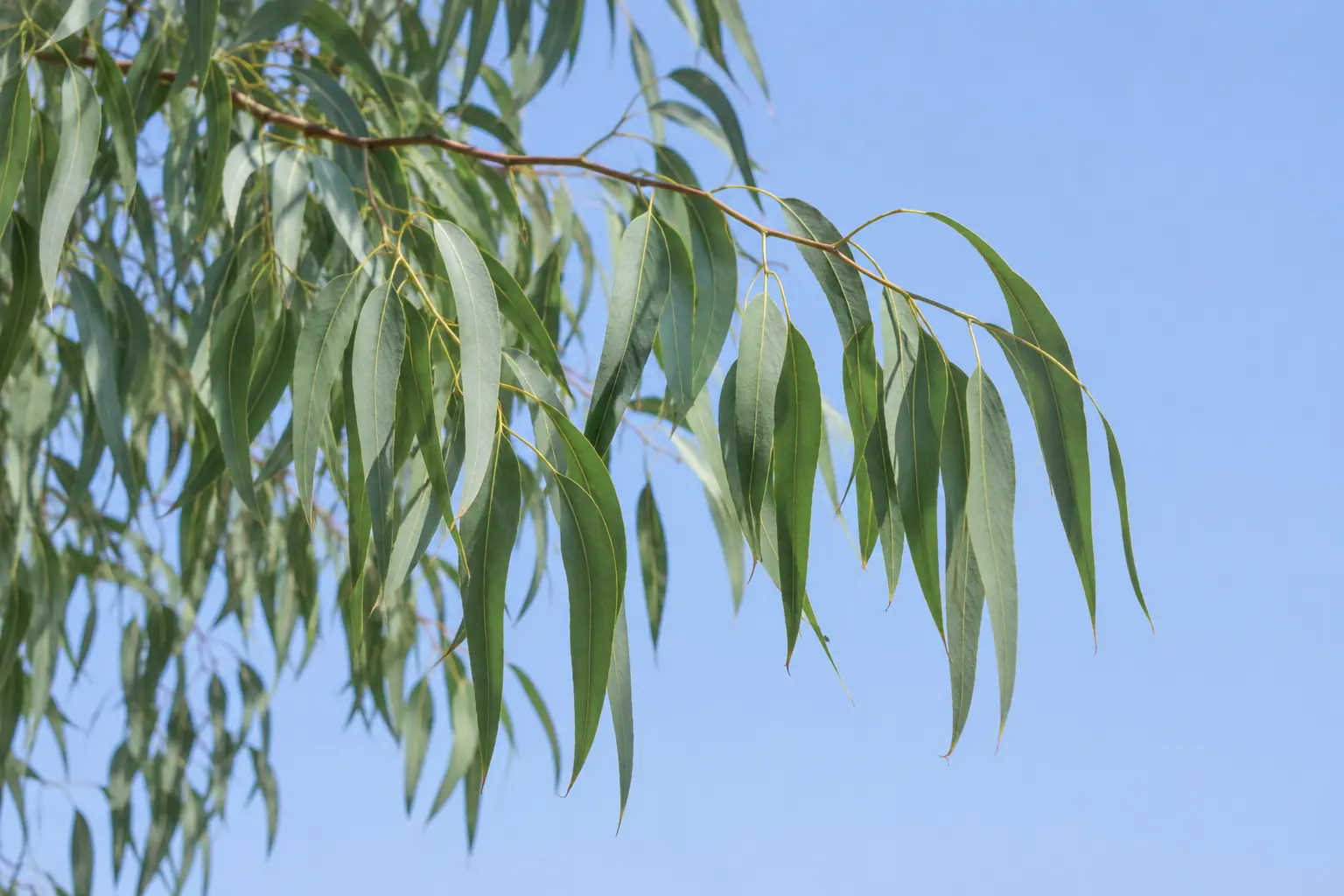
Made from the leaves of the lemon eucalyptus tree, then refined and tested as a repellent. The label may call it OLE, PMD or Citriodiol. It's the plant-based choice once your child is old enough. The lemon eucalyptus oil sold in little dropper bottles is something else, and it hasn't been tested as a repellent.
- Good: Plant-based and tested
- Not good: Not under 3 in the US and Canada
How to choose insect repellent
1. A tested active ingredient
Turn the bottle over and find one of the four above among the active ingredients, with its percentage. A bottle with only plant oils won't protect for long. US labels also show an EPA registration number.
- Good: One of the four, with its %
- Good: EPA Reg. No. on US labels
- Not good: Only plant oils listed
2. An age that fits your child
The youngest age is printed on the label, and it differs from product to product. Go by that line, not by Kids or Family on the front.
- Good: Your child's age covered
- Not good: Only Kids on the front
3. A strength for the time outside
The percentage tells you how long it lasts, not how well it works: DEET at 10% covers about 2 hours, and picaridin at 20% a long day. Above 50%, DEET lasts no longer. Pick the lowest that covers your outing, so less of it goes on your child.
- Good: Low % for a short walk
- Good: Higher % for a long day
- Not good: DEET above 50%
4. A lotion, stick or pump spray
These go only where you put them. An aerosol sends a mist into the air your child breathes, so if you use one, spray it outdoors into your own hands.
- Good: Lotion, stick or pump spray
- Not good: Aerosol can
How to put insect repellent on a child
You put it on, not your child. On a sunny day, sunscreen goes on first and the repellent on top.
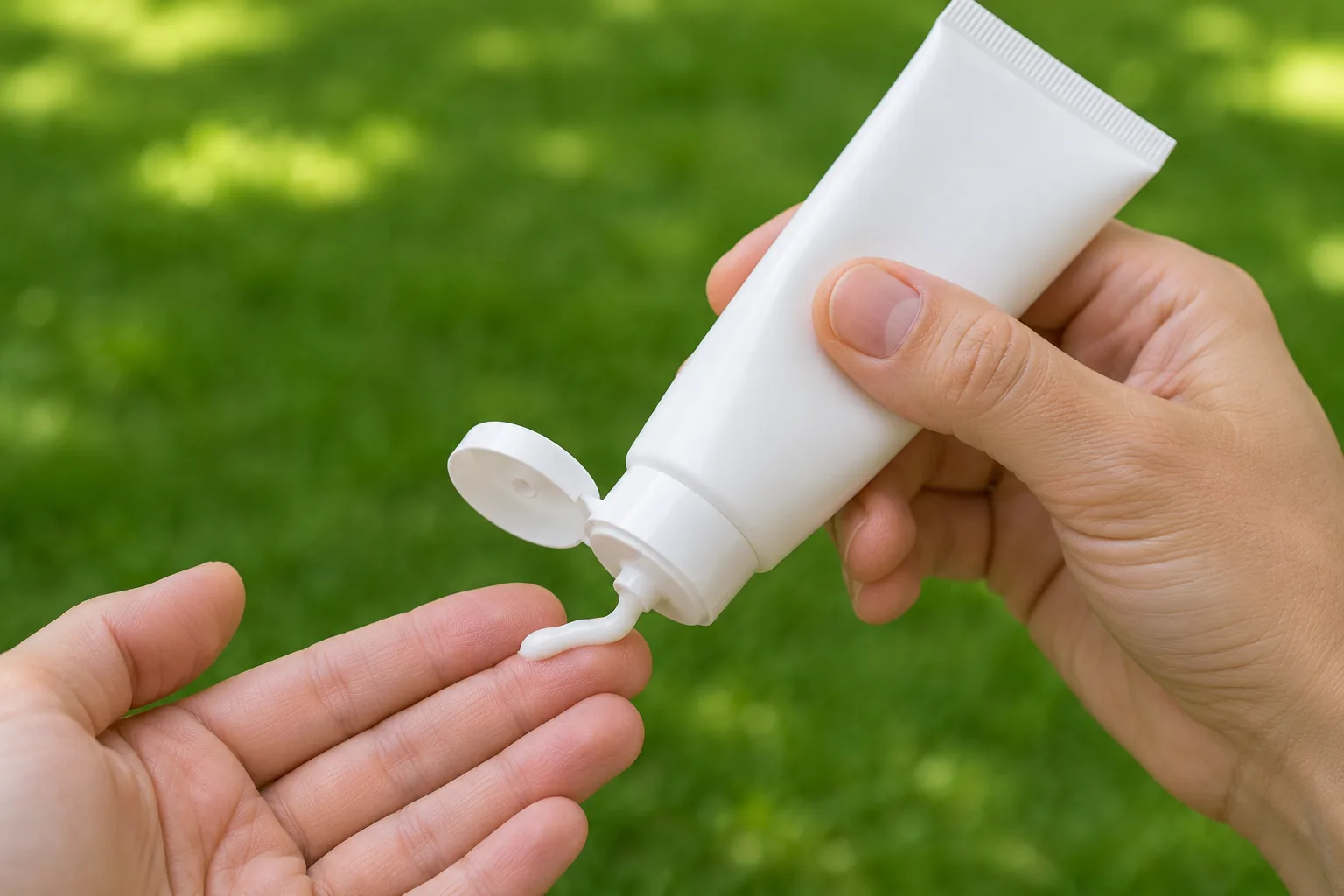
1. Into your hands first
Squeeze or spray it into your own hands, then spread it on, so it only goes where you mean it to.
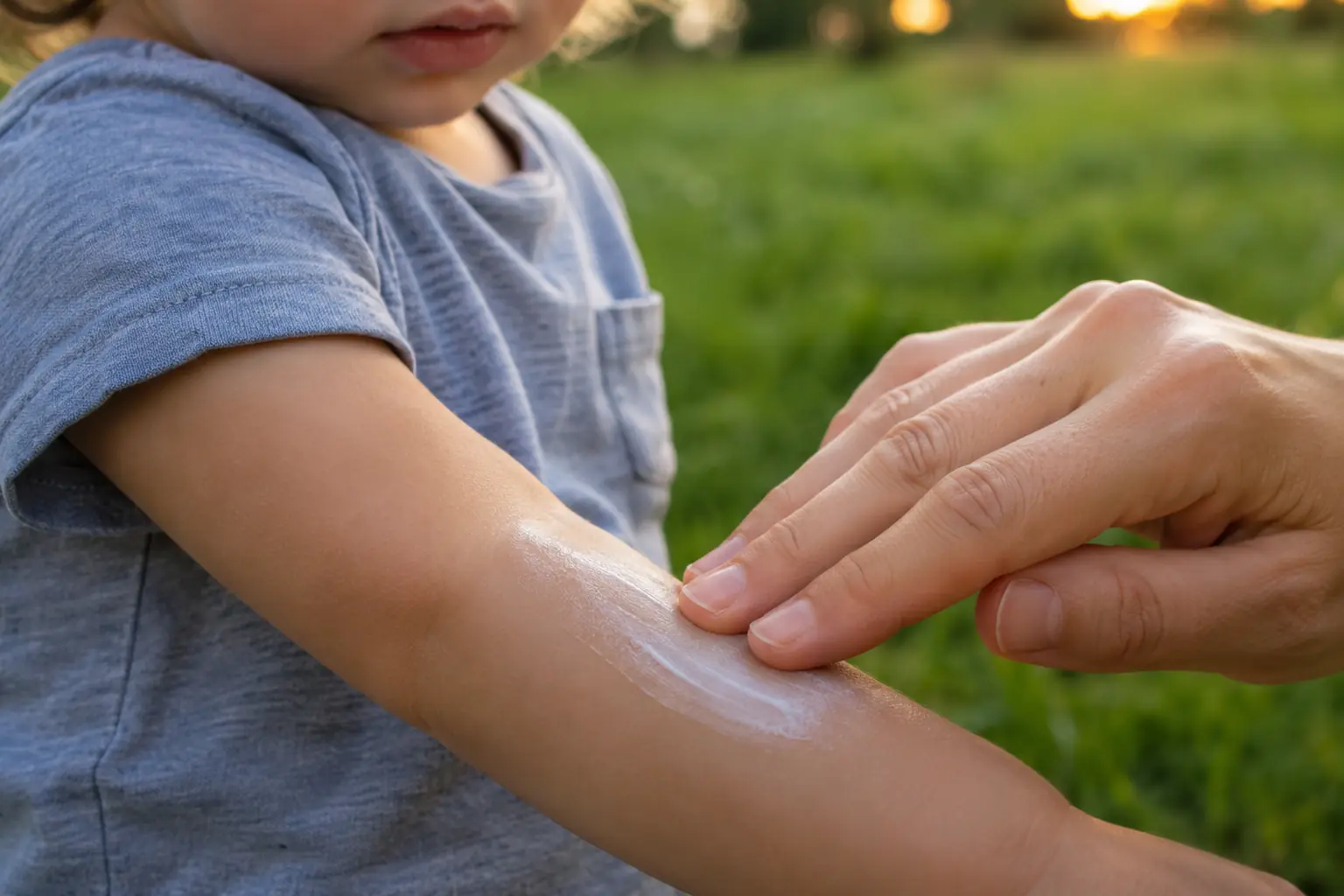
2. A thin layer on bare skin
Arms, legs and the back of the neck. On the face, just a little from your fingertips over the cheeks and forehead, away from the eyes and mouth. Leave out the hands, which end up in the mouth, and any cuts or sore skin. A thin layer is enough: more doesn't work better.
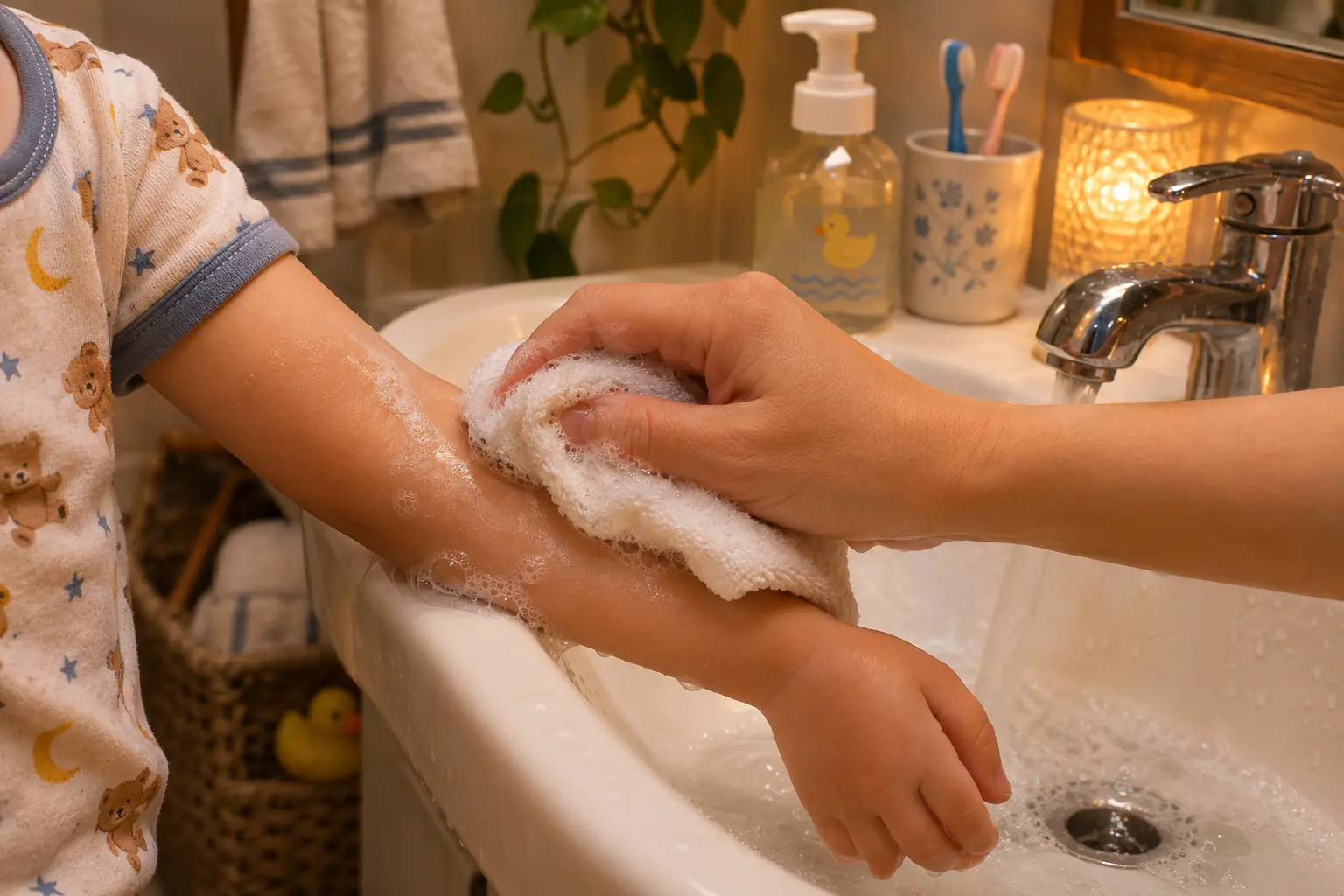
3. Wash it off at bedtime
Back home, wash it off with soap and water, or give your child a bath.
Checking for ticks after a walk
Ticks wait on tall grass and low bushes and climb onto whoever brushes past. Repellent on bare legs keeps many of them off, and a check the same evening finds the rest. They're smaller than you'd think: a young tick is about the size of a poppy seed, a grown one the size of a sesame seed, and the bite doesn't hurt. So look after any walk through grass or woods, and after an afternoon in the garden too where ticks are common.
A bath within two hours of coming in helps wash off the ones that haven't bitten yet, and 10 minutes in a hot dryer kills any left on dry clothes.
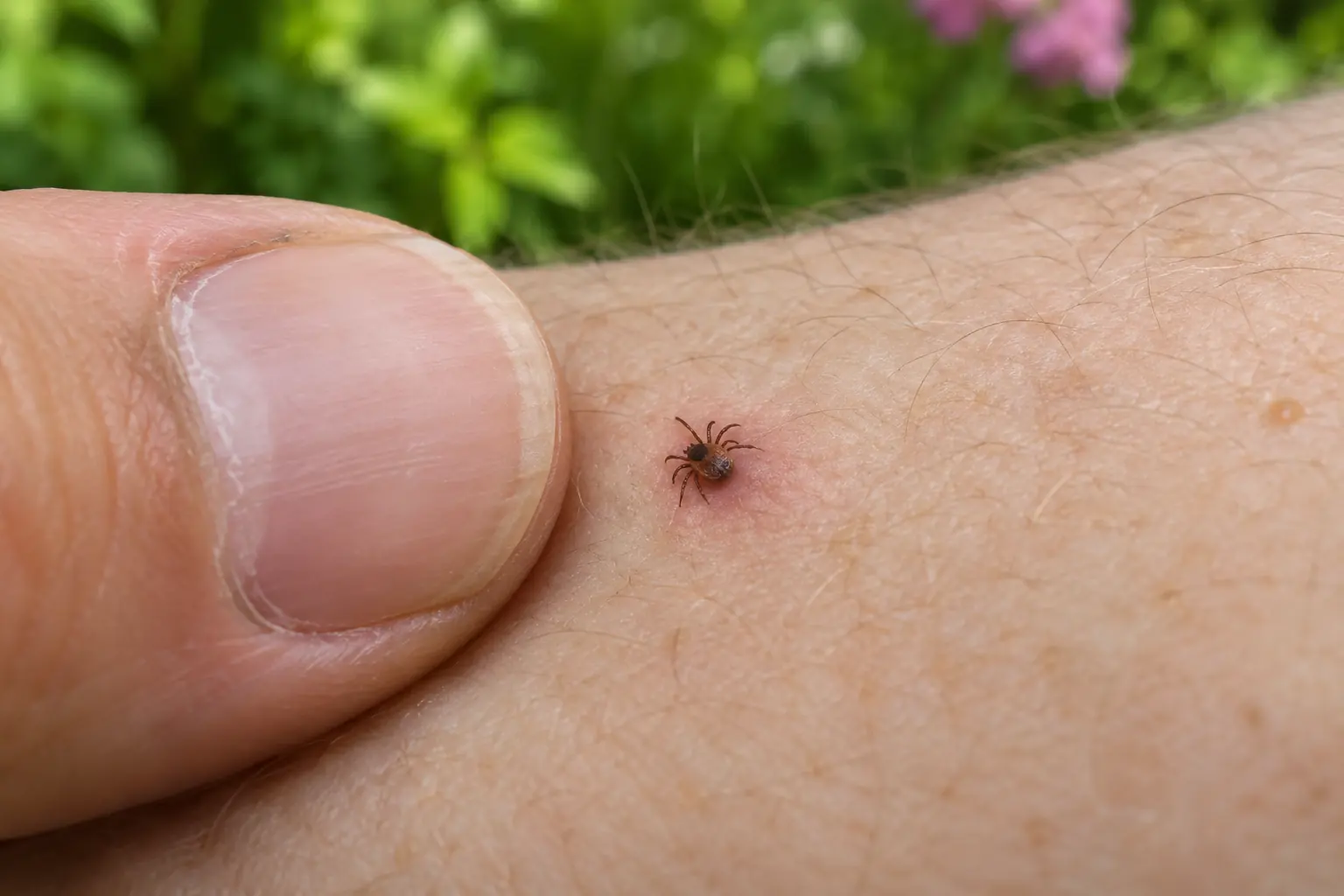
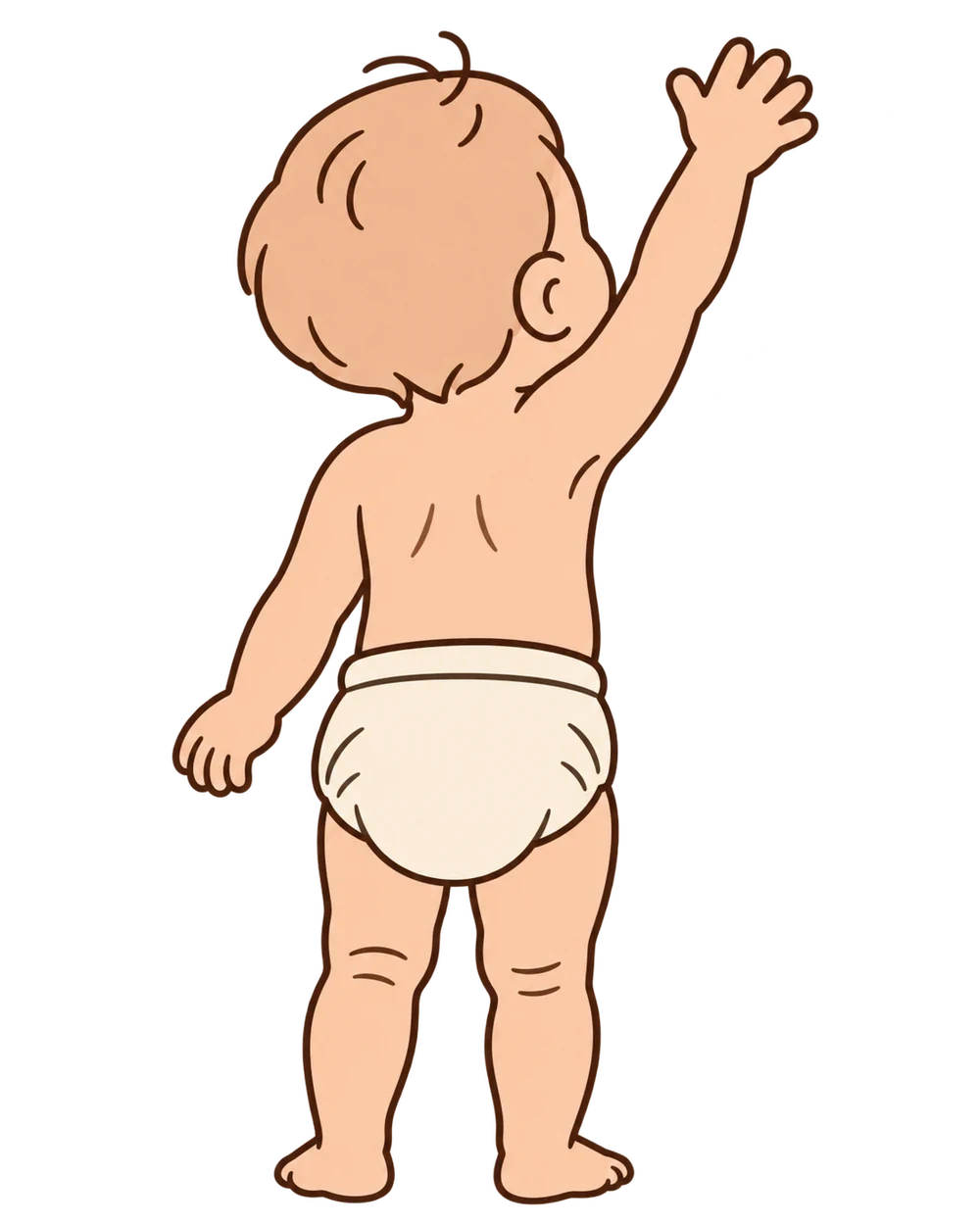
Where to look for ticks
Check in good light, using your fingers as well as your eyes.
In and around the hair
Part it, and look along the hairline at the back.
In and around the ears
Behind them too, where the skin folds.
Under the arms
Lift each arm.
Around the waist
Where the diaper or the waistband sits.
Between the legs
And the creases at the tops of the legs.
Behind the knees
The soft fold at the back of each knee.
Inside the belly button
Turn your child to the front for this one.
How to remove a tick from a child
Found one? Take it out straight away, at home. There's no need to wait for a doctor. Fine-tipped tweezers work, and so does a tick tool from the pharmacy, a little hook or card, used the way its pack says.
How to take out a tick
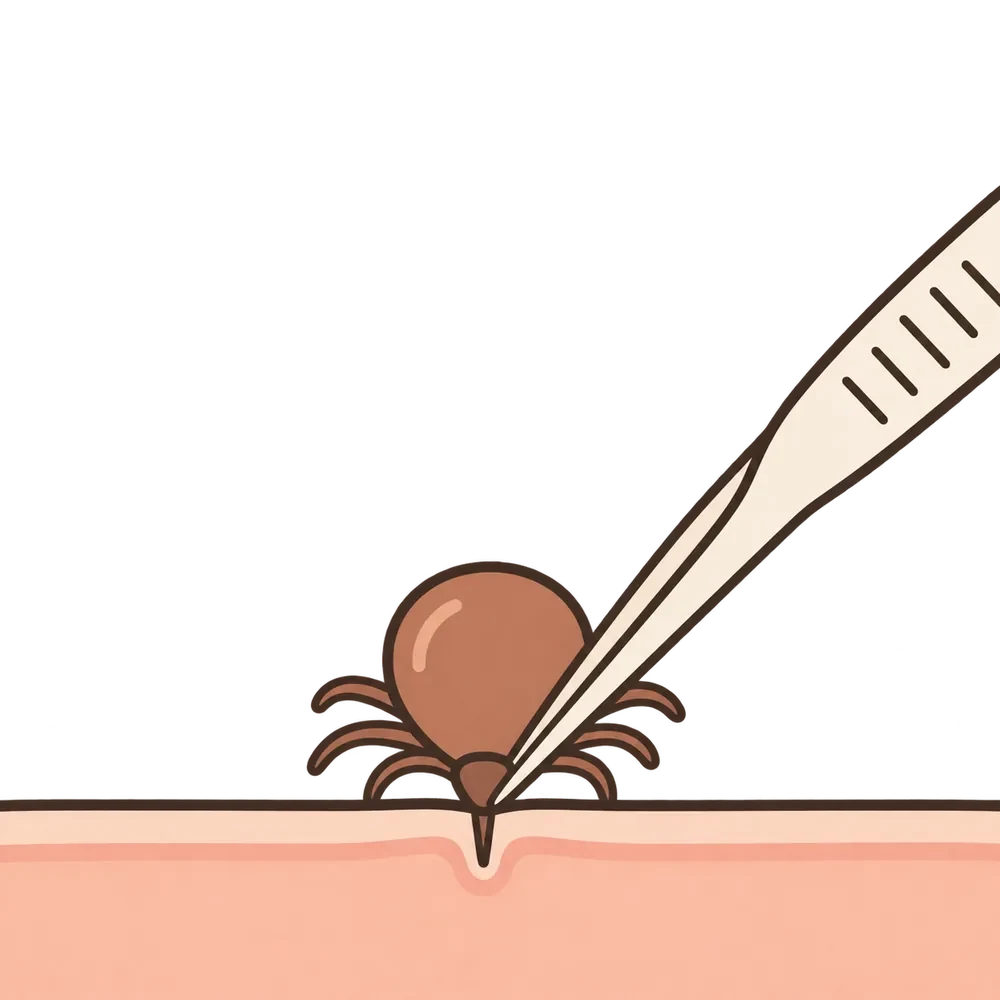
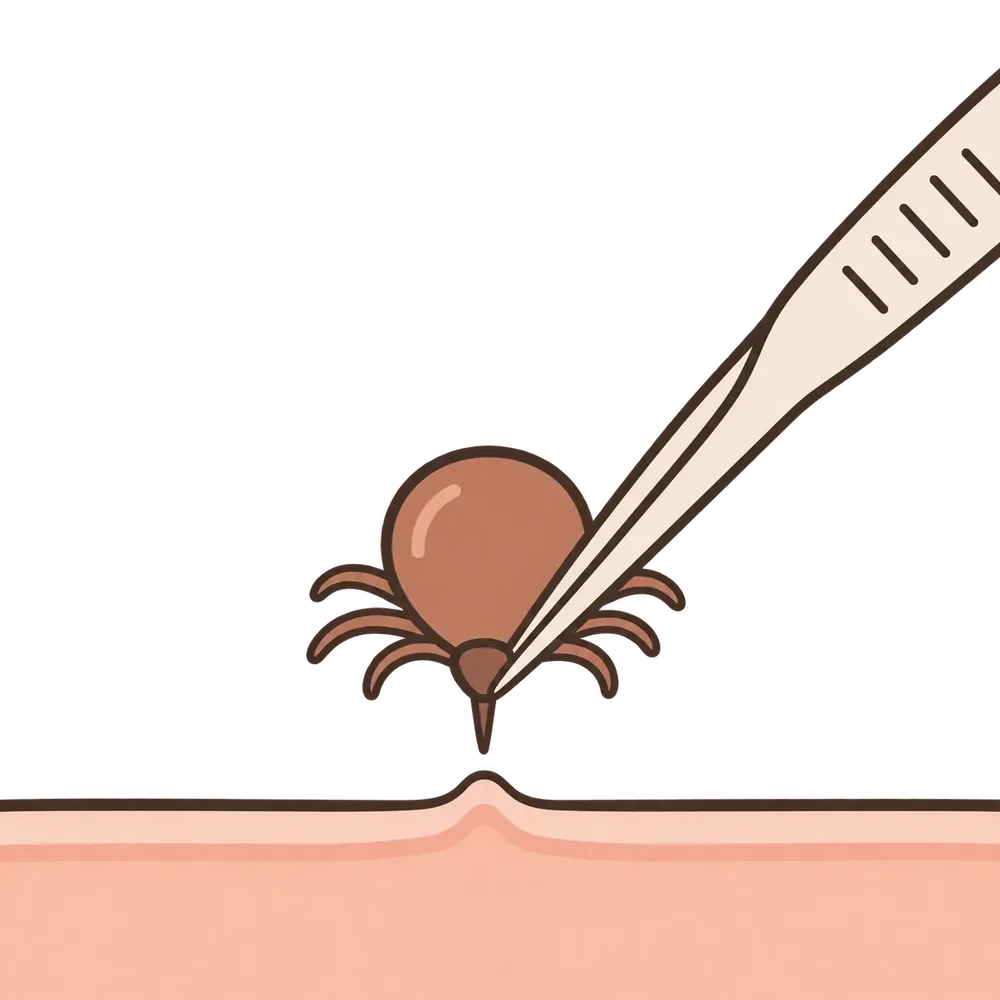
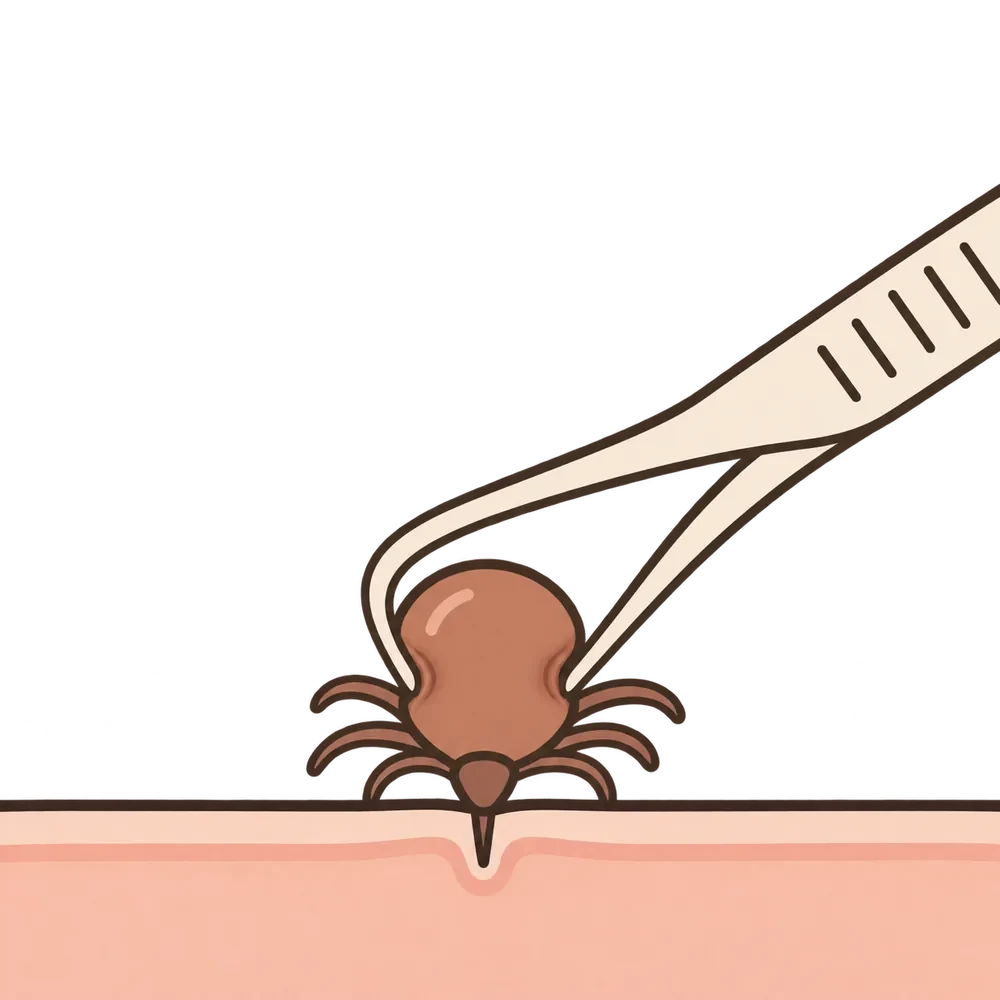
Good: Grip it right at the skin
Its mouth is buried in the skin. Close the tips of the tweezers around its head, right where it goes in, not around the round body.
Good: Pull straight up, slow and steady
Pull upward with even pressure, without twisting or jerking, until it lets go.
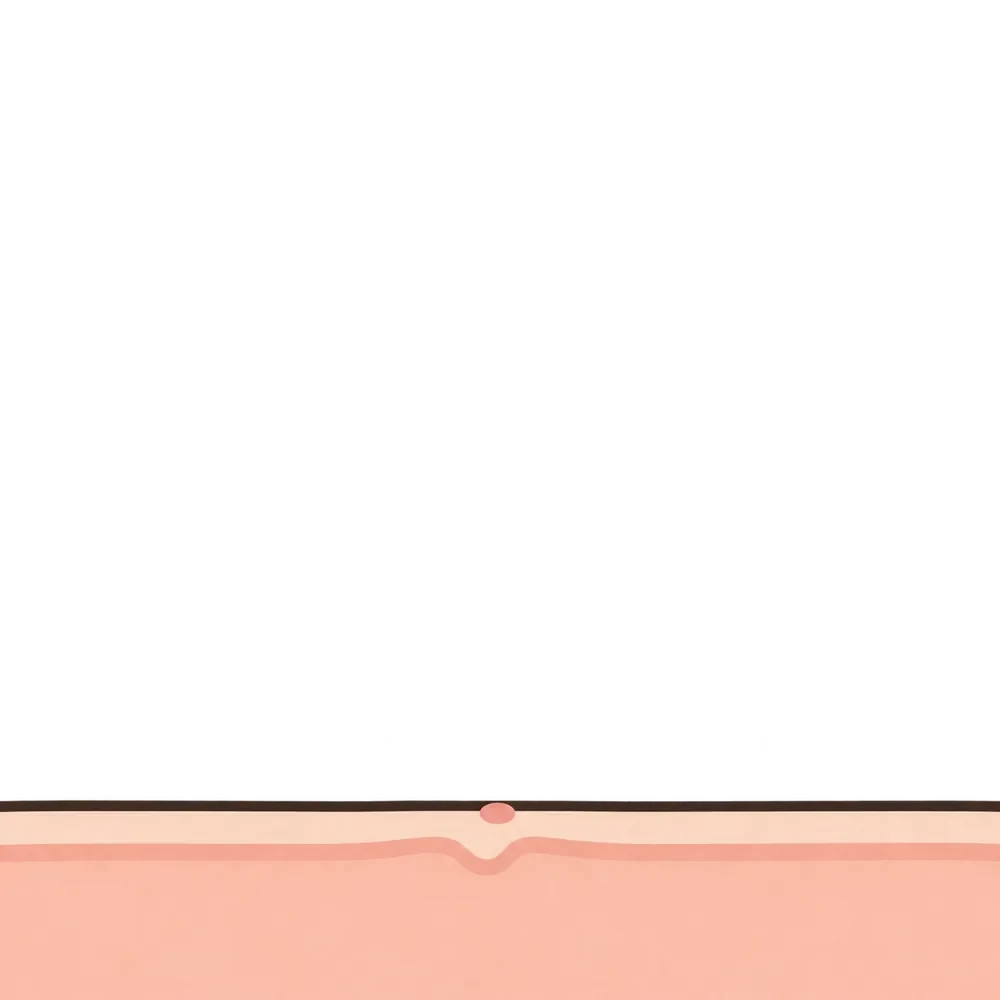
Good: Get rid of it, then wash
Stick the tick to a piece of tape, seal it in a small bag or flush it away, but never crush it with your fingers. Then wash the bite and your hands with soap and water. If a tiny bit of the mouth stays behind, leave it: it comes out as the skin heals.
Not good: Not by the body, and no oil or heat
Squeezing the body, twisting it with tweezers, or smothering it with oil, petroleum jelly, nail polish or heat upsets the tick, and it can push germs into the skin.
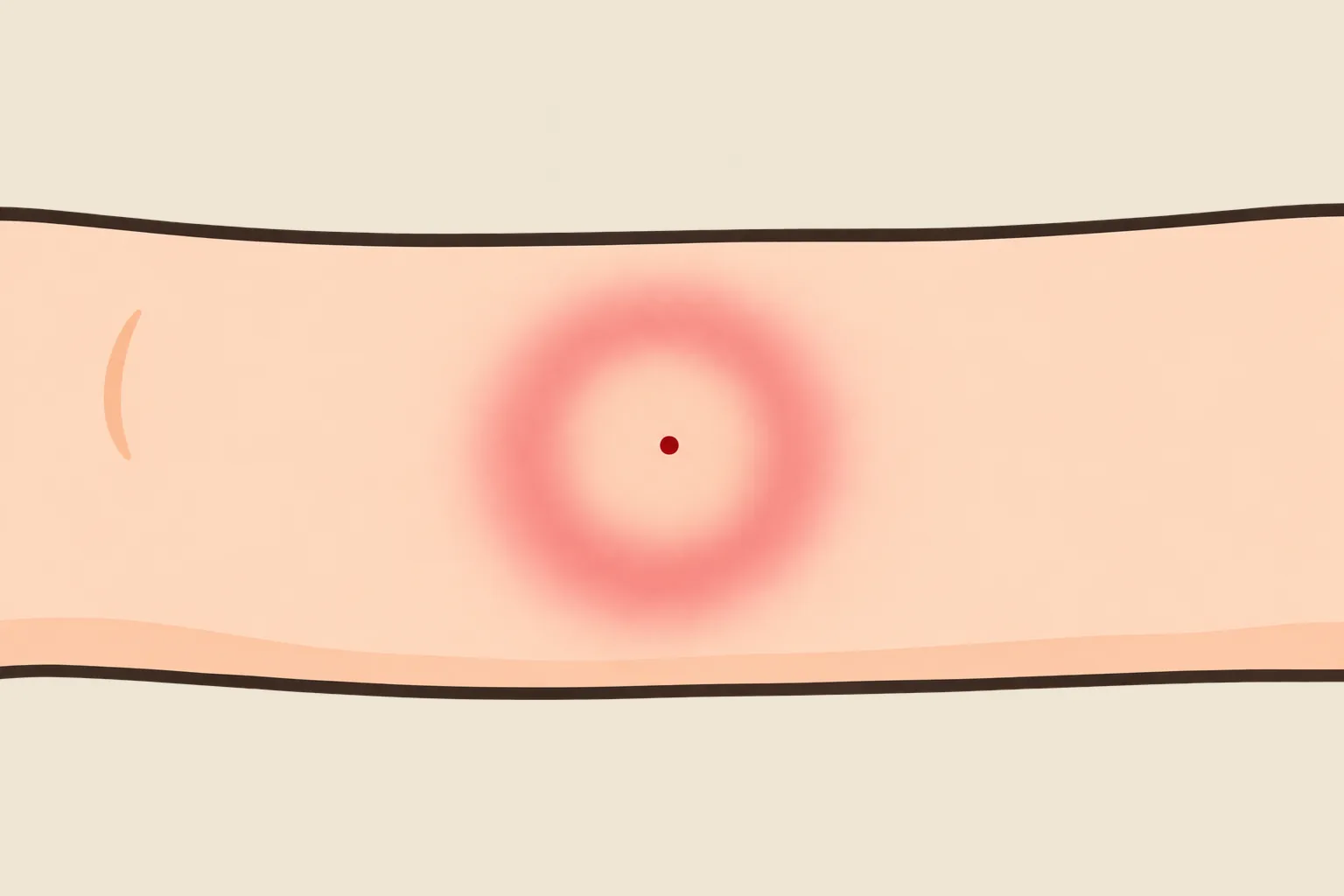
Then write the date on the calendar and keep an eye on the spot for a month. A rash from Lyme disease starts 3 to 30 days after the bite: a red patch around it that grows over a few days and sometimes clears in the middle, like a target. If you see one, or your child gets a fever, call your doctor and say when and where the tick bit.
Questions parents ask
What is a safe mosquito repellent for babies?
One with DEET, picaridin or IR3535, used from the age and at the strength that the label and your country's advice give, and put on by you. Used that way, these tested repellents are safe, and side effects such as a rash are rare. Plant oils aren't gentler by default: some irritate the skin.
Is DEET safe for babies?
Yes, used as directed, from the age your country allows: the risk of side effects for babies and children is low. Choose a strength that covers your outing rather than the strongest one on the shelf.
Is picaridin as effective as DEET?
Against mosquitoes, about as effective at the same strength, around 20%. Against ticks, DEET does a little better. Both are safe used as directed.
Does natural bug spray work for babies?
Not for long. Citronella, geranium, peppermint and soybean oil keep insects away for a short time at best, and some irritate the skin, so they aren't worth putting on a baby. Refined oil of lemon eucalyptus is the plant-based exception.
Do mosquito bracelets and patches work?
No. Bracelets soaked in repellent don't keep mosquitoes off, and neither do sound devices or vitamin B pills. Stickers and patches aren't registered repellents either.
Can I use sunscreen and bug spray together?
Yes, as two products. Sunscreen goes on first and repellent on top. Skip 2-in-1 bottles: sunscreen goes on again every 2 hours, and the repellent in it would go on far more often than it should.
Can I put bug spray on my baby's face?
Only a little, rubbed on from your fingertips over the cheeks and forehead, well clear of the eyes and mouth, and never sprayed at the face. You can also leave the face out altogether and let a hat with a brim keep insects off it.
How often can I put bug spray on my child?
No more often than the label allows. For DEET on a child that's usually once a day, and some labels allow twice. For a long day out, choose a strength that lasts the whole day instead of putting more on.
Is permethrin safe for babies?
Permethrin is an insecticide for fabric, never for skin: clothes treated with it kill the ticks and mosquitoes that land on them, and in tick country they protect better than anything else. For children, countries disagree: Canada allows treated clothes only from 16, and France no longer advises them. Go by the advice where you live.
Should my child get the tick vaccine?
The tick vaccine protects against tick-borne encephalitis (TBE), a brain infection that ticks carry in parts of Europe and Asia. It doesn't protect against Lyme disease. Where TBE is common, as in parts of Germany and Austria, it's recommended for children from 1 year. Ask your doctor whether you live in a risk area or are traveling to one.
Can I use bug spray on a baby with eczema?
Keep it off the patches themselves, as off any sore or broken skin, and put it on the clear skin around them. If a rash appears, wash it off with soap and water and stop using that product.
Are plug-in mosquito repellents safe in a baby's room?
Better not. Most release an insecticide into the air, so keep them out of rooms where small children are. A net over the crib and screens on the windows keep mosquitoes out instead.
What should I do if my baby gets bitten by a mosquito?
Wash the bite with soap and water. A cold, wet cloth eases the swelling, and most bites fade within a few days. See a doctor about any insect bite on a baby under 1, and get emergency help at once if the lips, mouth or throat swell.