Their lenses block the sun's UV rays, the invisible part of sunlight that burns skin and, over many years, harms the eyes. A young child needs that more than you do, because the eye's own lens is still so clear that more UV passes through it. Babies wear a wraparound pair (lenses that curve round to the sides) on a soft band, and toddlers wear flexible frames with arms.
You don't need them for every walk. Shade and a sun hat with a brim protect the eyes on most days. Sunglasses earn their place when the UV index is 3 or more and you'll be out in the open for hours: at the beach, by a lake or a pool, on snow, or on holiday somewhere sunny. Babies under 6 months are kept out of direct sun, so for them the canopy and a hat are the protection.
- For ages0–3years
- You'll need1pair per size
- Wear them fromUV 3
Do babies need sunglasses?
A brim keeps the sky's light off the eyes. It can't stop the light that comes in from the side or bounces up from the ground: sand, water and pavement send some of it back, and fresh snow up to 80%. Sunglasses catch that light, which is why they matter most at the beach and on snow.
Too much UV in one day burns the surface of the eye, like a sunburn, and it hurts until it heals, usually within a few days. A baby can't tell you, so after a bright day watch for a lot of blinking and fussing for no clear reason. A dim room and a cool, damp cloth over the closed eyes ease it. Over a lifetime, UV also adds to the risk of cataracts (a clouding inside the eye).
What reaches the eyes at the beach
What reaches the eyes at the beach
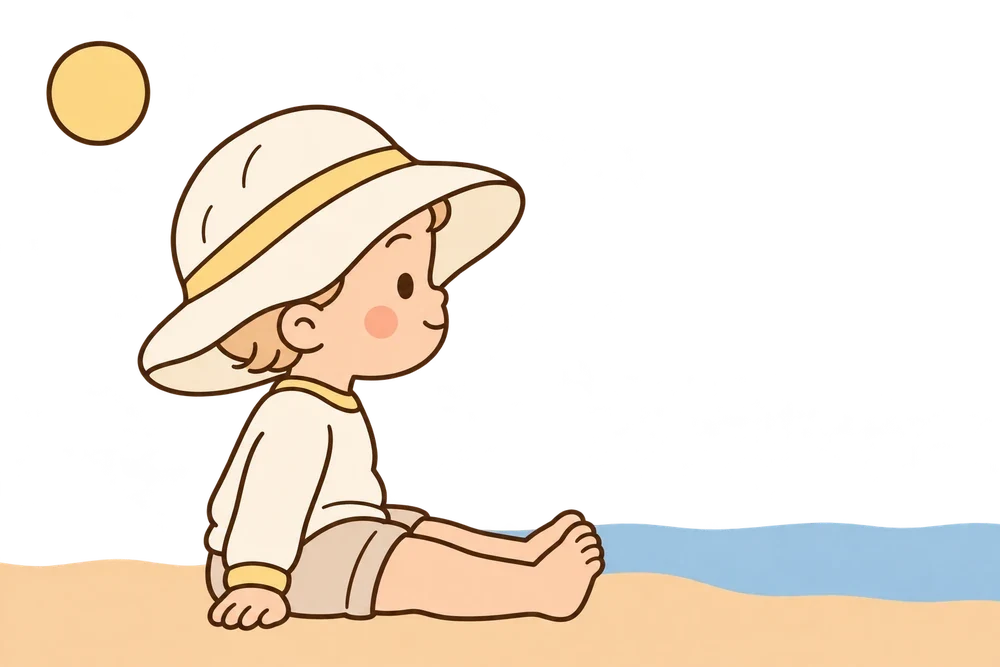
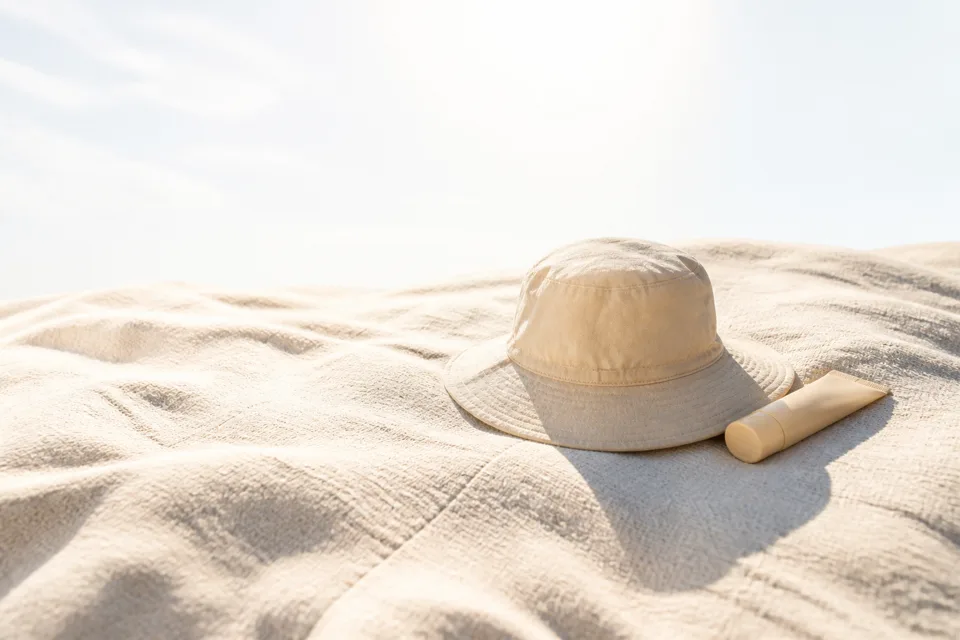
With care: The brim shades from above
The sky's light stops at the brim. Light that bounces up off the sand and the water gets in under it, straight to the eyes.
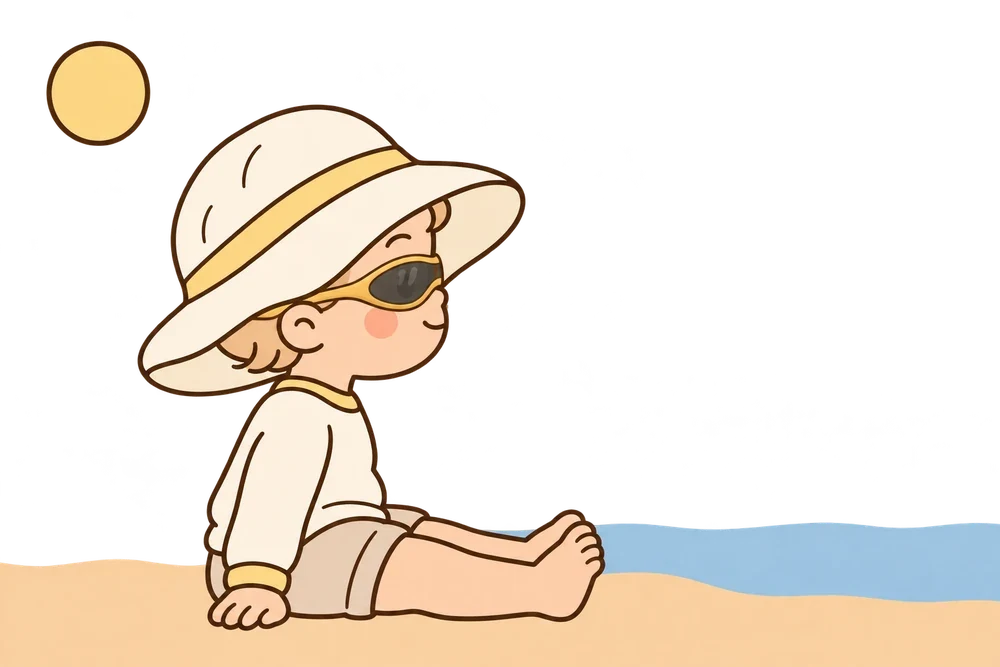
Good: The eyes are covered
Up to 98%less UV reaches the eyes
Wraparound lenses catch what the brim misses, from below and from the sides.
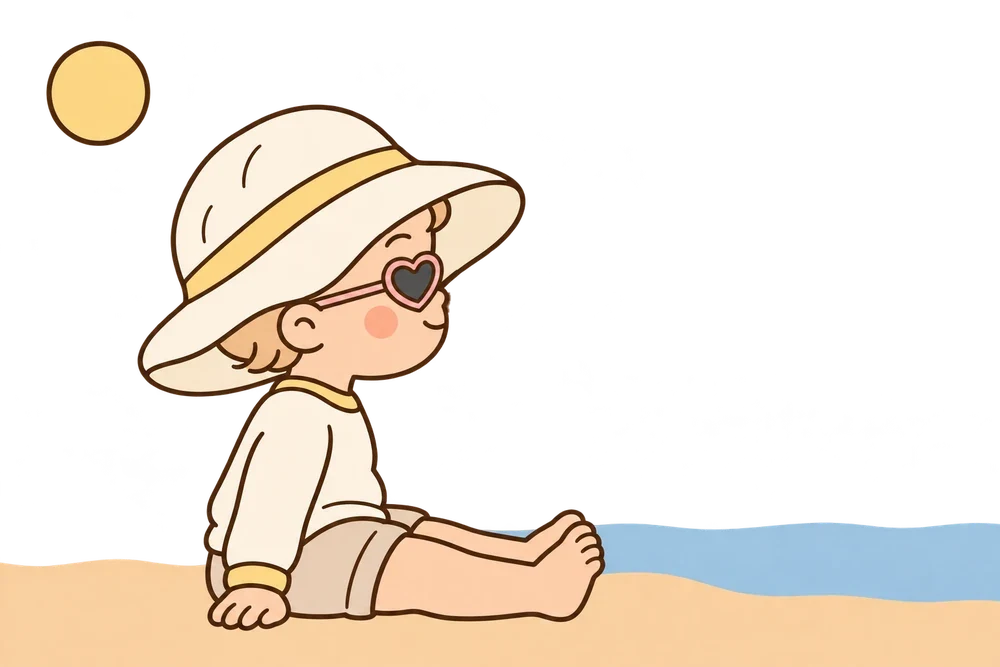
Not good: Dark lenses, no UV label
A dark tint says nothing about UV. Without a UV label, the lenses may let the rays straight through to the eyes.
Types of baby sunglasses
A band suits a baby who lies back and naps, and arms suit a child on the move. Toy sunglasses look much the same and don't protect.
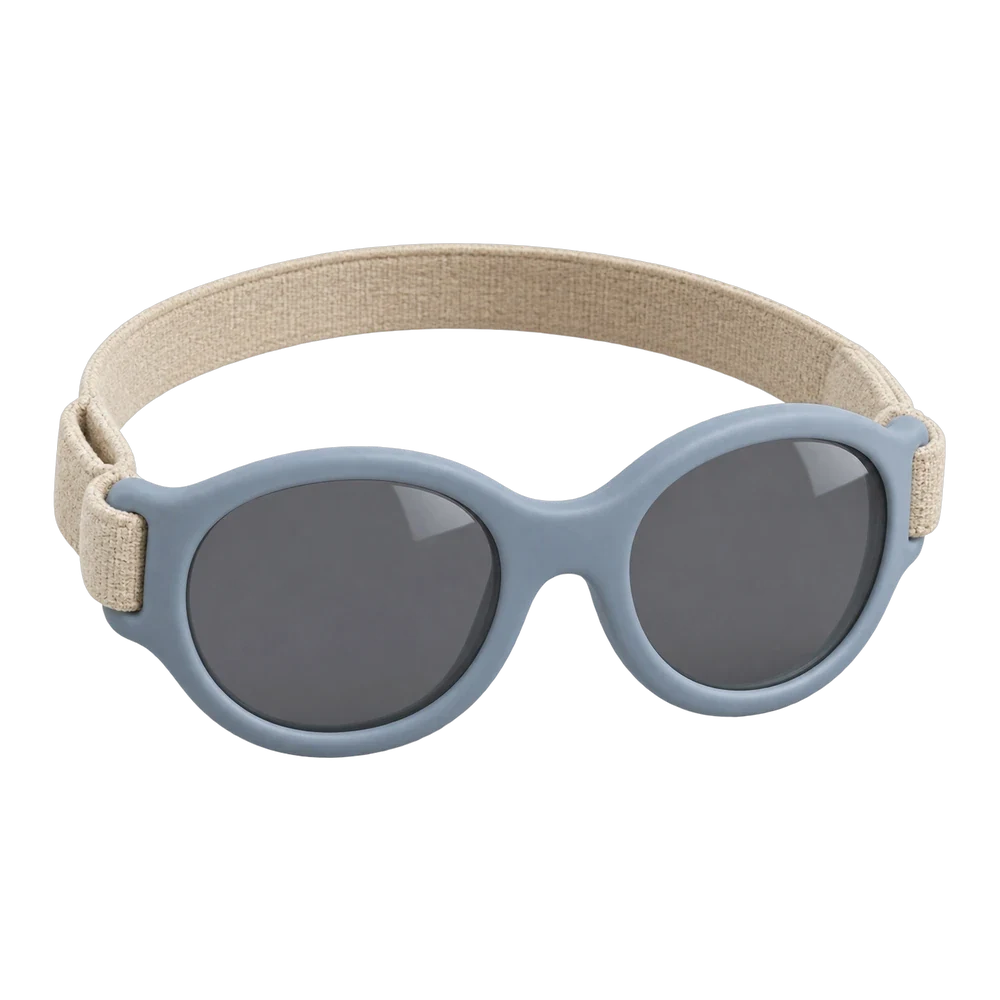
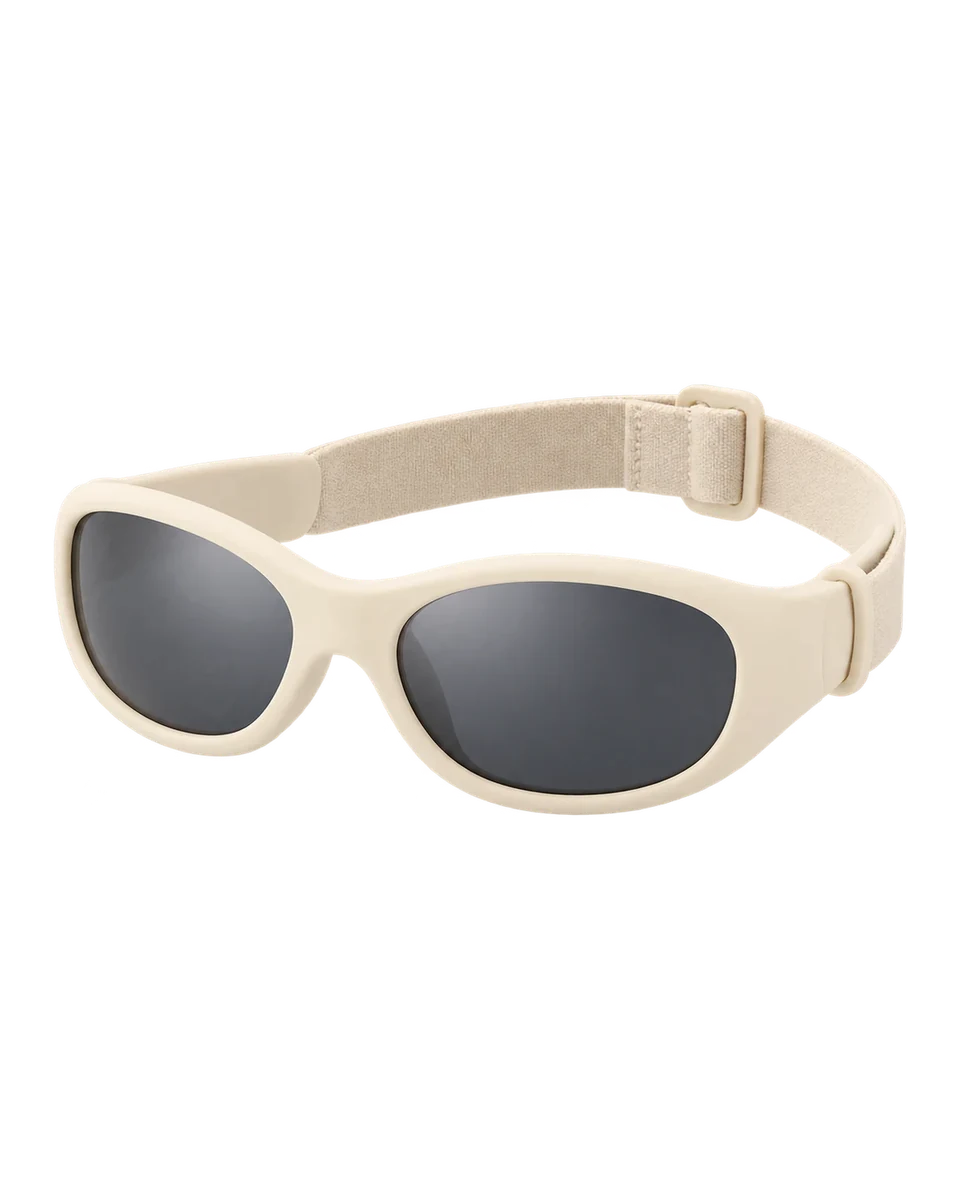
On a soft band
A stretchy fabric band goes round the back of the head in place of arms, so the pair stays put when your baby lies back in the stroller or turns a head in the carrier. Nothing presses behind the ears. Made for babies.
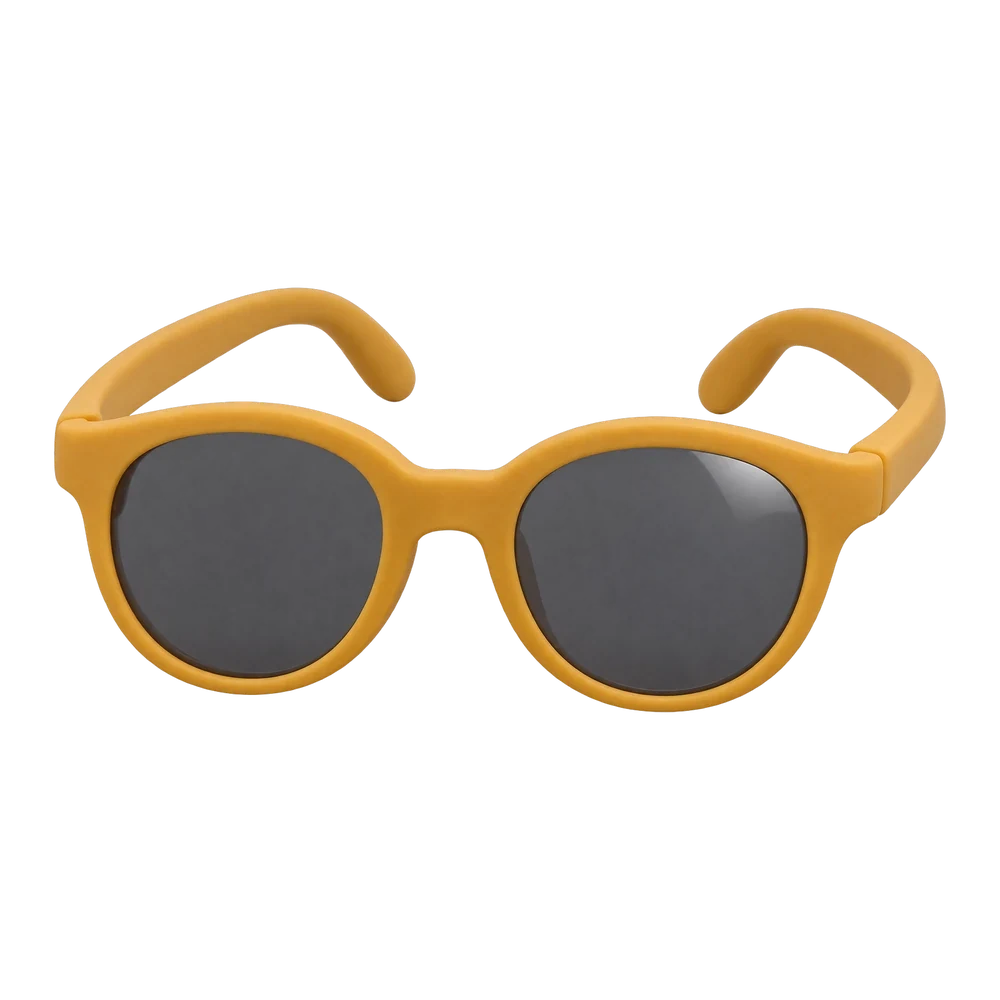
Flexible frames with arms
Rubbery frames that bend and twist without snapping, sized from about 6 months. Many come with a strap that clips to the arms, which helps once your toddler runs, climbs and tumbles.
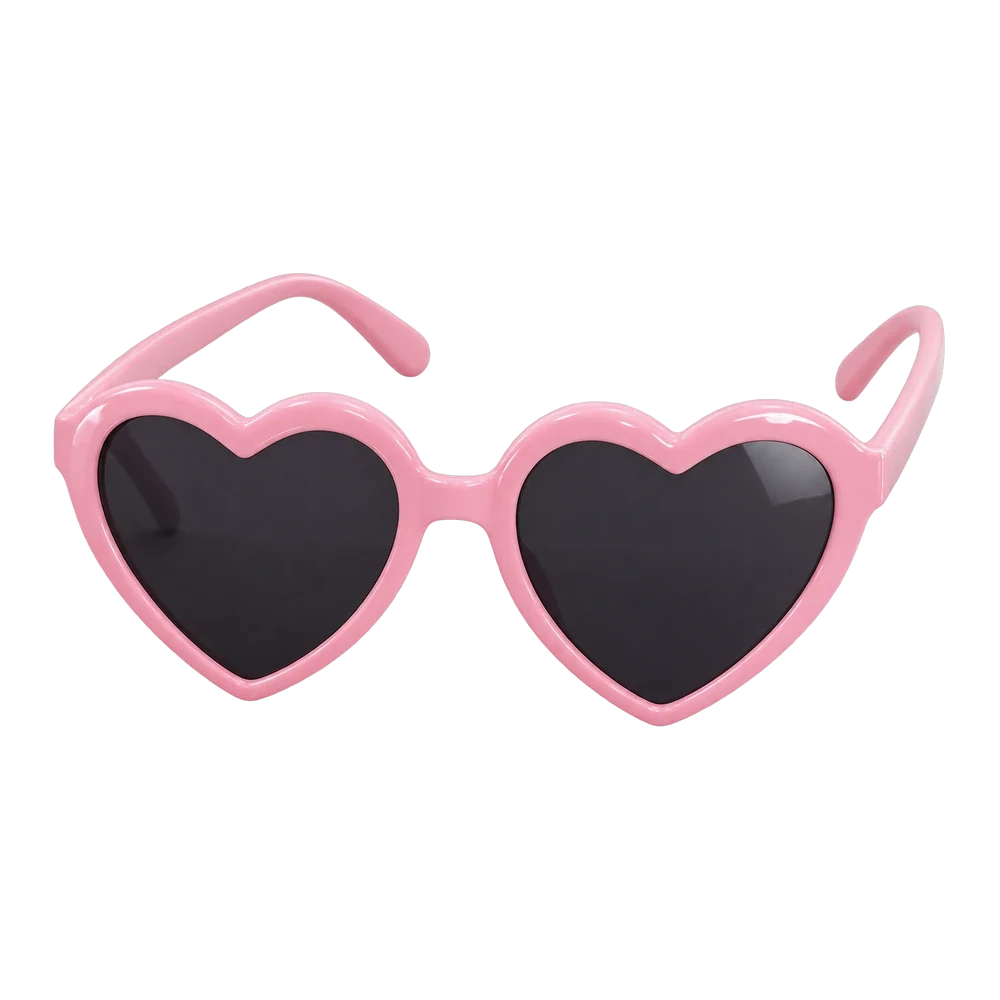
Toy sunglasses
Pairs sold as toys or for dressing up don't meet the safety standard for sunglasses, even when the lenses are dark, so they can't be counted on to block UV.
- Europe
- UK
How to read the label
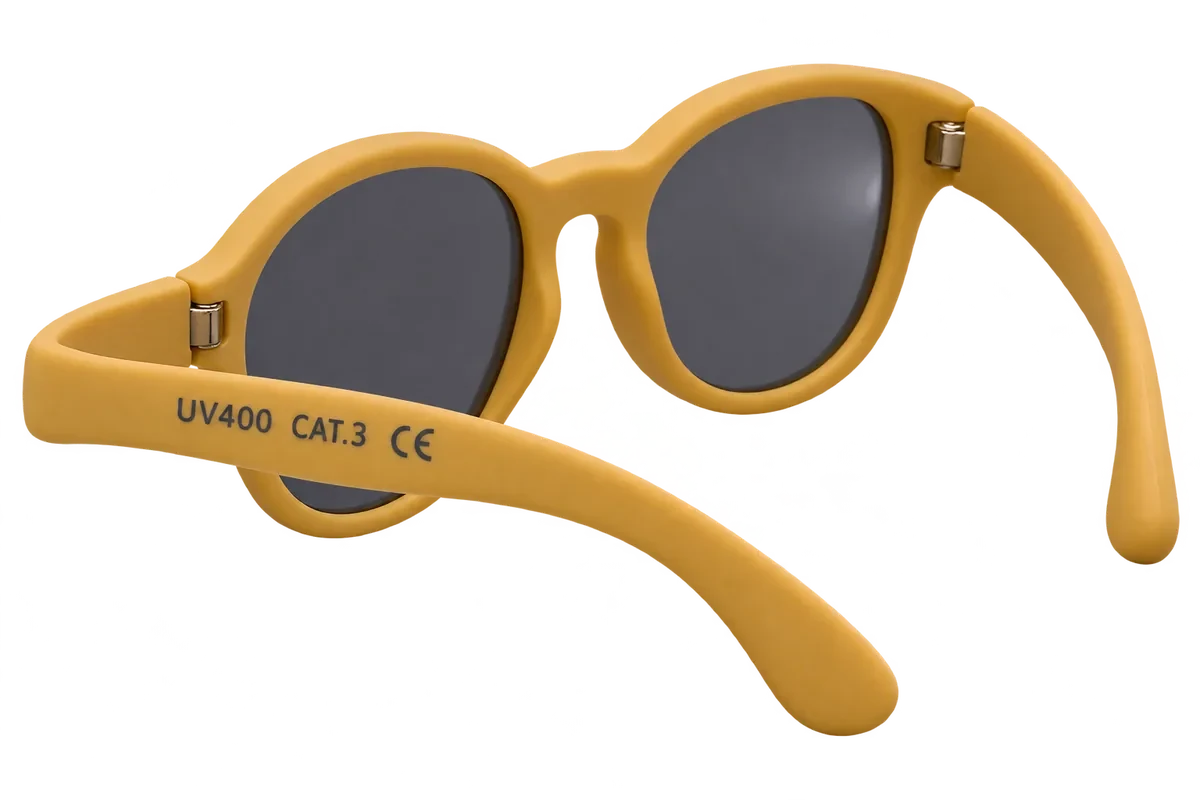
You can't see UV protection by looking through a lens, and a dark lens can let all of it through. What a pair blocks is printed on it: on a sticker, on the tag, or inside an arm. A pair sold in Europe or the UK carries these three marks inside the arm.
UV400
The lenses block all of the sun's UV. "100% UV protection" or "100% UVA and UVB" on a sticker or the tag means the same. A pair with none of these may block nothing, however dark the lenses are.
CAT.3
The filter category, from 0 to 4: how much of the sun's light the lenses hold back. 3 is the one for bright summer sun, and 4, the darkest, is for snow and mountains.
CE
The pair meets the European safety rules for sunglasses. A pair made for the UK can carry UKCA instead.
How to choose baby sunglasses
1. Big lenses that wrap round
Sun gets in around small, flat lenses, from above, below and the sides. Pick a pair that covers your child's eyes from the eyebrows to the middle of the cheeks and curves round toward the ears. When it stops covering that much, it's time for the next size.
- Good: Brow to mid-cheek
- Good: Curves round to the sides
- Not good: Small, flat lenses
2. A frame that bends
Toddlers pull their sunglasses off, chew them, drop them and sit on them. A soft, rubbery frame bends and springs back, and polycarbonate lenses (a tough plastic) take the knocks.
- Good: Bends and springs back
- Good: Polycarbonate lenses
- Not good: Stiff, hard frame
How to keep sunglasses on a baby
On a beach day or a long day out in the sun, make them part of getting ready: they go on at the door, together with the hat.
Wear yours. Children copy, and a toddler who sees your sunglasses often wants a pair too. Letting a toddler choose between two or three pairs helps as well.
If they keep coming off, check the fit first: a pair that pinches behind the ears or slides down the nose gets pulled away. A band, or a strap on a toddler pair, holds them on through a nap. And don't make it a fight on an ordinary walk, where the brim and the shade are enough.
Questions parents ask
At what age can babies wear sunglasses?
A baby pair on a soft band can go on in the first months, where you can't avoid the brightness, such as on a boat or on snow. Most of the time a newborn doesn't need them, because babies under 6 months are kept in the shade. For most families, sunglasses start after that, on beach days, holidays and snow.
Do babies need sunglasses in the shade?
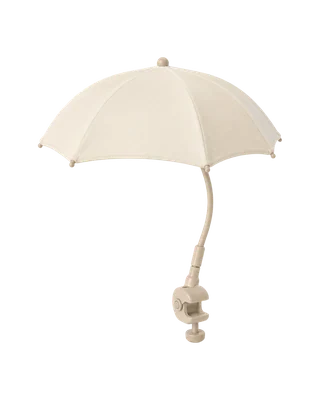
At the beach, yes. An umbrella blocks the sun from above, but sand and water bounce UV back in under it, so the sunglasses stay on there.
Do babies need sunglasses in the snow?
Yes, more than at the beach. Fresh snow sends up to 80% of the sun's UV back up, under any brim, and the thinner air in the mountains lets more through. On a bright snowy day, use a close wraparound pair with a dark category 4 lens, or small ski goggles. The snow guide covers the rest of the day.
Should baby sunglasses be polarized?
It makes no difference to UV. Polarized lenses cut the glare off water and roads, which is pleasant on a boat, but they block UV only when the label says so. Look for UV400 first, and take polarized as an extra.
Can wearing sunglasses harm a child's eyesight?
No. Time outdoors in daylight helps protect children against nearsightedness, and outdoors the light behind sunglasses stays many times brighter than indoor light, well above the level linked to that protection.
Are baby sunglasses safe?
Yes, when they're made for small children: a soft band or bendy frames, tough lenses and a UV label you can trust. That label matters far more than the price, so a cheap drugstore pair marked 100% UV beats a designer pair without one. Bargain pairs from online marketplaces are another story. When 20 children's pairs bought there were tested, not one met the legal safety rules, and two let UV through despite claiming to block it.