Waterproof mittens have an outside that water can't get through: a rubbery coated fabric, or a soft shell with a thin waterproof layer hidden inside. Most also have a warm lining and a long cuff.
They are the mittens for wet snow, slush and wet sand. Those soak through a knit pair, and wet hands get cold fast. Below about 4°C (39°F), take them whenever your child will touch wet snow or wet ground: snow play, the playground after rain, a morning outside at daycare. A baby who crawls on wet ground needs them too, from about 6 months.
A baby riding in the stroller doesn't need them, because the hands stay dry. On a dry cold day, knit mittens are softer and easier to put on.
- For ages6+months
- You'll need1pair per size
- Wear them below4°C39°F
Knit or waterproof mittens?
Both keep hands warm on a dry cold day. In wet snow, only one keeps them dry.
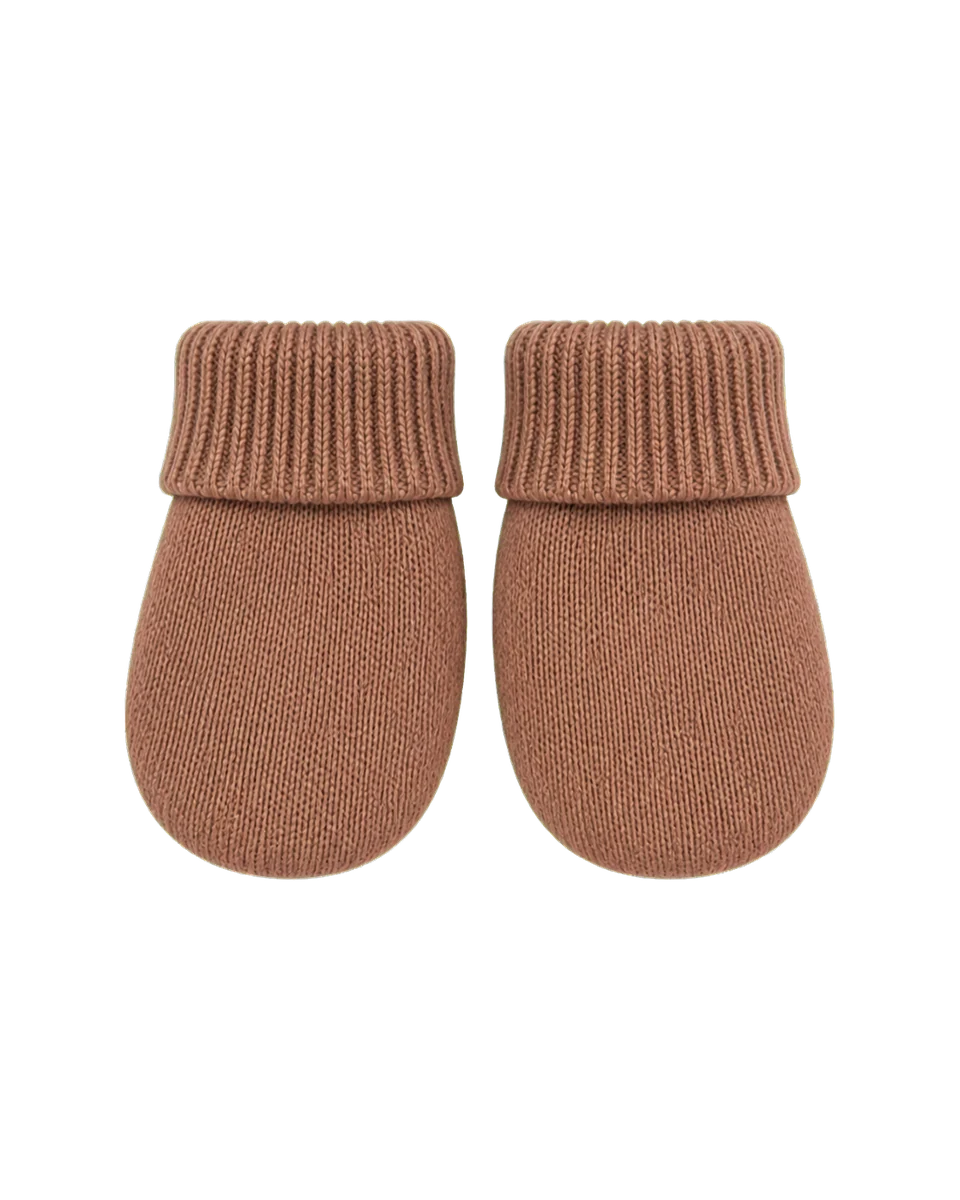
Knit or fleece mittens
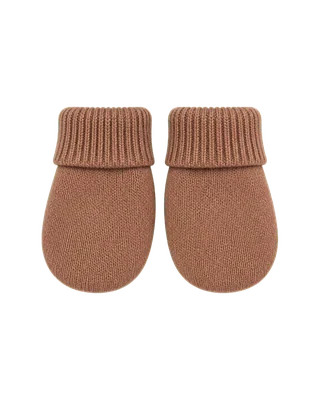
Wool, cotton or fleece, soft and light on a small fist. Best for dry cold days in the stroller or the carrier.
- Good: Soft and easy to put on
- Good: Lets sweat out
- Not good: Soaks through in wet snow
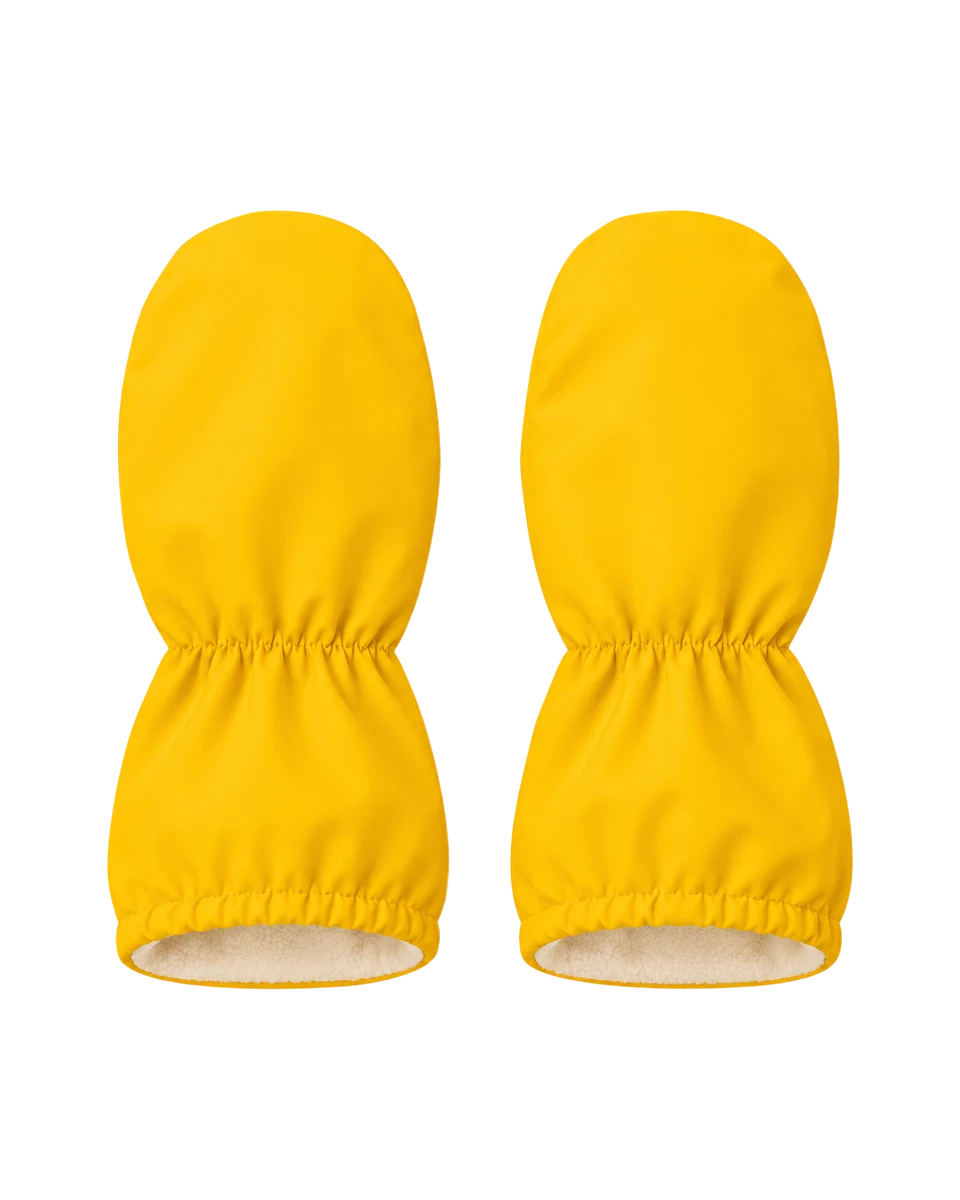
Waterproof mittens
A waterproof shell, usually with a warm lining inside. Best for snow play, slush and wet sand.
- Good: Dry hands in wet snow
- Not good: Stiffer to put on
- Not good: Slow to dry inside
Types of waterproof mittens
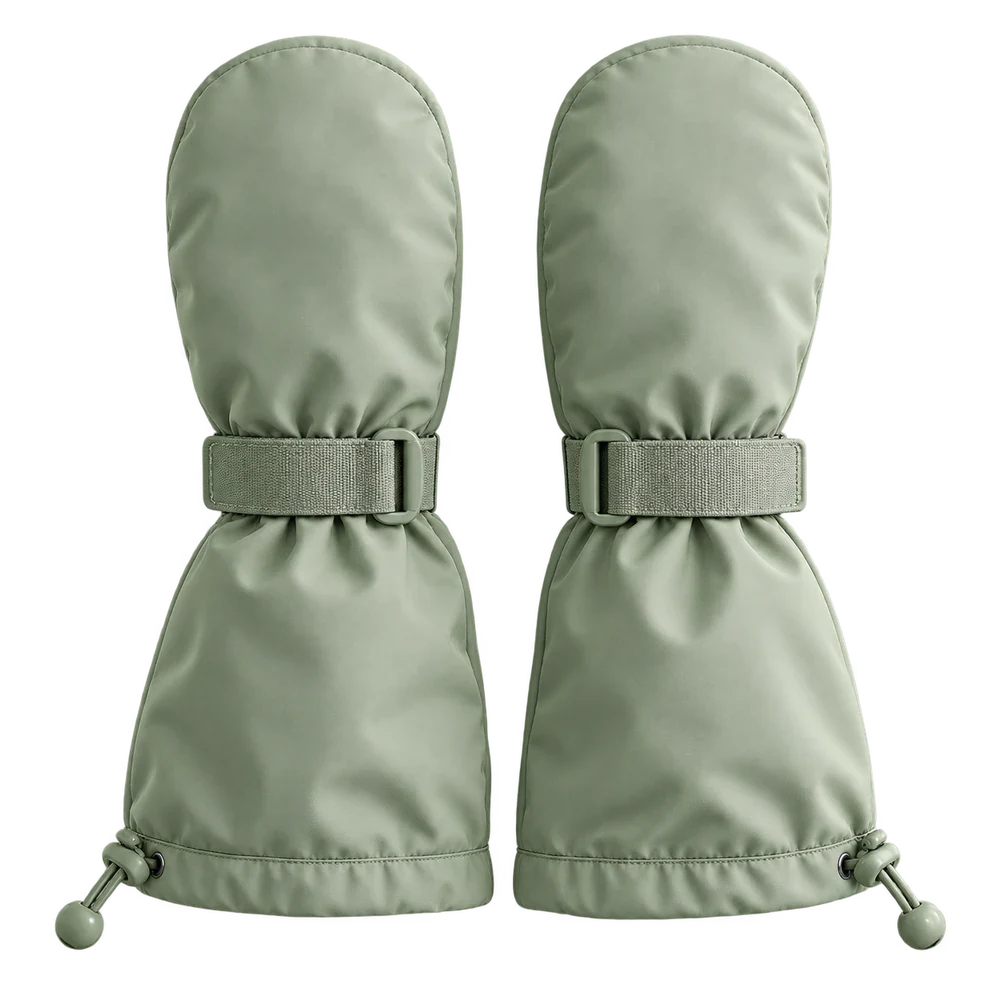
Lined snow mittens
A waterproof shell with fleece or padding inside, often with a long cuff that reaches up the forearm. For snow, slush and cold, wet days.
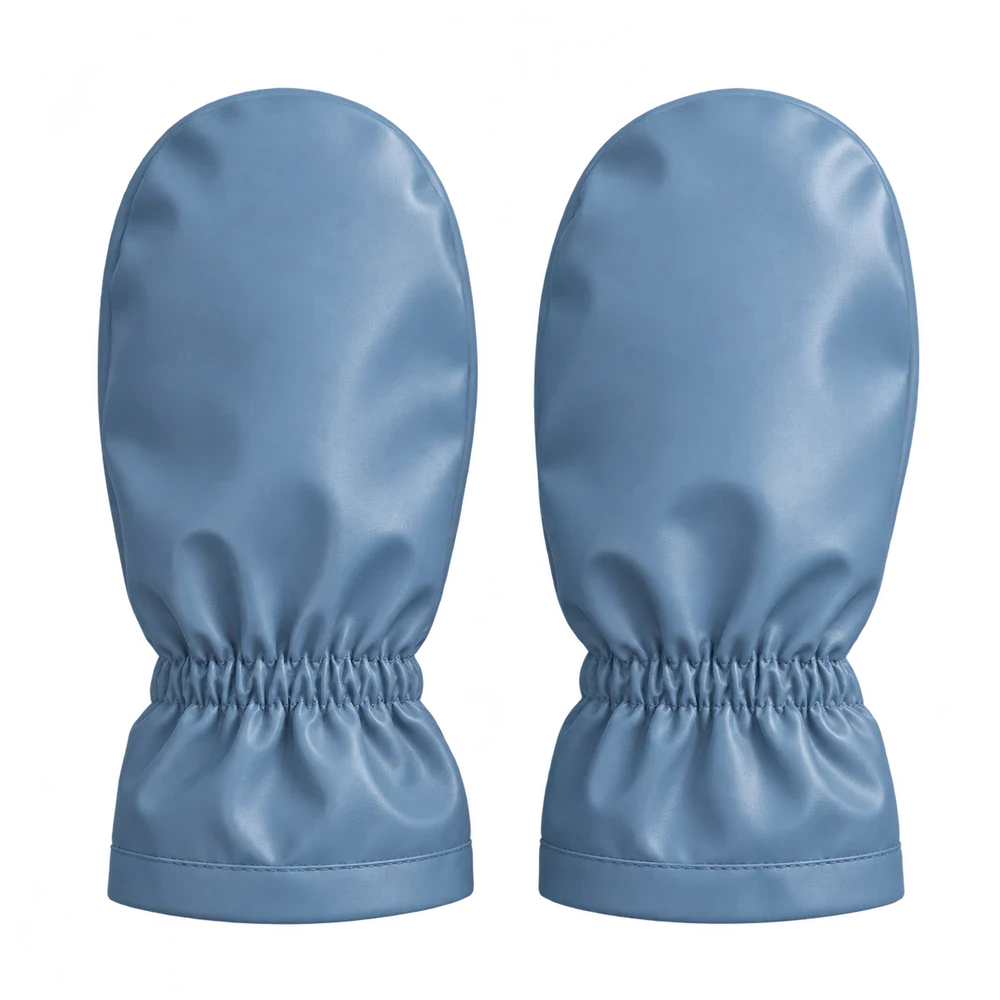
Rain mittens
Thin mittens, unlined or with a light fleece inside. For wet sand and cold rain on milder days in spring and autumn. On a colder day, a knit mitten fits underneath.
How to choose waterproof mittens
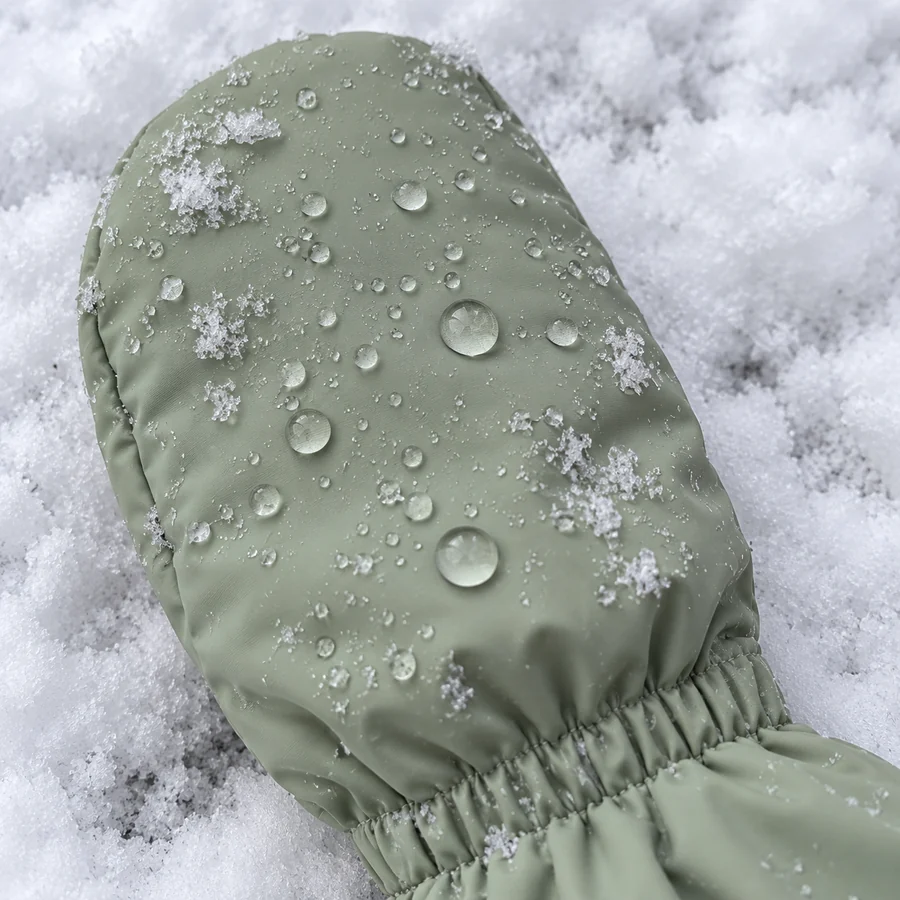
1. Waterproof all around
The palm should be as waterproof as the back. On some pairs only the back is, and the palm soaks through the first time your child pats the snow.
- Good: Label says waterproof
- Good: Same smooth shell on the palm
- Not good: Water-resistant only
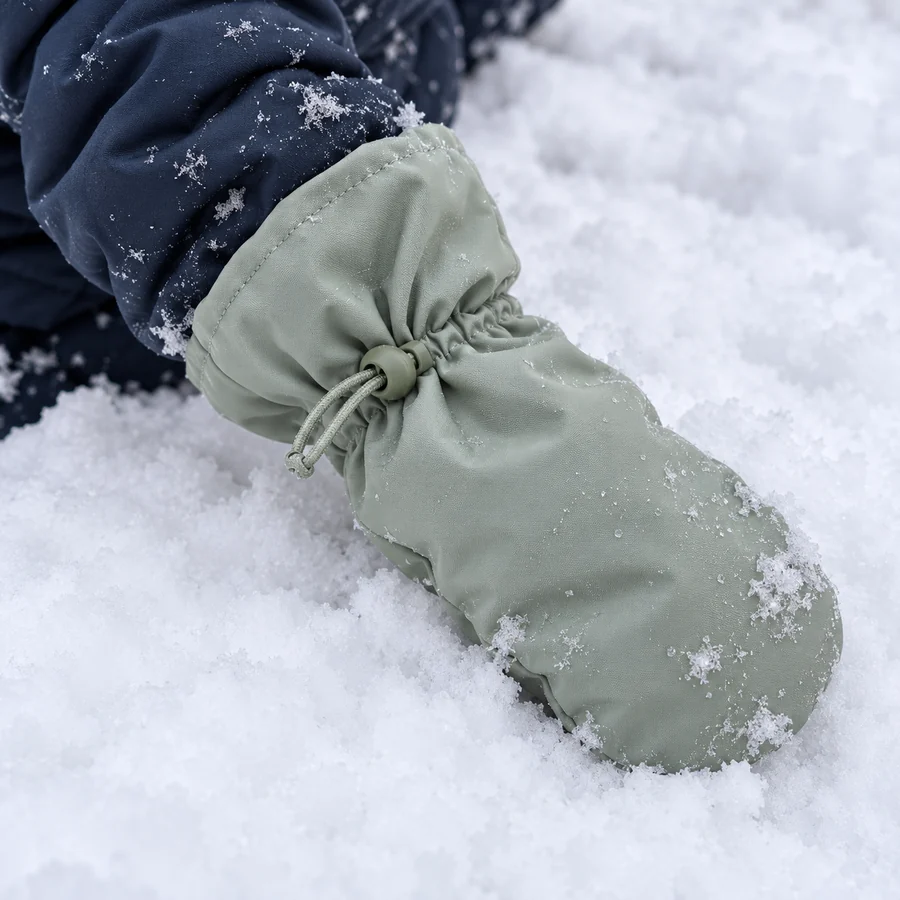
2. A cuff that closes the gap
Wet snow gets in at the wrist first. A long cuff with a drawcord or a strap closes the gap between the mitten and the sleeve, so snow can't work its way in while your child digs.
- Good: Cuff covers the end of the sleeve
- Good: Drawcord or strap to close it
- Not good: Bare wrist between cuff and sleeve
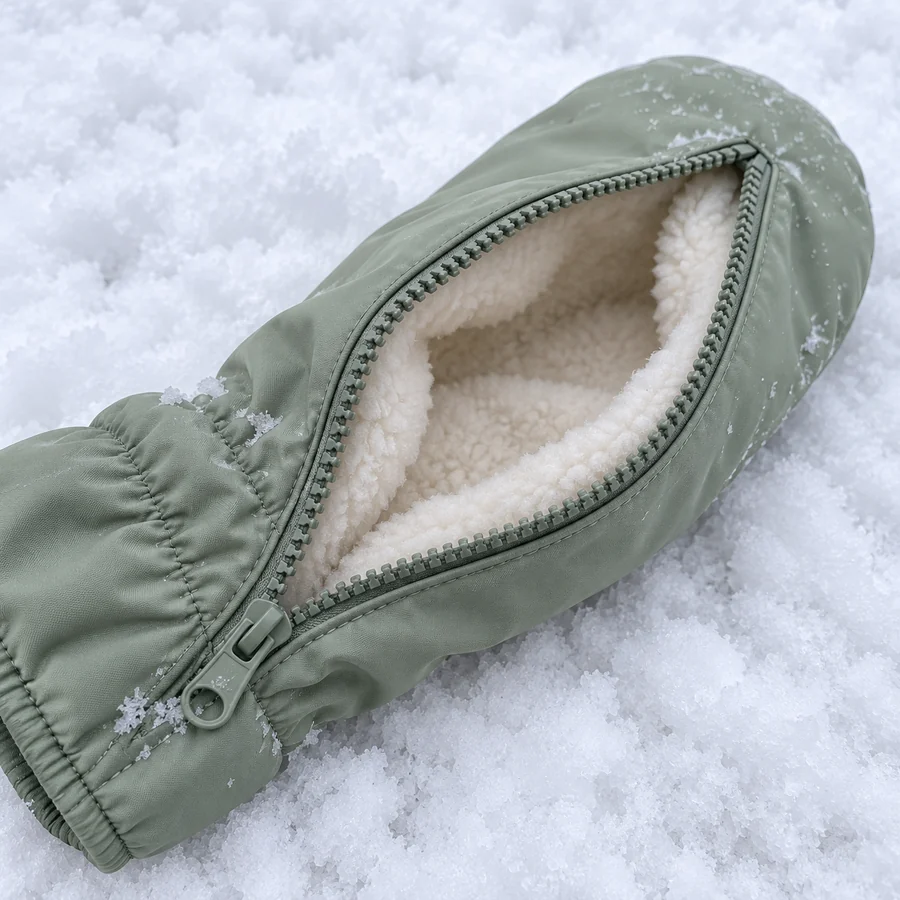
3. Opens wide
A waterproof shell doesn't stretch like knit, so a curled fist is hard to push in. A zip along the side or a flap that wraps around lets the mitten open wide.
- Good: Side zip or wrap-around flap
- Not good: Narrow, stiff opening
How to dry them overnight
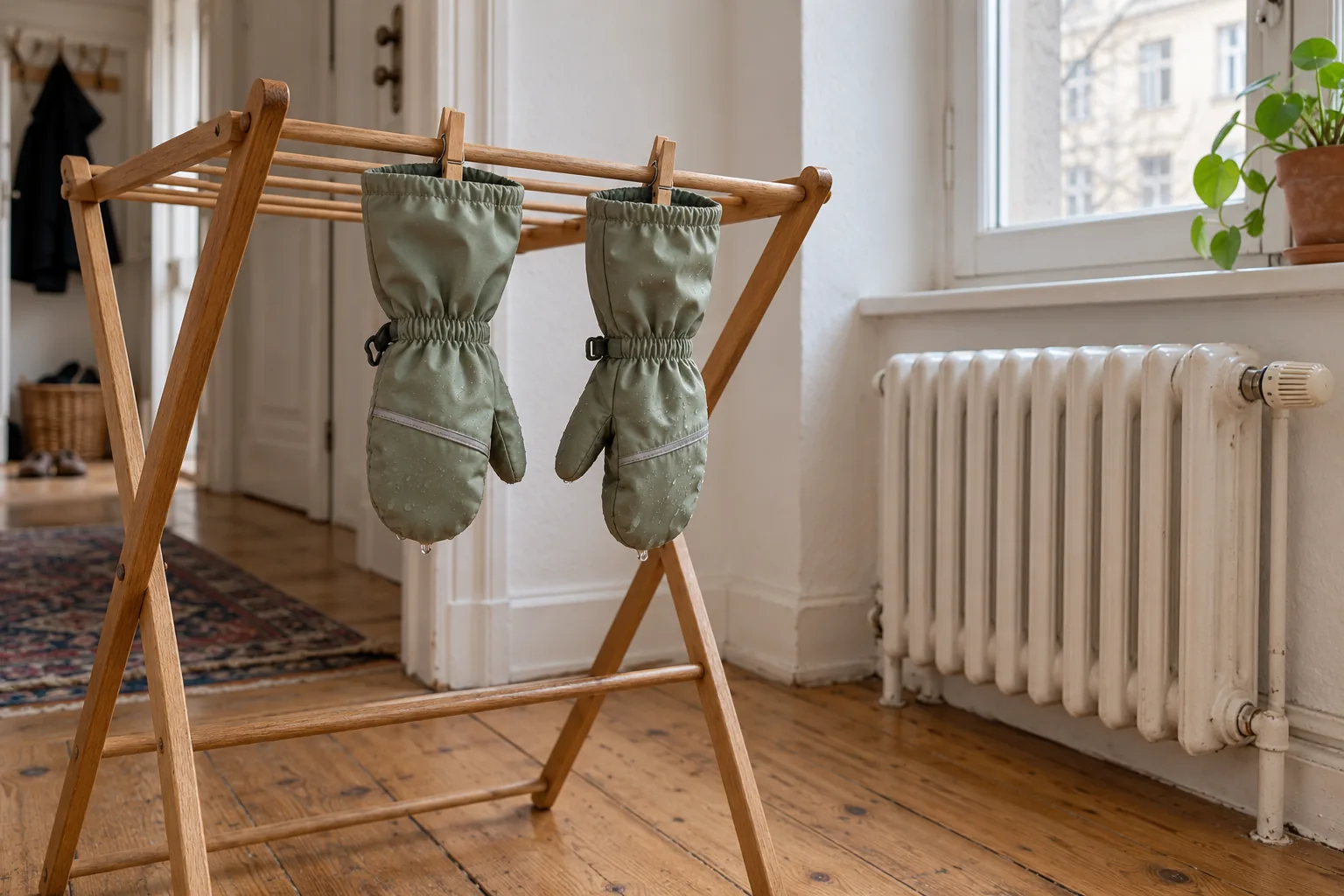
A waterproof shell keeps the damp in as well as the snow out, so a wet pair dries slowly. Squeeze out the water without wringing, open the cuffs wide and hang the mittens up by the cuffs in a warm room. Keep them off the radiator, because strong heat damages the waterproof coating.
Turn them inside out only if the label says so, because on some pairs the lining comes loose. A drying cabinet or a boot dryer on a low setting is fine for most pairs.
Questions parents ask
Do mittens go over or under the coat sleeve?
Either, as long as no wrist shows between them. A long cuff with a drawcord goes over the sleeve and stays put while your child digs in the snow. A cuff without one goes under, so the sleeve holds it in place, the way knit mittens go on.
Thumb or no thumb?
No thumb for a baby, because a curled fist slides straight into one round pocket. Toddler sizes usually add a thumb, from about 1 to 2 years.
Are mittens on a string safe?
Skip the string, because a cord that runs through both sleeves can catch. A short mitten clip on each sleeve keeps the pair together instead.
Why are my toddler's hands wet inside waterproof mittens?
Usually snow got in at the wrist, or the hands sweated. Close the cuff over the sleeve for snow play, and on a milder day choose a thinner pair.
How do I wash waterproof mittens?
Wipe off the mud after play, and machine wash them only now and then, as the label says: close the hook-and-loop straps first, choose a gentle cycle and skip fabric softener.