Winter boots are warm, lined boots for a toddler who walks, ankle-high or up to the mid-calf, and waterproof or at least water-resistant. They keep the feet warm and dry in snow, slush and on frozen ground. Through the sole of an everyday shoe, the cold of the ground comes straight up to the toes.
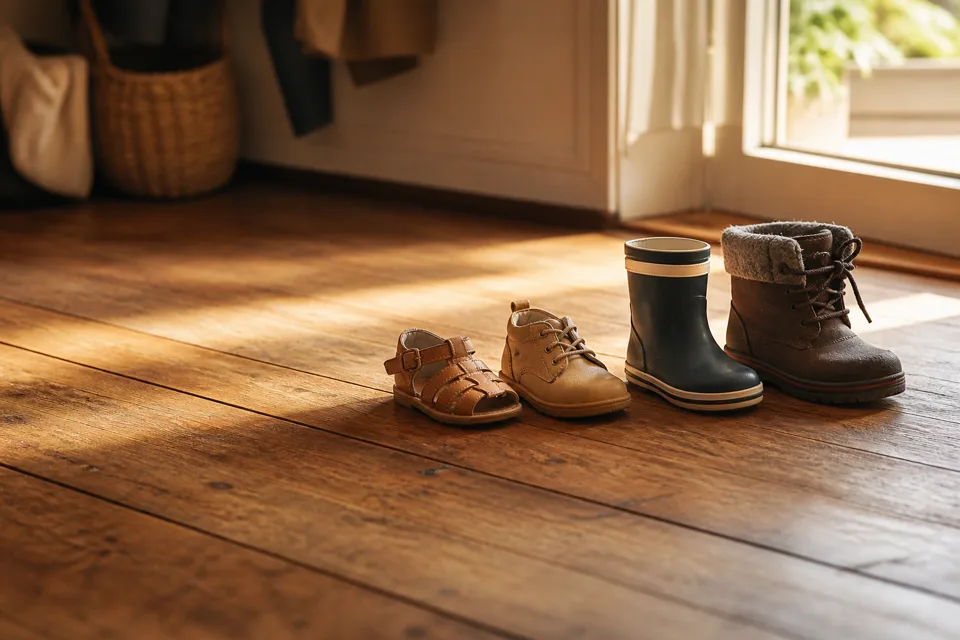
They take over from first shoes outdoors below 8°C (46°F). From 8°C (46°F) and up, first shoes or rain boots cover dry and wet walks without the weight of a snow boot.
- FromFirst steps
- You'll need1pair per size
- Wear them below8°C46°F
Winter boots or rain boots?
Both keep puddles out. Only winter boots keep the feet warm on frozen ground.
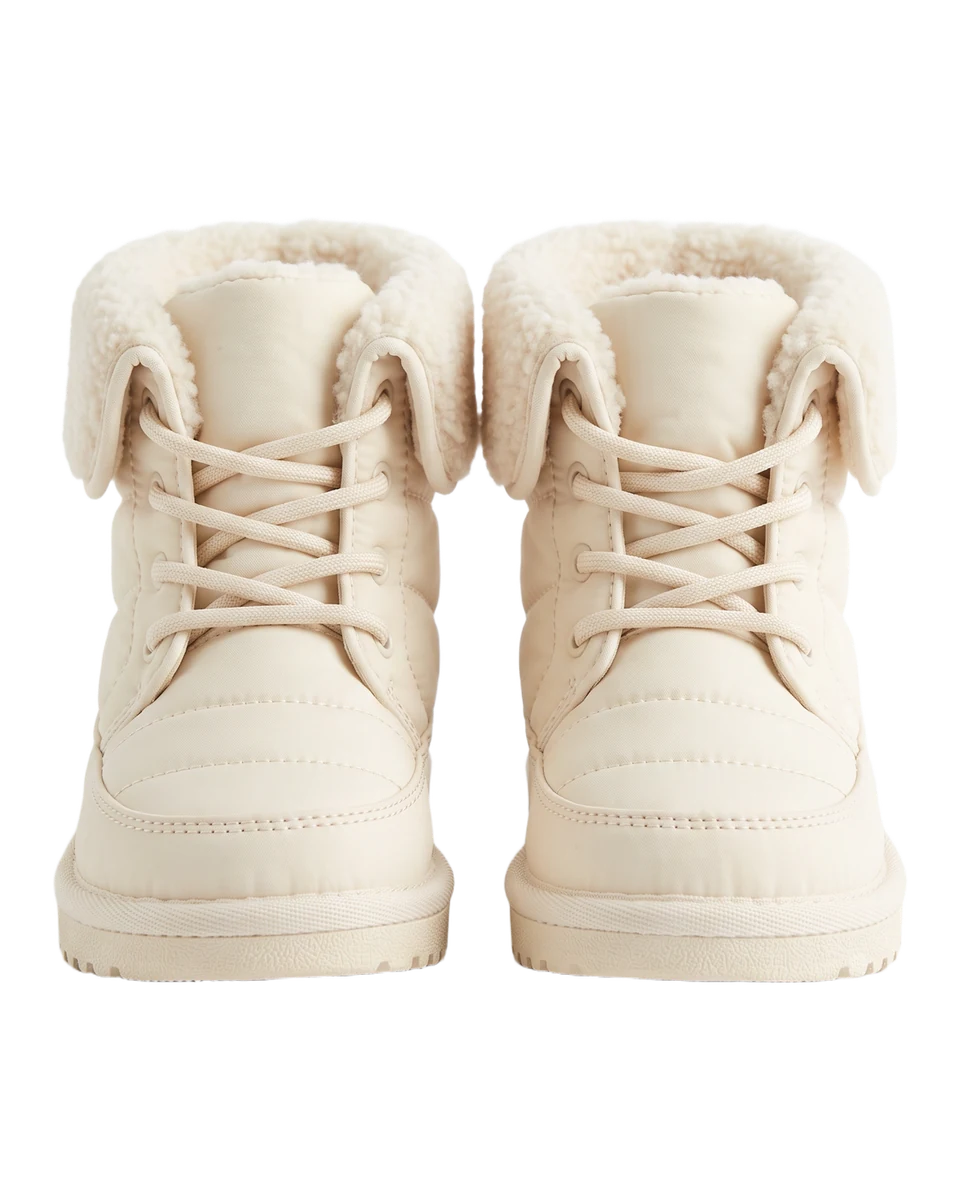
Winter boots
For walks below 8°C (46°F), in snow and freezing slush. A fleece, wool or felt lining holds warm air around the foot.
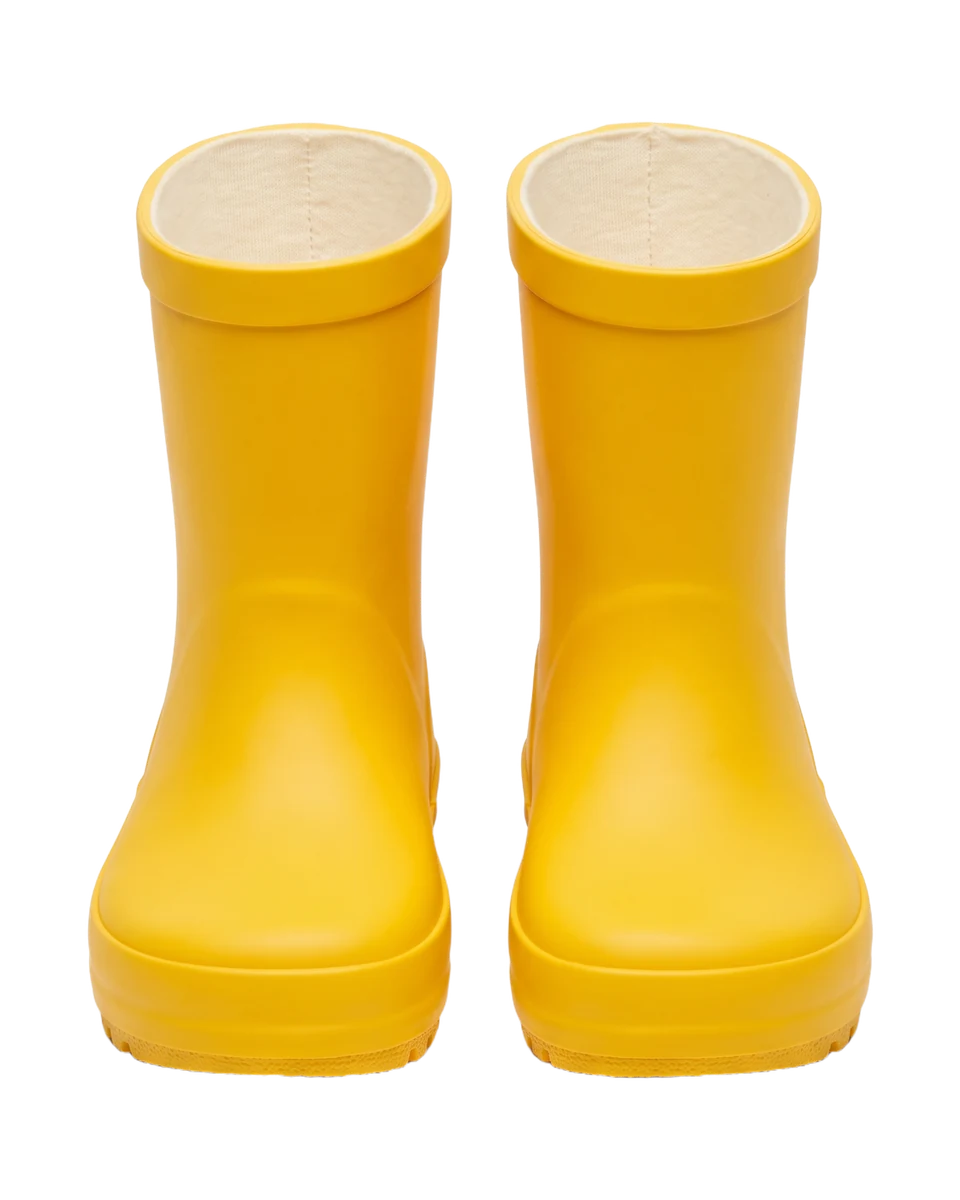
Rain boots
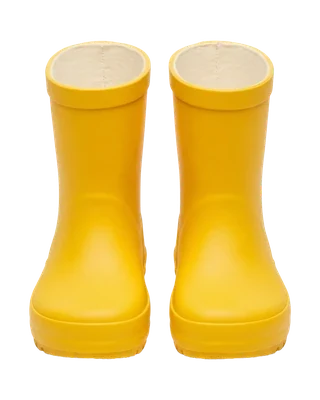
Unlined rubber or PVC, for puddles and wet grass from 8°C (46°F) and up.
Three kinds of winter boots
Each suits a different winter: dry cold and light snow, deep snow well below freezing, or wet slush.
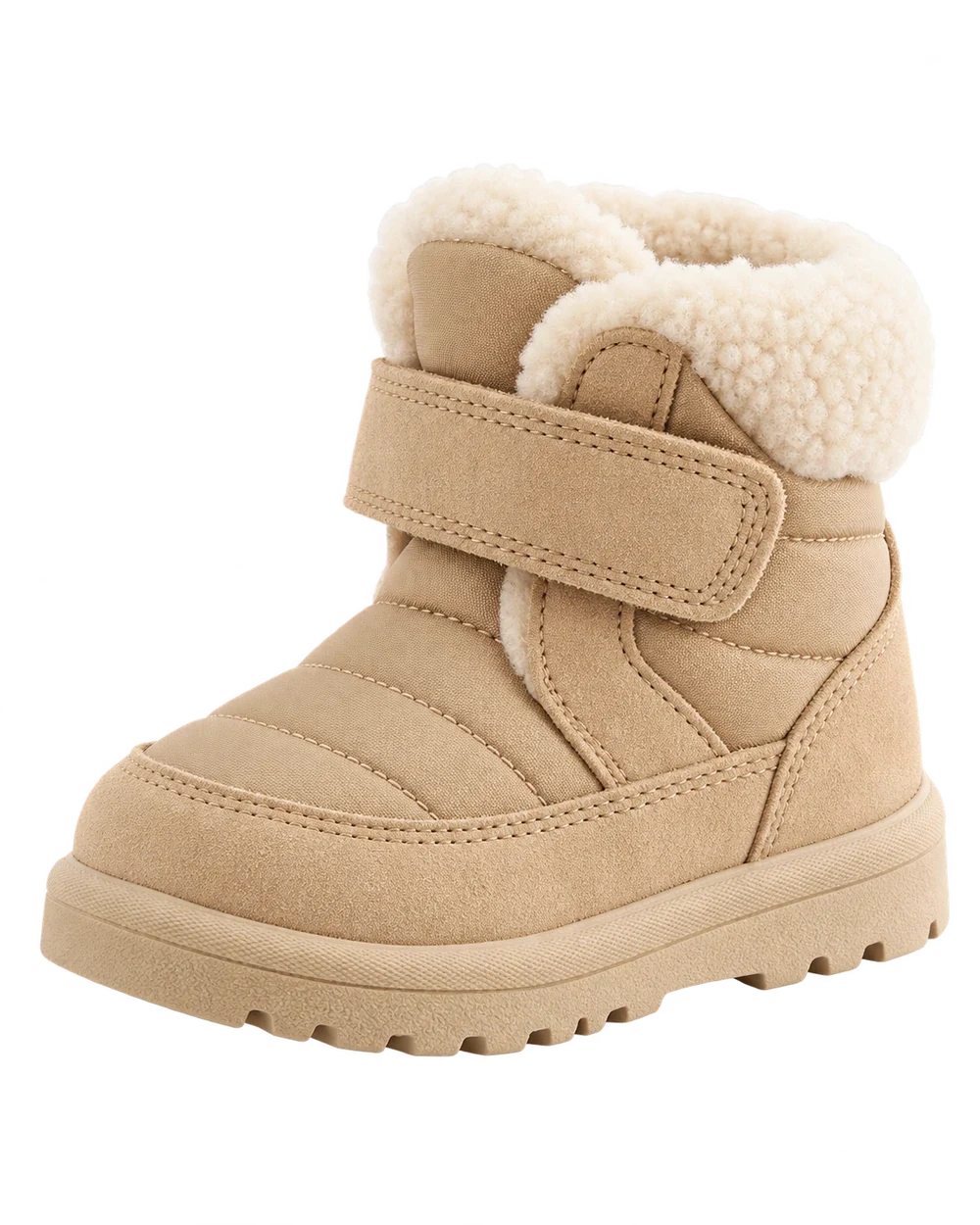
Fleece- or wool-lined winter boots
A soft upper, waterproof or water-resistant, with a fleece or sheepskin lining sewn in, on a flexible rubber sole. The lightest kind, and the easiest for a new walker on cold, dry sidewalks and in light snow. If water gets in over the top, the lining is slow to dry.
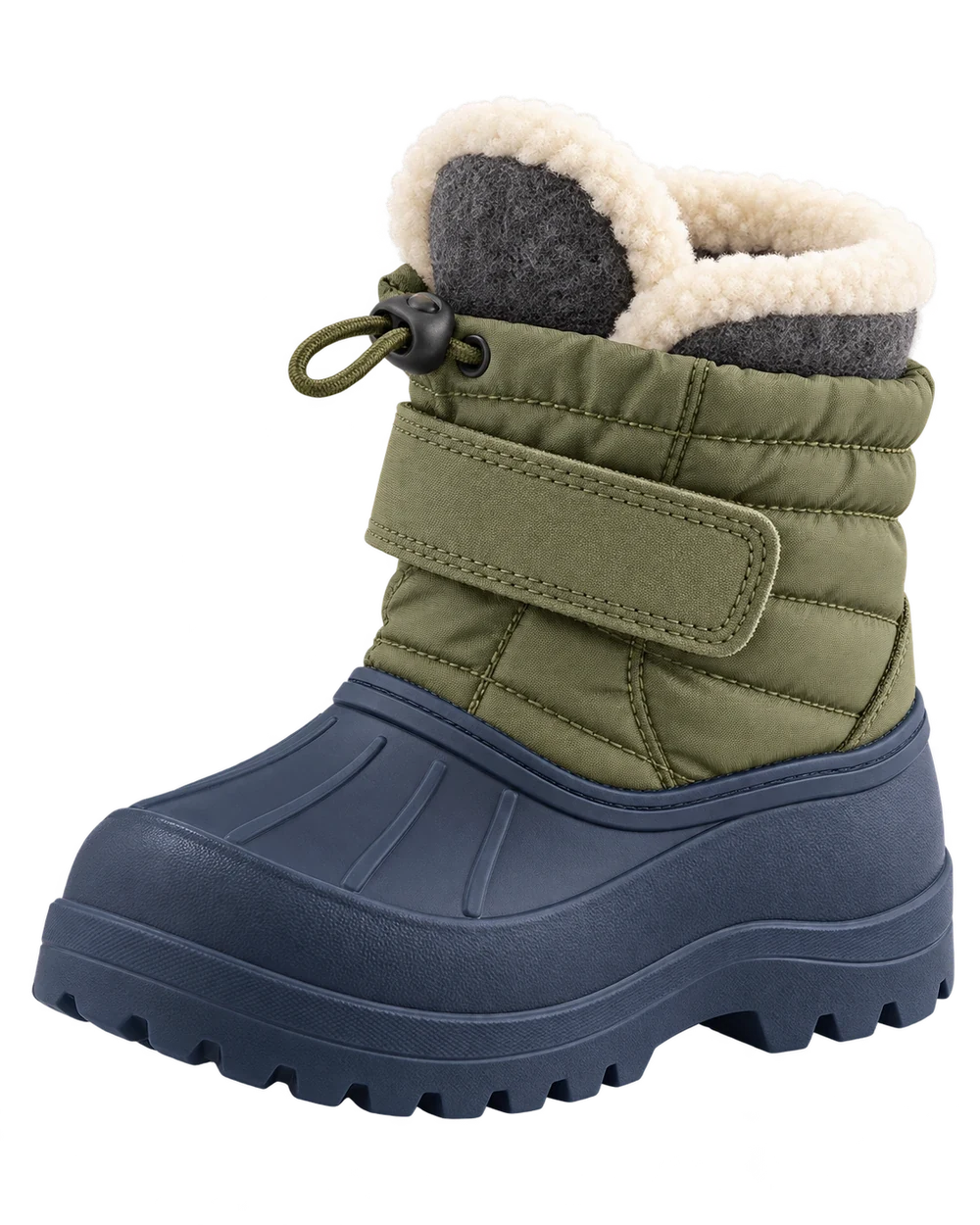
Snow boots with a removable felt liner
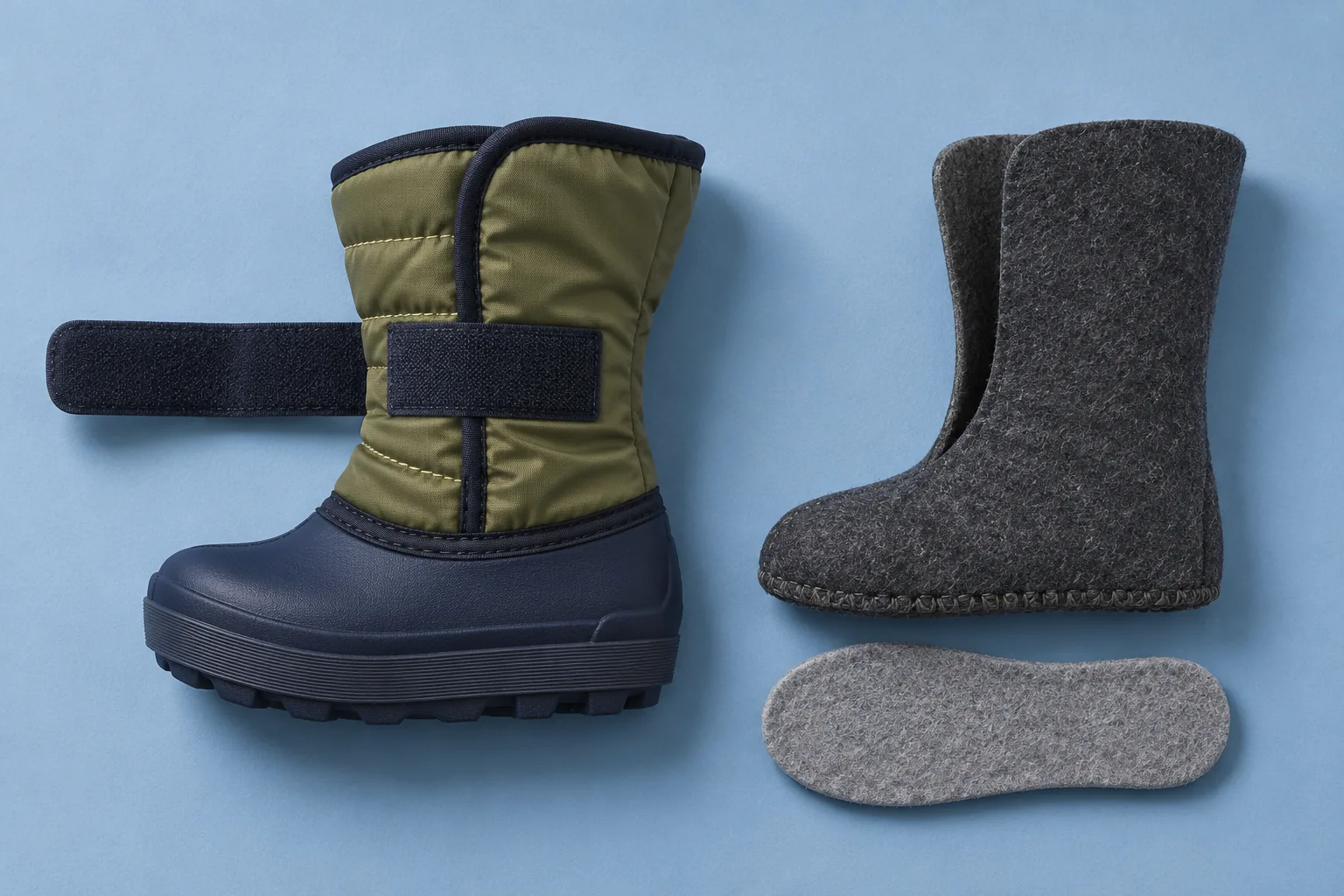
Often called a pac boot: a rubber shell for the foot, a nylon leg, and a thick felt boot inside that pulls out. The warmest kind, for deep snow and days well below freezing, and the liner dries overnight once you pull it out. Heavier and bulkier, which a new walker feels.
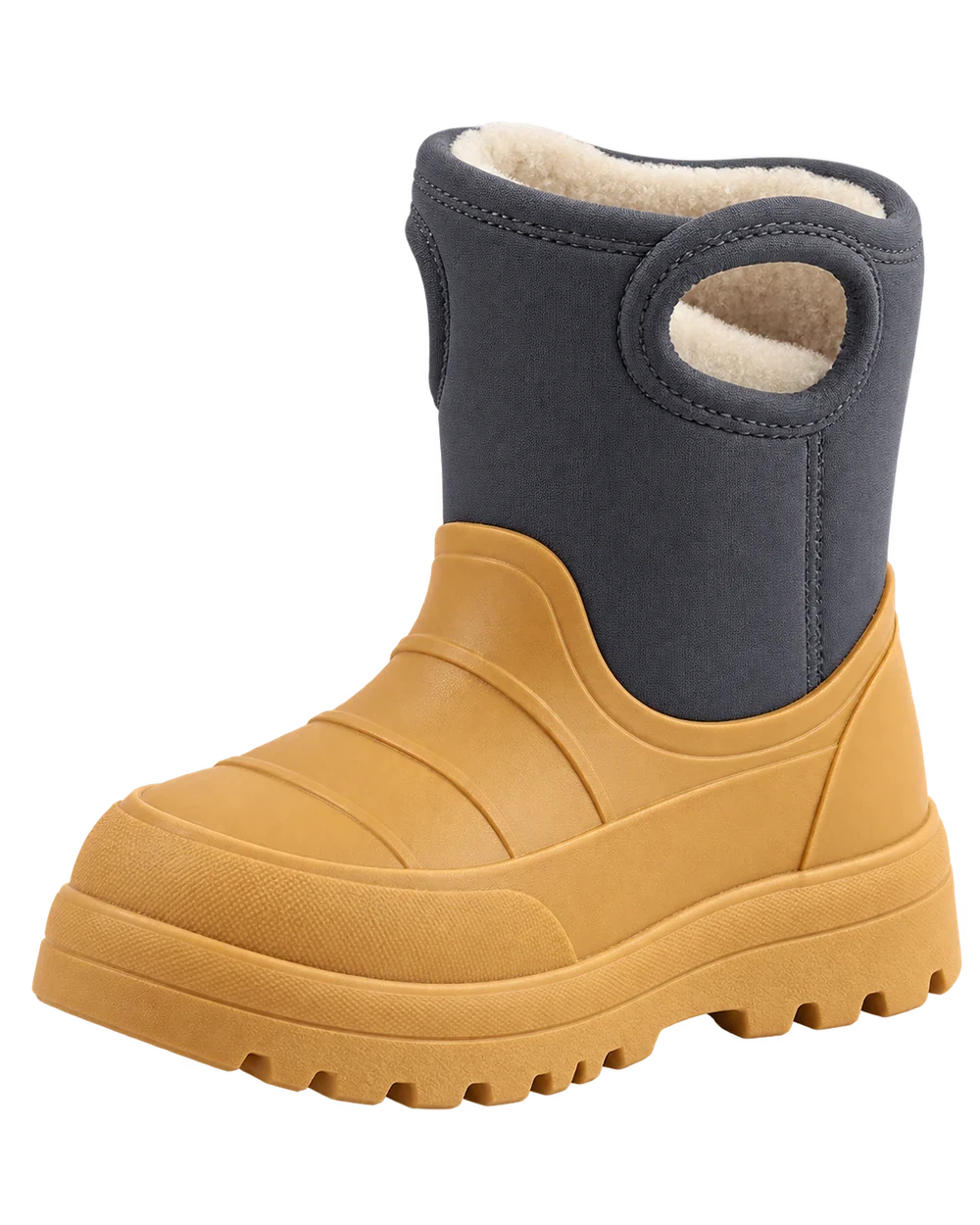
Insulated neoprene boots
A waterproof rubber foot with a leg of neoprene (the soft, stretchy foam rubber of wetsuits) and pull handles. Waterproof from top to bottom, for slush, mud and winters that hover around freezing, and easy for a toddler to pull on.
How to choose winter boots
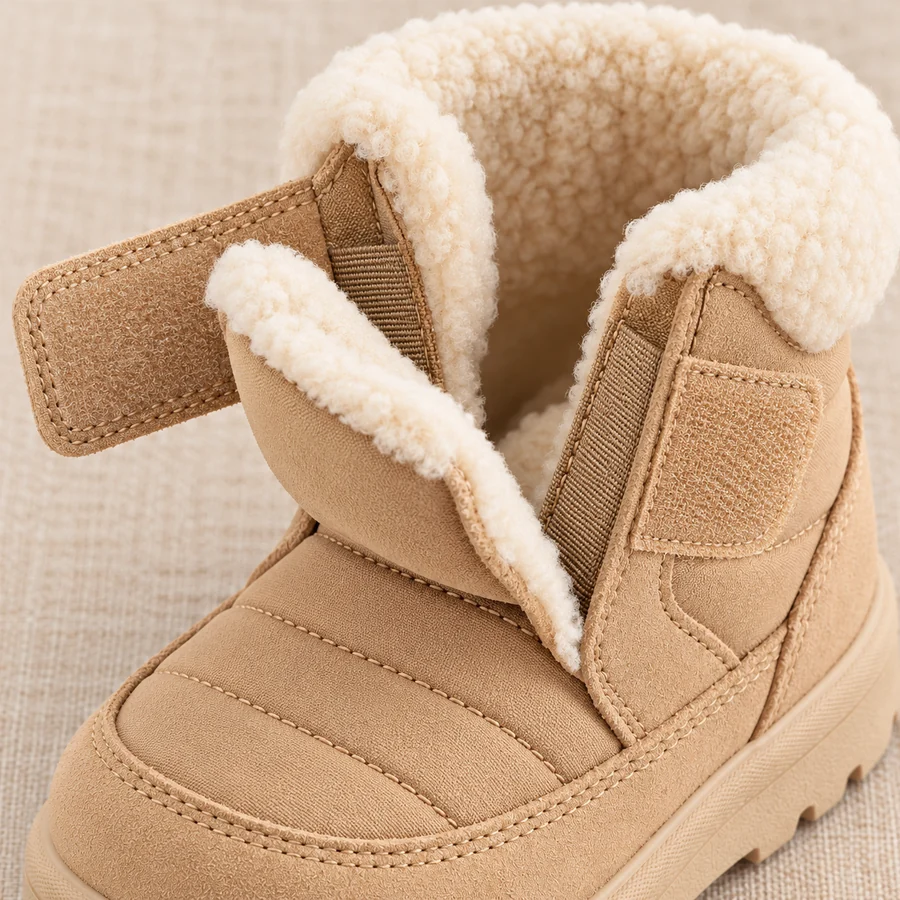
1. Opens wide down the front
Toddlers have a high instep (the rounded top of the foot), and the toes curl when the foot has to squeeze into a narrow boot. A boot that opens wide down the front, with one hook-and-loop strap, lets the heel slide right down, and it takes a wide foot too. Fabric sewn along both sides of the tongue (a gusset) keeps snow out of the opening.
- Good: One wide hook-and-loop strap
- Good: No gaps beside the tongue
- Not good: Heel catches on the way in
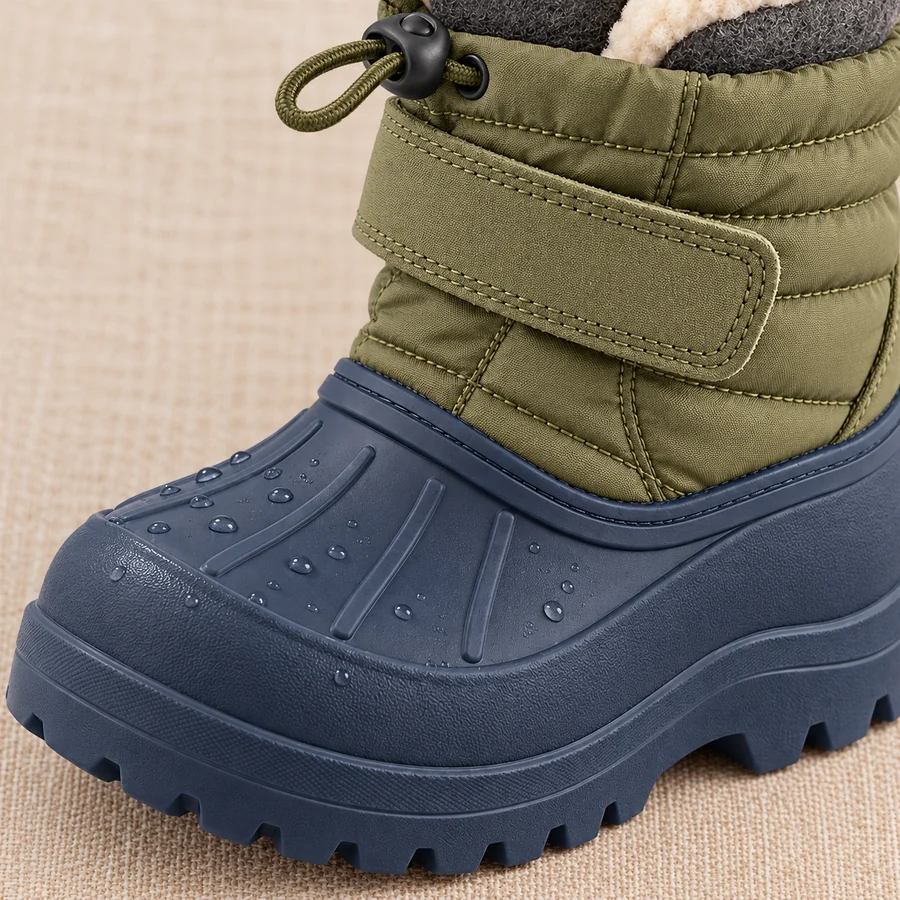
2. Waterproof up over the toes and heel
Fashion boots in faux suede or faux fur look warm on the shelf, but slush soaks through suede, fabric and seams that are not sealed.
- Good: Rubber up over toes and heel
- Good: “Waterproof” and sealed seams on the tag
- Not good: Suede with no waterproof label
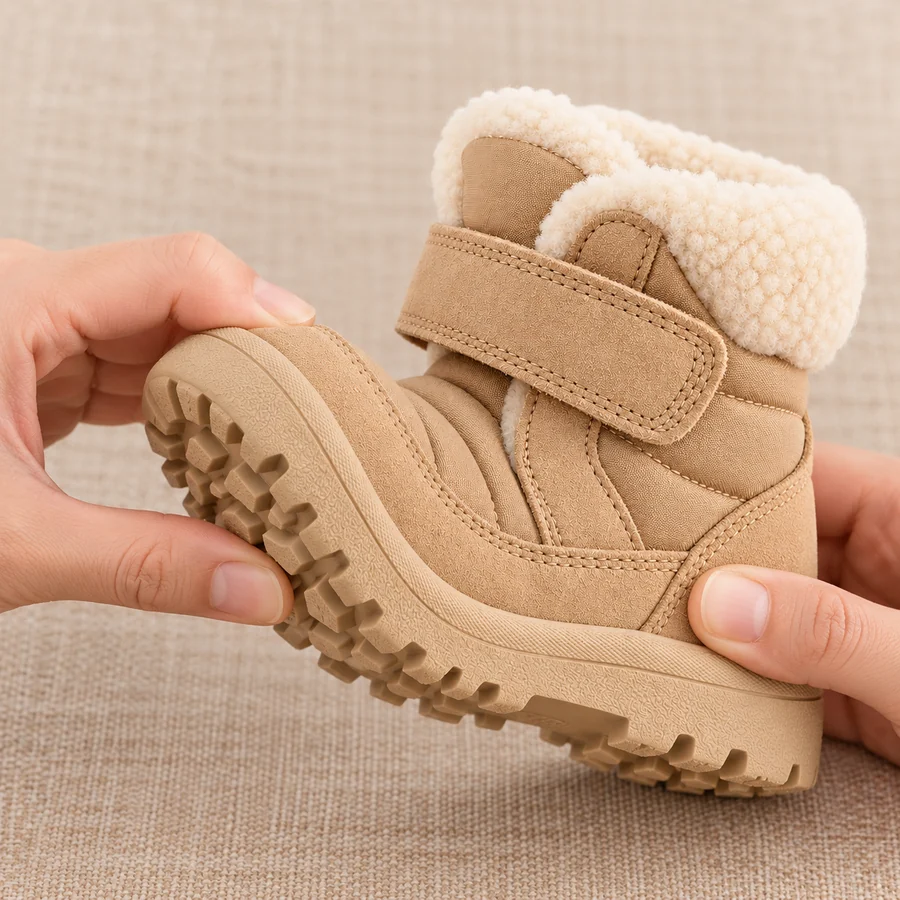
3. A grooved sole that still bends
A winter sole needs deep rubber grooves to grip packed snow, and enough thickness to keep out the cold of the ground. Push the toe up in your hand: the sole should still bend at the ball of the foot, or a new walker shuffles flat-footed.
- Good: Deep grooves underneath
- Good: Bends at the ball when pressed
- Not good: Rigid from heel to toe
How to wear them
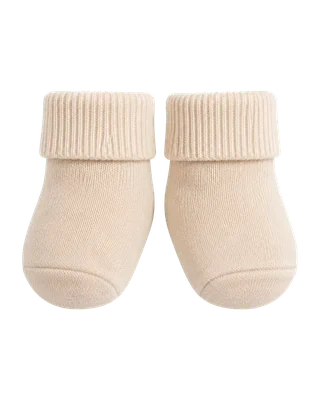
One pair of merino wool or thermal warm baby socks goes inside, not cotton, which holds sweat against the toes. A second pair makes the boot tight, and a tight boot is a colder one.
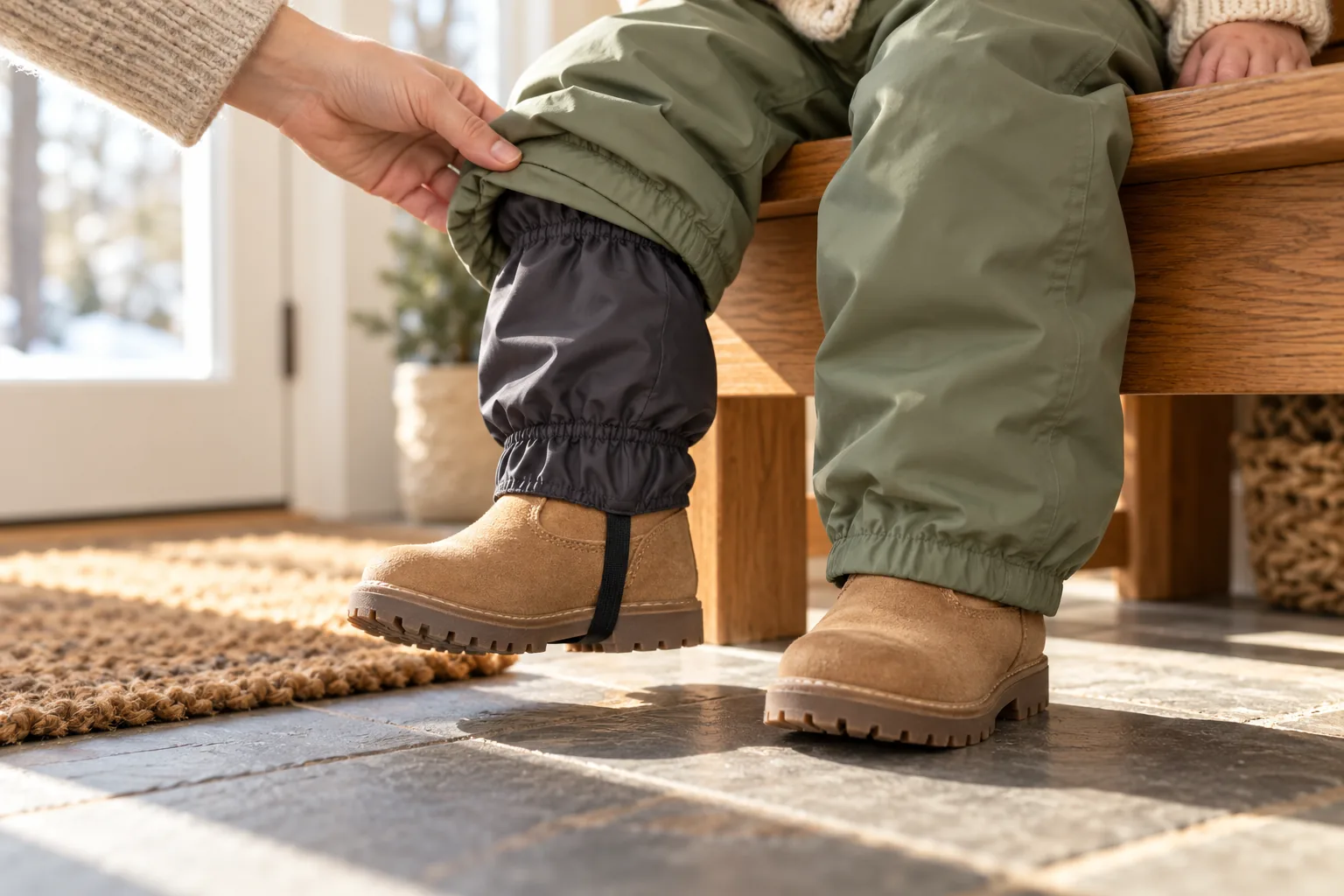
Snow pants or a pram suit go over the boots, never tucked in, or melting snow runs straight into the socks. Pull the elastic cuff inside the leg (the snow gaiter) down over the boot and hook its loop under the sole. Then pull the outer cuff down over it.
How to dry them
After a wet or salty walk, wipe the salt and mud off with lukewarm water and a little mild soap. Take out felt liners and insoles, open the straps wide, and let everything dry at room temperature. Never put winter boots or liners in the washer or the dryer, or right against a radiator or heater: heat shrinks felt, warps rubber and loosens the glue of the sole. If a sewn-in lining is damp, stuff the boot loosely with crumpled newspaper overnight to draw the moisture out.
Questions parents ask
Should you buy kids' snow boots a size bigger?
Often half a size up, or the next whole size, because a thick lining or a felt liner takes up room over a wool sock. Leave 6–10 mm (0.25–0.4 in), about an adult finger-width, between the longest toe and the end of the boot, with your child standing in winter socks. To see it, take out the liner or the insole and stand your toddler on it. More than one full size up, and heavy boots trip a new walker.
Can my toddler wear rain boots in the snow?
Not unlined ones, below 8°C (46°F). Unlined rubber lets the cold of snow and frozen ground straight through to the foot, so the toes get cold even in thick socks. For slush around freezing, insulated neoprene boots keep the feet dry and warm.
Are snow boots waterproof?
Not all of them. Rubber boots keep water out up to the top of the rubber, and neoprene boots all the way up. A fabric or suede boot is waterproof only if its label says “waterproof”, not “water-resistant”.
What do temperature ratings on kids' winter boots mean?
Use them only to compare how thick the insulation is, not as a promise. There is no single regulated test for children's boot ratings, and brands calculate their numbers for a child who is walking, in thermal socks. A toddler who stands still in the snow or rides in a stroller makes far less heat in the feet than one who runs around, so keep an eye on the time outside in freezing weather.
How do you get snow boots onto a toddler when the heel will not go down?
Open the hook-and-loop strap all the way and pull the tongue forward, so the boot opens wide. Sit your toddler down with the knee bent, slide the foot in, and press gently down on the top of the knee, toward the heel, before you close the strap. A bent knee relaxes the calf, so the toes are less likely to curl against the front of the boot.
Does a baby who is not walking need winter boots?
No. Hard, stiff soles get in the way of how a baby's foot moves and do not help a baby learn to walk. Until outdoor shoes begin, warm baby socks inside soft baby booties keep the feet warm, with the legs in a pram suit or a stroller footmuff.