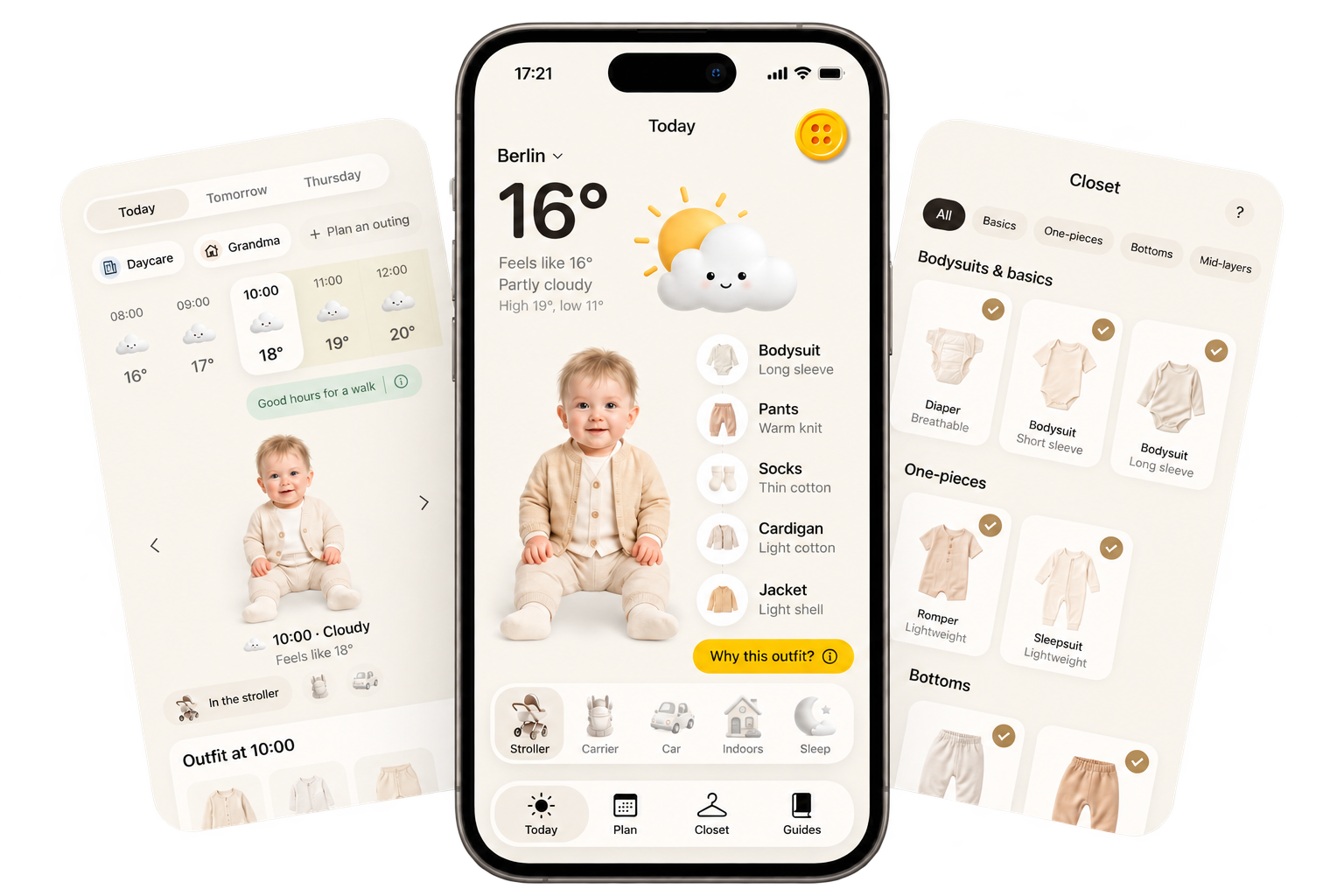

What this is about
Cold fingers can undo your confidence in seconds. You brush an arm in the crib or feel an icy little hand against your neck during a feed, and the immediate worry is that your baby is freezing. Usually, they are not. A baby's circulatory system is still developing, so the body sends most of the warm blood to vital organs in the chest and brain first. Tiny hands and feet have lots of surface area, very little body fat, and lose heat quickly to room air. They run cool by design.
Check the chest or neck instead
The real warmth check happens at the core of the body, not at the edges. Slip two fingers inside the collar to touch bare skin on the upper chest or the back of the neck.
Warm and dry means your baby is comfortable, even if the fingers feel like little ice cubes. If the skin feels hot, damp or sweaty, your baby is too warm, so take off one layer. If the chest itself feels cool to the touch, that is your signal to add one light layer.
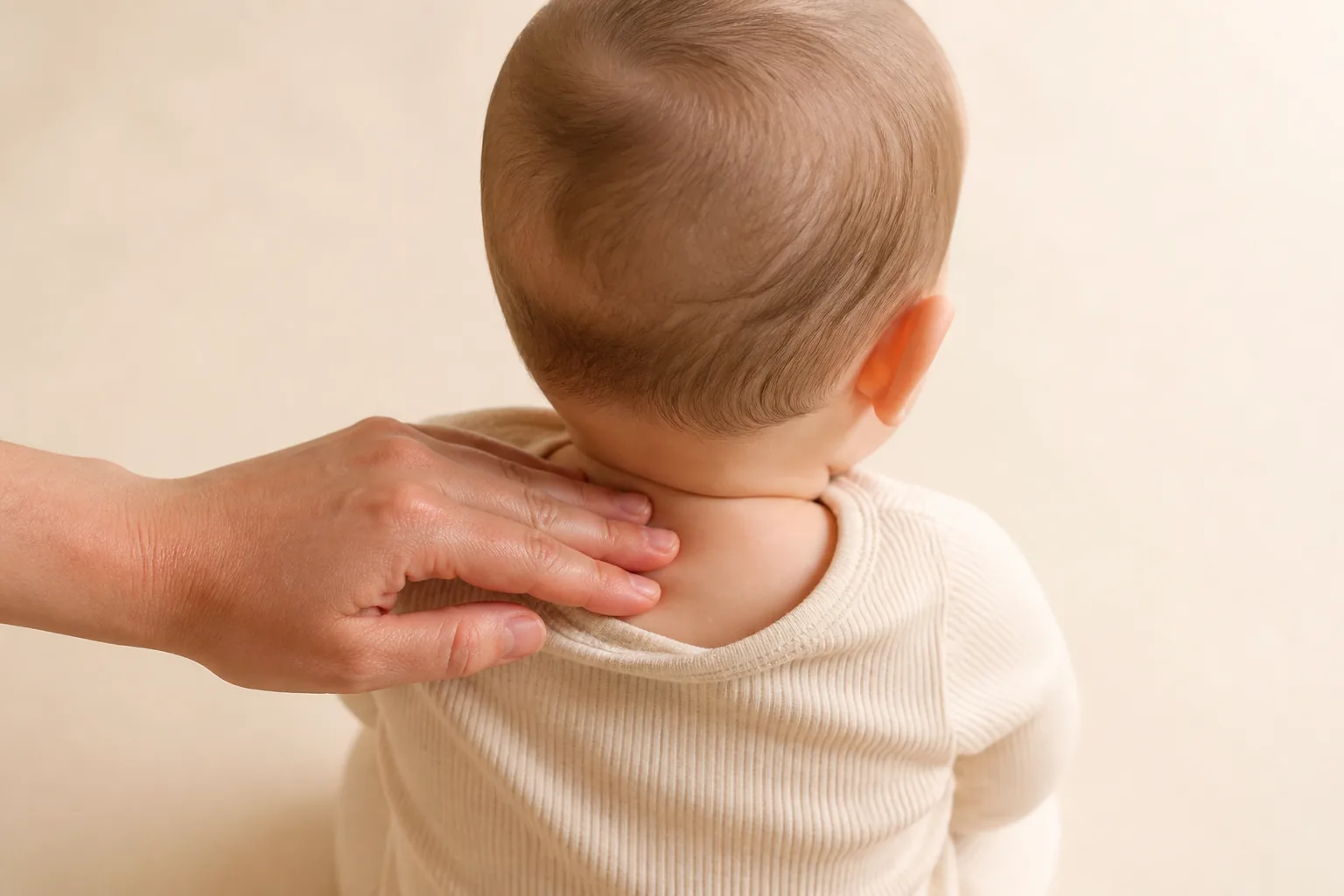 Yes
YesCheck the neck
Warm and dry skin means the clothes can stay.
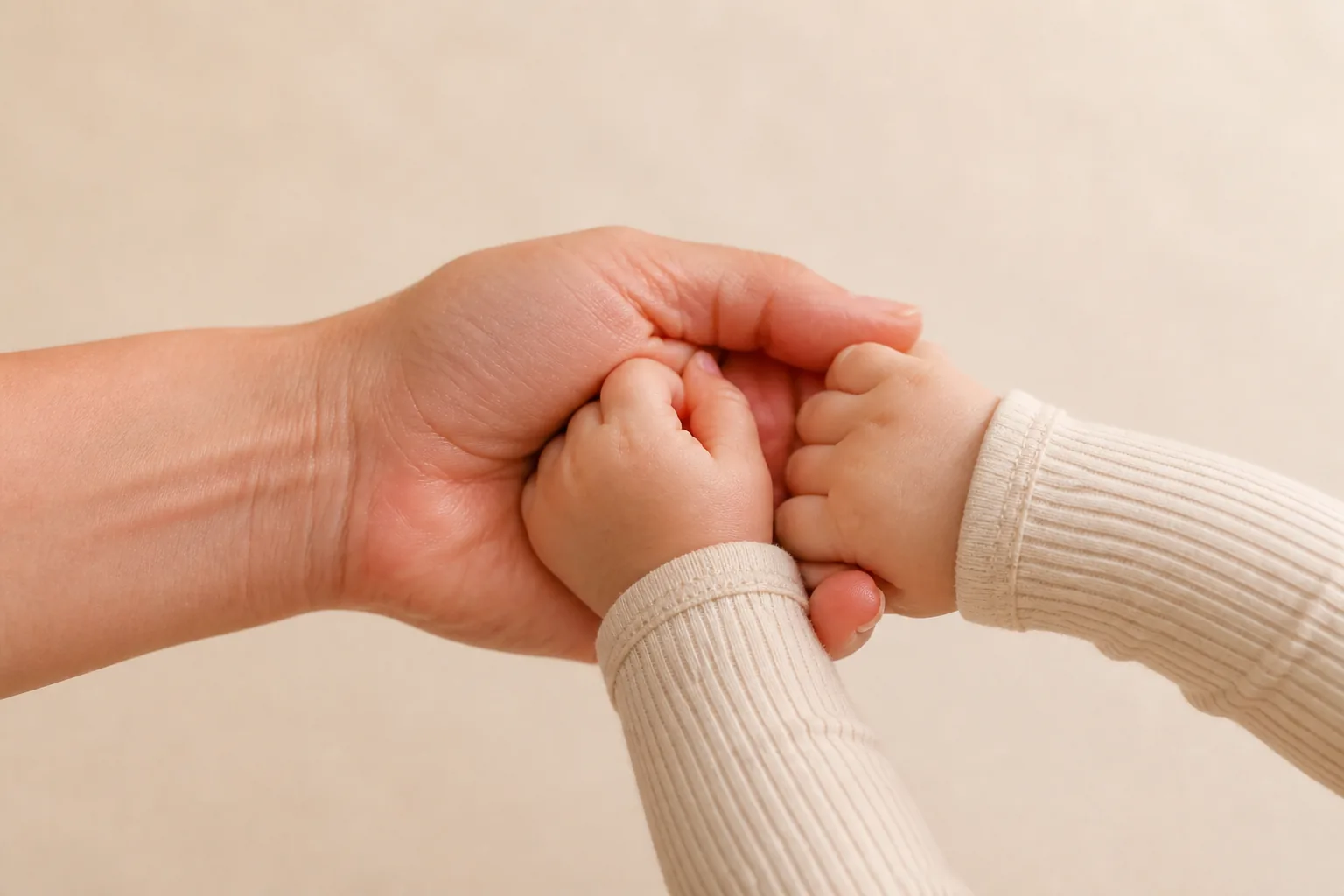 No
NoHands can mislead
Cool fingers alone do not mean your baby needs more clothes.
Cool hands at night do not need mittens
At night, this question creates the most second-guessing. You look into the crib and see bare hands resting on top of the sleep bag, cold to the touch. It looks like something is missing from the bedtime outfit.
It is not. Sleeveless sleep bags are designed to leave the arms and hands free. Babies use their hands to explore, touch their face and soothe themselves back to sleep. They also release excess body heat through their head and hands, which helps protect them from overheating.

Never put a hat on a baby for sleep indoors, and do not put scratch mittens on for warmth in bed. Mittens can slip off in the crib, and hats are an overheating risk. If the chest inside the sleep bag is warm and dry, leave the hands alone and let your baby sleep. Before 12 months, do not drape an extra blanket over a sleep bag.
Make one change, then wait
When the chest does feel cool, the instinct is often to fix everything at once: thicker pajamas, socks, mittens and a heavier blanket. Resist the urge to overcorrect.
Add just one light, dry layer, like a vest or a slightly warmer sleep bag suited to the room. Give it twenty minutes to work, then feel the chest or neck again. Changing one thing at a time keeps a pair of cool feet from turning into an overheated baby. The full comfort check shows how to feel for warmth in a stroller, carrier, car and crib.
Cover hands and feet for outdoor weather
Indoors, cool hands are normal circulation. Outdoors in cold wind, rain or winter air, exposed skin needs physical protection. Socks, booties and mittens have one specific job: protecting skin from biting outdoor air. For a stroller ride, start with thin socks from 20°, move to warm socks below 12°, and add booties and mittens below 8°.
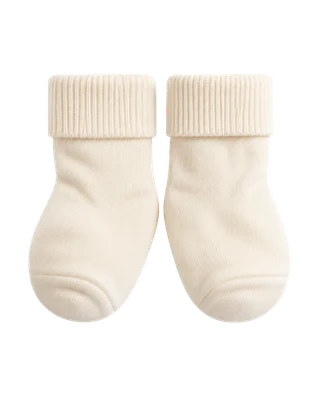
20–23°
Thin socks with the light stroller outfit.
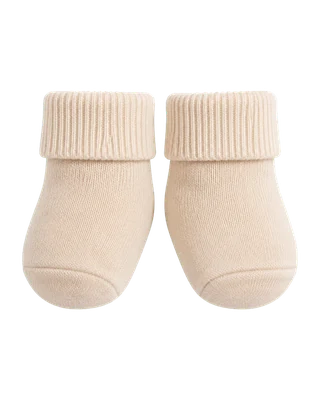
Below 12°
Warm socks replace thin socks.
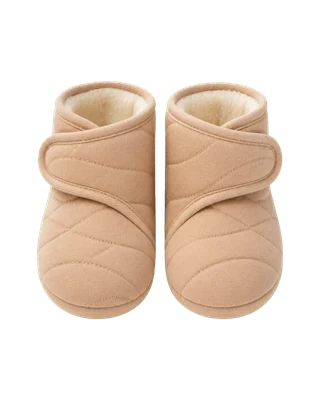
Below 8°
Booties and mittens cover feet and hands outdoors.
Babies are famous for kicking socks off inside footmuffs, and older babies chew their mittens until the cuffs are soaked. On the way home, always feel whether a sock or mitten has become damp from rain, snow or drool. Wet fabric against cold air chills skin fast, so swap damp pieces for dry ones before adding anything heavier.
When cold skin means more than clothes
Everyday cool hands on a calm, active or sleeping baby are harmless. Cold, clammy skin across the whole body is completely different.
In young babies, hands and feet can occasionally look slightly mottled or bluish in a cool room, and pink up again once warmed. But pale, blotchy, gray or blue skin on the lips, tongue or torso is not a clothing problem. Neither is skin that feels cold and clammy while your baby is floppy, unusually sleepy or struggling to breathe.
In the UK, call 999 or go to A&E immediately if your baby has cold or clammy skin with trouble breathing, difficulty waking, or blue, gray, pale or blotchy skin. Outside the UK, call your local emergency services.