Baby mittens do two different jobs.
Scratch mittens are thin cotton, for a newborn at home. They keep sharp nails off the face. Many babies never need them.
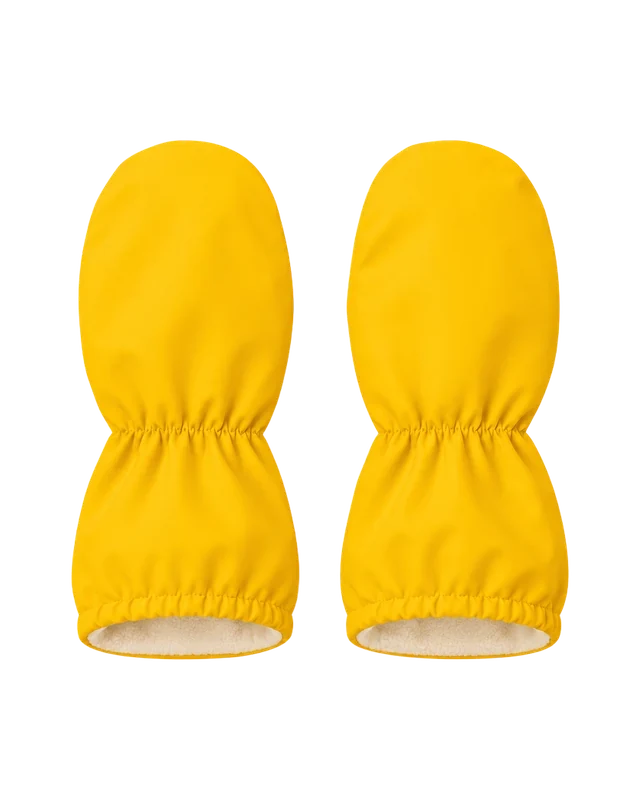
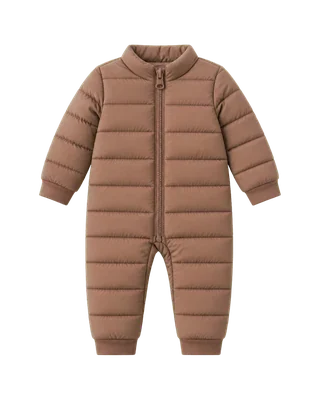
Warm mittens are for walks in the cold. Below 8°C (46°F), put them on for the stroller, where hands sit still and get cold first. Take them off when you get home. A pram suit with fold-over cuffs covers the hands without separate mittens.
- For ages0–3years
- You'll need1–2pairs
- Wear them below8°C46°F
Types of baby mittens
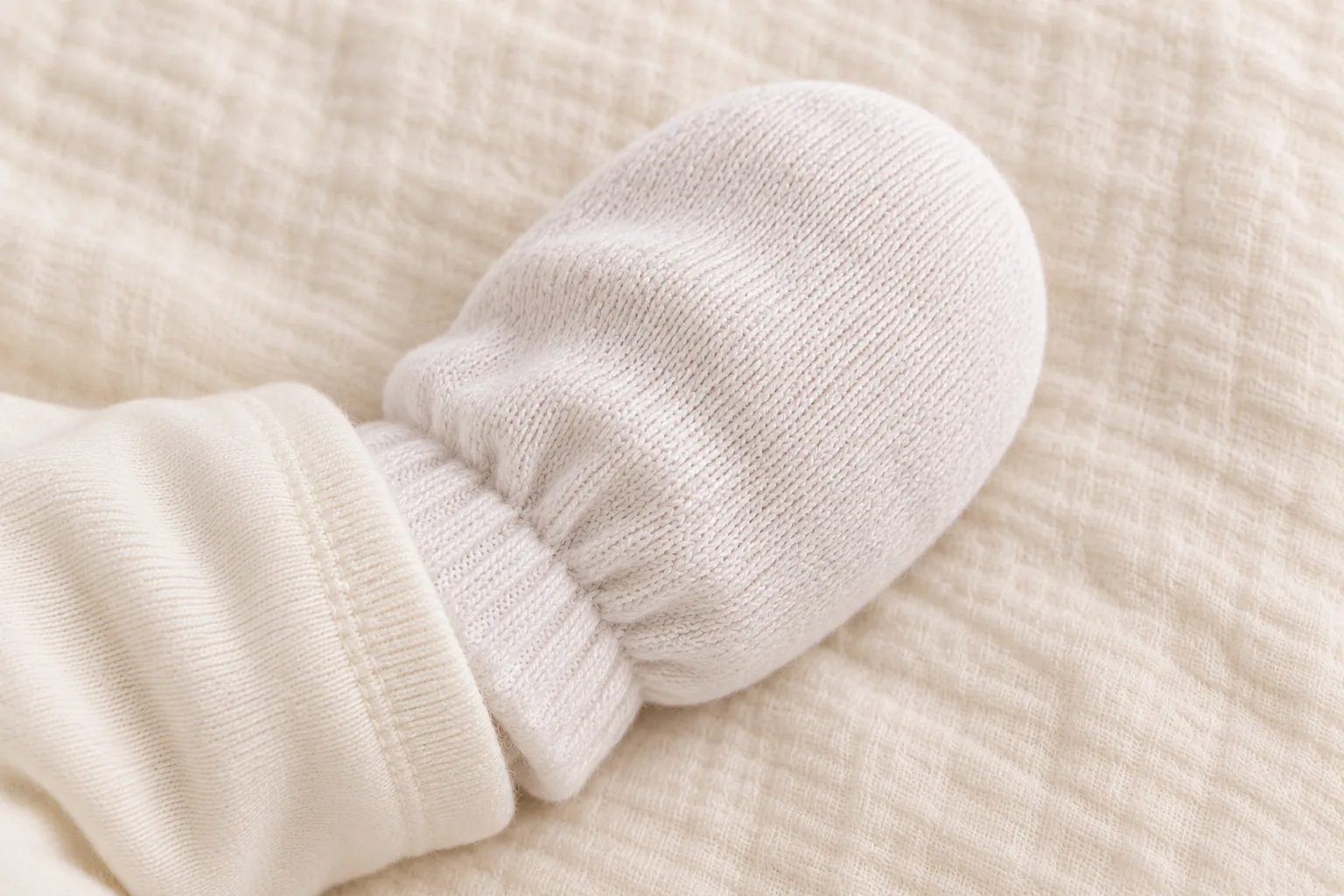
Scratch mittens
Thin, soft cotton with a gathered cuff. For the first weeks at home, and only if your baby keeps scratching the face.
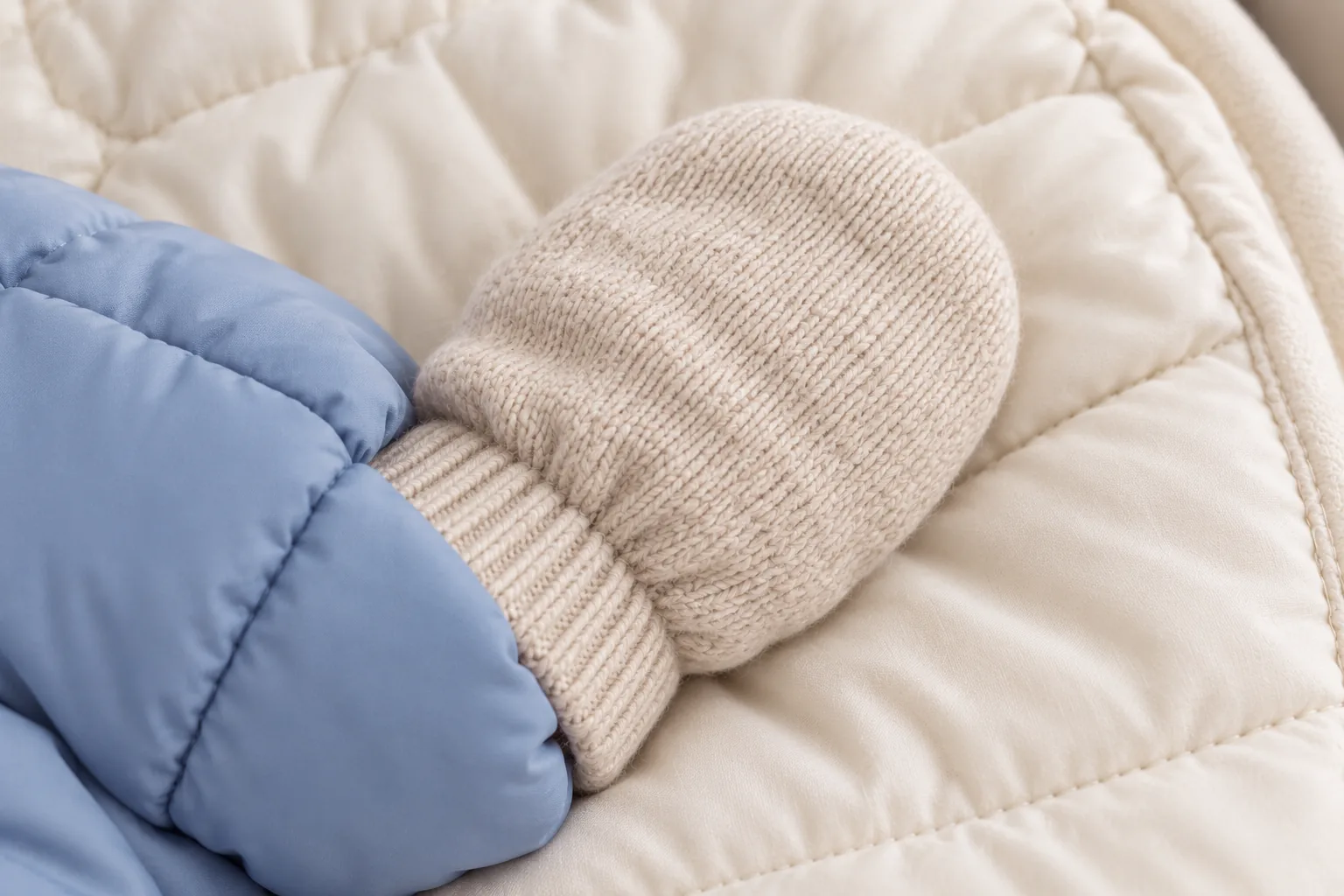
Knit or fleece mittens
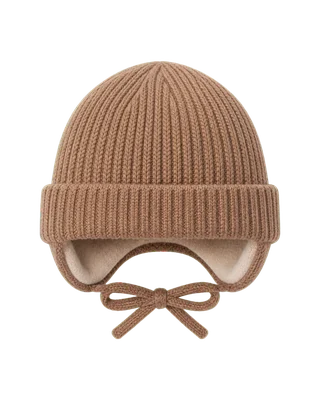
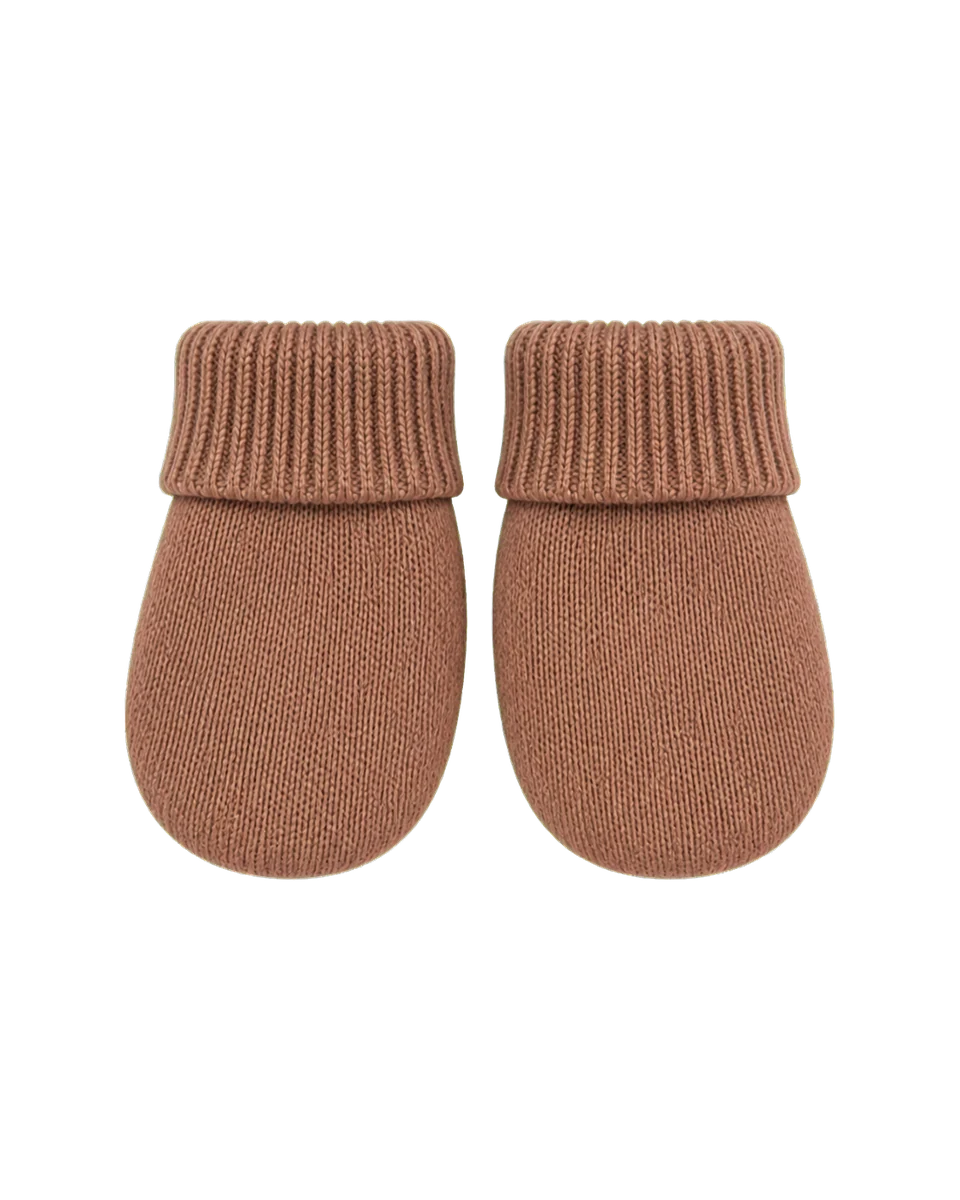
Knitted wool or cotton, or soft fleece, with a ribbed cuff. For dry cold days in the stroller or the carrier. Snow, rain and drool soak through them.
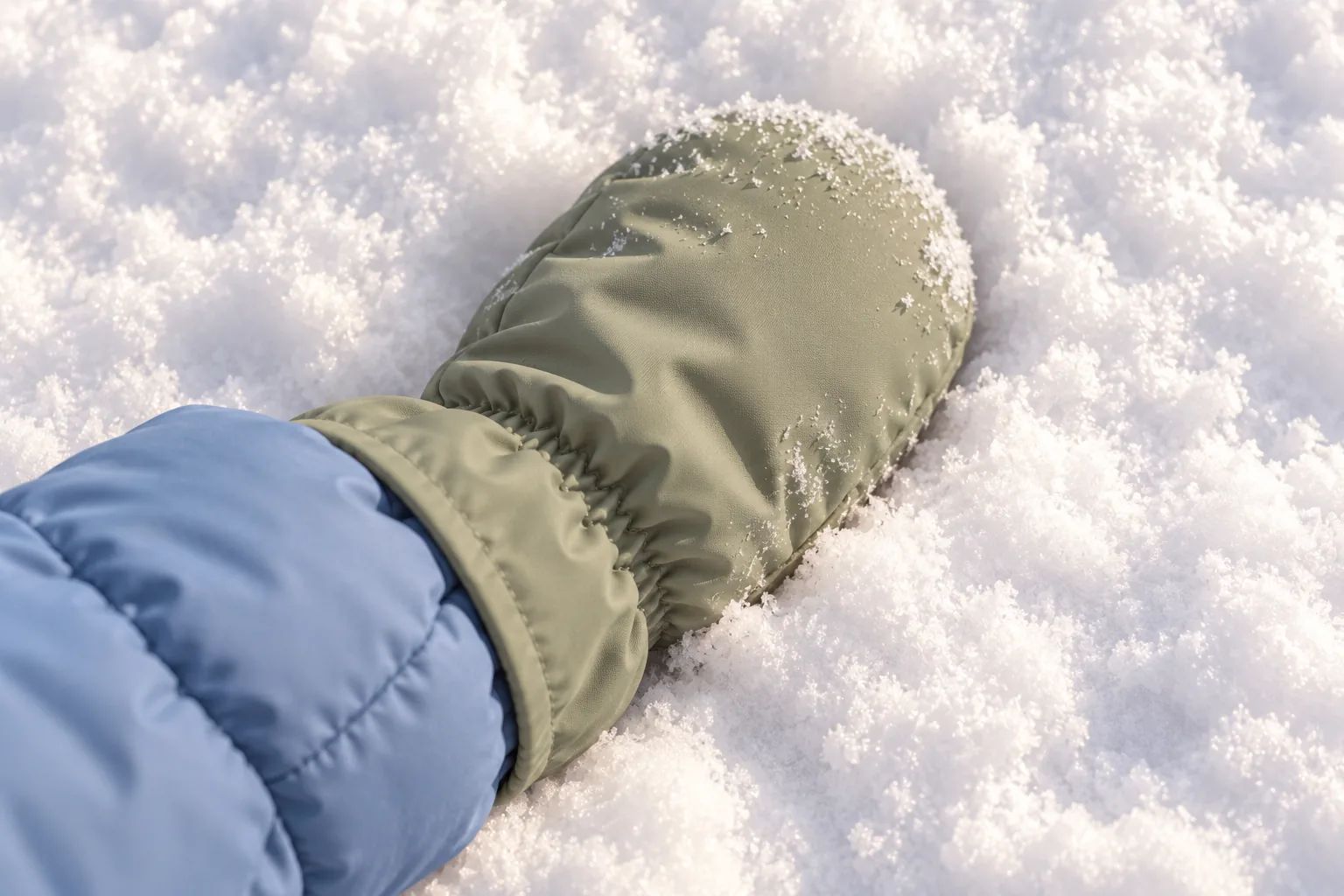
Waterproof mittens
A smooth waterproof shell, a warm lining and a long cuff, so snow cannot get in at the wrist. For snow and wet days, and for a toddler who plays on the ground outdoors.
Do newborns need scratch mittens?
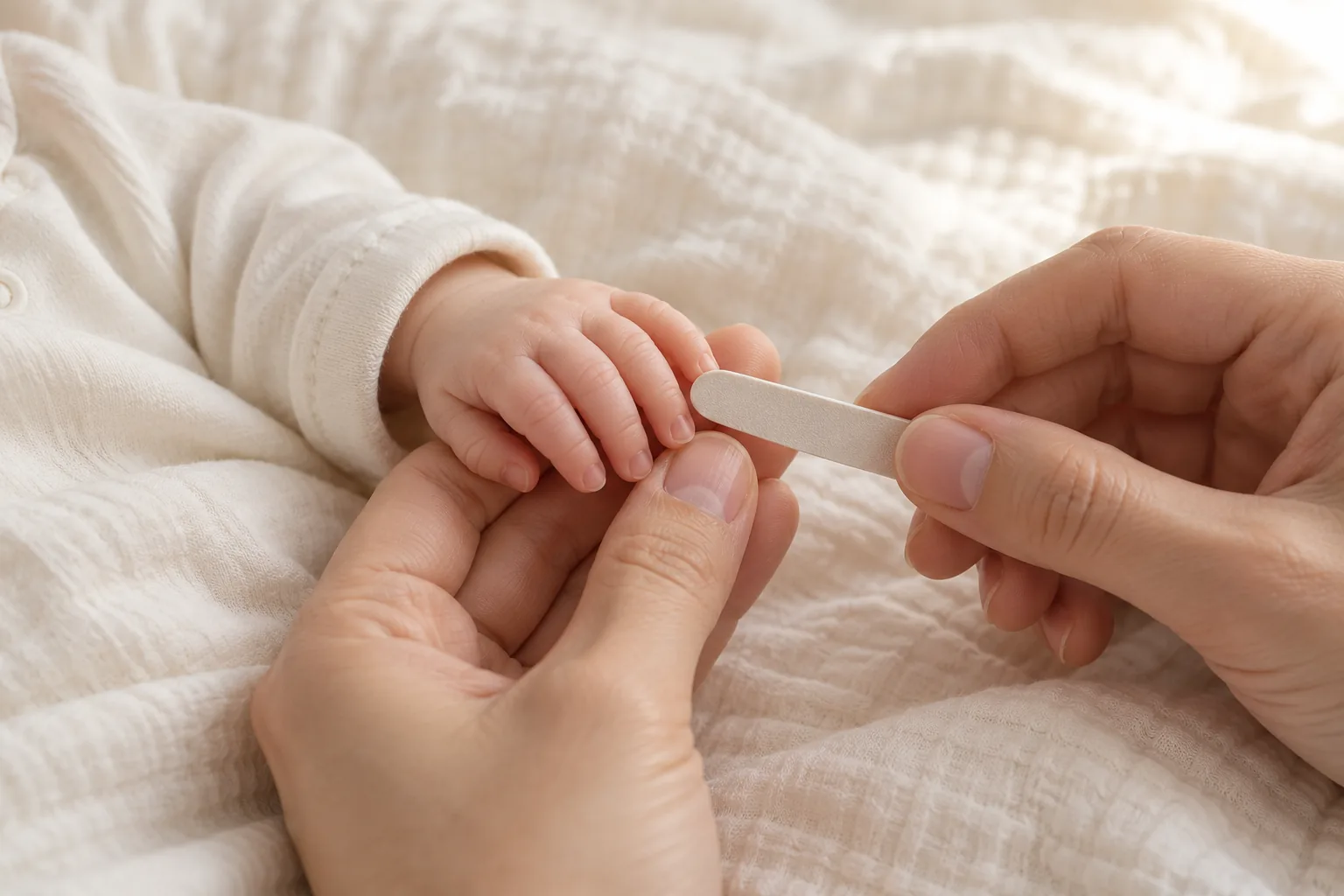
Usually not. Trimmed nails prevent most scratches, so mittens are rarely needed. Newborn nails grow fast, so trim or file them at least once a week. It is easiest while your baby sleeps.
Keep the hands bare while your baby is awake, so there is plenty of time to explore with free hands.
Some newborn long-sleeve bodysuits and sleepsuits have mitten cuffs instead: a flap at the end of each sleeve that folds over the hand. They do the same job, and they cannot fall off.
Before you put any mitten on, turn it inside out and pick out loose hairs and threads. A single hair can wind tight around a tiny finger.
How to choose winter mittens
For scratch mittens, a soft cuff that leaves no marks is all you need. Winter mittens have more to get right.
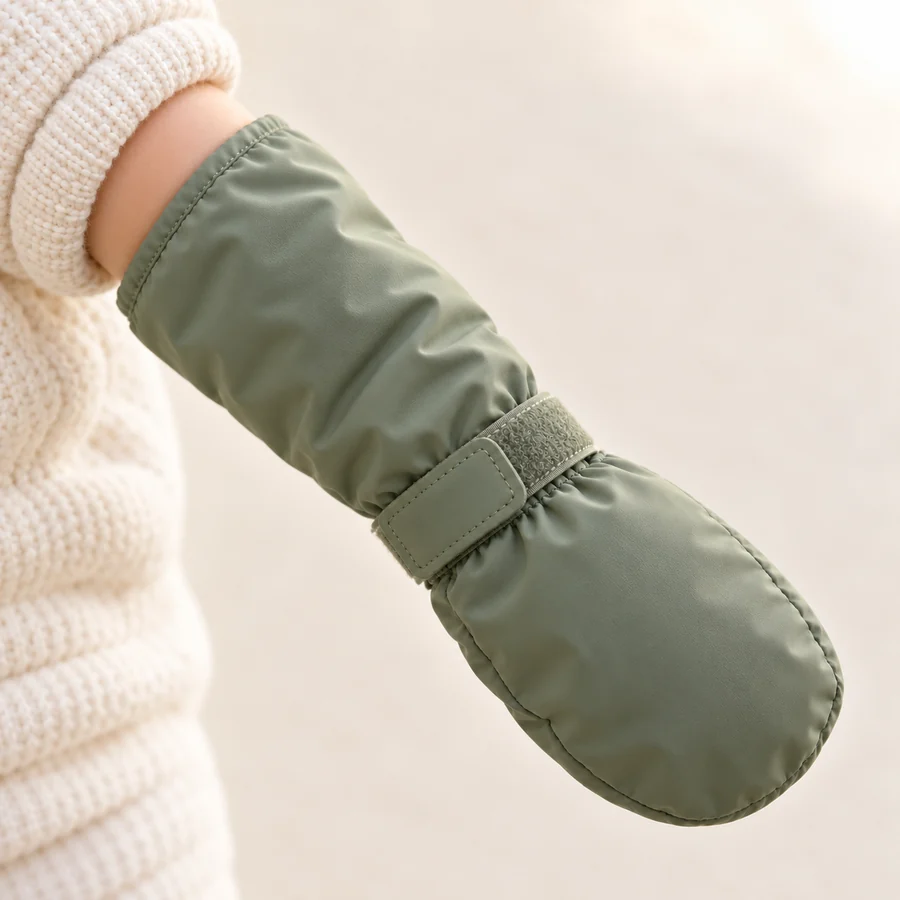
1. A cuff that stays on
Babies pull mittens off, and a short cuff slips off by itself. A long cuff up the forearm, with a strap at the wrist, stays put. It should feel snug, not tight, because a tight cuff squeezes the blood flow that keeps the hand warm.
- Good: Cuff reaches up the forearm
- Good: Strap that tightens at the wrist
- Not good: Cuff leaves red marks
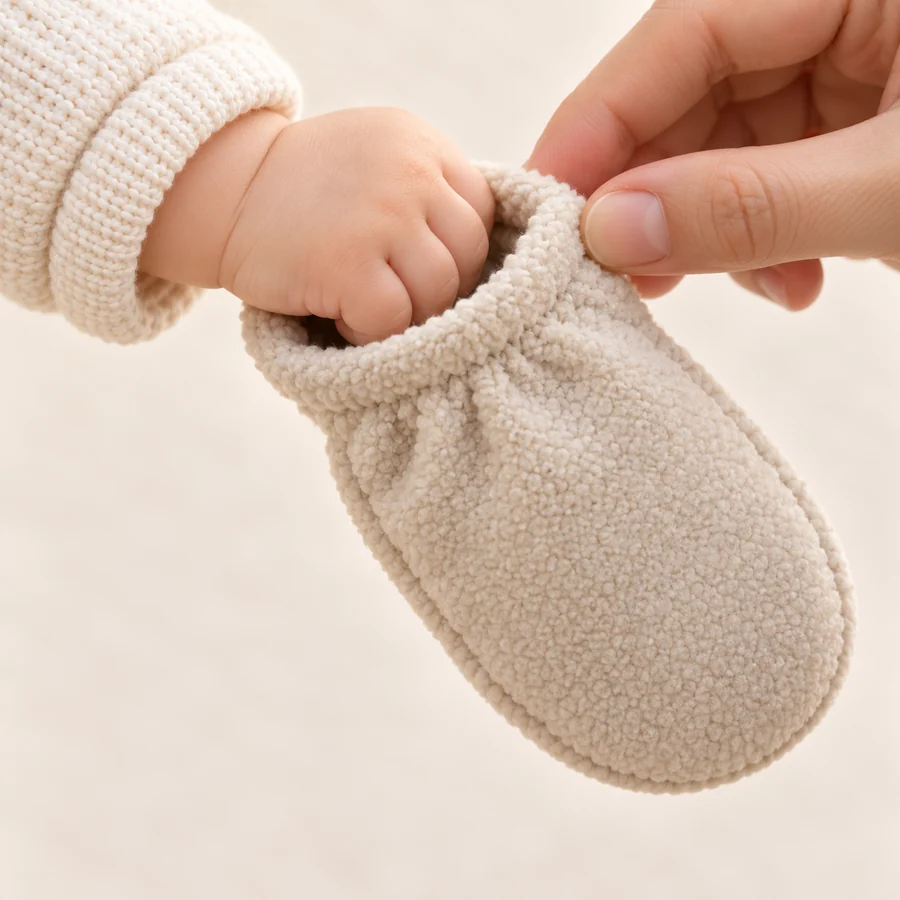
2. No thumb for a baby
A curled fist goes into a thumbless mitten in one move, with no thumb to find. Baby sizes are usually thumbless, and toddler sizes add a thumb, from 1 to 2 years depending on the brand.
- Good: Fist slides in without a push
- Good: One rounded pocket for the hand
- Not good: Thumb pocket left hanging empty
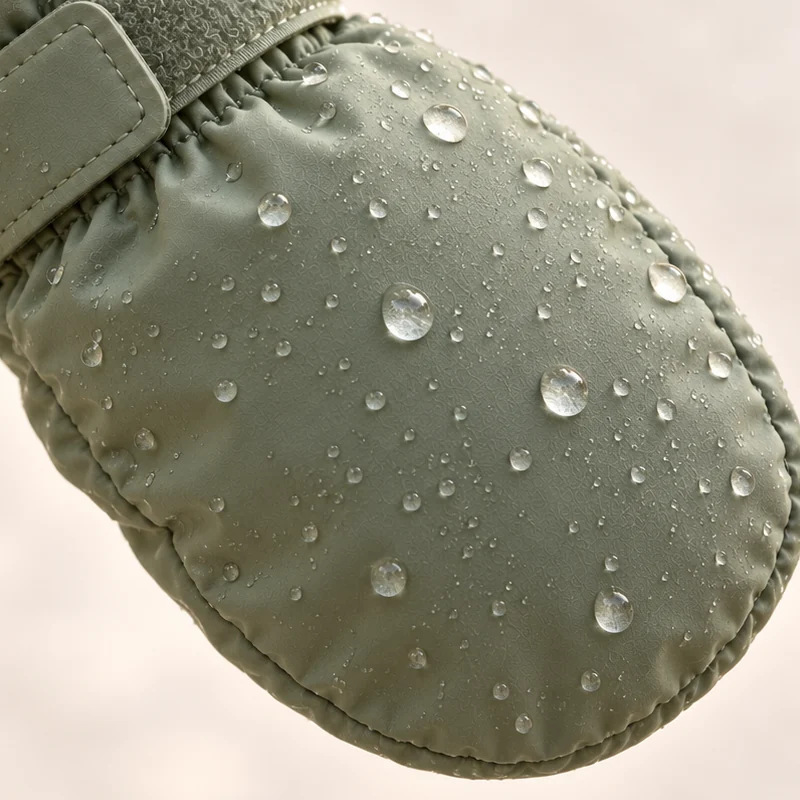
3. Waterproof for snow
Wet hands get cold fast. For snow play and wet days, choose a waterproof shell with a soft lining inside.
- Good: Water beads on the outside
- Good: Soft lining inside
- Not good: Water soaks in and spreads
Mittens or gloves?
Babies wear mittens. For a toddler, mittens are the warmer choice on cold days, and gloves suit milder days when small hands want to grip.
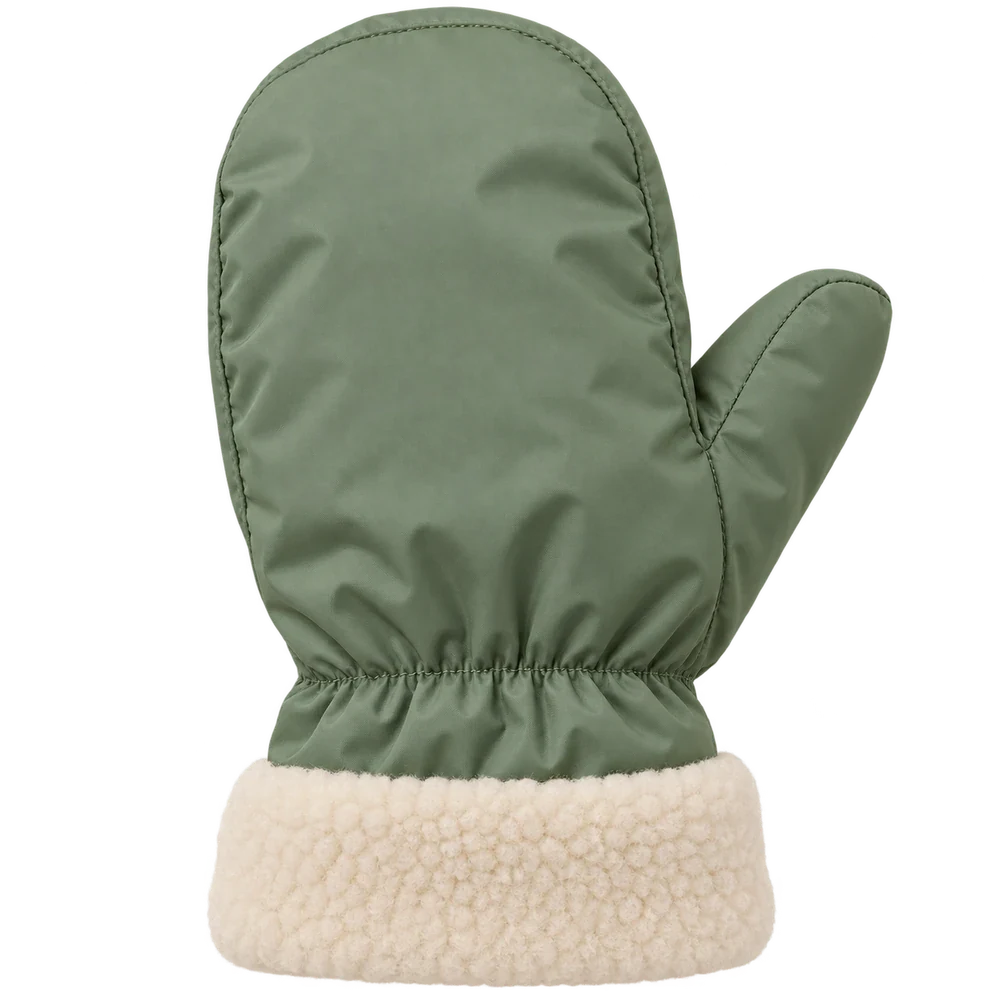
Mittens
The fingers share their heat, so mittens keep hands warmer, and they go on in one move. Picking up small things is harder.
- Good: Warmer in the cold
- Good: On in one move
- Not good: Hard to grip small things
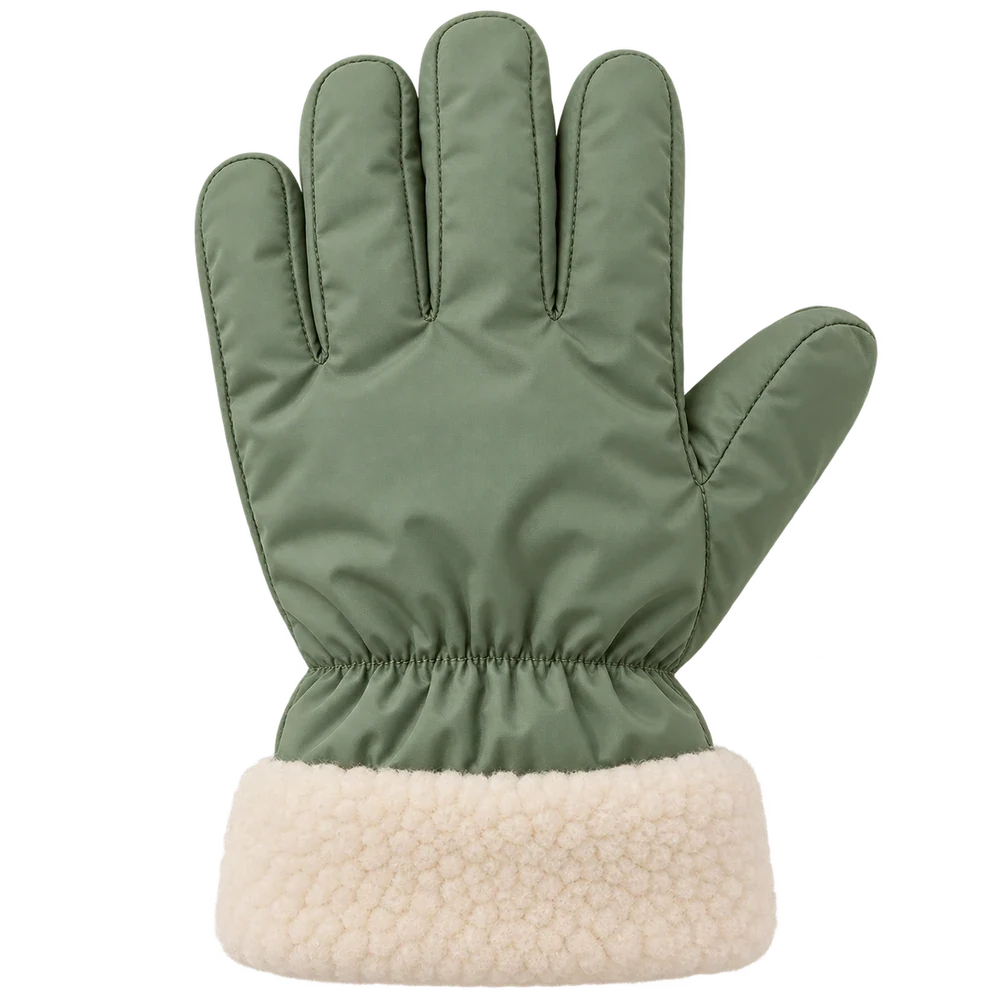
Gloves
Each finger is free, so a child can grip a spade, a snowball or a sled rope. Getting five small fingers into five holes takes patience, and fingers on their own get cold sooner.
- Good: Fingers free to grip
- Not good: Fiddly to put on
- Not good: Colder in deep cold
How to keep winter mittens on
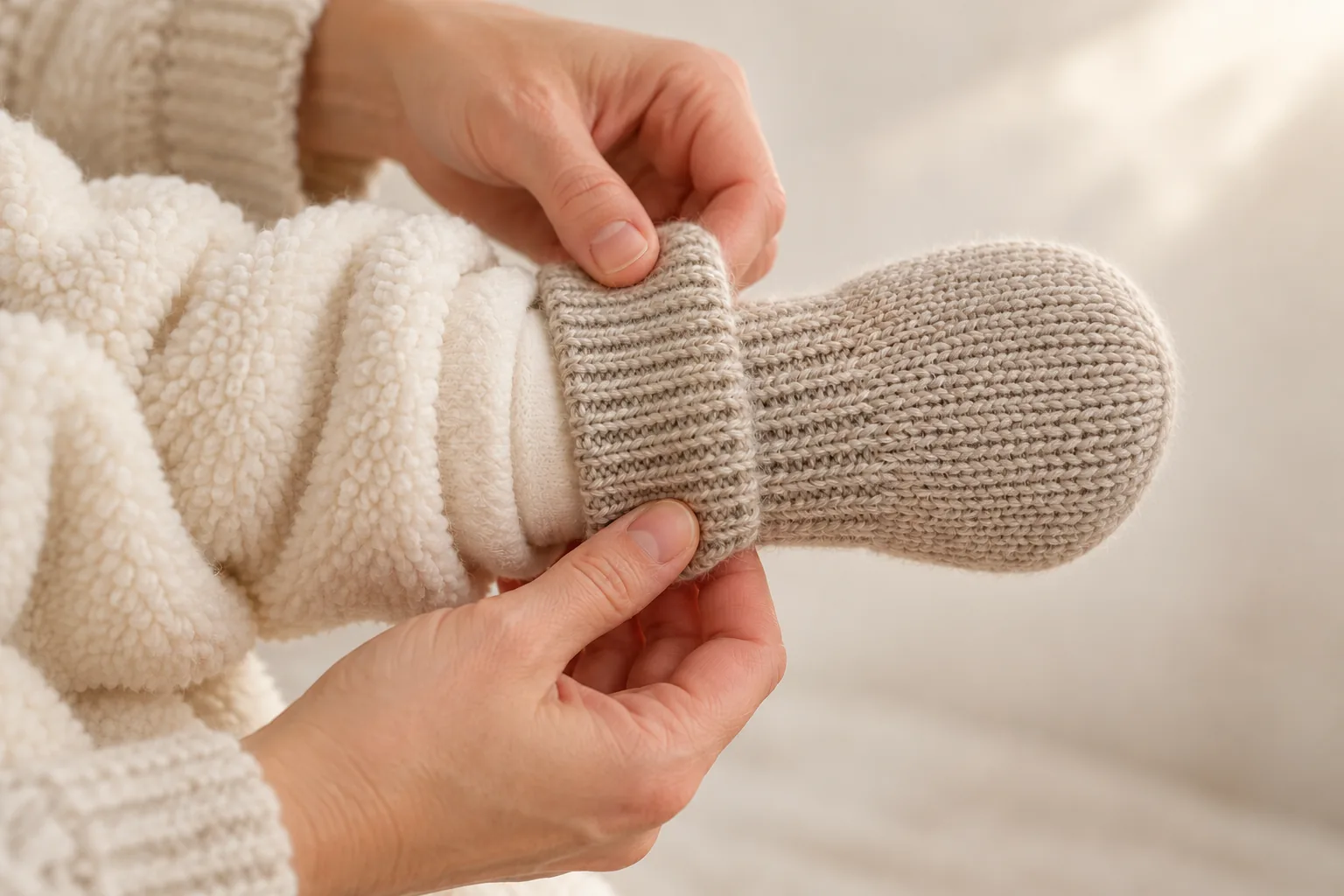
1. Mittens first, cuff high
Put the mittens on before the jacket, and pull each cuff high up the forearm.
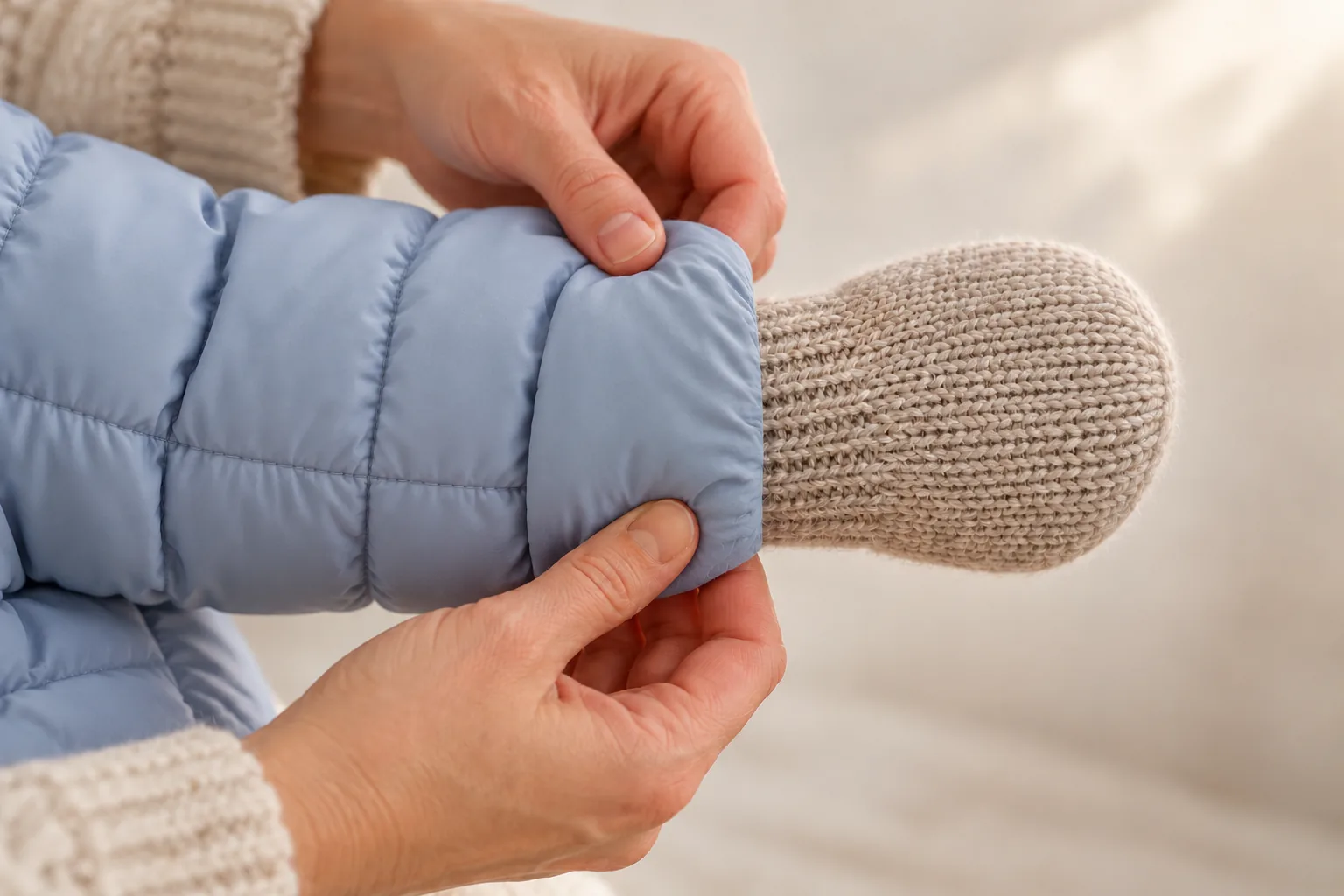
2. Sleeve down over the cuff
Then put the jacket on and pull its sleeve down over the cuff, so the sleeve holds the mitten in place.
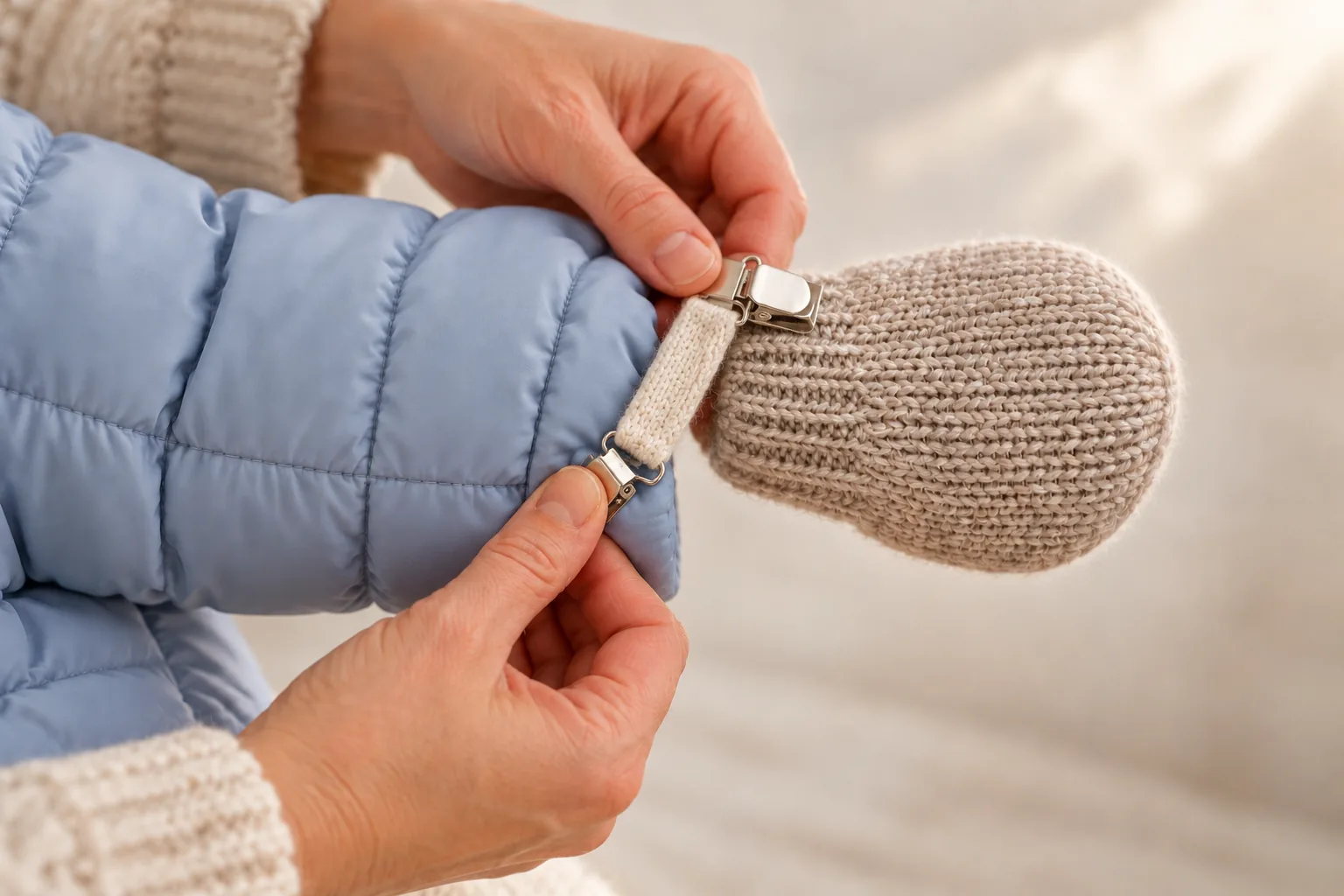
3. Clip each mitten to its sleeve
A short mitten clip holds each mitten to its own sleeve. A mitten that comes off then hangs there, instead of landing in the snow.
Questions parents ask
Should babies wear mittens at night?
Only if the scratches keep coming even with short nails. Then cover the hands for sleep only.
Are mittens a SIDS risk?
Not on their own. A sleep space should be clear of loose things, so use a pair that stays on and cannot end up loose beside your baby. Take warm outdoor mittens off for sleep indoors, like all outdoor clothes.
Is it okay for my baby to have cold hands at night?
Yes. Hands and feet feel cool even when your baby is warm enough, so mittens are not needed for warmth indoors. Feel the chest or the back of the neck instead. More in cold hands and feet.
Until what age should a baby wear mittens?
There is no set age for scratch mittens. Stop as soon as short nails keep the scratches away. Bare hands matter more each month: by 4 months, babies bring them to the mouth and hold a toy.
How do I keep scratch mittens on a newborn?
Choose the right size (preemie, 0 to 3 months or 3 to 6 months), with a long cuff or a soft wrist strap. A pair that is too big slides off as soon as your baby waves an arm.
What are the downsides of using mittens for babies?
Covered hands cannot feel, grab or find the mouth, and a mitten can slip off in the crib. So keep them for the times your baby really scratches.
Do mittens help with eczema?
They can. Short nails and anti-scratch mittens both help stop a baby with eczema from damaging the skin by scratching.
Are mittens on a string safe?
Skip the string, because a cord that runs through the sleeves and behind the back can catch. A short clip on each sleeve keeps the pair together instead.
Can I put socks on my baby's hands instead?
Yes. A clean, long cotton sock pulled up the forearm does the same job as a scratch mitten.