What this is about
The first snowy morning looks intimidating from the window. The natural urge is to pile on every winter layer you own, but over-bundling makes babies sweat, and sweat turns freezing cold once outside. What your baby needs is one windproof shell over warm, breathable layers, dry cuffs, and a route that lets you turn back the moment the weather turns.
Below 4°, the jacket gives way to the pram suit
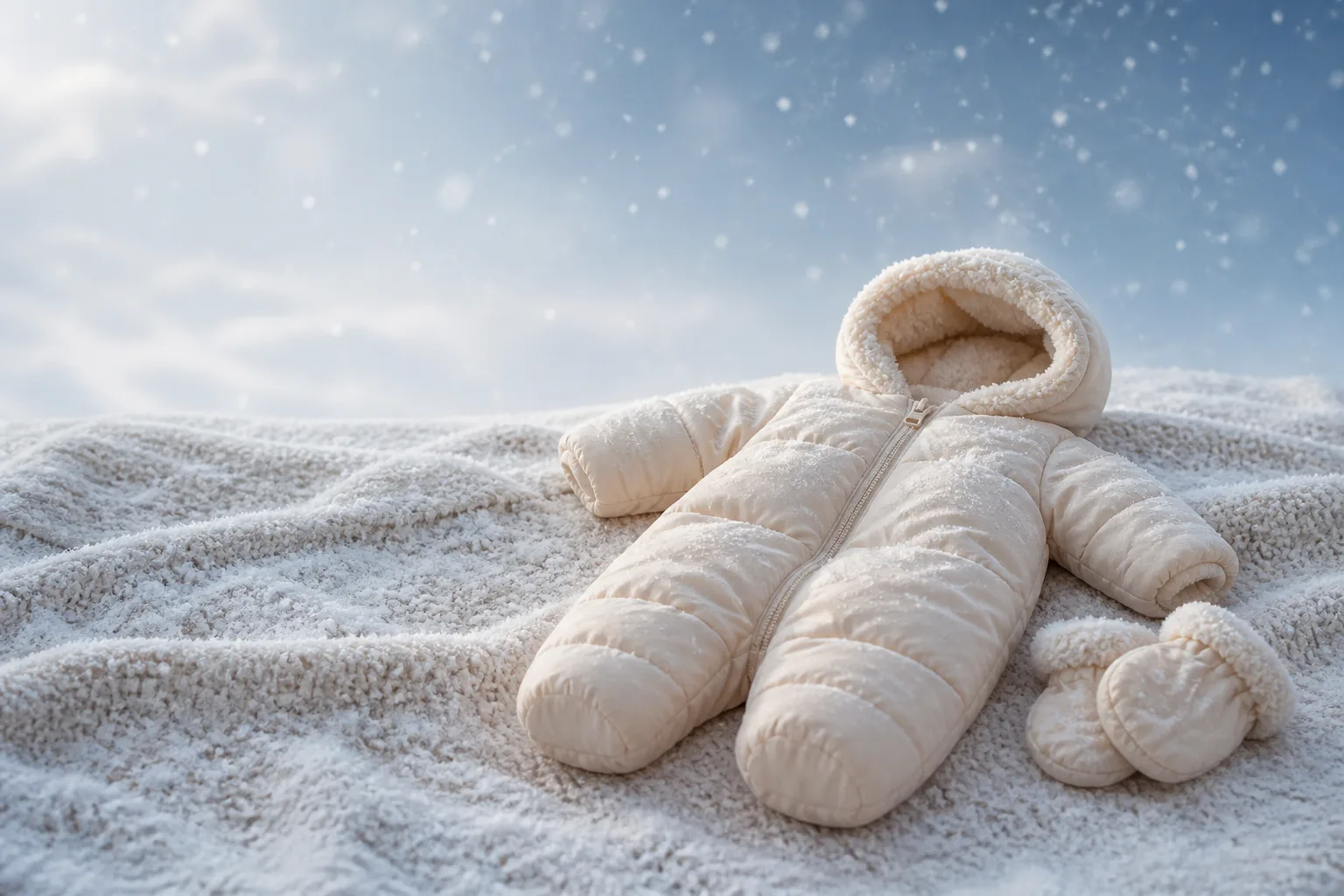
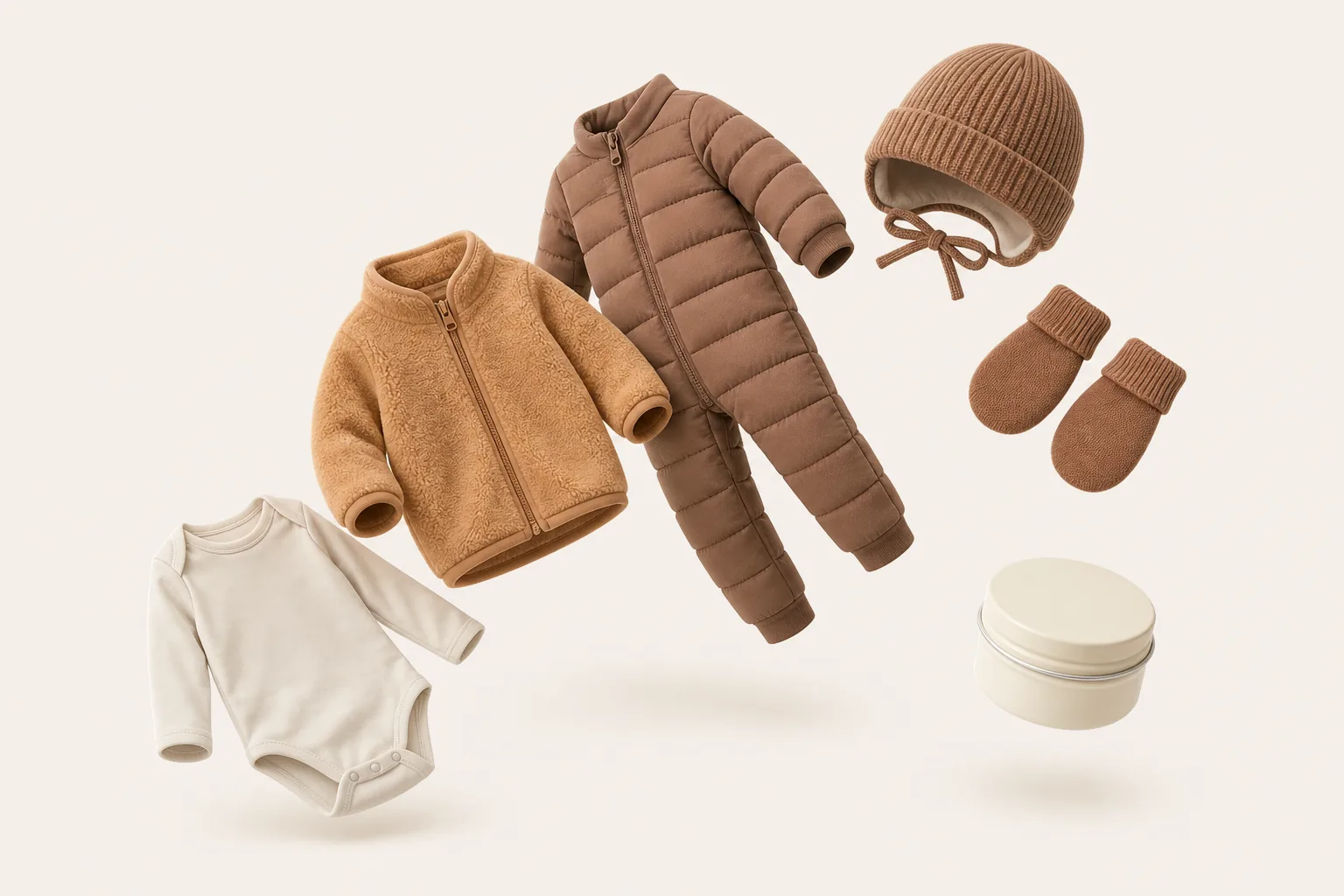
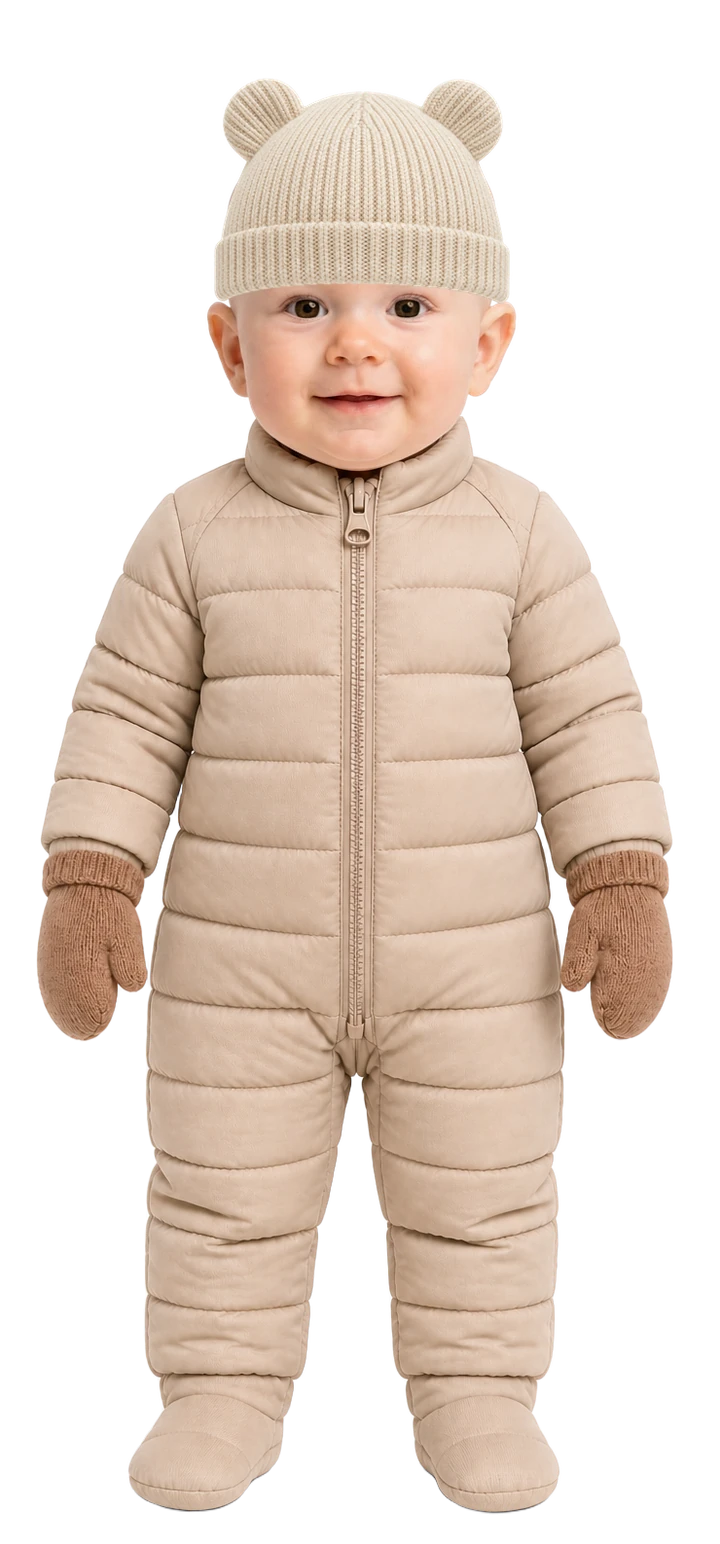
Below 4°, the insulated pram suit takes over as the outer shell. It replaces the warm jacket instead of going over it. Stuffing a jacket inside a pram suit leaves your baby unable to move and prone to overheating. Stick to a long-sleeve bodysuit, warm pants, warm socks and a warm fleece underneath. Because most pram suits enclose the feet, booties can stay in the drawer.
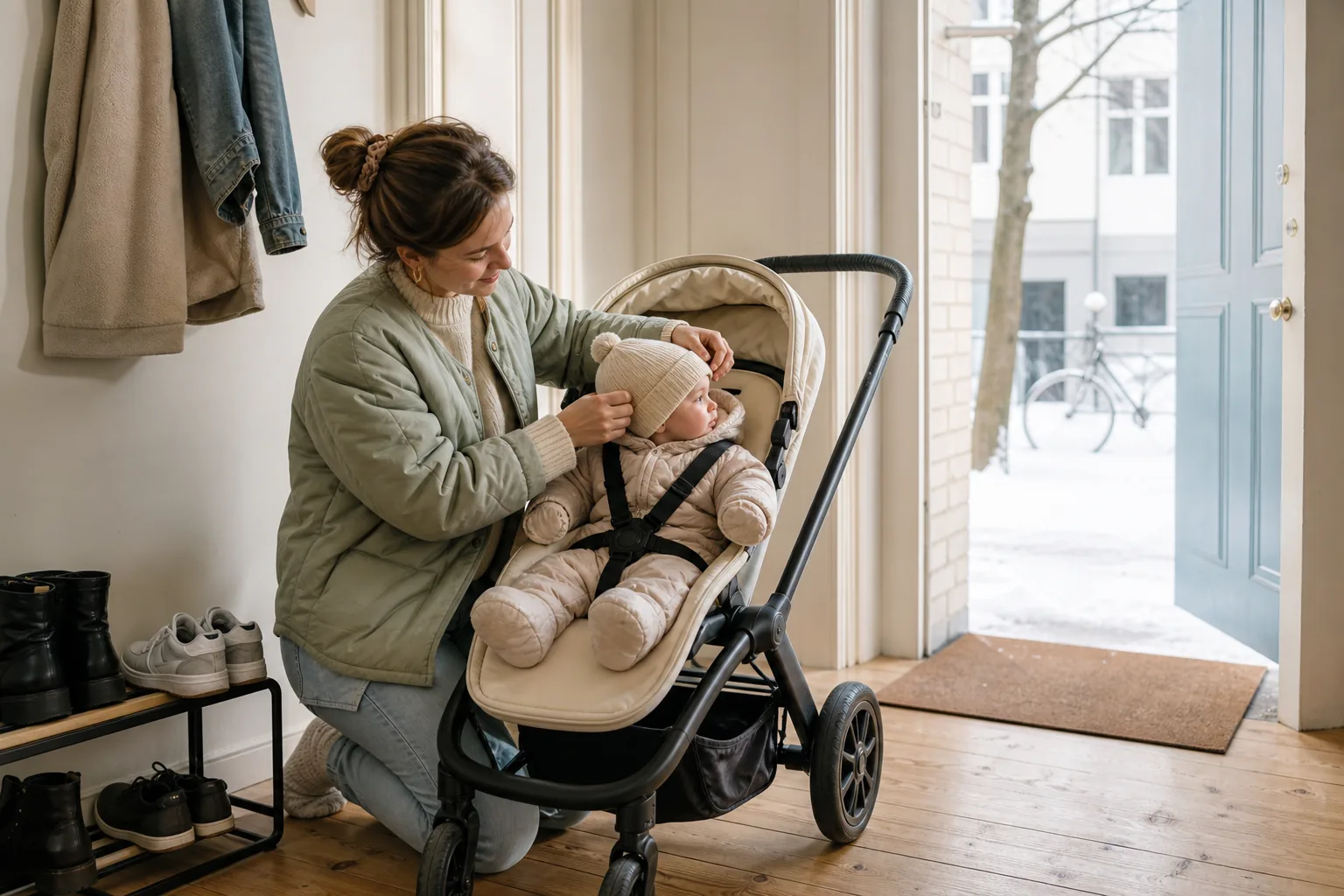
Timing matters just as much as the clothes. Dress your baby in the base layers and fleece first, but leave the pram suit, hat and mittens by the front door. If you zip the suit in a warm living room while looking for your keys, your baby will be damp with sweat before you step outside. Put the suit on as you head out.
Fasten the stroller harness snugly over the suit without bunching. Never place loose pillows or extra blankets behind your baby to fill space. If snow starts falling, use the stroller canopy or an approved rain cover. Never drape a blanket over the stroller opening, because that traps moisture and cuts off fresh airflow.
The coldest stroller outfit
The insulated suit replaces both jacket and booties. It seals in warmth while leaving hands and head for mittens and a hat.

The first check
Cold hands do not tell you how the body is coping. After ten minutes outside, slip two fingers inside the collar to feel the chest or back of the neck.
Cold days do not come with a stopwatch
Below 0° feels-like, keep outings short and stay near shelter. Parents often look for an exact minute limit, but weather does not work that way. Twenty minutes in calm winter sun can feel comfortable. Five minutes into a gusty, freezing wind can leave everyone miserable. Turn back based on the wind, dampness and how your baby feels, not a timer.
Plan your route as a tight loop around the block or near a heated cafe. Pushing a stroller through slush is slow work. If the wind picks up or your baby starts fussing, getting back to a warm room should take five minutes, not a half-hour trek across an open park.
Cover the gaps where cold air gets in
The pram suit covers the body, but winter cold attacks the seams. Pull the mittens over the cuffs of the suit so wrists stay covered when your baby moves. Make sure the warm hat covers the ears completely and stays in place without sliding down over the eyes.
Cold wind can also chap exposed cheeks quickly. Below 0°, apply a thin layer of wind cream or barrier ointment to dry or eczema-prone cheeks before leaving the house.
Snow stops being charming when it melts into a cuff
Fresh snow looks magical until it touches warm fabric and turns into freezing water. Wet cuffs and wet socks pull heat away from skin much faster than cold air alone. If you see snow gathering on mitten cuffs or around the collar, brush it off before it has a chance to melt through.
Pack a small dry bag in your stroller with a spare bodysuit, warm pants, and dry socks. If snow slush gets past a boot or mitten, step into a warm entrance and change the wet layer immediately. Wet clothes in sub-zero weather need to come off right away.
Clear wet snow from the stroller wheels and folding joints before coming indoors. If the stroller seat or harness gets damp from melting slush, let them dry completely in a warm room before your next walk.
A white day can still need sun protection
Fresh snow acts like a mirror, reflecting up to eighty percent of ultraviolet radiation back up. Even on crisp, freezing days, the light bouncing off the ground can be surprisingly intense. From UV 3, your baby still needs protection from winter sun.
Because a warm winter hat does not have a brim to block glare, pull the stroller canopy forward to shade your baby's face. Keep the warm layers in place, and check the hourly UV forecast rather than guessing by how cold the air feels.
The pram suit comes off for the car seat
If your winter trip involves a car, the pram suit must come off before your baby goes into the seat. Puffy, insulated suits create space under the safety harness. In a crash, that padding compresses instantly, leaving the straps loose and unsafe.
Dress your baby in normal indoor clothes and a thin fleece for the car seat. Buckle the harness snugly against the chest, then tuck a car blanket over the buckled straps. Keep the pram suit in the car and put it on when you reach your destination and transfer to the stroller.
Back indoors, unbundle immediately and warm gently
Cold air often lulls babies to sleep. When you step back into a warm home, the temptation is to leave your baby sleeping in the stroller. Resist it. An insulated suit in a heated hallway turns into an oven within minutes, leaving your baby drenched in sweat.
Unzip the pram suit right away, peel off the hat and mittens, and slide two fingers behind the neck. If the skin is warm and dry, your layers did their job. If the skin feels damp or clammy, change into a dry bodysuit immediately.
If hands or cheeks feel chilled, warm them gently with your own hands or by holding your baby close. Never rub freezing skin, and never use hair dryers, hot water bottles or direct heat against cold skin.
Questions parents ask
Can I put my baby on a sled?
Only if the sled has a backrest, a secure harness, and an age rating that matches your baby. For younger infants who cannot sit unsupported, stick with the stroller.
Can I use a carrier below zero?
Yes, but remember that your body heat counts as a layer. Dress your baby in regular indoor clothes and a fleece, use a cold-weather carrier cover over the outside, and keep their face completely visible and clear of your coat.
Should I add a footmuff over the pram suit?
Do not combine a thick footmuff with an insulated pram suit. That creates too much trapped heat. Use a footmuff with normal indoor clothes and a jacket, or use the pram suit on its own.
Cold signs that need medical help
- Skin that looks white, yellowish-gray or waxy, blisters, or stays numb after warming.
- Shivering that gives way to unusual sleepiness, limpness, or slurred responsiveness.
- A baby who remains cold to the touch or unusually difficult to wake after moving indoors.
Move indoors, take off any wet clothes and warm your baby gently against your own skin. Do not rub numb skin or use direct heat. Call your pediatrician if skin stays pale or painful after warming. Call emergency services immediately if your baby is hard to wake or unresponsive.