What this is about
Holding a newborn sleepsuit next to a pair of toddler shoes feels like looking at two different worlds. Over twelve months, a baby will cycle through four or five sizes and outgrow drawers of clothes before some items even lose their tags. Yet the daily dressing formula barely changes: dress for the room, dress for the weather, and adjust when movement demands it.
Two changes follow age: sunscreen and crib bedding
Parents often expect a clothing calendar with a schedule of what to buy at three, six, and nine months. Pediatric advice does not work that way. Most wardrobe shifts follow what your baby physically does on the floor. Only two major markers are tied strictly to age: routine sunscreen at 6 months, and introducing loose bedding into the crib at 12 months. Everything else is about motor skills and the weather outside.
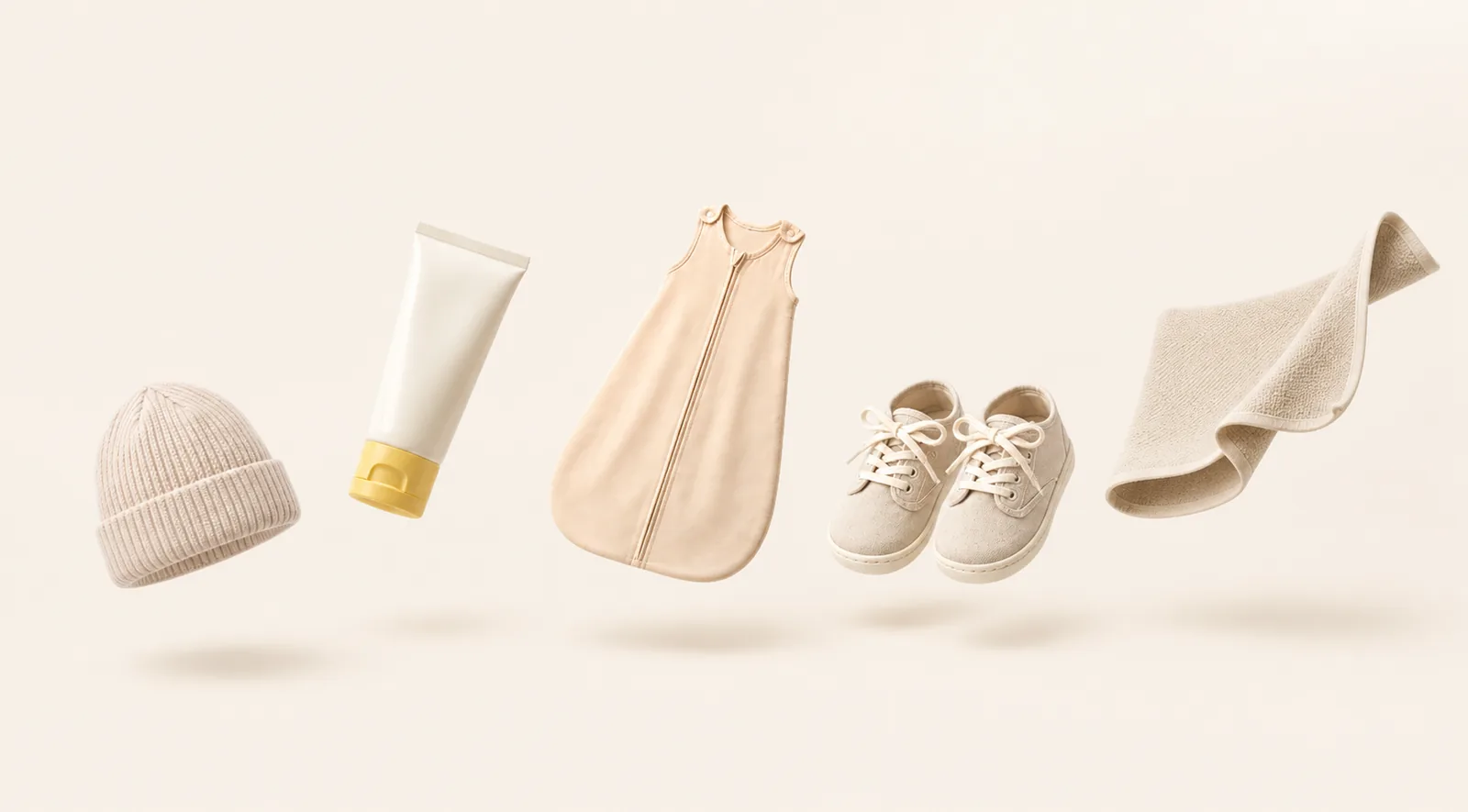
The first 3 months use a warmer starting outfit
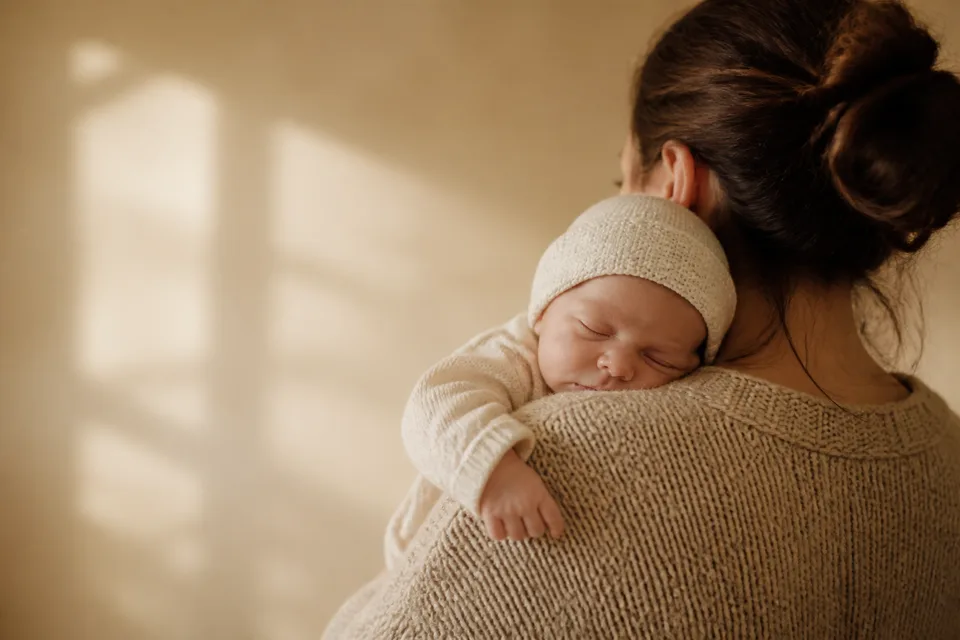
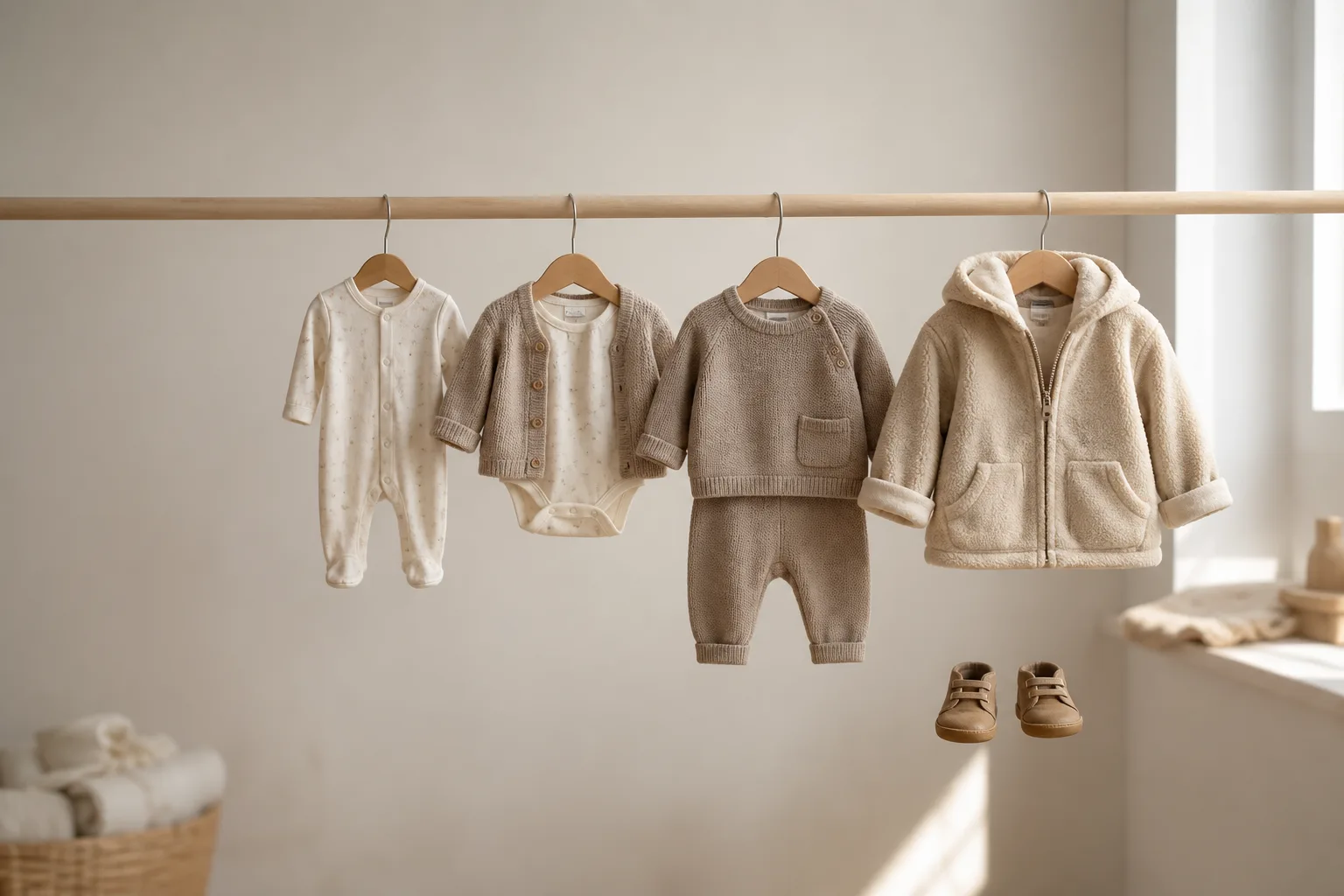
Newborns have poor temperature regulation and very little body fat, so they lose body heat quickly. That is where the familiar rule comes from: dress them in one light layer more than you need to feel comfortable. But parents often hear that advice and bundle too heavily. In practice, that extra layer is simply a soft cardigan, a long-sleeve bodysuit under a romper, or a light blanket tucked across the stroller.
By 3 months, their temperature regulation is much stronger. You can drop the automatic extra piece and dress them in the same baseline layers you would wear yourself. Do not worry about an exact date on the calendar. An outfit is always a starting guess. Slip two fingers down the chest or behind the neck: warm and dry means the layers are working. Hot, sweaty, or damp means one layer should come off.
Surroundings also change faster than clothes. A cardigan that feels right in a shady park can turn into an oven once you strap the baby into a padded car seat or step into a heated room. Whenever the setting shifts, check the neck before assuming fussiness is hunger or overtiredness.
Summer heat sets aside the extra layer rule entirely. At 24–27°, a newborn usually wears a light long-sleeve bodysuit, soft pants and thin socks. From 28°, one loose, thin layer is plenty at any age. Overheating is always a greater risk than being slightly cool.
6 months changes sun care, not summer clothes
Babies under 6 months are more prone to sunscreen irritation. Keep your baby out of direct sunlight. Sun care at this stage is physical: stroller shades, deep tree shade, wide-brimmed sun hats, and lightweight long-sleeved clothes.
Reaching 6 months unlocks broad-spectrum mineral sunscreen. But the calendar milestone does not mean stripping down to bare skin under the sun. Sunscreen acts as backup protection for the uncovered bits: cheeks, the backs of hands, and bare feet. Lightweight coverage and shade still do the heavy lifting.
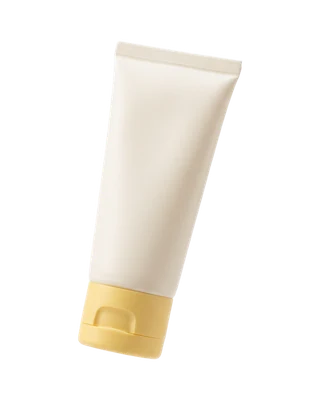
From 6 months
Apply mineral sunscreen to skin that clothes and shade leave exposed. Shade and a sun hat remain your primary defense.
Rolling ends the swaddle
Swaddling can feel like the only reason anyone is sleeping in the early weeks, which makes parents nervous to stop. But the safety line is firm, and movement decides the timing. A swaddled baby who rolls onto their stomach cannot use their arms to push up or clear their airway, creating an immediate suffocation risk. Earliest attempts can appear around 2 months. The moment your baby begins wriggling toward their side or arching to roll, the swaddle ends that night. Never wait for a complete, clean roll.
The next step is straightforward. Move directly to an arms-free baby sleep bag suited to the room temperature. It gives the baby the secure feeling of a bag around their torso and legs without loose fabric in the crib, while leaving their hands completely free to balance and push. Our swaddling guide walks through the switch in detail.
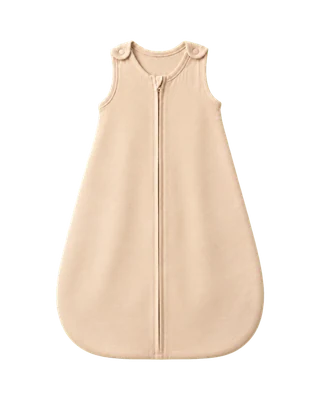
At the first sign of rolling
Stop swaddling immediately. Move to an arms-free sleep bag that fits snugly around the chest and neck.
Shoes start with outdoor walking
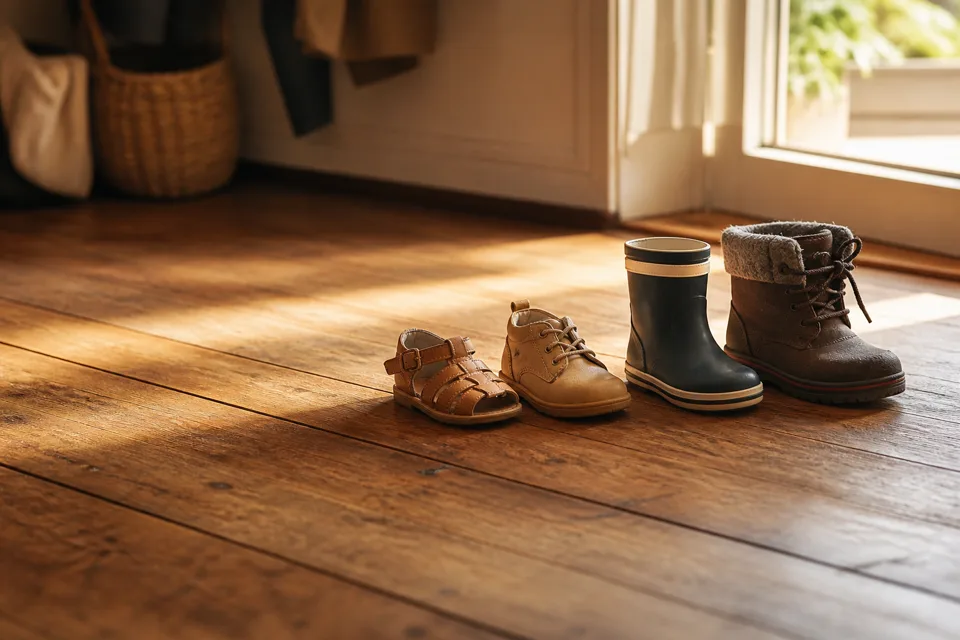
Miniature baby sneakers look adorable on a shelf, but before independent walking, they are essentially stiff socks that fall off every ten minutes. Babies do not need shoes to learn to crawl, stand, or cruise around furniture. In fact, stiff soles get in the way. Bare feet let tiny toes splay, grip floor surfaces, and send critical sensory feedback to the brain.
Shoes become useful only when walking moves onto outdoor ground: rough asphalt, prickly grass, sharp gravel, or hot pavements. When that milestone arrives, choose shoes with thin, flexible soles you can easily fold with your fingers, rounded toe boxes with room to wiggle, and breathable fabric. Pair them with socks to prevent chafing.
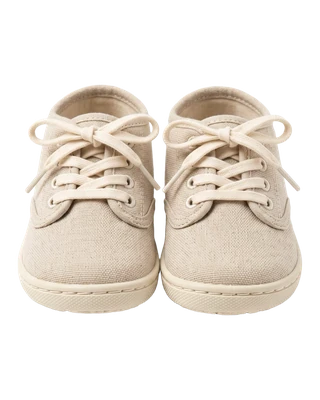
When walking starts outside
Choose flexible, thin-soled shoes to protect small feet from rough ground. Keep socks underneath.
Fit changes before the clothing rules do
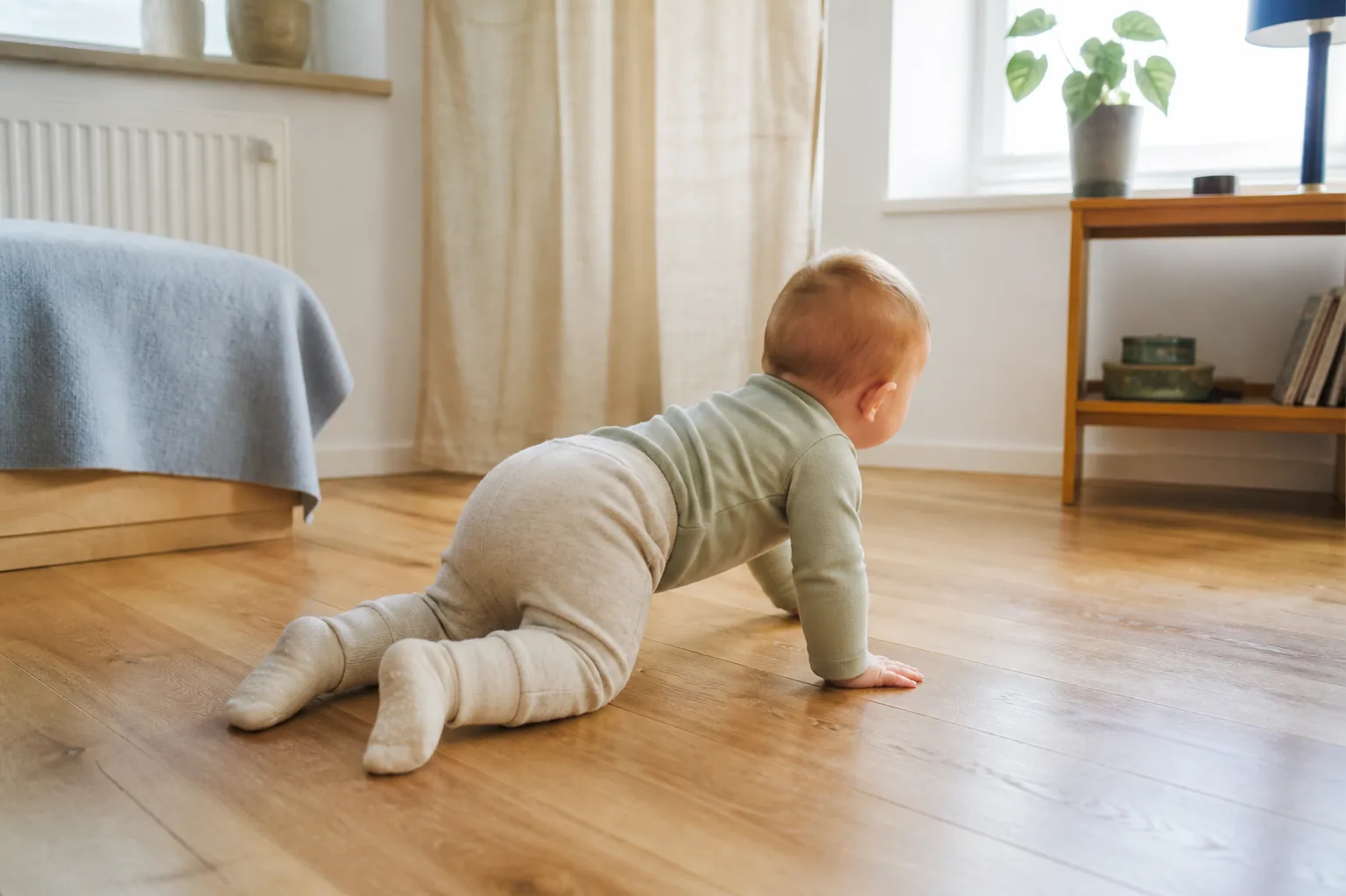
Movement also changes which garment shapes make sense. Footed sleepsuits are wonderful in the bassinet, but once a baby starts crawling and pulling to stand, footies turn wooden and tile floors into a slippery hazard. That is when footless rompers, two-piece sets, and bare feet make day-to-day play much safer. None of that changes how warm the baby needs to be; it just changes how their feet meet the floor.
The first birthday changes the crib, not the daytime outfit
Turning twelve months old is a major milestone, but your toddler does not need a new wardrobe overnight. The daytime clothing rules remain identical: dress for the weather, check the neck when temperatures shift, and keep fabrics comfortable for running around.
The only formal change happens in the crib. Before 12 months, loose bedding stays out to keep the sleep space safe. After the first birthday, pediatric guidelines state that a small, light blanket poses low risk for healthy babies. But most parents quickly discover a practical reality: one-year-olds roll and toss across the crib all night. A loose blanket ends up kicked into the corner within minutes. A well-fitting sleep bag or a footed sleep suit remains the simpler, reliable choice well into the second year.
Questions parents ask
What if the chest still feels cool after 3 months?
Add one light layer, then check again after ten or fifteen minutes. Age changes your starting baseline, not your baby's individual comfort. If their chest or back of the neck feels cool, they need more warmth.
Do socks replace shoes outside?
No. Socks cannot protect against sharp gravel, damp sidewalks, or hot pavement. Once walking moves outdoors, flexible first shoes protect the feet. Keep bare feet or non-slip socks for indoor floors.
Can a sleep bag continue after rolling starts?
Yes. An arms-free sleep bag is the ideal next step after the swaddle. Just ensure the neck and armholes fit properly so their head cannot slip down inside the bag.