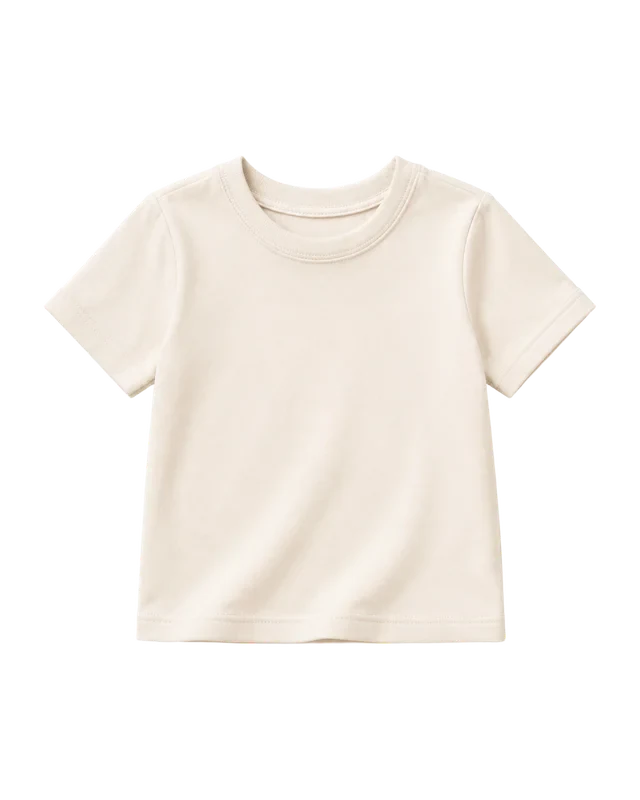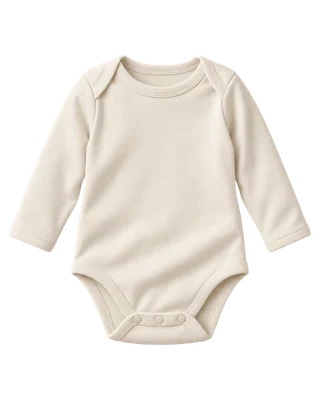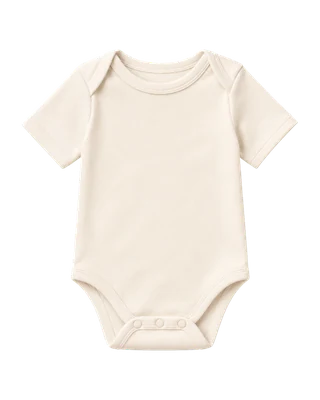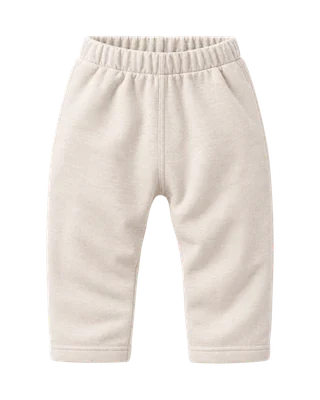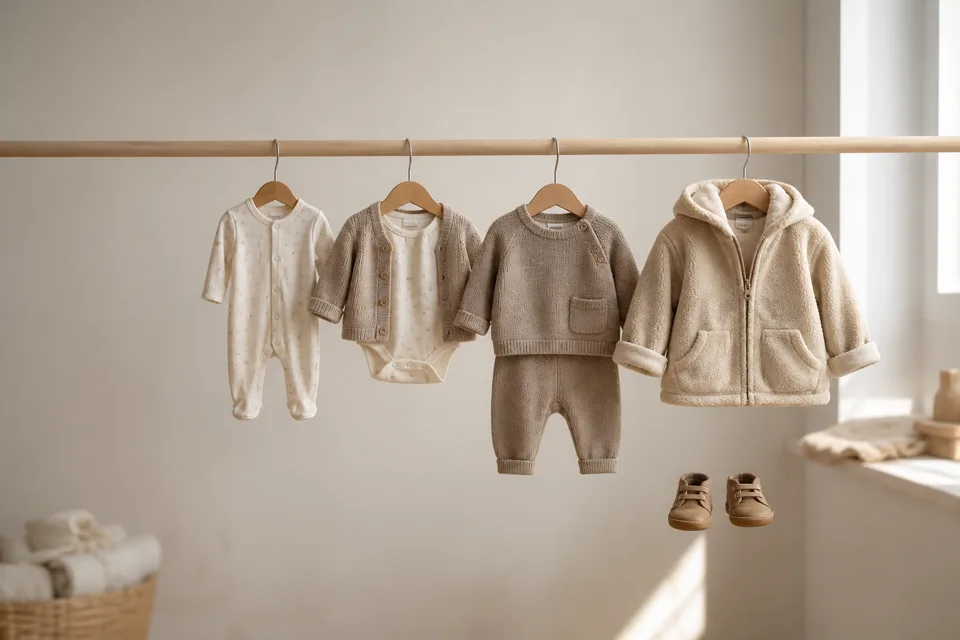
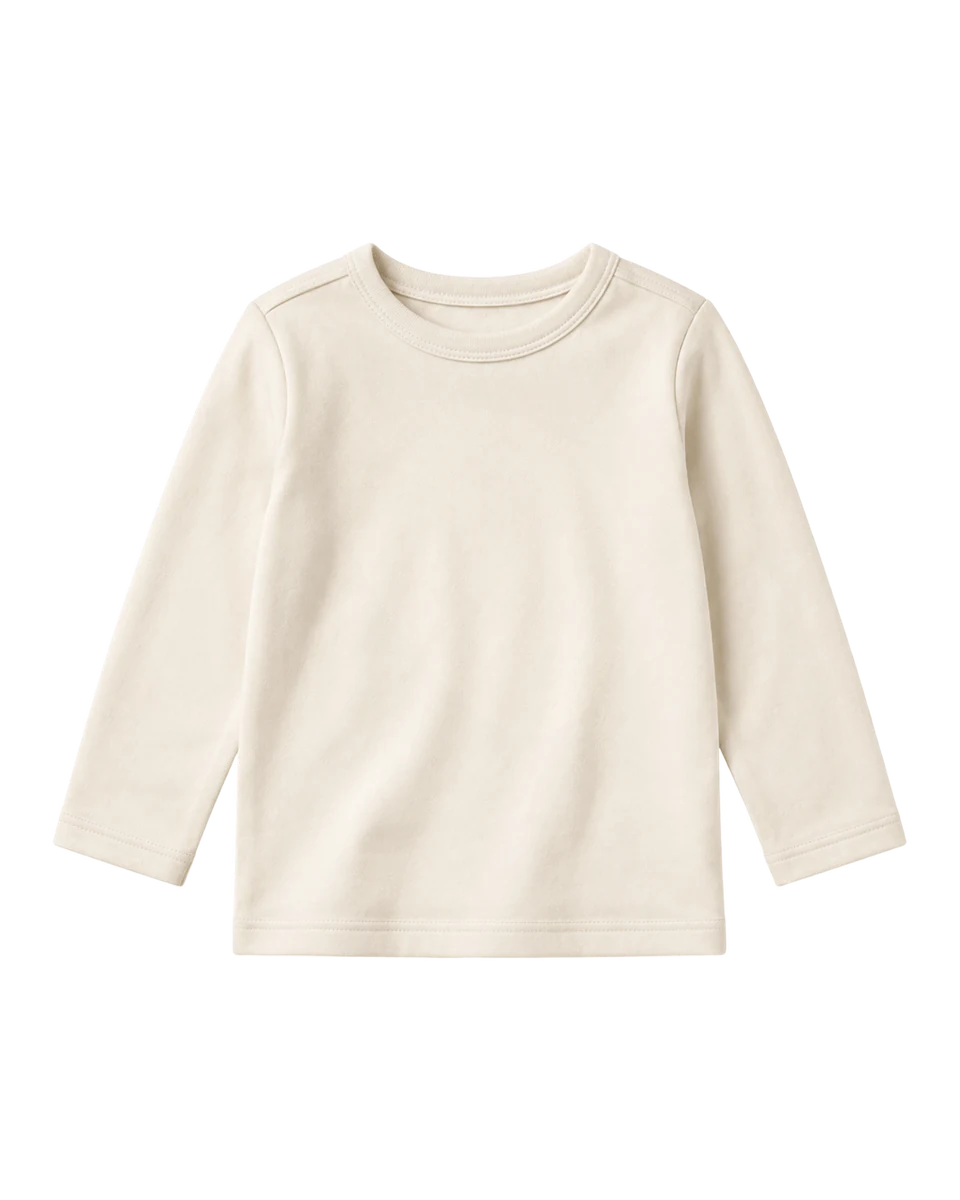
Unlike a long-sleeve bodysuit, a long-sleeve T-shirt ends at the hips instead of snapping between the legs, so it pulls on and off like any shirt. Most families switch to T-shirts between 12 and 24 months, once their child walks. From then on, it is the everyday top below 24°C (75°F).
While your baby is still in diapers, you only need a few. On its own, a loose shirt rides up when you lift your baby, so it works best over a short-sleeve bodysuit.
- For ages12+months
- You'll need3–5per size
- Wear it below24°C75°F
Three ways to wear it
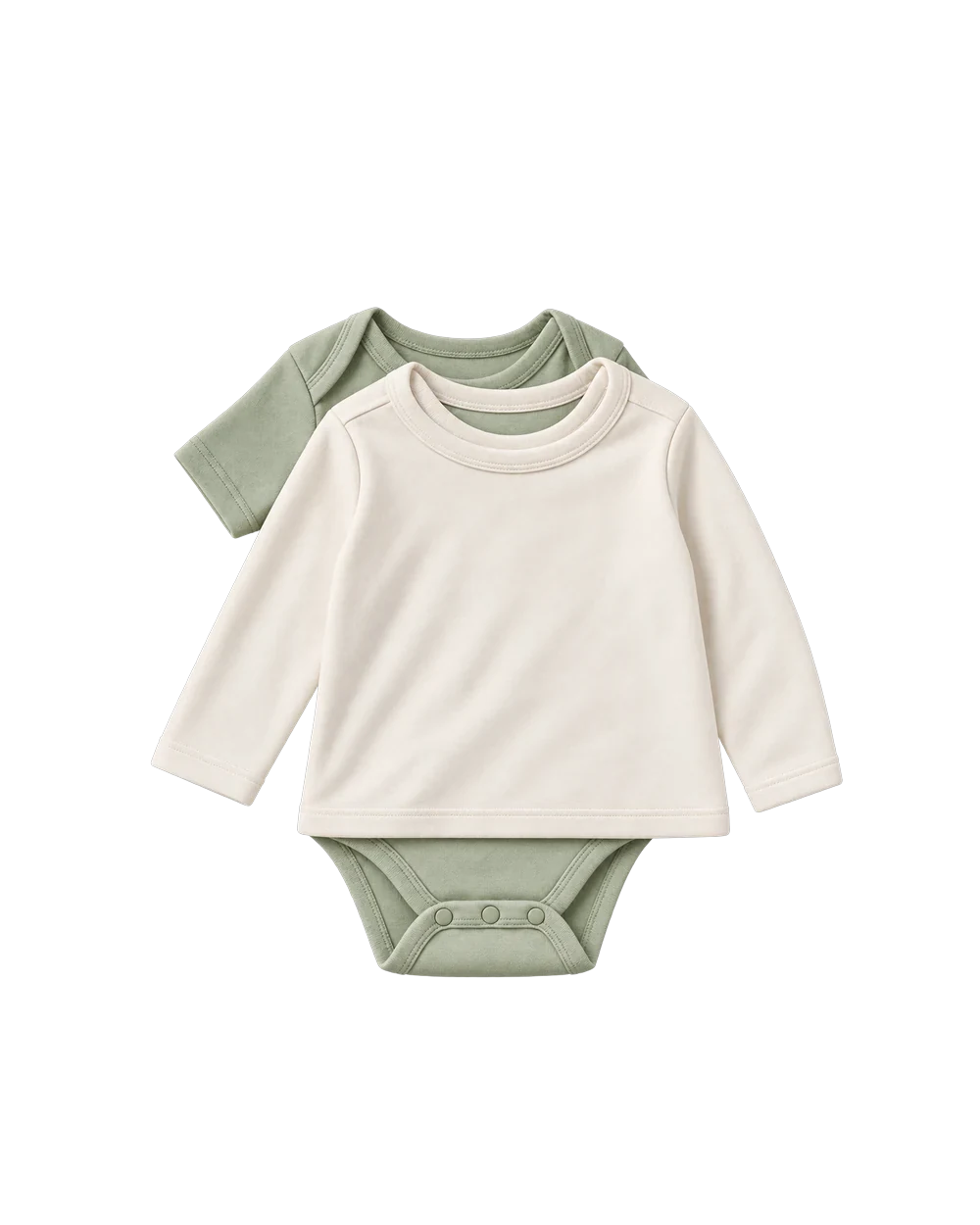
Over a short-sleeve bodysuit
For cool mornings that warm up later. The bodysuit keeps the belly covered, and the arms have one long sleeve, not the two of a long-sleeve bodysuit under a shirt. Indoors, the shirt pulls off in seconds.
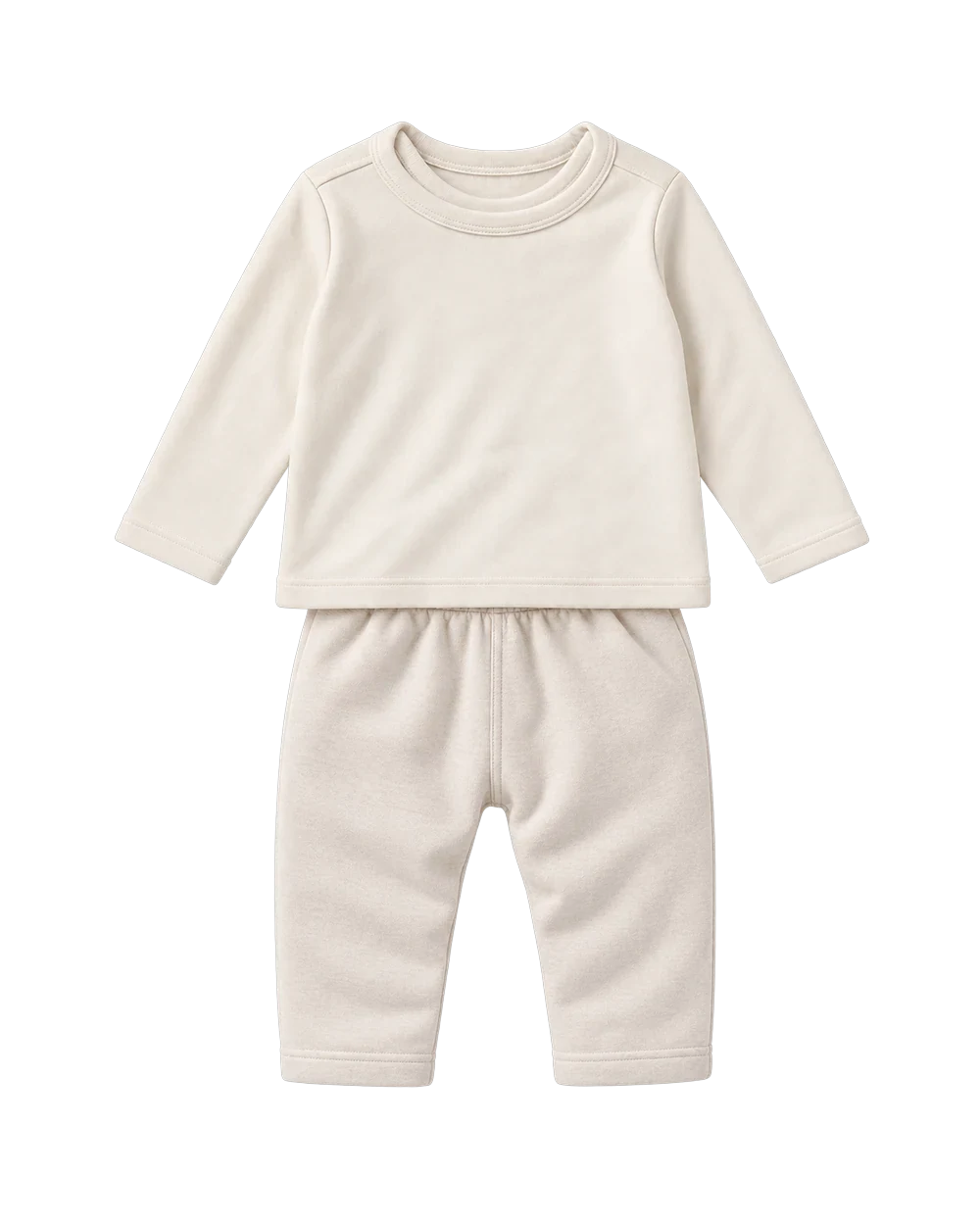
With pants or leggings
For walkers and potty training. Pair it with light pants or leggings so you can pull the bottoms down quickly without undoing snaps.
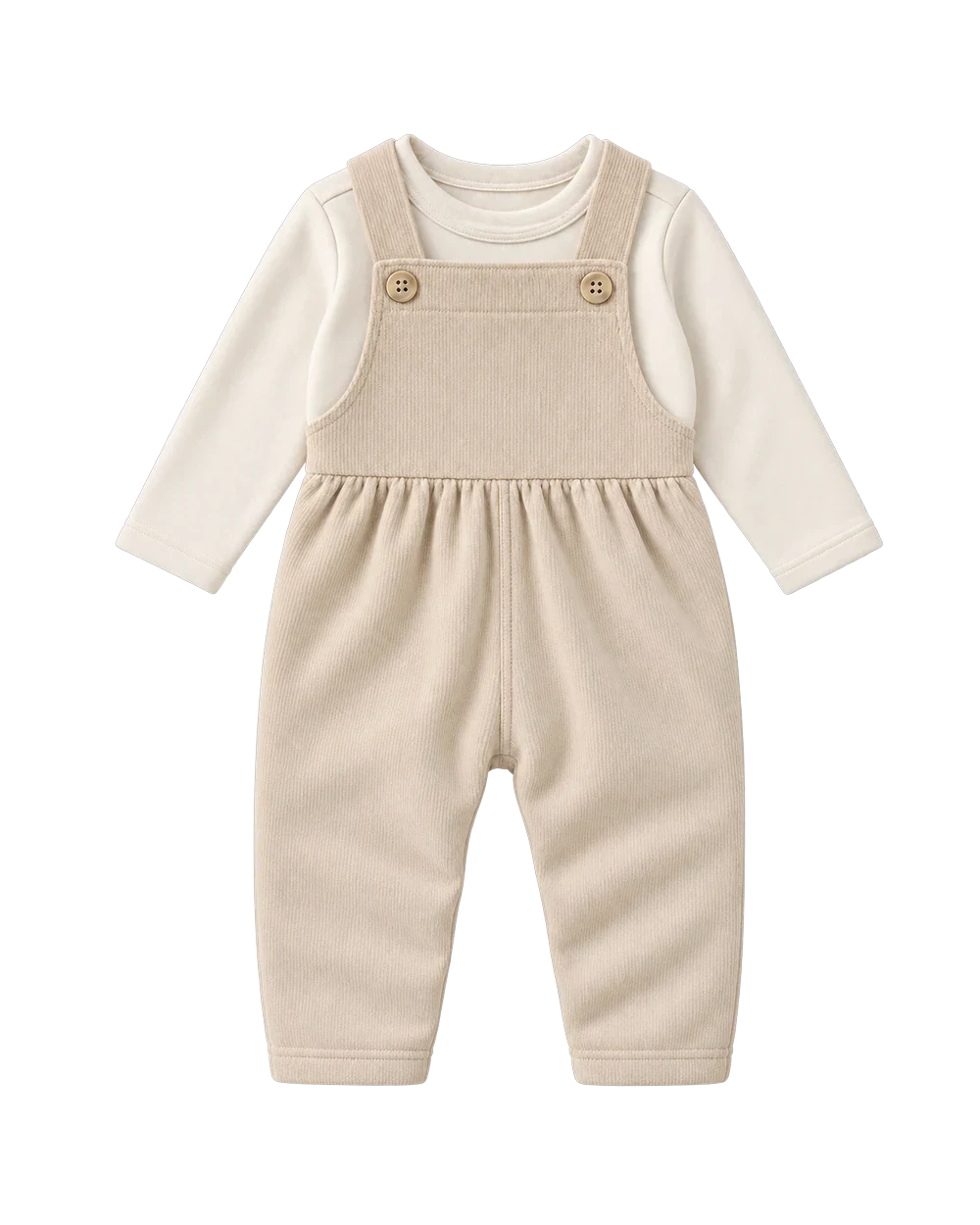
Under overalls or a romper
For cool days in a sleeveless romper, overalls or a pinafore dress. The thin cotton warms the arms and shoulders without adding bulk around the diaper.
How to choose a long-sleeve T-shirt
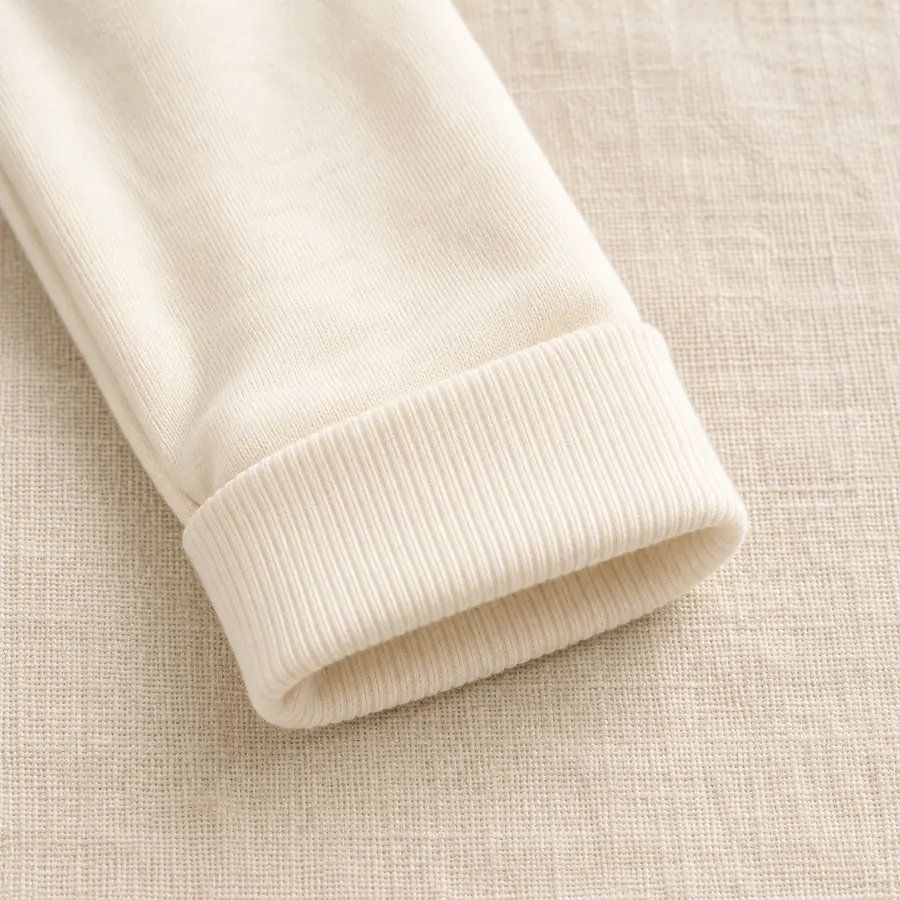
1. Ribbed cuffs that stay rolled
A soft ribbed wrist cuff folds back once and stays up, out of the food, without leaving red marks. A wide, unribbed hem slides straight back over the hand.
- Good: Fine ribbed band at the wrist
- Good: Stays up when folded back once
- Not good: Wide hem that slips over the hand
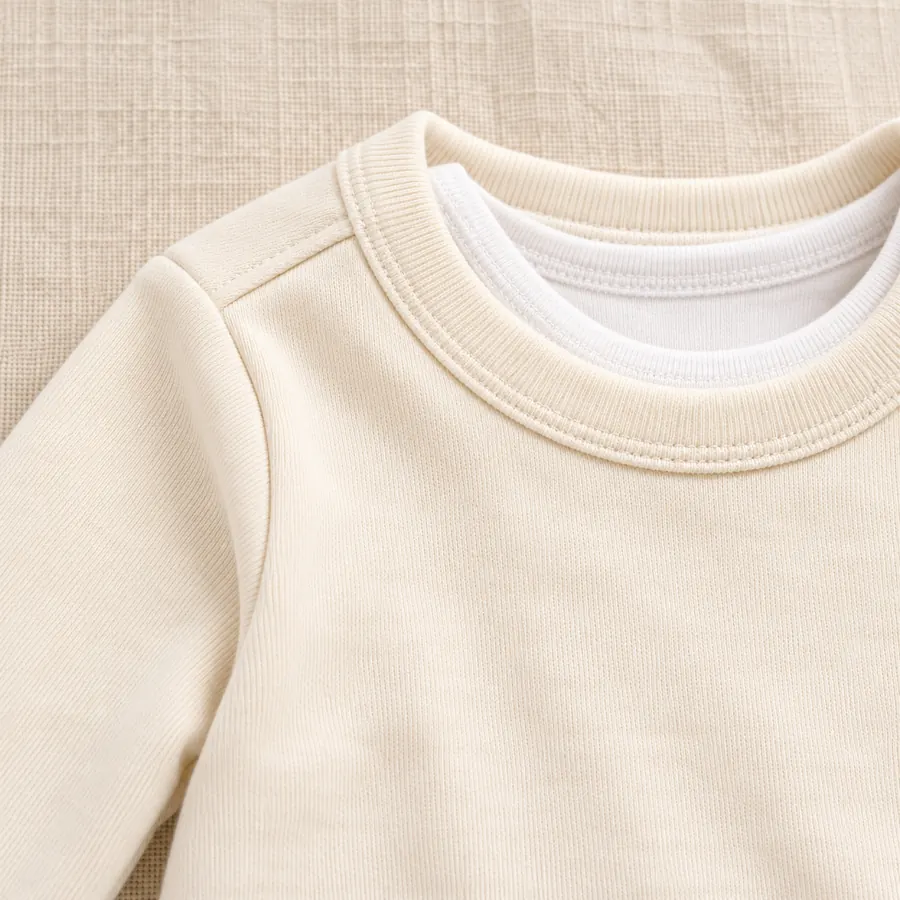
2. An easy neck and roomy shoulders
For a younger baby, pick overlapping envelope shoulders or snaps on one shoulder so the neck opens wide. For a toddler, a stretchy ribbed crewneck is enough. Look for a little extra room in the shoulders so the shirt slides over a bodysuit.
- Good: Neck opens wide with a gentle pull
- Good: Slides on easily over a bodysuit
- Not good: Tight at the shoulders over a bodysuit
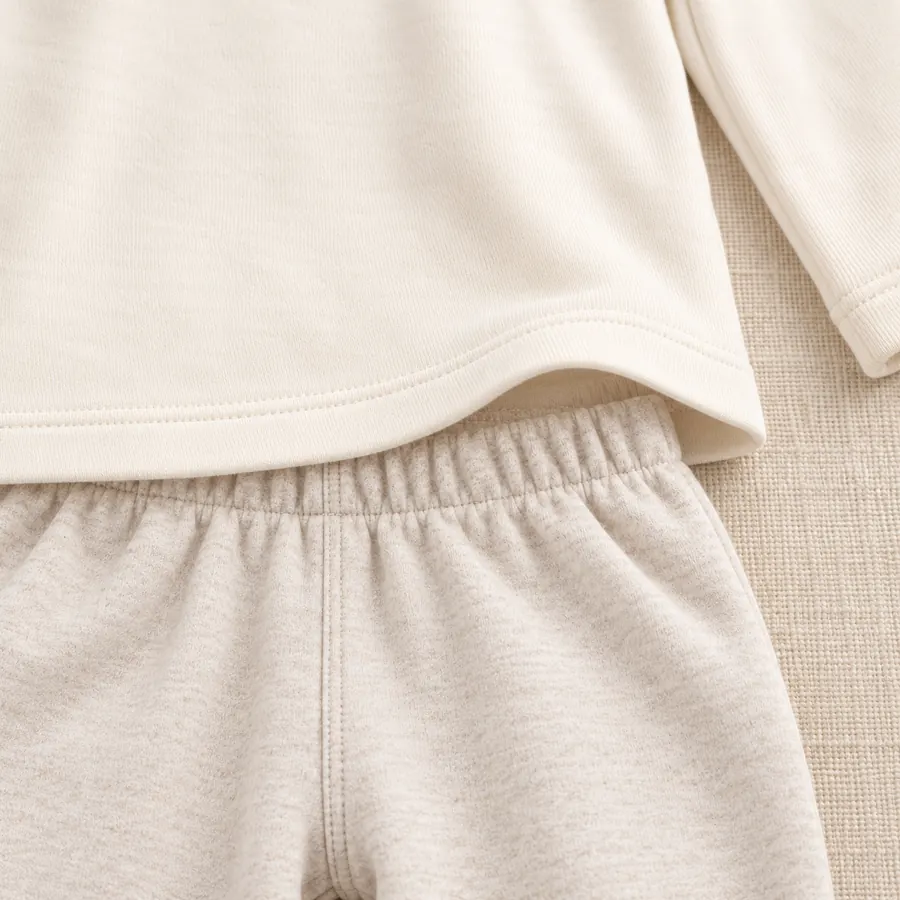
3. A hem that reaches the hips
Because a T-shirt has no snaps between the legs, a short, boxy cut rides up as soon as your baby crawls or reaches up. Pick a hem that reaches past the waistband of the pants so the lower back stays covered.
- Good: Hem past the top of the pants
- Good: Back covered when your baby bends
- Not good: Bare back when crawling or reaching
Questions parents ask
Can I layer a short-sleeve T-shirt over a long-sleeve T-shirt?
Yes, for older babies and toddlers. A roomy short-sleeve T-shirt over a closer-fitting long-sleeve T-shirt or long-sleeve bodysuit adds a layer of warmth across the chest, with no second sleeve to bunch at the elbows.
Do babies wear long-sleeve T-shirts in summer?
A thin one, in two places: indoors in strong air conditioning, and outdoors in the shade, to keep the sun off the arms. Babies under 6 months stay out of direct sunlight, in lightweight clothing that covers the arms and legs. From 24°C (75°F) up, stick to one light cotton layer, so your baby does not overheat.
How do I get my baby's arms through long sleeves without a struggle?
Head first. Then bunch each sleeve up, reach in from the cuff and draw your baby's hand through, as with a bodysuit, so small fingers do not catch.
Can my baby sleep in a long-sleeve T-shirt?
Yes, in one that fits close: with pajama pants, or inside a sleep bag in a cool room, where the long sleeves keep the arms warm. Skip a big, loose T-shirt: in the US, pajamas for children over 9 months must fit snugly or resist flames, because loose cotton catches fire easily. Under 12 months, a long-sleeve bodysuit is easier, because it stays tucked in.
What if the sleeves are too long?
Fold the wrist cuff back once or twice so your baby's hands stay free for grasping, crawling and eating. Never hold sleeves up with elastic bands or strings at the wrists, which can pinch circulation. Baby clothes are sized by height and weight rather than age, and a new size often starts long in the arm.