What this is about
Baby clothes often arrive with big promises about miracle weaves, natural temperature regulation, and luxury softness. In real life, fabrics are tools with specific jobs rather than rival options. You do not need an exotic wardrobe. You only need to know what each material does once your baby is wearing it, and where each piece belongs in an outfit.
Build from soft to warm to weatherproof
The reason to dress in distinct layers is that baby life changes constantly. You walk out into a chilly morning, push the stroller into a heated grocery store, and step back into the wind twenty minutes later. A baby cannot tell you they are roasting under their hood.
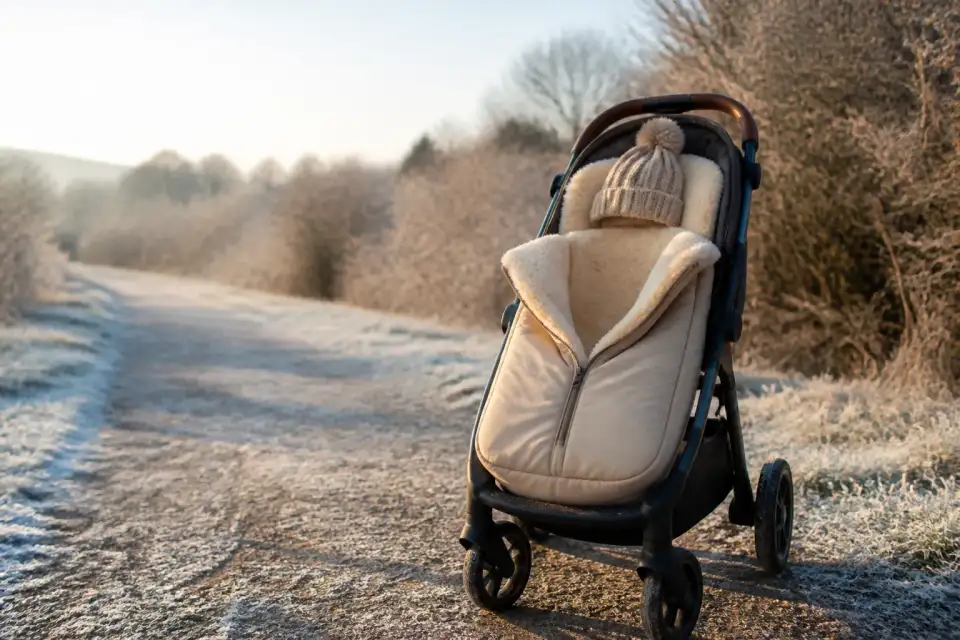
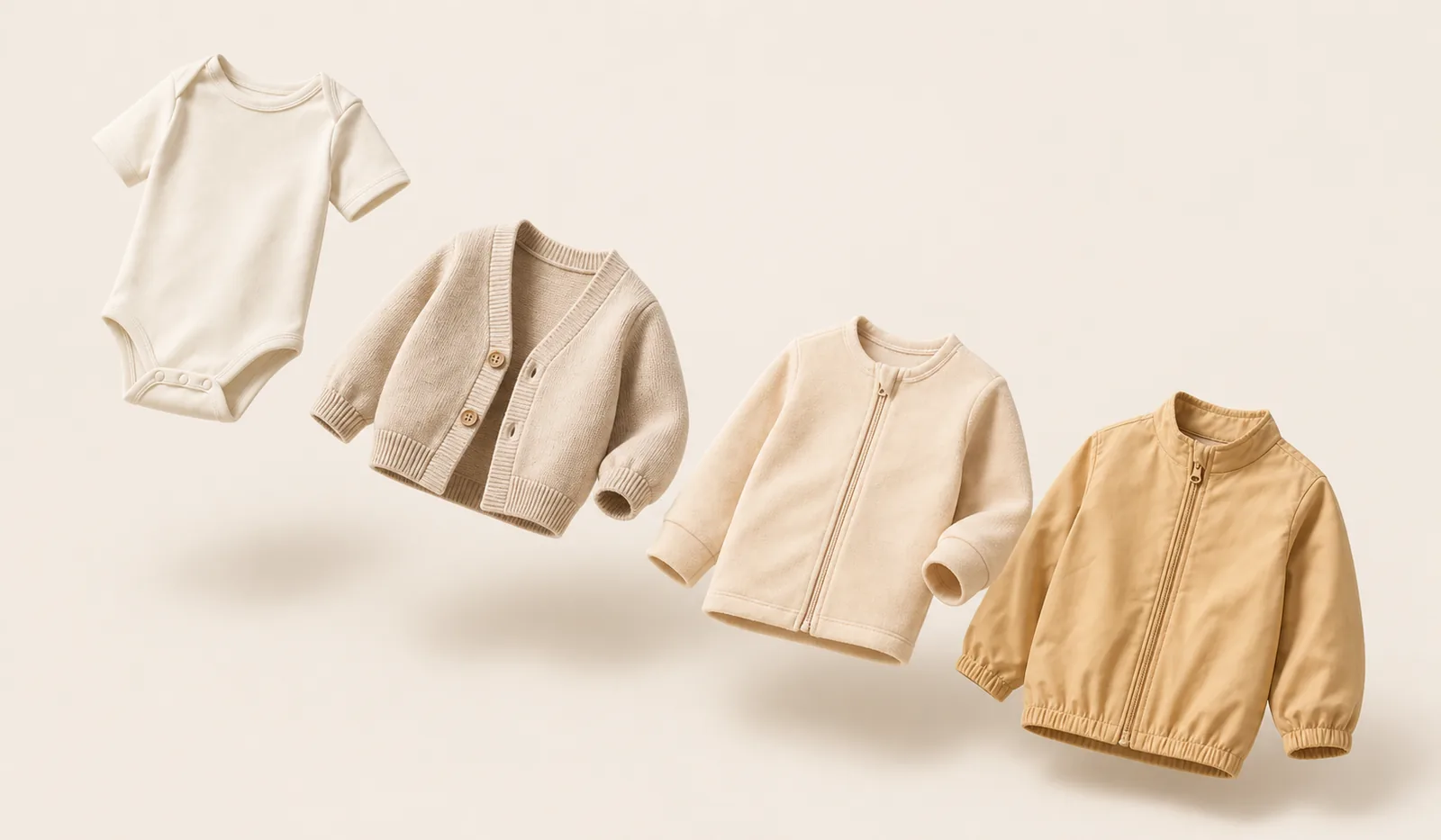
Separating warmth from weather protection keeps you flexible. A soft base touches the skin, a cardigan or fleece adds warmth, and a light jacket stops the wind. When you step inside, you unzip or take off the jacket in seconds while the warm layer stays on. A padded pram suit adds warmth and blocks wind. In very cold weather, it can go over the fleece, as shown in the cold-weather outfit. Take the suit off indoors.
A fabric name is not a warmth rating
The word on the tag tells you what the yarn was made from, not how warm the clothes will feel. A tissue-thin merino wool bodysuit is much cooler than a thick, chunky cotton sweatshirt. A lightweight microfleece barely compares to a dense sherpa pram suit.
Warmth comes from the thickness and loft of the fabric, not the fiber name alone. Trust your hands when you hold the garment. If it feels thin and airy, treat it as light warmth, whether it says wool, cotton or fleece. Once your baby is dressed, feel the back of their neck or their chest. That tells you far more than any label.
Cotton is easy until it is damp
Cotton is the everyday standard for baby dressing, and for good reason. It is soft on sensitive skin, cheap, breathable, and survives brutal hot wash cycles after messy feeds. For bodysuits, sleepsuits, and leggings, it remains the most reliable base.
The catch with cotton is water. Whether from teething drool, spit-up, or a leaking diaper, cotton absorbs moisture like a dishcloth and holds it. Once it gets wet, it clings to the skin and pulls heat directly out of the body. When a baby's chest feels chilly through a wet shirt, parents often rush to add a sweater or coat. That never works. Damp fabric next to the skin keeps chilling your baby no matter what sits on top. Take off the wet bodysuit first.
Wool makes a useful removable layer
Wool has a natural advantage in the middle of an outfit. It insulates without trapping humidity, and fine merino can keep a baby warm even if it gets slightly damp from light drizzle or sweat.
How the garment opens matters almost as much as the wool itself. A front-buttoning cardigan or zip jacket can be slipped off while your baby is half-asleep in a carrier or stroller. Wrestling a snug wool pullover over a newborn's wobbly head in a warm cafe is an entirely different experience. Watch for sensitivity, too. Pure wool worn against bare skin can trigger redness or eczema flare-ups, so keep a soft cotton base between the wool and your baby. And check the care tag: an expensive merino knit that shrinks to doll size in a normal wash will not survive family life.
Fleece belongs in the middle
Fleece is practical, affordable, and nearly indestructible in the laundry. It provides high warmth for very little weight, and it dries almost immediately after spinning. That makes it a fantastic middle layer under a stroller blanket or light jacket.
Where parents get caught out is treating fleece like outdoor armor. Standard fleece is an open synthetic knit. Cold wind blows straight through it, and rain soaks into it quickly. An adorable fluffy fleece bear suit might look cozy, but on a windy day, that warmth strips away fast. Fleece can be breathable and still be too warm in a heated room or car seat. Save fleece for dry, cold outings where an outer shell blocks the breeze.
Use a windproof or waterproof jacket outside
An outer jacket completes the outfit, but its job is weather protection, not insulation. A thin waterproof shell blocks rain and stops wind from cutting through sweaters, but it adds very little warmth on its own. What keeps your baby warm is the dry air trapped in the layers underneath.
Waterproof fabric also acts like a vapor barrier. The moment you step into a heated shop, car or bus, that outer shell turns into a greenhouse. Get into the habit of unzipping or sliding off outerwear as soon as you are out of the weather, even for a short errand.
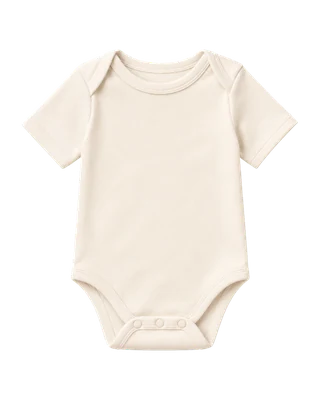
Soft base
Start with soft cotton next to the skin. If drool, milk or a diaper leak leaves it damp, swap it for a clean one before adding warmth.
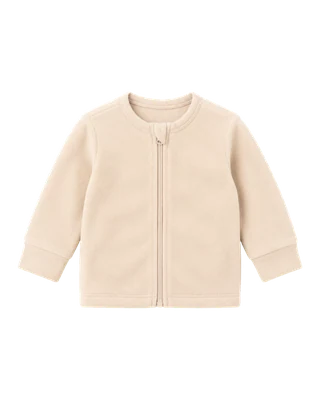
Warm middle
A cardigan or thin fleece adds warmth over the base. Pick a piece with buttons or a front zip so you can take it off without a struggle.
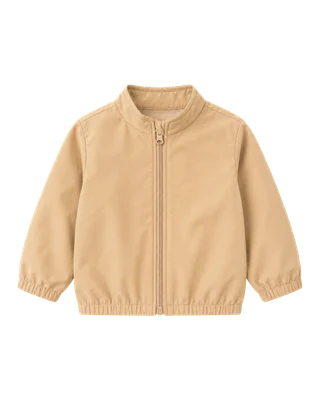
Windproof or waterproof jacket
A shell stops wind and rain from chilling the warm layers underneath. Unzip it the moment you step into a warm room or car.
The front of the label is not the whole story
Labels that highlight bamboo, modal or specialty synthetics deserve a practical look. Bamboo viscose is often sold as a miracle fabric for babies because it feels silky, cool, and stretchy. In reality, it is chemically processed rayon. It feels lovely on warm summer days, but like cotton, it holds onto moisture stubbornly and takes even longer to dry on the line.
Blends can be genuinely helpful when chosen for the right reason. A cotton bodysuit with 3% to 5% elastane or spandex stretches easily over a baby's head and snaps back into shape without sagging around the neck. Soft cotton is a good starting choice for an everyday base layer. Polyester fabrics vary in breathability.
Wet clothes change the decision
Dampness usually creeps in from the inside out. A baby can look perfectly dry in their waterproof jacket while their collar is soaked with drool or their socks are damp from rain splashing into the stroller. When a baby starts fussing in cold weather, check the collar and belly before assuming they need another blanket.
This is why a packed stroller bag only needs one thing: a single clean set of basic layers. Pack one spare cotton bodysuit, leggings, and thin socks in a zip pouch. You do not need to lug around spare winter jackets or heavy fleece suits. If your baby gets wet, swap the basic layer next to their skin, put the dry outerwear back on, and carry on with your walk.
Check the care label before buying
A baby garment is only as good as your ability to clean it. In the first year, clothes face explosive diapers, spilled milk, and pureed carrots. A delicate cardigan that requires hand-washing and drying flat on a towel will spend weeks sitting at the bottom of the laundry basket.
Machine-washable cotton, durable fleece, and washable wool blends keep life manageable. You do not need an extensive collection of every fiber. Three or four soft cotton basics, a couple of easy-on warm cardigans, and one dependable outer jacket will get you through almost any weather with less stress.
Questions parents ask
Can my baby sleep in fleece?
Thick fleece can be too warm for a heated bedroom, even when the fabric is breathable. Stick to cotton bodysuits and a sleep bag matched to the room temperature.
Can a baby with sensitive skin or eczema wear wool?
Yes, provided the wool does not touch bare skin. Always use a soft cotton bodysuit underneath to protect the neck, chest, and arms. If your baby's skin flares up or feels rough along the seams, switch to cotton or fleece middle layers instead.
Can fleece replace a rain jacket on a walk?
Not in wind or rain. Cold wind cuts straight through standard fleece knit, and water soaks through within minutes. In breezy or wet weather, layer a windproof or waterproof jacket over the fleece.