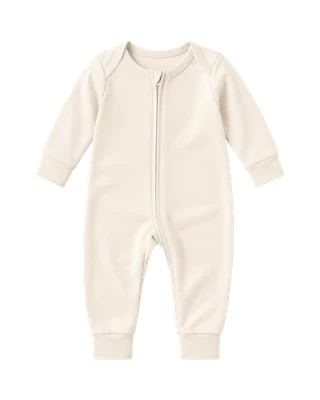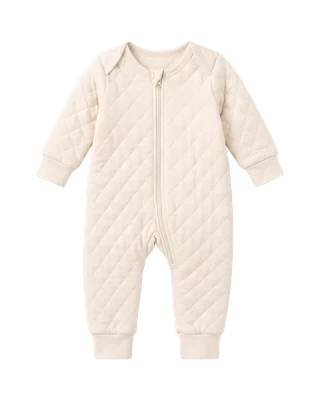
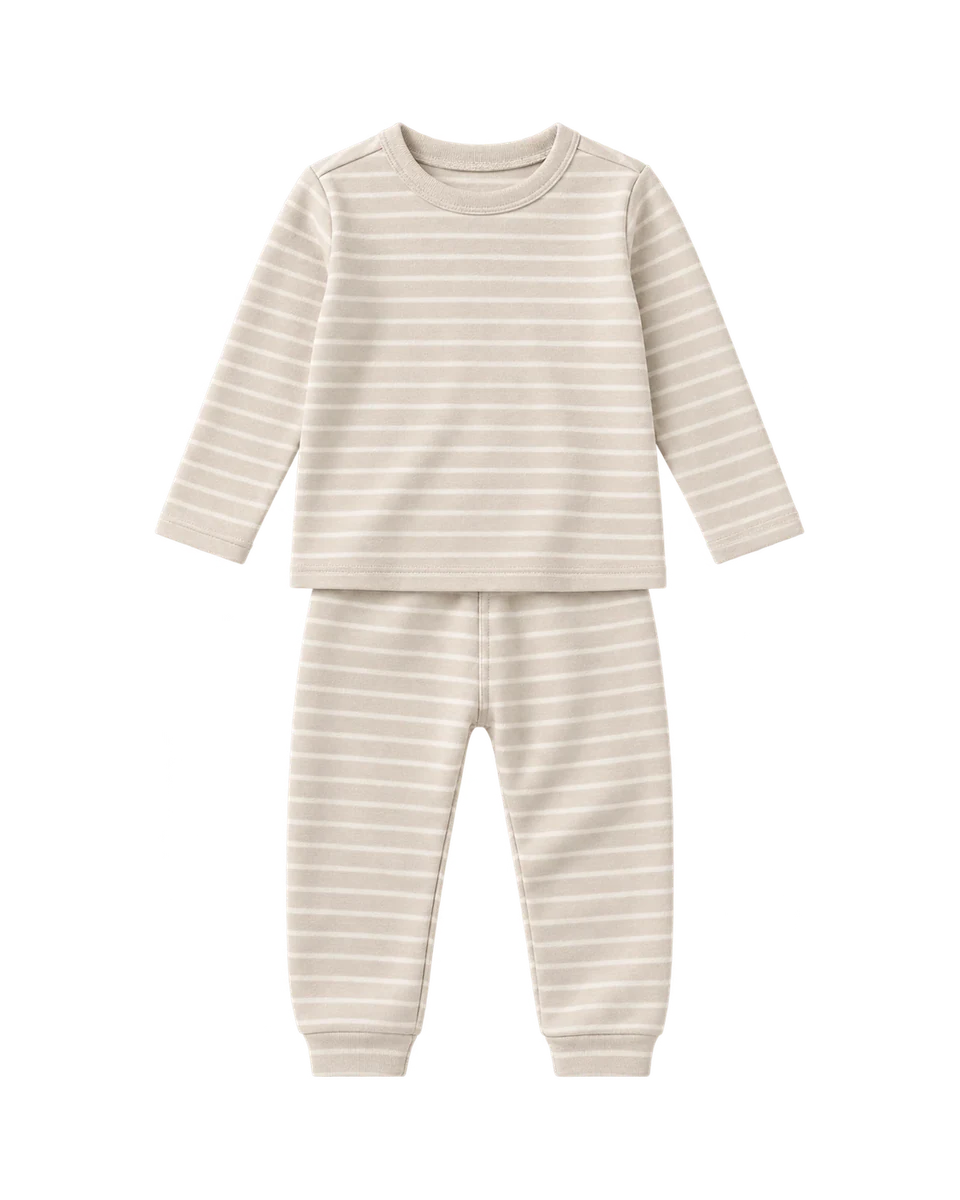
Pajamas are a two-piece sleep set: a top and bottoms. Toddlers move into them from one-piece sleepers, and they come as long sets for most nights, short sets for summer and footed sets for cold floors.
In the US, sleepwear in sizes above 9 months, one-piece sleepers included, is either snug-fitting cotton with a yellow tag, or flame-resistant and allowed to hang looser. That is why toddler pajamas feel so tight.
- For ages12+months
- You'll need4–7per size
- Wear themAll year
When toddlers switch to pajamas
There is no set age, and one-piece sleepers come in toddler sizes too, so the timing is yours. Potty training is a good time to switch, because pajama pants come down in a second for a trip to the potty, while a one-piece has to come off from the shoulders.
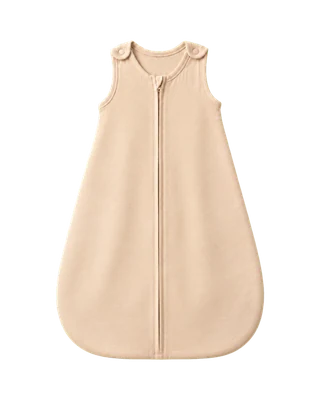
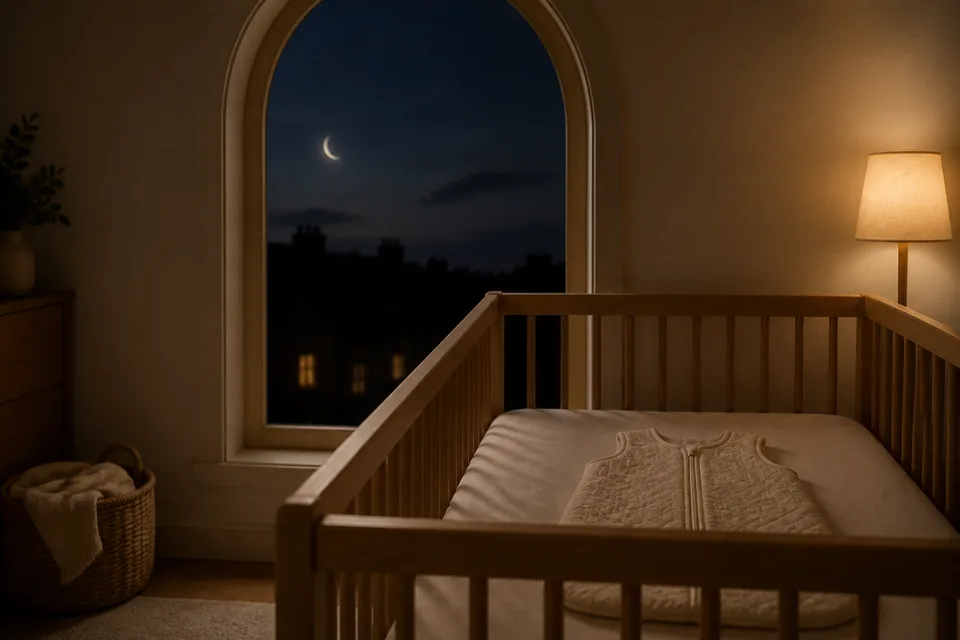
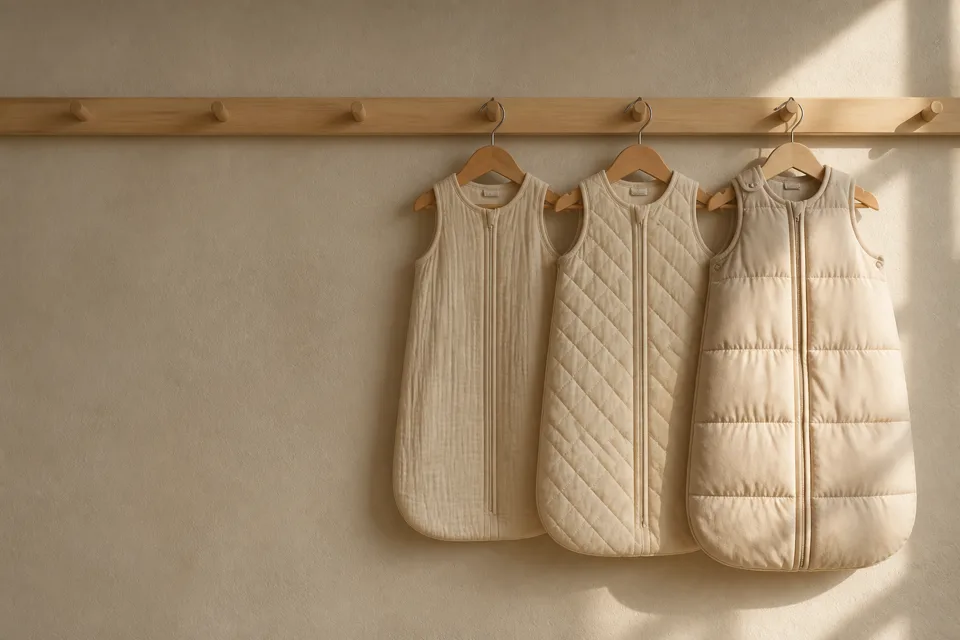
Pajamas go on their own or under a sleep bag. Under a sleep bag, the bag does most of the warming and the set can be light. Without one, a cool room needs a long set or a footed one. The sleep guide has what to wear for each room temperature.
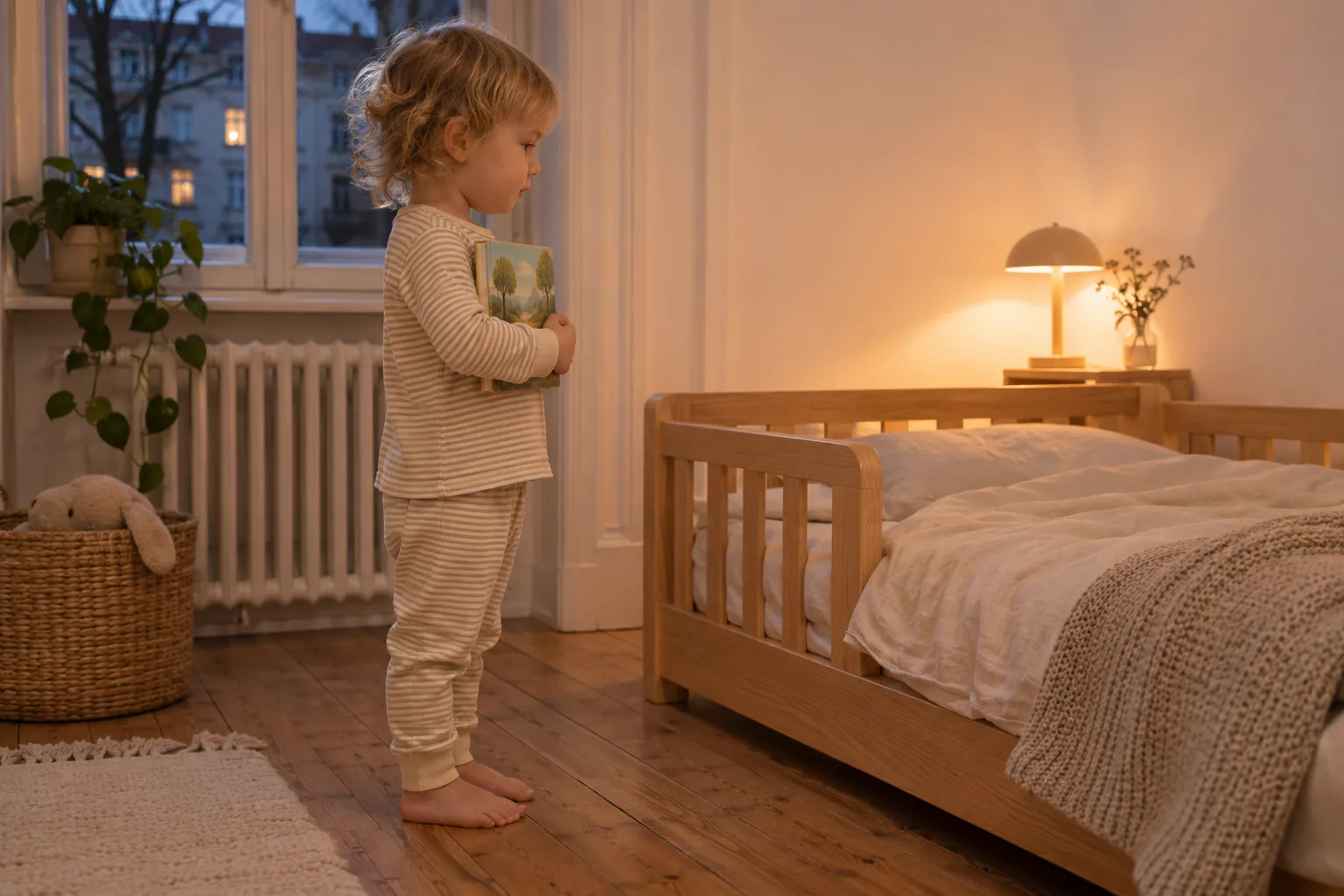
Why toddler pajamas fit so tight
It is a US fire-safety rule. Sleepwear sized above 9 months has to be flame-resistant, meaning the fabric stops burning once it is away from a flame, or snug-fitting, cut to lie close to the body all the way to the wrists and ankles. Snug fabric has little air under it to feed a fire, and no loose sleeve or hem swings into a flame.
Children are most at risk when they play with matches, a lighter, a candle or the stove just before bed or just after waking. Sizes of 9 months and under are left out, because babies that small can't yet get to a flame. So the change comes as a surprise with the first size above 9 months, when one-piece sleepers and pajamas alike suddenly feel narrow.
A snug cotton set carries a yellow tag: “For child's safety, garment should fit snugly. This garment is not flame resistant. Loose-fitting garment is more likely to catch fire.” The label in the neck says “Wear snug-fitting. Not flame resistant.”
How a snug set should fit
How a snug set should fit
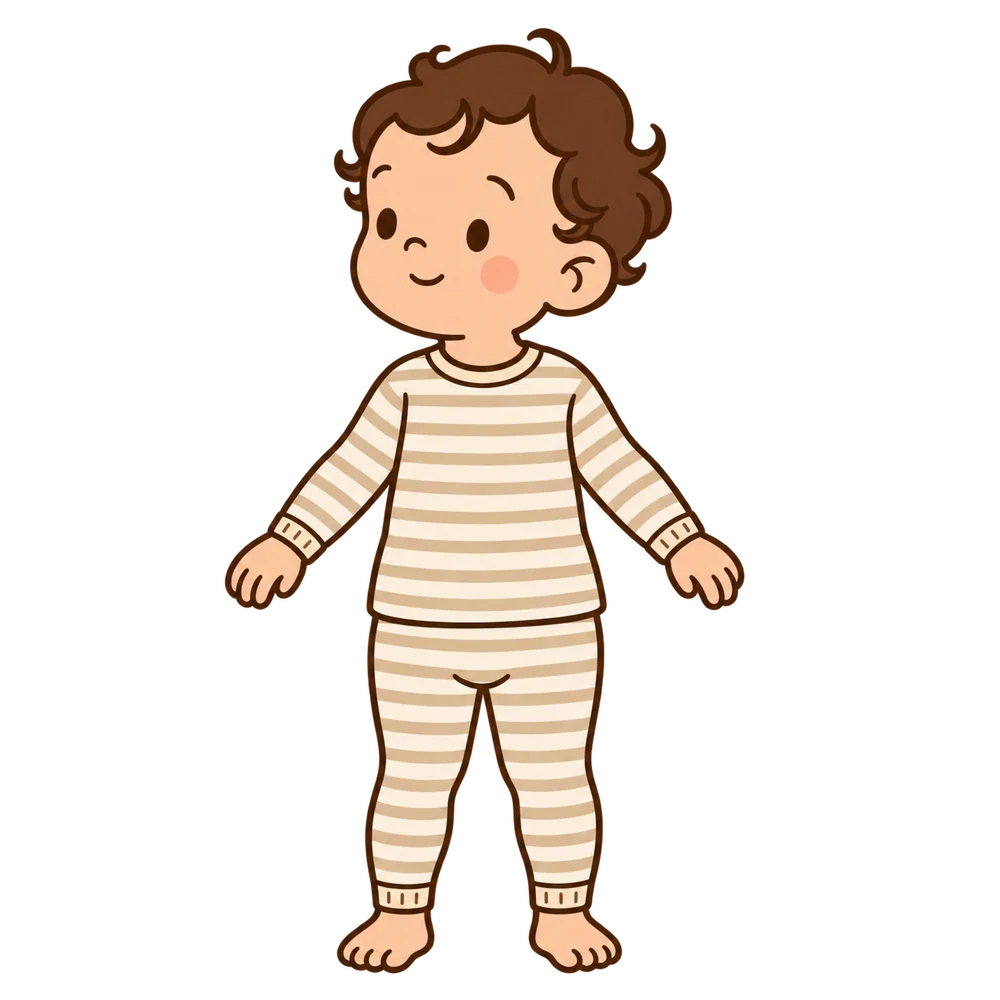
Good: Close all over, like leggings
The cuffs end at the wrists and ankles, and the fabric follows the arms and legs without pressing in. Your child can still squat, climb and stretch in it.
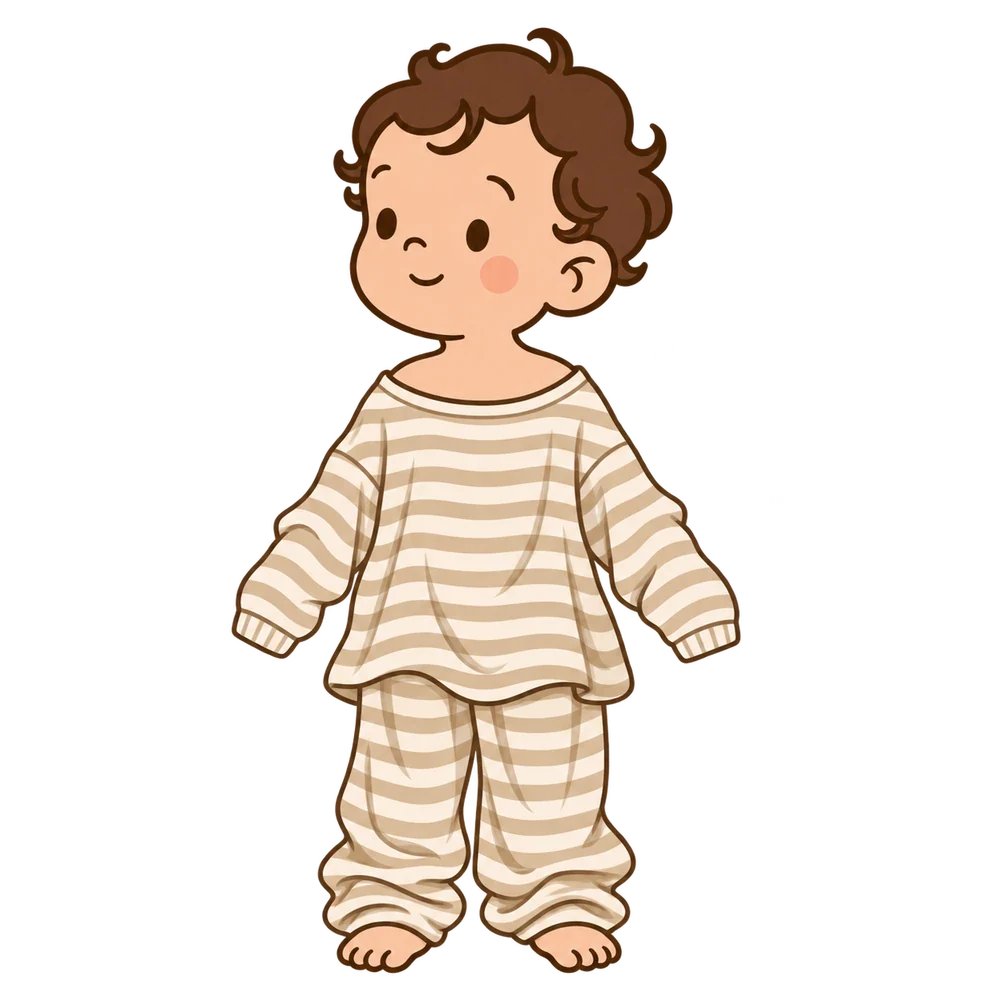
Not good: Loose cotton again
The sleeves hide the hands, the legs bunch over the feet, and the top stands off the body with air under it. This is the fit the yellow tag warns about.
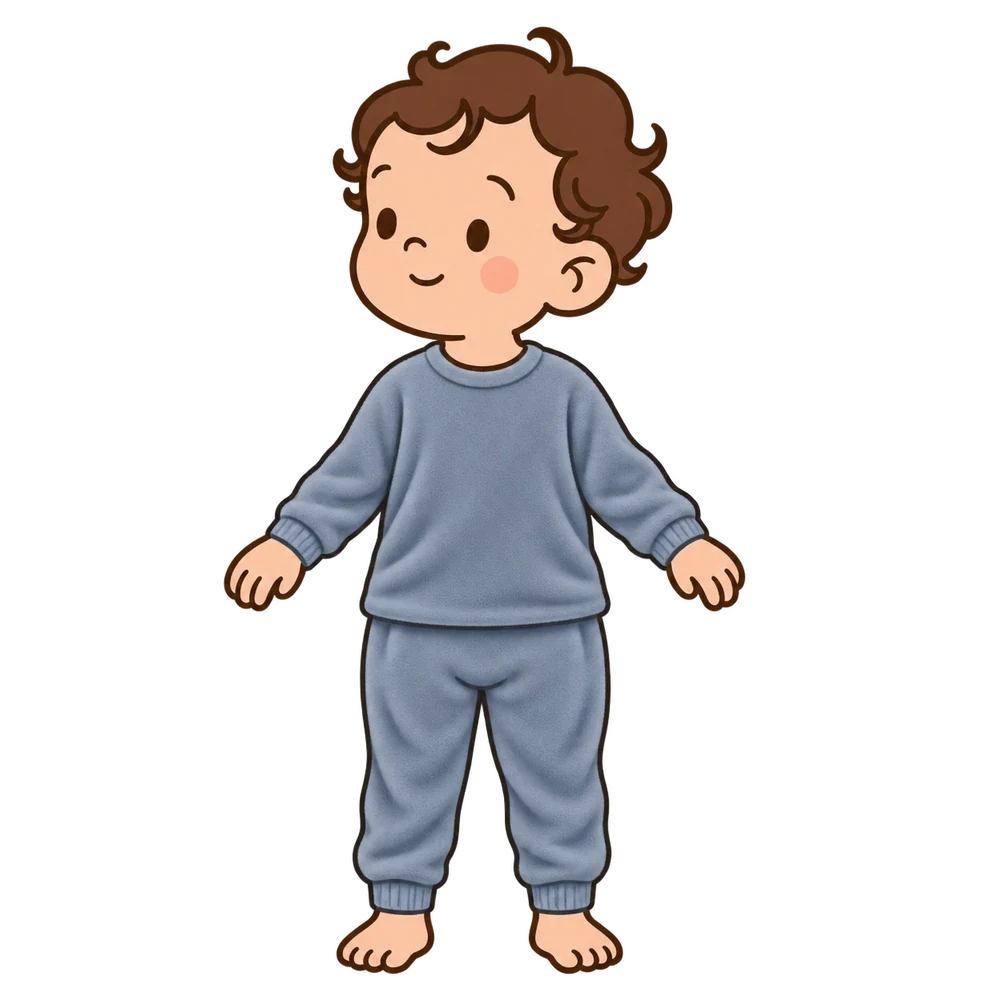
Good: Looser is allowed
Here the safety is in the fabric, not the fit, so the set may be cut loose. Most of these sets are polyester, from thin jersey to warm fleece.
Cotton, bamboo or polyester
Cotton and bamboo sets meet the rule by fitting snugly, polyester sets by resisting flame. The fabrics guide has more on each fiber.
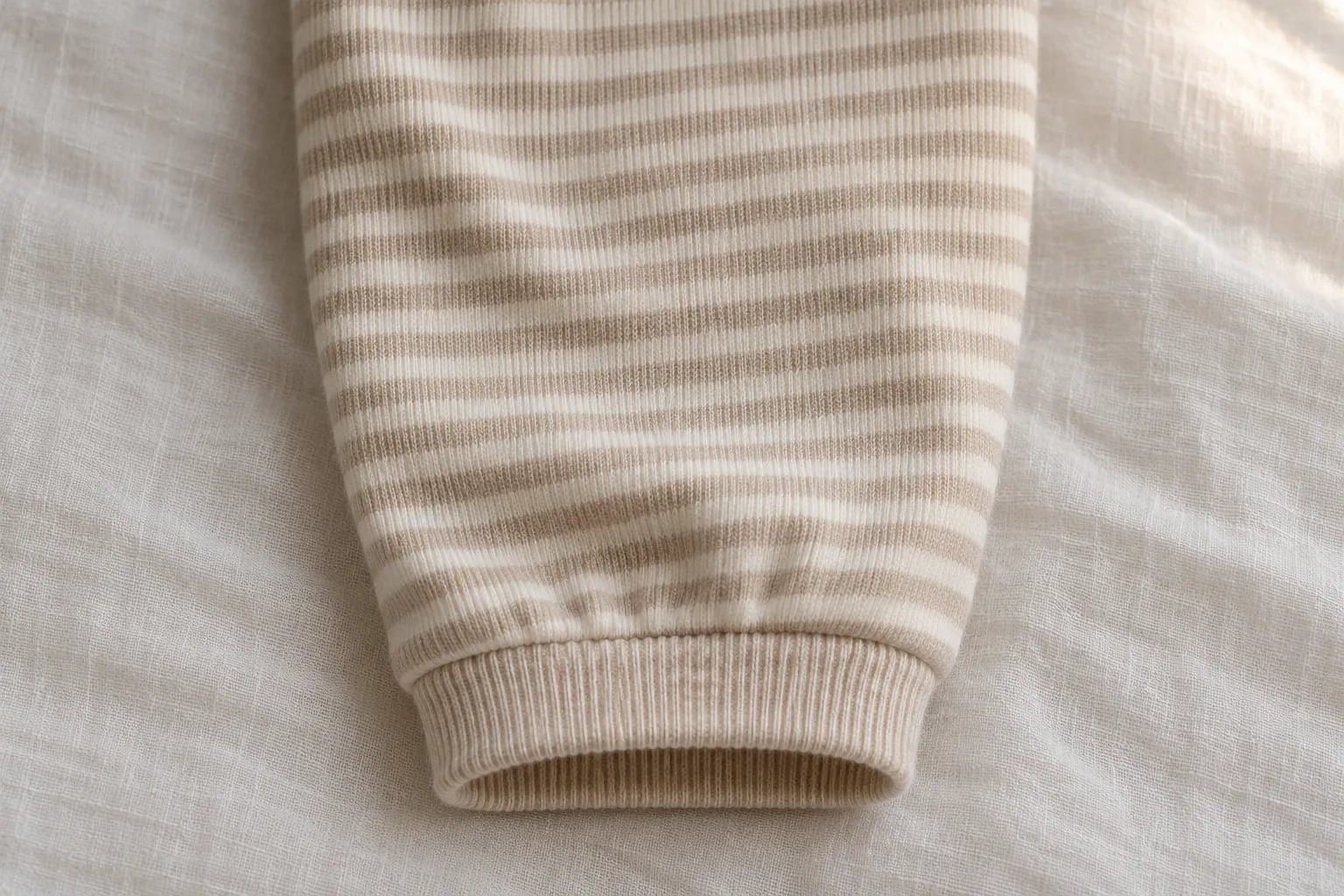
Snug-fit cotton
Stretchy cotton, cut close and sold with the yellow tag. Cotton soaks up sweat, so it stays comfortable in a warm room. It takes some wriggling to get on.
- Good: Soaks up night sweat
- Good: Costs little
- Not good: Tight over round arms
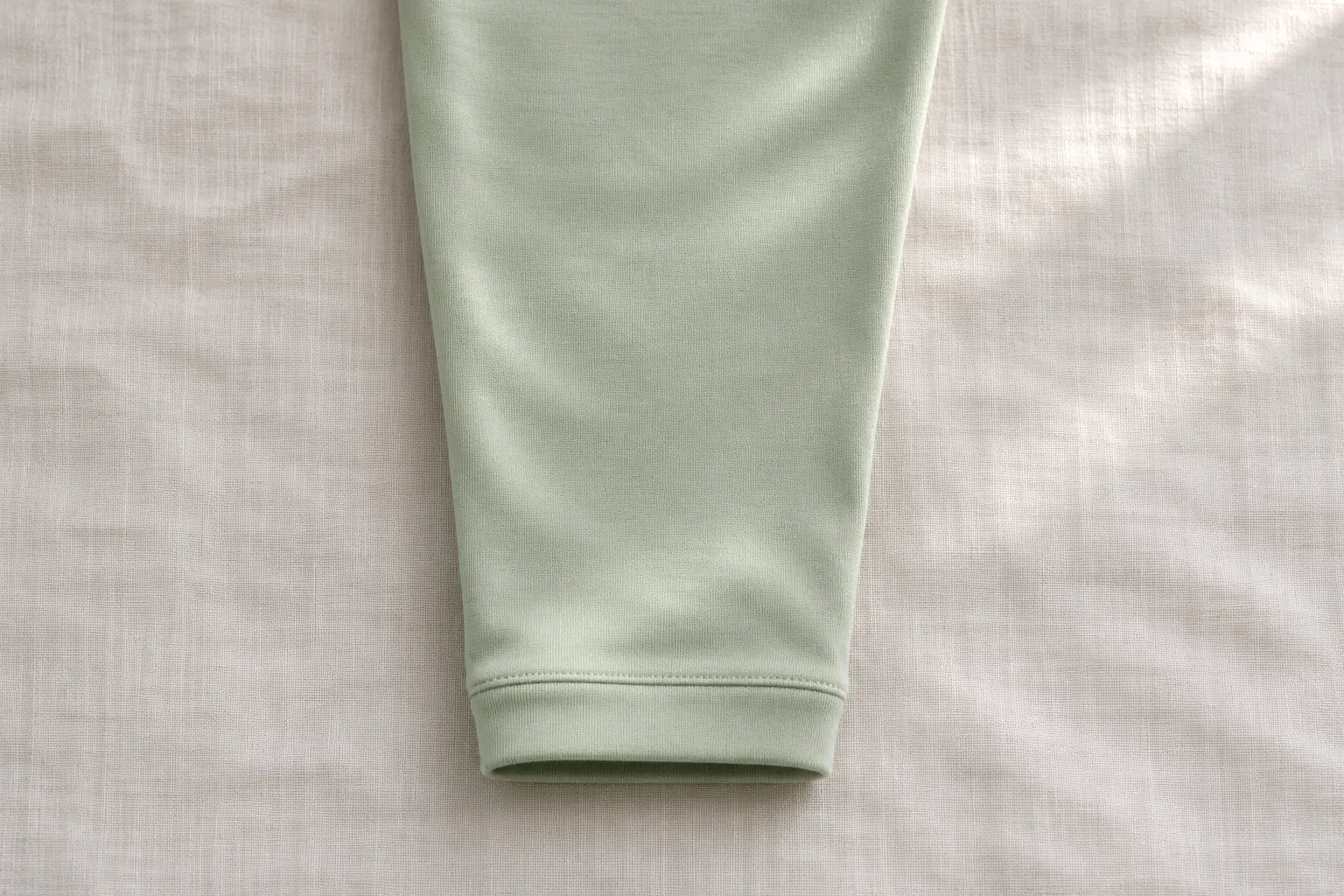
Snug-fit bamboo
Bamboo fabric is viscose, a fiber spun from bamboo pulp, and like cotton it isn't flame resistant, so these sets are snug too. It is silkier and stretchier than cotton, so it goes on more easily.
- Good: Stretches over round arms
- Good: Feels silky and cool
- Not good: Costs more
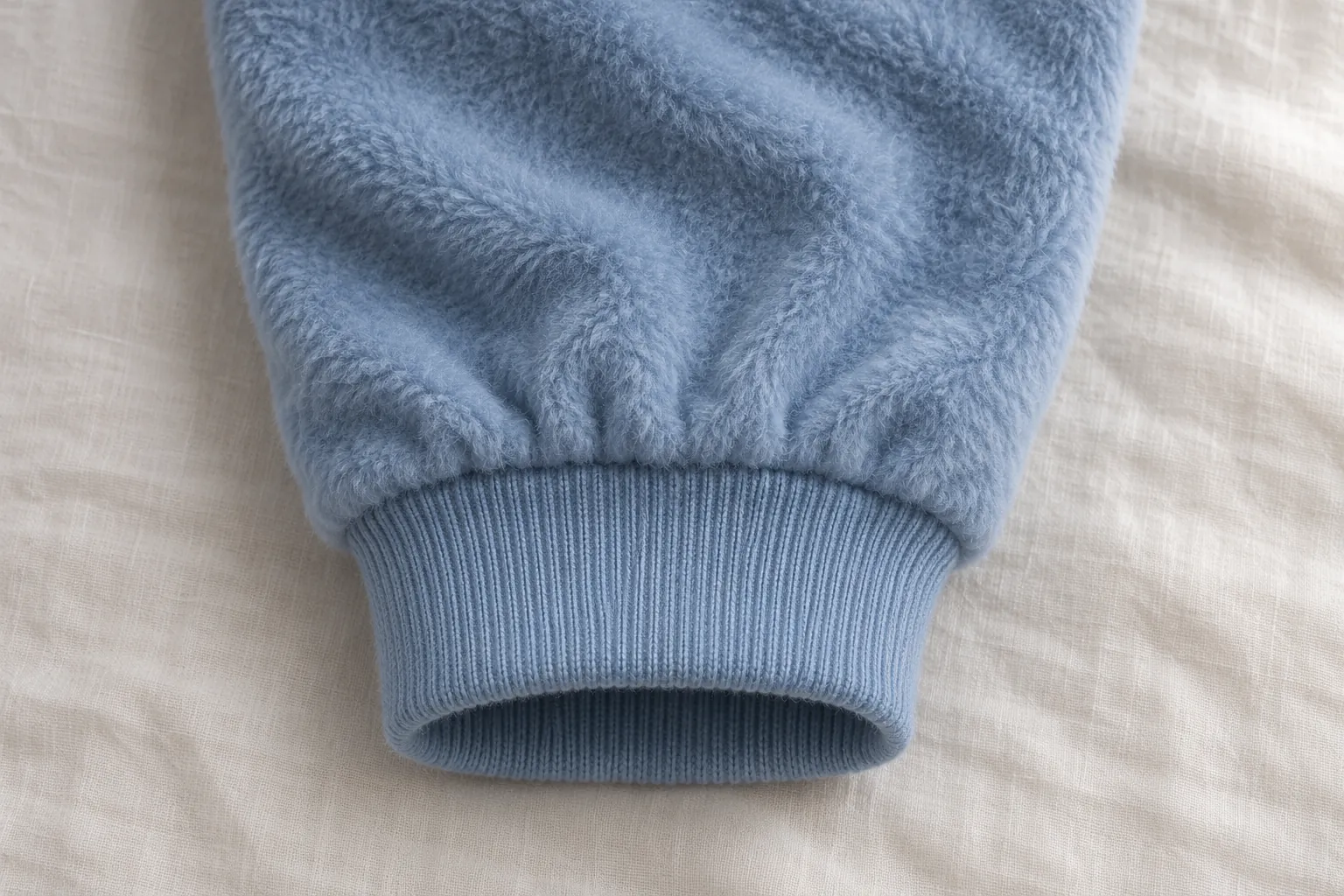
Flame-resistant polyester
Polyester sets sold as sleepwear are flame resistant, most of them through the fiber itself with no chemical added, so they may hang looser. Thin jersey (T-shirt fabric) suits most rooms, and fleece is the warm one for a cold bedroom. Polyester holds sweat on the skin, so in a warm room it turns clammy.
- Good: Looser cut allowed
- Good: Fleece for cold rooms
- Not good: Clammy in a warm room
Long, short or footed
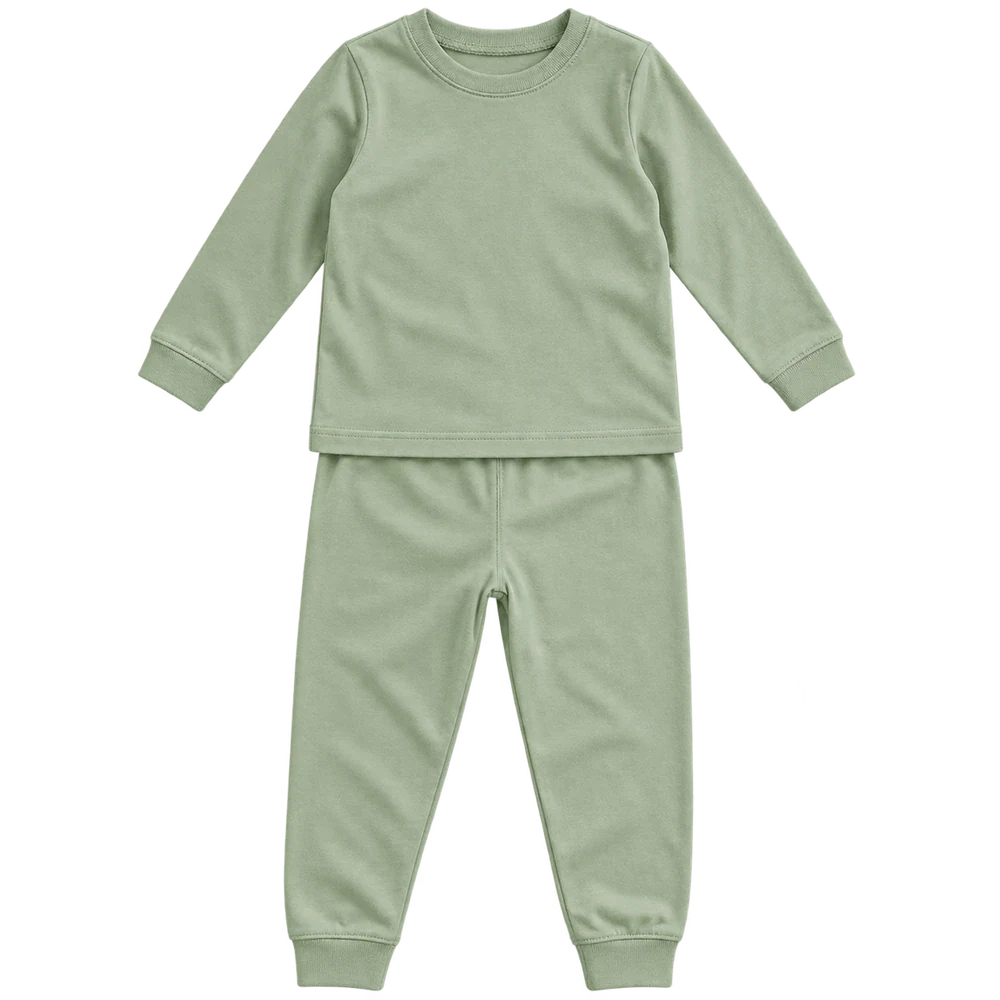
Long-sleeve set
Long sleeves and long pants: the set for most of the year. For a cold bedroom, a warmer sleep bag over it beats a thicker set, because the bag's warmth is printed on its label.
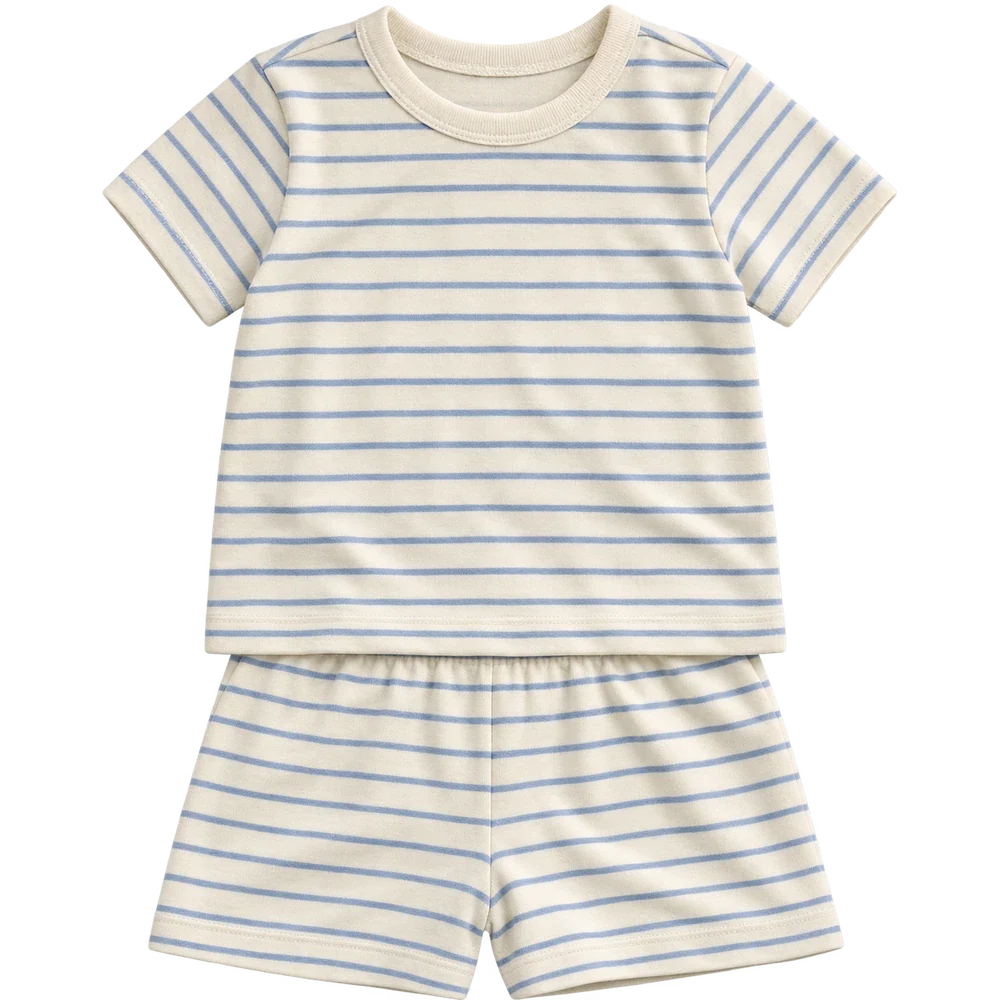
Short set
Short sleeves and shorts for warm rooms and summer nights. Cotton short sets in US shops are snug-fit too.
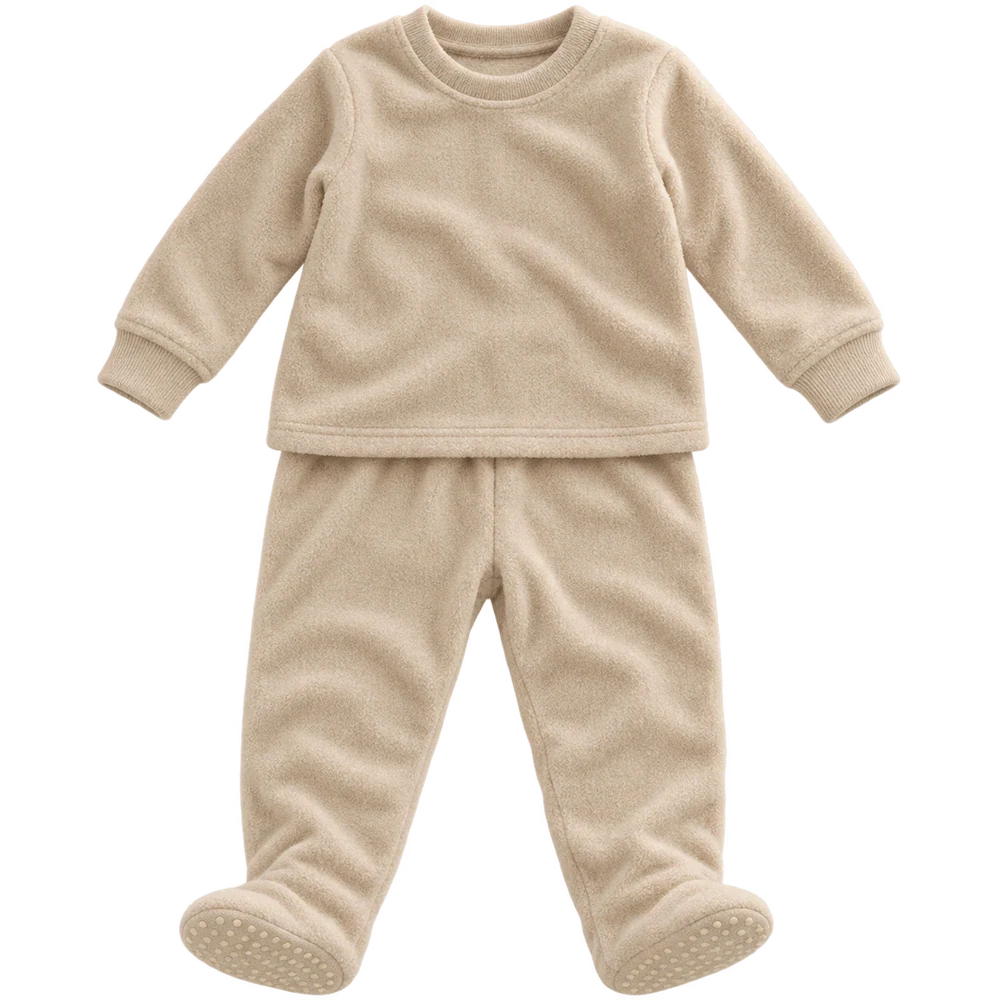
Footed set
Pants with feet sewn on, often fleece, for a cold room or a toddler who kicks off the covers. Once your child walks, pick grippy soles, because smooth fabric feet slide on hard floors.
How to choose pajamas
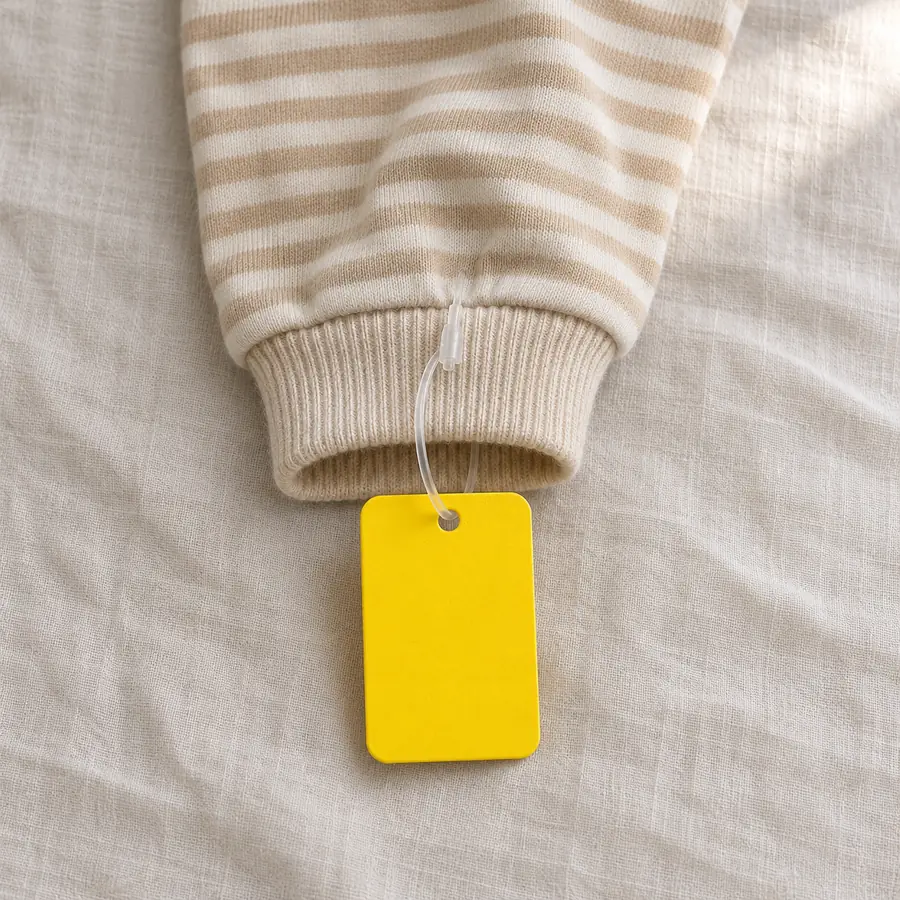
1. The right label
Above size 9 months, US sleepwear has the yellow snug-fit tag, or it is flame resistant, which the hang tag or the sewn-in care label says. Loungewear and day clothes have neither.
- Good: Yellow snug-fit tag
- Good: “Flame resistant” on the tag
- Not good: “Not intended for sleepwear”
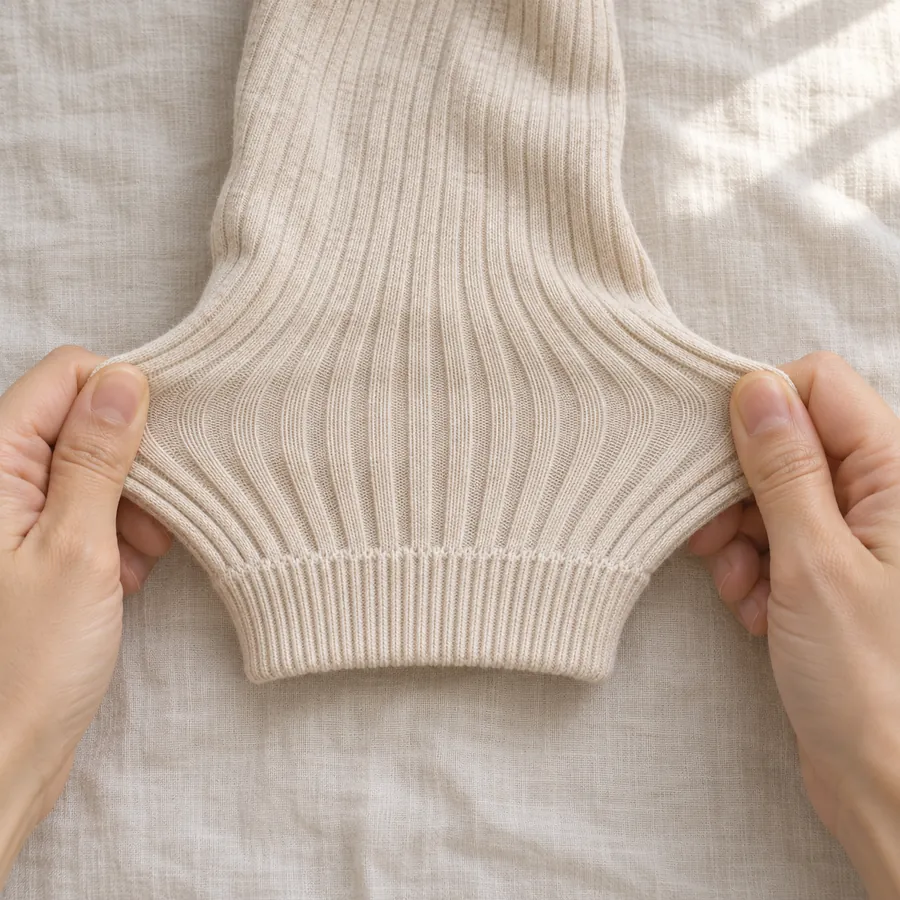
2. Stretch in the fabric
Rib knit (the ridged knit of a cuff), or cotton with a few percent spandex, a stretchy fiber (elastane on European labels), stretches over round arms and thighs and springs back. A snug set with stretch goes on far more easily, even on damp skin after a bath.
- Good: Rib knit or a little spandex
- Good: Springs back after a pull
- Not good: Flat cotton with no give
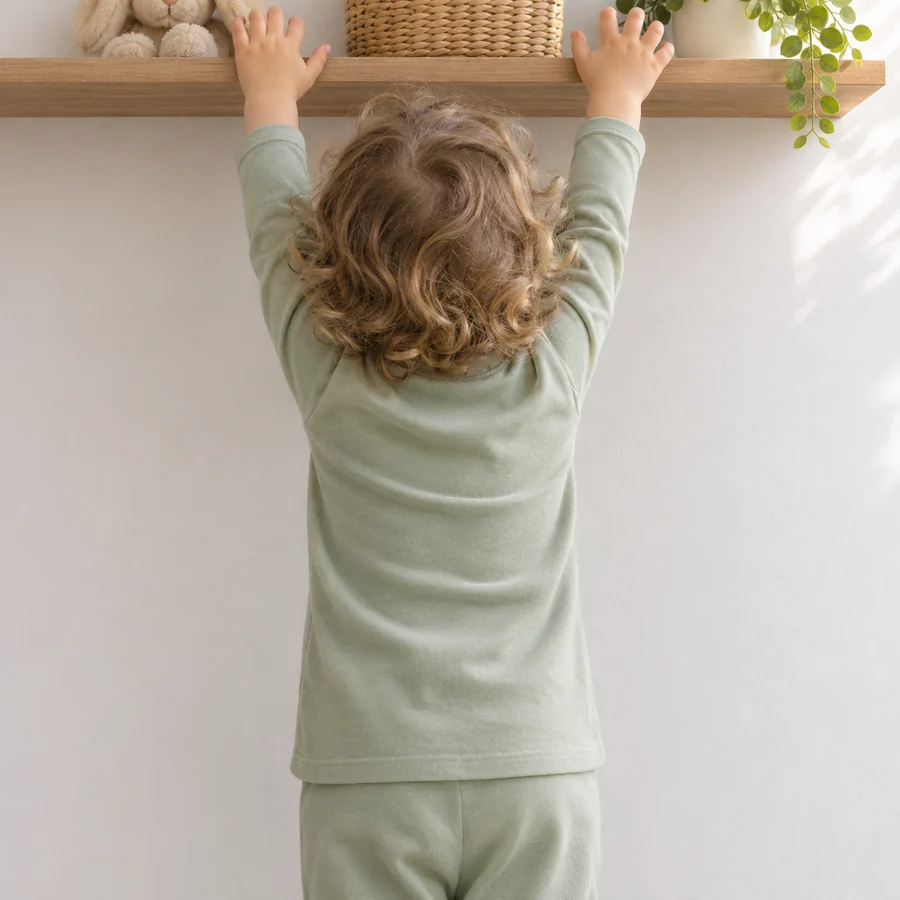
3. A top that stays down
Toddlers stretch, roll and get lifted, and a short top rides up and leaves the belly cold. A top that reaches well past the waistband stays put.
- Good: Reaches past the waistband
- Good: Belly covered with arms up
- Not good: Short, boxy top
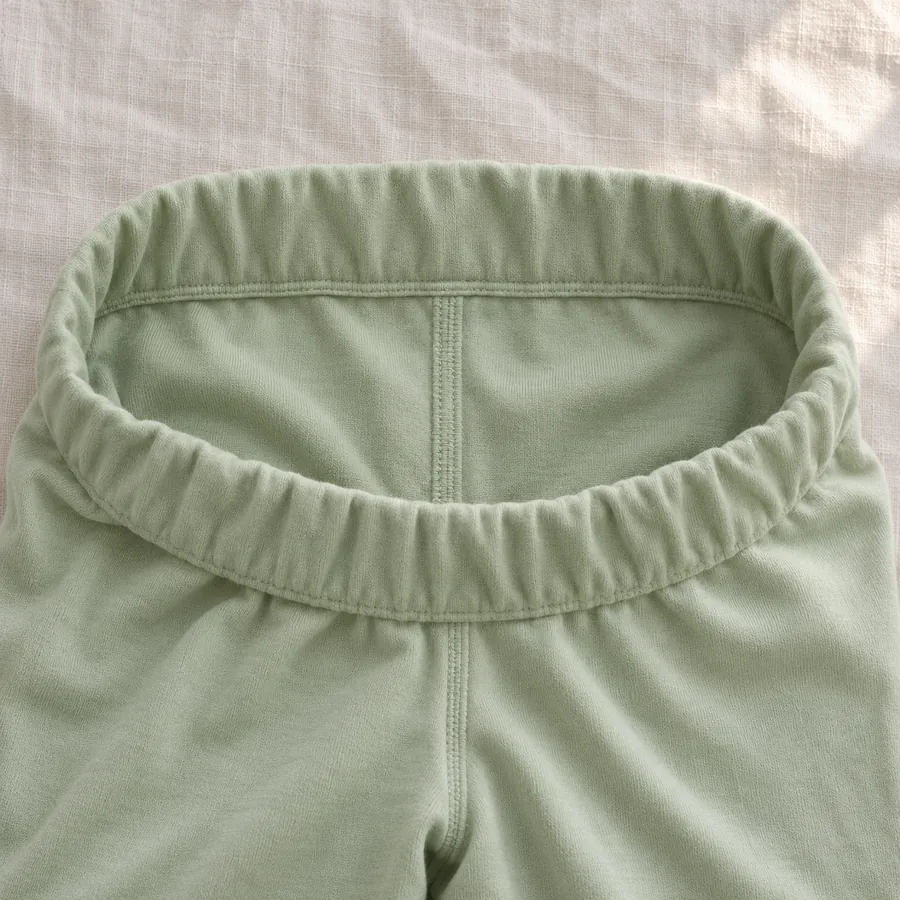
4. Soft inside
A printed label instead of a tag, flat seams and elastic covered in soft fabric leave nothing to rub through a night of turning over.
- Good: Printed label, no tag
- Good: Flat seams inside
- Not good: Bare elastic at the waist
Questions parents ask
Can I buy snug-fit pajamas a size up?
Buy the size your child's height and weight point to, even when that is the next one. Two sizes up, a snug set hangs loose like any cotton set, and the snug fit is what keeps it safe.
Where can I find looser toddler pajamas?
Look for flame-resistant sets, mostly polyester jersey or fleece, which shops often call loose fit or relaxed fit. For cotton next to the skin, a snug set with more stretch, in rib knit, with spandex or in bamboo, goes on far more easily.
Are there children's pajamas without flame retardants?
Most have none. Snug cotton and bamboo sets need none, because their fit meets the rule, and most polyester sleepwear resists flame through the fiber itself. A chemical treatment is rare, and turns up mainly on loose all-cotton sets sold as flame resistant.
Is 100% cotton flame resistant?
No. Cotton catches fire easily, which is why cotton pajamas are cut snug.
What does “not intended for sleepwear” mean?
That the piece wasn't made or tested to the sleepwear rule: it is loungewear or a day outfit. For the night, pick a set sold as sleepwear, snug-fit or flame resistant.
Why do some pajamas say “Keep away from fire”?
It is the UK label. There, children's pyjamas don't have to pass a flame test, but the label must say whether they did: “Low flammability to BS 5722” means they passed, and a red “Keep away from fire” is on every set that didn't. Some sets that passed carry the red line as well.
Are fleece pajamas safe for toddlers?
Yes, a fleece set sold as sleepwear. It is flame resistant, so it may be looser. What to watch is the warmth: fleece is for a cool room. Feel the back of the neck, and if it is sweaty, the set is too warm.
What pajamas are best for toddlers with eczema?
Soft cotton, washed in a fragrance-free, dye-free detergent, in a bedroom that doesn't get too warm, because sweat and overheating set eczema off. A tag or a seam that rubs can start a flare where it touches.
Can my toddler sleep in regular clothes?
Yes, in close-fitting ones, like cotton leggings and a fitted long-sleeve top. What to skip for sleep is loose cotton, such as a big T-shirt, sweatpants or a sweatshirt, because it catches fire easily.
Can a toddler sleep in a hoodie?
No. A hood can slide over the face during sleep, and a loose sweatshirt is the kind of loose cotton to keep for the day.
How many pajamas does a toddler need?
Four to seven sets, enough for a week between washes. Potty training uses up more.
Are nightgowns safe for toddlers?
Yes, one sold as children's sleepwear. A nightgown can't fit snugly, so in the US one above size 9 months has to be flame-resistant, and in the UK a child's nightdress must pass a flame test. Skip a loose cotton nightgown without that label; handmade ones often have none.