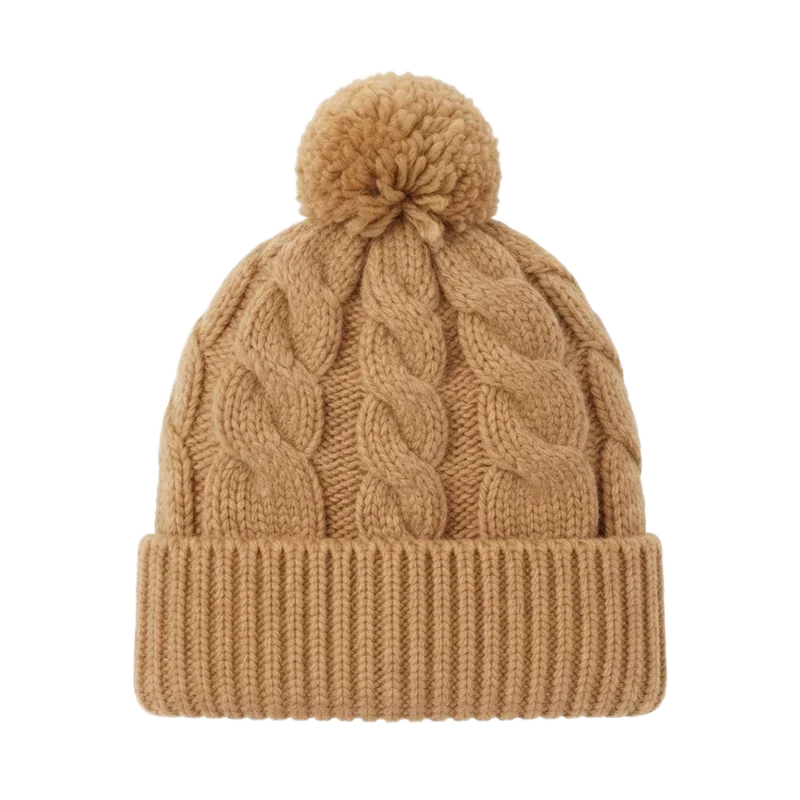
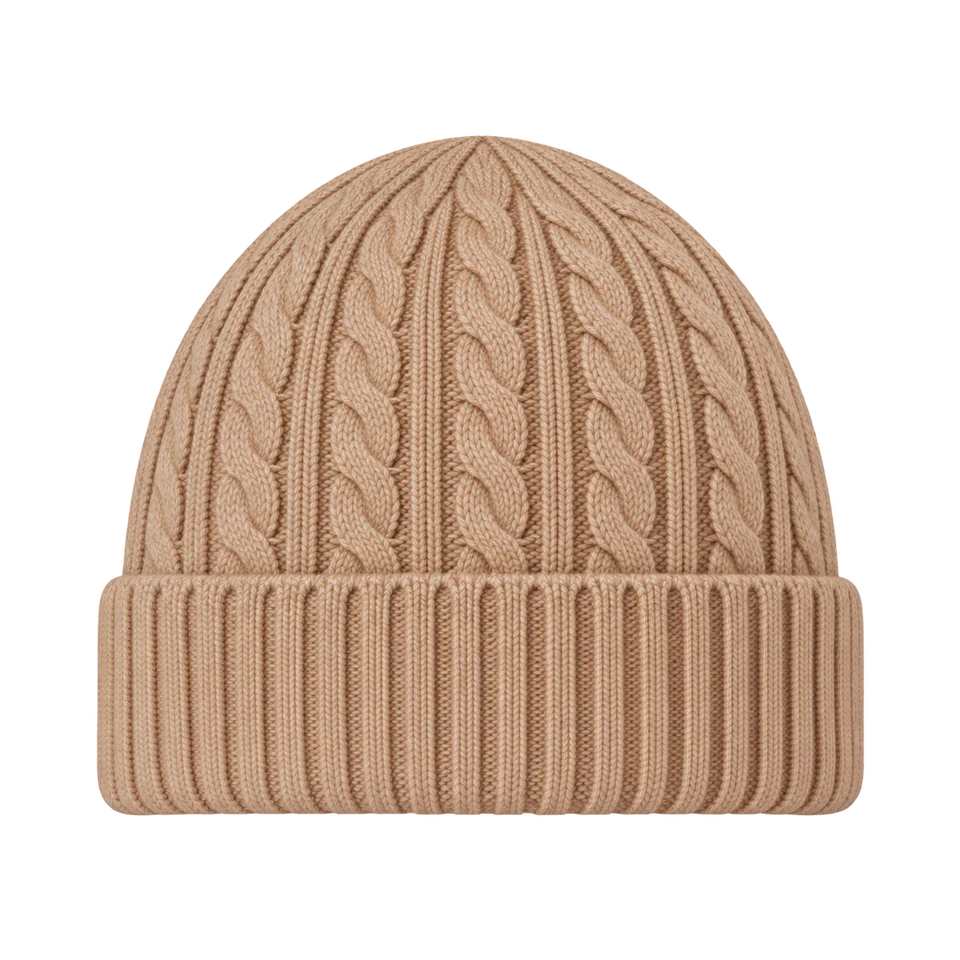
The cables are the pretty part. The cuff does the work. Cables are raised, twisted ropes of stitches, like the ones on a cable-knit sweater. The cuff folds up into a double layer of knit over the forehead and ears.
With a lining, it's a warm winter hat, for cold walks. Without one, it does the job of a light knit hat, for chilly days. Knitters love cables, so your first one may well arrive as a gift.
- For ages0–3years
- You'll need1–2warm hats
- Wear it below8°C46°F
When babies wear one
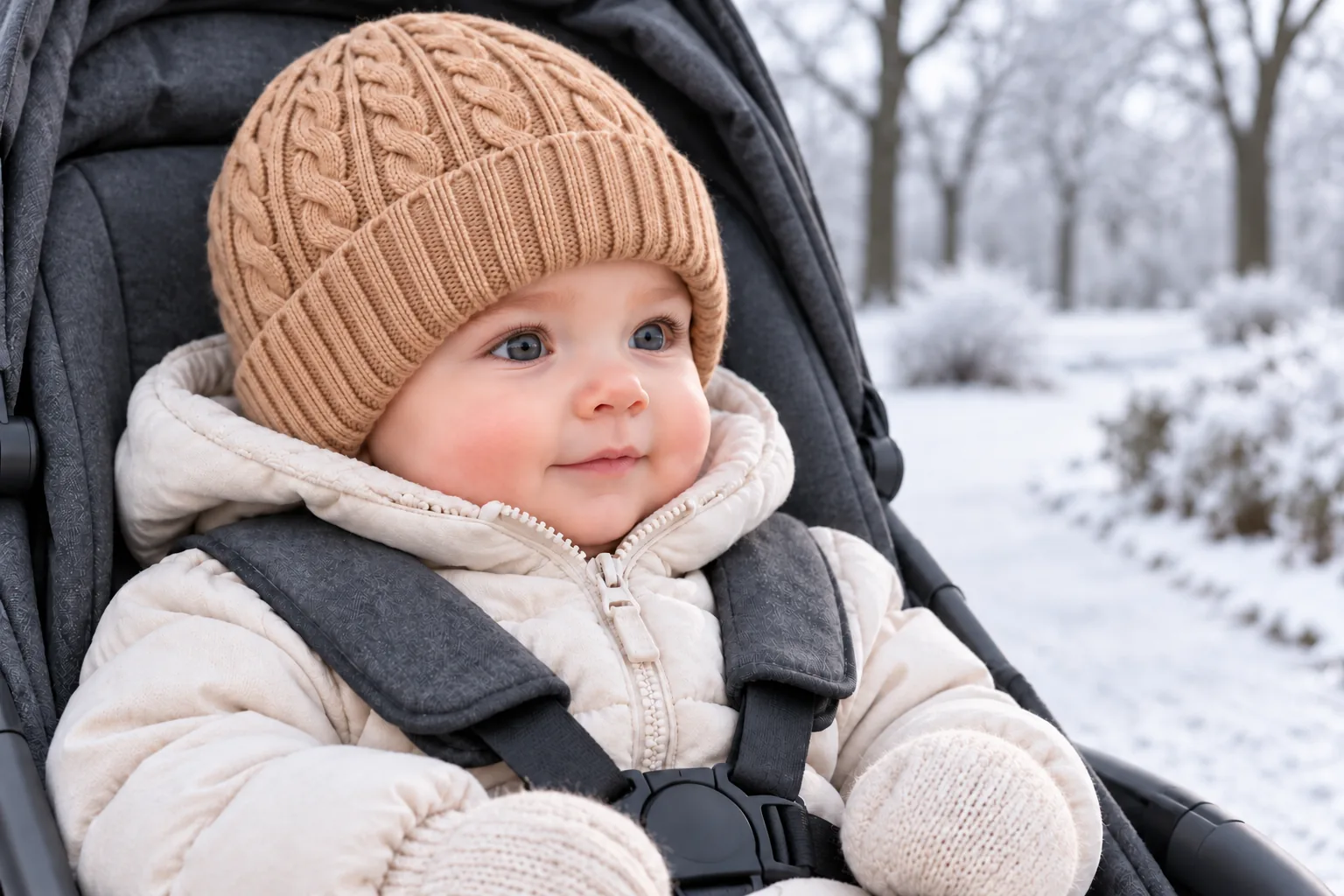
A lined one goes on for walks when it feels below 8°C (46°F) outside. That's the feels-like temperature, which counts the wind. An unlined one is only for chilly days, at 8–11°C (46–52°F), because the wind blows through the gaps in any knit, cables or not.
Babies under 3 months need a little more warmth: a lined one below 12°C (54°F), an unlined one at 12–15°C (54–59°F).
Put it on last thing before you go out, and take it off as soon as you're back inside or in the car, even if your baby is asleep. Somewhere warm, a thick hat soon makes a baby too hot, as the hats guide explains.
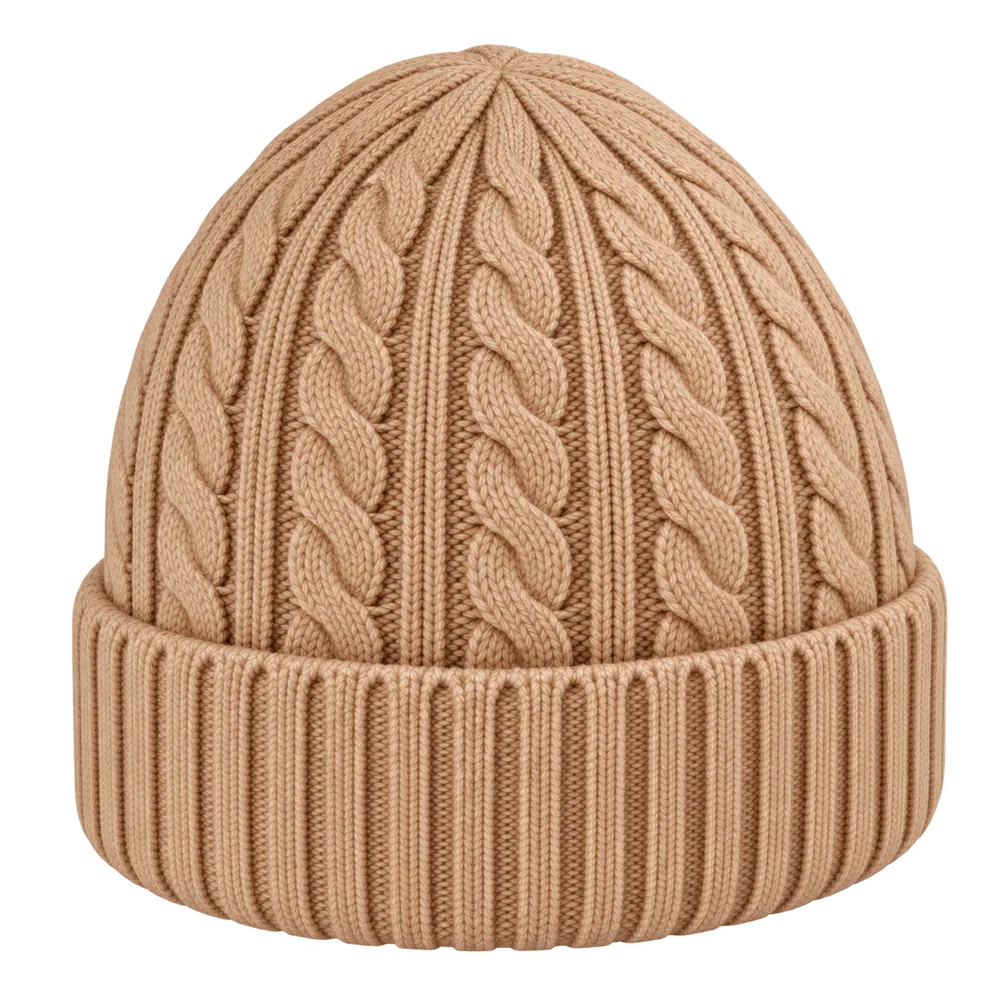
What cable knit is
Cables
Stitches crossed over each other as the hat is knitted. The crossing pulls the knit tight, so it's thicker than plain knitting and stretches less.
Folded cuff
The bottom of the hat, turned up. As your baby's head grows, fold it up a little less, so it still covers the ears.
Types of cable-knit hat
With a pom-pom on top, the same hat is a cable pom hat.
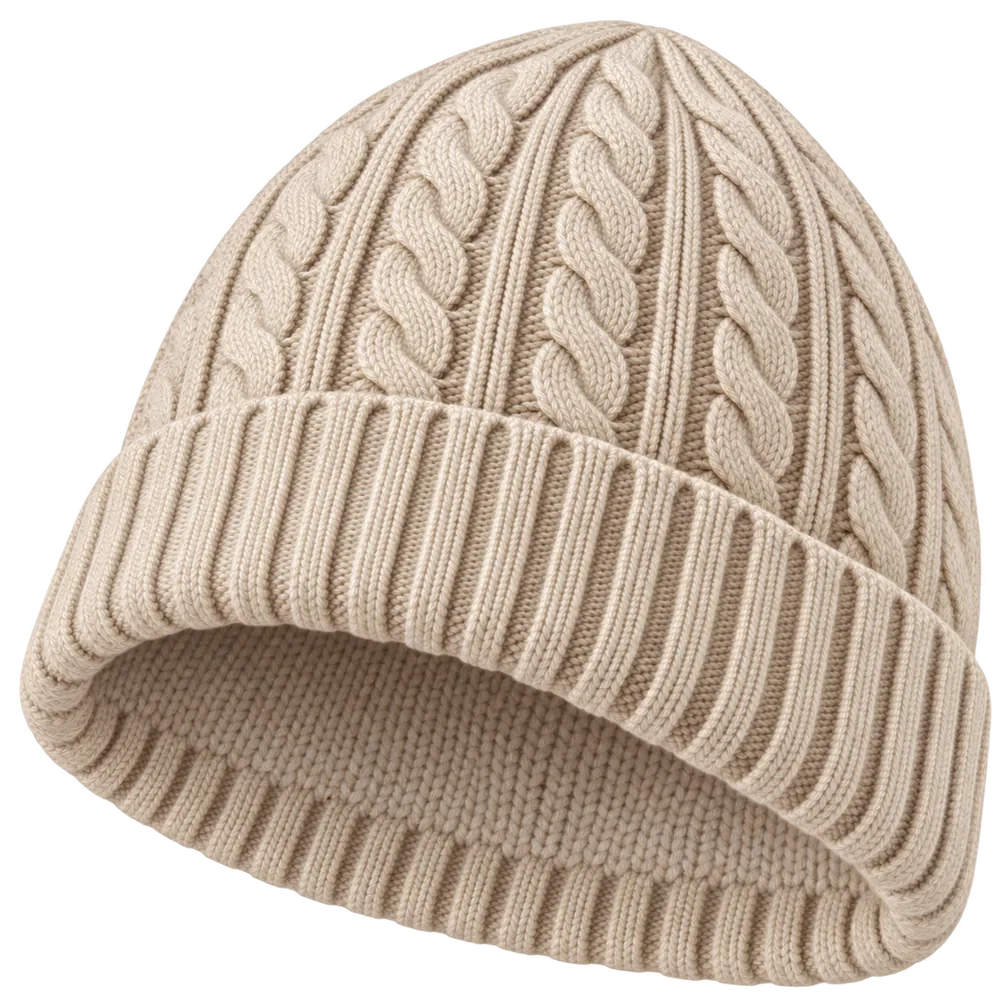
Unlined
One layer of knit, so the wind gets through. It's the one for chilly days.
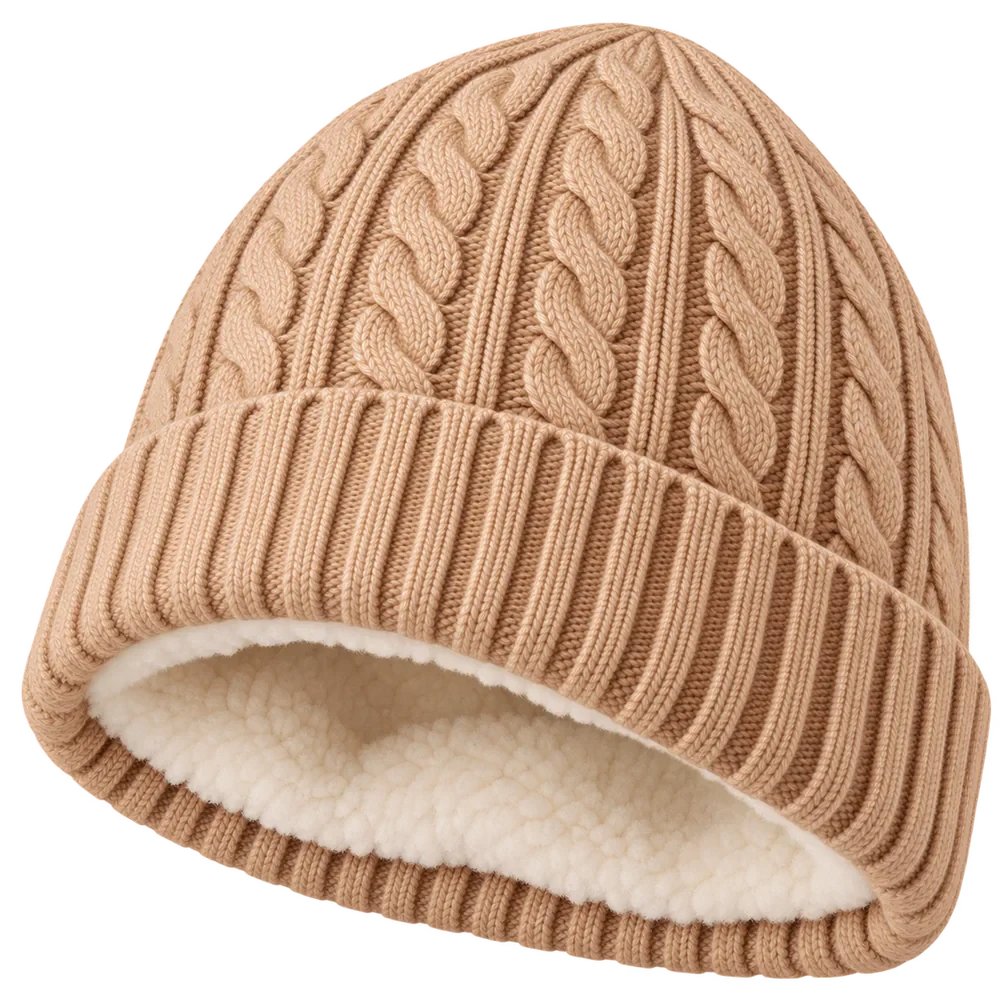
Lined
A soft fleece or jersey (T-shirt fabric) lining inside the knit. Little wind gets through, and it feels gentle on the forehead. This is the one for winter.
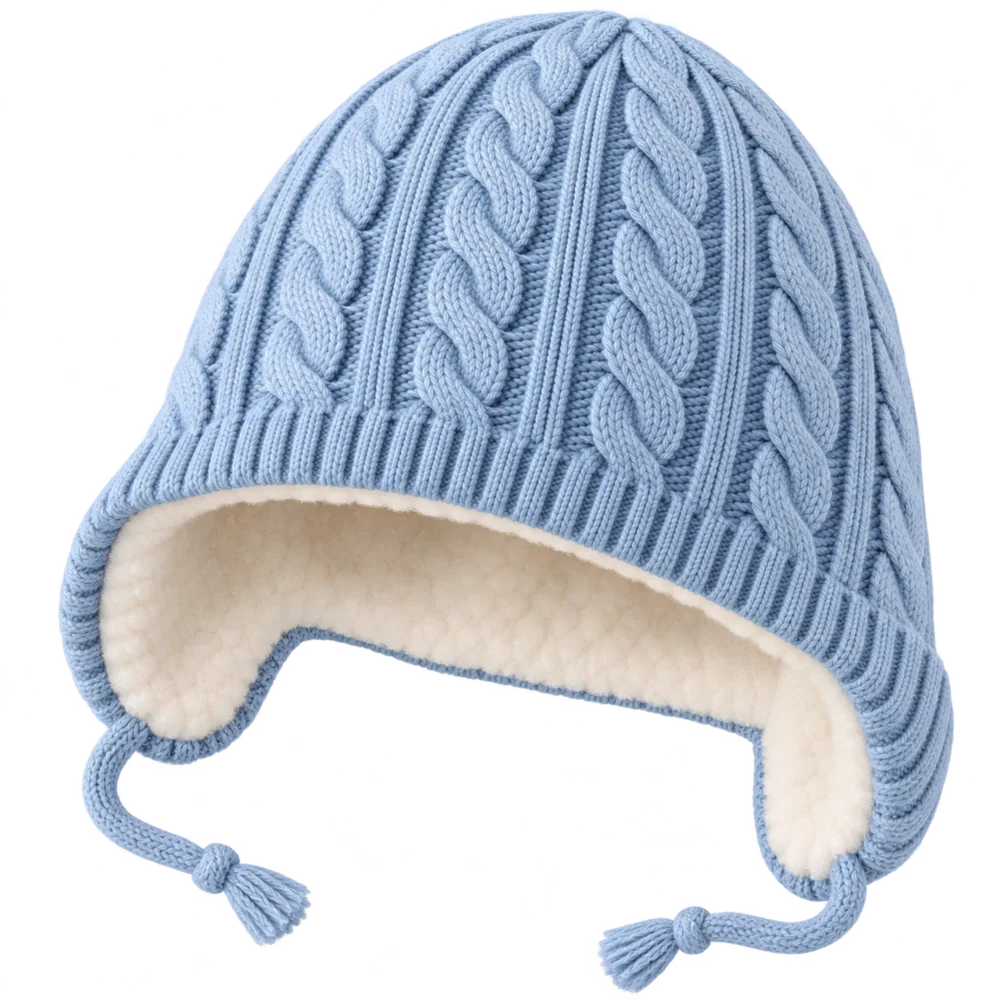
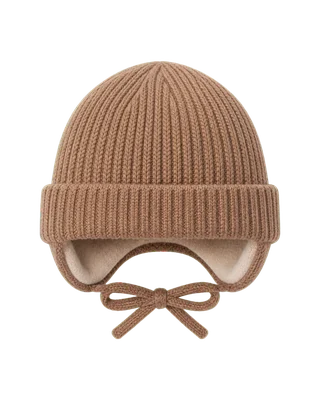
With ear flaps
Cable knit with a flap down over each ear and short ties under the chin. Good for windy days, and for a baby who pulls hats off.
How to choose a cable-knit hat
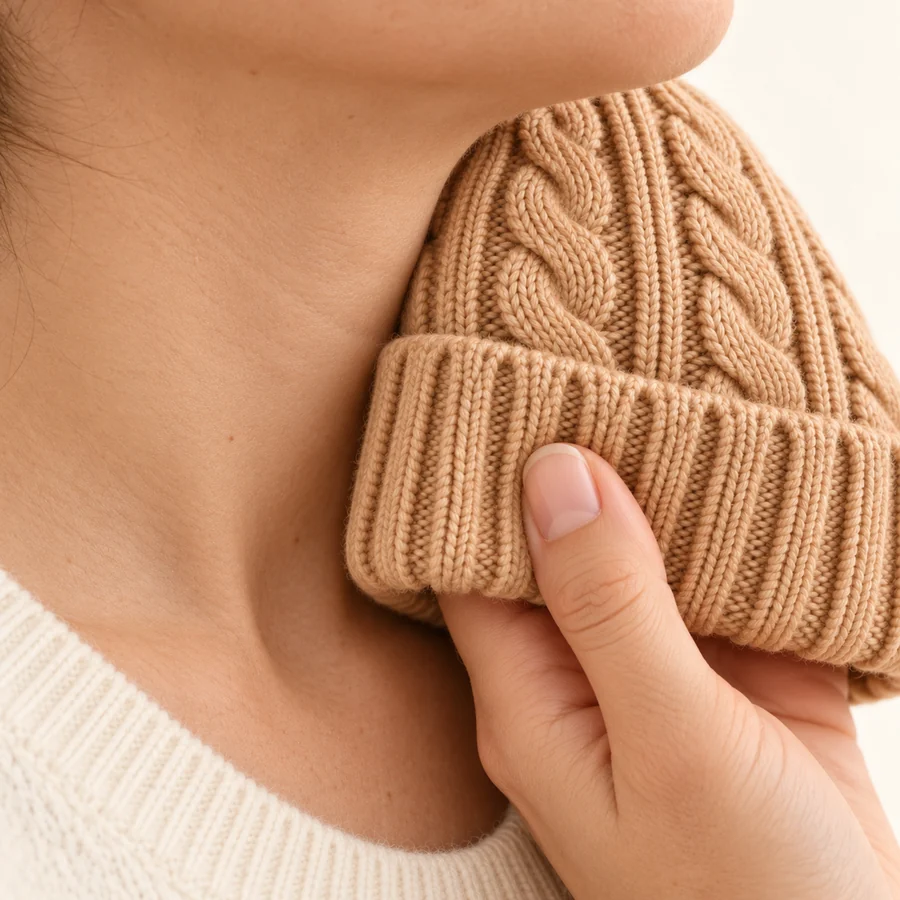
1. Soft yarn
The cuff rests on your baby's forehead for the whole walk, so the yarn should feel soft. A shop hat names its yarn on the label, and a hand-knitted gift often has none. Either way, rub the cuff on the side of your neck: if it prickles there, it will prickle on your baby's forehead too.
- Good: Smooth when rubbed on your neck
- Good: Fine merino wool, cotton or acrylic
- Not good: Prickles on your neck
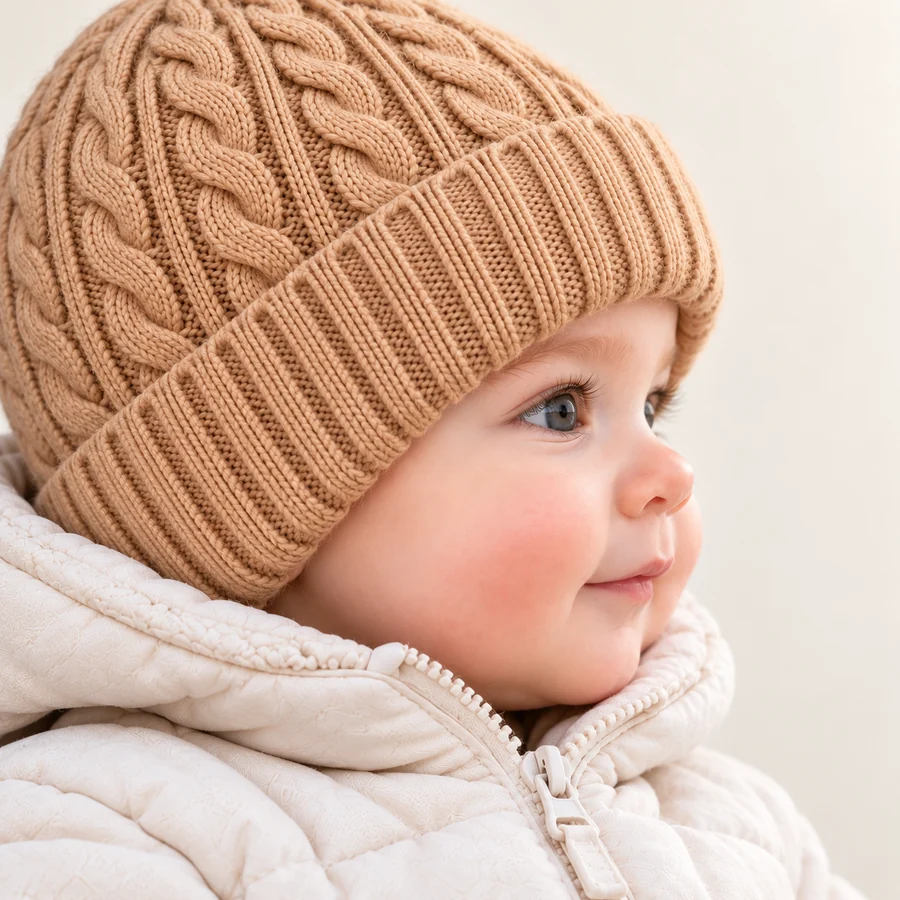
2. A size that goes on easily
Cables stretch less than plain knitting, so a cable hat can feel tight in your baby's usual size. Choose by head size on the brand's chart, not by age, and if your baby is between two sizes, take the bigger one.
- Good: Goes on without a tug
- Good: Edge rests above the eyebrows
- Not good: Leaves a mark on the forehead
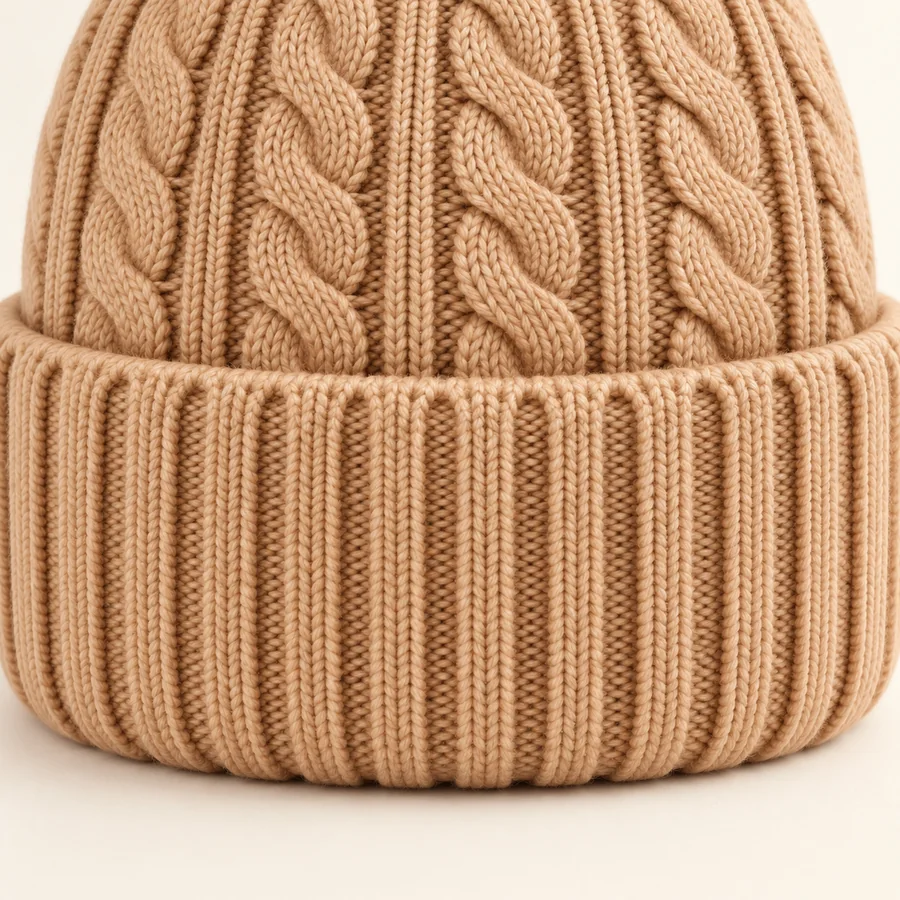
3. A cuff deep enough to fold
The cuff is what keeps the ears warm, so it should be deep enough to fold up and still cover them. Some knit hats have only a thin edge that curls up by itself, with nothing to fold.
- Good: Cuff covers the ears
- Good: Room to let the cuff down
- Not good: Thin edge that curls up, no cuff
Questions parents ask
Is cable knit warmer?
A little. Crossing the stitches makes the knit thicker, and a thicker knit holds more warm air. A lining makes more difference, though, because the wind blows through any knit.
What size cable-knit hat should I get for my newborn?
One that fits your newborn's head now, not one to grow into, with a short cuff or none: a deep cuff can come down over a newborn's face.
How do I wash a cable-knit hat?
Read the care label before you buy, because it depends on the yarn: even some acrylic cable hats say hand wash only. For a hand-knitted gift, ask the knitter. Cotton and acrylic usually go in the machine, and wool needs a wool cycle or a hand wash and dries flat.
Is a hand-knitted cable hat safe for my baby?
Yes, if nothing on it can come off and end up in your baby's mouth. Give any buttons or pom-pom a hard tug: they should stay put.